
For long-haul truck drivers, trucking company owners, fleet managers, and aspiring truck drivers, the ‘Service 4WD’ warning can be an alarming sight on the dashboard. Understanding the implications of this alert is crucial to maintaining vehicle integrity and performance. Within this guide, we will dive deep into what might trigger this message, effective diagnostic steps to take, preventative measures to keep your 4WD system in shape, and when to seek professional help. Whether you’re behind the wheel or overseeing a fleet, knowledge in this area will ensure you stay ahead of potential issues, keeping routes safe and deadlines met.
Decoding Service 4WD: Causes, Diagnostics, and Safe Steps to Restore Traction
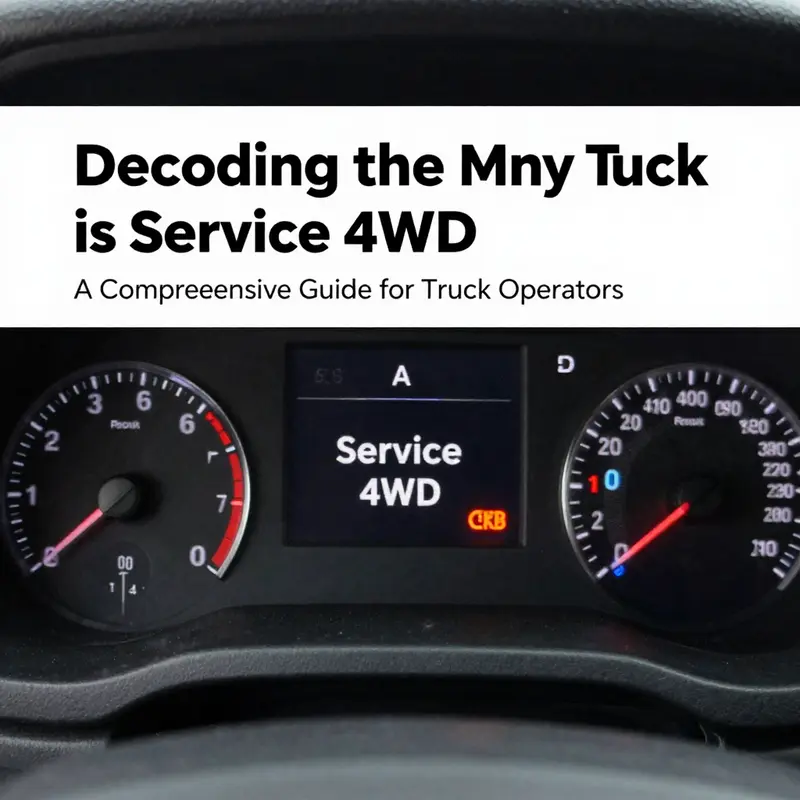
Service 4WD is a diagnostic alert from the vehicle’s onboard computer. It signals that something in the four-wheel-drive system is not performing as intended. The 4WD system relies on wheel-speed sensors, a transfer case, actuators, and a control module that coordinate torque between the front and rear axles. When a sensor reports speeds out of sync, when the transfer case fails to shift correctly, or when wiring or software malfunctions, the ECU may store a fault code and illuminate the warning light. The goal is to protect the drivetrain and maintain safe handling in changing conditions.
Common triggers include dirty or failing wheel-speed sensors, low or contaminated transfer case fluid, worn mechanical components, loose or corroded electrical connectors, and software or calibration issues after a repair. A fault may cause reduced traction or even default to a limited-capability drive mode. Driving with the warning on is not guaranteed to be safe, especially in rain, snow, mud, or uneven terrain.
Immediate steps: check the owner’s manual for model-specific guidance; avoid unnecessary use of 4WD. A reset might clear the code but does not fix the underlying issue. Use an OBD2 scanner to retrieve codes and observe live data; codes point to a subsystem but must be interpreted with real-time readings. Because modern 4WD systems integrate multiple subsystems, a professional diagnostic is usually needed.
For drivers who must continue: drive slowly, avoid aggressive maneuvers, and consider switching to 2WD if the system allows. Plan a safe location to stop and seek service as soon as practical.
Prevention and maintenance: keep fluids at proper levels, inspect wiring harnesses for corrosion or damage, and check for wear on transfer-case components. Practicing mindful 4WD use, avoiding high-range on dry pavement and avoiding use of off-road abuse, helps reduce false alerts and prolong system life.
null
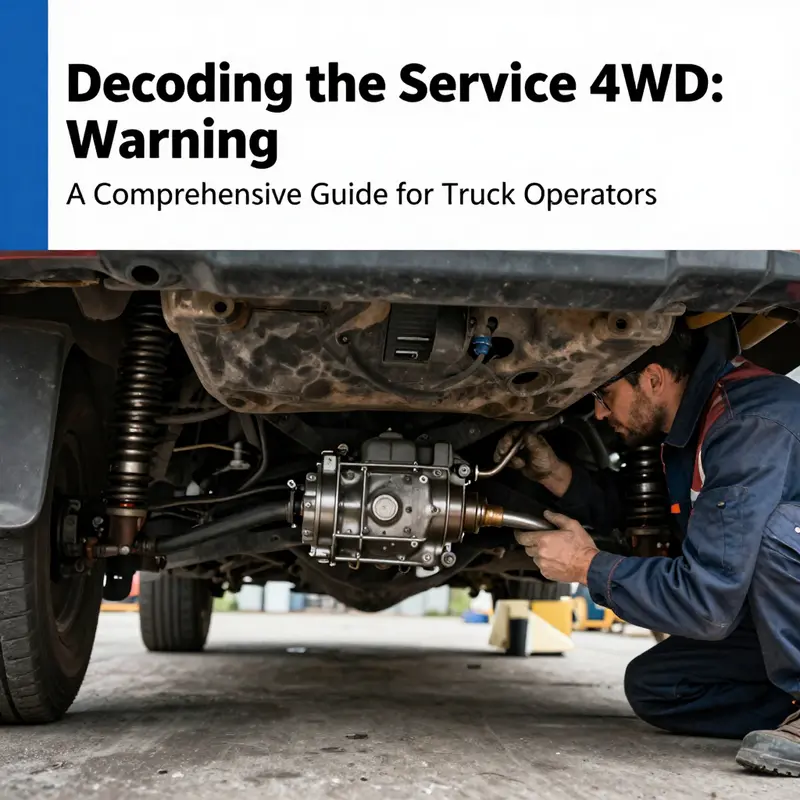
null
Guarding the Four-Wheel Pulse: Proactive Strategies to Prevent the ‘Service 4WD’ Warning
When a truck flashes the message “Service 4WD,” it can feel like a warning bell going off inside the cabin. The four-wheel-drive system holds a promise of grip and stability, especially when the road or trail turns slick, sandy, or uneven. A warning that something in that system needs attention interrupts that promise and shifts the driver’s mindset from routine cruising to caution and diagnostics. The alert is not a mere inconvenience. It is a signal that the vehicle’s brain has detected an anomaly—an inconsistency between sensors, actuators, and the mechanical pathways that deliver power to all four wheels. The result can be a vehicle that still runs in two-wheel-drive mode, a compromised drive with reduced traction, or, in worst cases, a sudden, unexpected failure in a high-stress situation. Understanding how this warning arises, and more importantly how to prevent it from appearing in the first place, helps keep a truck ready for work, whether it’s navigating urban streets after a shift or climbing a muddy backroad to reach a worksite.
The essence behind the warning lies in how modern 4WD systems operate. They are not simple mechanical couplings that lock or unlock a front axle. They are integrated networks of sensors, actuators, transfer cases, and electronic control modules that coordinate power distribution in real time. Wheel-speed sensors monitor how fast each wheel is turning, and the system compares those speeds to detect slipping or binding. The transfer case shifts power between front and rear axles, and sometimes between different drive modes, depending on conditions and the driver’s input. In some configurations, there are even electronically actuated clutches or gear trains inside the transfer case that engage or disengage the front axle. Because so many moving parts and signals are involved, a fault in any one component can trigger the warning, even if the truck still drives. A loose electrical connection, a degraded fluid, or a worn sensor can create a ripple effect that the system interprets as a fault.
This is why preventive care is not just about avoiding a nuisance message. It is about preserving the integrity of the drivetrain and maintaining predictable, safe handling. The path to prevention begins with a practical understanding of what tends to degrade or misread signals in the 4WD pathway. Tire condition and inflation, for instance, play a surprisingly large role. The wheel-speed sensors rely on each wheel rotating at a rate that the system can interpret. If tires are underinflated, overinflated, or mismatched in size or tread pattern, the difference in wheel circumferences can distort the signal that the sensors send. The result can be a misalignment of the computer’s expectations and the actual motion of the wheels, which can light the Service 4WD warning as a caution rather than a warning—an early check for someone to investigate.
Equally important are the electrical connections scattered around the transfer case, the differential housings, and the wiring harnesses that feed the control modules. Corrosion, moisture, or simply loose connectors can cause intermittent faults that pop in and out of the diagnostic memory. In the same vein, the transfer-case fluid is not a glamorous topic, but it functions as the lifeblood of the internal components that engage the system’s clutch packs and gears. If the fluid is degraded or low, the system may sense hesitation in engagement, slippage under load, or a change in the way the clutch pack responds to commands. The end result is a warning that can feel disproportionate to the actual symptoms, especially if the truck has just left a routine drive.
Driving behavior and driving conditions also shape the likelihood of a Service 4WD alert. In frequent off-road use or in vehicles that encounter snow, mud, or loose gravel, the 4WD system is under more strenuous duty. Repeated engagement and disengagement, abrupt throttle inputs, or hard impacts can stress sensors, actuators, and linkages. These factors, when combined with aging components, collect to raise the chance of a fault code forming in the vehicle’s computer memory. The practical takeaway is straightforward: treat 4WD alerts as a call for inspection, not a sign that you must immediately abandon the truck. The alert is a guide that your drivetrain requires attention to prevent a larger problem from developing on the road or in rough terrain.
So how does a preventative approach look in everyday life? It begins with tire care. Four-wheel-drive systems rely on consistent traction signals, and those signals demand uniformity across all four corners of the vehicle. Regularly verify tire pressure to the specification in the owner’s manual and keep all four tires within a similar diameter. Even small differences can create wheel-speed sensor discrepancies that trip the system’s safety checks. If you must run mixed tire brands or different tread depths, schedule additional inspections and avoid relying on 4WD in challenging conditions until you’ve aligned the tires front to back and side to side. Matching tires in size and brand reduces the odds of sensor misreads and keeps the system’s logic clean and reliable.
Beyond the tires, the electrical landscape deserves attention. Periodic inspection of the four-wheel-drive wiring and connectors can prevent a little corrosion from becoming a big fault. The connectors at the transfer case and near the differentials are especially vulnerable to exposure to dirt, moisture, and vibration. If you notice any corrosion buildup, loose connections, or signs of wear, clean the contact surfaces with a purpose-made electrical contact cleaner and reseat them securely. Such small maintenance actions can avert intermittent faults that might otherwise leave you stuck with a blinking warning or a hard fault code that requires a diagnostic tool to clear.
The fluid in the transfer case deserves its own careful routine. Follow the service intervals in the owner’s manual and adhere to the manufacturer’s recommended drain-and-fill windows. The figure often cited—around 40,000 kilometers or roughly 25,000 miles—serves as a thoughtful benchmark for many models, though some configurations may diverge. When the fluid shows signs of darkening, metallic particles, or a smell suggesting contamination, it is time to change it, not just to appease the maintenance schedule but to preserve the proper operation of the clutch packs and the internal mechanism that splits power between the wheels. Clean, fresh fluid supports smooth engagement, reduces heat buildup, and minimizes the risk of a slow-developing fault that might trigger the Service 4WD warning in the middle of work or on a slick highway.
Driving habits also shape maintenance outcomes. If you frequently venture into off-road or high-draw conditions, approach 4WD use with a habit of pre-checks. Before entering a challenging scene, verify tire condition, listen for unusual mechanical noises, and test the system in a controlled, low-risk way to confirm it engages and disengages smoothly. After a demanding off-road session, have the system inspected by a qualified technician. The goal is not to avoid off-road use but to ensure the drivetrain remains robust enough to handle it. A proactive inspection after rough use can pick up heat-related issues, sensor misalignments, or minor disturbances before they become a warning light that forces you to pause your work.
Diagnostics are the bridge between preventive care and definitive repair. If the Service 4WD warning does appear, approach the situation with a calm, methodical mindset. The first step is to consult the owner’s manual for model-specific guidance, then switch to 2WD if conditions demand more traction control or if you suspect the 4WD system might engage unexpectedly. An OBD-II scan with a diagnostic tool can reveal fault codes that indicate whether a sensor, actuator, or fluid condition is responsible. While some codes may clear after a simple reset, others require a mechanic’s hands-on examination of electrical connections, the transfer case, the front differential, or the clutch pack. A professional technician brings specialized tools and knowledge to interpret data that the truck’s own dashboard may not fully reveal. They can test sensor output, perform a voltage drop test on wiring harnesses, and inspect the transfer-case mechanism under load, ensuring that the system’s digital instructions and mechanical realities align.
The value of a thoughtful, proactive stance becomes clear when you consider the consequences of neglect. Mud, snow, or rain can magnify the consequences of a misread signal. If the system transitions to 2WD while you still require traction, you may suddenly encounter reduced control on a slippery slope, an experience that increases the risk of a slide or crash. If the system continues to operate with degraded signals or degraded fluid, the entire drivetrain may suffer heat, wear, and eventually failure. Such an outcome is not just a repair bill; it can affect safety, reliability, and the ability to meet work deadlines that depend on dependable transportation.
Because the 4WD warning often arises from a blend of factors, the most effective prevention strategy embraces a holistic approach. Regular tire maintenance earns a place at the core of that strategy, followed by careful attention to electrical integrity, fluid health, and responsible driving practices. A simple annual or semi-annual rhythm—inspect tires and pressures, review electrical connections for signs of corrosion, replace transfer-case fluid on schedule, and schedule a professional check after off-road runs—can reduce the odds of a nuisance warning appearing during the workday or out on a remote job site. When a warning does appear, the response should be measured and informed. Treat it as a message that your drivetrain needs a closer look, not as a reason to abandon the truck midstream. A short diagnostic session now can prevent longer downtime later and keep the vehicle performing as designed under the varied demands of work and weather.
To support those who want to approach vehicle maintenance with discipline and consistency, there is value in tapping into practical resources that translate these concepts into actionable steps. For example, a dedicated maintenance program focused on critical work trucks and the systems that keep them dependable offers structured guidance on how to monitor, test, and service complex drivetrains. Such programs emphasize not only the mechanics of the 4WD system but also the discipline of routine checks, proper part wear signaling, and a culture of proactive care that aligns with the realities of field operations. In our exploration of preventative measures, it is easy to see how a disciplined maintenance mindset reduces risk, limits downtime, and extends the life of a vehicle that is essential to a crew’s mission.
For readers seeking a more practical path to embedding these habits into daily operations, consider exploring resources that focus on maintenance training and the long-term health of work trucks. A practical starting point is a dedicated guide that highlights the importance of routine checks and maintenance training for heavy-duty vehicles. This kind of material is designed to translate theory into routine practice, helping teams implement a predictable, repeatable maintenance cadence that supports uptime and reliability. fire-truck maintenance training offers a perspective on keeping critical systems in peak condition through structured training, hands-on practice, and a shared understanding of how preventative care translates into safer, more capable vehicles for demanding environments. While the focus of that resource is specific to fire service vehicles, the principles—regular inspection, clear maintenance schedules, and a culture of proactive care—translate readily to any work truck facing the realities of challenging terrain and weather.
Ultimately, the question “Why is my truck saying service 4WD?” invites a broader answer than merely replacing a faulty sensor or topping off fluid. It invites you to adopt a maintenance philosophy that respects the interconnectedness of tires, electronics, mechanical linkages, and driver behavior. When those elements work in harmony, the four-wheel-drive system serves as a reliable ally in difficult conditions, not a source of anxiety. The goal is to create a routine where preventative care becomes second nature, where a warning is not an admission of defeat but an opportunity to verify that the machine you rely on remains resilient, predictable, and ready to perform when the job demands it. By embracing tire care as a foundation, safeguarding electrical connections, honoring fluid intervals, and nurturing disciplined driving and diagnostics, you place your truck on a path toward fewer surprises and more consistent uptime.
External factors, such as environmental exposure and the passage of time, will always challenge mechanical systems. Yet a well-maintained 4WD setup can withstand those pressures more gracefully than one that is neglected. The reality is straightforward: proactive care reduces risk, extends component life, and preserves the system’s capacity to deliver traction when it matters most. If a warning does arise, the prudent course is to respect the message, perform a measured assessment, and seek professional assistance when needed. In the end, prevention is a straightforward investment with a substantial payoff—the confidence that your truck will perform as intended, even when the road ahead is uncertain. And that confidence starts with small, consistent actions you can integrate into routine maintenance today.
For those who want to keep exploring, remember that practical, up-to-date guidance on vehicle maintenance and safe operation is supported by trusted safety resources. Official safety organizations emphasize timely attention to warning lights to prevent mechanical failure and ensure safe operation on the road and in off-road scenarios. In addition, engaging with resources that focus on maintenance training can help translate these concepts into a sustainable routine that keeps your truck ready for work, always.
External resource: https://www.nhtsa.gov/
Decoding the Service 4WD Alert: A Driver’s Guide to When to Seek Professional Help
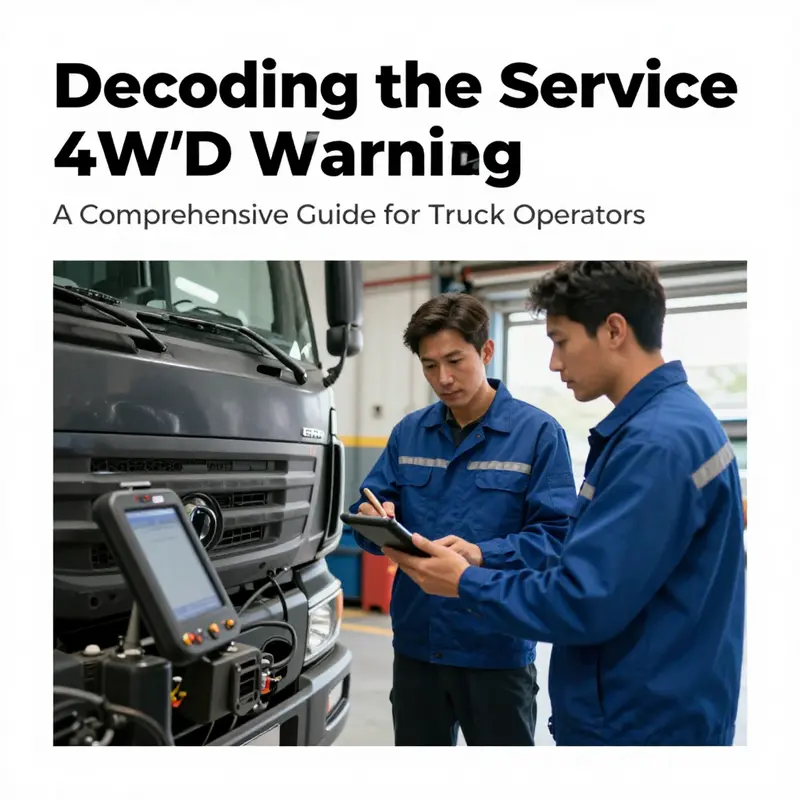
When a dashboard light announces a message as stark as Service 4WD, it can feel like a jolt of weather on the windshield: unexpected, unsettling, and demanding a reaction. The warning is not a mere suggestion nudging you toward maintenance; it is a critical alert that your four-wheel-drive system has detected a fault or a condition that could compromise traction, control, or the long-term health of the drivetrain. The moment you see those words—or the light that accompanies them—your relationship with the truck shifts from routine operation to a careful assessment of risk and responsibility. The 4WD system, with its blend of sensors, actuators, control modules, transfer case mechanisms, driveshafts, and differentials, is a remarkably capable but intricate network. When one part falters, the entire balance can weaken. Understanding what the warning means helps you respond with purpose rather than panic, and it anchors you to a path that protects both your safety and the vehicle’s future reliability.
The essence of the Service 4WD warning rests on awareness: the vehicle’s computer is constantly monitoring the 4WD system for abnormalities. A fault can be as simple as a sensor reporting an out-of-range value, or as complex as a transmission of data indicating the actuator cannot correctly engage or disengage the front differential. In many trucks, the message surfaces alongside or instead of a flickering or steady 4WD indicator light. The consequences of ignoring the alert are not hypothetical. In adverse weather, on loose surfaces, or during rapid road changes, a malfunctioning 4WD system can hamper traction, alter steering response, and place additional strain on components that aren’t meant to bear abnormal loads. Over time, that strain can translate into accelerated wear, degraded performance, or even a failure that leaves you stranded at a critical moment. The stakes are especially high for drivers who rely on 4WD for winter commutes, rural drives, or off-road excursions where grip is a lifeline.
To move from alarm to action, begin with a calm, systematic approach. The owner’s manual is more than a decorative booklet; it contains model-specific guidance that can illuminate what signals are most likely to be benign and which cues demand urgent attention. In many cases, the manual will outline simple checks you can perform without disassembling anything. For instance, you may find instructions on confirming fluid levels in the transfer case and differentials or verifying the proper operation of fuses and relays that affect the 4WD control circuitry. If you find a fluid level that is low, that clue itself can be a turning point, since low fluid can lead to overheating, erratic sensor readings, and improper engagement of the 4WD mechanism. Fluid quality matters too: contaminated or degraded lubricant can impair the smooth transfer of power between axles and degrade the responsiveness of the system.
As practical as it sounds to perform basic checks, the moment the message appears, the prudent course is to avoid relying on 4WD unless conditions truly demand it. That means using 2WD in normal, dry pavement and switching to 4WD only when necessary to gain traction on snow, mud, ice, sand, or steep grades. In many cases, engaging 4WD on dry pavement places unnecessary stress on the transfer case, driveshafts, and differentials, potentially accelerating wear and elevating the risk of mechanical failure. The goal is not to enjoy a broader capability at any cost but to preserve the system’s integrity for when you need it most. This conservative approach is particularly important if you notice intermittent engagement or if the warning returns after each restart. If the light disappears briefly but then reappears, that inconsistency is a clear signal that a deeper inspection is warranted.
Diagnosing the root cause of a Service 4WD warning is rarely a one-person job. The 4WD system spans electronic and mechanical domains, and diagnosing it requires a combination of visual inspection, diagnostic testing, and often disassembly of fragile interfaces. A foundational step is a diagnostic scan using an advanced OBD-II tool that can read 4WD-specific trouble codes. These codes point technicians to the subsystem that is reporting a fault, whether it is the 4WD control module, the actuator position sensor, a faulty sensor harness, or a fault in the transfer case motor. While a code can be highly informative, it is not, by itself, a complete diagnosis. Codes indicate a problem area and often come with a data stream that shows live values, helping the technician determine whether a sensor is reading correctly or if a mechanical component has failed to respond as commanded.
Beyond the diagnostic scanner, many technicians will perform a hands-on assessment. They will inspect fluid levels and condition, test the actuator’s response to commands, verify the integrity of wiring harnesses and connectors, and look for abnormal wear in the transfer case and drive shafts. Fluid leaks, discoloration, or unusual metallic smells can reveal issues that codes alone might not capture. In some instances, the problem may be environmental or situational—such as a plug or sensor being knocked loose after a jarring off-road excursion or a corrosion-prone connector affected by road salt. The goal is to create a clear map from a warning symbol to a precise mechanical or electrical failure so that repairs can be targeted, affordable, and durable.
The path to repair can diverge based on the diagnosis. If the issue lies with sensors or the control module, the fix may involve software updates, recalibration, or replacing a faulty sensor. If a mechanical concern—such as a damaged actuator, a worn transfer case gear, or a failing driveshaft—has emerged, the repair may entail component replacement, resealing, or realignment. In some cases, inexpensive maintenance steps, such as topping up or replacing transfer case fluid or differential fluid, can resolve a warning that was triggered by low lubrication rather than a deeper failure. But the distinction between a solvable maintenance alert and a symptom of a larger mechanical failure is precisely what the diagnostic process aims to establish.
The value of professional expertise in this arena cannot be overstated. Even when a truck seems to respond well enough to continue driving, the residual risk of driving with an unresolved 4WD fault remains elevated. A well-trained technician brings a combination of diagnostic software proficiency and hands-on experience with drive-train systems. They can interpret the codes within the context of the vehicle’s history, symptom pattern, and observed behavior on test drives. They can also perform a safe reset of the warning light after repairs, ensuring that the system returns to normal operation and that the light will illuminate again only if a true fault recurs. Attempting to troubleshoot without proper training and equipment can lead to misdiagnosis, unnecessary part replacement, or inadvertent damage that compounds the original problem.
Knowing when to seek professional help is as important as recognizing the warning itself. If the Service 4WD light remains on after you restart the engine, or if you experience difficulty engaging or disengaging 4WD, it is time to schedule a diagnostic session. Unusual noises during shifts into or out of 4WD—such as grinding, clunking, or thuds—are red flags that warrant immediate attention. Any vibration, shaking, or handling abnormalities—especially at highway speeds—should prompt an inspection before continuing to drive. If the warning flashes or flickers intermittently, there is a dynamic fault in the system that merits professional assessment. In contrast, a one-off, non-recurring message that resolves immediately after a restart might indicate a momentary sensor glitch, yet even in that case, a follow-up inspection is wise to confirm there is no latent fault.
The decision to seek professional help is ultimately a choice about safety, reliability, and value. A modern 4WD system is not a throwaway feature; it is a critical safety component that can deliver crucial traction when weather or terrain tests your limits. A dealership or a trusted independent shop with access to the proper diagnostic tools and service information can perform a comprehensive system check, reset the warning, and repair or replace any defective component. Delaying service increases the risk of more extensive repairs later on, such as a damaged transfer case or driveshaft, or an avoidable failure at an inopportune moment. Given the investment most buyers place in their trucks, preserving the 4WD system’s longevity is an act of prudent ownership, not fear-mongering or needless conservatism.
To ground this discussion in practical steps while remaining faithful to professional guidance, begin with the basics: consult your owner’s manual for model-specific instructions, avoid using 4WD in normal driving conditions, and arrange a diagnostic appointment with a certified technician if the warning persists or if you notice any of the symptoms described above. A qualified technician will be equipped to read 4WD-specific codes, evaluate the actuator’s health, inspect the transfer case fluid level and integrity, test electrical wiring and connectors for signs of wear or corrosion, and verify that the system’s calibration aligns with the manufacturer’s specifications. In many cases, the resolution is straightforward—a sensor or connector replacement, a fluid change, or a software reprogramming—yet it is precisely the unpredictability of borderline faults that makes professional evaluation essential.
For readers who want to deepen their understanding of maintenance mindset and the importance of systematic care in vehicle systems, there is a resource on maintenance training that resonates with this approach. It emphasizes the value of preventive checks and the harm that can arise from assuming a warning light will go away on its own. The idea is not to replace thinking with manuals, but to equip drivers with a framework for safe decision-making when a warning appears, so that every drive remains predictable and secure. You can explore that topic here: fire-truck-maintenance-training-importance.
As you consider the path forward, remember that the Service 4WD message is not a verdict about the end of your vehicle’s capabilities; it is a call to verify a system that you rely on for traction and control. Your response should combine respect for the warning with a clear, deliberate plan: review the manual for model-specific guidance, minimize 4WD use until a professional has evaluated the system, obtain a diagnostic assessment through a certified technician, and, if advised, complete the necessary repairs or replacements. In the right hands, the warning becomes a moment of proactive care rather than a signal of impending failure. And in the larger arc of responsible vehicle ownership, that proactive care preserves safety for you, your passengers, and everyone you share the road with.
Finally, for readers seeking reassurance that the diagnostic process is governed by professional standards, consider turning to industry-recognized resources that guide technician qualifications and quality of service. An established certification and standards body maintains an extensive repository of information about technician competence and best practices for diagnosing complex drivetrains. Accessing such resources reinforces the idea that 4WD systems, while rugged, deserve the kind of methodical, trained attention that comes from working with certified automotive professionals—professionals who can interpret codes, validate symptoms, and perform durable repairs. As you plan your next steps, keep this trusted standard in mind and let it inform your decision on whom to trust with your vehicle’s safety and performance. It is this commitment to expertise that helps ensure that your truck’s 4WD system remains a reliable ally, ready to respond when the trail or road tests your grip.
External reference for trusted professional guidance: https://www.ase.com
Final thoughts
Navigating the complexities of the ‘Service 4WD’ warning is vital for anyone involved in trucking, from drivers to fleet managers. Understanding the common causes, effective diagnostic measures, and potential solutions helps maintain vehicle health and driver safety. By staying informed and proactive, you can minimize disruptions caused by these alerts and ensure that your trucks operate at peak performance, even in demanding conditions. Equip yourself with knowledge, and don’t hesitate to seek professional assistance when needed. Remember, a well-maintained 4WD system is not just a feature, but a critical component of safe driving and operational efficiency.