
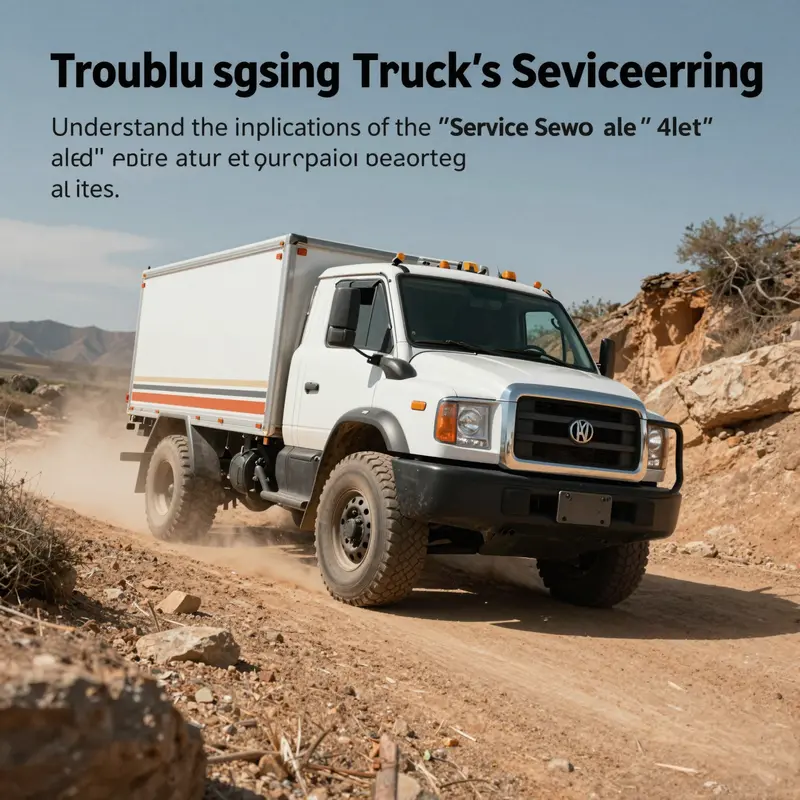
Navigating the highways and byways as a long-haul truck driver or fleet manager comes with its set of challenges, and one such challenge might appear on your dashboard as the ominous “Service 4WD” warning. This alert signals potential issues with your truck’s four-wheel drive system, a critical component, especially in diverse driving conditions. Understanding why this message appears and how to address it is essential for maintaining vehicle integrity and ensuring safety on the road. In the following chapters, we will explore common issues that trigger this warning, provide guidance on diagnosing the problem, and offer preventative measures to avoid future pitfalls.
Reading the Service 4WD Alert: What It Signals, Why It Appears, and How to Respond Before Damage Strikes
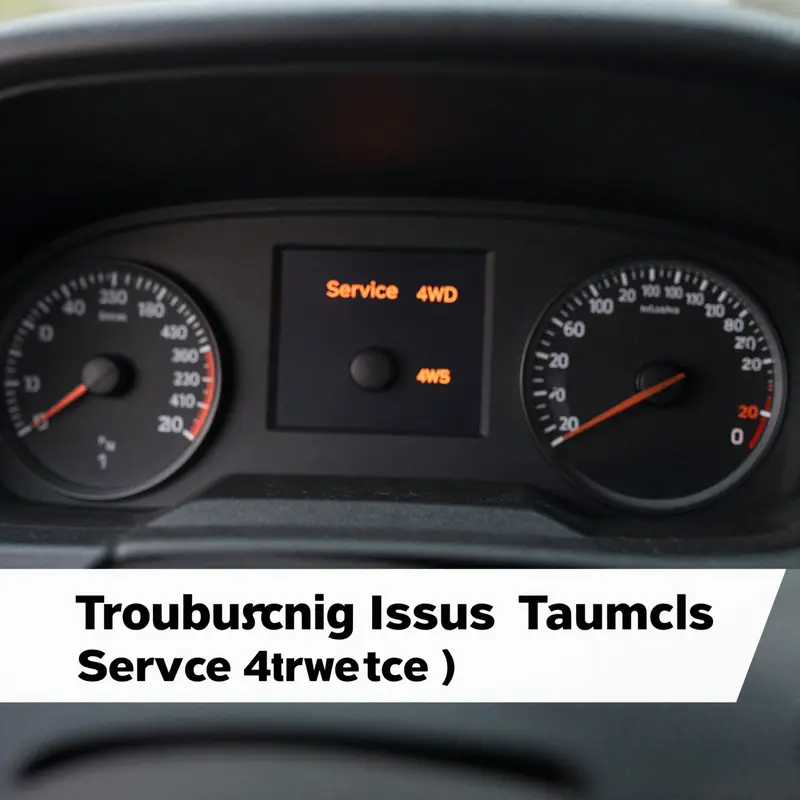
When you see the Service 4WD warning on your instrument cluster, it’s more than a tiny annoyance. It signals that something in the four‑wheel drive system is not operating within normal parameters and deserves attention. The warning is generated by the vehicle’s control modules after sensing abnormal torque distribution, sensor data irregularities, or communication faults among drivetrain components. The alert’s purpose is to prompt safe driving and a diagnostic check before a minor issue becomes a major repair. In most systems, the 4WD control logic will limit power to protect the drivetrain and may place the system into a reduced‑capability mode until the fault is resolved.\n\nCommon triggers include transfer case engagement problems, wheel speed sensor faults, fluid issues in the transfer case or differentials, electrical or wiring faults, and worn drivetrain parts like U‑joints or differential gears. Each fault type requires a different diagnostic path, but the general rule is to stop driving when safe, check fluid levels and for leaks, review any fault codes with an OBD scanner, and seek professional diagnostic help to interpret codes in the context of your specific vehicle.\n\nImportant cautions include not towing or driving with all four wheels on the ground if the manufacturer requires a flat‑bed or dolly tow, as improper towing can damage the transfer case or center differential. Always consult the owner’s manual for model‑specific guidance on diagnostic limits and towing procedures. Regular maintenance, including timely fluid changes and periodic inspection of the transfer case linkage, helps prevent many common 4WD faults and reduces the likelihood of unexpected warnings. For additional practical guidance, consult reputable maintenance resources and manufacturer service information.\n\nThis warning is best treated as a system‑level alert rather than a single bad part. Address it promptly with proper diagnostics and professional attention to preserve safety and drivetrain integrity.
When Service 4WD Lights Up: A Thorough, Practical Look at Your Truck’s Four-Wheel Drive Warning and What It Really Means

A dashboard is supposed to guide you, not bewilder you. When a truck suddenly flashes a Service 4WD warning, it can feel like a cryptic message from the machine, a prompt to panic or ignore. The truth lies somewhere in between: the light is a signal that the four-wheel drive system has detected a fault or an abnormal condition that could affect traction, control, or the system’s ability to protect itself under heavy mechanical load. Understanding why the warning appears starts with a simple premise: modern 4WD networks are a web of mechanical parts and electronic controllers, and they rely on data from sensors to decide when the transfer case should engage, when actuators should lock, and when the system should default to a safer mode. If any piece of that chain is off, the software will light the alert to prevent more serious damage and to keep you safe on the road or trail. The challenge is to translate that warning from a flashing icon into a practical, methodical approach to diagnosis and repair that respects the complexity of today’s drivetrain while avoiding unnecessary repairs that don’t address the real root cause.
At its core, the Service 4WD warning is about the health and communication of the 4WD subsystem. It can be triggered by a genuine hardware fault in the transfer case, front differential, or driveline components. It can be as straightforward as a failing sensor that misreads wheel speed or position and feeds bad data to the control module. It can even be a software hiccup or a flaky wiring connection that interrupts a signal path. The broad takeaway is simple: when the light comes on, the vehicle’s brain has detected a discrepancy between what the system expects to see and what it actually sees, and it has decided it should not continue to rely on the 4WD mode without diagnostic confirmation.
In the past, four-wheel-drive systems were mostly mechanical. You’d flip a lever or push a button, and the system would physically couple the front axle or engage a transfer case. Today’s trucks, even those with mechanical interfaces, operate within a web of sensors, actuators, and control modules. The 4WD system isn’t just about whether the truck can send power to all corners; it’s about how the system negotiates traction, yaw stability, and torque distribution in varying conditions. That complexity is why the warning is more than a nuisance; it’s a protective feature. It’s also why ignoring the light can turn a manageable repair into a more expensive problem. The right approach recognizes that the light is a cue to diagnose, not a signal to dismiss.
A central piece of the puzzle is the relationship between engagement and environment. Engineers designed 4WD to be mindful of where you are and what surface you’re on. On loose surfaces such as dirt or snow, engaging 4WD helps multiply grip rather than simply changing how power is distributed. On dry pavement, however, the same engagement can cause drivetrain binding if the system remains in a 4WD configuration in situations it isn’t designed to handle. This is precisely why certain warnings appear after repeated attempts to use 4WD on dry roads or during normal street driving with ambiguous sensor data. The system is telling you that it detected an anomaly strong enough to consider safe operation compromised. It’s not just about whether the light stays on after you’ve engaged 4WD; it’s about whether the underlying fault is real and whether continuing to drive in that mode could cause further damage.
The most common culprits fall into a few broad categories, each with its own telltale signs. First, mechanical issues—sometimes as simple as worn or damaged driveline components, a failing transfer case, or a slipping clutch inside the system. When you hear grinding, clunking, or unusual vibrations, the odds rise that a component is resisting proper engagement or torque transfer. The 4WD system relies on precise alignment and timing. Any wear or defect in the driveshafts, CV joints, or axle gears can create symptoms that the control module interprets as misalignment or overload, triggering the warning as a preventive alarm. Second, sensor and electrical faults. Wheel-speed sensors, position sensors, or the communication lines between the 4WD control module (TCM or a centralized ABS/TCM network) and the rest of the vehicle can fail or degrade. When a sensor reports inconsistent data or a module can’t hear from its peers, the system may default to a fail-safe mode, illuminating the Service 4WD light to keep you aware that there is an integrity issue that requires attention. Third, software or control-module errors, including glitches in the programming that govern how the system interprets sensor data and commands the actuators. In some vehicles, especially those with more electronically controlled 4WD architectures, a temporary fault might cause a momentary warning, only to clear after a reset or a software update. Finally, mechanical compromises such as a loose connector, corroded pins, or oxidation in a switch on the transfer-case selector can produce intermittent signals that the modules struggle to interpret. In short, the light often marks a fault somewhere in the chain rather than simply a failure of a single screw or a bolt. This is why diagnosing a Service 4WD light requires not just checking the obvious symptoms but tracing data through the system’s sensors, actuators, and modules.
From a driver’s perspective, the first practical question is what to do when you see the warning. The prudent course is to avoid treating the light as a minor nuisance and begin a careful inspection routine that respects safety and the vehicle’s design, particularly if you live in a region with variable traction or you regularly operate in low-grip conditions. Start with the obvious: listen for changes in sound, feel for unusual vibrations, and pay attention to whether the 4WD engages smoothly. If the 4WD system engages but the warning persists, the issue may be electronic rather than purely mechanical. If you can feel the system struggling to engage or disengage, or if you notice grinding or binding when you steer or accelerate, stop using 4WD and seek professional help promptly. The stakes are not merely about a failed feature; a faulty 4WD pathway can lead to unpredictable handling, increased wear, and even structural damage under load.
The diagnostic path begins with a careful read of codes. An OBD-II scanner capable of accessing 4WD-related codes is a practical tool for most drivers, especially if you’re working with a shop that can read transmission or ABS and TCM data. Codes in the P0 range are general powertrain codes, while U-codes often reference module communication problems; C codes can point to 4WD system faults specific to the controller or actuators. Among the commonly encountered codes are those that indicate pressure or sensor circuit issues, or loss of communication between critical control modules. The exact code definitions vary by make and model, which is why a vehicle-specific diagnostic approach matters. If a technician is called in, they will typically begin by confirming the fault with a scan tool that can access the 4WD control module and, when necessary, command the system to shift through its states to verify hardware responses. A thorough diagnostic will cross-check sensor data, command signals, and the physical state of the components.
Visual inspection remains a cornerstone of the process. Fluid leaks around the transfer case or differentials can suggest contamination, a failed seal, or a compromised fluid circuit that can alter the pressure and torque distribution that the 4WD system relies on. Worn CV joints or damaged driveshafts can create abnormal play or noise, and a failing actuator may fail to engage or disengage properly, which the system may interpret as a fault. The selector switch or electronic control wiring should be checked for corrosion, loose pins, or damaged insulation. In many cases, a seemingly minor issue such as a corroded connector becomes the culprit, and replacing or cleaning connectors resolves the problem without heavy component repair.
A crucial nuance is how to test safely. If you suspect the system is malfunctioning, avoid aggressive testing on dry pavement in high-speed conditions. The best practice is to test on loose surfaces such as gravel, sand, snow, or dirt where the system’s engagement can be observed in a controlled manner. If the system engages but the warning remains, you’re often looking at an electrical or sensor fault. If engagement feels weak, or there is no engagement when expected, you could be dealing with a mechanical fault. In either scenario, it’s wise to work with a technician who has hands-on experience with the particular 4WD architecture in your truck. Modern 4WD systems can be sensitive to variations in temperature, voltage supply, and even wear patterns that emerge only after miles of use, so a cross-check of sensor health, connector integrity, and module software is typically necessary.
It’s worth noting that some warnings can be transient. A temporary glitch in a sensor or a momentary drop in voltage can trigger a warning that clears after a reset, only to reappear if the underlying data stream remains unreliable. Replacing a fuse or resetting the codes may seem to solve the symptom, but doing so without addressing root causes can invite a repeat fault and potential escalation. That’s why the diagnostic journey should be deliberate, relying on both data and physical inspection rather than quick repairs or part swaps.
Another truth about the Service 4WD warning is that it doesn’t exist in a vacuum. It sits within a family of drivetrain safety and performance systems designed to protect you in adverse conditions. Even if you do not regularly drive off-road, encountering rainfall, mud, or ice can reveal weaknesses in traction management. Some trucks also feature advanced stability control systems that rely on 4WD data to modulate braking and steering inputs. In those cases, a fault in the 4WD pathway can ripple into other systems, making a correct diagnosis essential not only for drivability but for overall vehicle safety.
When it comes to resolving the issue, the path can take several forms. In some cases, a straightforward repair—such as replacing a failed sensor, repairing a damaged wire harness, or cleaning a corroded connector—proves sufficient. In more complex scenarios, a transmission or transfer-case service may be required. This can involve fluid changes, seal replacement, or reconditioning of internal gears. Because the 4WD system’s components exist in a closely coupled network with the engine, transmission, and braking systems, even repairs that seem isolated can require reinitialization or calibration within the vehicle’s control software. A trained technician will typically verify operation after the repair by performing a road test and a diagnostic verification sequence to ensure the fault no longer reappears under normal driving conditions.
The guidance offered by official sources aligns with this practical approach. A reliable point of reference is the official service information portal from major automakers, which emphasizes that the Service 4WD warning indicates a fault in the 4WD system and must be diagnosed using factory tools. This emphasis on factory diagnostics underscores a broader principle: as systems become more centralized and software-driven, the tools needed to diagnose them become more specialized. For many drivers, this is an argument for seeking professional help rather than relying on generic diagnostic devices alone. The goal remains the same: restore proper function, preserve drivetrain longevity, and maintain safe vehicle behavior across all driving conditions.
In the meantime, a few everyday practices can help protect your 4WD system from developing faults. First, avoid using 4WD on dry pavement unless the vehicle is specifically designed for such use and the manufacturer’s guidelines permit it. Even small moments of binding or torque mismanagement can accelerate wear in the transfer case and front differential. Second, keep up with fluid maintenance. Transmission or transfer-case fluids aren’t just lubricants; they are part of the hydraulic circuits that actuate locking mechanisms and clutches. Low fluid level or degraded fluid quality can trigger or mask faults and lead to misinterpretation by the control modules. Third, maintain a clean electrical environment. Regular inspections of connectors, wiring harnesses, and grounds help prevent intermittent faults that can surface as 4WD warnings. Finally, invest in routine diagnostics if you live in harsh climates or engage the 4WD system frequently. Regular scan sessions help detect sensor drift or creeping electrical issues before they evolve into more serious failures.
The big picture is that the Service 4WD warning is a prudent guardrail, not a nuisance. It invites a thoughtful, data-informed approach to maintenance that respects the complexity of modern drivetrains and the safety implications of misdiagnosis. If you’ve noticed the light while driving in rain, snow, or loose gravel, treat it with particular seriousness. The moment you feel an unusual transfer of torque, a vibration, or a change in steering response, stop and assess rather than press on. The car’s safety systems are designed to assist you, but only when their health is sound. In this sense, the warning becomes a partner in safer driving rather than a stubborn obstacle to ignore.
For those seeking deeper, model-specific guidance, the path is to consult official service manuals and diagnostic resources that reflect the precise architecture of your vehicle’s 4WD system. These manuals provide wiring diagrams, fault-code definitions, and step-by-step procedures that map directly to the flags your vehicle may raise on the instrument cluster. They are indispensable when the goal is not just to lamp-check a dashboard light but to understand how the entire 4WD ecosystem operates and how to return it to optimal function with confidence. As you navigate through the fault codes, sensor readings, and the possible mechanical culprits, keep in mind that the diagnostic journey is as much about honoring the vehicle’s design as it is about protecting your safety and the integrity of your drivetrain. If you’re unsure at any point, seeking professional evaluation is a sensible, responsible decision that saves both time and money in the long run.
Internal link for practical maintenance context: for practical maintenance habits that help keep your powertrain components in top shape, you can explore more on fire-truck-maintenance-training-importance. fire-truck-maintenance-training-importance.
Finally, when you’re ready to pursue deeper, vehicle-specific diagnostics, turn to the official service resources that align with your truck’s make and model. These documents provide comprehensive procedures, wiring diagrams, and code definitions to guide your repair journey with precision. (External resource: GM Service Manuals) https://www.chevrolet.com/service/manuals
Guardrails for Grip: Proactive Steps When Your Truck Shows Service 4WD
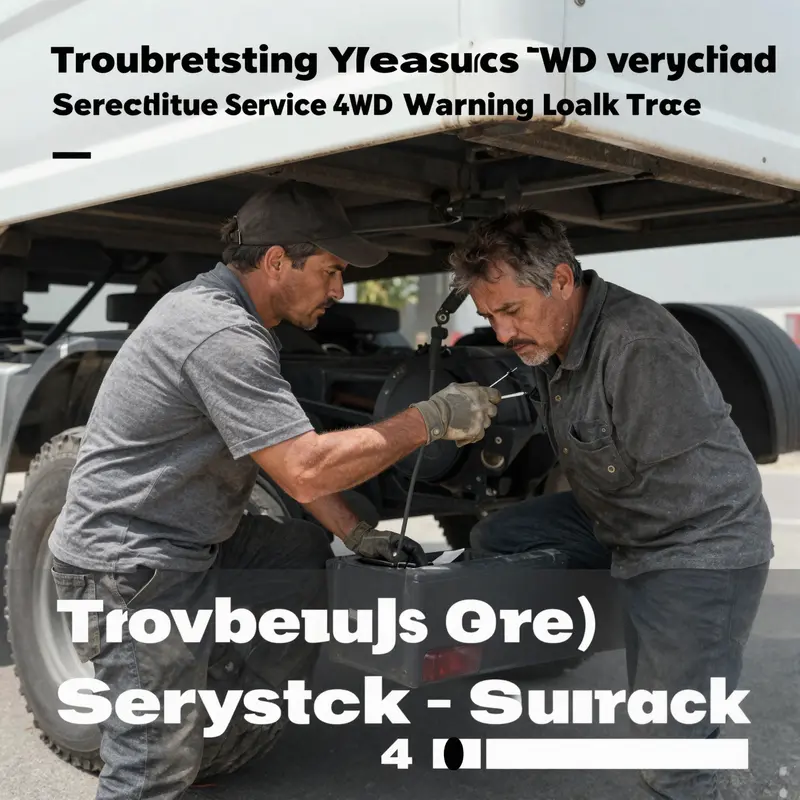
When your truck lights up with a Service 4WD warning, it is more than a blinking indicator on the dash. It is a signal that the four‑wheel drive system has detected an issue serious enough to require attention. In many trucks, this warning is not just about traction in winter or off‑road adventures; it can foretell a fault in the electronic controls, a sensor reading that disagrees with reality, or a mechanical condition that, if left unchecked, could surge into a larger problem. The moment such a warning appears, the driver steps into a safety and maintenance decision point. The goal is not to panic or to disable the concern with quick fixes, but to approach it with a calm, methodical plan that preserves safety, protects drivetrain components, and avoids costly repairs down the road. The four‑wheel drive system is a complex network of actuators, sensors, control modules, fluid pathways, and mechanical linkages. It must operate in harmony to transfer torque to the wheels that can grip the terrain. When one piece falters, the system can revert to a default mode that is safer but less capable, or it can throw a fault that prevents engagement altogether. Either way, the warning is not a suggestion to ignore—it’s a directive to investigate with care and to act with purpose. The broader context is that the 4WD system touches many of the vehicle’s core functions, from engine management strategies to traction control, braking assist, and even stability programs. The goal of this chapter is not to provide a supermarket checklist but to offer a steady, readable understanding of what the warning means, what it might be telling you about the health of your truck, and how to approach diagnostics and maintenance with a mindset that reduces risk and extends uptime. With this approach, you keep yourself safe, you protect your investment, and you maintain the precise balance between power and control that 4WD is designed to deliver in challenging conditions.
Reading the warning is the first step toward responsible action. In many models, the Service 4WD light will accompany a fault code that points to a subsystem involved in the four‑wheel drive. Some faults are transient, caused by a momentary sensor hiccup or a loose connector that reestablishes itself after a reboot of the ignition. Others are persistent, signaling a fault that can worsen if the vehicle keeps operating in the same state. A useful mindset is to treat the warning as a diagnostic clue rather than a final verdict. The clue could point to a sensor that has fallen out of calibration, a wiring harness that has suffered from exposure to heat or moisture, or a mechanical part that has worn beyond its tolerance. The challenge lies in translating that clue into a precise repair plan—something that requires careful observation, testing, and sometimes professional diagnostic tools. To recognize the range of possibilities, it helps to think about the 4WD system in layers: the electrical brain that reads sensors and commands actuators, the data pathways that keep modules talking, the mechanical pathways that actually move torques and engage gears, and the fluids that lubricate and cool essential components. Each layer can generate a fault that lights the warning, yet not every fault is equally urgent in every situation. For example, a sensor signal erratic enough to set a fault code might not immediately affect daily highway driving, but it can compromise traction control in rain or snow. Conversely, a mechanical issue within the transfer case or a drive shaft that loses proper balance can cause noises, vibrations, or even sudden engagement problems in any weather. The real test is to listen to the truck, watch for patterns, and pursue a diagnosis that aligns with the symptoms you observe during operation. Along the way, remember that the goal is safety and reliability. Returning the vehicle to a state where you can drive with confidence is the priority, not chasing a quick patch that only masks the problem.
Understanding what the warning could be telling you requires a look at the plausible culprits. The most common reason is a failure within the 4WD system itself. This category includes issues with the transfer case—where the mechanism that shifts power between the front and rear axles resides—as well as the driveline components that transfer torque through the drivetrain. A worn or damaged gear, a dragging lock, or a misadjusted actuator can all trigger fault conditions. In many trucks, the 4WD system is designed to detect abnormal operating conditions by comparing wheel speeds, torque delivery, and input from the driver’s switch or electronic selector. If the system detects an inconsistency in wheel speed signals or a breakdown in coordination between the modules, it will flag a fault and illuminate the warning. A second major category is sensor or electrical faults. Wheel speed sensors, which feed crucial data to control modules, can fail or become noisy due to contamination, damage, or wiring problems. Electrical faults can also occur in the communication lines that tie together the ECM, the Transmission Control Module, ABS, and the 4WD control unit. When cables become corroded or connectors oxidize in wet or dusty environments, a fault code can appear without a single mechanical woe in the transfer case. A third category is mechanical wear and tear. Driveshafts, axles, and internal gears within the transfer case can degrade from use, especially in vehicles that see heavy towing, off‑road use, or repeated engagement of 4WD in harsh conditions. As components wear, the system can misread torque or fail to engage cleanly, producing symptoms that the diagnostic system recognizes as faults. A fourth category is software or control module errors. Some modern, electronically controlled 4WD systems depend on software logic to decide when to engage, disengage, or adjust torque distribution. A glitch in the software, a corrupted calibration, or a failed update can cause a false alarm or an actual fault. Finally, switch or connector problems should not be overlooked. A loose or corroded connection in the 4WD switch or in the transfer case wiring harness can disrupt signals and create intermittent warnings that vanish when the vehicle is jiggled or restarted. The interplay among these categories is why a single warning can require a layered diagnostic approach. The vehicle owner’s manual is a helpful companion here, outlining model‑specific warning behaviors and the recommended diagnostic steps. But the manual is not a universal map for every 4WD fault across every model year. That is why a factory or professional scan tool, capable of reading 4WD–specific codes in addition to standard OBD‑II codes, is so valuable. These tools can read memory codes stored by the system and, in many cases, pull live data streams that reveal timing, synchronization, and torque distribution conditions that would be invisible without a proper scan. The goal is to translate a blinking warning into a set of actionable steps rather than a guesswork teardown.
What you should do in the moments after seeing Service 4WD depends on the context of your driving. If you are in a safe location, it is wise to pull over and assess the situation calmly. If the warning comes on at highway speed, remain steady, avoid abrupt maneuvers, and reduce speed to maintain control while you plan your next move. If conditions are slick or off‑road terrain is ahead, avoid attempting to engage or operate the 4WD system in that moment. The system’s fault could compromise traction distribution when you most need it, turning a routine drive into a risky scenario. The decision tree is simple in principle but can be nuanced in practice. First, do not ignore the warning. Second, limit driving to necessary travel only if you must reach a safe location. Third, conduct a basic visual and tactile check for obvious issues: is there a strong vibration, grinding, clunking, or a noticeable reluctance to engage or disengage? Are there any dashboard messages beyond the Service 4WD indicator, such as ABS or traction control warnings? If there are, note them because they can help a technician diagnose the problem more quickly. After you have ensured personal safety, the practical next step is to retrieve fault codes. An OBD‑II scanner is a valuable tool for this task, especially one that can access 4WD‑specific modules such as the ABS or Torque Control Module in addition to the engine ECM. If you do not own a scanner, you can often access a basic code read at many repair shops or some auto parts stores that offer free diagnostic services. The specific codes will guide the diagnosis, whether they point to a wheel speed sensor reading, a communication fault on a control module, a stuck actuator, or a low fluid level warning for a transfer case or differential. A common misstep is to interpret a code as a diagnosis itself instead of a clue. Codes help narrow the field of possible causes, but the exact fault often needs physical inspection, testing of electrical resistance and continuity, and a check of sensor calibrations and mechanical clearances.
In parallel with code retrieval, consider inspecting the 4WD components in a methodical, non‑destructive way. Start with fluids. The transfer case and differentials rely on lubricating oil to handle heat and friction produced when the system shifts and transfers torque. Low fluid levels or degraded fluid can cause overheating, slipping, or erratic engagement. If the fluids look dark, gritty, or smell burnt, or if the level is visibly low, plan a fluid service as part of the diagnostic and repair plan. The right fluids and viscosities are essential for the smooth operation of heavy drivetrain components. The exact replacement interval can vary by model and usage, but a common guideline is to refresh these fluids approximately every 40,000 to 60,000 miles for vehicles with heavy usage or frequent 4WD engagement. If your use pattern includes frequent off‑road driving, deep mud, sand, or water crossings, the intervals may be shorter, and the fluids should be checked more often. While checking fluid, also assess the condition of seals and gaskets around the transfer case and differentials. Leaks can cause a drop in fluid level and introduce contaminants that accelerate wear. Any signs of seepage around the tail of the vehicle, near the front or rear axle housings, or at the transfer case drain plug should be treated as a prompt maintenance event rather than a cosmetic issue.
Electrical connections deserve equal attention. Wiring harnesses around the 4WD system are often exposed to heat, road salt, moisture, and debris. Corrosion, loose connectors, or cracked insulation can interrupt signals and cause intermittent faults. A close inspection should include unplugging and reseating connectors, checking for bent pins, and looking for signs of heat damage or moisture intrusion. If you see corrosion or oxidation, cleaning with an appropriate contact cleaner and applying dielectric grease where applicable can help, but it is not a substitute for component replacement when a fault is real. The goal is not to chase a symptom but to verify that the signal pathways between sensors, control modules, and actuators are clean, intact, and capable of carrying reliable data throughout the drivetrain. A fault in the electrical lines can masquerade as a mechanical fault, so a careful electrical check often pays off and can save needless replacement costs.
One practical rule for drivers who want to be proactive is to avoid forcing the system when it refuses to engage properly. If you press the 4WD button or flip a lever and the system does not respond or engages and disengages abruptly, do not repeatedly attempt to force it. Repeated cycling can stress actuators, linkages, and the locking mechanisms inside the transfer case. The best course is to limit driving, stabilize the vehicle in a safe location, and seek diagnostic help from a professional who can perform a controlled test. The same caution applies if the vehicle engages 4WD and then immediately reverts to 2WD under load. This pattern often indicates an underlying fault that requires measurement of system pressures, torque distribution, or sensor alignment rather than a simple reset.
Preventive maintenance—rather than reactive repair—serves as the most reliable path to staying ahead of Service 4WD warnings. A maintenance plan built around usage patterns can dramatically reduce the chances that a warning turns into a breakdown. For trucks used in regular on‑road commuting, with occasional light off‑road tasks, a schedule that includes annual checks of 4WD components, fluid inspections, and a basic diagnostic readout during routine service can be sufficient. For trucks that work hard—towing, heavy payloads, or frequent off‑road duty—the maintenance cadence should be more aggressive. In these cases, more frequent fluid changes, sensor inspections, and electrical connector checks become prudent, with inspections every 10,000 to 15,000 miles as a rough guide. The aim is not to chase a calendar but to tailor maintenance to the reality of the vehicle’s workload. Using only the fluids and lubricants recommended by the manufacturer is critical. The central differential or transfer case lubrication, in particular, demands the right type and specification to preserve gear surfaces and to maintain proper lubrication film under high load. Even a small deviation in fluid specification can alter viscosity, heat transfer, and wear characteristics, which in turn can trigger leaks, degraded performance, or premature component failure. A simple practice—keep a container of spare, manufacturer‑recommended fluid and the clean drain plugs ready for service—can make a big difference over the long run. The mechanics of prevention also involve keeping the system dry and clean. Mud, water, and road grime can find their way into joints, sensors, and housings. After an off‑road excursion, a careful wash of undercarriage components (where possible) followed by a dry, thorough inspection can help you spot potential issues before they become symptomatic. In environments that expose the drivetrain to harsh elements, such as coastal humidity or winter road salt, more frequent inspections of electrical grounds and sensor housings are worth the investment for continued reliability.
An important point in the prevention mindset is to stay connected with model‑specific guidance. Vehicle makers publish service information that describes the exact diagnostic flow for their 4WD systems. The guidance includes how technicians should interpret fault codes, what tests should be performed, and which software calibrations apply to a particular model year. While this information is most accessible to authorized technicians, the underlying principle applies to owners who want to prevent a Service 4WD event: knowledge reduces risk. Knowing which signals the system uses, what tests are appropriate, and when to escalate to professional diagnosis can save both safety and money. The best approach is to treat the warning as a structured problem to solve rather than a vague alarm to ignore. It takes time to learn the diagnostic language of your vehicle’s 4WD system, but the effort pays off in steadier operation and lower repair costs. A practical step is to keep a simple maintenance log. Record dates of fluid changes, sensor tests, and any service performed on the 4WD system. Include observed symptoms such as noises, vibrations, or timing of engagement changes. A log provides a historical view that helps a technician diagnose persistent issues and can reveal patterns that single visits might miss. It also gives a sense of progress and accountability, which is valuable when you are balancing cost, safety, and reliability.
When to seek professional help is a critical decision, and time plays a role here. If fault codes point to sensors, electrical circuits, or control modules, a technician with the right scan tools can confirm calibration states, test signal integrity, and verify actuator operation under simulated driving conditions. If the transfer case or differentials show signs of wear, metal shavings in the oil, or unusual noises with movement, a professional inspection is warranted to prevent further damage. The diagnostic process often includes verifying fluid levels and quality, confirming the absence of leaks, and performing a functional test of 4WD engagement and disengagement across different speed ranges. In some cases, the issue can be resolved with a straightforward repair—such as reseating a connector, replacing a sensor, or refreshing the oil. In more complex situations, the repair may require replacing worn components or performing recalibration of software in the system. Access to the right diagnostic tools and the experience to interpret codes correctly is essential to avoid misdiagnosis and unnecessary replacement parts. The underlying message is simple: a timely professional check can prevent small issues from becoming large, expensive problems and reduce the risk of compromised traction in hazardous conditions.
Finally, the way you think about Service 4WD fits into the broader life of your vehicle. It is not a one‑time event but a signal that your truck’s drivetrain is asking for respect and attention. A well‑maintained 4WD system not only keeps you safer on slippery or uneven surfaces but also preserves fuel efficiency and steering feel by maintaining proper torque distribution and minimizing drag caused by misalignment or leakage. The discipline of regular inspection, careful diagnostics, and adherence to manufacturer guidelines creates a durable baseline that supports performance in both routine and challenging scenarios. In the end, preventative measures, executed with patience and consistency, transform a potential pain point into a predictable and manageable aspect of vehicle ownership. For readers seeking a broader context on maintenance philosophy and how to systematize upkeep, a visit to the 5startruckin blog can provide additional perspective and practical tips that complement the approach described here. 5startruckin.com/blog. The aim is not to replace professional diagnosis but to empower you with a clearer sense of what to expect, how to act, and when to seek help.
For those who want to connect with official, model‑specific guidance, a reliable external reference that outlines the manufacturer’s stance on 4WD fault diagnosis is helpful. A dedicated service information portal provides access to the factory diagnostics and repair procedures that technicians rely on to restore proper operation. This resource emphasizes that the Service 4WD warning indicates a fault in the 4WD system and must be diagnosed using a factory scan tool, reinforcing the careful, professional path required for resolution. This official perspective helps to reaffirm the principle of using proper diagnostic channels rather than attempting improvised fixes on critical drivetrain systems. The combination of practical owner checks, structured diagnostic steps, and professional intervention forms a robust framework for handling Service 4WD with confidence and care.
External resource for deeper understanding: Official service bulletins portal.
Final thoughts
Whether you’re managing a fleet or navigating your journey as a long-haul truck driver, the “Service 4WD” warning shouldn’t be taken lightly. Recognizing the potential issues behind this alert and understanding how to diagnose and prevent complications can save time, reduce costs, and enhance safety. Regular maintenance and being proactive about diagnostics will not only protect your vehicle but also ensure you’re equipped to handle the challenges of the road ahead.