
Charging for dump truck services effectively is crucial for maintaining profitability in the trucking industry. Whether you’re a long-haul truck driver, fleet manager, or an aspiring truck driver, understanding the various pricing models can significantly impact your bottom line. In this guide, we will explore the common methods of charging for dump truck services—from hourly rates to flat fees—to provide you with the insights needed to set competitive and fair prices. Each chapter builds on your understanding of pricing strategies, equipping you to make informed decisions tailored to different job types and client needs.
Charging with Precision: Mastering the Hourly Rate for Dump Truck Services
The hourly rate model for dump truck work is more than a number dropped into a calculator. It is a disciplined approach that translates machine capability, site realities, and the realities of cost into a transparent, defendable price. When you price by the hour, you are not just buying fuel and labor for a clock to tick; you are packaging risk, efficiency, and equipment performance into a single value that clients can trust. The most effective hourly pricing recognizes that the work is rarely uniform. A single site can swing from smooth, level ground to steep, unstable terrain in a matter of yards. A contractor may need to maneuver around underground utilities, navigate tight access points, or contend with weather that turns a simple dumping job into a test of timing and resilience. Each of these conditions modifies the true cost of a job and should be reflected in the hourly rate. To say it plainly: the hourly rate is a statement about the truck, the crew, and the environment, all aligned to deliver dependable results on schedule.
The first driver of the hourly rate is the equipment itself. Dump trucks come in a spectrum of sizes and payload capacities, and the pricing reality mirrors that diversity. A compact dump truck with a modest payload will command a lower hourly rate than a standard 15-20 ton truck, which in turn will be outpaced by large, heavy-duty machines designed to move tens of tons at a time. When you name a rate, you are effectively aligning the engine power, the wear on the drivetrain, and the fuel burn with the expected output. The market recognizes this, and regional benchmarks consistently show a tiered pricing ladder: smaller units in the mid-range, standard trucks in the upper mid-range, and heavy-duty equipment at the top. This tiered structure helps clients understand the value they receive for different project scales and allows operators to price with integrity rather than guesswork.
Location is the second major variable. Pricing for dump truck services shifts with geography because the cost of doing business varies. Urban centers tend to push hourly rates higher due to elevated wages, rental costs, insurance, and maintenance. In rural markets, rates may be lower, but the distances between dump sites and disposal facilities grow, creating hidden fuel and time costs that must be captured. Additionally, demand cycles matter. Peak construction seasons or periods of heavy debris activity can tighten labor pools and equipment availability, pushing hourly rates upward. A truly robust hourly quote therefore blends the truck’s capacity with a realistic appraisal of the local market dynamics and the expected demand pressure you will face during the project window.
Site conditions, however, often trump other considerations once work begins. A clear, flat job site is the exception rather than the rule. Slopes, rocky ground, unstable soil, and restricted access change the physics of hauling. They increase fuel consumption, accelerate wear, and demand more operator finesse. The risk profile rises when you must operate near overhead lines, through crowded job zones, or in environments with tight turning radii. When site conditions demand slower cycles, longer trips between dumping and loading points, or extra safety measures, an hourly rate should incorporate those operational penalties. Conversely, if you can move material efficiently with minimal repositioning and fewer trips, the rate can reflect the enhanced productivity. Transparent communication about site realities not only justifies the price but also builds trust with clients who value predictability amid a messy build site.
Beyond equipment and terrain, the scope of services attached to the hourly rate matters. If the assignment requires more than simple hauling—such as assisting with loading, using specialized hopper mechanisms, or operating additional attachments—the hourly charge should reflect the extra labor and complexity. The operator’s experience, too, is a factor. A seasoned driver who anticipates bottlenecks and optimizes dump cycles reduces cycle time and reduces the total number of hours charged. That efficiency translates into tangible savings for clients and reinforces the fairness of the hourly model. Fuel and other operating costs are the wildcards that many pricing conversations finally confront. Some contracts bundle fuel into the hourly rate, while others pass it through as a separate surcharge. Either way, clients benefit when you are explicit about fuel assumptions at the outset and adjust for significant price swings with clear communication and a transparent surcharge policy. The pricing narrative becomes a mutual agreement rather than a surprise at the payroll window.
To translate these factors into a credible hourly quote, most operators start with a conservative base rate that reflects the truck’s size and typical operating conditions, then layer on adjustments for the project’s unique realities. A practical way to frame this is to think in terms of a core “effective speed” for a given job. Map out the expected load time, travel time to the dump site, unloading duration, and any return trips needed to complete the cycle. Time spent idling, waiting for loaders, or re-positioning the truck due to site constraints should be treated as productive minutes rather than wasted downtime. When you multiply the hours by the base rate and then add the value of the extra services or adjustments, you arrive at a total that is both defendable and easy to explain on a written quote.
Recent market data helps anchor these numbers without locking a business into rigidity. For small or compact dump trucks, rates often fall in the $150–$250 per hour range. Standard, mid-size trucks in the 15–20 ton class typically command $250–$400 per hour, with larger, heavy-duty machines pushing beyond $400 per hour and sometimes reaching $600 or more under demanding conditions. These figures are not universal, but they provide a practical framework for negotiations and planning. For long-running projects or maintenance contracts, many operators prefer a fixed daily or weekly package, which can deliver better value by smoothing out the volatility of hourly work and offering clients cost predictability. In some situations, when material volumes are known and predictable, a per-load or per-cubic-yard approach may be preferable. The key is to start with clear assumptions, articulate them in writing, and maintain a client-facing quote that explains not just the price, but the logic behind it.
One place where many practitioners find guidance is through industry discussions and pricing guides that surface in broad trucking and hauling forums and blogs. A useful touchstone is the broader pricing conversation found in the industry’s knowledge base, which you can access through the 5-Star Truckin blog. This resource helps contextualize how operators in related segments price their services and can illuminate how clients think about value, risk, and reliability. The blog’s insights complement the internal benchmarking you perform, offering a broader sense of fairness and market alignment that can inform your own hourly rate strategy. As you refine your pricing approach, it’s wise to couple the practical math with this external perspective to ensure you’re not detached from market expectations. For more general guidance and ongoing industry dialogue, you can visit the 5-Star Truckin blog.
A practical illustration can help bring this together. Imagine a job that requires moving bulk material from a site with good access to a nearby disposal facility. The truck is a mid-range 20-ton model. You estimate 2 hours to load and prepare, 1.5 hours of travel and dumping, and 0.5 hours of reloading and returning to the yard for a final pass. That’s a total of roughly 4 hours of active operation, plus some non-operational time for set-up, breaks, and minor delays. If your base hourly rate is $325 for this truck class and market, you would quote around $1,300 for the core work, before adding any fuel surcharge, service fee, or overtime provisions. If the site proves tougher—say steep grades, soft ground, or the need for extra safety personnel—the rate might adjust upward by $50 to $150 per hour to account for slower cycles and increased risk. Conversely, if you manage to streamline the process—shorter trips, fewer trips, faster loading—the final bill could come in lower than the projection while still protecting margins. The buffer here is essential. A prudent approach is to factor a 5–15 percent contingency into the base estimate to cover unforeseen deltas in volume, site conditions, or access limitations. This keeps you protected when reality outsizes the plan and demonstrates to the client that you are building in contingencies rather than padding the bill after the fact.
Pricing clarity is the best diplomacy you can practice in hourly billing. Before work begins, present a written quote that itemizes the core rate, anticipated hours, and any add-ons or adjustments. Clearly specify what is included—how many trips, what constitutes a “load,” the dump site’s accessibility, and whether fuel is included or billed separately. Anticipate potential extras, such as tolls, permits, or temporary road closures, and outline how those costs will be handled. It’s equally important to spell out overtime or after-hours rates and the circumstances under which they apply. When clients understand the rules and see a transparent, straightforward calculation, they are more likely to accept the quote and trust your ability to deliver on time and on budget.
A final note on practical practice and consistency. The hourly model works best when it is embedded in a broader pricing discipline. Use standardized units for time, track actual versus estimated hours, and monitor fuel burn and maintenance costs for each job. This data becomes the backbone of future bids, enabling you to refine base rates and adjustments with greater precision. When quoting, always factor in a margin that protects against delays or material volume changes, as a simple safeguard for profitability and client satisfaction. The objective is not to squeeze every last cent from a job but to maintain a transparent, predictable pricing structure that both parties can rely on, time after time. And if you need a quick, real-time sense of market dynamics and reliable quotes across contractors, platforms that support transparent, app-based pricing can be a compelling ancillary option.
For real-time pricing and reliable service, consider using a platform that offers upfront quotes and verified drivers, which helps assure clients of clarity and accountability even when the job changes shape. This approach aligns with the broader industry shift toward price transparency and efficiency without sacrificing the human element that underpins good hauling work. If you want to explore more about pricing guidance and industry perspectives, you can review the 5-Star Truckin blog for broader context. In the end, the hourly rate is not just a number; it is a disciplined framework that balances capability, site reality, and risk, delivering value that clients can see and trust. For those who want to validate a price against an external benchmark, remember the external resource: https://www.dumptruckondemand.com, which offers real-time quotes and platform-based pricing to help you compare your estimates with current market dynamics.
Pricing That Keeps the Dump Running: Mastering Per-Load, Per-Trip, and Hybrid Models for Dump Truck Services
Pricing a dump truck service is less about a single number and more about the story of the job you’re asked to do. The same machine can be priced in markedly different ways depending on the project’s predictability, the material being moved, and the distance to the disposal or staging area. The two most common pricing models—per load and per trip—each bring distinct advantages. For operators who want a pricing strategy that is fair to clients and sustainable for the business, understanding when to favor one approach over the other—and how to blend them when the situation calls for it—becomes a central part of the service offer. In practice, the choice often hinges on how much the quantity of material varies, how predictable the work is, and how clients value transparency versus simplicity in billing. The outcome is not just a number on a quote; it is a framework that guides planning, labor, fuel usage, and the interaction with the job site itself. A thoughtful model also helps protect margins against the kinds of surprises that can derail a project, such as heavier-than-expected loads, longer travel, or delays at the dump site. The conversation with the client, therefore, starts well before the first wheel turns and continues through the project’s course with a clear, written understanding of what is included and what could incur extra charges.
Per-load pricing is built around the actual quantity moved in each discrete haul. It is a natural fit for projects where the amount of material—gravel, dirt, debris, or rock—can swing from one day to the next. In this model, price is tied to measurable output, such as cubic yards or tons, which makes the client feel they are paying for exactly what is delivered. This is particularly advantageous when the job is inherently variable: a construction site with changing fill requirements, a landscaping project that evolves with soil conditions, or a cleanup where the volume fluctuates with weather and new findings on-site. For the operator, per-load pricing creates an incentive to load efficiently, since every load becomes a billable unit. It also dovetails with modern weight-tracking practices on some rigs, where onboard scales record the material weight and can feed into an invoicing workflow. The trade-off is that when a project veers toward higher volumes or heavy materials, the client pays more, which can be a hard sell if the client expects a stable, predictable budget. In such cases, it helps to pair the per-load approach with a transparent estimate that outlines the expected range of loads and the upper bound of potential costs so the client can plan accordingly.
Per-trip pricing, by contrast, centers on the journey rather than the material quantity. A flat rate for a completed round trip—from pickup to delivery and back, when applicable—can be a natural fit for predictable routines. Think routine debris removal, recurring material transport between fixed points, or operations where the number of loads per trip is reasonably constant and the route is stable. The appeal here is budgeting simplicity: the client can forecast monthly costs with a reasonable degree of confidence, and the operator can schedule resources with less administrative overhead, since a single trip price covers the work for that segment of the project. The caveat is that per-trip pricing may obscure the true variability behind fuel use, time on site, or the potential for multiple trips if a single trip’s capacity is insufficient. For projects with a high degree of variability in volume or in the number of legs required, a strictly per-trip approach can force the operator to absorb costs that should rightfully be passed through. In markets where repeat work is common and routes are managed tightly, the per-trip model thrives, provided the pricing includes a clear scope of what a “trip” entails and what constitutes a return trip.
The choice between these models is rarely binary, and most successful operators employ a hybrid approach. A common hybrid pairs a base per-trip fee with variable charges for additional loads or for delivering material that is oversized or overweight. This structure offers predictability for the client on the core transportation work while preserving the ability to scale charges in line with actual material movement. A base trip fee covers the driver’s time, the truck’s fuel, and routine overhead, while per-load or per-ton increments ensure the client pays for the precise quantity delivered. For example, a typical arrangement might set a base trip price that covers the first leg and return, then apply a per-load surcharge for every subsequent load or a per-yard charge for the material moved. Capacities and material types influence the exact figures, but the principle remains consistent: blend predictability with fairness and a straightforward link between delivery and price. The hybrid approach is particularly valuable in projects where you anticipate many trips with varying scrap or fill volumes, or when the scale of the job evolves as design decisions take shape on site.
When shaping either model, several cost drivers deserve careful accounting. Fuel costs are obvious, but they barely scratch the surface. Truck depreciation and maintenance accumulate over time, reflecting wear from heavy use, dust, rough terrain, and the demands of frequent loading and unloading. Insurance and regulatory compliance contribute a fixed overhead that must be absorbed into the rate. Labor—both for the driver and any helpers or spotters—adds a variable component that can swing with overtime, shift patterns, and the pace of the job. Overhead includes administrative tasks, scheduling, communication with the customer, and the costs of keeping the fleet available for new work. In practice, many operators start with a baseline rate derived from local market data and then adjust based on their own cost structure and efficiency. Market rates for per-hour or per-load work vary by region and by the availability of equipment, so doing local benchmarking is essential. It is often useful to check multiple sources, including job boards or industry forums, to understand what competitors charge for similar services. While market data provides a compass, your quotes should still reflect your actual costs and desired margins.
To translate costs into pricing, a robust approach combines math with a clear, value-focused conversation with the client. Begin with a cost model: determine hourly operating costs if you price hourly, or calculate a cost per load or per yard if you price by the load. For per-load pricing, you’ll need to estimate the range of material volumes you expect per day, the typical distance to the dump site, and whether the dump site charges disposal fees that you will pass through. For per-trip pricing, map out the typical route, average travel time, and the expected number of trips per day or week, including time on site for loading and unloading. In both models, include a reasonable buffer for delays, weather, or unplanned detours. Then align the price with market expectations and the value you’re delivering. Clients may value speed and predictability; others value exact quantity accounting and fairness in pay-for-what-you-deliver. Your job is to translate those values into a transparent pricing narrative that appears fair and easy to understand on a written quote.
A practical way to present pricing is to share concrete components in the quote: a line item for the base trip or base hour, a line item for each additional load or yard, any surcharges (fuel, overtime, tolls, permits), and a note about how many trips or loads are included in the quoted price. The written quote should also spell out what is included—such as the number of dumps at the site, the distance traveled, access limitations, and any site preparation required. Clear communication reduces disputes and builds trust. A customer who understands how the price is built is less likely to feel surprised by an additional charge later on. It is equally important to set expectations about potential variations: if the weight of material varies, if the disposal facility increases tipping fees, or if route conditions change the trip time. By naming these possibilities in advance, you protect your margins while preserving the client’s confidence that any changes will be handled transparently and fairly.
As with any pricing decision, it is wise to couple strategy with tools that support accuracy and speed. A pricing tool or simple estimator can help you model different scenarios—per-load versus per-trip, with or without a hybrid structure—and generate quotes quickly. Such tools can also help you keep your bottom line in view when projects scale or when material types shift (for example, moving from soil to heavier aggregate). The aim is not to create rigid pricing but to provide a disciplined framework that you can adapt as the job demands evolve while maintaining clear communication with the client. In this sense, the pricing strategy becomes a living part of the service offering—one that reinforces reliability and professionalism, reduces negotiation friction, and aligns with the realities of operating a dump truck fleet.
For operators who want to deepen their understanding of how pricing strategies play out in the field, broader industry context can matter. Market dynamics, regional fuel costs, and the availability of disposal sites all shape what is reasonable and competitive. In regions with heavy mining or large construction sectors, per-trip pricing can gain traction because routes are defined and loads per trip tend to be stable, while in more variable residential or landscaping work, per-load pricing often aligns more closely with the client’s expectations of fair billing based on actual material moved. A hybrid approach can offer the best of both worlds when projects require both predictable transportation and flexible handling of changing volumes. Ultimately, the value you deliver—reliability, transparency, and cost-control for the client—will determine how effectively your pricing model translates into repeat business and profitable operations.
External resource for deeper context on pricing strategies in heavy-haul and mining-adjacent markets can be found here: https://www.truckworldafrica.com/dump-truck-pricing-strategies-in-african-mining-industry
Flat-Rate Foundations for Dump Truck Service: Balancing Costs, Competition, and Clarity

Pricing a dump truck service with a flat rate is less about a single number and more about a disciplined method that accounts for the realities of the work, the realities of the market, and the need for predictable budgeting for both you and your client. A flat rate, when built carefully, communicates value, reduces negotiation friction, and shields profitability from the wobble of last‑minute changes. The core idea is to price for the job as a complete parcel—distance, load, time on site, and the overheads that keep the machine in service—while leaving enough margin to cover the unexpected without pushing the client into sticker shock or a creeping list of add‑ons. In practice, that means translating a broad cost picture into a single, transparent number that still accommodates the job’s variability and the region’s competitive landscape.
Distance traveled is the first axis of that translation. The truck consumes fuel and incurs wear with every mile, and the crew’s time is tied to the road as much as it is to the dump site. A flat rate should reflect the typical distances you service, not just the shortest or longest possible runs. If most jobs cluster around a 5–15 mile radius, you can anchor your base rate around that range and add a straightforward travel component for outliers. The travel component doesn’t simply cover gas; it accounts for depreciation on tires, transmission wear, and the opportunity cost of a truck tied up on the road instead of on a client site. A clean approach is to set a base travel fee that covers the first X miles and then apply a per‑mile surcharge for longer hauls. This keeps pricing consistent for clients while ensuring you aren’t subsidizing far‑flung work with nearby jobs.
Payload capacity is the second continuous driver of price. The payload—the volume or weight you’re licensed and capable of hauling in a single load—drives loading and unloading time, equipment needs, and the risk profile of the job. Larger loads demand more crew time and sometimes more complex site coordination. A flat rate should incorporate the anticipated time to load, securement, and unloading, which scales with payload. If your truck routinely carries a certain yardage, that baseline load can anchor the rate, with incremental adjustments for heavier or lighter loads. When you’re confronted with unusually large or bulky materials, consider a clear per‑load adjustment or a defined tiered flat rate system so clients understand how the size of the load translates into cost.
Job duration and labor requirements are inseparable from the rate you set. A flat price must cover not just the truck but the people who operate it or supervise the task. Projects with tight schedules, difficult access, or multiple phases require more time on site and potentially additional equipment—an on‑site loader, a second operator, or a helper to manage debris sorting. Even if the truck is the star of the show, the labor hours associated with a job—preparation, coordination with site management, and potential delays due to weather or site conditions—must be folded into the price. A practical approach is to estimate the on‑site labor hours for a typical job and attach a labor coefficient to the flat rate. For complex sites, you can add a contingency factor that acknowledges the likelihood of extra time without needing to renegotiate once the project begins.
The real world also tests pricing against the local market. Local market rates shape what clients expect to pay and what competitors are willing to accept. You’ll want to research what similar services charge for comparable distances, payloads, and site conditions. This doesn’t mean chasing the lowest price; it means calibrating your flat rate so it remains competitive while reflecting the value you provide—reliability, timeliness, and professional site etiquette. Market awareness helps you decide whether your flat rate should sit at a modest premium for high‑quality service or sit more conservatively in areas with price sensitivity. In some regions, a clear, all‑inclusive flat rate can be a differentiator when many competitors rely on per‑hour or per‑load pricing that doesn’t convey upfront total cost.
Overhead and maintenance costs are the backbone of any sustainable pricing, yet they are often the most neglected piece of the puzzle. Insurance, truck depreciation, regular maintenance, tire wear, and the cost of driver wages are ongoing commitments that must be covered by every job. In a flat rate, those costs are not hidden in the margin; they appear as a portion of the base rate and as explicit adjustments for extraordinary circumstances. The flat rate should also reflect administrative and customer service costs—those small but real charges that keep the booking process smooth and professional for clients. Think of the rate as a composite that ensures the machine remains safe, compliant, and ready for the next assignment, while your business stays solvent and capable of investing in maintenance and improvement.
To translate these factors into a practical price, start with a structured calculation. Gather data on fuel consumption and maintenance costs per mile, typical driver wages, insurance premiums, and truck depreciation. Add in the average time you expect to spend on a site per load and the representation of your typical payload. Then translate those costs into a base rate that covers fixed elements and a variable component that scales with distance and load. A simple way to frame this is to establish a base fee that covers the minimum job footprint—the trip to the site, setup, and one standard load—and then apply a per‑mile and per‑yard surcharge that accounts for distance and payload deviations. From there, you can layer in a small contingency for delays or unexpected site conditions, which is also a sensible place to embed any administrative service charges or site access fees. The end result is a flat rate that is transparent, predictable, and robust enough to protect your margins across a spectrum of jobs.
A practical narrative emerges when you walk through a hypothetical job. Suppose your service area centers around a 6‑mile radius with a standard 6–8 cubic yard load. You might set a base rate that covers travel to the site, initial setup, and one standard dump, say a fixed fee that reflects your typical site access and loading time. Then you add a per‑mile travel component to account for longer trips within the acceptable range and a per‑yard load factor to reflect the effort of loading and unloading heavier payloads. If the project requires a second loader, or if the site demands extra safety measures, you attach a minor add‑on that remains clearly separated from the core flat rate but still part of the total quoted price. The emphasis is on clarity: the client should see a single number that represents the entire job, with an explicit description of what is included and what would trigger an adjustment. Clarity like this reduces the back‑and‑forth that often erodes trust and delays work.
In shaping your pricing narrative, it helps to integrate a practice of transparent quoting. Always provide a written estimate before any work begins, outlining what’s included in the flat rate and what might incur extras—distance beyond the typical radius, unusual materials requiring specialized handling, or delays caused by site conditions. This approach protects your margin and reinforces client confidence. A pricing tool or platform that offers upfront quotes can be valuable, provided it is used as a guide rather than a rigid decree. The goal is to maintain flexibility where needed while preserving the integrity of the flat rate as a dependable, predictable pricing signal. When you present the quote, couple the number with a concise explanation of how it was derived, so the client understands the value behind the price instead of simply accepting a figure.
The value of a well‑structured flat rate stretches beyond a single transaction. It creates a discipline that helps you forecast workloads, manage crews, and plan maintenance cycles. It also reinforces your professionalism in the eyes of property owners, developers, and municipal clients who rely on dependable partners for debris removal and site cleanup. In a market where the cost of fuel, insurance, and regulatory compliance can shift, the flat rate serves as a stabilizing mechanism—one that keeps pricing rational, competitive, and fair. For practitioners who want to deepen their pricing discipline, a steady habit of reviewing and adjusting the base and variable components in light of actual job data is essential. Track how long typical loads take, how often site access challenges arise, and how many miles a truck travels between sites. Let the data drive periodic refinements to your rate, ensuring it remains aligned with your costs and the value you deliver.
If you seek practical guidance and industry perspectives, many operators find it helpful to immerse themselves in broader industry resources and peer discussions. A quick route to more ideas is to consult a broader industry blog that covers trucking and hauling practices and pricing strategies. You can explore more insights at the company blog here: 5startruckin.com/blog. This resource can offer context on how others structure their quotes, what terms they include, and how they communicate price changes to clients in ways that minimize friction. By staying engaged with the wider practice, you can refine your own flat rate and keep it aligned with evolving market expectations.
Ultimately, the flat rate is a promise. It promises transparency, predictability, and a fair return for the work you perform. It recognizes that distance, load, time on site, and overhead are not abstractions but real drivers of cost. It acknowledges that clients value straightforward budgeting, service reliability, and clear terms just as much as they value the equipment and crews you bring to the job. When you compute a flat rate that integrates these elements—and when you communicate it with clarity and consistency—you create a pricing proposition that stands up to competition and earns sustainable profitability over time. For those who want to anchor their pricing in broader labor economics and industry norms, a deeper dive into industry data can be illuminating. See the U.S. Bureau of Labor Statistics report on transportation and warehousing occupations for context on labor costs and sector trends: https://www.bls.gov/oco/ocos139.htm.
null
null
The Price Matrix of Dump Truck Service: Weighing Weight, Distance, and Hidden Fees for Clarity and Profit
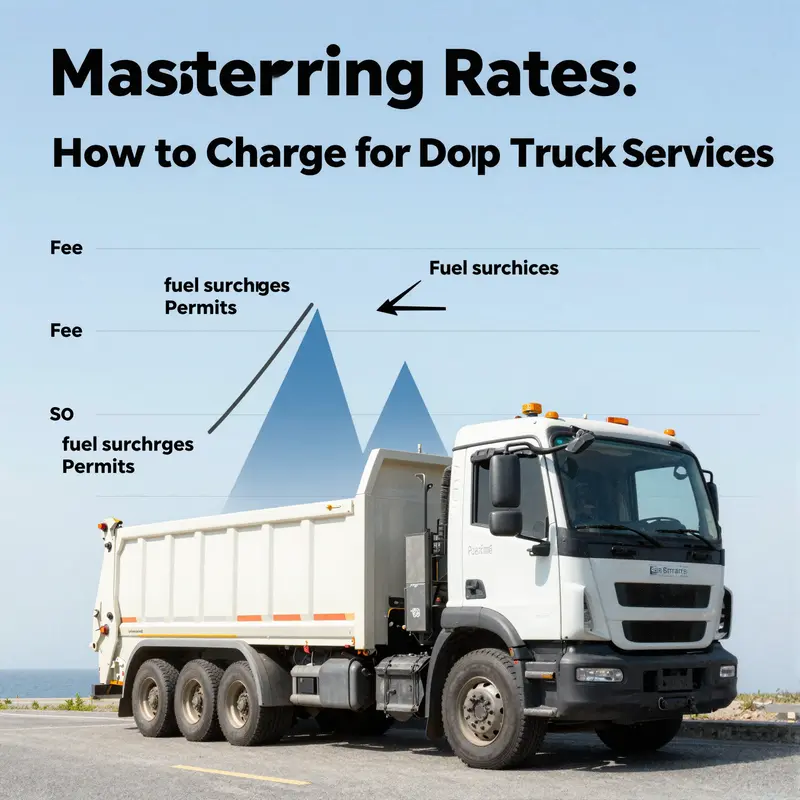
Pricing a dump truck job is less a single-number equation and more a price matrix that reflects a constellation of variables. The most visible factor—distance—certainly matters, but it is only the starting point. Across markets and job types, the true cost hinges on vehicle type and weight, the complexity of the route, local terrain, and the specific services required. A solid pricing approach starts with acknowledging these core determinants, then layering on the predictable and the unpredictable in a way that protects margin while delivering fair value to customers. In practice, this means moving beyond a flat rate or a simple hourly dial and embracing a structured, transparent framework that can adapt to the realities of every site, material, and timing.
The bedrock determinant is the truck itself. A larger, heavier dump truck demands more specialized equipment, more experienced operators, and higher maintenance and insurance costs. Those realities translate into a higher base fee and a higher per-mile or per-kilometer charge when the job moves beyond the initial dispatch. In markets that quote in kilometers or miles, you’ll often see a base fee that covers the first leg of the journey or a standard dispatch window, followed by a variable rate for distance traveled. The heavier the vehicle, the steeper the incremental costs become, because heavier loads accelerate wear, require more fuel, and impose greater risk management on the crew. When the truck size and payload shift, the price shifts as well, sometimes substantially. It’s productive to present customers with a clear tiered structure—light, medium, and heavy class—so they can see how the base and subsequent mileage charges scale with the asset they’re hiring.
Distance, while straightforward in description, is complex in practice. The common model is base fee plus additional mileage. The base fee covers the initial dispatch and setup, while every kilometer beyond that threshold adds to the final bill. The threshold itself varies by market and by vehicle class, but the principle remains: the more you must travel with a loaded dump, the more you must charge to reflect additional fuel consumption, time, and road risk. This is not just a matter of distance but of route quality and travel time. A jam-packed urban corridor with frequent stops, or a mountainous approach road that slows progress, imposes a higher per-kilometer cost than a straight, flat highway run. Customers often expect a straight-forward metric, yet savvy operators break it down further by specifying different rates for urban, suburban, rural, or remote routes, each with its own rationale tied to time, fuel, and accessibility. The result is a pricing envelope that makes sense to the buyer and is defensible when questioned by a project manager or homeowner alike.
Location and terrain exert a subtler but undeniable pull on price. Remote or difficult-to-access sites demand longer travel times, more planning, and occasionally more personnel on standby for safety or on-site maneuvering. In mountainous regions, for example, the same load and distance can incur higher labor and equipment wear, pushing up base fees or per-kilometer costs. In dense urban centers, the opposite can hold true: higher base fees may be charged to cover permitting, traffic control, or limited loading areas, with elevated per-kilometer costs on the back end due to congestion and turn-around time. The take-away for pricing is consistency with local conditions. A fair price is not just what the market will bear, but what the operation costs necessitate, given the terrain, access, and the likelihood of delays or additional handling.
There are several charged add-ons that routinely appear in the invoice and deserve explicit attention in any quote. Overweight and overdimensional charges are the most predictable examples. If the vehicle or its payload exceeds certain thresholds, the cost can rise sharply. A common practice is to apply an overweight surcharge based on the excess tonnage, sometimes a percentage of the base rate per ton. For oversized dimensions, a separate fee can multiply the base rate for the extra dimension. These adjustments reflect not only the greater engineering and regulatory considerations but also the higher risk and specialized coordination required to safely move oversized or overweight loads. It’s important to spell these out in writing so customers understand how the base price can shift with weight or size.
Time-based fees are another reality that must be folded into the pricing logic. Nighttime, holiday, or emergency rescues often demand higher staffing levels, enhanced safety measures, and the possibility of working around local restrictions. A surcharge in the 20% to 50% range is not unusual, reflecting the premium for operating outside standard hours or under urgent conditions. The same logic applies to time-sensitive tasks like on-site unloading, crane-assisted recovery, or rapid debris removal where additional labor or specialized equipment are deployed. In every case, the final price should reflect the extra resources required to meet the schedule and safety expectations.
Specialized services add further layers to the price matrix. On-site repairs, cargo unloading, or the use of auxiliary equipment such as a crane can be charged separately, with costs pegged to actual time spent and the complexity of the task. These charges ensure that customers understand what they are paying for and why the price differs from a simple hauling job. Return journeys, or empty runs, can also appear as an auxiliary cost. If the fleet returns with an empty load, the company may pass along that distance as a separate fee to reflect the time and fuel wasted on the way back. Clear, upfront communication about these possibilities prevents disputes and builds trust.
Best-practice pricing is anchored in transparency and foresight. A detailed, itemized quote before work begins is not merely a courtesy; it’s a contractual safeguard that reduces the likelihood of later disagreement. The quote should articulate the base fee, the distance or weight-based components, and any potential surcharges for time, overweight loads, or specialized services. It should also spell out what is included—such as the number of trips, access at the dump site, or any required permits—and what might incur extra charges. For jobs that run long or are complex, a pre-service written agreement helps lock in price expectations and reduces the friction between buyer and seller when changes arise.
Beyond transparency, prudent pricing also requires disciplined cost calculation. Every price should reflect the fundamental costs of operation: truck depreciation, fuel, insurance, maintenance, labor, and overhead. A practical approach is to estimate these inputs in advance and build a buffer for unforeseen changes in material volume or site conditions. The aim is to price competitively while preserving margin across the variability inherent in dump trucking work. Market research remains essential, but the most reliable guide is a company’s own cost structure. It is perfectly legitimate to adjust the pricing model as conditions shift—fuel price volatility, equipment downtime, or changes in regulatory overhead can all warrant recalibration. An experienced operator will treat pricing as an ongoing process, not a one-time negotiation.
For customers, clarity around material type and site specifics can significantly influence the final price. Debris with hazardous constituents, large volumes of concrete, or other heavy, bulky material often requires specialized handling, additional disposal considerations, or specialized waste streams. In these cases, a material-type surcharge might be warranted. Conversely, routine residential debris or clean-out operations typically align with a simpler, per-load or flat-rate structure. The contrast between job types underscores why any robust pricing strategy must be flexible enough to accommodate a spectrum of scenarios. It is also why a written, itemized quote—delivered before any work begins—helps the customer connect the dots between the price and the service delivered.
To maintain competitiveness without sacrificing profitability, many operators leverage pricing tools and estimator platforms that translate field inputs into transparent quotes. These tools can standardize the assignment of base fees, distance charges, and surcharge multipliers, while incorporating site-specific notes about access, terrain, and any anticipated complications. In practice, these tools empower crews to generate quotes quickly and accurately, reducing back-and-forth with clients and enhancing the credibility of the pricing presented. They also support the habit of communicating potential variances in advance, so customers know where extra charges might arise and why.
Internal references can reinforce a client’s confidence in the pricing approach, too. By sharing a concise rationale for the charges and offering a clear path to a revised quote if site conditions change, operators demonstrate responsibility and reliability. For readers seeking a broader view of how established trucking services articulate value and maintain reliability across diverse jobs, an external overview of industry service practices provides useful context: https://5startruckin.com/discovering-the-unparalleled-services-of-5-star-truck-inc/. This kind of reference can help align expectations around service standards, accountability, and consistency in delivering results.
In sum, charging for dump truck service is not a single number but a considered balance of vehicle capability, route complexity, site conditions, and service scope. A fair price reflects the true costs of moving heavy loads safely and efficiently, while a transparent, upfront quote protects both clients and providers from later friction. The most successful pricing strategies embrace the variability of real-world work, employ clear documentation, and condition pricing on objective factors that customers can understand. When done well, the result is a practical, predictable framework that supports both competitive bidding and sustainable profitability.
External resource: https://www.trucking.org
Final thoughts
In the competitive landscape of dump truck services, understanding how to charge effectively is key to achieving profitability and building client relationships. From hourly and per-load pricing models to flat rates and daily charges, each method has its benefits and applications. Furthermore, it’s important to consider additional fees that can arise based on the specifics of each job. By implementing the right pricing strategies, you can ensure that you are not only covering your costs but also maximizing your revenue potential. Stay informed, stay flexible, and set your prices based on thorough market analysis and operational costs to thrive in the dump truck service industry.