

For many, food trucks represent a unique dining experience, often bringing delectable and diverse menu options to events. But have you ever wondered how these mobile kitchens price their buffet-style services? Understanding the methodology behind food truck pricing, especially for buffet events, is essential for long-haul truck drivers, trucking company owners, fleet managers, and aspiring truck drivers alike. By diving into the chapters that follow, we’ll explore the nitty-gritty of ingredient costs, labor and overhead expenses, and market dynamics that shape how vendors set their prices. With insights on how these elements interplay, you’ll grasp how food trucks create value, ensuring a successful event for everyone involved.
From Pantry to Price Tag: Mastering Ingredient Costs in Buffet-Style Food Truck Pricing
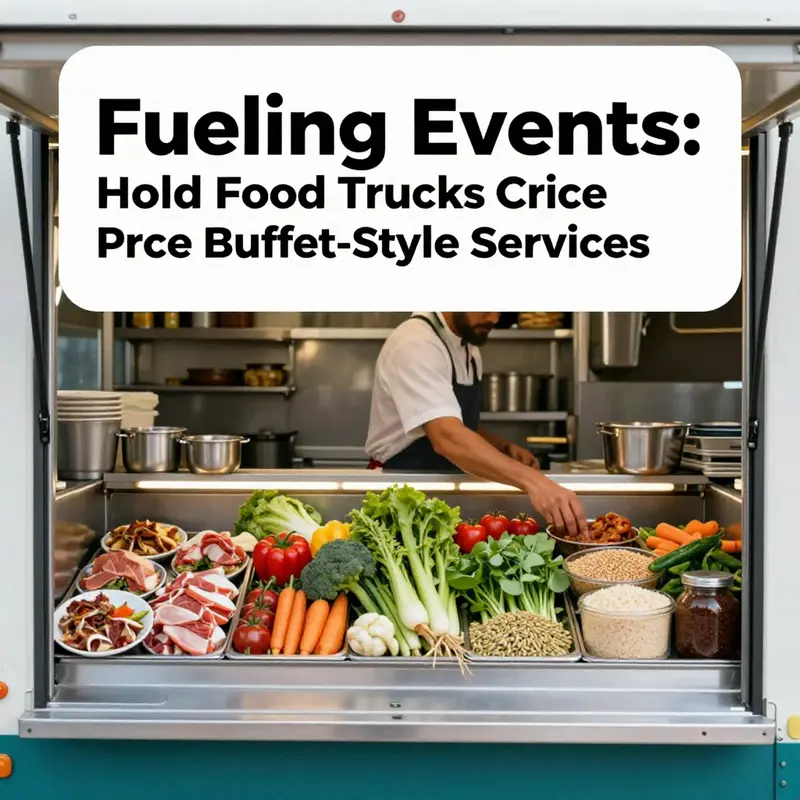
Pricing buffet-style service is rarely a single-number calculation. It is a living map of costs, constraints, and choices that begin with what sits on the truck’s prep bench and end with the value a guest perceives when they gather a spread of dishes at an event. In this chapter, the focus narrows to the core enabler of profitability: ingredient costs. The idea is simple on the surface—the more you spend on ingredients, the higher the price per head must climb. Yet the reality is more nuanced. Ingredient costs ripple through every dollar of a buffet offer, but they can also be controlled, optimized, and even leveraged to deliver greater perceived value without eroding margins. The path from pantry to price tag is forged through careful ingredient selection, disciplined portioning, and smart use of technology to keep the numbers honest in real time. To understand how menus become price points at events, one must first map the terrain of the core ingredients, the realities of portion control, and the ways technology can turn volatile supply into predictable margins.
The foundation of any buffet pricing model is a clear accounting of what makes up the plate. Food trucks operating buffet-style commonly begin by breaking down recipes into their constituent ingredients and then assigning a cost to each unit of use. This requires precise recipes with defined quantities, yields, and substitution allowances. The arithmetic might feel granular, but it is where the discipline begins. If a dish lists two ounces of protein per serving, four ounces of vegetables, and a half cup of a starch, each component’s cost is multiplied by the expected number of portions to determine a baseline food cost. The sum of these line items becomes the backbone of the per-guest price and acts as a shield against price volatility later in the process. When the math is clear, operators can see where the biggest leverage points lie—which ingredients drive the costs up and by how much they could be managed without compromising the guest experience.
In practice, the choice of core ingredients is the most obvious lever. Premium proteins, fresh seafood, and specialty produce carry costs that can push a buffet’s per-guest price into higher ranges quickly. Yet the decision is not only about the sticker price of those items. It also involves considering yield, waste, and consistency. A truck may be tempted to lean on high-cost ingredients because they print well in marketing materials or because guests expect a certain impression. But if the kitchen cannot reliably source, portion, and present these items with consistent quality, the perceived value can diverge from the price, undermining profitability. That is why many operators approach core ingredient selection with a three-layer guardrail: quality at a sustainable price, predictable yields, and a transparent supply chain that can be audited under event conditions.
One of the most practical tensions in ingredient cost management is the temptation to substitute high-cost items with lower-cost stand-ins. In budget buffet scenarios, some operators lean toward restructured or processed meat slices or other shelf-stable proteins that promise longevity and broad compatibility across dishes. The intention is straightforward: extend shelf life, reduce spoilage, and keep numbers stable as demand ebbs and flows during an event. But such substitutions come with caveats. They can carry hidden safety risks if not stored under strict conditions or if labeling and handling practices fail to communicate the product reality to staff and customers. They can also erode the guest experience if the texture or flavor profile diverges from what guests expect from the menu. Ethical considerations arise when the provenance of these substitutes is murky, especially if they originate from sources with lax safety standards or unclear supply chains.
To navigate these challenges, operators embed a robust supplier management discipline in the pricing process. Ingredient costs are not just the price per pound or per case; they are tied to supplier reliability, delivery windows, and the ability to rotate stock so that every event starts with fresh, consistent items. The cost model then factors in the risk premium associated with substitutions. If a substitute is used sparingly and only for certain components of a dish, the pricing can remain stable, but only if the substitution does not degrade the overall guest experience below an acceptable threshold. In practice, this means maintaining a short list of dependable suppliers who can guarantee quality within the event’s time frame and condition the kitchen can verify quickly on site.
Portion control is another critical axis in ingredient-cost management. Buffet-style service is, by design, a balance between abundance and accountability. Without careful controls, guests may remove higher-cost items in disproportionate amounts, triggering a hidden cost creep that unfairly erodes margins. A common tactic is to limit the amount of high-cost items that a guest can take in a single round, or to stage high-cost items at a designated station where staff can monitor replenishment. For example, a sushi or premium protein station might offer two pieces per guest, with a staff cue that invites guests to request additional servings in a controlled manner. These measures deter waste and over-consumption without overtly signaling to guests that pricing is being constrained. In practice, these controls become part of the service narrative—the staff can gently guide appetite management while maintaining the abundance that guests expect from a buffet.
Behavioral cues play a surprising role in controlling ingredient use. The act of asking a server for additional portions introduces a subtle friction that discourages casual over-serving. Guests may not notice the pricing logic, but they experience the benefit of a well-curated spread that feels generous while still protecting margins. This is not about trickery; it is about shaping the service flow so that high-cost items are distributed thoughtfully and waste is minimized. The more the crew can anticipate demand and guide portions through staff interaction, the more predictable the ingredient consumption becomes. Artful station design, properly sized serving vessels, and the angle of plate presentation—all influence how guests perceive value and how much they consume from any given item.
Technology is the silent hand in the kitchen that makes this complexity manageable. Real-time inventory management systems, integrated with the event’s point-of-sale and the kitchen’s workflow software, transform guesswork into data-driven decisions. When a buffet runs through a planned number of portions, the system records usage, tracks spoilage, and flags items that are depleting faster than anticipated. This feedback loop supports adjustments to the menu in the middle of an event or in the days leading up to the next booking. For example, if a particular vegetable is moving faster than forecasted, the operator can reallocate space to add more of that item in future menus or adjust portion sizes to protect margins. Similarly, if a protein is trending high in demand during a peak window, the kitchen can schedule a temporary increase in production or temporarily reduce allocations per guest to maintain balance across the spread.
The data-driven approach also supports forecasting beyond a single event. When a truck aggregates data across multiple events, it can map price sensitivity to guest count, duration, and location. If events in a specific region consistently show a willingness to pay a premium for a certain station, the pricing model can adapt accordingly while keeping the overall buffet balance intact. Conversely, if a competing vendor at a nearby event is pricing aggressively with a similar set of offerings, the data can illuminate whether a price gap is sustainable or whether a shift in ingredient strategy would better protect margins. In this sense, technology becomes not merely a cost-control tool but a strategic instrument that shapes how a truck designs its buffet experience over time. The ability to pull actionable insights from usage patterns, waste rates, and sales mix is what allows a mobile kitchen to stabilize margins in environments where supply prices can swing with weather, harvest cycles, and global markets.
The dialogue between core ingredient selection, portion control, and technology is a constant negotiation. Each decision—whether to lean into a premium protein or to diversify with a more economical plant-based option—changes the per-guest cost baseline. The operator must ask: does this adjustment preserve the guest’s sense of value? Does it protect the event’s perceived quality while offering a price point that suits the client’s budget? And crucially, can the business still deliver reliably on service commitments, with staff who know the menu inside and out and with ingredients that arrive on time, in the right condition, and at the right price? The answer, more often than not, lies in a disciplined process that treats ingredient cost as an active, dynamic input rather than a static line item.
A practical way to frame this discipline is to view buffet pricing as a living ecosystem where three elements interact: what the kitchen buys (ingredient costs), what the guests consume (portion outcomes), and what the technology and processes enable (data-informed adjustments). When you map these elements to a per-guest price, you begin to see how margins can be shielded even as menus evolve. If a truck can calibrate portion sizes with precision and monitor consumption in real time, it can absorb some fluctuations in ingredient prices without a wholesale price increase for clients. Conversely, if yields tighten and waste climbs, the price per guest may need to reflect the new reality to protect the business’s long-run viability. The key is to build a pricing model that is transparent with clients about what drives costs while staying flexible enough to adapt to actual event conditions.
This is not an academic exercise. It is a practical framework that aligns a truck’s procurement discipline with its pricing strategy, ensuring the numbers tell a consistent story from the first blueprint to the final bill. In practice, this means documenting recipes to the last gram, locking in supplier agreements with clear lead times and substitution allowances, and training staff to execute portions with the same fidelity that the menu statements promise. It means testing stations under varied demand scenarios to observe how quickly items can be replenished without over-serving, and it means investing in software that can translate a live event’s texture and aroma into predictable costs at the ledger level. When these practices coalesce, the perceived value of a buffet—its abundance, its quality, its consistency—aligns with the actual costs incurred to deliver it.
The research literature on cost control underscores these ideas in a structured way. It highlights how ingredient costing, portion sizing, technology applications, and case studies from both commercial and institutional foodservice environments interlock to create sustainable models for mobile buffet operations. While the specifics of a truck’s instrument panel—the exact recipes, the number of stations, or the precise staff roster—will vary by event, the underlying logic remains robust: cost, portion, and technology together create a resilient pricing engine. For readers seeking a broader theoretical anchor, a well-regarded resource brings the same principles into a formal framework. It maps the relationship between direct costs, overhead, and profitability in ways that are directly applicable to mobile, buffet-style operations. As the chapter turns toward practical implications for pricing, it is useful to keep a mental model of this three-way interaction—ingredient costs as the ground, portions as the measure, and technology as the compass that keeps the course true.
In closing this exploration of ingredient costs, it is worth returning to the core premise: the price a guest pays for a buffet is, at its heart, a reflection of the ingredients that fill the plates, the portioning that distributes them, and the systems that ensure the math stays honest when the event is live. The challenge for operators is not simply to minimize cost but to manage it with intention. That means choosing ingredients that deliver both value and experience, designing portions that honor both guest appetite and budget, and deploying technology that makes cost data actionable rather than merely informative. When these elements are aligned, a buffet becomes not just a price tag on a sheet of paper but a living, flexible equation that can adapt to the realities of each event while preserving the integrity of the guest experience and the viability of the business. For practitioners, this approach translates into practical steps: authenticate core ingredients with reliable yields, set disciplined portion caps at high-cost stations, and implement an on-truck tech stack that tracks usage and waste in real time. Together, these steps create a pricing story that is credible, competitive, and resilient across a crowded events landscape.
For readers who want to explore the broader cost-control framework in more depth, the following resource provides a detailed, methodical treatment of ingredient costing, portion sizing, and technology applications in foodservice. It offers case studies and practical guidance that can be translated to mobile buffet operations. Food Service Cost Control: A Practical Guide for Managers.
If you are seeking concrete operational inspiration that connects theory to on-the-ground practices, you can also tap into the ongoing conversations in the industry’s practitioner circles. For ongoing, practical reflections on how mobile kitchens optimize inventory, pricing, and service flow, the field’s conversations and examples can be found in the broader content ecosystem that discusses kitchen efficiency, supply chain resilience, and customer value at scale. A helpful starting point in the audience’s own literature includes the accessible, evergreen discussions found in the industry blog and resource hub at 5startruckin.com/blog/. This repository offers concise, real-world thinking about operational efficiency, procurement safety, and the practicalities of running a fleet that serves at scale and across diverse venues. 5startruckin.com/blog/.
Labor and Overhead: The Core of Buffet Pricing on a Food Truck
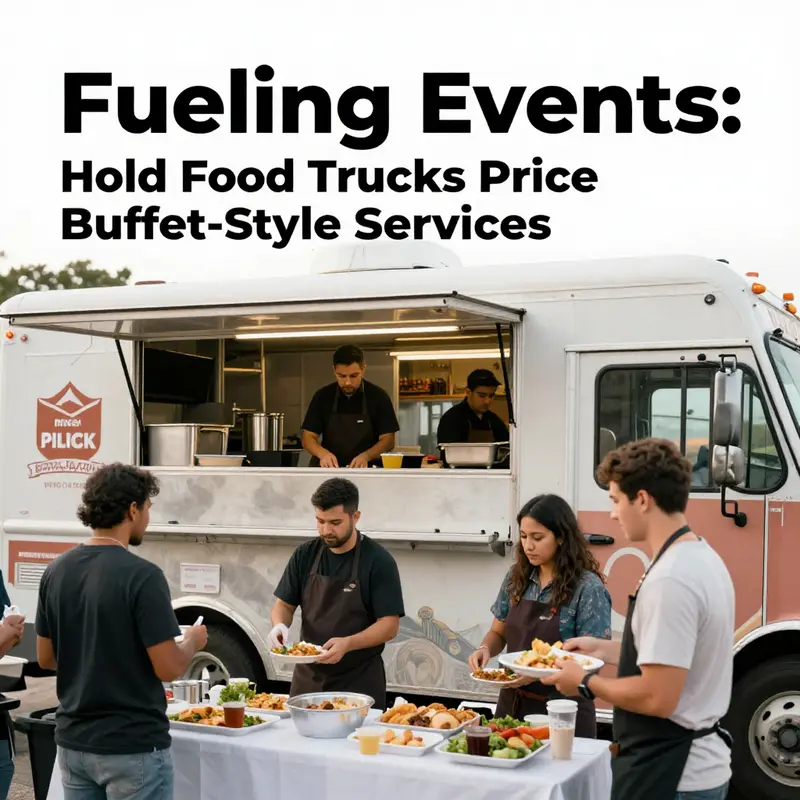
Pricing buffet style service from a food truck is a practical exercise in aligning people and processes with a price. The core idea is to separate labor costs from overhead costs and to translate those numbers into a fair and viable quote. Labor costs are the human heartbeat of a buffet service. Even with self serve stations, the people who plan, prepare, replenish, greet, and sanitize matter. The wage structure usually includes chefs and cooks who craft dishes, servers who manage the buffet line, and support staff who keep the station clean and organized. Location matters because wage norms, licensing, and local laws shape what staff can earn. A truck in a high cost city will face higher rates than one serving rural areas. Experience level and training also influence cost and quality. A more experienced team can move guests more quickly, maintain safety standards, and reduce waste, which lowers overall costs over time. The employment relationship also matters for the bottom line. Full time staff provide predictable benefits while part time and on call staff offer flexibility for fluctuating demand. A common approach is a hybrid model with core staff on a stable schedule for setup and peak service and additional hands for flexible tasks during the event. The cost calculus includes wages, benefits, payroll taxes, and insurance, which must be weighed against expected demand and event length. A well designed labor plan reduces overtime, improves morale, and supports sustainable operation across back to back bookings.
Overhead is the other pillar. It covers ongoing expenses that keep the mobile kitchen moving: fuel, maintenance and repairs, insurance, permits and licenses, depreciation of the truck and equipment, and utilities such as power for hot holding and refrigeration. These costs persist regardless of a specific menu, so they must be allocated to each event based on usage and scale. Fixed overhead includes the core costs that do not vary with the event, while variable overhead shifts with travel distance, menu complexity, and station count. Travel distance increases fuel use and may require more setup time and crew hours. A more complex buffet with multiple stations demands more equipment, more prep surfaces, and more staff to replenish and manage the line. The art of pricing is to allocate these fixed and variable costs to the quote in a clear and defensible way, so the client understands the value they receive.
Pricing strategy often uses a per person basis for buffets. The base per person rate should cover projected labor costs, allocated overhead, and direct food costs. The rate is then adjusted for service duration, travel to the venue, and any menu complexity. If there are distinct service levels or bundled options such as setup, service staff, and cleanup, these should be described and priced clearly to avoid confusion. A disciplined cost control mindset is essential. Track actuals after each event, compare them with forecasts, and use the lessons to tighten future estimates. Food cost is important but not the whole story; time and motion thinking helps determine how many staff are needed to replenish, keep food safe, and reset after service.
From a client perspective the price should tell a narrative about value. A quote that explains the level of staff coverage, the equipment included, and the logistics that ensure a smooth event tends to be more trusted. When clients see that the price reflects reliable delivery, safe and attractive setups, and courteous service, they are more inclined to view the investment as sound. The final aim is a quote that balances profitability with value for guests and the event organizer. When labor and overhead are integrated thoughtfully, the final price is predictable, defendable, and capable of sustaining the service across multiple events.
Markets, Meals, and Margins: Navigating Buffet-Style Pricing for Food Truck Events
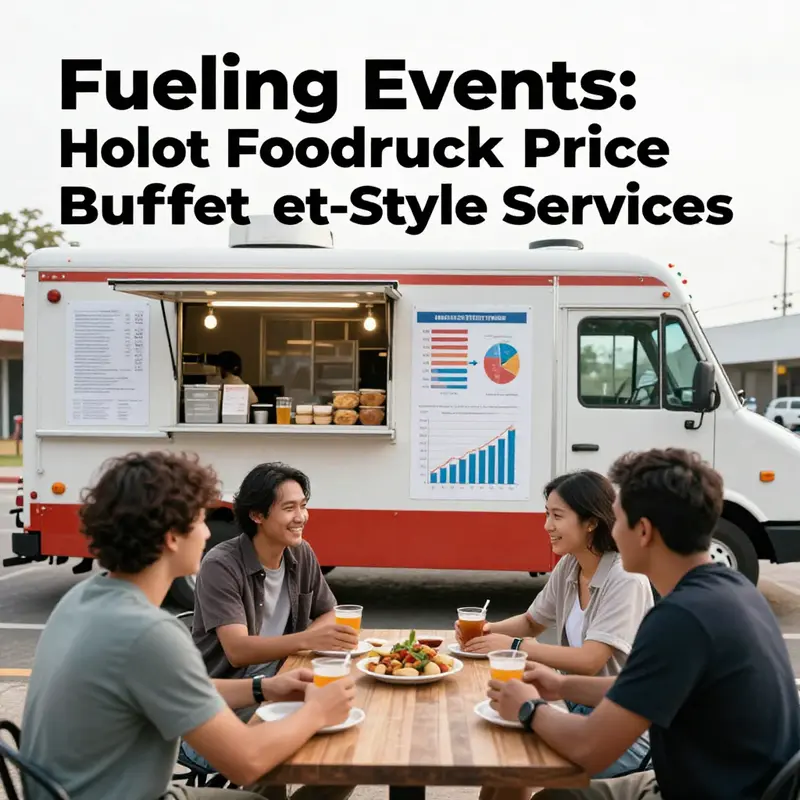
Pricing buffet-style services for food trucks at events sits at a complex crossroads where cost, value, and perception collide. It is not enough to tally ingredients and labor in isolation; operators must also anticipate what attendees are willing to pay, how competitors price similar offerings, and how the event’s unique context shifts both demand and risk. In this sense, pricing becomes a narrative as much as a number, a story about how convenience, variety, and performance are translated into a price tag that is fair to both the guest and the business. The larger arc of this chapter rests on a simple observation: the market for buffet-style food truck offerings is expanding, but expansion does not erase price sensitivity. As the global market for food trucks grows—from a projected 4.71 billion USD in 2026 to about 6.46 billion USD by 2031, a compound annual growth rate of roughly 6.5%—operators increasingly see buffet-style formats as a differentiator rather than a mere option. This growth signals opportunity, yet it also elevates competition and the pressure to price with precision. The strategy behind pricing, then, unfolds as an integrated craft: it requires a clear view of the cost structure, a disciplined approach to labor and overhead, and an acute sensitivity to the dynamics of the event and the surrounding market. The per-person model remains the dominant framework for many buffet setups. It is intuitive and scalable: a single rate per attendee that covers food, service, and sometimes a basic level of support staff. In practice, such pricing often lands in the realm of a range—commonly spanning roughly fifteen to twenty-five dollars per guest for many mid-tier events. But those numbers are starting points rather than final destinations. They must flex with guest expectations, the complexity of the menu, and the operational realities of the day. For instance, a more expansive buffet with multiple stations—hot entrees, cold salads, desserts, and specialty items—inevitably drives up labor costs and ingredient variety. The more stations and the more elaborate the presentation, the greater the need for seasoned staff who can maintain line efficiency, replenish stations without creating bottlenecks, and ensure food safety across a longer service window. This dynamic naturally feeds into the concept of tiered pricing; operators may offer a standard buffet, a premium option with extra stations, and an all-inclusive package that covers setup, service, and cleanup, sometimes even linens or tableware. Each tier carries a different cost structure and, correspondingly, a different perceived value to the client. The decision to bundle or to unbundle services becomes as strategic as the recipe itself. Some events demand a streamlined package—just enough staffing to keep the lines moving and a pared-down menu. Others, particularly corporate events or weddings, benefit from a more expansive service that affords guests a broader culinary experience and a higher level of hospitality. In those contexts, the price points naturally rise to reflect the additional labor, the broader range of ingredients, and the higher service standards. Cost calculus thus sits at the core of buffet pricing. The cost of ingredients—proteins, vegetables, grains, sauces, garnishes, and the inevitable waste that must be absorbed—forms the anchor. Precise recipes and standardized portioning help reduce variance and enable accurate costing, which in turn underpins profitability. Yet ingredients do not tell the whole story. Labor costs, often the single largest driver of buffet pricing, encompass not only the cook’s time but also the labor required to assemble, replenish, and serve, along with the logistics of setting up and breaking down at the venue. A buffet station is a moving target; it evolves as service begins, peaks, and winds down. Skilled staff ensure smooth operation, minimize lines, and uphold food safety standards, all of which have explicit price implications. Overhead and equipment costs complete the picture. Fuel, maintenance, insurance, permits, and depreciation are ongoing realities for mobile operations. These expenses are not incidental; they are the scaffolding that supports the entire business model. For a pricing model to be sustainable, it must recover these fixed and variable costs over numerous events, not merely during a single appearance. Event-specific factors then tilt the balance toward higher or lower pricing. Guest count is a primary determinant. When a single event serves hundreds of attendees, the economies of scale can justify a lower per-person rate, provided the menu is efficiently executed and staff are well-managed. Conversely, intimate gatherings with high expectations for service can justify higher per-person pricing, especially when the menu includes specialty items or signature components that require more careful preparation. Event duration also matters. Longer events demand more food supply and extended staffing, and some operators apply an overtime surcharge or a longer service window price to reflect the increased labor and logistics. Location and travel distance introduce additional friction. A far-off venue may require premium pricing to offset extra fuel, time, and risk. And the complexity of the menu—whether it includes delicate desserts, premium proteins, or a mix of hot and cold offerings—manifests through higher ingredient costs and more elaborate preparation protocols. Market dynamics compound these internal cost drivers. In a competitive environment, price sensitivity among consumers remains a central force. When many operators vie for the same event budget, buyers compare options not just on price but on value—the perceived return guests receive from variety, convenience, and service quality. This is precisely where buffet-style formats can land on the right side of value, provided pricing accurately reflects the breadth of the offering while still aligning with what attendees will pay. The literature on consumer behavior in this sector underscores the tension between affordability and value. It is not enough to price aggressively; the pricing must convey value through a clear, defendable proposition. A tiered or all-you-can-eat approach can be particularly effective in communicating value, if the menu design supports it and if the event timeline allows guests to experience the full range of offerings without fatigue. Strategic pricing in this context often requires a delicate balance: the operator must avoid diluting margins by simply increasing volume, while also resisting the temptation to underprice for the sake of higher headcounts. In practice, successful buffet-style food trucks frequently deploy a combination of pricing levers. They may offer a base per-person rate that covers core items and staples, then introduce add-ons or premium stations to capture incremental value. They can implement a time-based surcharge for lengthy events, particularly those over four hours, to reflect the extended labor commitment. They might also impose location-based surcharges for venues that demand longer travel times or special access. This approach allows operators to tailor quotes to the unique contours of each event, rather than forcing a one-size-fits-all price scenario onto very different contexts. The market itself is evolving, and operators must stay attuned to broader economic signals. The growth trajectory suggests more opportunities in city centers and event spaces where the appetite for convenient, diverse dining options remains strong. Yet growth does not erase price sensitivity. In fact, as competition intensifies, accurate, transparent pricing becomes a competitive differentiator. When customers can easily compare options, a well-articulated pricing structure—clear what is included, what is extra, and why it costs what it costs—can build trust and reduce friction in the buying process. This is where service package inclusions become a strategic asset. By bundling essentials such as setup, staffing, and cleanup, operators present a turnkey solution that reduces decision complexity for event organizers. Bundled offerings simplify procurement and often translate into smoother on-site logistics. The trade-off, of course, is the risk of hidden costs or perceived value gaps if the bundle lacks essential components or if the scope of work is misaligned with client expectations. To mitigate this risk, many operators maintain explicit, itemized quotes that clearly delineate what is included, what is optional, and what would incur additional charges. In a mature buffet-model environment, this transparency supports partnerships with event planners and venues, who value predictability and reliability as much as the final menu itself. The pricing conversation, then, is not a static declaration but a dialogue—one that reflects both the operator’s cost structure and the buyer’s expectations. It is a negotiation anchored in evidence: proven food costs, verifiable labor hours, observable equipment needs, and a credible forecast of guest turnout. The interplay between cost and value is not merely theoretical. It translates into real-world decisions about station design, the pacing of service, the sequence of replenishment, and the allocation of staff across stations to maintain performance throughout the event. In this sense, floating margins are not a sign of weakness but a prudent response to risk and demand. A healthy buffer between cost and price protects against waste, unplanned shortages, and the variability inherent in live events. It also supports investments in staff development, sanitation practices, and the ongoing maintenance of mobile equipment—all of which contribute to a stronger value proposition over time. The endgame for operators is a final quote that feels equitable to the guest and economically sustainable for the business. This requires disciplined cost tracking, careful menu planning, and a nuanced understanding of the event ecosystem. It also requires staying connected to the market—watching competitor pricing, listening to client feedback, and observing how guests respond to different formats, such as all-you-can-eat versus capped per-guest menus. The market is not static, and neither is pricing. A savvy operator treats price as a dynamic instrument, adjustable based on booking timing, the scale of the event, and the level of service required. For example, early commitments and off-peak dates can justify more favorable pricing, while peak seasons, premium locations, or complex setups can support price uplifts. In the broader context of event procurement, price is only part of the decision. Clients weigh total value—the ease of coordinating a turnkey buffet, the reliability of service, the quality of the food, and the overall experience delivered. In this sense, a well-structured buffet package can become a compelling proposition that aligns with the event’s objectives, whether those objectives include impressing guests, delivering a consistent brand experience, or simply providing reliable sustenance during long days of activity. The market trajectory, the competitive landscape, and the delicate balance between cost and perceived value converge to shape pricing strategies that are as much about messaging as arithmetic. In the end, the margins earned by buffet-style food trucks at events depend on a coherent system: a transparent cost basis, a pricing model that scales with guest count and service complexity, and a willingness to adapt to the evolving preferences of event buyers. This is not a static ledger but a living calculation that grows with the business. The numbers behind the pricing are important, but so is the narrative that accompanies them—the story of how a buffet-style offering delivers variety, convenience, and hospitality in a mobile format that travels to wherever there is demand. And as the market expands, those stories will continue to compete for attention, turning pricing into a strategic differentiator rather than a mere price tag. For researchers and practitioners alike, the takeaway is clear: pricing buffet-style food truck services is a multidimensional practice that sits at the intersection of production costs, service design, and market perception. The most durable pricing models are those that balance a rigorous understanding of internal economics with an external sensitivity to what clients are willing to pay for the promise of sustenance, efficiency, and a memorable dining experience on the move. This balance—between cost transparency, value perception, and market opportunity—remains the heartbeat of successful buffet-style offerings in the expanding world of mobile catering.
For further insight into how pricing and market dynamics influence consumer behavior in this sector, refer to the original study: An exploratory study into consumers’ perspective for meal price of food truck service business.
Final thoughts
Understanding how food trucks price buffet-style services provides valuable insights for those looking to host events or manage food-related operations. Ingredient costs, labor, and market dynamics play crucial roles in formulating prices for these services. Whether you’re a long-haul truck driver or a fleet manager, recognizing these components will help you in discussions with caterers or when selecting food options that align with your budget and expectations. As food trucks continue to innovate and adapt, staying informed will empower you to make the best choices for memorable events.