
When the open road presents challenges, having reliable support can be the difference between timely deliveries and costly delays. A&B Roadside Service and Truck Repair, located in Lubbock, Texas, offers essential services to long-haul truck drivers, fleet managers, and trucking company owners. In this piece, we will explore the pivotal role of their location, operational hours, wide array of services, and why they are a vital partner for those traversing the vast American highways. With a deep understanding of the unique needs of the trucking industry, A&B Roadside is dedicated to catering to drivers’ emergencies in an effective and timely manner.
On the Roadside Lifeline: Location and Accessibility of A&B Roadside Service and Truck Repair in Lubbock
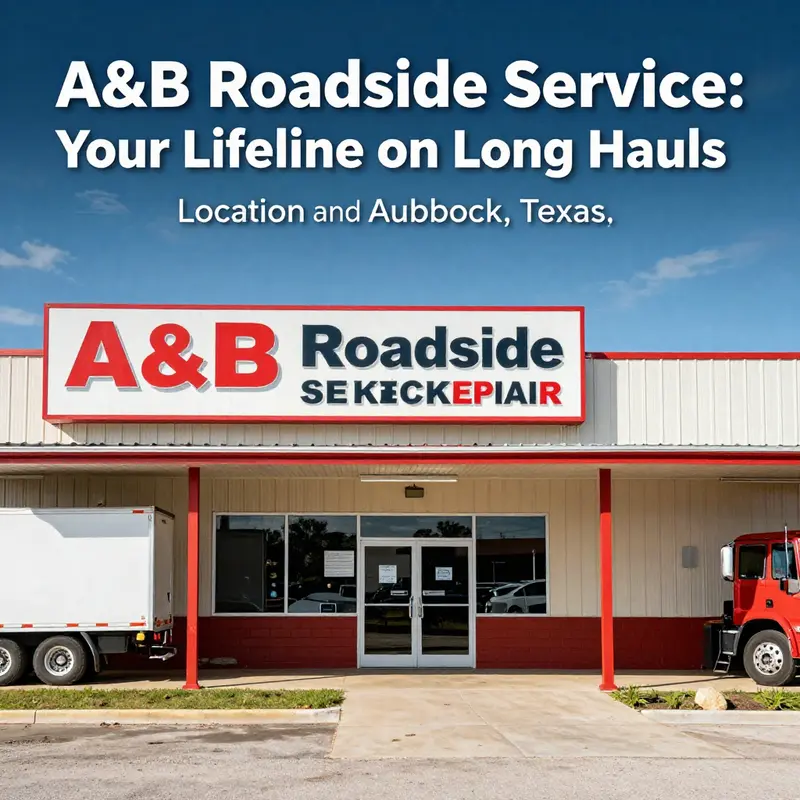
A&B Roadside Service and Truck Repair sits along the busy arteries of Lubbock, Texas, quietly performing a potentially life-saving function for drivers who live by the road and for fleets that measure performance in minutes rather than days. The shop operates from a clearly marked address at 910 E 66th St, a location that situates it within the city’s east side where commercial activity and freight movement converge. The office and bays are linked to a simple zone of the city that is accessible for big rigs and light commercial vehicles alike. The phone number (806) 559-7121 serves as a direct line to what many operators come to value as a roadside lifeline: a place to call when engines cough, batteries balk, or fuel gauges threaten to drop to the red. In a business where downtime translates into dollars lost and schedules slipping, the capacity to reach a service center at any hour elevates the value of the location far beyond its brick-and-mortar footprint.
The practical implications of a strategically placed service facility become clear once you survey the realities of long-haul trucking. Lubbock sits along corridors that connect ranching country, distribution hubs, and cross-state commerce. In those streaming miles between depots and delivery windows, a roadside service center that remains accessible through the night becomes not merely convenient but essential. The site at 910 E 66th St is described by its operators as a 24-hour operation, a cadence that aligns with the rhythms of drivers who frequently encounter the unforeseen—dead batteries in the predawn chill, a tire that chooses an unplanned rest on the shoulder, or a fuel line that suddenly insists on taking a break from the route. Accessibility, in this sense, becomes more than a matter of turning onto a street; it is about the ability to interrupt a disruption at the moment it begins and to restore momentum with as little delay as possible.
From the curb, the signage and layout signal a straightforward, service-oriented approach. The street itself—East 66th Street—carries a calm that belies the pressures of the road. It is a route that many drivers are familiar with, a corridor that channels traffic toward industrial parks, retail centers, and maintenance facilities that support the regional fleet. For a roadside shop, such positioning matters because it reduces the distance between a stranded truck and the place that can salvage the day. When trucks roll to a halt, the length of the detour often depends not only on the severity of the mechanical issue but on how quickly a responder can be on site and how swiftly the problem can be diagnosed and corrected. In these moments, the physical address becomes a determinant of uptime, and uptime remains the heartbeat of a service model designed for the open road.
The service portfolio at this location is concise and practical, focused on what drivers need most when a tire goes flat, a battery loses its spark, or a fuel delivery becomes a necessity rather than a choice. Towing forms part of the core offering, a guarantee that a vehicle can be moved from a non-operational position to a repair area without waiting for a mobile unit to arrive from a distant depot. Tire changes, another staple of roadside support, provide a rapid path back to serviceable operation, especially when a tire failure could otherwise escalate into traffic disruption or a safety risk. Battery jumps—often a lifeline in freezing conditions or after long periods of idleness—address a universal pain point for drivers who cannot tolerate a stalled start. Fuel delivery, meanwhile, speaks to the practical reality of fuel-supply gaps that can arise from logistical bottlenecks or misplaced shipments, ensuring a driver can reach the next fuel stop or get back on the road without an unnecessary detour.
Even with a simple catalog of services, the impact of the center’s accessibility extends into planning and operational resilience. For fleet managers, the value of a fixed location with 24-hour access is measured not only by the number of minutes saved during a single breakdown but by the way that reliability compounds across dozens or hundreds of trips. A fleet that can count on a local partner to respond quickly after a roadside event reduces the risk of late deliveries, missed connections, and cascading delays that erode customer trust. The capacity to dispatch a truck from a nearby break-in to a repair bay within hours rather than days can tilt a mission back toward success, particularly when the route involves a combination of rural highways and urban corridors where the nearest alternative technician could be farther away than the nearest city block. In those terms, the address at 910 E 66th St becomes a strategic asset rather than a mere convenience.
Beyond the tangible services, there is a dimension of accessibility that speaks to how drivers experience the interaction with a repair shop. The open door, the ability to call at any hour, and the clarity of the contact path together reduce the cognitive load on drivers who are already managing the pressure of time and distance. A 24-hour model signals a recognition that emergencies do not observe the calendar or the clock—an acknowledgment that the journey itself can demand assistance at unpredictable moments. And while parking details are not enumerated in the basic information, the assumption that a service center can accommodate the size and weight of typical commercial vehicles is implicit in the very idea of a 24-hour roadside operation. When a truck’s wheel needs a boot or a battery needs a jump at three in the morning, the ability to pull into a well-lit facility with access to immediate assistance matters almost as much as the actual repair itself.
Accessibility thus operates on multiple planes. There is the obvious geographic dimension—the ease with which a driver can reach the shop and the likelihood that the shop has the capacity to handle multiple incidents in a single shift. Then there is the relational plane—the trust a driver places in a service partner who is reachable, dependable, and capable of coordinating a quick and accurate assessment of an issue. A&B Roadside Service and Truck Repair seems to position itself with those expectations in mind: a location that is physically reachable, a contact channel that remains open around the clock, and a service menu designed to address a spectrum of roadside emergencies with speed and competence. In the context of a broader ecosystem of roadside providers, such alignment between location, accessibility, and operational readiness creates a reputational signal as much as a functional one. It says, in effect, that when a driver sees the address and dials the number, there is a credible, practical path back to the road.
The human dimension of accessibility deserves attention as well. The willingness of a shop to operate 24/7 is more than a schedule; it is an expression of a philosophy about service. It communicates a commitment to the discipline of maintenance and the ethics of keeping fleets moving. When a driver is stranded, the distances traveled to seek help can be a matter of safety and welfare, especially on long, lonely stretches or in adverse weather. A location like the one on East 66th Street embodies a local presence that can be seen, heard, and reached, and that visibility matters when a trucker’s calendar is under pressure. In those moments, the storefront becomes a symbol of reliability, a beacon that promises assistance without a complicated maze of approvals, dispatches, or transfers. The practical reality—24 hours, a straightforward address, a few essential services—resonates with the operational reality of trucking: moving goods, minimizing downtime, and maintaining a predictable rhythm across days that rarely resemble a straight line.
The decision to anchor a roadside service near a major trucking route is not accidental. It reflects an implicit calculus about average response times, the density of nearby maintenance resources, and the capacity to mobilize quickly. The ability to respond rapidly, repair on-site when possible, and arrange towing for more challenging scenarios is a triad that keeps a route from stalling for too long. The address is not just a coordinate; it is a point of convergence where the logistics of the road meet the logistics of repair. For drivers who spend weeks on the road, that convergence translates into a practical promise: if something falters, there is a local partner who understands the pressures of the schedule and the urgency of the mile-count. The accessibility of A&B Roadside Service and Truck Repair, therefore, is not a single attribute but a composite of geography, hours, service scope, and the immediacy with which a dispatcher can translate a breakdown into a plan of action.
As we take stock of what accessibility means in this particular case, it is worth noting the channels through which information about the shop is conveyed. The basic contact details—address and phone—frame the first connection a driver makes with the shop. The existence of a digital footprint, including a dedicated website, suggests a readiness to provide additional context, hours, and perhaps rapid intake forms or service intake checklists. The ability to push information to drivers who are en route, or to fleets planning routes through Lubbock, completes a loop from problem recognition to solution. And while the outward-facing data points are simple, the effect they produce in the day-to-day life of drivers can be substantial: a sense that there is a known, reachable place where help can arrive, and that help can begin without the friction of complicated protocols.
The broader implications of this location extend into the narrative of how roadside support services are imagined and measured. For operators, the metric is often uptime—the extent to which a truck returns to service with minimal disruption. A fixed, accessible shop that offers 24/7 support contributes directly to that metric. It creates a safety net that is geographic as well as logistical. The driver knows where to turn when the unexpected occurs, and the fleet manager knows there is a local partner capable of aligning with the company’s reliability standards. In a landscape where technology, telematics, and predictive maintenance promise to reduce breakdowns, the value of human-centered, on-the-ground accessibility remains undiminished. It is a reminder that one of the true strengths of roadside service lies not only in the capacity to diagnose and repair but in the ability to be present where the road actually happens: out there on the pavement, under the vast Texas sky, ready to bridge the gap between trouble and momentum.
For readers and stakeholders seeking a broader view of how accessibility interfaces with service excellence in trucking, consider the insights available in industry-focused content that discusses uptime, maintenance practices, and the importance of reliable support networks. This kind of perspective helps situate a local shop like A&B Roadside Service and Truck Repair within a larger ecosystem where a single call can ripple across a network of drivers, fleets, and service providers. It is not merely about the repair bay; it is about the chain of actions that follows a roadside event, the way dispatches reconfigure a route, and how swiftly a truck can rejoin its schedule after a setback. In that sense, location and accessibility become strategic assets that complement the technical capabilities of the shop and the human responsiveness of its team. To see how similar principles are discussed in broader industry conversations, you can explore a related discussion on industry leadership and service excellence discovering-the-unparalleled-services-of-5-star-truck-inc.
The practical takeaway for drivers and fleet operators is straightforward. A&B Roadside Service and Truck Repair embodies a model where geography, timing, and a lean but capable services menu intersect to produce a predictable, reliable response in the most common roadside scenarios. The address is tangible, the hours unmistakable, and the core offerings—towing, tire changes, battery jumps, and fuel delivery—address the everyday failures that disrupt a journey. This combination—location that is easy to reach, availability that matches the demands of the road, and a service mix that covers the most frequent emergencies—constitutes a coherent, durable approach to roadside support. It is the kind of practicality that, in the world of trucking, often matters as much as advanced diagnostics or high-tech maintenance protocols. And as fleets grow more sophisticated, the value of such a grounded, accessible touchpoint should not be underestimated. The road may be long, but a well-placed, 24-hour partner can shorten it by miles, minutes, and worry for drivers who rely on the road as their workplace.
External resource: https://www.abroadside.com
Around the Clock on Texas Roads: How A&B Roadside Service Keeps Trucks Moving

On the broad expanse of West Texas highways, where the landscape can shift from flat prairie to chalk-white horizons in a single mile, reliability is more than a promise. It is a lifeline. In Lubbock, a city that sits at the intersection of major corridors and freight corridors alike, A&B Roadside Service and Truck Repair stands as a steadfast responder to the unpredictable rhythm of trucking life. Located at 910 E 66th St, Lubbock, TX 79404, the shop has built its reputation not merely on technical skill but on a model of availability that matters as much as the tools in the toolbox. The latest information places its doors—or rather its mobile hands of help—open round the clock from Monday through Wednesday, a schedule that reflects a practical response to the demands of long-haul operations and the way fleets deploy drivers across the week. When a vehicle grinds to a halt on a shoulder or a late-night tire problem grows into a chain of delays, the promise of “call, and we’ll be there” can cut through the fatigue and the risk with a simple, dependable cadence. For drivers who rely on uptime as a core metric, that cadence can translate into a measurable edge: fewer detention hours, faster resumption of routes, and a direct line to a service that can diagnose, fix, or arrange alternatives with a clarity that matters when every mile counts. The contact number, (806) 559-7121, is the first rung on that ladder, a living connection to a dispatch that speaks in the language of routing, parts stock, and the art of triage under pressure. The address itself situates the operation in a corridor where logistics, maintenance, and emergency response converge, a reminder that roadside support is as much about location and timing as it is about wrench torque and electrical diagrams. In this light, A&B Roadside Service and Truck Repair represents more than a shop; it embodies a philosophy that uptime is a strategic asset for any carrier, particularly in Texas where weather, road textures, and high-speed freight lanes can create moments of need at any hour. The shift to a 24/7 frame for the midweek period emphasizes the operational reality that midweek is often the crunch point for fleet planning—empty miles avoided, schedules preserved, and the prospect of a prompt, professional intervention when a truck is stranded not far from home base or miles into a cross-state journey.
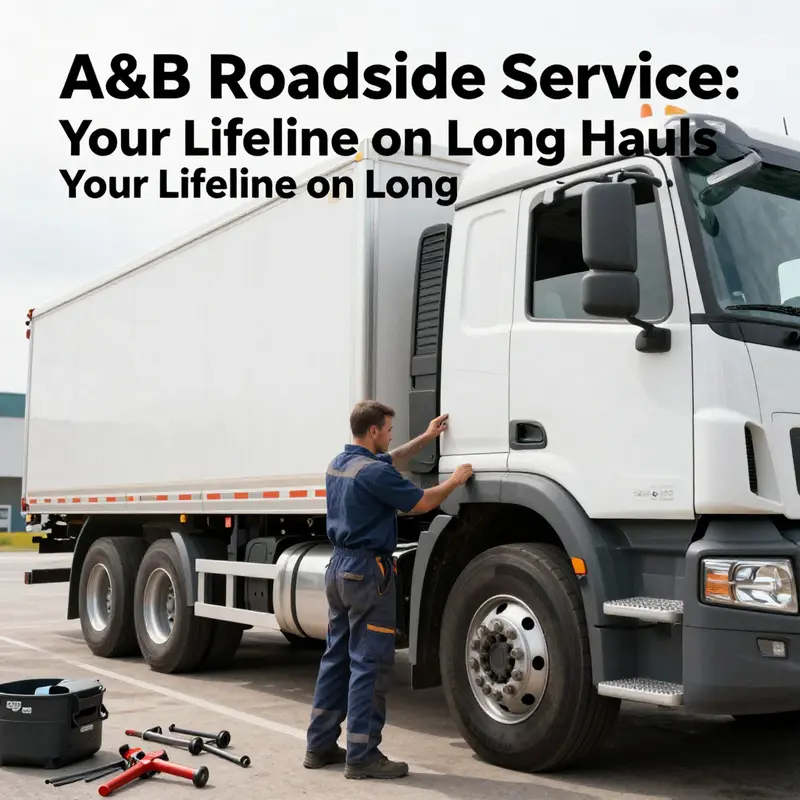
Technicians who arrive at the scene are not mere mechanics; they are adapters to a living network of moving equipment. Roadside repair, by nature, demands speed without sacrificing safety, the kind of speed that preserves tires, protects engines, and keeps cargo temperatures and agro-chemical payloads within the thresholds necessary for compliance and quality. The service set that such a shop brings to the shoulder of a Texas highway is rarely a one-size-fits-all solution. It involves a spectrum: quick-start fixes that can salvage a run and buy time; on-site diagnostics that can isolate faults without a tow; and the occasional, heavier intervention that requires haul-out coordination with a tow service. The beauty of a 24-hour operation is not the immediacy alone; it is the predictability of the response window. In a world of shifting schedules and tight delivery windows, being able to estimate a call time, a probable repair approach, and a realistic path back to the road turns a breakdown from a setback into a temporary negotiation with time itself.
What matters most to operators is the simplest outcome—getting back on the road with confidence. This means a blend of practical constraints and human judgment. A&B Roadside Service and Truck Repair must stock a core set of parts and perform common repairs in field conditions, all while managing the risk that a true fix may demand off-site attention. A typical roadside encounter might begin with a quick assessment: is the issue a flat tire, a battery or electrical fault, a broken hose, or a constraint that can be overcome by a temporary bypass to a nearby service? The goal in that first moment is to determine whether the vehicle can resume its route with minimal downtime or whether it must be bypassed to secure a longer-term repair plan. To achieve this, technicians carry portable diagnostic tools, a selection of consumables for everyday contingencies, and the ability to improvise a safe, temporary remedy that preserves cargo integrity. The operational hours are not just a clock; they are a guarantee that a trained professional will answer the call, interpret the symptoms, and translate them into a viable course of action. The result is a more predictable lifespan for the truck’s systems and a smoother flow of goods that keeps supply chains intact even when a fault emerges far from a maintenance bay.
The Texas road network tests trucks in ways that book learning cannot capture. The climate swings between dry heat and sudden gusts that can rattle mirrors and mounts, the night air grows cooler, and the reflective road lines become a constant reminder of the stakes: a driver’s clock, a fleet’s schedule, and the cargo that travels along corridor after corridor. In such an environment, a service provider that can answer a call at any hour from Monday to Wednesday offers not merely a response but a reaffirmation of trust in the system. Fleet managers know that every hour of downtime has a cost—driven by driver wages, the risk of late deliveries, potential penalties, and the wear and tear on equipment. Conversely, the promise of rapid intervention translates into a measurable improvement in reliability metrics. It also creates space for more predictable maintenance planning, because a reliable roadside partner can participate in an ongoing dialogue about typical failure modes, preventive steps, and the scheduling of routine checks that minimize emergencies.
From a broader perspective, the capacity to deliver on 24/7 service within this region has ripple effects across the trucking ecosystem. When a company in need can rely on a steady partner to triage the situation, the dependability of the entire supply chain improves. The driver gains a sense of safety and a reduction in stress that matters for performance. The dispatcher benefits from clearer expectations and more accurate ETA planning, allowing for better resource allocation across multiple routes. The operation at 910 E 66th St, with its constant readiness, acts as a node in a larger web—one that includes other repair shops, freight yards, and fuel stops that together form the backbone of regional logistics resilience. In this sense, the hours of operation become more than a business choice; they are a strategic posture, signaling to clients that uptime is the company’s core value and that their own revenue streams are safeguarded by practical, on-demand expertise.
The experience of a customer who calls for help is shaped by more than the mechanical fix. It is defined by clarity, communication, and the ability to distill complex problems into actionable steps. A good roadside partner speaks the language of fleets, translating fault codes into repair strategies and explaining why a particular solution is appropriate under the given conditions. The reassurance that support exists not only in the moment of a breakdown but also in the scheduling of future maintenance can be transformative. In such conversations, the human element remains essential: the dispatcher who coordinates an arrival window that minimizes further disruption, the technician who respects the safety constraints of the roadside environment, and the shop staff who arrange parts and follow-up service to secure a complete, lasting repair. This combination of rapid response and thoughtful follow-through is what turns a roadside visit into a constructive turning point, a point at which a driver can regain confidence and push forward with minimal disruption to the route and timeline.
Within the broader narrative of road service and truck repair, it is worth noting the value of cross-pollinating ideas from adjacent industries that share a common goal: keeping essential equipment productive. In the spirit of professional reliability, an external perspective on customer service—such as the exploration of what makes trucking enterprises stand out in the field—can illuminate the kind of consistent performance that clients expect. For readers curious about the wider landscape of trucking excellence, consider exploring insights that elevate service standards and reliability across the industry. Exploring the Excellence of 5 Star Truck Inc—Your Premier Trucking Solution.
Even as the business continues to grow and adapt, the core truth about A&B Roadside Service and Truck Repair remains remarkably grounded: uptime is a function of readiness, capability, and the ability to translate a breakdown into a manageable, timely recovery. The Monday-to-Wednesday 24-hour window embodies a pragmatic compromise between full round-the-clock service seven days a week and the operational realities of staffing, maintenance, and demand cycles in a particular region. It signals to drivers that the shop prioritizes the most demanding part of the week when the likelihood of early starts, late arrivals, and cross-state voyages is highest. And it invites a broader reflection on how repair and roadside support can be structured to align with the rhythms of modern transportation—from the way dispatch decisions are made to how technicians calibrate their response to weather, traffic, and road conditions around Lubbock and beyond.
In sum, the hours of operation for A&B Roadside Service and Truck Repair are not merely a schedule. They are a signal of the enterprise’s commitment to service continuity, a recognition that a truck’s value lies not only in its load-carrying capacity but in the assurance that, when the road calls, help arrives with expertise, efficiency, and a plan. The impact reaches far beyond a single stop on a map. It touches the accuracy of delivery windows, the reliability of fleets, and the confidence that carriers place in their ability to meet customer expectations no matter what the highway throws their way. It is a quiet revolution in the day-to-day workflow of trucking: a reminder that, when it matters most, there is a partner prepared to answer, a workshop ready to diagnose, and a road that can be kept open because a crew is already on the way.
External resource: Google Maps listing for the location provides the most up-to-date reference point for hours and contact options. https://www.google.com/maps/place/A%26B+Roadside+Service+and+Truck+Repair/
null
null
null

null
Final thoughts
In the demanding life of a long-haul truck driver, being prepared for any eventuality can make all the difference. A&B Roadside Service and Truck Repair is more than just a logistics partner; they are a lifeline, ensuring that drivers can access quality support anytime, anywhere. Their strategic location, around-the-clock operational hours, comprehensive services, and deep understanding of the industry’s unique challenges make them a trusted choice for truck drivers, fleet managers, and company owners alike. By providing timely solutions for mechanical issues, A&B safeguards drivers’ livelihoods and keeps cargo moving across the nation. With A&B, securing support is just a call away, allowing drivers to focus on what they do best: delivering goods and driving forward.