
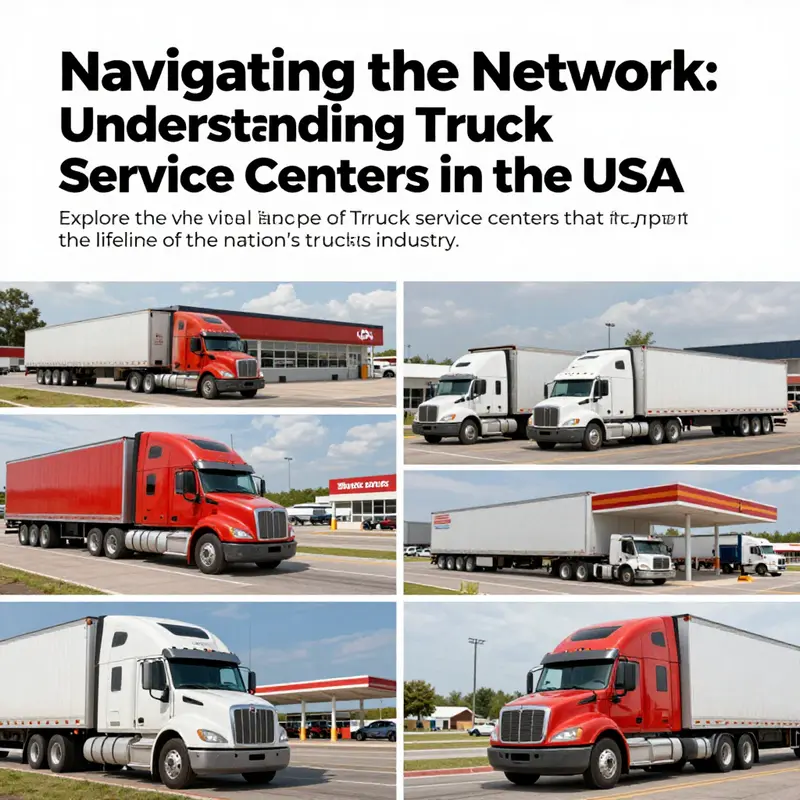
Truck service centers are the backbone of the American trucking industry, offering essential support for long-haul drivers, trucking company owners, fleet managers, and maintenance specialists. While the exact number of these service centers remains vague due to diverse definitions and tracking methods, it is evident that the landscape is extensive and diverse. Major fleet operators maintain private service centers to keep their fleets running efficiently. National repair chains, on the other hand, contribute significantly to the number and variety of service options available. Lastly, the U.S. infrastructure supports this network with thousands of designated truck stops and rest areas, ensuring accessibility for long-haul routes. Each chapter dives deeper into these areas, shedding light on their roles and impacts in the broader discussion of truck service center availability across the country.
null
null
Shaping the Road: How National Repair Chains Redefine the Count of Truck Service Centers Across the USA
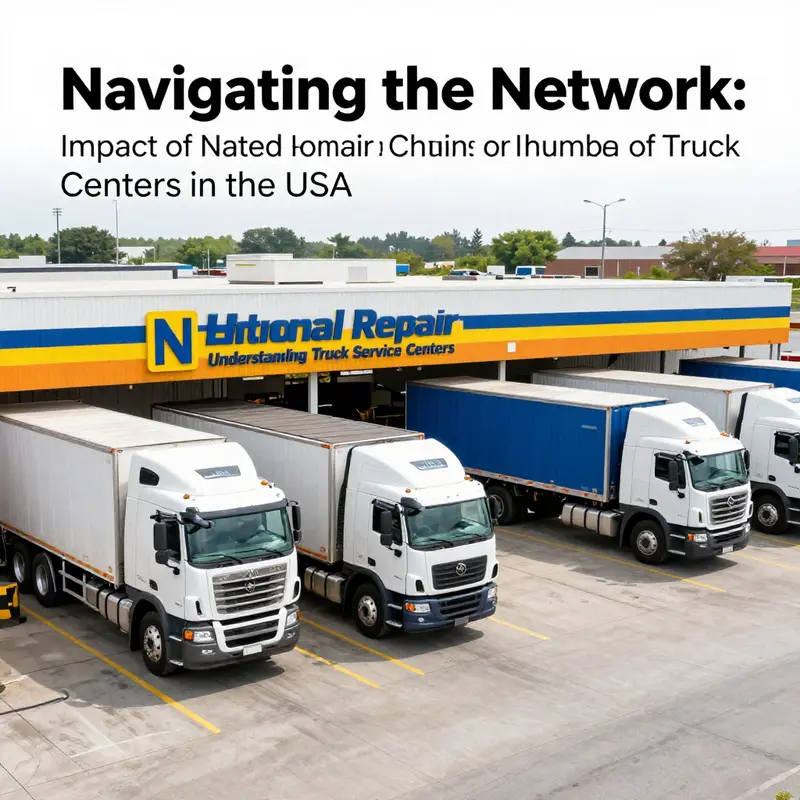
The landscape of truck service centers in the United States is, in some ways, a map without a single, definitive legend. There is no central registry that tallies every independent shop, every corporate facility, or every hybrid network serving commercial fleets. What emerges instead is a picture built from several imperfect signals: the footprint of large fleet operators who maintain their own repair networks, the spread of national repair chains that promise standardized service and rapid turnaround, and a broad swath of smaller, independent garages that carve out niches in regional hubs or rural corridors. When you add the scale of road infrastructure—the thousands of truck stops and rest areas scattered along more than six hundred thousand kilometers of highways—the question of how many truck service centers exist becomes less about a single tally and more about how different players shape the maintenance ecosystem. In this context, the impact of national repair chains becomes a consequential thread. It is not only a matter of how many centers they own, but how their model reshapes accessibility, reliability, and the business environment for everyone else in the market.
Within the fleet world, a telling example highlights the interplay between operator networks and service availability. One large fleet operator operates a defined network of repair facilities—dozens of service centers concentrated in a handful of states—while extending coverage through a web of service partners that reach into the remaining states. This arrangement illustrates a two-tier reality: a core, company-controlled maintenance infrastructure designed to uphold uniform standards, paired with a broader, partner-based ecosystem that extends reach and flexibility. The precise numbers vary by operator and by the scope of what counts as a ‘service center.’ In the public discourse of industry data, these arrangements are often cited alongside the rise of national repair networks that operate across hundreds of locations, delivering predictable service quality, consistent labor practices, and standardized warranties. Although such figures are valuable, they can obscure the practical effects on fleets and drivers. A center that sits in a major metropolitan corridor may be the hub for high-volume diagnostics and heavy-duty repairs, while miles away, in a more sparsely populated region, a partner network may be the only reliable link to a timely maintenance window. The result is a maintenance lattice that is dense in some areas and comparatively sparse in others, shaped as much by the business strategies of large chains as by the geography of demand and the distribution of cargo flows.
The expansion of national repair chains has been a defining force in this landscape, and it has contributed significantly to a broader consolidation trend within the industry. When a national chain scales up, it does more than just open new storefronts; it changes the calculus for competitiveness in the segment. Independent truck service centers often confront higher operating costs and a narrower marketing reach, making it harder to compete against the economies of scale that a national network affords. The upshot is a gradual shift in the density of standalone centers. Where once a region might have boasted a mosaic of small, family-owned shops, the same region can, over time, resemble a different pattern—fewer independent doors, more standardized facilities, and a networked system that emphasizes cross-location scheduling, parts commonality, and cross-training of technicians. It is not a purely zero-sum dynamic; some independents survive by carving out value in specialized niches—perhaps in heavy diagnostics, vintage equipment repair, or mobile fleet services that can respond quickly without a shop visit. Yet the overarching trajectory points toward consolidation, as the infrastructure, marketing reach, and capital backing of national chains enable more consistent performance and a broader geographic span.
This shift matters beyond the math of counts. It reshapes how fleets approach maintenance and uptime. The most visible benefits of a national network—digital scheduling, real-time diagnostics, and extended warranties—do not merely add convenience. They reconfigure expectations about reliability and the predictability of service delivery. A fleet manager can anticipate a more transparent service window, a clearer articulation of turnaround times, and a transferable warranty framework across multiple sites. The digital tools that accompany these networks—online appointment systems, live vehicle tracking for diagnostics, and automated maintenance reminders—help fleets optimize routes and downtime. In practice, this translates into less time parked at a shop and more time on the road, which in turn reduces freight delays and improves overall reliability. For drivers, it means fewer unplanned detours and a higher likelihood that a needed repair or routine check will be completed within a schedule that aligns with delivery windows.
The numbers themselves, while imperfect, underscore the scale of the system and the directional influence of these networks. In the industry, it is widely acknowledged that fleets often rely on a mix of company-owned centers and third-party or partner facilities. A concrete example from the operator side shows a network of 89 company-owned service centers across 13 states and Puerto Rico, with supplementary coverage through partner facilities that extend reach into the remaining states. In parallel, the collision repair segment—an important portion of the broader commercial vehicle maintenance ecosystem—has seen chains expand to hundreds of locations. A leading national chain in that space has grown into the hundreds of sites across numerous regions, underscoring the capacity of scale to bring down costs and standardize service. The practical implication is that, even if the exact total count of all service centers remains elusive, the footprint of national networks is unmistakably large and continuing to grow, with a clear impact on competition, pricing, and service consistency across the country. And there is a broader infrastructural context to keep in view: truck stops, rest areas, and the vast network of arterial and interstate routes create hundreds, if not thousands, of logical points where maintenance makes sense. The existence of this layered infrastructure—centers nested within a sprawling web of service partners and supported by a robust road network—helps to explain why the industry can support such a large, albeit fluid, number of service points.
From a planning perspective, the growth of national chains introduces a set of questions for fleet managers and industry observers alike. How many centers does a given region actually need to maintain acceptable uptime? How does the presence of a national chain affect the viability of independent shops in nearby towns? The answers depend on variables such as freight density, regional maintenance demand, and the geometry of fleet routes. In dense freight corridors, a national network can provide a dependable backbone for routine maintenance and rapid repairs, making it feasible for fleets to centralize smaller, non-critical maintenance tasks and focus on key diagnostic or heavy-duty work at preferred locations. In rural or low-density sectors, independent shops may still be the most sensible option, offering flexibility and specialized knowledge that larger chains cannot as easily replicate in every locale. Yet even in those areas, the pull of the national model—faster turnaround options, standardized labor practices, and the illusion of universal warranty coverage—can lure customers toward the better-known network, if not always the closest shop.
Beyond the pure count of centers, the industry’s broader market dynamics help explain why national chains are attracting more attention. Market analysis consistently points toward growth in the automotive service sector as a whole, with the U.S. market projected to reach roughly USD 281.23 billion by the mid-2020s. This expansion is fueled not just by higher vehicle outlays or more miles driven, but by the ability of large service networks to meet rising demand for reliable, efficient maintenance at scale. The appeal of standardized processes and consistent service quality makes fleets more comfortable with longer-term maintenance contracts or preferred-provider arrangements that favor the national model. And for the service centers themselves, scale enables investment in diagnostic technologies, parts inventories, and staff training programs that would be harder to justify for a lone, small shop. The industry’s gradual tilt toward larger, more integrated repair networks reflects a broader economic logic: when maintenance complexity and uptime requirements grow, the advantages of scale—operational efficiency, supply chain resilience, and customer-facing consistency—become increasingly valuable.
These shifts inevitably influence the geography of repair access. The sheer expanse of the United States means that geographic disparities in service availability will persist even as networks expand. There are more than a thousand designated truck stops and rest areas along the nation’s roadways, and the country’s transportation backbone stretches across roughly 643,700 kilometers of roads, including about 76,000 kilometers of interstate highways. It would be naïve to expect a single, uniform density of service centers that matches the road map itself. Instead, what unfolds is a layered pattern: bustling regions along major freight corridors enjoy dense coverage and rapid access to diagnostics and repairs; mid-sized towns benefit from a mix of company-owned centers and third-party partners; and remote stretches continue to rely on a handful of adaptable, mobile, or nearby independent shops to keep fleets moving. In this sense, the question of “how many centers exist?” becomes less a precise tally and more an assessment of how the network as a whole can keep pace with demand, how consistently it can deliver uptime, and how well it can weather shocks such as supply chain disruptions or sudden maintenance surges.
Amid these dynamics, the data gaps matter. The absence of a unified registry means that any count is inherently contingent on definitions—whether a center is counted as a repair shop, a service facility, or a maintenance hub; whether fleet-owned centers count as “centers” or an alternative category of internal capability; whether partner locations are included in a national total. This ambiguity matters because it shapes policy discussions, market forecasts, and fleet decisions. Yet within the fog of numbers, a coherent narrative emerges: national repair chains are not just expanding the footprint of maintenance; they are redefining expectations around reliability, speed, and the coordination of service services across long-haul networks. For fleet operators who must balance cost, uptime, and risk, the trend toward standardized, scalable service delivery is a compelling proposition, even as it reshapes the competitive landscape for independents and smaller shops that must find new ways to differentiate themselves.
For readers seeking a practical lens beyond the macro narrative, several pointers help translate this landscape into day-to-day decision making. When evaluating where to schedule maintenance for a large fleet, consider the proximity and reliability of a given network’s centers, but also assess the flexibility offered by partner facilities and the consistency of network warranties across sites. The choice between relying on a corporate network, a partner-led service arrangement, or a hybrid approach will hinge on factors such as average repair lead times, the nature of required diagnostics, and the fleet’s exposure to downtime costs. It is also prudent to invest in staff training that keeps technicians abreast of advancing diagnostic techniques and preventative maintenance protocols. For practitioners who want a concrete resource tied to the maintenance training ecosystem, see Fire Truck Maintenance Service Training. This internal reference can provide practical guidance on building a knowledgeable maintenance team capable of navigating the complexities of multi-site service networks while maintaining high standards of safety and reliability.
As the industry evolves, the broader context of market growth and network expansion remains central. The rise of national repair chains signals a maturation of the automotive service ecosystem, where consistency, speed, and scale take on greater importance for fleets that move goods across vast geographies. While the exact tally of truck service centers may never be etched in stone, the order of magnitude is clear: thousands of centers, spanning independent garages, regional service hubs, and sprawling national networks. This triad of supply points—independents, regional centers, and national chains—forms a resilient maintenance lattice that supports the nation’s freight economy. It is a lattice that will continue to adapt as technology, data analytics, and new service paradigms sharpen the edge of uptime and reliability for the trucks that power commerce.
External reference for broader market context: Grand View Research’s Automotive Service Market analysis provides a macro view of growth trajectories and drivers shaping the industry’s expansion. https://www.grandviewresearch.com/industry-analysis/automotive-service-market
Roadtown on the Interstates: The Living Network of Truck Service Centers Across the USA
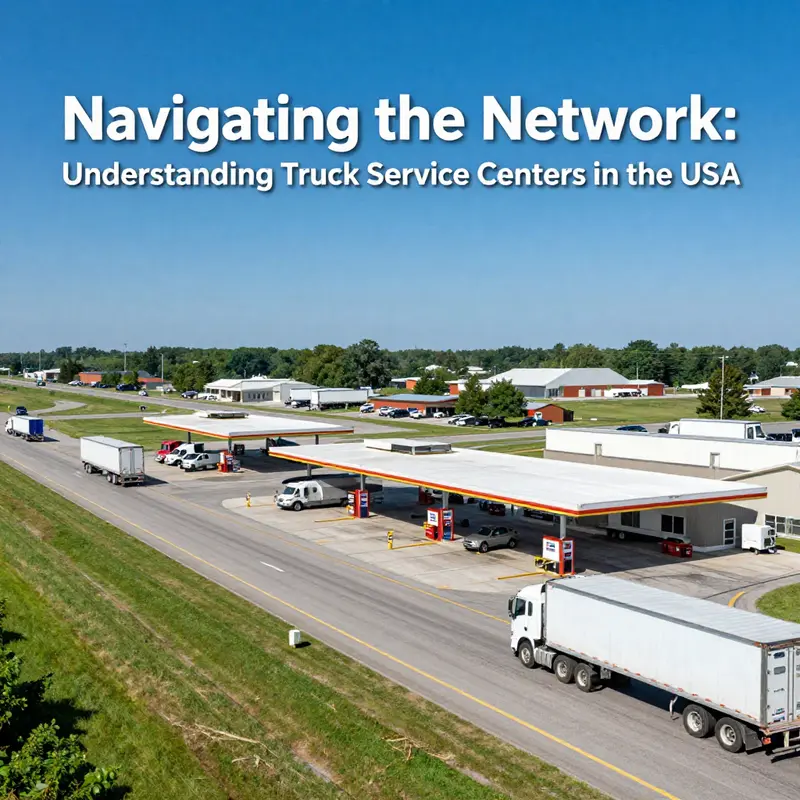
As long as there is freight moving across the country, there will be a parallel, sprawling network that keeps those miles turning smoothly. The infrastructure of truck service centers in the United States has evolved from utilitarian rest stops to sophisticated, multi functional hubs that feel almost like small towns perched along the nation’s highways. These centers are not simply places to fuel up or swap a tire; they are where reliability is built, where maintenance meets safety, and where the rhythm of long haul trucking can be kept steady even when the road throws a curve. To understand how many centers exist, and why their distribution matters, it helps to look at the scale, the variety, and the forward momentum shaping the industry today. There is no single national registry that tallies every shop, every fleet-owned facility, or every independent garage. The landscape is defined as much by definitions as by data. Some researchers count corporate service networks that support large fleets; others count independent repair shops that service a diverse mix of trucks. The most informative picture emerges from converging three lenses: the reach of major fleet operators, the footprint of national repair chains, and the broader infrastructure that undergirds the road system itself. In this view, the United States hosts thousands of truck service centers, ranging from intimate, locally run garages to expansive, company owned facilities that mirror the scale of the fleets they support. Even if no single count exists, the practical implications are clear. The country’s freight economy depends on a dense, responsive maintenance web that can respond quickly to repairs, inspections, and routine maintenance, as well as to the occasional emergency call on rural corridors or along congested corridors near major ports and metro areas. The numbers and the networks matter because uptime is the difference between a delivery window met and one missed. For large operators, uptime translates into predictable routing, proactive maintenance, and in many cases, private service centers that keep the wheels turning within a corporate safety and efficiency framework. One large fleet operator, for example, runs a distributed network comprising a core of service centers—dozens of facilities in several states—while leveraging outside partnerships to complete the nationwide reach across the remaining states. This approach helps guarantee that a breakdown in one region does not cascade into delays elsewhere. On the other end of the spectrum, national repair chains and collision repair networks size their footprints according to demand from a commercial vehicle market that is substantial and, at times, seasonal. A notable example from the sector highlights how a single chain expanded its reach to hundreds of locations across multiple regions, building scale through mergers and acquisitions while maintaining a standardized service baseline. These big footprints coexist with thousands of independent garages that populate the map in towns both large and small. The result is a layered system: corporate networks that offer standardized processes and parts supply, national repair chains that provide consistent coverage in key corridors, and independent shops that bring flexibility and local know-how to bear in daily operations. The breadth of the country’s roadways amplifies this blend. There are more than 643,700 kilometers of roads and a substantial subset of that network—about 76,000 kilometers of interstate highways—where the density of service points matters most. Even beyond the road map, the strategic placement of service centers matters. Designated truck stops and rest areas punctuate the interstate system, creating natural staging grounds for maintenance, inspections, and hospitality that drivers rely on. While the count of these facilities shifts with new investments and store openings, the underlying pattern is clear: a dense lattice of service points that allows operators to schedule preventive maintenance during planned layovers or respond rapidly to breakdowns on high traffic corridors. From the driver’s seat, the experience of these centers has evolved in parallel with the fleet’s needs. The modern truck service center is a compact city along the highway, with fueling, wash bays, and routine maintenance adjacent to parts retail, driver amenities, and in some cases medical or wellness services. The Iowa 80 Truckstop, long recognized as a landmark in the industry, illustrates the potential scale and complexity. It sits on 220 acres near Walcott along I‑80 and can accommodate up to nine hundred trucks at a time. Its infrastructure includes 15 fueling islands with integrated payment systems that can handle all major cards, and a 30,000 square foot retail center offering tens of thousands of products. The site also hosts comprehensive driver amenities: full service showers, a fitness center, an arcade, a 60 seat theater, a barber shop, a dental clinic, and even laundry services. Food options are broad, ranging from fast food to a 50‑foot salad bar and a dining hall capable of serving hundreds of drivers. The truck wash itself is a technical feat, with a 180‑degree water jet system designed for efficiency and cleanliness, and the office center supports the logistical needs of a fleet operation in a single location. The scale of Iowa 80 is an emblem for what these centers aspire to be elsewhere along the corridor. Beyond Iowa 80, other centers across the country show how the concept translates into regional character and practical value. Border Crossing South in South Carolina has been described as more than a stop; it is a themed destination with architecture drawing on regional motifs, a miniature golf course, and a tower that makes the place instantly recognizable. Tiger Truck Stop in Louisiana leans into its advertising heritage with a bold, animal themed design and a brand that drivers come to recognize on a familiar route. Trail’s Travel Center in Minnesota has woven a Viking theme into a robust hospitality offering, including a restaurant that nods to local lore and, in an unusual but meaningful touch for a long-haul audience, a Sunday church service at the site. Johnson’s Corner in Colorado stands out not just for its history, dating back to 1952, but for the cinnamon rolls that have become a ritual pickup for many drivers who know the road in that region, earning national recognition as a nostalgic and welcoming waypoint. These centers show how the design of a maintenance hub can blend practical capabilities with hospitality, giving drivers a sense of place and safety as they navigate long miles. The transportation landscape is actively being shaped by policy as well as by entrepreneurial spirit. In recent years the federal government has prioritized modernization and the expansion of charging and refueling infrastructure to support cleaner freight mobility. The National Zero Emission Freight Corridors Strategy, launched in 2024 by the Department of Energy, the Department of Transportation, and the Environmental Protection Agency, lays out a long term plan through 2040 for deploying zero emission charging and hydrogen refueling access for medium and heavy duty vehicles. The aim is not simply to replace diesel with electric or hydrogen; it is to weave a coherent, accessible network where trucks can refuel or recharge during planned stops and in turnaround nodes that keep the freight economy moving while improving local air quality. This is technology meeting logistics in a practical, scalable way. Alongside the policy frame, construction and development projects continue to advance. In Gainesville, Texas, a project nicknamed the Truckers’ Paradise began late in 2024, signaling a new phase in the modernization of the truck service center landscape. Phase one focused on upgrading utilities—drainage systems, transformers, and the installation of fiber optic connectivity—laying the groundwork for subsequent improvements. In phase two, developers plan to add a west facing fuel station, relocate the food court to a new wing, expand the convenience store footprint, and add decorative semi trucks and vintage trucks at the entrance. The intention is not merely to increase capacity but to create a welcoming, efficient, and culturally resonant space for drivers who spend long hours on the road. The Gainesville project illustrates a broader trend: each major hub is increasingly designed to serve as a “destination” that blends functionality with comfort and a sense of place. The network’s growth reflects the recognition that uptime and driver welfare are inseparable from profitability. A modern maintenance center is expected to provide more than a quick tire change; it should offer reliable maintenance scheduling, timely inspections, clean and safe facilities, comfortable rest areas, quality food options, and even ancillary services that help drivers address health and wellness on extended trips. In this sense, the truck service center becomes a node in a larger system—a node that not only keeps fleets moving but also strengthens the economic and social fabric around the corridors it sits on. To appreciate the scope, it helps to view the industry through three concentric lenses. The first is the fleet operator’s need for consistent, predictable maintenance that aligns with dispatch schedules and preventive maintenance programs. The second is the national network built by repair chains that provides scale, standardized practices, and robust parts supply. The third is the local, independent ecosystem that adds adaptability, community knowledge, and nuanced service that aligns with local road conditions, weather patterns, and regional traffic flows. Each layer matters because it affects uptime, safety, and cost. Most drivers will tell you that the closest shop is not always the best shop; the right shop is one that respects a driver’s schedule, leverages a transparent pricing structure, remains current on inspections and safety protocols, and is staffed by technicians who understand the rigors of long distance travel. The best centers achieve this through a combination of skilled technicians, well organized bays, and digital tools that optimize maintenance. The former might be measured by technician certifications and repair turnaround times; the latter by the speed at which a service bay can be scheduled, parts can be located, and updates can be communicated to a dispatcher. The modern truck service center is increasingly a hybrid of traditional workshop and software driven operations. Digital payment systems, satellite or telematics integration, and centralized scheduling add layers of efficiency that reduce downtime and improve the reliability of the entire network. A well run center becomes a hub of information as much as a place to fix a mechanical issue. The relevance of this infrastructure goes beyond the maintenance itself. It shapes driver retention, influences the routing decisions of fleets, and even informs the design of future trucks that must be robust across a corridor of high traffic and varying climate. The scale of the industry also elevates the importance of safety programs and preventive maintenance standards. When a center can provide a complete service package—fueling, wash, tire service, alignment, brakes, and inspections—along with a comfortable rest area and access to nutrition and health services, drivers are more likely to stay on schedule with less unplanned downtime. The cumulative effect of such centers is a more resilient freight ecosystem that can absorb shocks—whether a weather event, a sudden surge in demand, or a policy shift toward cleaner technology. The result is a transportation infrastructure that looks less like a string of individual shops and more like a coordinated network of hubs, each with its own identity but collectively aligned toward reliability, safety, and efficiency. In discussing the number of centers and their distribution, it is essential to keep in mind that no one figure can capture the entire picture. The combination of fleet owned service centers, large repair chains, and independent shops means the real number is in the thousands, with regional concentrations that reflect population density, freight volume, and highway design. For anyone assessing the landscape, the takeaway is not a precise tally but a clear sense of the network’s depth and its strategic importance. The highway system is not merely a conduit for moving goods from point A to point B; it is a living lattice that requires constant maintenance, inspection, and adaptation. The centers along that lattice are where the future of trucking realmente happens—where maintenance decisions integrate with policy goals around emissions, where drivers find rest and wellness, and where technology starts to reshape the pace and nature of road life. A glimpse into how service culture translates into real customer outcomes can be gleaned from a case study of a prominent highway hub: discovering the unparalleled services of 5 star truck inc. Though the case focuses on a single provider, the underlying principle holds across the network: consistency, reliability, and a welcoming environment are not luxuries but prerequisites for uptime and safety. For policymakers and industry leaders alike, the key challenge remains how to sustain this intricate web as the freight economy evolves. The National Zero Emission Freight Corridors Strategy points the way by outlining a long horizon of investments in charging and refueling infrastructure, while ongoing projects like Gainesville’s modernization effort show how to translate policy into physical improvements on the ground. The future will likely see centers that blend green energy solutions, digital maintenance records, predictive analytics, and customer oriented amenities, all aimed at reducing downtime and improving driver welfare. In this sense, the infrastructure is not a static set of facilities but a dynamic system that grows with the demands of commerce and the imperatives of environmental stewardship. The numbers will continue to shift as new facilities come online and as fleets expand or reorganize their maintenance strategies. What remains constant is the purpose of these centers: to be ready when the road calls, to support the people who live on the highway, and to help move America’s freight with greater efficiency, safety, and humanity. The road network demands not only capacity but also care, and the truck service centers of the United States have risen to that expectation by turning maintenance into a strategic lever for uptime, safety, and sustainable growth. External resource: National Zero Emission Freight Corridors Strategy provides the policy framework guiding these developments and future investments. See https://www.energy.gov/eere/vehicles/national-zero-emission-freight-corridors-strategy
Final thoughts
The landscape of truck service centers in the USA is both vast and essential for the functioning of the trucking industry. Major fleet operators play a crucial role with dedicated service centers for their vehicles, while national repair chains enhance accessibility and availability, ensuring comprehensive support across the nation. Combined with an extensive infrastructure of truck stops and service points, these elements create a robust network that facilitates long-haul trucking operations. Understanding this interplay can empower truck drivers, fleet owners, and maintenance professionals to navigate and leverage these resources effectively, ensuring smooth operations on America’s highways.