
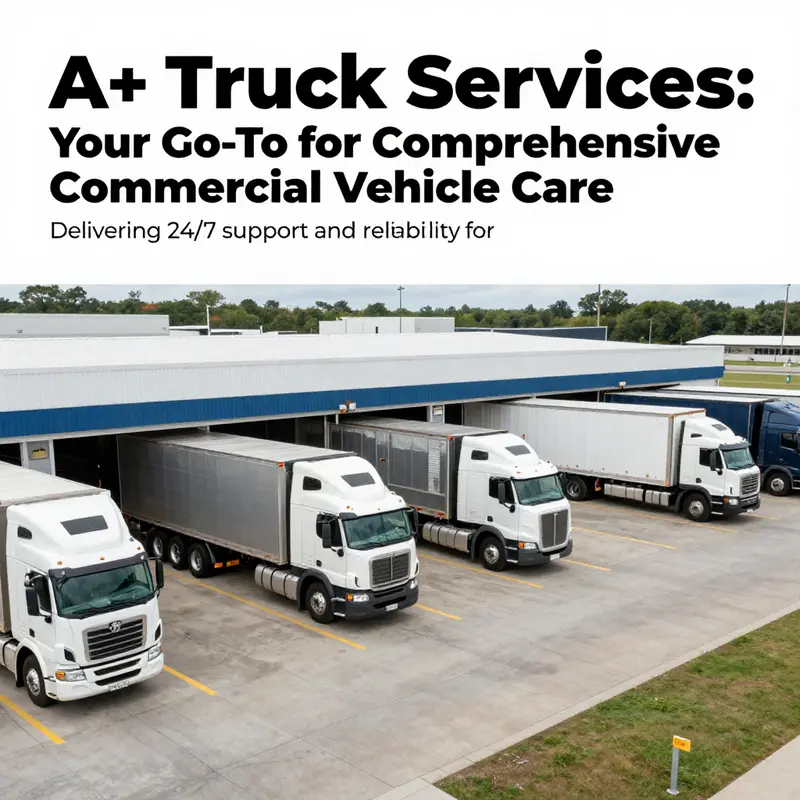
A+ Truck Services stands out as a crucial ally in the transportation industry, offering an extensive suite of commercial vehicle maintenance and repair services. Supported by 24-hour availability, A+ Truck Services caters specifically to long-haul truck drivers, trucking company owners, and fleet managers, ensuring that they can minimize downtime and maximize efficiency on the road. In the following chapters, we will explore how their comprehensive services can keep your fleet running smoothly, the importance of reliable support, and the substantial impact these services can have on logistics and fleet operations efficiency.
null
null
Around the Clock Reliability: How A+ Truck Services Keeps Trucking Fleets Moving

In the world of trucking, uptime is not a luxury; it is the operating currency that keeps shipments on schedule, customers satisfied, and fleets profitable. When a diesel engine shudders to a halt on a remote stretch or a fatigue-prone exhaust system rattles during a night run, every minute counts. This is where a local partner with a reputation for around-the-clock responsiveness can shift the odds in favor of operators who cannot afford prolonged downtime. A+ Truck Services, based in Oceanside, California, embodies that ethos of relentless availability. Serving a wide radius across Southern California, this shop positions itself as a lifeline for fleets that must stay on the move, rain or shine, day and night. Their 24/7 opening hours are not merely a logistical convenience; they are a strategic commitment to keeping fleets in service and deliveries on track, even when electric alarms blare in the early hours of the morning or late into the night when the highway is quiet and the workload is unforgiving. The local market pays attention to such commitments, and while ratings on public review platforms may hover around a modest three and a half to four stars based on a limited sample, the value of dependable access to skilled technicians remains clear for any fleet operator who has learned the hard lesson that a broken rig rarely schedules itself around a manager’s calendar. In this light, A+ Truck Services represents more than a service point; it functions as a tactical partner designed to minimize disruption and maximize the operational tempo of truck-based business.
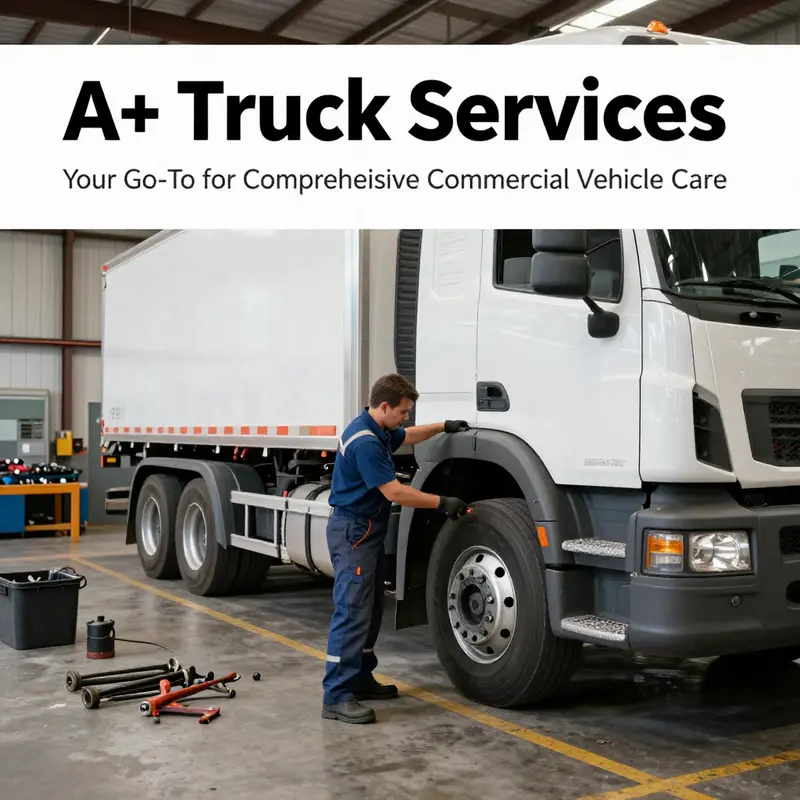
The scope of services offered by A+ Truck Services is deliberately broad, reflecting the needs of busy fleets that must maintain a constant rhythm of loading, transporting, and returning to service. Core offerings include diesel engine repair and general engine maintenance, as well as muffler and exhaust system services that influence both performance and compliance with emissions standards. Oil changes, a staple of preventive maintenance, are framed not as a one-and-done task but as an essential element of a broader strategy to extend component life and prevent unplanned downtime. The 24/7 model amplifies the value of these routine services by removing the traditional time penalty associated with shop hours. When a routine oil change turns into a larger diagnostic session, or when a roadside service call reveals developing issues, there is little delay in access to skilled technicians who can assess, advise, and, if possible, resolve on the spot. Roadside assistance is a particularly crucial component in the service mix. In a business where a single tire failure or a damaged drive belt can stall an entire route, the ability to dispatch support immediately reduces the risk of cascading delays across multiple shipments. The tire-related services—balancing and installation—are aligned with a fleet’s need to maintain traction, fuel efficiency, and predictable tire wear. The combined effect of these offerings is a cohesive package that emphasizes practical repair capabilities and rapid recovery, rather than partial fixes that merely buy time.
The chapter’s focus on round‑the‑clock support is not just about responding to crises; it is about sustaining a reliable operating cadence for fleets that span logistics, construction, agriculture, and urban delivery. In practice, the value proposition translates into tangible outcomes: shorter intervals of downtime, improved trip timetables, and a greater confidence level among fleet managers who coordinate complex itineraries across busy corridors. The Southern California context adds another layer of significance. The region’s dense freight movements, combined with variable weather, traffic patterns, and the inherent wear-and-tear that comes with city and highway duties, create an environment where a 24/7 service footprint can markedly affect a fleet’s ability to honor commitments. A+ Truck Services’ local presence in Oceanside—positioned to serve a broad swath of the Southern California market—helps ensure that even the most time-sensitive maintenance needs can be met without long detours or extended wait times. The emphasis on emergency readiness aligns with the realities of fleet management, where the difference between a late arrival and a successful delivery often hinges on the speed and competence of the first point of contact when trouble arises.
Beyond the mechanics of repair, the practical architecture of a 24/7 shop rests on a disciplined dispatch workflow and a capable on-site team. A+ Truck Services has cultivated a dedicated service team that can respond quickly to urgent requests, employing a combination of diagnostic expertise, prompt tire and fluid management, and capable on-site repairs when feasible. In many cases, remote diagnostics and real-time assessment help technicians decide whether a call should result in on-site intervention or in coordinated tow-and-repair arrangements. The ability to perform certain fixes with the vehicle still in its route plan, rather than removing it from service for extended periods, is central to maintaining a shipper’s schedule. When on-site repair is not possible, a well-organized plan for towing, parts procurement, and expedited resupply minimizes downtime and protects the fleet’s operational rhythm. The service’s 24-hour model complements these capabilities by ensuring that neither day nor night creates a bottleneck for the decision-making process. A fleet operator rarely has the luxury to wait until morning for a critical assessment; immediate access to knowledgeable technicians helps translate a moment of vulnerability into a controllable risk that can be mitigated through swift action.
The practical realities of sustaining a fleet’s uptime are best understood through the lens of the operators themselves—the people who plan routes, schedule loads, and monitor equipment condition around the clock. For trucking, every mile carries a cost, and the cost of a breakdown multiplies when it disrupts the chain of deliveries that underpins customer commitments. In that context, a local, 24/7 maintenance and repair partner becomes an extension of the fleet’s leadership. This partnership is not merely about repairs; it is about a shared discipline of preventive practices and rapid response that preserves the integrity of the operation. The service mix offered by A+ Truck Services—ranging from diesel engine care to exhaust system servicing, oil changes, roadside support, and tire services—supports this philosophy by addressing the recurring pain points that fleets face on a daily basis. The result is a more predictable maintenance program that aligns with the realities of freight demand, driver availability, and the economic pressures that shape fleet decisions. In a landscape where a single downtime event can translate into missed commitments and diminished customer trust, the value of a dependable, 24/7 partner becomes a competitive differentiator for fleets operating in Southern California and beyond.
For fleet managers weighing options, the decision to partner with a 24/7 service provider is ultimately a calculation of risk, cost, and reliability. The upfront cost of service is often offset by the reduced downtime, accelerated return-to-service times, and the improved reliability of delivery windows. When a vehicle is immobilized, the costs extend beyond the repair bill: lost productivity, missed deliveries, and the need to re-schedule or re-route loads that may cascade through a logistics network. A 24/7 model directly interrupts these adverse dynamics by enabling rapid triage, diagnosis, and repair, sometimes on the roadside or at a nearby facility. The accessibility of a local shop also means that drivers can be reassured by the proximity of skilled help and the knowledge that an experienced team is available to handle the most demanding situations. In industries such as construction and agriculture, where equipment downtime can delay critical projects or harvest windows, this immediacy translates into real business continuity. Even for urban delivery operations where time windows are tight and customer expectations are rigid, the ability to recover from an incident quickly can preserve the reliability that customers depend on.
The weekly cadence of a fleet’s operations can be organized around the benefits that a reliable 24/7 service partner provides. A billing-friendly approach—often including transparent estimates and straightforward escalation procedures—helps fleet managers budget for the inevitable maintenance cycles and unexpected repairs without surprise charges or prolonged negotiation during a crisis. In this context, the mention of a “free estimate” is not merely a marketing line; it signals a commitment to clear communication and predictable cost management at a moment when clarity matters most. Maintenance and repair decisions, made with confidence in the availability of skilled technicians, become less about weighing long-term savings against short-term inconvenience and more about aligning maintenance actions with the fleet’s service level agreements and customer commitments.
From a narrative perspective, the value delivered by a 24/7 maintenance partner is best understood through the stories of those who rely on it. Consider a scenario in which a pre-dawn breakdown disrupts a tight delivery schedule along a major Southern California corridor. A technician arrives, validates the issue, and quickly determines whether a temporary fix can restore movement or if a more durable repair is necessary. The team’s ability to perform a roadside diagnostic, replace a failed component, or arrange for a rapid tow to a fully equipped shop reduces the time to recovery. In many cases, the combination of remote guidance, on-site service, and efficient parts logistics translates into a repair that gets the truck back on the road within hours rather than days. This is the practical essence of uptime—not merely the absence of breakdowns, but the fast restoration of service capability that keeps the fleet running, the drivers on schedule, and the freight moving forward.
To readers seeking broader insights on uptime and fleet service excellence, a related resource available at 5 Star Truck Inc provides expansive perspectives on maintaining reliability across trucking operations. For a deeper dive into industry best practices and the design features that undergird dependable today’s fleets, you can explore this overview: exploring-the-excellence-of-5-star-truck-inc-your-premier-trucking-solution. This internal reference complements the Oceanside-focused case by highlighting how peer organizations frame uptime, maintenance discipline, and service partnerships within a broader context of operational excellence. The cross-pollination of ideas between a dedicated local service provider and industry-wide perspectives helps fleet operators tailor their maintenance philosophies to both immediate needs and longer-term strategic goals. As the fleet landscape continues to evolve with changing regulatory requirements, driver expectations, and the pursuit of efficiency, the principle remains constant: a reliable, responsive partner can be the difference between a day wasted and a delivery made on time.
For readers who may want to verify local details and explore practical proximity, the Oceanside facility’s location is listed for reference, along with contact information. The service point is positioned to respond quickly to the needs of fleets across Southern California, acting as a dependable node in a larger network of maintenance and recovery options. Whether a driver is navigating the freeway arteries at 2 a.m. or a manager is planning preventive maintenance for the coming quarter, the presence of a 24/7 service capability provides a sense of operational security that is difficult to quantify but easy to appreciate in day-to-day decision-making. In this regard, A+ Truck Services embodies a pragmatic approach to uptime: prioritize accessibility, maintain a wide range of essential capabilities, and deploy a capable team that can mobilize rapidly. As fleets weigh the relative value of different service providers, the combination of continuous availability, comprehensive maintenance offerings, and a local, trusted presence makes a compelling case for a partner that can support steady throughput and predictable outcomes. The road ahead for fleets that demand reliability is illuminated by the clarity and consistency of such 24/7 responsiveness, which translates into fewer disruptions, steadier performance, and the confidence to commit to ambitious schedules without fear of the unexpected.
External reference: For location details and directions to the Oceanside service point, you can view the listing on Google Maps: https://www.google.com/maps/place/A+%2B+Truck+Services/@33.174553,-117.302789,15z/data=!3m1!4b1!4m6!3m5!1s0x808e3d2a4c8f7e8b:0x8d4c4a1a5e6b8a4b!2sA%2B+Truck+Services!3m2!1d33.174553!2d-117.302789!5m1!1e1?entry=ttu
Steady Roads, Unbroken Uptime: Reliability as the Engine of Commercial Truck Services

Reliability in commercial vehicle services is not a luxury; it is an operating principle that determines whether a fleet stays on the road or sits idle in a yard. For managers who juggle delivery windows, construction deadlines, and seasonal peaks, every hour of downtime translates into delayed shipments, penalties, and a creeping sense of risk. In this landscape, reliability becomes the sticky variable that links maintenance to productivity. It is the quiet, daily discipline of a shop that can turn a potentially crippling breakdown into a manageable hiccup, and it is the heartbeat of a service model that earns trust not with grand promises but with consistent, practical outcomes. When a driver calls at 2 a.m. with a tire issue or a diesel engine fault, the true test of a service provider is not their capability to perform a repair in ideal conditions, but their capacity to show up, communicate clearly, and restore mobility as quickly as possible. In short, reliability is the engine that powers fleet uptime, and uptime is the currency of modern trucking.
A+ Truck Services exemplifies this principle through a blend of scope, reach, and a staffing ethos that prioritizes speed and transparency. The company operates with a practical sense of what fleets need most accessibility, honesty, and a comprehensive skill set that covers the essentials of commercial vehicle upkeep. Their service catalog reads like a well tuned toolbox: diesel engine work, general engine repair, oil changes, exhaust and muffler services, tire balancing and installation, and even roadside assistance. That mix matters because a fleet does not want to coordinate multiple vendors for a single incident. When a truck is down, every hour counts, and a single point of contact that can triage, diagnose, and execute a plan becomes a critical asset. The reliability narrative here is reinforced by the fact that the service point operates around the clock. A 24 hour availability window is not just about responding to emergencies; it is about enabling proactive scheduling, reducing the uncertainty that haunts fleet planners, and ensuring that operations can adapt to the unpredictable rhythms of road transport.
The reliability story is also reinforced by the voice of customers. In feedback that clusters around two core themes—dependability and upfront honesty—the emphasis is on predictable turnaround times and transparent communication. A common thread in the anecdotes is the swift resolution of common but disruptive incidents, such as a flat tire, where the driver was back on the road with minimal delay. This kind of efficiency is not incidental; it is the direct outcome of a service model that invests in rapid response, precise triage, and a network of technicians who can mobilize quickly, assess the situation, and execute a solution without turning a minor event into a major outage. In fleet terms, that translates to higher uptime, steadier schedules, and a bedrock of reliability that operators can count on when their own teams are stretched thin by competing demands.
The breadth of services offered is not a mere showcase of versatility; it is a strategic choice that reduces downtime for fleets. When a single provider can handle engine work, preventive maintenance, exhaust system servicing, oil changes, and tire related tasks, the friction and lag associated with coordinating multiple vendors dissolve. For fleets that run on tight margins and tight schedules, that seamless integration matters. A shop that can address both routine maintenance including oil changes, tire rotation, and basic diagnostics and more specialized tasks including diesel engine repair, exhaust systems, and high mileage wear items creates a smoother maintenance cadence. The cumulative effect is a fleet that experiences fewer transfer delays, less queuing for parts, and a more reliable maintenance calendar. In practice, that means a truck does not linger in a shop awaiting a back ordered part, nor does it bounce between vendors for the same issue. It means a single, trusted partner is mapping the path from diagnosis to repair, keeping the flow of work continuous and predictable.
Transparency plays a central role in reliability, too. The upfront honesty highlighted by customers goes beyond pricing; it encompasses clear expectations about time to repair, potential constraints, and the steps necessary to return a vehicle to service. When technicians communicate in plain language about what is needed, what can be done immediately, and what requires a follow up, the operator gains the confidence to plan around maintenance windows rather than react to emergencies. This kind of candor is especially valuable for fleet managers who must reconcile maintenance schedules with dispatch objectives and customer commitments. It also reduces the cognitive load on drivers, who are asked to trust in a repair pathway rather than guessing when the next update will emerge. Reliability, in this sense, is as much about information as it is about parts and labor.
An essential, often underappreciated ingredient of reliability is the ability to triage and triage well. In the real world of fleet operations, a tire issue, an oil leak, or a misfiring engine can cascade into broader disruptions if not handled with precision. The capacity to diagnose swiftly, source the right parts, and deploy the correct personnel reduces the risk of misdiagnosis, costly rework, or repeated roadside events. For a fleet manager, the reassurance comes from knowing that a service partner not only has skills across a broad spectrum of maintenance tasks but also possesses the discipline to apply those skills in a time efficient, cost conscious manner. The result is less waste, shorter repair times, and a clearer path from the moment a breakdown occurs to the moment the vehicle returns to route. In the calculus of uptime, there is no margin for error in triage; every decision carries a cost and a benefit, and a reliable shop makes sure the balance sheet tilts toward the latter.
The 24/7 aspect of reliability is more than a convenience; it is a fundamental enabler for fleet scheduling. For operations that span multiple shifts, preventable downtime often correlates with the inability to align maintenance windows with dispatch cycles. A 24 hour service capability means a fleet can absorb late night breakdowns, perform essential preventive maintenance during off peak hours, and align downtime with the least disruptive parts of a driver schedule. It also supports rapid response during peak demand periods, when the cost of downtime can escalate quickly. The practical impact is a stable rhythm: trucks spend more time on the road, fewer hours are siphoned off by unscheduled maintenance, and managers gain the flexibility to optimize routes and delivery windows with greater confidence. Reliability, in this frame, is not abstract; it is the chain that connects maintenance operations to the real world demands of customers and markets.
Behind the scenes, the reliability engine relies on disciplined operational practices. A shop that sustains reliability demonstrates consistency in technician training, a well stocked parts inventory, and a culture that prioritizes safety as a core competency. The idea is simple: skilled hands plus the right parts plus clear communication equal faster repairs and longer lasting fixes. When a service provider demonstrates these traits, it creates a virtuous circle with fleets. Drivers experience fewer surprises, dispatch managers experience fewer emergencies, and maintenance teams gain a predictable workload that makes preventive care a practical habit rather than a reactive ritual. That is the essence of reliability in the context of commercial trucking: a systematic, repeatable pattern that minimizes risk and maximizes miles per service hour.
As readers consider the broader landscape of commercial vehicle maintenance, it can be helpful to connect the practical lessons with a broader resource on uptime and product support. One useful reference is the article on unlocking fire apparatus uptime essential product support secrets, which offers insights into how uptime is sustained through accessible support and well coordinated product stewardship. unlocking-fire-apparatus-uptime-essential-product-support-secrets. While the context of fire apparatus differs from everyday commercial trucking, the underlying principles—speedy access to expertise, clear communication, and a unified approach to maintenance—translate across fleets of all kinds and reinforce the central claim: reliability is built on a foundation of reliable people, processes, and partnerships.
In evaluating reliability, it is important to acknowledge that a single star rating cannot capture the daily realities of fleet operations. A 3.7 star rating on a local platform signals a baseline level of satisfaction, but it also invites scrutiny about consistency, responsiveness, and the ability to scale with demand. What the rating framework may miss is the incremental value of a service partner that prioritizes uptime in every interaction: a technician who arrives on time, explains the repair plan, stays focused on the credentials of the job, and closes the loop with a clear remedy schedule. Reliability emerges not from a list of certifications but from a track record of dependable outcomes across a variety of equipment, environments, and constraints. That is the promise a local service provider can offer to fleets that depend on predictable performance as surely as they depend on fuel and load capacity.
The practical takeaway for fleet operators is straightforward. Reliability is built from a blend of preparedness, accessibility, and integrity. It requires a service partner who can handle routine maintenance without pulling drivers away from routes, who can mobilize on a moment notice when a roadside need arises, and who can communicate openly about what is happening and why. It means choosing a partner who treats uptime as a core competency rather than an afterthought and who integrates with a fleet schedule planning cycles rather than interfering with them. In this sense, reliability is not a single act of repair; it is a continuous, disciplined practice that shapes the entire relationship between fleet managers, drivers, and the people who service the vehicles that keep their business moving forward.
To close this chapter, consider how reliability translates into everyday decisions on the shop floor and on the highway. It informs how managers structure maintenance windows, how drivers allocate their time, and how teams measure success. It shapes the conversations that fleets have with suppliers, the expectations they set for turnaround times, and the way they plan for seasonal demand. Above all, reliability is the quiet confidence that, when a vehicle falters, there is a partner who will respond with clarity, speed, and the expertise to return that vehicle to service with minimal disruption. That is the value proposition at the heart of A+ Truck Services and the broader narrative of reliable commercial vehicle support: steady roads, steady uptime, and the peace of mind that comes from knowing your fleet can keep moving when it matters most.
External reference: A+ Truck Services on Google Maps: https://www.google.com/maps/place/A+%2B+Truck+Services/@34.957068,-81.592464,15z/data=!3m1!1e3!4m6!3m5!1s0x88a1d5d7c6f7b5b3:0x8f5c3c1b4e4f1a1b!2sA+%2B+Truck+Services!3m2!1d34.957068!2d-81.592464!4m2!1d0!2d0?sa=X&ved=2ahUKEwjYlZLh9KqIAxV9RvUJHcvwNQkQ8AF6BAgIEAE
A+ Truck Services and the New Grammar of Fleet Uptime: Service-Driven Efficiency in Modern Logistics

Uptime is not a luxury but the heartbeat of modern logistics. For fleets that move goods across city streets and regional corridors, every hour of delay translates into higher labor costs, frustrated customers, and missed commitments. In this milieu, a local service partner that provides round-the-clock support, a broad spectrum of maintenance offerings, and a mindset oriented toward minimizing disruption can redefine a fleet’s operating rhythm. A+ Truck Services stands in that position for many operators, not simply as a repair shop but as a trusted hub for continuous movement. Its 24-hour accessibility, a broad service catalog, and commitment to rapid response align with the practical realities of fleets whose schedules operate on tight, margin-sensitive clocks. The value of such a partner compounds when a service point is evaluated not merely on single-point fixes but on how the arrangement supports the entire operating cycle—from the moment a fault is detected to the moment a truck re-enters service with reliable performance. In this sense, the impact extends beyond immediate repairs to the broader discipline of fleet maintenance, where reliability and predictability become competitive assets in the face of volatile demand, weather, and capacity constraints.
The geographical and temporal accessibility of A+ Truck Services matters as much as its technical breadth. A 24/7 model ensures that a fleet’s critical assets do not sit idle during off-hours or in late-night windows when road conditions and access to spare parts might otherwise introduce longer delays. The practical effect is a reduction in downtime that would otherwise accumulate during weekends, holidays, or night shifts. In the logistics world, where every minute of downtime can cascade into missed delivery windows and cascading penalties, a service point that can mobilize quickly becomes a strategic partner. The accompanying portfolio—diesel engine repair, routine engine maintenance, free estimates, exhaust and muffler services, oil changes, on-road assistance, tire balancing and installation—reads like a comprehensive maintenance engine room. It signals to fleet operators that maintenance, rather than being a collection of reactive responses, can be orchestrated in a way that preserves vehicle availability and, by extension, service commitments to customers.
That orchestration rests on more than a truck bay and a phone number. It rests on an integrated approach to fleet health that blends hands-on expertise with data-informed practices. Real-time diagnostics, predictive maintenance, and route-aware visibility are not abstract buzzwords; they are the practical mechanisms by which a fleet emerges from a fault not as a surprise but as a scheduled event in which downtime, cost, and risk are tightly controlled. When a fleet operator knows, with high confidence, what component is likely to fail and when, the maintenance plan can shift from reactive repairs to scheduled interventions that minimize the impact on operations. Real-time tracking and predictive maintenance are the modern equivalents of a surgeon’s anticipatory toolkit, allowing teams to pre-empt deterioration and allocate resources where they are most needed. It is not just about fixing things faster; it is about fixing them at the optimal moment to preserve uptime and predictability across the entire network.
The practical benefits of this integrated approach reveal themselves in days that follow maintenance windows. Trucks return to the road not as a promise of normalcy but with a measured assurance that their next fault will be anticipated rather than endured. The service portfolio also dovetails with the realities of heavy-duty usage. Commercial operations often place wear on exhaust systems, air filters, engine seals, and lubrication cycles that demand timely attention. By combining diagnostic capability with maintenance offerings such as oil changes and exhaust system services, A+ Truck Services helps fleets sustain engine performance and exhaust integrity, reducing emissions-related risk and maintaining compliance with evolving environmental and safety standards. In parallel, tire services—balancing, installation, and alignment—address a critical area where even small deviations in tire condition can ripple into fuel inefficiency, uneven wear, and unexpected downtime on the road. The intent is clear: the provider’s capacity should not be siloed into one service line but should instead function as an integrated maintenance ecosystem that keeps the vehicle and the route in harmony.
As fleets increasingly operate under tight service-level agreements, the economics of maintenance become a key differentiator. Predictive maintenance supported by on-road assistance translates into lower total cost of ownership by reducing unplanned failures, extending asset life, and stabilizing maintenance outlays. When a service point can offer a transparent, no-surprise estimate up front, the financial planning for a fleet becomes more reliable. The value proposition expands beyond the repair itself to the ability to schedule work in a way that aligns with fleet deployment, spare capacity, and service commitments. In practice, this means that a fleet manager can plan downtime during periods of lower demand, coordinate preventive work with vehicle substitutions, and maintain a predictable cash flow across the fiscal quarter. The combination of 24/7 access, breadth of service, and transparent pricing creates an operating environment in which maintenance is not an obstacle but a parameter that fleets manage as part of their core logistics strategy.
Beyond the mechanics of repair and routine maintenance, A+ Truck Services sits at the intersection of technology-enabled efficiency and service-based business models. The chapter’s larger arc lies in how fleets increasingly embrace models that shift risk and capital expenditure away from the operator toward service providers that guarantee performance. Truck-as-a-Service (TaaS) represents a paradigm in which fleets do not merely lease or own trucks but partner with providers who assume responsibility for uptime, optimization, and asset performance. In a TaaS arrangement, the emphasis shifts from owning a fleet to delivering outcomes—on-time deliveries, predictable maintenance costs, and continuous high utilization. This shift mirrors broader trends in logistics toward outsourceable expertise and modular solutions that can scale with demand while preserving financial flexibility. For operators faced with volatile freight markets, the appeal is straightforward: a reduced need to tie up capital in depreciating assets while gaining access to modern, high-efficiency vehicles and a maintenance backbone that is aligned with performance metrics.
Sustainability finds a natural home in this framework as well. Modern fleets face mounting pressure to lower lifecycle emissions and achieve better fuel efficiency. The TaaS model, coupled with real-time tracking and predictive maintenance, enables operators to optimize routes, minimize idle time, and sustain engine health—factors that contribute to lower fuel burn and fewer wasteful trips. Companies contemplating long-term plans for decarbonization will find in service-driven models an adaptable path forward. The ability to upgrade to newer, cleaner powertrains without absorbing the upfront capital costs of asset modernization is particularly compelling for fleets that must balance service quality with sustainability commitments. Even when fleets continue to operate diesel engines, the emphasis on proactive maintenance and route optimization translates into measurable improvements in fuel economy and emissions, aligning operational performance with environmental targets.
The regulatory environment adds another layer of complexity and opportunity. The Goods and Services Tax (GST) reform set to take effect in 2026 promises to streamline inter-state logistics and improve cost predictability for transport providers. By reducing the friction in cross-border movement and simplifying compliance burdens, such reforms complement the efficiency gains delivered by service-oriented models. When fleets can predict costs with greater clarity and operate within a more integrated tax framework, the financial case for adopting maintenance-as-a-service approaches strengthens. This alignment between regulation, technology-enabled efficiency, and service-based delivery reinforces the strategic value of a trusted maintenance partner who can adapt to changing rules while keeping operations stable—an especially valuable attribute for fleets whose routes cross multiple jurisdictions and time zones.
In this evolving landscape, it is useful to consider the broader industry conversation about how standards, standards bodies, and innovative service models intersect. The direction is toward a more modular, data-driven fleet ecosystem in which maintenance, optimization, and utilization are coordinated through shared platforms and performance-based contracts. This is not a distant future; it is the present reality for fleets that require reliability, speed, and adaptability. The practical implication for operators is straightforward: cultivate a relationship with a maintenance partner who can provide 24/7 access, a full-service menu, and a philosophy of uptime that treats every hour on the road as an asset to be protected. When this foundation is in place, the rest of the logistics stack—warehouse throughput, customer lead times, and last-mile performance—gains in confidence and consistency.
The electrification wave and the exploration of zero-emission or low-emission solutions add a further dimension. Fleets increasingly confront decisions about powertrains, charging infrastructure, and energy management as part of their core operating plans. The journey toward electrified fleets is not only about vehicles but about the ecosystem that supports them: diagnostic tools, battery health monitoring, fast charging capabilities, and maintenance practices that are specifically tuned for new propulsion architectures. The practical takeaway for operators is that service providers will need to evolve their skill sets and tools correspondingly. A+ Truck Services’ breadth of offerings signals an orientation toward this evolution, where maintenance expertise, technology-enabled visibility, and flexible financing models converge to sustain performance in a changing propulsion landscape. For fleets contemplating electrification, the path forward will likely involve collaborations that integrate charging strategy with maintenance scheduling, vehicle availability with energy planning, and supplier networks that can accommodate rapid technology refresh cycles. In other words, uptime will depend not only on repairing what breaks but on anticipating what may require attention when the next powertrain redesign or battery technology shift arrives.
On the practical front, the operational implications are clear. A fleet that reduces downtime through rapid dispatch, predictive maintenance, and integrated service coverage can reallocate human resources, optimize shift patterns for maintenance work, and drive higher utilization across the entire asset base. The downstream effects touch customer satisfaction, as more reliable deliveries translate into steadier service levels and fewer penalties for late shipments. The strategic message for fleet leadership, then, is to treat maintenance not as a cost center but as a core engine of efficiency and growth. That means choosing a service partner who can deliver on three fronts: immediate response when the unforeseen occurs, data-driven insights that anticipate what comes next, and an ecosystem mindset that aligns maintenance, procurement, and operations toward common performance goals. In this light, A+ Truck Services is more than a local repair shop; it is a catalyst for the kind of logistics resilience that today’s market demands.
For readers seeking a concrete touchpoint tied to ongoing industry discussions, the trajectory toward electrified fleets and smarter maintenance is well captured in related industry discussions, including analyses of how GST reform interacts with logistics workflows. As the sector continues to adapt to regulatory changes and technological advances, the role of service-oriented models in maintaining uptime remains central. The broader narrative is not about any single technology but about the efficiency and resilience that emerge when maintenance is integrated with data, strategy, and flexible financing. Fleets that embrace this integrated approach will find themselves better positioned to navigate the next wave of logistics challenges, from demand volatility to evolving emissions standards.
For further context on how regulatory changes and technological advancements are reshaping the logistics sector, see this authoritative source: New GST Law Expected to Make Major Impact on Logistics Sector. In practical terms, fleet operators might also explore how modern fleet management practices can integrate with electrification trajectories and service-based delivery models, including the emerging emphasis on lifecycle performance over asset ownership. In this sense, staying connected with evolving best practices becomes part of the core competency of modern fleet leadership.
To tie the discussion back to hands-on, day-to-day operations and to underscore the value of forward-looking maintenance partnerships, consider the growing importance of accessible knowledge centers and practical guides that fleets can use to inform their decisions. For teams looking to expand their understanding of fleet and emergency-service vehicle maintenance, a curated body of writing on topics such as charging infrastructure, uptime optimization, and maintenance training can be a critical resource. A practical way to engage with this knowledge is to explore industry content that translates high-level concepts into actionable steps for shop floor and dispatch teams. In the end, the goal is not merely to fix problems but to prevent them, to keep vehicles in service longer, and to ensure that every mile driven aligns with customer commitments and corporate sustainability aims.
Within this broader framework, the role of a trusted local partner becomes clear. The right service provider does more than repair engines; it orchestrates a relationship across maintenance, data, and operations that yields reliable performance, clearer budgeting, and a more resilient logistics network. The result is not simply improved uptime on a few trucks but a tighter operating system across the entire fleet that supports more predictable schedules, safer operations, and a stronger bottom line. As logistics continues to evolve toward greater digital integration and smarter asset management, the ability to blend hands-on technical capability with strategic planning will define leaders in fleet operations. A+ Truck Services, with its 24/7 access, comprehensive service suite, and alignment with emerging industry models, stands as a practical example of how a traditional maintenance network can evolve into a core driver of logistics efficiency and resilience. The chapter’s takeaway is straightforward: value in fleet operations today comes from service excellence that translates into dependable uptime, informed decision-making, and sustainable growth—kept in motion by the steady partnership between fleet operators and the service providers who understand that every hour on the road is an asset to protect.
For an example of how the industry is thinking about electrification and uptime together, you can explore further insights on electric fire truck charging solutions. This kind of resource helps connect practical, on-the-ground maintenance work with broader strategic trends in fleet design and energy management.
Final thoughts
A+ Truck Services is more than just a service provider; it is a cornerstone for anyone operating in the trucking industry. With comprehensive maintenance options, 24-hour emergency support, and a firm commitment to reliability, A+ ensures that commercial drivers, company owners, and fleet managers can focus on what they do best—delivering timely services while minimizing disruptions. When it comes to keeping your fleet operational, integrating A+ Truck Services into your maintenance plan is a wise choice that can safeguard your bottom line and bolster your operational efficiency.