
Established in 2000, A Mendoza Trucking Services has evolved into a pivotal player in the trucking industry, offering specialized solutions for varied cargo needs. This article delves into the rich history of the company, providing insight into its growth and service diversification. We’ll explore operational aspects, examining how the company manages logistics and works with long-haul truck drivers, company owners, and fleet managers. An overview of the legal requirements and regulatory framework guiding its operations will enable aspiring truck drivers and existing operators to recognize the importance of compliance. Finally, we’ll look toward the future, considering technological advancements and market trends that may shape A Mendoza Trucking Services and the industry at large.
Tracing a Name on the Open Road: Interpreting the Historical Echoes of A Mendoza Trucking Services
When readers seek a historical overview of a trucking service that wears a familiar surname in its branding, they often expect a clean, linear lineage: a single founder, a steady expansion, and a continuous chain of registrations, fleets, and service footprints. Yet in practice, the road often runs through alleys of similar names, overlapping entities, and digital traces that point in multiple directions at once. The request for a historical overview of A Mendoza Trucking Services invites exactly that kind examination—the search for a coherent arc where none may exist, or at least where the arc is dispersed across jurisdictional lines, corporate registries, and domains that outlive any one local business. What emerges, then, is not a single, tidy chronicle but a landscape of overlapping histories that share a surname, a general field, and a common service offering: the movement of goods by road. In that sense, the challenge is as much about reading the evidence correctly as it is about telling a story that feels complete to readers who expect a narrative they can follow without ambiguity.
From the outset, the information landscape for A Mendoza Trucking Services is pieced together from several fragments that may or may not belong to the same family business saga. A company described as established in 2000 in trucking services notes the availability of both open and enclosed trucks to accommodate a variety of cargo types. The domain mendozatruckingllc.com is associated with this enterprise, and its technical footprints—registrar Squarespace Domains II LLC and DNS management through Google Domains’ servers—suggest a digitally active presence. The domain’s expiration date, set for December 29, 2025, indicates ongoing renewal activity, a sign that someone maintains the online facet of the operation. Yet a domain’s life is not a certificate of continuous physical operation, nor does it prove a single corporate entity’s uninterrupted existence across time. It simply proves that someone, somewhere, has chosen to present a digital storefront or information hub under the Mendoza banner at this moment in history.
On the other side of the ledger, a separate entity named Mendoza Trucking LLC appears in Kentucky, incorporated in 2017 and headed by a principal office in Louisville. Its registered agent is a Mendoza surname bearer, which might be a familial tie or a coincidence of naming. The Kentucky Secretary of State’s database confirms its active status. Taken together, these pieces suggest a pattern of branding built around the Mendoza name in the trucking sphere, but they do not confirm that the Kentucky entity is a direct continuation of the California-registered operation, nor do they establish a single, unified corporate lineage for A Mendoza Trucking Services. The inability to locate a consolidated historical timeline for a true singular entity named A Mendoza Trucking Services is not unusual in a sector where multiple small owners, siblings, or cousins may launch ventures using similar nomenclature. It is, in fact, a common occurrence for industries that rely on meticulous compliance, fleet management, and service contracts to survive while families pursue separate entrepreneurial paths.
The research landscape reinforces this impression. One distinct entity appears as A & D MENDEZ TRUCKING INC in California, established in early 2013 and currently active, with a registered address in Hughson, CA. This record demonstrates that the name family and the trade of trucking are compatible with a system of state-level registration and active status. A separate entity named MENDOZA TRUCKING LLC aligns with the domain in question, reinforcing the sense that the name has genuine market presence independent of any single corporate line. The absence of a clearly documented link between these California and Kentucky formations, along with the lack of a published, comprehensive timeline tying them into a single corporate archetype, means readers must treat any perceived historical continuum with caution. It is entirely plausible that the Mendoza surname serves as a cultural or familial brand across unrelated enterprises operating in different states, each pursuing its own growth trajectory and client base without a formal, publicly accessible chain that binds them together.
This ambiguity matters in practical terms. For clients, partners, or researchers seeking a reliable historical account of a trucking service named A Mendoza Trucking, the absence of a definitive, single-source chronology can complicate due diligence. In a field where trust is built through proven reliability, demonstrated fleet capability, and consistent regulatory compliance, the signal that a single, continuous history exists becomes crucial. The available records instead point toward a pattern of branding that borrows from a familiar surname and a shared industry, rather than a neatly sequenced corporate biography. The open and enclosed trucks referenced in the general description speak to a versatile fleet capable of handling varied cargo, from standard goods to sensitive items requiring protected transport. Yet even here, the precise limits of that capacity, the metrics of on-time performance, and the nature of client engagements remain unspecified. Without a unified narrative tying fleet, filings, and service outcomes to a singular corporate thread, readers are left with a mosaic rather than a monologue.
In this context, it is useful to consider how branding and corporate identity interact in the trucking world. The Mendoza name, like many others in transportation, carries both cultural resonance and practical ambiguity. A brand built around a surname can signal familial stewardship, local roots, and a commitment to generations of service. It can also mask separate ventures that operate in parallel rather than in a single, linked continuum. The existence of A Mendoza Trucking Services in one jurisdiction and Mendoza Trucking LLC in another is not inherently conflicting; it is a reminder that the business landscape for trucking is plural and often decentralized. A client or observer must distinguish between brand affinity—the sense that a company shares values, reliability, and a line of service—versus corporate lineage—the legal continuity from one registered entity to another. This distinction matters when evaluating history as a narrative you can trust and when assessing the credibility of a provider’s claims about legacy and expertise.
The digital footprint adds another layer to the interpretation. A domain registered under a contemporary platform with an apparent renewal cycle is not a proof of ongoing physical operations; it is a signal of marketing strategy, service marketing, and perhaps a channel for customer engagement. The domain’s DNS management through a major provider and the registration through a known registrar reveal a standard, professional approach to maintaining an online presence. They tell us that someone cares about visibility, accessibility, and branding in the online space, yet they do not reveal ownership, control, or operational history in the way a long-form corporate timeline would. This combination—visible, maintained online presence with limited public evidence of a single, continuous corporate journey—creates a historical ambiguity that is best understood as a competitive reality of the sector rather than a flaw in recordkeeping.
To readers hoping for a single, definitive historical arc, one clear path emerges: the need for due diligence that triangulates multiple sources. Corporate registries serve as the backbone of factual history, revealing who is legally recognized to operate and where. Domains reflect present-day branding and marketing reach, hinting at who is actively presenting themselves to customers online. Yet neither alone suffices to establish lineage across time. When combined with fleet descriptions, service capabilities, and regulatory compliance records, a more nuanced story can be drawn—one that acknowledges the existence of several Mendoza-named trucking entities while distinguishing between independent operations rather than a monolithic enterprise. In this sense, the historical inquiry becomes less about reconstructing a single origin and more about mapping degrees of connection, influence, and branding across the landscape.
This approach leads to a broader reflection about how a name, a fleet configuration, and a digital footprint converge to shape public perception. A Mendoza Trucking Services, as a concept, embodies the promise of dependable goods movement and adaptable fleet options. People seeking transport solutions may be drawn to the idea of a family-rooted service with deep local ties, even if the actual corporate structure is a constellation of separate entities with similar branding. The methodological takeaway is clear: readers should look for corroborating signals beyond a brand label—registrations by state authorities, documented corporate relationships, and verifiable timelines of fleet deployment. In a field where trucks are the physical embodiment of service and reliability, the historical narrative reflects not only legacies but also the practical realities of how businesses start, diverge, and, at times, converge in name rather than in deed.
For those who want to explore the narrative further, a case study embedded within the broader trucking industry offers a meaningful example of how branding interacts with regulatory records. The path involves examining state-level business registrations, corroborating domain ownership and renewal histories, and cross-checking with any public filings that detail ownership, management, and operational scope. While this chapter does not present a single, unbroken line of ownership for A Mendoza Trucking Services, it does illuminate a pattern common across transportation services: a surname-anchored identity that travels through multiple markets, sometimes as a family enterprise and sometimes as distinct ventures sharing a market presence. That pattern, in itself, can be instructive for readers who are assessing credibility and looking for indicators of long-term, principle-driven service rather than merely a name that appears in a domain or a flyer.
Throughout this exploration, one thread remains constant: the importance of critical interpretation when history is mediated through registries, domains, and marketing narratives. A Mendoza Trucking Services, as a topic, invites readers to ask not only who owns what today, but how branding, geography, and corporate filings weave together into the story of a name on the road. It invites a cautious optimism—recognizing that a familiar surname may symbolize continuity and care, while also acknowledging that continuity in branding does not always equal continuity in ownership or governance. In other words, history in the trucking world often travels in multiple directions at once, and the most faithful rendering is the one that maps those directions with care, rather than the one that presents a single, seamless arc in hindsight.
As you read further, you may find value in contrasting this layered, non-linear history with narratives that highlight how modern trucking companies strive to communicate reliability and capacity while navigating complex regulatory and digital environments. For readers who want to see how a broader industry conversation about service quality and fleet readiness unfolds, consider exploring insights into truck fleet design, maintenance strategy, and procurement practices. See for instance a discussion on reliable trucking service and the way proactive maintenance and uptime protections shape customer outcomes. This broader context helps illuminate why the historical ambiguities surrounding a Mendoza-brand operation matter: they remind us that service quality ultimately rests on the alignment of people, processes, and assets across time, even when the corporate names that appear in registries are not perfectly synchronized.
Internal reference for further reading: Exploring 5-Star Truck Inc: Quality and Reliability on the Road.
For a broader sense of how domain and registry data shape our understanding of corporate history, see the official information center maintained by the domain governance community: https://www.icann.org/wicf/
Steady Wheels and Safe Skies: The Operational Heartbeat of A Mendoza Trucking Services
The story of A Mendoza Trucking Services unfolds not in bold headlines or dramatic press releases, but in the quiet, relentless cadence of maintenance schedules, on-time commitments, and a culture that treats safety as a collective responsibility. Established in 2000, this trucking enterprise carved a niche by offering both open and enclosed transport options for a range of cargo. The lasting impression is not merely the capacity to move goods from point A to point B, but the capacity to do so with reliability, integrity, and a chain of practices that anchors every shipment to a proven routine. The operational core, then, rests not on flashy growth alone but on a disciplined, data-informed approach to fleet health, driver safety, and continuous improvement. In this chapter, we explore how Mendoza’s operational philosophy translates into real-world performance, how the Eastside San Antonio team sustains this philosophy, and how a cross-state footprint—anchored by Mendoza Trucking LLC in Kentucky—reflects a broader, unified commitment to dependable service.
The operational ecosystem begins with the fleet itself. Mendoza Trucking & Trailer Repair, located at 9250 NE Loop 410 in San Antonio, emerges as more than a service partner. It is a fulcrum for uptime, safety, and regulatory compliance. A full-service facility, it specializes in not just patching the occasional breakdown but in preserving the integrity of the truck-trailer pair that forms the backbone of every shipment. This means routine maintenance schedules that anticipate wear and tear before it translates into delays, and a repair workflow that reduces the time vehicles spend out of circulation. In practical terms, this translates to fewer missed pickups, fewer detours, and a more predictable schedule for customers who rely on Mendoza to carry essential goods across town or across state lines. The operational seniority of the San Antonio team, rooted in the Eastside area, is not simply a matter of location; it is a strategic deployment of resources, knowledge, and a shared sense of accountability that binds drivers, dispatchers, and technicians into a single, cohesive system. The result is a fleet that remains mission-ready with a minimal need for last-minute improvisation, a condition that underscores Mendoza’s reliability.
Behind the scenes, maintenance and safety are not afterthoughts but the explicit language of daily practice. The business’s operating ethos emphasizes preventative care as a primary driver of performance. Regular inspections, oil and fluid checks, brake and tire assessments, and trailer integrity reviews are woven into the routine rather than treated as separate tasks. This disciplined approach supports not only mechanical reliability but also safety compliance. With the trucking industry’s complex regulatory framework, it is impossible to separate safety from efficiency. When a vehicle is well maintained, it responds predictably; when it responds predictably, it is easier to plan routes, manage fuel consumption, and meet delivery commitments. The San Antonio facility thus becomes a living laboratory where maintenance science—rooted in hands-on expertise and multi-vehicle coordination—translates directly into lower risk in the field. In an industry where road conditions, weather, and demand all collide, the value of a well-tuned fleet cannot be overstated.
A Mendoza Trucking Services operates within a broader safety culture that is reinforced by leadership and a clear, data-driven approach to incident prevention. Industry discussions among operators lauded the leadership approaches employed by Mendoza in their Laredo operations as an example of how culture can shape outcomes. The essence of this approach rests on more than the implementation of new procedures; it hinges on a sustained, incremental transformation that embeds safety into daily behavior. This is not a one-off intervention but a continuous improvement program that demands visibility, accountability, and shared learning. The leadership’s role is to model safe practices, set measurable goals, and insist on transparent reporting. When drivers and technicians see that incident reporting is not punitive but a learning tool, they are more likely to engage honestly, which in turn feeds better decision-making across the organization. That clarity—knowing that each incident is an opportunity to prevent a recurrence—creates a safety climate where people feel empowered to speak up and responsible to follow through on corrective actions. It is a cultural choice that translates into fewer near-misses, fewer injuries, and a workforce that sees safety as integral to the job’s identity rather than an add-on.
One of the most telling manifestations of Mendoza’s safety discipline is its embrace of data-driven safety initiatives. The company collects granular incident reports, not to assign blame, but to interrogate every event with a view toward root causes and preventive action. This disciplined data collection supports a rigorous analysis of how incidents arise—from mechanical failure and environmental factors to human factors such as fatigue or procedural gaps. With root-cause analysis, the organization can design targeted prevention plans that address the underlying drivers rather than merely treating symptoms. In practice, this means that when an event occurs, the team does not settle for a superficial explanation; they look for actionable remedies—changes in maintenance scheduling, improved pre-trip checklists, enhanced driver training modules, or revised dispatch practices that mitigate risk. Over time, this approach reduces the recurrence of issues and gradually improves overall fleet uptime, a metric that matters as much to customers as to the company’s bottom line.
The operational narrative is completed by an explicit focus on reliability and the customer promise. The fleet’s readiness translates into predictable deliveries and a reputation for keeping commitments even when external conditions complicate travel. The Eastside San Antonio team’s coordination with the maintenance facility ensures that routine maintenance does not become a bottleneck for operations but rather a seamless input into the day’s work. Dispatchers, drivers, and technicians all share a common perspective: every mile traveled is a step toward fulfilling a commitment to clients who depend on consistent service. In practical terms, this means clear route planning, contingency thinking for weather or traffic disruptions, and an emphasis on minimizing unscheduled downtime. The outcome is an operational heartbeat that keeps the business moving with minimal friction, even when the road ahead is uncertain.
In parallel with the Texas operations, Mendoza’s footprint spans state lines, anchored by Mendoza Trucking LLC, incorporated in Kentucky in 2017. The Kentucky entity, with its principal office at 6013 Orville Dr, Louisville, KY 40213, signals a broader strategic intent: to scale the safety and reliability framework across jurisdictions. The Kentucky registration, alongside the San Antonio-centric maintenance and repair capabilities, indicates a deliberate attempt to harmonize practices, training, and culture across locations. The registered agent, Yandi Calderon Mendoza, points to the continuity of leadership that has guided the business through growth. This cross-state dimension is not merely a matter of legal structure; it is a practical design choice that enables the transfer of best practices, the sharing of maintenance and safety knowledge, and a unified performance standard that reassures customers who require consistent service regardless of where their cargo travels. The operational implication is that clients can expect a cohesive standard of care—one that binds a dispersed fleet into a singular, reliable system. That reliability rests on the same foundational elements: proactive maintenance, disciplined safety culture, data-informed decision-making, and a leadership that treats every incident as an opportunity for improvement.
To connect the operational thread to the customer experience, the organization’s service narrative emphasizes the integration of maintenance, safety, and reliability into every shipment. Customers measure value not only by the timeliness of delivery but by the absence of disruption. A Mendoza Trucking Services translates this value into a service model that minimizes risk through preventive care, fosters confidence through transparent safety practices, and sustains performance with a disciplined governance of data and training. The maintenance facility’s role is critical here. By ensuring trucks and trailers stay in optimal condition, the team mitigates the potential for delays caused by mechanical issues. The data-driven discipline reinforces this mitigation by guiding improvements that make the entire operation more robust over time. The interplay between field operations and the repair shop is a practical demonstration of how a trucking company can convert safety and reliability into a competitive differentiator, especially in markets where customers are highly sensitive to on-time performance and asset protection.
Of course, the reality of operating a cross-state fleet requires a careful balance of centralized standards and local autonomy. The Kentucky connection, while legally distinct, shares Mendoza’s core beliefs about maintenance, safety, and continuous improvement. The synergy arises when Kentucky-based governance channels feed back into Texas-based maintenance and driver training programs, and vice versa. This feedback loop creates a more resilient organization, one in which lessons learned in one locale become standard practice elsewhere. The result is a fleet that behaves consistently, no matter which road it travels. In a world where supply chains are increasingly exposed to shocks—be it shifting regulations, weather-driven disruptions, or fluctuating demand—the ability to adapt while maintaining core safety and reliability practices becomes the defining element of a sustainable service model. Mendoza’s approach demonstrates that scale does not require compromise on safety or quality; instead, scale can enable more resources for proactive maintenance, more robust training, and more sophisticated data analysis that tightens the feedback loop across the organization.
A practical note on information flows helps illuminate how operational excellence is achieved without sacrificing simplicity. The domain footprint of Mendoza’s public presence—most notably its domain mendozatruckingllc.com—speaks to an online identity that complements the physical operations. The domain registration, coordinated through Google Domains’ DNS servers and verified through ICANN’s information center, reflects a broader, professional approach to governance and transparency. While the technical details may seem distant from the road, they are part of the same ecosystem that enables timely communication with customers, suppliers, and regulators. When clients seek updates, they can rely on a consistent channel for information, while internal teams leverage the same systems to track maintenance milestones, safety training enrollments, and incident investigations. The coherence between online presence and field operations signals a mature operation that values clarity, accountability, and traceability—traits that strongly influence a client’s sense of security when choosing a logistics partner.
In sum, the operational core of A Mendoza Trucking Services rests on three intertwined pillars: a maintenance-driven fleet readiness that minimizes downtime and extends asset life; a safety culture that treats every incident as a learning opportunity and a shared obligation; and a data-informed, continuous-improvement program that translates incidents and near-misses into concrete preventive actions. The San Antonio maintenance facility anchors the fleet with tangible expertise and rapid response capabilities, while the Eastside team ensures daily execution against a plan that prioritizes reliability. The Kentucky expansion reinforces the belief that these practices can scale across markets and regulatory environments, maintaining a consistent standard of care for customers who rely on timely, predictable transportation. The result is more than a trucking service; it is a disciplined operating system—a rhythm that keeps goods moving, people safe, and customers confident.
For readers who want to explore how this approach translates into broader industry practices, one can look to industry discussions that highlight leadership-driven culture changes and the importance of data-driven safety programs. These discussions underscore a universal truth: culture and data are inseparable in modern trucking operations. The Mendoza model demonstrates that when leadership commits to safety as a core value, and when data informs every corrective action, the entire operation gains resilience, efficiency, and trust. The end goal is not merely to minimize risk but to design processes that anticipate risk and prevent it from arising in the first place. In a sector where time is money and trust is currency, that combination is the surest way to keep wheels turning smoothly and customers satisfied.
To learn more about the brand’s broader narrative and leadership approach, readers may explore related industry perspectives and case studies such as the discussions summarized in the linked resource that examines quality service and reliability on the road: Exploring 5 Star Truck Inc. quality service and reliability on the road.
For verification and further context about the corporate and regulatory landscape surrounding domain and business registrations, external references are available. The ICANN WHOIS information center provides a formal reference point for domain ownership and status, illustrating how public records corroborate the organizational footprint described here: https://www.icann.org/wicf/.
Regulatory Roads: Navigating Argentine and Mercosur Compliance for A Mendoza Trucking Services
The chapter of a Mendoza trucking services cannot be written from the wheel alone. It must be read through the map of laws that govern who may drive, what vehicles may travel, where goods may cross, and how records are kept when the miles accumulate. In Argentina, the regulatory landscape is layered, combining national frameworks with provincial and local authorities that administer road safety, labor standards, commercial licensing, and insurance. For a company that operates with both open and enclosed trucks and handles diverse cargo types, compliance is not a mere checklist. It is a living system that links safety practices, contractual integrity, and the ability to compete in a market where penalties can be as consequential as lost contracts. The overarching idea is simple yet demanding: every movement of freight is a legal act that must be justifiable, documentable, and accountable. The practical implication is that compliance programs must be woven into the daily operation, from how drivers are recruited to how cargo is loaded, routed, and billed. The narrative of A Mendoza Trucking Services therefore begins with people, process, and proof, because human factors and traceable records often determine whether a shipment arrives on time or becomes a legal exposure that could echo across a company’s reputation and balance sheet.
At the heart of the national framework lies the responsibility of the Ministry of Transportation of the Nation, along with provincial transportation departments, to set and enforce the standards that keep road commerce orderly and safe. Vehicle technical standards, driver qualifications, and work time regulations form the bedrock of daily operations. It is not enough to own a fleet; the vehicles must meet safety and maintenance benchmarks, and drivers must hold licenses appropriate to the class and type of cargo. Work time regulations, designed to protect workers and optimize fleet efficiency, require clear records of hours and rest periods. For a trucking service that moves a wide range of cargo, from ordinary goods to sensitive shipments requiring temperature control or special handling, these rules become a discipline rather than a constraint. Insurance is another non-negotiable feature. Mandatory third-party liability insurance, plus cargo and, where applicable, workers’ compensation coverage, creates a financial safety net that supports both the carrier and its customers in the event of the unexpected. The safety norms for cargo transport further compel careful loading practices, securement standards, and documentation that can withstand scrutiny in the event of an inspection or claim. In practice, this means establishing robust procedures for pre-trip inspections, weight checks, and seal verification, as well as a clear chain of responsibility for drivers, fleet managers, and dispatchers. The operational tempo of A Mendoza Trucking Services must be built on a culture of compliance that does not treat safety and legality as separate tracks but as integrated parts of daily logistics.
Moving from the road to the ledger, corporate and tax laws frame how a trucking business is registered, taxed, and governed. Argentine corporate law governs the creation and ongoing existence of entities that operate in this sector, including the need for proper registration, ongoing reporting, and clear delineation of ownership and management. Beyond registration, taxation plays a decisive role in shaping pricing, hiring, and investment strategies. Value added tax, income tax, and social contributions influence cash flow and profitability, while labor laws determine how contracts are structured, how wages are calculated, and how benefits are delivered to employees. For a trucking operation, contracts with drivers, subcontractors, and customers must reflect applicable labor standards and include appropriate risk allocation. This is not simply about compliance for its own sake; it is a strategic posture that affects pricing discipline, credit terms, and the ability to attract and retain high-quality drivers who demand predictable terms and lawful working conditions. The intersection of corporate and tax rules with transportation requirements means that the finance and legal teams must work closely with operations to ensure that every facet of the business adheres to the applicable regime. For a company contemplating cross-border activity, this becomes even more intricate, as the Argentine side must be reconciled with any foreign jurisdictions involved, including potential interactions with US-based entities that may play a role in ownership, investment, or logistics partnerships.
Cross-border transport within Mercosur adds another layer to the regulatory mosaic. When shipments traverse borders or are arranged across neighboring economies, customs declarations, tariff classifications, and clearance procedures come into play. Mercosur agreements are intended to streamline the flow of goods, yet they also introduce requirements for documentation, inspections, and sometimes preferential treatment that hinges on compliance sufficiency. A Mendoza Trucking Services must therefore align its operating procedures with the realities of cross-border trade in the region. This includes keeping accurate cargo manifests, ensuring the legality of goods in transit, and maintaining records that facilitate customs auditing. The risk of delays or penalties in border processes is real, and the business must be prepared with efficient systems for documentation, billing, and risk assessment. A practical outcome is a structured cross-border policy that covers where to source permits, how to classify cargo, how to manage temporary import and export regimes, and how to coordinate with brokers, shippers, and consignees to prevent bottlenecks that would erode reliability and customer trust.
Technology, data governance, and the modern logistics stack introduce a distinct but related set of regulatory concerns. If A Mendoza Trucking Services relies on route optimization software, telematics, or AI-assisted scheduling, digital governance becomes an essential element of compliance. The recent discourse in the field of AI and law highlights a growing demand for liability clarity, algorithmic transparency, and user rights to be informed when automated systems influence decision making. In practical terms, this translates to designing systems that generate traceable decision logs, allow human oversight, and provide explanations for routing or scheduling decisions when questioned by regulators, insurers, or customers. The objective is not to fetishize technology but to anchor it in accountability: who is responsible for what decision, what data supported it, and how the result can be audited after an incident. For a freight operator, such logging supports incident investigation, corrective action, and continuous improvement. It also reduces the risk that a malfunctioning or biased algorithm could lead to unsafe routing, noncompliance with driver hours, or privacy violations. The incorporation of digital governance does not replace traditional compliance; it enhances it by ensuring that the digital backbone of the business has the same level of scrutiny as the physical operations, with the added benefit of improved efficiency, customer transparency, and resilience.
The narrative becomes even more intricate when considering the existence of a separate entity, Mendoza Trucking LLC, incorporated in Kentucky, with a registered address in Louisville. This juxtaposition of a potentially Argentine operation with a United States corporate presence opens a broader discussion about governance, jurisdiction, and risk sharing. In a cross-border reality, the two entities may share assets, contracts, and supplier networks, but they operate under different legal regimes. The domestic Argentine entity must be careful to align its operations with Argentine corporate and tax rules, while the Kentucky entity imposes its own standards for corporate governance, employment law, and insurance requirements for any activities that involve the United States. From a risk management perspective, the cross-border arrangement can either be a strength or a vulnerability, depending on how well contracts delineate responsibilities, how insurance is structured to cover international movements, and how tax obligations are managed to prevent double taxation or noncompliance. The prudent approach is to implement a joint oversight framework that ensures both entities maintain consistent standards for licensing, safety, record-keeping, and customer communications. It also means harmonizing key documents—driver agreements, insurance certificates, vehicle maintenance records, and cross-border cargo documentation—so that both sides of the operation speak the same compliance language, even when the legal dialect differs.
In practice, the compliance program for A Mendoza Trucking Services should embody a culture of proactive risk management. This means clear responsibilities for compliance officers, ongoing training for drivers and dispatchers, and routine internal audits that focus on both safety and legality. Documentation is the backbone of such a program: vehicle maintenance logs, inspection records, driver qualifications, hours-of-service data, insurance policies, and cargo manifests must be complete and readily retrievable. A robust incident reporting mechanism ensures that accidents, near misses, or regulatory inquiries are captured, analyzed, and used to improve procedures. Training should cover not only the technical aspects of safe driving and cargo handling but also the legal implications of cross-border transportation, including customs procedures, import-export documentation, and the specifics of Mercosur trade rules. A culture of compliance also extends to customer relationships. Transparent communications about what is legally possible, what insurance covers, and how delays will be managed can reduce disputes and foster trust in a competitive market. In this sense, compliance becomes a competitive edge rather than a burden, signaling to customers and partners that the company can deliver reliability within the boundaries of law and regulation.
The future regulatory horizon is unlikely to simplify. Instead, it is likely to become more granular, especially as digital tools become more pervasive in logistics. The integration of AI, telematics, and data analytics will demand stronger governance, stronger data protection, and clearer lines of accountability. The 2025 study in AI and Law underscores a global trend toward clarifying liability for AI-driven services, particularly around accident liability and algorithmic transparency. For A Mendoza Trucking Services, this means that any automated decision-making should be supported by traceable data, explainable outputs, and oversight by qualified personnel. It also means that customers may increasingly expect assurances that the systems used to plan routes, manage fleets, and monitor drivers comply with applicable data protection rules. Adopting a forward-looking approach also involves keeping abreast of evolving Mercosur and international trade practices, ensuring that cross-border documentation, licensing, and security standards are aligned with the latest guidance. In short, the regulatory road is not a static map but a dynamic landscape where technology, safety, finance, and law converge at every mile.
For a chapter that seeks to narrate the legal and regulatory framework for A Mendoza Trucking Services, the practical takeaway is to view compliance as a living infrastructure. It is a system that binds safety with accountability, that links corporate governance to field operations, and that translates cross-border ambition into dependable service. The Argentine core remains the anchor, but the chain stretches toward Mercosur neighbors and across the Atlantic to global trade norms, particularly when a United States entity sits alongside the Argentine operation. In this sense, A Mendoza Trucking Services embodies the modern logistics ideal: a fleet built for reliability, a workforce trained for responsibility, and a governance architecture that treats compliance not as a hurdle but as a foundation for growth, resilience, and enduring trust in an increasingly interconnected world.
External resource for further reflection on AI governance in logistics: https://doi.org/10.1007/s10506-024-09438-1
On the Horizon: Charting the Future of A Mendoza Trucking Services in a Connected, Sustainable Logistics Era
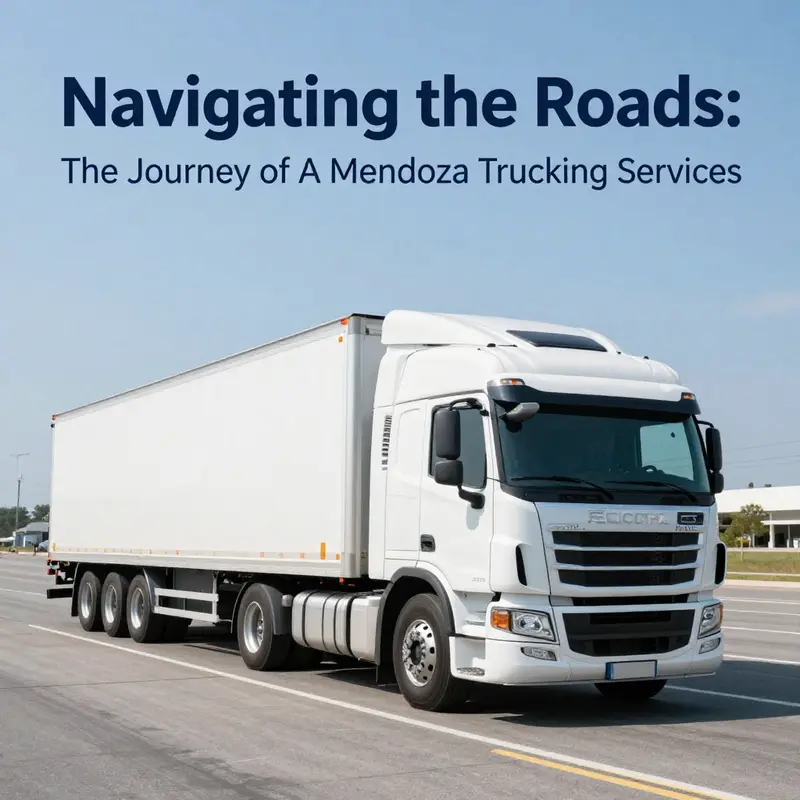
A Mendoza Trucking Services has, from its start in 2000, built a quiet, stubborn resilience into the fabric of everyday logistics. Its core competence—moving a variety of loads with both open and enclosed trucks—speaks to a practical, no-nonsense approach to freight. The company’s long tenure in a field defined by cycles of demand, capacity shocks, and shifting regulatory winds is more than a pedigree; it’s a testament to reliability, adaptability, and a willingness to evolve in response to the needs of customers who depend on predictable transportation timelines. The public record of its domain and corporate entities mirrors a business that has navigated both the growth spurts and the more quiet, steady intensifications of the trucking landscape. While public sources sketch the skeleton of its presence—its website, its Kentucky registration, its historical footprint—the real story lies in how the enterprise could translate that history into a future that keeps pace with a transport sector being reimagined by technology, policy, and sustainability imperatives.
What can be inferred from the arc of A Mendoza Trucking Services, in a broader sense, is not simply the continuation of a trucking lineage but the emergence of a maturity that many of its peers are still pursuing. The industry increasingly prizes the combination of dependable service with the flexibility to handle a diverse cargo mix, and Mendoza’s use of both open and enclosed configurations already positions it to meet varied client requirements. Yet as the road ahead unfolds, the question becomes how such a company can harness the forces shaping the modern supply chain to extend its competitive edge while maintaining the human-centered, service-first ethos that likely earned it its foothold in the first place.
One of the clearest drivers of future success is the intensifying demand for efficient, transparent supply chains. E-commerce and consumer expectations have pushed many shippers to demand speed and predictability—delivery windows that shrink without sacrificing reliability. A Mendoza Trucking Services has the opportunity to respond to this shift not merely by increasing capacity but by placing a premium on visibility and responsiveness. The foundational steps involve collecting data from the road in real time—location, vehicle status, and shipment condition—and turning that data into actionable insights. Telematics systems do more than report where a truck is; they create a feedback loop that informs decisions about routing, loading patterns, and even maintenance scheduling. In an industry where a few minutes can translate into cost or customer dissatisfaction, the value of real-time data is measured not solely in efficiency gains but in the confidence it builds with clients who rely on accurate delivery promises.
The lure of technology extends beyond telematics. Route optimization, powered by sophisticated algorithms, can transform fuel consumption, transit times, and the predictability of service levels. For a company that already operates with a measured operational tempo, the incremental gains from smarter routing can be substantial. The potential payoffs include reduced idle time, better synchronization with warehouses and receiving teams, and improved scheduling flexibility that keeps the fleet productive even when demand fluctuates. The narrative here is not about replacing human judgment with machines but about arming drivers and managers with better information so that decisions on the road are informed, pragmatic, and timely. A Mendoza Trucking Services can, therefore, integrate digital tools in a way that complements the on-the-ground expertise of its drivers, dispatchers, and customers.
Regulatory environments loom large as both guardian and constraint. The trucking sector faces evolving safety standards, environmental requirements, and labor laws that collectively shape the cost of doing business and the form that compliance takes. A supervisor who understands not only what the rules are but how they interact with daily operations will be better prepared to navigate inspections, audits, and the shifting landscapes of state and federal regulations. A forward-looking plan for Mendoza would emphasize a culture of compliance that scales with growth. This is not a marginal consideration; it is a structural element of sustainability. When rules demand safer equipment, cleaner operations, and fair labor practices, a company that embraces these standards as a core capability will be viewed as a dependable partner by clients whose reputations ride on supply-chain integrity.
Sustainability emerges as a multi-dimensional opportunity. The industry’s pivot toward alternative fuels and, over time, toward electric propulsion reflects both environmental responsibility and evolving total-cost-of-ownership calculations. Biodiesel, biodiesel blends, and compressed natural gas (CNG) offer relatively near-term pathways for reducing greenhouse gas emissions and local pollutants without destabilizing operations. Electric trucks, though still nascent in many segments, promise longer-term savings and alignment with client preference for lower carbon footprints. For Mendoza, the strategic question is how to balance investment with payoff. A prudent approach might center on phased fleet modernization: beginning with newer, more efficient engines and alternative-fuel-capable units, while laying the groundwork for full electrification as technology, charging infrastructure, and maintenance ecosystems mature. This strategy preserves continuity with current operations while signaling progress toward a longer-term, more sustainable footprint.
Digital transformation stands as a connective tissue across the operating model. It is no longer enough to track deliveries; customers expect visibility, proactive communication, and reliability of service. The chapter in the industry’s modernization story is written in how well companies align their back-end systems with the front-end experience. For Mendoza, adopting integrated logistics management—combining load planning, fleet allocation, and real-time shipment updates with customer-facing interfaces—can redefine what a reliable freight partner looks like. The objective is not a glossy interface alone but a cohesive, end-to-end capability in which information flow reduces friction for clients and enhances operational discipline inside the company. In such a system, the driver’s hours, maintenance status, and load integrity are not isolated data points but elements of a synchronized workflow that supports on-time performance and predictable service. The advantage here is not simply speed but trust; clients increasingly seek partnerships with carriers that can translate a shipment into a well-orchestrated sequence of activities that leaves little room for ambiguity.
To translate these opportunities into a durable business model, Mendoza can pursue a set of strategic imperatives that feel practical and actionable. Fleet modernization stands at the top. Upgrading to newer, more fuel-efficient vehicles lowers operating costs and reduces environmental impact. More efficient engines, better aerodynamics, and tires designed for economy in rolling resistance contribute to a quiet but meaningful improvement in the bottom line. This is not a rush to an immediate grand overhaul but a measured, evidence-based program that prioritizes the highest returns first and scales progressively. Parallel to vehicle improvements, the adoption of robust digital tools—real-time tracking, inventory management, and customer service platforms—can streamline operations and enable better decision-making. The benefits multiply when digital tools are used to create an integrated customer experience: transparent timelines, accurate delivery notifications, and quick, credible responses to any disruption.
Partnerships and collaborations also deserve a central place in Mendoza’s evolving story. The industry increasingly favors ecosystems rather than isolated capabilities. Collaborations with technology providers, regional logistics networks, and even peer carriers can unlock new service configurations, capacity access, and shared platforms for data-driven planning. In this sense, Mendoza could extend its reach by participating in pilot programs that test new softwarized routing, predictive maintenance, or asset-tracking applications. The ROI here is less about a single big deal and more about building a reputation as a collaborative, forward-thinking partner—one that shares learnings, mitigates risk for clients, and expands service options without compromising reliability.
The brand equity that Mendoza has cultivated—a sense of steady, dependable performance—can be reinforced by a narrative about stewardship of resources, compliance, and continuous improvement. The future is not about abandoning a history of solid service; it is about strengthening that service with the tools and processes that clients expect in a modern logistics partner. A Mendoza Trucking Services can, therefore, articulate a future-ready value proposition that blends dependable execution with measurable environmental and technological progress. This combination will resonate with companies that seek not only cost efficiency but also ethical operation, risk reduction, and a commitment to sustainable growth.
In contemplating these trajectories, it is essential to keep the human dimension in view. The people who drive, dispatch, and manage the fleet are the stewards of the company’s culture and reputation. Any meaningful transformation must include training, development, and incentives that align individual goals with organizational progress. A program that emphasizes driver safety, continuous learning on new technologies, and responsive customer service creates a virtuous circle: better-trained staff deliver more reliably; reliable service reinforces client trust; client trust, in turn, justifies further investment in people and technology. For a business with roots in the year 2000, there is an opportunity to fuse time-tested values with new capabilities, producing a credible, future-facing identity without sacrificing the personal touch that often differentiates independent carriers in a crowded market.
As the industry moves forward, the question for A Mendoza Trucking Services becomes not whether to adopt a suite of new practices, but how to sequence and scale them in harmony with the company’s core strengths. The answer lies in balancing incremental improvements with strategic bets that pay off over the long term. A measured modernization plan—prioritizing fleet efficiency, digital infrastructure, compliance, and sustainability—offers a path that preserves the company’s reliability while elevating its capability to meet evolving expectations. In this sense, the future is not a leap into an uncharted territory but a deliberate journey toward a more connected, efficient, and responsible form of trucking where performance, transparency, and stewardship reinforce one another. The road ahead, therefore, becomes less about chasing disruption and more about curating a durable competitiveness built on trust, data-informed decision-making, and a commitment to ongoing improvement.
For readers seeking a sense of how these dynamics translate into concrete options for shippers and carriers alike, the larger industry context provides a useful frame. The continuous push for efficiency, the push toward smarter, data-driven operations, and the growing emphasis on sustainability converge to shape a market in which reliable carriers that embrace modernization stand to gain the most. A Mendoza Trucking Services, with its established footprint and willingness to adapt, is well positioned to transform these trends from abstract concepts into tangible improvements in service quality, predictability, and cost control. The experience gathered in operating since 2000 can become a strategic asset when paired with disciplined execution of technology-enabled processes, a culture of safety and compliance, and a steadfast commitment to meeting customers where they are.
In the final analysis, the chapter of A Mendoza Trucking Services ahead is a narrative of alignment—alignment with market demand for speed and reliability, alignment with regulatory expectations for safety and environmental stewardship, and alignment with the evolving capabilities of technology to enhance human judgment rather than replace it. It is a chapter that invites clients to think of a logistics partner not as a vendor who merely delivers cargo but as a collaborator who helps them optimize their supply chain, reduce risk, and realize predictable outcomes in an ever-more complex world. If the company remains attentive to these dimensions—fleet modernization, digital transformation, sustainability, and people-centered leadership—the path forward is not only plausible but promising. The story is ongoing, and the road remains long, but the destination—an even stronger, more adaptable Mendoza—appears well within reach, guided by the enduring value of consistent performance and the thoughtful integration of new capabilities with time-honored know-how. For stakeholders interested in the regulatory and public-record context that frames such growth, official sources provide a backdrop to the strategic choices a company makes as it plans for the next decade and beyond.
External resource for broader regulatory and information context: https://www.icann.org/wicf/
Final thoughts
A Mendoza Trucking Services stands at an important crossroad where history, operations, and regulations converge to shape its future trajectory. Understanding its past allows current and aspiring drivers, fleet managers, and company owners to appreciate the dedication behind reliable trucking services. As regulations evolve and technology advances, A Mendoza Trucking is poised to navigate new challenges while capitalizing on emerging opportunities. By fostering knowledge and compliance, the entire community within the trucking industry can contribute to a safer, more efficient future.