
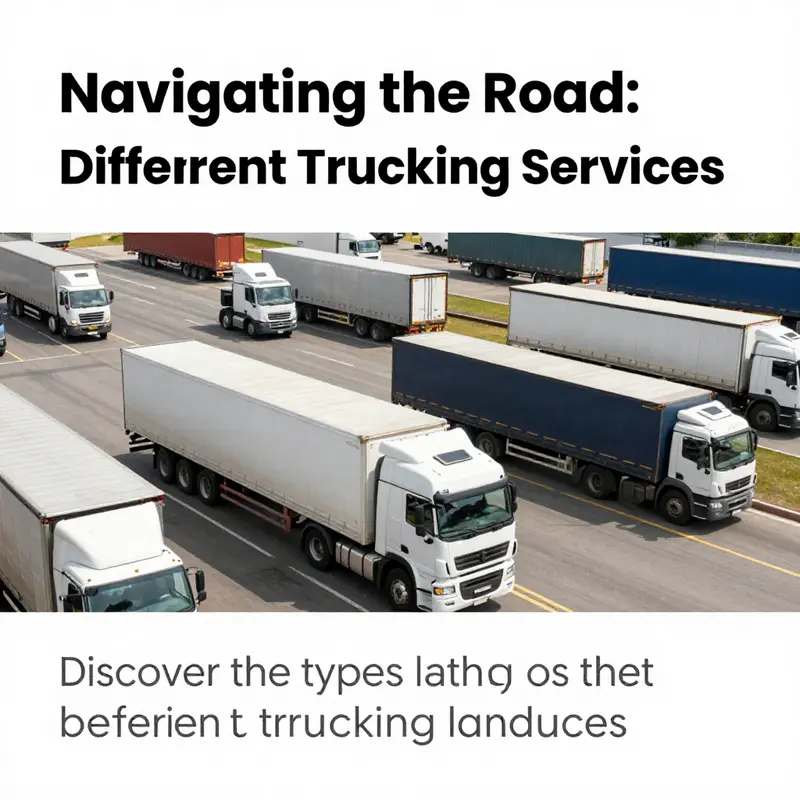
Trucking services are the backbone of the logistics and transportation industries. For long-haul truck drivers, trucking company owners, fleet managers, and aspiring truck drivers, understanding the various types of services available is essential. This article explores Small Haul (LTL), Full Truckload (FTL), and Intermodal Freight Shipping, providing insights that cater to different shipping needs. By the end, readers will grasp how these services impact freight transport efficiency and their unique advantages.
Small Haul, Broad Reach: The Subtle Strength of LTL in the Trucking Services Landscape
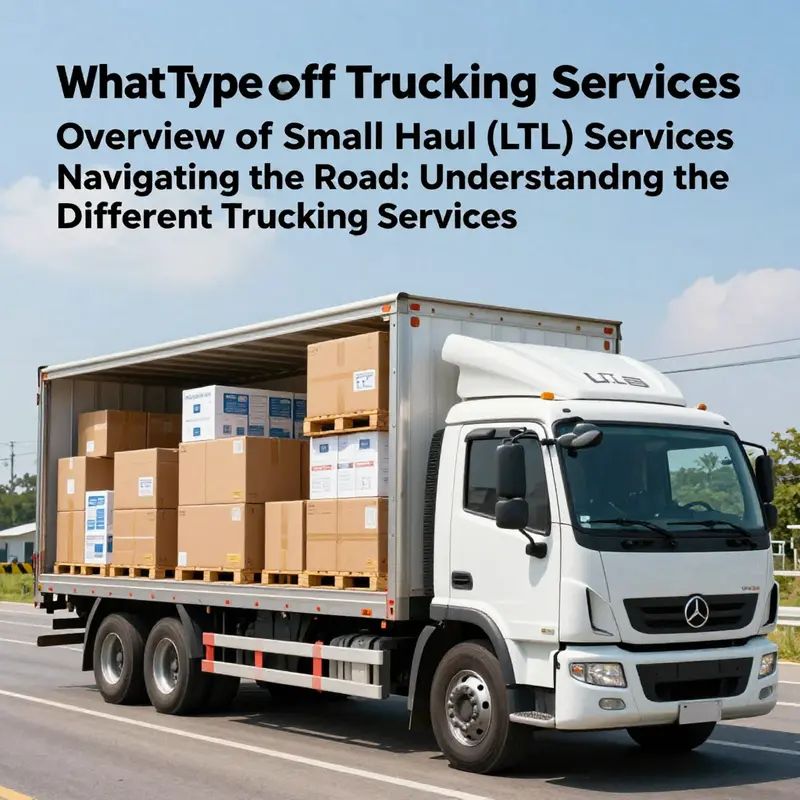
When a shipment doesn’t fill an entire trailer, a different kind of orchestration begins. Small Haul, or less-than-truckload (LTL) shipping, sits at the intersection of cost efficiency and operational cleverness in the broader world of trucking services. It’s not the flashy headline of a full truck delivering a single load from origin to destination, nor is it the rigid, one-size-fits-all approach of parcel carriers. Instead, LTL is a carefully choreographed system that brings together multiple customers’ freight, each with its own constraints, into a single, well-managed journey. In the landscape of logistics, this approach matters because many businesses cannot or should not bear the expense of reserving an entire trailer for relatively modest volumes. LTL makes small quantities economically viable without forcing the shipper to wait for a perfectly synchronized window of time, and it does so by leveraging consolidation points, shared space, and a network designed to keep the goods moving with a minimum of wasted miles. The result is a model that scales with demand, adapts to irregular shipment patterns, and remains accessible to a wide range of enterprises—from first-time shippers to seasoned manufacturers seeking efficiency without sacrificing service quality.
At its core, LTL is about space optimization. Instead of paying for the full trailer’s capacity, a business pays for the portion of space its pallets occupy. This pricing model, coupled with the ability to combine loads from several shippers, creates economies of scale that individual shipments could not achieve on their own. The space-sharing arrangement lowers shipping costs per unit and improves the utilization of a network that would otherwise carry underutilized capacity. From a broader perspective, LTL is a practical embodiment of logistics engineering: it balances the economics of weight, volume, and distance with the realities of route planning, scheduling, and customer expectations. The result is a transportation option that makes sense for goods that are too large for parcel carriers yet do not justify renting an entire trailer.
The everyday reality of LTL shines through the way shipments are routed. A typical LTL process begins with pickup, but unlike a direct-to-destination model, the freight is not simply moved from point A to point B. Instead, the goods are collected and routed to a central hub or terminal where they are sorted, consolidated with other loads, and then dispatched toward regional distribution centers and ultimate delivery points. This hub-and-spoke model is not merely a logistical convenience; it is a carefully calibrated system designed to minimize miles while maximizing on-time performance. Each shipment travels through a network of terminals that specializes in moving, sorting, and reconfiguring loads with a high degree of accuracy. The emphasis is on predictability as much as speed, because the customer’s critical need is often a reliable arrival window rather than a heroic dash to beat the clock.
One of the most compelling advantages of LTL is its flexibility. Small businesses, startups, or seasonal operations frequently experience fluctuations in demand that would be awkward if they had to commit to a full-truckload schedule. LTL accommodates shipments from a few pallets to several tons, scaling to meet variable volumes without forcing a business into a long-term commitment to a single, continuous stream of freight. This flexibility dovetails with lean inventory practices, allowing companies to maintain leaner stock and adjust orders without paying for unused trailer capacity. It also supports supply chain resilience: when demand spikes, the same network can absorb incremental shipments by leveraging existing space rather than negotiating new transportation arrangements. In this sense, LTL is less about a fixed cadence and more about a dynamic cadence—one that can bend with a business’s calendar and market realities while preserving dependable service.
Cost efficiency, the other pillar of LTL, comes from shared space and consolidated routing. The cost structure reflects the collective nature of the service. Shippers pay for the portion of the trailer their goods occupy, which varies with weight and density, while accessorial charges cover additional services such as liftgate delivery or inside pickup. The collaboration among multiple shippers on one journey means that the total toll for the trip is spread across several customers, each paying only for their share of the space and the value-added services they require. For many firms, the financial arithmetic is decisive: the per-unit cost of moving goods in smaller quantities via LTL can be substantially lower than executing multiple parcel shipments or paying a premium for a dedicated trailer. Yet it’s important to recognize that this cost advantage comes with trade-offs in transit time and handling. LTL’s strength lies in balancing economy with reasonable speed and reliability, rather than delivering every package with the clockwork certainty of a direct move.
The service ecosystem around LTL also contributes to its value proposition. Beyond simply transporting pallets, many LTL carriers offer a suite of value-added services designed to ease the shipper’s burden and tailor the delivery to the customer’s needs. Liftgate delivery, for example, is a common option for locations without a loading dock, enabling goods to be lowered safely to ground level at delivery. Inside pickup or delivery reflects a more hands-on approach, where personnel bring freight into a building rather than just to a loading dock. Residential delivery expands LTL’s reach to consumer-facing shipments, which requires additional coordination and care due to varied access points and customer expectations. These services are not free add-ons; they are built into the carrier’s operating model and support the end-to-end experience—from the moment the shipment leaves the shipper’s facility to the moment it arrives at the recipient’s door. For the business, they translate into fewer steps, less manual handling, and lower risk of damage or misdelivery, all of which can contribute to a more predictable total landed cost.
The operational rhythm of LTL is, at first glance, complex. A shipment is picked up and transported to a central hub, where it faces sorting through a network of specialized terminals. Each pallet might be cross-fed onto a different outbound trailer or merged with other loads destined for nearby markets. The process requires precise labeling, robust documentation, and real-time visibility to track movement across the network. This is where technology—tracking systems, yard management, and modern transportation management systems—plays a central role. For a small shipper, the ability to monitor where a pallet sits in the process, confirm expected delivery windows, and anticipate any delays can transform a tentative plan into a dependable operation. For carriers, advanced planning tools optimize route efficiency, reduce dwell time at terminals, and improve the likelihood that deliveries arrive not just on time, but within a customer-friendly window.
The practical implications for a business considering LTL are multifaceted. Packaging must be sturdy enough to withstand the inevitable handling that accompanies cross-docking and multiple transfers between terminals. Weighing, stacking, and palletization must be done with care to prevent damage as freights move through the hub-and-spoke system. Accurate freight class determination—balancing weight, dimensions, and density—helps ensure that pricing reflects the true characteristics of the shipment and reduces the risk of unexpected surcharges during transit. Shippers also need to be mindful of accessorial charges that can accumulate quickly if a shipment requires extra handling, residential delivery, or special timing. The best approach is to view LTL not as a single service, but as a package of closely coordinated options that a shipper can tailor to deliver the right balance of cost, speed, and service based on the specific freight, the destination, and the customer’s expectations.
The decision to use LTL versus FTL or even another modality often comes down to a few core questions. How urgent is the delivery? Are there regular, predictable shipment volumes, or are orders sporadic? What is the total landed cost when considering packaging, handling, and the risk of delays or damage? What level of service is required at delivery—will the recipient need a liftgate, inside delivery, or even residential service? Answering these questions requires not only an understanding of the shipment’s physical characteristics but also a realistic appraisal of inventory workflows, supplier reliability, and downstream fulfillment needs. In many cases, a hybrid approach proves most effective: leverage LTL for flexible, lower-volume movements while reserving FTL for peak periods or high-value goods where speed and direct transportation provide a meaningful advantage. Intermodal options may also come into play for long-haul legs, complementing the LTL approach with rail-based efficiency for portions of the journey before final mile delivery by truck. Each choice shapes the supply chain’s risk profile, capital commitments, and the customer experience.
From a strategic standpoint, LTL strengthens the ability of a business to respond to market shifts without destabilizing its transportation budget. It helps preserve working capital by avoiding the costs associated with idle capacity and long-term lane commitments. It supports seasonal campaigns and promotional bursts by providing scalable capacity with predictable pricing. And it aligns with lean logistics principles by reducing waste in space and time, turning every mile into a measured, value-generating resource. Yet, as with any logistics instrument, there is a maturity curve. Small shippers may begin by pricing out a few lanes and gradually building a service footprint as confidence grows. Carriers, in turn, refine their networks and service levels to accommodate precision delivery windows, evolving customer requirements, and the push toward greater visibility across the supply chain. The result is a system that rewards careful planning, clear communication, and a willingness to adapt to the nuances of each shipment’s journey.
In the broader arc of trucking services, LTL represents a bridge between the mass-merchant world of parcel delivery and the more dedicated, capacity-focused approach of Full Truckload. It recognizes that not every shipment is the same, and not every business can—or should—move freight the same way. For countless companies, LTL unlocks the possibility of moving goods faster and more economically than might be possible if they had to combine multiple smaller shipments into separate parcel transactions, or worse, if they had to stretch to deliver a complete trailer every time. This nuanced capability is precisely what keeps the LTL model relevant and compelling in today’s logistics ecosystem. It also sets the stage for the next chapters, which will examine Full Truckload’s direct, no-stop journey and the intermodal approach that pairs rail’s long-haul efficiency with the flexibility of trucking for final delivery.
For managers and operations leaders, the practical takeaway is not simply that LTL exists, but how to leverage it as part of a holistic transportation strategy. That means selecting carriers with a robust terminal network that matches the company’s geographic footprint, evaluating service levels against the expected demand curve, and building in the contingencies that keep shipments on a steady track even when market conditions shift. It means designing packaging and labeling that minimize the risk of misrouting and damage across multiple handling events. It means communicating clearly with customers about delivery expectations and providing visibility that turns delayed arrivals into manageable, transparent experiences. And it means recognizing that the value of LTL is not only in the money saved on a single shipment but in the cumulative impact across the entire supply chain—the way small, efficient moves accumulate into a dependable, responsive logistics capability that can respond to growth, volatility, and evolving customer needs.
Ultimately, Small Haul is not merely a service category. It is a strategic option that, when deployed thoughtfully, allows a business to balance speed, cost, and reliability in a way that aligns with real-world operations. It invites a disciplined approach to freight planning—one that understands that shipments arrive in waves, that capacity is a shared resource, and that every pallet moved on an LTL lane is part of a larger system designed to move goods forward with precision and care. As the field continues to adapt to new technologies, stricter sustainability goals, and rising expectations from customers who want faster, more predictable delivery, LTL remains a central tool in the logistics toolbox. It is a reminder that the strength of trucking services lies not only in the ability to move freight from point A to point B, but in the intelligence and coordination that make those movements reliable, repeatable, and scalable across markets and seasons.
For readers who want to deepen their understanding of LTL within the trucking services landscape, a detailed industry overview is available through the American Trucking Associations, which outlines the structure, economics, and best practices of LTL shipping: American Trucking Associations – LTL Shipping.
Full Truckload and the Spectrum of Trucking Services: How Dedicated Freight Shapes Every Shipment
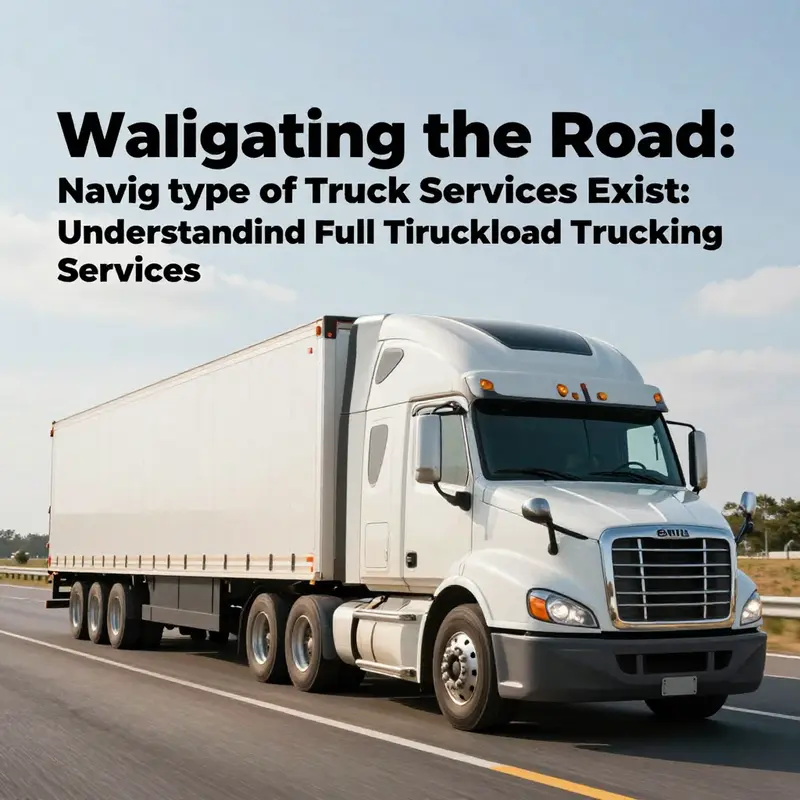
Trucking services exist along a broad spectrum, a continuum that stretches from small, discrete shipments to highly coordinated, cross‑country moves. At the core of this spectrum sits Full Truckload (FTL) — a modality built on the premise that the entire capacity of a trailer is reserved for a single shipper’s cargo. Yet FTL does not stand alone; it sits alongside smaller, more fragmented options and multi-modal approaches that together form a resilient and adaptable logistics system. Understanding these options as interconnected parts of a single ecosystem helps shippers match the right method to the unique requirements of each shipment, rather than forcing every shipment into a one‑size‑fits‑all framework. In this light, FTL emerges not merely as a technique for moving goods quickly, but as a foundational element that shapes decision making across the entire transportation strategy.
Full Truckload is defined by its commitment to a direct, dedicated route. When a shipper books an FTL move, the entire trailer is allocated to that cargo, leaving origin and destination as the primary bookends of the journey. There are no intermediate stops to load other consignments, and the freight is typically loaded once and delivered once. This directness translates into several operational advantages. Transit times tend to be shorter and more predictable, because the shipment does not contend with the variability introduced by multiple pickups and drop-offs. The risk profile is also different: reduced handling means one of the most common sources of damage is mitigated, and the security of a single, continuous transport stream provides tighter control over the load. For high‑value, time‑sensitive, or oversized cargo, these attributes often make FTL the preferred choice.
Beyond the sheer convenience of a direct path, FTL demonstrates value through efficiency in the hands of the right logistical plan. When freight consolidates into a single, dedicated trailer, there is often less labor required downstream for sorting, cross-docking, or reorganization at the destination. Drivers can maintain a consistent pace, and the route can be optimized to minimize fuel burn and maximize on-time performance. The efficiency calculation becomes subtler than it appears, because while the per‑mile cost of an FTL move may be higher than a tiny or consolidated shipment, the aggregated costs can be lower for large volumes. Fuel efficiency benefits compound with the reduction in handling and the lowered risk of delays caused by loading and unloading multiple shipments in sequence. In practical terms, manufacturers, retailers, and construction projects frequently gravitate toward FTL when large quantities must reach a single site with little margin for error.
The decision to choose FTL often hinges on cargo characteristics. Large shipments that occupy a full trailer, or cargo that benefits from a non-stop route, fit the FTL model well. Oversized loads that require specialized equipment or continuous, uninterrupted transport are typical cases where FTL can deliver both speed and reliability. Time sensitivity also plays a crucial role. In industries where delays ripple through manufacturing schedules, just‑in‑time inventories, or seasonal demand peaks, the predictability of an FTL move becomes a strategic asset. Likewise, high-value goods, where exposure to theft or handling damage is a concern, benefit from the reduced exposure that comes with fewer touchpoints.
That said, Full Truckload is not universally the optimal choice. The same features that make FTL attractive for large, continuous shipments can be a misfit for smaller loads or fluctuating demand. When cargo volumes do not justify the capacity of a full trailer, forcing an FTL pattern can generate wasted space, higher absolute costs, and underutilized assets. In those cases, Less Than Truckload (LTL) services step in as a flexible alternative, allowing multiple shippers to share a trailer. The economics of LTL hinge on consolidation: small shipments from different customers are merged to fill a trailer, spreading the transportation cost across several parties and often reducing the cost for individual shipments. Yet this sharing comes at the price of more complex handling. Each additional pickup and drop-off introduces more potential touchpoints, which can translate into longer transit times and a higher likelihood of damage or misrouting if the coordination is not meticulous. The balancing act between cost, speed, and risk is a persistent theme across the spectrum, and it nudges shippers to consider each shipment’s specific needs rather than applying a blanket rule across their entire network.
Intermodal freight shipping rounds out the spectrum by reconfiguring the transportation chain to leverage the strengths of different modes. In an intermodal setup, a container might ride a long stretch on a rail network and then transition to a truck for the final lane, or vice versa. The beauty of this approach lies in exploiting rail’s efficiency over long hauls and combining it with the final‑mile flexibility that only road transport can provide. Intermodal shines when distance is substantial and routing efficiency matters more than single‑mode directness. Rail legs can dramatically reduce fuel consumption per ton‑mile and minimize road congestion, while trucks finish the journey with the precise, door‑to‑door service that keeps supply chains responsive. However, intermodal introduces its own complexities: coordinating container handoffs between modes, aligning schedules across carriers, and managing loading and unloading at multiple transfer points. Delays at any transfer node can ripple through the entire schedule, so visibility and synchronization become integral to success.
A practical way to think about these options is to imagine cargo in terms of its weight, volume, fragility, and value, then layer in distance and timing. A high‑value, fragile product that ships in bulk over a moderate distance might still justify an FTL move for protection and speed. A handful of small, time‑sensitive components that must arrive together could be better suited to an LTL approach if the schedule allows and the consolidation is managed carefully. A cross‑country distribution network that emphasizes efficiency and sustainability could lean toward intermodal for the major legs, reserving road transport for the final mile. Each choice influences not just the transport leg but also how warehouses, cross-docks, and inventory buffers are organized. In other words, the choice between FTL, LTL, and intermodal is a strategic decision that ripples through the entire supply chain, shaping where and how stock is stored, how quickly manufacturers can scale production, and how retailers meet demand without overwhelming their own logistics budgets.
Technology, data, and the evolving expectations of customers push this spectrum toward greater sophistication. Real‑time visibility, predictive analytics, and automated scheduling enable shippers to tighten up transit windows, respond to disruptions, and recast service levels with more precision. When a shipment is routed as FTL, the value lies not only in the direct line from origin to destination but in the ability to monitor the temperature, vibration, door events, and geofence status along the route. LTL, by contrast, benefits from a detailed, event‑driven feed that highlights each handoff and enlivens proactive risk management. Intermodal logistics, with its multi‑modal handoffs, demands end‑to‑end orchestration that can only thrive with robust data integration and a shared, transparent view among motor carriers, rail operators, and third‑party logistics providers. In the end, the spectrum is as much about information systems as it is about physical movement. A shipment travels not just on a trailer or a railcar, but through dashboards, alerts, and scheduled notifications that empower planners to intervene before a minor variance becomes a costly delay.
For shippers, the challenge is never simply picking a mode of transport. It is designing a transportation plan that provides reliability, cost containment, and the flexibility to respond to demand shifts. In practice, that means considering a hybrid approach: using FTL for the cornerstone needs of the business, LTL for incremental volumes that arise in a given period, and intermodal for the long‑haul portions of the network where efficiency gains are greatest. The decision framework gets richer when providers bring value through strategic services as well. Door‑to‑door coordination, expert handling for specialized cargo, secure storage, and proactive maintenance support help keep the entire chain resilient under pressure. The goal is not to maximize the use of one mode but to optimize the entire mix so that every shipment arrives on time, in good condition, and at a total cost that aligns with business goals.
Every journey in freight moves through choices about timing and handling just as much as about distance. A shipment that must leave a factory at a fixed moment to keep an assembly line synchronized is a candidate for FTL or an assured intermodal plan with a predictable handoff. A routine replenishment cycle for a retailer with modest but steady demand might favor LTL because it can flex with demand fluctuations while still achieving a reasonable overall service level. When a supply chain spans continents or requires a long ladder of steps—from port to rail yard to regional distribution center—intermodal strategies often become the backbone, with road legs filling the gaps to reach final destinations. The important thing is not to fetishize a single method but to design around the cargo’s real needs and the organization’s risk tolerance and financial constraints.
Through all of this, the human element remains central. Carriers, shippers, and brokers collaborate to translate the theoretical advantages of a mode into practical, dependable outcomes. This collaboration often hinges on clear packaging standards, accurate load plans, and trusted partnerships that can respond to disruptions—whether those disruptions are weather, regulatory changes, or sudden spikes in demand. A disciplined approach to mode selection—one that weighs weight, volume, value, fragility, and distance against the realities of capacity and timing—produces superior reliability. It also creates room for optimization through continuous improvement: refining packaging to reduce damage, improving palletization to speed loading, and adopting data‑driven routing that trims miles and emissions while preserving service levels.
For those building or refining a transportation program, the take‑away is pragmatic rather than prescriptive. Full Truckload remains a cornerstone service for shipments that require speed, security, and simplicity of process. It is most effective when a single shipper controls the cargo from origin to destination, when volume makes the per‑unit cost favorable, and when schedules demand a direct path with minimal handling. Yet no single method covers all needs, and a robust logistics strategy will often blend FTL with LTL and intermodal options to capture the benefits of each approach. As supply chains evolve, the emphasis shifts toward integrated planning and real‑time responsiveness. The days of rigid, mode‑locked decisions are fading, replaced by a flexible architecture that treats the choice of trucking service as a dynamic lever: pull it to accelerate a deadline, ease a capacity crunch, or reduce risk across a complex network.
In this context, a shipper’s decision process benefits from clarity about the cargo itself. Questions such as: What is the cargo’s value, weight, and fragility? What is the acceptable transit window? How much storage or handling can be tolerated at origin and destination? What is the reliability history of the available carriers?—these become the guiding questions that determine whether FTL, LTL, or intermodal is the best fit. The answers shape not only the immediate shipment but the long‑term health of the supply chain. When a business is able to align its transport strategy with its production cadence, its inventory turns improve, its service levels rise, and its exposure to fluctuations in fuel prices or congestion decreases. The spectrum of trucking services thus serves as a toolkit rather than a worksheet, offering the right instrument for each cadence of business needs rather than prescribing a single, universal approach.
As we consider how these services intertwine, a final observation ties back to the broader topic of this article: the types of trucking services exist to solve a fundamental problem—getting the right goods to the right place at the right time, with the right balance of cost and risk. In practice, that means recognizing when a direct, dedicated FTL move delivers strategic value and when a more collaborative, consolidated, or multi‑modal path yields better throughput for a network. It also means acknowledging that the best plan is rarely a monologue. It is a conversation among shippers, carriers, and technology platforms that together orchestrate a shipment’s journey from start to finish, with each choice contributing to a resilient, efficient, and responsive logistics system. The spectrum, then, is not a menu of separate options but a continuum of capabilities that, when combined intelligently, keep goods moving smoothly in an unpredictable world.
For a concise overview that anchors these ideas in practical terms, you can explore additional perspectives in the broader industry dialogue available on the 5startruckin blog, which offers practical reflections on freight strategy and transport efficiency. the 5startruckin.com blog.
External resource: For an industry‑focused overview of Full Truckload Shipping, see Truckstop’s overview on FTL shipping at https://www.truckstop.com/blog/what-is-full-truckload-ftl-shipping.
From LTL to Rail: How Intermodal Freight Shipping Expands the Palette of Trucking Services
Trucking services sit at the core of modern commerce, translating product demand into reliable, timely movement across regions, countries, and continents. When people ask what type of trucking services exist, they often picture a single truck rolling along a highway. In practice, the landscape is more nuanced. It ranges from small, mixed shipments that ride together in a single vehicle to fully dedicated transports that carry a single load from origin to destination. At the heart of this spectrum lies a strategy that has increasingly reshaped how goods move: intermodal freight shipping. The story of trucking services is no longer just about the solo truck versus the occasional shipment. It is about how fleets coordinate multiple modes to optimize space, time, and cost while keeping goods secure from start to finish. The three pillars—Small Haul, Full Truckload, and Intermodal Freight Shipping—anchor this narrative, each with its own logic, benefits, and tradeoffs. Understanding how they fit together helps shippers design supply chains that are resilient, scalable, and environmentally mindful.
To begin with, Small Haul, often labeled as less-than-truckload or LTL, is a practical solution for businesses that do not have enough freight to fill an entire trailer but still need dependable delivery. The essence of LTL lies in consolidation. Several customers share the same vehicle, and skillful routing keeps each parcel on its own scheduled path while minimizing empty space. The cost model reflects this shared capacity: a business pays only for the portion of the trailer it uses, rather than the entire vehicle. What often matters most in LTL is coordination. Packages must be collected from multiple origins and assembled at a central hub, then dispatched to a common destination or a series of regional stops without sacrificing timely delivery. This model suits firms with smaller inventories, sporadic demand, or products that do not warrant a full truck at any single moment. But it also introduces potential delays. Every additional stop, every handoff, and every cross-dock adds a layer of complexity that can affect transit times.
Yet the very nature of small hauls—fragmented shipments, shared trailers, and regional legs—becomes a strength when the network is designed with intent. Freight planners map product flow to align with capacity, leveraging aggregator networks that have built-in redundancy. In a well-run LTL operation, a shipment moves quickly from door to door through a series of proven handoffs, aided by standardized equipment and shared loading corridors. The efficiency comes not only from cost savings but from the flexibility to adjust to demand signals. If a retailer experiences a sudden spike in a particular corridor, the system can scale through additional pickups and dedicated runs, without forcing a complete truckload that would sit idle in the yard. The discipline of scheduling, yard management, and precise loading practices matters as much as the trucks themselves.
On the other end of the spectrum lies Full Truckload, the arrangement in which an entire trailer is reserved for a single shipment. This model prioritizes speed, security, and directness. When a business has a large quantity of goods, high-value items, or time-sensitive orders, full truckload service often becomes the most efficient choice. Because there is no requirement to share payload with other customers, the load remains together on a single dray or rail-connected sequence from origin to destination. The path is shorter, often with fewer stops, and the transit time is inherently more predictable. For perishable or fragile cargo, the fewer handling events the better the odds of preserving product integrity. The tradeoff is clear: the cost per unit of freight tends to be higher when a vehicle sits idle between trips, or when demand patterns leave underutilized capacity. Yet the benefit is direct control over timing and routing that many shippers demand, especially in industries where reliability is non-negotiable.
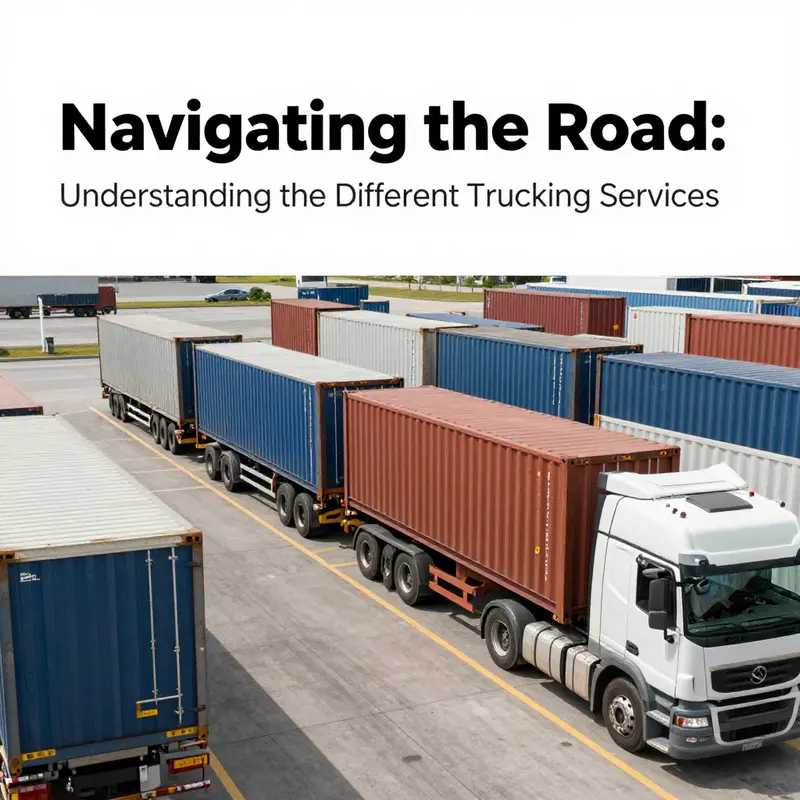
Intermodal freight shipping sits between these two models, stitching together the strengths of trucking and rail to form an integrated logistics approach. In its simplest terms, intermodal uses standardized containers or trailers that can be moved seamlessly between trains and trucks. The metal skeleton of the container remains intact through the journey, remaining sealed and boxed for security. This fundamental idea—move goods, not unpacked products—reduces the number of times cargo is handled, cutting both risk and time. The process typically starts with the cargo being loaded into a container at the origin facility. That container then rides a long-haul train to a transfer terminal closer to the destination. From there, a truck delivers the container to the final destination, or to a distribution center for further processing. The efficiency of this model rests on the elegance of the handoffs: the container is the same piece of equipment, rolling across modes with minimal disruption.
The advantages of intermodal freight shipping are not just theoretical. One of the most tangible benefits is reduced handling time. Since the container remains sealed, there are fewer cycles of loading and unloading. This lowers the probability of damage and speeds up the overall transit. It also translates into cost savings, particularly on long-haul routes where rail can move freight farther with less fuel per ton-mile than trucks alone. For shippers seeking to extend the reach of a regional network, intermodal delivers a bridge to coastal gateways and inland hubs that might otherwise require costly trucking legs. In addition, the environmental story around intermodal is compelling. Rail networks, by their nature, move more freight per ton with far less fuel burned per mile than a truck. Shifting substantial portions of long-distance freight to rail lowers greenhouse gas emissions and reduces highway congestion. This environmental benefit resonates with corporate sustainability goals and with communities looking for cleaner freight practices.
Operationally, intermodal freight shipping supports asset efficiency and predictable scheduling. Fleets can optimize truck usage by aligning long-haul segments with rail legs, then deploying local drayage to complete the last mile. For carriers, this means better asset utilization: more miles gained per trailer, fewer trucks required to move the same volume, and a more balanced workload across the network. For shippers, it translates into smoother capacity planning and enhanced reliability when disruptions arise on one mode. The resilience of an intermodal system is not just about redundancy in equipment but the coordination across terminals, scheduling algorithms, and information systems that track containers end-to-end.
To illustrate how these pieces fit into a broader logistics strategy, consider the daily reality of a company that ships consumer electronics from a manufacturing hub to retailers across a region. A portion of the shipments may ride as small LTL packages, aggregating in a regional distribution center. The larger, high-volume orders can move as full truckloads to ensure urgent delivery windows. In the same network, a significant share of the long-haul movements may be routed through intermodal channels: containers loaded at the origin move by rail to a western or eastern hub, then are drayed to nearby markets for final mile delivery. This combination leverages the cost advantages of rail for distance, while still offering the flexibility of trucking for distribution. The result is not a single “best” mode but a deliberate tapestry of options that adapts to product needs, timing, and geography.
As a result, the modern trucking ecosystem emphasizes integration and visibility. The planner’s toolkit includes data-driven routing, real-time tracking, and performance analytics that reveal how each mode performs along a given corridor. The intermodal piece, in particular, benefits from digital platforms that coordinate container inventory, terminal capacity, and cross-dock scheduling. When a shipper can see container status, predicted arrival times, and any delays introduced by weather or congestion, the entire network gains resilience. The ability to synchronize modes reduces the risk of last-mile failures, and it helps ensure a more consistent delivery experience for customers. This is why intermodal is increasingly considered a strategic component of an overall trucking program, not merely a cost-saving curiosity.
The broader context is a trucking industry that must balance efficiency with service quality. While intermodal offers clear advantages for long-haul and high-volume movements, it does not replace the need for small, flexible loads or direct, door-to-door service in all cases. For perishable goods with strict shelf lives, or for shipments requiring rapid door-to-door service in remote locations, a dedicated truck may still be the most reliable option. For complex supply chains, the most effective approach often combines all three modes in a carefully designed network. The intermodal choice becomes a strategic lever to reduce transit times, lower costs, and increase predictability where it makes sense, while LTL and FTL fill gaps that intermodal cannot address in every circumstance.
The decision framework for choosing among these trucking services hinges on several factors. Distance and geography are foundational. Rail corridors work best where there is access to a rail network that can efficiently connect origin and destination regions. In some cases, the presence of efficient intermodal facilities—ports, inland terminals, and cross-docking hubs—creates a robust pathway that reduces the total landed cost. Time sensitivity matters as well. If a shipment has a tight deadline, direct trucking may outperform intermodal due to fewer transfers and potential bottlenecks at rail yards. Cargo characteristics also influence the choice. Heavy, dense freight with good inertia may justify long-haul rail moves, while light, high-value goods may favor more controlled door-to-door trucking. And of course, cost remains a central consideration. Although rail is typically more fuel-efficient on long hauls, the total landed cost of intermodal depends on terminal handling, drayage charges, and the reliability of schedule conformance.
An important nuance in the intermodal equation is the role of the terminal network and the human element behind it. Terminal operators, yard staff, and dispatchers work together to move containers through the fabled handoff points with precision. The efficiency gains hinge not only on equipment and rails but on well-timed transfers, accurate documentation, and responsive communication between origin, rail, and destination partners. When these pieces align, the cargo’s journey becomes a series of almost invisible steps rather than a sequence of disruptive interruptions. For organizations aiming to optimize a multi-modal program, investing in relationship management with carriers, shippers, and terminal operators pays dividends in reliability and speed.
In the end, intermodal freight shipping is not a replacement for existing trucking services but a complementary strategy that expands what is possible within a single supply chain. It allows companies to scale up operations without proportionally increasing the number of trucks on the road, driving efficiencies that benefit both the business and the broader ecosystem. The intermodal mindset invites managers to reimagine routes, time windows, and capacity planning in a way that leverages the strengths of multiple modes. It is this integration—between the predictability of rail, the flexibility of trucks, and the discipline of logistics analytics—that defines the contemporary trucking landscape.
For readers who want to explore real-world examples of how these principles play out in practice, a broader industry perspective on intermodal transportation is helpful. The American Trucking Associations provide a comprehensive overview of how intermodal functions within the U.S. freight system, including the key benefits, common trade lanes, and regulatory considerations. This resource offers context for the strategic role intermodal plays in national and regional supply chains.
As you continue to map out a trucking program for your organization, consider how each mode serves your products, timelines, and customer expectations. The right blend—whether leaning into intermodal for long-haul efficiency, relying on LTL for flexible, regional shipments, or reserving full-truckload capacity for time-critical consignments—creates a resilient network that can respond to volume fluctuations, demand variability, and external disruptions without sacrificing service quality. The goal is not to declare a single champion among trucking services, but to orchestrate a harmonized system where each mode complements the others. When shippers and carriers collaborate with clarity and data-driven discipline, the result is more than cost savings. It is a smoother flow of goods, a steadier supply chain, and a foundation for growth that can adapt as markets evolve.
If you are curious about practical pathways to integrate intermodal partnerships into your current operations, the journey often begins with a pilot that tests a corridor your business already serves. Start with a manageable route, establish clear performance metrics, and ensure the data flows between origin, rail, and final mile providers. The learning from that pilot informs broader rollout, helping you refine where intermodal can replace more expensive or slower trucking legs and where direct trucking remains essential. In this way, intermodal freight shipping becomes a strategic instrument in the broader toolbox of trucking services, enabling companies to push farther, faster, and more sustainably than would be possible with any single mode alone.
To connect this chapter to a broader exploration of trucking brands and service philosophies, consider the example of industry content that discusses how diversified fleets approach uptime, maintenance, and customer service in a way that aligns with multi-modal logistics. Exploring 5-Star trucking solutions offers useful insights into how providers, large and small, articulate their value propositions, structure their networks, and commit to dependable on-time performance across modes. See for yourself how providers frame reliability and service through a multi-faceted lens in this column: Exploring 5-Star Truck Inc. — Your Premier Trucking Solution. While this reference reflects a particular brand voice, the underlying principle remains universal: strategic integration across modes drives outcomes that far surpass what a single-mode approach can achieve.
For readers seeking a broader external perspective on intermodal efficiency and environmental impact, external sources highlight the environmental and logistical logic behind shifting freight from highway to rail where feasible. External resource: ATA Intermodal overview provides a concise, authoritative context for the intermodal landscape within U.S. freight movement, including policy and practice considerations that shape how shippers think about routing and sustainability. See the overview here: ATA Intermodal Overview.
Final thoughts
Understanding the types of trucking services is crucial for anyone involved in logistics and freight transport. Small Haul (LTL), Full Truckload (FTL), and Intermodal Freight Shipping each play vital roles in meeting the varied demands of the market. As logistics evolves, adapting to these services can lead to enhanced efficiency and cost-effectiveness in freight management. Stay informed and leverage the right service to meet your trucking needs.