
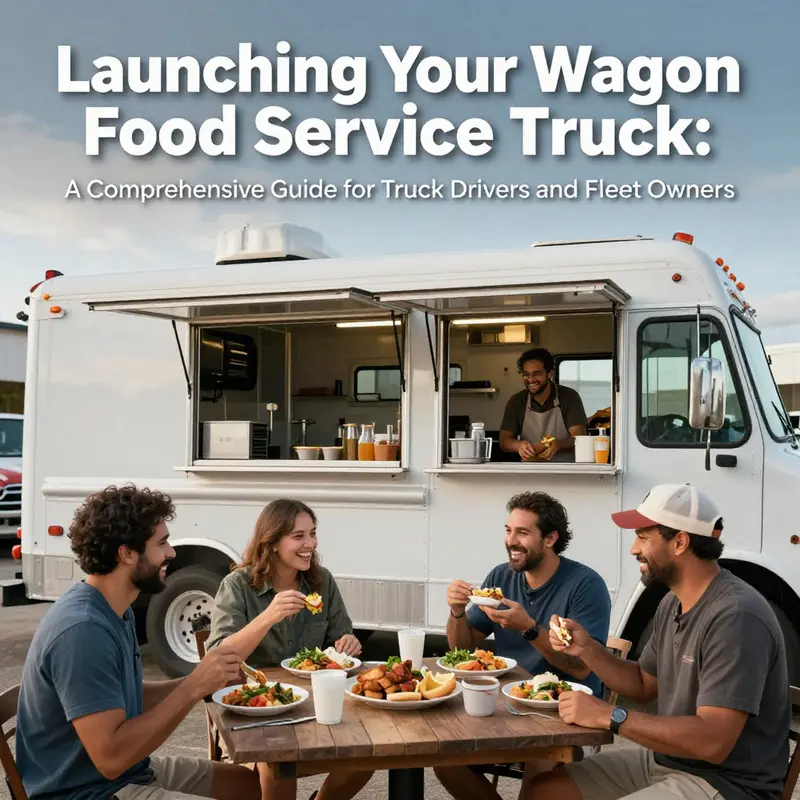
The trucking industry is vast, yet so often overlooked is the potential that lies in meeting the needs of truck drivers and fleet managers. Trucking is a demanding profession that often leads to long hours on the road with limited access to nutritious, fulfilling food options. This guide will explore how to launch a wagon food service truck, designed specifically to cater to the truck driving community. From selecting the right mobile unit to ensuring peak operational performance and compliance with regulations, we will navigate each chapter to provide actionable insights that empower you to make informed decisions.
Wheels on the Menu: Choosing the Right Wagon Food Service Truck for Your Mobile Kitchen
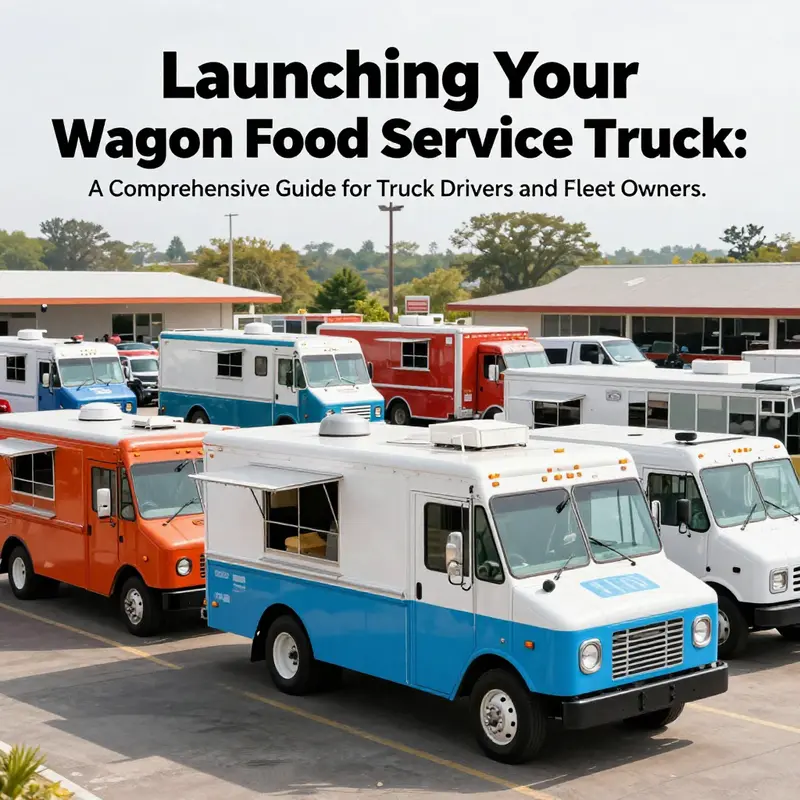
Choosing the right wagon food service truck is more than picking a mode of transport. It is about forging a compact, reliable platform that carries your concept, keeps your team efficient, and broadcasts your brand in every corner you roll through. A mobile kitchen is a living business partner; it can propel you toward steady income or limit growth if you neglect the fit between your menu, your space, and the realities of outdoor service. The decision deserves careful thought, not a quick purchase. When you begin, you should imagine the wagon as an extension of your kitchen, a storefront that travels, a stage where flavor meets crowd dynamics, and a workshop you need to maintain and improve over time. The right choice aligns your culinary vision with the conditions you expect to face, from family-friendly street corners to bustling festival grounds, from urban sidewalks to remote outdoor settings. The objective is a cohesive system: a vehicle that supports high-quality cooking, a layout that reduces fatigue, and a build that withstands weather, grime, and the inevitable wear of frequent use.
To chart a clear course, start by looking beyond the exterior aesthetics and toward how a wagon will actually function for your business. The cuisine you plan to offer is the compass for every design decision. If your concept centers on simple, pre-packaged items—drinks, snacks, or light street foods—the wagon can emphasize mobility and simplicity. If your dream includes on-site cooking, sizzling grills, and crisp fryers, the unit must deliver sturdy heat, reliable electrical systems, and smart airflow. For operations that resemble a compact kitchen on wheels, you’ll want an enclosed van conversion that can host disciplined prep workflows, washing, and meticulous food handling. These archetypes are not rigid categories; they are points along a spectrum. A smart operator chooses a platform that offers room to grow and to pivot as demand shifts, without forcing a reshuffle of core equipment every season.
As you assess cuisine type, you also weigh the realities of daily life on the road. A basic vending cart offers the advantage of lower upfront costs and greater maneuverability, letting you thread between narrow lanes and tight markets with ease. It often captures a different segment of customers, those seeking quick, grab-and-go solutions or a casual pit stop during a workday. Yet the limitations are clear: limited cooking capacity, fewer on-site prep capabilities, and a tighter boundary on what you can serve hot and fresh. A multi-functional cooking truck expands capabilities. It invites high-volume service, more diverse menus, and on-site cooking that can deliver a broader range of dishes, but it demands more sophisticated power and water systems, robust ventilation, and a interior layout carefully planned to optimize workflow. An enclosed electric van conversion represents a serious commitment to scale and professionalism. It accommodates washing, prep, refrigeration, and full-service meals in a self-contained package, making it possible to deliver consistent, restaurant-like experiences from a mobile unit. It also requires higher initial investment and a more complex permitting and licensing path, since the vehicle is treated closer to a permanent kitchen. In practice, most successful wagon operators blend flexibility with a clear core: a modular interior that can be reconfigured, a unit robust enough for outdoor life, and space to expand the menu as the brand earns trust and attracts repeat customers.
Beyond the menu, the regulations that govern mobile vendors shape what you can purchase and how you can operate. Local rules determine where you may park, when you may vend, and what size, emissions, or safety standards apply to your wagon. Some jurisdictions look at mobile units through the lens of food safety and transport, while others emphasize zoning and public space use. The prudent path is to research early, contact the relevant health departments, and map out the permits you’ll need before you commit to a purchase. Even before you place an order, you should understand how a particular wagon will be inspected, how often you’ll need to renew certificates, and what documentation your staff must carry. In many places, a mobile vendor permit accompanies a business license and a certificate for food handler training. Health and safety compliance may influence everything from interior finishes to ventilation design, from color-coded waste streams to fire suppression coverage. The takeaway is not fear of regulation but clarity: the right wagon is compatible with the local framework and helps you meet standards without friction or delay.
When you shift from regulatory considerations to the builder or manufacturer, the emphasis turns to durability, serviceability, and the ability to adapt. A high-quality wagon is built with materials that tolerate corrosion and weather, yet remain easy to clean and sanitize. Stainless steel interiors, properly sealed seams, and non-porous surfaces stand up to heat, moisture, and heavy use. A modular interior unlocks flexibility, enabling you to swap hot and cold stations as your menu shifts with seasons or festival lineups. You want interiors that are easy to reconfigure, with mounting points that tolerate quick changes in station layouts, and with sanitation-conscious designs that minimize hidden corners where grime can accumulate. A well-engineered system also includes practical utilities: a reliable power supply appropriate to your cooking load, ample water storage for washing and prep, and waste management that does not overwhelm small areas or create unsafe environments. These are not luxury features; they are essential for consistency, speed, and safety. You should evaluate manufacturers by how well they support ongoing maintenance and how responsive their service network is. A wagon is a long-term asset; you want a partner who will stand by the unit as you scale, relocate, or explore new event calendars.
In practical terms, the interior layout is a critical hinge point for success. The best designs treat the work as a flow problem: where the ingredients arrive from storage, how they move to prep, how finished items reach the customer, and how waste exits without interrupting operations. A sensible layout reduces the need for staff to backtrack, eliminates cross-contamination risks, and ensures each action aligns with safety protocols. Consider how a modular interior can be retooled for summer versus winter menus, or how a hot station might be moved to the opening area when a crowd gathers. The ability to change configurations quickly not only accommodates seasonal menus but also improves efficiency during peak hours at markets and events. In a busy environment, even small adjustments—slightly repositioning a refrigerator, adding a prep counter, or shifting the fry station—can yield tangible gains in throughput and accuracy. Your choice should reflect not just today’s menu but the months or years of growth you expect as your brand becomes more recognizable and more in demand.
Power and water infrastructure are equally decisive. A compact kitchen on wheels must supply enough energy for all appliances without tripping breakers or draining batteries mid-service. It must also provide clean water for washing and food preparation, with a drainage plan that qualifies environmental and safety standards. Some operators favor larger battery banks to support extended shifts, while others lean on reliable shore power when available and opt for efficient, energy-conscious appliances to minimize consumption. The water system should be designed with both hygiene and practicality in mind: a dedicated hand-wash station, clearly separated wastewater lines, and easy access for refills and cleaning. This pair of utilities—power and water—drives the daily rhythm of work. A wagon that falls short here will slow service, reduce menu breadth, and erode customer trust as delays accumulate or sanitation becomes uneven.
Another thread to consider is branding and service dynamics. The wagon is not just a kitchen on wheels; it is a mobile brand ambassador. The exterior design must capture attention while maintaining legibility for speed pedestrians and passing traffic. Durable finishes that resist weathering keep the image consistent across locations. The layout should also enable the staff to meet and greet customers, take orders, and fulfill tickets with minimal fuss. Rather than piling on every gadget, prioritize those with the clearest ROI: a reliable point-of-sale integration that reduces wait times, a simple service counter that makes it easy for customers to see what you offer, and a workflow that keeps lines moving. If your ambition is to expand to multiple sites, your wagon should be designed with reuse in mind. The more you can reuse the same interior modules, the faster you can scale, and the lower the per-location cost becomes. In this sense, the design is a strategic decision about growth as much as it is a functional choice about day-to-day operations.
As you balance all these factors, the question becomes not just what you want to buy but how you will use it. A well-chosen wagon supports reliable, repeatable service. It reduces the friction that otherwise slows cooks and servers during peak moments. It offers enough space to stage recipes, portion plates, and maintain clean stations. It allows your team to operate comfortably, minimizing fatigue and mistakes. It respects the realities of outdoor life: wind, dust, heat, and rain, all of which influence what materials you select and how you seal joints. It also keeps you prepared for the occasional change in venue, be it a farmers market, a festival, a street fair, or a pop-up in a busy transit corridor. In short, the right wagon blends culinary possibilities with practical constraints. It becomes the backbone that makes your brand reliable, adaptable, and memorable.
To support these insights, many operators turn to a curated knowledge base that shares experiences from the field. For further practical perspectives on mobile food vendor solutions, the 5StarTruckIn blog offers operator-focused reflections and case studies that illuminate what works in real-world settings. These narratives help translate design talk into everyday practice, showing how teams optimize layouts, manage permits, and fine-tune menus across varied locales. The aim is not to imitate but to learn patterns that fit your context, location, and ambitions. The chapters you prepare now—choosing the right wagon, mapping the legal path, and designing a workflow—are the groundwork for a business that can travel with confidence and deliver consistent quality wherever you take it.
In a broader sense, choosing the right wagon food service truck is about building a resilient platform that can weather shifts in demand, climate, and consumer tastes. It is about investing in a unit that supports not just the first months of activity but years of growth. It is about ensuring your team can operate smoothly, safely, and with pride, because a well-chosen wagon reduces friction, protects margins, and reinforces the trust you have with customers. The decision should feel like a thoughtful synthesis of art and engineering: the artistry of menu design and customer experience combined with the engineering discipline that keeps a small kitchen on wheels a dependable business tool. When you arrive at a configuration that feels like a natural extension of your culinary voice, you will sense it in every service: quicker turns, fewer errors, more smiles, and a brand footprint that travels as reliably as your dish list. The wagon becomes a partner, not a compromise, and your path to a scalable, mobile culinary enterprise becomes clearer with each mile you roll toward your next event or neighborhood street corner.
External resource: SAIC Motor Official Website – Mobile Food Vendor Solutions: https://www.saicmotor.com/en/solutions/mobile-food-vending
Power on Wheels: Equipping a Wagon Kitchen with High-Performance Systems for Speed, Safety, and Profit
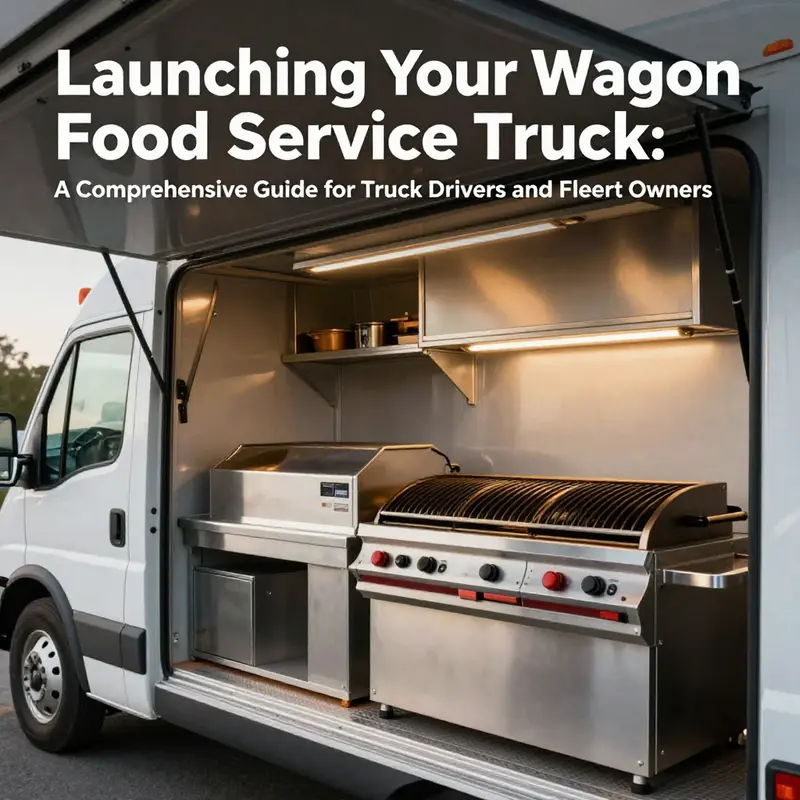
Turning a wagon into a true mobile kitchen requires more than a collection of appliances. It demands a deliberate integration of high-performance systems that balance power, temperature control, space, safety, and reliability. When done well, the wagon becomes a compact powerhouse that can deliver consistent quality, rapid service, and sustainable margins in diverse locations—from crowded street corners to busy outdoor events. The drive to build such a system starts with a clear understanding that every component must contribute to a single purpose: to keep food safe, prepared efficiently, and presented to customers with the same care you’d expect from a full-sized kitchen. The core of this approach rests on three pillars: precise temperature management, robust energy and power management, and a modular interior that supports fast, repeatable workflows. Each element influences the others, so planning must treat them as an interconnected whole rather than a set of independent add-ons.
In the realm of temperature control, refrigeration is not merely a box that keeps things cold. It is a dynamic, intelligent subsystem that protects food safety, preserves shelf life, and reduces waste. Modern mobile kitchens increasingly rely on dual-zone or multi-zone cooling capabilities. These configurations separate cold storage from frozen and ambient spaces, enabling a single unit to cradle milk, dairy, meats, sauces, and perishables without cross-contamination or temperature drift. What makes these systems truly valuable for a wagon kitchen is their precision. Intelligent thermostats monitor conditions in real time, and many units come with remote monitoring options, alerting you if a door is left ajar, if a temperature spike occurs, or if power drops unexpectedly. That last point matters as you travel between locations or rely on solar or generator power during events. Temperature integrity translates directly into fewer spoilage incidents and fewer last-minute menu substitutions, which in turn supports reliability in front-of-house operations.
But temperature control cannot stand alone. Perishable items demand consistent, reliable energy support, and that is where high-efficiency power and energy management come into play. A wagon kitchen often faces limitations on running a large, continuous power supply, especially when it must operate on a generator or off-grid when electricity is scarce. A well-designed system couples a sufficiently sized battery bank with an inverter capable of delivering steady, clean power to cooking equipment, refrigeration, lighting, and digital systems. Battery selection should be aligned with anticipated service hours, peak loads, and the worst-case weather you expect to encounter. The goal is to minimize run-time interruptions while keeping fuel consumption and noise at a minimum. When you add solar charging as a complement to the battery bank, you gain resilience for long days at festivals or remote locations, extending your ability to serve without constantly hunting for a power source. In practice, that means counting the watts your core equipment uses during peak cooking cycles, then mapping that against a charging profile that includes daytime solar recharging and nighttime idle losses. Induction cooktops can be a game changer here; they are fast, efficient, and generate less heat in the vehicle, which reduces both ventilation demands and air conditioning load. Efficient LED lighting reduces energy draw and improves the working environment for your crew, which matters for safety and morale as the line grows longer.
Inside the wagon, the interior layout must be both modular and resilient. A well-planned kitchen uses a modular design that allows quick reconfiguration for changing menus and events. Consider an interior built with modular cabinetry that can be swapped or repurposed with minimal tools. Pull-out shelves, vertical storage for utensils, and configurable prep zones can dramatically reduce the time needed to switch from one menu to another. The material choice here is crucial: stainless steel or high-grade composite panels provide durability, ease of cleaning, and resistance to wear from frequent cleaning and daily use. A compact footprint does not have to mean a cramped workflow. Rather, it invites you to design around the path your staff will take: a clear sequence from ingredient retrieval, to prep, to cook, to finish plating, and finally to service. In such a design, every action becomes a link in a chain of efficiency, and the risk of spills or cross-contamination decreases because motion is minimized and the space is clearly organized.
A key piece of the high-performance equation is monitoring and control through smart technology. IoT integration allows you to supervise refrigeration temperatures, fuel or energy levels, battery discharge, and equipment health from a single dashboard, whether you are on-site or miles away at a market. Real-time data becomes an early warning system, offering predictive maintenance prompts before a fault escalates into a service interruption. For instance, if the refrigeration unit begins to deviate from its setpoint, the system can trigger an alert and even switch to a contingency mode, keeping critical items safe while you reassess the power load or reallocate energy across appliances. In addition, remote monitoring supports fleet scalability. If you run multiple wagons or pop-up kitchens, the central view becomes a powerful tool for coordinating inventory, scheduling, and even preventative maintenance cycles. The incremental value of such a system extends beyond uptime; it strengthens your brand’s promise of safety, consistency, and reliability. When customers see the care you take to protect food quality and safety, trust follows naturally.
The ride is not only about electricity and temperature. The mechanical underpinnings of a high-performance wagon require a suspension system and hydraulic components that protect both the equipment and the crew during transport. A wagon that travels over varied surfaces benefits from upgraded suspension and stabilizing hardware that reduce vibration and resist shock. This translates into calmer transport of sensitive equipment—refrigeration compressors, digital displays, and delicate fixtures—while preserving the integrity of the workspace. A stable base also helps prevent spills during transit, a factor that is easy to overlook but essential for safety and cleanliness on crowded city streets or bumpy rural routes. In practice, the suspension choice should be matched to the weight distribution of your kitchen and the expected terrain. The goal is a smooth ride that keeps floors level and equipment secure, so you can preserve precise temperatures, avoid leaks, and maintain a comfortable working environment for your staff.
Safety and compliance form the belt and suspenders of high-performance wagon operation. A well-equipped wagon includes a certified fire suppression system, properly wired electrical components, clear emergency exits, and conspicuously posted safety signage. The presence of professional-grade fire suppression is not a luxury but a requirement in many jurisdictions, and it should be matched by up-to-date training for staff on emergency procedures. Electrical systems must meet local standards and be protected by proper circuit separation for high-heat appliances from lighting and digital devices. Regular inspections and certifications are not bureaucratic hurdles; they are the means by which you secure insurance coverage and reassure event organizers and customers alike. A robust safety framework also yields tangible benefits in reliability and goodwill. When staff feel secure about their workspace, they are more likely to maintain high standards of food safety, cleanliness, and customer service, even as demand spikes.
Execution and budgeting considerations naturally follow the vision of a high-performance wagon kitchen. The most effective approach begins with a precise load assessment: estimate the peak electrical demand of all cooking and refrigeration equipment, the volume of cold storage you must maintain, and the expected duration of service per day. From there, size the power system with headroom for contingencies—extra battery capacity for back-to-back events, a reserve for a cold storage variable, and some margin for LED lighting and POS systems. It is tempting to chase every latest gadget, but the most impactful gains come from balancing capability and reliability. Prioritize components with proven performance in mobile environments, robust service support, and clear maintenance schedules. Modular interior design often pays for itself over time by reducing downtime between events; it enables faster menu changes and easier cleaning, both of which contribute to higher throughput and better customer experiences. The procurement path should emphasize durable construction, food-safe materials, and compliance with recognized standards. A modular trailer with corrosion-resistant materials, interior surfaces built for easy sanitization, and a layout that supports repeatable, safe workflows can deliver 2x faster reconfiguration for seasonal menus or shifting event calendars compared to a fixed-design trailer. This advantage compounds as you scale, turning a single wagon into a network of mobile units capable of meeting diverse demand without sacrificing quality.
In practice, the combination of intelligent cooling, resilient power, and a thoughtfully arranged interior turns a wagon into a reliable core asset of your business. You gain the ability to operate with less downtime, less waste, and more consistent service across venues. You also gain flexibility: the same wagon can be retooled quickly for different menus, seasons, or venues. For operators who plan to grow, this means you can deploy multiple wagons with the same core design principles and equipment philosophy, knowing that the systems will perform predictably in a range of environments. The effect on margins is meaningful. Fewer spoilage losses, lower energy costs per hour of operation, and improved staff productivity all contribute to better profitability over the life of the business. Additionally, the confidence you build with event organizers and customers through a demonstrable commitment to safety, quality, and reliability helps distinguish your service in a crowded market, making your wagon a preferred choice for recurring contracts and regular festivals.
As you refine the plan for your wagon, consider linking the practical guidance on efficient, high-performance design with broader industry standards and ongoing learning. For a deeper look at design efficiency in mobile environments, see design-efficiency-in-emergency-services. Such resources can illuminate how design choices influence uptime, safety, and maintenance complexity in more demanding settings, while still directly informing the way you configure a food wagon for speed and reliability. The principle remains the same: deliberate design decisions yield compounding returns when you operate in dynamic, high-traffic contexts. With careful attention to temperature control, power management, modular interior design, smart monitoring, robust suspension, and rigorous safety practices, your wagon will not merely cope with the demands of a busy day—it will thrive, delivering fast service, consistent quality, and sustainable profitability across countless events.
Throughout this journey, remember that the wagon is a living system. It evolves as you learn from each event, adjusting the balance of energy supply, storage strategy, and workflow layout. The medium may be small, but the potential for scale is large when you treat every component as part of a single, coherent performance engine. The combination of precise temperature control, resilient energy management, modular design, and smart oversight forms the backbone of a high-performing mobile kitchen. It enables you to deliver a reliable experience to customers, protect your food and brand, and position your business for expansion into new markets with confidence. In the end, the wagon becomes not just a vehicle for cooking, but a carefully engineered platform for growth, safety, and sustained profitability. Industry guidance and peer-tested best practices—from organizations dedicated to mobile food service and beyond—offer ongoing, practical insights to refine this system over time. See NFTA for broader standards and guidance on mobile food service operations: https://www.nfta.org.
Rolling with Purpose: Mastering Mobility and Compliance for Your Wagon Food Service Truck
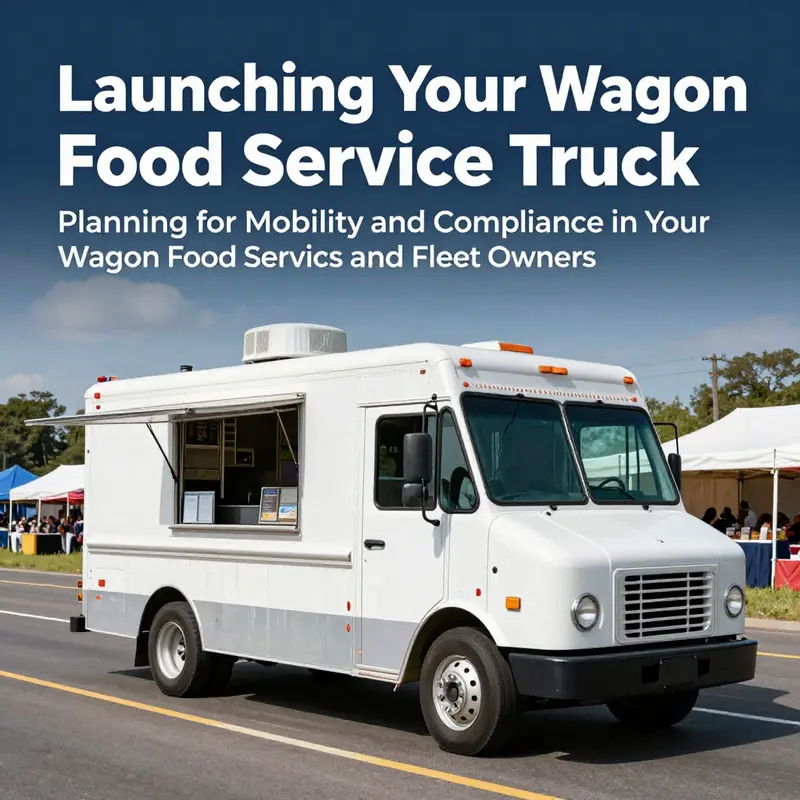
A wagon-based food service operation lives at the intersection of craft, logistics, and law. It is not just a kitchen on wheels; it is a portable business model that travels from festival field to farmers’ market, from street corner to private event, carrying the chef’s vision and a customer’s appetite in equal measure. The core challenge—and the core opportunity—lies in balancing two forces that can seem at odds: mobility and compliance. Mobility demands a compact, durable, ready-to-go unit that can be maneuvered, set up, and operated with minimal friction. Compliance demands that every inch of that unit, every line on its permit, and every routine of its staff meet health, safety, and local regulations. When these two strands are woven tightly together, the wagon becomes not a makeshift solution but a scalable, repeatable system that can flourish across diverse environments and jurisdictions.
The structural choice of a wagon sets the stage for both mobility and resilience. A high-quality mobile unit should feel sturdy yet nimble, a paradox resolved through materials chosen for longevity and lightness. Stainless steel or aluminum components can deliver corrosion resistance and durability in harsh outdoor conditions, while keeping weight manageable for towing and rapid repositioning. The interior surfaces matter as much as the exterior shell; food-grade materials are non-negotiable where guests’ health and trust are concerned. A wagon designed with modular interiors offers the agility to swap configurations—think a hot dog station that can morph into an ice cream counter for a summer weekend—without expensive rebuilds. A modular approach can translate into substantial time savings during peak seasons and events, enabling operators to reconfigure layouts with a degree of speed that traditional fixed trailers simply cannot match. In practice, this means a kitchen that adapts to demand with a few adjustments to work zones, not a full rebuild.
From a regulatory viewpoint, the interior and the exterior must align with the standards that govern mobile food vending in the operator’s target locales. The Australian Standard reference in the research signals the value of pursuing a certified baseline that communicates quality and safety to customers while reducing friction with inspectors and regulators. Even where specific local rules diverge, a compliant base unit simplifies a great deal of the paperwork around permits and health checks. A vendor who starts with a trailer meeting recognized standards finds it easier to obtain a mobile food vendor permit, secure a business license, and satisfy food handler certification requirements. This is not merely about avoiding fines; it is also about building customer trust. A well-built wagon that clearly adheres to safety and hygiene expectations becomes a tangible signal to patrons that the business takes their well-being seriously, which matters as much as the flavors on the menu.
Beyond the shell, the kitchen system must be designed for high throughput without compromising safety. Modern, high-output modular kitchen systems can support rapid service—crucial in settings where lines form quickly and downtime costs revenue. The goal is a compact, efficient array of fixtures: fryers, grills, refrigeration, and prep spaces arranged to minimize cross-traffic and streamline workflows. A well-thought-out setup reduces the distance staff walk during a shift and helps prevent bottlenecks at the point of service. The equipment choices should emphasize energy efficiency and safety. Ventilation must move cooking heat and odors safely away from customers and staff, while fire suppression systems should be accessible, reliable, and compliant with relevant standards. The objective is not just safer cooking but steadier uptime; fewer technical hiccups mean more time delivering meals and fewer disruptions in the queue.
The idea of a modular interior extends to the way inventory and waste are managed on the wagon. Clever storage solutions—pull-out shelves, slide-out bins, and magnetic strips for frequently used tools—reduce clutter and speed up line chores. A compact footprint becomes a strategic advantage in dense urban spaces and during festivals when space is at a premium. The ability to operate in tighter urban settings, while still delivering a full menu, is what often separates successful wagon operators from seasonal curiosities. In practice, the wagon’s interior should enable 150+ servings per hour in busy periods without crowding the workflow or compromising food safety. The math is simple: more servings per hour translate into higher revenue per event, provided the service remains consistent and orderly.
Planning for flexibility and mobility also means paying attention to the hitch system, chassis design, and the wagon’s overall balance. A hitch that performs reliably on uneven terrain reduces sway and enhances safety during transit and setup. For events and markets that demand quick relocation, a well-engineered hitch and a stable trailer frame can make the difference between a smooth day and a frustrating one. The operator should also consider the wagon’s footprint. A smaller, efficient footprint is not a concession; it is a strategic advantage that opens doors to venues with limited access and less expansive parking. When you can park in a tight alley, a busy street corner, or a plaza with fixed fixtures, you gain access to prime customer flow without the need for extensive municipal permissions or costly site operations.
Movements between sites bring regulatory responsibilities along for the ride. Local ordinances dictate licensing, zoning, and health inspections, and these rules can vary as widely as the menus on offer. The baseline lesson is straightforward: research local requirements early and align the wagon design and operating practices with those expectations. In several jurisdictions, licensing processes have become more streamlined for mobile vendors, reducing the bureaucratic burden and making it feasible to operate at scale. Even when processes are simplified, the consequences of non-compliance can be severe—fines, shutdowns, and reputational damage that linger long after a single incident. The preventive approach is to view compliance as a design constraint rather than a punitive afterthought. By embedding regulatory considerations into the wagon’s structure, menus, and processes, operators can deploy more confidently and with fewer delays.
A practical way to approach this is to map out a regulatory landscape that covers the lifecycle of the wagon: from procurement and construction to daily operation, licensing renewals, and periodic health inspections. Start with the core permits: a mobile food vendor permit, a business license, and a food handler certification for staff. Each of these items has sub-questions—where and how to apply, what fees apply, what documentation is needed, how often renewals occur. The goal is to create a reliable compliance rhythm: set reminders for renewals, maintain a tidy record of certifications, and ensure the wagon’s design continues to meet any updates in health or safety standards. Keeping meticulous records is more than an administrative task; it is a defense against disputes with inspectors and a cornerstone of customer confidence.
Equipment integration is another axis along which mobility and compliance intersect. A wagon that integrates a robust electrical, water, and waste plan demonstrates foresight and reliability. Power considerations determine whether you can operate at a street corner without a generator hammering away in the background, while water supply and waste management affect sanitation and turnaround times. Aligning these utilities with local codes—such as drainage, waste storage, and backflow prevention—helps prevent last-minute refits that disrupt operations during a busy season. If you decide to embrace digital tools, as some operators do, online ordering platforms and mobile payment options can reduce crowding at the pickup window and speed service, particularly during peak periods. The trade-off then becomes balancing the upfront costs of technology with the long-term gains in speed, accuracy, and guest satisfaction.
From the perspective of branding and guest experience, mobility amplifies your ability to meet customers where they are, but it also places a premium on consistency and predictability. A cohesive brand identity that travels with the wagon helps create a recognizable presence at every event. Eye-catching yet legible design, consistent color schemes, and a simple, clear menu reduce decision fatigue for customers who may be encountering the wagon for the first time. In this sense, mobility becomes a platform for storytelling as well as service. A strong, portable brand signals professionalism in every encounter, from the moment a guest spots the wagon in a crowded lot to the moment they collect their order. The practical value is measurable: stronger branding often correlates with higher repeat attendance at recurring events and markets.
To tie mobility and compliance into a seamless operating rhythm, operators can adopt a disciplined planning mindset that treats the wagon as a small, highly managed business unit. Start with a design brief that prioritizes durability, hygiene, and modularity. Then translate that brief into a production plan that accommodates seasonal menu changes and event variability. Capabilities should be defined in terms of service metrics—servings per hour, order accuracy, setup and teardown times, and incident rates for regulatory deviations. Finally, cultivate partnerships with vendors, regulators, and venue managers who understand the mobile model and can offer practical guidance and preferred access. When these relationships are anchored in shared expectations, the wagon becomes a more reliable asset rather than a constantly negotiated risk.
In sum, planning for mobility and compliance in a wagon food service operation means treating the vehicle as a carefully engineered, standards-aligned vessel that can traverse a landscape of venues without losing its culinary voice or its regulatory footing. It requires a thoughtful combination of lightweight, durable construction; modular interiors designed for rapid reconfiguration; high-efficiency, safe kitchen systems; and a proactive approach to licensing, inspections, and ongoing compliance. The payoff is a flexible, scalable business that can move from one high-traffic site to another with confidence, maintaining food safety and service quality while seizing opportunities in markets, festivals, and pop-up moments that a fixed storefront could never reach. As the operating model becomes more mature, the wagon can evolve—adding features, refining workflows, and expanding the menu—without sacrificing the core advantages that make a mobile food venture compelling in the first place.
For operators seeking further context on the technical backbone of vehicle design and the broader industrial lens on commercial-grade machinery, industry insights on wagon and truck configurations illuminate how chassis, load capacity, and integrated utilities influence day-to-day performance. These considerations, while seemingly specific, ripple through every decision—from where you site the wagon at an event to how you staff the shift and maintain the equipment during a busy season. The bottom line is that mobility and compliance are not afterthoughts; they are the guiding constraints that shape every choice the operator makes, from the first sketch of the layout to the final order handed to a neighbor in line. When a wagon is built with this dual focus in mind, it presents not just a way to feed customers but a durable, credible business model that can grow with demand and adapt to new markets without losing its core identity.
External resources can provide additional technical grounding as you translate these principles into a concrete plan. For example, authoritative information on vehicle composition and industrial applications helps inform decisions about chassis selection, load, and the integration of utilities. This broader perspective ensures your wagon remains compatible with evolving standards and industry expectations, enabling smoother operations across a diverse range of events and locations. As you move from planning to execution, you’ll draw on this knowledge to tune the wagon’s capabilities, align them with local rules, and create a service experience that travels as confidently as the menu travels from kitchen to customer. In the end, mobility paired with compliance is not a constraint to limit entrepreneurship but a framework that empowers a food business to reach more people, more often, with fewer headaches and greater consistency.
For deeper technical grounding and ongoing industry perspectives as you build and operate your wagon, consider exploring sources that discuss vehicle classification, load planning, and utility integration for commercial mobile units. These resources can offer practical examples, diagrams, and checklists that translate high-level concepts into actionable steps you can apply to your own wagon design and daily operations. Relevant professional guidance supports the journey from concept to launch and beyond, helping you stay ahead of regulatory changes and market opportunities alike.
External resource: https://www.hino.com/
Final thoughts
As we conclude, it’s clear that establishing a wagon food service truck is not just about serving up meals; it involves a strategic approach to equipment selection, kitchen efficiency, mobility, and compliance. By understanding the specific needs of truck drivers and fleet operators, you can create a service that not only satisfies hunger but also fosters a connection with the trucking community. Remember, thorough planning and execution can lead to a profitable venture while providing essential services on the road.