
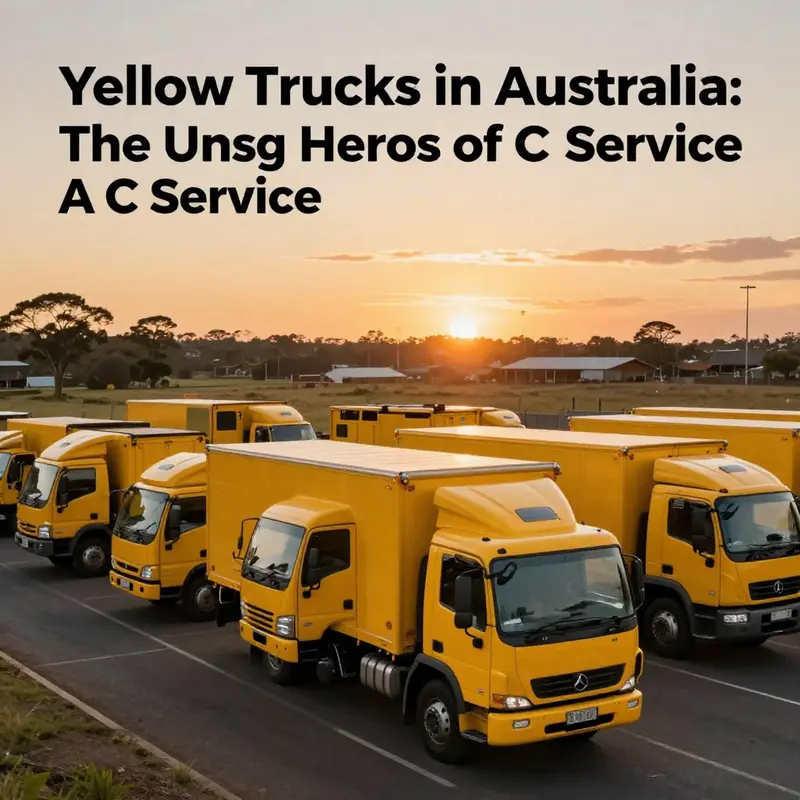
In the diverse landscape of vehicle maintenance in Australia, the presence of ‘A C Service Yellow Trucks’ plays an indispensable role. Recognized primarily for their vibrant hue, which makes them instantly identifiable on the roads, these service trucks cater to the vital needs of air conditioning and mechanical systems in various vehicles. As long-haul truck drivers and fleet managers navigate compliance and maintenance issues, understanding the significance of these specialized trucks becomes critical. Each chapter will delve into aspects of their operational role, regulatory compliance, economic impact, technical specifications, and societal implications, creating a holistic perspective on why these yellow trucks are invaluable in maintaining the efficiency and safety of vehicles within Australia.
Visible, Responsive, Essential: How Yellow A C Service Trucks Keep Australian Fleets Moving
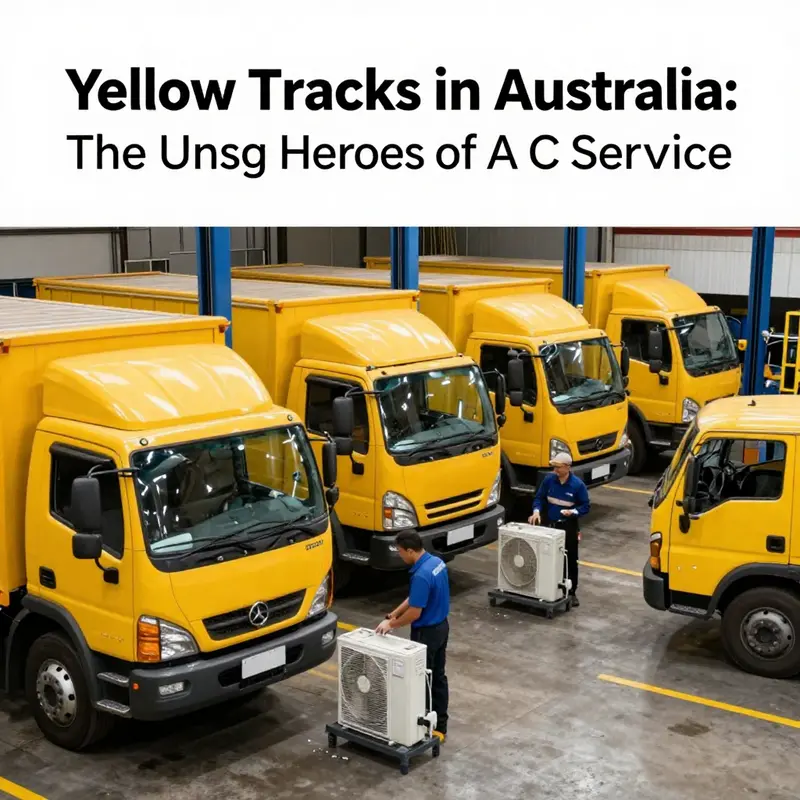
A network of mobile maintenance units painted a vivid yellow plays a quiet but pivotal role in keeping Australia’s commercial and public transport systems reliable. These A C Service Yellow Trucks are more than vehicles with tools. They are rolling workshops, logistics enablers, and safety beacons that reduce downtime across vast urban and remote landscapes. Their design, operations, and integration into fleet management systems illustrate how a simple concept—bringing skilled repair capability to the vehicle—scales into measurable operational resilience for fleets of buses, delivery trucks, and heavy haulage rigs.
Each yellow truck is configured to act as a self-contained service hub. Inside, technicians find diagnostic equipment calibrated for modern vehicle electronics, a selection of common spare parts, and an organized workspace for mechanical and electrical repairs. The emphasis on diagnostics reflects the changing nature of breakdowns: many failures stem from sensor faults, control modules, or subsystem errors that require immediate software interrogation as much as mechanical work. Technicians use handheld scanners and laptop interfaces to communicate with vehicle ECUs, then effect repairs or adjustments without towing the vehicle back to a depot. This capability shortens the time a vehicle spends off the road, saving fuel, labor, and schedule integrity for operators.
Mobility itself is a major advantage. Australia’s geography challenges maintenance models that rely solely on centralized workshops. Long routes and dispersed depots make towing or long-haul recovery costly and slow. Mobile units can meet a vehicle at a roadside location, on a depot apron, or at a remote client site. For passenger transport, minimizing service interruptions is critical to maintaining timetables and passenger trust. For logistics providers, a disabled rigid or semitrailer on a regional highway introduces cascading delays across delivery windows. Placing repair capacity closer to where vehicles operate reduces risk and keeps goods and people moving.
The yellow livery serves practical and cultural roles. Visually, it improves roadside visibility during roadside repairs, particularly in low light or high-traffic settings. High-visibility color reduces the risk of secondary incidents around a stopped vehicle and helps coordinate site safety when multiple crews operate. Culturally, a standardized appearance fosters quick recognition among fleet staff and stakeholders. When a fleet manager sees that familiar yellow truck arriving, they know trained personnel with the right gear are on scene. That recognition shortens response protocols and can calm customers by signalling that help has arrived.
Operational efficiency is also amplified through integration with real-time fleet information systems. Dispatchers use GPS, telematics, and predictive maintenance alerts to place yellow trucks where they are likely to be needed. Predictive algorithms analyze vibration data, fluid consumption, fault codes, and historical failure patterns to forecast imminent issues. When a probable failure is detected, a technician and the correctly outfitted yellow truck can be dispatched before a breakdown occurs. This proactive maintenance model lowers emergency callouts and balances workloads across regions. It also enables planned part stocks in each truck, so the right components are on board when the technician arrives.
Skilled technicians are the human core of these units. Modern fleet service demands cross-disciplinary expertise: mechanical aptitude, electrical troubleshooting, and software diagnostics. A C Service Yellow Trucks are staffed by teams trained to a consistent standard, ensuring uniform repair quality across geographically distributed operations. Training programs emphasize both technical proficiency and safety practices for roadside work, confined spaces, and heavy vehicle systems. Frequent upskilling is necessary to keep pace with new drivetrains, telematics standards, and emission-control systems. Investing in training increases first-visit fix rates, which in turn reduces repeat callouts and overall maintenance expense.
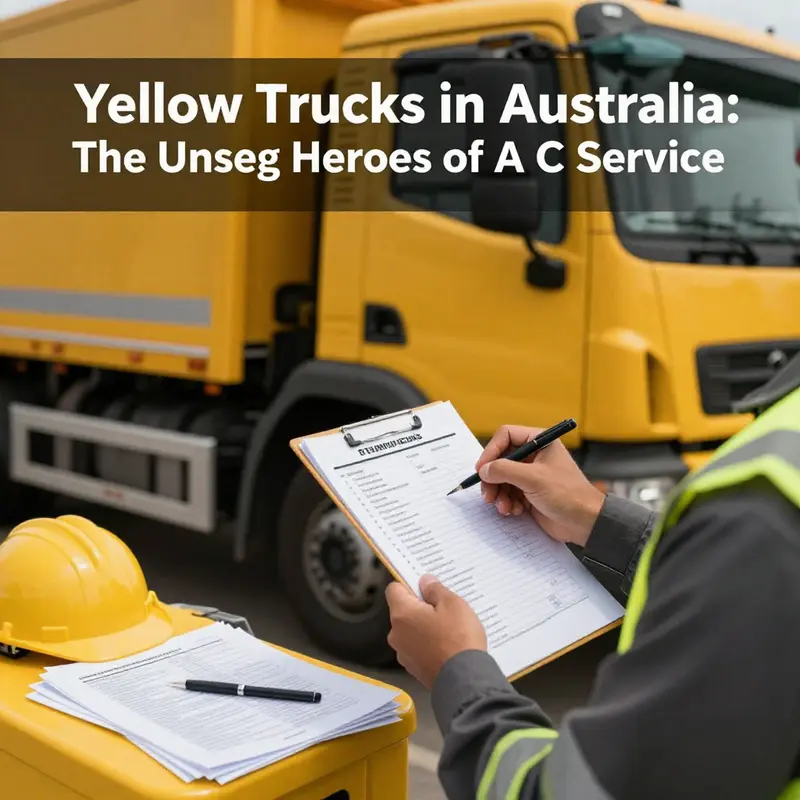
Safety protocols and regulatory compliance shape how these trucks operate. Commercial vehicles and passenger carriers in many Australian jurisdictions are subject to annual inspections and maintenance record requirements. Mobile service providers must adhere to these frameworks while documenting repairs in a traceable manner. The yellow trucks typically carry standardized checklists and digital reporting tools that capture parts used, fault codes cleared, and repairs performed. These records support compliance audits and provide a transparent maintenance history for fleet owners and regulators alike.
Beyond routine repairs, the yellow trucks provide emergency support during incidents and peak demand events. During adverse weather, mechanical faults and road incidents can spike. Prepositioning mobile units near critical corridors or staging them to respond rapidly to incidents decreases the time assets remain immobilized. In urban environments, these trucks help manage congestion ripple effects by clearing disabled vehicles faster. In rural areas, they reduce the logistical complexity of recovering heavy vehicles from remote locations.
Sustainability considerations influence how these mobile units are supplied and operated. Efficient routing minimizes unnecessary travel, and stock management systems reduce wasted parts. Some operators have begun evaluating alternative fuel vehicles or hybrid platforms for their service trucks to lower emissions during long shifts. Battery storage onboard enables safer operation of diagnostic equipment and lighting without idling the service vehicle. These measures align maintenance operations with broader fleet sustainability commitments.
The presence of these yellow trucks also offers strategic advantages to fleet managers and transport planners. By reducing downtime, they improve asset utilization rates and reduce the number of vehicles needed to meet service levels. Predictable service windows and rapid incident response support tighter scheduling and more ambitious route planning. In aggregated terms, this capability contributes to improved reliability for public transport users and more competitive service levels for freight operators.
Finally, the role of these mobile units is interdependent with other elements of maintenance infrastructure. Effective depot facilities, skilled workshop technicians, parts supply chains, and data-sharing protocols all matter. A well-run yellow truck program links these components: it receives parts from suppliers, escalates complex repairs to workshops, and feeds operational data back into maintenance planning systems. This networked approach turns a fleet of yellow trucks into a linchpin of a resilient maintenance ecosystem.
For fleet operators and transport authorities looking to strengthen service reliability, investing in mobile maintenance capabilities provides tangible returns. The model reduces downtime, enhances safety through improved visibility and standardized procedures, and supports predictive maintenance regimes that cut cost and risk. Where geography and operational tempo create vulnerability, yellow service trucks offer a pragmatic, scalable solution that keeps Australia’s transport arteries functional and responsive.
For further detail on operational standards and the regulatory framework that governs vehicle maintenance and repair in Australia, refer to official guidance at the Department of Infrastructure and Regional Development: https://www.transport.gov.au/industry-transport/maintenance-and-repair. For insights into training priorities that bolster field service performance, see an article on the importance of maintenance training and support.
Guardrails for the Heat: Regulatory Compliance and Safety for A/C Service on Yellow Trucks
To begin, the most widely cited framework in many parts of the world concerns the handling of refrigerants—the lifeblood of any air conditioning system. In a regulated context, technicians who service A/C systems must be certified to recover, recycle, or recharge refrigerants. This certification is designed to prevent the release of compounds that can damage the ozone layer or contribute to climate change, and it recognizes a technician’s competence in working with pressurized cylinders, recovery machines, and the environmental controls that minimize emissions. In North America, the Environmental Protection Agency (EPA) plays a central role in this space, with Section 608 of the Clean Air Act standing as a cornerstone requirement. The regulation is explicit: only trained and certified personnel may perform tasks that risk releasing refrigerants into the atmosphere. The consequences of non-compliance are not abstract in a fleet environment. They include significant fines and the potential for legal liability that can cascade into insurance costs, contractor relationships, and public perception of a company’s safety culture. But compliance is not merely about avoiding penalties. It is a lens through which a fleet operator can view maintenance through a safety and sustainability prism. When a technician follows certified procedures for refrigerant recovery and system recharge, the risk of uncontrolled releases diminishes, the likelihood of system leaks decreases, and the overall efficiency of the fleet improves. Regular documentation of service, testing, and maintenance becomes a traceable narrative of stewardship rather than a collection of scattered notes. The result is a fleet that performs more reliably, with less risk of sudden HVAC failures in the field, which in turn reduces unplanned downtime and preserves the schedule integrity of essential services. This is particularly important for yellow trucks that serve high-demand work sites where any interruption can ripple across multiple projects and crews. As part of this accountability, many fleets adopt standardized recordkeeping practices. Service histories are not decorative but functional: they document the refrigerant type that was recovered, the volumes processed, the equipment used, and the technician’s certification credentials. When a new mechanic joins the team, a complete service history helps them understand system behavior, anticipate common failure modes, and select appropriate replacement parts without unnecessary trial-and-error. From a fleet-management perspective, this level of detail supports annual inspections and audits, ensuring that the A/C system adheres to the manufacturer’s specifications and to environmental constraints that govern emissions and waste handling. Fleet operators who master this data-driven approach often find it translates into clearer maintenance planning, more consistent performance, and a stronger safety baseline for crews and bystanders alike. The regulatory landscape also emphasizes the importance of proper tools, equipment, and work practices. OSHA, the Occupational Safety and Health Administration, sets standards that address the day-to-day realities of vehicle maintenance in workplaces that resemble bustling service yards. Lockout/Tagout (LOTO) procedures, for instance, are critical when technicians work on systems that could unexpectedly release pressure or energize components. The use of appropriate personal protective equipment (PPE)—gloves resistant to chemical exposure, eye protection, and respiratory protection when ventilation is limited, and hearing protection where noise levels are high—helps prevent injuries that could otherwise occur during refrigerant service, brazing, or when hoses and fittings are disturbed under pressure. Ventilation becomes more than a compliance point; it is a safety necessity that protects technicians from the inhalation risks associated with refrigerant vapors and from the asphyxiation hazards that can accompany poor air movement in cramped workspaces or enclosed trailers where A/C components are being serviced. The emphasis on safety also percolates into the yard’s daily routine. Equipment must be maintained in good condition, with a clear protocol for handling, storing, and transporting refrigerant cylinders. Leaks must be detected promptly, with leak-detection procedures integrated into regular service intervals. A routine that includes checks for refrigerant charge, line integrity, compressor performance, and condensate drainage is not merely a maintenance ritual; it is a proactive shield against unexpected failures that could jeopardize crew safety and operational timelines. The environmental dimension of compliance often intersects with broader regulatory expectations about waste management and emissions control. Leaks and improper disposal of refrigerants can lead to environmental harm and cross-jurisdiction penalties. Fleet operators recognize that adherence to leak-detection schedules, adherence to manufacturer service specifications, and careful control of waste streams all contribute to a more robust operating profile. In jurisdictions where annual inspections of certain vehicle categories are required—such as passenger transport vehicles and heavier trailer configurations—maintaining a thorough A/C service record becomes indispensable. The annual check is rarely a single event; it is the culmination of a continuous safety program that threads through daily maintenance, periodic inspections, and emergency response readiness. The result is a fleet that can be counted on to meet regulatory expectations while delivering dependable service to customers and end-users. Within this framework, the concept of training takes on special significance. A well-trained technician is not merely compliant but capable of identifying abnormal sounds, symptoms of refrigerant loss, and signs of component wear that may presage a broader failure. The transfer of knowledge across generations of technicians, and the reinforcement of best practices through hands-on coaching, is essential to sustaining safety, efficiency, and reliability. For operators seeking practical, field-tested guidance, resources focused on maintenance training are invaluable. For instance, a widely referenced discussion on the importance of ongoing maintenance training emphasizes how regular education reduces downtime, enhances safety, and improves overall equipment uptime. Those looking for targeted, domain-specific insights may consult relevant training materials and case studies, including those that distill complex regulatory requirements into actionable steps for day-to-day work. As fleets scale, so too does the importance of a formal compliance program. A single deviation can cascade into a broader audit issue, a breach of a lease or contract, or a deterioration of consumer trust. Therefore, the bedrock of a resilient compliance program is culture: a workplace where technicians feel empowered to raise concerns, confirm that procedures are followed, and document any anomalies with clarity and immediacy. This culture is reinforced by leadership, which must model meticulous recordkeeping, timely maintenance, and transparent communication with regulatory bodies and customers alike. A practical way to embed this culture is through structured onboarding, periodic refreshers, and easily accessible reference materials that harmonize with the fleet’s maintenance software. The accessibility of information matters as much as its accuracy. When technicians can quickly verify whether a procedure aligns with the manufacturer’s specifications, or confirm the acceptable range for refrigerant recovery, they can make informed, quick decisions in the field. It is this blend of procedural rigor and practical adaptability that defines a robust A/C service program for yellow trucks. The broader vision is to keep the fleet operating safely, efficiently, and with a clear path toward continuous improvement. In this sense, compliance becomes less about ticking boxes and more about sustaining a reliable service ecosystem where every technician can perform at their best, every piece of equipment is cared for responsibly, and every mile driven by a yellow truck reflects a culture of safety and professionalism. For readers who want to explore the training dimension further, resources such as fire-truck-maintenance-training-importance offer practical perspectives on why ongoing education matters to maintenance teams in high-stakes environments. This reference is not the destination but a waypoint in a journey toward better maintenance discipline, better safety outcomes, and better regulatory alignment across the fleet. Finally, while the specifics of regulation evolve and vary by country and state, the throughline remains consistent: the A/C service work on yellow trucks sits at the intersection of technical skill, safety discipline, environmental stewardship, and disciplined recordkeeping. When these elements align, a fleet not only survives compliance checks but thrives in the daily cadence of field operations. The trucks become more than tools; they become embodiments of a professional standard that protects workers, protects the public, and preserves the integrity of the essential services these yellow machines support. External readers seeking a regulatory frame of reference may consult official sources such as the EPA’s Section 608 guidance for a detailed map of responsibilities and penalties, which anchors the practical considerations discussed here in a formal regulatory context: https://www.epa.gov/section608
Visible Precision: The Economic Logic Behind A/C Service Yellow Trucks in Commercial Maintenance

The image of a fleet of yellow service trucks pulling into a commercial campus is more than a brand statement. It is a carefully engineered signal of reliability, speed, and professional discipline. In the realm of commercial HVAC maintenance, where downtime translates into uncomfortable spaces, lost productivity, and rising energy waste, these yellow AES (air conditioning) service vehicles function as moving nodes of efficiency. They are not merely transportation; they are the rolling embodiment of a maintenance philosophy that seeks to align speed, skill, and schedule with the realities of modern buildings. The color, the equipment shelves, the radio dispatches, and the discipline of the crew all converge to reduce the friction that typically plagues maintenance operations. In this sense, the economic impact of A/C service yellow trucks extends beyond the obvious payroll and fuel costs. It shapes the entire value chain of facility upkeep by enabling proactive, predictable service patterns that help facility managers move from reactive repairs to planned, energy-conscious care.
To understand the economic logic, consider the regulatory and operational landscape in Western Australia, where annual inspections for certain commercial vehicles—buses, passenger transport vehicles, and trailer trucks—are the norm for fleet operators. When a business uses service fleets to support its critical infrastructure, these inspections become not just a compliance hurdle but a driver of fleet design. The yellow service trucks are engineered to meet that demand for reliability and visibility. They serve as mobile hubs where diagnostic tools, refrigerant handling equipment, and specialized maintenance parts live in compact, well-organized compartments. The visibility of yellow in urban environments—on busy streets, in crowded loading bays, and at night near loading docks—helps operators quickly locate the fleet in the midst of a complex service network. This seemingly simple design choice translates into tangible economic benefits: faster dispatch times, easier coordination with building managers, and fewer missed appointments due to vehicle misplacement or dispatch errors.
A central element of the chapter’s economic argument rests on the efficiency of service delivery. A performance-based maintenance pilot for unitary direct-expansion (DX) HVAC systems demonstrates how a tightly choreographed workflow can unlock substantial value. Servicing 40 to 60 units with two technicians—each working roughly four hours per system—can yield an optimal balance of cost control and service quality. At an hourly rate of around $110, the model rewards scale and careful scheduling. The math adds up quickly: 40 to 60 units multiplied by two technicians equals 80 to 120 technician-hours per cycle, with four hours per system translating to 320 to 480 total technician-hours. In economic terms, that concentrates labor cost into a predictable, repeatable pattern rather than a series of high-cost, sporadic emergency interventions. The yellows are not merely for show; they are integral to the reliability of the schedule. When a fleet can guarantee a 24-hour or even a same-day response window, facility managers gain confidence in their maintenance plan, which in turn reduces the risk of energy inefficiency from underperforming systems and the higher expenses of after-hours emergency calls.
The broader implications ripple through the local economy as well. The operation of these fleets creates skilled technician roles, dispatch and logistics jobs, and ongoing maintenance requirements for the vehicles themselves. Dependable maintenance services become an economic backbone for small business districts and commercial centers, generating employment and purchasing power that flows through suppliers, parts distributors, and repair shops. The presence of a robust yellow-truck fleet can catalyze closer collaboration with local energy efficiency programs and building operators who prioritize preventive maintenance as a core component of energy policy. Regularly serviced HVAC systems operate more efficiently, which translates into lower energy consumption across commercial sectors. While this may seem like a long-tail benefit, it is a critical externality that aligns with national and regional goals to curb greenhouse gas emissions and reduce the hidden costs associated with energy waste. In aggregate terms, the fleet’s maintenance discipline reduces peak energy demand, smooths energy usage patterns, and lowers the external costs borne by society when buildings run inefficiently.
This economic logic also rests on the discipline of fleet operations—routing, scheduling, and on-site workflows—that keeps downtime to a minimum. When a client signs a service agreement with a yellow-truck fleet, they are effectively buying a reliability product as much as a repair service. The fleet becomes a rolling service center, equipped to perform diagnostic checks, recalibrations, filter changes, coil cleanings, and refrigerant management with a speed and accuracy that are difficult to achieve through ad hoc calls. Such capabilities depend on investment in technician training, spare parts inventories, and the automotive performance of the vehicles themselves. The internal efficiencies are twofold: first, the technicians can complete more work per day without sacrificing quality; second, the vehicle rests matter less in downtime because the crew arrives prepared with the right tools and the right parts. The visible yellow color thus functions as a practical signal of readiness and competence, reinforcing trust with building operators and reducing the time that otherwise would be spent confirming service levels or chasing missing equipment.
The narrative of efficiency gains would be incomplete without acknowledging the value of planned maintenance as a way to prevent high-cost failures. In many buildings, HVAC systems operate across a wide range of conditions—from extreme cooling in summer to humidity control during damp seasons. A proactive maintenance cycle helps catch refrigerant leaks, sensor drift, or degraded coil performance before a small issue snowballs into a system-wide outage. The cost of a failure is multi-layered: emergency service premiums, potential penalties from tenants, lost productivity, and the reputational risk of a building that cannot deliver reliable climate control. A fleet of yellow service trucks, by enabling a consistent maintenance cadence, reduces these risks by enabling timely interventions, often during scheduled windows that minimize inconvenience to occupants. In effect, the economic benefit is not just the dollars saved on a single repair. It is the preservation of energy efficiency, the continuity of occupant comfort, and the protection of asset value across a portfolio of commercial facilities.
The broader economic frame extends to the policy and research literature on freight and service transportation. While the focus here is on HVAC maintenance fleets, the underlying principles resonate with studies that examine how moving maintenance capacity closer to the asset base reduces total costs and externalities. The integration of mobile maintenance capabilities into the broader logistics of building management helps resolve a classic tension: the need for timely service versus the capital intensity of maintaining a large inventory of parts and tools in multiple locations. When yellow service trucks act as the connective tissue between central warehouses and dozens of sites, the economy of scale becomes a practical reality. The fleet leverages labor productivity—the technicians’ specialized skills—and network effects—the way one well-timed visit can keep dozens of units in an energy-efficient operating envelope. In this sense, the economic impact is not only about the immediate service bill but about the improved reliability and energy performance that flows through the property portfolio and, by extension, the local service economy.
For readers who want to connect these observations to practical, policy-relevant guidance, the maintenance philosophy echoed here aligns with established norms around standardizing fleet practices and optimizing uptime. The emphasis on preventive care mirrors lessons from broader fleet-management literature that stresses standardized procedures, predictable maintenance windows, and data-driven scheduling. It also resonates with the idea that investment in human capital—technicians trained in current HVAC technologies and in efficient, accurate on-site diagnostics—yields durable returns. The yellow trucks, with their conspicuous presence, become mobile classrooms in a way: technicians exchange insights about equipment health with building operators, contributing to a culture of ongoing learning and shared responsibility for energy performance.
To illustrate a concrete link in the wider maintenance ecosystem, consider how this narrative parallels maintenance training principles seen in emergency-services fleets. The importance of routine maintenance and skilled, disciplined practice is underscored across these domains. See the emphasis on maintenance training in this related context: fire-truck maintenance training importance. The parallel is not about copying one sector’s model, but about recognizing that robust maintenance cultures—from fire apparatus to commercial HVAC—depend on the same core ingredients: trained people, reliable tools, efficient processes, and a fleet that visibly embodies those standards.
In closing the chapter’s arc, the yellow service trucks symbolize more than a fleet color or a branding choice. They represent a precise economic logic: bringing maintenance closer to the asset, enabling predictable service cycles, reducing the cost and risk of failures, and delivering energy-efficient outcomes that matter to facility owners, tenants, and policy makers alike. The combination of regulatory awareness, operational efficiency, and labor-market dynamics suggests that such fleets can be a durable contributor to local economies and national energy goals. As facilities continue to prioritize reliability and sustainability, the model of mobile, well-equipped maintenance teams operating under a clear performance framework will likely become an increasingly standard element of commercial infrastructure management. External research on freight and maintenance economics echoes this trajectory, offering a broader lens on how mobile service capacity can shape efficiency, resilience, and value creation across sectors.
External reference: https://www.sciencedirect.com/topics/engineering/freight-transportation
Yellow Precision on Wheels: The Quiet Engineering of A/C Service Trucks
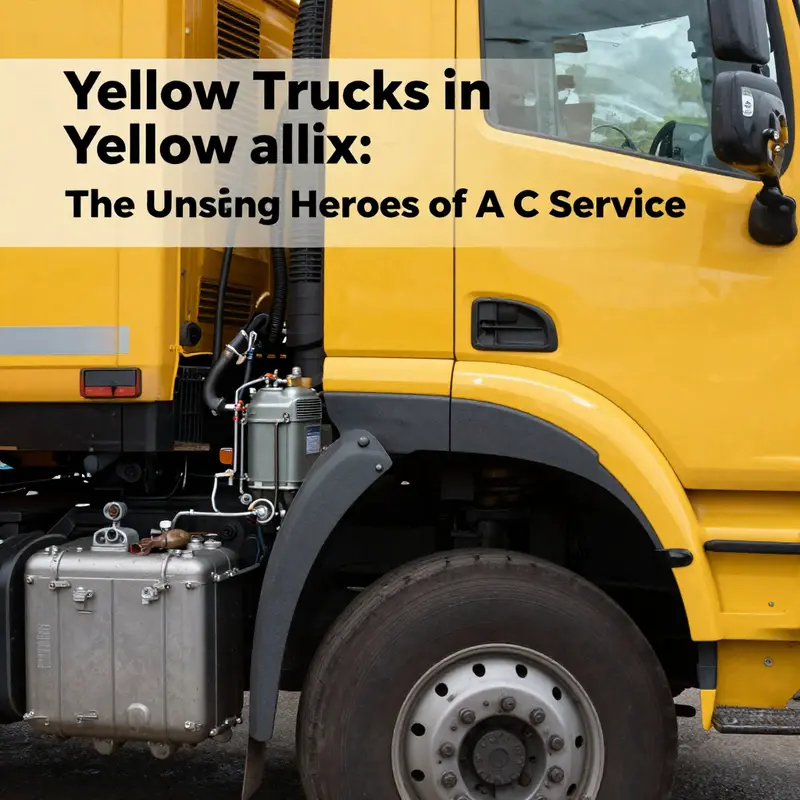
Yellow has long been the color of serviceability on municipal fleets and field teams. In the context of mobile air-conditioning maintenance, a fleet of yellow service trucks stands out upon a workshop floor and in the streets, signaling readiness, presence, and purpose. The phrase ‘A/C Service Yellow Trucks’ summed as a sign of reliability becomes a working philosophy when the trucks roll from depot to rooftop unit, from a service bay to a storefront, or to a weather-beaten remote site where heat and dust define the day. These vehicles are not mere transport; they carry the tools, refrigerant, diagnostic devices, spare parts, and the expertise needed to restore climate comfort in hours, not days. The color is more than branding; it is a safety feature better understood in complex urban layouts where visibility and quick recognition matter for drivers sharing roads with buses, trucks, and pedestrians.
Behind the bright exterior, the chassis and bodywork are a study in efficiency. Mobile A/C service fleets are designed around the practical realities of the job: a compact but tall cargo area, reinforced flooring to resist racking from vibration, and a payload deck sized to accommodate hoses, cylinders, leak detectors, and diagnostic tablets. A typical nine-meter box van gives the crew room to move without constantly stepping around tools. The bay doors open wide for fast access to refrigerant cylinders, portable air handlers, and torque wrenches, while the wheelbase and roof height balance the need for good aerodynamics with the vertical reach of ladder racks and service cranes. Site access matters; a generous footprint can impede entry into tight sites, but a careful layout reduces the risk of manual handling injuries by eliminating repeated bending and reaching. In practice, designers tailor the interior to the work order: modular drawers, labeled cinches for cables, slide-out trays for compressors, and a dedicated zone for battery packs and diagnostic monitors. The result is a vehicle whose dimensions reflect the physics of service work, not simply the size of the city’s roads.
Design and footprint go hand in hand with the rhythm of the job. The interior becomes a field workshop on wheels, with zones for diagnostic work, refrigerant handling, and parts organization. The trend toward modular storage allows technicians to reconfigure the space between a diagnostic hub and a flight of tool drawers in minutes, enabling a single crew to handle multiple tasks in sequence without unplanned downtime. Dimensions matter not as an ego metric but as a practical constraint that shapes how many spare hoses, connection ports, and sensor kits can be carried without compromising safety. This is especially true when service operations move through congested urban cores, residential neighborhoods, or sites where access lanes squeeze the truck into a tight silhouette. Such realities encourage a design language that rewards predictable, repeatable workflows: a step-wise approach to tool retrieval, a clear separation between high-pressure refrigerant handling and everyday tool use, and an ergonomic stance that reduces bending and reaching during a long day on the road.
Power and efficiency occupy a central place in the conversation about these fleet vehicles. The fleet will range from traditional internal-combustion configurations to emerging electric or hybrid sketches that promise lower operational costs and quieter operation. On the road, engine choice affects not just the label on the spec sheet but the daily arithmetic of miles between fill-ups, idle time at a job, and the ability to run a power-hungry diagnostic rig without compromising a heavy payload. In the current landscape, heavier platforms can consume around 20 liters per 100 kilometers in mixed operation, while lighter, well-tuned configurations can slip into the mid-to-high teens. The objective is not only to maximize miles per gallon but to align the powertrain with the job cadence: steady climbs to rooftop units on hot days, frequent short hops between residences, and the need to keep a crew hydrated and safe during long shifts. This is where weight distribution, gear ratios, and regenerative braking come into play to reduce drag and optimize performance. Real-time telemetry guides operators to the most economical routing while ensuring that diagnostic tools remain powered during crucial moments. The conversation around efficiency is not a single choice but a continuum, one that trades a marginal increase in purchase price for decades of lower running costs and quieter streets.
Safety in service fleets goes beyond the color and the audible alert of a back-up alarm. It starts with fundamentals: robust braking systems that resist fade on long climbs, stability control to keep a top-heavy rig on slick pavements, and tire management that foresees load and temperature. More than that, telematics and satellite tracking deliver visibility to the back office and a real-time feel for where the unit is, how fast it’s moving, and when maintenance is due. In the literature of fleet operation, these features—ABS, ESC, and fleet-wide GPS—reduce incident rates and improve response times. The service truck becomes a mobile workshop, and the data stream it emits helps technicians anticipate parts shortages, schedule preventive tasks, and avoid the last-minute scramble that can push a job into overtime and risk. The human element remains central, but the tools that support safety create a virtuous loop: better routing cuts exposure to heavy traffic, predictive maintenance reduces the risk of component failure, and the crew can focus on accuracy and care rather than firefighting the vehicle itself. This integration of hardware and software yields a disciplined precision that matches the reliability demanded by customers whose daily comfort depends on a correctly functioning climate system.
Regulatory and inspection considerations shape the ongoing reliability of these fleets. In Western Australia, the regulatory environment for commercial service vehicles includes regular checks, particularly for passenger transport vehicles and certain heavy equipment used in public and commercial contexts. The fleet that carries air-conditioning technicians often occupies a middle ground between a trade vehicle and a small commercial transport asset, and as such it must satisfy safety, emissions, and roadworthiness standards. Annual inspections exist to ensure that brakes align with weight, that the electrical system remains intact under load, and that hoisting devices meet performance criteria for service tasks in varied environments. Compliance is not a one-off hurdle; it is an ongoing discipline that shapes vehicle design from manufacture and the cadence of the service bay. The fleet manager’s role is to balance uptime with compliance, ensuring a unit can respond quickly to a service call while maintaining the rigorous inspections authorities require. In practice, this translates into a maintenance calendar that anticipates wear on the cooling system, refrigerant lines, and electrical harnesses, plus careful documentation to demonstrate due diligence. The result is not a sterile paperwork exercise but a living process that keeps the yellow fleet ready for the next call, the next rooftop unit, and the next customer in need. A robust regulatory posture also informs procurement choices and maintenance strategies, ensuring life-cycle costs remain predictable across years with shifting environmental and safety expectations.
Site logistics and access become a real-world test of the fleet’s design philosophy. On the ground, the geometry of a site matters as much as the geometry of the vehicle. A nine-meter box configuration offers extensive in-cabin space and back-of-truck storage, but it can challenge entry into low-clearance locations or narrow driveways. That is where the crew’s planning and the vehicle’s flexible design come into play: retractable steps that fold neatly away, tie-down points that simplify securement of equipment, and a modular interior that can convert from a diagnostic hub to a compact field workshop in minutes. Access to rooftop units, especially in older buildings or tight commercial blocks, depends on a truck’s turning radius, its height, and its ability to park parallel to a service wall without blocking pedestrian pathways. The truck’s exterior yellow is not decoration alone; it acts as a cue to pedestrians and other drivers to give space and approach with care. Inside, anti-fatigue flooring, comfortable seating for technicians who spend hours at a time in transit, and a climate-controlled cab set a humane baseline for a job that can stretch across days. The net effect is a vehicle that does not merely carry tools but supports the entire workflow—from diagnosis in the field to the careful calibration of a refrigerant circuit in a cramped service alley.
Maintenance discipline underpins uptime as surely as the engine under the hood. Service fleets accumulate a complex mix of parts, from HVAC components and gas cylinders to electronic controllers and temperature sensors. Keeping these assets reliable requires a routine of inspection, testing, and replenishment that resembles a medical clinic’s cadence more than a factory line. Preventive checks, lubrication schedules, filter replacements, and electrical harness inspections are not chores; they are the primary protection against a breakdown that could derail a client’s day and compromise safety. The technicians themselves benefit from structured training and hands-on practice. A robust program for maintenance service training helps technicians build a shared language around fault codes, leak detection methods, and safe-handling protocols for refrigerants. For instance, maintenance teams often rely on structured programs like Fire Truck Maintenance Service Training. The idea is to standardize the competence that allows a crew to swap parts, perform diagnostics, and reassemble systems with confidence. The result is a fleet that not only performs on the road but maintains the trust of customers who depend on climate comfort in both homes and commercial spaces.
Looking ahead, the color of the fleet remains a practical signal, but the technology behind the service truck evolves. Electrification and hybridization begin to appear in urban fleets, offering quieter operation and a smaller footprint on busy streets. The challenge is not only moving the battery packs but providing the right electrical infrastructure in the field to support diagnostic devices, refrigerant analyzers, and portable coolers. Vendors and operators discuss charging strategies, battery conditioning, and energy management as part of a holistic approach to reliability. The emphasis shifts from simply carrying refrigerant and tools to creating a self-contained, resilient workshop that travels in a single vehicle and redefines what a service call feels like in a modern city. Even as the tools shift, the yellow banner endures as a beacon—visible, accessible, and trustworthy to customers who seek rapid climate restoration.
Taken together, the engineering choices behind A/C service yellow trucks reflect a disciplined balance between space, speed, safety, and service quality. It’s not the flash of a new gadget that matters, but the quiet reliability that lets a technician diagnose a fault, evacuate refrigerant if needed, recharge components, and seal a repair so a family can again enjoy a cool home. The fleet’s color, its footprint, and its telemetry feed into a broader system of field service that prizes uptime as a service mission. With regulatory guardrails and evolving electrical options, the yellow service truck remains a flexible platform that can adapt to changing climates, urban constraints, and customer expectations. The next chapter will examine how maintenance programs and procurement strategies translate this engineering discipline into steady, sustainable performance on the road. For regulatory context in Western Australia, see the WA Department of Transport: https://www.transport.wa.gov.au.
Yellow Service Trucks at the Crossroads: How Urban AC Maintenance Fleets Shape City Life, Safety, and Sustainability
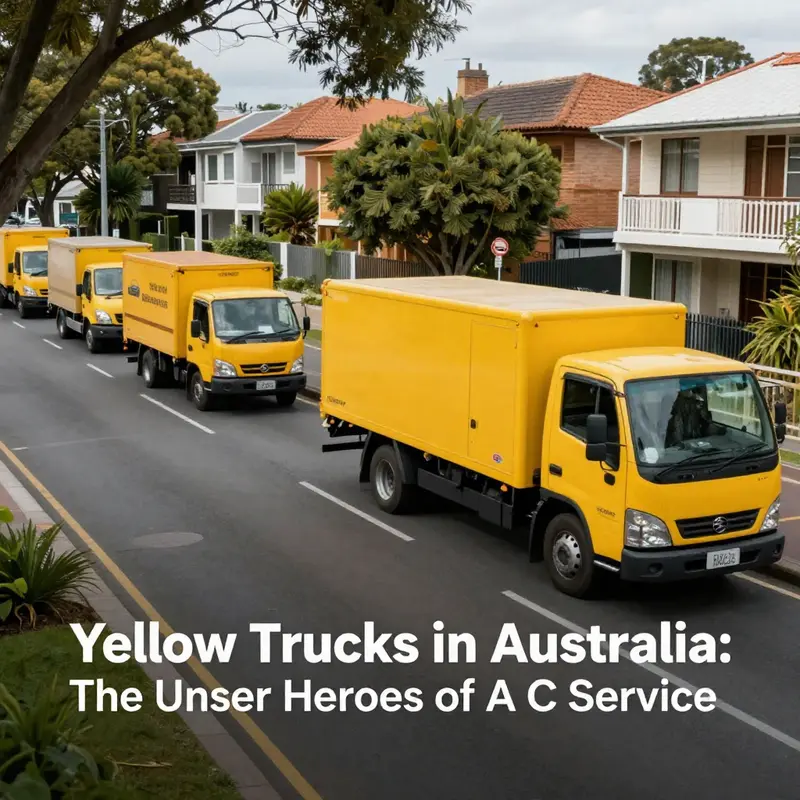
Across the busy arteries of modern cities, the sight of bright yellow service trucks often signals something essential in motion: the maintenance of air conditioning systems that keep offices, transit facilities, and public buildings comfortable, productive, and safe. These vehicles, though sometimes dismissed as background noise in the urban landscape, perform a daily choreography that touches traffic patterns, public safety, environmental goals, and the very texture of urban livability. They occupy a paradoxical space in contemporary city life: indispensable for comfort and functionality, yet frequently visible in the very spaces where congestion, noise, and pollution fuel a chorus of public concern. The color, the heft, and the predictable rhythm of these trucks—loading and unloading, creeping through narrow lanes, stopping at curbsides to service a rooftop unit—become a microcosm of how cities balance reliable service with mobility, health, and climate accountability.
From a societal perspective, these yellow service trucks are more than moving warehouses of components and technicians. They are portable nodes of expertise that keep the built environment adaptable to changing temperatures, climates, and occupancy loads. In dense urban districts, where a single failed HVAC unit can push a building into discomfort and a neighborhood into heat stress, the timely arrival of a service crew matters. Yet the same mobility that guarantees rapid repairs can contribute to local traffic frictions. The frequent short stops, the need to access narrow driveways, and the occasional lane-closure associated with service work introduce a ripple effect into already crowded corridors. The literature on urban freight and service logistics notes that even non-delivery and non-transport service vehicles contribute to the dynamic, and sometimes congested, flow of city streets. In practical terms, a fleet of yellow AC service trucks moving through the peak hours can slow movement on a trunk road, extend the tail of a queue at a traffic signal, or alter the pace of a bus corridor that relies on predictable scheduling. The interrelation between service vehicle activity and city mobility, then, requires planning that is both anticipatory and flexible.
This leads naturally to a broader conversation about safety and visibility. The choice of yellow for these work vehicles isn’t accidental. High-visibility coloring is a foundational safety strategy; it helps other road users detect the presence of service crews sooner, allowing for safer interaction near traffic, on sidewalks, and around pedestrian zones. But visibility also magnifies the visibility of urban maintenance activity itself. When a city’s streets are dotted with yellow service trucks, residents and road users recalibrate how they navigate curbside spaces, how they anticipate curbside loading and unloading, and how they defend vulnerable spaces such as bike lanes and pedestrian crossings from encroachment. These dynamics align with early research on urban freight and retail logistics that stresses the importance of planning for the whole traffic ecosystem, not just the peak moments of demand. The goal is to distribute work more evenly throughout the day, reduce idle time in curbside lanes, and sequence repairs in ways that minimize disruption while preserving reliability. A nuanced approach to scheduling and routing can foster smoother adoption of maintenance cycles that keep HVAC infrastructure robust without creating undue friction for other travelers. In this sense, the service fleet becomes a testbed for smarter city logistics—one where improved coordination can reduce negative spillovers and improve public perception of city operations.
Conversations about the environmental footprint of urban maintenance fleets cannot be avoided. Traditional service trucks powered by diesel contribute to local emissions, particulate matter, and noise pollution, which directly affect air quality and the overall street experience. Yet there is a steady, pragmatic push toward cleaner fleets and smarter energy use. Cities pursuing climate goals increasingly frame maintenance fleets as part of the transition to low-emission urban services. The potential benefits are tangible: reduced tailpipe emissions, quieter operation during sensitive hours, and better alignment with transit-oriented development and smart mobility strategies. Some fleets have begun exploring electric or hybrid platforms, which promise lower operating costs and a smaller environmental delta in dense urban cores. The challenge lies in balancing duty cycles, range, and downtime with the reliability needs of AC maintenance—especially when equipment failures can have cascading effects on occupant comfort and energy consumption across a building portfolio. In Western Australia, for example, the regulatory landscape around annual inspections for certain vehicle categories—such as passenger transport vehicles and trailers—creates a framework that can accelerate or hinder fleet modernization. The emphasis on compliance reinforces the idea that better urban service fleets require not only better hardware but also robust maintenance regimes, sound procurement practices, and transparent reporting. In this sense, the social value of yellow service trucks expands beyond immediate service calls to include the reliability of the climate systems that underpin everyday life in crowded urban spaces.
A practical pathway to harmonizing service truck activity with urban livability is to reimagine how routing, scheduling, and worksites are planned. Telematics and real-time data play a crucial role here. When dispatch centers know where each service truck will be and what jobs are pending, they can cluster tasks that serve similar neighborhoods, reduce unnecessary backtracking, and minimize peak-hour intrusion into core traffic corridors. This kind of data-informed approach is at the heart of smarter urban mobility, where the aim is not to suppress necessary maintenance but to execute it in a way that preserves throughput and safety for all road users. Local governments, private operators, and utility teams can benefit from shared standards for curb management, temporary traffic control, and worker safety protocols—standards that recognize the multifaceted value of these yellow fleets while mitigating adverse effects on pedestrians and cyclists. In practice, this can translate into time-windowed curb access, designated loading zones during off-peak hours, and coordinated street works alongside public transit schedules to keep a corridor flowing. The synergy of planning tools, workplace safety measures, and community engagement builds trust and reduces friction—an essential outcome when maintenance work intersects with daily routines, school runs, and evening commutes.
If the city learns to view maintenance fleets as cohabitants of the urban ecosystem rather than as disruptive intrusions, the conversation shifts toward more sustainable and inclusive models of service delivery. This requires a shift in procurement culture toward fleets that can meet both reliability and environmental benchmarks, supported by incentives, training, and maintenance ecosystems that sustain uptime. The professional practice around AC service trucks—technician training, on-site safety protocols, and standardized maintenance—echoes much broader debates about service resilience in cities. The same principles that guide emergency-response vehicle design and deployment—durability, ease of access for repairs, and predictable performance under stress—are equally applicable to maintenance fleets that must operate continuously across shifting weather and occupancy patterns. The crossover is meaningful: by adopting design and operational practices that have proven effective for high-stakes emergency services, maintenance fleets can reduce downtime, extend equipment life, and lower the total cost of ownership while preserving city comfort and safety. To that end, one can look to resources that discuss design efficiency in emergency services as a blueprint for improving outcomes across diverse urban fleets. design-efficiency-in-emergency-services.
Another layer of complexity comes from the regulatory and governance environment. In many urban contexts, routine inspections and compliance checks are the invisible gears that keep service operations legitimate and safe. Western Australia illustrates this logic in practice by outlining annual inspection requirements for certain classes of vehicles involved in passenger transport and trailers. While the exact rules vary, the principle remains consistent: a reliable maintenance fleet depends on rigorous standards, transparent reporting, and ongoing oversight. Compliance is not a punitive burden; it is a performance protocol that signals to the public and to city managers that essential services operate within a framework designed to protect health, safety, and the environment. The social value of yellow service trucks thus rests on a triad: dependable service delivery, responsible accountability, and continuous improvement toward cleaner and quieter operations. When communities understand this triad, the public conversation about curb management, traffic flow, and neighborhood serenity becomes more constructive and solutions-oriented.
In contemplating the future, one can envision a city where these bright service fleets are not merely tolerated but actively integrated into smart urban systems. With electrification progressing, fleets can become testbeds for energy efficiency and regenerative practices that offset peak-demand pressures on the grid. Micro-distribution concepts, shared maintenance hubs, and advanced predictive maintenance could transform how AC service work is scheduled and performed. The result would be less noise, lower emissions, and better alignment with the needs of residents, businesses, and transit services alike. Such an evolution requires collaboration across stakeholders—city planners, fleet operators, workers, and communities—to design rules, incentives, and technologies that preserve service reliability while advancing livability. The yellow trucks, in this vision, become ambassadors of a more thoughtful, resilient urban metabolism rather than symbols of disruption. They travel with purpose, offering comfort and continuity, while their operations demonstrate how cities can grow smarter without sacrificing daily life.
For readers seeking broader context beyond the city edge, understanding urban freight activity and its key planning challenges remains essential. This line of inquiry helps connect the micro-level realities of a single maintenance fleet with macro-level considerations of infrastructure investment, land use, and climate policy. External references provide a rigorous counterpoint to local case studies and illustrate the enduring tension between mobility, access, and environmental stewardship. For authoritative insight, see Understanding urban freight activity – key issues for planners. https://www.sciencedirect.com/science/article/pii/S096585641200039X
Final thoughts
The multifaceted presence of A C Service Yellow Trucks in Australia demonstrates their crucial role in vehicle maintenance, compliance, and community reliance. Understanding their operational, economic, and technical significance helps appreciate their contributions in supporting a safe and efficient transport network. As trucking professionals and aspiring drivers engage with these essential services, the dedication to maintaining vehicle standards through yellow trucks ensures the industry’s sustainability and effectiveness. Therefore, recognizing and supporting A C service initiatives is vital for future transport innovations and community service.