
The cost of tow truck services can often feel like a mystery, particularly for long-haul truck drivers, trucking company owners, fleet managers, and maintenance specialists. Tows are an essential service, yet the pricing can vary greatly based on numerous factors such as location, vehicle type, and unexpected fees. This guide will illuminate the complexities behind tow truck fees, explore regional pricing differences, delve into various factors that contribute to the cost, and finally compare international rates. Each chapter aims to equip you with vital knowledge, empowering you to navigate disputes and secure the best possible service when emergencies arise.
Tow Costs Demystified: How Much a Tow Really Costs, and How to Get a Fair Quote
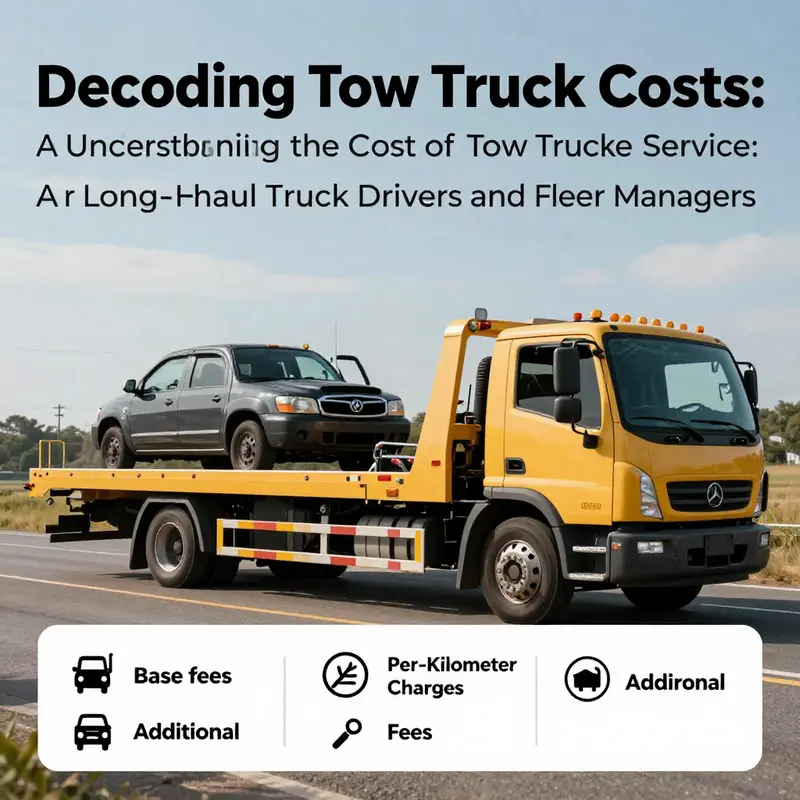
Tow costs vary widely; your price depends on location, vehicle type, distance, time of day, and the specifics of the incident. A tow is not a commodity with a fixed price tag; it is a service shaped by logistics, equipment, safety considerations, and local market conditions. Understanding the basic pricing structure helps you prepare for the moment you need it most and can save you from sticker shock when the bill lands.
Most tow companies start with two core charges. The base fee, or call-out fee, is the fixed amount assessed just for dispatching the truck to your location and arriving on scene. The second is a per-kilometer rate that accrues as the vehicle is towed to a shop or destination. The combination of these two charges forms the backbone of the price, but there are often additional lines on the invoice that reflect the context of your tow.
In urban environments, the base fee tends to be more substantial because the job may require repositioning through crowded streets, dealing with parking rules, or negotiating tight spaces. In Shanghai-style markets, for example, base fees commonly range from ¥200 to ¥400, depending on the size category of your vehicle. The per-kilometer component adds another layer and can differ sharply based on whether the tow is performed with the vehicle empty or loaded. For smaller cars, empty-tow distance often carries around ¥2 per kilometer, while loaded towing can rise to roughly ¥5 per kilometer. When the vehicle is larger, the math moves accordingly: mid-size transit and passenger vehicles typically see higher base entries and higher per-kilometer rates, with the loaded rate climbing to about ¥10 per kilometer for medium to large cases, and higher again for the very large or specialized trucks. These numbers reflect the heavier equipment involved, greater fuel burn, and the added risk of maneuvering oversize loads through dense zones.
Nighttime, fog, or snow changes the calculus noticeably. A 20 percent surcharge at night aligns with the elevated risk, longer response times, and the need for more lights, cones, or escort arrangements to keep motorists safe. Hazmat scenarios can push the price further still. When weather or road conditions make the tow more dangerous or time-consuming, the operator may justify an additional surcharge for the extra caution or specialized PPE required. The same logic applies to long or hazardous operations, where the tow demands extra personnel, longer equipment, or diversions around obstacles. Across many markets, these multipliers are the practical mechanism that helps service providers cover the marginal costs of operating under adverse conditions.
Highways present a different pricing philosophy. The dispatch system here is built around predefined categories or vehicle types, each with a base fee and a distance-quality premium that applies after the first segment of travel. In Shanghai, for highway towing, the system often begins with a higher base fee pitched toward the first 10 kilometers, followed by incremental per-kilometer fees. Type I vehicles, like small cars, begin with a base around ¥280 for the initial 10 kilometers, then the per-kilometer price kicks in beyond that distance, typically around a set figure such as ¥15 per kilometer for the marginal miles. Larger Type II, Type III, Type IV, and Type V vehicles carry proportionally higher base fees to reflect the complexity and risk of handling bigger components, and their long-haul rates also rise for distance beyond the initial block. The art here is straightforward: you pay for the window of time necessary to deploy the right equipment to the scene, plus the distance you must travel to reach your destination, with the vehicle’s weight and configuration shaping both the base and the after-10-kilometer charges. If you travel cross-province or cross-regional lines, those costs can climb quickly as tolls, fuel, and the opportunity cost of stalled service accumulate. A cross-province example—for instance, Beijing to Zhengzhou—could land in the ¥2,000 to ¥3,500 range once the base, distance, tolls, and potential storage are factored in.
But distance is not the only variable. The weight and type of the towed vehicle define much of the cost envelope. Small sedans and compact cars typically incur lower charges than heavier trucks or buses that require a heavy-duty tow rig, such as a rotator or flatbed. The weight factor also interacts with the need for specialized equipment. A vehicle that requires a flatbed with a winch and extra stabilization may add a premium for the equipment used, even if the distance isn’t long. Conversely, smaller vehicles can often be pulled with lighter gear, yielding a more favorable pricing mix. In some markets, weight-based surcharges apply when the total load exceeds a given threshold. For instance, when a total weight surpasses 30 tons, additional fees may be charged by the ton, and those charges can climb further for very heavy loads.
Beyond the mechanics of pulling a vehicle, there are other costs that can emerge and surprise you if you are not prepared. If you cancel after the tow team arrives, a no-show or cancellation fee often applies, typically around half the base rate, but with a floor not less than a stated minimum. That means a 50 percent cut of the base, but not less than the minimum set by the provider—often around ¥200 in many markets. Long-distance tows invite considerations of tolls, fuel, and potential cross-regional charges that aren’t included in the initial quote. Storage after delivery, often named as impound or parking fees, can accumulate quickly if your vehicle sits in a yard for days or weeks. In many places, storage fees run from about ¥30 to ¥100 per day, depending on the yard and the local rules. And if your vehicle is moved again from the tow yard to a repair site, that is another separate tow.
These realities are not unique to any one country. In the United States, the baseline experience commonly features a basic tow in the city for roughly $100 to $150, with a per-mile charge that can run between $2 and $5 depending on the locale. A long-distance tow can easily exceed $1,000 if you’re towing over a hundred miles, especially if you require a specialized rotator or flatbed. The high-end equipment used to handle extreme recoveries—where an overturned vehicle might need a rotator—represents a separate category of cost, reflecting not just the service but the technical risk and capital expense of the truck fleet. These numbers illustrate a general pattern: the more distance, the more specialized the equipment, and the more unforgiving the timing, the higher the ultimate invoice.
What these differences mean for the consumer is that a reliable quote is not something you guess. It is a precise, written estimate that itemizes the base fee, the distance, potential tolls, and any surcharges or special conditions. A well-structured quote should answer: Will the base fee apply if the tow arrives but you decide not to proceed? Is there a uniform rate for empty versus loaded towing? Are there weather or holiday multipliers? Is the truck allowed to charge for the first 10 kilometers before transitioning to per-kilometer pricing? A useful practice is to request a written estimate before the service starts and to confirm whether the estimate holds under the known conditions. You can ask for a breakdown so nothing sticks to your wallet that you did not anticipate. In many markets the policy to guard against surprise is to require the quote to include a total, a line item for the base fee, line items for the distance and any hazard or time-based surcharges, and any expected tolls or parking fees.
To move from general principles to practical planning, there are a few ways you can approach the situation to keep costs predictable. First, check your insurance policy. Many auto insurers include roadside assistance as part of the package, sometimes with a cap on the towing distance and a limited number of tows per year. If your policy covers towing, you may be able to call the insurer for a recommended network and a covered distance, which can dramatically reduce your out-of-pocket expense. Second, when you call for help, you should ask for a written quote that clearly lists the base fee, the per-kilometer or mile rate, the expected tolls, and any likely surcharges. Some practices may estimate the distance as a range instead of a fixed figure, so clarifying this can help prevent drift in the final bill. Third, use price comparison tools when your area supports them. Some apps or mapping services can pull quotes from multiple providers in real time, allowing you to compare the going rate for your specific location and vehicle category. The goal is to know the price landscape in advance and avoid an urgent decision that could push you toward the first available option rather than the best value. Fourth, consider alternatives like local repair shops that offer roadside assistance programs or partnerships with tow fleets. These arrangements can provide faster response times and predictable pricing, which can be beneficial in the moment, especially if you need a quick turnaround on a difficult roadside situation. In all cases, a written quote remains the best anchor for your expectations.
If you want a practical lens to bring all these factors together, consider a few illustrative scenarios. A compact sedan stranded in an urban core on a quiet weekday may incur a base toll toward the middle of the price range with a modest per-kilometer charge for a short distance to a nearby shop. A larger SUV with a partial load or a tow on a highway stretch may carry a higher base and a heavier mile rate. If the tow requires a specialized rig or the vehicle is part of a more complex recovery, the invoice can reflect a premium that captures the fleet’s investment in equipment and crew. When you add times such as night or early morning, a few more tenths or even a full percentage increase pushes the total into a higher bracket. These are not arbitrary numbers but the market’s way of balancing the cost of equipment, logistics, risk, and labor.
Readers should consider the practicalities of cost by thinking ahead about their typical needs. If you live in a region with frequent winter storms or foggy nights, plan for possible surcharges and longer wait times. If you drive a heavy vehicle, expect higher base fees and more substantial distance charges, especially on highways where the category system applies. And if you regularly depend on roadside assistance as a safety net, discuss with your insurer whether you have a set number of tow miles or a cap on per-tow costs; you may be able to stack benefits and reduce out-of-pocket expenses.
For readers seeking broader context about road services and reliability, consider exploring the excellence of 5-Star Truck Inc. exploring-the-excellence-of-5-star-truck-inc-your-premier-trucking-solution. This reference is not a price guide, but a reminder that service quality and reliability are part of the value equation when you compare quotes and choose a provider. It helps to remind readers that the best price is not always the best value if it comes with long wait times, poor safety practices, or inconsistent service.
The total you pay for a tow can thus reflect a combination of policy choices and real-world conditions. A careful buyer compares multiple quotes, asks for a detailed breakdown, and keeps a memory of what factors are likely to escalate the bill in a given situation. If you plan for the worst-case scenario—a long cross-region tow with a heavy vehicle, potentially in a less accessible area—you might be better off budgeting a range rather than a fixed figure and choosing a provider with clear terms and a transparent fee schedule. This approach minimizes surprises and gives you a pathway to recover quickly from the disruption of a roadside incident.
Finally, for a broader consumer lens on costs and the practicalities of roadside assistance, you may consult general guidelines from a reputable nationwide resource. The numbers cited here are indicative of common market behavior rather than a universal standard, and they remind us that the actual price depends on the local market’s economics. For a reference point on towing costs and policy, see the following external resource: https://www.aaa.com/auto/towing
Price Shadows Across the Map: Understanding Regional Variations in Tow Truck Service Pricing
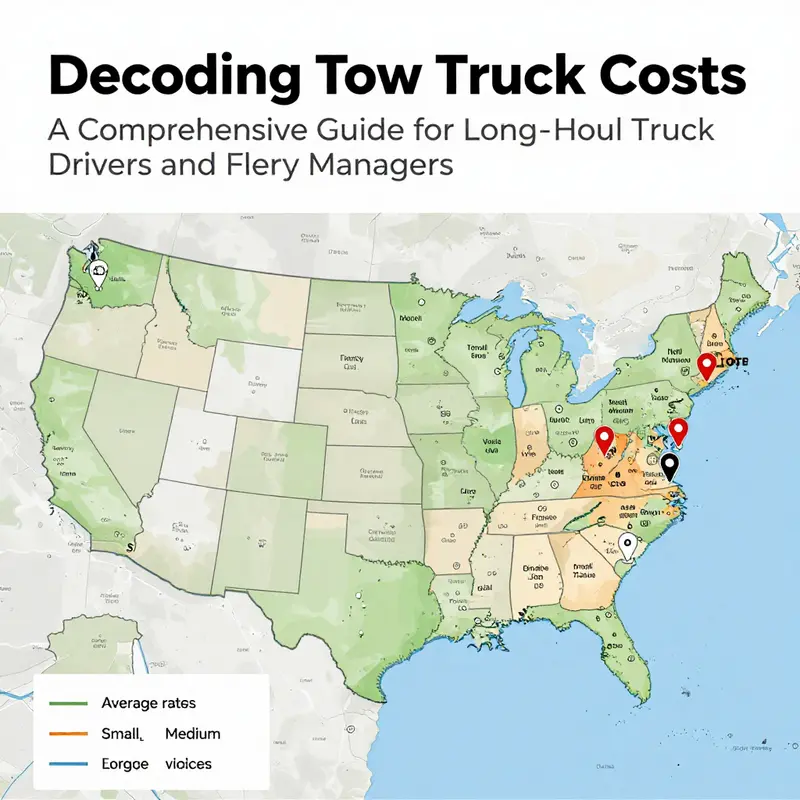
Tow truck service prices are rarely a single, simple number. They live and breathe in the geography around you, the type and size of the vehicle that needs help, and the moment you pick up the phone. The basic structure is familiar: there is typically a base or call-out fee just for dispatch and arrival, a per-mile or per-kilometer rate for the distance the vehicle must be towed, and a set of possible add-ons for special conditions such as night service, heavy vehicles, or complex recoveries. Yet the way those pieces combine shifts dramatically from one region to the next, and even within cities, depending on labor markets, operating costs, and local rules. When you’re trying to estimate “how much for a tow truck service,” it helps to think not just about a single price tag but about a spectrum that stretches from the smallest rural towns to the densest metropolitan corridors, with the where and when adding their own unique fingerprints to the bill. In many places, the base fee might be modest, but the distance charge can climb quickly if the tow is far from a shop or if the provider has to drive a long way to reach a stranded motorist. In other markets, the base fee is higher to cover higher labor costs and insurance requirements, while the per-mile rate can be comparatively modest. All of this means that a one-size-fits-all quotation simply cannot capture the reality of regional pricing; the most reliable approach is to understand how the components interact in your locale and under your circumstances, and then to request a written quote that spells out every line item before any work begins. This approach is not just about budgeting; it’s about knowing what you’re paying for and avoiding surprise charges when you’re already dealing with an stressful situation. In major metropolitan areas, the numbers tend to be higher across the board. In cities such as New York, Los Angeles, or San Francisco, towing companies contend with higher wages, elevated vehicle and equipment costs, stricter licensing and insurance requirements, and greater demand for rapid response services. The practical effect is that a standard tow within city limits often lands in a higher range, frequently between about $150 and $300, depending on the shop, the exact neighborhood, and the vehicle’s size. Additional charges commonly accumulate for long-distance towing, after-hours service, or when the vehicle requires specialized equipment—think of rotator or heavy-duty rigs capable of lifting or securing a vehicle in precarious positions. The urban environment also elevates the likelihood of extra fees for parking restrictions, traffic conditions, or the need for multiple tow operators to coordinate safely. Rural or less densely populated areas tell a different story. In more remote regions, the base price for a basic tow might be in the neighborhood of $75 to $125, a reflection of leaner operating costs and lower labor rates. The flip side is that the cost to travel from the provider’s base to your location can become a meaningful supplement when you’re outside the center of town. Distance-driven charges, fuel surcharges, and travel time can push the total closer to urban figures if you’re far from shop infrastructure or if you happen to be stranded near a service desert. The contrast between urban and rural pricing is not a question of fairness so much as a reflection of market dynamics. In between these extremes lie regional markets that blend density, terrain, and consumer expectations in nuanced ways. In many parts of the United States, regulatory factors also shape price structures. Some states publish rate schedules or require pre-approval of certain fees, which creates a framework within which providers price their services. The presence of regulated caps or mandated disclosures can help customers anticipate charges and compare offers with greater confidence. On the other hand, where transparency is thinner or where insurers and roadside assistance programs lean on flexible pricing, there can be more variability in the final bill. This is why getting a written quote that itemizes every component—base fee, mileage, tolls, parking fees, after-hours surcharges, and any special equipment charges—matters so much. It’s also why knowing what your insurance policy covers is worthwhile. Many standard auto policies include some form of roadside assistance or towing benefit, often with a mileage cap or a per-year limit, which can significantly reduce out-of-pocket costs if you trigger the benefit. When a tow is needed, you should consult your policy documents or call your insurer to verify whether a complimentary or discounted tow is available, and if there are any restrictions on the distance or the number of uses per year. The regional picture grows even more intricate when you look at specialized contexts, such as highway towing versus city towing, or when vehicle size and weight push the service into a heavier category. Highway towing often follows tiered pricing where the initial base fee covers the first few kilometers, and the distance fee steps up quickly beyond that threshold. For larger or heavier vehicles, the base fee climbs further and per-kilometer rates rise to reflect the additional time, risk, and equipment required. Across borders, the framework can be just as different as the scenery, with some countries using flat dispatch fees and others employing a regional grid of price bands. The differences are instructive for anyone mapping out what to expect when planning travel or when facing a breakdown far from home. The case for regional awareness is strengthened by real-world patterns that emerge in markets with vibrant, accountable service ecosystems. In cities, customers frequently encounter after-hours premiums that honor the need for responders who can attend incidents at night, on weekends, or during holidays. In rural areas, these premiums may be offset by lower base and per-mile charges, but their absence can be offset by longer wait times if the nearest provider is distant. The most practical safeguard against price shocks is to insist on a breakdown that includes all potential line items. For example, a well-articulated quote should identify the base fee, show the per-mile rate and total distance, note any tolls or parking fees, and declare whether a waiting or on-site time charge applies if the tow takes longer than expected. If a dispatch involves a specialty vehicle or a recovery operation beyond a simple tow, the quote should reflect the extra equipment charges and the technician’s time. In addition to these core elements, some regions impose or permit additional charges for factors such as heavy loads exceeding certain weight thresholds, hazardous materials considerations, or the need for a multi-vehicle recovery. A no-show or cancellation after arrival can also generate a substantial fee in many markets, often expressed as a percentage of the base rate or as a fixed minimum. This is another reason to confirm the scope of the work and the anticipated arrival window before you commit. The breadth of regional variation also invites consumers to consider how to compare providers beyond price alone. Reliability, response time, the condition and capability of equipment, and the professionalism of the crew can shape the overall value of the service. In some regions, consumer guides and associations compile average towing costs to help residents benchmark offers; in others, price transparency is more ad hoc, making due diligence essential. When you’re weighing quotes, you can translate the numbers into a more intuitive mental model by thinking about what drives the cost: the distance between the tow origin and the destination, the complexity of the tow, the weight and dimensions of the vehicle, and the time window in which help is needed. A short, direct tow within the same city is often a simpler calculation than an extended recovery across county lines or into another state, where the mileage and labor intensify and the risk profile rises. Of course, no amount of regional knowledge replaces the practical step of obtaining a written quote before any service is performed. In the moment of a breakdown, this step can feel inconvenient, but it pays off by providing a clear price map rather than a murky estimate. If you are preparing for a breakdown scenario, having a few points in mind can save time and money: identify whether you want a basic tow or a more complex recovery, confirm the vehicle type and weight class, and inquire about any scenario-based surcharges such as night service or highway access restrictions. If you want to explore broader perspectives on how consistent, reliable trucking services approach pricing and uptime, you can refer to broader industry insights such as Exploring the Excellence of 5-Star Truck Inc—your premier trucking solution. This resource provides a context for understanding the expectations around service reliability and value in transportation and recovery services, which can inform how you evaluate tow providers in your region. For those who want a broader reference on towing fees and pricing benchmarks, industry standards and consumer guidance available from established road-assistance organizations offer useful points of comparison. In parallel with price discussions, it’s also helpful to maintain a practical, calm approach when you’re facing a breakdown. Ask for a written quote, request a breakdown, verify inclusions and exclusions, and confirm whether any additional charges could arise given the specifics of your situation. If you live in a region with strong consumer protections, you may also have access to price disclosures or pre-approval requirements for certain fees, which can provide an additional layer of protection against surprise charges. Finally, keep in mind that while price is important, it is not the only signal of value. A tow provider that offers rapid response, transparent communication, and professional handling can reduce stress and prevent downstream issues during recovery. By understanding how regional variations shape the base numbers and the add-ons, you arm yourself with the knowledge to ask the right questions and to secure a fair, transparent price that reflects the service you need. For more context on consumer expectations and towing pricing dynamics, refer to trusted external resources that outline typical pricing patterns across the industry. AAA’s towing fees page offers a broad reference point for standard practices and common charges, which can help you calibrate local quotes against a national benchmark. AAA Towing Fees
Tow Truck Costs Unveiled: The Factors That Shape the Price and the Hidden Fees You Should Know
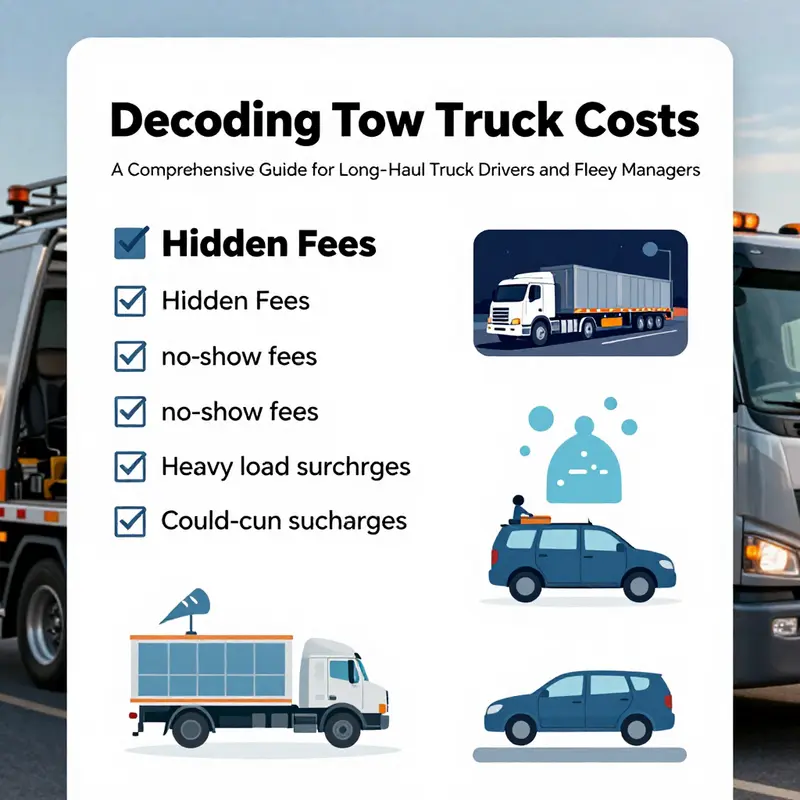
When your car grinds to a halt on the side of the road, the price tag for a tow truck service often feels like a mystery wrapped in a phrase you hear in a chaotic moment. Yet the final bill is rarely driven by a single factor. It emerges from a constellation of variables that interact in predictable ways, provided you understand the mechanics behind them. The most conspicuous element is distance, but it is far from the only influence. Tow services typically begin with a base or call-out fee to dispatch a truck and then add a per-mile or per-kilometer rate for the tow itself. Some providers structure their pricing into distance brackets, so the total you pay might hinge on whether your vehicle starts in the 0–10 mile range, crosses into the 10–25 mile bracket, or goes beyond. In rural areas, the kilometers can stretch the bill upward because longer drives mean more fuel, more wear on a heavy tow vehicle, and a greater chunk of the driver’s time spent negotiating routes around terrain and road conditions. In urban settings, the distance may be shorter, but the work can cost more per hour due to higher labor rates, traffic delays, and the need to reserve specialized equipment for tight spaces or multi-vehicle recoveries. The math is practical, not mystical, and it helps to frame the conversation with the towing company before you accept service. The aim is to come away with a clear picture of what is included in the price and what could be added later if the situation shifts. This is why requesting a written, itemized quote before any service begins is a small step that pays off in peace of mind when you face a roadside emergency. Beyond distance, vehicle type and weight play decisive roles. A compact sedan is a different engineering challenge from a full-size SUV or a commercial van. Heavier or more awkwardly shaped vehicles require larger tow trucks, stronger winching systems, and more labor—each factor contributing to the final cost. Some vehicles demand special handling: low-slung sports cars with delicate underbodies, electric vehicles with battery considerations, or vehicles with all-wheel drive that complicates attachment points. These requirements translate into higher deployment costs or the use of specialized equipment, and they can escalate the invoice quickly even if the tow distance is modest. In other words, the vehicle’s physical characteristics are as influential as the miles traveled. Time of day and circumstances also matter. Most tow operators levy after-hours surcharges for service performed at night, on weekends, or during holidays. Weather conditions intensify risk for the operator and can slow down the process, prompting additional charges. A fog, ice, or snow scenario yields higher rates in many markets, mirroring other industries that compensate workers for hazardous conditions. Even the way a tow is set up can trigger additional costs. If the situation requires a heavy-duty recovery, a rotator or a flatbed with specialized loading procedures, the price rises in proportion to the complexity and the opportunity cost of reserving those assets. These realities underscore a core principle: the sum of a tow is rarely a single line item. It is a synthesis of base fees, distance, vehicle-specific needs, and situational factors that reflect the work’s difficulty and the resources demanded by the call. A practical way to approach this is to think of two broad buckets. The first is the predictable layer: the base fee, the mile or kilometer rate, and any standard tolls or parking charges that might be unavoidable given the place and time of deployment. The second bucket is the conditional layer, where costs arise from the unique attributes of the case. Here you will find time-of-day marks, weather premiums, after-hours surcharges, storage fees if the vehicle must be held somewhere, and potential charges for emergency or hazardous conditions. The challenge for the consumer is not to fear these potential extras but to anticipate them. The more clearly you can articulate your situation when you call for help, the more accurate the quote will be. To illustrate how these pieces come together, consider the typical pricing logic in practice. In many markets, an operator will begin with a base call-out fee that covers arriving at your location and preparing the truck for service. Then a distance-based charge accrues as the truck tows the vehicle toward its destination, whether that is a repair shop, an impound lot, or another destination you specify. Some operators also apply a per-mile rate that varies by the vehicle’s weight category, recognizing that a heavier car or truck imposes more strain on the tow rig and requires more time to secure and transport safely. In addition to distance, the type of tow matters. A simple wheel-lift tow differs from a flatbed tow, which in turn differs from a heavy-duty recovery that uses specialized equipment. These distinctions aren’t just for show; they reflect real differences in labor, equipment use, and risk management. A wheel-lift or towing dolly might suffice for a compact car, while a heavier or more awkward vehicle could require a flatbed for safe loading, increasing both equipment wear and crew work hours. It’s here that a consumer should expect a broader spectrum of potential fees and a more complex quote. The nuance can also emerge through situational premiums. After-hours service, as noted, is a frequent driver of cost. Weekend towing sometimes commands higher rates than weekday towing, and holidays can carry a premium to reflect the difficulty of scheduling and the operator’s opportunity costs. Weather is a practical force in pricing. A clear day enables a steady, predictable workflow, whereas rain or ice can slow progress and demand additional safety equipment or more manpower to ensure the vehicle is secured and transported without incident. Then there are the less visible charges that can catch the unprepared. Some operators apply a dispatch or call-out fee that covers the administrative costs of sending a tow truck to your location. Others add a no-show or cancellation fee if you fail to follow through after the truck has already arrived. If your vehicle remains at a lot, long-term storage fees can accumulate. And in certain scenarios, tolls or parking fees incurred en route to the destination may be passed to you, sometimes with little warning if they were not anticipated during the initial call. This is why a careful, itemized estimate matters. It should spell out the base fee, the distance charge, any weight or equipment premiums, and the expected surcharges for time of day or weather. It should also indicate whether any storage costs might apply if the vehicle must stay in an impound or storage facility. The practical takeaway for anyone facing a tow is straightforward. Ask for the full breakdown upfront. Be explicit about where the vehicle is going, any constraints on timing, and any known hazards around your location. If a quote seems to omit a potential cost—say, storage or after-hours premiums—seek clarification before agreeing to service. And if you have a choice, compare a couple of providers. The value in comparison is not merely finding the lowest price; it is finding the most complete price, one that reflects the specific circumstances of your tow and minimizes surprises later. The conversation you have with the dispatcher can also shape the outcome. Providing precise details about the vehicle’s location, the obstacles around it, and the intended destination helps the tow company scope the job correctly. If your situation is ambiguous—if the car is in a hard-to-reach spot or if the destination is an unfamiliar lot—ask for the contingency costs that could apply as the plan evolves. It is perfectly reasonable to request a fixed estimate or a written quote before any work begins, and to ask what aspects of the job are likely to trigger additional fees. This approach preserves transparency and builds trust at a moment when you need reliable assistance. For readers looking to deepen their understanding or to explore practical tips on managing towing costs, the blog section of the provider’s site can be a useful resource. See the 5StarTruckIn blog for broader discussions about vehicle maintenance, towing considerations, and related topics. the 5StarTruckIn blog. This internal link is a stepping stone to practical guidance and is placed here to support readers in making informed choices when a tow becomes necessary. While the blog itself won’t replace a formal quote, it can offer context about typical service structures and what to expect in the quoting process. Translating these ideas into a straightforward financial plan means recognizing the balance between predictability and the realities of a roadside emergency. If you want a framework for estimating costs before you call, start by considering the likely distance to the shop or impound lot, the weight and type of your vehicle, and the possibility of after-hours service. Then add a cautious margin for weather-related delays or any special handling your vehicle might require. Finally, remember that the final price is often a negotiated outcome rather than a purely arithmetic sum. The smallest extra charge today can save you from a much larger headache tomorrow, and the smallest negotiation can secure a fair result when you are under time pressure. For broader context on towing costs and common hidden charges, it can be helpful to consult authoritative resources that summarize typical practices across regions. One such reference provides guidance on what to expect in towing scenarios and the kinds of fees that are commonly charged by providers. This external resource is a practical companion to the practical advice offered here and can inform your conversations with service partners. For authoritative information on towing costs and what to expect, see the National Highway Traffic Safety Administration’s overview on towing costs and related considerations: https://www.nhtsa.gov/vehicle-towing-costs-and-what-to-expect
Tow Numbers Across Borders: Navigating International Costs of Tow Truck Service
When a vehicle breaks down far from home or in a country you’re visiting, international towing costs reflect more than distance. Base fees and per-kilometer charges are just the starting point. Across borders, labor rates, fuel prices, equipment needs, permits, and cross-border paperwork can add layers of cost that may raise the final invoice. In many regions, regulatory requirements require certified personnel, special equipment for heavy or hazardous loads, and border processing steps that carry fees. Because of this, it’s essential to obtain a written, itemized quote that lists base fees, distance charges, surcharges for weight or urgency, and any border, permit, or insurance costs. Clear quotes help prevent surprises when you’re far from home.
Consider Europe as an example: for longer cross-border moves, you might see quotes in the ballpark of €150–€400, depending on vehicle type, urgency, and whether a detour is needed. In North America, similar cross-border jobs can involve border clearance, customs considerations, and insurance requirements that aren’t typically part of domestic calls. The exact numbers vary, but the pattern is consistent: more distance, more vehicle complexity, and additional regulatory steps tend to push costs upward.
To reduce risk, travelers should ask for a breakdown by base fee, distance, equipment, surcharges, border handling, permits, and insurance, and should verify what is included if there are delays or detours. Having paperwork ready, including proof of insurance and vehicle documents, and confirming there is a single point of contact with the tow provider will help keep communication smooth across time zones and languages. If a full cross-border tow isn’t necessary, options such as towing to a border point or arranging transport via a licensed carrier may be worth considering. Understanding the regulatory landscape and obtaining a transparent quote up front is the best defense against surprise charges when you’re abroad.
Final thoughts
Understanding the costs associated with tow truck services is essential for long-haul truck drivers and fleet managers alike. By unraveling the factors that influence pricing, recognizing regional variances, and being aware of potential hidden fees, you can take control of your towing experience. Whether you’re responding to an emergency or planning for road safety, staying informed ensures you make the right choices in critical moments. Precise preparation and knowledge empower you to protect both your vehicle and your pocket.