
The world of transportation services can often be convoluted, especially when it comes to unregulated options such as black truck services. For long-haul truck drivers, trucking company owners, fleet managers, truck maintenance specialists, and aspiring drivers, understanding the landscape of these services is crucial. The cost of using such services can vary significantly based on a multitude of factors including location, distance, and demand. In this exploration, we’ll delve into the pricing structures that govern black truck services, the inherent risks associated with choosing unlicensed options, and how these services compare to their legal counterparts. Ultimately, we’ll assess the impact of regulation on both pricing and safety, providing a holistic view that empowers stakeholders in the transportation industry to make informed decisions.
Pricing Shadows: Decoding How Black Truck Services Set the Fees They Charge
In the dim corners of urban mobility, pricing for black truck services reveals more about market dynamics than it does about a simple fare. The term itself sits at an uneasy crossroads: it implies an option that exists outside the bounds of regulation, licensing, and formal insurance. When people ask how much a black truck service costs, they are really asking to understand a price signal that is not grounded in standard meters or predictable fare rules. That ambiguity is not merely a curiosity; it shapes risk, decision making, and even the willingness of travelers to rely on these services. In contrast to regulated transportation, where pricing is governed by meters, fare structures, and app-based algorithms designed to protect both passenger and driver, black truck services operate in a space where price is more a negotiation, an opportunistic bid, or a demand-driven spike than a routine calculation. Yet even within that murky space, there are recognizable patterns. Understanding those patterns helps illuminate why prices swing so dramatically and why the risks ripple beyond a single ride to affect travelers’ overall sense of safety and value in urban mobility.
Central to any discussion of pricing is the recognition that a black truck is not a single, uniform product. The vehicles themselves vary widely in size, capacity, and performance. A heavy-duty vehicle with a large cargo area commands a different price calculus than a compact, pass-through car used for short hops. The service level, too, matters. Some operators promise faster pickups, more flexible routing, or a degree of discretion that is appealing to certain travelers but comes with higher demands on the driver. When a ride is framed as premium or urgent, the price reflects not only distance but also the perceived value of speed, convenience, and privacy. This premium can be a matter of minutes, but those minutes carry real cost for the driver—fuel, maintenance, and the risk premium of operating without official authorization. These are not abstract factors. They translate into numbers that can balloon quickly once the clock starts ticking or the route grows more complex.
Distance remains a straightforward driver of price, but with black truck services, distance is rarely the only influence. In a regulated system, a trip’s fare grows with mileage and time, applying a predictable scale. In the unregulated space, distance becomes a proxy for other pressures: the need to recoup costs quickly when a vehicle sits idle, the added strain of urban congestion and limited parking opportunities, and the driver’s assessment of how much the client might be willing to pay for a longer, more winding route back to a pickup point or destination. Short hops in tourist areas can still carry surprisingly high fees if demand is intense, if the driver perceives a lack of competition, or if the trip is inconvenient to complete due to traffic or access restrictions. Long trips that cross city boundaries or traverse high-toll corridors can escalate sharply when the driver must shoulder tolls and fuel burn that cannot be recouped through a standard taxi fare.
Vehicle type is not just about size; it’s about the implicit cost structure that comes with the equipment and its maintenance. A pickup truck used for small-load courier tasks, if operated unlawfully, may be priced differently from a larger truck used for intercity moves, not because the customer needs that capacity, but because the operator believes the risk and maintenance burden justify a higher price. In many cases, specialized or high-capacity vehicles are bundled with additional fees—if the service can claim the urgency or the need for secure handling as justification. The pricing model, then, resembles a mosaic more than a single tariff: core distance-based charges layered with service-level surcharges, equipment-related premiums, and risk premiums that account for the lack of insurance or licensing. The result is a composite price that can feel opaque to a rider who has only a rough sense of the baseline fare for a legal, licensed alternative.
Operational demands shape the cost structure in meaningful ways. Peak demand seasons, such as holidays or major events, transform a quiet, predictable evening into a period of scarcity for unregulated operators. In these windows, a driver may encounter multiple pickup requests in a short span and choose to extract higher prices from each opportunity. Urban centers, with their dense traffic, parking challenges, and stricter enforcement, invite additional charges that reflect the added time and risk of each trip. Rural or peri-urban routes, by contrast, often present a different set of pressures: fewer ride requests, longer wait times, and the constant tension between keeping the vehicle profitable and avoiding predictable, repetitive trips that could draw attention from regulators or the public. Some operators attempt to price based on load type, too. A passenger with heavy luggage, or a business traveler requiring extra security or forward planning, may trigger higher fees as a form of service-level differentiation. These nuances are not a matter of marketing fiction; they are embedded in the price a passenger is asked to pay for the ride, and they reflect the operator’s attempt to balance uncertain demand with the cost of operating without the safeguards of legal oversight.
What does this mean for the traveler who encounters a black truck service? First, it means recognizing that the price you see may be shaped as much by timing and perception as by distance. A driver waiting near a transportation hub can sense the willingness of nearby travelers to pay a premium for immediate service. A late-night pickup from a busy district can trigger a surge in price as a driver seeks to justify the risk of driving in reduced visibility and with the possibility of limited recourse in case of an accident. The same ride in daylight, in a different neighborhood, may carry a completely different price tag. This volatility is a direct artifact of the unregulated nature of the market. There is no universal cap, no meter that ensures fairness as a matter of policy; there is a negotiation, sometimes heated, sometimes abrupt, and often opaque to the rider who lacks the experience or information to challenge it.
In this light, the pricing you hear around black truck services is best understood as a risk-adjusted proposition. The driver prices not just for miles and minutes, but for uncertainty. They price for the possibility of customer resistance, for the risk of an incident where there is little to no recourse, and for what they believe the market will bear in a given moment. The numbers you encounter may appear to be arbitrary, but they reflect a calculus that weighs immediate payoff against the long-term risk of being caught in a pattern that invites scrutiny or retribution from authorities or the public. The result is a price that can feel inflated, even predatory, to travelers who compare it with the fair, standardized rates offered by licensed taxis or regulated ride-hailing platforms. The emotional impact of such price disparities is real: it breeds a sense of vulnerability. A traveler who is unwittingly faced with a twofold or threefold price spike may fear being stranded, paying for a service that lacks insurance, or finding themselves with no avenue for complaint if something goes wrong. It is a reminder that the cheapest option on a city map is not always the safest, and that the pursuit of a bargain in this space risks far more than a few yuan or dollars.
The numbers themselves, when they appear, often arrive in a form that seems straightforward enough—a higher total for a longer journey, a surge during a busy hour, or a per-person charge that seems disproportionate to the service offered. Yet the meaning behind those numbers can be far more complex. A large portion of the price may be a premium for the driver’s perceived willingness to engage, a premium for the absence of regulatory oversight, or a premium for the potential difficulty a rider might face in seeking redress after a mischarge or a botched pickup. In other words, the price is not simply a reflection of distance; it is a reflection of risk, uncertainty, and the market’s appetite for a given ride at a given moment.
For travelers who want a frame of reference, it helps to compare the unregulated realm with the regulated options that exist in most cities. Official taxis, operating under city rules, or licensed ride-hailing services, typically offer standardized fare structures, transparent fare estimates, and a network of protections for passengers, including insurance, license verification, and formal complaint channels. Even when the goal is to save money or avoid a formal vehicle, travelers often benefit from turning to these regulated choices first. The price you pay in a regulated system is not always the cheapest, but it comes with a predictable set of protections and recourse, which has real value in high-risk or high-uncertainty situations. The contrast helps illuminate why a traveler might encounter a broad range of numbers when seeking a ride from a black truck operator. If one seeks a practical rule of thumb, the baseline comparison is simple: the legal, insured option tends to come at a price that, over time, aligns with the level of protection and reliability it offers. The unregulated alternative, by its very nature, trades some of that protection for immediacy or anonymity, and price is the currency that captures that trade-off.
In constructing a more complete mental model of pricing in this gray market, it is useful to foreground the risk the rider bears. The absence of insurance means that, in the event of an accident, there may be little to no compensation for medical expenses, vehicle damage, or other losses. The lack of licensing means that the operator may not be subject to the same safety standards, vehicle inspections, or driver background checks that underpin trust in legitimate services. These gaps help explain why the price of a ride might spike in certain contexts; they are not mere revenue tactics. They are price signals tied to the possibility of consequences that cannot be addressed through ordinary consumer protections. This is a cornerstone reason why riders should approach such services with caution and why the broader mobility ecosystem needs robust safeguards to reduce dependence on unregulated options.
To navigate this landscape more safely without pretending that every ride will reveal a stable, regulation-backed price, travelers can adopt a few practical practices. First, whenever possible, prefer regulated options that provide fare estimates before pickup, transparent charging structures, and a formal complaint channel. Even if the upfront price is higher than an unregulated option, the value of recourse in case of overcharging or service failure is often worth the difference. Second, do some reconnaissance. A quick check of the vehicle appearance, license or permit indicators, and the driver’s demeanor can offer hints about legitimacy, even if those signals are imperfect. Third, insist on a clear explanation of any extra charges before agreeing to the ride. If a fare seems inflated, ask for the specific components—the distance estimate, any wait-time charges, tolls, or surcharges—and request an itemized breakdown. This kind of transparency is a basic practice in legitimate services and, when present, can help riders decide whether to proceed, seek alternatives, or walk away.
The broader takeaway is not merely about accepting a high price as a fact of life in a chaotic market. It is about recognizing that the pricing of black truck services functions as a barometer for the entire ecosystem. When prices become predictable and reasonable, safety, accountability, and consumer protection tend to improve as well. When prices spike unpredictably, risk compounds, and so does the potential for misrepresentation, mischarging, and harm. The chapter you have read up to this point has aimed to suggest not a recipe for engaging with illegal services, but a framework for understanding why the numbers swing the way they do and why cautious, informed choices matter more than ever. The next layer of understanding comes from looking at legitimate pricing models and the policy responses that strive to align market incentives with public safety and fair treatment. A contrast with regulated models can illuminate how fees are constructed with transparency, how disputes are resolved through formal channels, and how insurance and licensing reduce the cost of risk in everyday mobility. To explore these contrasts further, consider the following comparative thought: when a rider weighs a ride in a regulated system, the costs are not simply about distance or time; they are about the protection an entire system guarantees and the trust it sustains across thousands of trips. The difference in price, then, is not merely a matter of dollars; it is a matter of assurance, accountability, and the safety net that ordinary citizens rely on when they navigate city streets at any hour.
For readers seeking a closer look at legitimate industry practice and the way pricing is framed in credible trucking and transportation services, a broader perspective on professional standards can be instructive. The linked resource below provides technical context about vehicle composition, performance, and the broader engineering considerations that underpin pricing decisions in compliant fleets. This does not endorse any illegal activity; rather, it offers a contrast that helps illuminate how price can reflect the full spectrum of cost drivers when safety, efficiency, and reliability are anchored in formal governance. A comparison to credible, regulation-backed operations can sharpen judgment about when a price is fair and when a cheaper option carries untenable risk. In short, understanding pricing structures in black truck services is ultimately about recognizing what is at stake—safety, accountability, and the right to reliable, insured transportation in a complex urban landscape.
A concrete reminder of the real-world stakes comes from examining how legitimate fleets calibrate their pricing. Different vehicles, service levels, and route patterns all contribute to a multi-layered cost base that mirrors not only distance and time but also labor compliance, insurance coverage, maintenance schedules, and regulatory compliance costs. These elements, when combined, create a pricing logic designed to fund safe operations and fair treatment of customers. While the black market version of this story can be dramatic and variable, the contrast with regulated practice highlights the value of transparent, accountable pricing. For travelers and policymakers alike, the overarching lesson is clear: stable, predictable pricing isn’t merely about saving a few yuan or dollars. It is about ensuring that mobility remains a trustworthy, accessible public good that protects passengers and supports drivers who operate within a responsible framework.
To close this exploration, readers may reflect on how a city or a region can balance the need for flexible, on-demand transport with the imperative to safeguard consumers from exploitative pricing and unsafe practices. The chapter has walked through the main factors shaping pricing in unregulated black truck services, underscoring that price is not a standalone phenomenon but a reflection of vehicle choices, service levels, distance, and the operational realities of operating without the safeguards of regulation. The aim is to equip readers with a more informed lens for evaluating ride costs, recognizing when a price seems excessive, and understanding why legitimate options—though sometimes more expensive upfront—often deliver greater value in the long run through safety, reliability, and recourse. For those who want a deeper dive into aligned, professional standards and the broader engineering context that informs credible pricing in trucking and emergency-service fleets, see the accompanying external resource and the related internal discussion on credible service models.
Internal link: discovering-the-unparalleled-services-of-5-star-truck-inc
External resource: https://www.engineeringnews.co.za/black-lorry-truck-guide-composition-structure-and-performance-for-engineers/
When Shadows Drive: The Hidden Dangers and Costs of Black Truck Services
The phrase black truck service immediately conjures images of shadows on the edge of legitimate transport networks. It is a term that signals more than an unregulated ride; it signals a system built on distance from accountability, insurance, and safety oversight. In many places, these operators drift between the margins of legality, offering a convenient arrival time or a tempting price, only to reveal a different calculus once the journey begins. This chapter doesn’t wade into moral condemnation alone. It traces the concrete, cascading risks that flow from unlicensed vehicles and unregulated operators, illustrating how the lure of a bargain can quickly become a bargain you cannot afford to pay. The narrative here aligns with broader evidence about illegal passenger transport: prices may seem lower at pickup, but the chances of abrupt price spikes, dangerous driving, or a failure to compensate for injuries are far higher than with regulated services. And while the topic revolves around black trucks, the underlying message is universal: safety, accountability, and reliable redress are the bedrock of public transport, not optional add-ons. When households consider travel, they weigh time, convenience, and price. The true cost, however, is often hidden in the vehicle’s paperwork, the driver’s training, and the policy framework that binds a ride to responsibility. This is where risk travels with every mile, and where the premise of a lower fare becomes a dangerous bet with life-altering consequences. The evidence is not abstract; it is grounded in documented experiences and alarming incidents that reveal a pattern of vulnerability, exploitation, and systemic gaps that put passengers at risk and challenge the integrity of the broader transportation system. A closer look at the major risk vectors helps explain why the decision to ride in a black truck is rarely about mere convenience and is almost always about compromising safety and rights. First, safety hazards spring from the most fundamental flaw: the absence of properly qualified drivers and the lack of regular vehicle maintenance. In legitimate commercial transport, drivers undergo licensing, background checks, and ongoing safety training. They are required to meet medical standards and to participate in education programs about fatigue management, defensive driving, and risk awareness. When a vehicle operates outside those standards, the consequences are predictable. Fatigue driving becomes more likely after long shifts that unregulated operators often push to maximize earnings. Speeding is another hazard, fueled by the driver’s perception that time is money and regulatory oversight is absent or weak. Lane changes can be abrupt, and the driver’s attention can be compromised by the pressures of meeting unrealistic pickup times or escaping scrutiny. The vehicle itself mirrors that risk: without regular inspections, tires may be worn, brakes may overheat, steering components may show wear, and the overall mechanical reliability deteriorates. The result is a dangerous combination of human error and mechanical failure that can manifest in anything from a close call to a catastrophic crash. A 2022 incident on the Shangkun Expressway in Yunnan Province illustrates this risk vividly: an illegally operated minivan overturned during high-speed travel, resulting in a death and two injuries. That tragedy underscores how these vehicles can become “mobile time bombs” when every mile is a test of control, not a regulation bubble. It is not merely a matter of one bad ride. It is a pattern that public safety professionals track because the stakes are not private misfortune but collective risk to road users, pedestrians, and bystanders who share the infrastructure. The second major strand concerns insurance and financial liability. Legally operating vehicles are bound to mandatory insurance schemes that provide a cushion for medical care, lost income, and property damage. These protections are designed to ensure an orderly path to compensation after an crash, to reduce the financial shock to victims and to keep medical care accessible when it matters most. Black trucks, however, frequently operate as private vehicles tied to personal auto policies. They are not registered for commercial use in a way that makes them eligible for passenger coverage. When an accident occurs, that disconnect becomes decisive: insurance companies may deny claims on the basis of personal-use coverage, misrepresentation of vehicle use, or breach of policy terms. Even if a driver carries some form of insurance, it may not extend to passenger injuries, medical expenses, or long-term disability benefits. The difference between a regulated, insured ride and a private-car ride is not a subtle one; it is a corridor of legal protection that can determine whether a victim can access care, pay for rehabilitation, or recover financially after a crash. This lack of coverage creates a chilling dynamic: passengers who are injured may confront medical bills, lost wages, and ongoing care needs with little or no financial recourse. The consequences ripple beyond the individuals involved to affect families and communities, as medical debt becomes a burden that outlasts the ride itself. The third thread concerns consumer rights and the exploitation of travelers. Passengers can encounter a range of coercive practices that exploit information asymmetries. Price gouging is a common tactic, with surge-like charges appearing after pickup or the sudden imposition of non-existent fees such as “return trip charges,” “toll fees,” or “parking fees.” In some cases, the fare spikes are astronomical in comparison to conventional taxi or legal ride-hailing costs, a pattern that discourages reporting and makes recourse feel impractical. Other tactics can include deliberate route manipulation that lengthens trips, or outright theft and threats. A case described in recent safety education materials highlights a university student who was charged an outrageous 262 yuan for a 20-kilometer ride, a rate that dwarfed standard fares and exposed travelers to a level of predation that many would not expect in ordinary travel. The absence of a formal service provider or customer-support channel amplifies these risks: there is no corporate helpline, no app-based driver profile to verify identity, and no transparent mechanism to report abuse. The lack of a digital trail makes accountability difficult, complicating any attempt to trace the vehicle, the operator, or the driver. The fourth pillar centers on accountability and legal recourse. In regulated transportation networks, governance structures exist to manage crashes, disputes, and harms. There are processes for reporting incidents, investigating claims, and pursuing compensation through defined channels. With black trucks, the chains of accountability are broken or intentionally absent. Passengers find themselves with insufficient evidence, no centralized complaint system, and no clear route to restitution. For those who experience harassment, crime, or assault, the absence of a formal service ecosystem leaves victims isolated. The anonymity of illegal transport operators makes investigations challenging and law enforcement more difficult, and the lack of a corporate entity to engage with reduces the likelihood of meaningful redress for victims. The final risk vector is the broader public safety and societal impact. The spread of unregulated vehicles undermines legitimate transportation markets by sidestepping taxes, licensing fees, and safety inspections. This distorts competition, punishing compliant operators who follow the rules, and it can degrade the overall quality of service. In high-traffic urban settings, such proliferation adds to congestion and elevates accident risk, threatening the efficiency and reliability of the road network. Public warnings from traffic authorities in several Chinese cities have highlighted the danger of riding black trucks and the potential for mass casualties, urging residents to avoid these services altogether. Taken together, these five dimensions form a pattern that extends beyond the individual ride. They reveal a transport ecosystem that trades safety, accountability, and consumer protection for speed and perceived price advantage. The contrast with regulated options is stark: regulated taxis and ride-hailing services operate with defined licensing, clear insurance coverage, structured complaint channels, and a transparent price floor and ceiling. They provide riders with verifiable driver information, a digital trail for dispute resolution, and a framework that ensures medical and financial protections when something goes wrong. The difference is not just in policy language but in practical outcomes—outcomes that researchers and safety practitioners track through incident data, insurance claim statistics, and consumer protection records. The tension between affordability and security is not a moral debate but a real, measurable risk calculus for travelers. Recognizing the warning signs becomes essential for anyone planning to move through a city where unregistered transport options linger near stations, airports, or busy hubs. The signs are concrete: a vehicle lacking visible company markings, an insurance plate mismatching the vehicle, a missing or unclear route sign, or a dashboard without a recognized service supervision card. A vehicle without a functioning meter, or with a driver who refuses to use a mapped route, should trigger alarm bells. Travelers should rely on trusted platforms that provide driver verification, route transparency, and a trackable ride history. The practical upshot is clear: while a cheaper ride might seem attractive in the moment, the longer-term costs—physical harm, medical debt, uninsured losses, and compromised personal safety—far exceed the upfront savings. The stakes are particularly high for tourists and travelers in unfamiliar settings, where the temptation to accept a quick ride from a stranger can be strong and the consequences, if something goes wrong, are severe. To stay safe, travelers can adopt a few grounded practices that align with the intention of fair, reliable transport: book through licensed providers, verify the vehicle’s markings and license information, ensure the meter is functional, and choose services that offer a clear route and a verifiable driver profile. In addition, readers can benefit from understanding the governance landscape that shapes these risks. The official stance on identifying illegal passenger vehicles provides a framework for recognizing indicators of illegality and for reporting concerns to the appropriate authorities. This framework is not only a safety tool but a civil rights tool, reinforcing the principle that transportation is a public good when it operates within a system that protects passengers’ rights and guarantees recourse in the event of harm. Identification and preventative vigilance do not replace regulation; they complement it by helping individuals avoid dangerous choices while signaling to authorities where enforcement and policy responses need strengthening. For those seeking trusted information on how to navigate transport safety and to compare legitimate options, it is worth consulting established guidelines and public resources that help travelers distinguish between legitimate services and risky, unregulated operators. In addition to the practical tips above, travelers should remain mindful that the most effective shield against the hazards of black truck services lies in choosing regulated, insured, and accountable transportation. The peace of mind that comes from knowing a ride is backed by proper licensing, insurance, and a clear line of accountability is a meaningful counterweight to any perceived savings from fare-cutting operators. A single moment of choice can determine whether a journey ends with a story of safe arrival or a harrowing experience with lasting consequences. The broader takeaway is not a call to vilify competition in transport markets but to insist on safety, transparency, and consumer rights as the baseline. Only when those elements are standard—and enforced—can travelers enjoy affordable mobility without paying an existential price. To readers who want to delve deeper into the formal governance and risk assessment around illegal passenger services, the following government resource provides authoritative guidelines on identifying illegitimate operators and protecting riders. External resource: China’s Ministry of Transport – Guidelines on Identifying Illegal Passenger Vehicles. https://www.mot.gov.cn/zhengce/zhengceku/2025/guowuyuan0804/202508/t20250804100234.html
Shadow Rides and Hidden Fare: Decoding the Real Cost of a Black Truck Service and What It Reveals About Transportation Transparency
When people talk about a “black truck service,” they are often wrestling with a term that lives in the blurry edge between legitimate practice and illicit hustle. In many places, it denotes a ride that is arranged outside the usual channels, by drivers who operate without the required licenses, insurance, or registration. The pricing behind these rides follows no standard meter, no regulatory shield, and no public accounting. The result is a market that can swing wildly from one city block to the next, from one hour of the day to another, and from one driver to the next, with travelers left to guess what the fare should be, or worse, left vulnerable to a price that feels preemptively exploitative. This chapter unpacks what that means in practical terms, focusing on the core question: how much is a black truck service, and why does the answer vary so dramatically depending on where you are and when you travel? The core tension is simple but consequential. Legitimate transportation relies on clear pricing mechanisms, enforceable safety standards, and enforceable consumer protections. When those mechanisms fade, the numbers you see on a meter—or a negotiated quote—become a proxy for risk as much as for distance. The most important takeaway is not a single price, but an intelligent approach to measuring value against risk. A fair fare in one city can become an alarmingly inflated ransom in another, and without a transparent framework, a traveler is left navigating a minefield rather than a regulated market. This is not merely a question of math; it is a question of trust, accountability, and the social contract that binds riders to drivers and cities to their roads. The topic invites two kinds of thinking: first, a sober accounting of what prices look like in observed cases and why those prices vary; and second, a careful attention to the broader implications for safety, recourse, and the legitimate taxi and ride-hailing ecosystems that aim to serve the public reliably. In that sense, the inquiry into how much a black truck service costs is a lens on the entire governance of urban mobility, not just a computation of fares. To illuminate this lens, we can look at the patterns that emerge when the market operates outside formal checks. In the reported instances that have circulated in recent years, prices for similar distances have appeared with striking disparity. One instance describes a journey of approximately 18 kilometers from a major railway hub where the charge reached 581 yuan, roughly $80 USD, which sits well above what a normal, regulated taxi would expect to earn for that trip in many jurisdictions. Another scenario involves a 43-kilometer stretch priced at 356 yuan, about $50 USD, once again exceeding typical legal taxi fares by a wide margin. In a shorter 11-kilometer ride, a driver cited 800 yuan, approximately $110 USD, a figure that would make any cautious rider pause and calculate the risk of the unknown. Perhaps most telling was a route from a large urban district to a prominent interchange where the price was stated as 500 yuan per passenger, effectively 1,000 yuan (around $140 USD) for two riders. Taken together, these anecdotes illustrate a pattern: the farther the ride, the more the price seems to diverge from conventional taxi pricing, and the risk of being overcharged increases with the driver’s willingness to press a premium in the absence of oversight. Yet these numbers are not mere curios; they point to a systemic dynamic in which unregulated operators leverage unfamiliarity with local rates, tourists’ urgency, and the lack of insurance or recourse to extract a premium that is not anchored to any public standard. The most important corollary is that such pricing is inherently unstable and unreliably protective of the passenger. When a ride ends with a questionable fare and a driver who lacks appropriate coverage, the traveler faces not just an overpriced trip, but a potential loss of compensation in the event of an accident or dispute. That is the broader risk that sits behind the currency of these numbers: money paid now may not translate into safety, security, or a guarantee of accountability later. The math of the price tags thus cannot be separated from the ethics of the service, because price is a signal, and the signal under a black-top, unregulated framework is often “buyer beware” rather than “buyer protected.” This is not a critique of all informal transport by default, but a call to recognize where regulation steps in to convert a risky ride into a dependable service. If the fare is the visible tip of the iceberg, the underlying structure—the license, the insurance, the vehicle inspection, and the driver training—forms the bulk of the iceberg that remains hidden beneath the surface. In places where regulation exists, fares are often anchored by meters or transparent app-based pricing that includes taxes, surcharges, and the safety nets that offer redress when something goes wrong. Where the black market prevails, these anchors dissolve, and the traveler must rely on intuition, personal judgment, and the hope that the driver will treat the ride as a professional obligation rather than a one-off transaction. The risk profile shifts accordingly. Unlicensed operators may lack insurance coverage, meaning that if an accident occurs, a passenger may have little or no recourse for medical expenses or vehicle repairs. Even when a claim is possible, the process can be complex, with little guarantee of compensation, because the legal framework that would ordinarily support a rider’s rights is either uncertain or unenforceable against a non-registered driver. These consequences extend beyond individual harm. The presence of unregulated ride-hailing activities can distort market dynamics in ways that erode overall trust in urban mobility. If travelers encounter a chorus of inflated quotes or inconsistent service quality, legitimate operators may feel pressure to emulate the same tactics to survive competitive pressure. The result is a chilling effect where price signals become unreliable, and the distinction between a regulated, accountable service and a shadowy option becomes harder to discern for the average rider. The path forward, then, hinges less on chasing a single price and more on educating riders about how to recognize credible options and what questions to ask before committing to a ride. A practical framework emerges from this exploration: first, verify that a transport option is licensed, insured, and registered to operate legally in the jurisdiction; second, seek transparent pricing through meters or reputable apps that publish fare structures and provide estimates before boarding; third, confirm the vehicle and driver credentials, including any required licenses or badges that indicate compliance with local safety standards; and fourth, insist on a receipt that itemizes the fare and any surcharges, so there is a documented record of the trip. This frame also points toward public policy and industry responses. When policymakers and regulators design systems for safer, fairer urban mobility, they emphasize price transparency, standardized safety checks for vehicles, and clear avenues for redress in the event of a dispute or accident. The gap in data surrounding informal, unregulated rides underscores the need for ongoing research and clear public communication. It is not enough to know that “pricing varies.” It is essential to know how to compare prices meaningfully, what protections should accompany a ride, and why a price that seems high in a given city could be far more dangerous in another if it signals the absence of basic safety measures. In considering how to communicate these concepts to readers, it helps to juxtapose the shadow market with the realities of legitimate operations. A broader view of the industry’s standards, which are built on licensed drivers, insured vehicles, regular maintenance, and transparent pricing, reveals a stark contrast in practice and outcomes. A legitimate trucking or taxi operation, bound by regulatory oversight, often publishes fare structures, requires drivers to pass background checks, maintains vehicle inspection records, and provides a clear path for dispute resolution. It is this architecture that earns public trust and sustains mobility as a public utility rather than a precarious transaction. For readers who want to see an example of how formal providers deliver predictable value, it is instructive to explore the broader landscape of regulated services that emphasize accountability, reliability, and safety. A useful reference point on a general level is the way formal trucking and passenger services position themselves as dependable, licensed operators with standardized pricing. This approach helps anchor readers in the practical difference between a price quote that a passenger can rely on before a ride and a price that could fluctuate by the minute under opaque pressures. It also suggests a path for improving consumer education: encouraging travelers to ask for fare estimates before entering a vehicle, to confirm license plates or driver credentials when possible, and to rely on recognized, tracked payment methods that leave a transparent record of the transaction. Such practices do not erase price variability—they mitigate the risk of exploitation and create a more predictable and safer traveling environment. In weighing the realities of black truck services against the advantages of regulated transport, it becomes clear that the cost question is not merely about dollars and cents. It is about safeguarding travelers, preserving the integrity of urban mobility, and ensuring that the markets that move people from place to place do so with accountability. For readers seeking a broader perspective on how legitimate trucking and transportation services manage pricing and safety, there is value in examining the more formal ecosystem that emphasizes governance, standards, and consumer protections. This is not about policing traffic to the point of rigidity, but about ensuring that the price a rider pays is a fair exchange for a safe, reliable, insured journey. To connect with a broader industry narrative on how formal services structure pricing and reliability, readers can explore resources that discuss the standards and practices adopted by legitimate operators, including those that foreground safety, maintenance, and standardized pricing. For a closer look at a comparable, licensed trucking ecosystem that prioritizes regulated service quality, consider this broader reference: Discovering the unparalleled services of 5 Star Truck Inc. [internal link]. It serves as a reminder that the best practice in any transport market is transparent pricing aligned with robust safety standards, backed by insurance and the accountability that regulators require. As long as travelers remain vigilant and regulators remain attentive, the imperfect math of informal rides can be balanced by a culture of safety, clear expectations, and reliable pathways to recourse when things go wrong. For readers who want to deepen their understanding beyond the anecdotal fare stories, an external resource on regulation and pricing frameworks provides a helpful anchor. This resource discusses how authorities approach taxi and ride-hailing pricing, consumer protection, and safety standards in a way that supports fair competition and rider trust: https://www.transportation.gov/policy-initiatives/taxi-regulation
Regulation, Pricing, and Safety in Black Truck Services: Unpacking How Rules Shape a Shadow Market
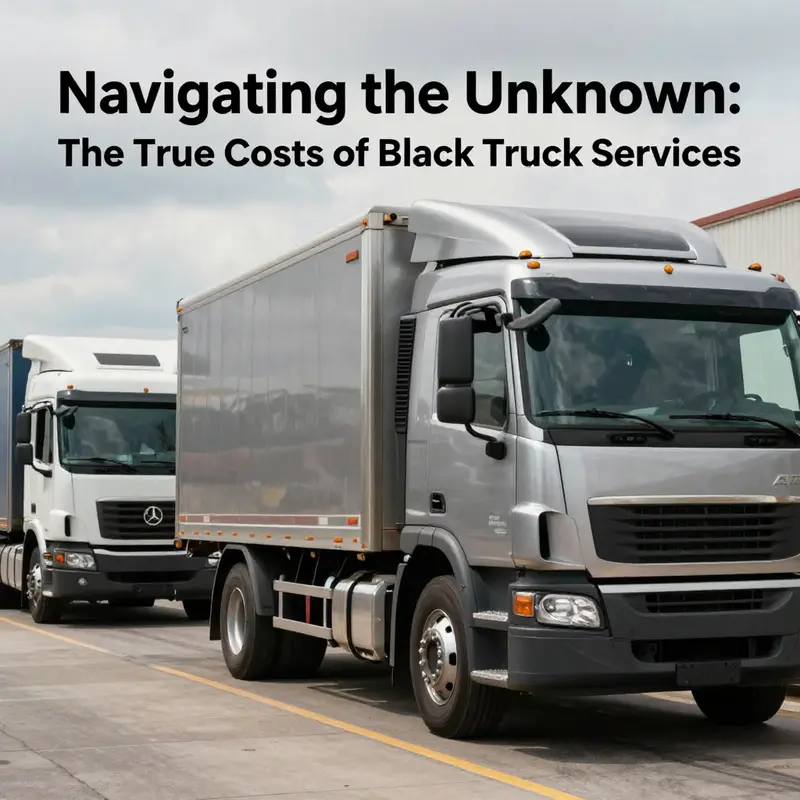
The phrase “black truck service” carries a murky resonance in both popular imagination and regulatory discourse. It evokes operations that glide beneath formal oversight, where price, safety, and accountability can blur into a spectrum between informal carriage and outright illegality. Yet the broader trucking ecosystem is not black and white. It is threaded with rules that shape how trucks move, how drivers log their hours, and how much freight costs in the marketplace. This chapter follows that thread, tracing how regulation—most prominently the electronic logging device (ELD) mandate—reaches beyond compliance to influence pricing signals, capacity, and safety outcomes. In doing so, it clarifies how regulated truck services differ from the shadowed practices often lumped under the provocative label of a “black” service, and why enforcement and support structures matter to price fairness and passenger or cargo safety alike.
The ELD mandate stands as a central hinge in modern trucking regulation. Its core purpose is straightforward: replace paper logs with electronic records that capture when a driver starts, rests, and completes each duty cycle. The intent is to curb fatigue, prevent hours-of-service violations, and anchor safety with more reliable data. From a policy standpoint, the ELD rule is not merely an administrative checkpoint. It is a mechanism that reshapes the cost structure of the industry. For many carriers, the up-front costs of devices, installation, maintenance, and ongoing data management are real and tangible. The cost regime shifts again for smaller operators and owner-operators who often operate with thinner margins. The implication is simple in theory but intricate in practice: higher fixed costs paired with a potential compression of available hours-of-service capacity can squeeze smaller operators and alter the competitive landscape in ways that push freight prices upward, especially for short-haul and time-sensitive moves. This is not a moral judgment about regulation; it is an observation about how regulations translate into market dynamics when they interact with the fragmented structure of trucking operations.
Empirical exploration of these dynamics suggests that regulation changes the economics of the market in multiple ways. A recent synthesis of research, including insights from a doctoral-level analysis, highlights several converging threads. First, the tighter, more auditable log system makes it harder for any operator to run beyond legal hours or to fudge the record-keeping. This safety net benefits those who comply and rely on legitimate hours-of-service discipline. Second, the entry cost for compliant operations rises, since equipment and integration into existing dispatch and regulatory reporting systems become non-trivial investments. For some smaller carriers and minority-owned fleets, the barrier can be meaningful. The financial pressure can manifest as higher freight rates to cover equipment amortization, software subscriptions, and the need to hire additional compliance staff or brokers who understand the complicated regulatory environment. The net effect in markets with tight capacity is a price rise that is not tied to any one particular route or customer, but to the structural costs of compliance across the system.
The pricing implications are not merely a matter of per-mile charges or fuel burn. They extend into the delicate balance of capacity and reliability. When drivers are more consistently within regulated hours, fatigue-related incidents decrease, and insurers and shippers gain confidence in ongoing performance. This safety dividend can, in time, influence insurance premia and contracting standards for legitimate operators. The regulatory framework, by rooting out overwork, reduces the probability of costly incidents and insurance claims. Over time, the market may reward operators who demonstrate reliable adherence to hours-of-service and safety protocols with steadier demand, long-term contracts, and reduced financing costs. Yet the immediate pain for some smaller businesses is the sum of ELD acquisition, ongoing maintenance, data management, and potential adjustments to staffing. In aggregate, these forces can push the market toward a higher baseline price, even as the safety profile improves. This is not a paradox but a reflection of how regulatory design interacts with market structure.
Beyond the structural cost and capacity effects, regulation also intersects with equity considerations. The thesis-based findings emphasize that the burden of compliance has not been uniform across the industry. Minority-owned and small operators often operate with tighter margins and thinner buffers for investment in technology and compliance support. When the ELD rule adds to the fixed costs of operation without a parallel stream of subsidized assistance or scalable financing options, the advantage tilts toward larger carriers with greater financial resilience. The potential consequence is a market that becomes less accessible to historically underrepresented groups, even as the safety improvements benefit the sector as a whole. That tension is not merely theoretical. It translates into practical outcomes: fewer new entrants from minority-owned backgrounds, slower growth for existing minority fleets, and a consolidation tendency that can shift competitive dynamics. The implication for policy makers and industry stakeholders is clear: regulation should be paired with targeted assistance—grants for equipment, low-interest financing for technology adoption, and robust training programs—that help smaller or minority-operated fleets move from compliance to competitive parity without sacrificing safety or service quality.
To appreciate how these dynamics translate into everyday pricing, it is helpful to juxtapose the regulated market with the shadowed alternative. In unregulated or poorly regulated segments, price becomes a negotiation battlefield driven by perceived willingness to pay and informational asymmetries. Anecdotal and historical reports from contexts outside the United States illustrate a pattern: when services operate outside formal price and safety controls, customers may face markedly inflated charges, with little recourse in case of disputes or accidents. The take-away is not a simple moral verdict but a practical caution: in markets lacking transparent regulation and enforcement, price signals can detach from underlying costs, and safety protections can evaporate. In the United States and similar regulatory regimes, the ELD framework, coupled with enforcement and safety oversight, tends to align pricing more closely with legitimate costs and credible service quality—though not perfectly or uniformly. The risk of shadow-market pricing remains a concern where enforcement is uneven or where illegal operators exploit vulnerable travelers or shippers who are unaware of standard rates or their rights. The documented patterns show why policy attention to enforcement, consumer education, and accessible channels for legitimate services matters as much as the rule itself.
In contemplating the question, “how much is a black truck service?” one must distinguish between the sensationalized aura of illicit operations and the realities of regulated freight and passenger transport. When regulation tightens the screws for all operators, the market discerns between risk-laden, unlicensed activity and compliant, insured service. The regulated sector may appear more expensive upfront, but it offers a foundation of accountability, insurance coverage, and recourse if something goes wrong. The flip side is that unregulated or illicit services, which sometimes attract customers with the lure of lower sticker prices, expose travelers and shippers to a different cost—hidden risks, potential lack of insurance, and the absence of a reliable mechanism to claim compensation after accidents or disputes. Moreover, the social and economic costs of these shadow operations extend beyond individual riders or shippers. They can dampen legitimate business investment, distort market expectations, and erode trust in the broader transportation ecosystem. The weight of regulation thus shifts from simply dictating “what” to move from point A to point B, toward shaping “how” to move in a way that preserves safety, fairness, and resilience across the supply chain.
As policymakers and industry leaders navigate these tensions, several strands of action emerge from the research and practice literature. First, targeted support for minority-owned and small carriers can help bridge the gap between regulatory compliance and market competitiveness. Second, streamlined technology adoption pathways—simplified onboarding for ELDs, affordable hardware options, and shared best-practice resources—can reduce the up-front barriers that tend to fall most harshly on smaller operations. Third, open and accessible enforcement channels, together with consumer education about rights, can deter shadow-market activities while empowering legitimate operators to compete on a level field. These are not abstract policy prescriptions but practical levers that can help ensure regulation does what it aims to do: enhance safety, stabilize capacity, and promote fair prices in a trucking market that remains highly stratified and uneven across regions and operator sizes.
For readers seeking a broader narrative about how regulated operators adapt to changing rules while maintaining service quality, one useful entry point is the broader trucking services landscape chronicled by industry observers who spotlight excellence and resilience in service delivery. Unveiling 5 Star Truck Inc: a beacon of excellence in trucking services. This synthesis highlights how compliant operators strive to translate regulatory requirements into dependable, high-quality service, reinforcing the idea that regulation can serve as a floor for safety and reliability rather than a ceiling that constrains legitimate entrepreneurship. While the example is illustrative rather than prescriptive, it underscores the possibility that well-governed fleets can thrive despite higher compliance costs, by delivering predictable performance, transparent pricing, and robust customer assurances. The relationship between regulation and pricing becomes less a battle over who pays more and more a negotiation over who delivers consistent value in an environment where rules are vigorously enforced and supported with practical resources.
In short, the pricing of a “black truck service” in the literal sense—an operation operating outside the law—differs starkly from the pricing dynamics of regulated trucking. The shadow market can produce eye-catching price quotes that tempt travelers or shippers with the allure of savings, but those quotes come with heightened risk. The regulated market, shaped by the ELD mandate and its downstream effects on capacity, costs, and safety, reveals a more stable, if sometimes pricier, baseline. The challenge for policy makers is to preserve the safety and fairness benefits of regulation while reducing the disproportionate burden on smaller and minority-owned operators. The challenge for industry is to translate compliance into competitive advantage—through better service reliability, stronger insurance positions, and clearer pricing that reflects genuine costs rather than speculative risk premia. The challenge for consumers is to seek out legitimate, insured services that demonstrate transparent pricing in exchange for trusted performance, rather than chasing headline discounts that may conceal higher ultimate costs or risks. The path forward lies in a calibrated combination of enforceable standards, targeted support, and ongoing dialogue among regulators, operators, and customers.
For readers who want to delve deeper into the regulatory underpinnings and the real-world economics, the electronic logging device rule remains the centerpiece of understanding how regulation shapes both price and safety. The FMCSA maintains official documentation on eligibility and implementation of electronic logging devices, which provides a structured view of the regulatory framework and its intended impact on industry practice. This resource can offer precise, up-to-date guidance on compliance requirements, device qualifications, and the data standards that underpin modern Hours of Service enforcement. See the official information here: https://www.fmcsa.dot.gov/eligibility/electronic-logging-devices.
In the end, the question of how much a black truck service costs is less a fixed figure and more a reflection of regulatory context, market structure, and the quality of safety practices. The most reliable price signals arise in environments where rules are clear, enforcement is consistent, and legitimate operators can compete on the basis of service quality, safety, and reliability rather than on the absence of oversight. The chapter above outlines the main currents shaping that reality: how the ELD mandate alters cost structures and capacity, how safety improvements accompany those changes, and how targeted support can help ensure that regulation expands opportunity rather than shrinking it for smaller or minority-owned fleets. It is a reminder that pricing in transportation is not merely a function of distance and demand; it is also a reflection of governance, accountability, and the shared aspiration for safer roads and more trustworthy freight networks.
External resource: For authoritative information on the ELD rule’s economic and safety impacts, see FMCSA Electronic Logging Devices.
Final thoughts
Navigating the complexities of black truck services requires a thorough understanding of pricing, risks, and regulatory impacts. As long-haul truck drivers and trucking professionals weigh their options, it’s vital to remember that while these services may appear enticing due to their lower visibility and often lower upfront costs, they carry significant hidden dangers. Understanding the intricacies of these services not only aids in making informed decisions but also fosters a safer overall transportation environment. Emphasizing the importance of compliance with regulations ensures reliability, transparency, and safety, which are invaluable assets in an industry that thrives on trust.