
The trucking industry is facing an unprecedented driver shortage that poses significant challenges for service companies across logistics, transportation, and supply chain management. This shortage not only impacts the ability to deliver goods efficiently but also affects costs and customer satisfaction. As we delve into each aspect of this critical issue, we will examine the operational challenges companies face, how service delivery and customer satisfaction are intertwined with driver availability, the importance of fleet modernization in this context, the economic implications these shortages create, and strategic approaches to counteract these trends. Each chapter will build upon the previous insights, providing a comprehensive overview of how the driver shortage influences the service company landscape and presenting actionable solutions for those involved in the industry.
Rationed Roads, Ready Service: Navigating Operational Challenges Amid Truck Shortages
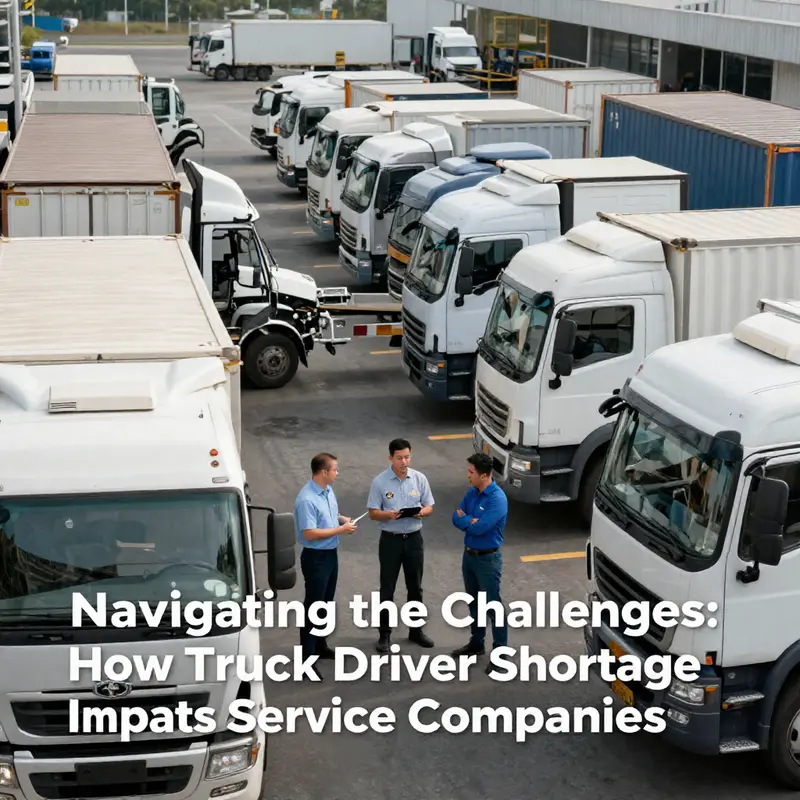
Across many industries, a quiet constraint shapes every plan: the number of available trucks is not enough to meet demand. For service companies that balance field work with on-site support and timely parts delivery, the truck shortage feels less like a logistical hiccup and more like a governing principle. It dictates when a technician can reach a site, how quickly a repair can be scheduled, and whether a project can stay on track. The chain of consequences starts with capacity and ripples through cost, reliability, and reputation. When a firm cannot guarantee a firm delivery window, customers adjust expectations and the service equation shifts from proactive performance to reactive firefighting.
The most immediate effect lands on delivery deadlines and customer satisfaction. When capacity is tight, commitments become more fragile. A promised two-day window can stretch to three or four as a single missing vehicle derails an entire sequence of routes. Clients experience that erosion in trust the moment a notification arrives with a new ETA. In markets where timing is linked to maintenance cycles, even a small delay can cascade into equipment downtime for a client and missed revenue for a service provider. The reputational cost is not merely about one late pickup; it is about perceived reliability in an ecosystem that depends on predictable, professional execution.
Cost is the second axis of impact. Freight rates rise as capacity tightens; carriers compete on scarce space, and the premium for reliable service climbs. Service companies frequently absorb a portion of these increases rather than pass them along in full to customers, bargaining through tender processes and long-term commitments. Yet even when costs are absorbed, profitability narrows. A lean margin erodes more quickly in markets with volatile demand and limited inventory space. The interplay between buyer expectations and carrier pricing becomes a daily negotiation, forcing managers to scrutinize every route, every load, and every timetable. In this environment, efficiency becomes not a luxury but a competitive necessity.
Scalability and responsiveness suffer as well. A limited fleet constrains the ability to scale up during peak periods or unexpected surges in demand. Some firms suspend nonessential services or pare operating hours to preserve capacity for critical client work. The constraint reveals itself not only in throughput but in strategic choices: what to deliver, when to deliver, and how to balance resource allocation across geographies. An 80,000-truck shortfall nationwide, as reported by industry observers, translates into harder targets for fleet managers and more conservative expansion plans. It also presses executives to rethink how they structure capacity, not just how they recruit it.
Scheduling emerges as a practical friction point when trucks are scarce. For field service providers, the timing of a vehicle aligns with the clock of a site visit, the arrival of a spare part, and the readiness of a technician. Delayed trucks mean longer wait times at job sites, which concentrates labor costs and reduces the productive window those technicians can use. It is not merely idle time; it is opportunity cost, the loss of billable hours, and the friction that turns skilled work into a chain of micro-delays. The ripple effects extend to dispatchers who must juggle more constraints, coordinate more callbacks, and manage customer communications with greater care. When the schedule becomes a moving target, reliability suffers and customer confidence thins.
There is also a structural shift toward greater dependence on third-party carriers. With fewer trucks available in-house, firms turn to external partners to fill gaps. This shift can offer momentary flexibility, but it comes with a price in predictability and control. Service quality may vary across carriers, and the perception of inconsistency can undermine a brand built on dependable execution. In such arrangements, the ability to guarantee precise windows or to honor special handling instructions becomes more complex. The risk is not just missed deadlines; it is a creeping vulnerability in client relationships that can be hard to repair. The erosion of control underlines a broader truth: capacity is a core asset, and when it is stretched, the levers of influence move toward planning discipline and strategic partnerships rather than mere fleet expansion.
The drivers of these shifts go beyond capacity alone. The interplay between the wider driver shortage and the aging truck fleet compounds the problem. Research suggests older trucks contribute to higher turnover and riskier driving behavior, which in turn undermines reliability. For service companies that depend on safe, timely transport of personnel and equipment, this becomes a compelling case for fleet modernization. Newer, safer, and more comfortable vehicles are not a luxury; they are an investment in retention, safety, and productivity. When drivers feel supported by technology, better ergonomics, and modern safety features, the appeal of long-haul work improves and turnover can decrease. That stabilizes scheduling, reduces downtime, and strengthens the customer promise over the long horizon. A chapter of this discussion, design efficiency in emergency services, offers a practical lens on how fleet design choices can minimize downtime and maximize uptime. The principle applies beyond emergency vehicles: thoughtful design translates into fewer stoppages, quicker turnarounds, and smoother day-to-day operations for service teams.
What, then, can organizations do in the face of a stubborn shortage? The most robust answer blends fleet modernization with smarter operating models. Fleet optimization software, for example, can squeeze more productivity from a fixed asset base by optimizing routes, sequencing tasks, and aligning technician availability with vehicle readiness. It gives dispatchers a clearer view of constraints, enabling more accurate estimates and fewer surprises. But technology alone cannot close the gap. Alternative transportation models—cooperative networks, shared capacity, dynamic sourcing—can provide buffer against volatility, distributing risk across a broader ecosystem. Strategic partnerships, built on clear service level agreements and transparent performance data, can deliver flexibility without surrendering control. These partnerships create a safety valve for capacity that a single fleet owner cannot provide, especially when demand patterns shift with seasonal or regional cycles. A practical illustration of how fleet design and process alignment reduce downtime can be seen in the broader field of emergency services, where a thoughtful approach to design yields tangible uptime benefits design efficiency in emergency services.
The path forward thus requires a balance between investment and agility. Investment in fleet modernization—safer, more comfortable vehicles with improved reliability—complements organizational discipline in scheduling, demand forecasting, and capacity planning. Agility comes in the form of flexible service configurations, such as modular maintenance plans, scalable technician rosters, and adaptable response times that reflect real-world constraints. The dual emphasis on capability and adaptability helps service companies preserve trust with customers even when trucks are in short supply. It also reinforces the broader strategic goal of service excellence: to meet commitments consistently, regardless of external pressures. The modern fleet becomes not only a tool for moving goods but a foundation for sustaining quality, safety, and reliability in a world where capacity is a moving target.
In the end, the truck shortage reshapes the operating landscape, but it does not have to rewrite the service equation. The best-performing firms treat capacity as a controllable variable, not a fixed fate. They invest in the elements that improve uptime and driver satisfaction, they redesign processes to remove friction in scheduling, and they cultivate partners who can be counted on when the primary fleet cannot deliver. Together, these steps turn a constraint into a catalyst for stronger performance and deeper client trust. The capacity gap, while real, becomes an invitation to reimagine how service is planned, executed, and measured. As research from industry outlooks indicates, the capacity issue is persistent, but with disciplined strategy, it can be managed in ways that preserve service levels even in tight markets.
External resource: https://ata.org/research/industry-outlook-2026. For broader context on the macro dynamics driving fleet scarcity and industry responses, this external overview provides a framework for understanding the long horizon of the truck capacity challenge.
null
null
Steering Through Shortages: Modern Fleets as a Strategic Shield for Service Companies
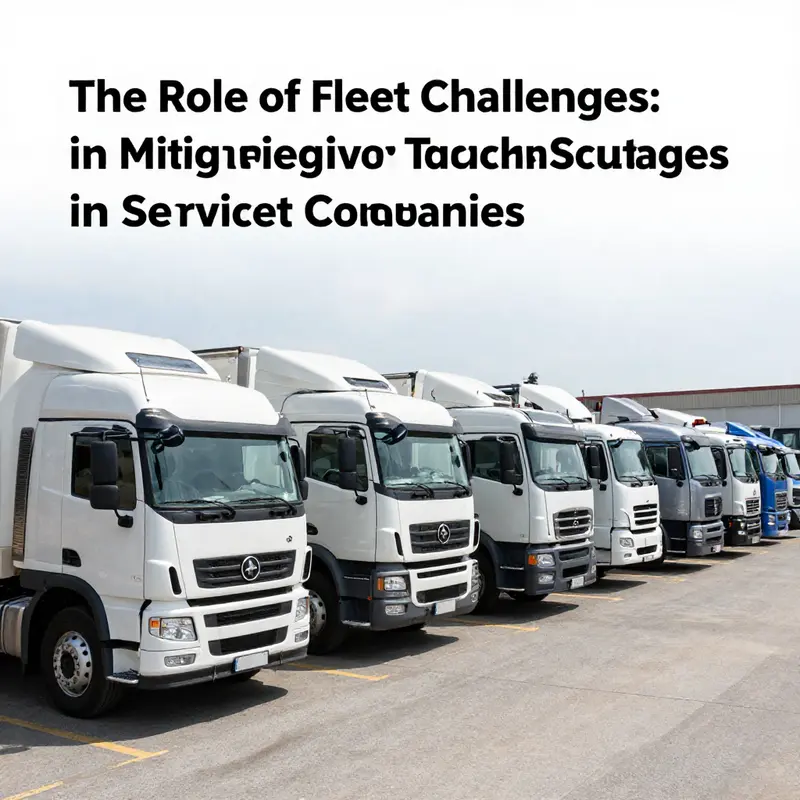
The trucking sector has long operated as the hidden nervous system of service industries. When the number of available drivers shrinks, every link in the chain—from procurement and maintenance to field service and customer delivery—feels the tremor. The driver shortage is not just a numbers problem; it is a reliability problem. Delayed deliveries, higher freight costs, and thinning margins ripple through service companies that rely on timely, predictable transport to serve clients. Aging fleets contribute to driver turnover, because discomfort and safety concerns rise as trucks age. With older vehicles, drivers are more likely to seek other positions, and the means by which they operate becomes less consistent. In this context, fleet modernization emerges as more than a cost control measure. It becomes a strategic lever that can strengthen service quality, resilience, and competitiveness even when the labor market remains constrained.
To understand why modernization matters so profoundly, consider the core relationship between fleet age and performance. Older trucks typically entail higher maintenance burdens, more frequent unscheduled downtime, and greater fuel inefficiency. These factors cascade into delays and reduced reliability, which in turn elevate customer dissatisfaction and push clients to seek alternatives. A study highlighted in the research materials notes that drivers operating older trucks exhibit approximately 5 percent higher turnover risk and more volatile driving behavior. This dual impact—driver churn and safety volatility—places added stress on operations and undermines the consistent service levels that customers expect. In response, service companies are increasingly evaluating where modernization can yield the greatest return: not merely in newer vehicles, but in the integration of smarter systems that enhance the entire delivery ecosystem.
Modern fleet strategies begin with the obvious: upgrading the hardware. Newer vehicles bring improved ergonomics, safer cabins, and better reliability. They reduce the day-to-day discomfort that can push drivers to seek alternatives elsewhere. But the payoffs extend far beyond comfort. Modern fleets are frequently embedded with telematics and remote monitoring that turn every mile into data. That data translates into actionable insights—predictive maintenance that reduces unplanned downtime, real-time status updates that keep dispatch aligned with customer windows, and proactive alerting that helps managers reallocate capacity before a small delay becomes a service failure. When a fleet is younger and better instrumented, the risk surface associated with sudden shortages in the labor pool is dampened. The organization can respond to demand variability with confidence rather than improvisation.
Yet fleet modernization is not about chasing the latest gadgetry in isolation. The most effective programs weave technology into a coherent operating rhythm that makes drivers more productive and services more reliable. Autonomous driving technologies are being piloted by major logistics players to handle long-haul legs with minimal human intervention, suggesting a future in which fewer drivers are required to move the same amount of freight. While full autonomy remains in development, even partial automation—adaptive cruise control, platooning, and assistive braking—contributes to safer, steadier operations. AI-powered route optimization complements these advances by minimizing idle time, reducing fuel waste, and increasing the number of deliveries a single truck can complete within a shift. For service companies, every percentage point of efficiency gained in routing can translate into better adherence to promised delivery windows and improved capacity to handle peak periods without expanding headcount.
Blockchain-enabled procurement and supply-chain coordination also play a part in strengthening resilience amid shortages. By providing immutable records of movement, approvals, and inventory status, these systems reduce the friction that can cause delays when labor is tight. A transparent, well-orchestrated procurement cycle aligns suppliers, carriers, and field teams, so a small delay in one node does not cascade into a missed deadline for a customer. The net effect is a smoother, more predictable service capable of maintaining performance during labor market stress. Taken together, these technologies do not simply cut costs; they elevate the reliability and consistency of service offerings in ways that customers notice and value.
The practical implications of fleet modernization extend across service industries in both obvious and subtle ways. In logistics and transportation, the most direct effect is improved load management and faster delivery cycles. With better vehicle condition, telematics, and route intelligence, dispatch teams can optimize asset utilization. A modern fleet can handle contingencies with less impact on service levels, because managers can reallocate a smaller pool of vehicles with greater intelligence and confidence. In field service and on-site operations, the same principles apply: trucks equipped with predictive diagnostics, remote monitoring, and reliable communication links enable technicians to arrive with the right parts and tools at the first visit, reducing the need for follow-up trips. This matters greatly when the labor market is tight and every technician must maximize productive time on customer sites.
An underlying theme of modernization is resilience. Service companies operate in environments where demand swings, weather, and regulatory constraints can disrupt schedules. In such contexts, a modern fleet becomes a strategic buffer. Telematics analytics forecast demand patterns, enabling proactive capacity planning long before shortages bite. Remote monitoring provides early indicators of maintenance needs, allowing service managers to shift workloads or pre-stage replacements to prevent downtime. Autonomous or near-autonomous long-haul segments can alleviate pressure on drivers during peak demand, letting human crews focus on the more complex, value-added tasks that require judgment and direct customer interaction. While automation does not erase the need for skilled drivers, it reshapes the role, enabling a smaller, more specialized workforce to move goods with greater dependability.
Operational leadership must also consider the human factors linked to modernization. The comfort and safety of the vehicle environment influence retention and job satisfaction. When drivers operate newer equipment with better ergonomics and more reliable performance, frustrations tied to breakdowns, rough rides, and unexpected repairs diminish. This creates a virtuous cycle: better working conditions attract and retain capable drivers, which in turn stabilizes service delivery. A stabilized workforce reduces the need for rapid ramp-ups of new hires, which is particularly valuable in sectors where training and certification are both rigorous and time-consuming. Moreover, the transparency enabled by modern fleets—clear performance dashboards, predictable maintenance schedules, and real-time feedback loops—supports a culture of continuous improvement and accountability that resonates with both front-line staff and management.
The strategic takeaway is not that modernization cancels the driver shortage, but that it reframes the constraint. By extracting more productivity from each mile and every shift, service companies can sustain high levels of service quality even as labor availability tightens. The combined effect is a more resilient operating model, capable of meeting customer expectations in a marketplace where competition is intensified by scarce talent. In practical terms, modernization asks leadership to choreograph procurement, fleet management, safety, and training into a single, coherent strategy. It requires investment in the right mix of vehicles, sensors, software, and human capital. It also requires governance that aligns fleet modernization with service design, maintenance practices, and customer-facing commitments so that the entire organization moves in concert rather than in isolated silos.
As the research signals, the payoff is significant. The modernization pathway strengthens both the reliability and the speed of service delivery, which are the two levers customers perceive most clearly. It also creates a more data-rich environment where decisions are informed by real-time performance metrics rather than best guesses. In an era of rising transportation demands and shrinking labor availability, this is how service companies stay competitive: by modernizing not just the fleet, but the entire operating model that surrounds it. To stakeholders across procurement, operations, and customer service, the message is clear—investing in a smarter, safer, and more connected fleet is not merely a capital expense. It is a strategic investment in continuity, trust, and long-term growth.
For further reading on how strategic interventions address the truck driver shortage, see the external resource from McKinsey. https://www.mckinsey.com/industries/operations/our-insights/addressing-the-truck-driver-shortage-through-strategic-interventions
To connect practical, industry-specific implications with broader fleet modernization themes, consider the value of aligning fleet design with emergency and service operations. A linked discussion on how design efficiency in emergency services informs better fleet deployment and maintenance planning can be useful for leaders seeking to translate general modernization benefits into their own unique service contexts. For readers looking for examples and case studies on how these ideas play out in the field, a deeper look at relevant frameworks and best practices can be gained by exploring the appropriate internal resources.
Rising Freight, Tighter Margins: The Truck Driver Shortage and the Ripple Effects on Service Firms
A driver shortage in the trucking sector has moved from a sector specific problem into the daily operating reality of service companies across industries. When the road network lacks capacity, service firms feel the pressure in two tangible ways: tighter delivery windows and higher costs to move parts and technicians to field locations. The result is tighter scheduling, longer lead times for parts, and more frequent reschedulings that test customer trust.
Data from late 2025 show freight rates rising by 15 to 25 percent as shippers compete for a constrained pool of carriers. Those increases do not stay with the carriers alone. They ripple through the supply chain, lifting landed costs, inflating service expenses, and nudging end prices higher. For service companies, margin pressure is already real, so the added freight cost often translates into tighter budgets for maintenance, equipment upgrades, and field incentives.
A fundamental driver is the rising cost of acquiring Class 8 tractors. Tariffs on imported trucks and components push acquisition costs up, narrowing the pool of modern, well-maintained equipment that attracts qualified drivers. The effect is a self reinforcing loop: high capital costs slow fleet renewal, older equipment persists, and drivers stay shorter in environments that feel tense or unsafe. The impact crosses industries, affecting manufacturers, retailers, and service networks that rely on predictable delivery streams.
Industry research links vehicle age to driver retention. Older fleets see higher turnover and more variability in safety incidents. When fleets lag on modernization, the workforce experiences more fatigue and risk. This is not just a capital decision but a people and safety decision that touches customer satisfaction. Service teams that depend on timely arrival of parts or technicians feel the effects first, with missed windows and rework cascading through schedules.
The economic pressure shows up in margins and procurement behavior. When freight costs rise, procurement teams push for smarter sourcing, renegotiating service levels and extending planning horizons. Yet planning alone cannot fully offset a chronic capacity crunch. Service companies must translate macro pain into micro improvements, including smarter routing, adaptive capacity planning, and closer coordination with freight providers through data sharing and collaborative planning. The goal is to cushion the impact with flexible service design, wider supplier bases, and stronger carrier relationships.
Leadership play a role in communicating with customers. Clear discussions about evolving costs, revised service levels, and the rationale behind price adjustments help preserve trust. When customers understand that higher freight charges reflect market realities rather than opportunistic pricing, they are more likely to value the reliability of a modernized fleet.
A practical roadmap for readers includes investing in fleet modernization, embedding disciplined procurement, and deepening collaboration with carriers. Newer trucks bring lower maintenance costs, better fuel efficiency, and improved driver comfort, all of which support retention and uptime. In parallel, adopting structured procurement practices with cross functional governance helps secure favorable terms in tight markets. Operationally, firms should pursue smarter routing, dynamic scheduling, and real time data sharing with partners to reduce overtime and last minute dispatches.
The broader risk management view is to build resilience for the long term. Transparent communications with customers, balanced pricing, and a pipeline of fleet upgrades create steadier delivery windows and margins. As policy, trade, and technology shape the cost structure of trucking, a disciplined approach to fleet, procurement, and operations enables service organizations to maintain service excellence even when the road ahead remains uncertain. For further context on tariff related costs, see external analyses such as the referenced work on truck tariffs and the freight sector.
Riding Out the Shortage: Building Resilience in Service Firms Through Tech, Talent, and Trust
The truck driver shortage is not a temporary nuisance but a structural shift that tests how service companies deliver reliability under pressure. Logistics, transportation, and supply-chain-focused firms find themselves rethinking every link in the chain, from route planning to driver welfare, if they are to meet customer expectations in a market where capacity remains constrained. The path forward is not a quick patch but a cohesive, long-term program that blends technology, workforce development, and culture. When done well, this triad does more than ease strain; it creates durable competitive advantage by turning scarcity into precision, predictability, and purpose.
At the heart of the longer view is the deliberate integration of advanced technologies. Telematics, real-time tracking, and route optimization software enable more accurate forecasting, better fuel utilization, and reduced idle time. This is not merely about cutting costs; it is about translating those gains into a steadier flow of service for customers. Predictive analytics help managers anticipate maintenance needs before failures occur, lowering unexpected downtime and extending the useful life of each asset. Even as autonomous trucking systems remain emergent, pilots and phased implementations allow service companies to experiment with duty-cycling, autonomous support for repetitive legs, or decision-support tools that guide drivers along safer routes. The payoff is twofold: productivity climbs, and worker fatigue declines as the system absorbs some of the routine decision load from the driver.
A 2023 report from the American Trucking Associations highlights what many operators feel on the shop floor: when fleets are equipped with telematics and data-driven insights, productivity can improve by as much as 15 percent, and turnover rates often recede. These gains come not from replacing people but from empowering them with better information, safer tools, and a clearer sense of how their work fits into a larger mission. In practice, this means fleets that know where their assets are, how long a trip will take, and when a truck is approaching the end of its useful life can schedule more precisely, reduce unnecessary trips, and provide drivers with more predictable workloads. The result is a calmer, more professional work environment where drivers feel supported rather than stretched to the breaking point. It also sends a message to customers that service providers are investing in reliability, even when market conditions are tailwinds against capacity.
Beyond technology, partnerships with educational institutions form a critical plank of long-term resilience. Service firms that sponsor training programs, offer apprenticeships, and codify clear career paths can begin shaping a sustainable pipeline of skilled drivers and support staff. The logic is simple: when potential recruits see a viable, structured career with ongoing upskilling opportunities, the perceived risk of joining a profession with a reputation for high turnover declines. Public-private collaborations, as emphasized by the U.S. Department of Labor, help align curricula with industry needs, ensuring graduates exit programs with competencies that translate directly into productive work. This alignment is particularly important as the workforce becomes more diverse and multi-generational; structured pathways make entry easier for younger entrants while providing mid-career transitions for experienced workers seeking new challenges without sacrificing stability.
A robust talent strategy also hinges on how a company values its drivers day to day. Improving working conditions is not a mere perk list; it is a strategic lever that influences retention and engagement. Flexible scheduling, rigorous rest policies, and comprehensive benefits—health, retirement, and mental health support—are not soft options but core components of a high-performance operation. When drivers feel protected, respected, and fairly compensated for their expertise, they are more likely to stay with a company through fluctuations in demand and market turbulence. A study in the Journal of Business Logistics during 2024 found that firms investing in employee engagement reported materially lower turnover than industry benchmarks, underscoring that people, not just hardware, determine service quality in high-stress corridors.
The synergistic effect of technology, education, and culture becomes particularly evident when considering fleet modernization as a multi-layered project rather than a one-off purchase. Even as the idea of automation looms on the horizon, the near-term benefits come from upgrading the fleet with safer, more comfortable, and easier-to-operate vehicles. Newer trucks typically offer better ergonomics, climate control, quieter cabins, and advanced safety systems. These improvements reduce fatigue and discomfort, which are major drivers of turnover. In turn, a more satisfied workforce translates into steadier performance, lower incident rates, and fewer disruptions to customer commitments. Old vehicles, by contrast, can become costly liabilities—maintenance headaches, unpredictable breakdowns, and the reputational damage that comes with delayed deliveries. The research literature aligns with field observations: younger fleets correlate with more consistent driving behavior and a greater likelihood of driver retention, a critical consideration when replacement hiring is expensive and scarce.
To operationalize these long-term strategies in a cohesive, integrated manner, many service companies pursue a continuous-improvement mindset that treats technology, partnerships, and people as interdependent levers. For example, route optimization is not just software adoption; it aligns with training programs that familiarize drivers with new navigation tools and safety protocols. Maintenance planning becomes a joint effort among fleet managers, technicians, and drivers, who report issues early and help schedule downtime at the most opportune moments. In this sense, investment in maintenance training and uptime culture is itself a strategic act, ensuring that technology and modern equipment deliver the returns they promise. Indeed, a dedicated resource on maintenance training highlights how proactive, knowledge-rich programs support reliability and lifespan for critical fleet assets, serving as a practical complement to high-level modernization efforts. See more on the importance of hands-on maintenance training here: fire-truck-maintenance-training-importance.
As these elements converge, service companies not only blunt the sting of the driver shortage but also elevate the quality of service delivered to clients. The combination of real-time visibility, smarter routing, and proactive maintenance creates a more predictable delivery pattern, which translates into improved customer satisfaction, fewer penalties for late arrivals, and a stronger value proposition in a competitive market. When the workforce feels supported by systems that reduce unnecessary strain and enable more effective decision-making, morale rises, brand reputation strengthens, and recruitment becomes somewhat easier because the employer is perceived as a dependable, future-ready partner.
This is not a dichotomy between technology and humanity; it is a deliberate fusion. Technology handles fatigue-prone, repetitive tasks; education codifies a durable, scalable skill set; and culture sustains the human element that remains indispensable—the judgment, empathy, and adaptability that no machine can fully replace. In a sector built on timely, safe, and predictable service, that integration is the strongest form of resilience. The takeaway for leaders is pragmatic: invest in a coordinated program that treats fleet modernization, workforce development, and well-being as interlocking components of a single strategic initiative. Do not chase a single fix; cultivate a system where every improvement reinforces the next. When customers look at the end-to-end flow, they see a service provider that not only reduces risk in the short term but also commits to continual growth and reliability over the long haul.
For readers seeking further strategic validation, industry data and analyses provide a supportive backdrop for these moves. See external data and discussion on how technology adoption correlates with productivity and turnover in the trucking sector: ATA report on technology improves fleet productivity and reduces turnover.
Final thoughts
Addressing the truck driver shortage is essential for service companies striving to maintain operational efficiency and meet customer expectations. The implications of this challenge are vast, affecting everything from delivery schedules to economic viability in the freight market. By modernizing fleets and adopting new strategies for recruitment and retention, companies can mitigate the adverse effects of this shortage. The insights shared in this article not only highlight the current challenges but also pave the way for a proactive approach to resolving them, ensuring a resilient future for service companies reliant on effective logistics and transportation.