
Finding reliable truck services in Houston, especially for long-haul drivers and fleet managers, is crucial to keeping operations smooth and on schedule. This article delves into AM PM Truck Services LLC’s standing in the Houston market while providing a guide on searching for truck service providers, evaluating service quality, identifying top competitors, and understanding the importance of quality parts in maintenance and repair. Through these discussions, we aim to empower trucking professionals with the knowledge to make informed decisions for their vehicles and fleets.
Anchors of Houston’s Freight Lifecycle: Inside a Local Heavy-Duty Service Hub and Its Impact on Fleet Reliability
Houston sits at a confluence of highways, ports, and industrial corridors, where uptime for a heavy-duty fleet is a daily imperative. The local service hub network, shops like AM PM Truck Services LLC, anchors reliability by offering diagnostic expertise, broad maintenance menus, and rapid parts availability near major freight corridors. Proximity reduces tow times and on-site downtime, while certifications and experienced technicians translate complex fault data into actionable repair plans. In Houston’s climate, heat accelerates wear on cooling systems, tires, and brakes, making preventive maintenance and timely repairs essential. A trusted partner will coordinate scheduling, parts logistics, and clear communication to minimize disruption and maximize uptime, keeping fleets moving through the city’s busy lanes. Public listings and directory references further corroborate a shop’s footprint and reliability, helping fleet managers select partners who can deliver predictable service in a volatile operating environment.
Tracking Reliability in Houston: A Deep Dive into Vetting Truck Service Providers When Local Names Are Hard to Verify

Houston sits at the crossroads of commerce and heavy industry in the United States, a city where chains of warehouses, refineries, and freight corridors pulse with constant movement. In this environment, every hour of truck downtime can ripple outward—affecting deliveries, fleet costs, and customer trust. Yet even in a market this saturated with options, the absence of easily verifiable information about a local service provider can complicate decisions. Take, for example, AM PM Truck Services LLC in Houston. Despite diligent searches, a straightforward, official footprint—licensing, regulatory filings, or verifiable recent customer feedback—does not readily surface in common channels. That gap is not unusual for smaller operators, and it underscores a broader challenge: how to evaluate and choose a truck service partner in a city where the marketplace is crowded, diverse, and sometimes opaque. The chapter that follows offers a cohesive approach to this search—one that respects the practical realities of the Houston trucking ecosystem while equipping readers with a method to assess reliability, capabilities, and value without relying on a single name or brand.
First, recognize the landscape you are navigating. Houston’s status as a major transport hub means the local service landscape includes large national parts chains, specialized diesel repair shops, mobile service fleets, and regional distributors. Each category plays a distinct role in keeping fleets on the move. Large chain parts retailers, with multiple locations, provide access to a broad catalog of diesel components and tools, helping fleets maintain uptime with standard parts and common diagnostics. Local and regional diesel shops offer depth—engine diagnostics, fuel-system repairs, ECM work, and tailored maintenance programs that can be faster or more cost-efficient for certain makes and models. Meanwhile, distributors that focus on heavy-duty equipment and parts can bridge the gap between manufacturer specifications and practical on‑the-ground needs, often stocking OEM or high-quality aftermarket parts for critical components such as ECMs, transmissions, and braking systems. In such a market, the keys to reliability are not a glossy storefront but a consistent track record, appropriate capabilities, and transparent practices.
With that context, the search starts with a framework rather than a single name. A reliable provider should be able to articulate core competencies that align with the fleet’s requirements: diagnostic depth across diesel engines, traction for heavier weight loads, experience with different transmission architectures, and the capacity to handle both preventive maintenance and unexpected failures. For a fleet operating in or around chemical freight corridors—where hazardous materials are part of the regular mix—there is an added layer of scrutiny. The capability to comply with hazmat regulations, manage hazardous materials transport nuances, and maintain safe handling protocols is not optional; it is a baseline expectation. The reality in Houston is that not every shop will claim these capabilities, and some may outsource certain tasks. The prudent buyer asks pointed questions about the shop’s on-site equipment, preferred diagnostic tools, and whether they can perform ECM or transmission work in-house or only through a partner network. The vendor’s answer, in turn, reveals the maturity of their operations and the confidence they have in their processes.
Another anchor in the vetting process is documentation and verifiable references. In a city where a simple Google search might not yield a clear corporate footprint for a smaller operator, direct outreach becomes vital. Prospective clients can request copies of licenses, proof of insurance, and any relevant certifications that attest to technical competence. ASE certification for technicians, company insurance coverage, and a valid business license—while perhaps not a guarantee of perfection—are still important signals. Equally valuable are written maintenance programs, service level commitments, and warranty terms on labor and parts. When a shop cannot provide these documents, that absence should trigger caution or a preference for a more transparent partner with documented practices.
The review ecosystem in Houston also matters. Personal experiences shared through Google Maps, BBB, or local review platforms can illuminate how a shop handles communication, turnaround times, and problem resolution. The caveat is to read beyond the star rating and isolate specific, credible observations about reliability. A pattern of late updates, unclear quotations, or inconsistent parts sourcing can indicate underlying process gaps. In other words, a reliable provider demonstrates consistency not only in the quality of work but in the clarity of the service experience—from initial inquiry to final invoice. To complement consumer feedback, fleets can request case studies or anonymized references that reflect similar vehicle types, operating environments, and maintenance challenges. This kind of peer insight often reveals how a shop performs under pressure—on long-haul routes, during peak demand periods, or when emergency roadside support is required.
In Houston’s freight ecosystem, industry developments also shape what a strong service partner looks like. A recent shift in the regional logistics landscape involves consolidation and expansion among operators who handle chemical transport. For instance, a notable acquisition in the chemical freight space has enabled broader capacity, safety improvements, and more robust cross-location support. This context matters for fleets that require dependable, safety-focused maintenance partners who understand the unique demands of hazardous goods. It is a reminder that reliability is not solely about repairing a truck; it is about sustaining processes that keep high-risk cargos moving safely and efficiently. The broader signal here is that Houston’s truck service market values partners who can scale, adapt, and uphold consistent safety practices across a diverse range of jobs. A smaller shop may excel in routine maintenance, but the fleet of record for hazardous-material movement will typically gravitate toward partners with demonstrated capability to operate within larger, safety-conscious networks.
Navigating this landscape without a single proven name requires a practical method: combine a rigorous inquiry process with a strategic use of meaningful resources. A thoughtful starting point is to map a few candidate providers across the three core categories mentioned earlier—large parts retailers, specialized diesel shops, and regional distributors—and then approach each with a standard set of questions. For example, can they perform both diagnostic work and component replacement in-house? Do they use OEM-equivalent parts when OEM parts are not available on short notice? What is their typical turnaround for a common diagnostic-and-repair cycle, and how do they handle priority cases for on‑the‑road emergencies? Do they maintain an industry-standard warranty on parts and labor, and how are warranty issues resolved if a replacement part fails within the coverage period? These questions not only clarify capability but also reveal the operator’s approach to risk and value for the customer.
In addition to questions, fleets should emphasize verification steps. A shop that can provide direct VIN- and part-number crosschecks, a clear parts sourcing policy, and documented diagnostics demonstrates a disciplined operating model. The VIN number unlocks a shop’s ability to confirm compatibility and to identify any prior repair history that could affect future work. When a technician asks for the VIN and recalls a specific part number, it signals a data-driven workflow rather than a best-guess approach. Such a workflow reduces the risk of incorrect parts, which can lead to repeated returns and escalating downtime. This level of rigor is especially important for shops that claim to handle advanced systems like ECMs or transmission modules, where a misstep can cascade into serious reliability problems.
For readers seeking a concrete reference point within the broader trucking community, there is value in exploring established resources that profile trusted providers and industry practices. A representative example of the level of service and reliability that top providers strive for can be found in coverings of premier trucking solutions. This resource, which examines the breadth of services and the consistency of delivery, helps readers calibrate their expectations and recognize what distinguishes a solid partner from a merely adequate shop. See discoveringa ll the features and strengths by visiting the dedicated insights on the 5-star truck inc platform: discovering-the-unparalleled-services-of-5-star-truck-inc.
Finally, as with any vendor search, it helps to keep the end goal in view: uptime, safety, and value. The right Houston partner will not only fix what is broken but also prevent repeats by offering proactive maintenance, on-site visits when possible, and transparent pricing. They will publish clear service expectations, provide consistent communication, and stand behind their work with a reasonable warranty framework. The absence of a direct footprint for a local operator should not automatically disqualify them, but it should trigger a more thorough vetting process. The fleet manager should push for a transparent onboarding step—an initial diagnostic assessment, a written maintenance plan, and a guaranteed response time for emergencies. In practice, the best outcomes come from a locally trusted partner who operates with the scale and discipline of a larger network while preserving the hands-on attention that smaller shops can deliver.
As you move forward in your search, remember that Houston’s market, despite its density, rewards diligence. The city’s role as a logistics epicenter means there is a broad spectrum of providers with varying strengths. A careful, evidence-based evaluation—rooted in formal credentials, documented capabilities, and verified references—will yield a dependable partner capable of keeping your fleet on the move and out of the shop longer. The experience of navigating the landscape, even when a familiar name is elusive, becomes a practical exercise in risk management and strategic sourcing. In the end, reliability is the product of thoughtful inquiry, rigorous verification, and a clear alignment between a shop’s capabilities and a fleet’s operational realities.
External resource: Top 10 Best Trucking Companies in Houston, TX – Yelp. https://www.yelp.com/biz/top-10-best-trucking-companies-in-houston-tx
Steering Toward Reliability: Vetting Houston’s Truck Repair Landscape for AM PM Fleet Uptime
Houston sits at the crossroads of commerce, a heavyweight hub where ports, refineries, and distribution centers power the region’s freight lanes. In this environment, uptime isn’t a luxury; it’s a strategic asset. For a fleet operating under the AM PM banner in this market, choosing the right truck repair partner is about diagnosis speed, durable repairs, and clear communication when every mile matters. The decision process centers on a few constants: reputation, diesel expertise, robust parts and diagnostics, and a transparent service model. When these align, a shop becomes a critical link in keeping schedules intact and loads on time.
The Houston market offers a spectrum from large national chains to nimble local specialists. A national parts network can shave days off a repair when a component is stranded, but the real value is technicians who understand diesel systems deeply. In Houston, engines require precise calibration, high compression, and tight tolerances for fuel delivery and aftertreatment. The ability to service ECMs, fuel systems, turbochargers, clutches, and transmissions demands specialized tools and factory-level know-how. A partner that can perform advanced diagnostics, pull and test codes, and run quick bench tests stands out when time is tight for a fleet with tight delivery windows.
In practice, the most effective Houston partnerships rest on three pillars. First, reputation—driven by uptime, fair pricing, and clear communication; seek shops with verified feedback, transparent warranties, and consistent performance. Second, diesel specialization—shops that handle engine life cycles, fuel-system tuning, and emission-control service across varied duty cycles. Third, reliability of parts and diagnostics—shops that source OEM or high-quality aftermarket components with correct VIN-specific part numbers to minimize misfits and rework. In a market this size, missteps cascade into downtime and delays.
There’s a well-regarded engine rebuild and diesel service specialist near downtown Houston known in the operator community for engine rebuilding and dependable service. The hallmark of a trusted partner is disciplined process: a concise triage, confirm symptoms, pull fault codes, and validate history with a quick inspection that prioritizes urgent diesel powertrain failure modes. A typical turnaround may involve rapid on-site diagnostics, followed by a repair plan that distinguishes parts replacement, calibration, and software updates. The shop should document the scope of work in plain language, provide a reasoned prognosis, and attach a transparent quote before non-routine repair proceeds. In busy metropolitan settings, this clarity reduces friction and keeps the fleet manager’s schedule intact.
The Houston ecosystem supports a mature network of providers. Large chains offer predictable processes and a broad parts ecosystem for standardized maintenance or warranty work, while local shops bring nimbleness and diesel focus for faster diagnostics and tighter turnaround on engine work, fuel-system repairs, and aftertreatment service. Regional distributors add depth, sourcing rare or model-specific components. For fleets spanning city, highway, and port routes, the ideal setup combines a small trusted shop for engine/diesel repairs with a broader network for routine parts distribution and cross-shipping when needed. The goal is uptime that is predictable, not frictionless.
When evaluating a shop, ask: Can they diagnose ECM issues without a long chase? Do they provide a transparent, itemized estimate with a clear warranty? Can they handle high-volume workloads during peak seasons without compromising quality? Is the shop clean, safe, and compliant? For fleets facing demanding hours, does the partner offer reliable emergency response and timely roadside help? A qualified technician on-site or rapid diagnostics reduce cascading delays and help preserve delivery schedules. A structured maintenance program—scheduled around utilization—keeps engines and emissions systems in peak condition, with regular checks of filters and fluids.
For readers surveying Houston, start with a short list of shops near frequent routes and visit in person. Observe the shop floor’s organization, confirm diagnostic tools are modern, and verify staff communicate clearly about measurements, findings, and the repair plan. Seek references from operators with similar equipment and duty cycles, and request warranty terms that cover parts and labor. If a shop quotes after-hours or rush rates, ask how those costs are justified and whether there is a policy governing them. The right partner welcomes questions, offers thorough explanations, and outlines escalation paths if parts are unavailable. The best Houston shop does not promise zero downtime; it promises transparent, structured, and predictable repair cycles that keep a fleet moving.
To put this evaluation in perspective, connect with the broader industry dialogue. Look to maintenance planning and uptime strategies at industry blogs such as 5startruckin for ideas on spare-parts availability, diagnostic accuracy, and cost containment in high-demand markets.
As Houston grows, its repair ecosystem will continue to evolve. Strong relationships will be measured by uptime delivered, turnaround speed, and the consistency of shop communication. Fleets that invest in careful evaluation today will enjoy lower total cost of ownership, fewer disruptions, and the confidence that a trusted partner is ready to steer the schedule back on course. Houston’s truck repair landscape is a living network that, when navigated thoughtfully, can become a lasting advantage for AM PM and its customers alike.
External resource: https://www.google.com/maps/place/MTZ+Engine+Rebuilders/@29.734986,-95.554626,15z/data=!3m1!1e3!4m6!3m5!1s0x8640b7a5d9e3c8f1:0x595c355c1c146524!2sMTZ+Engine+Rebuilders!3s0x8640b7a5d9e3c8f1:0x595c355c1c146524!4s6215+Ridgemont+St,+Houston,+TX+77040!8m2!3d29.734986!4d-95.554626?entry=ttu
Riding Houston Highways: Navigating the Competitive Terrain of Truck Services and What It Means for AM PM Truck Services LLC
Houston sits at a unique crossroads for freight and logistics. The city’s port complex, its proximity to energy corridors, and a sprawling network of interstates turn the metro area into a high-velocity hub where cargo moves through the night and the day with almost relentless tempo. In this environment, the value of dependable truck service is not simply measured by a repair bill or a spare part—it’s a critical uptime decision that ripples through every downstream delivery, every manufacturing line, and every service call that relies on parts arriving on time. As the market thickens with competition, the landscape presents a layered competition between sprawling national carriers that command scale and nimble local players that win on responsiveness. For AM PM Truck Services LLC, Houston’s market is less about choosing a side and more about understanding what the competing forces value most when fleets seek a partner to keep their wheels turning. In the upper tier of competition, national carriers bring broad capacity, integrated telematics, and predictable service ladders that fleets rely on for long-haul or regional work. Companies of this magnitude arrive with the promise of a vast asset base, standardized processes, and performance benchmarks that reassure dispatchers when a shipment window is tight. In Houston, these giants translate into robust hub networks, where a breakdown in one city can be absorbed by a continental network that reroutes and reallocates equipment with minimal downtime. This scale, however, does not automatically translate into the kind of day-to-day responsiveness a local fleet might crave during a scorching August heatwave or during an unexpected surge in freight volumes from the port. The advantage of the big players lies in capacity and predictability, the ability to absorb demand shocks and offer multi-modal solutions that tie together trucking with rail, warehousing, and cross-border movements when needed. For customers, that translates into reliability in the backbone of the supply chain—an assurance that a vehicle can be dispatched, a part can be sourced, and a technician can reach the scene in a window that keeps operations moving. Among these giants, Houston’s market also features world-class regional and national entities that have honed their service recipes by serving manufacturers and retailers across industries. Their approach often centers on standardized preventive maintenance programs, real-time fleet visibility, and a disciplined service network that can accommodate fleets ranging from a few dozen to several thousand units. The benefit to a fleet manager is the language of metrics—uptime percentages, mean time to repair, and the capacity to orchestrate multi-location service in alignment with production schedules. Yet, the same strengths that make these carriers formidable can also limit the pace at which a local shop can customize or improvise a solution to a unique, time-sensitive problem. When a production line in a Houston facility depends on a critical piece of equipment, the distance between a customer and a service solution matters. This is where the city’s dense ecosystem of mid-sized and specialty shops fills a complementary niche, offering the agility and personalized approach that lighter fleets and regional accounts often demand. Local and regional players in Houston have carved out reputations around speed, proximity, and the kind of hands-on attention that larger networks might not consistently deliver. Niche firms, mobile diesel technicians, and regional distributors bring a responsiveness that appears in the form of emergency on-site service calls, rapid part sourcing through regional networks, and a willingness to tailor service plans to the rhythms of local customers. In practice, this means the kind of service that fleets experience as a sudden repair that doesn’t require a long wait for a fixed maintenance window, or the ability to schedule a service between back-to-back loads to prevent a missed delivery window. For operators who value uptime above all else, the local service capability becomes as important as the technician’s skill. That is why the Houston market features a broad spectrum of players—ranging from national carriers to small, independent shops—that can offer a combination of fleet maintenance, on-site diagnostics, and rapid part provisioning in a way that aligns with a fleet’s dispatch patterns and regional demands. The mix of players also speaks to the range of needs fleets bring to the table. Some customers prioritize cross-docking efficiency and intermodal solutions that a large carrier can coordinate. Others require specialized maintenance for heavy-duty transmissions, exhaust aftertreatment, or complex ECM issues that demand a shop with deep technical bench and quick parts access. Houston’s environment intensifies these needs: extreme heat and humidity can tax engines, cooling systems, and electrical networks; the city’s traffic can impose unpredictable idling loads and rapid turnaround times; and the port and industrial corridors create a continuous demand for downtime-minimizing service. All of this makes reliability not merely a service attribute but a strategic operating discipline. As fleets optimize routes through the city’s corridors, a partner that can synchronize preventive maintenance with operational calendars, supply the right parts, and mobilize a technician with the needed tooling becomes a crucial extension of the fleet. AM PM Truck Services LLC, positioned in the heart of this competitive landscape, faces a set of practical questions about differentiation. What does a Houston-based service provider offer that larger, multi-state competitors cannot deliver with equal speed? The answer often rests on a blend of proximity, responsiveness, and a collaborative approach to maintenance planning. A Houston-centric provider can commit to same-day or next-day emergency response within a defined radius, offer transparent pricing structures that fleets can budget around, and tailor maintenance programs to the idiosyncrasies of local routes. For example, fleets that run late-night out-and-backer routes around the port and refineries may benefit from a service partner who can align maintenance windows with off-peak hours and ensure that critical trucks are turn-ready for early morning exports. The value proposition extends beyond the repair itself; it includes the process of coordinating parts sourcing, diagnostic time, and a clear line of communication between the technician, the dispatcher, and the fleet manager. In this sense, the service becomes a collaborative operation rather than a one-off fix. Another pillar for differentiation lies in the commitment to OEM parts and quality substitutions. Fleets operating around Houston’s dense industrial footprint are increasingly mindful of part compatibility and VIN-specific part numbers. A capable local service provider earns trust by demonstrating meticulous parts verification, keeping a verified parts catalog on hand, and cultivating relationships with regional distributors to ensure that the correct components are sourced quickly. This calibration between parts accuracy and speed is what helps a service partner reduce rework and minimize downtime—precisely the kind of efficiency that large carriers seek, but may not always execute at the neighborhood level unless their teams are equipped with the right local support structure. Moreover, a Houston-focused shop can adopt flexible service models that reflect the day-to-day realities of local fleets: targeted maintenance visits that combine preventive tasks with quick diagnostic checks, or mobile service units that can arrive with a portable diagnostic toolkit and a small inventory of commonly required items. These approaches embody a practical, not theoretical, path to uptime. For readers tracing the competitive arc, industry perspectives frequently surface in the broader trucking discourse. The way fleets discuss uptime, service networks, and the speed of repairs is often captured in industry blogs and practitioner reports, including the kind of coverage found on the 5startruckin blog. This resource, though not a direct vendor listing, can help fleet managers understand how service networks are evolving, how fleets prioritize maintenance windows, and how technology is shaping the cadence of field work. The chapter’s aim is not to catalog every Houston mechanic in a phonebook, but to illuminate how a service provider can align with the expectations of the city’s diverse customers. A well-communicated value proposition that emphasizes fast response, transparent pricing, and meticulous parts control will resonate in a market where the decision to call a service provider is a direct line to maintaining a customer’s promised delivery times. Ultimately, Houston’s truck-service competition is a driver of improvement rather than a constraint. The market’s scale invites a spectrum of solutions, from the reliability of a nationwide network to the nimbleness of a local specialist. For AM PM Truck Services LLC, the opportunity lies in translating the city’s complex logistics ecosystem into a straightforward promise: keep fleets moving with minimal downtime, even when the roads are congested, the heat is relentless, and schedules are tight. In practice, this means investing in a fleet-ready diagnostic capability that can be deployed quickly, cultivating a local supply chain for parts, and building a service culture that treats every urgent call as a mission-critical dispatch. It means balancing standardized processes with the flexibility and personal touch that only a Houston operator can offer. And it means listening to the fleet managers who speak in shorthand about routes, loads, and uptime—and translating that language into a service plan that earns every repeat engagement. In this landscape, the strongest advantage is a clear, credible value proposition anchored in local presence and fidelity to uptime. While the industry’s largest players will always set the pace on scale and predictability, a Houston-based provider that can couple rapid on-site service with rigorous parts verification and a disciplined, transparent pricing model can become the trusted alternative fleets ask for when speed and reliability matter most. The market’s breadth creates opportunities not only for competition but for collaboration: fleets can leverage both the scale of national networks and the agility of regional specialists to craft maintenance strategies that reduce downtime, extend vehicle life, and stabilize operating costs. As the city grows and freight demands intensify, the road ahead for AM PM Truck Services LLC will hinge on how well it translates Houston’s pace into steady, dependable service—and how effectively it communicates that reliability to the fleets that power the region’s economy. For readers who want a broader context on large carrier networks, see Knight-Swift Transportation’s official site for a sense of the scale and scope that define modern truck transportation. [External resource: https://www.knightswift.com]
Quality that Moves the Miles: Houston’s Trucks Depend on Parts You Can Trust
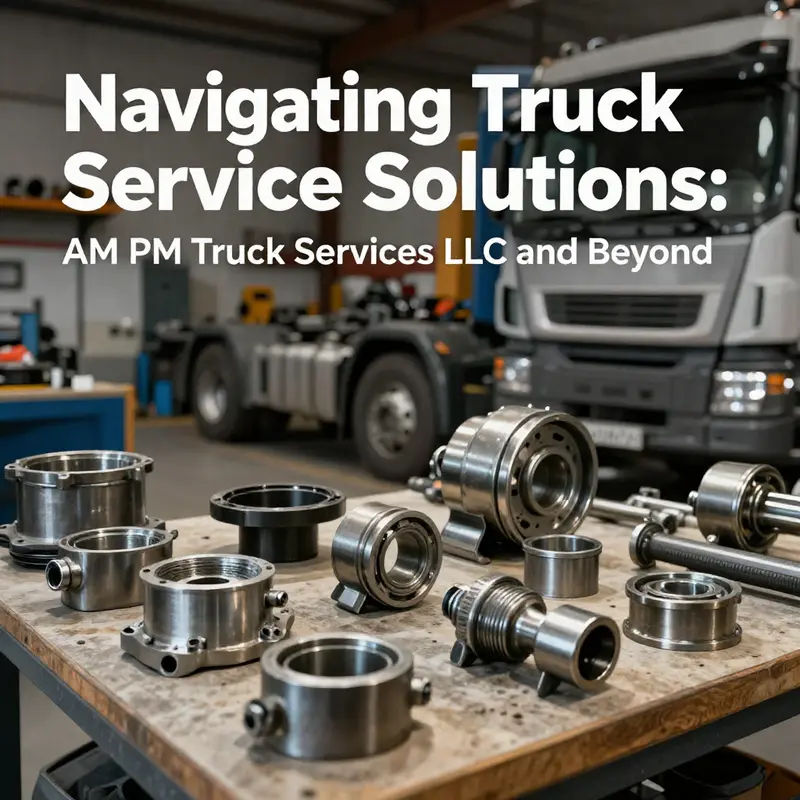
In Houston, where thousands of miles of highways and industrial corridors converge with the heat of a Texas day, the reliability of a fleet rides on something often overlooked: the quiet trust a part place offers when a truck pulls into the yard. Public information about AM PM Truck Services LLC in Houston can be hard to pin down through official channels, yet the city’s vast logistics network makes it clear that the backbone of everyday trucking relies on shops and suppliers that prize quality, precision, and dependable service. The maintenance decisions a fleet makes in this environment ripple outward as safety for drivers, on-time deliveries, and the ability to meet demanding schedules. When a vehicle is thousands of pounds heavy and moving at highway speeds, the difference between a routine repair and a roadside breakdown can hinge on the parts installed and the fit they provide. In such a landscape, the message from industry professionals is consistent: quality parts are not a luxury; they are a prerequisite for uptime and safety in a market as busy as Houston’s.
Quality parts are more than a label; they are designed to exact specifications so that fit, function, and durability align with the vehicle’s engineering. In the heavy-duty world, a part must withstand vibration, high temperatures, and long service intervals that stretch fleets across long routes and tight turnarounds. When a part is designed to spec, a technician can anticipate how it will interact with sensors, brackets, and adjacent systems. This predictability translates into smoother maintenance cycles, fewer surprises, and less calibration drama during install. Conversely, substandard or mismatched parts disrupt this harmony. They can impose undue stress on adjacent components, accelerate wear, and increase the likelihood of cascading failures that interrupt a fleet’s day. The stakes are not abstract; in commercial trucking they are measured in minutes of downtime and dollars spent on emergency repairs, not merely the price tag on a single component.
From an operations perspective, the choice between OEM-equivalent parts and high-quality substitutes matters as much for safety as for long-term cost control. The right part is the one that returns the system to its intended state—restoring the vehicle’s performance envelope and preserving reliability. High-quality components are engineered to handle the same load profile as the original, offering consistent tolerances and predictable responses under load. When a transmission, braking, or fuel system component is manufactured to rigorous standards, a fleet can expect fewer recalibrations, steadier fuel economy, and reduced inadvertent wear that often comes from misfit parts. These outcomes matter most in a city where freeway weaving, port access lanes, and night-time operations demand calm, predictable performance rather than improvisation.
The practical reality of maintaining a Houston-based fleet is that procurement is a regional science as much as it is a technical one. Fleets neither stockpile every possible part nor rely on a single source. Instead, they cultivate a network of trusted suppliers who can deliver the right part promptly, verify compatibility with the VIN and part numbers, and back up the purchase with straightforward warranties. Verification of parts is not a perfunctory step. It involves confirming part numbers against the vehicle’s VIN, understanding whether the part is intended for a specific model year, and ensuring that environmental conditions—such as Houston’s heat and humidity—won’t compromise performance. For critical components like engine electronics or transmission modules, the margin for error is especially small. An incorrect part number or a sloppy installation can lead to miscommunication between the software and hardware layers that govern engine control systems, idle behavior, and shift timing. The bottom line is clear: accuracy, compatibility, and quality are inseparable when the stakes include driver safety and fleet uptime.
This is the broader context in which Houston fleets operate—a landscape populated by large-scale distributors, regional specialists, and independent shops each playing a role in keeping trucks moving. The ecosystem benefits from diversity: a fleet can source OEM-equivalent parts when needed, while also leveraging well-vetted high-quality alternatives for routine wear items. The market’s vitality rests on the trust that suppliers and service providers exchange with operators: when a technician installs a part, there is confidence that the vehicle will perform as expected on the road ahead, not just in the workshop light. In an environment where delays reverberate through supply chains and customer commitments, that trust translates directly into operational efficiency. The maintenance narrative thus shifts from a narrow focus on one repair to a broader discipline: selecting partners who can provide the right part, verify compatibility, and stand behind their work with warranties and clear aftercare.
Within this narrative, the role of knowledge resources matters as well. Fleet managers and shop technicians increasingly lean on industry guidance to align practices with safety and efficiency goals. They seek clarity on what constitutes a “quality part” beyond a price tag. They ask whether a component’s design embraces the tolerances and materials that endure Houston’s climate and road conditions. They assess the supplier’s track record for delivering genuine or high-quality aftermarket options and whether installation guidance, diagnostic support, and post-install testing are part of the package. In this sense, quality becomes a service attribute, not merely a product attribute. It encompasses traceability, parts compatibility checks, and a commitment to ongoing support if a concern arises after installation. The operational payoff is the same: fewer road calls, fewer unplanned outages, and more miles covered with predictable, reliable performance.
For readers following the practical how-to of fleet maintenance, it helps to consult resources that translate these principles into actionable practices. The core idea is straightforward: invest in parts that meet precise specifications, verify compatibility with the vehicle’s VIN, and pair those parts with technicians who understand how the entire system should behave under real-world conditions. This approach is reinforced by industry voices that emphasize the importance of choosing the right size, ensuring safety compliance, and funding durable components as part of a responsible maintenance strategy. In Houston’s context, where the variance in operating conditions can be substantial—from urban traffic to long-haul corridors—the cost of quality, when viewed through the lens of uptime and safety, becomes a compelling business decision rather than a mere line item. It is also a reminder that a well-considered maintenance plan is a living protocol, one that evolves with new knowledge, evolving best practices, and the experiences of responsible fleet operators who have learned to value reliability as much as speed.
To those tasked with keeping a fleet on the move, the learning is actionable and practical. Build a habits-based approach to part selection that begins with a clear specification check before any purchase, followed by a rigorous fitment verification at the time of install. Encourage technicians to document part numbers, VINs, and any calibration steps required after installation. Establish a relationship with suppliers and service providers who can offer warranties on parts and a reliable path for aftercare. In a market as dynamic as Houston’s, where freight demands and driver hours can shift quickly, the ability to count on a trusted part and a competent technician becomes a fundamental competitive advantage. When a fleet owner speaks of value, this is often the core of it: the part that goes in today keeps the truck on the road tomorrow, week after week, mile after mile.
For readers seeking further context on the critical role of quality parts in trucking, practical resources exist that articulate how these decisions translate into higher uptime and safer roads. A respected industry resource outlines the broader benefits of choosing quality truck parts, underscoring how precise sizing, safety conformance, and component durability contribute to long-term savings and reliability. This kind of guidance can help fleets in Houston calibrate their procurement and maintenance strategies against their operational realities. To explore these ideas in more depth, see the external resource linked at the end of this chapter. Additionally, fleets may find value in reviewing general maintenance guidance and community-driven insights through industry blogs, such as the practical perspectives shared on several well-regarded platforms. For readers looking to ground their decisions in a broader conversation, one helpful starting point is the ongoing discourse around the philosophy of quality in truck parts, which frames the issue as both technical and managerial rather than purely mechanical.
In sum, Houston’s trucking ecosystem rewards choices that emphasize precision, fit, and durability. The parts that go into a heavy vehicle are not mere components; they are the interface between design intent and real-world performance. The more an operator can insist on correct specifications, proper installation, and dependable aftercare, the more predictable and economical the fleet becomes. Even in markets where information about a specific local shop is sparse, the principle holds: quality parts enable safer operation, reduce downtime, and extend the useful life of a vehicle through consistent performance. The practical takeaway is simple. Build a maintenance discipline around parts that are designed for your truck’s exact needs, verify every detail against the VIN and the model’s specifications, and insist on partnerships that are as committed to uptime as you are. As the Houston chapter of trucking progress continues to unfold, that commitment to quality will remain a constant driver of safer roads and steadier schedules.
To learn more about practical maintenance guidance and industry perspectives, explore the following resource from the broader trucking community: 5startruckin.com/blog.
External resource: https://www.truckparts.com/importance-of-quality-truck-parts
Final thoughts
Understanding the landscape of truck services in Houston, especially the role of companies like AM PM Truck Services LLC, equips long-haul drivers and fleet managers with essential knowledge. By exploring various service providers, evaluating quality, and recognizing competitors, trucking professionals can make informed choices that enhance vehicle performance and reliability. Quality parts play a vital role in this ecosystem, ensuring that every repair and maintenance task meets industry standards. Prioritize reliability in your trucking needs to keep your operations running smoothly.