
For long-haul truck drivers and fleet managers, the S Service for a Peterbilt truck represents a critical aspect of vehicle maintenance that ensures safety, reliability, and compliance with regulations. This extensive service checks everything from brake systems to exhaust emissions, making it essential for maintaining optimal performance on the road. Over the following chapters, we will delve into the key aspects of S Service, explore its importance in ensuring safety and reliability, examine its role in meeting regulatory standards, and discuss how it maximizes efficiency and the lifespan of your truck. Each part plays a crucial role in maintaining the integrity of your vehicle and ensuring you can focus on what matters most: delivering your cargo safely and on time.
S Services Uncovered: How a Peterbilt’s Preventive Maintenance Intervention Protects Power, Profit, and People
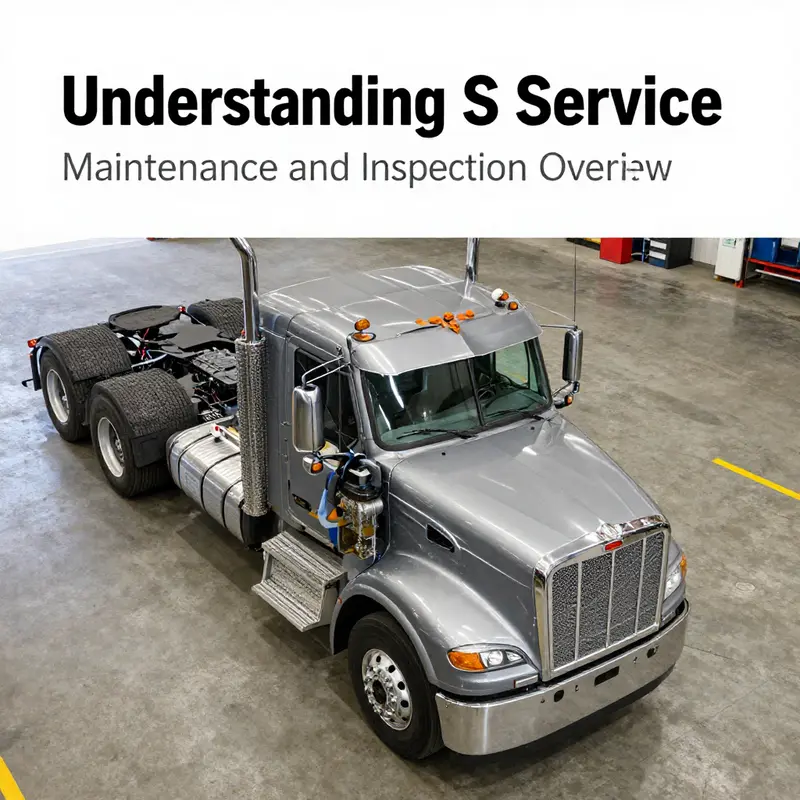
When fleets schedule maintenance for their Peterbilt tractors, they are not simply ticking boxes. They are orchestrating a preventive care plan that keeps drivers safe, cargo secure, and uptime steady. An S Service is the core of that plan. It is a comprehensive inspection and servicing routine that centers on keeping the truck’s lifeblood—its systems of lubrication, fluids, and wear items—in balance. The goal is straightforward: detect small signs of wear before they become large, expensive failures. In the long run, this approach reduces ground time, lowers maintenance costs, and helps operators meet the exacting demands of highway regulations. The service is not a one-and-done event; it is a disciplined, scheduled practice that aligns with the truck’s operating profile and the fleet’s maintenance philosophy, creating a predictable rhythm in an industry where unpredictability often translates into expensive surprises.
To understand why an S Service matters so deeply, picture the Peterbilt as a network of moving parts whose reliability depends on a precise interplay of lubrication, fluid quality, and wear resistance. The first and most visible pillar is lubrication. The service requires a careful audit of all vital fluids—engine oil, coolant, brake fluid, and transmission fluid—ensuring levels are correct and fluids are in good condition. In Peterbilt maintenance literature, neglect in this area is linked to costly rework and unplanned downtime. The technician checks for contamination, viscosity consistency, and the presence of any leaks that could signal a developing fault downstream in the system. The idea is not simply to top up fluids, but to verify that each fluid can perform its job under the load, heat, and vibration of long-haul operation. When the oil is fresh and the coolant clings to its designed temperature, the engine can breathe easier, friction is minimized, and wear rates stay within expected bounds. This is the quiet, ongoing work that often goes unnoticed until a breakdown or a performance dip occurs, at which point the cost of repair often dwarfs the cost of a routine service.
Greasing, the second foundational element, receives careful attention in the S Service. A full grease job addresses chassis and suspension points—bearings, joints, and zerk fittings that endure constant motion and exposure to dirt, salt, and road debris. Best-practice guidance from fleet maintenance experts places a full grease interval somewhere in the 20,000 to 25,000-mile range, depending on operating conditions. In heavy-duty applications, especially when tractors traverse varied roads, this interval helps prevent galling and premature wear that can cascade into misalignment or reduced ride quality. The act of greasing is more than maintenance; it is the preservation of the vehicle’s geometry. Proper lubrication of joints and pivots preserves steering precision and ensures suspension components respond predictably to the driver’s input. When greasing is neglected, small play grows into handling quirks and increased tire wear, both of which can erode margins and safety margins alike. The S Service thus acts as a preventative measure that protects not only the longevity of components but also the quality of the ride and the predictability of performance under heavy loads.
A third, equally vital component of the S Service involves tire care and brake system evaluation. Tires bear the direct burden of road conditions and payload. The inspection checks inflation pressures against the manufacturer’s specification, visual tread depth, and signs of uneven wear or damage. Low or uneven tread can undermine traction, fuel efficiency, and braking performance. For a Peterbilt, where highway miles and varied topographies are common, tires are the single greatest variable in contact with the road. The brake system, too, receives a thorough check: pad thickness, rotor condition, and hydraulic or pneumatic pressure that ensures the vehicle can stop reliably and smoothly. In a field where a single underperforming brake can create a cascade of safety risks, the S Service treats brakes as a non-negotiable priority. The technician also looks for signs of heat damage or glazing on rotors, which can indicate excessive heat or misalignment and should be addressed before it compromises performance.
The engine and its fluids anchor the service’s preventive strategy. An engine oil change is a central milestone in many maintenance schedules. For many Peterbilt-operated fleets, the recommended interval is around 50,000 miles or 1,250 operating hours, whichever comes first, with 10W-30 semi-synthetic oil serving as a robust baseline for durability and clean running. The choice of oil is not arbitrary; it blends viscosity characteristics with the engine’s tolerances and the demands of long-haul operation. When the oil is changed on schedule, internal friction decreases, heat is managed more effectively, and the risk of sludge formation is reduced. The S Service, therefore, anchors a broader engine health assessment that includes a review of belts and hoses, the integrity of electrical connections, and the readiness of lights and sensors. A clean oil circuit supports robust lubrication everywhere the engine needs it, from turbocharger bearings to camshaft lobes, helping sustain power output across the miles.
Fluid health and the supporting electrical ecosystem are inseparable topics in a modern Peterbilt maintenance narrative. Beyond engine oil and coolant, a full check includes transmission fluid levels and quality, brake hydraulic fluid, and the sequencing of fluid maintenance to avoid thermal or chemical imbalances. The electrical system—wiring harnesses, connectors, and lighting—receives a visual and functional audit. Fault codes might not always illuminate a problem at service time, but a careful technician will assess wiring wear, the condition of insulation, and the integrity of fuses and relays. In long-haul operations, where electrical demands scale with auxiliary equipment, battery health and charging systems assume a pivotal role. A robust electrical assessment reduces the odds of impaired lighting, dash warning states, or starting difficulties that could strand a driver on the road.
The S Service does more than items on a checklist; it invites a diagnostic mindset. A technician will examine the exhaust system and emission controls for leaks, corrosion, or deterioration that might escape notice in a casual inspection. Modern transportation environments impose stricter emission standards, and the exhaust path is a critical conduit for regulatory compliance as well as engine efficiency. Any leakage or deterioration increases emissions and can degrade performance characteristics like torque delivery and fuel economy. Likewise, steering and driveline components are tested for play, alignment, and response. The driver must experience predictable steering input and consistent driveline behavior under a variety of loads and speeds. Subtle looseness or misalignment can lead to uneven tire wear, reduced control, and, in some cases, costly rework in the form of front-end components or alignment services. The S Service, by combining multiple system checks into a single, structured event, creates a holistic picture of vehicle health that would be difficult to assemble from isolated inspections.
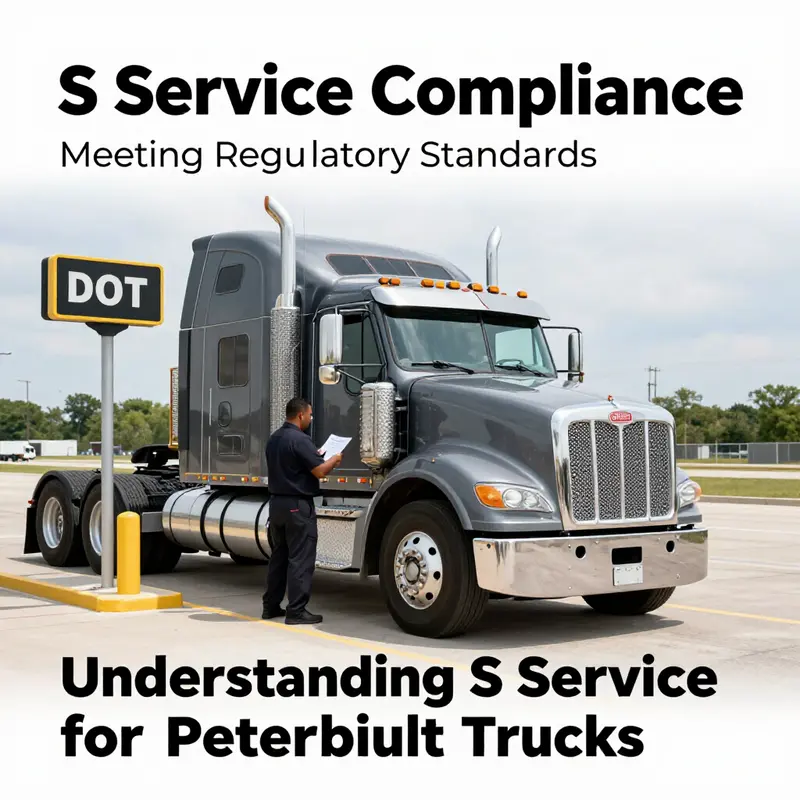
All of these checks are more than mechanical housekeeping; they are strategic assets for fleet operators. When maintenance is scheduled and executed with discipline, downtime declines because problems are identified before they fail. A well-executed S Service minimizes the risk of in-service breakdowns in remote corridors or on busy interstates, where failure can carry a heavy price in time, fuel, and safety. The preventive logic also feeds into fuel efficiency, because properly inflated tires, aligned drivetrains, and clean engine oil all contribute to lower resistance and better combustion efficiency. In a fleet context, this means more predictable operating costs and a more reliable service schedule that drivers and dispatchers can depend on. The role of the S Service in compliance is equally important. Regular inspections and proper maintenance records align with Department of Transportation safety standards, ensuring that the equipment remains road-legal and safe for the long-haul work that Peterbilt trucks are built to perform.
Practical execution is as essential as the theory. In many fleets, the S Service is part of a preventive maintenance program designed to protect capital assets and maintain contract warranties and service commitments. The service is typically performed at defined intervals or after reaching specific mileage thresholds, reflecting the reality that wear accumulates with use. The actual service can involve a combination of top-off tasks, lubrication and greasing, components replacements when warranted, and a comprehensive inspection of functional systems. A Peterbilt technician will often document each check in the vehicle’s maintenance record, noting any deviations from specification and outlining recommended follow-up actions. This documentation becomes a traceable history that informs future service windows, part orders, and potential resale value. Fleet managers who treat S Service as a living component of their maintenance strategy report lower total cost of ownership and higher uptime, a testament to the value of proactive care over reactive repairs.
For operators seeking to embed this philosophy into daily practice, training and standardization are central. Formal maintenance training provides technicians with the confidence and the repeatable methods needed to execute the S Service with consistency. It also helps fleets align their internal routines with the practices outlined in manufacturer manuals and industry best practices. The training dimension complements the hands-on work, creating a culture in which preventive care is valued as a discipline rather than a series of isolated tasks. In this sense, the S Service becomes not just a set of steps, but a shared standard that informs scheduling, route planning, and driver handoffs. It is this synthesis of rigorous procedure, practical maintenance, and disciplined scheduling that makes the S Service a cornerstone of fleet resilience. For teams looking to reinforce their maintenance knowledge, practical training resources are available that delve into the nuances of maintenance service protocols, including the dedicated modules that staff rely on during routine service events. maintenance teams are increasingly turning to structured resources such as the fire-truck-maintenance-service-training to sharpen the accuracy, speed, and safety of their preventive routines, translating specialized training into everyday reliability for the broader fleet.
As fleets grow and routes multiply, the value of the S Service scales accordingly. The chapter of maintenance that begins with lubrication and fluid checks extends into a broader narrative of reliability engineering for heavy-duty trucking. The S Service is more than the sum of its parts because it connects the driver’s daily experience with the technician’s precision and the fleet’s strategic objectives. A well-executed S Service reduces the likelihood of unplanned downtime, supports consistent fuel economy, and helps meet regulatory expectations with a defensible maintenance record. It is a practical, disciplined approach to safeguarding a vehicle that carries people, cargo, and responsibility across long distances. In this sense, the S Service embodies a core principle of professional trucking: proactive care today for predictable performance tomorrow. The Peterbilt truck, with its reputation for rugged durability and driver-friendly design, rewards such care with prolonged life on the road and a steady cadence of service rather than the drama of surprise failures. The chapter on S Service, therefore, remains a guide not only to maintenance activities but to a mindset—one that treats every mile as an opportunity to protect the vehicle, the crew, and the mission they serve.
External resource: https://www.nhtsa.gov
S Service Demystified: How Routine Maintenance Keeps a Peterbilt Safe, Reliable, and DOT-Ready
S Service is more than a routine check on a schedule. It is the disciplined core of preventive maintenance that keeps a Peterbilt safe, reliable, and compliant mile after mile. With planned cadence, inspections focus on critical systems, lubrication, and verify wear before it becomes a risk. The process emphasizes driver feedback, technician verification, and documented results. The cadence commonly runs every 15,000 miles or annually, but fleets adjust based on duty cycle and climate. A thorough S Service covers brakes, tires, steering, exhaust, fluids, and emissions controls; it includes a road test to confirm performance. By catching wear early, it reduces unplanned downtime, supports regulatory compliance, and reinforces driver confidence. For operators, the S Service is a strategic asset that protects people, equipment, and schedules across long hauls and varied terrain.
null
null
S Service Demystified: Extending Longevity and Uptime for Peterbilt Trucks
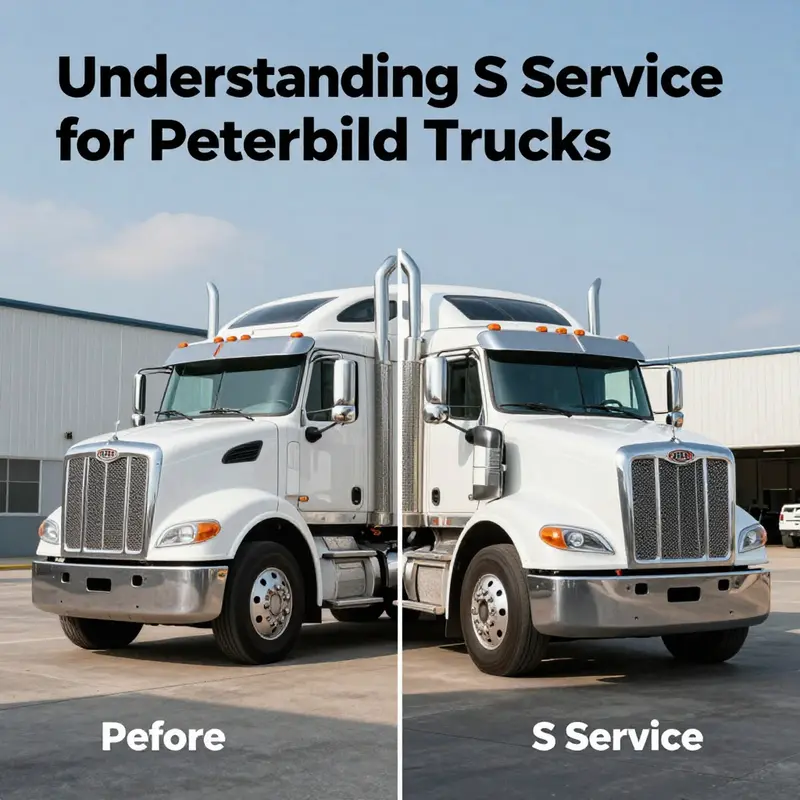
In the demanding world of long-haul transportation, the true margin of profitability rests as much on uptime as on the payload you carry. A Peterbilt truck, when cared for through a disciplined S Service, becomes not just a vehicle but a reliability asset. This service, a cornerstone of preventive maintenance, is designed to keep the truck safe, compliant, and ready for the road at scheduled intervals or after a defined mileage threshold—often every 15,000 miles or annually. It is not a vague ritual but a structured, comprehensive inspection and service that touches every critical system in the truck. When fleets understand this, they start to see maintenance as an investment in predictable performance rather than a cost center with unpredictable downtime.
At its core, the S Service is an integrated check that begins with the fundamentals and expands to the sophisticated tools that modern Peterbilt models bring to the field. Technicians begin with a thorough inspection and lubrication of chassis and suspension components. This is more than just greasing joints; it is evaluating wear patterns, checking bushings and springs, and confirming that alignment is within specification. Any looseness or irregular wear on the suspension can quietly erode steering feel, tire life, and ride quality, which, over time, translates into higher fuel burn and greater wear on other systems. The aim is to catch issues before they manifest as a roadside failure or a costly, unplanned downtime event.
Brakes are the heartbeat of safety on any heavy vehicle, and a Peterbilt S Service places special emphasis on brake systems. Technicians inspect brake pads and rotors, verify the condition of the brake discs where applicable, and ensure that the air pressure and brake plumbing meet exacting standards. The inspection includes a check for air leaks, proper venting, and the integrity of the brake lines and modulating valves. In a fleet operation, where braking efficiency correlates with tire life and fuel economy, this step is pivotal. A well-balanced brake system not only shortens stopping distances but also reduces heat buildup in the drums and rotors, extending their life and maintaining predictability in performance under load.
Tire condition is another focal point. The S Service evaluates tread depth, even wear, inflation pressures, and wheel end integrity. Tire health directly impacts fuel efficiency and safety, especially on long routes where road conditions fluctuate. The service also looks for sidewall damage, puncture susceptibility, and potential alignment issues that might cause uneven tire wear. Because a tire that underperforms on a long haul can become a silent driver of fuel inefficiency and risk, this component of the service is not a mere formality but a core efficiency lever.
Fluid health is the bloodstream of the truck. The S Service includes a careful examination ofengine oil, coolant, transmission fluid, and other vital fluids. The goal is not just to replace fluids on a schedule but to verify that volumes are correct, that contaminants are not present, and that each fluid supports optimal operating temperatures and lubrication regimes. In many Peterbilt engines, extended oil-change intervals are possible due to robust engine design, but the service still demands a precise assessment of oil condition, viscosity, and contaminant levels. A contaminated oil, or one that has degraded beyond its protective capability, can erode bearing surfaces and reduce efficiency—precisely what a preventive maintenance program seeks to avoid.
Electrical systems, lighting, and harnesses receive careful scrutiny as well. A modern Peterbilt is a networked machine, with sensors and control modules communicating across the powertrain, safety systems, and telematics. The S Service includes a test of lights, wiring integrity, sensor operability, and overall electrical health. Fault codes may point to issues long before a dash light becomes active, allowing the technician to plan repairs with minimal disruption to service.
The exhaust system and emission controls are continually evolving in response to stricter regulations and cleaner operation. During the S Service, technicians inspect exhaust manifolds, pipes, sensors, and any particulate filters or aftertreatment devices that the model uses. They verify that all emission controls are functioning correctly and that the system remains sealed and leak-free. This is especially important in a regulatory landscape where noncompliance can trigger downtime or penalties, and where diesel particulate filters or selective catalytic reduction components depend on proper maintenance to stay effective.
Steering and driveline components, including universal joints, coupling, and driveline angle, are assessed for play, misalignment, and vibration allowance. A small looseness can lead to bigger issues down the line, such as vibration-induced wear or accelerated component fatigue. When the S Service succeeds, the truck feels precise and confident on the highway, with predictable steering response and a smooth transfer of torque to the axle.
What makes the S Service particularly powerful today is how it blends hands-on maintenance with the digital intelligence embedded in modern Peterbilt trucks. The Peterbilt family has built a digital ecosystem around its tractors, integrating diagnostic tools and data streams that technicians can use in real time. In practice, this means a technician not only inspects by sight and touch but also reads the truck’s health through advanced diagnostic instruments. These tools can reveal breathing issues in the engine, cooling anomalies, or gradual performance degradation that—if left unchecked—would compromise efficiency and reliability. The result is a service that captures both the art of traditional inspection and the science of predictive diagnostics.
At the heart of this digital approach is SmartLINQ, Peterbilt’s telematics platform. Real-time monitoring of engine health, fuel consumption, and driving behavior provides fleet managers with a dynamic picture of how a truck is performing in the field. Predictive maintenance alerts, generated by data trends, can signal issues before they become failures. The system translates raw data into actionable insights, enabling managers to adjust maintenance windows, plan parts procurement, and even optimize routes to improve overall fuel efficiency. It is the difference between reactive maintenance and a proactive program that keeps trucks out of the shop and on the road longer.
For operators managing large fleets, the S Service is further empowered by Peterbilt’s support network. With more than 200 service locations across North America, qualified technicians become a resource that extends beyond a single shop visit. When a breakdown looms on a highway miles from the nearest facility, 24/7 roadside assistance and mobile service fleets provide rapid support, minimizing downtime and preserving delivery schedules. The combination of a broad network and mobile capabilities makes preventive maintenance practical and reliable, turning what could be a costly downtime event into a manageable maintenance episode.
Regular maintenance built into the S Service isn’t a rigid prescription but a disciplined rhythm that respects the truck’s design and the operator’s operation. Timely oil changes remain central, even though modern engines are engineered for durability. Filter replacements, too, play a critical role in sustaining airflow, fuel delivery, and lubrication efficiency. The intelligent transmission system is specifically highlighted during the service because smooth gear transitions contribute to fuel efficiency and driveability, especially in heavy-haul applications where torque delivery and engine rpm swing can affect every mile traveled.
The evidence behind this approach is not only anecdotal. In models designed for long life on the road, Peterbilt engineers have targeted engine reliability that can extend major overhaul intervals to the order of hundreds of thousands of miles, often cited around 500,000 miles under ideal stewardship. This does not imply that maintenance can be lax; rather, it underscores how a well-executed maintenance program, anchored by the S Service, can realize the full potential of the drivetrain and supporting systems. The underlying principle is clarity: maintenance acts as a multiplier for longevity, reliability, and total cost of ownership.
The broader value proposition of the S Service emerges when maintenance information moves from the workshop into the wider lifecycle of the truck. The digital tools quantify the return on investment by showing improved fuel economy, reduced unscheduled downtime, and longer intervals between major service events. Fleet managers can align maintenance with real-world usage patterns, tailoring the service cadence to regional climates, routes, and operating tempos. When a truck spends less time in the shop and more time on the road, the financial calculus of long-haul operations shifts in favor of durability and predictability.
To illustrate how this philosophy translates into day-to-day practice, consider a typical longitudinal maintenance cycle in a Peterbilt-equipped fleet. A truck travels thousands of miles across varied routes; the S Service resets on schedule, performing its comprehensive checks. If SmartLINQ detects a trend in rising oil temperatures or slight inefficiency in one of the fuel injectors, the technician can flag this for a targeted inspection during the upcoming service window. The anticipation of such issues, rather than their unexpected appearance, makes routine maintenance more predictable and less costly when it comes to parts and labor. In addition, the integration of training resources—such as hands-on maintenance training materials and courses for technicians—ensures that the workforce remains skilled in evaluating and addressing the full spectrum of issues disclosed by the S Service and the connected digital tools. For hands-on resources and practical training references, see the dedicated materials available through fire-truck maintenance service training resources.
The practical takeaway for an owner-operator or a fleet manager is clear. The S Service is not merely a checklist; it is a coordinated program that integrates mechanical discipline with digital intelligence and a supportive service network. It is designed to keep a Peterbilt on the road at peak efficiency, to reduce the risk of unexpected failures, and to maintain compliance with safety and emissions regulations. The aim is a durable, reliable asset that delivers predictable performance mile after mile, season after season. When this approach is embraced, the truck becomes more than a vehicle—it becomes a well-managed, high-value component of a broader logistics ecosystem. For those who want to delve deeper into the practical side of maintenance execution and the training that underpins it, the broader ecosystem of services and resources is readily accessible through the network and partner resources associated with the Peterbilt family.
As fleets plan their maintenance calendars, the S Service remains a central, unifying concept. It is the procedural heartbeat of Peterbilt’s preventive maintenance program, and it embodies a philosophy of proactive care rather than reactive fixes. Integrating sensor-driven diagnostics with a rigorous inspection routine creates a feedback loop that continuously improves reliability, efficiency, and safety. In an industry where the difference between a planned stop and a breakdown can determine a company’s reputation and profitability, the S Service represents a strategic alignment of people, process, and technology. It is the practical embodiment of durability, designed to honor the endurance of Peterbilt’s engineering and the demanding realities of long-haul operation.
External Resource: For the most current, model-specific service procedures and technical specifications, consult the official Peterbilt site at https://www.peterbilt.com.
Final thoughts
Understanding the nuances of S Service for your Peterbilt truck not only empowers truck drivers and fleet managers but also enhances their operational efficiency. By embracing regular maintenance and inspections included in S Service, you can ensure your vehicle’s safety, reliability, and compliance with necessary regulations. Ultimately, this commitment to upkeep translates into prolonging the lifespan of your truck and maximizing its performance on the road. So, make S Service a regular part of your maintenance routine, and keep your wheels turning smoothly for many miles to come.