
In the increasingly competitive trucking industry, third-party service providers (3PLs) are becoming essential partners for long-haul truck drivers, trucking company owners, fleet managers, and aspiring truck drivers. These independent firms handle logistics and transportation duties, allowing companies to focus on what they do best. This article delves into the various aspects of 3PLs, including their roles in enhancing efficiency through advanced technology, the economic impacts they bring, and the vital compliance landscape that governs their operations. Each chapter provides insights into how 3PLs optimize trucking logistics, guard against risks, and contribute to smoother operations.
Beyond the Gateways: How Third-Party Service Providers Redesign Trucking Operations
A third-party service provider in trucking, commonly known as a 3PL, sits at the intersection of demand, supply, and information flow. It is not one of the carriers moving goods from producer to customer, nor merely a broker who makes introductions. A true 3PL takes ownership of multiple logistics tasks, coordinating, optimizing, and often managing whole segments of the transportation process on behalf of shippers or even carriers. In trucking terms, this means turning a jumble of freight needs, available trucks, route constraints, and compliance obligations into a coherent, reliable journey from pickup to delivery. The result is not just a smoother operation; it is a transformation that can change how a business competes on service, cost, and resilience. Understanding this shift requires looking beyond labels to the core functions, technology, and strategic advantages that 3PLs bring to the table.
At the heart of a 3PL in trucking is the ability to oversee transportation management with a scale and specialization that many shippers cannot replicate in-house. This includes selecting and managing carriers, scheduling and dispatching freight, and providing real-time visibility into movement and status. But the scope goes deeper. A 3PL often covers warehousing and inventory control when required, order fulfillment in multi-channel contexts, and even customs brokerage for shipments crossing borders. Value-added services can include packaging, labeling, and special handling, all designed to keep goods moving smoothly through complex supply chains. In this way, a 3PL acts as an external partner who harmonizes the flow of goods with the realities of networks, fleets, and regulations.
One of the most important distinctions to grasp is the difference between a 3PL and a traditional freight broker. A broker connects shippers with carriers, earning a fee for each match. A 3PL, by contrast, builds a broader set of capabilities around that core connection. It may still rely on a network of carriers, but it also assumes ongoing responsibility for performance, data bring-up, and ongoing process improvement. This creates a more continuous relationship with the shipper. The 3PL can align transportation with inventory planning, procurement, and even production schedules, turning logistics into a strategic lever rather than a series of isolated transactions.
In trucking operations, the practical responsibilities of a 3PL revolve around several interlocking functions. Transportation management is front and center: the 3PL designs routes, times pickups, and coordinates deliveries in ways that maximize asset utilization and minimize dwell time. Carrier management follows closely, with ongoing evaluation of carrier performance, safety records, and reliability. The goal is not simply the lowest price but the best value—considering on-time delivery, damage rates, and the ability to adapt to sudden changes in demand or capacity.
Tracking and visibility are another defining capability. Modern 3PLs leverage technology platforms that aggregate data from GPS devices, telematics, and carrier systems to deliver real-time updates. For shippers, this visibility translates into confidence—the knowledge that their goods are accounted for and en route. For carriers, it creates a more predictable workflow, reducing wasted time and empty miles. The transparency landscape also enables proactive problem solving. When a late pickup or traffic disruption appears, a 3PL can adjust routes, reallocate loads, or re-sequence deliveries before issues snowball into delays.
Documentation and regulatory compliance form the backbone of trust and reliability in logistics. A 3PL takes on paperwork such as bills of lading, proof of delivery, and regulatory forms, ensuring that shipments meet hours-of-service rules and safety standards. This administrative burden is often a barrier for smaller shippers who lack scale. By shouldering it, the 3PL frees the shipper to focus on its core business while maintaining rigorous compliance. The same capability also helps carriers stay compliant and avoid costly penalties, creating a more stable, risk-managed ecosystem for everyone involved.
Rate negotiation and cost management are not about beating rivals with a single discount. They are about leveraging scale, relationships, and data to secure fair pricing and maximize total value. A 3PL sits at the crossroads of demand and capacity, negotiating terms that reflect current market conditions, lane reliability, and service requirements. Because they routinely handle levels of freight that individual shippers cannot command, 3PLs can secure favorable rates and favorable service levels—without compromising margins for the customer. This is where cost efficiency becomes strategic, not merely transactional.
From a client perspective, the value add comes into sharper focus when things go wrong. Freight moves through a system that can encounter delays, equipment malfunctions, or even unanticipated regulatory changes. In such moments, a 3PL functions as a single point of contact for the shipper, the carrier, and the customer audience. The speed and clarity of communication matter as much as the speed of the move itself. A well-coordinated 3PL reduces the friction of problem resolution, turns disruption into recovery, and maintains service levels even under pressure. This is not merely about expedience; it is about preserving customer trust and protecting revenue streams that depend on reliable delivery.
Technology amplifies all these functions. The rise of digital platforms, data dashboards, and integrated systems has elevated the 3PL from a logistics manager to a systems integrator. Real-time data feeds, robust GPS tracking, and predictive analytics enable more precise planning and more responsive execution. Integrated ERP and transportation management ecosystem capabilities let a 3PL align warehouse capacity, inventory levels, and transportation routes in a single, coherent picture. For a shipper, this means fewer surprises, faster iterations, and better alignment between demand signals and supply capabilities. For a carrier, it means steadier loads, fewer empty miles, and improved dispatch efficiency.
The strategic importance of 3PLs in trucking grows as supply chains become more complex. Global trade, multi-echelon inventory, and the demand for rapid delivery push logistics into a realm where internal teams can be overwhelmed by the number of moving parts. A 3PL offers scale without requiring a shipper to build new departments or invest heavily in capital equipment. It can absorb fluctuations in volume, handle seasonal spikes, and provide a level of process discipline that smaller organizations struggle to sustain. In return, shippers gain a level of operational resilience that helps them weather disruptions—whether caused by weather events, port congestion, or labor shortages—without sacrificing delivery performance.
This resilience is not an abstract construct. It manifests in concrete metrics: improved on-time performance, reduced damage rates, shorter cycle times, and higher fill rates. It also appears in the business outcomes that matter most to executives—customer satisfaction, repeat business, and the ability to scale into new markets. A 3PL’s resilience stems from its access to diversified carrier networks, multi-modal alternatives, and the disciplined governance that comes with mature processes. In an era where speed and reliability are non-negotiable, the ability to orchestrate a complex network of stakeholders becomes a core competitive advantage.
Technological enhancements are not trends; they are prerequisites for modern 3PL operations. Real-time dashboards translate data into action. GPS and telematics provide ground truth on vehicle locations and conditions. Predictive analytics anticipate delays, and proactive route optimization minimizes risk. IP-based integrations with enterprise systems enable end-to-end visibility that covers order placement, inventory adjustments, and delivery confirmation. This level of integration supports a tighter feedback loop: when a shipment misses a milestone, the system triggers a corrective action, from rerouting to rescheduling to customer notifications. The overarching effect is a transportation pipeline that feels almost anticipatory rather than reactive.
Strategically, the value proposition of a 3PL in trucking rests on three pillars: efficiency, adaptability, and focus. Efficiency comes from optimizing the use of assets—trucks, drivers, and warehouses—through better alignment of demand with capacity. Adaptability emerges from the ability to pivot in response to market signals, weather events, or regulatory changes. Focus refers to the shipper’s concentration on core competencies such as product design, marketing, or customer engagement, while leaving the logistics intricacies to experts who do this work every day. Taken together, these pillars explain why many organizations treat the 3PL relationship as a long-term partnership rather than a one-off service.
The scale of the global 3PL market underscores the strategic shift. While numbers shift with market conditions, the underlying trend is clear: e-commerce growth, cross-border trade, and the demand for agile logistics solutions drive ongoing investment in 3PL capabilities. This is not a fleeting convenience. It is an architectural decision about how a company builds its supply chain architecture in the 21st century. For operators in trucking, the 3PL model translates into more predictable logistics outcomes, smoother cash flow through improved throughput, and enhanced capacity to serve customers in a rapidly changing market.
Choosing and managing a 3PL is not a set-it-and-forget-it decision. It requires careful governance, clear performance metrics, and an understanding of where the 3PL adds value and where the shipper must maintain direct control. The most successful partnerships define service levels, escalation paths, and data-sharing norms from the outset. They establish key performance indicators that align with business goals, such as on-time delivery, inventory accuracy, and the cost per mile delivered. And they invest in collaborative planning sessions, not just quarterly scorecards. When the relationship is grounded in shared objectives and transparent communication, a 3PL becomes more than a service provider. It becomes a strategic partner who contributes to long-term growth, risk management, and customer satisfaction.
For readers exploring how a 3PL could fit into their trucking strategy, consider the practical implications. Start with a needs assessment: which parts of the logistics chain are consuming the most time and resources? Is it carrier negotiation, routing, or regulatory compliance? Map out a future state that envisions end-to-end visibility, reduced cycle times, and a clearer line of sight to customers. Then compare what a 3PL can deliver in terms of services, technology capabilities, and partner ecosystems. The aim is to identify a partner whose strengths align with your priorities, rather than chasing a generic bucket of services. When you find that alignment, the 3PL doesn’t just fill gaps; it elevates the entire trucking operation, turning logistics into a source of competitive advantage rather than a cost center.
As an industry note, the conversation around 3PLs is evolving with new models of collaboration and data sharing. Some organizations experiment with blended approaches, combining in-house teams for core strategies with 3PL support for peak periods or specialized lanes. Others leverage 3PLs to test new markets or product lines with less capital risk. In every case, the objective is the same: create a more efficient, more reliable, and more agile supply chain that can respond to customer expectations and market shifts with speed and confidence. The 3PL landscape will continue to evolve as technology matures and as businesses demand greater end-to-end control and transparency. The core idea remains constant: a third-party service provider can convert the complexity of trucking logistics into a cohesive, high-performing system capable of powering growth and sustaining trust in a crowded, competitive market.
Internal link note: for additional context on trucking strategy and service design, you can explore insights from the industry blog dedicated to trucking solutions. 5 Star Truck Inc blog.
External resource: a formal, definitional overview of 3PL is available here for readers seeking foundational clarity. https://www.techtarget.com/searchnetworking/definition/third-party-logistics-3PL
Technology as the Backbone of Third-Party Trucking: Orchestrating Modern Freight
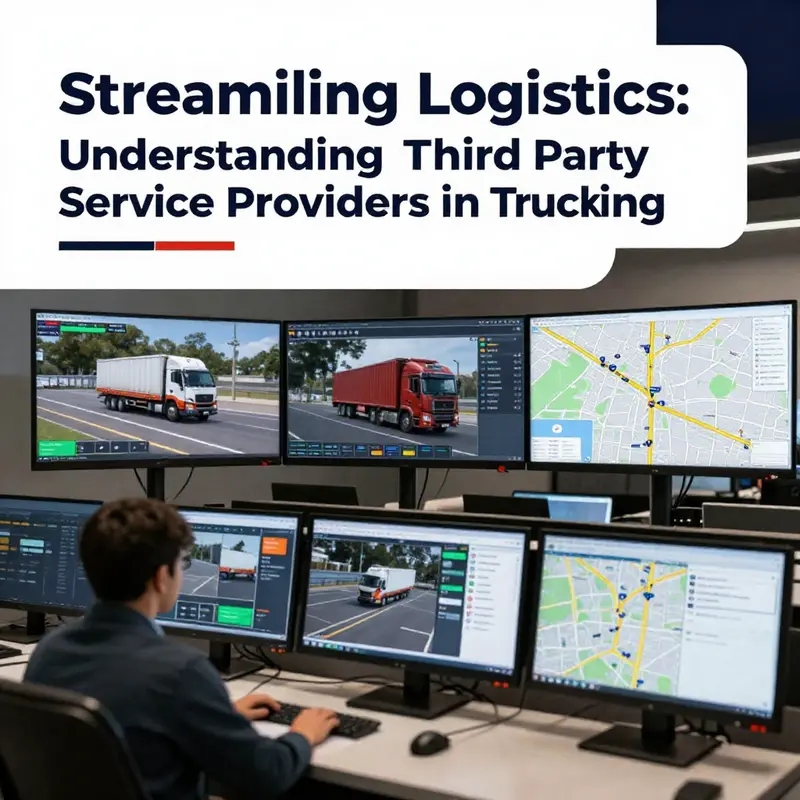
Technology has become less a tool and more the very backbone that supports third-party service providers in trucking. When a shipper entrusts a 3PL with its freight, the engagement no longer hinges on a single truck moving from point A to point B. It rests on a synchronized, data-driven network that stitches together carriers, warehouses, customs, and customers into a transparent flow of goods. The change is not merely about faster dispatch or cheaper rates; it is about creating a living system in which every decision is informed by accurate, timely information. In a landscape where demand can swing with market signals and disruptions can ripple across continents, technology provides the visibility, agility, and resilience that shippers expect and carriers need to optimize utilization. The modern 3PL sits at the intersection of logistics knowledge and software-enabled control rooms, translating complex operational realities into actionable insights that guide every mile of the journey.
At the core of this transformation is a robust tech stack designed to automate and coordinate essential trucking functions. Carrier selection and management, once a labor-intensive process of calling around for quotes and checking reputations, has become a continuous, data-driven activity. Digital marketplaces and performance dashboards allow 3PLs to compare carriers on reliability, fuel efficiency, and on-time delivery for specific lanes and cargo profiles. Instead of forced-bPromise negotiations conducted in a back office, rates are negotiated through platforms that aggregate capacity and performance history, enabling smarter choices that balance cost and service. This shift reduces the administrative drag of the traditional freight quote process while elevating the quality of the match between shipment requirements and carrier strengths. The outcome is not merely savings on rate cards; it is improved service consistency that translates into fewer delays and fewer damaged goods.
Freight scheduling and dispatch have likewise evolved from manual spreadsheets to dynamic, rule-driven orchestration. A modern 3PL uses centralized transportation management systems (TMS) that map the most efficient routes, consider traffic patterns, weather disruptions, and the real-time status of available equipment. AI-powered routing analyzes hundreds of factors—vehicle capacity, driver hours-of-service constraints, local restrictions, and even customer delivery windows—to propose schedules that optimize utilization while preserving service levels. The dispatch process becomes proactive rather than reactive; alerts trigger when a load risks missing a commitment, and alternatives—such as rerouting to a near-by hub or adjusting detour timing—are calculated automatically. This kind of automation does not remove the human element; it elevates it by relieving planners from routine drudgery so they can focus on exceptions and strategic decision-making.
Real-time tracking and visibility stand as perhaps the most visible frontier of modern trucking technology. GPS trackers, IoT sensors, and telematics feed continuous streams of data to cloud dashboards that shipper teams can access from anywhere. The benefit goes beyond the thrill of live location. Real-time data enables precise ETA updates, exception management, and improved coordination with downstream partners. If a truck encounters a slowdown or a gate at a port closes unexpectedly, the system can reroute, reallocate capacity, and notify customers with minimal human intervention. This visibility also supports proactive communication with customers, a feature that has moved from a differentiator to a baseline expectation for ecommerce and retail supply chains where customers demand transparency and control over their orders.
Documentation and compliance, traditionally a source of delays and errors, have become streamlined through automated systems. Digital bills of lading, electronic customs forms, and automated hours-of-service (HOS) checks reduce the risk of misfiling and noncompliance penalties. 3PLs leverage digital silos to verify carrier credentials, ensure insurance coverage, and confirm fleet compliance with cross-border regulations. The result is a smoother, faster movement of goods across borders and jurisdictions. In many markets, automated compliance checks flag potential issues before they halt a shipment, allowing preemptive resolution and a smoother handoff to carriers and warehouses.
Beyond cost management and operational efficiency, 3PLs deploy technology to negotiate and steward value across the supply chain. Rate negotiation becomes not only a matter of price per mile but a comprehensive view of total landed cost, service reliability, and risk exposure. Digital platforms enable 3PLs to leverage scale and relationships with carriers to secure favorable terms for specific lanes and seasonal peaks. The technology also supports performance-based incentives, where consistent on-time delivery, low damage rates, and rapid issue resolution translate into better terms with preferred carriers. In this way, technology sustains a cycle of continuous improvement across the network, with measurable outcomes that go well beyond headline cost savings.
Technology in a 3PL context is not just about the mechanisms of movement; it is about the experiences of customers and the reliability of the supply chain. The most effective 3PLs offer value-added services that are powered by integrated software platforms. Quality inspection, e-commerce fulfillment support, and returns processing can be synchronized with shipment visibility to reduce cycle times and improve accuracy. For instance, a 3PL might perform on-site quality checks at a supplier’s facility and feed the results directly into the shipment’s digital record, making inspection results instantly available to the shipper and to downstream fulfillment centers. Real-time communication with clients becomes a standard feature rather than a special courtesy, and the platform itself acts as the single source of truth for every stakeholder in the chain.
The Shenzhen corridor in China exemplifies how technology can redefine what is possible in third-party trucking. Industry observers note that digital customs systems and real-time tracking platforms have become central to competitive advantage. Shenzhen-based 3PLs increasingly offer end-to-end visibility—from factory floor to final delivery—using integrated GPS tracking, IoT sensors, and AI-assisted route optimization. Multimodal freight management has expanded to include not just overland trucking but the seamless orchestration of freight modes across borders. The automation of documentation and compliance checks helps reduce delays and human error, a critical advantage when timelines are tight and expectations are high. For clients with global supply chains, this means fewer congestion points, better predictability, and a tighter feedback loop between production schedules and delivery commitments.
The broader implications for ecommerce and retail are substantial. In fast-moving consumer markets, speed, accuracy, and transparency are not luxuries; they are prerequisites for customer satisfaction and loyalty. Technology-enabled 3PLs have become partners who translate a shipper’s strategic priorities—speed to market, seasonality resilience, and omnichannel fulfillment—into operational routines and performance dashboards. This is where the narrative moves from cost reduction to revenue enablement. Predictive analytics can alert shippers to potential disruptions long before they become operational crises. Cloud-based dashboards provide instant access to shipment status for buyers around the world, empowering procurement teams, wholesalers, and retailers to adjust expectations, reallocate inventory, or expedite replenishment in response to real-time signals. The data backbone does not merely report the state of a shipment; it informs decisions that may alter product mix, marketing strategies, or channel allocations in the next cycle.
Emerging technologies are expanding the horizon even further. Connected and automated driving systems—while not yet ubiquitous—are beginning to reshape how fleets operate on regional and cross-border routes. Safety, situational awareness, and impact assessment in complex outdoor environments are now being tested in pilot programs with vehicle manufacturers and public-sector partners. The early adopters are not rushing to replace human drivers but are instead augmenting driver performance with smart mobility tools. These tools improve fuel economy, reduce idle time, and enhance lane-keeping, object detection, and braking decisions in real-world conditions. In practice, this translates to steadier asset utilization and lower risk profiles for carriers and clients alike. As automation technology matures, 3PLs that have already invested in interoperable data ecosystems will be best positioned to integrate autonomous features without sacrificing reliability or control.
Choosing a 3PL in this tech-forward era requires evaluating more than service descriptions. The most effective partnerships are grounded in digital integration, real-time data exchange, and scalable platforms that can adapt to evolving demands. Prospective clients should seek providers with interoperable systems that connect carriers, warehouses, customs, and customers into a single, coherent workflow. Tech maturity matters as much as a carrier network; a provider with a mature API strategy, robust cybersecurity practices, and a history of successful cross-border implementations is often a better long-term partner than one with a glossy portfolio but brittle integrations. The focus shifts from simply moving freight to orchestrating a resilient supply chain where data, visibility, and control are the default state rather than the exception.
For readers who want a glimpse of how a trucking organization positions itself within this tech-enabled ecosystem, consider the example of a widely cited industry profile that highlights the importance of technological sophistication in delivering reliable trucking solutions. Exploring the Excellence of 5 Star Truck Inc Your Premier Trucking Solution. This reference points to how a provider communicates its tech-driven approach, from digital order intake to proactive exception handling, and how that approach translates into tangible outcomes for customers who need consistent performance. The case underscores a broader truth: the value of 3PLs in trucking rests as much on process discipline and data discipline as on fleet size or geographic reach. Tech-enabled processes multiply both by reducing waste and by enabling faster, more accurate responses to opportunities and disruptions alike.
The evolving landscape also invites a practical perspective on evaluation. When organizations source trucking and inspection services in dynamic markets, the emphasis is on the provider’s ability to align technological capability with operational reality. This means scrutinizing whether the platform can handle peak volumes, whether data exchanges are standardized and secure, and whether dashboards can be customized to reflect a shipper’s own KPIs. It also means looking at how well the provider’s system supports cross-border workflows, including customs documentation, duty management, and regulatory compliance. Evaluations should consider not just what technologies exist today, but how a 3PL plans to evolve them: adding more sensing capabilities, expanding predictive models, and improving interoperability with a broader ecosystem of carriers and service partners. In that sense, technology becomes a strategic investment, not a one-off upgrade, and the right 3PL stands out by demonstrating a track record of translating digital capability into measurable supply chain resilience.
The narrative of technology in 3PL trucking is therefore a story about connectedness. It is about how diverse actors—the shipper, the carrier, the warehouse, the customs authority, and the end customer—are brought into a shared, real-time operating picture. It is about data quality, data governance, and the discipline to act on insights rather than merely collect them. It is about how smarter scheduling, smarter routing, and smarter documentation converge to deliver predictable, reliable freight movement even in the face of congestion, weather, or political disruption. And it is about the human element—the planners, the drivers, the compliance specialists, and the customer service teams—who interpret signals, resolve ambiguities, and maintain the trust that keeps the entire network functioning during ordinary days and extraordinary shocks alike. In that sense, technology does not replace the art of logistics; it amplifies it, turning a collection of scattered operations into a coherent, resilient system that can grow with the needs of modern commerce.
External resource for further reading on this topic includes industry analyses of 3PL providers operating from Shenzhen and other global hubs, which discuss the criteria for evaluating technological maturity, system interoperability, and proven performance in cross-border logistics: https://www.logisticsmanagement.com/third-party-logistics-in-china-evaluate-3pl-providers-from-shenzhen-for-global-supply-chains/ .
Beyond the Load: The Economic Weight of Third-Party Service Providers in Trucking
A third-party service provider in trucking, often described as a 3PL, steps between a shipper and the road. It is not merely an intermediary but a specialist that orchestrates moving goods with an approach shaped by scale, data, and risk management. This chapter treats the economic weight of that role as more than a logistics footnote. It is a force that reshapes costs, timing, and the very structure of the trucking market. When a business turns to a 3PL, it reaches into a system of capabilities that can compress costs, raise reliability, and shift the emphasis of what it means to compete in a crowded, capital-intensive sector. Yet those benefits coexist with new pressures and externalities that ripple through communities and markets. Understanding this balance helps explain why 3PLs have become a central, and sometimes controversial, feature of modern trucking.
At its core, a 3PL takes on functions that would otherwise require in-house investment or reliance on a mosaic of spot market contacts. Carrier selection and management is a primary lever. Rather than a shipper chasing quotes from a handful of carriers, the 3PL leverages relationships across a broad network to identify the most cost-effective, reliable options for each lane. That sourcing capability rests on a blend of volume discounts, performance data, and long-standing partnerships. It is not merely a price game; it is an optimization problem where the objective is to minimize total landed cost while preserving service quality. The effect on the shipper’s cost structure can be substantial. When a 3PL aligns capacity with demand through strategic carrier provisioning, it reduces the variability that otherwise inflates overhead: overtime planning, empty miles, and expedited shipments that carry a premium. In short, the 3PL becomes a centralized buyer of trucking capacity, translating market frictions into smoother, more predictable expenses for the client.
Freight scheduling and dispatching further illustrate how the 3PL converts complexity into calculable efficiency. The typical trucking operation faces countless micro-decisions—timing windows, lane profitability, driver availability, and equipment utilization. A skilled 3PL uses sophisticated routing algorithms and real-time visibility tools to choreograph pickup and delivery with a precision that individual shippers rarely achieve. This orchestration reduces idle time and improves asset utilization across the carrier network, often yielding lower unit costs for movements that would otherwise be constrained by manual coordination. For the shipper, this translates into faster cycles, improved on-time performance, and a more predictable cash flow, all of which strengthen competitiveness in markets where speed and reliability are differentiators.
Tracking and visibility are not cosmetic features but cost-control mechanisms. Real-time updates allow both shipper and carrier to intervene before a delay turns into a failure in service. The 3PL’s investment in digital platforms—telemetry, proof-of-delivery, exception management—transforms risk into managed certainty. With greater transparency, users can preempt costly disruptions, reallocate capacity in minutes, and negotiate parity in service levels with greater confidence. The downstream effects include lower safety stock, reduced insurance costs, and a more resilient supply chain. But these benefits come with heightened oversight requirements for drivers and dispatchers, as the same minute-by-minute visibility that helps with efficiency can feel like intensified monitoring to those who are on the road. The balance between accountability and autonomy becomes a live tension in the workforce, shaping how drivers and planners experience their day-to-day responsibilities.
Documentation and compliance round out the core suite of 3PL services. Bills of lading, customs forms, hours-of-service compliance, and regulatory reporting are not glamorous duties, but they are the quiet backbone of cost containment and risk reduction. When a 3PL handles these tasks, a shipper avoids penalties, delays, and the reputational drag of paperwork mistakes. Compliance becomes a feature of the operating model rather than a recurring overhead. In practice, this can push labor into higher-value, front-end work—planning, data analysis, and exceptions management—while relegating routine paperwork to automated processes. The economic upshot is a more predictable cost trajectory and a mitigated risk profile for both carriers and shippers. It also shifts the burden of compliance onto the provider with a shared responsibility that can, in theory, raise overall industry standards through a common baseline of performance.
Rate negotiation and cost management are perhaps the most visible economic channels through which 3PLs influence trucking markets. By aggregating demand across multiple clients and harmonizing lanes, 3PLs can negotiate favorable rates that individual shippers might not be able to secure on their own. The leverage comes from scale and data. A 3PL’s access to capacity across diverse markets allows it to dampen peak pricing, smooth seasonal spikes, and optimize tender acceptance. This dynamic can compress the total landed cost for the shipper and can improve carrier utilization by aligning capacity to longer horizons rather than opportunistic spot purchases. The result is a market where price and service quality become more predictable, and where both sides—shippers and carriers—can operate within clearer financial boundaries.
The enhancements in operational efficiency and cost management do not appear in a vacuum. They reconfigure market dynamics. A 3PL can alter the competitive calculus for carriers, who now compete for a broader, more formalized portfolio of work rather than piecing together ad hoc trips. Capacity planning becomes a more continuous discipline rather than episodic bidding for a single lane. In essence, the 3PL ecosystem incentivizes a more disciplined approach to utilization, maintenance planning, and service reliability across fleets. The economic impact expands beyond individual contracts; it reshapes how trucking capacity is tethered to demand signals and how risk is priced into the system.
Yet the economic benefits of 3PL adoption are tempered by a spectrum of externalities—costs and benefits that spill beyond the balance sheet of the contracting parties. On the negative side, broader use of outsourced logistics can intensify traffic in urban cores and increase the frequency of deliveries in tightly spaced time windows. This can exacerbate congestion and, in some cases, elevate local emissions and nuisance factors if deliveries cluster during peak hours. The urban logistics challenge has become a policy conversation in many cities, as planners seek to balance the efficiency gains of consolidated freight with the quality of life for residents. The moral of this tension is that private cost savings can diverge from social costs if the externalities are not adequately accounted for in pricing or regulation.
On the positive side, 3PLs have the potential to reduce environmental impact through load consolidation, optimized routing, and the adoption of greener practices. When a 3PL can fill a full truck with a single, efficient route rather than several partial loads, fuel use per unit of freight declines. Further, many 3PLs are inclined to experiment with sustainable modalities—intermodal transfers, longer-stage routes that reduce empty miles, and the application of cleaner fuel options where feasible. These choices can yield emissions reductions that benefit society at large. In the language of economics, these are positive externalities—outcomes that are not captured in a private contract but enrich the broader community. When such externalities are substantial, they invite policy instruments that aim to align private incentives with public welfare, whether through subsidies, credits, or regulatory frameworks that encourage sustainable logistics practices.
The digital revolution within the 3PL space adds a layer of complexity to how work is organized on the ground. Digitalization improves visibility, coordination, and data-driven decision-making. It can shorten response times, enable more precise load matching, and increase the reliability of scheduled deliveries. For the shipper, the payoff is clear: tighter control over schedules, fewer disruptions, and better capital planning. For drivers, the impact is more nuanced. On one hand, digital tools can reduce guesswork and improve safety by providing clearer instructions and real-time feedback. On the other hand, heightened monitoring and stricter performance KPIs can intensify pressure for on-time performance, reduce discretionary time, and alter the cadence of a driver’s day. Job satisfaction and safety become a delicate balance, shaped by how technology is implemented, the degree of autonomy preserved, and the quality of communications between dispatchers and drivers. The broader social implication is that the future of work in trucking is being recast through digital platforms that connect a dispersed workforce to a centralized information backbone. The result is a more efficient but also more tightly choreographed labor process, one that requires careful attention to fatigue, safety, and worker wellbeing as much as to cost and utilization.
The story of 3PLs in trucking, then, is not a simple tale of outsourcing a function. It is a narrative about how value is created, captured, and distributed across a network of firms, drivers, regulators, and communities. Economically, the 3PL model offers a way to reallocate capital toward technology, analytics, and service design—areas where scale and knowledge yield competitive advantage. It allows shippers to focus on core competencies like product development and market reach while leaving the orchestration of movement to specialists who can do it more consistently and cheaply. It can improve reliability, shorten lead times, and reduce the total cost of ownership for freight movements. But it also shifts risks onto a broader ecosystem and raises questions about congestion, emissions, and the everyday realities of drivers who carry the load. The net effect on the industry depends on how 3PLs balance efficiency with responsibility, innovation with safety, and private gains with social costs.
For readers seeking a broader theoretical lens on these dynamics, the work on systemic influences in modern trucking provides useful context. It highlights how digital platforms connect multiple actors—from technology providers to fleet operators—and how those connections shape both practice and policy. This broader perspective helps explain why 3PLs are not simply third-party brokers; they are integrators whose decisions reverberate through the market and beyond the warehouse door. As the trucking industry continues to evolve with new demand patterns and stricter environmental expectations, the 3PL model will remain a central mechanism by which efficiency, resilience, and value are created—alongside the responsibilities that come with moving goods through a complex urban and rural landscape.
For a concrete exploration of how some trucking entities discuss and position themselves within this landscape, see the resource at exploring-the-excellence-of-5-star-truck-inc-your-premier-trucking-solution. This example underscores how a mature trucking provider can highlight service integration, reliability, and client-focused logistics as core strengths—traits that reflect the broader economic logic of outsourcing trucking logistics to a 3PL.
In sum, the economic weight of third-party service providers in trucking lies in their ability to convert complexity into efficiency, risk into predictable costs, and scattered capacity into a coordinated network. They redefine what it costs to move goods and what it costs not to move them efficiently. They also illuminate the externalities—positive and negative—that accompany faster, more reliable freight flows. The outcome is a trucking ecosystem that is more scalable, more data-driven, and more interconnected, but one that also requires ongoing attention to the social and environmental consequences of its growing centralization in the hands of a handful of logistics specialists. As policy makers, researchers, and industry participants continue to map these dynamics, the future of trucking will likely hinge on how well private incentives align with public welfare, how technology is deployed to protect workers as much as profits, and how sustainable practices can be embedded into the core economics of moving goods across long distances and busy urban centers.
External reading: For a broader, technicized discussion of how digitalization and stakeholder networks shape trucking work practices, see https://dl.acm.org/doi/10.1145/3593743.3593769.
Raising the Bar: Compliance as a Core Capability for 3PLs in Trucking
A third-party logistics provider in trucking sits at the intersection of service quality and risk governance. In a world where every mile is measured, every credential is checked, and every document carries potential penalties, the modern 3PL must do more than coordinate lanes; it must act as a trusted custodian of compliance. The aim is to convert regulatory demands into dependable day-to-day performance.
The core shift is treating compliance as a strategic capability embedded in every process. This means rigorous carrier credential management, accurate hours-of-service adherence, maintenance of safety records, and robust documentation that supports audits. It also means designing data flows that enable real-time visibility and auditable trails across the shipment lifecycle.
Technology as an enabler is central. Digital onboarding, licensing verification, insurance validation, and continuous monitoring of regulatory changes turn compliance into a living system. Real-time data sharing with shippers, carriers, and regulators reduces friction and builds trust. Security considerations, including encryption, access controls, anomaly detection, and incident response plans, become part of every contract and KPI.
Practical practices include standardized onboarding with verified licenses and insurance, automated checks on driver hours, and audit-ready document packages such as bills of lading, detention notices, and fuel receipts linked to shipment identifiers and carrier profiles. The cybersecurity baseline matters too, with role based access, threat monitoring, and incident playbooks that protect sensitive commercial information.
Regional dynamics matter in high-volume hubs. In busy manufacturing regions, granular visibility across telematics, documents, customs interfaces, and carrier portals gives a single, trustworthy view of compliance status and risk for both domestic and international movements. A 3PL that harmonizes data from multiple sources can provide faster exception handling and more predictable service.
From procurement to operations, the evaluation framework should look beyond price and on-time metrics. Leading buyers seek evidence of real-time credential verification, auditable repositories of documents and actions, and a governance model with clear ownership, escalation paths, and measurable safety, environmental, and compliance outcomes. The strongest partners demonstrate proactive risk mitigation with tangible results such as reduced audit findings and smoother regulatory interactions.
In closing, compliance is not a back-office afterthought but a differentiator that enables smoother workflows, faster problem resolution, and stronger collaboration across the supply chain. The 3PL that embeds compliance into strategy, people, and technology becomes a trusted partner for shippers pursuing resilience, growth, and competitive advantage.
Final thoughts
The integration of third-party service providers into the trucking industry offers substantial advantages, streamlining operations, enhancing compliance, and reducing costs. By utilizing their specialized knowledge and advanced technological tools, trucking professionals can focus on their core responsibilities while enjoying improved logistics efficiency. Understanding the full scope of 3PL contributions can help long-haul truck drivers, fleet managers, and aspiring drivers grasp its significance in modern logistics. The future of trucking certainly looks brighter with strong partnerships between trucking companies and 3PLs.