
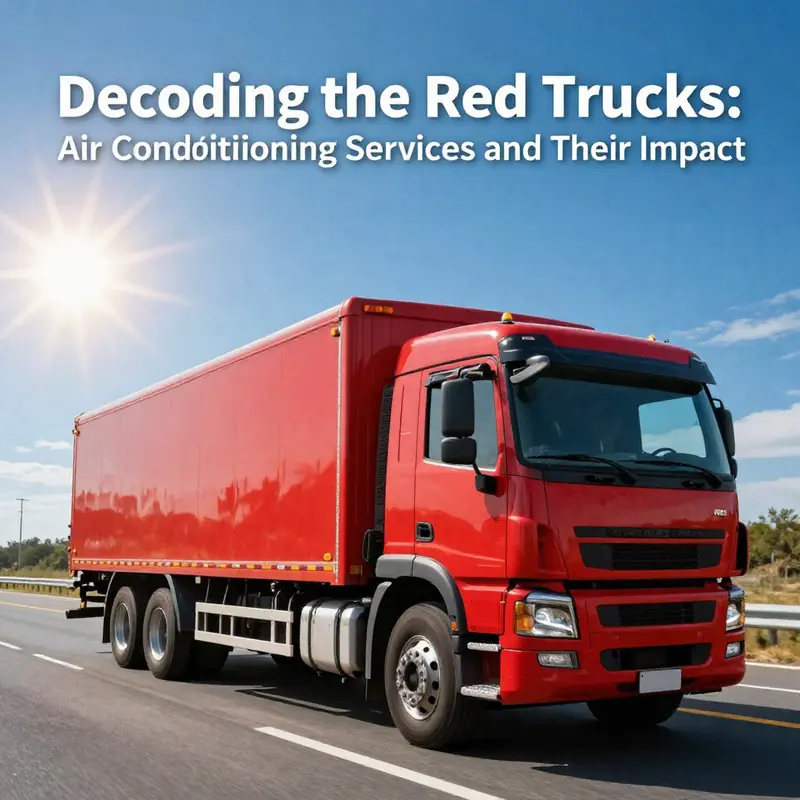
Air conditioning systems in trucking are essential for both comfort and vehicle performance, especially on long hauls. While one might think of service vehicles as being easily identifiable by their colors and functions, a specific inquiry into the availability of red trucks in air conditioning service uncovers some fascinating insights. From general maintenance of climate control systems in trucks to the diverse types of vehicles used in various industries, this exploration aims to connect the dots. Each chapter will peel back layers on the subject, from understanding the symbolism of red trucks to examining whether any dedicated air conditioning services utilize them. Join us as we navigate this colorful aspect of trucking services and widen our perspective on their relevance across the industry.
Red Trucks on the Front Line: Debunking the Myth of a Select Air Conditioning Service and Delving into Truck A/C Maintenance
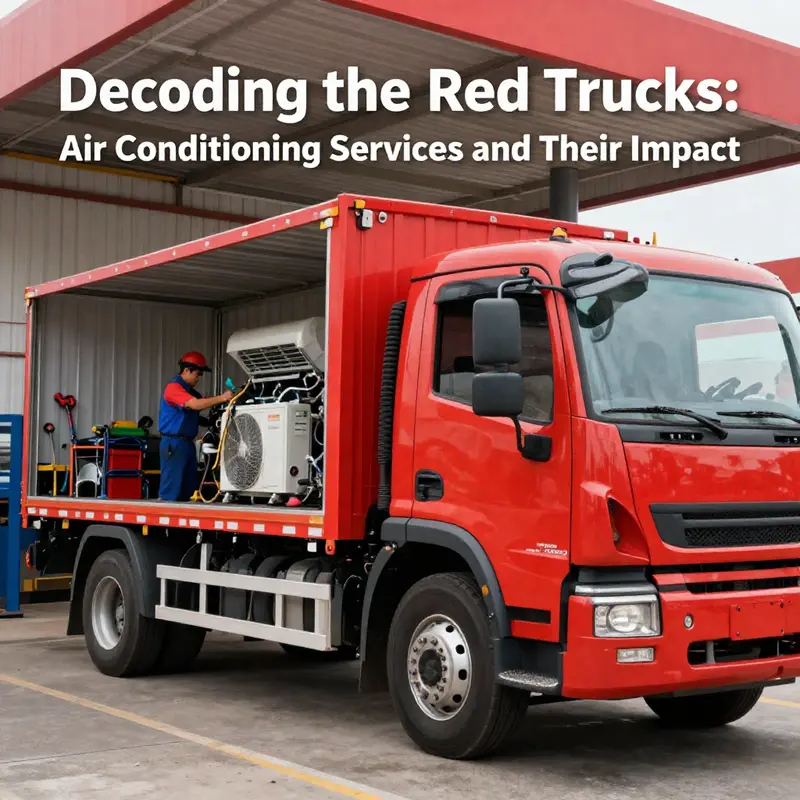
Questions about whether a particular air conditioning service has red trucks often arise from how fleets are branded and how the color of a vehicle can echo a company’s identity. Yet color alone does not determine the nature of the service offered. In the world of heavy-duty vehicle maintenance, the color of a service fleet—red, blue, white, or any other shade—tends to be a branding decision rather than a guarantee of specialization. The evidence gathered from the broader literature and industry context points to a simple, practical truth: there is no definitive source that coins a unique, widely recognized air conditioning service that operates exclusively with red trucks. The color of the trucks a service uses may signal branding or municipal tradition, but it does not encode a distinct technical practice or service niche. What does matter is the competence behind the tools, the consistency of the maintenance processes, and the rigor with which technicians follow the standards that keep truck climates reliable in demanding environments. The reality is that truck air conditioning service spans a spectrum of configurations and maintenance routines that are dictated by system design, electrical architecture, and regulatory requirements rather than by the color of the fleet that carries the technicians to the scene.
To understand why a red-truck branding does not equate to a unique service, it helps to unpack what constitutes air conditioning in trucks and how service work is actually performed. Truck air conditioning systems come in several configurations, each tailored to different duty cycles and installation constraints. There are compact units designed to chill the cab or a small operator compartment under the seat or behind the bench, rooftop or ceiling-mounted assemblies in larger cabs, and split arrangements where a compact evaporator shell sits inside the cabin while the condenser is mounted outside the vehicle. These installations must be compatible with the vehicle’s electrical system, which, in commercial trucks, often runs on 24-volt direct current or, in more modern fleets, higher voltage architectures such as 48-volt DC. The choice between 24V and 48V affects how the climate system is powered, how quickly it can respond to temperature changes, and what kinds of components are practical for use in mobile environments.
Maintenance of these systems hinges on a few well-established steps that are common across fleets, regardless of the exterior color of the service vehicle. Technicians routinely perform a careful inspection of seals, hoses, connections, and the integrity of the ductwork that distributes conditioned air. They check refrigerant charge levels and ensure there are no leaks, using tools and procedures that minimize environmental impact. If a leak is detected, the standard approach involves recovering refrigerant from the system, testing for leaks with appropriate detection methods, repairing or replacing affected components, and recharging the system to the correct specification. This sequence—recover, test, repair, recharge—often goes hand in hand with the use of UV leak detection tools, which help pinpoint small leaks in a way that is efficient and accurate. In practice, the most effective maintenance is less about the color of the trucks delivering the technicians and more about the discipline and precision of the service procedure itself.
Another layer to consider is how the service environment shapes the work. The tools and equipment used in service centers are purpose-built to handle the types of systems installed in trucks. For example, recuperation units designed to recover refrigerant safely, recharge stations that ensure the correct mixture of refrigerant and oil, and vacuum pumps that remove contaminants from the lines all play a central role in keeping the climate systems reliable. The emphasis on safety, environmental responsibility, and regulatory compliance is as important as technical knowledge. Technicians must understand the rules for handling refrigerants and the proper disposal of old refrigerants and contaminated materials. The color of the service fleet does not alter these requirements; it is the training, the adherence to standards, and the availability of the right equipment that determine the quality of service delivered to a fleet.
Within this landscape, color branding can influence perceptions, but it does not dictate capability. A red-truck branding might be a nod to visibility on busy roadways or a historical preference within a region or company. It can help a fleet stand out in a crowded service area or signal to customers which team is on assignment. Yet the essential indicators of a reliable A/C service for trucks relate to the technicians’ training, the rigor of the diagnostic process, and the fidelity of the repair and maintenance workflow. In fact, the broader field of fleet maintenance often emphasizes uptime—the ability to minimize downtime and to keep a vehicle ready for work as quickly as possible. From this perspective, what matters is not whether the service vehicle is red, but whether its operation follows a disciplined approach to climate control maintenance and whether it can handle the specific electrical architectures and system configurations found in today’s heavy-duty fleets.
The notion of color-coded functionality also echoes in adjacent discussions about climate control in modern vehicles generally. A striking example from a different context is the way some climate control interfaces use color cues to indicate heating and cooling. In one widely noted reference, the heating and cooling functions on a climate control panel are signaled by red and blue indicators on opposing sides of the control switch. This color coding is meant to guide users and technicians in interpreting the control states quickly, reinforcing the point that color serves a communicative purpose rather than a marker of a distinct service regime. It reminds us that color can be a helpful shorthand, but it does not replace the need for robust diagnostic methods, traceable maintenance histories, and a systematic approach to repairs and service. In the fleet world, these principles apply whether the vehicle is in a red-branded maintenance unit or another color entirely.
The broader implications reach into how fleets are managed and how customers assess service providers. If a company advertises itself through red branding, that choice might reflect branding strategy, market positioning, or geographic tradition. It should not be taken as evidence that the company specializes in a unique form of air conditioning service. Instead, clients and fleet managers should evaluate service providers based on a documented maintenance protocol, access to appropriate diagnostic tools, the depth of technician training, and a transparent record of service history. There is value in a consistent, well-documented approach to maintaining truck climate control systems, including regular leak testing, refrigerant handling, and component replacement when required. The color of the fleet can be a helpful cue for recognition, but it does not substitute for the substance of technical competence and process discipline.
In recognizing these realities, it is useful to acknowledge the existence of parallel practices within related heavy-duty service domains. In emergency and municipal fleets, for instance, red branding is common for visibility and tradition, but the maintenance discipline remains the same: a rigorous schedule, careful documentation, and adherence to safety and environmental standards. In these contexts, a well-trained team that can manage the complexities of large air conditioning systems—whether the cab is cooled with an underbench unit or a rooftop assembly, whether the electrical architecture is 24V or 48V, or whether it involves a split configuration—will deliver consistent uptime. To connect this back to the broader article topic, there is no single, universally recognized air conditioning service identifiable by its red trucks; instead, there is a shared technical core that underpins all credible truck A/C maintenance, irrespective of the color of the vehicles used to deliver those services.
For readers seeking a concrete example of how maintenance practices translate into reliable field performance, consider the ongoing emphasis on maintenance training within heavy-duty fleets. Across the industry, one reference point that captures the importance of routine, systematic care is the emphasis on structured maintenance training for fire and emergency apparatus. The idea is simple: regular, scenario-based training helps teams respond to the unique demands of heavy equipment in critical moments, ensuring that systems, including climate control, perform when they are needed most. The idea behind this parallel is not to promote a particular brand or service, but to highlight a universal truth in fleet maintenance: competence and consistency matter more than the color of the service fleet. To explore this topic further, it is worth examining the broader conversation around maintenance training in emergency and heavy-duty contexts, which underscores the value of standardized practices and continuous improvement fire-truck-maintenance-training-importance.
In practical terms, readers evaluating truck A/C service should look for evidence of systematic maintenance practices rather than branding cues. This includes clear diagnostics, traceable service histories, and an ability to handle the specific refrigerant and electrical configurations present in the fleet. It also includes a willingness to invest in the right tools, such as leak detection methods and responsible refrigerant handling procedures, and to stay current with evolving regulations and industry standards. The absence of a definitive red-truck service in the documentation does not leave readers without guidance. It instead points toward a shared set of best practices—careful inspection, leak detection, safe recovery and recharge, and rigorous verification—that any credible service provider should demonstrate, regardless of color. In this sense, the color of the trucks becomes a footnote in a larger narrative about reliability, safety, and professional competence in the maintenance of truck air conditioning systems.
External resource for additional context on vehicle climate control concepts and broader HVAC principles can be consulted for readers who want to deepen their understanding of how these systems function across different vehicle types: https://en.wikipedia.org/wiki/Air_conditioning.
The central takeaway, then, is that no single air conditioning service is universally identified by red trucks. The more meaningful indicators are the robustness of the maintenance processes, the quality of the diagnostic workflow, and the technician training that underpins every service call. Color may catch the eye, but it does not guarantee capability. As fleets continue to evolve—with electrification, advanced control strategies, and increasingly integrated thermal management—the core of effective A/C service will remain anchored in disciplined practice, precise technique, and ongoing learning. That is the real throughline across the landscape of truck climate control maintenance, a throughline that transcends paint and branding and points toward uptime, safety, and reliability on the road.
Internal link reference for readers curious about the importance of ongoing maintenance training in heavy-duty fleets: fire-truck-maintenance-training-importance.
Red on the Road: The Visibility and Branding Power of Red Trucks in Air Conditioning Services
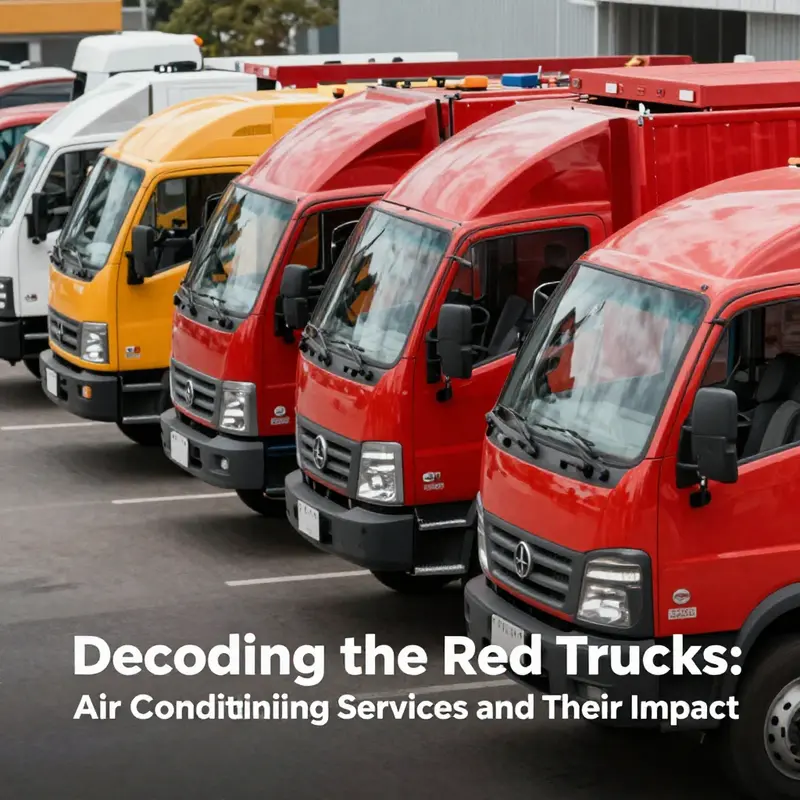
Color is a language that service fleets speak before a customer ever opens the door. In the world of air conditioning, where technicians move from home to home or business to business with the same urgency as a mechanic racing to diagnose a sudden outage, the color of the service vehicle matters more than most people realize. Red, in particular, has a long-standing promise baked into it. It signals urgency, draws the eye, and carries a legacy of action. Even though air conditioning work is not an emergency service in the strict sense, many HVAC fleets have embraced red as a primary hue for their trucks. The choice is less about history than about branding strategy, and more about psychology than about the mechanics of cooling. When a customer sees a red truck rolling up in the middle of a sticky afternoon, the sight can conjure a perception of speed and readiness that helps a provider stand out in a crowded market.
In neighborhoods and business districts that see dozens of service calls a day, a red vehicle can cut through the clutter in a way that a more subdued color might not. The decision to paint a fleet red often starts as a practical marketing tactic, a deliberate contrast against common vehicle colors and a cityscape filled with neutral grays and blues. Fire trucks and other emergency vehicles have trained the public to associate red with rapid response and high visibility. HVAC fleet managers tap into that association, choosing red not to imitate emergency services but to leverage the same visual footprint for commercial advantage. The visual impact is immediate: a bright, clean line of color that makes a truck easier to spot at a distance, under a variety of weather conditions, and in busy streets lined with cars, cyclists, and pedestrians.
Yet visibility is only part of the value equation. Red also communicates a set of intangible promises. It implies energy, motion, and a return to comfort as quickly as possible. Customers often interpret a red truck as evidence that the company takes their problem seriously and will mobilize resources without delay. This perception matters because HVAC work typically happens when people are uncomfortable—summer heat, winter drafts, or humidity that won’t quit. The visual cue of red becomes a nonverbal statement of attentiveness and reliability. It can set a tone for the interaction long before the technician steps inside a home or a conference room, shaping expectations about timeliness and the seriousness with which the issue will be treated.
Color decisions in fleets are rarely accidental. They arise from a blend of branding, differentiation, and practical considerations. Some operators choose red because it stands out against suburban streets and urban corridors where the color spectrum is dominated by grays, silvers, and blacks. Others pursue red as part of a broader, cohesive brand identity—one that travels across a fleet of vans, trucks, and trailers with consistent lettering, logo placement, and reflective safety elements. The result is a portable billboard. The truck isn’t just a vehicle delivering service; it is a moving piece of branding that reinforces the company’s presence wherever it travels. In this sense, red becomes a field-tested tool for trust-building, a color that signals a company’s readiness to respond and to stand behind its workmanship.
There is also a practical side to color choice that often goes unspoken. Red paint can require regular maintenance to keep it looking vibrant. The sun’s ultraviolet rays can fade red more quickly than some cooler tones, which means fleets that choose red must plan for periodic repainting or rewrapping to maintain a crisp, professional appearance. The management of a red fleet, then, is a small but telling example of how branding dovetails with operations. It isn’t just about aesthetics; it’s about upkeep, visibility, and the perceived value customers attach to a consistently presented fleet. A well-maintained red truck communicates that the business cares for its assets and, by extension, for the customers it serves. The same attention to maintenance often translates to the service side—prompt arrivals, clean work areas, and orderly handoffs with customers. In that sense, color acts as a continuous reinforcement of a service philosophy.
This approach to color is not universal, of course. Some HVAC operators favor blues and whites, colors traditionally associated with cool air and reliability in many consumer contexts. Others opt for bold greens or practical grays, leaning into ideas of efficiency, sustainability, or low profile. The choice of red, however, tends to be a deliberate stance rather than a passively adopted trend. It signals a voice in a crowded market: we are here, we are ready, and we will be fast. The alignment of color with a broader service narrative—speed, reliability, and a focus on customer comfort—helps customers feel a sense of certainty even before the first technical question is asked.
Brand storytelling is not simply about the color itself; it is about the way color integrates with the entire field experience. A red truck invites a certain pace and posture: bold headings and bright decals feel natural on red, while reflective materials and high-contrast gear look especially sharp against the bright backdrop. The result is a coherent visual language that helps customers remember the brand after the technician has left. A single red truck, seen repeatedly on drives and in neighborhoods, becomes a recognizably dependable presence. Over time, this consistency builds a quiet trust, an assumption that the service provider is professional, organized, and capable of solving problems efficiently. It is a form of nonverbal communication that, while subtle, can influence decisions in a marketplace where impressions count almost as much as technical proficiency.
This is why, when people ask whether a particular air conditioning service has red trucks, the question itself reveals a deeper curiosity: color is a proxy for how a company positions itself. A red fleet suggests an emphasis on rapid response, on keeping the customer warm or cool as quickly as possible, and on presenting a bold face to the world. It does not guarantee expertise, but it does convey a mindset—a commitment to visibility, accountability, and a certain decisiveness. For customers who value quick appointments, clear timelines, and a sense that someone is actively prioritizing their comfort, a red truck is not a random choice but a signal embedded in branding strategy.
The broader lesson for readers who are evaluating HVAC service options is that color should be interpreted as part of a holistic picture. The color of a vehicle can contribute to a perceived level of professionalism, but it cannot replace concrete indicators of competence. Prospective customers should look for documented credentials, transparent pricing, and clear service guarantees. They should consider how a company demonstrates its expertise through training protocols, the reliability of its dispatch system, and the maintenance standards applied to its fleet. A red truck might help a company stand out on the street, but the weight of a reputable service remains in the quality of the work performed and the consistency of the customer experience. When a red vehicle pulls into the driveway, the most meaningful signal is not the color alone but the alignment of that color with a proven capacity to diagnose, fix, and reassure.
In the broader conversation about fleet design and customer perception, the idea of color as a branding tool connects with principles discussed in the field of service-vehicle design. The aims are straightforward: maximize visibility when needed, minimize miscommunication through clear branding, and sustain a consistent image that travels from vehicle to vehicle and from technician to customer. The practical choices—the shade of red, the level of gloss, the presence of reflective accents, the size and positioning of logos—are all layers that can be fine-tuned to reinforce the intended message. And while a red truck will not automatically make a company better at diagnosing a faulty air conditioner, it can prime customers to view the company as capable, responsive, and attentive to detail. That priming matters, because trust often begins with a first impression that is more visual than verbal.
For readers curious about how such visuals come together in the fabric of service operations, consider the broader idea of fleet design and how color integrates with emergency-service principles without crossing into the realm of actual emergencies. The emphasis remains on efficient communication, predictable performance, and a brand narrative that aligns with daily service realities. This alignment helps customers feel confident that when a red-marked truck appears at their door, they are engaging with a team that values speed, clarity, and a well-executed plan for restoring comfort. As with any branding choice, the effect multiplies when it is consistent across vehicles, uniforms, signage, and customer-facing materials. The result is a coherent, memorable experience that travels far beyond the paint job.
External perspective can offer broader historical context for the visual language of red in service vehicles. For a broader historical perspective on red in emergency vehicles, see https://www.firetrucks.com/history-of-red-fire-trucks.
Air Conditioning Services in Motion: A Cohesive View of Vehicle HVAC Care Across Industries
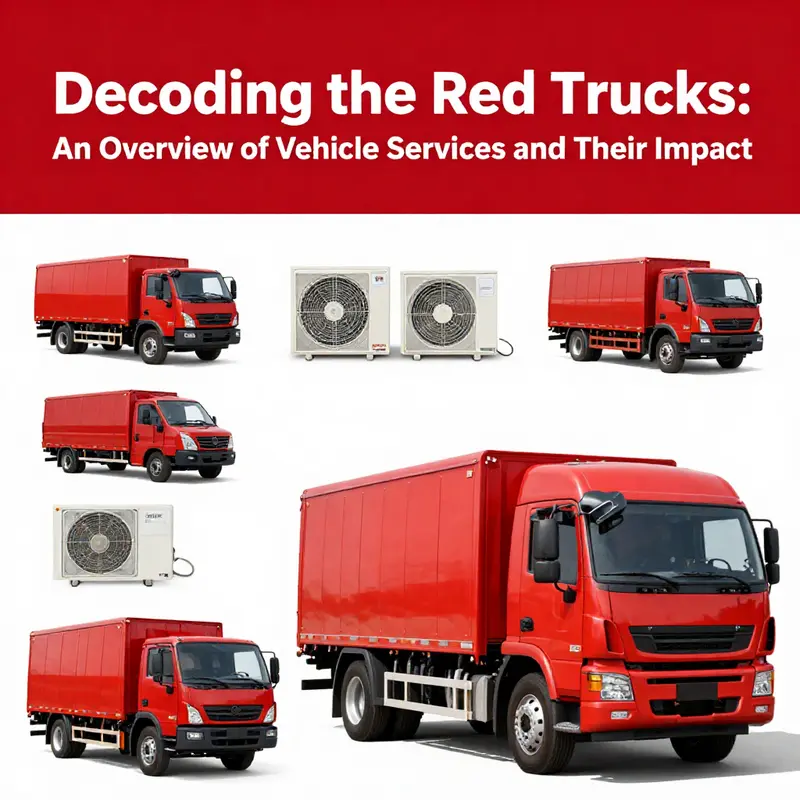
Air conditioning service for vehicles is not a single, one-size-fits-all practice. It operates at a spectrum that scales from the workhorse sedans that keep everyday life moving to the rugged fleets that power logistics, public safety, and essential services. Across industries, climate control is not merely a matter of comfort; it is a component of safety, productivity, and equipment longevity. When technicians approach a vehicle’s HVAC system, they do so with an understanding that different operating environments, duty cycles, and maintenance histories shape the service approach. A typical HVAC system in most road vehicles includes a compressor, a condenser, an evaporator, an expansion device, and a dryer or accumulator, all interconnected by a network of hoses and ducts. While the core architecture remains constant, the conditions under which these parts operate diverge sharply depending on where the vehicle is deployed. In practice, diagnostic flow begins with a careful listening to the symptoms. A technician will assess whether cooling is weak, uneven, or nonfunctional, and will examine the climate control interface for proper signal responses. Temperature sensors, pressure readings, and electrical continuity tests are evaluated to establish a reliable map of the fault. If a problem is found to be refrigerant-related, recovery and recharge follow strict procedures designed to protect the environment and health of the technician. A well-executed service plan often includes leak detection, the repair or replacement of compromised components, and a test cycle to confirm that both cooling and heating modes perform as intended across a range of conditions. The emphasis on safety and proper handling is a constant thread in every sector, because refrigerants can be hazardous and because a fault in the climate system can escalate into a more serious compromise of vehicle performance or operator well being. In this sense, HVAC service is a discipline built on precision, hygiene, and respect for the rules that govern responsible automotive maintenance. The work grows more intricate when we move from personal vehicles to the larger, more demanding fleets that operate in professional contexts. A city bus, a parcel-delivery van, or a long-haul tractor-trailer represents a different class of duty. These vehicles endure extended runtimes, ongoing exposure to road dust, vibration, and wide temperature swings. The condenser, often located in a place that collects heat from hot ambient air, must shed heat efficiently despite dusty air and high speeds. The evaporator, which houses the cold side of the system, must deliver stable cooling even when the vehicle sits in traffic for long periods or when the interior load shifts as passengers and cargo move through a route. In industrial or agricultural fields, HVAC components face even more demanding conditions. Dust, grit, and humidity can infiltrate seals and filters, accelerating wear on ducts and evaporator cores. The result is a system that requires more frequent inspection and a more thorough cleaning routine. In aviation ground support equipment, the HVAC demand often extends into cabins or cabs that support critical operations. Reliability becomes a nonnegotiable factor because crew members and equipment operators rely on a stable climate to maintain focus and performance in high-stakes tasks. Emergency service fleets—ambulances, fire response units, and police vehicles—pose their own set of pressures. The clock runs fast in these environments, with downtime directly translating into reduced availability of life-safety capabilities. For these fleets, an HVAC fault cannot be treated merely as a nuisance; it can disrupt mission readiness and operator comfort at the same time. Consequently, service strategies for such vehicles emphasize rapid diagnostics, preemptive maintenance, and streamlined, repeatable procedures. The physical reality of service work also shapes how technicians operate. In many fleets, mobile service units travel to the site, bringing the tools and refrigerant recovery equipment directly to the vehicle. This approach minimizes downtime and keeps the fleet moving, a critical advantage when the clock is ticking on a route or mission. Mobile technicians often perform a compact but complete set of checks on the spot: verifying climate control responses, confirming refrigerant charge within specified limits, inspecting the expansion device for proper metering, and evaluating the integrity of seals and hoses that may be stressed by heat and vibration. When the climate system requires more work than can be completed in a single visit, the technician may schedule a follow-up appointment or arrange for off-vehicle repair in a workshop setting. In such cases, the transition from field service to shop service is made seamless by meticulous documentation and clear communication about test results, replacement parts, and expected performance after the service is completed. The design language of vehicle HVAC systems also reveals how service needs shape maintenance practices. Some modern interfaces rely on color coding to convey different modes quickly. Heat is often represented by red cues, while cooling is associated with blue indicators. This intuitive design helps drivers and technicians understand the system’s current state at a glance, reducing the chance of operator error in demanding situations. The broader lesson here is that the service ecosystem around vehicle HVAC is deeply tied to the way a fleet is deployed. The same underlying technology can have very different service trajectories depending on whether it is used to transport people, move goods, or support public safety work. The color-coded interfaces, the layout of the climate control modules, and the placement of sensors reflect decades of design decisions intended to align with real-world use. Branding and visibility also play a role in how service fleets are organized. Some maintenance programs favor high-visibility colors for service vehicles, not because the color alters performance, but because it enhances safety in busy yards and roadways. In some contexts, these color choices include bold red hues for visibility, a branding decision that helps personnel recognize support units quickly in complex environments. Yet branding remains a separate consideration from the core technical competence of HVAC service; the skill to diagnose, leak-check, and correctly recharge a system stands independent of color. Within fleets, maintenance training underpins all these activities. A well-structured program ensures technicians consistently apply best practices, from handling refrigerants to validating system performance after a repair. For fleets that rely on continuous uptime, the value of training becomes even more pronounced. It reduces repeat visits, minimizes the risk of undercharged systems, and strengthens the overall reliability of the fleet. For fleets that prioritize ongoing education and standardized procedures, it is worth exploring maintenance training resources that emphasize the specific needs of different vehicle classes and operating environments. In fleets that operate in high-demand contexts, the ability to execute a standardized maintenance routine across dozens or hundreds of vehicles becomes a strategic advantage. For fleets that value safety, reliability, and efficiency, the alignment of diagnostic methods, component replacements, and performance verifications is a crucial determinant of uptime and cost control. The intersection of industry needs, vehicle design, and service practice creates a compelling narrative about why air conditioning service matters in motion. It explains why technicians must move beyond a one-size-fits-all approach and embrace the realities of the road, the yard, and the workshop. It also reminds readers that while the visual identity of a fleet—such as a bold red service truck—can support safety and branding, it is the technical competence behind every service event that ultimately keeps drivers comfortable and fleets productive. For fleets that want to deepen their understanding of maintenance practice, consider exploring resources that discuss fundamentals of automotive climate control and the broader context of fleet readiness. fire-truck-maintenance-training-importance. In the pages that follow, we will continue to connect the dots between HVAC service requirements and the design choices that shape how these systems are kept in peak condition across diverse operating theaters. External reading on automotive climate control basics can further illuminate the principles that underlie everyday service work: https://www.energy.gov/eere/vehicles/articles/understanding-automotive-air-conditioning
Red Trucks, Clear Skies: Branding, Comfort, and Reliability in Modern Fleet Climate Control
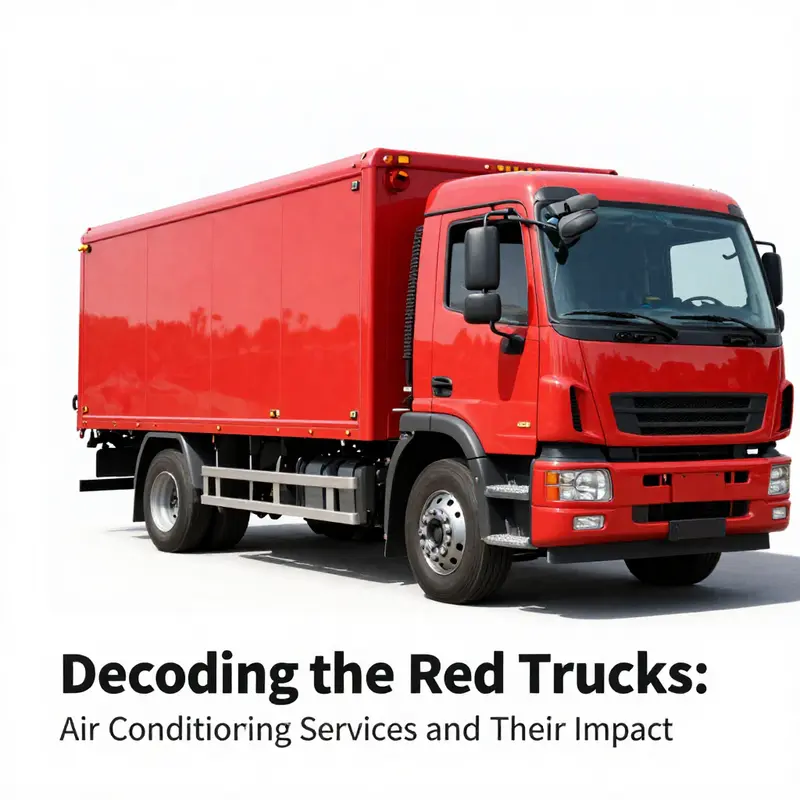
Red trucks project visibility and urgency beyond the paint. They shape expectations about maintenance, safety, and service speed, influencing how drivers, customers, and regulators perceive a fleet. Yet branding by itself does not fix the climate-control system; it creates a context in which a reliable cooling performance becomes a business imperative. When a fleet name rides on a red chassis, managers translate that visibility into disciplined maintenance routines that keep air conditioning dependable even under demanding schedules. The result is a narrative in which color supports performance, not replaces it.
Inside the cab, climate comfort is a safety issue as much as a comfort feature. A driver who can stay alert and comfortable during long shifts is less prone to fatigue and better able to respond to changing road conditions. For red truck operations in time sensitive deliveries, the climate system becomes a practical asset: predictable cooling, easy serviceability, and rapid fault isolation.
Technological evolution has moved heavy duty truck cooling toward integrated modules. Today’s 24V DC rooftop or side mounted units often pack the compressor, condenser, and evaporator into a compact, sealed module. The installation footprint is reduced, which translates into faster service times and fewer leak points. A modular design means technicians can test key electrical circuits and refrigerant paths without dismantling large portions of the cab, minimizing downtime and keeping the fleet moving.
The choice among ducted, unducted, or hybrid rooftop configurations shapes how air moves through the cabin. Ducted systems can distribute airflow to multiple zones, reducing hot spots; unducted rooftop solutions can offer strong cooling with simpler duct work; hybrid designs balance energy efficiency with peak cooling demands. For red-truck fleets that must sustain high readiness, these design choices are part of a broader strategy to maximize uptime and driver comfort.
Maintenance takes on special significance. A red truck’s readiness depends on a disciplined cadence for climate systems—refrigerant integrity, electrical connections, blower performance, and filter cleanliness. Regular checks prevent heat buildup, protect air quality, and reduce the risk of costly refrigerant leaks. When maintenance is treated as a core asset, outages drop and predictability rises.
Branding and engineering reinforce each other. Red color signals urgency and reliability, while a well designed climate system delivers consistent, driver friendly performance. A standardized maintenance program, clear fault-detection protocols, and routine parts replacement create a predictable operating envelope that aligns with the brand promise.
For practitioners seeking concrete steps, fleets can: build a climate maintenance schedule alongside other critical inspections; incorporate sensor checks and refrigerant testing into routine servicing; maintain a spare parts stock for rooftop units; train technicians to identify early warning signs of inefficiency; and track service history to drive continuous improvement. The coexistence of branding and engineering is not a contradiction but a practical alignment that sustains uptime, safety, and on time performance on the road.
Red Trucks and Cooling Care: Debunking the Myth of a Service That Specializes in Red-Trucked Fleets
When people ask if there is an air conditioning service that has red trucks, the instinct is to imagine a brand or a fleet identity that wears a particular color as a badge of reliability. Yet the reality of the market is far less about color-coded branding and far more about the physics of climate control, the demands of long-haul rest periods, and the regulatory landscapes that govern aftermarket installations. The idea of a single, color-specific service is a myth worth unpacking, because it reveals how truck cab cooling actually works and why the question matters. There is no widely recognized service that operates exclusively with red trucks, and the deeper story lies in the technology of truck-mounted or trailer-mounted air conditioning systems and the decisions drivers and fleets make to stay cool without idling. In this sense, color becomes a sidebar to function, while the more consequential questions center on independence from the engine, energy sources, and the safety implications of adding auxiliary systems to a vehicle that already works hard for a living. The question, therefore, points us toward a broader landscape where comfort, efficiency, and compliance shape the choices a driver makes during precious rest periods on the road. The most compelling part of this landscape is not the color of the support vehicle but the capacity of a system to deliver reliable cooling without taxing the main engine. Long-haul drivers know that resting with the engine idling is costly in fuel and wear; a well-chosen parking air conditioning unit offers a quieter, more economical solution. This independence—portable yet powerful enough to cool a cab during a 10- to 12-hour break—rests on a delicate balance of electrical demand, thermal load, and the limits of a vehicle’s electrical system. The result is a market that prizes efficiency and safety but resists simplistic branding that ties a color to a service. A closer look at how these systems work helps explain why a red-truck identity does not translate into a distinctive service category. At the core, parking or “trailer” air conditioners draw power from auxiliary sources rather than the main engine. In some configurations, they run off the vehicle’s battery bank, while others rely on a small fuel-powered heater to maintain temperature when the engine is off. The intent is clear: keep the cab cool or warm without idling the engine, preserving fuel and reducing emissions during rest periods. The engineering challenge is equally clear. These units must operate reliably in varying climates, from scorching heat to freezing nights, while staying within the electrical and safety margins of the host vehicle. That requires compact, robust design and careful integration with the vehicle’s electrical system. It is precisely at the point of installation that the concept of a color-coded service becomes less relevant than the quality of the installation and the documentation surrounding it. Improper installation can lead to electrical faults, short circuits, or even fire hazards. Some regions have taken enforcement action when aftermarket units were added or modified without proper documentation or compliance with local standards. The practical implication for drivers is that the safest and most reliable option is to work with qualified technicians who understand both vehicle electrical systems and climate control equipment. This is not a matter of branding but of technical competence, safety, and long-term reliability. When a driver asks about a red-truck service, the answer should pivot toward the credentials of the installer and the compatibility of the system with the vehicle’s electrical architecture, rather than toward the color of the trucks in the yard. The market recognizes this, and the most visible advantages come from systems that balance energy efficiency with strong performance. In this respect, a few overarching considerations shape the landscape. First, the energy source has to align with the cab’s electrical capacity. A unit that draws too much current risks triggering fuses or draining the battery, which defeats the purpose of cooling during a break. Second, the system must provide consistent climate control across a wide range of ambient temperatures. This is where inverter technology and sleep modes, when offered, become valuable. Inverter-based designs can modulate compressor output to match cooling demand without spiking current draw, an innovation that reduces heat load on the electrical system while maintaining comfort. Third, installation quality matters as much as the equipment itself. Proper wiring, secure mounting, and thorough calibration ensure that the unit works as intended without creating new risks. The regulatory reality adds another layer of complexity. In some jurisdictions, retrofitting or modifying a truck’s electrical system can be illegal if done without the right paperwork or certification. This is not about stoking fear but about recognizing that the road system requires accountability, especially when extra devices are added to a vehicle that spends so much time on public highways. The absence of a dedicated, color-branded service does not leave drivers without options, however. The market includes a spectrum of installation and maintenance providers who specialize in auto air conditioning and electrical systems for heavy vehicles. A driver facing trouble with a non-functioning cab A/C knows that the path to repair typically leads to authorized dealerships or independent workshops that focus on vehicle climate control rather than generic auto repair. These centers can diagnose compressor faults, refrigerant leaks, control module issues, and fan failures. They can also perform the critical tasks of recharging the system, verifying electrical integrity, and replacing worn components. What makes the service credible in this space is not the hue of the trucks involved but the rigor of the testing and the transparency of the parts used. Drivers need assurance that new components meet vehicle specifications and that retrofits are well-documented for regulatory compliance. The broader narrative, then, centers on the ways fleets approach comfort as a strategic asset. Parking air conditioners enable a driver to maintain a habitable cabin during rest, which in turn supports alertness and safety on the road. It is easy to overlook this link, but it is central to the value proposition of these systems. If a driver can rest more comfortably, they may arrive at the next duty cycle better prepared to handle the demands of the road. This is not a matter of branding; it is a question of operational resilience. Beyond the mechanical and regulatory considerations, there is an evolving ecosystem of service providers that cater to the maintenance and repair of these complex systems. Drivers rely on authorized service networks and specialized auto A/C centers that understand the interaction between the vehicle’s electrical system and the climate control equipment. In this space, the emphasis shifts from a color-coded identity to a culture of safety, reliability, and accountability. The maintenance pathway is clear: routine inspections, prompt attention to non-functioning components, and the use of trained technicians who can diagnose and repair issues efficiently. When a problem arises with the unit, timing matters. A quick diagnostic followed by prompt repair can prevent long outages that would force a return to engine idling, undermining the purpose of the system. The practical takeaway for readers is straightforward. There is no established service that branding-wise ties itself to red trucks. Instead, the market rewards technical competence, compliance with safety standards, and transparent maintenance practices. For drivers and fleets, this means prioritizing credentialed technicians, documented retrofit work, and clear warranties that cover both the installation and ongoing service. To deepen this point, those interested in the maintenance and training aspects of truck climate control can explore resources on routine maintenance training and best practices in repair and upkeep. This emphasis on knowledge and skill is where real value lies, especially for operators who rely on parking A/C to ensure a comfortable, safe resting environment during long hauls. For more on maintenance training and its role in sustaining complex vehicle systems, see fire-truck-maintenance-training-importance. The emphasis on training reflects a broader industry shift toward standardized practices and continuous learning, which ultimately benefits drivers who depend on dependable climate control between legs of a journey. In sum, color-coded myths about a red-truck service obscure the real drivers of cooling performance: robust, well-integrated systems, careful installation, ongoing maintenance, and strict adherence to safety and regulatory guidelines. The absence of a color-specific service does not leave fleets without support; it simply redirects attention to the people who install, calibrate, and maintain the equipment that keeps cabs livable during long nights on the road. As the market evolves, the conversations around parking air conditioners will continue to emphasize reliability, efficiency, and regulatory compliance, rather than the paint on a truck. This alignment between function and safety is what ultimately sustains driver comfort and road safety, regardless of the color of the trucks in a yard. It’s a reminder that a question about red trucks can open a broader discussion about how best to keep the cabin climate controlled, legally compliant, and ready for the next leg of the journey.
Final thoughts
As we explored the intriguing question of whether any air conditioning services operate red trucks, it became clear that no dedicated service has this particular coloring. Yet, red trucks symbolize vital aspects of service and maintenance within the broader context of the transportation industry. The chapters revealed color significance, vehicle types associated with air conditioning services, and insights into their functionalities. This exploration serves as a reminder of the diverse and colorful representations of service vehicles that exist, and while red trucks may not denote any specific air conditioning service, they remain crucial to many operational contexts in trucking and beyond.