
The modern culinary landscape has seen a substantial shift towards meal delivery services, which cater to the growing demand for convenience and quality. As these services expand, the preservation of food safety and quality during transport becomes paramount. This is where refrigerated trucks step into the picture, acting as the backbone of safe meal deliveries. This article delves into their importance in ensuring freshness, explores the innovative technologies that keep perishable items at optimal temperatures, and evaluates the economic impact these vehicles have within the meal delivery services sector. By equipping professionals in the trucking industry with insights into this niche market, we highlight how refrigerated trucks are indispensable in maintaining the standards that consumers expect.
Cold Carriers, Fresh Connections: How Refrigerated Trucks Stand Between Kitchen and Customer in Modern Meal Delivery
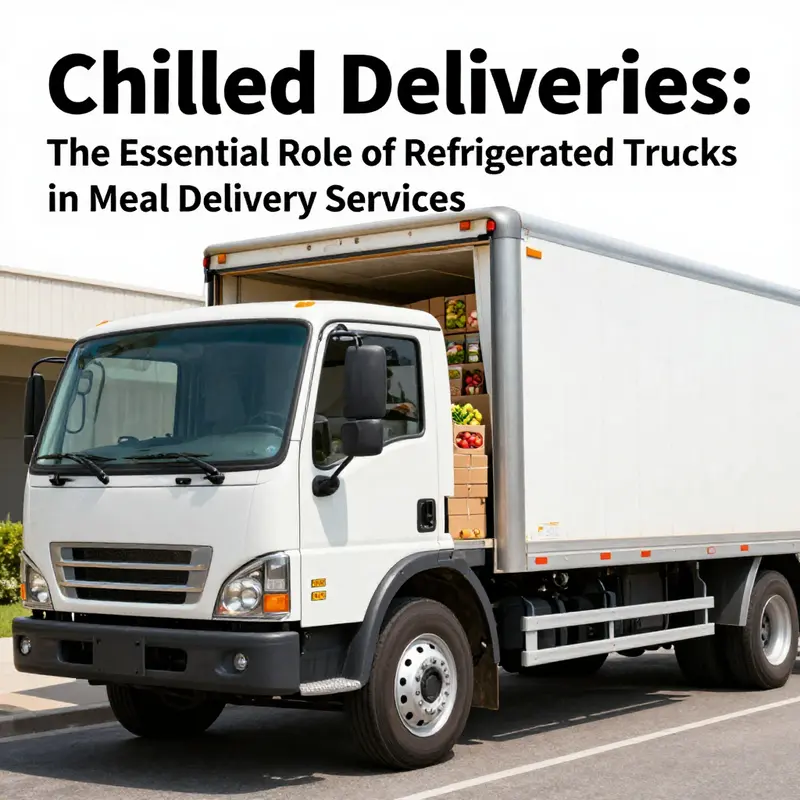
In the modern ecosystem of meal delivery, where choices are abundant and expectations are exacting, the unseen vehicle that preserves safety, quality, and flavor is often a refrigerated truck. These coldbox giants, sometimes called reefer trailers, carry more than food; they carry trust. They are the moving linchpin of the cold chain, ensuring that a prepared meal, a fresh dairy component, or a chilled protein remains within a precise temperature envelope from the moment it leaves a kitchen or supplier to the moment it lands on a customer’s doorstep. The science behind this is straightforward in principle and intricate in practice: perishable foods harbor the potential for rapid bacterial growth and quality degradation if temperatures drift outside carefully controlled ranges. The temperature window that matters for most meal delivery operations sits just above freezing to about five degrees Celsius (0°C to 5°C). Within that corridor, texture, moisture balance, aroma, and nutritional value are preserved, while the risk of spoilage and foodborne illness is kept at bay. The result is not merely compliance with hygiene standards; it is a reliability that nourishes consumer confidence and sustains business viability in a highly competitive market.
To understand how these vehicles fit into the broader logistics puzzle, it helps to picture the journey of a typical cold-chain meal—whether it arrives as a ready-to-eat combination, a chilled ingredient kit, or a protein-forward dish that needs to be plated at home. The first link in the chain is proper packaging that resists temperature fluctuations and minimizes condensation, but packaging alone cannot guarantee safety if the transit environment is uncontrolled. The second, and more decisive, link is the transport vehicle. A refrigerated truck is built not just to cool but to maintain a steady climate, with insulation, door seals, and an integrated refrigeration system that can actively cool, monitor, and adjust to keep the interior within the target range at all times. In the face of a long haul, a congested urban corridor, or a summertime heat wave, those features matter as much as the meals themselves. Without them, even a brief delay or a minor temperature excursion can undermine safety and undermine the customer’s experience, inviting waste and eroding trust.
Refrigerated trucks derive their effectiveness from several core capabilities that are explicitly aligned with the needs of meal delivery services. They are designed with robust insulation and sealed interiors to minimize heat gain and moisture transfer. Modern bodies often employ sandwich panels—materials such as FRP+PU+FRP—that provide high thermal resistance while remaining lightweight enough to optimize fuel efficiency and payload. The refrigeration units themselves are calibrated to hold tight temperature bands with precision; they actively remove heat, regulate humidity, and respond to fluctuating exterior conditions. This is especially important for operators who run multi-stop routes across a metropolitan area or who traverse climate zones over a single day. Small, incremental temperature drift is the enemy of food safety when you consider the cumulative effects across dozens or hundreds of deliveries.
Beyond single-zone control, many fleets now rely on multi-temperature capabilities. A single trailer can be partitioned into refrigerated, chilled, and even frozen compartments, enabling a single vehicle to carry diverse meal types without cross-contamination or temperature crossovers. This multi-zone approach reduces the number of trips needed to service a given route and tightens the overall cold chain, which translates into fresher meals on arrival and more efficient fleet utilization. The ability to tailor interior zones is especially valuable for meal programs offering a mix of hot and cold items, or for services that batch-cook meals and ship them ready-to-heat or ready-to-eat. In practice, a multi-temperature trailer is a small, mobile kitchen that travels with the customer’s food, preserving the integrity of each dish while respecting the distinct needs of each item.
The operational impact of refrigerated trucks extends far beyond temperature control. They enable scale in several meaningful ways. First, they provide the capacity to move larger volumes per trip compared with smaller, non-refrigerated vans. This translates into fewer vehicle miles, lower per-meal transport costs, and the ability to meet surge demand without sacrificing quality. Second, they support multi-stop routing with confidence that freshness is not sacrificed mid-transit. Proper shelving, secure compartments, and organized load plans help drivers execute dense delivery windows while keeping each item protected. Third, the visibility that comes with modern reefer fleets—temperature data logging, remote monitoring, and real-time alerts—gives operators the data they need to audit compliance, investigate anomalies, and optimize routes. In an industry where consumer expectations are tightly linked to the perceived value of the product, the ability to demonstrate rigorous temperature control the moment a package leaves the kitchen is a strategic asset as well as a safety measure.
If one considers the trajectory of meal delivery from a regional, local, or even urban perspective, the role of refrigeration becomes even clearer. In dense cities, where time is money and traffic is unpredictable, the reliability of a cold chain can determine whether a driver’s entire day is deemed successful. The fleet must respond to delays, detours, and the inevitable heat of summer, all while maintaining the precise temperatures required for food safety. In hot climates, the challenge is even more acute: warm ambient temperatures increase the rate of heat gain, test the efficiency of insulation, and pressurize the cooling system to perform at its peak. In such contexts, refrigerated trucks deliver a level of assurance that standard delivery vans cannot provide. They are not merely a safety feature; they are a differentiator that shapes customer satisfaction and brand reliability.
This is why many meal delivery operations rely on reefer trailers for long-haul movement as well as for regional distribution. Local or short-haul deliveries may use insulated containers or standard vans with enhanced thermal protection, but when the operation extends beyond a few hours or covers larger geographic footprints, the robust, purpose-built refrigerated truck becomes indispensable. The investment makes sense not only for a single meal program but for the entire cold-chain architecture that supports restaurants, catering outfits, and e-commerce platforms seeking to scale. In this sense, the refrigerated truck is a critical piece of infrastructure—one that connects farms, kitchens, warehouses, and homes through a chain that is traceable, auditable, and resilient.
The practical intelligence of these vehicles is most visible in the way they handle diverse cargo and the way their interiors are organized. Multi-temperature compartments, adjustable shelving, and secure, modular storage systems enable operators to optimize space while preserving the integrity of fragile components such as dairy-based sauces, leafy greens, or delicate seafood proteins. A well-designed interior helps prevent cross-contact and damage during handling, even on the roughest roads or during tight urban turns. Temperature monitoring technologies—whether battery-powered data loggers or networked sensors that transmit live readings to a dispatch center—create a digital audit trail that reassures customers and regulators alike that the cold chain is never broken. This is not merely about avoiding spoilage; it is about maintaining the safety and flavor profile that defined a meal in the kitchen and carries forward into the dining experience.
The impact of refrigerated transport also ripples through the broader food system. Urban delivery, grocery distribution, and even farm-to-table initiatives benefit from a reliable cold chain. When meals are prepared in advance and distributed for convenience, the emphasis shifts from mere transport to a careful choreography of timing, temperature, and handling. A fleet that can maintain a stable environment across various conditions reduces the likelihood of waste and ensures that seasonality and quality—so much part of a restaurant’s promise—are preserved when meals arrive at a customer’s door. The challenge is not simply to move food but to move it with the same care as if it were being plated in a kitchen.
The integration of these transportation capabilities with other parts of the supply chain amplifies their value. Refrigerated fleets work in concert with temperature-controlled warehouses, cross-docking facilities, and last-mile partners to create a continuous, auditable sequence of preservation. Operators may schedule regular pre-cooling of trailers, monitor ambient and interior temperatures during loading, and maintain strict arrival-time windows for delivery, all while accommodating the variability of real-world traffic and weather. In practice, this means fewer failed deliveries, less need for rerouting due to spoilage concerns, and a better handoff experience for the consumer who expects a meal to be as fresh as it would be if it were prepared just minutes before eating.
The rationale for investing in high-performance refrigerated trucks goes beyond the immediate safety and quality benefits. It is also a strategic commitment to sustainability and resilience. Efficient refrigeration assets, when paired with accurate routing and load optimization, can reduce energy use per delivered meal and minimize food waste—a measurable slide toward a more responsible operation. For organizations aiming to build trust and long-term value, these vehicles are not optional luxuries but essential components of a sustainable business model. They enable scaling without compromising safety, enable seasonal fluctuations in demand to be absorbed, and provide the reliability that is critical to subscription-based meal programs and time-bound delivery windows. In markets where temperature stability is challenged by climate or geography, investing in robust, well-maintained refrigerated fleets becomes a cornerstone of service quality and risk management.
In a global context, the utility of refrigerated trucks extends even to domains beyond food. The same hardware that protects ready-to-eat meals can protect temperature-sensitive pharmaceuticals and vaccines, illustrating the broader relevance of cold-chain discipline. Yet within the meal delivery sector, the practical, day-to-day implications are clear: every mile traveled in a controlled environment means fewer opportunities for spoilage, fewer complaints about texture and quality, and a stronger guarantee of safety from the kitchen to the consumer. It is this alignment of technology, operation, and customer expectation that makes refrigerated movement an indispensable feature of contemporary meal delivery.
For readers exploring the strategic questions of fleet design and procurement, a useful lens is the balance between hardware capability and operational discipline. A climate-controlled trailer, however advanced, cannot compensate for poor loading practices, suboptimal routing, or insufficient temperature monitoring. Conversely, even a modestly equipped trailer can deliver remarkable outcomes when paired with disciplined procedures, transparent data sharing, and proactive maintenance. The result is a supply chain that can adapt to shifting demand, respond to emergencies without sacrificing safety, and sustain quality across a spectrum of meal formats and temperatures. This harmony between vehicle capability and process discipline is what ultimately underpins the confidence customers place in a meal delivery service.
As the industry evolves, fleets are likely to become more modular, with more precise zoning, better insulation, and smarter sensors that anticipate excursions before they occur. This evolution aligns with a broader trend toward data-driven logistics, where temperature data, route analytics, and real-time feedback inform continuous improvement. In cities with intense heat, such as those facing rising average temperatures or seasonal heat waves, the premium on robust thermal performance grows; operators must prove that their cold chain can withstand the most demanding conditions while continuing to meet strict safety standards. In effect, refrigerated trucks become not only a means of transport but a platform for reliability, traceability, and accountability in the modern meal economy.
From a consumer-facing perspective, the end-of-line moment when a meal arrives is where the chain’s integrity is validated or questioned. A dish that preserves its texture, aroma, and appearance reinforces a perception of care and quality; one that shows signs of improper temperature can trigger concerns about safety and freshness. A well-run cold chain reduces these risks, supporting a brand narrative built on consistency and trust. It helps ensure that the first bite matches the last impression of a virtual kitchen—an alignment that sustains loyalty and encourages repeat orders. The takeaway is straightforward: refrigerated trucks are not a mere logistical footnote; they are a strategic element that shapes safety, quality, efficiency, and customer satisfaction across the entire meal delivery enterprise.
In closing, the debate about whether meal delivery services use refrigerated trucks is settled by the demands of food safety, quality preservation, and scalable operations. The evidence from practice shows that the vehicles designed for temperature control—whether through multi-zone refrigeration, advanced insulation, or precise climate management—are central to preserving the cold chain from kitchen to doorstep. They enable large-volume, multi-stop deliveries without sacrificing freshness, support adaptability in diverse climates, and underpin the regulatory and consumer expectations that define the modern food service landscape. As the sector continues to expand and compete on speed, reliability, and quality, the refrigerated truck will remain a foundational asset—one that ensures meals arrive as intended, every time. And as operators refine their fleets, the underlying principles—rigorous temperature control, intelligent design, and disciplined operations—will continue to guide decisions that keep meals safe, delicious, and dependable on the journey to the customer. For readers interested in related considerations about design and efficiency in critical fleets, further reading can be found in resources that explore how optimization principles apply across high-stakes vehicle operations, reminding us that the best cold chain is as much about construction as it is about conduct. design efficiency in emergency services.
External resource: The science behind refrigerated food trucks and their properties, production, and applications provides a foundational technical backdrop for the considerations outlined here. You can explore that deeper study at the following external resource: https://www.foodservicepros.com/article/science-behind-refrigerated-food-truck-properties-production-and-applications
From Dock to Door: Sustaining the Cold Chain Through Refrigerated Trucks in Modern Meal Delivery
From Dock to Door: Sustaining the Cold Chain Through Refrigerated Trucks in Modern Meal Delivery
In the rapidly evolving world of meal delivery, temperature is not a luxury but a prerequisite. Perishable ingredients and prepared meals travel from kitchens, commissaries, or fulfillment centers to homes and workplaces, and every mile matters for safety, flavor, and texture. The answer to whether meal delivery services rely on refrigerated trucks is not simply yes or no; it is a story about how the cold chain is engineered, monitored, and continually improved to meet consumer expectations and rigorously upheld food safety standards. Refrigerated trucks, commonly known as reefer trucks, are the backbone of this story. They are the moving guardians of temperature, equipped with systems that actively maintain precise climates as weather and road conditions shift outside the cargo area. For many operators, these vehicles are nothing short of essential when the mission is to deliver ready-to-eat meals, chilled proteins, dairy-rich ingredients, or fresh produce with the quality intact.
The core reason refrigerated trucks are favored for meal delivery lies in the demand for consistent cold storage during transit. Unlike conventional delivery vans that rely on passive insulation and variable ambient temperatures, reefer trucks bring a self-contained climate control solution. The refrigeration unit typically operates independently from the vehicle’s engine, providing a steady thermal environment that outperforms standard cooling methods in fluctuating weather. This separation is more than a technical nuance; it translates into real-world reliability. Operators can set precise temperature zones, monitor them in real time, and adjust as needed to preserve the delicate balance between chill and spoilage risk. In practical terms, this means meals arrive not just safe to eat but also at their best possible taste, texture, and appearance.
Temperature control is the heart of the system. Light-duty refrigerated trucks commonly target the range of roughly +2°C to +8°C, which is well-suited for most chilled meals, dairy products, and fresh produce. Larger fleet models extend the spectrum, capable of handling frozen items or cooler shipments with ranges from -20°C to +20°C. The ability to support multiple temperature bands within a single vehicle expands what a meal delivery operation can carry. Multi-temperature configurations enable a single ride to combine frozen entrees, chilled salads, and ambient snacks, an advantage for meal subscription services, catering operations, or a hub-and-spoke distribution model that serves multiple restaurants or outlets from a central kitchen. In a city or suburb where last-mile deliveries cluster around a few hours, the flexibility to segregate cargo—preventing cross-contamination and ensuring each item stays under its intended climate—can be the difference between a flawless service and a compromised batch.
The precision of modern refrigeration is closely tied to how the system is controlled and monitored. Real-time temperature monitoring has moved from optional luxury to standard practice in many fleets. Sensors stationed throughout the cargo area feed data into dashboards, often connected to GPS and cloud-based platforms. Operators can view temperature readings live, set alert thresholds, and receive instant notifications if a door is left ajar, a seal is compromised, or a systemic drift occurs. This monitoring is crucial for ready-to-eat meals and high-end offerings where consumer expectations are exacting and regulatory scrutiny is intense. Data logging, when available, creates an audit trail that can demonstrate compliance with HACCP protocols and other food safety requirements. In a world where a single cold-chain lapse can trigger a recall or a reputational dent, the reliability of these readouts is not only technical but also strategic.
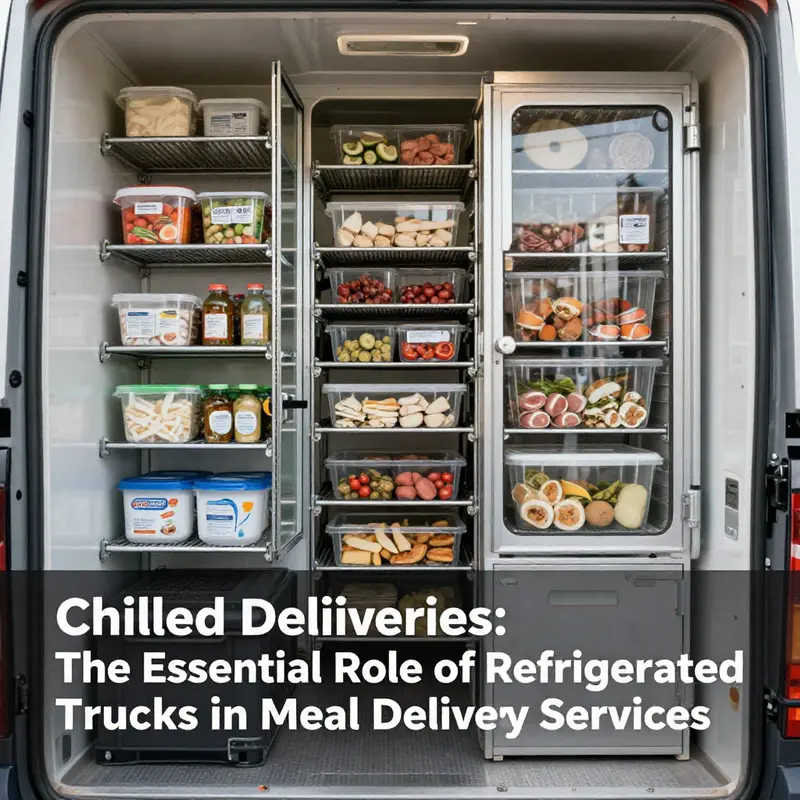
Beyond the core technology, design choices tailored to urban environments have a substantial impact on efficiency and safety. Compact, maneuverable models are increasingly favored for last-mile work. They fit into congested loading zones, navigate narrow streets, and park in tighter spaces near apartment complexes or commercial storefronts. Inside, thoughtful shelving and dividers help organize different meal types, reduce cross-contamination, and speed up handoffs during busy delivery windows. The internal layout is not merely a matter of convenience; it directly influences how quickly routes are completed and how accurately orders are fulfilled. When a vehicle carries multiple meal SKUs, a well-planned interior reduces the risk of left-behind items and minimizes the chance that fragile components—such as delicate salads or prepared sauces—are jostled during urban stops.
As meal delivery scales, fleets increasingly embrace multi-temperature configurations that enable a single vehicle to carry diverse cargo simultaneously. This capability supports situations where a service offers both frozen entrees and chilled kits within the same rotation. It also aligns with broader logistics strategies, including reducing the number of trips and consolidating loads to improve efficiency. Yet multi-temperature operation adds complexity: it requires robust thermal zoning, careful airflow management, and dedicated procedures to ensure the integrity of each temperature zone. When executed well, it becomes a powerful lever for profitability and service quality. When mishandled, it can become a source of cross-contamination risk or temperature excursions that jeopardize safety and flavor.
Specialized applications illustrate how refrigerated transport can extend beyond standard meal kits. In healthcare or patient-focused meal delivery, maintaining ultra-stable temperatures within narrow bands may be necessary to meet dietary prescriptions or to preserve the palatability of meals for individuals with specific needs. In these cases, backup power, redundancy features, and stringent fail-safes are not optional—they are required by healthcare standards and regulatory expectations, often mirroring measures seen in clinical or pharmaceutical supply chains. Even in typical consumer meal delivery, the underlying principle remains: the vehicle and its systems must anticipate and absorb the inevitabilities of real-world logistics, from a cooling unit failure to a mid-route detour in rising heat.
Temperature control and monitoring are inseparable from the broader philosophy of food safety. The cold chain is a sequence of tightly controlled steps from preparation through transport to final delivery. Any break in this chain can alter microbial growth dynamics, ripen ingredients too quickly, or degrade sensory attributes such as texture and aroma. Refrigerated trucks address this risk by offering a disciplined approach to climate management that is calibrated to the perishability of the product. In this sense, the fleet is not just a fleet; it is a rolling kitchen that maintains the precise conditions necessary for safe, high-quality meals as they travel to the consumer’s door.
That said, refrigerated trucks coexist with other delivery modalities, and not every route requires full refrigeration. For shorter, local deliveries, operators may rely on insulated containers aboard standard vans, combined with rapid routing and efficient handoffs. Such approaches can be perfectly adequate when ambient temperatures are mild or when items are truly shelf-stable during the transfer window. Yet when the scope grows to longer distances, warmer climates, or higher volumes of perishable meals, a dedicated refrigerated vehicle becomes the more reliable option. The choice is not merely about temperature; it is an assessment of risk, timeline, and the ability to safeguard the integrity of food across the entire journey.
The evolution of refrigerated transport for meal services also intersects with broader trends in the logistics ecosystem. Innovations in energy efficiency and refrigerant technology have reduced operating costs and environmental impact, while advances in sensor networks and data analytics have made the cold chain more transparent and auditable. Operators are increasingly exploring ways to optimize routes, reduce idling, and minimize heat exposure by aligning delivery windows with a vehicle’s thermal capacity and the day’s climate profile. In this sense, refrigeration is both a product feature and a strategic capability—one that shapes how a meal delivery program designs its menus, schedules its production cycles, and communicates with customers about expected delivery times and quality guarantees.
The practical takeaway is straightforward: for many meal delivery services, refrigerated trucks are not a marginal asset but a core element of service design. They enable a broader, more ambitious set of offerings, from subscription boxes with diverse temperature needs to catering collaborations that demand reliable performance over longer distances. They also demand disciplined maintenance, rigorous calibration, and a culture of constant improvement. The cold chain is dynamic, with the vehicle acting as a moving control room that must respond to weather, traffic, and the evolving needs of diners who expect meals that taste as fresh as they were when prepared.
Looking forward, the trajectory of refrigerated transport in meal delivery is likely to continue along several converging lines. First, energy efficiency and smarter refrigerants will reduce the environmental footprint while maintaining—and even enhancing—temperature stability. Second, smarter route optimization and telematics will shorten delivery times and tighten the feedback loop between temperature data and service decisions. Third, the design of vehicles and interiors will keep evolving to accommodate more SKUs, more precise zoning, and safer handling practices, all while remaining adaptable to the diverse demands of urban, suburban, and regional markets. Taken together, these developments reinforce a simple truth: refrigerated trucks matter because they preserve safety, quality, and trust in meals that move from the kitchen to the table with every mile.
In sum, meal delivery services do rely on refrigerated trucks, especially when the business scales beyond single-kilo deliveries or when the product mix requires careful temperature management. The technology behind these vehicles—self-contained units, precise temperature zones, real-time monitoring, and thoughtfully engineered interiors—provides a robust foundation for a reliable cold chain. The result is a delivery experience that respects the ingredients, honors the chef’s craft, and meets the consumer’s expectation of freshness, even as the journey unfolds through crowded streets and changing climates. The refrigerated truck, once an unseen workhorse of food logistics, emerges here as a visible pledge: that what arrives at the customer’s door is exactly what left the kitchen, in the best possible condition.
External reference: All About Light Duty Refrigerated Trucks: Specifications, Performance, and Common Uses. https://www.truckstop.com.au/insights/light-duty-refrigerated-trucks-specifications-performance-and-common-uses/
Preserving Profit and Palate: The Economic Ripple of Refrigerated Fleets in Meal Delivery
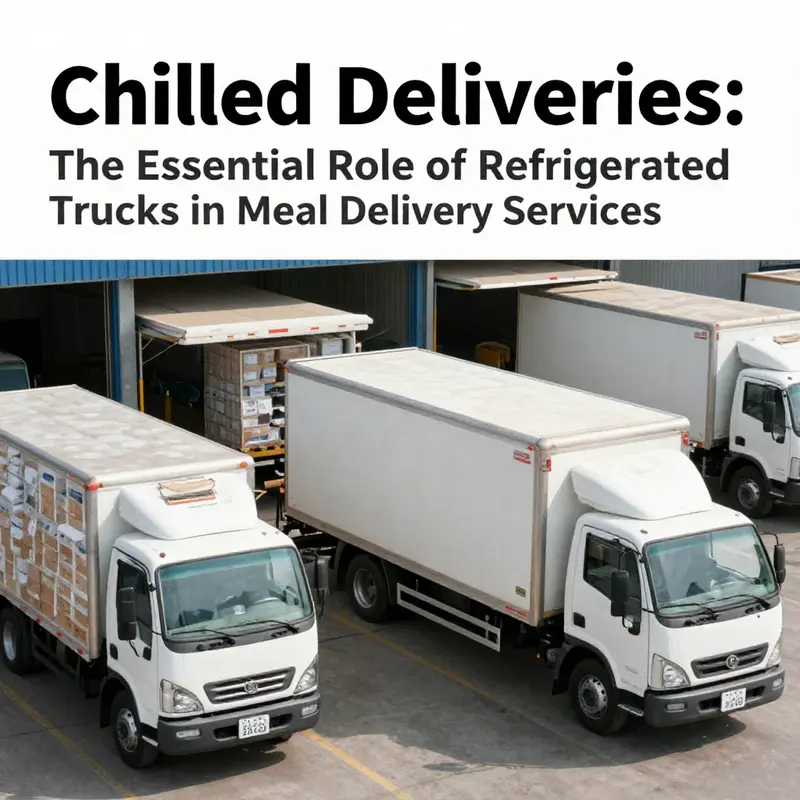
The movement of meals from kitchen to customer door hinges on a quiet but powerful actor in the logistics ecosystem: the refrigerated truck. In the discourse around do meal delivery services use refrigerated trucks, this chapter digs into the economic ripple effects that these reefer fleets generate. Temperature control is not merely a safeguard for food safety; it is an investment decision with consequences across waste, quality, reliability, and the long arc of customer trust. At first glance, a refrigerated truck may seem like a specialized asset reserved for perishable groceries or large-scale catering. Yet when one traces the chain from preparation to plate, the economics reveal why meal delivery operators increasingly rely on multi temperature capabilities, continuous power, and disciplined cold chain management to deliver consistent outcomes at scale.
From the outset, the most immediate economic benefit of refrigerated transport is reduced spoilage. Perishables, ready to eat meals, and chilled proteins demand tight temperature bands from the moment they exit the kitchen until they arrive in the consumer’s hands. When these conditions are violated, even briefly, the probability of spoilage rises and with it the cost of waste, returns, and negative brand signals. Global research places the scale of refrigeration-driven food loss at a striking level: more than 13 percent of food production is lost due to inadequate refrigeration. This is not a niche issue but a global economic concern. A sizable share of that loss—over 300 million tons—occurs in developing regions where cold chain infrastructure is most fragile. Those losses translate into real economic costs for producers, distributors, and retailers, and they ripple into higher prices and greater food insecurity for households. For meal delivery companies, the implications are direct: better temperature control translates into lower spoilage rates, reduced write-downs, and a more predictable inventory flow that aligns with customer demand.
The operational logic is straightforward but powerful. Cold chain integrity across a delivery network minimizes variability. In practical terms, the ability to sustain a stable 0°C to 5°C environment inside dedicated reefer compartments means that salads stay crisp, dairy stays safe, and prepared meals do not drift into the zone of quality decline. This steadiness matters for customer experience. When the consumer opens a bag or a box and finds a meal that looks or tastes as fresh as when it left the kitchen, the perceived value of the service rises. That perception is a driver of repeat orders and higher lifetime value, which in turn supports stronger pricing power and more sustainable unit economics for the operator. It is not an abstract advantage; it translates into measurable improvements in retention rates, cross-sell opportunities, and the ability to offer diverse menus that accommodate different dietary needs without sacrificing reliability.
In that sense, refrigerated trucks are not just temperature control devices; they are strategic assets in a business model built on freshness and convenience. The capabilities of these fleets have evolved beyond simple cold storage. Modern multi temperature trucks can maintain several distinct zones within a single vehicle, enabling a mix of frozen, chilled, and ambient products without cross-contamination or temperature drift. This flexibility unlocks economies of scope within a single delivery run. A meal delivery operator can transport a range of products that would previously require multiple trips or separate shipments. The result is a reduction in fuel burn per delivered item, lower fleet miles driven, and improved route efficiency. The broader implication is a more scalable operation: as demand grows, the same fleet can handle more varied product lines without a proportional rise in assets or complexity. This makes the cost per delivered meal more favorable, especially for operators aiming for geographic expansion or entry into new markets with mixed product assortments.
The economics of fleet composition are also shaped by the upfront and ongoing costs of refrigerated equipment. Refrigerated trucks tend to carry higher acquisition prices and more intricate maintenance requirements than standard dry vans. The capital expenditure is justified only if the operating cost structure supports it through reliable uptime, lower waste, and higher service levels. In practice, the long-run calculations often favor reefer investments for meal delivery companies that aim to serve restaurants, caterers, or large consumer cohorts across longer routes or warmer climates. Reliable temperature control reduces spoilage-related write-offs, saves on inventory carrying costs, and supports a predictable replenishment cycle. Moreover, the value proposition extends beyond food safety into brand equity. Customers come to expect that their meals will arrive in optimal condition, and that expectation is a durable differentiator in a crowded market. When a service consistently meets or exceeds those expectations, positive word of mouth and repeat business become tangible financial outcomes, reinforcing the case for maintaining a modern, temperature-controlled fleet.
This economic logic sits within the broader context of cold chain sustainability, a topic that has gained prominence as businesses acknowledge their role in environmental stewardship. Maintaining an uninterrupted cold chain requires careful planning, not just hardware. Temperature-controlled logistics rely on efficient route planning, real-time monitoring, and proactive maintenance to prevent energy waste and reduce emissions. In practical terms, reinforcing the cold chain means investing in training, telematics, and predictive maintenance that keep cooling units running efficiently. It also means optimizing the weight and load distribution to ensure fuel efficiency and consistent energy use across routes. While the initial capital outlay is real, the long-term benefits include not only waste reduction but also lower energy per unit delivered and a smaller carbon footprint per meal compared with less controlled transport modes. For operators considering long-term sustainability goals or seeking to align with increasingly stringent regulatory standards, these benefits reinforce the business case for reliable refrigeration as a core capability rather than a niche feature.
The customer dimension ties directly into the economics as well. In a market where consumer expectations include predictable delivery windows and uncompromised product quality, a dependable cold chain becomes a bargaining chip. Customers will accept longer wait times if the meals arrive in peak condition, while erratic deliveries or compromised food quality erode trust and loyalty. Replacing this trust with a resilient cold chain translates into a durable premium on the service. In industry terms, it is easier to justify the cost of a robust refrigerated fleet when the financial upside includes improved net promoter scores, higher repeat purchase rates, and greater propensity for customers to try new items on the menu. These outcomes feed back into revenue growth and cost control, creating a virtuous cycle where better temperature control reduces waste, supports more aggressive growth plans, and strengthens the brand’s competitive moat.
The economic analysis should also account for the way refrigerated transport supports diverse product needs. A meal delivery business that can carry fresh salads, chilled soups, dairy-heavy components, or even frozen entrées in the same fleet reduces the fragility associated with specialization. The flexibility to serve multiple temperature profiles from a single vehicle lowers the marginal cost of serving new markets or product lines. It enables a faster time to market for new menu items and reduces the risk that a new offering will be delayed by logistics constraints. For operators, this translates into an expanded addressable market with a more efficient capital footprint. The capacity to accommodate variety without sacrificing cold chain integrity can be the differentiator between a service that merely delivers meals and a service that reliably delivers a broad ecosystem of food experiences.
From a procurement standpoint, the decision to invest in refrigerated trucks intersects with financing, maintenance, and fleet optimization strategies. The financial case often rests on a blended view of depreciation, residual value, maintenance profiles, and the anticipated lifetime of the equipment. Although the costs are higher upfront, the cost of ownership over the vehicle lifecycle tends to be lower when measured against the combined impact of reduced waste, higher service reliability, and the ability to scale operations without a commensurate spike in logistics overhead. Operators who adopt data-driven maintenance schedules, predictive analytics, and transparent temperature monitoring tend to see higher uptime and lower unexpected repair costs. The return is not merely a few percentage points of efficiency; it is a fundamental improvement in the predictability of the supply chain, an asset that makes expansion feasible and more affordable.
An important nuance in this economic landscape is the trade-off between local and long-haul operations. In shorter, urban deliveries, insulated containers or conventional vans with enhanced thermal insulation can handle certain cold chain needs at modest cost. However, as fleets grow, as routes extend into warmer climates, or as the product mix requires a mix of chilled and frozen items, dedicated refrigerated trucks become indispensable. The cost calculus shifts in favor of reefer fleets when the volume of perishable products is high, when delivery windows are tight, or when spoilage costs would otherwise accumulate rapidly. In these situations, the incremental cost of operating a refrigerated fleet is offset by the value of improved predictability, lower waste, and the ability to meet customer expectations consistently across a broader geographic footprint.
The practical implications for smaller operators and startups are nuanced. While large-scale meal delivery services may justify a sizeable refrigerated fleet through volume and route optimization, smaller players can still leverage temperature controlled transport by partnering with third-party logistics providers that specialize in cold chain logistics. Such partnerships offer a way to access the reliability and temperature control that once required owning the fleet, without the full capital burden. The decision to partner versus own is itself an economic calculation—one that weighs the certainty of service levels, the flexibility of capacity when demand spikes, and the cost of capital against the expected uplift in customer satisfaction and waste reduction. In this sense, refrigerated fleets can be embedded into the business model in modular ways that align with growth trajectories rather than forcing merchants into a single, large capital commitment from day one.
To illustrate the breadth of capability within refrigerated transport, consider the range of settings and configurations that modern fleets can deploy. Adjustable temperature settings allow trucks to operate across chilled and frozen ranges, and more advanced models offer compartmentalized zones with independent controls. This level of granularity guarantees that a single vehicle can carry a spectrum of meals without compromising any one item. It reduces the need for multiple shipments and enables bundled deliveries for restaurants, catering events, and direct-to-consumer orders. The net effect is a leaner, more versatile operation that improves route efficiency and reduces the waste associated with cross-docking or interim storage. The economic payoff is, in part, the sum of many small savings—lower spoilage, fewer handling steps, and a smoother handoff to the customer, all of which accumulate into meaningful margins over time.
In the light of these considerations, the conversation about the economic impact of refrigerated trucks in meal delivery often converges on a few core themes. The first is resilience: a cold chain that holds steady under varying ambient conditions protects product value and ensures consistent service levels. The second is efficiency: temperature controlled fleets enable smarter routing, reduced trips, and better asset utilization. The third is adaptability: the capacity to serve a mixed product portfolio without extra logistics baggage opens doors to new customer segments and menu innovations. Finally, there is sustainability: steady energy use, optimized equipment, and intelligent maintenance contribute to lower waste and a smaller environmental footprint per meal. Taken together, these themes reveal a business case not solely about compliance or risk mitigation but about strategic optimization of value across the entire system from kitchen to comfort of the consumer.
For readers seeking an accessible pivot point into broader industry insights, consider exploring industry perspectives that connect these logistical insights with practical decision making. A concise glimpse into broader industry knowledge can spark new angles on how temperature management intersects with procurement strategy, fleet standardization, and maintenance planning. This is where a well-curated industry blog can be a helpful companion, offering practitioner-focused context while you weigh capital decisions and service design. For instance, the 5StarTruckin blog provides a repository of practical perspectives on fleet management and safety that can illuminate how temperature control sits within broader fleet operations. See more at the 5StarTruckin Blog.
The economic story of refrigerated fleets in meal delivery is not merely about keeping ice packs cold or ensuring that a label lands in the right container. It is about orchestrating a cold chain that supports a scalable, reliable, and differentiated service. It is about reducing waste at the source, enhancing product quality through the distribution journey, and preserving the trust that customers place in the delivery promise. When a company can promise meals that look and taste as fresh at the doorstep as they did at preparation, the implied discount rate on waste becomes more favorable, and the business can grow with confidence. The layered effects on waste, quality, customer satisfaction, and brand loyalty create a composite economic advantage that can outsize the headline price of a refrigerated rig. In a market where margins are often razor-thin and competition is intense, that composite advantage is a compelling justification for investing in the cold chain infrastructure that refrigerated trucks represent.
In wrapping this thread, it is helpful to reflect on the data that underpins the intuition. Global food loss due to insufficient refrigeration underscores the scale of opportunity when we fix the cold chain. The development of multi-zone refrigerated trucks speaks to the practical reality that different meals can coexist within a single logistics platform without cross contamination or temperature drift. The sustained emphasis on cold chain sustainability aligns with broader societal goals of reducing waste and improving environmental performance, while still delivering on the core consumer demand for reliable, high quality meals. The balance of capital intensity with long term operational savings is a core discipline for operators who aim to build durable, scalable meal delivery platforms. In short, refrigerated trucks are not a luxury in this space; they are a strategic necessity for any service that aspires to reliability, efficiency, and growth across diverse markets and product lines.
For further context and a deeper dive into the global food loss and waste landscape, readers can consult FAO resources that illuminate the macroeconomic and environmental implications of cold chain failures and improvements. This broader lens helps place the microeconomics of fleet decisions within the planetary scale of food systems and supply chain resilience. External reference: FAO Food Loss and Waste.
External resource: https://www.fao.org/food-loss-and-waste/en/
Final thoughts
Refrigerated trucks have become a cornerstone in the meal delivery service industry, ensuring that food remains safe and fresh from the moment it leaves the kitchen to when it arrives at the consumer’s doorstep. Understanding their role is crucial for stakeholders in the trucking sector, as it not only enhances food quality but also drives economic benefits through efficiency and reliability in transport. As demand for meal delivery continues to grow, the integration of advanced refrigerated technologies will likely keep shaping the industry, keeping it competitive and responsive to consumer needs.