
When evaluating the best truck service body for your specific needs, it’s crucial to understand the diverse types available and their intended applications. This guide is designed to assist long-haul truck drivers, trucking company owners, fleet managers, and aspiring truck drivers in making informed decisions. Each chapter will delve into different considerations, from cargo requirements to industry specifics, as well as compliance and safety standards, ensuring you have the knowledge needed to select the right service body for your operations.
Choosing the Right Truck Service Body: Reading the Cargo, Route, and Routine
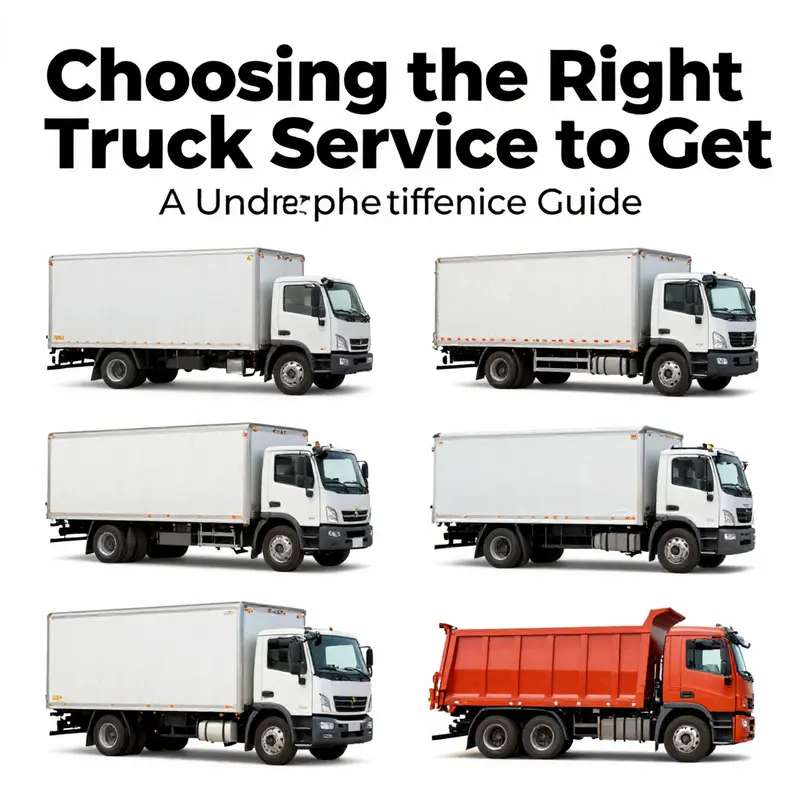
Selecting a truck service body is less about chasing the latest feature and more about aligning the tool on your fleet with the work you actually do. The decision hinges on three interlocking realities: the nature of the cargo you transport, the physical environments you operate in, and the rhythm of your daily routine. When you map these elements against the practical truths of different body types, a picture emerges not of a single best choice, but of a best-fit approach that can scale with growth, regulatory demands, and evolving service lines. In practice, this means starting with your core workload. If weather exposure, theft protection, and a secure work zone for technicians are non-negotiable, you lean toward an enclosed, weather-tight solution. If your operation routinely moves large, irregular items that demand quick access and flexible loading, a flatbed configuration becomes appealing. If your work involves reaching higher or heavier loads with minimal setup, hydraulic lifts, booms, or cranes integrated into the body can dramatically improve daily throughput. And for fleets handling specialized commodities or requirements—such as temperature control, precise load handling, or rapid unloading—a more purpose-built body type can deliver safety, compliance, and uptime dividends that compound over the life of the vehicle.
Among the most common body types, enclosed box bodies, sometimes referred to as box trucks or enclosed vans, stand out for service operations that prioritize security and climate protection. The value proposition is straightforward: tools, instruments, spare parts, and delicate devices can be stored in weather-sealed compartments, shielded from theft, and organized in a way that minimizes the time technicians spend searching for gear. In mobile service contexts, this translates into a safer work environment and a more predictable workflow. When the job site is exposed to rain, dust, or fluctuating temperatures, the benefit is not just pride in a tidy workspace; it is reduced equipment wear and better performance from tools that stay within a controlled climate or dry enclosure. For technicians who move between customer sites and a home base, the enclosed body also doubles as a mobile workshop, allowing a stable, functional workspace inside the cab’s bay rather than relying on outdoor setups.
If your service calls demand transporting bulky items, irregular shapes, or large equipment, the flatbed family offers a different kind of efficiency. A flatbed body provides outstanding loading and unloading flexibility, with side access and open interior space that makes it easier to handle items that won’t fit through a traditional box opening. This is especially true for materials, machinery components, long-length materials, or oversized equipment that would be awkward or impossible to load through a rear door. The flatbed’s open layout reduces the number of repetitive handling steps and minimizes the need for specialized lift systems just to move a stubborn load from ground to deck. For fleets performing installation work, maintenance, or parts delivery that includes heavy or bulky components, the flatbed becomes a practical platform for quick-strike operations and rapid reconfiguration of the working area on the job site.
Beyond these two broad categories lie specialized bodies that address particular operational pressures. Hydraulic lifts, booms, and cranes expand what you can do without a second vehicle or expensive third-party assistance. A hydraulic lift can rise to reach overhead components on street maintenance routes or repair sites where space is limited. Booms extend reach for tree work, signage installation, or utility tasks where a fixed, portable crane would otherwise require dedicated equipment. Cranes, when integrated into the service body, remove the need to shuttle payloads to a separate crane rig and turn complex lifts into routine, repeatable operations. These three capabilities—lift, boom, crane—represent a shift from “ transporting tools” to “performing tasks on site,” a transition that often redefines a fleet’s service model and response times. In practice, the choice among hydraulic lifts, booms, or cranes should be driven by the typical height, weight, and maneuvering constraints of your most frequent jobs, as well as the footprint your crew can safely manage at typical work sites.
All of these configurations sit inside a broader ecosystem of specialized needs that may come into play at different scales or in particular industries. Temperature-controlled bodies, or reefers, add a layer of complexity but unlock the ability to transport perishable goods, pharmaceuticals, or temperature-sensitive materials without compromising quality. Dump bodies are the go-to when you routinely move loose materials such as sand, gravel, or soil and need efficient unloading at the site. Tanker bodies handle liquids or gases, built to exact safety standards and designed to prevent leaks or spills during transport. In municipal or industrial waste, compacting systems within a refuse body optimize load capacity and operational cadence. And for vehicle transport work, or specialized fleet service, a car-hauler or multi-deck configuration provides secure, multi-tiered storage for assets being moved from site to site. Each of these specialized bodies requires careful attention to compliance, loading dynamics, and maintenance demands, so the decision should reflect not only current workloads but also anticipated shifts in service lines, regulatory requirements, and maintenance cycles.
The practical question then becomes not simply which body is best, but how to evaluate fit for your unique workflow. The literature and practitioner guidance converge on several core considerations. First, the nature of work must drive the selection. If the job is primarily mobile service provisioning with compact tools, an enclosed van with well-organized storage racks makes the most sense. If the job demands transporting large parts or equipment, a flatbed with robust tie-down points and modular racks will support faster throughput and fewer trips. Second, efficiency features matter. A service body should provide easy access to tools and a logic of storage that reduces travel time within the vehicle. Built-in tool racks and modular compartments enable technicians to customize the space for specific toolsets and repair kits, while integrated lighting improves visibility for detailed tasks on the roadside or at night. Durable construction ensures that racking, seals, and flooring withstand daily wear, weather exposure, and the occasional off-route encounter with rough terrain. Third, customization and compatibility are critical. The body must align with the vehicle chassis, the payload, and the fleet’s maintenance schedule. It should be adaptable to future lines of work and compatible with existing auxiliary equipment like onboard generators, power tools, or diagnostic devices. Fourth, maintainability is a practical driver of uptime. A service body that is easy to inspect, repair, and replace components reduces downtime and extends the life of the fleet. Finally, safety remains paramount. The design should minimize crew exposure to moving parts, provide secure ladders and fall protection, and ensure load stability under dynamic driving conditions.
Among the most valuable features that emerge from professional guidance are built-in tool racks, modular compartments, and integrated lighting. Tool racks, when thoughtfully arranged, reduce the time technicians spend bending, reaching, or rummaging for the right wrench. Modular compartments offer the flexibility to tailor storage space to the specific mix of tools, spare parts, fasteners, and diagnostic equipment a crew relies on. Integrated lighting—overhead, under-shelving, and work-area illumination—extends productive hours and improves accuracy in low-light environments. Together, these elements create a service body that behaves like a well-organized workshop on wheels, rather than a loose collection of loose tools and parts. And because many fleets operate across multiple sites with varying ambient conditions, the ability to customize and reconfigure compartments becomes a practical, recurring value rather than a one-off convenience.
In conversations with industry practitioners, two overarching themes consistently surface: durability and customization. Durability is not only about the metal and sealants but about how the system handles daily toggling of doors, the dust and moisture exposure, and the potential impact of heavy tools being slid in and out of storage. The right chassis-to-body interface is crucial for long-term reliability, so compatibility with the vehicle platform is essential. Customization options—from interior ladder racks to electrolyte storage, from spill containment to sensor-ready compartments—allow fleets to tailor the body to the exact demands of their technicians and customers. Maintenance considerations also matter. Features that simplify cleaning, inspections, and repairs translate to better uptime and lower operating costs. A service body that can be serviced with standard tools and parts reduces downtime when it’s needed most.
This is where a balanced approach pays off. The best choice is rarely the one that maximizes a single advantage—security, or load capacity, or speed of access—instead, it is the option that harmonizes several priorities: protection of assets, ease of use for technicians, seamless integration with the vehicle platform, and a clear plan for future service evolution. The right body type should reduce friction in the workflow rather than create new bottlenecks. It should be resilient to the rigors of daily use while remaining flexible enough to accommodate future tools and techniques. At the same time, it should help a fleet maintain its commitment to safety, reliability, and regulatory compliance. For readers weighing these choices, a practical next step is to explore design and efficiency perspectives that emphasize how a service body is used in the field, not just how it is built in the shop. A useful lens is to imagine each job site as a small workshop—every tool has a home, every work surface is protected, and every action is part of a repeatable sequence rather than a series of ad hoc arrangements. This mindset not only improves current operations but also informs how a body might be adapted as new services or customers emerge.
For fleets seeking a disciplined approach to optimization, it is worth consulting sources that detail how design choices translate into operational gains. A useful perspective on design efficiency in emergency services can be found here: design efficiency in emergency services. This resource underscores how thoughtful space planning, tool organization, and accessible workflow patterns translate into tangible downtime reductions and quicker responses at the roadside or on site. While the context is broader than every service truck, the fundamental logic applies: a well-designed service body turns a mobile workshop into a reliable, efficient platform that supports technicians and protects assets.
Ultimately, choosing the right service body is about aligning your equipment with how your teams work, not only what they carry. You want a solution that grows with your business, respects the daily cadence of your field tasks, and maintains safety and compliance as your work expands. This means balancing the obvious advantages of enclosed protection with the versatility of open or specialized configurations, while always prioritizing durability, maintenance simplicity, and integration with your fleet’s broader operational framework. The right fit is the one that enables your technicians to perform more effectively, with fewer interruptions, fewer trips back to the depot, and more consistent outcomes for your customers. It’s about creating a mobile workspace that feels integrated with the job rather than an afterthought attached to the vehicle. For readers who want to explore broader standards and industry practices in service truck bodies, a detailed external resource provides a broader perspective on standards, composition, and industrial use. https://www.truckbody.com/service-truck-bodies-for-sale-standards-composition-and-industrial-use
Choosing the Right Truck Service Body: A Cargo-Driven Path Through Roll-Offs, Service Bodies, and Beyond

Selecting the right truck service body is less about the latest fad and more about the cargo you carry, how you work, and the safety and efficiency standards that shape your industry. In practice, the decision begins with a clear image of the daily tasks: what needs protection from weather or theft, what requires easy access for repetitive loading, and how temperature, weight, and handling interact with the vehicle you already own. The two primary framework choices—roll-off bodies and service bodies—offer distinct advantages, and recognizing their strengths helps you map your workflow onto a chassis that can actually uplift productivity rather than complicate it. In this sense you are not merely choosing a shell; you are selecting a system that talks to forklifts, pallet jacks, cranes, and, most importantly, the people who rely on you to deliver on time and safely. The broader field of truck bodies is rich and varied, with options like box trucks, flatbeds, and refrigerated units already common in many fleets. Yet the service-body decision markedly influences how effectively you move your cargo from point A to point B, how you protect the payload, and how you minimize downtime during service calls, maintenance windows, or municipal routes.
Roll-off truck bodies sit at a particular intersection of capacity, durability, and speed. They are built to handle large, heavy containers that carry municipal, commercial, or industrial waste, a task that demands robust lifting mechanisms and a bed architecture designed to survive repeated exposure to the elements and heavy loads. The typical roll-off configuration features a bed that can accept standard dumpster sizes and a winch- and cable- or hydraulic-assisted system that permits the operator to roll containers on and off with a controlled motion. The benefits of this setup are clear: when you service a city block, you want predictable cycles, fast container exchange, and the ability to lock in compliance with safety protocols as you swap a heavy load from street to truck and back again. In practical terms, a roll-off body translates to less manual handling, fewer shoulder injuries, and higher daily throughput for crews that run tight routes where every load counts. All of this hinges on careful alignment between chassis capacity, tipping or rolling mechanisms, and the control system that coordinates the loading sequence with the driver’s operations. The design ethos is utility first: maximize load acceptance, minimize discharge friction, and ensure the container transfer can be accomplished in varying weather conditions.
On the other side of the spectrum lies the service truck body. These configurations are purpose-built for applications where sensitive or high-value equipment travels in a more controlled environment. Think telecommunications or utility service work, where technicians carry delicate instruments, climate-sensitive electronics, or precision tools that demand extra protection and organization during transit. Service bodies emphasize reinforced interiors, vibration dampening, secure locking, and modular compartmentalization that can be tailored to a technician’s daily kit. In practice this means more robust mounts for expensive tools, better insulation for climate control, and a layout that reduces rummaging and time spent searching for the right device or spare part. Service bodies often integrate advanced features such as surge protection, anti-slip floors, and thoughtfully arranged drawers and racks that help crews find the right tool at the right moment, even in crowded job sites or on rough terrain. The underlying philosophy here is to reduce intra-vehicle handling friction and elevate reliability, so technicians can focus on their core work—diagnosing a problem, repairing a line, or installing a critical component—without wrestling with a disorganized cargo bay.
Those two core categories are not isolated silos; they intersect with a broader ecosystem of cargo-carrying bodies. A box truck, with its enclosed cargo area, provides weather protection and theft deterrence that many delivery operations depend on. A flatbed excels when grappling with oversized or irregularly shaped loads that must be loaded from the sides or top, such as machinery, lumber, or metal stock. Step decks or double drops add height flexibility for tall equipment while still respecting road height limits. Refrigerated bodies keep perishable goods at controlled temperatures, a non-negotiable for food, pharmaceuticals, or certain chemicals. Dump bodies offer rapid unloading for loose materials like sand or gravel. Tankers are specialized for liquids or gases, with tank designs that meet safety standards. Garbage compactors maximize waste-load efficiency, a staple in municipal fleets and commercial refuse services. Car haulers require multi-level, secure tie-down systems for vehicle transport. Each of these bodies is optimized for a different kind of cargo, and the choice of service body is tightly coupled to the nature of the payload and the operational tempo of the fleet.
If your operation is primarily about transporting the kind of payload that is best supported by a roll-off or a service body, you still need a rigorous assessment framework. Cargo type determines the core design requirements: how the payload is loaded, whether the load is uniform or varies by job, and what kind of securing hardware is necessary to prevent shifting during transit. Weight and volume determine whether the chassis has sufficient gross vehicle weight capacity and whether the bed can be reinforced to handle repetitive cycles without structural fatigue. Environmental exposure is another deciding factor; some cargo requires weather protection or climate control, while other loads are resilient enough to tolerate open-air exposure if the loading window is brief. Handling requirements matter as well. Will crews need side loading, top loading, or crane-assisted transfer? Is there a need for hydraulic tilting, a roll-off mechanism, or a lockable interior to safeguard sensitive equipment? These questions guide the technical choice of bed structure, mounting provisions, hydraulic or electrical interfaces, and the sophistication of the control systems that govern loading and unloading.
The crossroads of decision often comes down to aligning the truck body with the daily workflow. For a waste collection operation that processes dumpsters across a dense urban corridor, a roll-off configuration is typically the most efficient path. The ability to quickly deploy a container, secure it, and tip or roll it off when needed sustains higher cycle counts and reduces the physical strain on crew members. Conversely, a telecom service crew that carries precision meters, fiber splices, and fragile diagnostic tools benefits from a service body that protects sensitive equipment, keeps tools organized, and minimizes vibration during transport. The goal is to minimize the time spent hunting for the right tool, reducing the chance of tool loss, and maintaining the integrity of delicate instruments in potentially rough driving conditions. In both cases, the capacity to customize the interior layout—compartments sized to tool kits, spare parts, or measurement devices—becomes a critical factor in realizing meaningful improvements in daily productivity.
This is where a thoughtful decision framework shines. Start with cargo type and handling requirements. Identify whether the payload is heavy, bulky, or fragile, and determine the most efficient loading workflow—side loading for large objects, top loading for containers, or a combination of both. Next, weigh capacity needs against the chassis’s limits. Confirm that the bed structure, lifting mechanism, and mounting points can sustain the expected loads through years of service. Then consider environmental exposure and the need for protection. If temperature control is essential, a climate-controlled interior with proper insulation and seals becomes non-negotiable. If weather resistance is secondary, a sturdier yet simpler interior may suffice, but you should still plan for durability against vibration and road debris. Finally, factor in maintenance and lifecycle costs. A system that reduces downtime and simplifies tool organization may have a higher upfront price, but it often pays for itself through lower maintenance, longer service intervals, and improved uptime on the road.
In this decision process the human element matters just as much as the mechanical. Crew familiarity with a particular layout matters; a design that feels instinctive to the technicians who use it reduces onboarding time and accelerates productivity. Safety also anchors the equation: a well-designed interior reduces the risk of tool drops, sharp edges exposure, or unsecured cargo in a sudden stop. In municipal or utility work, regulatory compliance and standardization across fleet assets can drive a preference for modular interiors and consistent mounting points, making maintenance, spare parts stocking, and driver training more straightforward. These considerations collectively shape what you might call a cargo-first approach to vehicle selection. They move the discussion beyond “Which box or which bed looks nice?” to “Which system reliably supports the way we operate, day in and day out, across diverse job sites and weather conditions?”
As you weigh internal configurations and practical capabilities, it can be helpful to consult guidance that distills these concepts into actionable steps. For readers seeking a straightforward starting point and ongoing insights, the 5startruckin blog offers practical perspectives on fleet decisions and procurement approaches that align with field realities. You can explore these ideas further at 5startruckin.com/blog. The goal is not to mimic a template but to adapt flexible frameworks to your unique tasks, your risk tolerance, and the pace at which you need to service customers or handle emergencies. In the end, the right truck service body is not a single feature set; it is the sum of its parts working in concert with your processes, crew, and route structure.
For a deeper technical dive into the roll-off side of the equation, and to understand how these systems are engineered to meet industrial demands, consider the external reference that outlines the technical details, features, and industrial implementation of roll-off truck bodies. This resource can be a valuable companion as you refine specifications, evaluate trade-offs, and prepare for a purchase decision that will influence your fleet’s efficiency for years to come.
External reference: Roll Off Truck Bodies Explained: Technical Details, Features, and Industrial Implementation. https://www.truckbody.com/roll-off-truck-bodies-explained
Choosing the Right Truck Service Body: Aligning Industry Demands with Fleet Realities
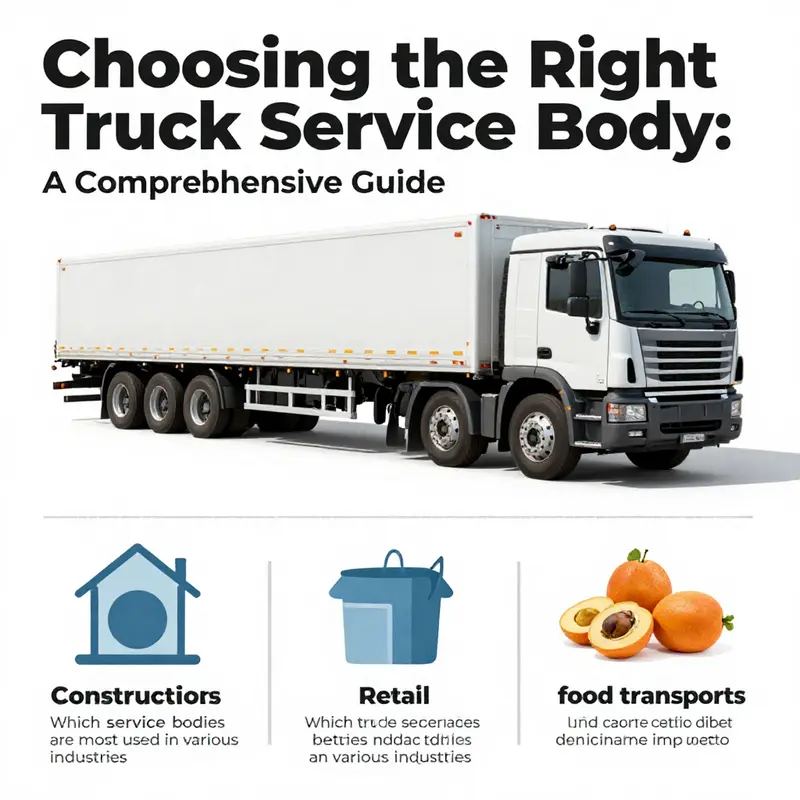
Choosing the right truck service body is more than capacity or aesthetics. It is a careful alignment of what you carry, how you move it, and where your business operates. The decision weaves through every aspect of daily work: the loads you protect, the tools you organize, the routes you navigate, and the pace at which you must respond. In this sense, the service body becomes an extension of your team, shaping efficiency as much as any engine or chassis. Start with the cargo—its weight, its fragility, its security requirements—and couple that with how technicians work, where they work, and what regulatory or safety standards apply, to form a clear picture. You may be transporting weather sensitive medical supplies or heavy, irregularly shaped machinery; you may be delivering countless small packages across urban corridors or supporting infrastructure in remote areas. Each scenario nudges you toward a different body configuration, and there is no one size fits all solution. Industry context matters as much as the vehicle itself, and the best choice often hinges on balancing space, access, durability, and adaptability, all while maintaining driver maneuverability and total operating cost.\n\nThe landscape of service bodies is diverse because the needs of mobile professionals are diverse. In the realm of mobile technicians, the priority is organization and access. Electricians, plumbers, and HVAC specialists rely on built in storage that keeps tools, test equipment, and spare parts within easy reach. A well designed service body creates a workflow where a technician can locate the exact socket, meter, or wrench in seconds, reducing downtime and fatigue. The emphasis here is on modularity and predictability: standardized compartments, labeled drawers, and secure mounting points that protect fragile devices during transit or vibration. The narrative moves quickly from storage to work surfaces, where a compact bench or fold out workspace can transform a truck into a mobile shop. In these cases, climate control may be less about preserving perishables and more about keeping electronics and sensitive components within safe temperature and humidity ranges, a detail that underscores why climate options are not a luxury but a core capability for many trades.\n\nDelivery services present a different calculus. Cargo space becomes paramount, and accessibility—how a driver loads, unloads, and retrieves items—drives the configuration. A box style enclosure, with weather resistance and security, often serves as the backbone for such operations. Yet even here, customization matters. For perishable items or items sensitive to temperature variation, refrigeration or climate controlled compartments may be essential. The goal is to create a seamless handoff between the driver and the customer, a process that benefits from clearly defined access points, ramps or lift assistance, and the ability to reconfigure the interior to accommodate surges in volume or shifts in product mix. The service body, in this sense, becomes a flexible platform that can be adapted as routes, product lines, and delivery windows evolve.\n\nMedical equipment transport adds a distinct layer of complexity. Beyond simply moving gear, these operations require secure storage, hygienic layouts, and often climate controlled environments. The body must accommodate delicate devices, resupply packs, and potentially sensitive battery systems, while also allowing rapid access in critical moments. In practice, this can translate into specialized compartments with padded interiors, isolation barriers for sterile items, and integrated power or charging outlets for portable devices. The emphasis is on safety, reliability, and the capability to maintain equipment in a ready state, even as the vehicle doubles as a temporary clinic or field support unit. In all of these scenarios, the material standards for the body matter. Tough, corrosion resistant materials withstand the rigors of daily use, weather exposure, and the occasional harsh environment. Weld quality, seal integrity, and wear resistance directly influence maintenance cycles and total cost of ownership. When the body is built to endure, it buys you fewer interruptions and longer intervals between service.\n\nConstruction and infrastructure work situate the vehicle in a different spectrum of demands. Here, the body must support field maintenance, inspection tasks, and the transport of heavy or irregular loads. A robust, durable exterior with reinforced mounting points for ladders, jacks, or specialized equipment becomes essential. The interior may benefit from heavy duty racks, tool boards, and modular layouts that can be reconfigured as projects shift from inspection to repair to lifting or hoisting tasks. Durability translates into long term cost savings: fewer dents, less corrosion, and less downtime. The ability to integrate power reels, air lines, or hydraulic controls directly into the body streamlines field service. In these roles, the service body acts as a portable shop, a command center, and a storage vault, all in one. The line between vehicle and workshop blurs, and that blurring is precisely what enables rapid response on site.\n\nEmergency response vehicles push the boundaries of what a service body must endure and how fast it must deploy. Here, rugged construction is non negotiable, and flexibility becomes a strategic advantage. The body needs to accommodate a wide array of tools, rescue equipment, and potentially emergency medical gear, all organized for instant access. Deployability matters: sliding trays, quick release latches, and secure, rapid access compartments that can be opened under duress. The interior layout must support quick reconfiguration so responders can adapt to diverse incidents without compromising safety. In this context, the service body is part of a larger system that includes lighting, power, connectivity, and integrated storage for life saving devices. The ability to withstand repeated exposure to vibration, temperature swings, and moisture while retaining organizational logic is what separates a reliable fleet from a fragile one. It also matters that the body remains serviceable. Ease of maintenance—accessible fasteners, protective coatings, and straightforward drainage or venting—reduces downtime and extends life in the field.\n\nAcross these applications, one of the most consequential considerations is the material standard by which the body is built. The choice between steel, aluminum, or composite materials influences weight, fuel efficiency, and corrosion resistance. Heavier materials may offer durability, but they also demand more from the chassis and can complicate loading. Lighter options can improve payload capacity and maneuverability, but they may require additional reinforcements to resist impact and wear. The decision rests on a careful assessment of duty cycle, payload range, and exposure to the elements. A durable finish—whether powder coated, ceramic coated, or another protective layer—extends life in harsh environments such as construction sites or coastal climates. It is not merely about resisting dents; it is about preventing microcracks and corrosion that can undermine the integrity of storage compartments and mounting points over time.\n\nBeyond materials, the technical specifications define what the body can actually do. Weight capacity, dimensions, door configurations, and the layout of compartments all feed into a single truth: your service body must align with your workflow. If your operation involves frequent trips with heavy, irregularly shaped loads, a flatbed or double drop configuration might be necessary to maximize usable space while allowing side and top loading. If your business demands weather protection and cab-to-cargo security, an enclosed box body represents the better choice. In the medical and emergency sectors, climate control, secure storage, and specialized mounts for equipment add layers of capability that directly affect outcomes and response times. The best way to approach this selection is to map your typical loads, identify peak demand periods, and then validate those requirements against the manufacturer’s or fabricator’s technical specifications. A well documented load profile helps avoid over- or under-building the body and ensures the truck remains efficient and effective across its service life.\n\nCustomization options illustrate the practical path from generic transport to tailored utility. Built in tool racks, modular drawers, and climate controlled compartments transform a body into a purpose built workspace. Lightning fast access features and ergonomic layouts reduce operator strain and speed up service calls. For some fleets, the ability to add external power or auxiliary lighting, secure digital cab access, or integrated communication solutions makes the body a more capable platform for data driven operations. In others, simpler configurations focusing on secure, organized storage and straightforward maintenance access are the right fit. The decision tree is guided by how much customization adds value to daily operations versus how much it costs in upfront investment and ongoing maintenance. This calculus cannot be divorced from the broader fleet strategy: compatibility with existing chassis, compatibility with anticipated routes, and the capacity to scale as the business grows.\n\nA broader perspective considers the total cost of ownership and life-cycle maintenance. A sturdy, thoughtfully designed service body reduces downtime, simplifies routine maintenance, and minimizes the risk of gear misplacement on the job. It also influences downtime during transits between jobs. A body designed with easy access panels, clearly labeled compartments, and secure weather resistant enclosures translates into faster service calls, fewer damages, and lower spill or contamination risk for sensitive payloads. In highly regulated environments—such as medical logistics or hazardous material work—compliance features can become a differentiator. Proper seals, gasket integrity, and compliant mounting standards are not optional add-ons; they are fundamental safeguards for people and payloads. When you factor in maintenance, you should also consider the reliability of the mounting interface to the chassis, the quality of fasteners, and the ease with which technicians can perform routine checks without specialized tools. The right combination here reduces the chance of rattling, loosening, or misalignment that can emerge over long service lives.\n\nOperational scale matters just as much as the specific tasks. For fleets running interstate or long-haul routes, heavier duty bodies paired with Class 8 chassis often deliver the robustness and payload protection needed to survive demanding schedules. For urban or regional operations, maneuverability and parking practicality become critical; in these cases, a lighter, modular, and more compact body can actually deliver better uptime by enabling quicker trips and easier access in tight spaces. The challenge is to define what matters most for your business at the current moment and to design with a view toward future requirements. A body should not only meet today’s needs but be adaptable enough to accommodate growth, regulatory changes, or shifts in service lines. If your company plans to expand into new service segments, a flexible interior layout and scalable accessory options can be the best long-term investment.\n\nIn this process, the industry context and the operational realities converge into a pragmatic framework for decision making. Consider the following synthesis: prioritize durability and organization for mobile technicians; emphasize cargo space and climate control for deliveries; insist on climate control and secure storage for medical transport; couple rugged construction with flexible equipment integration for construction and infrastructure; and ensure rapid deployment and resilience for emergency response. The sooner you align the body’s design with actual workflows and regulatory expectations, the sooner your fleet delivers consistent uptime, safer operations, and measurable productivity gains. The body becomes not a passive shell but an active, adaptive partner in service delivery, a trusted workspace that travels with your team and supports it through every shift, every route, and every incident.\n\nAs you navigate these choices, remember that good decisions are grounded in clear, repeatable processes. Start by auditing your current payloads, listing the tools and equipment that must ride with you, and quantifying how often you need access to specific compartments. Then, translate those findings into a draft interior layout, calibrate it against the chassis’s payload envelope, and confirm with your operators that the proposed access points and workflows actually improve speed and safety on the ground. The goal is to end up with a service body that feels like a natural extension of the technician’s hands: intuitive, durable, and reliably organized. By weaving together industry demands, operational realities, and forward looking flexibility, you can choose a truck service body that not only carries your loads but also accelerates your work, reduces downtime, and enhances customer confidence. For further insights into current standards, compositions, and industrial uses of service truck bodies, see the resource linked here and keep an eye on how emerging materials and modular designs may continue to reshape what a service body can do. Design efficiency in emergency services. Additionally, for context on broader industry standards and practical references, you may explore this external resource: https://www.truckbody.com/service-truck-bodies-for-sale-standards-composition-industrial-use/
null
null
Final thoughts
Selecting the right truck service body is not merely a practical decision but a strategic one that impacts operational efficiency, safety, and compliance. By understanding the different types of service bodies, assessing your cargo needs appropriately, considering industry-specific applications, and adhering to safety standards, you can enhance your transportation capabilities. Make a well-informed choice that aligns with your operational objectives and boosts your business’s performance.