
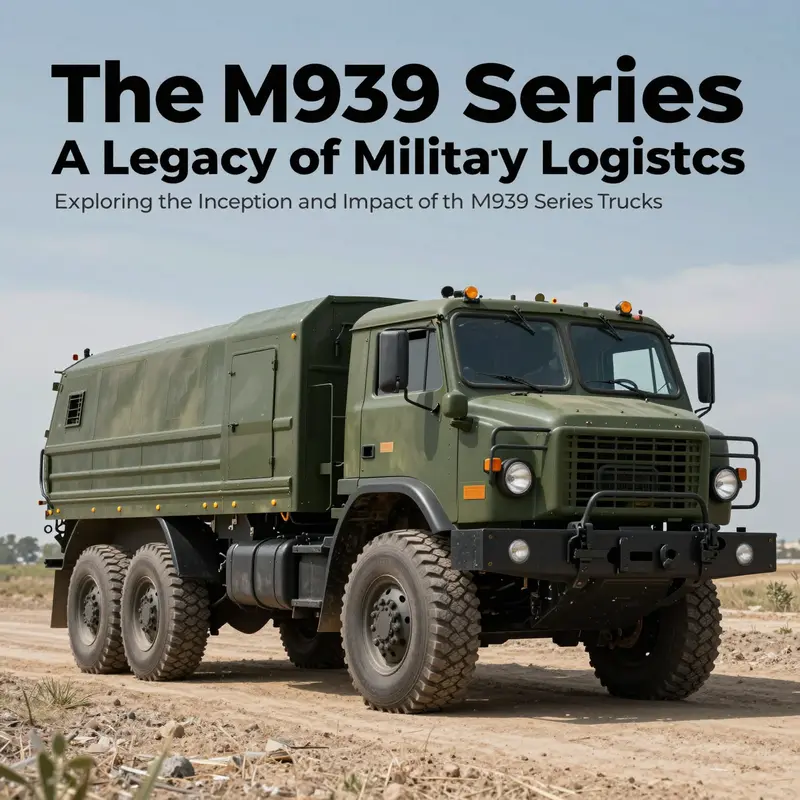
In the evolving landscape of military logistics, the M939 series trucks stand as a testament to durability and operational efficiency. Entering service in the early 1980s, these vehicles addressed the pressing needs of the U.S. Army, particularly in off-road scenarios where older models faltered. Their introduction not only transformed transport methods but also laid the groundwork for modern military logistics, serving as reliable workhorses for decades. This article delves into the comprehensive history of when the M939 series was put into service, explores its technical specifications, and analyzes its significant impact on military operations.
From Workshop to Warfront: When the M939 Series Trucks Entered U.S. Military Service
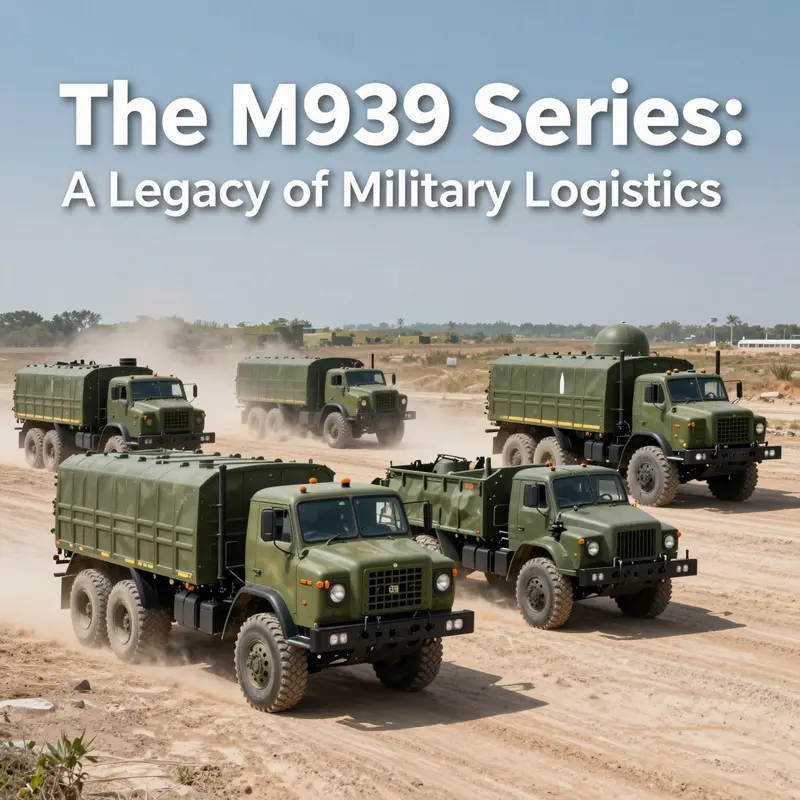
On the cusp of a new decade, the U.S. Army faced a pressing question about its tactical wheeled fleet: how could a line of trucks be modernized to meet the demands of a changing battlefield while staying reliable enough to operate in the most demanding environments? The answer lay in a family of 5-ton, 8×8 heavy-duty cargo vehicles whose development began in the late 1970s. The M939 series, conceived to replace aging workhorses from the immediate postwar era, emerged from a deliberate effort to standardize and elevate the Army’s logistical backbone. Production began in 1979 as part of a broader modernization program, and official adoption followed in the early 1980s, with the first variants entering service in 1982. This moment—when a new generation of trucks shifted from workshop benches to the front lines—marked a turning point in how the Army moved, stored, and protected its combat power in a wide range of theaters and missions. The transformation was not a single leap but a sustained evolution, rooted in a practical commitment to durability, maintainability, and cross-theater mobility that could keep pace with evolving military operations.
The M939 family was designed to be a versatile, workhorse platform capable of handling heavy payloads while traversing the unpredictable terrains that often defined U.S. military operations. The 8×8 chassis configuration—paired with a robust 5-ton payload capability—allowed these trucks to perform a variety of roles beyond simple cargo hauling. They served as logistic lifelines, moving everything from bulk supplies to heavy equipment, and they did so in environments ranging from the dusty deserts of the Middle East to rugged mountain passes and rain-soaked backwoods. This flexibility was not merely about raw power; it was about a holistic design philosophy that emphasized mobility, protection from the elements, and the ability to field repair and maintenance with relatively austere resources. The result was a fleet that could be relied upon to keep the tempo of operations, even when the terrain, climate, or distance challenged simpler vehicles.
The early 1980s, therefore, became a period of transition in Army logistics. The M939 family replaced older designs, most notably M39 and M44 variants, in part because those predecessors had begun to show their age in terms of payload, reliability, and ease of maintenance under continuous use. The shift was not merely about removing outdated hardware; it was about rethinking how a tactical wheeled fleet could be standardized to streamline training, reduce maintenance complexity, and simplify repairs in the field. The M939’s modularity and the improvements embedded in each successive sub-model were aimed at meeting those objectives. The trucks were designed to operate in a full spectrum of environments and missions. They could support combat service support, move heavy equipment, and sustain the supply chain that kept deployed forces ready for action. In the years that followed, those capabilities were demonstrated repeatedly during training exercises and real-world deployments alike, underscoring the value of a robust, purpose-built logistical platform.
Manufacturing and development of the M939 family also reflected the Army’s broader approach to industrial collaboration. A number of contractors participated in producing these vehicles, with Oshkosh Corporation serving as a primary contractor. The presence of multiple sources helped ensure a steady production cadence and allowed for the introduction of iterative improvements without delaying field readiness. Over time, the M939 line would see the introduction of several sub-models, each bringing targeted enhancements to performance, maintenance, and crew ergonomics. The essential configuration—the heavy 5-ton, 8×8 chassis—remained constant, but the details evolved to deliver greater engine output, improved fuel efficiency, and more capable suspension systems, among other refinements. These changes were not cosmetic; they translated into tangible improvements in reliability, ease of maintenance, and mission readiness, which were crucial to the Army as it adapted to new kinds of operations and the demands of a modern, technologically integrated battlefield.
Among the notable milestones in the timeline of the M939 series was the introduction of the M939A1 variant in 1986. This version brought a more powerful engine and enhanced fuel efficiency, but it also focused on driver comfort and access for maintenance. The emphasis on an easier maintenance workflow was especially important for a fleet that needed to be rapidly sustained across varied environments and extended deployments. The A1’s improvements were followed by subsequent iterations—M939A2 and M939A3—each building on the core strengths of the baseline design while addressing real-world feedback from operators and maintenance crews. These later models refined the suspension, durability, and accessibility of critical components, which, in turn, extended service life and reduced downtime in the field.
The practical impact of these upgrades was felt across the Army’s logistics chain. A robust, reliable platform that could be mass-produced and repaired in difficult conditions freed units from constant mechanical concern and allowed them to focus on the tasks at hand. In many ways, the M939’s endurance test was a measure of the Army’s confidence in its ability to sustain operations under less than ideal conditions. The trucks routinely faced causalities of terrain, weather, and the harsh realities of transport missions—yet they frequently delivered when it mattered most. The lineage from the late-1970s development programs through the early 1980s adoption and into the 1990s and beyond reveals a trajectory of steady, purposeful improvement rather than abrupt, flashy change. The M939s became a backbone for logistic sustainment, a role that proved indispensable as U.S. military commitments expanded and diversified during the late Cold War era and into the subsequent decades.
The broader significance of the M939 series rests not only on its mechanical attributes but also on its organizational and doctrinal impact. The Army’s decision to standardize around a family of vehicles that could be produced by multiple manufacturers, and that could be upgraded incrementally, reflected a strategic preference for commonality and long-term viability. The ability to upgrade engines, suspensions, cabs, and other subsystems without abandoning the core chassis meant that redeploying or re-tasking vehicles for different missions required less time and fewer specialized parts than would have been possible with an entirely new platform. This emphasis on maintainability and adaptability translated into real-world benefits: faster turnaround in supply lines, more predictable maintenance cycles, and greater overall fleet availability. In the field, that reliability translated into less downtime during critical supply runs, more dependable cross-country movement of heavy loads, and a degree of operational flexibility that allowed commanders to choreograph complex logistics with confidence.
For readers seeking the official, in-depth technical picture, the U.S. Army’s Technical Manual TM 9-2320-243-10 provides a thorough look at design, maintenance, and deployment guidelines for these trucks. This document is a valuable source for understanding the technical foundations that underpinned the M939’s service life and the ways in which its designers anticipated the needs of soldiers in dynamic environments. The manual can be accessed through the Defense Technical Information Center (DTIC), offering a window into the precise engineering decisions that shaped the fleet and the practical maintenance practices that kept it on the road through decades of challenging operations.
The chapter of M939 history that begins with production in 1979 and peaks in the early 1980s is not just a tale of a single model’s specifications. It is a narrative about how a military force modernized its logistics to meet the demands of a rapidly changing strategic landscape. The M939s were built to be dependable, versatile, and serviceable far from the nearest depot. Their 8×8 chassis, robust payload, and modular design enabled a wide array of missions—from transporting bulk supplies and heavy equipment to enabling rapid deployment in austere environments. In many respects, these trucks embodied the Army’s functional philosophy: a fleet that could be kept moving by a logistics trail that valued simplicity, redundancy, and resilience as core design principles. As the decades passed, and as operations evolved with new threats and new kinds of warfare, the M939s continued to prove their worth not by reinventing themselves but by steadily enhancing what they already did well. That is the essence of their service, a steady march from workshop benches to warfronts, with each iteration confirming the durability that defined the generation of vehicles that first entered service in the early 1980s.
Even as the 1990s and early 2000s brought further modernization efforts across the Army, the M939 line remained a critical asset. The trucks demonstrated remarkable longevity, continuing in active service well into the 2000s and, in many instances, remaining in reserve or training roles long after their peak deployment days. Their rugged construction, combined with practical improvements in driver comfort and maintenance access, helped ensure that they could be kept mission-ready without requiring constant, resource-intensive overhauls. In this sense, the M939’s service life serves as a case study in the value of a modular, upgrade-friendly platform: a design that could adapt to new missions and new challenges without losing the core strengths that made it dependable in the first place. It is a reminder that in military logistics, the timeliness and reliability of support vehicles can be just as decisive as the speed and lethality of the frontline platforms they accompany.
To connect this historical arc with contemporary design thinking, consider how modern fleets balance the demands of efficiency, resilience, and ease of maintenance. The ongoing emphasis on design efficiency in emergency services—an area explored in depth in broader industry discussions—highlights enduring principles that cities and militaries alike prize: easier maintenance access, modular components that can be swapped quickly, and systems engineered to reduce the total cost of ownership over many years of operation. For readers curious about these broader themes, the discussion of design efficiency in emergency services offers a useful lens through which to view the M939’s legacy and its enduring relevance to principles of rugged, reliable vehicle design. design efficiency in emergency services.
In sum, the moment when the M939 series trucks entered U.S. military service was less a single point in time than a transition into a new era of logistical capability. The combination of a robust 8×8 chassis, a substantial 5-ton payload, and iterative improvements across successive sub-models created a platform capable of withstanding the rigors of diverse theaters and missions. The early 1980s marked the formal adoption and activation of this lineage, but the influence of that decision extended far beyond a few years of production. It shaped how the Army thought about mobility, sustainment, and readiness for decades to come. The M939 family thus stands as a testament to the enduring value of a well-designed, well-supported logistics vehicle—one that could be counted on to move the Army’s power, even when the road ahead was uncertain.
External reference for those seeking official specifications and maintenance practices: TM 9-2320-243-10. https://www.dtic.mil/sti/pdfs/TM92320243_10.pdf
Entering the Fleet: Tracing the M939 Series’ Arrival and Enduring Role in U.S. Army Logistics
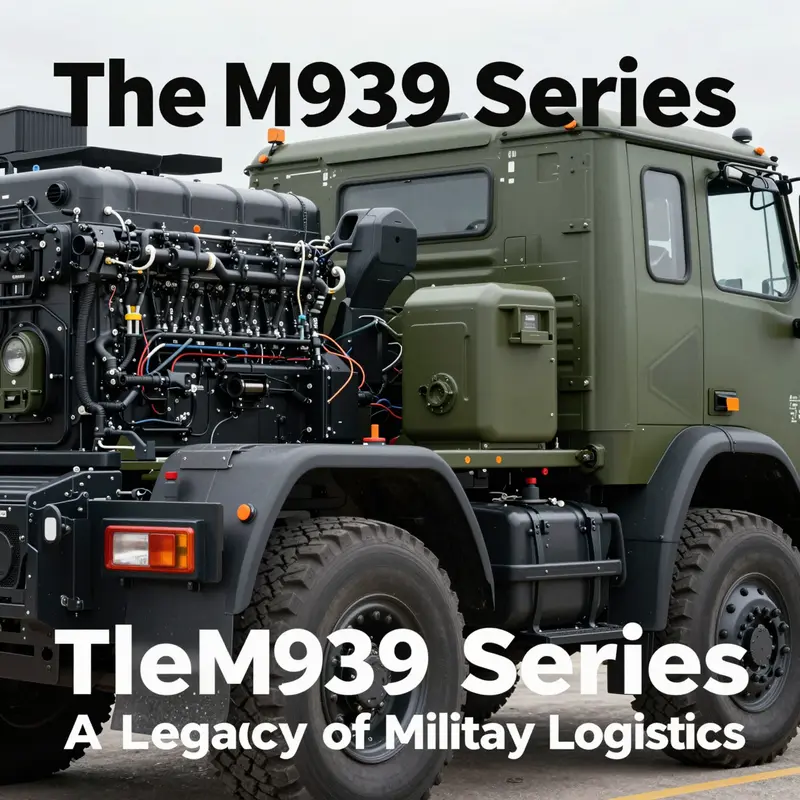
The M939 family sits at a pivotal point in the history of U.S. military logistics, not merely as a set of vehicles but as a disciplined shift in how a modern army moves, sustains, and projects power across demanding terrain. To understand when these trucks entered service is to trace a careful arc from their forebears, through the late-1970s overhaul of the heavy truck fleet, into a period of sustained reliance that spanned decades. In the broader story of tactical mobility, the M939s replaced earlier workhorse models such as the M520 and M540 series, replacing aging drivelines, outdated suspensions, and cramped cargo configurations with a standardized, more capable platform. Production began in 1979, and the vehicles were officially adopted by the Army in the early 1980s as part of a deliberate modernization program designed to align doctrine with a changing industrial and theater environment. The aim was clear: create a 5-ton, six-by-six cargo truck that could haul heavy equipment, move across challenging landscapes, and integrate smoothly with rail, sea, and air mobility. This was not merely a refinement but a redefinition of strategic and tactical transport in a force that sought greater credibility in rapid deployment and sustained operations.
The transition from records to practice was marked by gradual fielding and ongoing refinements. Some sources cite dates that look anomalous within the Army’s formal procurement ledger, a reminder that fleet history often travels through different offices and theaters before coalescing into a single adoption date. The widely corroborated account places the M939’s operational debut in the early 1980s. Production began in 1979, fielding followed through the 1980s, and continued improvements kept the fleet in step with shifting demands of rapid deployment and heavy-lift logistics.
Across successive variants–M939A1, M939A2, and M939A3–the core concept remained the same, while improvements addressed reliability, cooling, suspension, and fuel economy. The A1 appeared in the late 1970s to mid-1980s, A2 around 1985, and A3 in the early 1990s, each iteration preserving payload capacity while offering better maintainability and off-road endurance. This steady cadence helped the Army maintain a familiar platform while adapting to evolving mission requirements across decades of service.
The M939’s enduring appeal lay in its modularity and interoperability. Standardization across the fleet simplified maintenance, while its multi-modal transport compatibility ensured these trucks could be moved by road, rail, sea, and air as theaters demanded. The corresponding maintenance manuals and training programs reinforced a common vocabulary for troubleshooting, ensuring crews could work with confidence across postings and climates. In practice, the M939 became a reliable logistical backbone for sustainment, capable of hauling five tons, navigating rugged terrain, and integrating with the broader supply chain in times of conflict or relief operations.
In the years since, the M939 lineage has remained a reference point in the Army’s heavy-truck inventory. It embodies a philosophy of steady, practical improvement rather than radical redesign, delivering predictable performance and long service life. The exact year of entry into service may be debated, but the consensus anchors the M939 in the early 1980s with production starting in 1979—a pattern that underpins decades of rapid deployment and sustained operations. External resources, such as the M939 Series Truck Transport Manual, offer detailed guidance on multi-modal movement and maintenance practices that kept these trucks operational across continents and crises.
Entering Service, Redefining Reach: How the M939 Series Trucks Reshaped U.S. Military Logistics in the 1980s
The question of exactly when the M939 series trucks entered service sits at the intersection of development, procurement, and field doctrine. Their story begins with a push for a rugged, standardized platform capable of moving large payloads across harsh and varied terrain. Production footprints reveal a late 1970s entry into the assembly line, with formal acceptance by the U.S. military appearing in the early 1980s. In official descriptions, these trucks were designed to replace aging workhorses of the immediate postwar era, and they quickly came to symbolize a new era of reliability and versatility in heavy transport. The timeline is not a simple line from factory to front line, however. Some sources emphasize that the design work and early trials stretched back to the early 1970s, a period when the military sought to harmonize maintenance, parts availability, and crew training around a common chassis. That nuance matters: it helps explain why, once in service, the M939 family did not just occupy space in logistics depots but actively reshaped how units planned, resupplied, and moved through contested or austere environments. The shift was not about a single mission or a one-year victory; it was about a consistent capacity to deliver, under pressure, across the globe. The M939 trucks entered a period when the Army was recalibrating its approach to sustainment in modern warfare, and this recalibration would prove enduring.
At their core, these trucks were designed to carry heavy loads—up to 10 tons—and to do so with a degree of resilience that could endure the roughness of off-road routes, unimproved roads, and the demanding climates of deserts, mountains, and polar regions. The weight class and mechanical robustness were not merely technical specifications; they defined a new logistical philosophy. In practice, a standard platform meant that maintenance crews could be trained on a uniform set of components, spare parts could be stockpiled with greater efficiency, and operators could gain proficiency more quickly. The move toward standardization—reducing the number of bespoke subsystems while increasing the repeatability of field repairs—helped cut downtime and improve overall readiness. It also simplified supply line management. Logistics officers could plan around consistent maintenance cycles, predictable repair times, and a common parts inventory rather than juggling a maze of different trucks, each with its own quirks. The immediate consequence was a more reliable supply chain that could keep pace with the tempo of operations abroad, a factor that became increasingly critical as the United States engaged in sustained, multi-theater operations through the Gulf War and into later campaigns.
One of the most significant outcomes of bringing the M939 family into service was the elevation of a single, adaptable chassis into multiple configurations. The standard truck could be employed as a cargo carrier, a fuel tanker, or a wrecker, among other roles. This versatility was not just a matter of convenience; it was a strategic advantage. Having a common platform able to morph into different support roles meant fewer unique platforms to procure, maintain, and repair. It also streamlined training pipelines for crews and mechanics. Soldiers and embedded logisticians learned a common language of operation, whether they were loading ammunition, moving water and fuel, or recovering disabled equipment. In practical terms, this meant that a forward-deployed unit could expect quicker turnaround times on essential resupply when a vehicle could be re-tasked on the move, rather than waiting for specialized versions to arrive from the depot. The durability and high ground clearance of the M939 design enabled it to traverse terrain that would have slowed or halted lesser vehicles. A truck that could press through dust, mud, sand, and rocky surfaces reduced the risk of mission aborts caused by vehicle inoperability. In the harsh conditions of desert campaigns and the more challenging terrains encountered in various theaters, the reliability of the chassis translated directly into fought logistics on the front lines.
The broader impact on military logistics doctrine is easier to observe in hindsight. The M939 family contributed to a shift toward modularity and rapid adaptability in supply chains. Instead of keeping a vast fleet of specialty vehicles that required bespoke maintenance and unique parts, logisticians began to favor a more uniform approach. This does not mean the fleet became monolithic; rather, it boiled down to a pragmatic balance: a common backbone with selectable offshoots that could be deployed based on mission needs. The ability to standardize training and maintenance around a single core platform drastically reduced the learning curve for new personnel and improved the predictability of vehicle readiness across units. In a theater where fuel is scarce and every mile matters, the reliability of a 5-ton plus platform that could haul, tow, or refuel—depending on configuration—could lengthen supply lines and shorten the time between missions. The effect was not simply operational efficiency; it extended into the planning phase. Commanders could allocate assets with greater confidence because the maintenance footprint was more predictable, parts availability was more reliable, and the lifecycle of spare components could be estimated with fewer unknowns. This, in turn, freed up units to focus more on mission execution and less on mid-rotations in maintenance cycles.
The Gulf War era provides a particularly telling case study in the M939s’ impact. The conflict marked a moment when the modern logistics engine entered a higher tempo and a broader theater, demanding not only mass but mobility, resilience, and speed. In that context, the M939’s strengths—load capacity, ruggedness, and configurability—translated into tangible advantages. Ammunition convoys faced long distances with few predictable refueling points, and the trucks’ ability to carry substantial payloads helped ensure that supply lines could stay intact under pressure. The vehicles’ off-road capabilities mattered just as much in desert environments with deteriorated road networks. In subsequent operations, the lessons learned from Gulf War deployments reinforced the value of a standardized solution that could be patched into different roles as operations evolved. The M939 proved to be more than a transport asset; it was a mechanism for sustaining forward operations under challenging conditions, with a proven track record that made it a reliable workhorse for years to come.
The durability narrative is as important as the functional one. Vehicle longevity is rarely a glamorous quality, but it shapes how a force remains responsive over time. The M939s earned a reputation for enduring service life, and this endurance helped to justify continued usage well into the 2020s. As fleets aged, commanders could depend on a proven platform that had already adapted to multiple operational episodes. The longevity did not occur by accident. It reflected careful design choices aimed at simplifying maintenance and maximizing the availability of critical assets. It also reflected a disciplined approach to lifecycle management: one that valued commonality, spares readiness, and predictable maintenance cycles. These elements, taken together, formed a backbone for sustainment that could withstand not only the wear and tear of field use but also the organizational friction that often accompanies extended operations across different theaters and political climates. The result was a reliable rider on the modernization wave that the Army and its allies navigated, enabling planners to map out logistics footprints with an assurance that the core vehicle was dependable enough to support the mission without becoming a bottleneck.
Narratives about military logistics are often framed around high-visibility actions—marches, battles, and strategic decisions. Yet the M939 family reminds us that the quiet work of transport, maintenance, and supply is the engine of any military outcome. The vehicles moved everything from ammunition and water to spare parts and medical supplies, and they did so with a degree of resilience that allowed forward units to stay the course during tough conditions. The standardized, modular design meant that even in austere environments, crews could diagnose problems, swap out components, and get the trucks back to work without a protracted halt in operations. This is not merely a tale of mechanical reliability; it is a story about how a single platform can become a conduit for efficiency and adaptability across the fabric of military logistics. In this sense, the M939s did more than carry cargo. They carried the capacity for sustainment to scale with the demands of the mission, a characteristic that steadily earned them a place in the annals of American military logistics.
For readers seeking a broader historical anchor, official resources provide a formal account of the M939 family and its place in the Army’s equipment lineage. That framework helps connect the practical experiences of troops in the field with the continued evolution of doctrine and procurement strategies. The historical record emphasizes the balance of capability, reliability, and support that defined the era when the trucks entered service and began to shape how the United States sustained its operations abroad. While the exact year of formal in-service entry can appear differently in various sources, the consensus remains that the M939 series became a standard, durable, and flexible platform in the early 1980s. The combined effect of production readiness, cross-service applicability, and long service life underscores how a single design can influence a broad spectrum of tactical and logistical decisions during decades of evolving warfare.
As the asset landscape continued to evolve, the M939 family remained a touchstone for discussions about maintenance, training, and fleet management. The importance of implementing robust maintenance programs, and ensuring crews are proficient with the vehicle’s systems, cannot be overstated. In this sphere, the practice of ongoing training and careful maintenance planning emerges as a critical factor in keeping any heavy platform mission-ready. For those focused on how to translate lessons from historical fleets into current practice, a practical reminder remains: dependable vehicles require dependable support structures. The continuity between the field experiences of years past and the maintenance philosophies that persist in modern fleets is a testament to the enduring value of a well-supported, standard platform. This insight is why the maintenance ethos associated with such trucks—whether in a military or civilian heavy-duty context—continues to resonate with readers who study how fleets endure, adapt, and perform under pressure. It is a reminder that the true measure of a fleet lies not only in its payload capacity or its off-road bravado, but in the sustained, repeatable throughput of its logistics chain across time and distance.
In closing, the history of the M939 series is a story about more than a single vehicle or a single moment. It is about a design decision that recognized the importance of an adaptable, reliable backbone for the United States military logistics system. It is about how a standardized platform can streamline maintenance, training, and procurement, all while expanding the operational envelope of the force. And it is about the quiet, persistent capability to move essential supplies across continents and climates, to keep forward elements supplied, and to adapt on the fly as theaters of operation change. The chapter of the M939 that began in the late 1970s and was formalized in the early 1980s thus became a foundational thread in the tapestry of modern military logistics. Its influence extended well beyond the simple act of moving cargo; it redefined what a heavy transport vehicle could do and how a logistics system could be organized around a resilient, versatile, and dependable platform. For researchers and practitioners alike, the case of the M939 offers a clear lesson: the shape of supply and movement in conflict is often written in the language of trucks that endure, adapt, and deliver. Official and archival resources continue to illuminate this narrative, inviting further exploration into how such platforms still inform current approaches to logistics and maintenance across both military and civilian contexts. External resource: https://www.army.mil
Final thoughts
The introduction of the M939 series trucks in the early 1980s marked a pivotal moment in military logistics, addressing supply chain demands in challenging environments. Their reliable performance has enabled military operations around the globe while paving the way for future advancements in military vehicle design and functionality. As we reflect on their service, it’s clear that the legacy of the M939 series continues to influence modern military logistics today.