
When your truck displays the ‘Service 4WD’ message, it’s more than just a minor annoyance; it’s a crucial signal regarding the health of your vehicle’s four-wheel drive system. Understanding this alert is vital for long-haul truck drivers, trucking company owners, fleet managers, and maintenance specialists. This article breaks down what this warning means, the components involved, how to diagnose issues, and ways to maintain your vehicle effectively. Each chapter will provide essential insights and actionable advice for ensuring safety and operational excellence on the road.
Decoding the Service 4WD Light: Reading Your Truck’s Traction Health and the Road Ahead
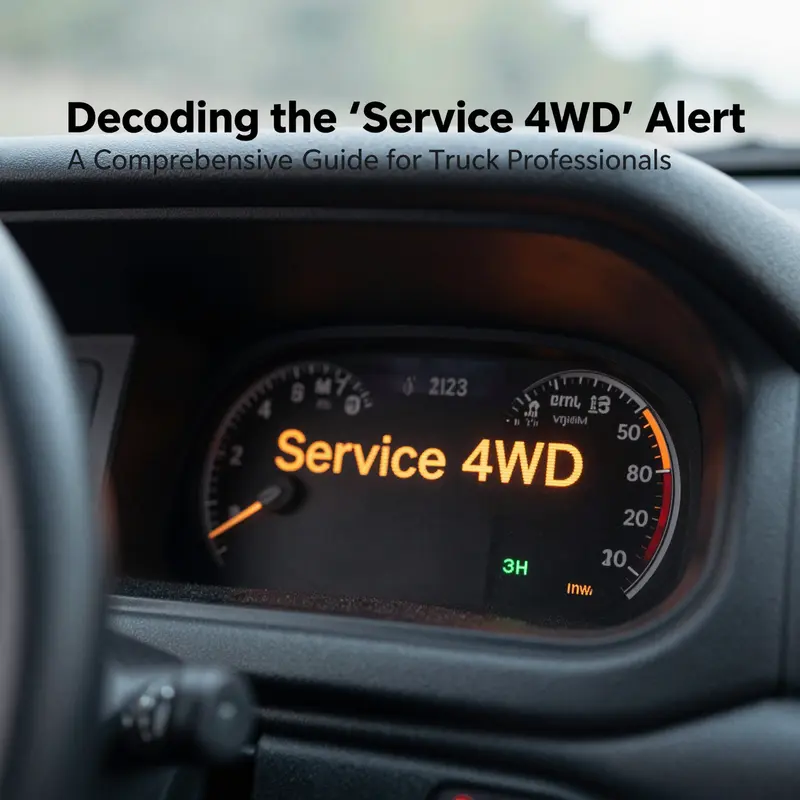
When a dashboard lights up with the message Service 4WD, it’s easy to panic. The impulse to hit the gas and test the system can feel urgent, especially if you’re about to navigate slick pavement, loose gravel, or a muddy grade. Yet the warning isn’t a call to chase a 4WD feature into action. It’s a signal that the four-wheel-drive system has detected a fault or an out-of-spec condition that could compromise traction, handling, or reliability. Recognizing what this warning means—and what it does not mean—helps you approach the situation with clarity rather than fear. It’s a moment to pause, not to panic, because the consequences of ignoring the light can be costly and, in poor conditions, dangerous. The Service 4WD light is a diagnostic beacon from the vehicle’s brain, the control modules, sensors, and mechanical assemblies working together to protect you and your truck while you’re on the move and especially when conditions demand full, dependable traction.
To understand the warning, it helps to know what the 4WD system actually does, where its fault signals might originate, and how a dashboard notification travels from a sensor inside the transfer case or wheel hub to the familiar icon you see on the instrument panel. The four-wheel-drive system is not a single device; it is a coordinated network. It includes the transfer case, drive shafts, differentials, and various actuators that engage or disengage the front or rear axle. It relies on a web of sensors that report wheel speeds, temperatures, and mechanical state to a central controller. If the controller detects inconsistent signals, or if a motor or sensor begins to fail, it will trigger the Service 4WD light as a precaution. The light is a heads-up that something in that network needs attention before you push harder on the accelerator or drive into harsher terrain where loss of traction could be more than just inconvenient—it could be unsafe.
One of the most important things to remember is that the warning does not necessarily mean the 4WD system is permanently broken or that you have to avoid driving altogether. In many cases, the issue is minor, involving a loose connector, a sensor that briefly hiccupped, or a fuse that has blown. In others, it may point to a mechanical problem within the transfer case, a failing actuator, or degraded wiring that will require professional repair. The range of possibilities is wide, and the only responsible way to determine the exact cause is a diagnostic evaluation with the proper scanner that can read the fault codes stored in the vehicle’s computer. This is not a problem you should trial-and-error fix on the side of the road. The risks aren’t just about a potential 4WD failure in adverse road conditions; they also include the possibility of misinterpreting the light, misapplying 4WD during normal driving, and creating unnecessary wear on driveline components.
From there, the logic unfolds in practical terms. The transfer case and the front and rear differentials are the heart of the 4WD system. When you engage 4WD in appropriate conditions, these components distribute torque to the wheels that need it most. When the system detects an imbalance—whether from a sensor reading that doesn’t match actual wheel speed, a motor that can’t shift smoothly, or wiring that has become brittle or corroded—the controller may pull back and warn you to stop and diagnose. That warning can be triggered by several failure modes: a faulty 4WD control module that interprets signals incorrectly, a wheel speed sensor that has failed or fallen out of calibration, an internal problem in the transfer case such as worn or damaged gears, or simple electrical issues like a loose ground or corroded connection. In some cases, a software recalibration or a minor fuse replacement can restore function, but more often what you face is intermittent hardware wear that calls for a more thorough inspection.
The practical reality is that the 4WD system lives in a harsh environment. It operates in an oil bath and under heat and vibration, conditions that can tax seals, sensors, and wiring over time. A typical cause of a persistent Service 4WD light is a malfunctioning actuator—the device that engages or locks the front drive components when you switch into 4WD. If the actuator doesn’t respond reliably, the system may flip the light on to prevent you from slipping into a mode that won’t actually provide traction when you need it most. Likewise, wheel speed sensors, which monitor the rate at which each wheel turns, are small and easy to damage through road debris or corrosion. If a sensor reads an errant value, the controller can interpret that as a fault and illuminate the warning. Low fluid levels in the transfer case are another common contributor. Without adequate lubrication, internal gears can bind or overheat, triggering protective measures and a diagnostic code that lights the warning.
The warning can also be the victim of a simpler culprit—an electrical gremlin. A damaged wiring harness, a loose connector, or a corroded terminal can create intermittent fault signals that confuse the system. This is why a professional inspection, rather than a quick DIY fix with guesswork, is vital. A trained technician will use a scan tool to retrieve the stored fault codes and then trace them to their source. This process often starts with visual inspection: looking for damaged wires, loose grounds, or signs of water intrusion in the electronics. It continues with functional checks: verifying that the transfer case shifts smoothly, that the wheel speed sensors respond, and that the ECU communication lines are clear and stable. The goal is not just to silence the light, but to restore reliable 4WD operation and preserve drivetrain longevity.
In many cases, the first step following a Service 4WD alert is to avoid using 4WD altogether until diagnosis confirms a safe path forward. That caution is especially important if you expect to drive in conditions where 4WD matters—snow, ice, mud, or steep grades. Some drivers may wonder if the light will reset itself after a cycle of ignition or after a reset of the system. Sometimes it will clear if the fault was momentary, but this should not be treated as a cure. A cleared light without addressing the underlying issue can allow the condition to return suddenly, potentially with greater severity. The safe approach is to treat the warning as a diagnostic invitation: a signal to have the vehicle thoroughly checked and repaired before asking the system to perform with full confidence.
To navigate this situation with care, it’s useful to follow a practical path. Start with your owner’s manual, which often contains model-specific guidance about the 4WD system, warning codes, and the correct sequence for attempting a diagnosis. If the light persists after restarting the vehicle, do not attempt to engage 4WD in slippery conditions. Prolonged driving with the light on can sometimes lead to additional wear or damage, particularly if the system is attempting to compensate for a fault while you’re on the road. The next step is to visit a qualified technician or dealership equipped to read 4WD fault codes. They will likely perform a comprehensive check, including the transfer case fluid level and condition, the integrity of the wiring harness, the status of the 4WD actuator, and the health of wheel speed sensors. In some cases, the problem is straightforward and inexpensive to fix—like tightening a loose connector or replacing a blown fuse. In others, it may require more involved repairs or component replacement.
As you weigh these possibilities, it’s helpful to keep in mind a few guiding ideas that can reduce risk and cost. First, early diagnosis is cheaper and easier than late-stage repair. A fault that remains undiagnosed can progress to more complex failures, such as differential overheating or damaged gears in the transfer case. The longer you drive with a suspected issue, the more likely you are to incur extensive downtime and higher repair bills. Second, not all warnings point to the same root cause. A light could indicate a sensor failure, a control module fault, or a mechanical problem with the transfer case. Each path requires a different approach to repair. Third, proper diagnosis hinges on the right tools and expertise. A technician will use diagnostic trouble codes (DTCs) and live data to verify the system’s state, then perform targeted tests that reveal whether the fault is electrical, software-based, or mechanical. Fourth, some instances of the light being triggered by a condition outside the 4WD system are possible. For example, a problem with sensor calibration or ECU communication might produce a false-positive reading, momentarily lighting the warning even when 4WD components are functioning properly. In such cases, a recalibration or software update may suffice. Yet even if the diagnosis reveals a relatively minor issue, addressing it promptly remains the prudent course because it guards against the unpredictable and sometimes dangerous interplay of compromised traction, uneven road surface, and sudden shifts in weight distribution across axles.
If you’re curious about the broader implications of warning lights in trucks and how to approach them without getting overwhelmed, you can explore a general resource that covers warning-light meaning and diagnostics. The vehicle ecosystem rewards careful attention to signals rather than quick, reactive fixes. And while this chapter stays focused on the 4WD system, the same cautious mindset applies to any dashboard alert—the sooner you diagnose, the sooner you regain confidence in your vehicle’s ability to handle what the road presents.
For readers who want to connect the dots between theory and practice, there are broader resources on vehicle maintenance and the role of diagnostics in modern trucks. For ongoing learning, consider browsing the general maintenance guidance offered in the 5startruckin blog, which provides accessible explanations of common warning lights, routine checks, and the kinds of questions to ask a technician when a warning appears. This resource can complement the more technical, hands-on guidance in this chapter and help drivers develop a proactive maintenance mindset. the 5startruckin blog.
As this chapter has walked through the why and how of the Service 4WD light, it’s useful to anchor the discussion in practical expectations. If a fault is confirmed and repair is underway, the technician may need to replace a sensor, fix a wiring harness, or service the transfer case. In some cases, the 4WD system can be recalibrated or reset to restore proper function, and in others, component wear necessitates replacement. Either path begins with accurate diagnosis. The ultimate aim is not merely to silence a dashboard icon but to restore a reliable, predictable 4WD system that behaves consistently when you need it most. The decision to keep driving, stall, or seek immediate service should reflect the conditions you anticipate on the road. If you expect to venture into rugged terrain or sudden weather changes, err on the side of caution and arrange a professional inspection sooner rather than later. Your safety—and the safety of others on the road—depends on a drivetrain that works as intended, not on a dashboard light that may or may not reflect the full truth of the system’s health.
In sum, the Service 4WD warning is a diagnostic nudge rather than a verdict. It signals that one or more elements of the 4WD network—the transfer case, the front or rear differentials, the actuators, the wheel-speed sensors, or the control modules—need attention. The precise fault can range from a small electrical issue to a significant mechanical wear pattern. Regardless of where the diagnosis lands, the prudent course is to treat the light with respect, seek qualified help, and avoid driving in a way that could expose you to traction loss or driveline damage. By embracing a measured response—checking the owner’s manual, consulting a pro, and relying on the diagnostic tools that professionals use—you gain a safer, more dependable vehicle. And with that, you’re prepared not only to understand what the light is trying to tell you but also to act in ways that protect your truck’s longevity and your family’s safety on every journey. For further reading that deepens your understanding of warning-light meaning and practical diagnostics, refer to external expert guidance linked here: https://www.caranddriver.com/4wd-4×4/tips/4027689/service-4wd-light-meaning/.
What It Means When Your Truck Says Service 4WD: A Deep Dive into the 4WD System’s Components
What It Means When Your Truck Says Service 4WD: A Deep Dive into the 4WD System’s Components
When the truck dashboard lights up with Service 4WD, many drivers feel a mix of concern and curiosity. The warning is not telling you that the 4WD is active but that a fault lurks in the system that governs power delivery to the front axle, rear axle, or both. The car uses onboard diagnostics to monitor signals from sensors, actuators, and the transfer case, and if any anomaly appears, the system flags a service status to prevent further damage. The key is to approach the warning as a diagnostic invitation rather than a routine reminder. It’s a signal to investigate.
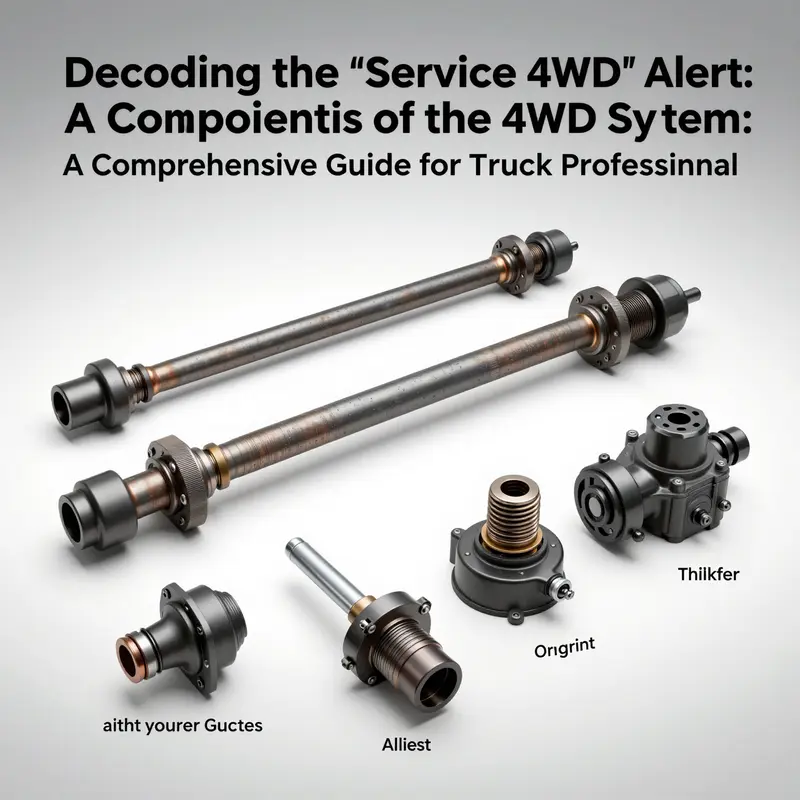
The 4WD system is a network of parts designed to transfer torque from the engine to all four wheels. It has evolved from simple mechanical hubs to highly integrated electronic controls. At its core, the transfer case divides engine power between front and rear drives. In some systems, you can switch between 2WD and 4WD, or even engage a low range for heavy traction. The modern scene adds electronic control that monitors wheel speed, torque demands, and terrain inputs. Together, these bits strive to improve traction, stability, and confidence in poor conditions. When the service light comes on, that network has sensed a discrepancy that deserves a professional look.
The transfer case is often described as the command center for a 4WD system. It receives input from the engine, decides how much torque should go to the front and rear axles, and handles the engagement of front wheels. A fault here can manifest as difficulty shifting into or out of 4WD, unusual grinding noises, or a sensation of drag when the vehicle should be free to roll. Leaks in the transfer case fluid, worn gears, or a faulty actuator can all trip the service warning. Because the transfer case interacts with both drive shafts and differentials, a problem in one corner can cascade into others, elevating repair costs and complicating diagnosis.
Moving downstream, the front and rear axles hold the job of transmitting torque to the wheels while allowing each wheel to turn at different speeds when the vehicle pivots. The differentials inside these axles are carefully engineered to manage that speed variance. Worn gears, contaminated or low differential oil, or seals that have failed can cause the system to lose efficiency or produce heat. In severe cases, a misbehaving differential can drag on an axle or create wind-up in the drivetrain when the four wheels are forced to rotate in a restricted pattern. When the warning triggers, a look at the axles and diffs is often warranted to rule out leaks, metal shards in the fluid, or damaged bearings that quietly degrade performance.
The drive shafts linking the transfer case to the front and rear axles are the physical lifelines of the system. They transmit torque while accommodating the range of motion as the suspension works over rough pavement or off road. Over time, CV joints wear, boots crack, and universal joints loosen. A damaged drive shaft or a contaminated joint can cause vibrations, clunking, or a sudden reliability issue that reveals itself at speed. If a fault code points toward a drivetrain speed sensor or a shaft assembly, it often comes down to mechanical wear, lubrication issues, or misalignment that confuses the motors and triggers the protective service signal.
Then there is the 4WD engagement mechanism itself. In many trucks, engaging front wheels happens through an electronic actuator or an internal locking mechanism in the hubs. If these parts fail to engage, disengage, or relay the wrong status to the ECU, the system might inhibit proper 4WD operation while still raising a warning to prevent you from thinking the job is done. A binding mechanism can cause wind-up when the four wheels are forced to spin together, leading to drivetrain damage if driven in 4WD under normal road conditions. The problem here can be both mechanical and electronic, often requiring a careful inspection of the engagement components and the pathways that feed them signals from the control module.
Underneath all this lies a chorus of sensors and control modules. Wheel speed sensors, position sensors, and a transfer case switch all feed data to the vehicle’s computer. A single sensor going offline can create a mismatch between what the driver wants and how the system responds. Communication faults between modules can produce false positives, where the light stays on even though the 4WD commands are intact. Conversely, a healthy system may show a false warning if a sensor is contaminated by mud, ice, or road spray. In the age of code-driven diagnostics, the job of the technician is to separate noise from reality, reading stored fault codes and cross-checking sensor data while listening for abnormal noises or feeling for unusual vibrations under load.
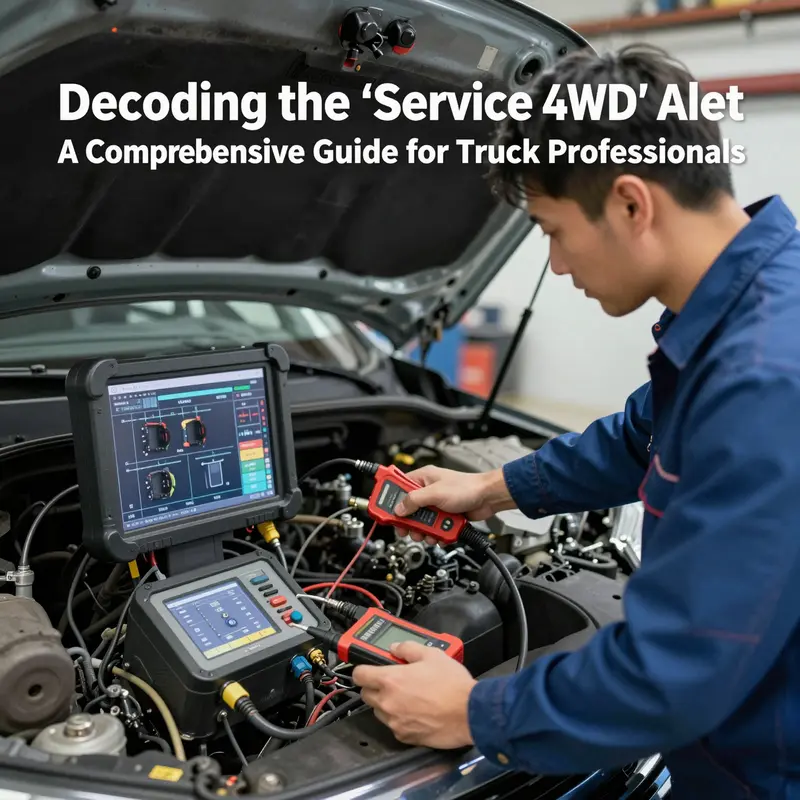
When the service light is on, most drivers benefit from a careful, methodical diagnostic approach. An OBD-II scanner capable of reading 4WD specific trouble codes is the starting tool. A technician will retrieve fault codes that indicate whether the problem lies with the transfer case, wheel speed sensors, the control module, or the wiring. From there, a physical inspection follows: checking fluid levels and condition, inspecting for leaks around seals and gaskets, and testing electrical connections for corrosion or looseness. In some cases, technicians can recalibrate a sensor or replace a fuse, which may be sufficient to clear the warning if the underlying issue is minor. More often, however, deeper repairs are needed, such as replacing a worn component or repairing a damaged line of communication between modules.
The temptation to ignore the warning is strong for some drivers, especially if the vehicle still handles the road reasonably well in dry conditions. Yet ignoring the service signal invites risk. A degraded 4WD system can overwork parts that are designed to share load, amplifying wear and heat. In winter, when traction matters most, a failing 4WD can suddenly perform unpredictably. In off-road work or slippery highway conditions, a partially engaged or poorly controlled system can compromise steering, braking stability, and overall control. The situation is not just about getting stuck; it is about safety margins. The more systems you rely on to keep power to the wheels on uneven terrain or slick pavement, the more you need reliable 4WD operation. The warning is your cue to engage a professional to ensure that the system behaves as intended, and it is not the moment to attempt a DIY fix that might not address the root cause.
So what does a responsible response look like? First, reduce speed and avoid aggressive maneuvers that place high stress on the drivetrain. Second, consult the owner’s manual for any guidance about safe operation with the warning active—some manuals advise against driving long distances in 4WD or require a professional inspection before continuing. Third, arrange service with a technician who can run a full 4WD diagnostic and interpret the codes in the context of the vehicle’s age, mileage, and known maintenance history. In many shops, the process begins with a code read, followed by a sequence of measurements: checking sensor outputs in real time, verifying that power is reaching the engagement mechanism, and inspecting the transfer case and axles for abnormal play or leaks. If needed, the technician will replace faulty components, reseal critical seals, or correct damaged wiring. In some cases, simple recalibration or a fuse replacement will get the system back to a healthy baseline.
A practical mindset for 4WD maintenance emerges from understanding that the system is not a single device but a constellation of parts that must work in harmony. Routine checks that you can perform include a quick visual scan for leaks around the transfer case and differentials, listening for changes in how the vehicle shifts between drive modes, and paying attention to any unusual vibration during acceleration or turning. Fluid health matters, too. The transfer case and differentials rely on lubricants to reduce friction and manage heat; if these fluids degrade or are contaminated, performance declines and the risk of damage climbs. Confirming the fluid levels and, where possible, sampling for metal wear can provide early clues to developing trouble. When a scheduled maintenance window arrives, talk with the technician about 4WD health, and request a full inspection of sensors, wiring harnesses, and the quadrants that govern engagement. The aim is not to catch every problem in one visit but to establish a proactive plan that keeps the drivetrain in line with the demands of your driving environment.
The role of a well-trained technician is critical in this process. A modern 4WD system blends mechanical complexity with sophisticated electronics, and only a professional can translate fault codes into meaningful, actionable repair steps. This is where the value of maintenance discipline shines through, a principle mirrored in professional maintenance training fire-truck maintenance service training. Regular training for those who service heavy-duty and off-road capable trucks, including the routines for diagnosing 4WD systems, translates into more accurate repairs, faster turnarounds, and less downtime. In settings that demand high uptime, owners and managers benefit from aligning with technicians who emphasize disciplined inspection, careful testing, and transparent communication about the work needed. A small investment in preventive maintenance can save thousands in avoided breakdowns and unplanned downtime when a sudden weather shift or rough terrain meets your route.
The emphasis on ongoing education echoes beyond the shop floor. In our broader trucking ecosystem, maintaining and understanding a 4WD system reflects a philosophy of care that extends to all vital components of a vehicle. Keeping fluids clean and at the right levels, cleaning connections, and confirming that sensors are shielded from contamination are steps that align with good maintenance habits for any vehicle. When a warning appears, it is a signal not only to repair but also to reexamine what kind of routine support your truck receives. The decision to engage a trusted service partner can influence not only the immediate repair but also the long-term reliability of road trips, daily routes, and critical on-call work. For those who manage fleets, building a maintenance program that includes 4WD diagnostics as a regular checkpoint helps minimize the risk of unexpected downtime and keeps the fleet ready for demanding conditions.
To connect this back to practical realities, consider how the maintenance mindset translates into action during non-emergency times. A robust maintenance cadence means more than fixes when a light shows up. It involves preemptive checks, including listening for noise or vibration, confirming that the 4WD control module communicates correctly with wheel speed sensors, and ensuring that electrical connections survive the exposure to road grime and weather. The end result is a drivetrain that behaves predictably under load and in adverse conditions, allowing you to rely on your truck when you need it most. In that spirit, seek out resources and communities that emphasize steady, informed care over reactive, last-minute scrambles. The path from warning to reliability sits on a line between vigilance and expertise, and understanding the components helps you tell when a problem is minor, when it is systemic, and when it is time to replace a part.
For those who want a touch more clarity on the mechanics behind the signal, a broader explanation of how 4WD actually works can be illuminating. This context helps demystify the warning and reminds us that the system relies on many moving parts working together. A simple misalignment or a single faulty sensor can ripple through the network, producing symptoms that might be mistaken for a larger failure. By staying curious about the fundamentals — transfer case function, axle dynamics, and the role of sensors — drivers gain a practical sense of how to interpret the warning and what to expect from a professional diagnosis. The overall message remains consistent: a Service 4WD alert is a protective feature, not a fate, and it invites timely attention to preserve traction, handling, and safety on every mile.
In the end, the road ahead depends on the quality of the maintenance narrative you build around your 4WD system. A well-maintained drivetrain not only survives tough terrain but also keeps you confident in weather and road conditions that demand extra traction. That confidence arises from a system that has been checked, tested, and kept within factory tolerances. While the exact fix can vary — from a modest sensor recalibration to a more involved component replacement — the guiding principle is clear: treat the Service 4WD warning as a prompt to verify, not to guess. The more you learn about the components and the logic behind the control strategy, the more capable you become at working with technicians to restore harmony to the drivetrain. This approach serves both individual drivers and fleets that rely on predictable performance when weather turns rough or routes demand confident, sure-footed handling.
fire-truck maintenance service training
External resource: For a broader understanding of what 4WD actually does and does not do, see this external explainer: https://www.autoblog.com/what-4wd-actually-does-and-what-it-doesnt-163598
null
null
What Does It Mean When Your Truck Says Service 4WD: Maintenance and Preventative Measures
When you see the Service 4WD warning on your truck, it is a diagnostic flag, not an immediate shutdown. It indicates that something in the four wheel drive system is not operating within expected parameters. The 4WD system includes the transfer case, differentials, drive shafts, sensors, and control modules. A fault can arise from a sensor issue, loose wiring, worn components, or fluid problems. The exact cause requires diagnostic codes and physical inspection. The warning is meant to prompt timely maintenance rather than signal an imminent failure. Driving with this message for long periods can risk overheating, uneven torque delivery, or accelerated wear.
The diagnostic journey starts with a code scan using a dedicated tool that reads the vehicle’s onboard computer. Technicians then examine fluid levels, electrical connections, harnesses, and mechanical wear. In many cases a simple sensor replacement, connector cleaning, or software update resolves the problem. In more complex cases, components such as the transfer case actuator or a damper may require servicing. The goal is to restore accurate sensing, stable communication between modules, and reliable torque distribution to the wheels.
Preventative maintenance is your best defense. Follow the manufacturer service intervals for transferring case and differential fluids, inspect driveline joints for play and leaks, and ensure battery health and wiring connections are solid. Be mindful of 4WD usage: avoid engaging 4WD on dry pavement and aggressive terrain unless required, and use it progressively in the appropriate conditions. Regular inspections and timely maintenance reduce the odds of recurring warnings and protect drivetrain health.
If the warning appears while you are driving, assess the situation and plan to have the system checked as soon as it is safe. In normal weather, you may continue at moderate speed with caution, but avoid heavy off road activity until diagnosed. Schedule a professional diagnostic appointment to read fault codes, verify wheel speed sensor readings, check the transfer case operation, and confirm that wiring is intact. A trained technician can typically identify the root cause and recommend a repair, replacement, or software update as needed.
For deeper learning, consult your vehicle manual and the manufacturer support resources for model specific intervals and procedures. The core message remains consistent: treat the Service 4WD warning as a prompt to verify that the drivetrain is healthy, not a reason to ignore potential issues.
Final thoughts
Recognizing and addressing the ‘Service 4WD’ warning is crucial for maintaining the safety and performance of your truck. Understanding the components of the 4WD system, diagnosing potential issues, and implementing regular maintenance practices can help prevent breakdowns and ensure safe travel. It’s important to act swiftly once this warning appears, as ignoring it can lead to more serious, expensive problems. By staying informed and proactive, truck drivers, owners, and fleet managers can keep their vehicles running smoothly and safely on the road.