
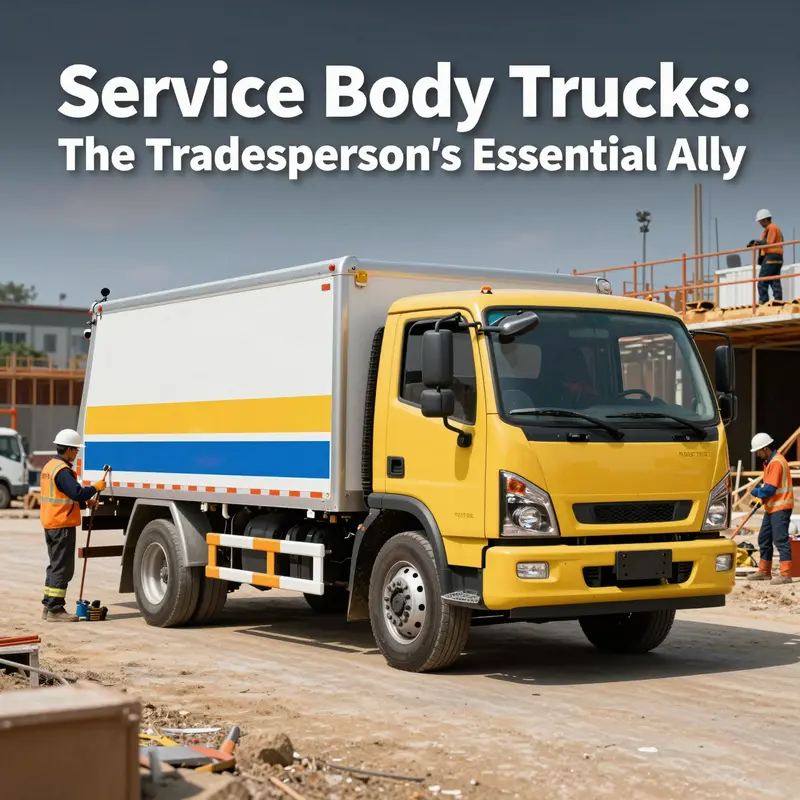
Service body trucks stand out in the utility vehicle realm, particularly for tradespeople who need to transport tools and equipment securely. With their enclosed cargo areas, these trucks offer not just protection from the elements, but also tailored features that can enhance productivity on the job site. This article delves into the structure of service body trucks, the unique benefits they provide, customization options available to meet specific trade needs, and how they compare to standard trucks. Each chapter aims to provide a comprehensive understanding of what service body trucks can offer to professionals navigating the challenging demands of their trade.
The Enclosed Utility: How Service Body Trucks Engineer Security, Organization, and Efficiency on the Job
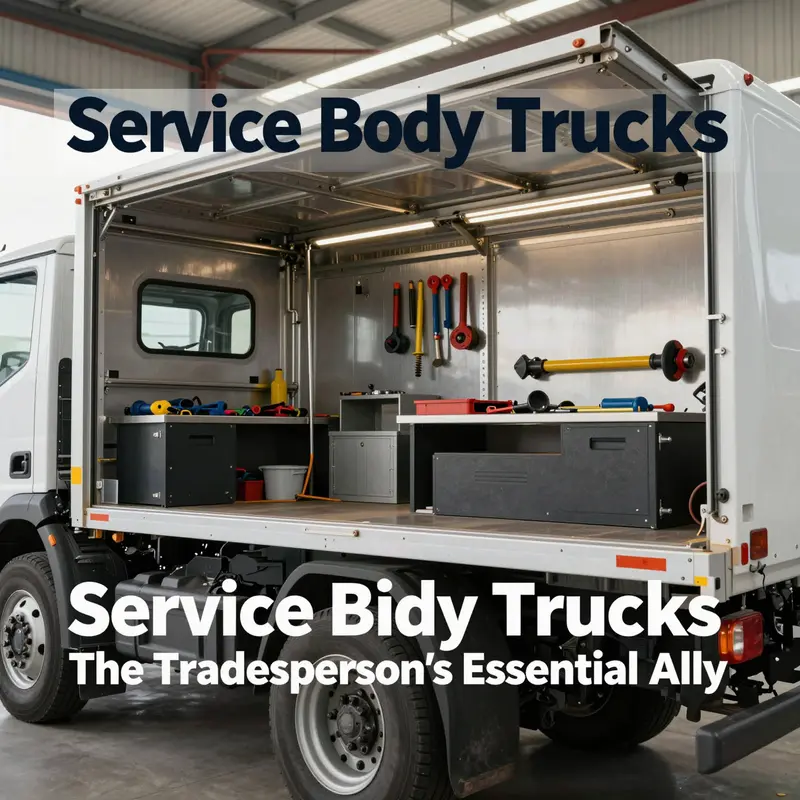
A service body truck looks, at a glance, like a sturdy workhorse built to haul tools and material to a site. But its true value lies in a carefully engineered enclosure that protects, organizes, and extends the life of the equipment it carries. The cargo area—fully enclosed by walls and a roof—transforms a standard pickup into a purpose-built marketplace of reliability. This enclosure does more than shield against rain or sun. It creates a controlled workspace on wheels, a modular habitat where tools live in defined compartments, and where the geometry of storage translates to fewer trips back to a shop, less rummaging, and quicker, more confident work on the job site. The result is a truck that not only carries gear but also sustains workflows, handling everything from sensitive electrical meters to bulky ladders and compact power units with equal poise. In understanding how a service body truck achieves this balance, the conversation naturally turns to materials, structural design, and the features that turn an enclosed bed into a daily ally for field crews.
A central decision in shaping any service body truck is the choice of material for the body itself. The two workhorse options, steel and aluminum, each bring a distinct set of strengths to the load bed. Steel embodies durability and impact resistance. It stands up to heavy use, resisting dents and punctures in environments where tools, hardware, and abrasive materials traverse the same space that a technician uses daily. When longevity and the capacity to absorb shock under constant loading are paramount, a steel body often proves its worth. On the other hand, aluminum offers a persuasive case for operators seeking savings in weight and ongoing maintenance. The lighter mass translates to a higher payload-on-truck efficiency and, in many cases, improved fuel economy. Aluminum’s natural corrosion resistance further reduces maintenance costs over the vehicle’s life, which matters in urban climates where road salt, humidity, or exposure to moisture is a constant concern. The material choice directly shapes performance: a steel body may feel stouter and more forgiving when rugged sites threaten the enclosure, while an aluminum body can preserve powertrain efficiency and extend service intervals thanks to its lighter footprint and resistance to the elements. These material differences ripple through payload capacity, handling, and lifespan, reminding buyers that the enclosure is not merely a box but a critical system whose weight and strength interact with the chassis, suspension, and wheelbase to define how much you can carry and how reliably you can shoulder the next job.
The structure of the enclosure itself is designed to endure harsh working conditions. The walls and roof must stand up to weather exposure, abrasion from road grime and job-site debris, and the repeated cycle of loading and unloading thousands of times over the truck’s lifetime. A robust service body usually incorporates reinforced frames and durable paneling that resist flex and denting while maintaining a smooth exterior that won’t snag on equipment. The frame around the enclosure is not an afterthought: it is integral to preventing sag, maintaining seal integrity, and ensuring that the doors align precisely after years of torque from doors and drawers opening and closing under heavy loads. In this architecture, rigidity matters as much as aesthetics, because even small flex can compromise weather sealing and drawer performance. The emphasis on a rigid backbone helps prevent misalignment that would otherwise lead to leaks, rattles, or premature wear. In practice, this structural discipline translates into a body that remains stable on off-pavement paths, accommodates the natural flex of the chassis, and keeps the inside environment predictable for sensitive gear.
Weather sealing and interior finish are not cosmetic details in a service body truck; they are essential to preserving the integrity of stored tools and electrical equipment. The doors, panels, and roof are designed with weatherproof gaskets, corner seals, and corrosion-resistant coatings. Even the interior surfaces are treated with coatings or liners that resist abrasion from tools sliding along dividers and shelving. The goal is to create an interior that stays dry and clean, even when rain or mud is part of the workday. Integrated lighting inside the enclosure solves a practical challenge. When technicians reach into a drawer or reach for a component in a shadowed corner, a bright, evenly distributed light reduces error and speeds up the task. Outlets and power taps can be placed in strategic locations to support powered tools without cords trailing across the floor or snagging on rails. The enclosure becomes a compact, functional workspace rather than a static box, and that shift—toward a portable workshop—redefines what a service body truck can accomplish on a site where space is limited and time is critical.
A key driver of real-world utility is how the interior is organized. Many service bodies incorporate built-in tool storage that uses vertical and horizontal compartments to accommodate sockets, wrenches, pliers, and smaller devices in clearly labeled zones. The organization is often complemented by built-in ladders, slide-out trays, and mounting points for larger equipment. This is where modular design really earns its keep. Panels and shelves can be adjusted or swapped to match a technician’s changing toolkit or a project’s specific demands. The modular mindset reduces the need for custom fabrication and allows crews to tailor the truck to a given season or contract without sacrificing efficiency. It also supports a quicker turnaround when a technician returns from a job and needs to repack for the next one. The ability to reconfigure mid-life means the service body can evolve with changing service lines, new tools, or shifts in workflow, rather than forcing the operator to purchase an entirely new solution.
Security is another essential feature tied to the enclosure’s design. Enclosed bodies provide a measure of protection against theft and vandalism that open-bed configurations simply cannot offer. Locking mechanisms, reinforced door bodies, and weather-tight seals help deter unauthorized access while maintaining weather protection. In industries where sensitive equipment, diagnostic devices, or costly materials must be transported securely, that layer of security is not a luxury but a necessity. The structural choice to seal, lock, and shield also affects maintenance decisions. For example, a sealed interior protects delicate electronics from moisture and dust, which can extend the life of meters, sensors, and communications gear carried inside. In practical terms, the enclosure becomes not only a transport solution but a shield that reduces replacement costs and downtime due to equipment failure.
The subject of customization cannot be separated from the surrounding realities of fieldwork. A service body truck is, by design, a platform to be adapted. Beyond the foundational materials and structural features, vendors offer modular components that enable rapid reconfiguration. Some models support add-on modules that can be swapped in and out depending on the job at hand. Others offer mounting rails and tie-downs that accommodate a wide range of equipment, from ladders and cable reels to large power generators or compact air compressors. The concept of customization aligns with the realities of a service-based economy, where a plumber’s toolbox looks different from an electrician’s cabinet-on-wheels, which in turn looks different from a landscaper’s mobile workshop. The opportunity to modify storage density, work surfaces, and power provisions ensures that the service body truck remains a flexible asset rather than a one-trick utility. The result is a vehicle that adapts to the day’s demands, supporting precise, organized workflows that translate into faster, safer, and more predictable job performance.
Operationally, the choice between materials and the architecture of the enclosure affect more than raw capability. They influence the truck’s payload rating, the handling of the vehicle, and the kind of maintenance schedule that crews must follow. A heavier steel body, while rugged, adds inertia and can reduce payload capacity if the chassis is near its limit. Aluminum bodies, being lighter, often provide a better balance between payload and fuel efficiency. However, the lighter construction can demand greater attention to sealing and corrosion control, especially in challenging environments where road salt or moisture is present. Maintenance practices for service body trucks therefore emphasize keeping gaskets intact, inspecting hinges and latches for wear, and ensuring fasteners remain torque-tight. Routine checks become part of a broader discipline that treats the body not as a separate accessory but as an integrated subsystem. When a fleet or a business approaches procurement with that perspective, the selection process becomes less about choosing a single-box solution and more about choosing a system that harmonizes with the company’s workflows, climate, and service mix.
From the perspective of the trades that rely on these vehicles, the benefits of an enclosed service body extend beyond weather protection and security. The time saved by having everything in its place, the reduced risk of tool loss, and the ability to operate with a clean, well-lit interior all contribute to a more predictable job sequence. Electricians no longer waste minutes searching for a specific meter; plumbers aren’t hunting through a heap of fittings; landscapers can grab a handheld cutter from a dedicated drawer instead of rummaging through a backlog of miscellaneous items. The enclosure, together with thoughtful interior geometry and modular components, becomes a productivity amplifier. It helps crews maximize the use of limited job-site space and minimizes the friction that comes with a day filled with diverse tasks. In this sense, the service body truck is less a static transport and more a small, rolling workplace designed to keep the wave of field activity smooth and continuous.
When a buyer contemplates the broader design landscape, the idea of efficiency repeatedly surfaces, and not merely as a measure of fuel or payload. Efficiency, in this context, encompasses ease of access, reduced risk of tool damage, faster job setup, and better overall protection for the equipment that keeps a business running. Designers and operators who focus on efficiency understand that even small improvements—slightly better drawer accessibility, more logical door placement, or a sturdier ladder mount—can compound into meaningful gains over thousands of service hours. The conversation then shifts toward how to best match a service body to the customer’s climate, work routines, and tool inventory, a process that is as much about strategy as it is about hardware.
For readers seeking a broader framework on how design choices influence field efficiency and reliability, there is value in exploring literature about emergency-service vehicle design, which often emphasizes how enclosure, modularity, and accessibility interact under pressure. One recommended path is to consider the concept of design efficiency in emergency services as a guiding principle when evaluating service bodies. design efficiency in emergency services is a concise reference point that captures how thoughtful layout, durable materials, and modular configurations contribute to faster, safer, and more consistent performance in demanding environments. While the context differs—emergency services operate under different constraints—the underlying logic of maximizing usable space, protecting critical gear, and enabling rapid response translates well to utility work on commercial projects.
Meanwhile, the broader landscape of body configurations provides additional context. Stake body trucks, a related category, share some design philosophies with service bodies, particularly the emphasis on a robust cargo enclosure and practical integration with the chassis. A deeper technical guide on stake body trucks outlines standards, properties, and applications that help operators understand how different enclosure strategies behave in real-world settings. This reference can be especially useful when fleets consider cross-compatibility or when contemplating upgrades to a mixed fleet where service bodies and stake bodies coexist on the road. For those who want to explore this more technical dimension, a comprehensive overview is available in guides that address standards and practice across stake body configurations, providing a broader vocabulary for evaluating exchangeable components and long-term performance. In the end, the choice of enclosure is not just about storage space; it is about creating a strategic asset that protects, organizes, and accelerates the daily work of tradespeople.
The journey from concept to curbside utility is shaped by trade-offs, and the best outcome comes from aligning the enclosure’s design with the specific job profile. Electric or gas-powered equipment, type and size of used tools, climate of operation, and the cadence of service calls all influence how much insulation, how many drawers, or which mounting points are appropriate. The materials, structural backbone, and interior layout must harmonize with a company’s maintenance routines and fleet management practices. When these elements align, the service body truck becomes more than a mode of transport; it becomes a reliable, repeatable, and identifiable workplace that travels to every project site with a ready-made configuration tailored to the day’s work.
In sum, the service body truck represents a purposeful fusion of enclosure engineering, material science, and modular design. Its enclosed cargo area is not merely a protective shell but a carefully designed ecosystem where tools, equipment, and work surfaces coexist with a disciplined organization scheme. The material choice—steel for rugged endurance or aluminum for lighter efficiency—sets the stage for how the enclosure performs against wear, corrosion, and payload demands. Structural features reinforce the enclosure’s resilience, while interior enhancements transform it into a portable workshop. The potential for customization ensures the vehicle can evolve with changing trades, project types, and operational strategies. And across all these layers, there remains a unifying thread: an enclosed service body truck is a strategic instrument that supports faster, safer, and more efficient field work, giving tradespeople the confidence to focus on the task at hand rather than the logistics of getting there. For readers who want to explore the broader implications of design choices in emergency contexts, the linked resource on design efficiency in emergency services provides a helpful lens for considering how enclosure, accessibility, and modularity contribute to performance under pressure, while the external technical guide on stake body configurations offers expanded technical perspective for those evaluating related enclosure systems. As with any fleet decision, the ultimate value lies in a configuration that harmonizes with the user’s needs, the job, and the environment—turning a sturdy vehicle into a trusted partner on every job.
External resource for further reading: A Technical Guide to Stake Body Truck: Standards, Properties, and Applications in Practice (https://www.truckbody.com/stake-body-truck-guide)
The Mobile Workshop on Wheels: How Service Body Trucks Turn the Jobsite into a Cohesive Workspace
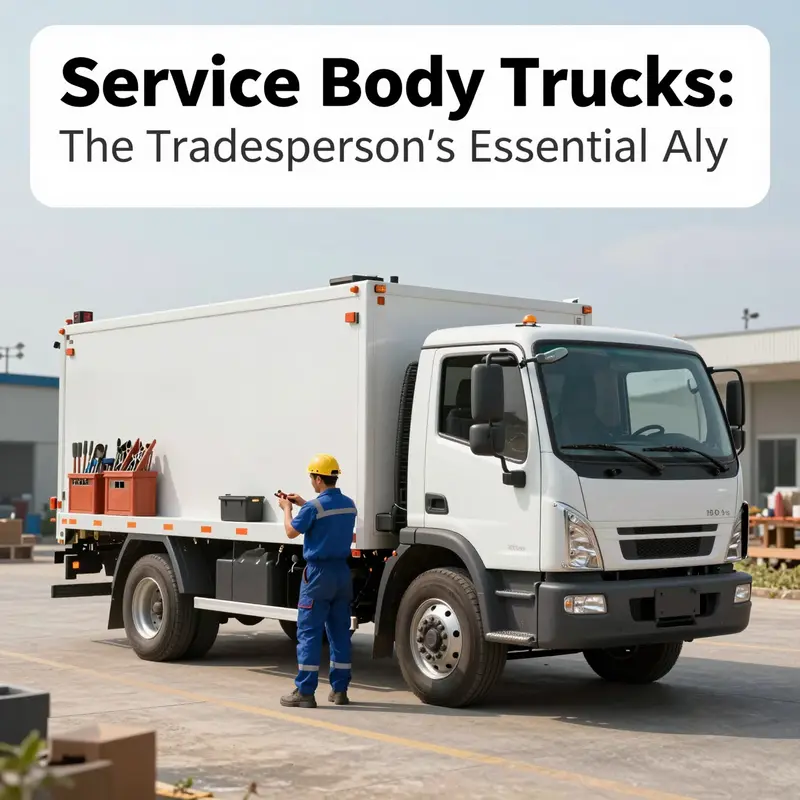
A service body truck is more than a sturdy ride with a roof over its cargo; it is a purpose-built mobile workshop that brings the tools, materials, and workspace a tradesperson needs into one integrated system. The defining feature is an enclosed cargo box permanently mounted to the truck chassis. Unlike open beds or detachable storage boxes, the service body is engineered as a single, cohesive unit that protects everything inside from rain, dust, theft, and the daily bumps of a workday on the road. For electricians, plumbers, HVAC technicians, landscapers, and maintenance crews, this enclosure creates a controlled environment where gear stays organized, secure, and ready for action the moment the truck doors swing open. The value lies not only in weather protection but in the way the space is designed to support the workflow of a tradesperson who carries specialized equipment, spare parts, and the confidence to tackle a site with predictability rather than improvisation.
What makes the service body so effective begins with its interior architecture. The cargo box is not a random assortment of shelves glued to a shell; it is a modular, purpose-built ecosystem. Inside, dedicated compartments and drawers form a guided map of the tools and materials a technician uses most often. There are tall, narrow) slots for long-handled items, wider bays for power tools, and a network of rack systems that keep cables, fittings, fittings, and hardware in clearly labeled places. The goal is to eliminate the guesswork that comes with standard pickups or cargo vans, where tools can shift with every turn and every pothole. When everything has a designated home, and when that home is designed around the actual work sequence, the driver becomes a technician with a well-organized shop at arm’s length.
The beauty of this setup is that it translates directly into time saved and fewer interruptions to the job. Drawers and trays on rollers slide out to reveal precisely sized wells for specific tools, attachments, or consumables. This means a tradesperson does not waste minutes searching through a cluttered box or rummaging under a pile of cables. In addition to drawers, many service bodies incorporate built-in work surfaces that can serve as a portable bench or a staging area for small tasks on site. When a job begins, a worker can lay out the components, pre-connect wires, or pre-assemble a portion of a system within reach of the job site. The effect is a tangible reduction in downtime and a smoother transition from planning to execution.
Lighting is another subtle but crucial feature. A service body usually includes interior lighting that activates as the doors open, illuminating the tool bays and work surfaces. Well-lit spaces reduce errors, improve accuracy, and make it easier to verify connections and measurements in environments where natural light is limited. Electrical outlets or built-in power strips within the body extend this advantage, enabling on-site testing of circuits or systems without returning to the generator or carrying portable power cords around a chaotic work site. In practical terms, the workbench area becomes a controlled zone where the technician can sort parts, make marks, and carry out precise tasks without stepping into a disorganized field of tools and debris.
To further protect the investment, service bodies are designed with security and resiliency in mind. The enclosed design guards tools and equipment from theft and weather, while reinforced latches and weather-stripped doors help seal out moisture. This is not only about safeguarding expensive gear, but about preserving the quality of fragile items like sensors, electronics, and calibration equipment. A secure, weather-tight box means less worry for a business owner and a more predictable maintenance cycle for the equipment itself. The consequence is a safer drive, too. With the cargo secured in place, there is less risk of loose items becoming projectiles during abrupt stops or sudden maneuvers, contributing to better overall road safety.
Another element of the service body’s value proposition is how it impacts capacity and load distribution. A well-designed service body is built around the truck’s chassis, distributing weight in a manner that maintains stability and handling. The walls and roof are not merely protective shells; they contribute to the structural integrity of the vehicle by providing anchor points and tie-downs for securing larger items and bulky parts. A properly balanced load reduces the risk of cargo shifting, which can influence steering response and braking performance, especially on uneven surfaces or at higher speeds. This is why service bodies are typically more durable than aftermarket add-ons; they are engineered as an integrated system that harmonizes the body, the frame, and the suspension to handle rugged use day after day.
For many trades, the visual impression of a professional, organized vehicle matters as much as the tools it carries. A service body truck presents a polished image right at the curb, signaling competence and reliability to clients. The organization behind the scenes translates into visible cues: clean, labeled compartments; uniform tool retention methods; and a consistent, well-maintained exterior. Branding can be integrated directly into the service body, turning the vehicle into a mobile advertisement without compromising functionality. A branded, orderly truck communicates a level of care that reassures clients about workmanship and project management, reinforcing trust before a single wrench is turned.
Yet the decision to invest in a service body is not only about aesthetics or convenience. The long-term economics are compelling once you factor in the cumulative effects of reduced tool loss, lower wear on equipment, and more efficient job scheduling. Lower tool loss translates into fewer repetitive purchases of same items and materials, a straightforward cost-saver that compounds over time. When tools stay in good condition longer, maintenance costs decline, and the downtime associated with damaged or misplaced equipment shrinks. If a company is repeatedly driving to a site to retrieve missing parts or to return to the shop to fetch the right tool, those trips add both time and expense. The service body eliminates much of that friction, contributing to fewer idle hours and a higher utilization rate of the workforce.
In considering the economics, fuel efficiency and weight distribution come into play as well. Although the service body adds mass, its design often improves aerodynamics and rollover resistance compared with loose toolbeds or heavy, unsecured loads. Efficient load planning helps optimize fuel use, a factor that accumulates across a busy week, month, and year. Business owners who track vehicle utilization data frequently find that the savings from improved efficiency and reduced downtime outweigh the initial up-front cost of a service body. Over the life of the vehicle, the return on investment becomes more about productivity and reliability than just the upfront price tag.
The spectrum of customization options for service bodies is one of their strongest selling points. The interior can be tailored to fit a specific trade’s workflow, from insulated compartments and cable management for electricians to drainboard inserts and sink basins for plumbers. Landscapers benefit from open floor space that accommodates large equipment and materials, with drainage provisions to manage mud and debris. These configurations are not afterthought add-ons; they are built into the backbone of the vehicle, ensuring that the workspace remains functional across seasons and weather conditions. The result is a tool carrier that morphs to fit the job rather than forcing the job to adapt to a generic vehicle. This level of customization supports not only efficiency but also safety and compliance, because the layout can be planned to minimize bending, reaching, and awkward postures, reducing fatigue and injury risk on long days.
As with any major equipment decision, there are regulatory and insurance considerations that businesses must weigh. The enclosed asset regime of a service body helps meet certain standards and can contribute to lower risk profiles in the eyes of insurers. A securely mounted, organized mobile workspace reduces the likelihood of theft and damage, which in turn can influence premium calculations. In this sense, the service body functions as a regulated and predictable asset that supports both compliance requirements and risk management objectives. The steady, repeatable organization it enforces can also support audits and inspections by providing clear documentation of where tools and parts live and how they are secured during transit.
A note on evidence helps connect these qualitative benefits with measurable outcomes. Real-world data have begun to illuminate the business advantages of adopting service body trucks. In a 2025 study by a leading industry research organization, contractors using service body trucks reported a notable increase in daily job completions compared with those relying on standard pickups or cargo vans. The study attributes much of this improvement to better organization and faster access to tools and materials, underscoring the practical impact of a mobile workshop that keeps the job moving. While every fleet is different, the takeaway is consistent: when a vehicle behaves like a workshop on wheels rather than a mere transport platform, productivity follows.
This contrast between a generic vehicle and a purpose-built service body is not merely a matter of convenience; it reflects a philosophy about how work gets done in the field. The service body embodies a shift from reactionary tool management to proactive workflow design. It aligns the physical layout of the vehicle with the sequence of tasks a technician performs, from initial site assessment to final testing and handover. This alignment encourages a disciplined approach to inventory, a clearer view of what is on hand, and a faster, more reliable path to completing a service call. The result is a more professional practice, a tighter schedule, and a stronger relationship with clients built on the confidence of predictable, high-quality work delivered on time.
In practical terms, this is a story of how a vehicle becomes a workspace that travels with the client. It is about the way a company frames its field operations in the same careful way it would design a shop floor or a maintenance bay. The enclosed service body is the bridge between mobility and mastery, offering a secure, organized, and efficient platform for delivering field services. It is the embodiment of a simple principle: tools should be easy to find, easy to reach, and easy to trust, whether the work is inside a cramped apartment, at a sprawling commercial site, or in a remote outdoor setting. By enabling organized storage, quick access, and a professional presence, the service body truck turns routine service calls into consistently reliable performances, where the human element—skill, judgment, and workmanship—remains the decisive factor, while the vehicle quietly eliminates many of the frictions that typically slow a job down.
To deepen the connection between design and practice, readers can explore broader discussions on how efficiency-driven vehicle architecture supports critical operations in demanding environments. A concise exploration of design efficiency in emergency services provides useful parallels to the service body approach, highlighting how thoughtful layouts, integrated power, and robust storage systems translate into reliable performance when every minute counts. See more about design efficiency in emergency services here: design efficiency in emergency services.
In sum, a service body truck is not just a transportation asset; it is a portable workshop that translates the discipline of a shop floor into the field. It fosters better organization, smoother workflows, safer operation, and a professional image that resonates with clients. It supports customization to fit specific trades, reduces tool loss and wear, and contributes to measurable improvements in productivity and job throughput. For a service-based business aiming to elevate its field operations, the service body truck offers a compelling combination of practical reliability and strategic value that can redefine what a truck can do for a trade.
External resource for further reading on outcomes associated with specialized vehicles in contracting and field service work: https://www.nahb.org/research/2025-service-body-truck-study
Tailored for the Task: The Customization Toolkit of Service Body Trucks
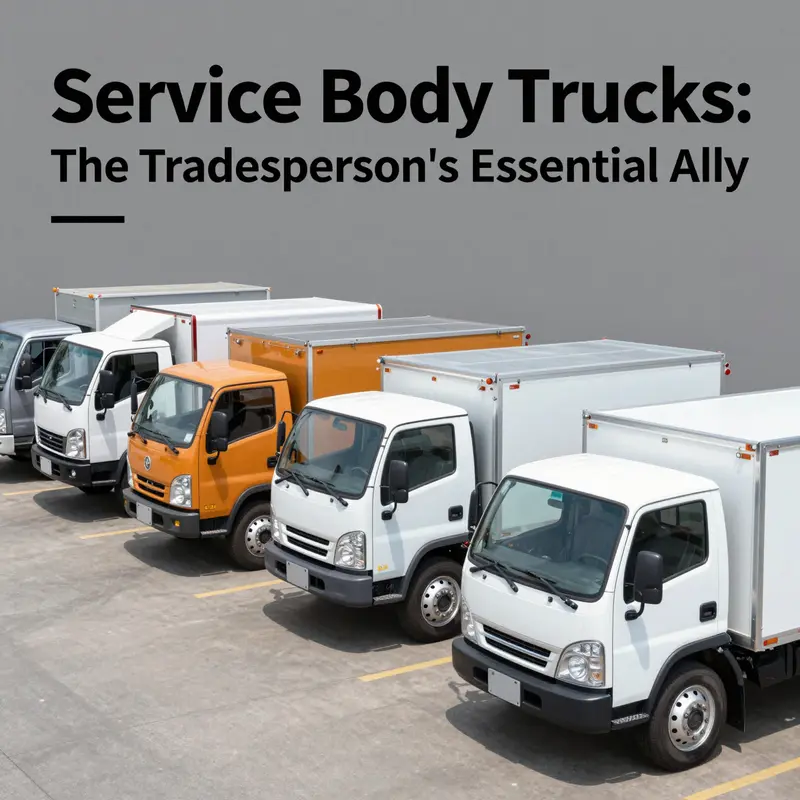
A service body truck stands out in any fleet not merely for its weatherproof cargo area, but for the deliberate, bespoke architecture that sits between driver and job site. When a tradesperson opens a service body, they don’t just access a boxy compartment; they step into a purpose-built workspace that travels to the point of need. The essence of this chapter lies in recognizing that customization is not a luxury but a productivity strategy. It transforms a generic vehicle into a purpose-made tool, capable of protecting precious gear, accelerating workflows, and sustaining operations through rough days on the road. The result is a vehicle that doesn’t just transport equipment; it actively supports the entire cadence of field work, from the moment tools are loaded to the moment the last spare part is put away at day’s end. In practice, customization begins with how the service body is designed and configured. It extends into the quality and layout of storage, the integration of safety and visibility features, and the mechanical choices that determine how well the truck handles demanding environments. Each decision, from the size of a cabinet to the placement of a power outlet, affects a crew’s ability to reach a wrench, grab a diagnostic kit, or deploy a light when a job slows to a crawl under cloudy skies or in the glare of a roadside hazard.
The interior design and configuration of the service body lie at the heart of a truly functional vehicle. A versatile service body allows for unlimited configurations and sizes that align with a technician’s workflow. While a factory standard may cover basic needs, the real gains come from shaping interior layouts, compartmentalization, and access points to mirror the day-to-day routines of crews. Think of a truck that anticipates where a technician tends to reach for a specific tool. Doors and drawers align with those movements, reducing the time spent searching and fumbling. In practice, the best configurations create dedicated zones: a zone for diagnostic electronics, a zone for hand tools, a zone for spare parts, and a weatherproof zone for sensitive equipment. The goal is not to cram as many compartments as possible but to optimize the way a person moves through the workspace while the vehicle is stationary or rolling toward a job site.
Tool storage systems embody this optimization. Lockable, corrosion-resistant toolboxes and cabinets crafted from stainless steel or polymer composites help ensure that equipment remains secure and ready for use. Corrosion resistance is not a luxury when crews routinely work in damp basements, salty coastal climates, or dusty, grit-filled environments. The material choice matters because it determines maintenance needs and the lifetime of the storage system. Stainless steel cabinets may offer exceptional durability in heavy-use settings, while polymer composites can provide lighter weight and resistance to certain chemicals without sacrificing strength. The layout of these storage systems matters as much as the materials. A well-designed configuration reduces the number of extra movements a technician must perform to access the right tool. It also supports safer handling of heavy items, with reinforced shelves and thoughtfully placed weight limits that prevent tipping or drooping over time. In shift-heavy operations, where a single crew can clock long hours, these details translate into tangible gains: fewer tool losses, lower misplacement rates, and quicker start times for each job.
The question of how to arrange storage is often answered by mapping real-world workflows onto the truck’s interior. Some technicians require keen access to compact, lockable chests for medical kits, spare parts, or specialized rescue tools. Others need broader, floor-to-ceiling cabinets to accommodate larger items without compromising workspace. In either case, the storage system must harmonize with the vehicle’s overall weight distribution and center of gravity. A poorly balanced body can alter handling, especially when the bed is loaded with equipment. The design challenge, then, is to strike a balance between maximizing usable volume and maintaining predictable, stable dynamics on a variety of road conditions. This is where the skill of a customization program comes into play: it models how weight shifts across the chassis as compartments fill, ensuring that the suspension and tires carry the load without compromising ride quality or safety.
Beyond storage, the service body integrates functional work surfaces and electrical capabilities that bring a shop to the field. A built-in workbench, adjustable lighting, and outlets that can power diagnostic tools, battery chargers, or small heat sources extend a truck’s utility far beyond simple transport. Work surfaces must be sturdy, resistant to oils and solvents, and easy to clean since the field environment rarely offers pristine conditions. A well-equipped surface invites technicians to complete tasks on-site, from panel replacements to minor repairs, without returning to a fixed shop location. Electrical integration matters as well: outlets, USB ports, and lighting should be intelligently distributed to minimize cord clutter and avoid trip hazards. A practical approach places a lighting row along the top edge of a cabinet or beneath a lid that opens toward the operator, delivering bright, shadow-free illumination exactly where the work is performed. In emergency or roadside scenarios, the visibility offered by interior and exterior lighting can make a critical difference by helping crews identify components, read labels, or locate a fuse without needing to step in and out of the vehicle repeatedly.
This focus on functional workspace simultaneously supports safety and efficiency. The presence of safety and visibility equipment is a natural extension of the interior design, not an afterthought. High-intensity LED light bars, installed on the roof or grille area, provide maximum visibility during urgent operations and act as clear communication signals in high-risk environments. The ability to customize light patterns—strobes, rotating beacons, or alternating flashes—helps crews adapt to different contexts, such as traffic control on a highway, a dark alley repair, or a rescue mission at night. The significance of such systems extends beyond aesthetic considerations; they are essential tools that help reduce risk, guide other road users, and keep the team alert to changing conditions. The placement, brightness, and reliability of lighting are carefully considered to ensure that emergency or roadside operations do not compromise the crew’s safety or the integrity of the work being performed on the truck itself.
A service body can also become a platform for specialized equipment, which is where the concept of customization becomes deeply practical. For maintenance or construction activities, technicians might require lockable glove compartments for sensitive diagnostics, magnetized tool boards that keep frequently used items within arm’s reach, or modular trays that slide out for easy access to parts. Emergency response teams, on the other hand, often need compartments that seal tightly after use and resist weather ingress, protecting tools, medical kits, and rescue gear from rain, dust, or moisture. The storage philosophy must accommodate such needs while also providing quick, intuitive access. This means designing access points that minimize the number of actions required to retrieve a tool, while preserving a secure environment where valuable equipment cannot be mislaid or stolen.
The mechanical and performance-oriented dimensions of customization further broaden the truck’s capabilities. For operators facing off-road, muddy, or uneven terrains, the option to configure a mobile lubricant tank or service body with robust powertrains and enhanced drivetrains becomes highly valuable. Four-by-four and six-by-six configurations are often pursued to improve clearance, traction, and reliability during challenging jobs. In these settings, the powertrain and frame must align with the weight and load profile of the service body, ensuring that torque delivery is predictable and that fuel efficiency remains reasonable under heavy-duty use. This is not simply about having more horsepower; it is about maintaining control under demanding conditions where a wrong gear choice could waste time or increase wear on the vehicle. The selection process weighs engine type, turbocharging capabilities, and the durability of the drivetrain against the expected daily demands. It also considers downtime: many fleets aim to minimize service interruptions by offering after-sales support and remote diagnostics, enabling quick adjustments or parts replacements without lengthy outages.
The role of after-sales support in the customization equation should not be underestimated. A robust service and parts network is as crucial as the original configuration. When a truck arrives on site, its success depends on the fleet’s confidence that repairs, replacements, and routine maintenance can be scheduled quickly and executed with minimal disruption to operations. This support network often includes a digital layer, such as online service portals that provide maintenance scheduling, parts catalogs, and real-time status updates. Access to timely information helps fleets align maintenance with usage patterns, ensuring the vehicle remains ready when needed. In practice, this translates into shorter downtime, better uptime, and improved overall reliability. It also fosters a feedback loop: field crews relay insights about what is working well and what could be improved, guiding future customization choices. In a world where a truck is both a tool and a workspace, sustaining uptime is a core objective and a measure of the value of customization itself.
The versatility offered by customization translates into tangible outcomes across a range of sectors. In construction, facility maintenance, infrastructure services, emergency response, and routine vehicle maintenance, a customized service body truck can streamline repetitive on-site tasks, protect sensitive materials, and ensure that crews can adapt rapidly to evolving work orders. The interior layout becomes a map of efficiency, where each cabinet, drawer, and work surface serves a concrete purpose. The exterior design, inclusive of lighting and visibility equipment, becomes a beacon of safety and clear communication. The drivetrain choices enable mobility in all environments, preserving performance when it matters most. In combination, these elements form a flexible, durable foundation that supports not only day-to-day tasks but also the unpredictable challenges that can arise on a job site. The value is not measured in glossy specs alone but in real-world outcomes: faster task completion, fewer trips back to the shop, less tool loss, and safer operations under variable conditions.
To ground these ideas in practical terms, envision a crew preparing for a day of field maintenance. The truck’s interior has been arranged to mirror their morning routine: a compact medical kit at eye level near the front of the body, a set of metric and imperial wrenches in a slide-out tray, diagnostic equipment tucked into a lockable cabinet, and spare parts organized by system type in labeled bins. The workbench is ready to be deployed for a quick diagnostic, the lighting is set to a bright, cool hue that reduces eye strain as the day progresses, and the security features ensure that the more valuable tools stay secure when a site requires the crew to split up. When the truck travels to the next site, the distribution of weight across the bed remains balanced, courtesy of the thoughtful arrangement of equipment and the potential for modular attachments if the job demands a different layout. And if the job takes the team into a rainstorm or across a dusty desert road, the weatherproofing and corrosion-resistant materials protect both the cargo and the infrastructure around it, preserving the integrity of the tools and the performance of the truck.
The customization narrative is not merely about adding bells and whistles. It is about aligning a vehicle’s capabilities with the realities of fieldwork. The best service body configurations are those that anticipate common workflows and reduce friction at every step—from loading to on-site execution to secure return. They are designed to minimize downtime and maximize uptime, ensuring that a fleet can fulfill urgent service requests with confidence. When this alignment is achieved, the service body truck becomes more than a transport vessel; it becomes a mobile extension of a shop floor, a portable workshop that travels with the crew and supports the task at hand with a stubborn reliability born of careful design, material choices, and thoughtful integration of safety, visibility, and electrical features. In this sense, customization is the strategic backbone of a resilient field operation. It is a deliberate investment that pays dividends in speed, safety, and consistency across a fleet’s day-to-day activities. For readers seeking a deeper exploration of how design efficiency plays into this landscape, consider the broader discussion of design efficiency in emergency services, which outlines principles that translate well into the service body context. Design efficiency in emergency services
In closing, the practical reality is that every line item in a customization spec—every cabinet dimension, every conductor path for a power outlet, every choice of lighting, every weight rating—carries measurable consequences for performance, safety, and the crew’s experience on the job. When these details are thoughtfully integrated, a service body truck does more than carry tools; it becomes a secure, efficient, and adaptable workspace that travels to the point of need and remains capable across a broad spectrum of conditions. The chapter above sketches a map of how customization unfolds in practice. It emphasizes a philosophy: treat the truck as a partner in work rather than a passive container. The result is not just a vehicle that looks capable; it is a vehicle that performs like a skilled technician, ready to respond, protect, and enable field operations with confidence. External resource: https://www.osha.gov
Enclosed Efficiency on Wheels: How Service Body Trucks Elevate Field Work While Standing Apart from Standard Haulers
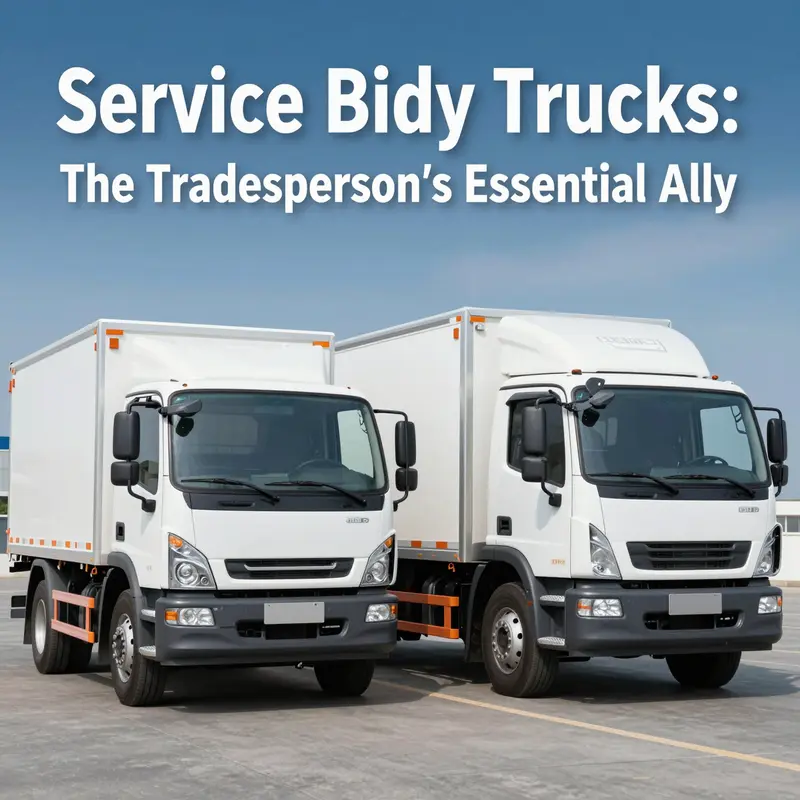
A service body truck carries a quiet, practical ambition on every job site: to turn a vehicle into a self-contained, mobile workshop. Its defining feature is the cargo area, which is enclosed by walls and a roof that fully cover the floor space. This is more than a weather shield; it is a shield against theft, a platform for organized work, and a catalyst for on-site productivity. In the world of trades—from electrical and plumbing to HVAC and landscape services—the ability to secure tools, protect sensitive equipment from rain, snow, and dust, and reach for a needed part without a trip back to a shop is a practical advantage that translates into time saved and fewer interruptions. When we examine what a service body truck is, we are really looking at a philosophy of field work that favors containment, reliability, and readiness. The enclosed body transforms the truck from a general transportation vehicle into a portable work zone, one that supports skilled trades by offering immediate access to a curated set of tools, outlets, and work surfaces right where the crew needs them most.
This design ethos—protection, accessibility, and durability—drives the essential value proposition of service body trucks. The walls and roof provide weather protection for tools and materials, minimizing weather-related damage and the need for constant preservation measures. In regions where work is performed outdoors across shifting seasons, that enclosure isn’t just a convenience; it’s a safeguard that helps preserve the integrity of sensitive instruments, electrical components, and electronics that might otherwise be compromised by moisture or temperature swings. The mere presence of a secure storage environment changes how crews plan their day. It reduces the number of trips to a central depot and curbs the temptation to improvise with makeshift storage on the back of a flatbed. Instead, technicians can prepare for the work ahead with a defined toolbox tailored to the specific job, a defined work surface for tasks like wiring or measuring, and a layout that guides the workflow from dirty to clean, from raw material to finished component.
Integrated tool storage is a hallmark feature that follows a simple logic: tools should be visible, immediately accessible, and protected. Customizable shelving and compartments optimize organizational discipline, so a screw gun can be found quickly, a multimeter is easy to locate, and spare fasteners and fittings have a designated home. The effect of such organization on job-site rhythm is subtle but real. A crew that can pull the right tool from the right bin without rummaging through a pile of loose items can proceed through a diagnostic or repair sequence with fewer interruptions. It is not merely about speed; it is about reducing cognitive load and enhancing focus. Built‑in lighting is part of this story, extending safe operation into early morning starts or late-evening tasks. Area lighting illuminates work surfaces and the interior corridors of the compartments, allowing a technician to scrutinize connections, verify tightness, or read markings without relying on a headlamp alone. In some configurations, outlets and simple power surges are integrated at the point of use, which means a technician can test a circuit or power a small tool without a trailing extension cord and a tangle of cables.
The service body truck’s capacity to accommodate specialized equipment is another defining characteristic. Heavier utilities may require hydraulic lifts, small cranes, or other assist devices to manage heavy components at the job site. The enclosure around the bed often houses interfaces for these devices in a way that protects both the operator and the equipment. The presence of built‑in lift-ready points and reinforced floors means crews can perform air-conditioning line replacements, industrial wiring, or telecom backbone work with fewer inconveniences and less downtime. These features aren’t mere add-ons; they are built into the vehicle architecture so that the truck functions as a ready-made work platform rather than a collection of scattered tools loosely strapped to a bed. Durable construction is essential. The bodies are designed to withstand the harsh realities of street-level service work: repeated door openings and closings, vibrations from rough roads, and the occasional impact from loading and unloading equipment. The result is a vehicle that maintains its alignment and preserves its interior integrity despite the day-to-day demands of field service.
Yet this design presents trade-offs. The initial investment for a service body truck tends to be higher than that of a simple flatbed or non-enclosed cargo solution. The enclosure, built-in storage, and integrated systems add complexity that requires regular maintenance and, in some cases, operator training to handle equipment like hydraulic lifts or cranes safely. Fleet operators must consider lifecycle costs, not just upfront price. A service body truck can be more expensive to purchase, but its contributors to productivity—reduced tool loss, faster job-site mobilization, safer working conditions, and lower exposure to weather‑related damage—may yield a lower total cost of ownership over time. For teams that perform daily field service, that value can be measurable in hours saved and in the consistency of service delivery.
On the other side of the ledger sits the standard truck, frequently outfitted with a stake body, which embodies versatility and streamlined simplicity. The stake bed—an open, flat platform with removable or foldable side walls—embraces a broader approach to cargo. The abundance of exposed floor space makes it easy to haul bulk materials, debris, or large items that would otherwise require special handling. The stake body design supports fast loading and unloading, which is a boon for construction sites, landscaping operations, and other high-volume, general-purpose hauling tasks. When a project calls for quick movement of soil, gravel, mulch, or oversized piping, the stake body’s flexible geometry provides an adaptive advantage. The absence of an enclosed structure means fewer maintenance items to worry about inside the bed and fewer constraints on cargo shapes or sizes. The trade-off, however, is that tools, sensitive equipment, and small parts may lack the protective enclosure that reduces weather exposure and theft risk. The open bed invites additional organizational work: crews often rely on external racks, toolboxes mounted on the sides, or separate containers to prevent tool loss and to preserve workflow efficiency.
Industry guidance from recent technical resources highlights these contrasts. A 2026 report from a respected engineering and maintenance publication emphasizes that service body trucks are engineered with durable construction and customizable shelving, particularly supportive of electrical, telecom, and plumbing operations. The built-in storage, lighting, and power provisions are described as core enablers of field productivity, enabling crews to carry a well‑defined kit for common tasks and to access it without detours. The report also notes the safety and productivity gains from area lighting and compatibility with aerial lifts, which can be a decisive factor for night work or elevated tasks. In parallel, a 2026 technical guide from a well-regarded industry outlet focuses on stake body trucks and their suitability for bulk materials and flexible cargo arrangements. It points out that stake bodies allow loads to be handled with ease by conventional loading equipment and that the side rails can be adapted or removed based on cargo dimensions, which makes them highly versatile for site clearances, debris removal, and material transport.
Taken together, the literature frames a practical dichotomy: service body trucks excel when the job demands readiness, organization, and protection for a toolbox and a work site that feels like a compact, secure workshop on wheels. Stake body and other standard truck configurations excel when the project requires flexible cargo handling, minimal interior complexity, and the ability to adapt quickly to changing material and equipment needs. The decision is rarely purely about capacity or horsepower. It is about the cadence of work—whether a crew spends much of the day in micro-adjustments at multiple sites or whether the day is a sequence of discrete, repetitive tasks performed with a dedicated tool set and a defined work surface. In many fleets, the choice is not binary. A growing number of operators opt for a hybrid approach: a core service body configuration for multi-trade tasks that demand organization and protection, paired with a lighter-duty, generalized vehicle option for scenarios that require fast material transfer or broad-site access. This approach reflects a pragmatic recognition that modern fieldwork is a blend of defined, repeatable tasks and opportunistic, on-the-ground adaptations.
The commercial literature also hints at a broader behavioral shift in fleet management. More than half of surveyed companies report improved productivity after adopting purpose-built, customized trucks that combine task-specific storage with robust base platforms. The implication is clear: when a vehicle is designed around the actual workflow of the crew, the ratio of trips back to base or shop reduces, and the cycle time for diagnosing and completing a repair shortens. In the end, the service body truck is not just a container for tools. It is a carefully organized, climate-controlled, and safety-conscious workspace that travels with the crew. Its interior is a small ecosystem of compartments, electricity, light, and surfaces all aligned to support a disciplined process. The truck becomes part of the technician’s toolkit—a mobile extension of the workshop, a compact staging area where the plan for the day is laid out, the necessary materials are laid in reach, and the next steps are prepared before the crew ever steps onto the site.
For readers seeking a practical lens on how to evaluate these options within a fleet, the decision often starts with a map of the typical work cycle. If most tasks involve routine repair, inspection, and the frequent handling of small parts, the enclosure and integrated tools of a service body can deliver a tangible return on investment through reduced downtime and better tool accountability. If, however, the job requires large material handling, frequent loads of bulk materials, and long-distance hauling with flexible cargo needs, a stake body or similar open-bed configuration may provide superior efficiency. The broader context, though, includes not only the physical attributes of the truck but the training, maintenance, and safety programs that sustain its performance. Service body systems may include hydraulic lifts or cranes; these introduce maintenance requirements and operator training that must be integrated into a fleet’s service plan. Likewise, a stake body demands attention to load securement, cargo management practices, and the safety of offloading operations. In both cases, the most effective solutions emerge from aligning vehicle design with the actual work processes and safety standards that govern on-site operations.
The overarching lesson is that there is no one-size-fits-all answer. The best choice hinges on how crews move, what they move, and where the work is done. The service body truck offers a disciplined, durable, and all-weather working environment that resembles a compact, engineered workspace on wheels. It is especially compelling for multi-trade teams that carry a curated set of specialized tools and need rapid, reliable access at a moment’s notice. The standard, stake-equipped truck, by contrast, serves as a flexible workhorse for bulk material transport and general-site logistics, preserving simplicity and minimizing interior maintenance. Many operators find value in keeping both types available, using each where its strengths shine and adapting to the project’s demands as they arise. The result is a fleet that can navigate varied site conditions, weather scenarios, and workflow rhythms with a balanced mix of protection, accessibility, and adaptability.
To explore a broader perspective on how these vehicle bodies fit into a larger picture of field operations and maintenance strategy, readers can consult the general overview at 5startruckin.com/blog/ for context on how modern trucks are evolving to support on-site work—and how to approach procurement and maintenance planning with safety and reliability in mind. For deeper technical detail on material properties, standards, and uses in engineering, an external reference offers a rigorous analysis of service truck bodies and their role in engineering practice: https://www.engineeringmaintenancejournal.com/service-truck-bodies-technical-analysis-2026. This combination of practical guidance and technical insight helps frame the service body truck not as a single feature on a vehicle, but as a deliberate choice about how a crew works, what they carry, and how they stay prepared in the field.
Final thoughts
In summary, service body trucks encapsulate the requirements of tradespeople by offering secure, organized, and functional solutions for transporting tools and materials. Their structure not only protects valuable equipment from theft and weather but also optimizes efficiency on job sites through thoughtful design features and customizable options. Understanding the advantages they bring over standard trucks further emphasizes why service body trucks are essential for anyone in the trade industry. By investing in a service body truck, professionals can enhance their operational efficiency, leading to better service delivery and increased customer satisfaction.