

Introduction
As the demand for skilled truck drivers continues to rise, many aspiring drivers and fleet managers are left with one crucial question: Will workforce services fund truck driving school? In the rapidly evolving landscape of the trucking industry, education plays a pivotal role not only for new drivers stepping into this vital profession but also for fleet managers seeking to enhance their team’s capabilities. Truck driving school provides essential training, ensuring that new drivers are well-equipped to tackle the challenges of the road ahead while complying with stringent industry regulations.
The importance of obtaining a quality education in trucking cannot be underestimated, as it directly impacts safety, efficiency, and overall job performance. Fleet managers, on the other hand, must understand the benefits of investing in their team’s education, as this can lead to reduced turnover rates and improved service delivery. By exploring the potential funding options available through workforce services, aspiring drivers can take the first step towards a rewarding career. Understanding these funding avenues not only supports individuals in their quest for education but also strengthens the foundation of the trucking industry as a whole. Learn more about the resources available to aspiring drivers here.
Overview of Workforce Services in Vocational Training for Truck Driving Careers
Workforce services play a vital role in shaping the future of vocational training, particularly in the trucking industry. As the demand for skilled truck drivers continues to grow, these programs are designed to provide individuals with the necessary skills and knowledge to embark on successful careers in truck driving. The general purpose of workforce services is to support workforce development by enhancing the skills of individuals seeking employment in high-demand sectors, such as trucking.
Importance of Vocational Training
Vocational training programs in the trucking industry focus on equipping aspiring drivers with both theoretical knowledge and practical skills. These programs emphasize a structured approach to training, ensuring that drivers are well-prepared for the complexities of operating large vehicles safely and effectively. Not only do these programs address the technical aspects of driving, but they also cultivate critical soft skills such as communication, problem-solving, and time management, which are essential for success in the field.
Furthermore, research highlights the challenges faced in the trucking industry due to insufficient training. Many prospective drivers struggle with the skills gaps that contribute to safety concerns and inefficiencies. By investing in comprehensive training curricula, workforce services aim to produce a new generation of qualified truck drivers, thereby improving overall operational safety and efficiency in the trucking sector.
Supporting Career Development
Workforce services can help individuals access funding for truck driving schools, allowing them to pursue their education without the burden of high tuition costs. This financial support is crucial, as it removes barriers for those who may not have the means to fund their training. By facilitating access to education and resources, workforce services not only support individual career ambitions but also contribute to the broader objective of workforce development in the trucking industry.
In conclusion, vocational training programs, backed by workforce services, are indispensable in addressing the growing need for qualified truck drivers. They serve as a bridge for individuals aspiring to enter this lucrative sector while simultaneously bolstering the overall workforce quality in the trucking industry. For further insights on related topics, you can explore more about workforce services or get insights into trucking industry challenges.

Comparing Workforce Service Programs for Truck Driving School Funding
The eligibility requirements, funding limits, and application processes for various workforce service programs that support truck driving schools can differ significantly. Here’s a summary of how these programs compare:
| Program | Eligibility Requirements | Funding Limits | Application Process |
|---|---|---|---|
| Federal Workforce Innovation and Opportunity Act (WIOA) – Truck Driving Training | – Unemployed or underemployed individuals – Priority given to dislocated workers, low-income individuals, veterans, and those with barriers to employment – Must be a U.S. citizen or eligible non-citizen – Must enroll in an approved training provider |
Up to $10,000 per individual for training costs (covers tuition, books, supplies) Programs may also provide stipends for living expenses (varies by state) |
Apply through local One-Stop Career Center or state workforce agency Complete application and intake interview Undergo assessment for job readiness and training placement Enroll in approved truck driving program |
| State of California – CalVet Truck Driver Training Program | – California residents – Veterans (including National Guard and Reserve members) – Must have a valid California driver’s license – Must meet physical and medical requirements for CDL |
Up to $10,000 for tuition and fees Additional funds may be available for tools, books, and living expenses |
Apply online via the CalVet website Submit required documentation (veteran status proof, ID, etc.) Review and approval by CalVet staff Notification of acceptance and funding details |
| State of Texas – Texas Workforce Commission (TWC) Truck Driving Training | – Texas residents – Individuals seeking employment or career advancement – Must have a high school diploma or GED – Must pass a drug test and background check |
Covers up to 100% of tuition and fees for approved programs Stipend of up to $500 per month for eligible participants during training |
Apply through TWC’s online portal or local workforce center Complete a skills assessment and career counseling session Receive a training voucher if approved Enroll at a TWC-approved truck driving school |
| State of Illinois – Illinois Department of Commerce and Economic Opportunity (DCEO) Truck Driving Grant | – Illinois residents – Low-income individuals – Must be enrolled in an accredited truck driving program – Must demonstrate financial need |
Up to $6,000 for tuition and related expenses May include additional support for certification exams and licensing fees |
Apply through the DCEO website Submit application and supporting documents (proof of residency, income, enrollment) Wait for review and notification of award status Use funds directly with approved training provider |
| State of Florida – Florida Job Growth Fund (JGF) – Commercial Driver’s License (CDL) Training | – Florida residents – Individuals with a history of unemployment or underemployment – Must be enrolled in an approved CDL training program – Must not have previously received JGF funding for CDL training |
Up to $7,500 for training costs May include additional support for testing and licensing |
Apply through the Florida Department of Economic Opportunity (DEO) website Complete the online application form Provide documentation (ID, proof of residency, enrollment letter) Approved applicants receive a grant certificate to use with participating schools |
Sources:
- U.S. Department of Labor – WIOA Adult and Dislocated Worker Programs
- California Department of Veterans Affairs (CalVet) – Education and Training Benefits
- Texas Workforce Commission – Training and Employment Services
- Illinois Department of Commerce and Economic Opportunity – Workforce Development Programs
- Florida Department of Economic Opportunity – Job Growth Fund
Funding Limits Visualized
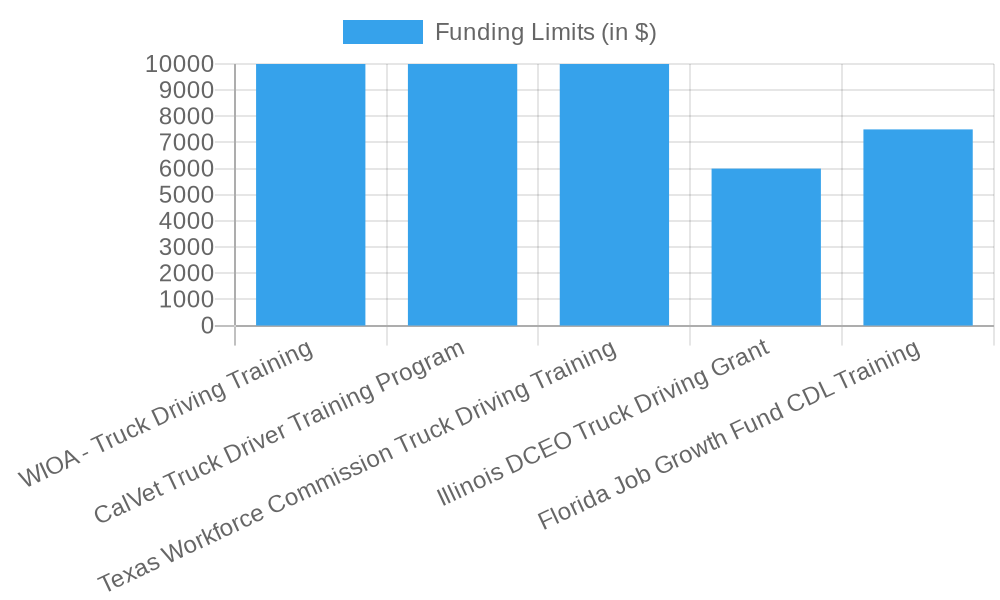
To further illustrate these funding limits, here’s a chart:
These comparative insights should help you navigate the funding opportunities available for truck driving schools. Feel free to explore more resources for additional information about truck driving education and training.
Benefits of Attending Truck Driving School
Attending a formal truck driving school provides numerous advantages for aspiring truck drivers, paving the way for a successful career in transportation. Here are some key benefits:
1. Acquisition of Essential Skills
- Professional Training: Truck driving schools offer structured programs that equip students with vital driving techniques, vehicle operation knowledge, and road safety regulations. This structured learning contributes to a deeper understanding of the responsibilities involved in driving large vehicles.
- Hands-On Experience: Many schools include practical driving time, allowing students to practice in real-world scenarios, which enhances their confidence and ability behind the wheel.
2. Safety Training
- Comprehensive Safety Courses: Most truck driving schools provide extensive safety training, emphasizing accident prevention and safe driving practices. With a focus on defensive driving, students learn to handle unexpected situations on the road effectively.
- Use of Simulators: Advanced schools utilize driving simulators to augment learning and improve skill transfer from simulated to real-world driving.
3. Job Placement Assistance
- Network Connections: Many driving schools have relationships with trucking companies, facilitating job placement for graduates. This assistance can significantly shorten the time it takes to find a job after completing the program.
- Certification and Endorsements: Graduates often receive certifications that may be beneficial in securing employment in the trucking industry.
For further information on truck driving education and workforce services, learn more about our blog or explore the opportunities for truck driving safety training at 5 Star Truck.
Job Placement Rates for Truck Driving School Graduates
In 2023, the job placement rates for graduates of truck driving schools have shown both promise and variability. Recent studies and reports reveal a clear outlook on the effectiveness and challenges within these training programs:
-
Average Employment Rate: A survey found that the average job placement rate for truck driving school graduates in the U.S. is approximately 78%. However, this figure can be misleading as many schools advertise higher rates, sometimes claiming up to 98% through lobbying and marketing strategies. For example, while Crackamas Truck Driving School claims a 92% job placement rate, audits suggest the actual number is around 54%.
-
Reported Success Stories: Specific success stories highlight the benefits of targeted training. Many graduates have found immediate employment opportunities upon completion of their programs. Industry collaborations, such as those with major logistics firms, enhance job readiness, helping graduates connect directly with employers.
- For instance, top logistics companies in China have reported over 90% employment rates for their truck driver graduates, with some schools ensuring that students secure jobs even before graduation through partnerships.
-
Employer Preferences: The demand for skilled truck drivers remains robust, with a reported 4.3% growth in the trucking industry throughout 2023, indicating a healthy job market for graduates. Moreover, employers increasingly prefer candidates who not only have a truck driving license but also exhibit competency in digital operations, like GPS navigation and management systems.
-
Regional Variances: The effectiveness of these programs can vary significantly based on geographic region, as areas with higher logistics activity tend to have better placement rates for graduates. For instance, those in metropolitan regions often see employment rates exceeding 90%, while rural areas may have lower statistics due to fewer available job opportunities.
Conclusion
Overall, while many truck driving schools report high job placement rates, actual employment outcomes can differ based on location, program quality, and the needs of the logistics industry. Prospective drivers should consider both the statistics and the quality of support provided by schools when making decisions about their education.
For detailed insights and tips on effective truck driving programs, feel free to learn more about our services.
Common Misconceptions About Workforce Services Funding for Truck Driving Schools
When considering truck driving schools funded by workforce services, several misconceptions can cause confusion among aspiring drivers. Addressing these common misconceptions can help clarify the opportunities available.
Myth 1: Only Low-Income Individuals Can Access Funding
One prevalent belief is that funding for truck driving schools is exclusively reserved for low-income individuals. While many programs aim to assist economically disadvantaged groups-including veterans and long-term unemployed workers-workforce services also support a wider range of participants. For instance, programs such as California’s ‘Truckers’ Pathway’ and Texas’s ‘Drive for Success’ initiatives offer funding to various eligible individuals, including those seeking career transitions, irrespective of their economic background.
Myth 2: Funding is Limited to Large Schools
Another misconception is that funding is primarily directed to larger truck driving institutions, leaving smaller, local schools at a disadvantage. However, funding opportunities are available for diverse training providers, including community colleges and vocational schools. This allows aspiring truck drivers to choose a school that best fits their needs and financial situation. Additionally, the U.S. Department of Labor emphasizes that smaller programs can be just as effective in preparing students for commercial driver roles.
Myth 3: All Programs Offer the Same Curriculum
Many assume that all truck driving programs funded through workforce services offer identical training. In reality, the programs vary significantly. They may include short-term trainings focused on obtaining a Commercial Driver’s License (CDL), hands-on driving practice, and even job placement services. For a complete overview of the types of programs funded by workforce services, check out the U.S. Department of Labor’s resources on trucking training.
Conclusion
Understanding these misconceptions can empower potential truck drivers to explore the funding opportunities available to enhance their careers. By leveraging these resources, aspiring drivers can embark on a fulfilling journey in the trucking industry, all while receiving essential support targeted to their needs.

Unlock Your Trucking Career Today!
Are you ready to take the leap towards a rewarding career in truck driving? If you’re considering truck driving school, you might be surprised to learn that numerous workforce services are available to help fund your education. Programs under the Workforce Innovation and Opportunity Act (WIOA) offer critical financial support, including tuition assistance and materials coverage, specifically designed to propel aspiring truck drivers into high-demand jobs in the transportation sector.
Imagine training at an accredited truck driving school and completing your education with less financial burden. Eligible individuals have successfully leveraged these programs, reporting job placement rates as high as 90% within six months after graduation. According to the American Trucking Associations, those who enroll in CDL training through workforce services often enjoy faster job placements and higher starting salaries. The statistics clearly illustrate the benefits: 85% completion rates and a significantly lower accident rate for those trained through formal channels.
Don’t let funding hold you back from a fulfilling career. Learn more about available programs and how they can pave your path to success in the trucking industry. The road to opportunity is waiting-seize it now!
Importance of Education in the Trucking Industry
Education and training are increasingly recognized as pivotal factors in addressing the challenges faced by the trucking industry, including driver shortages and safety concerns. An insightful perspective comes from a recent study published in Transportation Research Part A: Policy and Practice, which argues that structured vocational education programs significantly improve driver performance and retention. This includes a focus on digital literacy, vehicle maintenance, and advanced navigation systems to equip drivers for the modern demands of the industry.
“Education is fundamental to the development of new quality productivity in the transportation sector. As industries evolve, the need for innovative, interdisciplinary, and application-oriented talent has never been greater. Innovation practice is the best innovation education.” – Expert Opinion from China Daily
Investing in continuous education for current drivers and providing early career training for new entrants is essential for building a sustainable and high-performing trucking workforce. These insights underscore the critical role that education plays in the future of trucking, directly influencing industry stability and workforce development.
For truck drivers and aspiring professionals, understanding these factors can guide their decisions regarding education and training opportunities.
Conclusion
In conclusion, pursuing truck driving school through workforce services presents a valuable opportunity for individuals looking to enter the trucking industry. Throughout this article, we’ve highlighted the significant advantages of this pathway, including the financial support available from workforce services, the comprehensive training programs designed to equip aspiring truck drivers with essential skills, and the growing demand for skilled truck drivers in the labor market.
Enrolling in truck driving school can set you on a steady path to a fulfilling and lucrative career. It not only prepares you to meet the stringent requirements of commercial driving but also provides job placement assistance and access to a network of industry contacts. Moreover, with the trucking industry facing a continual shortage of qualified drivers, now is a prime time to embark on this journey.
For those considering a career in truck driving, take the first step by researching the available workforce services in your area. Resources such as 5 Star Trucking Blog can provide valuable insights and support. By taking advantage of these services, you can turn your aspirations into reality and enjoy the many rewards a career in trucking has to offer. Don’t wait – your future on the open road awaits!