

Introduction
In the demanding world of trucking, where every moment on the road counts, the significance of robust services for truck users can’t be overstated. These services play a pivotal role in enhancing efficiency, ensuring safety, and boosting overall satisfaction for truck drivers, fleet managers, and maintenance specialists alike. Think about it-trucks are not just vehicles; they are vital lifelines connecting goods with consumers across vast distances. With the right service solutions, long-haul truck drivers can minimize downtime and maximize productivity, keeping their delivery schedules on track. Additionally, reliable maintenance and repair services not only prolong the lifespan of vehicles but also enhance safety, significantly reducing the risk of roadside failures that can lead to dangerous situations. Fleet managers also stand to gain from these services through optimized fleet performance and lower operating costs, leading to higher overall satisfaction among their team. For aspiring truck drivers, understanding the array of available services can provide a solid foundation for a successful career in this essential industry. As we delve into the myriad benefits of truck services, we’ll explore how these offerings are designed to meet the unique needs of each stakeholder in the trucking community and pave the way for a safer, more efficient transportation ecosystem. Learn more about trucking services and their pivotal role in the industry today.
Key Benefits of Truck Services
Utilizing professional truck services can yield significant advantages for varied stakeholders, including long-haul truck drivers, trucking company owners, fleet managers, and truck maintenance specialists. Here are some key benefits that these users experience:
- Improved Safety: Regular inspections and maintenance enhance vehicle safety, reducing the risk of accidents and breakdowns on the road.
- Reduced Downtime: Timely maintenance checks can lead to fewer unexpected repairs, allowing for more efficient fleet operation and maximizing productivity.
- Better Fleet Management: Real-time monitoring and tracking enable proactive management of fleet performance, ensuring optimal routes and operational efficiency.
- Access to Specialized Services: Truck maintenance specialists can provide high-value services tailored to specific needs, increasing vehicle longevity.
- Enhanced Customer Satisfaction: Reliable truck services foster trust and satisfaction among clients, leading to potential long-term business relationships.
- Cost Efficiency: Preventative maintenance can lower overall operational costs, helping trucking companies save money in the long run.
For more insights on truck services, learn more about trucking efficiencies or check out maintenance training importance!
Efficiency Gains from Truck Services
Utilizing truck services offers significant operational efficiency for trucking company owners, fleet managers, and drivers alike. From improved logistics to better fuel efficiency, these services streamline many aspects of transportation. Here’s how:
Improved Logistics
Truck services often employ advanced technologies that enhance logistics management. These technologies include real-time tracking systems and optimized route planning.
-
Real-time Telematics: With a reported fuel efficiency improvement of 10-15% in the United States due to telematics, companies can monitor their fleet’s performance in real-time and make proactive adjustments on the fly. For fleet managers, this means fewer missed deadlines and improved customer satisfaction.
-
Reduction of Missed Deliveries: Enhanced communication between warehouse teams and truck drivers can lead to reductions in missed delivery windows by up to 15%. Better coordination optimizes scheduling and reduces idle times, thus saving costs on fuel and labor.
Fuel Efficiency Gains
The trucking industry is increasingly turning to fuels that offer better environmental sustainability, such as electric or hybrid trucks. A switch to electric vehicles can yield an astonishing 83.9% reduction in fuel costs compared to diesel models, highlighting the financial benefits tied to sustainability.
- High-Quality Lubricants: Implementing superior lubricants can improve engine efficiency and save an additional 5% in fuel consumption. These small adjustments contribute to substantial savings over time, making maintenance and product selection pivotal for operational efficiency.
Charting the Improvements
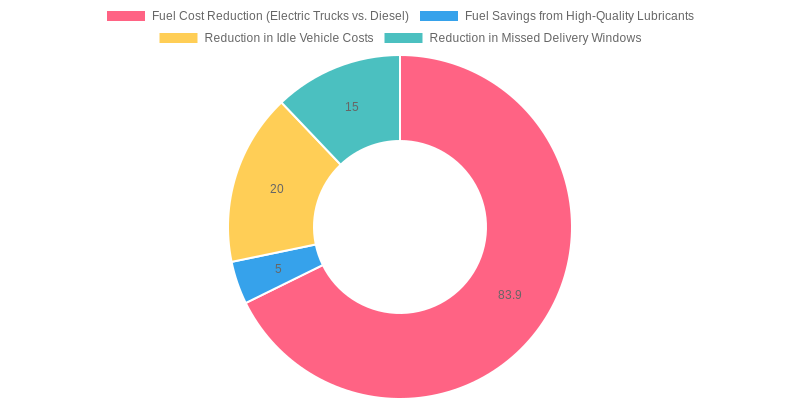
This chart illustrates the impact of using truck services on logistics efficiency metrics, showing promising trends in cost reduction and improved delivery performance.
Conclusion
In summary, investing in truck services maximizes operational efficiency through better logistics coordination and higher fuel efficiency. Adopting these strategies is not just about reducing operational costs; it’s about enhancing the sustainability and reliability of transport services. Learn more about maximizing your fleet’s efficiency and explore the steps to charter a more sustainable path in your trucking operations.
Stay ahead in the trucking industry by embracing technology and services designed to improve performance and lower costs.
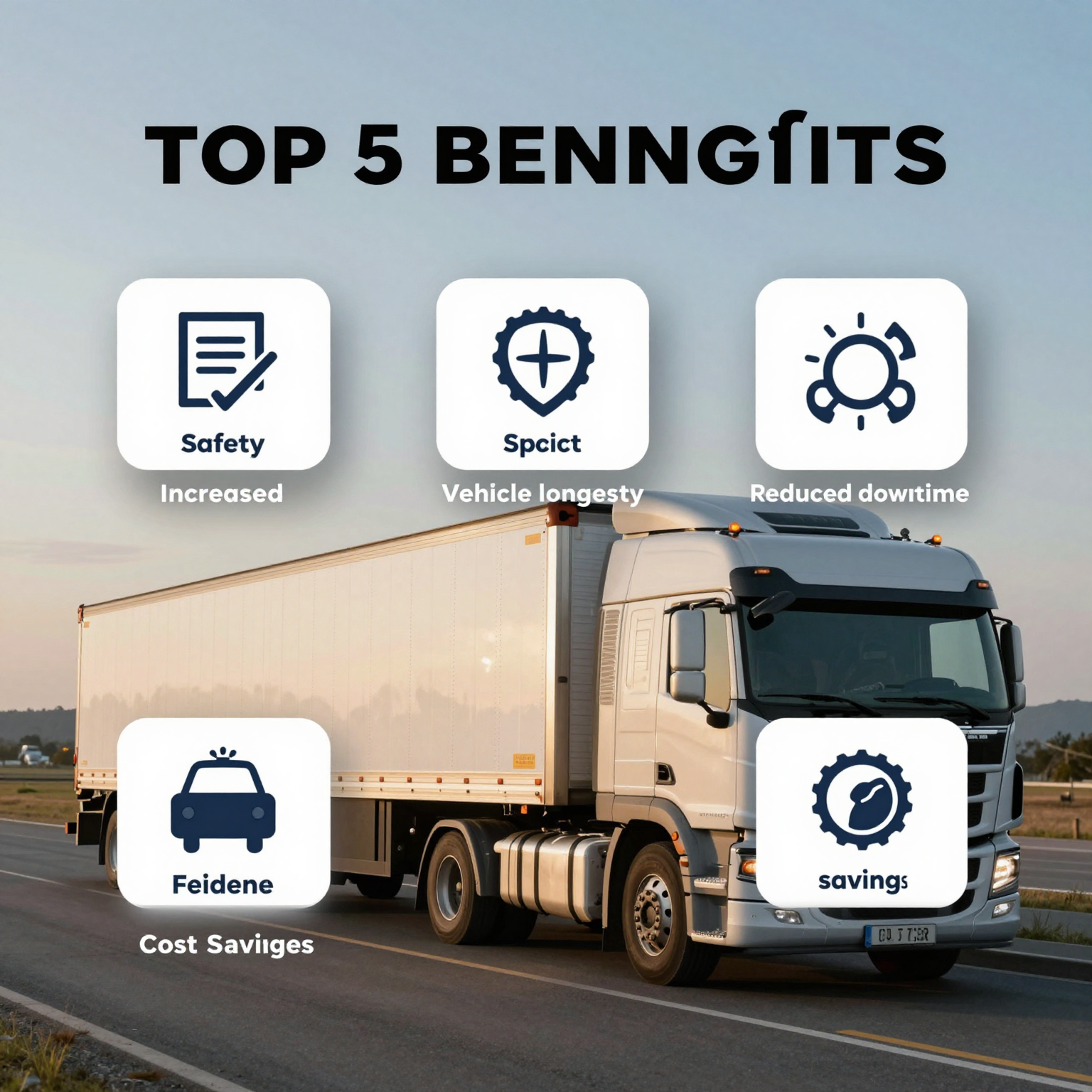
This image visually represents the top 5 benefits of truck services, including increased safety, efficiency, vehicle longevity, reduced downtime, and cost savings. This engaging graphic is targeted towards long-haul truck drivers, trucking company owners, and fleet managers, highlighting the essential advantages of utilizing truck services.
Importance of Truck Services for Long-Haul Drivers
Providing essential services for long-haul truck drivers is not just a matter of convenience; it’s vital for their well-being and efficiency on the road. As Dr. Elena Rodriguez, a transportation safety expert at the Canadian Institute for Mobility Research, states:
“Reliable truck services are not just about fuel and repairs-they are essential for driver well-being, road safety, and supply chain efficiency. Without access to clean rest areas, hygiene facilities, and timely maintenance, long-haul drivers face increased fatigue, higher accident rates, and reduced job satisfaction.”
Dr. Rodriguez emphasizes how modern service stations with 24/7 access to amenities can significantly improve driver retention and operational reliability. For trucking company owners and fleet managers, investing in quality truck services can lead to enhanced safety and productivity in the long haul. Learn more about truck service benefits.
The Impact of Regular Truck Services on Maintenance and Repair Costs
Regular truck services are not just a checkbox on a maintenance list; they are critical to reducing long-term maintenance and repair costs. Implementing a proactive maintenance culture can save trucking companies and fleet managers significant expenditures while maximizing vehicle uptime and return on investment.
The Benefits of Routine Maintenance
Routine maintenance encompasses inspections, oil changes, filter replacements, and checks on essential systems such as brakes and tires. By addressing minor issues before they escalate into major repairs, companies can significantly lower their operational costs.
Cost Savings Examples
For instance, a comprehensive preventive maintenance program adopted by a regional freight company led to a 50% reduction in repair costs within 18 months. The company, equipped with a 65-truck fleet, found that scheduled inspections and driver training not only minimized breakdowns but also extended the average lifespan of their trucks by 2.5 years. This proactive approach improved their resale values by up to 15% (Transport Topics).
Moreover, a national fleet operator implemented a data-driven maintenance strategy focusing on engine hours and mileage. They achieved a 40% reduction in unscheduled downtime, resulting in annual repair cost savings of $180,000. Such data-supported decisions harness the full potential of maintenance schedules (Fleet Owner).
Predictive Maintenance: A Modern Approach
Embracing technology can enhance traditional maintenance strategies. For example, a large logistics provider utilizing predictive maintenance platforms analyzed real-time sensor data from vehicles. By predicting potential failures weeks in advance, they were able to schedule timely repairs, resulting in a 60% reduction in emergency repairs. This transition saved them approximately $420,000 in labor and parts costs while simultaneously improving vehicle uptime by 30% (SAP Digital Transformation Blog).
Strategic Investments
The financial implications of regular truck services extend beyond direct repair cost reductions. Investing in skilled technicians and diagnostic tools pays off through improved safety, compliance, and fuel efficiency. Trucks that undergo regular maintenance not only perform better but are also more reliable, reducing the likelihood of accidents and liability issues.
Conclusion
In a competitive landscape, the impact of regular truck services on maintenance and repair costs cannot be underestimated. As demonstrated by the examples provided, proactive and predictive maintenance strategies lead to significant cost savings, better vehicle performance, and enhanced driver safety.
For more insights on optimizing your truck fleet’s performance and maintenance practices, learn more about our blog.
Embracing these practices is not just an operational necessity but a strategic advantage that can position trucking companies for success in their respective markets.
Comparison of Truck Service Providers
When it comes to choosing a truck service provider, it’s essential to compare their key features, services offered, and pricing. Here’s a detailed look at three leading truck service providers in the industry to help you make an informed decision.
| Feature | Ford (F-150) | Chevrolet (Silverado 1500) | Ram (1500) |
|---|---|---|---|
| Reliability Rating (J.D. Power 2023) | Above segment average for F-150 | Near industry average; Silverado shows moderate reliability | Near industry average with strong engine reliability |
| Warranty Options | 3-year/36,000-mile basic warranty; 5-year/60,000-mile powertrain warranty; 7-year roadside assistance | 3-year/36,000-mile basic warranty; 5-year/60,000-mile powertrain warranty; 5-year bumper-to-bumper | 3-year/36,000-mile basic warranty; 5-year/60,000-mile powertrain warranty; 7-year limited warranty |
| Service Effectiveness | Extensive dealer network; rapid response times | Large dealer presence; OnStar diagnostics | Robust dealer footprint; strong customer support |
| Average Pricing (New Model) | $40,000-$45,000 | $39,000-$44,000 | $41,000-$46,000 |
| Service Efficiency | 20-24 mpg highway (gas); max payload ~3,300 lbs | 20-23 mpg highway (gas); max payload ~3,200 lbs | 20-22 mpg highway (gas); max payload ~2,300 lbs |
| Key Strengths | Superior towing capacity, advanced tech features | Competitive pricing, solid towing, integrated connectivity | Premium quality, refined ride, excellent towing performance |
Source: J.D. Power 2023, Ford, Chevrolet, Ram official websites, and industry analysis from Automotive News (2026)
Visual Representation of Key Features
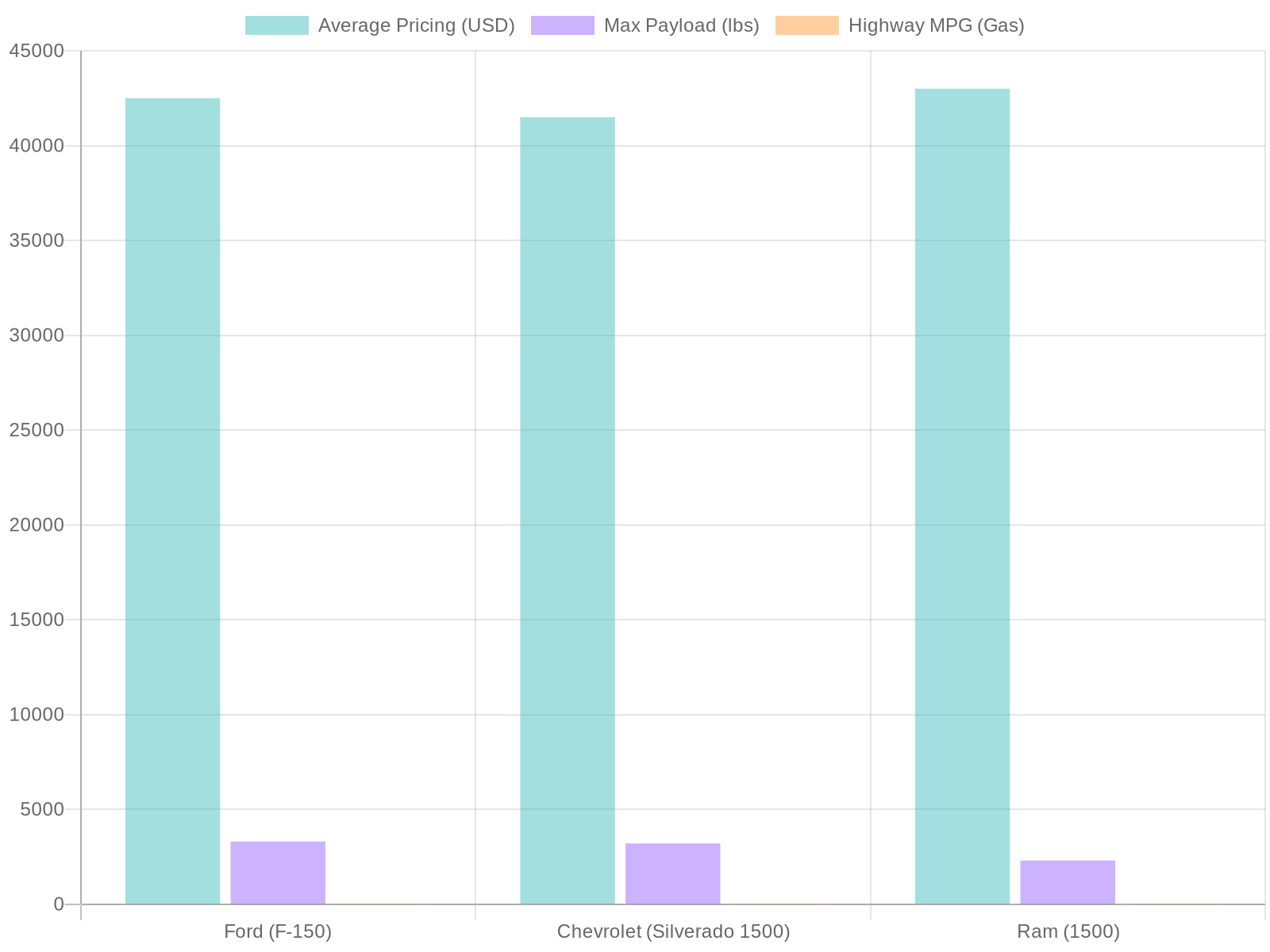
By understanding these factors, truck drivers, company owners, and fleet managers can choose the right provider that aligns with their specific needs.
For further insights into effective trucking strategies, check out our blog.
The Emotional Peace of Mind from Truck Services
Understanding the emotional aspect of truck maintenance is vital for both drivers and fleet managers. Knowing that a truck is well-maintained offers immense peace of mind, significantly enhancing job satisfaction and productivity.
For long-haul truck drivers, the connection between vehicle reliability and their emotional well-being is profound. A well-maintained truck reduces the anxiety associated with unexpected breakdowns, which can lead to missed deliveries and potential job insecurity. This peace of mind is often echoed by drivers who share their experiences; one operator shared, “When I know my truck is serviced properly, I can focus on the road rather than worrying about what might go wrong. It’s a huge relief!”
Fleet managers, too, experience similar benefits. Proactive maintenance lowers the risk of costly emergencies and enhances operational predictability. A 2024 study by the American Transportation Research Institute found that fleets with robust maintenance programs reported a 38% reduction in stress levels among drivers. This statistic underscores how maintenance doesn’t just keep trucks running; it fosters an environment where drivers feel valued and secure.
Moreover, a well-planned maintenance schedule can enhance team morale. When drivers see their employers investing in proper truck care, it strengthens their trust in management. Fleet Owner Magazine points out that fleets utilizing digital maintenance logs reported a 25% increase in driver engagement. This engagement can lead to lower turnover rates, as drivers are more likely to stay with companies that prioritize their safety and well-being.
In conclusion, regular truck maintenance is not just about keeping vehicles in optimal condition; it plays a crucial role in promoting emotional peace of mind for both drivers and fleet managers. The trust and security fostered by reliable truck services lead to happier employees, less stress, and ultimately a more productive workplace.

Image showing a smiling truck driver at a repair facility, symbolizing peace of mind and job satisfaction.
To learn more about the importance of truck maintenance, check out our blog for tips and insights that can benefit both drivers and fleet managers.
The Importance of Customization in Truck Services
The trucking industry faces a myriad of challenges, especially for long-haul drivers who spend weeks on the road. As such, customization in truck services has become essential for not only enhancing the driving experience but also for addressing the diverse needs of these drivers. Customizable services empower drivers, improve efficiency, and ultimately lead to better outcomes on the road.
Tailoring Services to Meet Individual Needs
Gone are the days when a one-size-fits-all approach sufficed. Modern trucking demands flexibility. Customization enables drivers to fine-tune their equipment and services to cater to their specific needs. For instance, personalized interior setups can include enhanced ergonomic seats, optimal storage solutions for personal items, and state-of-the-art navigation systems that suit different routes and preferences. This approach not only creates a comfortable work environment but also boosts productivity and driving efficiency.
Enhancing Safety and Convenience
Customized services greatly enhance safety measures as well. Drivers can opt for technology solutions that cater specifically to their driving behaviors. Features such as real-time GPS tracking, fuel management systems, and integrated safety alerts can significantly improve on-road safety and vehicle performance. Additionally, as outlined in a recent article, custom transport routes reduce waiting times and increase reliability, benefiting both drivers and companies.
Improving Operational Efficiency
Customization also plays a crucial role in operational efficiency. Companies that provide tailored maintenance and support services can anticipate driver needs, ensuring that their trucks are always in optimal condition. By creating dynamic customer profiles, service providers can offer specific services, thus streamlining repairs and reducing downtime. This customization fosters commitment, as highlighted in various case studies demonstrating improved driver loyalty and satisfaction.
Building Driver Loyalty
When drivers find that their individual needs are recognized and met, their loyalty to the service provider grows. After all, performance-driven solutions that respond to unique driving circumstances build trust and confidence among long-haul drivers. In turn, this leads to repeat business, lowered turnover rates, and greater overall satisfaction.
Conclusion
In summary, the importance of customization in truck services cannot be overstated. It transforms the trucking experience for long-haul drivers, ensuring that their varied needs are addressed while optimizing their journey. Embracing customizable services not only enhances comfort and safety but also drives loyalty and operational efficiency. As the trucking landscape continues to evolve, adapting these personalized strategies will remain imperative for success.

Conclusion
In conclusion, the benefits of truck services extend far beyond mere transportation logistics; they play a crucial role in enhancing the operational efficiency and safety of long-haul trucking. Drivers enjoy significant advantages, including higher pay rates and better job satisfaction thanks to fewer daily interruptions and guaranteed pay structures. Trucking companies, on the other hand, see improved fleet utilization, reduced operational costs, and enhanced scheduling flexibility through long-haul operations. The strategic advantages also facilitate access to broader markets, ensuring that both drivers and companies can thrive in today’s economy.
Moreover, regular truck maintenance is not just an option; it is imperative for safety and compliance. Engaging in preventive maintenance ensures the longevity of vehicles, reduces the risk of accidents, and maximizes performance. As highlighted in resources from the American Trucking Associations, adhering to maintenance best practices goes hand-in-hand with operational success.
For those looking to reap these benefits, consider choosing Summit Fairings for your truck service needs. With reliable support and exceptional service, Summit Fairings stands out as a key partner in the trucking industry! Learn more about the services offered!