
When it comes to managing risks, long-haul truck drivers and fleet managers often find themselves caught between rising insurance premiums and the need for comprehensive coverage. Enter self-insurance-a strategy gaining traction among savvy trucking companies like Chalk Mountain Trucking Services of Texas. Self-insurance not only offers the potential for significant cost savings but also provides companies with greater control over their financial risk exposure. For trucking company owners and fleet managers, understanding the nuances of self-insurance can mean the difference between competing effectively in a saturated market and struggling to stay afloat. As we delve into this important topic, we’ll explore how self-insurance can lead to better resource allocation, higher sustainability, and an overall enhancement of service quality in the trucking industry. Learn more about the excellence of 5 Star Truck Inc.
Understanding Self-Insurance in Trucking Services
Self-insurance is a financial strategy employed by some trucking companies where they set aside their own funds to cover potential losses from accidents, property damage, or liability claims, rather than purchasing traditional insurance policies. This approach is particularly popular among larger fleets that possess strong financial stability and a favorable loss history.
Key Benefits of Self-Insurance
- Cost Savings: Companies that self-insure can save significantly on premiums, with many reporting reductions of 15% to 30% compared to traditional insurance options. This is especially true for large fleets exceeding 100 trucks.
- Improved Claims Management: Self-insurance allows companies to handle claims internally, which can result in a 25% to 40% improvement in the speed and efficiency of claims processing. With direct oversight, trucking firms can respond quickly to incidents and manage claims more effectively.
Examples in the Industry
For instance, a large freight carrier might choose to self-insure against cargo damage and bodily injury liability, using dedicated reserve funds to cover any claims. This strategy not only controls costs but also provides a sense of financial security as the company knows it can rely on its capital during unforeseen events.
If you’re interested in learning more about the innovative strategies at 5 Star Truck Inc., you can explore their excellence in trucking services.
The Advantages of Being Self-Insured for Trucking Companies
Self-insurance is an increasingly popular strategy among trucking companies, including operations similar to Chalk Mountain Trucking. This approach can provide significant benefits in financial management, flexibility, and risk mitigation. Here are some key advantages of self-insurance for trucking companies:
Financial Implications
-
Cost Savings: Self-insuring allows trucking companies to avoid the high premiums typically associated with traditional insurance providers. By setting aside funds for potential claims rather than paying for coverage, companies can reduce overall insurance costs significantly. In fact, some trucking companies have reported savings of up to 20% in total insurance costs through self-insurance models (FleetOwner).
-
Cash Flow Control: When self-insured, companies have greater control over their cash flow. They can allocate funds more effectively, directing savings into operational investments or growth opportunities, rather than simply paying for insurance coverage.
-
Tax Advantages: Depending on the regulations, self-insured companies can benefit from tax deductions on their claims payments, thus further enhancing their financial management capabilities.
Flexibility
-
Tailored Coverage: Self-insurance allows trucking companies to customize their coverage plans based on their unique risks and needs. Unlike traditional insurance, which may offer generic options that might not apply to specific operations, self-insured companies can build plans that better match their operational realities.
-
Dynamic Adaptation: As companies like Chalk Mountain Trucking have specific operational needs, self-insurance enables adaptable strategies. Trucking operations can modify their self-insurance parameters based on evolving risk environments or changes in business models.
-
Streamlined Claims Process: The self-insured model can often simplify the claims process. Companies can handle their claims internally, which may result in quicker response times and a streamlined approach to risk management.
Risk Management and Control
- Enhanced Risk Management: Trucking companies that self-insure have the opportunity to develop better risk management practices tailored to their specific operations. This proactive stance can help mitigate risks before they result in costly claims (The Hartford).
- Increased Operational Responsibility: When companies self-insure, they are more accountable for their risk management practices. This increased responsibility often leads to knowledgeable management teams that are more vigilant in maintaining safe operations.
In conclusion, self-insurance offers trucking companies, particularly those like Chalk Mountain Trucking, the financial benefits of reduced costs, the flexibility of tailored coverage, and enhanced risk management capabilities. This approach not only allows better financial decision-making but also promotes a strong culture of safety and responsibility within the organization.
| Aspect | Self-Insurance | Traditional Insurance |
|---|---|---|
| Coverage | Customized coverage based on internal risk assessment | Standard coverage options |
| Costs | Potentially lower over time, but requires capital | Predictable premiums, but can escalate yearly |
| Claims Process | Internal handling allows faster claim resolution | External claim handling varies in speed |
| Control | Greater control over risk management | Limited control; dependent on insurer policies |
| Cash Flow | Retained funds can improve cash flow | Premiums paid upfront; no cash retention |
| Risk | Higher exposure to large losses without safety net | Divided risk; insurance absorbs significant losses |
| Expertise Needed | Requires robust internal risk management expertise | Insurers provide expertise |
The decision between self-insurance and traditional insurance is critical for trucking companies. By embracing self-insurance, firms can benefit from cost savings and control but must be prepared for the associated risks.
Understanding Trucking Insurance Options
In the trucking industry, insurance is essential for long-haul drivers and fleet managers. It provides financial protection against various risks associated with transporting goods. Trucking insurance options typically include:
- Liability Insurance: Covers damages caused to other people or property in accidents.
- Cargo Insurance: Protects the goods being transported in case of theft or damage.
- Physical Damage Coverage: Covers your truck against accidents and other damages, including theft.
- Workers’ Compensation: Offers protection for drivers who may get injured while on the job.
Understanding these options helps trucking companies make informed decisions, mitigating potential risks and ensuring the safety of their operations.
For more insights on trucking services, explore the excellence of 5-Star Truck Inc. and discover our unparalleled services.
Anecdotal Evidence on Self-Insurance in the Trucking Sector
“Self-insurance is no longer just for the largest players-it’s becoming viable for well-managed medium-sized fleets with consistent safety records.”
- Dr. Elena Rodriguez, Transportation Risk Analyst at the University of Michigan.
In recent years, a significant shift towards self-insurance in the trucking sector has been observed. The American Trucking Associations (ATA) noted that 37% of large trucking fleets now operate under self-insurance models, which has risen from 29% in 2018. One fleet manager from Texas shared their personal success story, stating that switching to self-insurance saved their company 18% on annual premiums. However, he emphasized the importance of robust risk management systems to handle the potential challenges associated with this approach.
For more detailed insights on trucking services, you can learn more about 5-Star Truck Inc. or discover our unparalleled services.
Exploring the Risks of Self-Insurance for Trucking Companies
Self-insurance has emerged as an appealing option for some trucking companies, offering the prospect of greater control over claims management and potential long-term savings. However, this approach is not without significant risks and challenges that trucking company owners, fleet managers, and drivers must comprehend.
Financial Risks
One of the primary risks associated with self-insurance is the substantial financial burden it can impose. According to a study published in the Journal of Transportation Management, 37% of self-insured trucking firms experienced a financial shortfall in their reserve funds within five years of adopting this model. Companies must maintain sufficient financial reserves to cover potential claims. In the event of a major accident, these reserves can deplete rapidly, leading to insolvency or significant operational strain.
For instance, a small-to-midsize trucking company could face bankruptcy after a single catastrophic accident, as highlighted in an article by Transport Topics. Unlike traditional insurance, where risk is spread across a large pool, self-insured companies bear the full brunt of each claim. Without rigorous financial planning and risk assessment, it becomes challenging for these companies to remain solvent.
Underestimating Claims
Another critical risk for self-insured trucking companies is the difficulty in accurately estimating claim frequency and severity. Insufficient understanding of potential risks can lead to inadequate reserve funding. According to Forbes, systemic financial risk can escalate without proper risk assessment tools. Fleet managers must engage in serious statistical analysis to predict claim occurrences, an endeavor that can be beyond the capabilities of small firms.
Legal and Regulatory Concerns
Self-insured trucking companies also face the challenge of navigating legal and regulatory landscapes. If a company fails to meet financial responsibility requirements, it can lose its operating authority, which directly impacts its ability to conduct business. This underscores the importance of maintaining robust financial health and adherence to regulatory standards.
Conclusion
While self-insurance can yield benefits for trucking companies, it is imperative to recognize and prepare for the associated risks. Companies like Chalk Mountain Trucking Services of Texas must weigh these factors thoughtfully before committing to a self-insurance strategy. For those considering this path, understanding the risks involved can lead to better decision-making and enhanced operational stability.
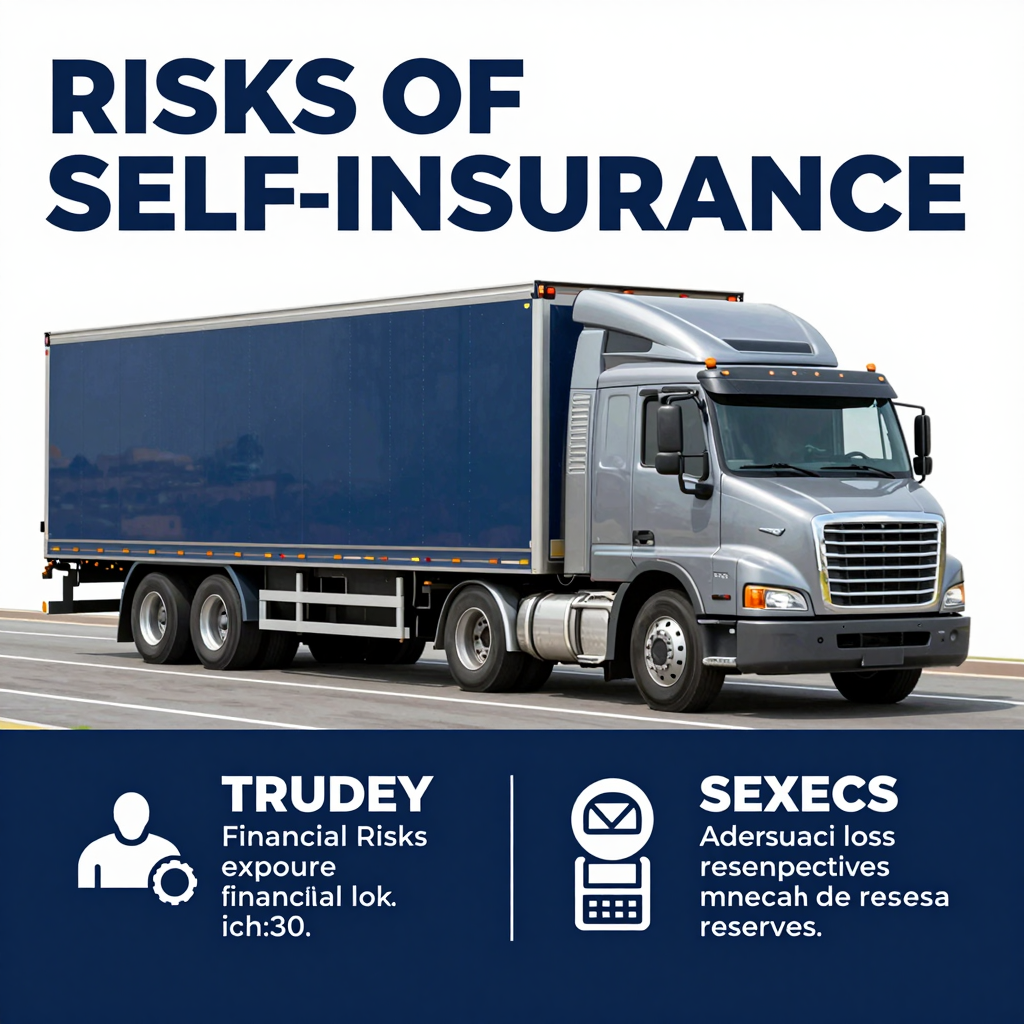
Source: Infographic illustrating the risks of self-insurance in trucking
To learn more about the trucking industry and operational strategies, you can explore 5-Star Trucking Solutions and discover their unparalleled services.
Best Practices for Trucking Companies Considering Self-Insurance
When trucking companies contemplate self-insurance, implementing best practices is crucial to mitigate risks and enhance financial stability. Here are some recommended practices:
-
Conduct Thorough Risk Assessments
Understand your company’s unique risk profile by evaluating the types of coverage you may need. Collaborate with insurance professionals to identify potential gaps. -
Build a Robust Funding Strategy
Develop a dedicated self-insurance reserve that can cover at least two years of anticipated claims. This will provide financial stability during unforeseen events. -
Establish Clear Claims Management Procedures
Create a structured process for reporting, tracking, and managing claims. Ensure staff is trained in claims handling to prevent delays and mishaps. -
Regularly Review Your Self-Insurance Plan
Conduct periodic evaluations of your self-insured retention levels and funding. Adjust based on changing risk profiles and economic conditions. -
Engage Third-Party Administrators (TPAs)
Consider partnering with TPAs for claims management and legal assistance to ensure compliance and efficient claims processing. This is vital for maintaining operational focus.
By adhering to these practices, trucking companies can make self-insurance a viable option, ensuring they are well-prepared for any related challenges. Learn more about self-insurance and its implications for your trucking business.
Conclusion and Call to Action
In summary, self-insurance represents a strategic approach for trucking companies, such as Chalk Mountain Trucking Services of Texas, aiming to enhance financial control and efficiency. As we have explored, self-insurance allows trucking companies to significantly reduce insurance costs by eliminating traditional premium payments and lowering collateral requirements associated with large-deductible programs. This model not only alleviates financial strain but also encourages better claims management, potentially leading to lower accident rates and, ultimately, enhanced operational performance.
Key insights include:
- Financial Flexibility: Self-insurance provides trucking companies with improved financial flexibility, allowing them to reinvest saved premiums into crucial areas like fleet maintenance and driver training, as noted in research from the American Transportation Research Institute.
- Custom Risk Management: Companies gain direct oversight of claims processes and can implement customized risk mitigation strategies tailored to their operations, reducing long-term liabilities and promoting safer driving practices.
- Regulatory Compliance: As highlighted by the Federal Motor Carrier Safety Administration, qualified motor carriers can operate under self-insurance programs, which support compliance and credibility within the industry.
For long-haul truck drivers, trucking company owners, fleet managers, and those aspiring to enter the industry, understanding the principles of self-insurance can lead to more informed decisions regarding risk management and financial strategy. As you navigate the complexities of trucking operations, consider how self-insurance could work for your business.
At 5 Star Trucking, we offer tailored solutions to support your unique needs as a trucking professional. Our comprehensive services include expert risk management insights and robust maintenance support to help you excel in a competitive landscape. Learn more about our offerings today and take the first step towards maximizing your operational potential!