
Introduction
Cracked fairings are a fact of motorcycle ownership. A tip-over in a parking lot, faded panels after years in the sun, or a full custom rebuild all raise the same question: ABS or fiberglass? Both materials are widely used, and each makes real trade-offs.
The ABS vs fiberglass fairings decision comes down to three things: heat warp resistance, weight, and repair cost. Miss on any of them and you end up with panels that sag, crack, or eat your budget within a season.
We start with heat warp: how each material reacts to engine heat, summer sun, and enclosed storage. Then weight, and how it affects handling. Then fairing repair cost: how easily each material can be patched, sanded, and repainted, and which one costs less over the life of the bike.
No sales pitch here, just what each material does well. The goal is to leave you knowing which one fits your budget, climate, and riding style.
What Are ABS Plastic Fairings?
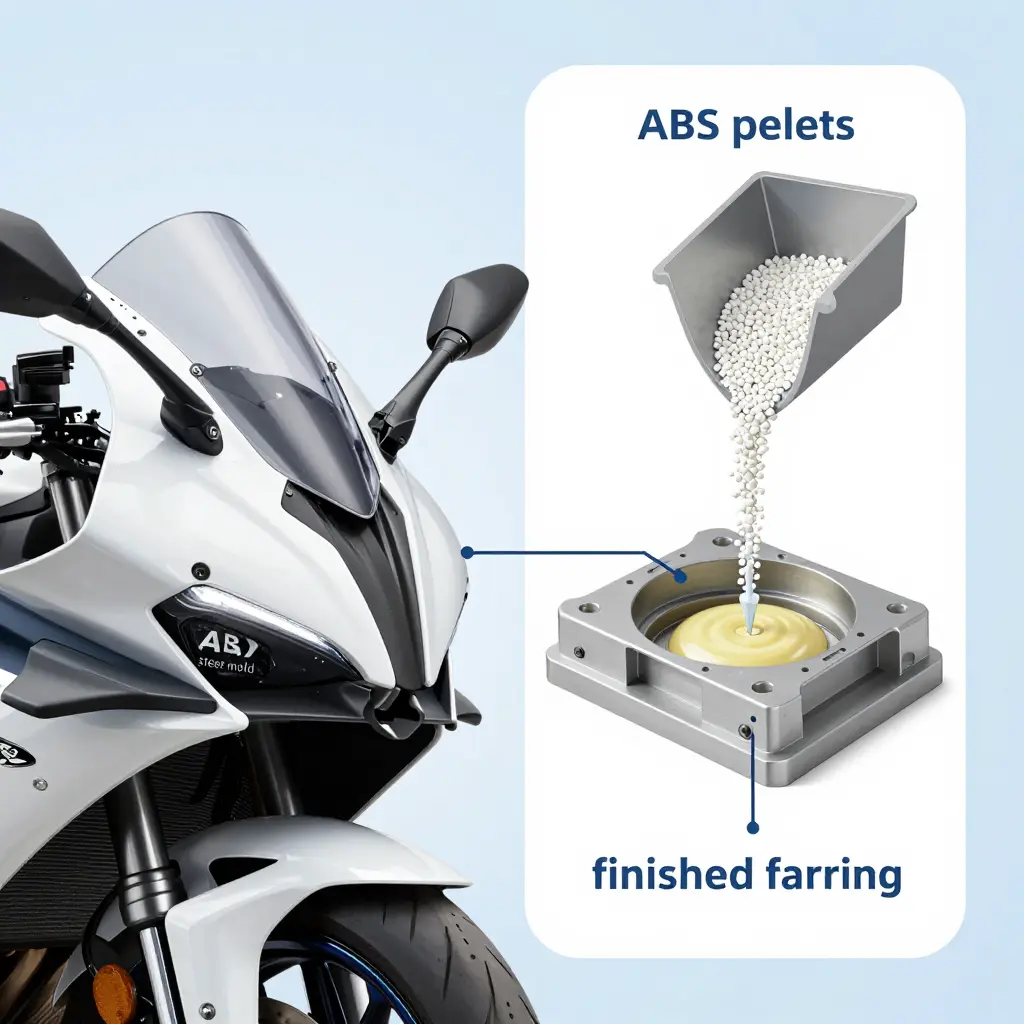
ABS (acrylonitrile butadiene styrene) fairings are molded body panels that shield a motorcycle’s frame, engine, and electronics from wind, debris, and weather. They are made by injection molding: heated ABS pellets are forced into precision steel molds built to mirror the factory’s original tooling. That produces a smooth, low-porosity surface with tight, even panel gaps, so good ABS motorcycle fairings copy factory bodywork closely – mounting tabs, air vents, and headlight cutouts included.
Unlike rigid fiberglass, ABS flexes on impact and springs back. That gives it the edge over stiffer materials against minor drops, road vibration, and daily wear, which is why shops reach for it on everyday replacements and budget builds.
- Surface finish: Injection molding leaves a uniform, paint-ready surface that takes primer and color-matched topcoats with little prep.
- Flexibility: The rubbery butadiene content lets ABS bend under stress instead of cracking outright.
- Repairability and cost: ABS can be sanded, heat-welded, or reshaped, which keeps OEM-style restorations and quick fixes cheap.
Factory-accurate fit, tolerance for minor impacts, and low repair bills keep ABS plastic fairings the default for street riders and body shops.
What Are Fiberglass Fairings?
Fiberglass fairings – also labeled glass-reinforced plastic (GRP) or FRP – are built from woven glass cloth bonded in a thermosetting resin. They cover the same parts of the bike as ABS and do the same job: better aerodynamics and a shield against wind and debris. The layup is largely by hand. A technician sets dry glass cloth into a mold, saturates it with resin, and repeats until the panel reaches the desired thickness. When the resin cures, it locks the fibers into a rigid shell that resists flex under wind load and vibration.
Because the cloth is laid by hand instead of shot into a closed mold, the material takes complex, custom curves with ease. That is why fiberglass motorcycle fairings show up on track bikes, race replicas, and one-off builds, where shape matters more than production speed.
The process is the main contrast with ABS. Injection molding forces molten plastic into a heated metal tool in one automated shot, while fiberglass goes down layer by layer. The fiberglass route is slower and more labor-intensive, and it shifts the trade-offs in weight, durability, and repair cost.
- Glass-fiber cloth and curing resin, applied in layers
- Rigid and stiff once cured
- Easy to shape into custom curves for low-volume and track builds
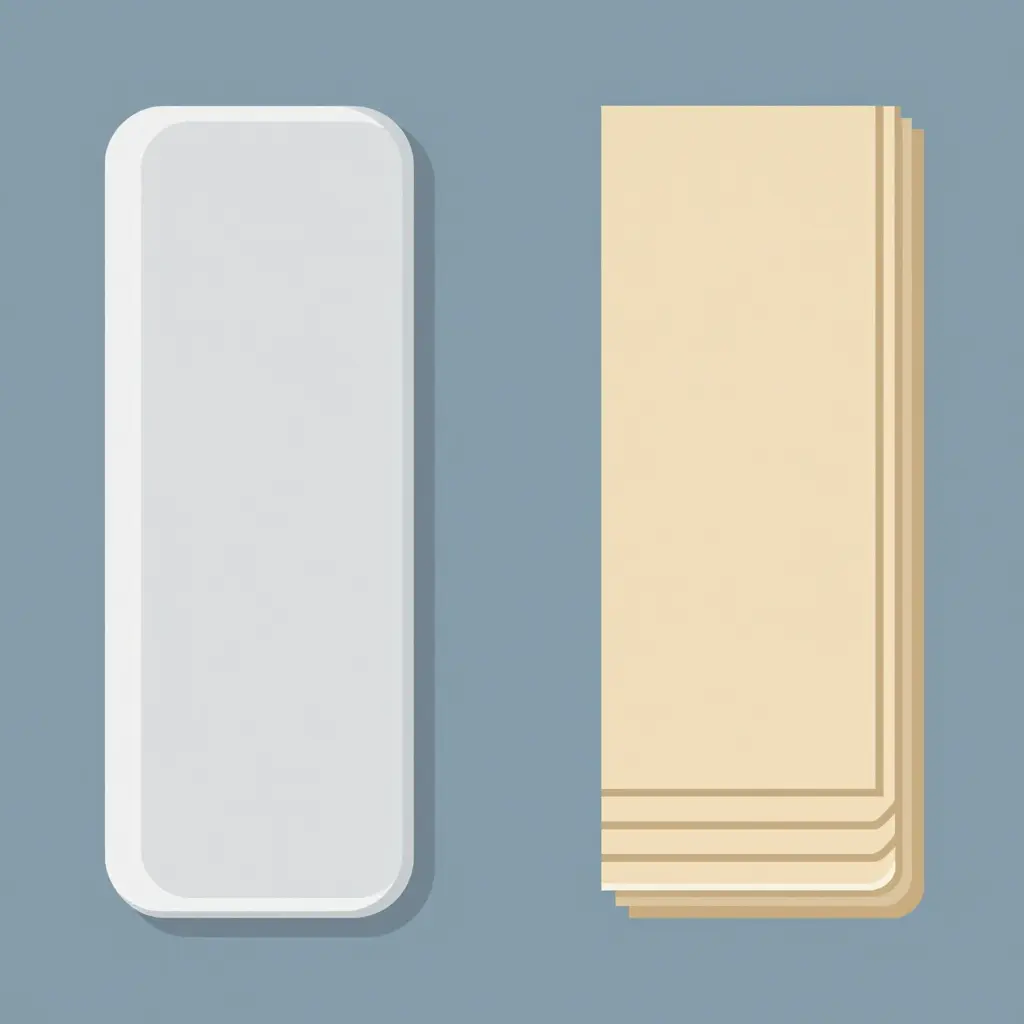
Construction principle graphic: ABS (left) as one solid molded layer versus fiberglass (right) as stacked resin-and-fiber laminations.
Heat Warp: How Each Material Reacts to Temperature
Why Heat Warp Happens
Heat warp is permanent bending, sagging, or distortion that sets in after long exposure to high temperatures. ABS and fiberglass both reach that point, but at different temperatures, and the gap between them matters.
ABS Fairing Heat Warp
ABS is a thermoplastic, so it softens as it warms, and its heat resistance is modest. Softening typically starts around 80-100 C (176-212 F). Sustained engine heat, hot asphalt, or direct summer sun can push a panel into that range, and the result is sagging, ripples, and lost fit. Once an ABS fairing loses its original shape, it rarely comes back.
Fiberglass Heat Resistance
Fiberglass is a thermoset composite – glass fibers locked in a cured resin matrix – so it holds its dimensions better as temperatures climb. It is not immune. Heat breaks the resin down over time, which shows up as fading, hairline cracks, or a chalky surface.
When It Becomes a Real Concern
Heat warp matters most to bikes parked in direct sun, idling in slow traffic on hot days, or ridden through desert climates. Shops see it when panels sit close to the exhaust or engine, or when a repair calls for heat-based reshaping. In those cases an ABS part usually gets replaced, while fiberglass often needs only localized refinishing. The same principle behind designing components for high-temperature use applies here: material choice decides how well a part keeps its shape. Knowing the limits helps riders pick fairings that survive their climate.
Reading the Heat Warp Curve
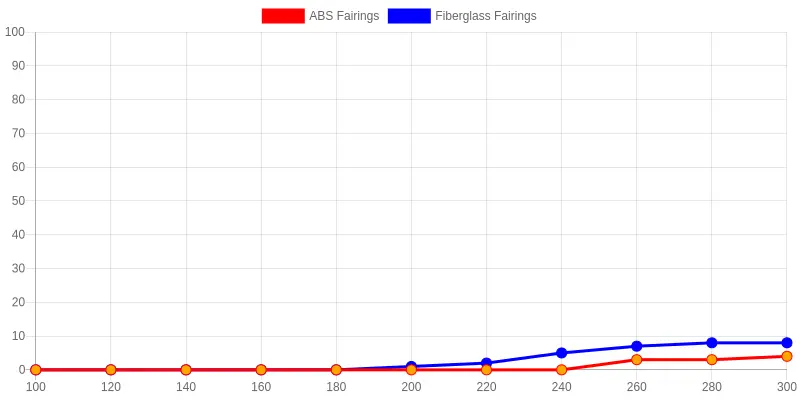
The chart plots deformation risk on a 0-100 index against temperature for both materials. Both curves stay low through most of the range and bend upward only as they approach the 300°F end, so the useful signal is the gap between the lines rather than any single reading. That gap is narrow at the cool end and widens as the panels get hotter.
The practical reading is simple: in mild conditions the two materials are close on heat, and in sustained high heat they are not. Treat the index as a comparison between ABS and fiberglass, not as the temperature at which a given panel fails.
Weight: Which Fairing Is Lighter?
The weight difference comes down to how each panel is built. ABS fairings are usually lighter per panel, because thin-wall injection molding uses the minimum material needed to make a stiff, consistent shell. Fiberglass gains mass as the laminator adds plies, so a standard layup ends up heavier. A custom layup can close most of that gap – lighter cloth, vacuum bagging, or a foam core can pull fiberglass weight down close to ABS.
Key points on fairing weight:
- ABS: thin-wall injection molding keeps panels light and uniform.
- Fiberglass: resin and fiber layers add weight, especially on complex shapes.
- Custom layups: vacuum bagging and foam cores can reduce weight.
- Handling: lighter panels sharpen steering and braking response.
- Acceleration feel: less mass helps the bike feel quicker.
- Mounting stress: heavier fairings load brackets, tabs, and bolts more, raising crack risk.
For riders and mechanics, lighter panels are easier to install and put less load on brackets, tabs, and bolts. Less mass also helps the bike feel quicker. On weight, ABS usually wins; fiberglass answers with stiffness and repairability.
ABS vs Fiberglass Fairings: Head-to-Head Comparison
| Feature | ABS Plastic Fairings | Fiberglass Fairings |
|---|---|---|
| Heat Warp Resistance | Softens and can warp at lower temps (roughly 176-212 F), so sun or engine heat may distort panels over time. | Withstands higher heat than ABS (some resin systems handle 300 F and up) and holds its shape near hot engine parts. |
| Weight | Lighter for the same panel, which helps acceleration and nimble handling. | Slightly heavier due to layered resin and glass mat. |
| Flexibility | Flexes on impact and bounces back from minor drops. | Rigid and brittle, so it tends to crack instead of flexing. |
| Surface Finish | Smooth out-of-the-mold finish, easy to paint, with molded color options. | Needs sanding and filler bodywork but can reach a flawless show-gloss. |
| Repair Cost | Low – plastic-weld or swap in inexpensive replacement panels. | Higher – needs resin, glass mat, sanding, and skilled labor. |
| Custom Fit / Shape | Limited to molded shapes with only minor trimming. | Easily reshaped and modified for one-off customs. |
| Durability | Good against minor impacts, but can crack at stress points. | Excellent under static load; cracks and spider-webs on sharp hits. |
The takeaway: ABS plastic fairings suit street riders and commuters who want cheap, easy-to-repair panels that shrug off a parking-lot tip-over. Fiberglass fairings fit track riders, show-bike builders, and custom shops chasing sharp shapes and a premium finish. Pick ABS for low repair cost and flexibility; pick fiberglass for stiffness, heat tolerance, and show-grade looks.
Repair Cost: What Riders and Shops Actually Pay
When a fairing takes a hit, the final fairing repair cost depends on the material. ABS cracks and scrapes like any molded panel, and shops usually fix it with plastic welding or bumper-style repair. Light damage stays cheap and quick. Heavy damage often means replacing the whole panel, which keeps labor low but parts expensive.
Fiberglass takes a different route. Instead of welding, a tech sands the area, applies resin, then re-gel-coats and finishes it. That work usually runs longer than ABS welding, but it can rescue cracked or broken pieces that would otherwise be thrown out, which is where the saving on parts comes from.
Damage type matters as much as material. Scrapes and surface gouges are cheap to fix on both. Cracks cost more, and full breakage costs most, wherever it happens. That is why ABS vs fiberglass fairing cost estimates swing so widely from job to job.
Cost factors to weigh:
- Material type and panel availability
- Damage severity: scrape, crack, or breakage
- Labor hours for welding versus resin work
- Paint and gel-coat color matching
- New part price versus repairing the original
For motorcycle fairing repair, quote material and labor together. Solid maintenance and service training helps estimators read damage accurately, so riders get a fair number the first time.
The diagram traces a damaged fairing through assessment, surface prep, material repair, refinishing, and reinstallation. It also shows where the two materials split: the ABS branch follows plastic-specific steps while the fiberglass branch runs parallel with resin-and-mat work. Both rejoin for the final finish and reinstallation.
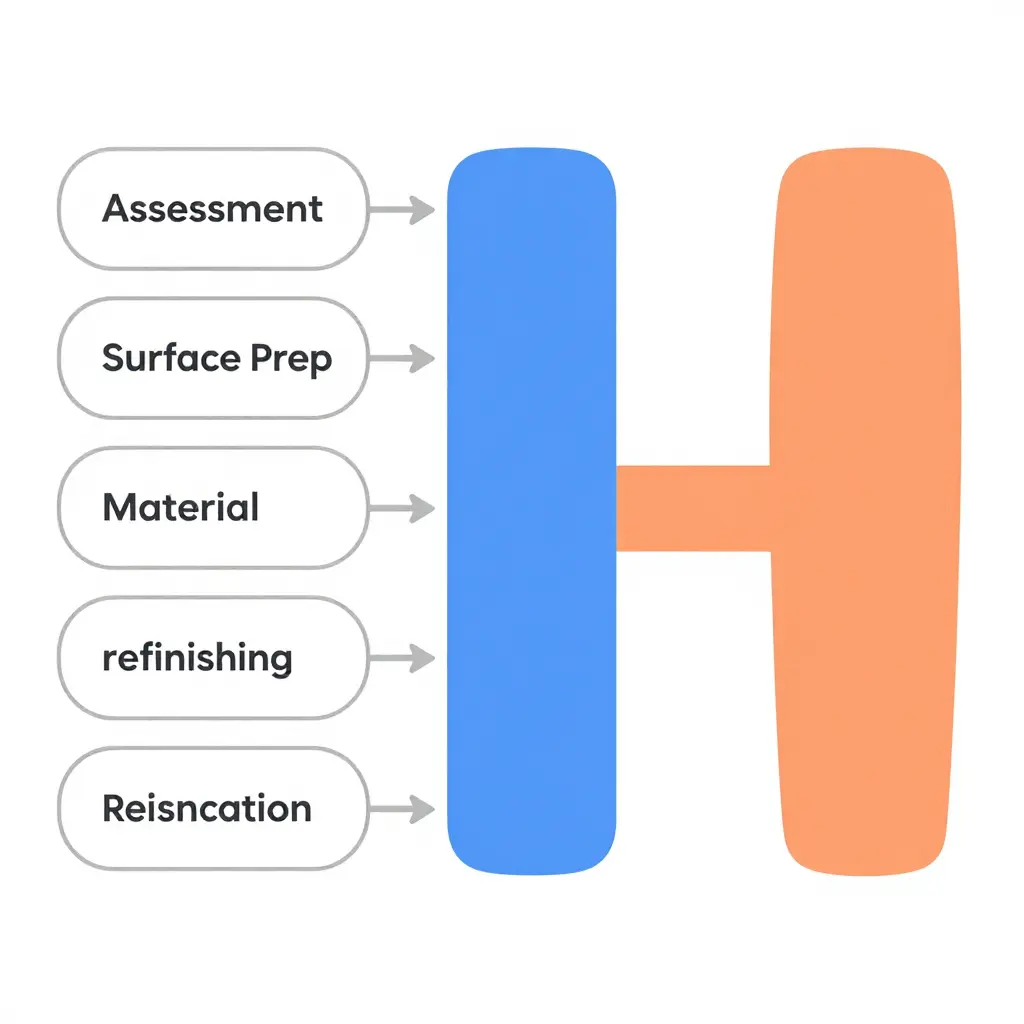
Which material you should buy depends on how, where, and how hard you ride. Use this checklist to choose motorcycle fairings that fit your situation.
- Riding conditions: Pick ABS for commuting, stop-and-go traffic, and low-speed drops where its flexibility absorbs impact; choose fiberglass for track days and show bikes where rigidity and stiffness win.
- Climate and heat exposure: In hot, sunny regions, fiberglass resists heat warp better, while lower-grade ABS can soften near hot exhausts and prolonged direct sun.
- Budget: ABS fairings usually cost less upfront and stay affordable as full kits, while fiberglass commands a higher price for hand-laid quality and finish.
- Fairing weight: ABS is lighter panel for panel; fiberglass adds mass, though a custom layup can get close. Weight-sensitive riders should compare the actual kit, not the material label.
- Desired finish: ABS comes out of the mold smooth and paint-ready, and molded-color panels need no paint at all. Fiberglass needs sanding and filler first, but it can reach a show-gloss.
- Repair expectations: ABS cracks can be plastic-welded or swapped cheaply, whereas fiberglass repairs demand resin, sanding, and real skill.
- Custom-fit needs: Fiberglass can be molded for one-off bodywork and unique builds, while ABS suits mass-produced, OEM-style replacement panels.
- Time and labor: Factor in installation and finishing hours, since ABS often bolts on fast, while fiberglass may need extra fitting and prep work.
Match these against your riding habits, climate, and budget, and the choice usually makes itself.
Fairing Cost and Weight Distribution: What You Are Really Paying For
Sticker price only tells part of the story. The chart below splits a typical fairing purchase or repair by cost, which is a more useful way to compare the two materials before you commit.
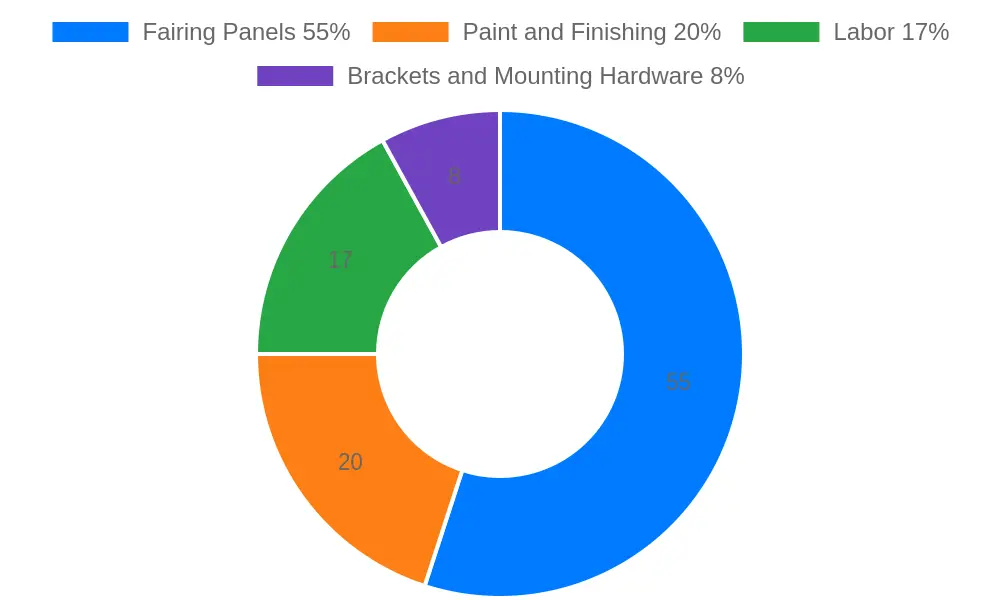
Panels are 55% of the bill, so the material you choose moves repair cost more than any finishing detail. Paint and finishing (20%) plus labor (17%) make up the next largest chunk. Because fiberglass needs more prep and refinishing than molded ABS, that labor share can grow quickly after a drop. Brackets and mounting hardware are only 8%, the slice buyers forget. ABS panels often need reinforced mounting points, so a low hardware number does not always mean lower overall weight once the supporting parts are counted.
ABS vs Fiberglass Fairings: Your Top Questions Answered
Heat tolerance, weight, and riding style decide most of it. These are the questions riders and shops ask most.
Do ABS fairings warp in the heat?
Yes, ABS is a thermoplastic, so it can heat warp when exposed to high temperatures, such as a bike sitting in direct summer sun or near a hot exhaust. Fiberglass holds its shape far better under the same conditions.
Are fiberglass fairings heavier than ABS?
In most cases, yes. The fairing weight of fiberglass tends to run slightly higher than ABS, though a well-made fiberglass set can stay surprisingly light. ABS remains a popular pick when shaving grams matters less than flexibility.
Which material is cheaper to repair?
ABS usually wins on fairing repair cost. Small cracks and scuffs can be plastic-welded for just a few dollars, while fiberglass repair cost climbs because it demands resin, sanding, and skilled labor.
Can ABS and fiberglass be repainted the same way?
Not quite. Both accept paint, but ABS needs a flex additive so it will not crack, whereas fiberglass takes standard primer and paint without that step. This matters when you compare ABS vs fiberglass fairings for custom builds.
Which is better for daily riders versus track use?
ABS suits daily riders: it is cheap, flexes before it cracks, and is easy to replace after a tip-over. Track riders tend to prefer fiberglass for its rigidity and because damaged sections can be cut back and re-glassed instead of replaced.
How long does each material typically last?
With basic care, ABS lasts roughly five to seven years before heat warp or brittleness sets in. Fiberglass routinely outlasts it, often serving well over a decade, and dependable quality service and reliability on the road helps stretch that lifespan even further.
The Bottom Line: ABS vs Fiberglass Fairings
Compare heat warp, weight, and fairing repair cost side by side and there is no single winner. ABS stays light, flexes before it cracks, and is usually cheaper to repair or replace. Fiberglass holds its shape under heat, feels stiffer, and takes a premium finish, but damage costs more to fix.
The right pick comes down to riding style, climate, budget, and how much repair work you are willing to pay for. Track riders chasing rigidity usually go fiberglass. Commuters who want cheap, forgiving repairs usually go ABS, though in hot climates fiberglass tolerates sun and engine heat better. Both materials have loyal followings, and neither is universally better.
Buyers can find motorcycle fairings in both materials and in a wide range of designs, from sportbike shells to touring setups.
Weigh what matters most to you and the decision gets easier. Low-cost repairs or custom strength, either way quality service and reliability on the road matter just as much.