
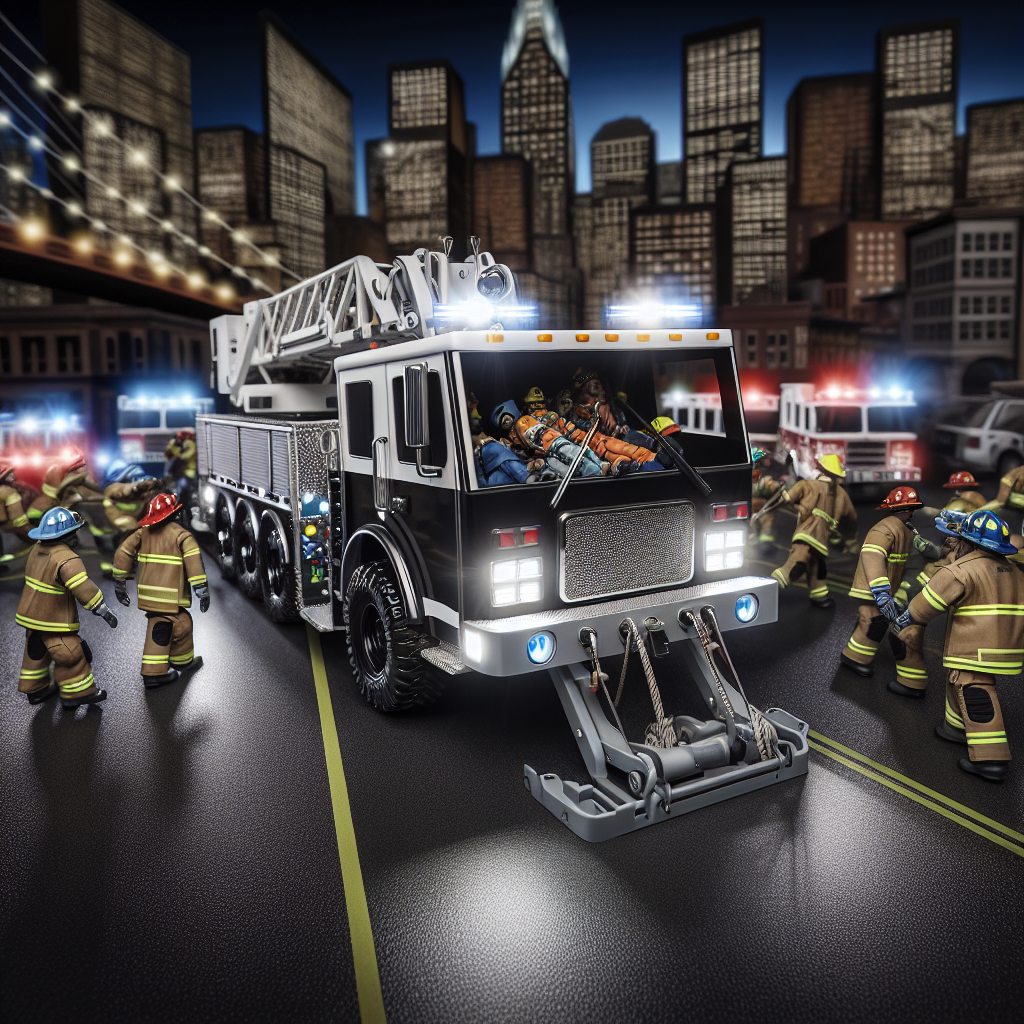
In the ever-evolving landscape of emergency response, heavy-duty rescue apparatus has emerged as an indispensable asset in managing complex operations. The Prince George’s County Fire/EMS Department exemplifies the critical role of technology and standardization in enhancing rescue capabilities. With advancements such as sophisticated stabilization winch systems and integrated lighting technologies, these apparatuses have been meticulously designed to meet the unique challenges posed by emergency situations.
Notably, the department’s comprehensive standardization strategy ensures that every piece of equipment is not only compatible but also optimized for peak performance. This strategic approach has significantly improved safety for responders and victims alike, enabling more coordinated and efficient operations during high-stakes incidents.
As the demands placed on emergency services continue to grow, the innovations seen in the heavy-duty rescue apparatus underscore a commitment to excellence and operational readiness that is vital for effective response in today’s complex environments.
Key Features of Heavy-Duty Rescue Apparatus
Heavy-duty rescue apparatus are specialized vehicles used for complex rescue operations. They come with various features that boost their efficiency and functionality. Here are the key features:
Stabilization Systems:
- Outriggers: Provide stability during operations. They are easy to deploy and designed to fit various terrains.
- Hydraulic Rescue Tool Systems: These systems power tools for cutting, spreading, and lifting during rescues.
Winches:
- Front-Mounted Winches: These are installed on the front bumper and help in vehicle recovery. For example, Rescue Squad No. 820 in Prince George’s County has a strong 15,000-pound front-mounted winch integrated into its bumper.
- Multiple Winch Points: Some apparatus have winches situated at different places (like the tip and base of the boom) to provide versatile lifting options.
Standardized Components:
- Adjustable Shelving and Tool Mounting: Custom compartments can be tailored to fit different rescue equipment.
- Hydraulic and Electric Reels: Organized reels for hydraulic tools and cords allow for efficient deployment.
Additional Relevant Features:
- Scene Lighting Systems: Bright lighting systems ensure visibility during nighttime operations.
- Cascade Air Systems: Systems that can refill breathing apparatus during extended rescue operations.
- Command Centers: Configurations that serve as operational hubs during crises.
- Structural Design: Built using strong materials to withstand rigorous conditions.
These features enhance the operational capabilities and safety of heavy-duty rescue apparatus, allowing them to effectively perform diverse rescue tasks.
The Importance of Standardization
Standardization in rescue operations greatly improves safety and efficiency. The Prince George’s County Fire/EMS Department (PGFD) is leading the way with its strategies.
Safety Enhancements:
Using standardized tools allows all personnel to know the equipment well, reducing errors in critical situations. This is especially crucial during mutual aid operations when quick equipment use is necessary. [source]
Operational Effectiveness:
Standardized designs mean PGFD can customize vehicles for the unique challenges of their areas. Features like robust engines and advanced systems help improve response times. [source]
Maintenance Benefits:
A common set of mechanical components makes maintenance easier. Mechanics can work on different apparatus without having to relearn system specifics. This reduces downtime and keeps the fleet ready for emergencies. [source]
PGFD’s Implementation Strategies:
PGFD collaborates closely with manufacturers to ensure the equipment layout meets operational needs. This ongoing partnership results in a fleet that can handle emergencies efficiently. [source]
In summary, PGFD’s standardization efforts have made rescue operations safer and more effective. This model can inspire other emergency services looking to enhance their operations.

The Importance of Standardization
Standardization in rescue operations is pivotal for enhancing safety, operational effectiveness, and maintenance efficiency. The Prince George’s County Fire/EMS Department (PGFD) exemplifies this through its strategic implementation of standardized practices.
Safety Enhancements
By standardizing emergency equipment such as hydraulic tools, stabilizers, and hand tools, PGFD ensures that all personnel are familiar with the equipment, reducing the learning curve and minimizing errors during critical operations. This uniformity is especially beneficial during mutual aid operations and personnel transfers, where rapid equipment familiarity is essential for effective response. [source]
Operational Effectiveness
Standardized apparatus designs, developed in collaboration with manufacturers like Pierce Manufacturing, allow PGFD to tailor vehicles to the unique challenges of densely populated regions. Features such as high-performance engines, advanced safety systems, and customized compartments enhance the department’s ability to navigate diverse landscapes and tight roadways, thereby improving response times and operational efficiency. [source]
Maintenance Benefits
Mechanical component standardization simplifies maintenance by reducing diagnostic and troubleshooting time. Mechanics can seamlessly transition between apparatus without needing to re-learn system configurations, leading to decreased training requirements and quicker sourcing of replacement parts. This approach minimizes apparatus downtime and maintains optimal fleet readiness for critical emergency response operations. [source]
PGFD’s Implementation Strategies
PGFD’s commitment to standardization is evident in their apparatus design philosophy. By working closely with manufacturers, the department ensures that equipment layout and vehicle design meet specific operational requirements, balancing firefighter needs with equipment specifications. This collaborative approach has resulted in a fleet that is both efficient and effective in emergency response scenarios. [source]
In summary, PGFD’s strategic standardization efforts have led to significant improvements in safety, operational effectiveness, and maintenance efficiency, serving as a model for other fire and emergency services aiming to enhance their rescue operations.
Effectiveness of Walk-In Compartment Designs
Richard Riley, Fire Apparatus Manager for the Prince George’s County Fire/EMS Department, has emphasized the advantages of traditional walk-in compartment designs in rescue operations. He stated,
“The traditional walk-in compartment design has proven its effectiveness over decades of rescue operations. For our department, protecting critical equipment combined with the ability to carry more crew made it the right choice.”
This design offers several operational benefits:
- Enhanced Crew Capacity: The walk-in compartment provides seating for five firefighters within the rear compartment, increasing the total crew capacity to seven.
- Equipment Protection: The enclosed design shields sensitive equipment from dirt, debris, and environmental elements, which is particularly beneficial during highway responses and extended incident operations.
- Secure Storage: It offers a secure environment for storing critical equipment, such as meters, rope systems, and rigging gear, protecting them from moisture and contamination.
These features collectively enhance the effectiveness and safety of rescue operations. Additionally, Riley mentioned the collaborative effort in designing these apparatuses, stating,
“Start by evaluating manufacturers’ capabilities and past projects, then involve both engineers and frontline firefighters early in the specification process. Working with Pierce Manufacturing meant we were able to tailor our apparatus to match equipment needs, safety goals, and real-world response demands.”
This highlights the importance of involving both manufacturing expertise and frontline operational insights to create solutions that are not only effective but also finely tuned to the dynamic nature of emergency response.
The adoption of heavy-duty rescue apparatus by fire departments has proven to deliver significant operational improvements and enhance safety measures. While specific statistics detailing user adoption rates are somewhat limited, various reports and case studies illustrate the positive impact of these advanced vehicles on emergency response capabilities.
Operational Improvements
Fire departments, such as the Prince George’s County Fire/EMS Department, have implemented standardized fleets of heavy-duty rescue units. This strategy has bolstered mechanical consistency, reduced repair times, and streamlined training processes for personnel. For instance, the Rescue Squad No. 820 recorded over 1,800 emergency responses in 2024, showcasing enhanced operational readiness.
A notable example is the Hoover Fire Department’s acquisition of two new rescue trucks, which enabled them to respond to 8,635 calls and transport 5,458 patients to hospitals within the year.
Importance of Standardization
Standardization plays a critical role in ensuring that all apparatus and tools are compatible and easy for firefighters to use, thus improving overall operational efficiency. The standardized designs help facilitate training, making it easier for personnel to adapt to different vehicles within the fleet quickly.
Safety Enhancements
The data indicates that well-equipped heavy-duty rescue apparatus significantly increase the likelihood of successful rescues. For instance, timely rescues conducted within six minutes of firefighter arrival yield survival rates above 68%, highlighting the importance of these vehicles in urgent rescue scenarios. Furthermore, implementing well-designed heavy rescue units can help mitigate the risk of vehicle accidents, which are a major cause of firefighter line-of-duty deaths.
Conclusion
While comprehensive national statistics on adoption rates specifically for heavy-duty rescue apparatus are not extensively available, the substantial presence of various types of fire vehicles, as indicated by prior NFPA data, reflects a strong trend toward enhancing emergency services through modern, robust equipment. The investment in heavy-duty rescue apparatus not only augments operational efficiencies but also contributes to improved outcomes in safety during rescue operations. Continuous advancements in technology and the adoption of best practices will undoubtedly shape the future of emergency response.
| Model | Winch Capacity | Lighting System | Stabilization Features |
|---|---|---|---|
| Pierce Heavy Rescue | 15,000 lbs | 12-volt scene lights, generator | Outriggers, hydraulic rescue tools |
| Oshkosh Corporation | 18,000 lbs | LED floodlights, spotlight | Stabilizing jacks, integrated winches |
| Miami-Dade Heavy-1 | 16,000 lbs | 360-degree LED lighting | Multiple winch points |
| E-One Heavy Rescue | 14,500 lbs | Fixed LED lighting, mobile generator | Stabilization pads, hydraulic stabilizers |
| Rosenbauer Heavy Rescue | 20,000 lbs | Rotating lights, area lighting | Ground-anchored outriggers |
Conclusion
Investing in advanced heavy-duty rescue apparatus, such as those utilized by the Prince George’s County Fire/EMS Department, brings forth a multitude of advantages that significantly enhance emergency response operations. These apparatus are not only equipped with cutting-edge technology but are also tailored to meet the specific demands of rescue missions.
One of the major benefits is improved operational efficiency. The standardization of equipment and tools ensures that firefighters can quickly familiarize themselves with various apparatus models, reducing the training time required and minimizing operational errors in high-pressure situations. This is vital, especially during mutual aid responses where time is critical.
Furthermore, the sophisticated features of heavy-duty rescue vehicles, including robust stabilization systems and high-capacity winches, contribute to safer rescue operations. By allowing for secure equipment handling and effective scene management, these units enhance the safety of both the emergency responders and victims in distress. For instance, the equipment’s capacity to perform quick, efficient rescues can dramatically improve survival odds, reinforcing the critical importance of rapid intervention.
Moreover, the data collected from departments using these apparatus, such as the impressive response statistics from the Rescue Squad No. 820, underscores the effectiveness of investing in such advanced technologies. Each call and subsequent successful rescue reinforces the operational readiness and capability that these vehicles provide.
In summary, the adoption of heavy-duty rescue apparatus exemplifies a strategic approach that focuses on enhancing response capabilities, improving safety measures, and optimizing overall operational effectiveness. As fire departments continue to adapt and evolve, investing in such advanced equipment will undoubtedly play a pivotal role in shaping the future of emergency response.
Future Developments in Rescue Technology
As the demands on emergency responders continue to increase, so too will the innovations in heavy-duty rescue apparatus technology. Companies like Pierce Manufacturing and Oshkosh Corporation are at the forefront of this evolution, pursuing advancements that enhance efficiency, safety, and adaptability in rescue operations.
Pierce Manufacturing Innovations
-
Volterra Electric Pumper:
Pierce has launched the Enforcer Volterra Electric Pumper, an all-electric fire truck designed to drastically reduce emissions. This vehicle maintains the high performance and reliability required by fire departments, setting a new standard for sustainable emergency response. source -
Collision Avoidance Mitigation System (CAMS):
The AI-driven, radar-based technology in Pierce apparatus helps to prevent collisions by providing advance warnings during emergency responses, crucial for enhancing firefighter safety. source -
TAK-4 T3 Independent Rear Suspension:
This system improves maneuverability and tire-chain clearance, allowing vehicles to navigate diverse terrains effectively. The latest models are also equipped with lighter weight aluminum wheels and disc brakes to enhance performance. source -
Low Profile Cab Design:
The Enforcer chassis cab now sits 3.5 inches lower, facilitating access in areas with height restrictions without compromising functionality. source
Oshkosh Corporation Innovations
-
Electric Airport Rescue Vehicle:
The Striker Volterra Electric Airport Rescue and Fire Fighting Vehicle accelerates 28% faster than traditional models, significantly improving response times for critical incidents. source -
Robotic Boom Lift:
The new JLG Boom Lift features an advanced robotic end effector, enabling autonomous operations for tasks requiring precision and speed at height. This represents a leap toward integrating AI-driven solutions in rescue operations. source -
Enhanced CAMS:
Oshkosh’s Collision Avoidance Mitigation System employs sophisticated camera and radar technology to detect approaching vehicles, offering critical alerts to first responders. source
Looking Ahead
The future of rescue technology appears promising, with both Pierce and Oshkosh likely to focus on electrification, AI integration, and autonomous operations. Continued enhancements in vehicle connectivity for real-time diagnostics, improved maneuverability, and sustainable power solutions will fundamentally shape how emergency services respond to crises, ensuring they are equipped to handle the complexities of their vital work.