

For owner-operators in the trucking industry, navigating freight availability and managing jobs can be overwhelming. With increasing competition and high operational demands, the question of whether or not to employ a truck dispatching service becomes crucial. Understanding the benefits, costs, and overall operational efficiency of such services can greatly influence business sustainability and success. Each chapter of this article will unpack key components—from the inherent benefits of using these services to the comparative efficiencies they offer, providing a holistic view that supports informed decision-making for truck drivers and fleet managers alike.
Beyond the Load Board: How Dispatch Services Elevate Profitability and Freedom for Owner-Operators
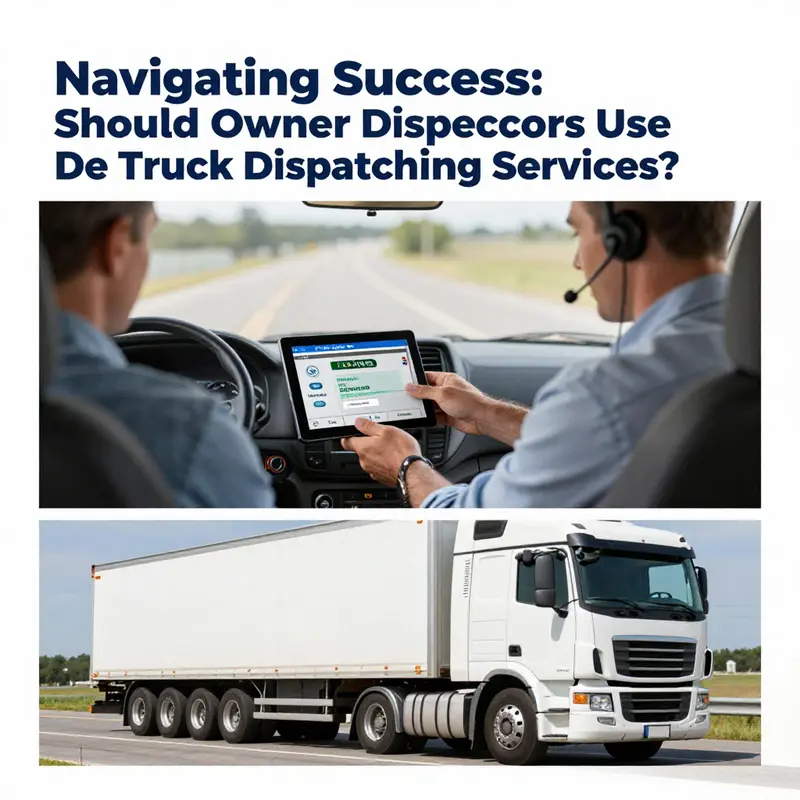
Choosing to work with a dispatch service is more than outsourcing a task; it’s redefining the operational rhythm of an owner-operator. When a driver owns the truck, the balance between hitting the road and staying on top of freight can tilt toward one side too often. Dispatch partners are not simply order takers; they are network managers who translate the demands of the freight market into dependable driving hours, steady cash flow, and a more predictable day-to-day rhythm. This shift often begins with a practical assessment of where time is spent and where value is created. For many owner-operators, the most valuable asset is not the truck, but the bandwidth to exploit opportunities without getting buried in administration, sales calls, and chasing freight across multiple platforms. Dispatch services act as a specialized operations arm, actively seeking freight opportunities, negotiating terms, and handling the scheduling and coordination that used to soak up the better part of a day. In practice, the result is more miles behind the wheel and fewer idle hours, a combination that directly influences profitability and stability. The decision to partner with a dispatcher is frequently less about a single tactic and more about how strategy aligns with personal goals and current constraints. Some operators simply want to maximize the consistency of their workload and minimize the risk of gaps in income. Others aim to scale the business, hire a helper, or even form a small fleet in a gradual, controlled way. Dispatch services speak to both ambitions, offering a structure that can support growth while maintaining the flexibility that defines owner-operators. At the center of this approach is a shared principle: the market rewards efficient, reliable service, not just hard miles. With a dispatcher, the operator’s focus can return to what they do best—driving safely, maintaining equipment, and delivering on time—while the dispatcher handles the levers of freight procurement. Importantly, a well-chosen dispatch partner does not replace judgment; it augments it. The operator still has the final say on what loads to accept, the routes to take, and the days to run. The dispatcher’s role is to present options, assess risk, and coordinate the whole trip from pickup to delivery, with a level of responsiveness that the operator may find difficult to sustain solo. The first and most tangible benefit that emerges is increased load availability and reduced downtime. Dispatch services hold a broad and active network that extends beyond the operator’s familiar lanes, which means more frequent load opportunities across multiple industries. This access translates into shorter gaps between trips and a higher probability of maintaining a steady revenue stream. The operator can avoid chasing every breadcrumb of freight on every board and instead rely on a partner who curates a balanced mix of loads and lanes. The second benefit flows from optimized route planning and scheduling. Modern dispatchers leverage software that maps the quickest or most fuel-efficient routes, accounts for real-time traffic, weather, delivery windows, and dynamic costs. The result is fewer miles wasted, better fuel efficiency, and more predictable delivery times. A well-planned schedule can also reduce wear and tear on the truck, extend the life of components, and lower maintenance costs by keeping maintenance windows aligned with actual use. This level of precision matters when every mile counts toward the bottom line. The third advantage is a tangible boost to revenue potential. By securing higher-paying loads and reducing deadhead miles, dispatch services directly impact earnings. They bring hiring leverage to the table in two ways: by negotiating favorable rates and by structuring a trip that minimizes non-revenue time. The operator gains clarity about what a load is worth and how it fits into a broader trip plan. Because dispatchers are negotiating on behalf of the carrier and the shipper, they can often secure terms that reflect the service’s value—especially when the operator is delivering on-time performance, reliability, and good communication. The operator’s role remains involved, but the financial outcome grows from smarter matching of capacity to demand. The fourth benefit is a marked reduction in administrative burden. Paperwork, compliance documentation, proof of delivery, and cargo releases can overwhelm a small operation. Dispatchers absorb much of this load, handling ePODs, bill of lading details, and the back-and-forth with shippers and receivers. The operator can then reclaim hours that would otherwise be spent chasing signatures, clarifying delivery instructions, or resolving billing questions. What seems like a minor improvement in paperwork can translate into days over the course of a year, allowing the operator to put more hours behind the wheel or into vehicle maintenance. The fifth advantage centers on safety and regulatory compliance. Reputable dispatch services stay current with evolving rules and ensure that drivers operate within Hours of Service limits, that proper breaks are scheduled, and that documentation supports a compliant operation. This reduces the risk of costly fines and protects the driver’s safety rating, a critical asset for securing future freight. The dispatcher can act as a guardian of compliance by monitoring hours and flagging potential issues before they escalate, which in turn preserves the operator’s reputation and insurance considerations. The sixth benefit emerges through professional support and agile problem solving. Even the best-planned trips encounter hiccups—delays at a receiver’s facility, changes in delivery instructions, or mechanical issues. A dispatcher becomes a direct, reliable point of contact to coordinate fixes, reschedule windows, or pivot to alternate lanes. This kind of support is especially valuable when the operator is on the road alone and cannot stay tethered to every minute of the day. It delivers peace of mind, knowing that a trained professional has your back when a challenge arises. The seventh and final advantage often connects to the operator’s access to additional resources. Some dispatch services extend their offerings to help with maintenance referrals, insurance considerations, or even the recruitment of qualified helpers or team drivers when growth warrants it. While not every dispatcher supplies these extras, the ecosystem around a well-run dispatch operation can provide meaningful leverage for an owner-operator seeking to protect uptime and uptime translates into revenue. Across these seven benefits, a single throughline remains clear: the dispatcher is not a distant broker but a partner who helps transform a solo enterprise into a more efficient, profitable, and less stressful business. The operator continues to steer, retain control over which loads to pursue, and decide when to run, but the daily frictions of freight procurement, administrative tasks, and regulatory compliance are handled by a team with a dedicated focus. And that shift matters because time, not raw hours on the road, often drives the difference between a crowded schedule and a predictable one. For some operators, that difference is simply a few hours saved per week; for others, it is a more meaningful delta that opens doors to growth, more stable income, and the possibility of adding a driver or expanding to a small fleet. Still, as with any outsourcing decision, there is a tradeoff to weigh. Dispatch services typically charge a fee, often a percentage of each load—commonly around 10–20 percent. The value received must justify the cost, particularly as the operator is mindful of the impact on net earnings. The precise balance varies by the operator’s volume, the mix of loads, and the quality of the service. The most reliable verdict comes from tracking both time savings and the quality of the loads gained. When the dispatcher consistently provides weights, opportunities, and match quality that exceed the fee, the arrangement becomes a strategic advantage. Conversely, if the operator begins to feel the fee outpace the advantages—if the same number of loads would have been found independently with less stress—the math may tilt toward self-dispatching or renegotiation of the terms. Ultimately, the decision rests on alignment between personal expectations and operational realities. For many, outsourcing dispatching is a smart and strategic move that unlocks labor, time, and revenue in ways not easily achieved by a solo operator chasing freight on multiple boards. If the operator wants a calmer, more predictable income stream, more miles, and a cleaner division of labor between driving and administration, a dispatch partner becomes an essential ally. If, on the other hand, the operator thrives on full control and the challenge of constant freight bidding, self-dispatching may still be appealing. The best path is the one that aligns with the individual goals, the truck’s condition and maintenance cadence, and the operator’s risk tolerance. For those curious about how industry practitioners articulate the balance and the value of a professional dispatch partner, the article discovering-the-unparalleled-services-of-5-star-truck-inc offers a narrative that mirrors this pragmatic approach. The bottom line is simple: a reliable dispatch service can be a force multiplier, turning a single vehicle into a consistently performing unit capable of delivering on time, staying compliant, and earning more with less stress. But the true measure of its worth lies in the operator’s willingness to leverage the expertise, network, and process discipline that a dispatch partner brings to the table, while maintaining the judgment to steer toward the opportunities that best fit their business goals.
Understanding the Price of Productivity: Cost Implications of Dispatch Services for Owner-Operators
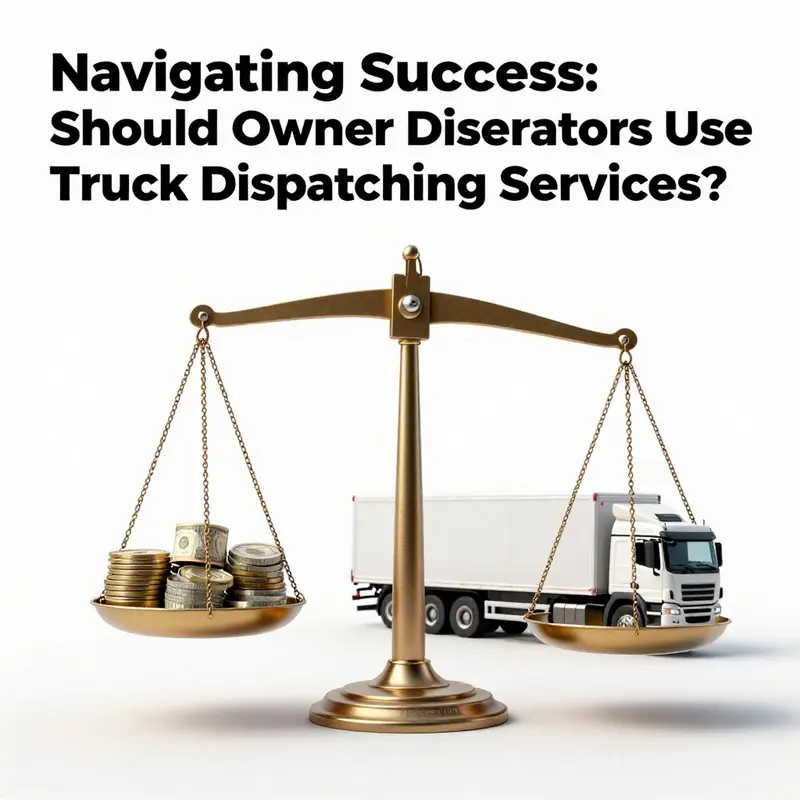
Choosing to outsource dispatching is not a surrender of control; it is a strategic decision about how to convert time into revenue. For owner-operators, the cost structure of dispatch services usually comes as a percentage of the revenue from the loads they secure. In most setups, that commission ranges from 10 to 20 percent. On the surface, that rate can feel steep, especially for operators who prize every dollar. Yet the real math hinges on what the dispatcher brings to the table: a higher volume of loads, faster payment cycles, administrative relief, and the ability to negotiate better rates with shippers. When a driver spends hours each day chasing freight, sorting through postings, and handling paperwork, the commission becomes a straightforward cost of doing business, not a direct deduction from profits. The question then shifts from how much the fee is to what it buys in terms of time, reliability, and strategic bandwidth for growth.
Many operators report that the right dispatch partner can unlock a higher earning ceiling. The logic is straightforward: dispatch services act as freight accelerators, expanding the pool of opportunities beyond what one driver can cover on their own. Even when a dispatcher takes an average 15 percent, the incremental revenue from new loads can more than offset the fee. In practice, the dispatcher does more than cherry-pick a load; they map a broader network, balance capacity with demand, and align loads with the truck’s location and available hours. The effect can be a shorter dwell time at shippers, a more predictable schedule, and more hours on the road, which translates to increased revenue for the base rate and for the equipment’s utilization. For operators who measure success by steadier miles and more consistent maintenance windows, the math begins to favor outsourcing when the loads come in with improved cadence and reliability.
Efficiency gains go beyond raw revenue. A study cited in Transport Topics found that owner-operators using dispatch services achieved a 35 percent reduction in idle time. Less idle time means more driving time and more miles billed, which directly ties to throughput and revenue. In the same study, backhaul costs dropped by about 28 percent. Backhauls—trips done at a loss while returning to a desirable lane—eat into margins and complicate routing decisions. By coordinating both outgoing dispatch and return trips, a dispatcher can minimize these backhauls, choosing loads that keep the truck moving and in markets that respond quickly to capacity. Taken together, these efficiency gains improve fuel economy through better route planning, reduce wear and tear by limiting unnecessary deadhead, and decrease the risk exposure that comes from chasing last-minute freight through unfamiliar networks. When a driver pairs the increased load opportunities with smarter routing, the savings are not merely incremental; they reframe what is possible within a given week or month.
Beyond the numbers, the value proposition of dispatching rests in shifting the administrative burden away from the driver. In a typically lean operator model, the truck is a rolling business unit with finance, compliance, and maintenance tasks pressing for attention. Dispatch services often handle paperwork, load confirmations, invoicing details, and compliance documentation, freeing time for what operators value most—driving and equipment maintenance. This is not just about convenience; it is a strategic lever for growth. When a driver can focus on performance rather than procurement, they can monitor maintenance intervals more consistently, plan preventive work windows, and avoid costly breakdowns that interrupt service. The smoother information flow also reduces miscommunications that lead to missed pickups or late payments, which can create cascading cash-flow problems for a small fleet or solo operator. The result is not simply a more relaxed day, but a more resilient business rhythm that supports scale without sacrificing safety or reliability.
Of course, every advantage has a caveat. The same commission that finances the dispatcher’s sourcing and administration is also a cost that lowers net revenue. The key is whether the value delivered outweighs the fee. The best way to assess this is to quantify the incremental loads and the time saved. If a dispatch partner consistently secures two to three additional loads per workday that would have otherwise required bidding on multiple online boards, the incremental revenue can dwarf the commission. This is especially true when the dispatcher negotiates better-than-average rates for comparable lanes or helps the operator capitalize on underutilized equipment in off-peak times. However, there are potential downsides worth noting. Dependence on a single dispatcher means exposure to their scheduling priorities and capacity constraints. Some operators may encounter slower response times for urgent shipments or loads that require specialized equipment, which can undermine a driver’s flexibility. There may also be contractual terms that introduce minimum monthly fees, termination notices, or auto-renewal provisions, which should be reviewed carefully before signing. And while dispatchers can harmonize routes, the operator must still share responsibility for compliance with safety, hours-of-service, and cargo securing standards, ensuring that the human element remains vigilant even as automation handles the logistics.
To determine if dispatch makes sense, operators should look at their current operating volumes, typical lane geography, and the variability of freight availability. A driver running a consistent long-haul schedule with predictable loads may already approach an optimal cycle for self-dispatch, where they can craft relationships with shippers and optimize direct rates. But for those who face irregular freight, frequent downtime, or a limited ability to track dozens of online postings while also driving, the dispatch option offers a way to stabilize income. The trade-off is time and control: more specialized or strategic loads may be captured by the dispatcher, but the operator is reliant on that partner’s emphasis and timing. The choice often comes down to whether the operator values a steady, scalable workflow and reduced administrative friction, or prioritizes absolute, hands-on control over every load, lane, and rate. For many owner-operators, outsourcing dispatching is a smart, strategic move that unlocks steady utilization and peace of mind, without surrendering the entrepreneurial spirit that drives their business.
Industry perspectives support this: dispatch services are designed to complement the operator’s core strengths—driving and maintaining equipment—by removing the drudgery of load hunting and rate negotiation. They function as a bridge between freight demand and a truck’s capacity, translating market conditions into adds on the schedule with fewer empty miles and more revenue-generating miles. Operators who align with reputable dispatch partners often report that the time saved from not bidding on every load frees hours for maintenance, training, and strategic planning. If a dispatcher proves reliable in terms of communication and compliance, engagement can expand. The disciplined focus on efficiency and reliability can also improve driver retention and customer satisfaction, since consistent service translates into fewer missed pickups and smoother communication with shippers. All of this contributes to a healthier business model, especially for operators looking to scale from single-truck operations to a more resilient micro-fleet.
For operators evaluating next steps, one practical approach is to pilot a dispatch relationship on a short-term basis while keeping a close eye on metrics. Track weekly earnings after commissions, idle time, backhaul costs, and the time spent pursuing loads. If the data show net gains, and if the dispatcher proves reliable in terms of communication and compliance, the engagement can expand. Conversely, if the operator discovers that the dispatcher cannot consistently source loads in the operator’s steady lanes or that the administrative overhead remains, withdrawing and returning to self-dispatch is reasonable. The critical factor is transparency and a clear service level agreement that defines load acceptance windows, expected response times, payment terms, and safety expectations. This clarity protects both parties and helps maintain a healthy balance between autonomy and support. For operators curious about how a dispatch-centric approach fits within broader industry practices, a broader look at trucking services and outsourcing strategies can be enlightening, such as Discovering the Unparalleled Services of 5 Star Truck Inc.
Within the broader narrative of owner-operators seeking stability, the cost implications of dispatch services deserve careful consideration, not naive acceptance of the headline numbers. The cost is not merely a line item on a monthly statement; it is a lever that can multiply time, reduce risk, and accelerate growth when used wisely. The most successful operators approach the relationship with a mindset of optimization: they monitor the dispatcher’s performance, negotiate terms that reflect real value, and continuously refine their own capacity planning. In this sense, dispatch services can be a strategic partner rather than a necessary evil. They can contribute to a more predictable workflow, greater utilization, and a sustainable path toward expansion, provided the operator remains engaged and informed about how every dollar of commission translates into opportunity. For readers seeking additional context on how outsourcing decisions translate into real-world outcomes, the underlying data are encouraging: increased weekly income, reduced idle time, and lower backhaul costs all point to a cost-effective value proposition when managed with clear expectations and disciplined oversight.
External resource: For a broader industry perspective on how dispatch services can influence weekly income and utilization, see Transport Topics’ study detailing these outcomes: https://www.transporttopics.com/trucking/owner-operator-dispatch-services-increase-weekly-income-by-1000/
Beyond the Load Board: How Dispatch Services Steer Owner-Operators Toward Consistent Miles and Profit
In a market that rewards speed, reliability, and the ability to keep wheels turning, owner-operators continually balance the art of finding freight with the science of running a safe, efficient operation. The choice to partner with a truck dispatching service is more than a convenience; it’s a strategic decision that reshapes how a driver allocates time, negotiates rates, and plans every mile. Dispatch partners do not simply assign loads. They act as scouts, negotiators, schedulers, and back-office specialists who translate a driver’s capacity into a steady rhythm of revenue. For many owner-operators, the result is a streamlined workflow that reduces the stress of freight procurement while expanding the horizon of viable opportunities.
The core value of a professional dispatching service lies in its network and its volume of activity. Dispatchers cultivate relationships with shippers and brokers across multiple industries, lanes, and seasons. This cultivated network translates into a more predictable pipeline of loads and a reduction in the dreaded dry spells that can erode a driver’s income and confidence. When a dispatcher knows where demand is likely to outstrip capacity, they can push for favorable opportunities that align with the operator’s equipment, preferred routes, and available hours. The driver can then focus on what is essential: operating the vehicle safely, maintaining the truck, and meeting customer expectations for on-time delivery.
But the advantage goes beyond mere access. A dispatch service brings an orchestration layer to the operation. They verify load details, confirm lane and equipment compatibility, and navigate the complex negotiation of rate cards with shippers and brokers who, in many markets, operate on tight margins and tight timelines. A skilled dispatcher understands how to maximize revenue without sacrificing service quality or driver safety. They know when to chase a premium lane and when to pivot to a secondary route that keeps the truck moving. In practice, this translates into fewer blank miles and more efficient utilization of capacity, which is the heartbeat of profitability for owner-operators who live on thin margins.
The day-to-day flow of a dispatch-enabled operation is not about losing control; it’s about reclaiming time. The driver’s focus stays on the road, while the dispatcher handles the domino effects that follow every load: availability, equipment readiness, BOL collection, carrier pickup, and handoffs to receivers. They also take on the more tedious—but essential—tasks of compliance communication with shippers, ensuring that the paperwork, permits, and insurance details are in order for each shipment. This back-office support can dramatically reduce the cognitive load that often accumulates behind the wheel, freeing the operator to plan for the longer arcs of growth, such as equipment maintenance budgets, insurance renewals, and strategic lane development.
Technology is the quiet force behind modern dispatching. Real-time tracking and status updates create a transparent chain of custody from origin to destination. GPS-enabled visibility allows both dispatcher and driver to adjust routes on the fly when a delay arises or a weather pattern or traffic incident alters the ETA. This level of visibility is not merely cosmetic; it has tangible customer-service benefits. Shippers who see that a dispatch partner is actively monitoring shipments can provide more accurate ETAs and adjust expectations without triggering frantic phone calls or missed handoffs. Cloud-based platforms centralize documents, invoicing, and compliance records, eliminating the hollowed-out feeling of chasing paper trails and providing a reliable archive for audits or disputes. For the operator, this means fewer interruptions to the driving routine and a smaller chance that a late load or an incomplete document derails a day’s revenue.
Of course, any partnership carries trade-offs. The most conspicuous is cost: dispatch services typically charge a fee that represents a percentage of each load, often in the range of 10 to 20 percent. The math is straightforward but meaningful. A higher take rate reduces net earnings on a given load, even as it might increase overall revenue through faster loads and better rates. The decision, then, is not whether a dispatcher can deliver more loads but whether the incremental income, time savings, and peace of mind justify the commission. Many operators discover that the value extends beyond gross revenue. By removing the constant need to bid, re-bid, and chase down freight, they gain mental space and a more predictable workflow. The driver who once spent hours on load boards can instead allocate that time to route planning, maintenance checks, and rest—investments that yield long-run reliability and safety.
Selecting the right dispatch partner requires a clear-eyed assessment of fit. A transparent fee structure is only the starting point. The dispatcher’s performance, communication style, and willingness to customize the approach to match the operator’s equipment, hours of service, and preferred lanes matter just as much. A good dispatcher will outline service-level expectations—from response times to load confirmation procedures and dispute resolution. They will also provide visibility into the decision logic: why a particular load is recommended, how rate negotiation was conducted, and how the load aligns with the operator’s constraints, such as available hours, maintenance windows, and driver rest requirements. In the absence of such transparency, the relationship can devolve into a string of ad hoc assignments that feel arbitrary and, ultimately, unproductive.
This is where the operator’s own goals matter. For some, the priority is maximum control over income streams and load selection, which may favor self-dispatching or a hybrid model that blends dispatcher support with direct relationships with shippers. For others, especially those juggling irregular schedules, equipment downtime, or maintenance windows, the promise of progressive efficiency through dispatching is compelling. A pragmatic approach is to treat dispatch partners as a strategic ally who is aligned with the driver’s risk tolerance, preferred lanes, and desired level of autonomy. The most successful operators craft an operating rhythm that uses dispatch services to smooth volatility while preserving core decision rights—such as selecting essential lanes, vetoing loads that clash with heavy maintenance days, or choosing to skip low-margin opportunities that do not meet profitability benchmarks.
Beyond the calculus of pay and control lies the broader strategic advantage: consistency. The freight market rewards consistency just as surely as it rewards volume. Dispatch services, by their design, tend to flatten the peaks and valleys of a solo operator’s schedule. They pursue a more stable cadence of loads, a steadier stream of earnings, and an ability to forecast cash flow with greater accuracy. A seasoned dispatcher can also act as a mentor, translating market signals into actionable steps. For example, as a season shifts and demand migrates toward certain regions or cargo types, a dispatcher can guide the operator toward those opportunities, then backfill with alternative lanes when a market cools. This strategic responsiveness helps the operator weather downturns and take advantage of growth windows without the frenetic cycle of constantly chasing new freight.
The safety net component deserves careful emphasis. Compliance and safety are not afterthoughts but central to sustainable profitability. Dispatch services that emphasize regulatory alignment and documentation help ensure the operator remains within FMCSA guidelines, hours-of-service rules, and carrier safety requirements. A disciplined dispatcher will track renewal dates, insurance certificates, and vehicle maintenance milestones, and will prompt the operator when action is needed. In markets where regulatory scrutiny is increasing and penalties for noncompliance are steep, this administrative backbone becomes a competitive differentiator. The operator gains not only a smoother day-to-day experience but also a reduced risk profile, which in turn supports more favorable insurance terms and a more confident growth trajectory.
To those evaluating a potential partnership, the bottom-line question remains: will dispatching help you drive more, rest better, and grow smarter? The answer is rarely a blanket yes or no. It hinges on the operator’s bandwidth, risk tolerance, and long-term aims. For a driver with strong work discipline but limited time, a dispatcher can unlock meaningful gains by front-loading outreach, negotiating favorable rates, and ensuring that each mile is purposeful rather than merely produced. For an operator who enjoys direct relationships with customers and wants to preserve maximum control over every load, a selective or hybrid approach may deliver the best balance between autonomy and efficiency. The best practice is to pilot with clear metrics in mind—load acceptance rates, average revenue per mile, reduced idle time, and a tangible reduction in administrative drag. If those metrics trend in the right direction over a defined period, the case for deeper engagement with dispatch services becomes compelling.
Finally, it is worth anchoring the discussion in the reality that the freight landscape continues to evolve. Digital brokers, capacity platforms, and AI-assisted optimization are no longer speculative. They are shaping how dispatchers operate and how owner-operators plan their days. The operator who embraces this evolution—while maintaining a careful guardrail against over-dependence on any single channel—will likely discover a more resilient, scalable path through the miles. In the end, dispatch services do not erase risk or eliminate the need for smart decision-making. They provide a framework within which a driver can convert capacity into dependable income, shaping a professional practice rather than a series of improvised runs. As markets shift, and as the regulatory environment clarifies what is required to stay compliant and competitive, the dispatch partner that remains consistent, transparent, and attuned to the operator’s goals will stand out as a true ally rather than a transactional intermediary.
For those who want to explore regulatory context and compliance considerations guiding truck operations, the Federal Motor Carrier Safety Administration’s resources offer foundational guidance that complements the pragmatic tools dispatch services bring to the table. See the FMCSA materials for ongoing updates on safety, qualifications, and lawful operation as you consider how dispatch partnerships fit into your broader business plan. https://www.fmc.gov/
Efficiency on the Road: How Dispatching Services Redefine an Owner-Operator’s Operational Rhythm
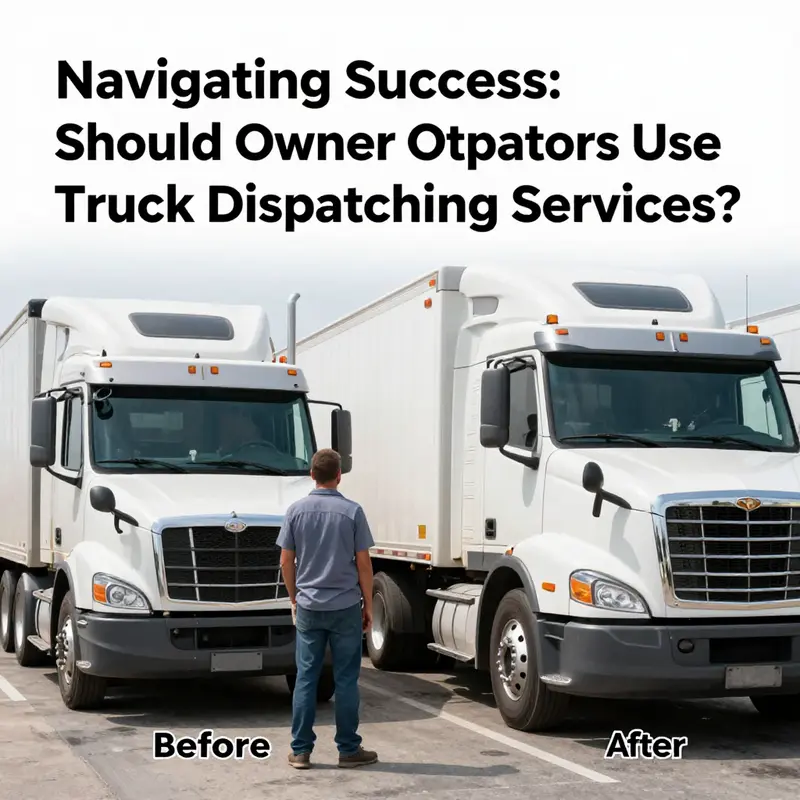
Every owner-operator who has spent a morning wading through freight boards, chasing backhauls, and sorting a mountain of paperwork knows that time is the real currency of a one-truck business. The goal is simple in theory: maximize miles billed, minimize downtime, and keep the truck—and the driver—on the road. In practice, however, the road can feel crowded with competing demands: finding steady freight, negotiating fair rates, proving compliance, and keeping maintenance obligations from slipping. Dispatching services enter this scene not as a luxury but as a strategic instrument. They are designed to take the friction out of the freight chain so the operator can focus on what truly moves the business forward—driving safely, maintaining the vehicle, and delivering on commitments. The payoff, when the fit is right, is a clearer, more consistent workflow that looks less like scrambling and more like a well-tuned operation.
When a dispatch partner takes the wheel of the scheduling and load management process, the operator gains a different kind of headroom. Dispatchers actively seek freight opportunities across a broader network than a single operator can realistically cover alone. They negotiate rates, optimize load selection, and assign loads with an eye toward reducing unproductive travel. The impact of this approach becomes tangible in lower deadhead—those miles driven without cargo—because the dispatcher can stitch together back-to-back trips that align with pick-ups and deliveries. It’s not about chasing volume at any cost; it’s about smarter utilization of time and equipment. Real-time data and sophisticated software undergird these decisions. Optimizers scan routes, traffic conditions, weather, and service windows to choose loads that minimize delays and maximize on-time performance. In a high-velocity market, a small margin on every mile can become a meaningful difference in monthly profitability when compounded across dozens of loads.
A critical advantage is the access the dispatcher provides to a wider freight ecosystem. For many owner-operators, the local phone tree and a few online boards can only take them so far. Dispatch services expand that reach by tapping into networks that include regional shippers, dedicated lanes, and occasional long-haul opportunities that might require more time and logistics know-how than a solo operator can spare. This broader access translates into more consistent work and often better-paying loads. It’s not just about quantity; it’s about quality and predictability. A steady cadence of pickups and deliveries stabilizes cash flow, reduces the emotional toll of constant bidding, and creates a framework within which maintenance and capital planning can be more deliberate.
Beyond the load itself, professional dispatchers manage an array of administrative tasks that frequently gnaw away at an operator’s day. Paperwork, load confirmations, rate confirmations, and invoicing all require careful attention to minimize errors and delays. Dispatch services typically employ automated systems for tracking, documentation, and billing. That automation reduces the risk of mistakes that can slow down payment cycles or trigger disputes with shippers. It also helps ensure regulatory compliance, particularly around Hours of Service (HOS) logging and record-keeping. When a driver is focused on the road rather than filing forms, the operation becomes safer and more reliable, which in turn elevates the operator’s reputation in the market.
The question of efficiency, however, is not purely about time saved or paperwork reduced. It’s about how those gains compound to alter the entire operating model. With a dispatch partner, the operator can start to function with some of the characteristics of a small fleet: more consistent utilization of the asset, a clearer understanding of income streams, and a lower tolerance for unplanned downtime. The dispatcher can act as a coordinating hub, orchestrating the interplay between truck, driver, and shipper so that each link in the chain is optimized for throughput and reliability. The operator maintains control over assets and ultimate revenue while outsourcing the routine, repetitive, and complex coordination tasks to professionals who do this for a living.
This shift is particularly meaningful for operators who previously found themselves trying to balance three, four, or more different responsibilities at once—driving, maintaining the vehicle, and hustling freight with the same attention and energy. When dispatching is embedded into the business model, the operator can reallocate time toward strategic activities: evaluating equipment needs, planning upgrades, and exploring diversification that can smooth out seasonality. The focus on maintenance also benefits from a more predictable load schedule; predictable miles and service windows support better planning for preventive upkeep, reducing the risk of unexpected downtime that disrupts entire weeks of service.
A pragmatic way to view the value proposition is through the lens of risk management. Freight markets swing, rates fluctuate, and regulatory demand keeps evolving. A dispatch partner absorbs much of that volatility by offering steady access to loads and by navigating the compliance and communications maze that can overwhelm a lone operator. They monitor rate trends, match capacity to demand, and help ensure that the paperwork trail is sound and complete. The result is not a magic pill but a disciplined process: a disciplined process that reduces missed opportunities, speeds up settlements, and improves overall reliability. In a sector where reputation is forged in on-time performance, the cumulative effect of fewer missed loads, better-rated jobs, and faster payments can translate into a more sustainable livelihood for the operator.
That said, no partnership is a universal cure. There are costs and trade-offs to weigh. Dispatch services typically charge a fee, often a percentage of each load, which can range from the lower end of the spectrum up to a meaningful share of the gross. For some operators, that fee is easily justified by the gains in load availability and time saved. For others, especially those who relish maximum control over every bid and prefer to pilot their own pricing strategy, self-dispatch remains an option. The calculus hinges on bandwidth, appetite for risk, and long-term business goals. The dispatcher’s value is clearest when the operator recognizes that the service eliminates rather than replaces the operator’s agency—freely choosing loads, setting preferred lanes, and deciding when to drive or rest—while handling the coordination, administration, and compliance that often come between hours on the road and dollars in the bank.
To illustrate how this dynamic plays out in real terms, consider a typical one-truck operation transitioning from manual dispatch to a professional dispatch partner. The driver’s day becomes less a blurred sequence of “hunt and hope” bids and more a structured routine guided by load opportunities that align with legal driving hours and the truck’s mechanical rhythm. Deadhead is trimmed as loads are paired with the driver’s current position and time constraints. The truck operates with fewer idle periods, which translates into more predictable maintenance intervals and a steadier engine of revenue. The operator’s back-office hassle evaporates a little at a time as automated confirmations, standardized paperwork, and consolidated invoicing cut lengthy cycle times. The net effect is a leaner, more predictable engine—the business functions better not because it adds more moves, but because it makes the moves it does execute more efficient.
As operators weigh the decision, a simple, practical test can anchor the choice: do you have the bandwidth to bid intelligently on loads, chase backhauls, and manage detours while ensuring compliance and maintaining equipment? If the answer is yes, you might enjoy the autonomy of self-dispatch and still benefit from some outsourced support for the heavy lifting. If the answer is no, a dependable dispatch partner can convert a high-velocity but fragmented workflow into a coherent operational rhythm—one that preserves driver hours, protects load integrity, and sustains profitability. In many cases, the dispatch relationship evolves over time, starting with core load-management tasks and gradually expanding to encompass more strategic functions such as rate negotiation, lane optimization, and proactive maintenance planning.
For operators considering a partnership, it helps to examine the practicalities and the expectations. Clear communication about preferred lanes, service levels, and emergency procedures creates a shared playbook. Understanding the fee structure and evaluating the return on investment through actual load performance, not just theoretical gains, keeps the relationship healthy. A well-chosen dispatch partner can become more than a service provider; they can be a strategic ally, offering a platform for growth, better reliability, and a more stable income stream. The result is a business that feels larger in capability than its one-truck footprint suggests, with the discipline and resilience to weather market shifts and regulatory changes alike.
For operators seeking a blueprint on how such a partnership can reshape daily operations, this resource outlines the broader narrative of efficiency and reliability in professional dispatching: unparalleled truck services. It serves as a reminder that the right dispatching philosophy is less about outsourcing every decision and more about leveraging specialized support to reclaim time, reduce risk, and amplify profitability. As the industry continues to evolve, the most successful owner-operators may be those who consciously integrate dispatch expertise into their core operating model, preserving control while unlocking the efficiencies that come from professional coordination, automation, and strategic load selection.
External perspectives corroborate this view. A comprehensive analysis of dispatching’s impact highlights how professional coordination can streamline operations, improve load matching, and reduce downtime across the freight landscape. By relying on data-driven routing, real-time visibility, and standardized processes, operators can achieve greater consistency and sustainability over the long term. This aligned approach to operation and administration helps ensure that growth is not merely a function of chasing more loads, but a measured, deliberate enhancement of the entire business ecosystem that supports the vehicle, the driver, and the company’s future.
For readers seeking a deeper dive into the broader industry implications, an external resource provides further context on the efficiency benefits and strategic value of dispatching services: https://www.truckdispatch.com/impact-of-truck-dispatching-on-operational-efficiency
Control, Coverage, and Cash Flow: Deciding Between Independent Dispatching and Third-Party Services
Choosing how to dispatch freight sits at the crossroads of autonomy, workload, and income stability. For the owner-operator, the decision isn’t simply about liking one method over another; it’s a strategic alignment of energy, risk, and time with the realities of the market. At its core, the question asks: do you want maximum control over every load, route, and rate, or is it more valuable to trade some of that control for a steadier workflow, reduced admin, and a clearer path to profitability? The answer rests on a blend of personal preference, business goals, and the particular pressures you face on the road and in the office. The most successful operators don’t see this choice as a binary fork. They see it as a spectrum, where you can push for more independence when the conditions suit you or lean toward a service that acts as a reliable engine to keep your trailer moving when capacity is tight or demand is volatile. The decision becomes a narrative about how you want to balance freedom with predictability, and how much time you’re willing to invest in the granular work of selling capacity, negotiating terms, and managing paperwork.
When an operator manages dispatching independently, the dividends are clear but not guaranteed. Autonomy is the most immediate benefit. You pick the loads that align with your preferred routes, your equipment, and your cash flow targets. If you’re a driver who values shorter hauls, higher pay per mile, or freight types that fit your expertise, self-dispatch can translate into sharper margins and a degree of satisfaction that comes from steering your own ship. The flip side, however, is substantial. The same independence that enables you to chase your own market also demands a relentless eye on the freight landscape. Load opportunities don’t appear on a predictable schedule; they surface through a mix of online marketplaces, direct shipper conversations, and a web of relationships you’ve cultivated over time. This means hours spent scanning boards, dialing numbers, negotiating rates, and negotiating with brokers and shippers who may have shifting expectations. The effort compounds when you factor in the administrative load: rate confirmation, contract terms, insurance documents, fuel surcharges, detention and lumper specifics, and the ongoing need to track and comply with evolving regulations. For a driver who already shoulders the responsibilities of maintenance, insurance, and compliance, the dispatch task list can feel like a second full-time job. In this model, earnings can be highly variable—strong months when luck, strategy, and market demand align, and lean periods when a lack of freight or long lead times squeeze cash flow. It’s a world where every decision compounds into a day’s earnings, so a misstep in load selection or timing can ripple into days of downtime.
A third-party dispatch service, by contrast, offers a different architecture for the same business problem: who is doing the legwork to secure the next load? A reputable dispatcher becomes a partner who actively searches for freight, prices opportunities, schedules the work, and communicates with shippers. The core advantage is time—freeing the operator to devote more hours to driving, vehicle maintenance, and simply being on the road where the truck earns, rather than sitting at a desk chasing freight. For operators who aren’t used to, or comfortable with, the day-to-day hustle of load boards, negotiating complex terms, or playing “rate chess” with shippers, this is a relief that translates into steadier miles and fewer idle periods. The dispatcher also brings a layer of professional process to the operation: standardized messaging with shippers, consistent load tracking, and closer management of the administrative tasks that bog down many owner-operators. In the best arrangements, this translates into a more predictable weekly revenue and a more dependable route map. The service can also serve as a buffer during slow seasons, when demand wanes and the fear of an empty trailer becomes real. A dispatcher’s vetting process for shippers and freight can minimize exposure to high-risk arrangements, missed payments, or problematic cargo. The operational stress that often accompanies chasing freight on one’s own can dissipate, replaced by a system that handles the cadence of business development and contract execution.
Yet there is a price to be paid for this convenience. Most dispatch services operate on a fee, typically a percentage of gross revenue. That charge, often in the neighborhood of ten to twenty percent, is not trivial. It reduces the bottom line, even as it smooths your cash flow and steadies your workload. The economics require careful scrutiny: the service is exchanging a portion of your gross for reduced downtime, fewer administrative headaches, and greater predictability. In markets where dry spells are common, the increased consistency and the ability to plan ahead can yield a higher net income over time, even after fees. But the math is not universal. If you already command strong direct shipper relationships, can access a reliable freight network on your own, and have the bandwidth to search, bid, and close deals efficiently, the incremental gain from a dispatch partner might be smaller. And because dispatchers depend on a pipeline of shippers and loads, you might encounter trade-offs—your dispatcher may prioritize certain loads or routes that fit their own network or preferred partners, which could result in longer hauls, detours, or loads that pay less than your best independent opportunities. For an operator who values every mile and every rate, this potential misalignment matters.
Another cost and risk layer is the paperwork and compliance that accompany freight work. A dispatcher can help shoulder the administrative burden by handling load confirmations, insurance paperwork, and shipper communications. They can also offer guidance on compliance tracking, cargo documentation, and regulatory requirements. For operators who struggle to keep pace with the administrative cadence, relief here is meaningful. The burden of paperwork tends to accumulate quickly in a busy week, and the friction of delayed or missing documents can impact on-time delivery, payment timelines, and carrier viability. When a service handles these elements, it’s not just time saved; it’s a reduction in the risk of penalties, delays, or miscommunications that can sour a freight relationship. On the other hand, relying on a dispatcher for these tasks also means you’re entrusting a portion of your business processes to a third party. The control over specific terms, the exact language of rate confirmations, and the speed of responses to shippers can drift when someone else is driving the process. The operator must collect and verify the terms with care, especially when service levels, detention charges, fuel surcharges, and accessorials are subject to nuance between shipper expectations and carrier capabilities.
The decision framework, then, becomes a balancing act. If your priority is to maximize autonomy and you invest time into understanding market signals, you may be comfortable—and even energized—by pursuing freight, negotiating directly, and shaping a portfolio of loads that suits your business model. This route can yield impressive per-mile earnings when you know your lanes, your cargo types, and how to price for demand. But this path demands discipline, a willingness to engage with ongoing learning, and the capacity to absorb the risk inherent in volatile freight markets. If you’re newer to the industry, or if your personal bandwidth is stretched thin by maintenance, legal compliance, and the day-to-day logistics of running a truck, outsourcing the dispatch function can be a strategic choice. The dispatcher’s network expansion, the steady cadence of freight, and the professional handling of administrative tasks often translate into more consistent billable hours and a lower stress load. The science of this choice isn’t just about dollars. It’s about time leverage and risk management: how much time you regain to drive and to maintain your equipment, and how robust your income becomes during cycles when freight opportunities are scarce.
A useful way to think about this is to map your week against the typical demands of self-dispatch versus dispatch service support. In a self-dispatch world, you might begin your day by refreshing freight boards, following up on leads, and negotiating terms before you even start the engine. The middle of the day could be the heavy lifting of unloading and planning the next leg, interspersed with service and maintenance as needed. Your evenings may be spent on invoices, tax paperwork, or contract compliance. The dispatcher-enabled workflow compresses that cognitive load. You still drive, you still manage the vehicle, but a large portion of the load-capture process shifts to a professional partner who presents you with vetted options and handles the timing and communication with shippers. The operator’s role evolves into a strategist who evaluates the day’s freight opportunities, selects loads that fit the broader business plan, and uses the dispatcher as a steady engine rather than a constant hunter. In either path, a clear record of performance, fuel efficiency, and maintenance costs remains essential—so the operator can assess whether the current approach delivers the expected return on time invested. The most effective operators routinely review their dispatch patterns, compare net earnings after fees, and adjust their approach as market conditions shift. The market rarely remains constant long enough to justify stasis; the best practices are iterative adjustments that respond to capacity, demand, and the evolving nature of tolls, fuel prices, and fatigue management.
In weaving these threads together, the practical takeaway is one of strategic clarity. If you crave maximum control over every decision, and you have a robust system for sourcing profitable loads, you may thrive as a self-dispatcher. Your margins can be strong, and your work can align tightly with your values and route preferences. If, however, you value consistent workload, reduced administrative burden, and the support of a partner who can help you manage risk and compliance while you stay focused on driving, a dispatch service can be a strong lever for stability and scale. The best choice often depends on where you stand in your career, the complexity of your operations, and your appetite for managing the business side of freight. For some operators, the optimal setup is a hybrid: maintaining direct relationships with preferred shippers for select lanes while outsourcing other, more complex or time-consuming loads to a trusted dispatcher. This blended approach leverages the strengths of both models and can yield a resilient balance of autonomy and reliability.
For readers seeking further perspective on how to tailor this decision to their own situation, the broader industry commentary reinforces the same logic: independence offers autonomy and potential upside, while service-based dispatching offers predictability and efficiency gains that can be especially valuable when resources are limited or the market is uncertain. The key is to align the dispatch strategy with the operator’s capacity to manage risk, maintain equipment, and sustain a steady revenue stream. The right choice makes the difference between a life spent chasing freight and a business built on consistent miles, manageable admin, and a fair return on the labor you put into every mile. As you weigh your options, consider not just what a dispatcher can do for you today, but how the arrangement mirrors your long-term objectives for growth, quality of life, and financial stability. If a reliable dispatch partner reduces stress and increases predictability without eroding your core control, it can be a compelling fit. If you prize autonomy and a hands-on approach to rate negotiation, self-dispatch may remain the preferred path. Either way, the question isn’t merely about a service versus independence; it’s about building a business design that sustains you on the road, keeps your equipment in peak condition, and preserves the freedom you value most.
Internal resource note: for practical guidance and perspectives from practitioners exploring dispatch approaches, see the ongoing discussions at 5startruckin.com/blog/. This resource offers insights into how operators approach freight strategies, equipment maintenance, and workflow optimization in real-world settings. External industry perspectives also shed light on current best practices and the evolving landscape of owner-operator freight management. For a broader industry perspective, you can review established analyses of dispatcher roles and their impact on owner-operator outcomes at the following external resource: https://www.truckinginfo.com/owner-operator-dispatch-services
Final thoughts
In summary, whether owner operators should engage a truck dispatching service largely depends on their unique situation and goals. The key benefits, including reduced workload, better freight access, and enhanced operational efficiency, make a compelling case for using such services. By weighing the perceived costs against the tangible benefits, owner operators can make informed decisions that align with their business aspirations. Thus, for those seeking to streamline their operations and focus on driving, partnering with a reliable dispatch service can be a wise investment.