
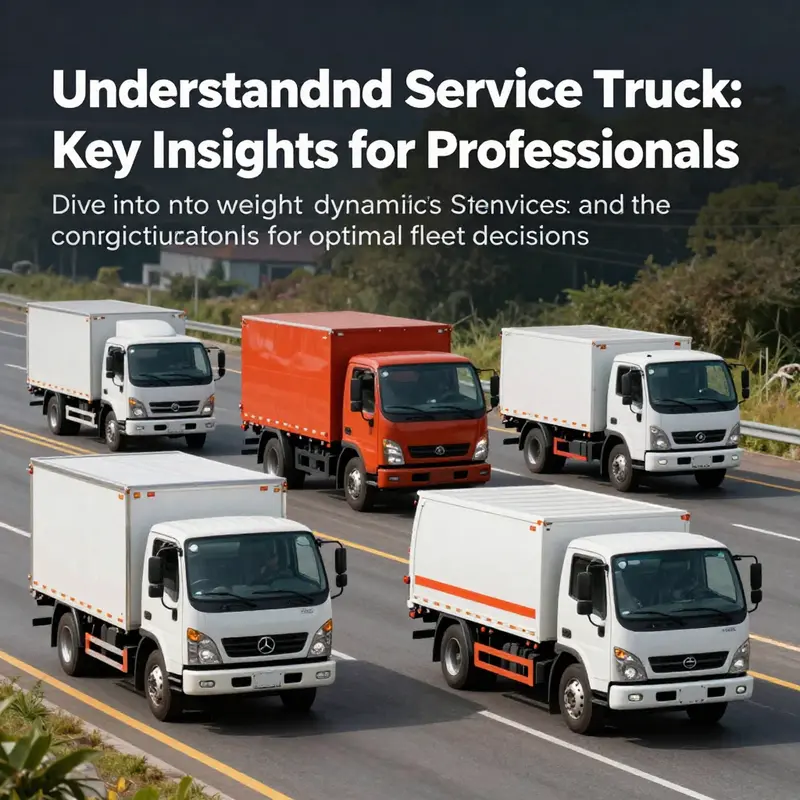
Service trucks play a crucial role across various industries, from construction to emergency rescue. Understanding their weight characteristics is essential for trucking company owners, fleet managers, and aspiring drivers looking to optimize performance and safety. In this exploration, we’ll delve into the curb weight of standard service trucks, how gross vehicle weight varies with cargo, comparative weights of specialized heavy-duty trucks, and the importance of manufacturer specifications in determining overall weight. Each chapter will build a comprehensive view that helps you make informed decisions regarding service trucks in your operations.
Weighing the Workhorse: A Deep Dive into Curb and GVW for Service Trucks
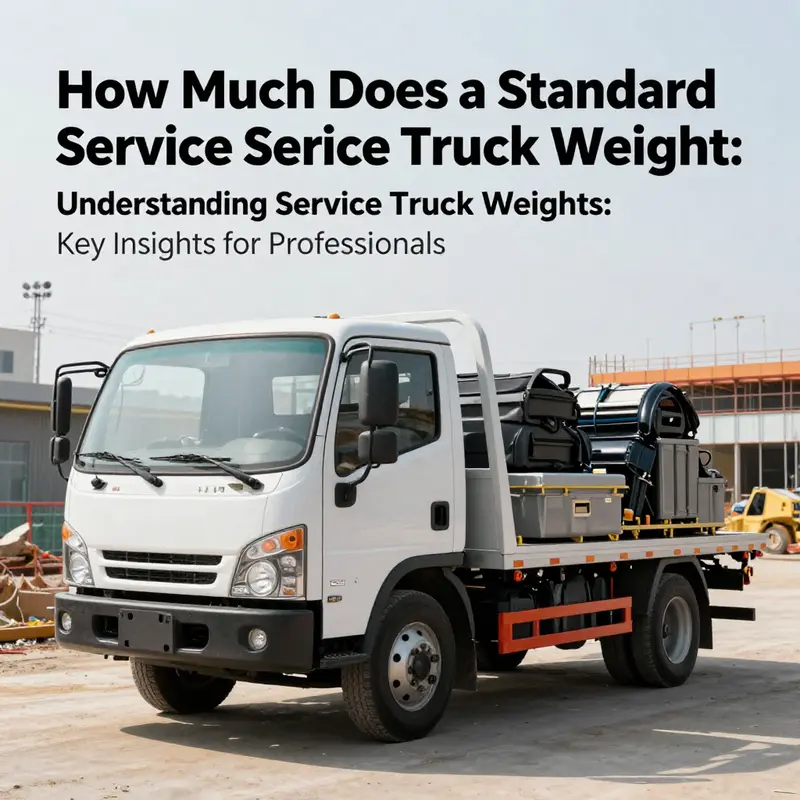
Weight is not just a number on a plate or a sticker. For service trucks, weight speaks to capability, safety, and how well a vehicle can perform at a job site and on crowded roads. A fleet manager or a maintenance professional often faces a practical puzzle: how heavy is the truck when it leaves the yard, and how much capacity does it truly have for tools, spare parts, and the crew who will ride along? The answer hinges on two related ideas—curb weight and gross vehicle weight (GVW)—and on the many variables that shape them. Understanding these concepts helps ensure that the truck meets site demands, stays within legal limits, and preserves fuel efficiency and maneuverability. In this chapter, we explore what curb weight means for service trucks, how GVW comes into play, and why the numbers vary so widely across common configurations. We also consider how designers balance weight with payload, durability, and the specialized equipment that turns a basic work truck into a mobile workshop or a site-ready service unit.
Curb weight is the starting point. In standard industry terms, curb weight is the vehicle’s mass with all standard equipment, a full tank of fuel, and the necessary operating fluids in place. There is no cargo, no passengers beyond the driver, and no extra accessories mounted beyond what the manufacturer considers normal for operation. This definition is codified in ISO 1176:1990 for consistency, but in practice, regional conventions can differ. Some European standards add a nominal driver weight—often around 75 kilograms—into the curb figure, while Chinese standards may exclude both driver and luggage. Those tiny definitional shifts matter because they can push reported weights by more than 100 kilograms when you compare the same model across regions. For anyone planning, purchasing, or operating service trucks, the key takeaway is that curb weight is a useful baseline but not the whole story. It tells you what the vehicle itself weighs with the factory setup, but it says nothing about how much it can safely carry.
To illustrate, consider two common curb-weight benchmarks drawn from typical commercial vehicle listings. A refrigerated service truck, designed to haul temperature-sensitive goods and maintain load integrity, often has a curb weight around 2,800 kilograms. That figure translates to roughly 6,173 pounds. It reflects the extra insulation, climate-control equipment, and energy-efficient systems that refrigeration adds, even in a relatively compact chassis. In contrast, a larger cargo-focused service truck—one built to transport substantial tool sets, spare parts, and heavy equipment—shows a curb weight near 7,180 kilograms. That’s about 15,829 pounds. The stark contrast between these two curb weights underscores how design emphasis drives mass. The refrigeration option prioritizes thermal performance and insulation, while the larger cargo layout prioritizes payload capacity and space efficiency. Both share the same fundamental equation: curb weight plus payload capacity equals the vehicle’s GVW ceiling.
The GVW, or gross vehicle weight, is the maximum permissible weight of a fully loaded vehicle as specified by the manufacturer and regulated by road authorities. It includes the curb weight, the driver’s weight, all cargo and tools, and any passenger load. Meanwhile, the GVWR—the Gross Vehicle Weight Rating—specifies the maximum weight allowed for safe operation, taking into account structural limits, braking systems, suspension, and the axle configuration. In everyday use, many fleets colloquially refer to the GVW when they mean the practical limit of payload plus the vehicle’s mass. But the two terms—GVW and GVWR—cover different aspects of weight management. What matters most in day-to-day planning is ensuring that the load never exceeds the GVWR, which protects braking efficiency, steering response, tire life, and overall safety. A vehicle’s GVWR is not a rough target; it is a hard specification grounded in engineering and validated by testing.
In real-world fleets, the total weight a service truck can carry tends to exceed 30,000 pounds (about 13,600 kilograms) once you account for cargo, tools, and equipment. That threshold is not universal, of course. Heavier-duty configurations with cranes, hydraulic lifts, or platform attachments can push the GVW well beyond that baseline, while lighter duty setups with minimal extras stay closer to the curb weight plus a modest payload. The range reflects a spectrum from compact, highly maneuverable service vans to larger, purpose-built mobile workshops that function as roving maintenance bays. Specialized configurations—mobile work centers, rescue units, or service trucks designed with heavy-duty haulers and reinforced bodies—tend to sit toward the upper end of the weight spectrum. These heavy builds bring advantages in capability and resilience but demand careful planning around road-use limitations, axle weight distributions, and operational permitting.
A critical factor shaping both curb weight and payload is the drivetrain and body design. A 4×4 chassis, which provides enhanced traction on uneven job sites, typically carries more weight than a 4×2 setup. The extra front-axle hardware, transfer case, and related components add mass that reduces available payload unless the vehicle’s GVWR is increased correspondingly. Likewise, the body type—whether a refrigerated body, a flatbed, or a modular tool cabinet system—adds mass through insulation, steel framing, cabinets, and mounting hardware. Specialized equipment such as cranes, welding rigs, or hydraulic lifts further increases the mass. That complexity makes a single, universal weight figure elusive. Instead, weight must be understood as a balancing act: the structure must be strong enough to withstand site conditions and tool loads while remaining within the legal and mechanical envelope that governs road use.
For buyers and operators, the practical approach is to start with the manufacturer’s official specifications for the exact model and configuration under consideration. Curb weight offers a baseline for estimating payload, but the true question is how much payload the GVWR supports after accounting for the vehicle’s own weight and the driver. A simple mental math exercise can illustrate this. Suppose a refrigerated service truck has a GVWR of 19,000 pounds. If its curb weight is 6,000 pounds, the remaining capacity for cargo, fuel, and passengers is about 13,000 pounds. Realistically, you’d allocate a portion of that for fuel and operating fluids, and then reserve substantial capacity for the cargo and equipment that define the job. If the same truck adds a full crew and a heavy battery bank for on-site operations, those weights nibble away at payload, potentially requiring a lighter auxiliary load to stay within GVWR. This kind of calculation is essential for fleet managers who need to prevent overweight operations, protect tire life, and avoid penalties or operational restrictions on certain routes or job sites.
Because the numbers vary so widely, it is common for fleets to maintain a simple internal process: establish a baseline curb weight for the intended configuration, identify the GVWR, and then compute the maximum practical payload. The math is straightforward, but the discipline matters. Pushing a vehicle to or beyond its GVWR degrades braking performance, increases stopping distances, and accelerates tire and suspension wear. It also complicates load distribution, especially on multi-axle configurations where weight must be balanced between axles to avoid exceeding per-axle limits. In practice, many service trucks operate with a manifest of heavy tools and components that fills the payload quickly, especially when a crane or heavy lifting mechanism is included. That is why many fleets choose to design their tool storage and cargo organization around the GVWR, rather than relying on a generous curb-weight margin. We can see why the design process emphasizes not only raw mass but how mass is distributed and how it interacts with road and site demands.
This is also a reminder that regional regulations and licensing can influence the way weight figures are used in planning. Some jurisdictions impose stricter per-axle limits or require overweight permits for certain routes or construction sites. In others, the emphasis may be on axle weights rather than total GVW, with enforcement targeting specific highways or bridges. Understanding these constraints helps prevent surprises that could derail a project or impose unexpected downtime while awaiting permits or equipment changes. The safest approach is to begin with the manufacturer’s GVWR and work backward from there, calibrating equipment choices, cabinetry, and crane or lift options to fit within the safe, legal operating envelope.
For those looking to deepen their understanding beyond the numbers, there are industry-wide resources that describe the relationships between curb weight, GVWR, and payload in a practical context. A good starting point is the broader discussion of weight classifications and vehicle ratings that governs how trucks are built and how they are used in professional practice. As you explore, you can consult a trusted industry resource such as the 5 Star Truck Blog for strategic insights on fleet design, maintenance, and procurement strategies. This resource provides a broad view of how weight considerations influence decisions about equipment, configuration, and lifecycle planning. You can learn more at the following link: 5 Star Truck Blog.
In sum, while curb weight gives you the mass of the vehicle in a standard, baseline state, the working reality for service trucks is defined by GVWR and the payload that remains after accounting for fuel, fluids, and crew. The two refrigerated and larger cargo examples illustrate the spectrum of mass you might encounter in everyday practice. Heavier configurations with additional equipment and reinforced bodies deliver greater on-site capability but demand careful weight management to stay within legal limits, preserve braking performance, and extend component life. When planning a fleet, the goal is to align the vehicle’s mass characteristics with the job’s demands, ensuring reliable performance, safe operations, and compliant use of roadways. Always check the official manufacturer specifications for the precise model and configuration you are considering, because even small changes—such as an alternative insulation option, a different tool cabinet layout, or a crane with a lighter reach—can shift curb weight and GVWR in meaningful ways.
External resource: https://en.wikipedia.org/wiki/Grossvehicleweight_rating
Carrying the Load: Understanding GVWR and How Much a Service Truck Can Carry
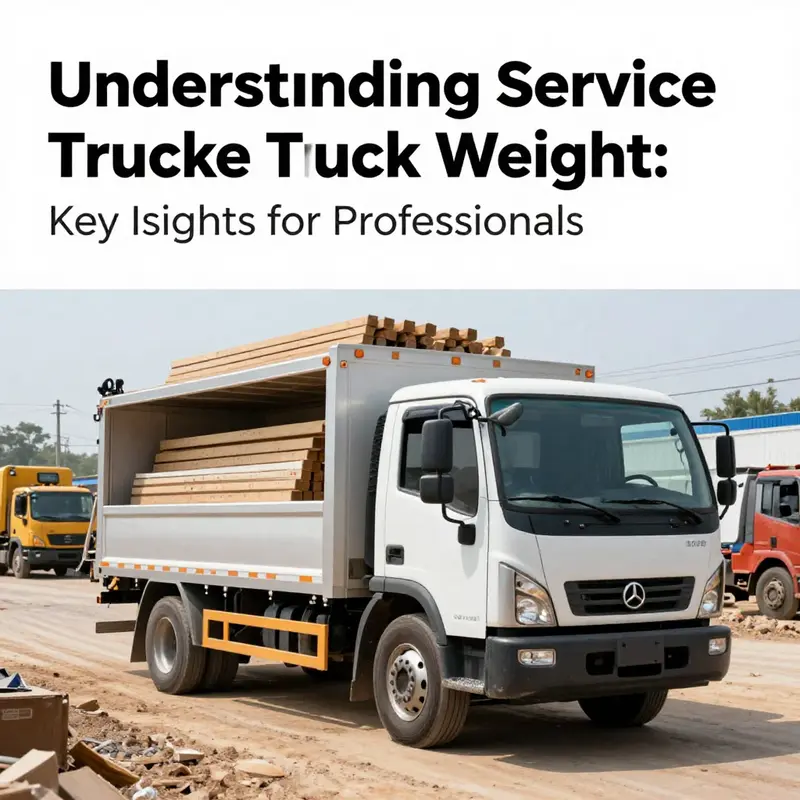
Weight is not a fixed number on a truck’s door or in a catalog. It is a dynamic equation that blends the vehicle’s base mass with every kilogram of tools, fuel, and payload loaded for a workday. In the world of service trucks, weight matters as much as torque or fuel economy. To understand how much a service truck weighs with cargo, start with the concept of GVWR, the maximum allowable weight of a fully loaded vehicle. GVWR ties safety, performance, and regulatory compliance together. It is the hard ceiling that preserves braking capability, steering response, tire integrity, suspension performance, and overall structural safety. When a loading plan ignores GVWR, the risks appear as longer stopping distances, degraded handling, accelerated tire wear, and in the worst cases, a tire or axle failure. This is why any thoughtful fleet operator treats GVWR as the governing constraint for day to day operations. In practical terms, GVWR is a weight guardrail; it does not measure what you plan to haul, but it constrains what you can safely haul in one trip. The guardrail is usually found on a label near the driver’s door jamb or in the vehicle’s official documentation. Reading that label is a neutral act, yet it carries import. It tells you not only the limit but also the roles of the truck’s various components in carrying a load. The curb weight, or the empty weight of the truck, is a baseline figure. It tells you how much of the weight budget remains for cargo, tools, and crew. But curb weight only tells half the story. The other half is the payload—the actual cargo and passengers the truck can carry without surpassing the GVWR. For many service trucks, the spectrum is wide. Light-duty configurations may sit below 10,000 pounds GVWR, emphasizing nimble handling and lower fuel use. Medium-duty trucks push higher into the 10,000 to 26,000 range, where a robust toolbox, durable equipment, and more comfortable crew space become part of daily operations. Heavier service builds tend toward the upper end of that range, and in some specialized configurations, the GVWR can climb well beyond 30,000 pounds. The empty weight in those cases is substantial because the chassis, subframes, and body are reinforced to carry dense payloads, mounting points for heavy gear, and sometimes integrated power sources like gensets. It is tempting to think of a service truck as a simple carrier, but weight architecture tells a more nuanced story. A truck’s mass is not simply the sum of its parts. It is the translation of design choices into load-bearing capability. Drivetrain configuration, body type, and optional equipment all interact to determine how much payload you can safely carry. A truck configured with four-wheel drive, for instance, might gain weight from a heavier drivetrain and extra components while also offering improved traction on uneven job sites. Those trade-offs are not cosmetic; they influence how much cargo can be loaded before you reach the GVWR. When fleets plan for daily operations, they do more than pick a chassis with a certain curb weight. They select a GVWR that aligns with the typical tools, spares, and crew size that the job demands. If the truck will routinely haul ladders, hoses, portable generators, and a crane or winch attachment, the GVWR becomes a crucial planning tool. In practice, you will often see service trucks with curb weights in the 5,000 to 12,000 pound range and GVWRs that exceed 20,000 pounds, sometimes by a comfortable margin. The difference between curb weight and GVWR is the payload budget. It is where many operators misjudge risk by assuming that the actual loaded weight will stay within safe limits. The truth is subtler: you must account not only for the payload but also for the vehicle’s weight growth due to fuel consumption, crew, and even auxiliary systems that may be added after purchase. A belt-driven generator, for instance, or an onboard air compressor, may be installed later in the vehicle’s life and add to the total weight. These additions alter the weight balance and the way the vehicle behaves at speed and on slopes. The difference between a truck that stays within its safe operating envelope and one that tests it is the discipline with which weight is managed. Therefore, it is essential to verify the GVWR before ordering tools and equipment. It is not enough to know the curb weight; you must understand how your normal work routine translates into a predictable, repeatable load. The calculation is straightforward in theory but demands discipline in practice. Start with the curb weight—the base mass of the vehicle with standard equipment, fluids, and no payload. Then define the payload—every tool, spare part, and device that travels on a typical service call. Don’t forget the passengers and any consumables like fuel and lubricant that the vehicle will carry. The sum of curb weight and payload must stay at or below the GVWR. To bring this to life, consider a simplified example. Suppose a service truck has a curb weight of 5,000 pounds and a GVWR of 10,000 pounds. The payload, which includes cargo and passengers, can be safely up to 5,000 pounds. This math is not just numbers on a spec sheet; it is the daily guardrail that keeps the vehicle within safe limits. It also informs maintenance and procurement decisions. If the job requires frequent use of heavy equipment, fleets might seek a higher GVWR to accommodate eventual increases in cargo without pushing the vehicle toward its limit. This is where the practical design choices come into play: the base chassis, the body structure, the weight and positioning of tool racks, and the mounting points for on-board power sources. Each choice affects the loaded weight, its distribution, and the vehicle’s handling. It is no accident that weight distribution is often addressed in tandem with axle load ratings and tire specifications. A well-balanced load reduces the risk of overloading any single axle and helps maintain steering responsiveness and braking effectiveness. In more demanding builds, the weight of the structure itself becomes a factor. A reinforced body, additional cross members, and heavy-duty mounts can push curb weight higher while expanding the vehicle’s capacity to carry heavy, hard-wearing equipment. The trade-off is not simply more weight; it is better resilience, improved durability in harsh environments, and, potentially, an expanded service life under difficult operating conditions. The decision to add such reinforcements is guided by the type of work the vehicle is expected to perform. For instance, a mobile workshop with an integrated crane or winch will be heavier than a standard service van, even before you account for the tools that it carries. In rugged environments, the extra weight can be a strategic asset, providing stability and a steadier platform for maintenance tasks that demand a solid base. Yet this advantage comes with a duty: the operator must account for the heavier footprint. When a truck is heavier, it requires more careful loading practices, more precise weight distribution, and, in some cases, a tailored braking strategy. Tires must be chosen for the higher load ratings, and suspension components should be able to handle the extra mass without excessive wear. These considerations are not mere technicalities; they translate to safer site operations and more predictable vehicle performance, especially on uneven ground, inclines, or when braking under load. The core of the weight conversation is not only safety but compliance. Many jurisdictions enforce weight limits for commercial vehicles, and exceeding the GVWR can carry penalties, affect insurance terms, and trigger more frequent inspections. In addition, operational guidelines emphasize preventing overloading, not just to avoid fines but to preserve the life of the vehicle and the safety of personnel. The aim is to keep every loaded service truck within a predictable performance envelope for the duration of its service life. Place the focus on planning and measurement, not last-minute estimation. One practical approach is to incorporate on-site weighing during routine maintenance or before major project starts. Portable scales, or accessing a certified weigh station when feasible, provides a snapshot of the vehicle’s true loaded weight. This data informs not only safety compliance but maintenance scheduling and parts planning. The more consistent the measurement process, the easier it becomes to forecast consumables and to plan for eventual upgrades or replacements as equipment and tool inventories evolve. For readers who want a broader look at how weight influences specialized emergency and service vehicles, a useful perspective is to consider how modern designs impact load management and safety features. See How Modern Pumper Fire Truck Design Can Save Lives: Essential Features Explained. This linked piece explores the rationale behind design choices in heavy-duty, mission-critical vehicles and highlights how weight planning sits at the center of safety and capability on the road and at the job site. External resource: U.S. Department of Transportation guidelines and related materials provide foundational information on GVWR and weight management for working vehicles, helping fleets align operations with broader safety and regulatory expectations. https://www.transportation.gov
The Mass of Service Workhorses: Decoding How Heavy a Service Truck Really Is Across Configurations
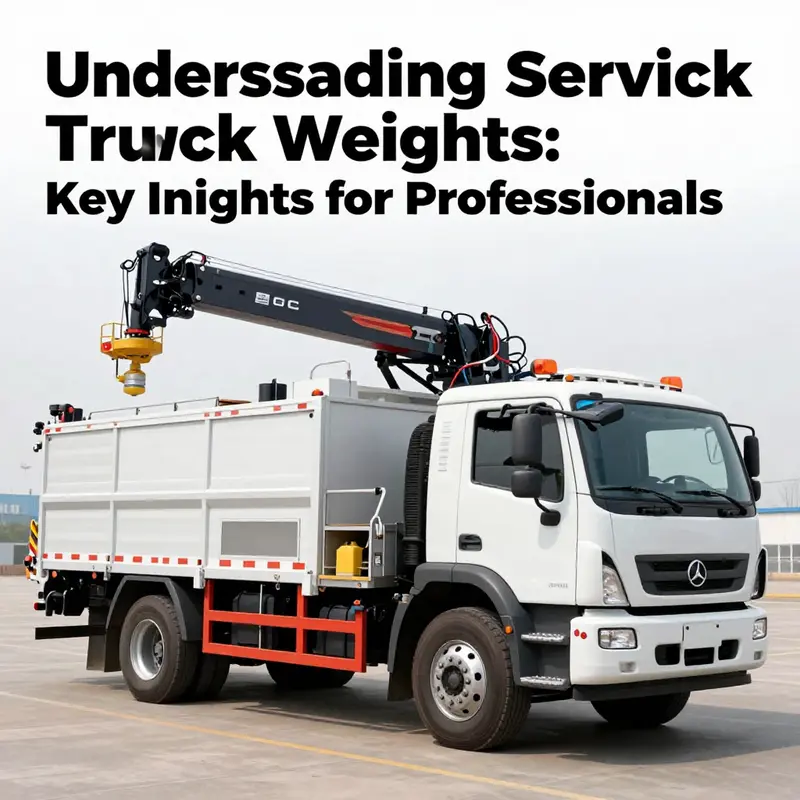
Weight is more than a number on a spec sheet; it is a lens into how a service truck is built to meet its specific mission. When engineers sketch a chassis, when fabricators lay the metal, and when fleets decide what tools ride along, they weigh tradeoffs between strength, reach, and the ability to move. The result is a spectrum of mass that stretches far beyond the familiar silhouette of a pickup and into the realm of specialized workhorses. To understand how much a service truck weighs, one must start with two fundamental references: curb weight and gross vehicle weight. Curb weight is the truck in its empty form, minus any cargo, tools, or consumables, and it typically ranges from about 10,000 to 20,000 pounds for a standard flatbed service truck. This is the mass of the bare chassis with a basic body, a foundation that must still carry the payload of daily work—tools, spare parts, fuel, and maybe a generator or an air compressor. But curb weight is only part of the story. The total mass that matters for safety, road use, and operational capability is the gross vehicle weight, or GVW, which is the curb weight plus everything the vehicle carries. And here the numbers leap upward in meaningful ways: GVW can exceed 30,000 pounds for many service configurations, and for truly specialized rigs—mobile workshops, heavy-duty rescue vehicles, or machines that integrate cranes or large aerial lifts—the weight can push into a heavier class altogether. The simple takeaway is that a service truck’s mass is a function of size, purpose, and the equipment strapped to it. A Sinotruk HOWO mobile workshop, for example, built for rugged mine rescue operations, is mentioned in industry discussions as a heavier, more reinforced configuration designed to withstand harsh environments. It sits toward the higher end of the weight spectrum not merely because of the chassis, but because of the additional structural reinforcements, onboard tools, and heavy-duty components that make the vehicle capable of operating in extreme conditions. This nuance—the difference between curb weight and GVW—frames the common misperception that a “service truck” is a fairly uniform, modestly weighted vehicle. The reality is more intricate: the same category can span from fleets that need high maneuverability with lighter tool loads to operations that require heavy payloads, robust protection, and specialized equipment. The precise weight, of course, is dictated by the manufacturer’s specifications for the model and configuration, and those specs often hinge on drivetrain choices (such as 4×4 versus 4×2), the body type, payload capacity, and options like cranes, winches, or boom lifts. The language of mass, then, is not just about pounds per se; it is about the relationship between mass and mission. A heavy-duty service truck that carries a full complement of tools and a reinforced body must still satisfy the law of the land—axles, tires, braking systems, and suspension must be sized to handle the load safely. The heavier the truck, the more attention is paid to tire load ratings, braking performance, and suspension travel. These are not abstract concerns; they translate into how reliably a crew can navigate rough sites, how safely a vehicle can halt with a full complement of gear, and how much of the day’s work can be accomplished before the next refuel or restock. In the broad spectrum of mass, there is a recognizable pattern: the lighter end of the service-truck family sits in a realm similar to compact or mid-size commercial vans with open platforms or small flatbeds. The curb weight in that range reflects a configuration designed for urban or semi-urban service work—sites with limited access, shorter trips, and lighter tool loads. The heavier end of the spectrum moves into configurations that prioritize durability and tool-carrying capacity over nimbleness. But even within this spectrum there is a continuum: GVW is not a single fixed target. It evolves with the vehicle’s real-world role. For instance, a basic utility or flatbed service truck may present a robust, open-platform body of 16 to 24 feet, equipped with side rails and tie-down points that facilitate the safe stowage of equipment. Those features add substantial mass; the bodies themselves are typically built to endure harsh environments, often employing steel or aluminum in thick gauges. The cumulative effect is that a heavy service truck becomes noticeably heavier than a passenger car or a small pickup, weaving a gradation from everyday transport to specialized, mission-first mass. The contrast with passenger cars is instructive. A typical car weighs between 1 and 3 tons, or roughly 2,000 to 6,000 pounds. Light trucks under 5 tons GVW share some engine and chassis roots with those passenger vehicles but scale up capacity for payloads and durability. Once the GVW climbs beyond that threshold, designers frequently rely on diesel propulsion to deliver the torque and efficiency needed for heavy loads over long service lives. This broad rule of thumb—diesel for heavier masses—reflects the practical constraint that higher mass, when combined with heavy-duty duty cycles, demands a powertrain and cooling system capable of sustaining performance under prolonged stress. The mass of a service truck is thus a function of purpose, but it also reveals a deeper design philosophy: every additional tool, every extra inch of platform, or every reinforced feature must be balanced against the payload it reduces and the wear it imposes on tires and brakes. A 16–24 foot platform with side rails is not just a mass add-on; it represents a decision to accept extra weight in order to provide secure, flexible cargo handling on site, reduce loading times, and keep tools organized for rapid deployment. Heavier equipment, such as cranes or aerial lifts, contributes to mass in predictable ways, yet their benefit is not limited to capacity alone. They expand the operational envelope—allowing a team to lift heavy components, reach elevated work zones, and complete tasks that would otherwise require additional human resources or vehicles. When these devices are installed, the GVW increases, and with it the need for careful planning around axle load distribution, turning radius, and maneuverability. The math behind these decisions is not merely arithmetic; it is a synthesis of mission requirements, site constraints, and availability of spare parts. Fleet managers must weigh the tradeoffs between mass and functionality. A heavier vehicle may carry more tools and enable faster on-site work, but it may also demand larger tires, more robust suspension, and a higher fuel appetite. It can require more planning for road use, especially in urban areas with weight limits on certain streets or bridges. In some fleets, the opposition to mass is practical as well as regulatory: a vehicle that is too heavy for a given route or worksite can become a bottleneck, requiring the team to shuttle equipment in multiple trips or to split the load across several units. The reality is that the heaviest service trucks live in a world where the payload capacity, the body construction, and the installed equipment are designed up front as part of a single, coherent system. Those systems may be built from steel for ultimate resilience or from aluminum to save weight where corrosion resistance and easier maintenance are valued. The choice of material has a direct impact on mass. Steel bodies, known for their durability, typically add more weight but can provide thicker reinforcements where rugged site conditions are the norm. Aluminum bodies, lighter yet robust, reduce curb weight and often increase payload, but they demand careful design to maintain integrity under dynamic loads and field conditions. The assembly details—how toolboxes are mounted, how lighting and electrical systems are integrated, how hydraulic lines and cables are routed—collectively contribute to the total mass. Even the most careful design can’t escape the truth that mass is a defining constraint. It influences everything from the vehicle’s center of gravity to its braking distance, from tire selection to fuel economy, from wheel-well clearance to the ability to upgrade with newer, heavier tools. In practical terms, a heavy-duty service truck will sit in a weight class where the GVW is measured in tons rather than pounds. The documented range from industry standards, as summarized in the research materials, indicates GVW spanning from roughly 2 to 40 tons, or about 4,000 to 80,000 pounds. This statement reflects a broad catalog of commercial vehicles designed for cargo hauling or for transporting more than six passengers, a category that would include specialized service trucks with substantial payloads and heavy hardware. It is a reminder that there is no universal answer to “how much does a service truck weigh?” beyond acknowledging the mission envelope in which the truck operates. A utility or flatbed service truck with an open platform, or a compact crane-equipped unit, might sit toward the lower end of this spectrum yet still be significantly heavier than a family sedan. A mobile workshop, a rescue vehicle, or a unit designed for harsh environments may occupy the upper end, featuring reinforced frames, heavy-duty cradles for tools, and integrated lifting devices that push the total mass toward the extremes of the GVW range. The question then becomes how weight interacts with other performance metrics. Payload capacity is the weight the truck can carry beyond its own mass, and it remains a guiding constraint for customers choosing between configurations. A heavier body built for durability often reduces payload capacity, unless the chassis and drivetrain are upgraded to compensate. This is where the design philosophy comes into sharp focus: the ideal weight of a service truck is the weight that makes the job feasible without compromising safety, reliability, or regulatory compliance. It is no accident that discussions of weight in this sector frequently emphasize the interplay between mass and infrastructure. Heavier trucks require stronger roads, larger traction components, and more capable braking systems. They also push maintenance cycles toward more frequent inspections to ensure that critical parts—like axles, brake rotors, and suspension members—remain within tolerances under heavy use. In the field, these considerations translate into practical decision-making. A fleet may standardize on a range of truck platforms to ensure predictable performance, predictable maintenance, and predictable training for operators. The desire to standardize is not a bureaucratic impulse; it is a response to the physics of mass at work on real-world tasks. As teams design or choose a service truck, they ask: What is the minimum weight that will still deliver the required reach, tool access, and safety margins? What is the maximum payload that can be carried without compromising handling, braking, or fuel economy? How will the mass distribution affect stability while loading, lifting, or driving over uneven terrain? And how do we balance the benefits of heavier equipment with the realities of road limits and maintenance costs? These questions live at the heart of mass and mission. They shape not only the specifications that a manufacturer lists, but also the procurement decisions that a department or company makes when faced with a fleet-wide budget and a catalog of tasks. For readers seeking a way to anchor this discussion in a broader engineering framework, consider the idea that weight is a parameter of system design, not a mere attribute. A well-designed service truck treats mass as a resource to be allocated with care. It assigns weight where it adds leverage—crane reach, winching capacity, or tool organization—while conserving mass where it would only drag down performance. The best practice, in this sense, is to think of weight as a discipline: a disciplined approach to engineering that links the physical mass of the vehicle to how effectively the team can perform critical tasks, respond to emergencies, and complete routine maintenance with minimal friction. In the end, the question of how much a service truck weighs cannot be answered by a single number. It is a spectrum shaped by the vehicle’s size, its configuration, and the operations it is built to support. A fast-moving urban utility truck and a rugged, site-bound heavy-duty responder share a common origin in chassis design and material science, but they diverge early in the design process to solve different problems. That divergence is exactly what makes the topic so compelling: weight is a proxy for capability, but only when it is aligned with purpose. For readers who want to explore this alignment further in the context of emergency services and heavy-duty fleets, there is a broader conversation about design efficiency in emergency services, which examines how mass, power, and payload are harmonized to meet life-safety priorities while maintaining resilience on the road. design efficiency in emergency services. For a macro view of how weight categories are framed in the wider world of heavy transportation and compliance, refer to external sources that outline gross vehicle weight concepts and what they imply for vehicle configuration and operation. For a broad framework of GVW categories, see https://en.wikipedia.org/wiki/Grossvehicleweight.
Weighing Readiness: Navigating the Mass of Service Trucks Across Configurations
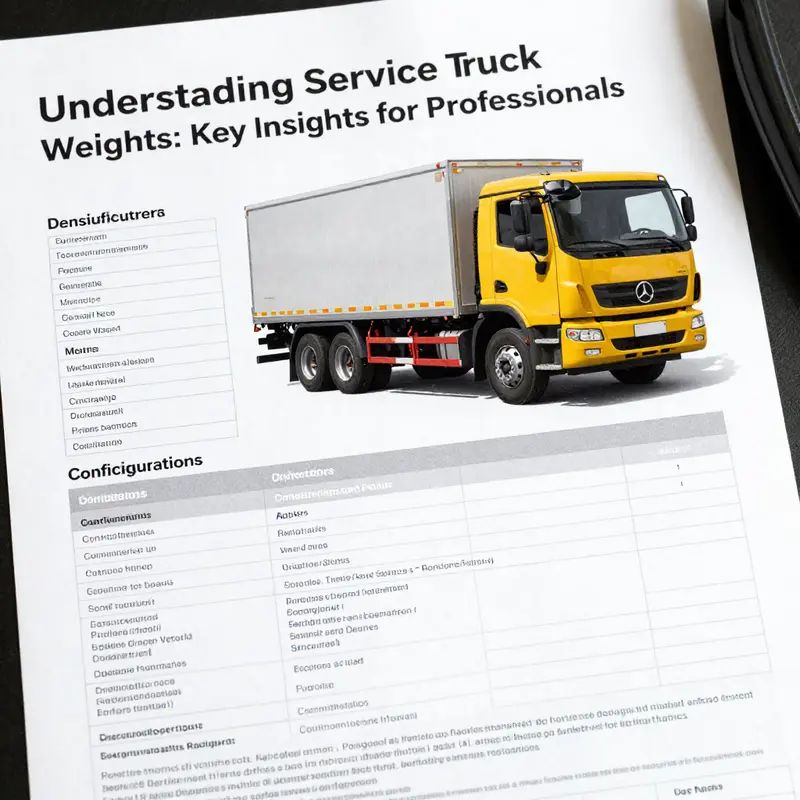
Weighing Readiness: Navigating the Mass of Service Trucks Across Configurations
When people ask how much a service truck weighs, they often expect a single number. In practice, weight is a moving target, shaped by the chassis, the body that sits on it, and the tools and equipment it carries. A service truck is not just a frame and a cab; it’s a platform for work. Every choice in its construction—whether to add a crane, a hydraulic lift, a heavy-duty toolbox, or a steel versus aluminum body—reshapes its mass in meaningful ways. To truly understand what a service truck weighs, one must distinguish between curb weight, GVWR, and payload, and then read those figures in the context of the truck’s intended duties. The basic arithmetic is simple enough: curb weight plus payload equals gross vehicle weight, within the limit defined by the GVWR. But the practical implications of those numbers ripple through maintenance planning, regulatory compliance, and how much work the truck can perform in a day.
Curb weight, the first essential figure, is the weight of the vehicle as built—before fuel, passengers, or cargo. For a wide range of light- to mid-range service configurations based on typical halves-of-a-ton or one-ton chassis, curb weights can vary from roughly 4,500 pounds to 5,500 pounds. These figures reflect a baseline without the add-ons that transform a vehicle into a fully equipped service platform. The next layer, the body, often accounts for a substantial portion of the overall mass. A compact service body with a modest toolbox and basic mounting hardware adds weight; a heavier, reinforced box with roll-up doors, multiple tool compartments, and thick flooring can push curb weight higher. If the truck is configured with a flatbed or a prefabricated platform, the added mass can be significant, sometimes adding thousands of pounds depending on material (steel versus aluminum) and the inclusion of outriggers, winches, or other ballast-like components.
On the other end of the spectrum, there are heavy-duty service trucks designed to carry large tool inventories, specialized equipment, or heavy lifting capabilities. In these cases, curb weight can climb well beyond 12,000 pounds even before any cargo or fuel is added. The heavier the chassis and the more robust the equipment, the greater the curb weight—often driven by structural reinforcements, payload-focused bodies, hydraulic systems, and the sheer mass of cranes or lifts that may be integrated into the vehicle. Such configurations are not merely about hauling more stuff; they are about enabling certain workflows in which carrying capacity and tool reach are as critical as the ability to move quickly on a job site. While curb weight provides a baseline, it is the gross vehicle weight rating (GVWR) that sets the ceiling for what the truck can legally carry and safely maneuver with. GVWR is not a number to be taken lightly; it includes the structure of the truck, the fuel it carries, the occupants, and the installed equipment. For fleets, this is a central control point—an anchor for planning, licensing, insurance, and compliance.
The most widely cited practical context for service trucks is the range of masses observed in real-world deployments. A standard flatbed service truck, used across construction sites, landscaping, or general freight, typically weighs between 10,000 and 20,000 pounds when empty. That range reflects a broad spectrum of chassis choices, body styles, and the presence or absence of auxiliary hardware. When cargo, tools, and additional equipment are loaded, the total weight can exceed 30,000 pounds, placing many trucks squarely in the heavy range of GVWR. In some specialized or high-end installations—mobile workshops, rescue vehicles, or emergency response platforms—the weight can move even higher as structural reinforcements and heavy-duty components become essential to perform critical tasks. A rugged, purpose-built mobile workshop with a crane, for instance, tends toward the upper end of the weight spectrum because every major system is sized for durability and capability rather than minimal mass.
If the picture seems still a little diffuse, think of it in terms of a simple equation that fleets and operators use every day. Curb weight plus payload equals GVW, up to GVWR. The payload is the difference between GVWR and curb weight, representing the maximum additional weight the truck can safely carry. However, this is where caution and precision come into play: payload is not merely cargo. It includes tools, equipment, people, and even the weight of fuel that is typically on board during a mission or a workday. Different configurations shift this balance. A light-duty chassis with a compact service body will typically offer a higher relative payload than a heavily reinforced chassis built to carry a crane or large hydraulic system. In other words, two trucks with similar curb weights can have very different payload allowances depending on how they are built.
The role of drivetrain layout—such as 4×4 versus 4×2—also ripples through the weight story. A four-wheel-drive system adds weight through transfer cases, front transmissions, and sometimes heavier axles. In some service contexts, 4×4 capability is a core requirement for off-road or uneven terrain work sites. The trade-off is additional mass and, often, higher GVWR thresholds. Conversely, a lighter 4×2 configuration may maximize payload by shedding some drivetrain heft. The choice between these drivetrains is not just about weight; it is about the environments in which the truck operates, the downtime a fleet can tolerate, and the risk profile of the job site. When a vehicle’s mission relies heavily on reaching remote locations, the added weight of a 4×4 system can be justified by the benefit of mobility and reliability on challenging terrain. When the work occurs on established, smooth surfaces, fleets might prefer a lighter setup to optimize payload, fuel efficiency, and maneuverability.
The body type amplifies these differences. A basic flatbed is straightforward and light relative to a fully built out service body with integrated tool wells, drawers, and locking mechanisms. Aluminum bodies can reduce overall mass compared with steel, yet they may incur higher maintenance considerations and cost. The material choice, combined with the depth and quantity of compartments, determines how much mass settles in the back of the truck. A typical service body with reinforced mounting points and a robust flooring system can push curb weight higher, even before the addition of hoists, cranes, or winches. The mass of a crane, when mounted on a service platform, is not trifling. Even a compact crane increases the weight budget and affects the distribution of load across axles. When a vehicle is designed with heavy-duty lifting capabilities, engineers must account for increased axle ratings and better suspension to maintain ride quality and safety while carrying heavy loads.
All of this matters beyond the weight on a spec sheet. Weight affects performance in real life. Heavier trucks demand longer braking distances and more powerful braking systems. They require sturdier suspensions, and they can exhibit reduced acceleration and higher fuel consumption. The service mission often competes with the need for rapid response and high availability; therefore, fleets must balance mass with responsiveness. Heavier platforms may also experience greater tire wear, more strain on the drivetrain, and higher maintenance costs. In planning, operators weigh these trade-offs against the payload needs dictated by the tools, spare parts, and equipment carried to service sites.
To make informed choices, manufacturers publish detailed specification sheets that include curb weight, GVWR, and payload capacity. These documents enable fleet managers to compare configurations side by side and understand what a particular build can or cannot do. The emphasis is less on a single “ideal” weight and more on a thoughtful balance: how much mass is acceptable under regulatory limits, how much payload is required for daily tasks, and how the weight interacts with road use, licensing, and insurance requirements. A careful reading of these specifications makes it clear that weight is a design constraint as much as a performance parameter.
In practice, this means evaluating a truck’s intended duty cycle with its mass properties in mind. A typical medium-duty service truck that operates on urban streets and moderate-demand sites benefits from a configuration that maximizes payload while keeping GVWR within a reasonable range for driver licensing, fuel efficiency, and maintenance. In contrast, a heavy-duty configuration designed for rugged sites or specialized operations may accept a higher curb weight because the job requires robust equipment and reliability in difficult environments. In both cases, the key is to align weight with mission. It is not a debate about heavier or lighter in isolation; it is a conversation about capability, safety, and lifecycle costs.
For practical planning, the sum of the published guidance becomes a working heuristic: a light-duty, compact service truck often starts with a curb weight around 4,500 to 5,500 pounds and can carry a payload that keeps the GVWR in a functional range for urban or light-site work. A typical flatbed or utility configuration used on larger sites might begin closer to 10,000 pounds empty, with the GVWR pushing well beyond 30,000 pounds once tools and cargo are loaded. Specialized mobile workshops or rescue-oriented platforms push even further, often entering the higher mass bands created by reinforced structures and integrated heavy equipment. These general guidelines align with the principle that weight scales with the breadth of capabilities a truck is expected to deliver on the job.
From a procurement perspective, the fundamental insight is that weight is not a footnote. It influences licensing categories and registration, insurance premiums, and maintenance planning. It shapes a fleet’s maneuverability in tight spaces and its fuel economy over long routes. It informs the cost of ownership over the vehicle’s life and the payback period for any upgrade—from aluminum body conversion to add-on cranes or lifts. In short, weight is a core variable in the equation of readiness. When a fleet considers a new configuration, it is not simply choosing a body style or a tool attachment; it is selecting a mass profile that will govern performance, safety, and cost for years to come.
Throughout the field, there is a shared realization: precise weight data must come from the manufacturer’s specifications. OEMs publish exact curb weights, GVWR, and payload capacities for each model and configuration. For those who operate fleets, this means regularly reviewing the latest spec sheets and cross-checking any deviation caused by aftermarket modifications. It also means recognizing that real-world weight shifts with fuel levels and passenger loads. A full fuel tank can add hundreds of pounds; a crew of four adds further weight. The dynamic nature of weight—how it changes with fuel, passengers, and cargo—means operators should weigh trucks under typical operating conditions, not just in vacuum conditions on a spec sheet.
To connect this practical framing to the broader conversation about design and efficiency in emergency and service vehicles, consider how designers approach mass as a feature of capability. The aim is not to build the heaviest possible machine but to optimize the mass-to-performance ratio. When a platform is engineered with modular body components, lighter materials, and intelligent load distribution, the same payload capacity can be achieved with less overall weight. This principle underpins the idea of design efficiency in emergency services: mass is managed, not merely added, to maximize uptime, safety, and effectiveness on the ground. See how this concept is discussed in the context of emergency-service design at design-efficiency-in-emergency-services, where the interplay between weight, durability, and mission tempo is explored in depth. design-efficiency-in-emergency-services.
For readers who need a concrete frame of reference when evaluating a specific setup, the process is straightforward in outline, though the details require careful reading of the actual specification sheets. Start with curb weight to establish the base mass. Then examine GVWR to understand the maximum permissible weight under regulatory and safety constraints. Subtract curb weight from GVWR to determine payload capacity, remembering that fuel and occupants also consume some of that capacity. Consider the distribution of that payload across axles and the implications for braking, steering, and tire loads. If the job requires lifting equipment or heavy on-site tools, quantify the additional mass these pieces contribute and ensure the final GVW remains within safe operating limits for the chosen route and site. This method keeps the weight discussion grounded in practical operations rather than abstract numbers.
Where this approach becomes even more important is in planning and procurement. A fleet manager who understands these dynamics can tailor a truck to the actual work profile of the team. If most days involve carrying a broad assortment of hand tools and compact equipment, a configuration with higher payload and lighter, corrosion-resistant body materials may yield meaningful gains in efficiency and return on investment. If the job demands on-site heavy lifting or specialized work platforms, a heavier chassis with reinforced structure and integrated cranes might be the correct choice, even if it means accepting a lower payload fraction. Either path is legitimate when weight is treated as a deliberate design constraint and a driver of performance, maintenance, and cost over the vehicle’s lifespan.
In sum, there is no single answer to how much a service truck weighs. The numbers matter, but they matter in relation to what the truck is asked to do. Curb weight tells you the baseline; GVWR tells you the ceiling; payload reveals what you can carry. The configuration—light-duty versus heavy-duty, 4×4 versus 4×2, body type and materials, integrated equipment—drives those figures in meaningful and sometimes surprising ways. Understanding these relationships enables more accurate budgeting, safer operation, and smarter maintenance planning. It also supports smarter procurement decisions that align with the realities of the job site and the demands of the fleet. The weight conversation, properly anchored in manufacturer specifications and real-world usage, becomes a practical guide rather than a vague mystery.
For operators and managers who want to anchor their decisions in authoritative references, the OEM specification sheets remain the gold standard. They provide the precise curb weight, GVWR, and payload for each configuration and are essential when compiling fleet inventories, setting insurance levels, or obtaining the necessary licensing and permits. When changes occur—whether through equipment upgrades, body replacements, or the addition of lifting devices—revisiting these specifications is prudent. It ensures the vehicle remains compliant with road and workplace regulations and that its performance aligns with the work it is designed to perform. In the end, the weight of a service truck is not just a statistic. It is a measure of readiness, capability, and the alignment between a machine and the tasks it is built to accomplish on the job site.
External resource for further reference: https://www.ford.com/commercial/
Final thoughts
Understanding how much a service truck weighs — from curb weight to gross vehicle weight, and the nuances of specialized models — is essential for enhancing safety, efficiency, and compliance within your fleet operations. Armed with this knowledge, industry professionals can make decisions that positively impact their operations and manage their fleets with greater precision. Prioritize comprehensive weight analysis in your planning to ensure optimal performance.