

In a world increasingly dependent on efficient logistics, understanding who builds postal service trucks unveils the partnerships and innovations that are driving the industry forward. From electric vehicles to custom builds, a variety of manufacturers play critical roles in meeting the unique needs of postal services globally. This article delves into four chapters, each focusing on different aspects of postal service trucks: the prominent manufacturers leading the charge, the significant shift towards electric vehicles, global collaborations, and the customization options that enhance operational efficiency. By the end, readers will have a comprehensive understanding of the landscape of postal service truck manufacturing and its implications for the future of logistics.
Behind the Wheel: Who Builds Postal Service Trucks in a Global, Electrified Fleet Era

When a country wires its mail system into the future, the vehicles that carry its daily inbox become more than stubborn metal and tires. They are a blend of national pride, industrial policy, and engineering collaboration that travels across oceans, borders, and battery packs. The simple question—who builds postal service trucks—unfolds into a story of domestic champions, international partners, and a shifting fleet that leans toward electrification, resilience, and adaptability. Across continents, post offices rely on a spectrum of builders: some sit on the cradle of a nation’s industrial base, others are multinational teams that remix existing platforms to meet a country’s geography, climate, and delivery rhythms. The result is a fleet that looks different in each place, yet follows a shared arc toward safer, cleaner, and more efficient urban and rural mail service.
In the United States, the recent push to modernize the postal fleet marks a turning point. The program selected a Wisconsin-based defense contractor to lead the production of the New Generation Delivery Vehicle, an acknowledgment that the best path forward for a fleet as large and mission-critical as USPS hinges on a partner with heavy experience in demanding environments. The choice did not come after a single test or one flashy prototype. It followed a multi-year comparison among several bidders, each of them presenting workhorse concepts, performance data, and proof-of-concept designs intended to prove capability for city streets, suburban routes, and the tough demands of last-mile delivery. The decision reinforces a broader truth about large, public fleets: the strongest supplier is not merely the one with the flashiest prototype, but the one that can scale, service, and sustain a national network over a decade.**
This sense of scale matters. In a program that runs for ten years, the vehicle is more than a one-off purchase. It becomes part of a nationwide service ecosystem—maintenance depots, tire and parts supply chains, driver training, and telematics platforms that stitch together route planning, safety, and performance analytics. The chosen contractor is expected to bring a seamless sustainment model to the table, along with a vehicle architecture that supports evolving needs—greater cargo space for expanding e-commerce deliveries, advanced safety features to protect drivers in urban environments, and efficiencies that improve fuel use and reduce emissions over a lifecycle of tens of millions of miles. The emphasis on domestic manufacturing and a long horizon for returns makes the procurement decision as much about national resilience as about vehicle design. The broader perspective is not simply about a single model; it is about a fleet that can adapt to changing patterns in mail and parcel volumes, with an eye toward reliability when weather, terrain, and demand spikes collide.**
The testing phase itself offers a window into how postal fleets are evaluated. Prototypes from several potential suppliers were tested under rigorous conditions, often in real-service environments. The aim was to learn how a vehicle handles the unpredictable rhythms of door-to-door delivery, including the frequent stop-and-go in dense city blocks, the long-haul shuffle between sorting facilities and rural outposts, and the constant need for quick, safe loading and unloading. In such contexts, engineers weigh factors that go beyond pure speed or payload. They examine braking performance on wet streets, the accuracy of sensor systems in urban canyons, the durability of the chassis in extreme temperatures, and the ease with which drivers can operate controls while wearing gloves. The evaluations also probe how well a fleet can integrate with a modern network of tracking, maintenance scheduling, and predictive analytics that foretell preventive care before a fault becomes a disruption. The result is a selection grounded as much in operational readiness as in architectural elegance.**
Beyond the core vehicle, the procurement story highlights an ecosystem of partners that support a national fleet. The USPS project, like many postal modernization efforts around the world, works with subcontractors and suppliers that supply tires, assemblies, and specialized equipment. The agency does not publicly disclose every component supplier, but it signals a priority for a domestically anchored supply chain and long-term service networks. This approach is deliberate. When millions of miles of service life are anticipated, it is not enough to build a vehicle that meets current needs. The fleet must also accommodate future service and replacement cycles, adjust to evolving regulatory requirements, and stay compatible with updated maintenance practices across hundreds of facilities. A strong emphasis on local manufacturing and regional service centers makes the difference between a fleet that rents its capability from a few big hubs and one that distributes maintenance responsibility across dozens of locations. This distribution of capability underpins the reliability that postal operations demand, especially as the amount of parcels in the delivery mix continues to grow and the geographic spread of routes broadens.**
Across the Atlantic, the postal fleet landscape showcases a different blend of collaboration patterns. In Europe, several countries pursue electrification by engaging with specialized vehicle builders and adapting known platforms to their unique requirements. For instance, a UK-based company has been developing and delivering fully electric commercial trucks to a national postal service. The vehicles are produced at a local factory, allowing for close collaboration with the carrier on the specifics of urban routes, package volumes, and charging strategies. The emphasis here is on integrating electrification with a dense city network, where charging infrastructure, driver training, and fleet scheduling must align to minimize downtime. In the same region, a major European automaker has begun producing electric delivery vans at a plant in the northwest of the country, with a portion of planned volumes allocated to the postal network. The approach demonstrates a willingness to repurpose existing manufacturing capabilities for public service, reducing lead times while leveraging established supply chains and dealer networks for maintenance and support.**
Elsewhere in Europe, a German automaker has created customized delivery vehicles for a Nordic postal operator, which recently launched several hundred such units. The Nordic project illustrates how customization—tailored to climate, road conditions, and winter driving realities—can coexist with mass production. In these deployments, the vehicles’ design is not simply about moving an envelope from A to B. It is about cold-weather resilience, glare management in snow, cargo security, and efficient warming or cooling of cargo spaces as needed. It is also about ensuring that telematics and safety systems function across a broad temperature range, since the operational realities differ markedly from those found in milder climates. In Asia, collaborations between a major Chinese heavy-vehicle manufacturer and its state postal group demonstrate another model: vehicles designed for internal logistics and plant-to-plant operations. These programs are not front-line city delivery fleets but rather a crucial piece of the overall supply chain, enabling synchronized manufacturing, distribution, and service within the organization itself. They remind us that the same family of engineering skills that powers a city delivery van can serve a broader logistic system when directed through the right partnership approach.**
What emerges from these cross-border patterns is a distinctive balance between specialization and adaptability. Post offices tend to favor builders who can offer more than a single, one-size-fits-all platform. They look for modular architectures that can be reconfigured as delivery models evolve. The trade-off between custom features and scalable production is resolved not by chasing novelty alone but by cultivating a toolkit of proven design elements that can be assembled for specific routes, weather zones, or regulatory contexts. In practice, this means a base platform with flexible powertrain options, a configurable cargo module, and a suite of safety and connectivity features that can be upgraded without forcing a complete fleet replacement. The result is a fleet that looks different from city to city but shares a common backbone of reliability, serviceability, and forward compatibility.**
A final thread through these stories is the strategic lesson about how public fleets communicate with the private sector. Procurement policies that encourage domestic manufacturing do more than preserve jobs. They help create local ecosystems of maintenance, training, and parts supply that can cut downtime and extend the life of every vehicle. Long-term contracts provide the incentive for ongoing innovation and retrofit programs that keep a fleet current with evolving safety standards and environmental goals. And because postal routes are not uniform—urban deliveries differ from rural mail routes, and weekend parcel surges can upend routing—the vehicles themselves must be designed with flexibility in mind. The best builders bring both a disciplined process for meeting formal requirements and a willingness to co-create with postal operators, testing ideas in pilots and scaling the successful ones to full deployment. It is this blend of rigor and collaboration that underwrites the confidence that a public fleet can deliver the mail every day, in every season, with safety, efficiency, and resilience.**
For readers seeking the official blueprint behind the latest USPS procurement, the public record provides a concise, authoritative account of the decision and its implications. The contract and its framing document outline the emphasis on durability, serviceability, and lifecycle cost, alongside the expectations for safety enhancements and adaptability to a shifting delivery landscape. Those details reinforce the larger narrative: postal service trucks are not simply vehicles; they are instruments of national-scale logistics strategy, built through a careful choreography of domestic capability, global collaboration, and a shared commitment to keeping the mail moving in a fast-changing world.**
External resource: For official details, see the USPS press release detailing the contract award and the program’s goals. USPS press release
null
null
Who Builds Postal Service Trucks: Global Partnerships Steering the Fleet Toward Electrified Deliveries
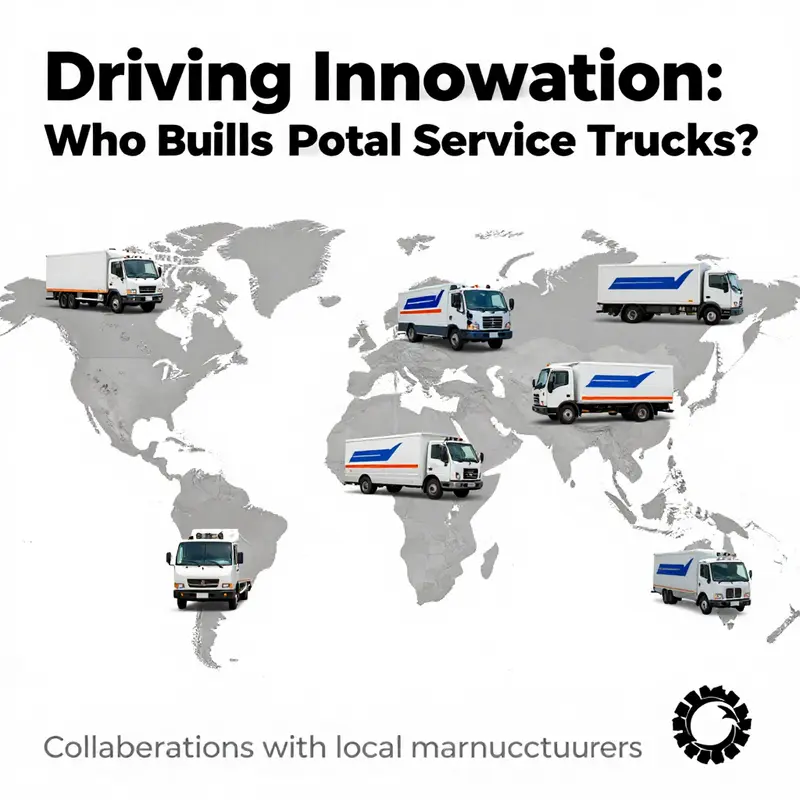
The question of who builds postal service trucks reveals a mosaic of approaches shaped by geography, policy, and the urgent push toward electrification. Fleets around the world do not rely on a single supplier but instead draw on a spectrum of collaborations. Public postal services increasingly pair with specialized vehicle manufacturers, adapt existing platforms, and lean on domestic and international engineering partnerships to meet evolving needs. The result is a narrative of global collaboration, where engineering prowess, local manufacturing capability, and clear policy signals converge to redefine how last-mile logistics move through cities and countryside alike. In this broader view, the postal fleet becomes less about a single brand and more about a system that blends design intent with regional capability to deliver reliability, safety, and lower emissions at scale.
Across the United Kingdom and Europe, the trend toward electrification has sharpened the emphasis on local production and customization. In the UK, a national postal service has begun to electrify its urban and peri-urban routes by partnering with a domestic electric-truck producer that operates a factory in a historic industrial heartland. The arrangement reflects a broader strategy: place manufacturing near service patterns, reduce wait times for maintenance and parts, and align vehicle performance with the rhythms of city delivery. The chosen approach emphasizes not only powertrain but the integration of charging, thermal management, and bodywork tuned for daily city duty. In practice, this means a fleet built to endure frequent stops, frequent curbside loading, and a workload that varies by district. Rather than a single, off-the-shelf solution, the operator favors a platform that can be adapted to different urban terrains, weather conditions, and staffing models. The result is a vehicle family that grows in step with the city’s needs and the service’s safety standards.
In continental Europe, another pattern emerges. A major national operator collaborates with a traditional European automaker to deliver customized delivery vehicles. The collaboration centers on adapting a proven commercial platform to function as a reliable day-to-day carrier, with emphasis on cabin ergonomics for drivers and ease of maintenance for technicians. The emphasis on customization mirrors the realities of a public fleet: routes vary by climate, road quality, and duty cycle, and the vehicles must endure long service lives with predictable upkeep. The scale is compelling—hundreds of vehicles integrated into a single harmonized fleet—yet the core principle remains simple: the postal service seeks vehicles that can blend into the daily fabric of the town and the countryside, operate with predictable energy use, and be supported by a robust regional service network.
Beyond Europe, a leading Asia-Pacific manufacturing hub has begun to supply internal-use logistics vehicles to a major postal group. The arrangement points to a broader ecosystem: a manufacturer that not only builds the body and chassis but also coordinates with the postal operator on plant-level logistics. These internal-use vehicles are not customer-facing parade pieces; they are quiet workhorses designed for efficiency and reliability inside sprawling production complexes and distribution campuses. This kind of collaboration underscores how public fleets can become living laboratories for sustainable logistics. They test new materials, new drive trains, and new maintenance practices under real-world conditions, and they feed lessons back into both industrial design and national procurement strategies. The central theme across these markets is clear: smart public fleets seed long-term relationships with manufacturers who understand the dual demands of high uptime and evolving environmental standards.
In other parts of the world, another alliance model appears: a traditional automaker partners with a Nordic postal operator to deliver a fleet tailored for cold climates and long-term durability. The earmarked program includes hundreds of customized delivery vehicles designed with a specific balance of performance, safety, and serviceability in mind. The focus on environmental performance is not merely a box to check; it’s a strategic choice linked to energy availability, maintenance infrastructure, and the total cost of ownership over the vehicle’s operational life. The resulting vehicles reflect not only engineering excellence but a deep understanding of the daily choreography that postal work entails—from safe curbside loading to efficient, predictable routes in variable weather conditions. In these stories, the postal operator’s procurement strategy becomes a blueprint for how to align regional manufacturing ecosystems with public-service needs, ensuring that the fleet can adapt to shifting volumes, evolving regulations, and new forms of urban mobility.
Taken together, these global examples illustrate a broader pattern: public postal services often attach themselves to a coalition of providers rather than rely on a single source of supply. They favor partnerships that balance domestic capability with international engineering know-how, and they prefer platforms that can be electrified or adapted to alternative fuels as technology and policy evolve. This is not merely about choosing a vehicle that meets a torque and payload specification; it is about building a sustainable, maintainable operation where vehicles are components of a larger system. The charging infrastructure, the supply of tires suited to electrified drivelines, the training for technicians, and the readiness of spare parts all become part of a coherent value proposition. In this light, the choice of builder becomes as consequential as the limits of the vehicle’s payload or its top speed. The goal is a public fleet that can uphold safety, reliability, and service quality while advancing environmental objectives in lockstep with the communities it serves.
The United States provides a particularly instructive case study in how a modern, large-scale public fleet thinks about procurement and manufacturing partnerships. The national postal service has embarked on a multi-billion-dollar modernization program for its delivery vehicles. This initiative is framed not as a single procurement but as a long horizon of capability development, safety improvements, and emissions reductions. The program has moved beyond preliminary demonstrations to actively evaluating a slate of prototypes from several candidates. Although the final supplier has not been publicly disclosed, the field includes a blend of traditional defense-oriented vehicle builders, mainstream commercial vehicle manufacturers, and international groups that bring complementary strengths to the table. Each candidate offers a distinct balance of durability, manufacturability, and scale. The defense-oriented builder brings rugged reliability and a heritage of heavy-duty platforms designed for tough service. The mainstream commercial producer emphasizes production efficiency, driver comfort, and broad service networks. The multinational with North American operations provides a bridge to global supply chains, potentially smoothing parts availability and support across multiple regions. The diversity of candidates signals a thoughtful approach: the postal service wants a vehicle platform that can perform across a broad set of duties—from urban routes to less-predictable rural corridors—while also enabling a future shift to electrification without a wholesale rebuild of the fleet.
As in other regions, the path forward for the U.S. fleet involves more than the vehicle itself. The procurement decision reverberates through maintenance practices, tire compatibility, and energy strategy. Tire selection, in particular, becomes a focal point as the vehicles transition to electrified drivetrains or other advanced powertrains. The lighter footprint of electric propulsion, combined with different traction characteristics and energy recovery mechanisms, changes wear patterns and operating costs. Public fleets, therefore, are considering not only who can deliver the vehicle but who can sustain it over decades—ensuring that tires, battery maintenance, charging infrastructure, and spare parts are aligned with the chosen platform. The implications ripple into the supply chain: tire makers, battery suppliers, and service networks must scale in tandem with the fleet’s growth and the service’s demand for reliability and uptime. In this sense, the expected final decision later in 2026 is less a singular award than a milestone that signals how the public sector will align its long-term vehicle strategy with evolving energy markets, urban mobility goals, and the practical realities of a government fleet’s operating life.
This global picture—where public fleets converge with a mix of domestic and international builders, where electrification is a trend rather than a one-off experiment, and where procurement decisions shape the lifecycles of tires, services, and maintenance—points to a broader shift in how public services leverage industrial ecosystems. It highlights the importance of regional manufacturing capacity, the value of long-term partnerships, and the need for adaptable platforms that can transition from conventional internal-combustion architectures to electrified or hybrid configurations without catastrophic redesigns. The postal fleet thus becomes a testbed for public-private collaboration: a space where government policy, industrial capability, and the daily chore of delivering mail or parcels intersect with the evolving landscape of sustainable mobility. In this framework, the question of who builds postal service trucks is reframed from a search for a single brand to an inquiry into the partnerships, infrastructures, and strategies that together sustain critical logistics networks for decades to come.
For readers seeking more official context on how these decisions unfold in the United States, the national postal service’s public-facing portal provides the authoritative overview and updates on the next-generation delivery vehicle program. This resource situates the procurement in the broader policy and budgetary framework, helping readers understand how a multi-year, multi-stakeholder process advances from concept to contract. As public fleets look to scale electrification and improve safety metrics, the story of who builds postal service trucks becomes an ongoing narrative of collaboration, adaptation, and strategic investment rather than a simple tally of names on a spec sheet. Internal links can offer broader procurement perspectives for readers interested in cross-portfolio public fleet strategies—such as this discussion on how fleets approach procurement in high-stakes, safety-critical contexts. See for context: fire apparatus procurement.
External reference: For official details on the U.S. Postal Service program and the procurement process, please visit https://about.usps.com/.
Engineered for the Post: The Hidden Architects Behind Postal Delivery Fleets
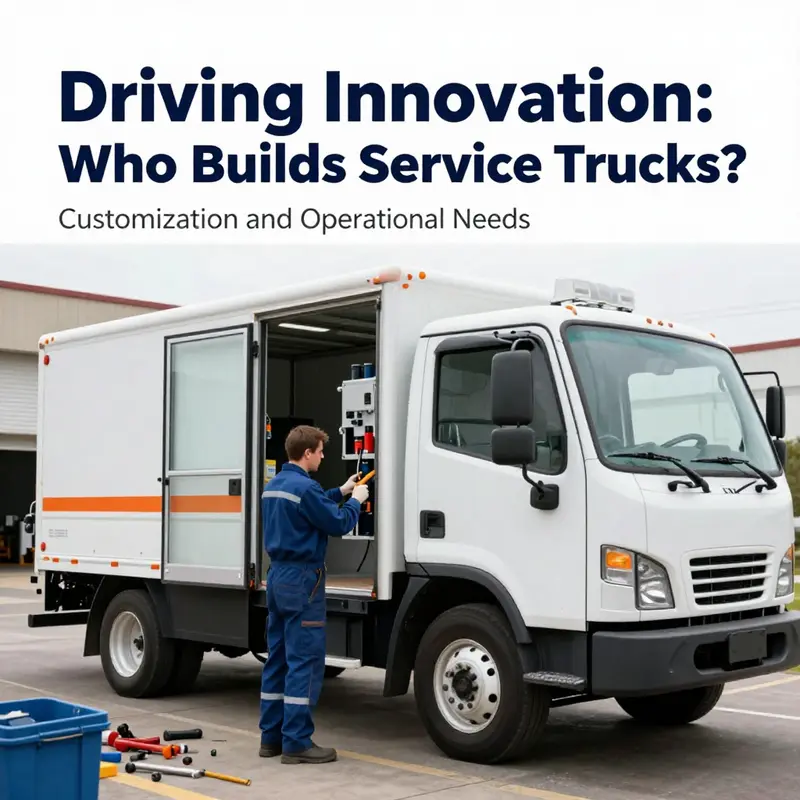
The question of who builds postal service trucks goes deeper than naming a single manufacturer. It is a story of mission-specific engineering, cross-border procurement strategies, and the careful balance between customization and scale. Across countries, postal services occupy a peculiar intersection of logistics, public service, and environmental stewardship. They must carry a varied mail mix, accommodate parcels, support daily routes through dense urban cores and open rural lanes, and do so with predictable reliability over many years. In that sense, the trucks used by postal operators are not just transportation; they are instruments of workflow. They must be adaptable to evolving sorting technologies, resilient in harsh weather, and economical to operate in the long run. This is why many postal fleets do not rely on off-the-shelf cargo platforms alone. Instead, they engage in bespoke collaborations that translate a carrier’s unique needs into the vehicle’s core architecture and daily performance.
In practice, national programs often hinge on a blend of local capability and global know-how. In the United Kingdom, a domestic electric-truck developer has been supplying fully electric commercial trucks to the national postal operator, with production centralized at a modern facility in Banbury. This arrangement illustrates a broader pattern: countries transitioning to electric fleets not only acquire new battery powertrains, but also seek to preserve route-level efficiency and operator familiarity. The goal is not merely to replace engines with batteries; it is to reimagine the truck as a moving extension of the postal network itself, capable of integrating with sorting centers, parcel lockers, and real-time route optimization.
A separate but parallel approach comes from a global automaker that has announced involvement in delivering electric delivery vehicles for the same postal service. Rather than licensing an off-the-shelf van, the collaboration centers on modular platforms and coordinated manufacturing that can align long-term service support with lifecycle costs. In practice, this means the vehicle’s electrical architecture, chassis geometry, and cargo configuration can be tuned to optimize door access, loading efficiency, and driver ergonomics across thousands of daily runs. The emphasis remains squarely on customization, not just capability. The plant in question is prepared to scale production while maintaining a tight feedback loop with operations teams, so that field data can drive incremental improvements over time.
In another part of the world, a large Chinese heavy-truck manufacturer partners with its national postal group to deliver integrated logistics solutions for internal use. The collaboration goes beyond mere vehicle provisioning. It strengthens the supply chain by aligning vehicle design with plant floor needs, fleet-wide telematics, and maintenance planning. In this arrangement, the trucks are embedded in a broader ecosystem—one that coordinates with warehouse staging, sorting pipelines, and last-mile handoffs. The emphasis is on reliability and interoperability; the fleets are not just rolling assets, but nodes in a network that must perform consistently across shifts, weather, and the unpredictable rhythms of daily mail and parcel volume.
Meanwhile in Europe’s north, a major German automaker has crafted customized delivery solutions for a Nordic postal operator. The work highlights another truth: customization often flows from a deep understanding of local operational realities. In cold-weather regions, for instance, thermal management, cabin insulation, and battery performance under freezing conditions become essential design considerations. In warmer climates or in areas with heavy parcel traffic, cargo configurations that maximize access and minimize handling time can yield meaningful productivity gains. Across these examples, the thread is clear: specialized fleets demand engineering that is tuned to a mission, not merely marketed as a feature set.
The United States provides a particularly instructive case study in the deliberate, multi-year journey from concept to contract. The USPS embarked on a comprehensive program to replace a long-standing, aging delivery fleet with next-generation delivery vehicles tailored to its operational realities. A formal, decade-long procurement process was launched after an extensive period of research and field testing. Prototypes from a range of manufacturers were evaluated against stringent criteria, including cargo geometry, door configurations, driver safety systems, ergonomics, and the ability to integrate with existing sorting and package-handling workflows. The evaluation also weighed maintenance considerations, total cost of ownership, charging strategies, and the vehicle’s resilience over tens of thousands of miles of daily use. The culmination of this process was the selection of a single contractor to manufacture the NGDVs, reflecting a preference for a tightly aligned system: a vehicle, a service network, and a plan for ongoing support that can adapt to changing operational demands over time.
The emphasis on bespoke engineering—where the vehicle is designed, tested, and produced to fit a precise mission—illustrates a broader industry pattern. Postal fleets around the world increasingly favor partnerships with specialized builders or manufacturers that can adapt platforms to the mail and parcel mix, as well as the evolving expectations of sustainability and efficiency. The shift toward electrification compounds this need. Batteries, charging infrastructure, and vehicle software all demand a coordinated approach that integrates vehicle engineering with fleet management, facility charging planning, and technician training. The result is a fleet that behaves less like a collection of independent vans and more like a unified, mission-driven system capable of reducing emissions, increasing route reliability, and lowering operating costs over the long horizon of a postal contract.
This integrated view of who builds postal service trucks also helps explain how the procurement process itself has evolved. Rather than a single swap of hardware, postal operators are entering into long-term collaborations that combine design, manufacturing, and aftercare into a single program. The long horizon encourages investment in durability, modularity, and upgrade paths that can accommodate future advances in propulsion, autonomy, and data analytics. It also creates a framework for continuous improvement: pilots, real-world testing, and phased rollouts allowed the USPS to refine capacity planning, adapt cargo layouts, and optimize power management. In practice, that means the winning bidder must demonstrate not only the ability to produce a robust vehicle, but also the capability to support a fleet across dozens of depots, thousands of drivers, and myriad maintenance scenarios over many years.
These stories from different regions converge on a common theme. Postal services, bound by public accountability and the need for predictable service, demand vehicles that are not merely sturdy and reliable, but also precisely aligned with the daily rhythms of mail and parcel delivery. The trucks are customized to the mail mix—bags, parcels, and letter-sized items arranged to minimize handling—and they are engineered to improve driver safety through ergonomic seating, intuitive controls, and advanced driver-assistance features. They are designed to reduce emissions through electrification and to deliver long-term operating savings by optimizing energy use, maintenance, and upfit readiness. And they are procured through processes that favor deep collaboration with a single, capable partner who can maintain the entire system—vehicle, charging, and service—over the life of the contract.
For readers who want to see how procurement minds translate into fleet realities, the parallel with other specialized fleets is instructive. The same discipline that governs the acquisition of high-demand emergency vehicles—long-term commitments, standardized configurations, and stringent uptime targets—also informs postal truck programs. In emergency services, procurement often centers on a single, capable supplier that can sustain a fleet’s integrity over years and adapt to evolving needs through ongoing training and support. This model—driven by mission, not mere product capability—offers a useful lens for understanding why postal fleets lean toward bespoke builders and why the design of a mail vehicle must be deeply integrated with operations, infrastructure, and service expectations. The alignment of vehicle design with process, and the alignment of process with future-proof technology, creates fleets that can reliably deliver, night after night, through snow, rain, and heat.
Internal link for further reading on the broader procurement mindset shows how complex fleets — including specialized emergency equipment — are planned and maintained. This procurement perspective, drawn from industry practice, helps illuminate why postal programs invest in bespoke solutions and sustained partnerships rather than quick, one-off conversions. fire-apparatus-procurement
In closing, the builders of postal service trucks are not simply manufacturers. They are design partners, system integrators, and long-term service providers. They translate the operator’s daily routes into a vehicle architecture that can evolve with technology, energy markets, and shifting regulatory expectations. They face the challenge of delivering a vehicle that feels familiar to a driver who knows every street in a neighborhood, yet is capable of new sensor suites, updated cargo configurations, and smarter charging strategies. They must also deliver a fleet that can be scaled up or reconfigured in response to a changing mail and parcel mix, while maintaining the discipline of a 10-year or longer lifecycle. In this sense, the question of who builds postal service trucks reveals more than who cuts metal or wires; it reveals how a public service can partner with industry to reinvent its backbone for a cleaner, smarter, and more reliable era of delivery.
For further context on how an official postal program communicates its progress and decisions, see the official USPS press release detailing the NGDV program and the contracting decision. https://about.usps.com/newsroom/press-releases/2021/022321a.htm
Final thoughts
The evolution of postal service trucks is not just about mobility; it’s about redefining how logistics operate to meet modern demands. With manufacturers continually innovating to produce trucks that meet the unique needs of postal services, including collaboration in various regions and advancements towards electric vehicles, the industry is poised for exciting transformations. Customization remains a key factor in adapting to specific operational requirements, ensuring that these trucks aren’t just functional but are ideally suited for the tasks they perform. By understanding who builds these critical vehicles, stakeholders can appreciate the complexities and innovations that support efficient mail delivery in a rapidly changing world.