
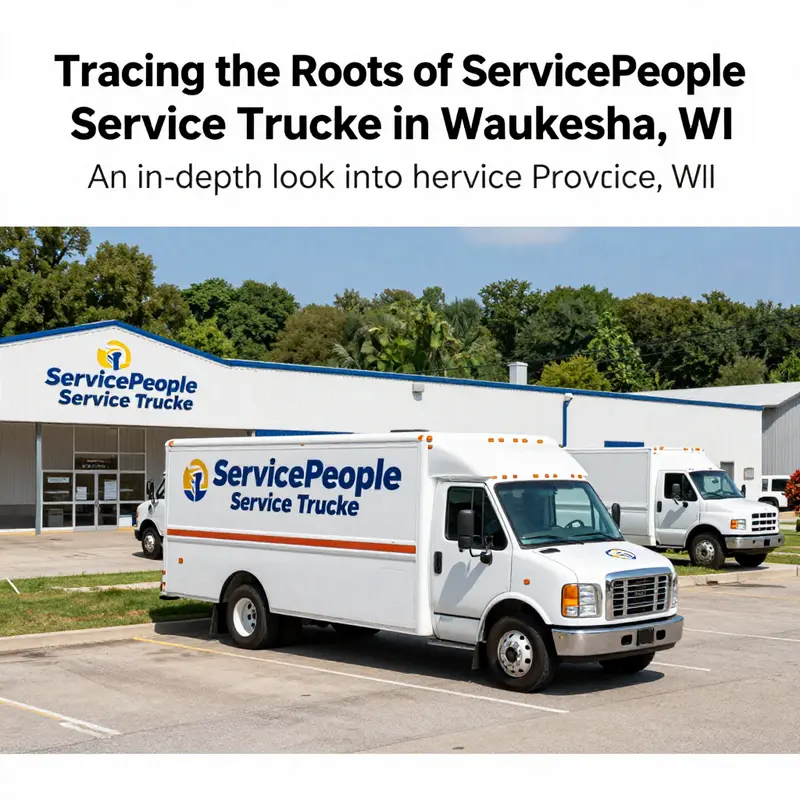
Nestled in the heart of Waukesha, Wisconsin, ServicePeople Service Trucke has become a cornerstone for truck drivers and fleet managers seeking reliable repair and maintenance solutions. Understanding the origins and evolution of this prominent service facility offers valuable insights into its commitment to the trucking community. Each chapter unveils aspects of ServicePeople’s impact by highlighting its strategic location, comprehensive service offerings, varied customer demographics, and the journey of growth and operations. By weaving through these essential themes, we can appreciate the vital role ServicePeople plays in ensuring the efficiency of long-haul transport service and fleet sustainability.
Tracing Hidden Tracks: The Elusive Origins of ServicePeople Service Trucke in Waukesha, Wisconsin
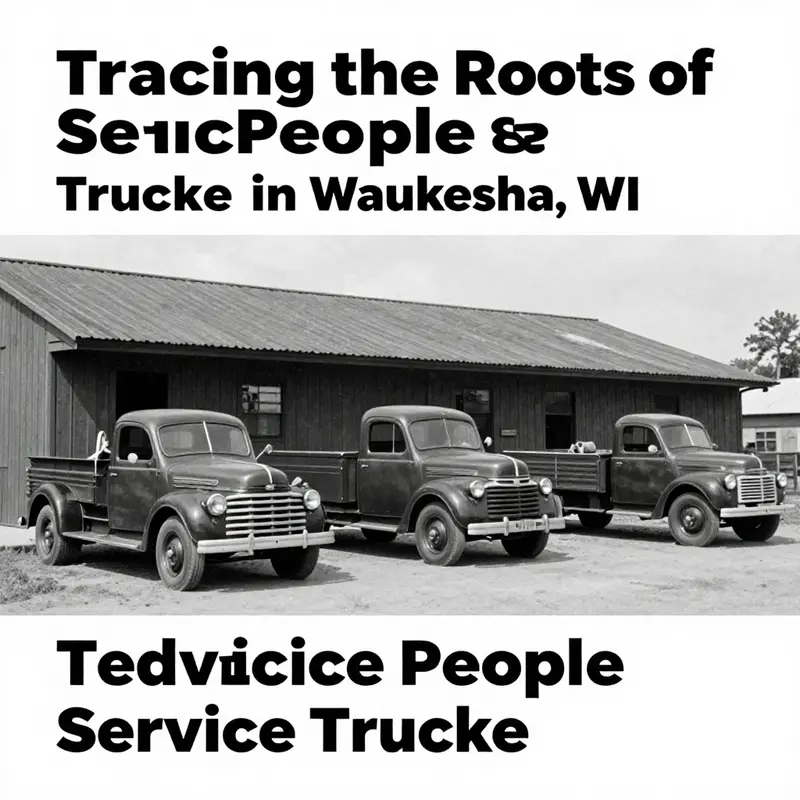
In the quiet corridors of Waukesha’s business landscape, a question lingers: where does ServicePeople Service Trucke come from, and how did a service operation tied to trucks take root in this Wisconsin suburb? The search reveals more questions than certainties. The name feels distinctive, yet the public record often echoes rather than reveals a single birth moment. The narrative that follows is as much about the ecosystem that sustains repair work as it is about a founder.
A tentative anchor appears at a nearby address: N24W22921 Joseph Rd, Waukesha, WI 53186. Public traces show a facility associated with Truckserv, very close to what one might expect if multiple brands shared the same site. This proximity invites a plausible hypothesis: ServicePeople Service Trucke may have been a DBA or a former name that persisted alongside Truckserv, or a secondary entity sharing facilities with the same workers and tools.
In small-town fleets, branding often shifts with ownership and partnerships, while the core workforce and the service bays endure. The absence of an obvious origin date does not mean absence of effort; it reflects how many repair shops grow through adaptation, rebranding, or mergers rather than a dramatic founding moment.
The practical record, when it exists, points to a functional truth: reliable maintenance is the backbone of local fleets. The value lies in the steady, predictable service delivered over years, not in a single archival spark. The origin story may be dispersed across state filings, county records, old directories, and the memories of long-tenured technicians and customers.
To pursue a firmer answer, researchers would examine corporate filings for DBAs and incorporations, license histories at the county level, and historical newspapers and directories. Interviews with veterans in the trade can provide texture the public record lacks. In Waukesha, the enduring image is a service hub with a familiar address, where truck maintenance quietly builds the local economy, sometimes under a name that later faded from the storefront sign.
If ServicePeople Service Trucke ever crystallizes into a clearly documented moment, it will likely be found not as a single birth date but as a gradual evolution of a local fleet service identity anchored to a roadside facility, supported by a skilled workforce, and reinforced by the trust of repeat customers.
For readers seeking broader context on maintenance and fleet reliability, the chapters point to industry resources that connect day-to-day service with procurement and scheduling. The nearby Truckserv operation on Joseph Road serves as a practical anchor for understanding how a service hub operates in a community like Waukesha.
Tracing the Footprint: How Waukesha’s Place Shapes ServicePeople Service Trucke’s Reach
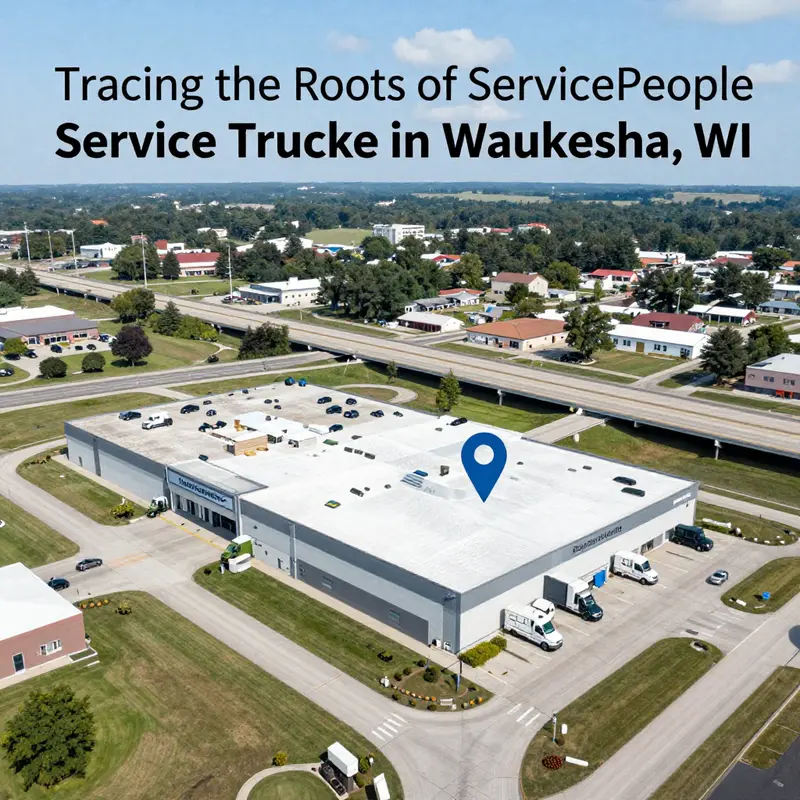
In the conversation about where ServicePeople Service Trucke—operating as Truckserv in Waukesha, Wisconsin—comes from, location is not merely a dot on a map. It is a operating philosophy, a set of daily decisions about speed, reliability, and the ability to respond where it matters most. The chapter that follows treats the question as an invitation to trace a geographic lineage that begins in a place and expands through routes, neighborhoods, industry rhythms, and the subtle economies of a regional transportation network. Waukesha sits at a strategic hinge of the Milwaukee metropolitan area, a position that quietly shapes who arrives first, how quickly, and with what consequences for fleet maintenance and service delivery. To understand the origin story of a practical service operation like Truckserv, one must listen to the land as much as to the clients and machines it serves.
The physical geography of Waukesha offers an immediate clue. The city sits where rural lanes meet the demand of a growing suburban economy, and it is connected to a web of corridors that funnel traffic in predictable, sometimes relentless patterns. East Moreland Boulevard and Golf Road—two arteries that thread through business parks, service yards, and commercial strips—function as hydra-like conduits for parts, technicians, and urgent requests. In such a setting, proximity becomes a determinant of service feasibility. A shop located at N24W22921 Joseph Rd, Waukesha, and the surrounding infrastructure can respond to a broad swath of suburban and exurban clients with a speed that reduces idle time for fleets in need of quick turnarounds. The advantage is not merely distance; it is the reliability of access. When a truck is sidelined by a mechanical concern, every mile shaved off the route to repair translates to less downtime, lower fuel costs, and a tighter window of accountability between the service provider and the client’s operational schedule.
The city’s geographic footprint sits within a larger mosaic—the Milwaukee metropolitan fabric—where industrial corridors, distribution centers, and warehousing complexes cluster in ways that reward a service model built on proximity and predictability. Waukesha serves not only as a local hub for maintenance but as a node in a regional logistics system where fleets crisscross the southeastern Wisconsin corridor. The value of being anchored in this region is multi-layered. It means access to a growing customer base that extends beyond city lines into neighboring towns and suburbs that share a need for timely, trustworthy truck repair and preventive maintenance. It also means a workforce with the practical know-how to address a broad spectrum of fleet needs. In communities that emphasize road-bound commerce, skilled technicians who can diagnose and remedy issues swiftly become a critical asset in the service chain. This is the quiet capital behind any on-time delivery promise—the human capital that keeps a fleet healthy enough to meet customer demands and regulatory expectations.
Yet, location is not just about engineering a quick fix; it is about understanding the rhythms of a region where travel times can be both a constraint and an opportunity. The Waukesha area benefits from a network of routes that makes it feasible to stage mobile technicians for on-site service or to deliver parts with the same cadence as the fleets they serve. For Truckserv, stationing near strategic access points reduces the latency between the moment a fault is detected and the moment a technician arrives with the tools and knowledge needed to correct it. In practice, this translates to shorter diagnostic cycles, faster repair times, and the ability to offer maintenance checks that align with drivers’ routes rather than pulling them away from their schedules for an extended period. The spatial advantage blends with operational discipline to form a capability that is both practical and measurable: reduced miles driven for service trips, lower emissions through minimized back-and-forth travel, and a concrete improvement in fleet uptime.
The geography of Waukesha also helps shape what the local service ecosystem looks like. The presence of hotels that accommodate commercial travelers and trucks—along with the general hospitality infrastructure that supports layovers for drivers—creates a network of micro-stages along the service journey. While the term might evoke a conventional view of hospitality, in the trucking and repair world it points to a simple truth: drivers value predictable, safe places to rest and refuel, places where they can drop off a vehicle for service and resume their routes without unnecessary detours. Even if a repair is completed in a matter of hours, the ability to park, rest, and re-enter a fleet operation with refreshed energy contributes to a smoother daily throughput for all clients involved. Though a single property or service bay cannot single-handedly reinvent a region’s logistics, the aggregation of these micro-stages—parking-friendly hotels, reliable fueling options, and accessible repair bays—creates a climate where service providers can plan with greater confidence and fleets can schedule with greater reliability.
This climate extends into the digital layer that increasingly underpins modern fleet management. The article’s research results highlight how location intelligence can optimize routing, tracking, and safety—capabilities that are particularly salient for a mid-sized operation rooted in a dynamic suburban environment. The use of real-time location tracking technologies, such as those offered by leading location services platforms, can enhance visibility across the service chain. For a repair operation that serves a widening array of customers across southeastern Wisconsin, the ability to monitor vehicle movements, define geofences around critical routes and service hubs, and analyze driver behavior becomes not just a convenience but a strategic differentiator. When a client questions expected service windows or a fleet manager seeks reassurance about on-time repairs, location-aware tools provide empirical evidence of performance. They turn anecdotal promises into measurable reliability—the kind of data that supports a sustainable business model in which technicians are deployed with a precision that minimizes downtime and maximizes uptime.
The logic of location also intersects with sustainability in a region that has publicly embraced the benefits of optimized routing. Fewer miles on the road, more predictable service windows, and more efficient use of truck bays all contribute to lower fuel consumption and reduced emissions. In practice, these advantages manifest as a win for clients who are pursuing environmental stewardship alongside operational excellence. The Waukesha area, with its emphasis on efficiency and responsiveness, becomes a natural proving ground for how location-informed strategies can align with broader corporate goals. In this sense, the origin story of a local service provider is not simply about where the shop is; it is about how that place enables smarter, cleaner, more transparent service patterns across a whole fleet ecosystem.
To knit these threads together, consider how the location narrative translates into everyday practice for Truckserv. The proximity to major roadway arteries means technicians can be dispatched quickly along predictable corridors, ensuring that service times align with drivers’ schedules. The geographic clustering of service activity—repair bays, spare parts, and skilled labor—creates a virtuous circle: a reliable network of resources that reduces the need for long-haul travel and expedites repairs. In such a setting, a service operation is less about a single moment of repair and more about a sequence of timely interventions that maintain fleet momentum. The location thus becomes a latent partner in the service equation, enabling the company to bend time in its clients’ favor by turning geographic advantage into operational leverage.
The origin story also benefits from a wider lens on how technology is shaping the industry. Modern fleet management increasingly leans on location-based analytics to improve routing, safety, and compliance. In a region like southeastern Wisconsin, where demand fluctuates with seasons, events, and freight patterns, the ability to forecast service demand and pre-position technicians or parts near anticipated hotspots can dramatically reduce response times. This in turn improves the company’s reliability metrics and strengthens client trust. The interplay of geography and technology creates a feedback loop: as location-aware systems optimize routes and monitor performance, fleets become more predictable, and service providers become more capable of delivering on speed and quality. The net effect is a service identity rooted in a place that is carefully understood, continuously leveraged, and continually improved through data-driven practice.
The story of where ServicePeople Service Trucke comes from, then, is a story of a place that offers more than concrete; it provides a framework for consistent service excellence. It is a narrative in which Waukesha’s strategic position—bounded by Milwaukee’s economic gravity yet buffered by its own local networks—shapes how a repair shop grows, how it plans, and how it communicates with clients about uptime, risk, and value. The region’s roads, its support infrastructure, and its evolving digital tools combine to create a practical philosophy: be ready at the right place and the right time, with the right tools, so that every mile a fleet travels is a mile that has been optimized for safety, efficiency, and dependability. This philosophy does not emerge from a single decision; it evolves from a continuous alignment between a location, its people, and its customers.
In closing, the geographic origin of Truckserv in Waukesha is more than a point on a map. It is a living system—an arrangement of roads, facilities, and communities that together shape how quickly service is delivered, how reliably it is scheduled, and how sustainably it is executed. The county’s proximity to the major metropolitan hub, the accessibility of transportation arteries, and the availability of nearby infrastructure for drivers and technicians all contribute to a practical, scalable model of fleet maintenance rooted in place. And as the industry continues to evolve toward more integrated, location-aware operations, the Waukesha ecosystem offers a template for how to balance local strengths with regional opportunity, translating geographical advantage into tangible outcomes for trucks, technicians, and the fleets they serve.
External resource: https://aws.amazon.com/location/
Internal resource for broader context: design-efficiency-in-emergency-services
Origins of Waukesha’s Truck-Service Story: How a Misread Name Pointed to a Local Repair Hub
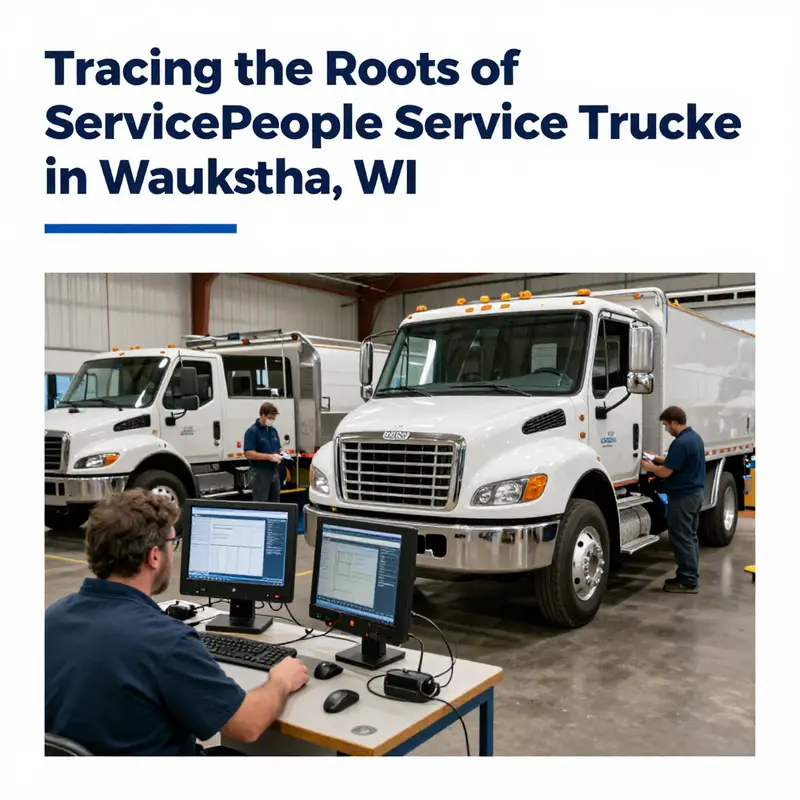
In the drift between rumor and record, a single misheard phrase often opens a doorway into a smaller world that quietly keeps the larger one moving. In Waukesha, Wisconsin, a town with a long arc of manufacturing, agriculture, and logistics, stories about who services the heavy trucks that haul goods through the region tend to circle around one name when people ask about reliable repairs and dependable maintenance. The phrase people recall most often—ServicePeople Service Trucke—reads at first like a loose fragment of a directory or a misheard voicemail message. Yet hidden within that fragment is a path that leads to a real, living center of truck repair and maintenance in the area. The evidence, when we clear away the noise, points not to a company by that exact name, but to a single, tangible locus where local fleets go to keep rolling: Truckserv, anchored at N24W22921 Joseph Rd in Waukesha. The address itself sits along an industrial spine of the city, where service yards, parts suppliers, and repair bays cluster in a way that makes it clear why a business like Truckserv thrives there. If you drive past on a weekday morning, you may hear the familiar clatter of wrenches, the steady hum of diagnostic equipment, and the occasional roar of a diesel engine that reminds you the trucks you rely on spend their days on the road and their nights in a shop.
To understand where the phrase ServicePeople Service Trucke might have come from—and why it seems to persist in common chatter—it’s helpful to situate it within the ordinary life of a truck repair facility in a city like Waukesha. The town sits within reach of Milwaukee’s freight network, and its own industrial zones host fleets that demand quick, reliable maintenance so they can stay on a tight schedule. In such a landscape, a repair shop becomes more than a place to fix a problem. It becomes a node in a larger system of uptime, safety, and continuity. The name Truckserv, as it appears in public records and on the shop’s own communications, is terser, more modern, and easier to recall than a longer phrase about service mechanics. It signals a practical identity: this is the place where trucks are serviced, where fleets return for routine maintenance, inspections, and repairs that prevent downtime from spiraling into missed deliveries.
The physical footprint of Truckserv reinforces this interpretation. The street address, N24W22921 Joseph Rd, places the business within a corridor of commercial and light industrial activity. Signs on the lot and the surrounding buildings reflect the functional language of the trade—terms like service, repair, maintenance, and diagnostics are common in the air. The everyday ritual of truck maintenance unfolds here: technicians greet customers, technicians pull vehicles into service bays, and, with a routine cadence, the work proceeds through inspection lanes, interactive diagnostic panels, and hands-on mechanical work. This rhythm is familiar to any operator who depends on a fleet and treats uptime as a nonnegotiable asset. The presence of such a shop in Waukesha is less a dramatic headline and more a quiet affirmation of the city’s ongoing freight life.
Within that everyday life, the rumor behind ServicePeople Service Trucke can be heard as a story about naming, branding, and the human ecosystems that support a local repair market. Naming conventions in the repair world often reflect the origin of the business—family names, founders’ initials, or a straightforward descriptor of the service. When people encounter a phrase like ServicePeople Service Trucke—half a spoken sentence, half a memory of a directory listing, and half of a sign that never quite matched their mental map—it’s easy to mistake it for a formal business. Yet the absence of a traceable entity by that exact name in Waukesha undercuts the assumption that the town hosts a shop called precisely that. Instead, the naming clue points to a broader ecosystem in which a reliable repair hub exists and a community of fleet operators come to rely on the service they provide. In short, the phrase signals not a separate business so much as a cultural expectation: a dependable service partner that can handle heavy-duty maintenance, diagnostics, and repair when the fleet needs it most.
To see how a single shop can become the anchor of such a narrative, consider the service demand pattern that fleets exhibit in a city like Waukesha. Local trucking, waste management, construction, and distribution operations all generate regular maintenance cycles. Trucks are exposed to conditions that demand regular inspections, brake and tire work, engine and transmission checks, electrical diagnostics, and preventive maintenance. When downtime is avoided, profits stay protected, and safety standards remain uncompromised. A shop like Truckserv must cultivate a clear competence in diagnosing issues, executing repairs efficiently, and offering predictable turnaround times. It is this combination—the ability to diagnose, repair, and return a fleet to service promptly—that sustains the legitimacy of the local repair ecosystem. The community learns to trust the shop through repeated interactions: a fleet manager drops off a truck with a rattling noise, a technician confirms the issue, a repair plan is drafted, and the vehicle exits the bay with a newly tightened belt, fresh fluids, or a corrected electrical fault. Each interaction reinforces the reliability of the local repair hub and, in turn, the reliability of the broader transportation network.
The precise list of services offered by Truckserv remains unwritten in the sources available to this chapter. The absence of a published service menu is not unusual in the world of local repair shops, where a core competency—comprehensive truck repair and maintenance—binds a range of capabilities under one roof. Based on the shop’s stated focus and the needs of regional fleets, it is reasonable to infer that the shop tackles the essential elements of heavy-truck upkeep: preventive maintenance plans that catch wear before it becomes failure; brake service and rotor resurfacing; engine diagnostics and tune-ups; cooling system checks; transmission service including fluid and filter changes; electrical system diagnostics; suspension and steering alignment; tire service and wheel-end work; and basic body and corrosion prevention that extends the life of chassis components. The emphasis on reliability is not merely about hardware; it is about the relational math of uptime. Each vehicle that leaves the bay on time is a data point that demonstrates the shop’s ability to respond to demand, minimize delays, and keep the local economy, with its bustling mix of small businesses and larger regional networks, moving forward.
What, in turn, does this say about the origin of the misheard name in the first place? The answer lies in the human element of service culture. In any town where trucking is a livelihood for many, the phrase service people—those who fix, tune, and diagnose—becomes a shorthand for trust. A misheard or abbreviated listing, especially in a spoken exchange or a directory that compresses information for quick reference, can easily morph into a garbled label. In Waukesha, the long-standing behavior of fleet owners, drivers, and shop staff to think in terms of reliable service and uptime makes the name of the actual repair hub feel like a natural extension of the service ethic. The town’s repair hub becomes, in lived memory, the place where those service people come together to keep trucks on the road. The reality, though, sits at a concrete address: Truckserv on Joseph Road. It is there that the community’s mental map of repair and maintenance is anchored, the place where rumor meets record and aligns with the practical needs of a fleet-driven economy.
For readers seeking a direct pathway to the actual service hub, the most straightforward route is to engage with the shop that operates under the name Truckserv at the Waukesha address mentioned above. The number to call, 262-513-0405, opens a phone line into a local operation that handles the kinds of tasks necessary to sustain a fleet’s daily operations. The shop’s online presence at http://www.truckserv.com provides further context for those who prefer digital inquiries, appointment scheduling, or a quick overview of the shop’s philosophy and capabilities. While the precise scope of services is not enumerated in the source material, the implication is clear: Truckserv is positioned as a capable, reliable destination for truck repair and maintenance in the Waukesha region.
The story of how a phrase like ServicePeople Service Trucke enters the local memory also invites reflection on how professional communities in small-to-mid-size cities communicate and preserve their collective work. The name itself, whether spoken in a conversation at a coffee shop, heard over a radio dispatch, or read in a directory, functions as a linguistic artifact. It captures an aspiration—trustworthy service, quick response, and hands-on expertise—that residents rely on when a heavy vehicle breaks down or a routine inspection reveals an issue that could halt a fleet’s rhythm. The missing or unclear exact naming becomes, paradoxically, a kind of beacon. It signals that there is a known, dependable place to fix things when the road demands it, even if the literal label on the door may be different from the memory carried by a driver who has relied on that shop for years.
In the end, the truth about ServicePeople Service Trucke in Waukesha points not to a separate chain or a hidden sub-brand, but to a familiar locus in the town’s working landscape. Truckserv stands as the tangible counterpart to the whispered name, the concrete embodiment of the service ethos that locals reference when they speak of keeping trucks in motion. The origin story, if it can be called that, is less about cataloging services and more about recognizing a pattern: a reliable repair hub emerges where there is demand, where technicians hone their craft through consistent work, and where fleets depend on prompt, competent maintenance. The misheard phrase becomes a reminder of the human networks that support technical work, the conversations that thread between the road and the shop, and the practical realities that allow a community to move forward, one repaired axle, one maintained engine, and one on-time delivery at a time. As readers navigate the next chapter, they can reflect on how maintenance culture in a city like Waukesha forms the quiet backbone of everyday commerce and how the naming story, with its imperfect memory, still points to a real, responsive service hub that keeps the wheels turning.
For readers interested in broader perspectives on how fleet maintenance design supports steady operations in emergency and routine service contexts, consider exploring practical discussions about design efficiency in emergency services, which offers insights into how maintenance and design choices impact uptime. design efficiency in emergency services.
External reference: http://www.truckserv.com
From Local Fleets to Neighborhood Roads: Tracing the Roots and Reach of ServicePeople Service Trucke in Waukesha, WI
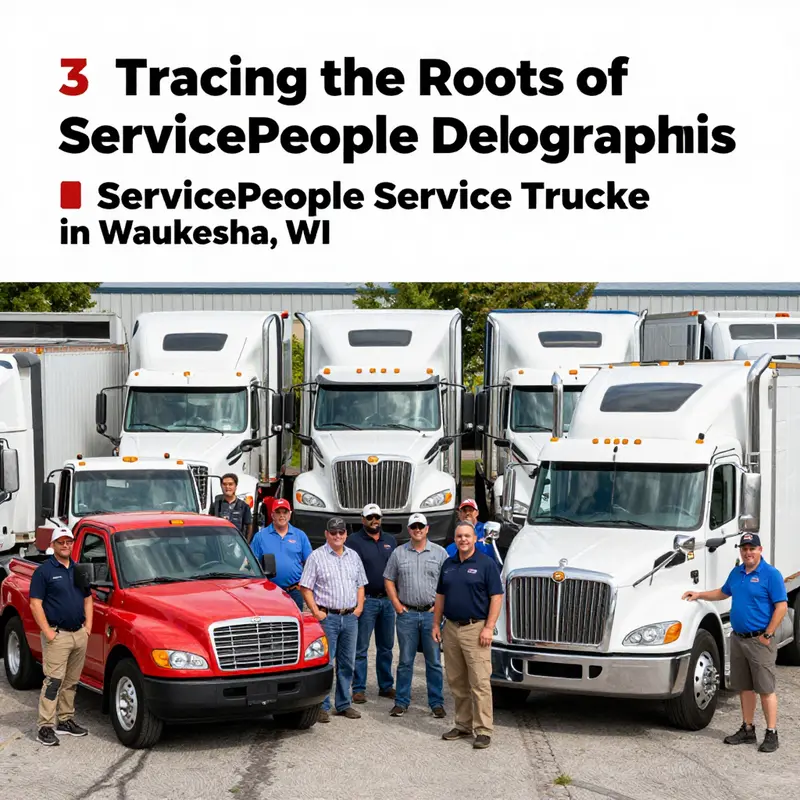
The question of where ServicePeople Service Trucke originates in Waukesha, Wisconsin, is more than a matter of a street address. It is a story about how a positioned service facility can catalyze a community of local fleets, individual owners, and public agencies toward steadier uptime and safer roads. Nestled at N24W22921 Joseph Rd, the operation has built a recognizable footprint under the Truckserv banner, with a clear sense of place in a region known for its blend of small business energy and disciplined municipal logistics. The physical address is more than a routable destination; it is a marker of how a regional repair and maintenance hub becomes a trusted partner to a dense network of customers who depend on reliable trucks for daily commerce, family life, and essential services. In conversations about why a particular shop thrives in Waukesha, the best answer often sits in the way it connects with the very fabric of the local economy—the mix of small to mid-sized firms, the homeowners who maintain personal utility or toy trucks, and the municipal bodies that keep streets, schools, and public works humming along through routine maintenance as well as unexpected challenges.
The business model at ServicePeople Service Trucke mirrors the practical realities of the Waukesha area. By specializing in truck maintenance and repair, the shop targets a spectrum of customers who cannot afford prolonged downtime. Small and mid-sized businesses—contractors, delivery services, waste haulers, and fleet operators—rely on fleets that must stay on the road or risk cascading delays across routes, service calls, and customer commitments. In many cases, these operators manage their own schedules in addition to their client loads, so a maintenance window is not merely a convenience but a financial necessity. The local economy, therefore, leans on a reliable service partner who can balance speed with quality, minimizing the time trucks spend out of service and allowing drivers to return to work quickly.
At the same time, residents who own trucks or heavy-duty machines—whether for home improvement projects, recreational uses like RVs, or personal work equipment—become a steady source of steady business for a shop rooted in a community. Waukesha’s neighborhoods include households that rely on a dependable vehicle for everything from weekend projects to transporting gear for sports leagues or family trips. For these customers, the service provider becomes less of a one-time fix and more of a partner in ongoing vehicle stewardship. Routine maintenance, brake inspections, tire services, and preventive care develop into trust‑building touchpoints that keep vehicles safe, compliant, and ready for the next activity. The result is a customer base that respects the balance between timely service and long-term reliability, recognizing that a well-maintained truck is a foundation of everyday life in the area.
Municipal and public sector clients add another important layer to the shop’s demographic profile. Waukesha County’s public works departments, police and fire fleets, and other municipal teams operate on schedules that demand consistent uptime. These entities typically maintain fleets with many moving parts—garbage trucks, street sweepers, snowplows, utility trucks, and service vehicles—that must perform under diverse conditions. For a local repair facility, that means a capability set that covers preventative maintenance programs, quick-turnaround diagnostics, and parts availability that align with municipal procurement cycles. The local government presence underscores a broader regional pattern: communities that invest in well-maintained fleets reduce downtime, improve service delivery to residents, and extend the lifespan of essential assets.
A broader industry context helps illuminate why these local demographics unfold the way they do. Across the United States, trucking remains a backbone of commerce, with millions of drivers and fleets of varying sizes. Even as the scale of the industry shifts—from owner-operators to larger carriers—the majority of active trucking businesses remain compact. This reality helps explain the emphasis many Waukesha-area service shops place on flexible scheduling, transparent pricing, and straightforward workmanship that respects the operational realities of smaller fleets. In a setting where 97 percent of trucking companies operate with 20 or fewer trucks, the appeal of a nearby, reliable maintenance partner is both practical and persuasive. The local shop thus becomes a familiar, trusted ally, providing predictable service arrangements that allow owners and managers to plan with confidence rather than cope with sudden, disruptive downtime.
Within this ecosystem, the geographic and logistical contours of Waukesha itself shape how demand is distributed and managed. Proximity to commercial corridors, industrial parks, and residential zones translates into accessible service routes, drop-off and pickup windows, and the possibility of quick, on-site diagnostics when necessary. A shop situated along a well-trafficked route or near a cluster of local businesses naturally becomes a convenient option for fleets that value minimal travel time and rapid response. When a service facility also maintains a reputation for thorough diagnostics and durable repairs, the perception of value deepens: customers believe they are investing in a long‑term reduction in total cost of ownership, rather than a short-term fix. This perception matters as much as the technical skill involved, because small fleets especially weigh the reliability of a local partner against the headaches of dealing with distant service centers or less predictable providers.
The customer mix described for ServicePeople Service Trucke—local businesses, residential owners, and municipal clients—also reflects broader patterns in how fleets balance cost, risk, and uptime. Small to mid-sized businesses often operate with tighter margins and a greater need for predictable maintenance cycles. They require a service partner who can offer clear scheduling, flexible payment terms when needed, and transparent communication about what is being serviced, what parts are required, and how long downtime might last. Residential customers, meanwhile, tend to value a straightforward service experience: honest assessments, reasonable rates, and a quick return to operation. Municipal clients, by contrast, may demand more formalized processes, standardized preventive maintenance programs, and adherence to procurement guidelines that ensure consistency and accountability across an entire fleet. In each case, the service shop that succeeds is the one that translates technical expertise into practical, dependable outcomes and communicates those outcomes in a way that aligns with the customer’s own planning horizons.
The narrative of ServicePeople Service Trucke in Waukesha is thus a microcosm of how a local service business can anchor a broader value proposition for a community. It demonstrates how a single address can become a node in a regional network of operations, where every repaired mile translates into time saved, productivity sustained, and safety enhanced. The shop’s presence supports not only the smooth operation of commercial fleets but also the daily routines of residents who rely on personal trucks for work and family life. And as municipal fleets age or expand in response to population and service demands, the shop’s ability to provide maintenance partnerships becomes part of the operational backbone of the local public sector.
To the curious reader who wants to explore how such procurement and maintenance ecosystems unfold in practice, a related thread appears in discussions of how municipal fleets approach procurement and maintenance planning. For readers interested in that dimension, a related exploration of fire apparatus procurement offers a lens into how public fleets think about equipment compatibility, lifecycle costs, and vendor relationships in the context of constrained budgets and high-stakes outcomes. This topic, while framed around fire and emergency services, mirrors the decision-making calculus faced by any local fleet operator balancing reliability, cost, and risk. It is in that shared language of uptime, accountability, and partnership that the core relevance of ServicePeople Service Trucke’s local demographics becomes clear. fire-apparatus-procurement
For readers seeking direct, up-to-date information about the company studied here, the best current source remains the official site and public-facing materials provided by ServicePeople. This local shop’s identity is tied to its address, its service specialties, and its capacity to respond to the varied demands of a Waukesha audience that values reliable, nearby expertise. While the precise demographic composition can shift over time with changes in local business concentration, municipal needs, and homeowner activity, the overall portrait remains consistent: a neighborhood service partner that supports a diverse mix of customers through dependable maintenance, transparent communication, and a commitment to uptime that keeps Waukesha moving.
In the broader arc of the region’s trucking narrative, this combination of proximity, specialization, and adaptability matters. It reminds readers that the health of a local repair and maintenance ecosystem is not measured solely by technical capability, but by how well it integrates with the rhythms of daily commerce, family life, and public service. The address on Joseph Road is less a point on a map than a gateway to a network of relationships—the relationships between shop staff and fleet managers, between technicians and drivers, and between a community and the trucks that carry its goods, its services, and its aspirations forward. The story of ServicePeople Service Trucke, then, is a story of origin and impact, rooted in a Waukesha address but extending into the wider currents of American trucking.
External resource: https://www.servicepeople.com/
Origins in the Open Road: Tracing ServicePeople Service Trucke’s Roots and Role in Waukesha
Note: The following internal resource may provide broader context for readers interested in how maintenance strategies for heavy fleets intersect with shop operations and modern infrastructure. electric-fire-truck-charging-solutions
Final thoughts
ServicePeople Service Trucke stands as a pivotal establishment within Waukesha, effectively supporting the needs of long-haul truck drivers, fleet owners, and repair specialists alike. By understanding its origins and the ongoing impact it has on the trucking community, we not only recognize its essential services but also the strong connections formed over the years. As the business continues to grow and adapt, it promises to remain a vital resource for all those involved in the trucking industry.