
In the trucking industry, timely and reliable services can mean the difference between success and failure. As a truck driver, whether you’re in the cab as a long-haul operator or managing a fleet as an owner, ensuring you have the right maintenance and support resources on hand is crucial. A 1 Truck Service, represented by the essential platform, Find Truck Service®, serves as a comprehensive network to address these needs. This article delves into its pivotal role in emergency and routine maintenance support for professionals in the trucking game. Through the lens of technology integration via the Trucker App, we will unlock the suite of services that can enhance your driving journey.
Chapter 1: Inside a North American 1 Truck Service Network
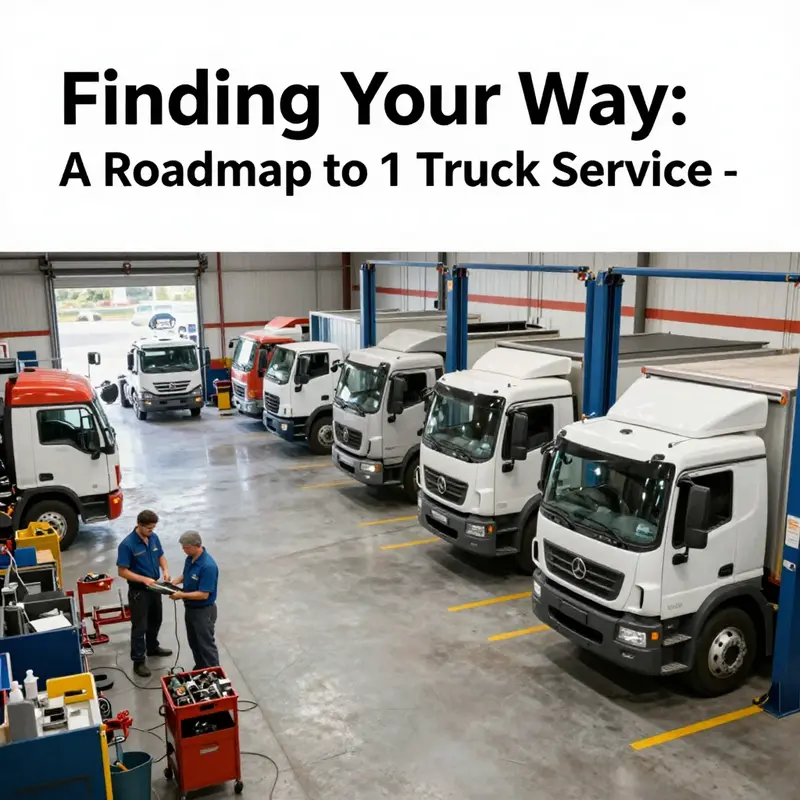
Chapter 1 explores how a 1 Truck Service node operates within a broader North American network. It frames service as a living ecosystem that connects drivers, fleets, repair shops, trailer specialists, tire centers, and reefer technicians in real time.
The objective is to minimize downtime by offering nearby, trusted options and a clear path to service. The network aggregates capacity, service hours, and technician availability across states and provinces, delivering actionable data to drivers and dispatchers.
Privacy and trust are foundational. Location data is used to show nearby providers but handled to minimize exposure and maximize safety. The mobile experience emphasizes speed, simplicity, and reliable routing to service points. A fleet portal enables scheduling, service history tracking, and maintenance planning.
Ultimately, the chapter argues that uptime is a shared objective that benefits drivers, carriers, and customers, and that a well organized network turns maintenance into a proactive discipline rather than a reactive emergency.
The One-Truck Lifeline: Emergency Response and Routine Maintenance in a 1 Truck Service
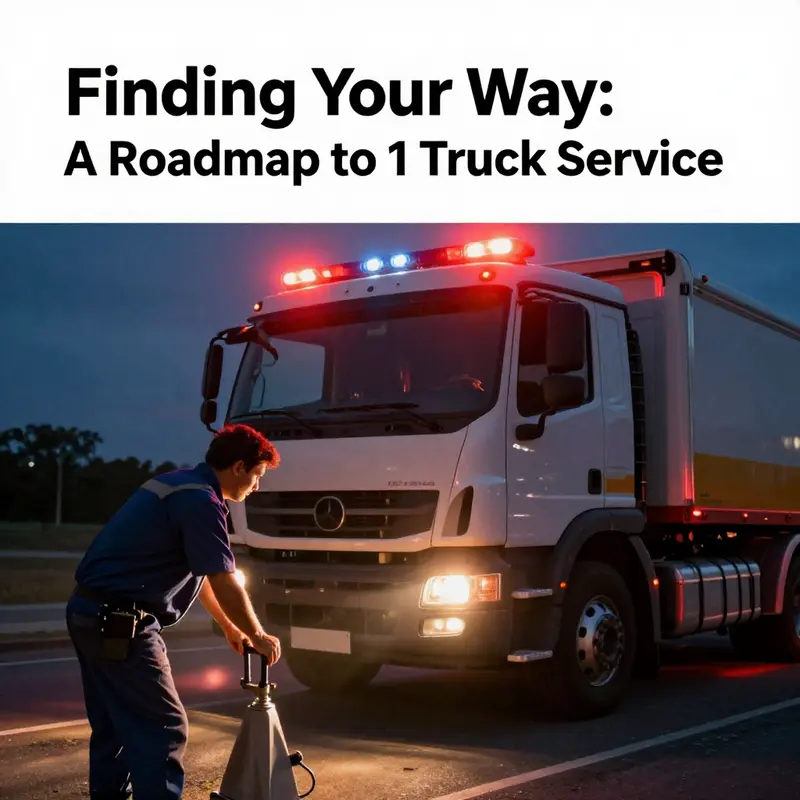
Reliability for a one-truck operation is not a luxury; it is the entire business. When a single asset carries the load for production, dispatch, and customer commitments, uptime becomes the currency by which success is measured. A 1 Truck Service is built around this reality, weaving together two complementary capabilities: emergency response that keeps a truck moving when trouble arises, and routine maintenance that reduces the odds of trouble in the first place. The coherence between these two strands matters as much as the sophistication of the fleet. For the independent operator or small fleet manager, the promise is simple and powerful—reach the truck fast, fix what you can right away, and schedule preventive care that preserves performance over miles and months, not just weeks. The rationales behind this approach are practical and human at their core. Every minute a truck waits for help is a minute lost in a chain of delivery, warehouse, or customer service tasks. Every squeak, hesitation, or small leak that is left unaddressed builds risk that could culminate in a costly breakdown. In a market where margins tighten and deadlines tighten further, a service model that minimizes downtime can become the deciding factor between meeting a customer’s needs and falling short. This is why the emergency and preventive strands of the 1 Truck Service are not separate departments but two sides of a single commitment to uptime and safety. Emergencies are, by definition, abrupt and disruptive. Yet even in crisis, there is structure. A 1 Truck Service deploys dedicated emergency response units that can reach a truck on any road, in any weather, and at any hour. The objective is not merely to provide a tow, but to recover mobility as quickly as possible. On-site capabilities stretch beyond the crude fix. They include rapid diagnostics, temporary repairs, tire service, battery checks, fluid top-offs, and, when necessary, coordination with a broader network for more extensive repairs or replacement equipment. The emphasis is on reducing the distance between the truck and return-to-service. When a breakdown happens in a remote location or on a mountain grade, drivers want reassurance that assistance is not hours away but minutes away. A well-designed emergency response workflow recognizes that speed is a safety measure as well as a productivity one. It translates into dispatch protocols, route optimization, and mobile technician readiness that does not merely react to trouble but anticipates where trouble might emerge. The on-site response is therefore a blend of agility and reliability. It relies on trained personnel, mobile tools, and a compact set of repair kits that can resolve common road-side issues without forcing a long detour. In this sense, emergency support is the safety net that keeps a one-truck operation from being stranded by a preventable incident. The other half of the equation, routine maintenance support, operates on a longer horizon. It is about planning, standardization, and disciplined execution. A 1 Truck Service provides a complete suite of preventive maintenance kits that are tailored to the truck’s critical subsystems. These kits are not generic grocery-store assortments but purpose-built collections designed to address the systems that bear the brunt of heavy-duty operation. A typical maintenance kit covers the engine and lubrication system, the air and fuel delivery chain, cooling and cooling-system components, and the chassis and suspension that absorb road irregularities. Within these kits are high-quality engine oil, filters for oil and air, fuel filters, lubricants, radiator hoses, coolant fluid, thermostats, water pumps, seals, and a focused set of wear items like shocks, leaf springs, bushings, kingpins, and mounting hardware. The objective is not only to replace worn parts but to upgrade or refresh components that influence reliability and performance. When these parts are replaced or refreshed, the engine operates within its intended tolerances, the cooling system remains effective, and the vehicle’s ride and handling maintain predictability. The maintenance program extends beyond the bare minimum. It aligns with the equipment manufacturer specifications, safety regulations, and industry best practices. It builds a documented history of service, enabling fleet managers to observe trends, anticipate replacements, and adjust schedules as operating conditions change. This is where the digital layer enters the frame. A robust 1 Truck Service leverages an integrated platform that maps service providers, maintenance facilities, and mobile units across the network. The platform can locate the nearest available technician, propose a maintenance window that minimizes downtime, and deliver reminders for routine tasks such as oil changes, filter replacements, and inspection checkpoints. For the independent operator who is balancing customer commitments with maintenance, this integration is transformative. The operator does not need to chase multiple service points or juggle calendars across disparate providers. The system consolidates information about service history, component life, and compliance status into a single, accessible record. It is a practical, day-to-day tool that reduces cognitive load and keeps the truck in a predictable maintenance cycle. A key aspect of routine maintenance is standardization, particularly for a fleet with only one truck. When maintenance kits and procedures are standardized, technicians can perform service with a known sequence and expected outcomes. This minimizes the likelihood of skipped steps, incompatible replacements, or inconsistent torque and tightening patterns. Standardization also supports safety, which remains a central pillar of the service model. The cooling system, for example, merits special attention to prevent overheating—a leading cause of engine failure in heavy-duty operations. Regular checks of coolant levels, hose integrity, thermostats, and water pumps help maintain proper operating temperatures, which in turn safeguards engine longevity and fuel efficiency. The electrical system, often the invisible backbone of modern trucks, benefits from routine inspection of batteries, alternators, and wiring harnesses. A well-equipped maintenance kit may include battery terminals and cable connections that resist corrosion and ensure stable starts in cold weather. The exhaust and emission-control components, while subject to regulatory oversight, also benefit from routine checks for leaks, mounting integrity, and secure connections. These checks may appear routine, but their cumulative effect on uptime and performance is substantial. The interplay between emergency response and routine maintenance is not a simple dichotomy but a feedback loop. A rapid on-site fix can keep a truck moving until a planned maintenance window, during which deeper diagnostics can take place and more complex repairs can be scheduled. When emergencies reveal patterns—say, a tire failure that recurs under certain loads or routes—the maintenance side can proactively address these vulnerabilities. That is the essence of a learning system. It is not enough to fix the problem once; a true one-truck service uses every incident as a data point to refine preventive care, adjust maintenance intervals, and optimize the allocation of mobile resources. The practical implications of this integrated approach are significant for the daily life of a driver and the longer arc of a small fleet. A driver operating a single-truck business spends substantial time on the road, from early-morning deliveries to late-evening returns. The ability to contact a single, consolidated service network reduces the friction typically associated with roadside issues. The driver experiences fewer phone calls, fewer exchanges of information, and fewer delays caused by miscommunication. The dispatcher, in turn, benefits from clearer visibility into the truck’s status, the location of the nearest capable technician, and the scheduling of follow-up maintenance. In this way the 1 Truck Service becomes a shared operating rhythm rather than a set of isolated services. The aim is to protect the driver’s time, safeguard safety, and preserve the customer promise behind every mile traveled. The concept also acknowledges the realities of today’s transport environment. A 1 Truck Service is designed to function across diverse geographies and weather conditions, from rural backroads to urban corridors. It is built to accommodate seasonal demand, peak shipping periods, and the unpredictable disruptions that can arise from road construction, accidents, or weather events. In practice, this means a network that can scale quickly—adding mobile units when load factors rise, re-routing technicians to where they are most needed, and prioritizing safety over speed when conditions demand it. It also means embracing flexibility in the service model. A one-truck operator cannot be locked into a rigid, one-size-fits-all maintenance plan. The best programs adapt to the truck’s age, its duty cycle, and the operator’s business constraints. For instance, a truck running long haul may require a different maintenance cadence compared with a short-haul, urban-duty vehicle. The emergency response component must also reflect this reality. Some routes are more remote, some highways more prone to weather hazards, and some times of day more challenging for response times. The service infrastructure must reflect these realities with contingency plans, alternative transport options, and a clear prioritization framework that aligns with safety and customer obligations. The value proposition for a 1 Truck Service is not only about uptime. It is about reducing the total cost of ownership by mitigating wear, preventing early component failure, and maintaining predictable performance. A well-executed emergency response program prevents extended idle time that erodes productivity and increases fuel consumption due to idle operation after partial repairs. Routine maintenance keeps engines clean, fluids within specification, and mechanical systems within design tolerances, all of which contribute to lower repair costs and longer component life. The combined effect is a fleet that operates with greater reliability, a driver who feels supported, and a business model that can be scaled or adapted without losing core capability. To support these outcomes, the resources behind a 1 Truck Service emphasize practical, actionable steps rather than abstract theory. Maintenance kits are curated with real-world use in mind, ensuring that replacement parts are compatible with a broad range of heavy-duty configurations while still meeting the expectations of performance and safety. The on-site emergency tools carried by mobile units are selected for their versatility and durability, designed to handle the most common roadside events without requiring a long return to base. In addition, the platform that coordinates these services offers driver-friendly features such as transparent status updates, estimated times of arrival, and a streamlined history of repairs and inspections. This creates a feedback loop that reassures the driver and informs the fleet manager, enabling smarter planning. For readers seeking practical resources to deepen the maintenance discipline of a one-truck operation, consider exploring resources like fire-truck-maintenance-service-training. The idea is not to replicate an entire fleet-maintenance department in miniature but to implement disciplined processes that can be managed by a single operator or a small team. The emphasis on training ensures that even a lone driver or a small maintenance crew can execute maintenance tasks with confidence, reducing the risk of human error and extending the life of critical components. This approach aligns with broader industry trends toward standardization and proactive care, while preserving the flexibility that a single-truck operation requires. The narrative of a 1 Truck Service—emergency response paired with preventive maintenance—also reflects a broader shift in how small operators perceive risk. Rather than accepting downtime as an inevitable cost of running a truck, these operators increasingly view uptime as a strategic asset. They invest in tools, protocols, and networks that shorten the cycle from problem to resolution and that convert disruptions into manageable events. The ultimate measure of success is the ability to keep the truck on the road more often than not, with predictable service quality and a minimized risk of major failure. In the current landscape, the 1 Truck Service concept is not a theoretical ideal but a practical framework for achieving reliability in a high-stakes environment. It translates the ambition of fleet-scale maintenance into a lean, focused operation that respects the constraints of a small business while delivering the benefits of professional, nationwide service capabilities. As the industry continues to evolve, the balance between emergency agility and preventive discipline will likely become even more central to the way single-truck operators run their businesses, plan for growth, and build long-term customer trust. For readers seeking broader context on how rapid emergency tire services are transforming coverage for heavy-duty fleets, a relevant industry update can be explored here: https://www.commercialmotor.com/tructyre-expands-emergency-tyre-service-for-hgv-fleets/.
Digital Command, Real-Time Reliability: How a Mobile Ecosystem Powers a 1 Truck Service
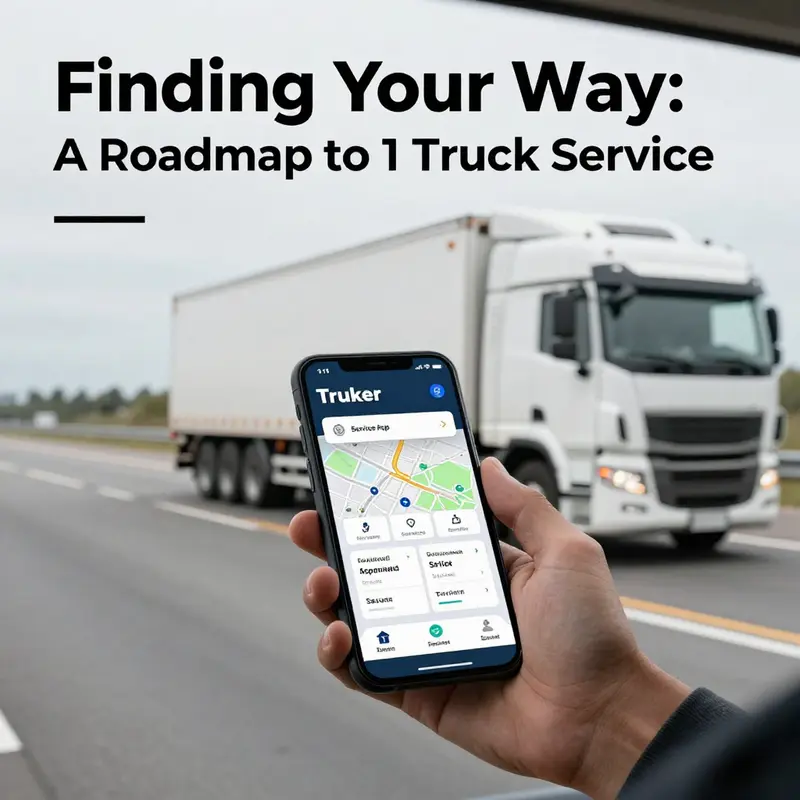
In the evolving landscape of freight and logistics, a single-truck operation can no longer rely on paper checklists, scattered notes, or delayed telephone updates to stay competitive. The chapter ahead follows a quiet revolution unfolding inside a modest, often overlooked engine room: a purpose-built mobile ecosystem designed to knit together driver, dispatcher, and shipper into a single, responsive data network. The story is not about a shiny new gadget or a flashy interface; it’s about a fundamental shift in how small fleets operate, make decisions, and measure success in real time. What begins as a digital convenience becomes a strategic advantage, shaping safety, reliability, and the dignity of the person at the wheel. The shift is neither theoretical nor distant. It is practical, iterative, and intensely human, rooted in how information can empower people who move the world forward one load at a time.
At the heart of this transformation lies a centralized mobile platform that functions as a command center for every stage of a delivery. For the driver, the app consolidates essential tasks into a single screen: task assignments, load details, route suggestions, hours-of-service alerts, and quick channels for reporting issues or requesting support. The on-device experience is designed to reduce cognitive load while increasing situational awareness. When a driver toggles between a navigation cue, a maintenance prompt, and a payment receipt, the interface is not merely a convenience; it is a cognitive ally. The driver is not forced to remember where a tire service is located or which document is required for a fuel card; the app retrieves, reconciles, and presents the information in an intelligible sequence. Information, in this sense, becomes an operational asset rather than a soft assurance.
From the perspective of dispatchers, the same platform extends into a live-perception layer over the entire operation. Real-time fleet visibility is not a glossy map with blinking dots; it is a dynamic workspace where locations, delivery statuses, and vehicle health metrics are continuously updated. Dispatchers can observe the cadence of a day’s work—where a delay is likely to cascade, which route offers the best balance of time and fuel, and when a vehicle needs preventive attention. This capability shifts decision-making from reactive to proactive. A dispatcher can reallocate a pending load, adjust a route to avoid a forecasted bottleneck, or flag a vehicle for preemptive maintenance, all before a minor fault becomes a roadside disruption. The result is a reduction in downtime that translates into fewer missed appointments and steadier revenue streams. In essence, the app reframes the dispatcher’s role from a crisis manager to a systems orchestrator who can steer the operation with timely, data-backed moves.
For shippers and logistics partners, reliability becomes almost tangible. When ETAs are grounded in live data rather than static estimates, trust deepens. The platform’s capacity to share transparent, timely information with customers reduces the friction that often accompanies late or uncertain deliveries. Shippers feel the assurance of a credible, traceable process rather than a best-guess scenario. This transparency does not simply soothe anxieties; it creates a foundation for stronger collaborations, repeat business, and more predictable planning across the supply chain. The significance of such transparency extends beyond customer satisfaction. It contributes to a broader culture of accountability and continuous improvement within the operation itself, as every stakeholder becomes a participant in the same information loop rather than a passive recipient of delayed feedback.
Underpinning these benefits is a design philosophy that treats data as a shared, actionable resource rather than a siloed asset. The platform integrates maintenance data, fuel consumption, tire wear, braking performance, and even driver fatigue indicators into a unified analytic framework. Predictive analytics, powered by lightweight machine learning models, scan hundreds of data points from daily operation to forecast maintenance needs before a failure occurs. A tire pressure anomaly may flag a potential leak that could escalate into a roadside stop; an irregular engine parameter might hint at an early-stage issue that deserves a technician’s attention. These alerts are not alarm bells meant to provoke panic; they are carefully calibrated prompts that guide maintenance planning, route optimization, and rest scheduling. In practice, this means fewer unexpected breakdowns and more consistent uptime—two metrics that are particularly meaningful for a one-truck operation where downtime is not just inconvenient but costly.
A crucial facet of this technology-driven approach is its potential to harmonize safety with productivity. The platform’s analytics extend to fuel efficiency and driving behavior, providing insights that help drivers make smarter choices without eroding personal agency. For instance, route optimization is balanced with fatigue-aware rest planning. The system learns a driver’s patterns—when to take a break, how long to rest, and the preferred pacing of a given route—while still honoring regulatory requirements and safety best practices. The result is a driving experience that respects the limits of human endurance and the demands of the job. Over time, this careful calibration reduces the probability of fatigue-related incidents and aligns operational tempo with the driver’s well-being. This is not a punitive surveillance model; it is a collaborative framework in which the driver and the platform share a common objective: to stay safe, compliant, and efficient while delivering reliability to customers.
The real power of a single-truck digital ecosystem, however, emerges when it scales from individual use to organizational learning. Data is not merely collected; it is organized into patterns that reveal how the work unfolds across a day, a week, or a season. A small fleet can observe how different maintenance intervals, tire pressures, or rest schedules affect uptime and fuel usage. It becomes possible to quantify the cost of unnecessary downtime and the savings from timely interventions. Over months, these observations converge into a practical playbook: a living document that evolves as the driver, the dispatcher, and the customers teach the system what works best in a given geography, weather pattern, or load type. The playbook is not a rigid script; it is a dynamic set of recommendations that respects local realities while pushing the operation toward greater predictability and resilience. And because the platform is accessible to all parties, the same playbook guides a new driver through onboarding with clarity and consistency, inviting a sense of shared purpose rather than fragmented know-how.
Integral to this narrative is the broader context of how automation and digital platforms are shaping the trucking industry’s trajectory. While the current discussion centers on a single-truck operation, the patterns described here resonate with industry analyses that point to the increasing digitization of freight handling. Systems that connect scheduling, maintenance, and route planning across real-time data streams are becoming a standard part of modern logistics ecosystems. The digital cockpit described here embodies a microcosm of this larger movement: it demonstrates how technology can be human-centered, not merely automated, by preserving the driver’s agency, enabling proactive maintenance, and delivering dependable service to customers. The emphasis on human-centered automation reflects a growing understanding that machines alone do not deliver value; it is the synergy of people and technology that creates resilient, high-performance operations. When drivers see their workloads become clearer and more manageable, their job satisfaction tends to rise, reinforcing loyalty and reducing turnover—an outcome that matters just as much as the technical gains in uptime or route efficiency.
Ultimately, the transformation described in this chapter points toward a future where the mobile ecosystem is less a gadget and more a governance mechanism. It governs the everyday rhythms of a one-truck operation, turning disparate tasks into a coherent workflow. It translates scattered information into strategic choices, from daily maintenance to long-term asset health. It reframes the relationship between human decision-makers and machine intelligence from a static hierarchy into a collaborative partnership. This is not the endpoint of innovation; it is a steady, ongoing process of refinement, feedback, and adaptation that keeps pace with changing conditions—fuel prices, regulatory updates, weather disruptions, and shifting customer expectations. In this sense, the technology described here is less about novelty and more about the enduring value of clarity, reliability, and empowerment amid the uncertainties that define road-based freight.
The chapter’s central claim is that a one-truck service can become significantly more resilient and capable when technology is designed to amplify human judgment rather than replace it. A well-constructed mobile platform does not demand conformity; it invites dialogue among drivers, dispatchers, and customers. It gives each stakeholder a voice, a clear view of what is happening, and practical tools to respond quickly and thoughtfully. When a minor maintenance issue is anticipated and addressed before a breakdown, when a driver receives guidance that respects their fatigue and time, and when a shipper benefits from transparent, accurate ETAs, the entire system moves toward a state of higher reliability and trust. This is the experience that a 1 truck service, grounded in a robust mobile ecosystem, can deliver to the front lines of freight—where the difference between delay and delivery is often a matter of minutes and a decision taken in a moment that respects human limits and professional pride.
The broader implications extend beyond operational efficiency. As digital platforms mature, they become catalysts for cultural change within small fleets. They encourage a mindset of continuous improvement, where feedback loops are immediate and learning is shared across the network. The driver becomes an informed partner in the business, not a passive component of a larger machinery. The dispatcher becomes a strategist who uses live data to optimize outcomes rather than react to problems after the fact. And the shipper experiences a steadier, more predictable flow of goods, built on a foundation of transparency and accountability. The narrative here is not an account of a single invention; it is a portrait of a new working reality, where technology and people co-create value in real time, day after day.
To close the arc of this chapter without losing momentum, it is helpful to reflect on the practical decisions that make such a system feasible in a one-truck operation. First, the platform must be lightweight and accessible, requiring minimal setup and offering a clean, intuitive interface that drivers of varied experience can adopt quickly. Second, it must integrate with existing service networks in a way that expands coverage without imposing excessive complexity on the operator. Third, it should provide actionable insights, not just raw data, so that decisions—whether about maintenance scheduling or route adjustments—are grounded in clear rationale. Fourth, it must respect privacy and autonomy, ensuring that the human agent at the wheel retains control over critical choices while benefiting from guidance that enhances safety and efficiency. Finally, it should foster a culture of learning, where small, iterative improvements accumulate into meaningful gains over time. When these conditions converge, the one-truck operation does not just survive an increasingly automated industry; it thrives by leveraging technology as a partner rather than as a substitute for human skill and judgment.
For readers who want to explore the larger design and organizational implications of such systems, an adjacent line of inquiry considers how digital platforms can be configured to maximize emergency-service readiness and resilience. A resource that delves into these design considerations provides a useful parallel for thinking about how to calibrate information flow, interface design, and decision support in high-stakes, time-sensitive environments. This broader perspective helps illuminate how the same principles—clarity, empowerment, and timely data—translate across contexts and scale with the needs of operators who must remain reliable under pressure. In short, the lesson extends beyond the highway: well-considered digital governance can improve performance, safety, and trust in any domain where human effort intersects with intelligent systems.
The chapter thus closes not with a verdict about technology replacing human labor, but with an invitation to envision new kinds of collaboration. The one-truck service, supported by a thoughtfully designed mobile ecosystem, demonstrates how small-scale operations can achieve outsized impact by combining disciplined process with intelligent guidance. It is a reminder that modernization is not the exclusive domain of large fleets or multinational carriers. It is a condition any operator can cultivate by embracing a pragmatic, human-centered approach to digital transformation. The road ahead will continue to present surprises—weather, regulations, market cycles—but with a robust mobile platform as a partner, the operator can navigate those uncertainties with greater confidence, dignity, and purpose. And as this partnership deepens, the value to drivers, dispatchers, and customers alike grows in a common, measurable way: fewer disruptions, clearer expectations, and a more predictable path from origin to destination.
For readers seeking a wider lens on automation and its implications for trucking, an external industry perspective provides valuable context. See the resource on automation in the trucking industry for a broader understanding of how digital systems are shaping efficiency, safety, and deployment strategies across the sector: https://www.truckinginfo.com/technology/automation-in-trucking-industry-2025
Internal reference for related design thinking in emergency-capable systems: Design Efficiency in Emergency Services. Design Efficiency in Emergency Services
Final thoughts
The integrated support system provided by A 1 Truck Service via Find Truck Service® significantly enhances the operational efficiency of trucking professionals. From emergency support to routine maintenance, this platform empowers drivers, fleet owners, and maintenance specialists alike with essential tools and information. Leveraging innovative technology through the Trucker App, it ensures that vital resources are always within reach, fostering a safer and more reliable driving experience. As you navigate the roads, embrace the opportunity that A 1 Truck Service presents – your partner in ensuring a smooth and stress-free journey.