
Waste disposal is more than just a chore; it is a pivotal aspect of both residential and commercial maintenance. A Man With A Truck Dumpster Service is a prime example of how efficient waste management can be seamlessly integrated into everyday life. This article takes an in-depth look at the operations, economic influence, and customer perspectives on this unique service. Each chapter aims to illustrate not just the logistics of dumpster rentals but also how they affect the trucking industry and the environment as a whole. By understanding these facets, long-haul truck drivers, trucking company owners, fleet managers, and aspiring truck drivers can better appreciate the significant role dumpster services play in the broader spectrum of transportation and waste management.
On the Go, On Your Schedule: How a Man With A Truck Dumpster Service Redefines Local Waste Removal
In small towns and growing neighborhoods alike, the day when clutter finally meets its fate is not a ritual scheduled far in advance but a moment you seize when you’re ready. A man with a truck dumpster service embodies that ethos. It arrives when you call, or when a window of opportunity opens between a homeowner’s remodel plans and a contractor’s busy calendar. The business model is simple in description and powerful in impact: a dump truck comes to your location, you unload at your own pace, and when you’re done, the truck lifts the bag, the container, or the pile and takes it away. This arrangement is less about a fixed, impersonal dumpster drop and more about a mobile, human-centered approach to waste removal. It speaks to a philosophy of flexibly aligning service with market needs, especially in communities where time is as precious as space, and where every square foot of a driveway, yard, or storefront carries its own story of use and reuse. In places like Hazleton, Pennsylvania, and Weatherly, Pennsylvania, residents and business operators face the same daily pressures: to reclaim space, to stay within budget, and to keep operations moving without the friction of waiting on a rigid schedule. The truck-based dumpster service speaks directly to that pressure. It reduces the friction between intention and action, turning a project that would otherwise be delayed into one that unfolds on the client’s terms. The delivery is not simply about dropping a container and walking away; it is about arriving at a moment that feels natural to the customer’s rhythms—which often means evenings after work, weekends between shifts, or mid-morning when a contractor’s crew has wrapped up a portion of a project and a fresh purge is needed. The driver’s role, then, becomes more than merely piloting a vehicle; it is about reading a space, anticipating hazards, and ensuring that the load remains secure while the customer remains empowered to decide how much to fill and when to end the session. This cooperative dynamic—customer-led loading, driver-facilitated transportation—constitutes a practical reimagining of how waste removal can fit into everyday life rather than demand its own planned slot in the calendar. The service prides itself on delivering a straightforward, transparent experience. Customers know what to expect: a clean, professional presentation, a clear path for filling the container at their own tempo, and a pickup that occurs promptly after the job reaches completion. The value proposition inherently favors both residential customers—home renovators, spring-cleaning enthusiasts, landlords conducting turnover—and commercial clients who juggle debris from office remodels, storefront refreshes, or light industrial cleanouts. The company’s focus on flexibility does not merely describe how it moves waste from A to B; it captures a broader ethos that value in waste management comes from removing impediments: obstacles that slow a project, complicate budgeting, or erode a customer’s sense of control. When a customer is given control over the pace of disposal, the perception of cost shifts too. The appeal is not only about a lower sticker price but about a predictable, humane process. Payment becomes a simple, transparent step rather than a negotiated hurdle; service turnaround is quick enough to keep a project on track but patient enough to avoid rush-hour mistakes or overwhelming the client with aggressive timelines. The result is a reputation for reliability and satisfaction born from a combination of accessible contact options and consistent performance. The narrative of this service in a region like northeastern Pennsylvania is built on the sense that waste removal should be invitational: inviting homeowners to start a project without fear of spiraling costs; inviting small businesses to scale back on multiple hauling trips by consolidating debris in one controlled, on-site moment. In practical terms, the model works because it is lean. There is no obligation to own, route, or maintain a fleet of large, fixed containers that must be staged, emptied, and re-staged across a territory. Instead, a single truck, ready to respond, can cover a radius that tightens the relationship between the customer and the waste service provider. A driver who knows the local layout—the width of a driveway, the angle of a curb cut, the best approach to avoid scratching a fence or mail box—brings a level of care that a standard, warehouse-based pick-up schedule simply cannot offer. This local adoption of a mobile dumpster service is reinforced by the company’s emphasis on simplicity and adaptability. The service is optimized for customer autonomy: you decide when to start loading, what to toss, and when you are finished. The pickup is scheduled with dispatch, but the actual moment of removal can align with the customer’s needs rather than with a fixed window. The experience is, in effect, a collaboration between the customer and the driver, a practical partnership that respects efficiency as much as it respects safety and accountability. For homeowners planning a DIY kitchen remodel, the shift from a large, intimidating dumpster rental to a nimble, on-demand truck can feel liberating. There is something almost ritualistic about loading a limited space at a pace that fits a busy life, with the assurance that the rest of the project will not be delayed by a distant scheduling bottleneck. For small contractors, the service can function as a variable-cost tool in their toolkit. A contractor can time the removal to coincide with the completion of a particular stage—say, after framing and insulation, before drywall begins—so that a clean workspace is maintained without tying up capital in a more permanent container. The logistics behind this common-sense approach are anchored in the practical realities of local waste streams. The driver must be mindful of waste type and disposal requirements, understand what constitutes hazardous materials, and maintain clear boundaries about what can be placed into the truck. The service’s communication channels are designed to minimize surprises, with straightforward pricing structures and explicit guidelines that keep the relationship transparent. The result is a service that respects both budget constraints and the need to move debris out of the way, whether it is a pile of broken tiles, old cabinetry, or a mound of yard waste gathered over several seasons. A crucial advantage lies in the flexibility this model offers to residents whose lives can be unpredictable: unexpected guests, sudden renovations, or seasonal yard cleanups that must be done in a compressed timeframe. The truck-based approach accommodates a wide spectrum of project sizes, from a single room’s worth of junk to an entire home’s worth of renovation detritus. It also reduces the risk of damage to driveways and landscaping, as the driver can assess the site before unloading begins and implement protective measures as needed. Over time, the practice becomes a dependable local option, a signal that waste management can be a service that respects time, space, and affordability. The human element remains central: a courteous, professional driver who communicates clearly when arrival will occur, who explains the loading process, and who ensures that the vehicle and workspace stay safe throughout the operation. The customer’s confidence grows as the session unfolds; questions are answered without pressure, and the pace of work reflects the client’s own schedule rather than an external timetable. This is the core of what makes a man with a truck dumpster service more than a convenience. It is a logistical philosophy that reframes the relationship between waste and effort. It acknowledges that clean spaces are rarely created in a single, monolithic moment; they emerge when a system respects human rhythms and when a service provider is willing to adapt to changing circumstances on the ground. The broader community also benefits from such an approach. Local waste removal becomes a service that strengthens neighborhoods by enabling rapid turnarounds on cleanup projects, minimizing the persistence of clutter, and reducing the time that a work site sits idle or obstructs traffic flow. It is, in every sense, a practical, neighborly solution—an instance of logistics meeting living rooms, backyards, and storefronts with empathy and efficiency. For readers who want a sense of how this approach fits into larger discussions about service design, the concept aligns with broader conversations about efficiency and adaptability in trucking and logistics. A concise exploration of the design principles behind on-demand service models can be found in practical discussions at the 5startruckin blog, which delves into how service-oriented trucking operations balance speed, reliability, and customer-centered processes. 5startruckin blog. For those seeking a broader sense of the market and its evolving expectations, one can also explore general patterns of on-site waste removal that emphasize speed, affordability, and accessible customer service, which helps illuminate why a mobile, truck-based dumpster solution resonates with households and small businesses alike. External resources, when considered alongside local practice, illuminate how this category of service complements other forms of waste handling—especially in communities where rental logistics, permit considerations, and the desire to minimize disruption are central to project planning. To learn more about the particular local footprint and service area, readers can consult the official site of a prominent industry provider that specializes in on-demand dumpster services, which serves as a reference point for how such businesses communicate value to customers and structure their operations. Official site.
External resource: https://www.amanwithatruck.com/
This chapter has traced how a man with a truck dumpster service translates a straightforward idea—bring the truck, let the client load, take it away—into a flexible, community-friendly practice. It is a model built on trust, speed, and a refusal to let logistics stand in the way of momentum. The narrative continues to unfold as we move into how this approach intersects with broader waste management strategies, the environmental considerations of containerless disposal, and the ways in which local operators adapt to changing market demands without sacrificing the personal touch that makes a neighborhood service feel distinctly local.
Fleet on the Front Line: The Quiet Mechanics Behind a Man With A Truck Dumpster Service
A man with a truck dumpster service operates in the space between a generous hand and a practical plan. It is a service born from the simple need to move heavy clutter without forcing a homeowner to handle the logistics alone, and it relies on a precise balance of timing, equipment, and empathy. The service is not merely about hauling away trash; it is about offering a path through mess to a clearer, more manageable space. The driver arrives at a home or a storefront, not as an intruder but as a facilitator who makes the cleanup possible. The process begins with a conversation that seems straightforward on the surface yet ripples with the practical decisions that follow. A caller describes the scope of the project: a basement full of boxes, a garage stacked with renovation debris, or a storefront undergoing a minor revamp. The questions that follow are ones that a customer might not think to ask but that keep the operation smooth and predictable. What size container would fit the space without blocking a driveway or a walkway? How long will it take to fill it to the right point of removal? Are there items that require special handling, and is there a plan for separating recyclables from nonrecyclables to minimize waste going to the landfill? The person on the other end of the line answers with a practical honesty that builds trust. The service is offered in small but busy communities where the rhythm of daily life depends on getting rid of bulky items quickly and with minimal friction. In places like Hazleton and Weatherly, the need for a dependable, accessible waste solution is evident in the rhythm of home improvement projects, seasonal cleanups, and the steady churn of small businesses that trade in space as a precious resource. The driver arrives with a clear mission: to tailor the solution to the customer’s pace while keeping the operation safe, compliant, and efficient.
The truck is the heart of the operation, but it is not the whole story. A typical day is a careful choreography of timing, distance, weight, and weather. The vehicle comes equipped with a sturdy container, a large door that can swing open to accept a steady stream of items, and a mechanism that can lift and deposit the contents without jolting the surrounding area. The container size is chosen with attention to the nature of the load and the space available on the property. A homeowner may barely have room for the driveway to be used for parking, or a contractor may need to load a compact yet heavy selection of materials from a demolition. In those cases, the right container size becomes a practical hinge: too small, and trips multiply; too large, and the site becomes congested or unsafe. The operator’s experience helps navigate these choices. They know when to suggest a smaller option for a tight urban lot or when a larger container would accelerate the project by reducing the number of pickups. The goal is to harmonize the customer’s timeline with the realities of weight limits, truck capacity, and the legal requirements governing waste transport.
Once the container is placed, the interaction shifts toward pace and control. The customer fills the space at a comfortable tempo, pausing to consolidate loose items, consolidate bags, or rethink what should be included. The operator stands nearby, not hovering but present enough to answer questions, to offer guidance on what can and cannot be accepted, and to ensure that every portion of the load is prepared in a way that will make the lifting and loading safe. This close attention to detail matters. It reduces the risk of damage to property or injury to people, and it helps prevent the kind of miscommunications that can turn a straightforward cleanup into a drawn-out ordeal. The operator may point out recycling opportunities, suggesting that certain materials be separated to keep as much out of the landfill as possible. This is not about moralizing the process; it is about practical stewardship that makes a tangible difference in the footprint left behind after the cleanup is complete.
A key aspect of the operation is the moment when the load is ready for removal. The customer signs off on what is in the container and confirms that the area around the container has remained safe and accessible. The driver then positions the vehicle to maximize the space offered by the truck’s lifting mechanism, coordinating a lift that is smooth and controlled. The transfer of load to the truck bed is a moment of quiet competence: the metal tilts, the container seals, and the contents settle with a satisfying thud that signals a new phase of the project has begun. The approach is never rushed; it is deliberate, with a constant awareness of the environment. The operator looks for potential trip hazards on the ground, ensures that the site has a clear path for the truck to leave without scraping fences or scraping paint, and checks that nearby utilities and fixtures remain undisturbed. In short, efficiency in this setting is not about speed at the expense of safety; it is about a disciplined method that respects the space and the people who occupy it.
This discipline extends to the way routes are planned and executed. The operator does not simply drive from one call to another; they balance multiple factors—distance, traffic patterns, loading times, and the unique constraints of each site. A family may need a weekend cleanup completed before relatives arrive, while a contractor might require a tight, weekday window to keep a renovation schedule on track. The ability to honor these expectations rests on a combination of real-time judgment and preexisting knowledge of the service area. It means choosing the most effective path, anticipating obstacles such as narrow streets or overhanging branches, and knowing when to request a slight alteration to the plan to avoid a delay. This ability to adapt, without sacrificing reliability, is what turns a simple truck and container into a trusted extension of a home or business’s cleanup process.
The human element behind the mechanics is perhaps the most important part of the story. The operator’s role goes beyond the physical act of loading and unloading. It involves listening to the customer’s concerns, offering practical guidance on how to structure junk removal so that it aligns with the customer’s budget and timeline, and maintaining a respectful, professional demeanor at every stage. The customer, in turn, experiences a service that feels less like a transaction and more like a partnership. The operator becomes an advisor on what to keep versus what to let go, a guide through the sometimes emotional process of parting with belongings, and a steady hand when the cleanup seems overwhelming. The result is not only a cleared space but also a sense of control that translates into renewed energy for the home or business.
At the heart of the operation is a simple truth: the efficiency of a dumpster service depends on how well the fleet is designed to fit people’s real needs. The idea of designing efficient systems echoes through practices that are discussed in broader conversations about fleet operations and service delivery. For readers who explore the nuances of design in emergency services, the principle remains the same: every choice—from container size to truck height, from load sequencing to route planning—should reduce wasted movement and maximize safety and clarity. It is a reminder that the most effective service is not the fastest, but the one that moves the project forward with as little friction as possible. This is the continuous aim of a man with a truck dumpster service: to make cleanup more humane, more predictable, and more respectful of the space that people call home. The path to that aim is an ongoing practice of listening, adjusting, and refining how work is done, one call at a time. In envisioning a future where many homes and small businesses rely on this approach, it is worth noting how a simple decision to hire a local, responsive operator can ripple outward from a single project to the broader rhythm of a community’s daily life.
In closing, the operation is a careful blend of readiness and restraint. Readiness comes from choosing the right tools, maintaining the truck in good condition, and training for safe handling of materials. Restraint shows up in the respect for a customer’s pace, the patience to explain what can and cannot be accepted, and the discipline to leave a property cleaner than it was found. The chapter closes not with a dramatic flourish but with the quiet confidence that the truck will return, empty and ready for the next task, the space will be reclaimed, and the community will keep moving forward in a way that feels practical rather than symbolic. It is a reminder that the value of a dumpster service lies not only in the ability to remove waste but in the reliability it offers to people who are remodeling, decluttering, or simply trying to regain control of a crowded corner of life. The front-line operation is more than gears and gauges; it is a human system designed to translate clutter into clarity, one job, one driveway, and one careful lift at a time. design efficiency in emergency services
Chapter 3: The Economic Footprint of a Mobile Dumpster Service: How a Man With A Truck Drives Local Growth
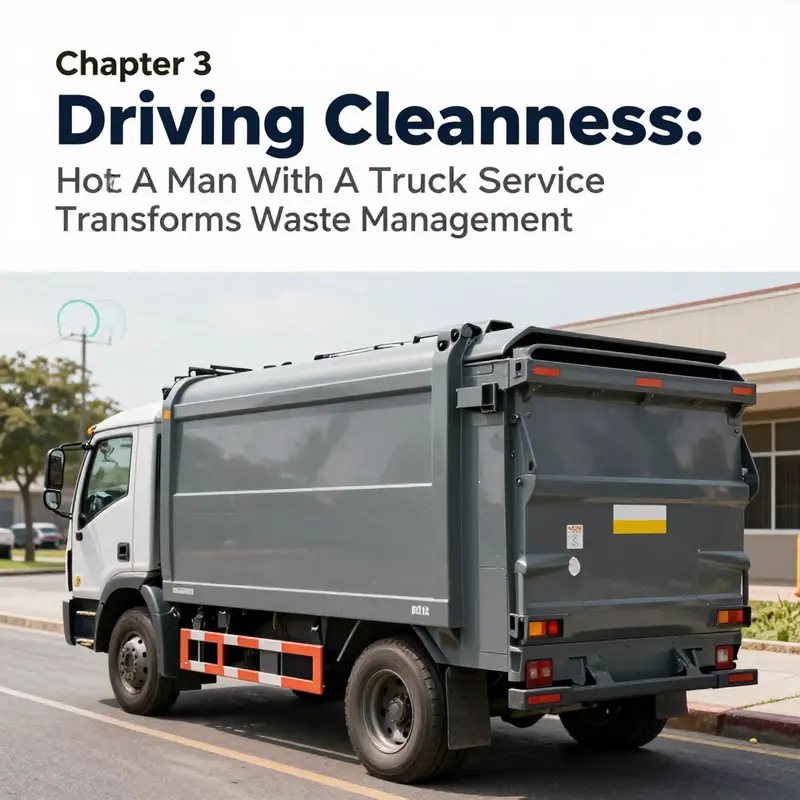
Chapter 3 explores a thread often overlooked in discussions of waste management: the economic footprint of a mobile dumpster service. In communities large and small, a single, nimble truck with a driver can unlock a surprising amount of economic activity. The model—a practical blend of on-demand convenience and targeted service—does more than move trash from curb to landfill. It reshapes the rhythm of local commerce, enables renovations and new construction to proceed with fewer delays, and creates a set of jobs and entrepreneurial opportunities that ripple through the regional economy. This chapter traces those ripples, weaving together the mechanics of the service with the broader fiscal and social benefits that flow from a leaner, more responsive waste-disposal system. By focusing on how a man with a truck can deliver quick, flexible waste removal, we can see how waste logistics intersect with entrepreneurship, construction, retail vitality, and public health, all contributing to a healthier business climate in towns that rely on efficient, affordable disposal options.
At the heart of the economic argument is operational efficiency. Traditional municipal or fixed-route waste systems are optimized for scale and predictability, not for the irregular patterns of residential cleanouts, small-scale remodeling, or evolving construction sites. A mobile dumpster service changes that calculus. The trucks themselves are typically compact, rear-load or mid-compactor designs, engineered to access narrow streets and tight urban spaces where larger fleets cannot operate. This maneuverability translates into shorter travel times between jobs, fewer detours, and lower fuel consumption per cubic yard disposed. In practical terms, customers are spared the hassle of coordinating multiple pickups or renting a larger bin that sits idle while work drags on. Instead, they receive a streamlined experience: a container arrives at the site, the client fills it at a comfortable pace, and the truck returns when the container is ready to be removed. This immediacy reduces downtime for both residential projects and commercial tasks, a factor that can significantly impact project budgets and timelines.
The efficiency story is not just about moving waste more quickly; it also speaks to labor costs and scalability. A typical mobile dumpster operation requires relatively modest crew needs—often a driver suffices for many daily routes. This lean staffing model can lower the per-bin cost of service, enabling more competitive pricing for customers without sacrificing profitability for the operator. Yet the upside of lean operations goes beyond direct price competition. Fewer staff hours per job mean more opportunities to service multiple clients in a single day, expanding the addressable market for the service. Operators can work with a dispersed client base—homeowners, small contractors, real estate teams, and cleanup crews—without the overhead associated with large, multi-truck fleets. In regions with growing construction activity or active housing turnover, this flexible capacity translates into a reliable service backbone that local builders and real estate professionals come to depend on.
From a broader macroeconomic lens, the agility of mobile dumpster services supports smoother project flow across related sectors. Construction delays ripple through supplier networks, affecting material suppliers, subcontractors, and even local retailers of construction-related goods. When waste removal is reliably on schedule, job sites can maintain their momentum, reducing idle time and enabling more work to be completed within planned windows. This, in turn, helps projects come in closer to budget and on schedule, which stabilizes cash flows for subcontractors and encourages more efficient procurement. The resulting uptick in productivity can produce a measurable uplift in local economic activity, reinforcing a positive feedback loop: better waste logistics enable faster project completion, which stimulates demand for labor, equipment, and consumables, supporting higher taxable activity and a more attractive environment for investment.
But the economic impact extends beyond direct service provision. Mobile dumpster operators often become de facto organizers of local waste streams, learning the local landscape of regulatory requirements, recycling opportunities, and end-use markets for recovered materials. In many communities, the ability to separate materials at the source and route them to appropriate recycling or reuse streams is not merely an environmental preference but a practical business advantage. When a small business or a homeowner cleanout yields a mix of wood, metal, drywall, and debris, a competent mobile service can help the client maximize diversion from landfills through proper sorting and compliant disposal. The consequences of better waste separation are twofold: reduced disposal costs for clients and enhanced access to recycling supply chains that are increasingly linked to circular economy initiatives. Even modest improvements in diversion rates can translate into tangible savings over time and contribute to the municipal reputation for responsible waste management.
In this context, the on-demand nature of the service also acts as a catalyst for entrepreneurship. Individuals who might not have the capital to launch a large hauling operation can start with a single, well-maintained truck and a lean staff. This is particularly important in smaller towns or hospitality-driven locales where seasonal demand spikes—think spring cleaning, post-winter renovations, or end-of-year business turnover. A flexible, responsive model lowers barriers to entry for new waste-service providers, enabling a broader base of local entrepreneurs to participate in the market. The cumulative effect is a more competitive landscape where pricing pressures, service quality, and reliability become the primary differentiators. In turn, local consumers—residents, small businesses, and property managers—benefit from better service, more predictable pricing, and shorter wait times, all of which strengthen consumer confidence and transactional activity across the local economy.
The interplay between service design and economic outcomes also helps explain why on-demand dumpster models have gained traction in diverse settings. The literature on waste-management trends points to a growing demand for flexible, scalable solutions that can accommodate variable project sizes and timelines. The specific advantages of mobile dumpsters align with these trends: the ability to deploy quickly, adapt to site constraints, and scale up or down as projects evolve. This adaptability not only improves client satisfaction but also reduces the economic friction associated with waste disposal, such as extended jobsite down time or the need to rent oversized containers for small projects. When cost and reliability become more predictable, construction budgets become more reliable, and lenders and insurers pay closer attention to the efficiency of project workflows. The downstream impact is felt in financing decisions, insurance premiums, and even real estate values, as developers and investors seek markets with predictable logistics ecosystems that keep workflows moving smoothly.
From a local-government perspective, mobile dumpster services contribute to public health and environmental quality in ways that matter economically. Cleaner streets and work sites reduce nuisance complaints, improve neighborhood desirability, and lower the public costs associated with downstream litter and illegal dumping. In commercial districts, a reliable disposal partner means retailers can present a tidier storefront and a safer environment, which in turn supports consumer foot traffic and sales. When waste is removed promptly and responsibly, it reduces the likelihood of rodent harborage, odor problems, and other public-health concerns that impose costs on municipalities through sanitation services and code enforcement. While the operator’s bottom line remains central, these public-health impacts translate into broader municipal savings and a more attractive climate for business investment. In practice, the best mobile-dumpster operators become quiet contributors to the civic ecosystem: they partner with local trades, cooperate with building inspectors, and align with community goals for cleaner, safer neighborhoods.
The economic narrative also benefits from a careful look at the infrastructure that supports mobile dumpster services. Even though the operation depends on a single, agile truck, it relies on a network of suppliers for container assets, tires, hydraulics, and safety equipment. The initial capital outlay may be substantial, but the incremental costs of servicing more customers are relatively modest when the route optimization is sound and the crew is disciplined. Good maintenance practices and predictive service programs extend the life of equipment, reduce the risk of breakdowns, and preserve the reliability that customers expect. This creates a virtuous cycle: solid asset management improves reliability, which boosts customer trust and willingness to pay competitive rates, which in turn strengthens the operator’s ability to invest in newer equipment, further enhancing efficiency. In regions experiencing rapid urbanization, the need for nimble, adaptable waste solutions will only grow, reinforcing the economic logic behind the mobile dumpster model.
To ground this discussion in practical terms, consider the typical needs of residential cleanouts, small commercial renovations, and mid-sized construction sites. In a residential scenario, a homeowner may be confronted with a cluttered attic, a garage full of inherited items, or a yard undergoing a transformation. The prospect of renting a large, stationary bin may feel like overkill or a logistical headache. A mobile dumpster service, by contrast, can arrive on a schedule that fits the homeowner’s pace, offer guidance on what to dispose of, and remove the bin when it’s full without requiring extra coordination. This level of ease reduces the psychological and administrative barriers to undertaking a project that has economic benefits for the homeowner, such as increased property value or the ability to redevelop unused space into rental-ready or sale-ready real estate. For small businesses, the picture is similar but scaled to commercial realities: an office renovation, a storefront remodel, or a seasonal clearance can all be accomplished with minimal disruption to customers and employees, while the service provider absorbs the logistics, permitting, and transport tasks that might otherwise overwhelm a busy manager.
Mid-sized construction sites illustrate the scalability and resilience of the model even more clearly. A contractor who can count on dependable waste removal can maintain steady progress, avoid job-site clutter that can slow operations, and meet strict site-clearance requirements that keep inspections on schedule. The ability to scale the service—adding additional dumpsters or adjusting pickup frequency as project scope changes—helps contractors manage cash flow more effectively. This predictability is valuable not only for the contractor but for suppliers who rely on timely material deliveries, as well as for local waste-processing facilities that benefit from steadier throughput. The net economic effect is a more efficient construction pipeline, lower risk of schedule slippage, and, ultimately, a healthier ecosystem of players who are motivated to invest in local capacity and infrastructure.
All of these threads—operational efficiency, job creation, entrepreneurial opportunity, municipal health benefits, and scalable construction support—converge on a simple, persuasive claim: a mobile dumpster service is not just a convenience; it is a local economic engine. In markets where real estate turnover, renovation activity, and small-business entrepreneurship are essential drivers of growth, the ability to manage waste quickly and reliably can influence decision-making at every level. When a resident can clean out a home with confidence, when a contractor can finish a project on time, and when a shop owner can maintain a tidy storefront without sacrificing productivity, the cumulative effect is a more dynamic, resilient local economy. The utility of a single truck, in other words, compounds through time as more clients recognize the value of dependable waste removal, more entrepreneurs enter the space, and more communities experience the downstream benefits of cleaner streets, healthier neighborhoods, and a business climate that rewards efficiency.
For readers seeking a deeper technical perspective on how these vehicles are designed, graded, and applied across different waste streams, the following external resource provides a rigorous background on the specifications and practical uses of dumpster trucks. It complements the narrative above by grounding the discussion in engineering and industry practice: A Technical Guide to Dumpster Truck: Grades, Specifications, and Applications.
From Curb to Cleanup: The Customer Experience with On-Demand Dumpster Pickup by a Truck Service
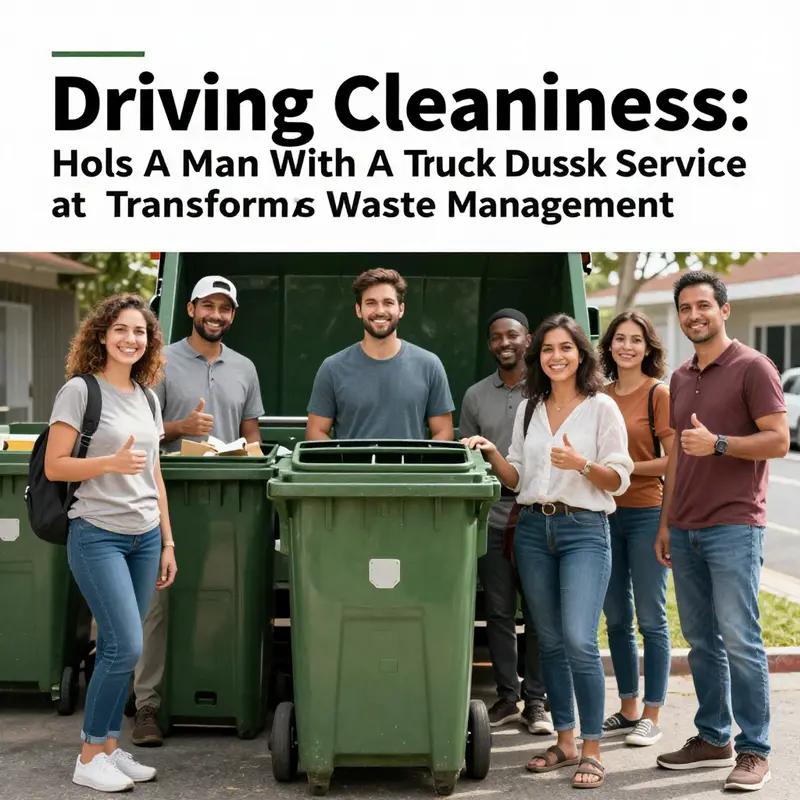
The day begins with the familiar, almost ritualistic rhythm of a home project drawing a line through time and space. A kitchen renovation, a garage purge, a spring cleanup after a long winter—these moments prompt a practical question that echoes across neighborhoods: how will the waste be moved, where will it go, and who will help carry the burden? In communities that rely on the on-demand, truck-based dumpster pickup model, the answer often arrives in two forms at once—the promise of convenience and the request for trust. Customers come to this service not merely for a container or a driver, but for a simple, reliable interface between their intent to declutter and the realities of waste sorting, safety, and local regulations. The service, in its most human terms, translates a messy, time-consuming chore into a sequence of small, manageable steps that fit a homeowner’s schedule and a contractor’s workflow. The narrative that emerges from countless curbside encounters is not simply about efficiency; it is about how people feel when they see a dump truck easing into the street, when they hear the driver explain what can and cannot be discarded, and when they sense that someone cares about the effect of a load on neighbors and the environment alike.
A common thread in customer stories is the aspiration for control without complexity. The model of on-site dumpster pickup—where a customer fills a container at a comfortable pace, and a truck arrives to haul it away once the job is done—offers a rare combination: autonomy and accountability. Homeowners relish the ability to decide when to stop filling, whether to sort materials, and how to pace a project when several bins of waste are competing for space in the driveway. Contractors appreciate the predictable workflow that mirrors a job site, where materials are staged, debris is captured, and the pace is measured rather than dictated by an all-or-nothing pickup. This flexibility does not erase the practicalities of disposal; it foregrounds them. Customers report in one voice that clarity around what goes in the dumpster—nonhazardous debris, recyclables, metals, and bulky items—reduces anxiety. They want a rate that aligns with the actual weight and volume of the load, not a blanket charge that feels opaque after the fact. In places where such services operate—think mid-sized towns and developing suburbs—residents often describe the billing as straightforward: a baseline rental period with proportional overage charges if a load exceeds a typical capacity, and a clear list of exclusions, especially for hazardous materials.
The conversation with customers rarely stops at the price. It extends to the rhythm of the encounter—the way a driver arrives, the manner in which parking is managed, and the simple courtesy of a clear, respectful explanation about what is allowed and what isn’t. A driver who confirms the container’s capacity, who helps strap down a stubborn pile of debris, or who offers guidance on placing items so that the truck can lift safely, earns trust in a few decisive minutes. The mini-lesson that accompanies each visit—how to maximize space, how to avoid overfilling, how to keep lids closed during transport—becomes part of the customer’s memory of the service. It is not just a transaction; it is a moment of instruction and reassurance. And in this moment, the business model reveals its deeper value: a commitment to minimize friction while delivering a meaningful reduction in effort and time. The more the customer feels in control, the more likely they are to view the service as essential rather than optional.
Where this model truly shines is in its adaptability to different waste streams. A resident tidying a basement may leave behind old furniture, boxes of seasonal decorations, and a mix of wood, drywall, and plastics. A contractor might accumulate broken cabinetry, discarded tiles, and metal scraps from a remodel. A community project, such as a schoolyard cleanup or a charitable renovation, adds a different dimension—the collective responsibility to keep the neighborhood tidy while ensuring that recyclable or reusable items are diverted from landfills whenever possible. The truck-based approach meets these diverse needs with a calm, modular approach: the container is the anchor, the fill is deliberate and paced, and the pickup is predictable. This predictability matters. It becomes a quiet promise to the customer that, as the work progresses, the waste management component remains stable, leaving room for the project itself to advance without the weight of logistical uncertainty.
Another layer of the customer experience centers on communication. In the best experiences, the initial call or online inquiry yields more than dates and rates; it yields a sense of partnership. The customer describes a back-and-forth that clarifies what items can be disposed of and how to handle questionable debris. They value a professional tone that is patient when questions arise and direct when decisions must be made. For example, when a homeowner asks whether small appliances, scrap metal, or bulky furnishings should be separated, a competent operator offers practical guidance based on the container’s size and the anticipated load. If the project evolves and the schedule needs shifting, the customer appreciates the flexibility to adjust pickup times within reasonable windows. This level of service, which might once have seemed bespoke or artisanal, becomes a standard expectation as more households and small businesses become familiar with the model. The human element remains central: a driver who greets neighbors with courtesy, who leaves the work area cleaner than it was found, and who communicates any potential delays with a transparent rationale.
Cost is another dimension that shapes customer perception. The most trusted experiences are those in which the price is perceived as fair for the labor involved by the customer and the convenience gained. In consumer narratives, fairness often translates to clarity—how the container is sized, what the rental period covers, and what additional charges may accrue if a load exceeds capacity or if special items require separate handling. The perception of value is reinforced when there is no surprise at the end of the job. A customer who can point to a single, legible invoice and trace it back to concrete decisions—“we rented for five days, we filled it in stages, and the truck arrived on schedule”—is far more likely to become a repeat client or to recommend the service to a neighbor or a colleague. There is also a quiet, practical moral dimension: the service that earns trust is the one that does not tempt haste or careless disposal. It provides guidance on how to dispose of certain materials responsibly and, where possible, how to separate recyclables so that the container’s life cycle is more environmentally coherent.
The social and environmental implications of customer choices often surface in these stories as well. In many neighborhoods, the mere presence of a dumpster on the curb can invite a spectrum of responses from onlookers—curiosity, concern about street cleanliness, and questions about how waste will be managed. Customers who have threaded these conversations into their experience describe a service that respects the community. They recall drivers who secure tarping when wind gusts threaten to scatter light debris, who coordinate street access with local parking norms, and who deliver a final pickup that minimizes residual litter and the disruption to traffic and pedestrians. The sense that the provider understands the local ecosystem—a bustling residential street or a narrow commercial alley—emerges as a potent source of goodwill. Across the board, customers who feel that their service partner is mindful of neighbors, not just their own needs, report higher satisfaction. They describe a relationship that resembles collaboration more than a mere exchange of goods and services.
Yet no narrative is without friction. Some customers recount moments when the plan did not unfold as neatly as hoped. A delay in pickup, a misinterpretation about item exclusions, or the need to rearrange a driveway to create safe access can rattle confidence. The most resilient systems, however, anticipate such bumps and respond with practical remedies. They offer proactive updates, clear alternatives for problematic items, and a willingness to adjust the plan to fit new realities. In the end, the most persuasive customer stories are not those that gloss over difficulty but those that show how the service handles difficulty with a steady, problem-solving reflex. A driver who responds to an unusual request—perhaps the temporary storage of a bulky item for a few hours, or guidance on how to cap a pile to avoid overfilling—illustrates a philosophy that the job is not just to haul away waste but to support the project’s broader goals. When customers sense that their welfare—safety, time, budget, and neighborhood harmony—has been centered, trust solidifies, and a simple service rule becomes a memorable promise: the curb is a shared space, and responsible disposal respects that shared space.
The emotional arc of these experiences often centers on relief. The relief is not solely in removing junk but in converting a potentially chaotic phase of a project into a sequence of carefully managed steps. The relief comes with the realization that someone is watching the clock, respecting the driveway, and treating the waste as part of a disciplined workflow rather than a reckless afterthought. This emotional clarity is particularly meaningful in the contexts in which the on-demand dumpster pickup model has flourished: tight urban streets, single-family lots with limited staging room, and commercial sites that must stay accessible for customers and deliveries. In Hazleton, PA, and Weatherly, PA, where many homeowners juggle seasonal work and limited storage, the ability to bring a container directly to a property and then remove it when the job is ready offers a practical rhythm to life. People adapt their routines around the service, building a sense of reliability that goes well beyond the minutes spent with the driver. It becomes part of a larger story about ownership over a space that once felt unmanageable.
A final dimension worth noting is how these customer experiences feed back into the service ecosystem. Word-of-mouth becomes a powerful amplifier, turning a single positive encounter into a network of referrals that extend the life of a business in a small community. For the service provider, each fulfilled request becomes a data point—a confirmation that the model works, a signal for where to expand capacity, and a nudge toward refining the guidelines that govern what items can be disposed of and how to handle edge cases. For the customer, their testimonial—whether spoken in casual conversation with a neighbor or left as part of an online review—carries weight for future clients who are standing at the same curb, staring at a pile of debris, and weighing whether to hire a truck-based dumpster pickup service or to attempt a more labor-intensive DIY cleanup. The social contract here is subtle but real: a dependable service helps neighborhoods maintain their pace, avoid clutter, and protect property values, while offering a humane, transparent approach to waste management that respects both individuals and the wider community.
In sum, the customer perspective on on-demand dumpster pickup by a truck service is less about a single transaction and more about a trusted relationship built on autonomy, predictability, clear communication, and shared responsibility. It is a relationship that translates a physically daunting task into a series of small, manageable decisions that fit within a daily life marked by schedules, neighbors, and the constant presence of waste before it becomes waste again. The model’s success lies not in novelty but in the quality of the everyday interactions: a driver who arrives with a steady hand, a call center that answers with options rather than obstacles, and a system that treats each load as more than just weight and volume, but as a moment when a home, a business, and a street can move forward together toward a cleaner, safer, and more organized space. As readers reflect on their own projects, they may find that the most meaningful insight is not simply what a truck can haul, but how a service can carry the weight of a community’s needs with care and competence. The curb becomes a shared starting point for progress, and every pickup becomes a quiet confirmation that waste, in the hands of responsible people, can be transformed into a cleaner present and a clearer future.
External resource for additional context on responsible waste practices: https://www.epa.gov/smm
Final thoughts
A Man With A Truck Dumpster Service is more than just a convenient waste removal option; it synergizes logistics, economic sustainability, and customer satisfaction. The interplay of these elements demonstrates the essential role such services hold in supporting the trucking industry and promoting a cleaner environment. As waste management continues to evolve, services like this will remain crucial in keeping our communities functioning efficiently.