
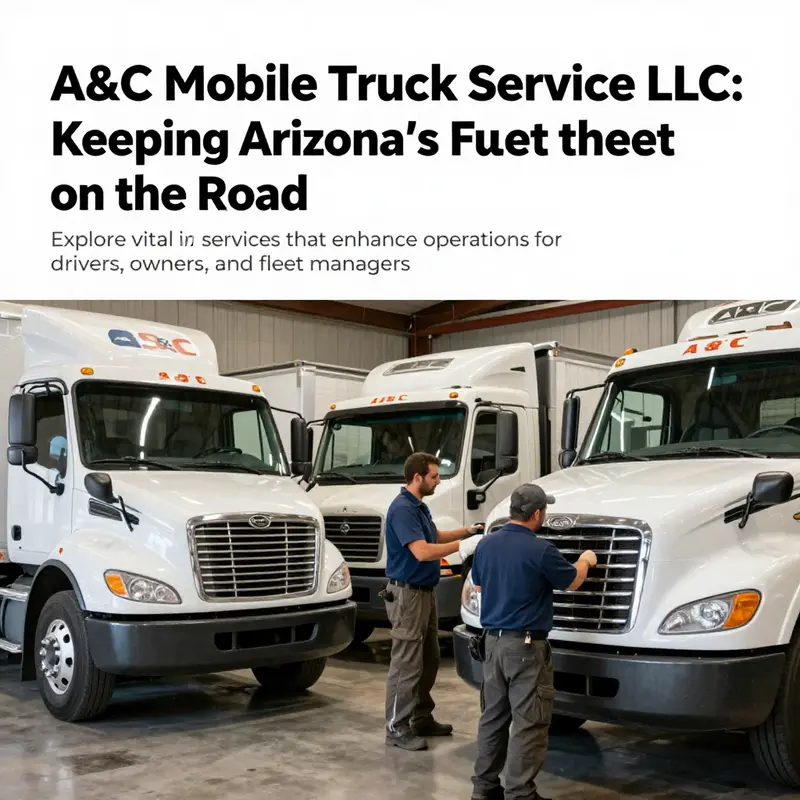
The trucking industry is the backbone of logistics in Arizona, and ensuring that commercial vehicles are maintained efficiently is crucial for long-haul truck drivers, fleet managers, and trucking company owners. A&C Mobile Truck Service LLC in Peoria, AZ, recognizes this need and provides specialized services designed to keep trucks operational and compliant. This article will delve into the comprehensive offerings of A&C Mobile Truck Service, the importance of mobile truck services in Arizona, and how they cater to the unique needs of truck drivers and company owners alike. By highlighting these key areas, you will gain a deeper understanding of why A&C Mobile Truck Service is a cornerstone for the trucking community in Arizona.
On the Move: Peoria Fleet Maintenance with A&C Mobile Truck Service
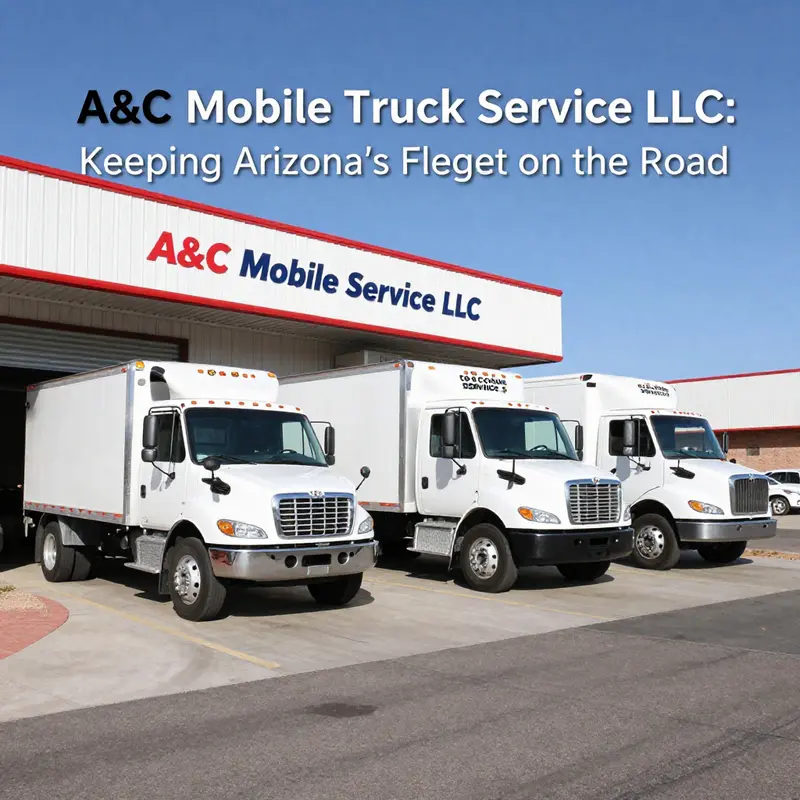
Peoria, Arizona sits at a practical crossroads in the Phoenix metro area, where fleets rely on uptime and predictable maintenance. A&C Mobile Truck Service LLC enters this landscape as a mobile-first partner focused on preventive care, rapid response, and on-site diagnostics. With two Peoria locations at 9440 North 75th Avenue, Suite 100, and 8550 North 91st Avenue, the company combines geographic reach with mobile capability to minimize downtime for local fleets. The maintenance program emphasizes OEM-aligned preventive care, on-site inspections, and the ability to complete routine tasks without towing whenever possible. When on-site work cannot be completed, a seamless handoff to shop facilities ensures minimal disruption to operations. The result is a dependable partner that keeps trucks on the road through proactive care, clear communication, and a commitment to safety and reliability.
Rolling Ahead in Arizona: The On-Site Mastery and Preventive Care of A&C Mobile Truck Service LLC AZ
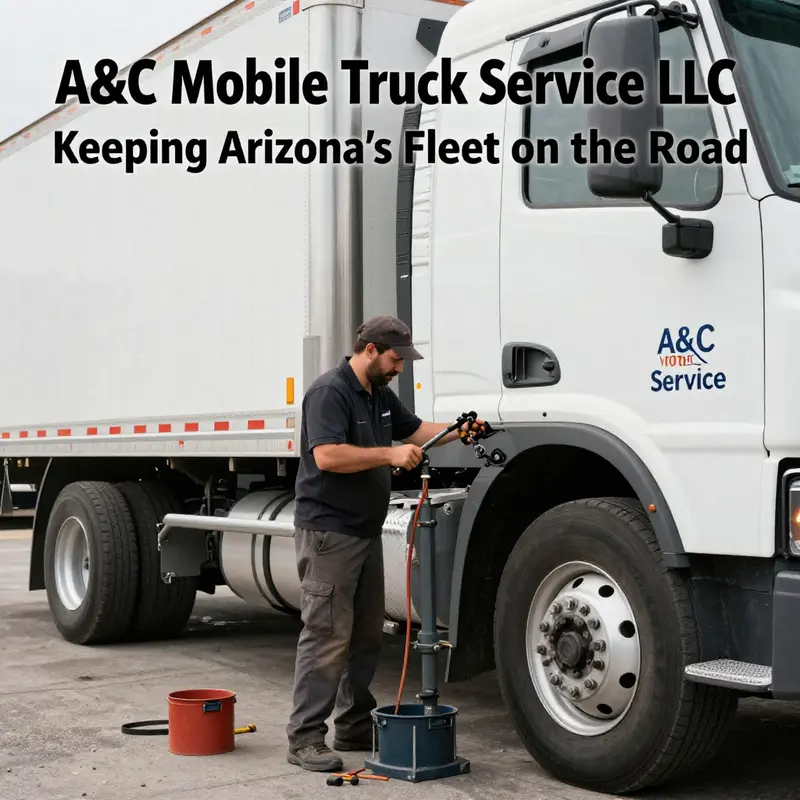
In Peoria, Arizona, where the sun stretches long across wide highways and fleets roll in and out with steady momentum, A&C Mobile Truck Service LLC stands as a certified partner in keeping commercial trucks on the move. The shop, established with a clear purpose, brings a comprehensive suite of preventive maintenance and repair services directly to the road or to the client’s yard. This on-site capability is not just a convenience; it is a strategic advantage for fleets that measure uptime in miles and dollars. The business operates from a fully certified Guaranteed Truck Service shop alongside a team of skilled technicians who are trained to troubleshoot, repair, and maintain heavy-duty equipment with precision. The Peoria location, at 9440 North 75th Avenue, Suite 100, Peoria, AZ 85345, anchors a service model built around minimal downtime, rapid response, and a disciplined approach to safety and regulatory compliance. The core idea is straightforward: when a truck breaks down, every hour matters. Bringing the expertise to the client’s location means operators experience fewer interruptions to dispatch, reduced hauling delays, and a smoother path to meeting tight delivery schedules that Arizona’s commerce demands. The chapter that follows unfolds this service philosophy as more than a list of tasks. It is a narrative about how a mobile, preventive-focused shop translates into reliability for fleets—from single-owner operators to large, multi-vehicle operations—across the varied terrain and climate of the Southwest.
On-site mobile service is the cornerstone of A&C’s value proposition. Technicians travel equipped with the tools, parts, and diagnostic capabilities needed to address a broad range of concerns without requiring a vehicle to be towed to a fixed facility. This mobility reduces downtime, a factor critical to fleet managers who juggle route planning, maintenance windows, and regulatory windows for inspections. The on-site model also offers flexibility for sudden weather shifts, which Arizona experiences with the quickness of a monsoon or the heat of the summer sun. When a driver calls in a service request, the team assesses the problem, determines whether a component can be replaced on-site, and, if needed, coordinates a precise follow-up for a more extensive repair. The end result is not just a fix but a maintenance strategy that prevents recurring issues and preserves uptime for the fleet.
The core services offered by A&C Mobile Truck Service LLC are designed to be comprehensive yet delivered with the efficiency of on-site execution. Engine diagnostics and repairs form a central pillar. Modern diesel and heavy-duty engines rely on a web of sensors, control modules, and performance data streams. Technicians use advanced diagnostic tools to pull fault codes, interrogate live data, and reproduce performance anomalies under controlled conditions at the client’s location. This capability allows the team to identify root causes—whether it is an upset fuel system, a timing issue, a sensor fault, or an abnormal combustion trend—and to implement repairs or part replacements with minimal disruption to the vehicle’s schedule. By focusing on diagnostics in the field, the company reduces guesswork, speeds up decision-making, and helps operators avoid unnecessary downtime that can occur when a truck is moved to a stationary facility for testing.
Transmission servicing rounds out the mechanical spectrum with a careful blend of inspection, maintenance, and repair. Transmission systems demand attention to lubrication quality, fluid condition, and the integrity of gear trains and clutches. On-site servicing provides an opportunity to perform fluid exchanges, inspect shifting behavior, and address issues such as slipping or harsh engagement while the vehicle remains in use or quickly returns to service. The technicians bring the right-grade fluids and seals appropriate to the fleet’s specifications and the vehicle’s duty cycle, ensuring longevity of transmission components and smooth operation across varying loads and climates. The same meticulous approach governs brake system maintenance, where everything from wear sensors to hydraulic lines and brake calipers undergoes inspection. In the field, technicians can measure pad thickness, check rotor runout, and verify line pressure, delivering adjustments and replacements when required to maintain the highest levels of stopping power and regulatory compliance.
Electrical system troubleshooting occupies a critical space in the daily work of mobile service. Modern commercial trucks integrate a broad array of electrical systems that control engine management, telematics, lighting, sensors, and safety devices. A&C’s on-site capability allows technicians to diagnose electrical faults without removing the vehicle from the fleet’s operations for extended periods. They test circuits, verify battery health, inspect harness integrity, and repair or replace failed components on the spot. This proactive electrical care reduces the risk of intermittent failures that can compromise safety or disrupt scheduling. The collaborative nature of field electrical work also means technicians provide guidance on wiring best practices for future installations, upgrades, or equipment retrofits, ensuring the fleet keeps pace with evolving regulatory and safety expectations.
Tire and wheel alignment is another area where on-site service translates into tangible benefits. Tire wear, improper alignment, and suboptimal inflation pressures can erode fuel efficiency and handling performance. In the field, technicians assess alignment angles and tire condition, rotate tires when appropriate, and adjust suspension components if necessary. Correct alignment not only extends tire life but also enhances fuel economy and vehicle stability, crucial factors for long-haul routes or heavy-duty operations across the desert roads and city corridors of Arizona. Fluid exchanges—ranging from engine oil and coolant to transmission and brake fluids—represent another common, high-impact service delivered on-site. Regular fluid exchanges keep systems in their recommended operating ranges, prevent deposits, manage corrosion risk, and maintain the reliability necessary for mission-critical deliveries. The technicians emphasize schedule-driven maintenance so that fluids are exchanged at intervals aligned with the fleet’s working hours and the manufacturer’s specifications, rather than waiting for a breakdown that interrupts service.
Beyond these specific tasks, comprehensive inspections tie the whole approach together. Each visit includes a detailed evaluation of vehicle condition, safety systems, and regulatory readiness. Inspectors check lights, reflectors, exhaust, steering, suspension, and undercarriage components, looking for wear patterns or potential failure points. They document findings, provide clear recommendations, and help the fleet plan preventive actions with an eye toward reducing risk and maintaining compliance with federal and state transport standards. The value of these inspections grows when they are integrated with a broader preventive maintenance plan. Fleet operators benefit from a predictable maintenance schedule, transparent reporting, and the ability to align repairs with dispatch windows rather than responding to emergent failures. The on-site service model makes this alignment practical, reducing the friction that typically accompanies maintenance planning and execution.
A&C’s operational philosophy rests on more than technical proficiency. It embodies a culture of reliability—an emphasis on safety, regulatory compliance, and the steady cadence of preventive care. Technicians are not simply fixers; they are caretakers of fleet uptime. They approach each job with a disciplined workflow that starts with a safety assessment, includes clear communication with the client about what is being done and why, and ends with a concise post-service report. The service model recognizes the real-world constraints fleet managers face: time windows, budget considerations, and the pressure to keep a large number of vehicles in service. By delivering clear value in these areas, A&C fosters trust with operators who rely on consistent performance. The goal is to minimize the likelihood of unexpected failures while maximizing the return on each asset—the vehicle that transports goods, connects supply chains, and keeps communities connected.
The service’s geographic reach complements the practical realities of fleet management in Arizona. The company’s mobile capability is well suited to long stretch routes that cross the valley floor, the foothills surrounding Phoenix and Peoria, and the broader mountain corridors that eventually lead to rural routes. Mobile technicians are prepared to address climate-related wear that is particularly relevant in the Southwest—from hot weather-induced tire and fluid stress to the impact of dust and sand on air filters and electrical connections. The field-based approach reduces the need for extended downtime at any single location and supports continuous operation across diverse schedules and job sites. It also aligns with the realities of independent owner-operators, small fleets, and larger fleet operations that must balance preventive maintenance with daily dispatch demands. When a truck cannot be parked for long durations in a fixed shop, the ability to service on-site becomes a strategic differentiator, enabling more predictable maintenance cycles and fewer disruptions to service delivery.
The results of this on-site model are visible in the way clients think about maintenance. Rather than viewing maintenance as a cost center to be minimized through the cheapest possible fixes, fleet managers begin to see preventive maintenance as investment in uptime and reliability. The on-site ecosystem supports this shift by turning maintenance into a service experience rather than a disruptive event. When a technician arrives, the client experiences not just a repair but a collaborative process: a diagnostic conversation about the vehicle’s performance, a transparent plan for needed work, and a measurable improvement in how the fleet performs after the visit. The approach reduces the back-and-forth that often accompanies repairs, speeds up the time-to-diagnosis, and provides a trusted source of technical guidance for the fleet’s ongoing operations.
For readers exploring similar pathways in maintenance and service, the idea of on-site, mobile diagnostics and repairs resonates with broader industry insights. It highlights a trend toward keeping assets in their working environment, where schedulers, drivers, and dispatchers can see the direct impact of maintenance decisions on daily operations. In practice, this translates to fewer emergency calls, smoother route planning, and greater predictability in maintenance budgets. In the uniquely demanding climate of Arizona, where road conditions, heat, and dust present continuous challenges, the ability to respond quickly and comprehensively on-site becomes not just a convenience but a critical element of fleet resilience. The service model thus serves as a practical blueprint for managers who need to sustain performance while managing costs, driver safety, and compliance with regulatory requirements.
As part of this narrative, it is important to acknowledge the collaborative nature of field service. Technicians work with fleet operators to tailor maintenance plans to each vehicle’s duty cycle, load profiles, and work environment. A&C emphasizes clarity in communication, ensuring that operators understand what was found, what is recommended, and why certain actions are prioritized. The result is a maintenance articulation that empowers managers to make informed decisions, allocate the right resources at the right times, and track improvements in uptime and fuel economy over successive service intervals. In this way, the on-site service becomes a strategic resource rather than a reactive fix, forming a steady loop of inspection, action, verification, and optimization.
For readers seeking to connect the on-site philosophy with broader professional development, there is value in looking at how maintenance practices evolve with experience and training. The field benefits from practices that emphasize preventive care and structured diagnostic protocols. The approach aligns with established principles of maintenance training and continuous improvement, where technicians continually refine their diagnostic skills, stay current with industry standards, and apply lessons learned from each service encounter to future work. The emphasis remains squarely on reliability, safety, and efficiency—three pillars that underpin successful fleet operations in a demanding regional market.
In closing, the narrative of A&C Mobile Truck Service LLC in Peoria is one of deliberate capability, purposeful mobility, and a commitment to preventive care that supports the broader reliability of commercial fleets across Arizona. The service model invites fleet operators to rethink maintenance as a proactive partnership rather than a reactive expense. By combining on-site expertise with a structured preventive maintenance program that includes engine diagnostics, transmission servicing, brake and electrical system care, tire alignment, fluid exchanges, and comprehensive inspections, A&C offers a cohesive solution grounded in practical value. In a landscape where delay is costly and downtime erodes margins, this mobile, preventive approach helps keep wheels turning, schedules intact, and roads safer for everyone who shares them. The chapter’s underlying message is clear: when maintenance happens where vehicles live and work, uptime becomes the predictable outcome that defines success for Arizona’s on-road economy.
For those curious about the deeper training and maintenance philosophies that complement this on-site model, one resource worth exploring is fire truck maintenance service training. This dedicated focus on preventive maintenance traditions offers transferable insights into disciplined inspection routines, systematic fault isolation, and structured maintenance timelines that can enrich any fleet’s approach to reliability. See the linked resource for more on the training framework and how it aligns with field-based maintenance practices.
External resource: This narrative aligns with the operational emphasis described on the provider’s official site, which offers direct details about the company’s on-site capabilities, certified status, and service scope for commercial trucks.
External resource: https://www.acmobiletruckservice.com
On the Move in the Sun Belt: Mobile Truck Services as Arizona’s Lifeline for Freight, Farms, and Frontier Innovation
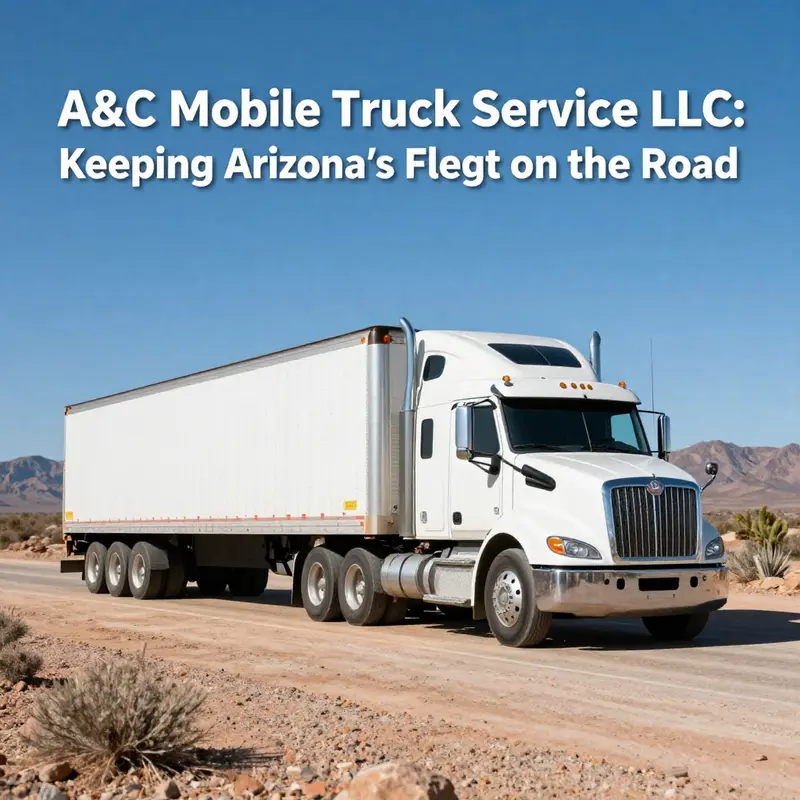
In a state where the sun-drenched highways run from city skylines to remote ranchlands, the value of mobile truck services is measured not just in uptime, but in undeniable resilience. A&C Mobile Truck Service LLC, based in Peoria, AZ, embodies a practical response to Arizona’s distinctive demand: keep commercial vehicles on the road where they need to be, when they need to be there. This chapter traces how mobile maintenance and repair—performed at the curb, at the worksite, or beside a farm field—are becoming an indispensable component of Arizona’s logistics backbone. It links the demands of a rapidly expanding economy to the capabilities of trained technicians and nimble service models, and it grounds the discussion in the broader arc of how autonomous technologies, regulatory environments, and sustainable practices are shaping mobile freight in the state.
Arizona sits at a crossroads. Its geography blends the warmth of desert landscapes with the efficiency of modern corridors. Phoenix and Tucson act as bustling hubs, where freight moves from interstates to local distribution centers, skirting dynamic urban growth along with the pressures of maintaining rigorous safety and emissions standards. Yet the regional economy extends far beyond the urban core. In wide swaths of irrigated farmland and scattered agricultural enterprises, trucks haul produce, feed, equipment, and building materials to markets that would otherwise face gaps in supply. Mobile truck services, therefore, function as a connective tissue across varied terrains and regulatory regimes. A service model that arrives where the vehicle stands does more than shorten downtime. It reduces the risk that fleets—whether long-haul haulers, regional distributors, or field-based operations—face in meeting tight delivery windows, regulatory compliance, and safety protocols.
The value proposition is both practical and strategic. For fleets, downtime is costly in both time and money. A single disabled tractor-trailer can cascade into missed deliveries, rerouted shipments, and late arrivals at job sites. In the agricultural sector, where harvests follow precise seasonal rhythms, delays translate to spoilage risk and market loss. Mobile maintenance and repair are designed to minimize these risks by offering routine preventive maintenance at or near the point of need, emergency diagnostics where breakdowns occur, and on-site repairs that limit the need for towing or off-site downtime. This approach makes maintenance a proactive, rather than reactive, discipline. It also aligns with the flexibility that modern fleets require as they navigate dynamic traffic patterns, shifting demand cycles, and the necessity to keep vehicles compliant with evolving federal, state, and local standards.
At the heart of this model is a trusted, certified shop ethos translated into a field operation. A&C Mobile Truck Service LLC emphasizes preventive maintenance and repair for commercial vehicles, not as an abstract guarantee but as a measurable reduction in downtime and a guardrail for road safety. When a fleet operator in Peoria, a hotspot for logistics activity, contemplates route optimization, the decision to rely on a mobile service partner often rests on several practical considerations: the technician’s familiarity with Arizona roadways and climate, the ability to arrive with a fully equipped mobile workshop, and the capacity to perform both routine service and urgent repairs without sending vehicles away from their assignments for extended periods. The mobile workshop, in this sense, becomes a small, strategically deployed facility that travels to where trucks live and work—on construction sites, farms, trucking corridors, and industrial parks.
The integration of mobile services with preventive maintenance programs also aligns with broader industry trends toward data-driven fleet management. Telematics and onboard diagnostics have transformed how fleets anticipate needs, schedule service, and manage parts inventories. A mobile technician armed with diagnostic tools can interpret fault codes, perform targeted repairs, and advise operators on maintenance intervals that optimize reliability and life-cycle costs. In a state like Arizona, where heat and dust accelerate wear on engines, cooling systems, and payload components, proactive maintenance is not a luxury; it is a practical necessity. Mobile service teams bring this discipline directly to fleet yards, distribution centers, and job sites, turning what used to be a downgrade in productivity into a strategic upgrade in reliability.
The environmental and economic implications of mobile truck services in Arizona extend beyond immediate uptime. Reduced towing and off-site repairs translate into lower emissions, less fuel burn, and smaller logistical footprints for fleet operations. When a repair happens on the roadside or at a field site, it often avoids the need for multiple trips, detours, and bottlenecks on major arterials. In rural corridors and agricultural routes, this efficiency is amplified by the ability to coordinate with local suppliers and farm cooperatives, creating a more resilient supply chain that can respond to weather, harvest cycles, and market fluctuations with agility. The result is a transportation ecosystem where mobile maintenance acts as a quiet enabler of economic activity across a broad spectrum of industries—from construction and distribution to produce and livestock.
Arizona’s regulatory climate further shapes the appeal of mobile maintenance programs. The state’s leadership has shown willingness to explore and, in some cases, pilot advanced mobility concepts within a framework that prioritizes safety and public interest. The path to broader adoption of autonomous trucking technologies—long-haul, short-haul, and regional—intersects with the operational realities of day-to-day fleet maintenance. Industry players recognize that the economic benefits of automation are meaningful only when maintenance and repair infrastructures keep pace with the evolving fleet profiles. In this context, mobile truck services become not merely a convenience but a strategic enabler for integrating autonomous and semi-autonomous capabilities into existing fleets. The Arizona environment—its highways, testbeds, and regulatory sandbox opportunities—can accelerate the maturation of mobile servicing as a viable, scalable, and safer option for fleets seeking to capitalize on the efficiency gains of automation.
The practical implications of this shift are visible in the way field service teams organize and execute work. Technicians trained to operate mobile workshops carry a compact, well-equipped toolkit that reflects a blend of traditional heavy-duty maintenance skills and modern diagnostic capabilities. They arrive with spare parts, calibrated tools, and calibrations tailored to the vehicles they serve, whether heavy tractors, vocational trucks, or pickup-and-delivery fleets that move goods between urban centers and remote sites. The service model emphasizes diagnostic acuity and repair competence under often challenging conditions: high temperatures, dusty environments, and the need to work around tight production schedules. Yet the same constraints sharpen the service value proposition. The technician who can diagnose a cooling system issue, replace a bandsaw-like alternator belt in a single visit, or recalibrate a wheel alignment on a parking lot outside a distribution center saves the fleet operator from a cascade of operational interruptions that ripple through the entire supply chain.
This seamless blend of expertise and mobility is well suited to Arizona’s diverse economy, which includes not only the interstate-freight corridors but also agricultural supply chains that run from field to market through regional hubs. A 2026 perspective on mobile farming in Arizona highlights an innovative model in which mobile units grow and harvest produce in urban or peri-urban settings. While mobile farming sits on the frontier of a broader trend toward localized food production, it also embodies a broader principle: mobility, whether for crops or for capital-intensive equipment, requires dependable, accessible maintenance to remain viable. In this light, mobile truck services support the whole ecosystem by ensuring that the vehicles carrying harvests, feed, and farming gear are ready to perform when and where they are needed. The synergy between mobile fleet maintenance and agricultural logistics reduces risk for farmers and distributors alike while contributing to a more resilient regional food system.
The role of autonomous trucking within this framework is worth reflection. The path to wider adoption of self-driving long-haul technology is not a single leap but a sequence of technological, regulatory, and operational advances. A well-known player in autonomous trucking has framed the market in terms of where its driver technology can deliver the greatest impact first. The logic is straightforward: trucking represents a segment with a tremendous demand for reliable, scalable, and cost-efficient operation, where autonomous systems can deliver meaningful improvements in uptime and safety. For Arizona, with its strategic geographic position as a crossroads for national freight routes, the alignment between autonomous trucking development and robust mobile maintenance capacity is especially compelling. The state’s testbed environments, coupled with a regulatory climate that supports innovation while prioritizing safety, create an advantageous setting for testing and integrating mobile service models with autonomous fleets. In practice, this means mobile service teams become the first line of defense in keeping partially automated or fully autonomous trucks operating safely on the roadways, a role that demands rigorous training, precise diagnostics, and rapid response capabilities.
Beyond the headlines of technology and policy, what truly distinguishes effective mobile truck services in Arizona is a culture of reliability and local understanding. The desert climate imposes particular stressors. Engines contend with extreme heat; cooling systems endure long demands; tires and suspension components absorb rough run-and-load cycles along unpaved or uneven rural roads. A mobile technician’s success depends as much on technical proficiency as on adaptability and situational awareness. The technician must assess road conditions, anticipate transport schedules, and communicate clearly with fleet operators about the scope, cost, and timing of a repair. The ability to explain a diagnosis, present practical options, and implement a transparent maintenance plan builds trust and reduces the friction that often accompanies vehicle downtime. This relational dimension of mobile service—rooted in collaboration, accountability, and shared goals—becomes a key driver of long-term fleet reliability in a state where the distance between urban centers and remote work sites remains a practical reality.
In telling the story of mobile truck services in Arizona, it is essential to acknowledge how this model expands opportunities for local businesses and workers. Mobile service reduces the need to relocate large fleets to centralized shops, enabling small to mid-sized fleets to access high-quality maintenance without incurring the overhead of dedicated on-site facilities. It supports job creation in technical fields by expanding the footprint of service offerings, training, and workforce development. For a company like A&C Mobile Truck Service LLC, this means translating a set of core competencies—diagnostics, preventive maintenance planning, on-site repairs, and rapid response—into scalable operations that can adapt to the rhythms of a state that experiences both rapid growth and periodic climatic extremes. The result is not simply a more efficient fleet; it is a more connected economy where goods can move with fewer interruptions, farmers can harvest with less risk of spoilage, and industrial projects can stay on schedule despite the unpredictability that characterizes the region.
The narrative of Arizona’s mobile truck services is thus a narrative of alignment. It aligns a service model with the state’s infrastructure ambitions, a workforce with the evolving demands of modern fleets, and technologies that promise to magnify the impact of human expertise. It also aligns with a broader industry conversation about how best to maintain safe and efficient freight movement in a landscape that rewards nimbleness and reliability. As fleets navigate the intersection of traditional road transport, automated and semi-automated systems, and emergent forms of localized production, mobile maintenance anchors the entire enterprise. It represents the practical convergence of field-based problem solving, engineering know-how, and strategic planning that keeps Arizona’s freight corridors illuminated by reliability, not by breakdowns.
Ultimately, the story of mobile truck services in Arizona is a story about capability meeting need. It is about the technicians who bring the workshop to the road, the fleets that rely on them to hit tight schedules, and the communities that benefit from more robust supply chains and safer roads. It is also a story about the future—one where autonomous and semi-autonomous trucking, smart infrastructure, and data-informed maintenance cooperate to minimize downtime, maximize efficiency, and protect the environment. The state’s unique blend of urban centers and rural expanses makes this narrative particularly vivid, showing how a mobile, on-demand maintenance model can support a modern economy and a resilient agricultural system without becoming an added burden on the environment or the budget. In that sense, mobile truck services in Arizona are more than a convenience; they are a strategic asset for a state that is continually balancing growth, sustainability, and the aspirations of a diverse set of communities.
As the landscape evolves, several threads will likely define the next chapters of this story. First, the continued integration of remote diagnostics and parts logistics will shorten repair cycles and push more routine maintenance into scheduled windows rather than emergency responses. Second, regulatory advances and partnerships will create a more predictable operating environment for autonomous trucking and for fleets that adopt advanced propulsion and safety technologies. Third, the synergy between mobile services and localized food and agricultural initiatives could unlock new models of on-site maintenance for mobile farming units, enhancing food security while building new business lines for service providers. In every case, the core premise remains constant: dependable, well-timed maintenance that travels with the vehicle is a prerequisite for the mobility that Arizona’s economy depends on.
For readers who want to situate this discussion within the broader industry ecosystem, consider how a well-tuned mobile service network complements the strengths of a leading trucking services provider that emphasizes reliability and customer-centric care. This alignment is not accidental; it reflects a diagnostic reality about modern fleets. When a fleet operates in a region with high demand for on-time performance and strict safety standards, a mobile service strategy is not optional. It is a strategic imperative that elevates the entire operation—from procurement through maintenance to deployment on the road. In Arizona, where the road network and the agricultural calendar create a demanding schedule, the mobile service model converts downtime risk into a controllable variable. It converts uncertainty into a manageable, studio-like environment where the vehicle is treated as a dynamic asset, not a fixed liability.
In sum, mobile truck services in Arizona function as both enabler and amplifier. They enable a broader fleet strategy by delivering preventive care where it matters most and responding rapidly when the unexpected occurs. They amplify efficiency by reducing the number of separate trips required to repair, inspect, or test a vehicle, thereby lowering emissions and conserving fuel. They empower regional communities by supporting agriculture and local commerce with the same level of service found in metropolitan logistics hubs. And they empower the people who do this work—the technicians, dispatchers, and fleet operators—by shaping a profession that is as adaptive as the landscapes it serves.
As we reflect on the trajectory suggested by current developments, it is clear that mobile truck services will continue to evolve in tandem with Arizona’s growth. The next chapters will further illuminate how these mobile operations integrate with the broader regulatory, technological, and market forces shaping the future of freight and farming in the sunlit Southwest. Along the way, we will see how the practical, hands-on work of field technicians—who diagnose, repair, and maintain under sometimes harsh conditions—becomes the backbone of a more resilient, efficient, and sustainable transportation system. And in that resilience lies opportunity: for businesses that recognize the strategic value of mobile maintenance, for communities seeking dependable supply chains, and for a state that has long prided itself on innovation under open skies.
Internal link to industry perspective: As this evolving ecosystem shows, reliable mobile maintenance is a keystone in modern trucking health, a truth echoed by industry voices exploring service excellence. For a closer look at how a premier trucking solutions provider frames its value, explore this perspective: discovering the unparalleled services of 5 Star Truck Inc.
External resource: For further context on autonomous trucking technology and its deployment considerations, see the Aurora Driver technology framework at https://www.aurora.com/technology.
Final thoughts
Understanding the pivotal role of A&C Mobile Truck Service LLC reveals how essential reliable maintenance and repair services are to the trucking community in Arizona. By ensuring that vehicles are consistently operational and compliant, they not only help long-haul truck drivers perform their duties effectively but also support fleet managers and owners in optimizing their operations. Keeping trucks on the road benefits everyone, and A&C stands ready to deliver the necessary services to meet these demands.