
In today’s interconnected world, transportation plays an essential role in fostering global commerce. The narrative around “Euro Truck Service” seamlessly intertwines two influential domains: the captivating realm of Euro Truck Simulator 2 (ETS2) and the practical application of Sino-Europe Trucking Service. For long-haul drivers and fleet managers, understanding both virtual and real-world perspectives can provide valuable insights about the industry. As we navigate through the engaging landscapes of ETS2, we will unearth how the game parallels actual trucking logistics. Simultaneously, the Sino-Europe Trucking Service exemplifies innovative international trade routes, connecting continents and enhancing trade efficiency. Throughout this article, our exploration will enrich the knowledge of stakeholders in the trucking industry—from fleet managers to aspiring drivers—highlighting the economic impacts and technological advancements that drive both sectors.
Bridging Screens and Straights: Digital Trucking and Real Sino-European Freight
Wheels travel across more than pavement in today’s logistics landscape. They move through ideas, models, and institutions that connect distant markets with a shared demand for efficiency, reliability, and speed. The chapter compares a popular trucking simulation with a real Sino-European road freight corridor to explore what digital representations can teach about real-world freight flows and the policy and business contexts that shape cross-border trade. In this view, digital trucking is not merely entertainment; it is a tool for thinking about the decisions, constraints, and opportunities of modern logistics.\n\nIn the digital realm, the game simulates the core tensions of freight: speed versus cost, capacity versus reliability, and risk versus reward. Players plan routes, manage fuel, and schedule around daylight, weather, and maintenance windows. The virtual network models routes, depots, and cargo constraints in a way that echoes real operations, helping learners develop planning, sequencing, and contingency skills without exposing a business to real risk.\n\nMeanwhile, the real Sino-European freight corridor demonstrates how cross-border road transport can connect producers and consumers across continents. It consolidates routes across multiple jurisdictions, requiring coordination of customs, inspections, and fleet management. The corridor reflects the practical realities of infrastructure, governance, and interoperability of standards, while highlighting the importance of reliability, predictability, and timely delivery.\n\nBoth domains share a common logic: value arises from coordinated asset utilization and precise execution, underpinned by timely information on schedules, prices, and regulatory changes. They differ in constraints: the digital world abstracts away fatigue, safety, and certain compliance frictions, while the real world confronts those realities directly. Together they offer a constructive, complementary view of what makes cross-border trucking feasible and scalable.\n\nWhat does euro truck service exist, meaning a seamless cross-border option? The answer is nuanced and best understood as a spectrum. Digital simulations illuminate tradeoffs and investment dynamics; real corridors provide tests of ideas under actual policy and market conditions. The two realms can reinforce each other: simulations train drivers and dispatchers, while corridors reveal gaps to address in infrastructure and governance. The result is a vision of digital twins and real freight networks co-evolving to expand efficient movement of goods across continents.\n\nPolicy and industry leaders can benefit from this synthesis: digital platforms lower barriers to learning and testing, while real corridors provide validation and continuous improvement. The future of cross-border trucking grows through collaboration between virtual experimentation and physical infrastructure, not as a single universal service but as a dynamic capability that spans planning, execution, and learning.\n\nFor readers seeking practical entry points, compare how digital models encode core constraints of logistics with the realities observed in cross-border operations. The exercise helps translate skills in route optimization, risk management, and customer collaboration from screen to road. As the landscape evolves, these two domains will remain intertwined, each expanding the capabilities of the other.\n\nExploring official resources and case studies can further illuminate how digital and real trucking intersect and inform policy and practice. The central idea remains: euro truck service, interpreted broadly as the capacity to move goods efficiently across long distances, exists as a goal and a practice achieved by aligning simulation insights with real-world readiness.
Bridging Continents by Road: The Real-World Impact of Sino-Europe Trucking and Its Echo in Virtual Highways
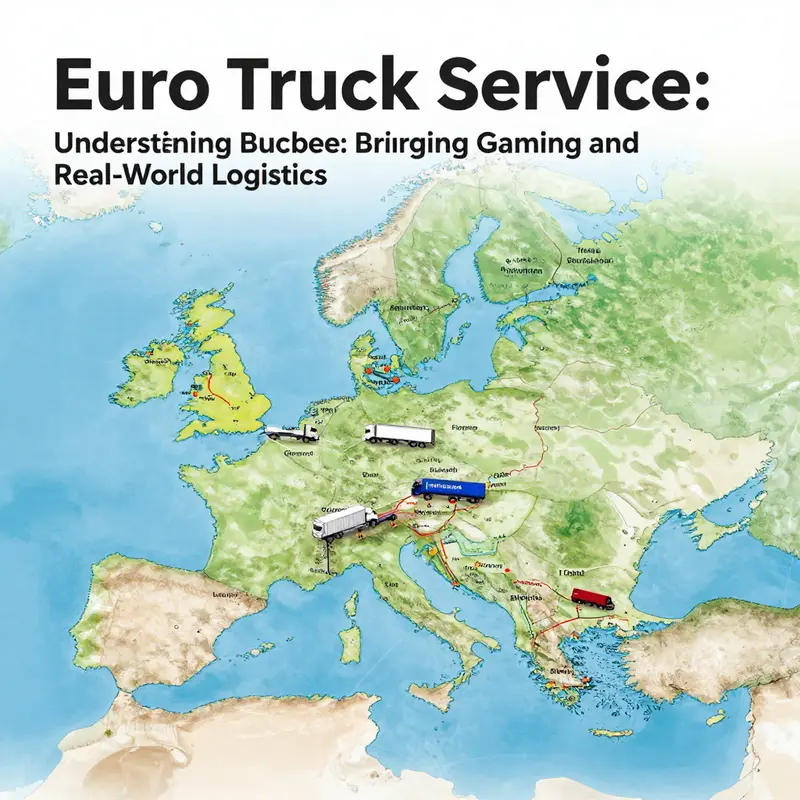
The phrase can euro truck service invites a double reading. On one hand, it nods to a popular computer simulation where players pilot digital tractors across meticulously recreated European routes. On the other, it points to a rapidly evolving real-world logistics corridor that links China with Europe by road. The chapter that follows examines the latter with the same sense of scale and precision that players expect from a well-made game, yet grounded in the tangible realities of modern supply chains. In doing so, it reveals how a road-based freight service has emerged as a crucial alternative to traditional air and sea freight, reshaping expectations around speed, transparency, and cross-border coordination. The broader article this chapter accompanies treats the dual nature of the topic, but here the focus is on the actual logistics corridor, its mechanisms, and its strategic significance in today’s economy, where physical movement of goods travels long distances with remarkable efficiency, even as digital simulations offer a sandbox for planning and optimization.
At the core of the real-world corridor is a sophisticated blend of transit protocols, technology-enabled visibility, and a carefully engineered network of routes that allow freight to cross multiple international borders with minimal friction. The backbone of these operations is a system known as Transports Internationaux Routiers, or the TIR system, an internationally recognized customs transit agreement administered under the auspices of united nations bodies. The TIR framework enables a truck to move goods across several countries under a single, streamlined set of customs procedures, significantly cutting transit times and reducing the administrative burden for shippers, carriers, and border authorities alike. In practical terms, a single document streamlines what would otherwise require a web of separate clearances, permits, and inspections. The result is a smoother, more predictable path for commodities that demand speed and reliability, from high-tech equipment to complex automotive components and critical renewables hardware. Such capabilities are particularly valuable when transporting items that are time-sensitive or high in value, where delays can ripple into costly production stoppages or missed project milestones.
The geography of the corridor is not incidental. It is anchored by a major hub in the southern metropolitan spine of a dynamic port city known for its free-trade zone chemistry and its proximity to burgeoning manufacturing ecosystems. From this base, the service crafts routes that travel across Central Asia into the European landscape and beyond, leveraging strategic border crossings and established logistics nodes to maintain a continuous flow of goods. Among these nodes, certain crossings have become widely recognized as gateways for cross-continental freight, with Alashankou and Khorgos standing out as critical junctions that link Chinese production clusters with Central Asian transit networks and onward into Europe. These crossings are more than mere waypoints; they are the operational chokepoints where documentation, vehicle standards, and border procedures are harmonized to minimize dwell times and maximize uptime. The interplay between the routing architecture and the local customs ecosystems determines the rate at which goods can be moved, stored, and ultimately delivered to final destinations, whether a manufacturing plant, a regional distribution center, or a customer’s facility on the far side of the continent.
The corridor’s footprint has grown beyond its original European-centric path. In recent years, operators have extended their reach toward the Middle East, opening lines that connect through the same rigorous standards of crossing management and cross-border commerce. This expansion underscores a central theme: road-based freight is not simply a fallback option to more traditional modes; it is a flexible, scalable alternative capable of delivering speed and door-to-door service in markets where time-to-market is a decisive competitive advantage. The Middle East corridor, reaching eighteen countries in its 2024 expansion, demonstrates how road freight can fuse with regional trade patterns to support energy, manufacturing, and consumer electronics sectors that require short-to-medium transit windows across diverse climatic and regulatory environments. The ability to execute such movements with a unified set of procedures—such as pre-approval for ATA Carnets that facilitate temporary importation without duties, and real-time tracking that keeps every stakeholder aligned—transforms what could be a perilous logistical chain into a dependable logistics artery.
Technology is not an afterthought in this model; it is a core driver of reliability and efficiency. Real-time cargo tracking provides end-to-end visibility, enabling shippers to monitor location, temperature, and security events as vehicles traverse multiple borders and time zones. For sensitive cargo—lithium batteries, drones, photovoltaic equipment, or other high-value, time-critical goods—the ability to verify conditions and respond to anomalies in near real time translates into fewer disruptions, improved asset utilization, and better planning accuracy for downstream operations. The integration of pre-approval capabilities for ATA Carnets further reduces friction at customs, helping shipments to slide through with fewer holds and red tape. Such conveniences are especially meaningful for e-commerce flows and project logistics, where precision and speed become differentiators in a crowded market.
The operational model blends owned capability with carefully chosen partnerships to form a resilient network. A fleet of TIR-certified vehicles forms the backbone of service delivery, enabling predictable schedules and scalable capacity across breadth of terrain—from expansive steppes to alpine routes and densely populated urban corridors. Beyond the carrier’s own vehicles, a mosaic of local logistics players expands the reach and flexibility of the operation. This multi-national, cooperative approach allows services to cover border warehousing, customs clearance, and last-mile delivery with a degree of nimbleness that a single operator could not achieve alone. The result is a robust end-to-end solution that can accommodate a wide range of cargo types and project requirements, from standard goods to oversized or hazardous shipments that demand specialized handling and regulatory compliance.
A key component of the chapter’s real-world narrative is the role of corporate subsidiaries that extend domestic presence and specialized expertise. One such subsidiary, operating in a major manufacturing hub in the country’s industrial belt, brings deep experience in ATA Carnet logistics to bear on complex shipments. This experience translates into a track record of reliably moving oversized freight, hazardous materials (ADR-compliant), and controlled-temperature goods through intricate, multi-node supply chains. Ten-plus years of practical knowledge in handling these challenging cargo profiles have created a foundation for trust with automotive manufacturers, renewable energy installers, and other sectors that rely on tightly controlled supply chains. The interplay between regional competence and cross-border routing creates a scalable model that can flex to changing demand patterns, whether that means ramping up capacity during peak seasons or reconfiguring routes in response to geopolitical or regulatory shifts.
Time, however, remains a central competitive variable. In a world where a single delay can cascade into production stoppages, the ability to promise accurate transit times and ensure adherence to those commitments becomes a strategic advantage. The Sino-Europe corridor, with its integrated air-and-road alternatives and with a strong emphasis on door-to-door delivery, offers a blend of speed and reach that is difficult to replicate with other modes alone. The experience of handling high-value components—battery packs for electric vehicles, solar modules, precision instrumentation, and other critical equipment—highlights the logistical discipline required to protect product integrity while navigating border controls and customs regimes. For firms that load these items into a cross-continental route, the combination of secure handling, precise scheduling, and advanced tracking creates a compelling value proposition: shipments that arrive when and where they are needed, with minimal surprises along the way.
What makes this particular corridor compelling is not only its breadth but its adaptability. The operational network has become a platform upon which adjacent services—such as warehousing near major border points, tailored customs brokerage, and value-added services like pre-clearance for specific cargo classifications—can be layered as needed. This adaptability matters because supply chains are not static. They respond to shifts in demand, changes in regulatory landscapes, and fluctuations in fuel costs and transit times. The ability to reconfigure routing, swap to alternative border crossings, or adjust service levels without sacrificing reliability is the hallmark of a mature,正在 mature cross-border road freight ecosystem. As the global economy continues to transform—accelerated by digitalization, decarbonization goals, and geopolitical realignments—the ability to maintain a seamless, end-to-end journey for goods becomes more essential than ever.
The human dimension of these operations should not be overlooked. A skilled network of dispatchers, customs specialists, and on-road technicians coordinates the flow of cargo, negotiates with border authorities, and maintains the integrity of the fleet under demanding conditions. The experience gained from years of ATA Carnet handling, ADR compliance, and cold-chain management translates into predictable service during peak periods, while well-documented safety and maintenance programs help minimize equipment downtime. In practice, this means clients can depend on steady service levels for projects of varying scale, from urgent industrial deployments to multi-country rollouts that require synchronized timing across multiple geographies. The narrative of the corridor is thus as much about people and processes as it is about trucks and routes, and this blend fuels a culture of continuous improvement.
The chapter would be incomplete without recognizing how this real-world logistics system resonates with the broader topic of can euro truck service, including its virtual counterpart. In Euro Truck Simulator 2, players navigate European roads with a sense of continuity that mirrors the real-world corridors described here. The game captures the aesthetic and strategic elements of route planning, fleet management, and economic decision-making that underpins actual freight operations. While the simulation remains a carefully crafted abstraction, it serves a useful educational purpose: it provides a sandbox for exploring how routing choices, regulatory constraints, and market demand influence outcomes. The connection between the simulated world and real-world practice becomes clearer as one considers the planning discipline that underpins both. For instance, a route that makes sense in a game—one that minimizes backtracking, optimizes fuel usage, and aligns with maintenance windows—has a counterpart in a real-world route that factors in border formalities, cargo handling requirements, and the realities of customs processing. Both realms benefit from similar optimization logics: visibility, predictability, and disciplined execution.
To bring a practical frame to the broader discussion, consider the ecosystem surrounding the corridor. The real-world network depends not only on a fleet and a route map but also on a set of strategic partnerships and cross-border capabilities. Border warehousing, customs clearance teams, and local carriers work in concert to ensure a shipment can traverse from origin to destination with minimal interruption. The network is designed to absorb shocks—whether it is a temporary surge in demand, a delay at a border crossing, or a change in the regulatory environment—without sacrificing reliability. This resilience, built on a foundation of technology-enabled transparency and well-honed operating procedures, is what allows high-value commodities to travel long distances in just a few days, a feat that was once considered impractical for road transport over such a vast expanse.
A final reflection centers on the evolving role of knowledge and experience in shaping the corridor’s future. The sustained emphasis on ATA Carnets, ADR compliance, and cold-chain expertise signals a maturation of cross-border road freight into a profession characterized by technical sophistication and regulatory literacy. The corridor’s expansion into the Middle East demonstrates that road freight can be a catalytic force for regional integration, connecting manufacturing centers with emerging markets and enabling a more diversified supply base for a broad array of industries. In a world that increasingly values agility and transparency, the Sino-Europe trucking corridor stands as a practical embodiment of how to marry speed with reliability, scale with precision, and local know-how with global reach. It is a living reminder that road networks, properly engineered and expertly managed, can move more than goods; they move ideas, capabilities, and opportunities across borders.
For readers seeking a deeper look at the broader trucking landscape, a related piece exploring the distinctive features of leading trucking providers offers useful context and real-world case studies. Read more here: distinctive features of 5-star truck inc.. This reference broadens the frame by contrasting different approaches to service quality, maintenance discipline, and customer alignment, helping to illuminate how the real-world corridor fits within the wider spectrum of road freight services.
External resource: https://www.sino-euro-trucking.com/
Bridging Virtual Freight and Real-World Highways: The Economic Ripple of Euro Truck Services
Two threads run through the contemporary conversation about Euro Truck Services, one bright with the glow of a screen and the other concrete as tarmac. On one side sits a widely played European trucking simulation in which players take command of a virtual transport enterprise. They map routes, estimate fuel, negotiate maintenance needs, and grow a fleet across lifelike landscapes. On the other side lies a tangible cross-continental corridor that has begun to move goods directly by road between China and Europe, a development that promises faster transit and tighter control over customs and handling than previous modes. When read together, these dimensions illuminate a broader economic logic: digital practice and physical logistics are converging, not competing, as each informs the other. The result is a more nuanced understanding of efficiency, risk, and opportunity across the entire freight ecosystem.
In the virtual realm, the core features of the trucking experience—route optimization, fuel management, vehicle maintenance, and timing—are not mere game mechanics. They are simplified models of the constraints facing real operators: fuel prices that swing with macroeconomics, maintenance costs that rise with wear and tear, regulatory requirements that shape route choices, and capital decisions about whether to expand a fleet or upgrade equipment. Players learn to balance upfront investment with long-term reliability, to forecast demand across different seasons, and to weigh the value of diversification within a fleet portfolio. The most impactful aspect of this simulated environment is the way it turns abstract numbers into tactile consequences. A missed oil change, an inefficient fuel stop, or a poorly planned long-haul leg translates into measurable losses of time and money within the game’s economy. That immediacy mirrors the real world, where a single delay can ripple through a business’s cash flow, supplier relationships, and reputational capital.
Within this ecosystem, modifications and expansions further sharpen the realism. An economy overhaul mod, in particular, expands the learning envelope beyond simple budgeting by introducing market fluctuations, supply chain dynamics, and the long arc of financial planning. Players who engage with such enhancements experience a more textured, sometimes sobering, sense of what it means to manage risk, seize opportunities, and steward capital over time. The gameplay philosophy shifts from “get from point A to point B as quickly as possible” to a more deliberate, integrative approach: how to build and sustain a small, resilient enterprise that can weather price shocks, demand volatility, and the changing geography of Europe’s road network. These are not merely skills for a game; they are representations of core competencies used by actual logistics professionals who must design routes that minimize cost and time while maximizing reliability and compliance.
Meanwhile, the real-world counterpart to Euro Truck Services has progressed along a parallel trajectory of efficiency and integration. A cross-continental road corridor connecting China and Europe—launched in mid-2024 by a major regional postal network—embodies a concrete shift toward more direct, controlled freight movement. Road transport across multiple jurisdictions can trim transit times compared with airfreight, while offering a level of flexibility that is harder to achieve with more traditional modes. Yet this progress does not come without complexity. Harmonizing customs procedures across borders, aligning regulatory standards, and ensuring consistent handling of varied cargo types demand sophisticated coordination, data sharing, and dedicated operational discipline. The corridor’s emergence signals a broader trend toward regional dependencies and nearshoring logic: as firms seek to shorten supply chains and reduce exposure to volatile maritime schedules or air freight disruptions, road routes that connect origin and destination with fewer handoffs become increasingly attractive.
From a macroeconomic perspective, these two strands—virtual trucking simulations and real-world cross-border road freight—generate complementary insights. In the simulated world, players experiment with what-if scenarios: how does a sudden rise in fuel costs alter optimal route structure? What is the impact of delaying a maintenance cycle on long-term asset lifetime versus short-term cash flow? What if demand spikes in a single corridor? The answers, while framed in a game, offer transferable heuristics about capital budgeting, risk management, and strategic planning. In the real world, operators learn to negotiate with carriers, customs brokers, and border authorities; to deploy fleets in ways that minimize dwell time at checkpoints; and to design logistics flows that align with consumer demand, production schedules, and the whims of weather and geopolitics. The recurring lesson is not simply about speed or price, but about the orchestration of a system where drivers, dispatchers, financiers, and policymakers all play complementary roles.
To understand how these parallel developments affect broader economic activity, consider workforce development. Virtual training environments, even in their most entertaining forms, can function as laboratories for skill-building that would be costly or risky to replicate in the real world. Trainees can practice complex decision-making—planning multi-stop itineraries, reallocating loads under changing constraints, and diagnosing faults—without the consequences of real-world errors. The educational potential expands further when these virtual exercises intersect with real-world datasets: route congestion statistics, port and border processing times, and fuel price trajectories. In that sense, the line between gaming and training begins to blur, offering a scalable, low-risk platform for preparing a workforce that can operate with greater agility and data-driven confidence.
The convergence also invites policymakers and planners to reimagine urban and regional freight strategies. Virtual models enable scenario testing for last-mile distribution, corridor capacity, and emissions impacts under different fuel mix and vehicle technologies. Urban planners can simulate how freight movement routes influence road safety, neighborhood livability, and public transit demands. Real-world corridors, for their part, supply the empirical constraints that keep simulations honest: the actual costs of road use, the time penalties of border crossings, and the regulatory realities that shape which routes can be used for which cargoes. In this reciprocal exchange, virtual environments become proxies for experimentation, while real-world corridors provide the data streams that calibrate and validate those simulations. The two spheres thus illuminate a virtuous cycle: better training and planning born from simulated practice feed into more efficient, compliant, and responsive physical networks; and the realities of global trade, in turn, supply richer, more credible contexts for simulation-based learning.
The behavioral and organizational implications extend to industry collaboration as well. Within the trucking sector, discussions around standardization, shared best practices, and digital interoperability are increasingly common. A prominent thread in these conversations is the value of creating a learning pipeline that begins in the classroom of a sim and ends in the yard of a terminal. The idea is to cultivate professionals who can translate the abstract lessons of the economy, route optimization, and maintenance scheduling into concrete, on-the-ground improvements in speed, reliability, and safety. The internal logic of this approach is simple: when people understand both the numbers behind a decision and the real-world consequences of that decision, they can make choices that align with the broader goals of cost containment, service quality, and sustainable growth. In this sense, Euro Truck Services—whether perceived through the lens of a game or through the lens of a cross-border freight corridor—embodies a philosophy of learning by doing, testing by scenario, and refining by feedback.
For those who track industry narratives, a single sentence often captures the evolving mood: virtual practice is becoming a legitimate source of human capital for real-world logistics. The analogy is not perfect, but it is compelling. Just as a pilot trains through simulators to master procedures and weather contingencies before stepping into a cockpit, logistics professionals can harness high-fidelity simulations to hone route design, cost forecasting, and risk assessment before committing physical assets to a long-haul operation. The opportunity is not to replace real-world experience with synthetic exercises, but to extend and accelerate it. Where once a dispatcher’s wisdom rested on years of on-the-ground trial and adjustment, increasingly that wisdom can be formed, tested, and refined through carefully structured digital practice. The online and offline freight ecosystems thus begin to reinforce each other, producing a more resilient, adaptable, and forward-looking industry.
The potential benefits extend beyond profitability and efficiency. As the digital and physical freight landscapes become more integrated, there is a growing case for using simulations to inform climate and energy policy. Freight movements contribute substantially to energy consumption and emissions, and the ability to model different vehicle technologies, routing choices, and load configurations can illuminate pathways to lower environmental impact. In practice, this means that simulations can help designers and regulators evaluate the emissions trade-offs of long-haul road transport versus rail, or the incremental gains from electrification and other zero-emission technologies in cross-border corridors. While the human and organizational dimensions remain central, the analytical power of integrated virtual-physical freight systems offers a clearer lens through which to consider the choices that shape sustainable growth.
In sum, the question of what Euro Truck Services means for economies of scale, supply chain resilience, and workforce competence cannot be answered with a single statistic or a short-case narrative. It requires recognizing how virtual environments and real-world logistics feed one another. The simulated world provides a low-risk laboratory for testing ideas about route planning, maintenance scheduling, and capital deployment, while the real-world corridor demonstrates how those ideas must bend to regulatory frameworks, border procedures, and market dynamics. When we view them together, the two domains reveal a shared destiny: freight operations that are more intelligent, more adaptable, and more capable of aligning with the pace of global commerce. And this is not a distant or theoretical prospect. As education and industry continue to borrow methods from gaming technology and as real-world logistics increasingly adopts the rigor and fluidity of simulation-based planning, the boundary between play and practice shifts from a line to a continuum. In that continuum lies the promise of faster, cheaper, and cleaner freight, delivered not only through faster trucks and smoother borders but through smarter people who can think with both data and caution, both the discipline of cost accounting and the art of responsive service.
To connect this broader narrative back to tangible industry practice, consider how one might reference the ongoing development of premier trucking solutions and the ways such strategies are communicated within professional communities. For example, practitioners seeking insight into how high-quality trucking operations articulate their value and reliability can explore industry discussions that synthesize practical service design with technical excellence. Exploring the Excellence of 5-Star Truck Inc.—Your Premier Trucking Solution. This kind of linkage helps situate Euro Truck Services within a wider ecosystem of best practices, where a focus on efficiency, maintenance discipline, and fleet optimization translates from digital simulations into real-world performance. The cross-pollination between online experimentation and offline execution is not merely convenient; it is increasingly foundational to how freight aims to grow more robust, adaptable, and responsive to both business needs and policy objectives.
For readers seeking a deeper dive into the technical dimension of in-game economy realism, an external resource provides a concrete example of how simulated markets can approximate real-world financial dynamics. This resource examines how market fluctuations, asset depreciation, and long-horizon planning interact within a highly detailed simulation, offering a useful reference point for those who want to understand the evidence base behind simulation-driven education and testing. External resource: External resource on in-game economy realism.
Technological Developments in Euro Truck Services: Innovations Driving Efficiency and Enjoyment
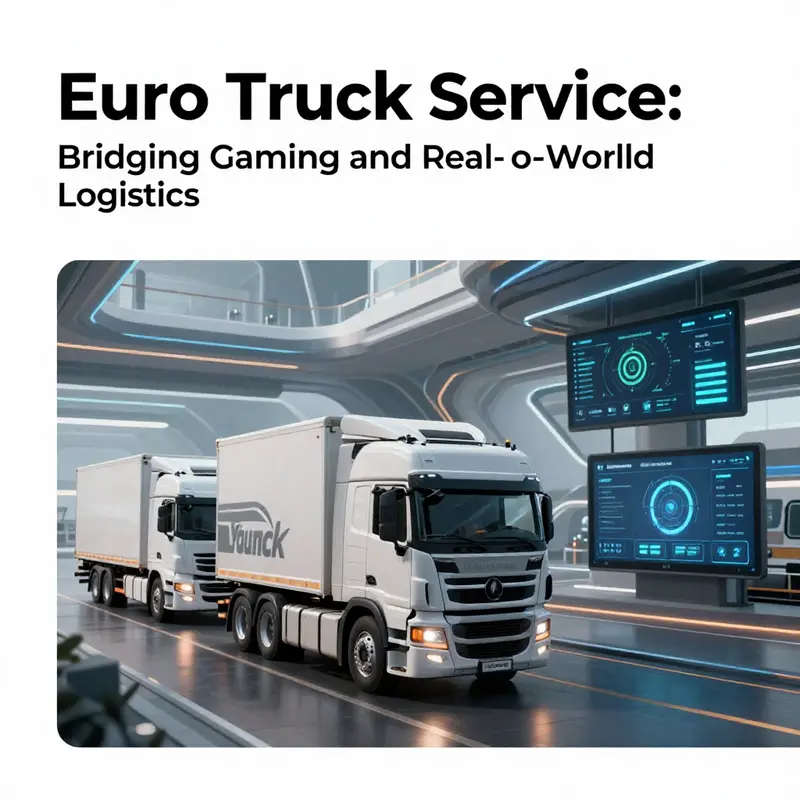
The phrase can euro truck service invites us into two intertwined landscapes: a virtual highway where miles are earned in a pixelated wind and a real-world corridor whose roads braid Asia and Europe with logistical ambition. In this chapter, we explore how technological developments are reshaping both realms, transforming performance, planning, and pleasure into a seamless, almost symbiotic experience. The journey is not about a single gadget or a single service; it is about a convergence where digital capabilities amplify efficiency on the move while amplifying immersion and understanding for those who drive, manage, or simply observe the flow of goods across continents. The result is a more responsive, more resilient trucking ecosystem that can feel almost hybrid in its ability to blend game-like engagement with serious, data-driven operations.
Within the gaming sphere, a widely celebrated European truck simulation has become a laboratory for engineering ideas translated into play. Developers have introduced a cascade of innovations that elevate realism without sacrificing enjoyment. Vehicle handling, for instance, has moved well beyond basic physics to embrace nuanced dynamics that reflect the balance between weight, suspension, tire behavior, and road surface. The driver’s control inputs now interact with a physics model that simulates subtle yaw, roll, and understeer characteristics, especially when the cargo shifts, the wind rises, or the route climbs to a demanding grade. This is not merely about making steering feel tactile; it is about cultivating intuition. Players learn to read the road, anticipate the vehicle’s response to gravity and momentum, and adjust throttle and braking with a precision that mirrors real-world skill development. The result is a driving experience that can be both exhilarating and instructive, a blend that keeps players returning to the digital highway with curiosity rather than fatigue.
Another strand of innovation lies in how cargo is represented and managed. Dynamic cargo systems introduce cargo types that demand different handling protocols, stacking constraints, and securing patterns. A container may require steady, slow acceleration to prevent load shifts; a hazardous material pack might bring additional checks and a heightened sensitivity to braking forces; a fragile load could impose stricter speed management and route selection. These variations echo real-world concerns about cargo integrity, legal compliance, and risk management, but they also enrich the gameplay loop. Players are nudged toward strategies that resemble true freight planning: prioritizing routes with gentler grades, scheduling deliveries to minimize dwell times at depots, leveraging rest periods to maintain crew alertness in long-haul scenarios, and coordinating with simulated dispatching systems to optimize fleet utilization. In effect, the game becomes a sandbox for experiential learning, where entertainment coexists with practical understanding of how cargo behavior drives route choices and turnaround times.
Immersive logistics management completes the triad of innovations shaping modern trucking experiences in the virtual world. Players can engage with a logistics layer that simulates fleet visibility, maintenance planning, and fuel economy feedback in a way that rewards strategic thinking. Real-time or near-real-time data, dynamic routing, and predictive maintenance prompts invite players to monitor performance indicators and adjust operations before issues escalate. The encounter is not simply about reaching a destination; it is about orchestrating a chain of decisions that keeps the fleet productive while safeguarding asset value. This synthesis of playful interface and serious logistics logic embodies a broader trend in the industry: digital innovation is increasingly designed to enhance not just speed or fidelity but also comprehension and control. When players learn to balance time, distance, cargo safety, and cost under changing conditions, they acquire a frame of reference that can translate into leadership and decision-making in real-world settings.
The real-world counterpart to these virtual advances is equally transformative, driven by a suite of technologies that optimize performance in the actual cargo corridors that link Asia and Europe. Road transport in this region has gained prominence because it offers a faster choice relative to alternative modes, with meaningful cost advantages under certain demand and infrastructure conditions. The corridor’s operators have placed emphasis on improving customs clearance efficiency, freight handling, and cross-border coordination through digital means. Key components include telematics-enabled fleet tracking, electronic documentation and data interchange, and real-time traffic and weather information that feed into intelligent route planning. When a fleet can adjust its itinerary in response to an incident, congestion, or a new high-priority order, the entire supply chain benefits from reduced delays and better reliability. This is where the visibility afforded by digital twins and cloud-based planning platforms becomes a strategic asset. A dispatcher can compare multiple scenarios in seconds, forecast fuel consumption with greater confidence, and schedule maintenance windows without interrupting critical shipments. In a landscape where every minute matters, information architecture becomes a competitive differentiator, turning data into action with tangible economic consequences.
The ongoing push toward efficiency is closely tied to engine technology and fuel management, a theme that threads through both virtual practice and actual engineering. In the broader industry literature, modern diesel engines are described as approaching high thermodynamic efficiency, a trajectory that continues to yield meaningful reductions in fuel use and emissions. While the exact figures depend on design, load, and operating conditions, research indicates that there remains potential for substantial gains, with estimates pointing toward feasible targets around twenty-five liters per one hundred kilometers under optimized conditions. Such findings underscore a long-running pursuit of sustainability that does not come at the expense of performance. The real-world implications are profound: improved engine efficiency translates into lower operating costs, less environmental impact, and a stronger ability to meet stringent regulatory requirements. For practitioners, this means a continuous push to refine combustion control, turbocharging, fuel delivery, and thermal management, all of which contribute to a more economical and responsible transportation network.
A broader observation from these converging developments is that the line between entertainment and enterprise has blurred. The lessons learned in game environments—how to model cargo behavior, manage limited resources, and respond to fluctuating conditions—serve as a crucible for understanding the realities of freight operations. Conversely, the tangible gains achieved through real-world innovations—better route optimization, smarter maintenance scheduling, and more transparent supply chains—enrich the narrative of the simulation experience. Players and professionals alike become participants in a continuum where digital tooling, data literacy, and system thinking enable more predictable outcomes across diverse scenarios. In both contexts, the objective is the same: to move goods efficiently, safely, and intelligently while maintaining a degree of agency and satisfaction for the people who drive, manage, and design the systems that make transportation possible.
This cross-pollination reveals a practical truth about technology’s role in trucking today. Innovations are most effective when they are accessible and intuitive, when they invite experimentation without overwhelming the user with complexity. In the virtual space, this means interfaces that reward skill development with clear feedback and meaningful consequences. In the real world, it means tools that deliver actionable insights without requiring teams to sift through mountains of data. The best solutions blend automated intelligence with human judgment, offering optimization suggestions while still allowing operators to apply their tacit knowledge, experience, and regional awareness. The driving force behind these advances is not a single breakthrough but a mosaic of improvements—better control dynamics, richer cargo modeling, integrated logistics management, smarter energy use, and smarter data flows—that collectively raise the ceiling for what is possible in both simulated and actual trucking.
As we consider the future, a consistent thread stands out: digital ecosystems will increasingly operate as living networks. Each improvement in simulation software, each refinement in fleet-management platforms, and each advance in propulsion and powertrain efficiency feeds into a larger, interconnected system. This system promises greater resilience—more capacity to absorb disruptions, adapt to evolving trade patterns, and sustain momentum through complex, multi-leg itineraries. It also promises greater satisfaction for those who inhabit the spaces between the wheels and the screens. The joy of observing a well-executed plan come to life, whether on a monitor or on a highway, arises from the same wellspring of human curiosity: to understand how systems behave under pressure, to test ideas safely in a simulated environment, and to translate those insights into improved practice on the road.
In sum, technological developments in Euro Truck Services—encompassing realistic driving physics, dynamic cargo management, immersive logistics interfaces, and the real-world push toward engine efficiency and smarter routing—are advancing two parallel narratives. One is about entertainment that educates through experience, enabling players to practice strategic thinking in a low-stakes setting. The other is about practical, scalable improvements in freight operations that yield tangible economic and environmental benefits. Together, they illustrate how modern transportation thrives at the intersection of play and pragmatism, imagination and evidence. The future of euro truck services, in this sense, lies not in choosing between simulation and reality but in knitting them into a coherent, adaptive system that informs better decisions, sustains commerce, and keeps the journey engaging for everyone who travels the road—whether with a joystick in hand or a steering wheel at the cab.
Final thoughts
Successfully navigating the realms of both virtual trucking and real-world logistics offers invaluable insights for everyone involved in the truck industry. Euro Truck Simulator 2 captivates players, providing a detailed understanding of the trucking experience while fostering a community dedicated to logistics. Conversely, the Sino-Europe Trucking Service embodies the evolving landscape of global trade, enhancing connectivity between continents. Together, they reflect the diverse impacts of trucking services, challenging traditional perspectives, and showcasing how technology enhances both enjoyment and efficiency in transport. As the logistics industry continues to adapt and grow, the integration of gaming insights into real-world practices will undoubtedly play a pivotal role in shaping future endeavors.