

Servicing a semi-truck is more than just checking the oil and tires—it’s a pivotal practice to ensure safety, efficiency, and longevity on the road. For long-haul truck drivers, trucking company owners, and fleet managers, understanding the nuances of semi-truck maintenance can drastically reduce downtime and enhance performance. This guide delves into essential practices that all professionals within the trucking community should master. Each chapter tackles specific elements of semi-truck servicing, from pre-service checks and critical system maintenance to sophisticated diagnostic methods and preventive maintenance strategies, providing a holistic approach to vehicle management.
Laying the Groundwork: How Pre-Service Preparation Sets the Stage for Safe, Reliable Semi Truck Maintenance
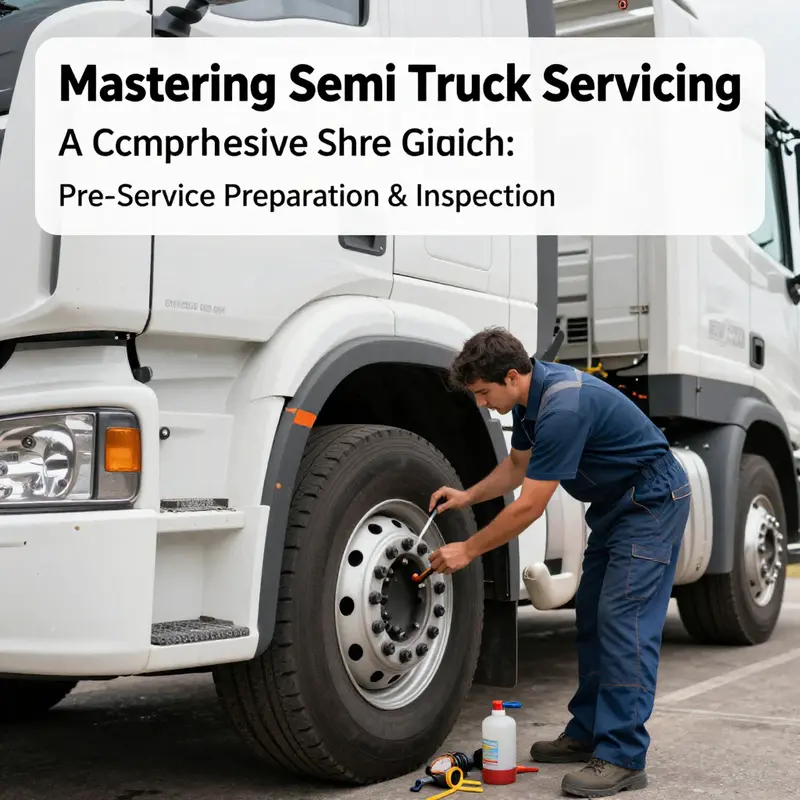
Laying the Groundwork: How Pre-Service Preparation Sets the Stage for Safe, Reliable Semi Truck Maintenance\n\nThe pre-service phase is not a showpiece moment of maintenance, yet it is where the outcome of every repair depends. A semi truck carries heavy payloads, traverses long miles, and relies on a network of systems that must work in harmony. The steps taken before a wrench touches a bolt establish a safety floor, a clear plan, and a predictable rhythm for the work that follows. In this chapter, we weave a cohesive account of preparation and inspection that anchors every professional service job, not as an abstraction but as a practical, repeatable sequence that any shop or fleet can adopt.\n\nFirst comes the stance of the work: parking and securing the vehicle. Park the truck on a level, stable surface, away from traffic and hazards. Engage the parking brake and, if possible, place chocks at the wheels to prevent any unexpected motion. The aim is simple but decisive: a rock-steady baseline so you can work with certainty. When a vehicle can’t move, you reduce the risk of sudden shifting that could injure a technician or damage components as you loosen fasteners or disconnect lines.\n\nNext, address the electrical baseline by disconnecting the battery. This is more than a precaution against shocks; it is a guard against inadvertent activation of systems that could move, engage, or energize while you are in the middle of a service task. In fleets where multiple batteries are present, observe the prescribed sequence from the service manual and ensure you isolate the correct circuits. A disciplined approach here saves a hundred headaches later in the process.\n\nPersonal protective equipment is the minimum standard for safety, not an afterthought. Wear gloves resistant to oils and solvents, safety glasses to shield eyes from splashes or debris, and steel-toed boots for footing and impact protection. Depending on the task, hearing protection and a flame-resistant layer may be warranted. A careful selection of PPE communicates a professional culture that respects risk and prioritizes the well-being of the crew.\n\nTools, parts, and manuals form the backbone of any effective service. Before you touch a tool, inventory what you will need for the specific task and verify compatibility with the vehicle’s configuration. Typical items include wrenches, socket sets, torque wrenches, and fluid containers. Add the likely filters, gaskets, clamps, and hoses, plus a humane surplus of shop towels and marking labels to track what you replace. The service manual for the exact model is not a luxury; it is the primary compass. It tells you the torque values, the sequence of operations, and any cautions tied to fasteners, belts, or cooling circuits. A moment with the manual at the outset can prevent missteps that complicate or halt work later.\n\nBeyond the manual, a pragmatic plan anchored in precise references keeps work orderly. The service manual is not marketing copy; it is a step-by-step instruction set. Read the section that matches the task you face, note the tooling requirements, and highlight safety notes. If a task lies outside your scope or requires specialty tools, a professional shop is a prudent option rather than improvising a fix. Sequencing matters, too. Plan to drain a fluid only when you can access components that would otherwise trap or contaminate. A logical progression reduces downtime and avoids backtracking that can turn a straightforward job into a sprawling effort.\n\nThe pre-service inspection serves as a diagnostic prologue, a map that guides the entire service. Begin with a thorough exterior and interior scan before touching any bolts. The tires are the first stop, because they are both safety-critical and performance-influencing. Inspect each tire for wear, cuts, bulges, sidewall damage, and any unusual wear patterns. Tread depth matters, and steering tires typically carry stricter minimums than drive tires. Abnormal wear can signal misalignment or improper inflation, both of which impair handling and fuel efficiency.\n\nTires are the road connection; their condition is inseparable from safety. Check tire pressures when the tires are cold if possible, using a calibrated gauge. Underinflation wastes fuel and increases sidewall stress; overinflation reduces tread contact and shortens tread life. Pay special attention to trailer tires and the axles that carry heavy loads, where the margins for error are tighter. Lug nuts require a careful torque check, as loose studs or damaged seats pose a serious risk of wheel separation. If you observe corrosion around lug seats or a bent lug, set the wheel aside and replace the affected component to avoid a catastrophic failure.\n\nMove inward to the frame and suspension. The undercarriage often hides cracks, rust, or loosened bolts. A routine sight check should sweep for cracks in frame rails, corrosion at joints, and any looseness in mounting points. Suspension components deserve a closer eye: leaf springs, shocks or air springs, control arms, and their attachments. Listen for creaks and note any sagging that could indicate wear. Early marking of worn components allows you to schedule repairs before a failure disrupts uptime or safety.\n\nThe exhaust system, while sometimes overlooked, deserves careful attention for leaks or corrosion. A compromised exhaust can raise cabin exposure to fumes and accelerate heat-related degradation of nearby parts. A visual check often reveals issues, but listening for unusual exhaust sounds or smelling abnormal fumes during engine operation can uncover problems that a quick look misses.\n\nLighting and visibility are non-negotiable safety features. All exterior lights—the headlights, brake lights, turn signals, and hazard lamps—must function correctly. Damaged wiring or exposed conductors can be a hidden hazard; trace wiring for wear and replace damaged sections. Clean battery terminals and ensure tight connections to avoid intermittent electrical faults that appear as lone gremlins during maintenance.\n\nAir brakes require a dedicated assessment. If the vehicle uses an air brake system, monitor the air pressure gauge and listen for hissing sounds that indicate a leak. The system should build and hold pressure reliably; a persistent drop can point to a leak or a failing component. Inspect air lines, fittings, and the compressor for wear or damage, knowing that even small leaks can degrade braking performance when it matters most.\n\nIn the engine compartment, seek leaks and verify the health of belts and hoses. Look for oil, coolant, brake fluid, and transmission fluid that may signal gasketed or corroded components. Belts should show no glazing or cracks, and hoses should remain pliable rather than brittle. A tactile check—gentle feel along rubber hoses—can reveal soft spots or swelling that a quick visual might miss.\n\nWindshield and wiper systems are the daily safety net for visibility. The windshield should be free of cracks, and wipers must operate smoothly, leaving a clear sweep. Inspect seals around the glass for wear that could allow wind or water intrusion, especially in adverse weather.\n\nThe aim of this thorough pre-service phase is twofold: identify defects and shape the service sequence. A comprehensive checklist makes work predictable and ensures you address the most critical items first. Document every finding, repair, and part replacement. Detailed records support warranty claims, enable better forecasting of future maintenance, and help schedule downtime in a busy fleet.\n\nAs you conclude the pre-service phase, connect what you observed to what you will do next. The inspection should drive a prioritized servicing plan that targets urgent safety items, reliability-improving actions, and tasks that will benefit from deeper diagnostics. If you want to deepen your knowledge and align with professional standards, you can explore training resources like fire-truck-maintenance-service-training. This resource embodies a disciplined approach to preventive maintenance and can serve as a solid backdrop for your own process.\n\nIn addition to the inspection, remember that readiness is built by consistent habits. Regular service intervals, fluid checks, and preventive actions accumulate into a resilient uptime program. The road to reliability is not a single heavy repair but a steady rhythm of inspection, adjustment, and documentation.\n\nExternal resources such as manufacturer manuals provide a baseline for safe practice. For model-specific torque values and service intervals, refer to the official maintenance manual. This external resource contains the detailed information you need to perform tasks correctly and safely, and it can safeguard against improper procedures when you do not have factory guidance on hand.\n\nThe end of the pre-service phase marks the transition to the main service, but it is also a moment of clarity. A well-executed prep phase reduces risk, speeds repairs, and preserves the life of the vehicle’s critical systems. It is a quiet foundation upon which the more technical work will build, and it deserves the same care as the drive that pulls the trailer.\n\nNote: For a model-specific orientation during maintenance, consult the manufacturer’s official documentation. The pre-service preparation described here aims to be universally applicable, while the exact sequence and torque values should come from the service manual corresponding to the truck’s configuration.\n
Raising the Bar: A Cohesive, Deep Dive into Servicing a Semi Truck’s Critical Systems
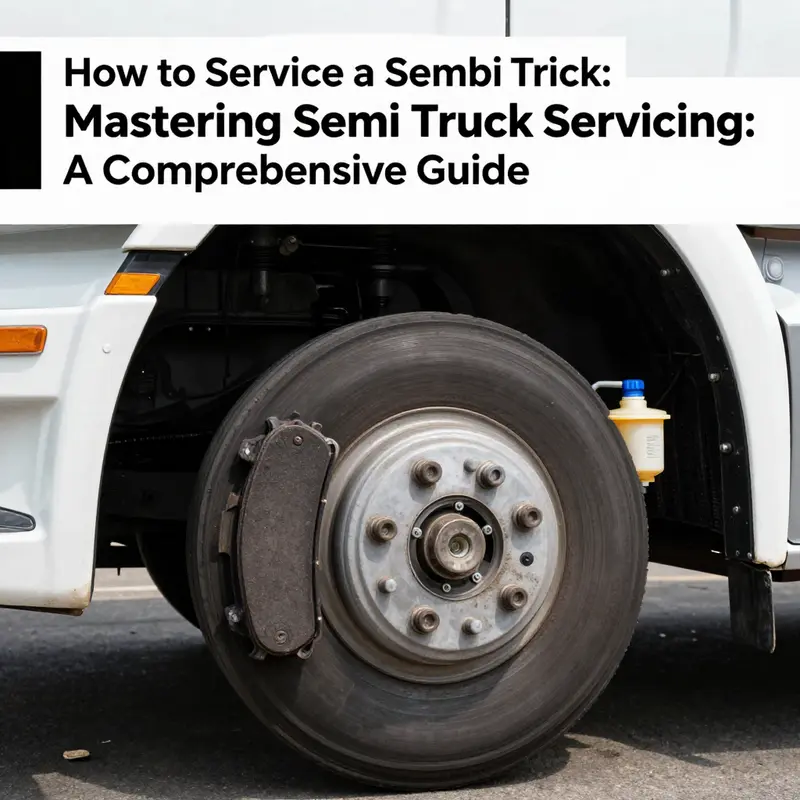
In the world of heavy-duty transport, servicing a semi truck isn’t a shallow task ticked off a maintenance calendar. It’s a disciplined, end-to-end practice that threads safety, reliability, and efficiency into every turn of the wrench. The most successful approach begins not with the repair itself but with a deliberate, methodical mindset: a pre-service rhythm that establishes a clear picture of the machine you’re about to work on. You start with a thorough visual and functional check, guided by years of field experience and the best-practice guidance that underpins professional service networks. The exterior carries clues—tire wear patterns, bead integrity, and the precise inflation that keeps rolling resistance low and fuel economy stable. Lights, mirrors, and the general integrity of the body work together to provide a snapshot of hours and miles logged. Inside, you verify fluid levels—engine oil, coolant, brake fluid, transmission fluid, and even windshield washer fluid. Low levels aren’t just inconveniences; they are warning signals that can cascade into component failure if ignored. In this light, the service becomes a careful conversation with the machine, not merely a set of repairs performed in isolation from what came before.
From the outset, a disciplined pre-service inspection informs every subsequent action. The belts and hoses, the lifelines of the engine and auxiliary systems, demand particular care. A cracked drive belt or a frayed hose can foreshadow problems that won’t yield to a quick fix once the truck is pressed into service again. The goal is simple: map out a path where potential failures are addressed before they become road-blocks. In practice, this means developing a routine that blends hands-on checks with a practical nod to the manufacturer’s intervals and the fleet’s operating realities. The pre-service phase also anchors the diagnostic work that follows. You might hear a subtle mechanical whisper or notice a slight change in idle quality, but nothing replaces the value of a systematic, objective review. The routine becomes a language—the way you describe the truck’s condition to a teammate, to a repair facility, or to a dispatch that depends on uptime.
Once the truck is safely framed in the service bay, the work on the critical systems begins. A central pillar of this chapter is the jack system—the gateway to safe, thorough maintenance. In professional settings, the shift from manual jacks to hydraulic and air-assisted hydraulic systems is not merely a speed gain; it is a fundamental change in how we approach safety and efficiency. Hydraulic jacks lift faster, but they also offer smoother control and less operator effort when dealing with heavy loads. For anyone who has timed a roadside tire change or a routine under-car inspection, the difference is tangible. The hydraulic approach reduces fatigue and helps maintain consistent lift points, minimizing the risk of misalignment or accidental contact with sensitive components. This is precisely why a comprehensive guide to semi truck jacks, laying out grades, specifications, and applications, remains a touchstone for shops that prize uptime and safety. The practice, of course, is supported by a proper plan — using jack stands, wheel chocks, and the correct jack points specified by the manufacturer—and never exceeding the jack’s rated capacity.
The jack system is not exercised in isolation. It is the prelude to a broader, integrated routine that treats the powertrain as a living system, especially in an era when electrification is reshaping what “maintenance” means. The powertrain maintenance landscape now includes both traditional combustion components and electric propulsion elements. In fleets that deploy or plan to deploy electric trucks, regular battery health checks become as routine as an oil change once did. Managers and technicians assess the battery’s state of health, monitor pack temperatures, and confirm that each cell is contributing to the overall performance and safety of the vehicle. They test the electric motor’s response to throttle input and ensure that the drive system delivers power smoothly without anomalous vibration or noise. Regenerative braking, once a nice-to-have, now plays a crucial role in energy efficiency, so its proper function is not optional but essential. Software updates, too, have moved from luxury to necessity, with firmware and control software evolving to optimize power delivery, thermal management, and fault tolerance. The shift toward electrification is not a trend so much as a new baseline for maintenance philosophy, and it demands that technicians cultivate a mindset that straddles diesel heritage and electric future.
Battery health and motor performance, however, do not exist in a vacuum. They are intricately linked to the vehicle’s thermal management, electrical harnessing, and control algorithms. The battery pack is a complex ensemble whose health is best safeguarded by temperature-aware charging strategies, consistent cooling, and early fault detection. When a fault code appears in the vehicle’s core electronics, it can illuminate a path toward a battery issue long before the truck signals a fault on the dash. Here, diagnostic procedures merge with routine servicing in a way that would have felt alien a generation ago. Visual inspection remains crucial—looking for swelling in cells, signs of coolant leakage near the pack, or wiring insulation wear—but it is the combination of on-board diagnostics, thermography, and periodic performance testing that reveals the true health of the powertrain. The modern technician reads the truck’s software as a patient’s chart, correlating battery voltage sag, motor temperature, and regeneration effectiveness with the mechanical soundness of the drivetrain.
The diagnostic mindset also extends beyond the powertrain. A well-rounded service checks the electrical system, which continues to evolve with the rest of the vehicle technology. Lights, signaling devices, and the battery terminals themselves deserve careful scrutiny. Wiring should show no signs of chafing or exposed conductors, and any corrosion at connectors can degrade performance in unpredictable ways. In many fleets, the diagnostic phase is complemented by a traditional, hands-on inspection—an approach that emphasizes both sensor readouts and human observation. The results are richer when you combine the two methods: the precision of electronic fault codes and the intuition gathered from listening to the engine, feeling for subtle vibration shifts, and watching for any temperature anomalies under the hood or in the transmission area. It is in this synthesis that we unlock the most reliable path to uptime, because it aligns the machine’s digital signals with its mechanical heartbeat.
To support these efforts, the maintenance narrative remains anchored in routine, preventive care. A standardized schedule—driven by mileage, time, and operating conditions—helps ensure that no critical system is neglected. A comprehensive program includes regular check-ups by qualified technicians at reputable repair shops and thorough record-keeping that documents what was done, what parts were replaced, and when. This historical trace is not bureaucratic baggage; it is a predictive asset. If you know when a component was replaced and with what specification, you can forecast wear trends and warranty implications. The value is especially clear in fleets that balance a wide network of drivers, routes, and payloads. When a truck is down, you cannot simply slot in a quick fix; you must know the fault’s origin, its likely trajectory, and the most cost-effective path to return to service. That is why preventive maintenance has long been the backbone of safe, reliable trucking, and it remains so as we embrace new propulsion technologies. A well-run program blends the discipline of inspection with the discipline of corrective action, and it does so in a way that preserves both performance and safety on every mile of road.
The road to robust maintenance also recognizes that emergencies happen and that the best service relationships extend beyond the repair bay. In the moment of a breakdown, professional roadside assistance becomes a lifeline. A robust network offers 24-hour support, towing, and rapid diagnostics, often under contract with manufacturers or insurers. In practical terms, this means saving the correct emergency contact numbers and knowing the available service options in different geographies. Long-term partnerships with trusted rescue providers yield faster response times, familiarity with the fleet’s equipment, and a consistency of service that reduces downtime and preserves delivery schedules. This interconnected ecosystem—pre-service checks, a strong jack system, powertrain vigilance, rigorous diagnostics, preventive maintenance, and emergency support—creates a resilient operation where uptime is built into the daily routine rather than chased as a separate objective. The approach also harmonizes with broader industry trends, including the move toward electrified fleets and the adoption of more sophisticated software-driven maintenance protocols. As fleets experiment with new propulsion technologies, the core principle remains the same: treat maintenance not as a cost center but as a strategic asset that enables safety, reliability, and efficiency on the road. For readers seeking a practical deeper dive into the jack systems that enable safer, faster service, a technical guide offers detailed grades, specifications, and applications that technicians can reference during planning and execution. And when it comes to electrification, keeping pace with developments across the industry—without losing sight of proven maintenance fundamentals—will determine how well a fleet performs over time. For readers who want a concrete anchor in this evolving landscape, the following resource provides a thorough, technical treatment of hydraulic jacks and their role in semi truck servicing: A Technical Guide to Semi Truck Jacks: Grades, Specifications, and Applications.
In the grand arc of servicing a semi truck, every component and every decision matters. The jack system enables safe access to components that require attention, and it does so in a way that respects operator safety and worksite efficiency. The powertrain maintenance narrative—whether it centers on diesel propulsion or the accelerating shift to electric drivetrains—forces a recalibration of what reliability looks like. Battery health, motor performance, regenerative braking, and software updates form a triad that demands not only mechanical skill but also digital literacy. The diagnostic process, orchestrated through both visual checks and electronic fault code interpretation, becomes the conscience of the maintenance operation, guiding timely interventions before minor issues spiral into costly downtime. And underpinning all of this is a preventive maintenance philosophy that treats service as an ongoing responsibility rather than a sporadic event. When fleets view maintenance through that lens, they create a culture of uptime, safety, and efficiency that translates into steadier delivery schedules, lower total cost of ownership, and greater confidence on every route.
As you anticipate the next chapter, consider how the principles described here interlace with the broader ecosystem of fleet support. The same attention to critical systems and preventive discipline that informs a semi truck’s routine service also informs how a fleet plans for emergencies, how technicians train for complex electrified powertrains, and how dispatch centers weigh the balance between maintenance downtime and on-time performance. The convergence of traditional automotive wisdom with new propulsion technologies calls for ongoing learning, practical experimentation, and a readiness to adapt. In this sense, the chapter’s core message remains consistent: build maintenance into the fabric of daily operation, nurture the tools and processes that support it, and cultivate partnerships that extend uptime beyond any single repair cycle. To readers seeking a more hands-on primer on the maintenance practices that support consistent performance, a dedicated fire-truck maintenance training resource can offer transferable insights into disciplined service routines and systematic problem-solving that apply across heavy-duty vehicle contexts.
External resource for deeper exploration of hydraulic jack systems and applications: A Technical Guide to Semi Truck Jacks: Grades, Specifications, and Applications.
Listening to the Heartbeat of a Semi: Diagnostic Procedures for Safe, Reliable Highway Operation
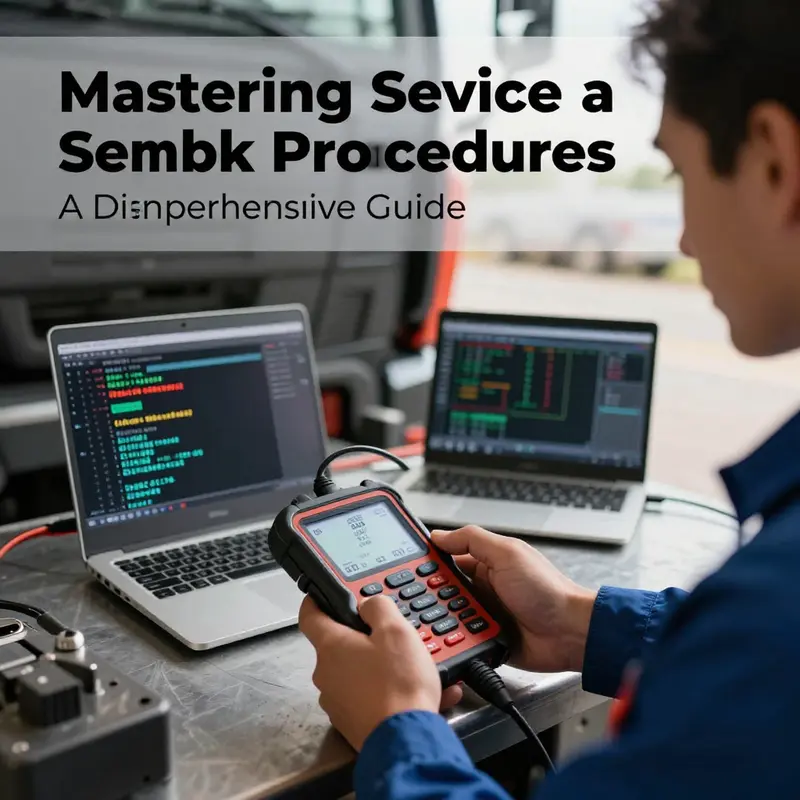
A semi truck is more than a collection of parts; it is a living system whose performance rests on clear signals. When you service heavy vehicles, the diagnostic mindset matters as much as the tools you use. The goal is to understand how symptoms fit into a pattern of wear, stress, and aging across drivetrain, chassis, and electrical architecture. Approach diagnostics to keep fleets moving, reduce breakdowns, and protect drivers. The diagnostic process flows from careful observation to disciplined testing, from interpreting codes to validating repairs, with safety at the center of every decision. The following outlines an integrated diagnostic workflow you can apply on the shop floor. Begin with a visual and functional appraisal. A pre-service inspection is foundational: check chassis for cracks or corrosion, inspect tires (tread depth, even wear, proper inflation), verify lights and mirrors, and assess alignment. In the engine bay check fluids (oil, coolant, brake fluid, transmission fluid, windshield wash). Look for oil spots or hose wear; inspect belts for cracks. The pre-service phase defines the questions the service will answer.
From there, move into data-driven inspection. Onboard diagnostics (OBD) or ECU networks such as J1939 provide the first health map. A diagnostic tool retrieves fault codes, notes operating conditions, and correlates with symptoms. Codes clue potential causes, so read data streams, fueling patterns, air path integrity, and timing to narrow fault paths. Isolate variables, verify with live data, and reproduce symptoms to confirm. This is the heartbeat of effective servicing.
Air systems demand equal rigor for trucks with air brakes. Check for leaks, perform a pressure decay test, and verify compressor and reservoir pressures against spec. Inspect pads, rotors, and ABS operation; capture any sticky or erratic behavior. Note how conditions such as temperature and humidity affect faults, and seek correlations between readouts and real-world operation.
Electrical health matters: battery health, alternator load-testing, and wiring integrity. Inspect for corrosion, loose connections, and verify voltages with load. Check lights in all modes; understand how faults interact with engine or transmission codes.
As trucks evolve to hybrids or electric powertrains, diagnostics must cover high-voltage systems, thermal management, and battery health. Read manufacturer data, follow safety protocols, and use high-voltage toolsets. The diagnostic approach remains about safeguarding uptime as well as identifying faults.
Drivetrain and suspension deserve equal attention. Inspect differential, drive shafts, lubrication, and steering components for wear or play. Trace symptoms through the chain—bearing noise, seal leaks, lubrication loss—to connect cause and effect.
Documentation completes the arc. Record symptoms, codes, tests, and repair rationale. Maintain maintenance history to guide future interventions and improve planning, budgeting, and downtime reduction. Adhere to manufacturer guidelines and standards to keep processes reproducible and defensible.
The diagnostic journey thrives on teamwork between technician and vehicle and on ongoing training. Structured training reinforces repeatable, evidence-based practice. In practice, cycle through pre-service checks, ECU data review, targeted tests, and controlled re-creation of symptoms. When the system behaves inconsistently, reproduce conditions that provoke the symptom. A well-documented history helps spot creeping degradation.
Final thought: the goal is safety, reliability, and cost efficiency. Verify safe operation of brakes, steering, and lights; ensure fastener torque and proper maintenance history; use data-driven insights to minimize downtime and optimize parts usage. In electric or hybrid fleets, lean on manufacturer diagnostics for HV systems, emphasize thermal health, and integrate data-driven checks with mechanical inspection.
The Vigilant Routine: Mastering Semi Truck Servicing for Safety, Reliability, and Longevity
Servicing a semi truck is more than a checklist; it is a practiced rhythm that keeps weight on the road, people safe, and fleets moving with confidence. The goal is not only to fix what’s broken but to anticipate problems before they disrupt service. A well-structured servicing routine blends immediate, essential checks with longer-term preventive maintenance, and it requires discipline, accurate record keeping, and a clear understanding of how each component serves the whole vehicle. When this rhythm is habitually followed, a truck becomes less a passenger on a volatile schedule and more a dependable partner in a demanding line of work. The journey from pre-trip glance to long-term health is seamless, almost narrative, because every step reinforces the same core priorities: safety, reliability, and efficiency.
Preparation begins long before the truck leaves the yard. A thorough inspection starts with the exterior: tires that bear the weight of the load and the miles ahead demand correct pressure, even wear, and no sign of sidewall damage. The tires are not simply a contact patch with the road; they’re the first line of defense against blowouts and poor handling. A quick scan of lights, mirrors, and visible body damage follows. If a light is out or a mirror is cracked, the driver knows it immediately, and so does the maintenance team that schedules the next cycles of inspection. This is the moment to verify fluid levels as well: engine oil, coolant, brake fluid, transmission fluid, and windshield washer fluid. Shortages at this stage can cascade into overheating, reduced braking efficiency, or engine wear, especially under heavy loads and in extreme temperatures. The belts and hoses deserve attention, too; cracks, fraying, or looseness in the drive belts or hoses can precipitate sudden failures that leave the truck stranded. A pre-service checklist, performed with calm, methodical precision, is the mental anchor of the day’s work and the first guarantee of a safe journey for the fleet and for everyone else on the road.
What follows is the heart of the routine: a structured, systematic look at critical systems that keep the truck performing at its best. Braking is the foremost safety consideration, deserving both respect and routine discipline. The brakes deserve more than a quick look; they require a careful assessment of pads and rotors for wear, with attention to the manufacturer’s minimum thickness. Fluid quality and level matter as well, because contaminated or low brake fluid can erode stopping power when it matters most. In air-braked configurations, the air system demands vigilance: lines, fittings, and the air compressor must be free of leaks, and the overall air pressure system should be tested to confirm proper function. The brakes are the one system that can threaten life and cargo if they fail, so this portion of the inspection should feel almost ceremonial in its thoroughness.
Tires and wheels are a joint responsibility of mileage, maintenance planning, and daily observation. Tire pressure should be checked at least weekly and before long trips with a calibrated gauge to ensure accuracy. Tread depth is not merely a number on a spec sheet; it translates directly to traction, grip in rain or ice, and fuel economy. Legal and safety thresholds are practical guides here, typically requiring replacement when tread wears below levels such as 4/32 inch for steering tires. The rims and lug nuts deserve close scrutiny as well; damaged rims or loose lug nuts can cause wheel failure under load. The torque on those fasteners must be correct, and any signs of corrosion or misalignment should prompt corrective action before the next duty cycle.
The engine and cooling system form the core of the truck’s ability to perform reliably. An oil change, performed at the manufacturer’s recommended intervals, protects engine bearings and maintains lubrication quality. The choice of oil grade and type matters, especially under heavy hauling conditions, extreme heat, or cold starts. Coolant health is equally critical; coolant levels and condition must be checked, and the coolant should be flushed and replaced per the schedule to prevent overheating and corrosion. A weak cooling system is a gateway to engine damage, particularly when the truck runs at the upper limits of its performance envelope for hours on end.
Electrical health is the quiet backbone of modern trucking. All lights—headlights, brake lights, turn signals—must function, and wiring should show no signs of wear, chafing, or exposed conductors. Battery terminals must be clean and tight; corrosion here can impair starting reliability and steady electrical performance in critical moments. The electrical system, though less dramatic than a broken drive line, quietly supports the safety systems, communication, and driver comfort that enable consistent operation.
Suspension and steering deserve the same respect as the brakes. Leaf springs, shock absorbers, and control arms should be inspected for wear or damage, because suspension directly shapes ride quality, tire wear, and handling. Steering components—tie rods, ball joints, king pins—should show no play or looseness, which can degrade control and response, especially when a truck is maneuvering under heavy load or around curves at highway speeds. The maintenance mindset here is proactive: if a component shows even a hint of wear, its replacement should be scheduled before it becomes a failure mode on the road.
Beyond the physical checks, a robust diagnostic mindset sharpens the response to problems that aren’t immediately visible. A combination of visual and auditory cues can reveal subtle leaks, overheating, or unusual noises from the engine, drivetrain, or brakes. In modern trucks, electronic diagnostics—the use of an on-board diagnostic interface to read fault codes from the ECU—complements the human eye and ear. The codes guide technicians toward sensor issues or electronic anomalies before they become larger mechanical failures. The diagnostic approach is not about chasing every fault in isolation but about building a coherent picture of the truck’s health, where small, consistent anomalies are treated as signals rather than noise.
Routine servicing and preventive maintenance form the second, more deliberate act in this ongoing routine. A strict schedule based on mileage and time—not just a few checks each year—anchors the entire program. A comprehensive check-up, performed by professionals at a reputable shop every few thousand miles, complements the day-to-day inspections and helps catch looming issues that can slip past cursory checks. Record keeping is not a bureaucratic exercise; it is the backbone of accountability. Detailed service records for each vehicle—what work was done, which parts were replaced, and when—create a traceable history that supports warranty claims, planning, and predictive maintenance. This documentation turns maintenance from reactive repair into strategic asset management, enabling fleets to forecast component life, optimize parts inventory, and minimize downtime.
The real value of preventive maintenance emerges in a fleet setting where downtime and reliability intersect with customer expectations. Regular intervals for inspection and service reduce the odds of surprise failures and deliver the consistency that commercial operations depend on. This is especially important for long-haul routes, where a single failure can cascade into missed deliveries, penalties, and reputational costs. A preventive mindset also translates into cost efficiency. Although some maintenance actions require upfront investment, they prevent more expensive repairs later and extend the life of critical components such as the engine, transmission, and axles. In practice, this means a maintenance calendar that balances minor, predictable costs with the potential, yet expensive, consequences of major breakdowns.
The human element is central to the maintenance equation. Driver feedback is a powerful early-warning system. A driver who notes unusual noises, vibrations, or performance changes in acceleration, braking, or steering should have that information documented and investigated promptly. Encouraging this feedback creates a two-way street: technicians receive timely reports, and drivers gain confidence knowing their observations are valued. Driver input also supports the integration of the maintenance program with real-world operations, aligning service intervals with actual duty cycles rather than abstract schedules. When drivers are empowered to speak up, the maintenance program becomes more accurate and more responsive, reducing the likelihood that small issues grow into days of downtime.
What about the special case of electric semi trucks? The core discipline—regular inspections, proactive issue resolution, and rigorous documentation—remains identical, but the technical emphasis shifts. In electric models, battery management, regenerative braking behavior, and software updates take center stage. Battery health, charging efficiency, thermal management, and software configurations can dictate range, performance, and reliability more than ever before. A unified servicing approach therefore blends mechanical checks with software-based diagnostics and battery management practices. The principle is simple: treat the vehicle as an integrated system where hydraulics, electricity, software, and structure all communicate. Even as the focus changes with the propulsion system, the same habits—careful inspection, timely maintenance, and data-driven decisions—keep the fleet resilient on the road.
To keep this integrated approach accessible, a practical touchstone is the availability of professional resources and emergency networks. Roadside assistance has become a 24-hour cornerstone of modern truck operations. When a breakdown happens on the highway, professional tow and recovery services, equipped for heavy-duty vehicles, can prevent a minor fault from becoming a major delay. In remote or challenging environments, specialized rescue teams with heavy-duty equipment can manage complex scenarios. A forward-thinking fleet builds long-term partnerships with trusted rescue providers to ensure rapid response times, familiarity with the equipment, and consistent service quality, all of which help preserve delivery schedules and customer trust.
In this broader framework, the chapter’s guidance is iterative and cumulative. Start each day with a careful visual and operational check. Use this moment to confirm fluid levels, tire condition, and visible wear. Then move into the critical systems with a steady, prioritized approach: brakes and air supply first, tires and suspension next, engine cooling and electrical health following, and finally the steering geometry. Throughout, keep a running record of readings, adjustments, and replacements. This record becomes the vehicle’s living health history, a document that travels with the truck and informs decisions for months to come. And as the equipment evolves—whether toward more sophisticated electronic controls or new battery systems—the fundamentals of vigilance and preparedness remain unchanged.
For readers seeking a compact touchstone to deepen understanding, a representative, practical entry point is the broader truck maintenance ecosystem, including industry resources and training that reinforce best practices. A credible path is to explore the general maintenance guidance available in the industry’s publishing network, which offers extended insights into daily checks, preventive maintenance planning, and driver training. For a deeper dive into related operational excellence, the side-by-side relationship between maintenance and safety can be explored further on the 5startruckin blog. This resource compiles field-tested practices and case studies that illustrate how routine servicing translates into real-world uptime and reliability. 5startruckin blog
The overarching narrative is not about chasing perfection but about cultivating a disciplined, data-informed routine. Each component of servicing connects to safety and uptime in a direct line. A well-maintained truck is a safer vehicle, a more predictable partner in logistics, and a more profitable asset for the owner-operator or fleet. When maintenance steps are followed as part of a continuous, well-documented program, downtime becomes an exception rather than a rule, and the road becomes a place where execution and reliability align. The rhythm of inspection, correction, and verification propagates through every mile traveled, shaping how drivers perceive their own responsibilities and how managers plan for tomorrow.
As this chapter closes, consider the maintenance cycle as a living system—one that adapts to changing routes, loads, climates, and technologies while preserving the core habits that keep trucks safe and productive. The discipline of routine servicing, augmented by preventive checks, informed diagnostics, and professional support networks, builds a culture of readiness. In the end, servicing a semi truck is not simply about repairing what fails; it is about maintaining a resilient, dependable platform that sustains a critical supply chain and protects the people who rely on it every day. External contingencies will always exist, but a well-managed maintenance program makes those contingencies survivable and, often, almost invisible to those who depend on the vehicle to perform at peak levels. The result is clarity on the road, confidence in the fleet, and a standard of care that elevates the entire operation.
External resource: https://www.tesla.com/support/semi
Final thoughts
To achieve optimal performance and safety, regular servicing of semi trucks is vital. Each component, from brakes to diagnostics, plays a crucial role in the overall efficiency of your vehicle. By following the outlined practices in this guide, you can ensure your truck remains reliable on the road, reducing downtime and enhancing your profitability. Stay proactive with maintenance, and remember that keeping detailed records of your service history is just as important as the service itself. Adopting these strategies not only safeguards your investment but also ensures the safety of every journey.