
Understanding how food trucks price their buffet-style services is essential for both food enthusiasts and event planners alike. For long-haul truck drivers and fleet managers, appreciating these intricacies might aid in enhancing the services given during roadshows or corporate events. This article delves into the core components influencing buffet pricing, examining per-person rates, menu complexities, event logistics, service levels, and competitive landscape. Each chapter unpacks these factors, providing essential knowledge that can empower decision-makers in the transportation industry—whether your focus is on planning an event or simply enjoying a delicious meal on the go.
Pricing by the Headcount: Crafting Per-Person Buffet Offers for Mobile Catering at Events
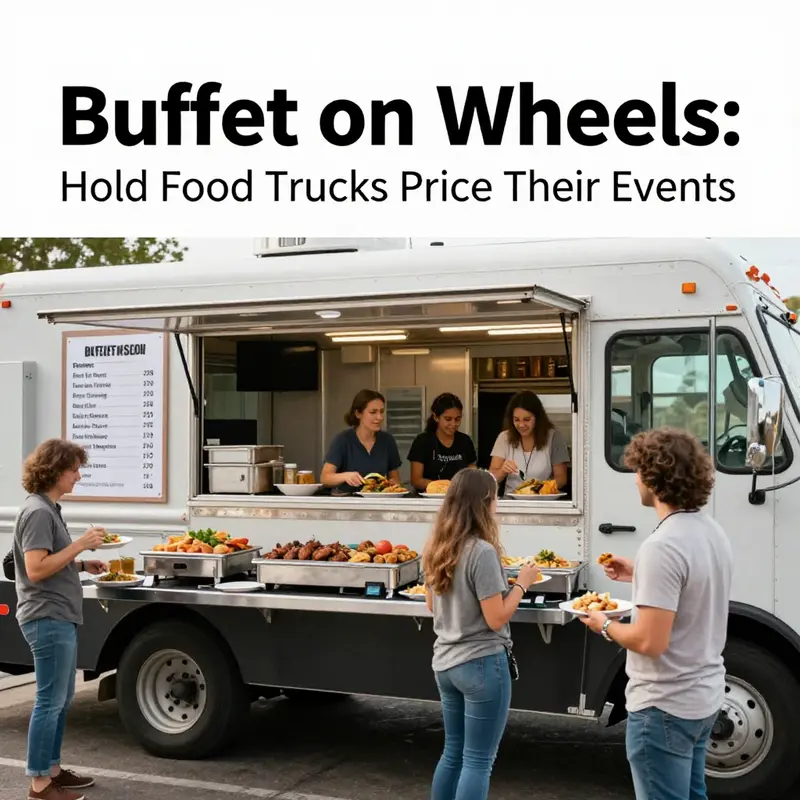
In the world of mobile catering, pricing a buffet by the headcount has become a reliable compass for both operators and event organizers. It moves beyond the unpredictability of exact consumption and anchors the transaction in a shared, transparent framework. When a food truck quotes a fixed per-person fee, it promises clients a clear budget while giving the operator a controllable path to cover the essential costs of food, labor, and logistics. This approach recognizes that the value of a buffet service isn’t tied to how much each guest eats, but to the service framework—the variety of dishes on offer, the tempo of service, the staffing needed to keep lines moving, and the equipment that keeps hot food hot and cold items fresh. The result is a pricing model that is both practical and scalable, particularly for events where guest counts are known in advance and the menu is set for a specific service window.
At its core, per-person pricing converts a meal into a package. It simplifies the ordering process for organizers who must balance cost with choice, timing, and guest experience. Rather than negotiating a price per dish or fighting over plausible plate counts, clients receive a single, predictable figure for each attendee. This has the immediate advantage of reducing the cognitive load during event planning. A corporate team planning a conference lunch, a wedding party organizing a reception, or a nonprofit booking a community celebration can anticipate the food bill with reasonable confidence. The operator, in turn, gains a reliable baseline that streamlines forecasting, procurement, and staffing. When the guest headcount is stable, the kitchen can align its procurement and production schedules with far less waste and far less guesswork. In a business where margins hinge on efficiency, that predictability matters as much as the menu itself.
The per-person approach naturally accommodates the wide spectrum of buffet offerings. A simple, well-curated lineup of dishes can maintain a consistent price point across a broad audience, while more complex menus or premium ingredients may nudge the per-person rate upward. For instance, a straightforward selection of seasonal vegetables, a couple of starches, and a reliable protein can sit at a modest per-person price, whereas adding artisan cheeses, imported proteins, or live-fire stations invites higher numbers. The logic is simple: premium ingredients and interactive elements carry costs, and those costs are distributed across all guests rather than absorbed by individual diners. In practice, this means that the same framework can support a relaxed, family-style buffet at one event and a refined, chef-led display at another, simply by adjusting the menu options and the accompanying service level within the same per-person structure.
One of the most powerful advantages of this pricing model is its potential to encourage larger bookings. When operators offer a tiered per-person rate that rewards bigger groups, organizers see tangible value in gathering more guests under one contract. For example, a truck might set a rate of $15 per person for groups of ten or more, while the same truck could quote $20 per person for a smaller party. The delta is a nudge toward larger events, where the fixed costs of travel, setup, and staffing are amortized across more mouths. This incentivizes corporate teams, families, and communities to coordinate their timelines and pool resources, reducing downtime between events and increasing overall throughput. It also buffers the operator against quiet days by filling slots that would otherwise sit idle. In markets with strong competition, this strategic pricing can differentiate a truck by offering a perceived value tied to certainty rather than to a fluctuating food bill.
Inventory planning benefits from the predictability of headcounts. With a confirmed guest list, operators can estimate quantities with greater accuracy, which translates to less waste and better control over food safety and quality. A per-person approach naturally integrates into the kitchen’s production calendar. It becomes easier to map out batch sizes, plan for peak service moments, and coordinate staff roles around a fixed period of service. Since each guest has access to the same buffet, portions and pacing can be standardized. Standardized portions help reduce variability in guest experience and minimize the potential for over- or under-serving. The result is a more consistent product, which is essential for building trust with event clients who rely on reliable service for milestone occasions.
From the guest perspective, per-person pricing offers clarity and fairness. Clients often appreciate knowing the cost to feed each attendee without the fear of additional charges for seconds, plates, or specialty items. The model establishes a shared experience: every guest has access to the same menu within the negotiated framework, and the price remains fixed irrespective of how much any individual consumes. Of course, this is paired with clear communication about what the per-person price includes. Menu options, standard portion sizes, and any dietary accommodations should be described upfront to prevent misaligned expectations on the day of the event. When organizers know exactly what is included, they can plan, budget, and communicate with stakeholders with confidence.
Implementation requires careful attention to menu design and serving logistics. Operators must define the menu options included in the per-person price, along with standard portion sizes and any limits on customizations. A consistent buffet layout and serving protocol are essential. The layout should optimize flow, minimize bottlenecks, and ensure that every guest can access each station without undue waiting. This becomes particularly important at larger events where crowd management is a real challenge. A standardized approach to plating, service duration, and the rotation of dishes helps ensure fairness and keeps the line moving. It also reduces the cognitive load on staff, who can perform tasks with a clear sequence rather than improvising in the moment.
In practice, per-person pricing also accommodates a spectrum of service levels. Some operators offer premium packages that include additional services such as bespoke menus, branded signage, dedicated staff, or interactive cooking stations. These add-ons naturally push the per-person price higher, but they can be positioned as enhanced value rather than an opaque surcharge. The trade-off is straightforward: guests gain a more immersive experience, and operators gain an opportunity to differentiate their offering while maintaining a coherent pricing framework. This is particularly relevant for events like weddings or corporate gatherings where guests expect a certain degree of customization and hospitality beyond a basic buffet.
Market realities also shape per-person strategies. Operators constantly observe local pricing norms, what competitors are charging for similar events, and the willingness of clients to pay for convenience, quality, and reliability. The per-person model must remain competitive while still ensuring profitability. In markets with a high density of mobile caterers, operators may calibrate their rates by guest count, service window, or distance traveled. While the core principle remains constant, the elasticities around price can differ based on location, season, and event type. Transparent quotes, detailed proposals, and clear inclusions help operators stay aligned with market expectations and maintain trust with organizers who will compare several bids.
For event organizers, per-person pricing simplifies the decision-making process. A single number per guest, paired with a clearly defined menu and service level, enables straightforward budgeting and easier comparison across vendors. It is essential, however, to scrutinize what that price includes. Questions about staffing ratios, food safety measures, equipment rental, transportation, and any minimum guest requirements should be answered in the initial proposal. Some operators establish a minimum guest count to cover travel and setup costs; others include long-distance travel or extended service hours as separate line items. Clear terms around dietary accommodations, substitutions, and allergy handling must also be addressed to prevent misalignment later. By requiring a detailed, itemized proposal within the per-person framework, organizers can ensure they receive consistent value across different vendors and avoid surprises on the day of the event.
The balance between menu complexity and price is where most conversations hinge. A lean buffet with a handful of dishes is easier to price predictably than a multi-cuisine array with live-fire stations and specialty ingredients. Yet the appeal of the latter often lies in the guest experience and the perceived value of variety. Per-person pricing provides a pragmatic path to delivering both. It sets expectations, manages costs, and keeps the dining experience coherent as the number of guests grows. The success of this approach depends on two complementary practices: precise scope definition and disciplined execution. When operators agree on the menu, portion standards, and serving times in advance, they can deliver a dependable experience and stand by their quoted price.
For readers seeking broader context and industry perspectives on buffet pricing strategies, exploring related discussions can be illuminating. A well-regarded industry source emphasizes how this model supports predictability and scalability across a range of event types. See this external resource for additional insights into how buffet pricing strategies evolve in the mobile catering sector: https://www.foodbusinessnews.net/articles/2023/08/17/food-truck-buffet-pricing-strategies. Within a vendor’s ecosystem, a single link often ties client education to practical execution, and the per-person framework is a practical manifestation of that principle.
If you are an operator looking to refine your approach, start with a clean, well-communicated offer. Define the per-person price, list included menu options, set standard portion sizes, and specify any add-ons or dietary accommodations separately. Document minimum guest requirements if applicable, as well as travel and extended-hour charges. Build a standardized buffet plan that can scale from a small intimate gathering to a large corporate event. Train staff around the serving protocol to ensure consistency, especially when dishes rotate or when crowd dynamics shift during peak service. The more you codify upfront, the less you rely on ad hoc decisions when the event unfolds. Clients, for their part, should request a detailed proposal that maps the per-person price to a transparent menu, a clear service outline, and explicit inclusions and exclusions. The value of predictability, after all, is not merely financial; it is the confidence that guests will experience a well-executed meal, with warmth, reliability, and attention to detail—the hallmarks of professional mobile catering.
For those who want a sense of how this pricing philosophy sits within broader marketing and operations practice, consider following the 5startruckin blog for supplementary perspectives on event catering and service execution. 5startruckin.com/blog/.
External resource: https://www.foodbusinessnews.net/articles/2023/08/17/food-truck-buffet-pricing-strategies
The Price of Variety: How Menu Complexity and Ingredient Costs Shape Buffet-Style Food Truck Pricing at Events
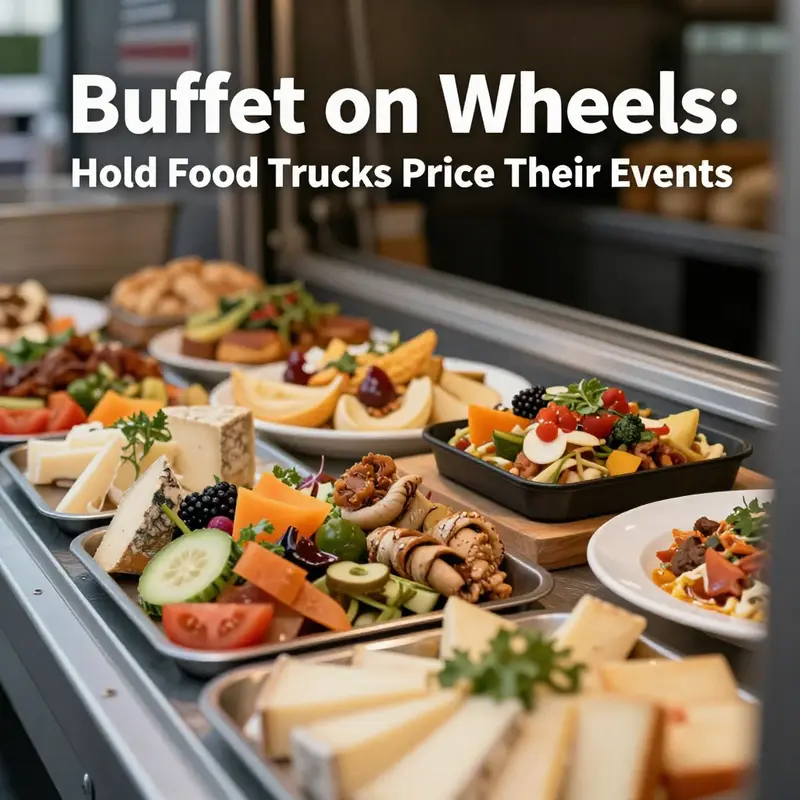
Pricing buffet-style service from a mobile kitchen rests on more than a simple menu choice. It is a careful negotiation between the food, the people who prepare it, the equipment that makes it possible, and the context of the event itself. When a operator sits down to craft a quote, the most reliable starting point is per-person pricing. This approach is widely used because it bundles the core costs—ingredients, labor, preparation time, transport, and equipment—into one consumable measure for the client. In practice, a typical range might hover around mid to upper teens to mid-twenties in pound terms for a full buffet at weddings or corporate events. Yet those numbers are rarely the whole story; they are the floor beneath which profitability cannot be maintained, and the ceiling where the appetite for premium experiences begins. A true quote, then, grows from a dialogue about menu scope, guest expectations, and the realities of the service window.
A central lever in that dialogue is menu complexity—the number of components a dish requires, how many ingredients must be prepped, and how much time the kitchen needs to execute it flawlessly. A straightforward build, perhaps a few protein options with a handful of sides, contrasts with a mosaic of plates that demand layered techniques, multiple cooking vessels, and precise timing. Each additional ingredient and each extra step add to labor hours, idle equipment use, and the risk of waste if demand shifts. The price for a dish is seldom only about its base cost; it reflects the orchestration behind the scenes. A chef-driven, wood-fired option with artisanal toppings might fetch a higher price than a more straightforward, familiar fare because it necessitates longer pre-cook or finish-work, specialized ovens, and more hands on deck during service. This is where the practice of menu engineering becomes a practical tool. It helps identify dishes that are high-cost yet low-margin and those that, though perhaps simpler, yield high demand and solid margins. With that clarity, operators can craft a buffet that pleases guests without sacrificing profitability, placing a premium where guest enthusiasm is strongest while tempering it with the realities of kitchen labor and equipment utilization.
Ingredient costs form the second cornerstone of the pricing equation. The price of produce, proteins, dairy, and spices does not stay constant. Seasonal shifts, market volatility, and supplier dynamics can tilt margins overnight if not managed carefully. Savvy operators pursue centralized procurement and standardized portioning to stabilize these swings. Centralized procurement helps negotiate better terms and improves consistency across multiple events, a common scenario for mobile services that operate in different neighborhoods or regions. Standardized portioning translates to predictable plate cost, which in turn makes cost per serving more reliable. When the team knows precisely how many grams of protein, how many ounces of starch, and how many milliliters of sauce each serving requires, waste drops and consistency rises. The result is a smoother path to profitability, even when the menu changes from week to week or season to season.
To turn those stabilizing practices into a reliable price tag, operators lean on data. They track cost per serving, compare it against sales performance by dish, and continually reallocate resources toward offerings that maximize both appeal and margin. This data-driven approach supports dynamic decision-making: a dish that proves popular but drains margin may be trimmed, restructured, or priced more aggressively, while a high-margin item that attracts fewer diners can be paired with more accessible components to balance the overall perception of value. The aim is not to snipe at guests with an ever-escalating price but to construct a buffet where the price reflects the true cost of delivering the experience. It is about balancing cost inputs with the perception of value, so guests feel they are receiving a fair exchange for the quality and variety on offer.
The event context itself cannot be ignored. A large-scale gala with a three-hour window and a long drive between the truck and the venue imposes different constraints than a smaller, local gathering with a short setup. Larger events demand more food, staff, and equipment, and may necessitate a minimum guest count to cover the fixed costs of travel, setup, and stall space. A long-distance location or a venue with tricky logistics may trigger additional travel charges or equipment rigging fees. Flexible pricing must account for these realities, either through a transparent minimum or a set of add-ons that the client can opt into. The same logic applies to service levels and experience enhancements. A premium package—perhaps with customized menus, branded signage, dedicated staff, or interactive stations—has legitimate incremental value, and its price should reflect the extra capability and the added hours of labor it requires. When a customer recognizes that the extra features translate into a more memorable event, the incremental cost is seen not as a nuisance but as a fair acknowledgment of enhanced service.
Beyond the core factors of complexity and ingredients, there is a quiet but potent trend shaping modern buffet pricing: modular and upgradeable options enabled by digital ordering concepts. The idea is to offer guests the ability to mix and match components—protein, starch, vegetables, sauces—creating a personal plate while enabling the operator to structure pricing around component selection rather than a single, monolithic menu price. This approach increases perceived value by giving guests control over their choices and makes it easier to justify price differentials for premium components. In practice, the trend translates into more flexible quotes for event organizers. If a client wants a build-your-own buffet with several protein choices and a few premium add-ons, pricing can be tied to the exact combination rather than a blanket rate. The same modular thinking supports real-time cost feedback, as cooks and managers can observe which components are driving margins and adjust the menu accordingly for future events.
The modular concept dovetails with broader digital ordering trends that have begun to reshape expectations in many customer-facing sectors. Guests increasingly expect customization and transparency, even in mobile dining settings. When a truck offers modular components, guests can see and understand how choices affect price and value. For operators, this translates to a pricing framework that is inherently more flexible and more responsive to the actual demand for each component. It also encourages more sophisticated forecasting: if a popular protein consistently sells out, the operator can recalibrate inventory, adjust order quantities, and refine the associated price point to reflect true market demand. The net effect is a buffet that feels personalized without compromising the business case that underpins every quote. For operators who want to explore these concepts in depth, there are industry insights and practical examples available through practitioner-focused resources and thought leadership that discuss digital customization in mobile dining services. For context and further reading, see related discussions in the broader field of digital ordering trends.
From the perspective of a prospective event organizer, these pricing dynamics translate into a clearer, more credible proposal. A reputable truck will not deploy a one-size-fits-all price but will instead present a structured package that incorporates core cost drivers and optional enhancements. The core package will typically frame a base set of proteins, sides, and desserts, with a per-person price that covers ingredients, standard labor, and basic staffing. Add-ons might include live cooking demonstrations, branded presentation, or a longer service window to accommodate multi-course service. The supplier can show how each element affects cost, making it easier for organizers to balance their budget with their guests’ expectations. This clarity matters because it empowers clients to compare options across vendors with confidence. It also reduces the risk of misaligned expectations after the contract is signed, which is a common source of post-event friction.
In practice, the pricing conversation thrives when the truck can articulate the relationship between menu complexity and margins in plain terms. A well-structured quote might lay out a base per-person price alongside a menu map that indicates the cost implications of premium ingredients or more elaborate preparations. It could also indicate a minimum guest count and identify potential savings through standardized portions and reduced waste. The goal is to present a pricing narrative that is neither opaque nor evasive. Guests should feel that the price reflects the full spectrum of what they are receiving—from the flavor and aroma of the dishes to the preparation finesse and the logistical support that makes buffet service seamless. When the narrative is coherent and data-driven, it becomes easier to align expectations, secure buy-in, and deliver a memorable dining experience that also respects the financial boundaries of the event.
For readers seeking practical context on these ideas, consider how modular choices and cost-tracking strategies are reflected in industry discussions and case studies. The linked material in practitioner resources offers a broader lens on digital customization and its potential to influence menu design and pricing in mobile dining contexts. Meanwhile, the internal voice of the field—the experiences of operators who constantly balance appetite, artistry, and arithmetic—remains the most reliable guide. The result is a buffet pricing approach that feels both fair and aspirational: guests enjoy variety and quality, while operators maintain sustainable margins through disciplined menu engineering, standardized portioning, and a keen eye on the event’s logistical fabric. When those elements align, the quote becomes not a line in a contract, but a promise of value delivered through thoughtful design and precise execution.
To explore related frameworks and real-world applications, readers may consult the 5StarTruckIn community blog for reflective pieces on menu planning, cost control, and event execution. 5StarTruckIn blog
External resource for deeper context: Digital Ordering Trends in Mobile Dining Services (2025) https://www.fnbinsights.com/reports/digital-ordering-trends-mobile-dining-2025
Sizing for Success: How Event Scale Shapes Buffet Pricing for Food Trucks
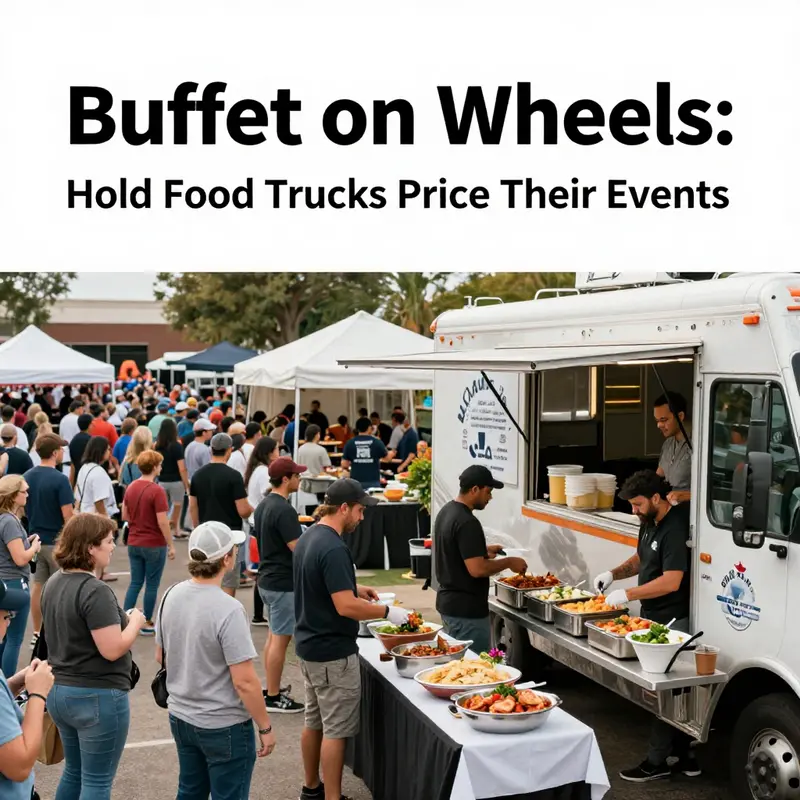
Pricing buffet-style service at events is less a single equation than a moving balance of scale, logistics, and the realities of operating on a real site. When a client asks, “What will this buffet cost per head?” the question often reveals more about the event’s size, flow, and on-site demands than about the menu itself. The per-person figure is the anchor, but the numbers that sit around it—the minimum guest guarantees, the travel and setup fees, the staffing hours, and the possible add-ons—are what truly determine the final price. And those surrounding numbers are driven almost entirely by scale and the logistical web that sits behind a mobile kitchen in action. In practice, the scale of an event becomes a roadmap for cost, risk, and value, shaping not only what is priced but how the price is structured to reflect reality on the ground.
At the small end of the spectrum, a backyard party or a local festival that invites a compact truck with a lean menu looks different from a multi-day corporate summit. A 15- to 25-foot vehicle designed for simple fare—think straightforward, crowd-pleasing options such as tacos, sandwiches, or coffee—can operate with a tighter footprint. Parking is easier, fuel costs stay modest, and licensing or permit requirements align with a shorter on-site presence. In this context, the pricing calculus tilts toward efficiency and predictability. The per-person price may be lower, and the operator can keep overheads lean by deploying a smaller crew, fewer live cooking steps, and minimal on-site equipment. The aim is reliable throughput in a compact window, not a sprawling, interactive kitchen experience. Such setups are inherently less risky from a logistical standpoint, and that lower risk often translates into smoother, more confident quotes for organizers looking to keep budgets in check.
Yet as soon as an event grows in scale—whether it is a corporate function with hundreds of attendees, a large public festival, or a multi-day expo—the pricing conversation shifts. Larger events demand more than just more food; they demand more space, more safety and sanitation considerations, more crew, and more time to set up, operate, and break down. In many cases, operators lean toward full-service concepts that expand kitchen capabilities beyond a single counter or line. The truck that is cruising into a big venue may be based on a converted bus or another expanded platform to accommodate additional ovens, grills, prep space, storage, and service windows. This gives the team the flexibility to offer a broader menu, to stage interactive stations, and to maintain food quality across longer service hours. But it also multiplies the logistical pieces that must align: power supply, ventilation, water use, waste management, and on-site workflow. The price per head climbs not just because more food is being produced, but because the entire operation becomes more complex and more capable.
The scale-sensitive costs begin to accumulate in practical, tangible ways. Labor is the most obvious driver. A small setup can function with a compact crew who can move briskly without stepping over each other. A large-scale operation may require a multi-person crew in shifts, with roles ranging from line cooks to food attendants to coordinators who manage the service flow, signage, and guest interaction. Each staff member adds to the daily rate, and longer events push up the hours billed for labor. Then there is the equipment burden. A larger unit often needs more cooking surfaces, refrigeration capacity, separate warming stations, and robust transport and storage arrangements. The extra gear carries not only the upfront capital or rental costs but also ongoing maintenance, fuel, and transport considerations. When an event requires extended hours, the equipment footprint expands further, and so does the potential for service disruptions—an element that suppliers price into the quote as contingency.
Additionally, the event’s geography and logistics shape pricing in subtle but important ways. Travel distance, travel time, and even the route to on-site delivery affect both fuel and labor planning. A long drive to a distant site introduces not only the cost of fuel but also the opportunity cost of time—crew wages for time spent en route, parking, and unloading. If the site has limited access or a tight unloading zone, the operation must allocate extra crew to manage the move safely, further driving up cost. In cycle with transport, on-site setup time matters. A smaller vehicle can slide into place quickly and be ready to serve in a brief window. A larger unit might require rigging, more extensive electrical or water connections, and an on-site supervisor to coordinate the move, all of which add to the bottom line.
From the client-facing perspective, event organizers often encounter different pricing structures as scale shifts. A common approach remains the per-person price, but the per-head rate often carries a tiered logic in larger engagements. The organizer may see a minimum guest count to ensure the provider covers basic fixed costs: travel, setup, and the basic staffing required to produce a buffet at scale. If the guest count falls below this threshold, a minimum-fee or surcharge may apply to cover those fixed costs, even if actual consumption is lower. Conversely, at higher guest counts, bulk procurement advantages may allow some upside in food costs, but the overall price per person typically does not dip dramatically because the operator must preserve margins across the extended service period and manage the higher risk profile that comes with mass service.
Another dimension of scale is service level and experience. For smaller events, a simple buffet with self-serve stations and modest staffing can deliver value with a clean, predictable experience. At larger events, operators frequently introduce premium add-ons that transform the consumer experience and justify a higher price point. Custom menus, branded signage, dedicated staff, or interactive elements such as live grilling stations not only enrich guest enjoyment but also materially affect cost structures. These enhancements require planning, more sophisticated equipment, and a more substantial on-site presence, all of which are priced into the final quote. The result is a buffet offering that can feel as tailored and high-end as a catered experience while still being delivered from a mobile kitchen. This is where the line between traditional buffet pricing and experiential dining becomes blurred, and the event’s scale is the fulcrum that leverages more elaborate service while maintaining the buffet concept.
In shaping quotes for organizers, seasoned operators lean on market realities and competitive benchmarks, but the heart of the decision is the event’s scale. The same menu, offered in two very different contexts, will yield different financial outcomes because the fan-out of resources required changes with the footprint of the operation. A thoughtful quote will articulate not only the per-person price but also the components that drive it: minimum guest guarantees, travel surcharges, extended-hour charges, on-site equipment and staffing needs, and any premium features or interactive elements. Clear proposals that itemize these factors help organizers compare options on a like-for-like basis and assess where value aligns with the event goals.
It is worth noting that compliance and standards become more pronounced with scale, even when the overall buffet concept remains familiar. Larger operations must meet stricter safety, sanitation, and mobility standards, and they often depend on specialized towing or support equipment, on-site licensing, and robust insurance coverage. These requirements increase both the upfront investment and ongoing operating costs. While safety and reliability might seem like non-negotiable overhead, they are ultimately part of the price calculus that keeps guests safe and operations smooth. For event planners, recognizing these requirements early in the planning phase helps avoid last-minute adjustments that can escalate costs and disrupt service.
Over the course of a conversation about buffet pricing, it is useful to consider how a client’s event profile maps onto the operator’s capabilities. A well-structured inquiry from organizers—covering expected headcount, the event’s duration, the desired service style, anticipated peak service times, and the site’s logistical constraints—becomes a foundation for a realistic, executable quote. Operators will translate those inputs into a narrative of costs and contingencies, translating complexity into a price that reflects both capability and reliability. In this sense, scale is not merely a numeric measure; it is a determinant of risk, capacity, and the fidelity with which a truck can deliver a consistent, satisfying buffet experience across every guest.
For those exploring how to interpret buffet pricing, an important takeaway is that the per-person rate is consistently informed by the event’s scale and the logistics that scale triggers. A price that appears high at first glance may be a deliberately structured response to a demanding site, a long service window, or a premium service configuration. Conversely, a lean per-person figure may reflect tighter staffing and simpler setup, but it should not come at the cost of reliability or food quality when the event scale demands more robust operations. In both directions, clarity is the key. A transparent proposal that breaks down the fixed and variable costs helps organizers weigh trade-offs—between menu complexity, service level, and the duration of the event—and make decisions that keep the buffet experience both affordable and high quality.
As operators continue to refine their pricing in response to evolving event formats and client expectations, attention to workflow efficiency remains central. Design decisions that minimize unnecessary steps—such as optimized kitchen layouts, efficient plate distribution, and streamlined line management—impact both service speed and cost. For readers seeking a broad perspective on operational efficiency as it relates to complex service environments, exploring resources on design efficiency in emergency services can offer transferable insights into rapid, reliable on-site performance. Design Efficiency in Emergency Services.
In sum, the pricing of buffet-style food truck service at events is anchored in scale and the logistical machinery that scale demands. Small, straightforward events emphasize lean delivery and predictable throughput, yielding lower per-head prices and simpler setups. Large, multi-faceted occasions demand more extensive resources, longer planning horizons, and a willingness to invest in higher service levels, complete with robust safety and compliance measures. The final price per guest emerges from a blend of fixed costs, variable food costs, and a spectrum of service enhancements that align with the event’s scale. For organizers, the most valuable approach is to engage early, provide detailed event parameters, and solicit proposals that clearly map cost drivers to the guest experience. In doing so, buffet pricing becomes not a mystery of numbers but a transparent dialogue about capacity, care, and the promise of a memorable dining moment delivered from the road.
External resource for broader context on mobile kitchen configurations and performance under varying loads: https://www.foodtruckinsider.com/mobile-kitchen-bus-for-sale-guide/
Buffet at the Curb: Pricing Service Levels and the Experience Premium in Food Truck Events
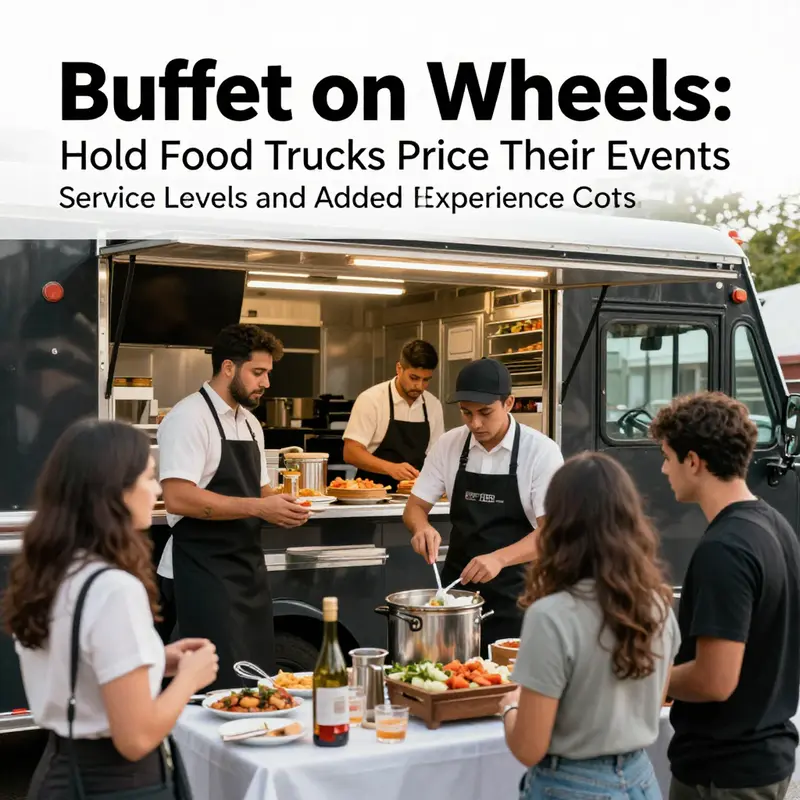
Buffet-style pricing is more than a price tag on a menu; it is a map of service levels, operational constraints, and the guest experience that unfolds around a mobile kitchen. When planners seek to feed a crowd from a truck, they discover that the price per head is not a simple multiplication of ingredients. It is a reflection of the choreography needed to move people efficiently, the reliability of utilities, and the perceived value that guests take away as they mingle, sample, and mingle again. In this view, the cost of food is only one strand in a braided line that runs from planning to execution and finally to satisfaction. The most important idea to keep in view is that buffet service is a turnkey experience. The truck is not merely a vendor; it is a mobile dining room, a temporary catering team, and a stage for guest interaction. The way that stage is set—space, flow, staffing, and ambiance—shapes both the price a client will accept and the quality they expect to receive.”
The first practical constraint a kitchen on wheels encounters is space. Buffet stations need room for pans, warmers, tongs, and guests who move with purpose rather than hesitation. In a tight event environment, the crew cannot rely on expansive boulevards of open floor space. Instead, service lines must be designed to prevent bottlenecks while keeping the food accessible and visually appealing. That demand for space translates into higher labor costs and smarter layout planning, because staff must compensate for physical constraints with speed, dexterity, and precise communication. If the line slows, guests perceive slower service and the event’s rhythm falters; if staff can operate with fluidity, the same space feels generous, and the price per person can reflect a higher standard of execution. It is not unusual for organizers to see a modest per-person price in a space-constrained setting rise by a notch when the layout is optimized for quick turnover and consistent portioning. The cost difference is rarely a single line item; it is a reflection of the capacity to move people and food through the corridor of a buffet without creating friction.
A second layer concerns utilities. Food trucks often rely on external power sources, water supply, and sometimes even internet for payment or digital menus. The reliability and availability of these utilities matter as much as the menu itself. When a venue cannot guarantee ready electricity or water, operators must plan for contingencies. Backup generators, extra water tanks, or extended fuel use all translate into additional charges that show up in the final quote. The consequence for pricing is clear: if an event demands more infrastructure, the per-person cost can increase to cover the risk and the operational flexibility that comes with it. In turn, organizers learn to factor in utility contingencies when they benchmark quotes and when they compare the cost of a buffet against other service styles. The emphasis here is not merely on meeting needs but on building a reliable experience, because guests notice even minor hiccups in power or water if the line slows or the station goes dark for a moment.
Durability of equipment forms a third thread in the pricing tapestry. Buffet service hinges on robust, dependable gear that can withstand peak usage and rapid shift changes. The equipment must endure repeated heating, chilling, and replenishment cycles, and it must do so without compromising food safety or presentation. Heavier, more durable components—insulated warmers, sturdy chafing dishes, and durable food pans—come with higher upfront costs, yet they pay for themselves through reduced downtime and fewer service disruptions. When trucks invest in high-performance components, they can maintain a steady pace during busy moments, which supports a smoother guest experience and cleaner, more efficient service. From the buyer’s perspective, these investments manifest as a higher per-person price that aligns with superior reliability and reduced risk of service gaps. The message to clients is that the added value lies not only in the flavor of the food but in the assurance that the service will be steady and predictable, even at maximum volume.
Guest interaction and movement compose another essential factor. In a sit-down setting, guests circulate in a more controlled environment; in a buffet-on-wheels scenario, the absence of formal seating places guests in a dynamic flow that can verge on congestion if not managed thoughtfully. The staff must navigate tight aisles, refill stations, and the moment when someone grabs the same spoon as their neighbor without a clear queue protocol. These realities influence pricing through the need for additional staff or smarter process design. A higher service level—such as a clearly marked station, dedicated attendants guiding guests, or even interactive stations where cooks engage with the crowd—adds both value and cost. The premium attached to such enhancements reflects the intangible benefits guests experience: reduced waiting time, clearer communication, and a sense of hospitality that makes the event feel special. When a truck offers branded signage, customised menus, or a live cooking element, the price per head often incorporates what is essentially a theater component—an experience that goes beyond nourishment. The increase is justified if guests view the event as memorable rather than routine, and it frequently correlates with higher per-person charges.
Organizers seeking to translate these service levels into a viable price must also consider strategic planning levers. Equipment selection becomes a driver of both capability and cost. A trailer or a van configured for buffet service can influence how many guests can be served smoothly per hour, how many staff are required, and how easily the operation can be scaled up for larger gatherings. Layout optimization is more than aesthetics; it is about how food moves from pass-through to plate without creating choke points. A well-planned layout reduces wait times and staff fatigue, and when guests feel the line move efficiently, the perceived value of the service increases, which justifies a higher price ceiling. Budgeting for utilities, as already noted, is not just about covering the expected needs but about ensuring resilience against unforeseen demands. Event organizers that anticipate lower risk and greater reliability often justify premium pricing to clients who value consistency and a seamless guest experience. The mind shift required here is simple yet powerful: price should reflect capability, not just ingredients.
In the marketplace, pricing buffet-style service at events typically rests on a core per-person figure that covers the entire scope of the menu and the service experience. The per-person price is rarely a single flat line; it is a band that shifts with the complexity of the menu, the level of service, and the scale of the event. A basic buffet with standard offerings may begin in a range that covers food costs and essential staffing, while a more premium setup—featuring custom menus, branded service stations, or interactive elements—sits higher in the spectrum to reflect added labor, specialized equipment, and the attention to guest experience. The number of guests matters not only because it influences the amount of food needed but because it drives the logistical footprint: more guests require more space, more staff, and more time to manage flow and replenishment. In practice, many trucks impose a minimum guest threshold to cover setup, travel, and the baseline staffing required to meet service levels reliably. Long-distance travel, late-hour service, or complex setups can trigger additional charges that fall outside the per-person rate but are essential to preserving reliability and quality.
A practical implication for organizers is that the sweet spot in pricing emerges when value is tied clearly to outcomes. If the event aims to impress a corporate audience with a polished, interactive buffet and a predictable service rhythm, the per-person price can rise in exchange for guaranteed throughput and a tangible guest experience. For weddings or large social gatherings, a similar logic applies, with premium elements justifying higher costs while still delivering perceived value through consistency and ambiance. The pricing decision, therefore, rests on a balance between the cost of ingredients and labor and the value of reliability, speed, and guest satisfaction. It is a balancing act where the organizer should seek a transparent proposal from the truck that itemizes what is included—menu, staffing, equipment, setup, travel, and any premium add-ons—and where the client can clearly see how each component affects the final figure. A well-structured proposal not only secures profitability but also builds trust, helping clients understand that the price reflects a packaged, curated experience rather than a line-item tally of calories.
The challenge, of course, is to avoid overpromising and underdelivering. A service level that promises a flawless experience but delivers only partial efficiency risks eroding trust and undermining perceived value. Conversely, a realistic commitment to what a truck can reliably achieve—when matched to the event’s layout and utility resources—creates a pricing anchor anchored in honesty and capability. The most successful buffet offerings are those that align a clear set of deliverables with a predictable price and a transparent plan for how the experience will unfold. The result is a fair exchange: clients pay for what they value, guests enjoy smooth service, and operators secure a viable margin that rewards investment in skills, equipment, and planning. In this sense, the economics of buffet pricing in food trucks are not just about the cost of food; they are about the story of service, the confidence of execution, and the ability to translate capability into experience for every guest who steps up to the counter.
For readers seeking a practical framework that translates these ideas into quotes and proposals, the key lies in documenting the service level expectations alongside the menu. A clear distinction between standard and premium packages helps clients understand what they are paying for and why it matters to their event’s feel and timing. When a truck presents a menu and a plan that emphasizes flow, reliability, and guest interaction, the price per person becomes not just a hidden line item but a defensible investment in guest experience. This approach also supports better negotiation, because the value proposition is explicit rather than implied. The end goal is a pricing conversation that centers on how efficiently and elegantly the buffet will function, how guests will perceive the service, and how reliably the operation can deliver across the event’s duration. In the end, the same per-person rate that covers food cost, staffing, and logistics also signals a commitment to a curated, enjoyable experience for every attendee, a commitment that guests remember long after the last tray is cleared.
External resource for broader logistics and pricing concepts can be found at the buffet catering guide for mobile settings, which offers additional perspectives on space, flow, and value delivery: Buffet Catering Guide.
Pricing in the Arena: How Market Rivalry Shapes Buffet-Style Offers from Mobile Kitchens at Events
In cities where streets pulse with food culture and events spill from sidewalks to ballrooms, buffet-style offerings from mobile kitchens have become more than a novelty; they are a strategic battleground. The chapter of competition unfolds not only in the queue at the curb but in the numbers that truck operators quote for a guest list, in the options that are bundled into a single price, and in the way pricing signals value, reliability, and experience to event organizers. When a dozen trucks can plausibly serve a wedding or a corporate mixer, price ceases to be a mere reflection of cost. It becomes a compass that points toward market position. The core logic remains consistent: pricing must cover food costs, labor, and overhead, while also aligning with the event context and the competitive landscape. Yet in practice, the numbers are shaped by a crowded field that rewards clarity, speed, and differentiation as much as they reward taste and freshness. The consequence is a pricing ecosystem that is deeply relational—between what a truck can produce, what an organizer expects, and how the broader market values buffet-style service from a mobile kitchen.
The most common entry point for pricing buffet-style service is per-person pricing. It’s a straightforward approach that translates a complex chain of costs into an accessible, scalable figure. In competitive markets, this per-person rate often sits within a bracket that recognizes both the quality of ingredients and the demands of service. For example, in numerous contexts, organizers encounter a price range that reflects a complete buffet experience—from the selection of dishes to the staffing behind the lines and the logistics of delivering hot, safe, and timely service. This per-person framework is not a fixed ceiling or floor, but a flexible baseline that operators adjust as the event context shifts. When a market becomes saturated with similar concepts, the per-person price tends to become a critical differentiator, a metric that can tilt decision-making toward one vendor or another.
Menu complexity and ingredient quality emerge as powerful levers in such pricing conversations. A truck serving a high-end, chef-driven buffet with artisanal components, organic produce, or specialty proteins will command a higher per-person figure than a simpler, more standardized menu. In a crowded field, these differences carry weight because they directly impact food cost, preparation time, and the total hours of labor required. Operators do not price in isolation; they price in comparison to nearby options, weighing whether premium ingredients will translate into a justified premium for the client. The market, perceptive as ever, responds to the narrative that accompanies the menu—the story of sourcing, the care in execution, and the consistency of delivery from setup to service end. In this sense, competition pushes vendors to translate culinary ambition into quantifiable value that clients can understand and justify in their event brief.
The scale and logistics of an event also ripen pricing into more than a simple per-guest token. A minimum guest threshold is widely used to cover fixed costs associated with travel, setup, and initial staffing. In crowded markets, these minimums keep operations viable when headcounts fall short of expectations or when travel distances are longer than average. Extended hours, multi-venue events, or complex setups—such as live cooking stations or custom signage—are not merely add-ons; they are operational realities that reframe the cost structure. These factors elevate the per-person price in direct proportion to the incremental labor and equipment demands. Yet competition often tempers this pressure with bundled value. A truck may offer a premium package that includes branded signage, a dedicated crew, or interactive elements that heighten the guest experience. Even when a price rises, the perceived value of a complete, immersive buffet can justify the investment in the eyes of event organizers who seek cohesion, branding, and memorable guest engagement.
Market rivalry does not exist in a vacuum. It feeds on local intelligence—the quiet conversations over coffee with event planners, the online proposals exchanged after inquiries, and the development of a believable competitive story. Operators conduct ongoing market research to gauge what similar events in their area are paying and what services are delivering the best returns. This isn’t merely about undercutting peers; it’s about understanding where value is perceived and where gaps in service can be filled. A savvy operator may discover that clients prize predictable execution, shorter lead times for proposals, or a menu that scales gracefully from a small gathering to a large reception. Each insight informs a pricing adjustment—sometimes subtle, sometimes substantial—that positions one truck as a trusted, reliable choice amid many similar-looking offerings. The discipline of price consciousness here is less about chasing a lowest-price narrative and more about building a credible value proposition in a market crowded with choices.
New entrants into the food truck buffet space often ride a mid-range price band. This bracket is not an accident but a deliberate choice born of market realities: it balances the allure of lower upfront costs for buyers with the necessity of sustaining a viable operation. In many urban markets, mid-range trucks attract entrepreneurs who are drawn by a relatively low-risk entry model while still promising a quality, diverse buffet experience. The price bracket helps these new businesses manage initial investment, adapt to fluctuating demand, and cultivate a scalable operation as they collect data from early events. In practice, price strategy for mid-range players hinges on two pillars: the efficiency of the kitchen and the clarity of the value proposition. When you pair a lean, well-rehearsed workflow with a menu that can be adapted to dietary preferences, the per-person cost remains competitive without compromising the ability to deliver on time and at scale. The result is a marketplace where new entrants can gain traction by offering reliable execution at a price that signals both accessibility and credibility.
Pricing must also serve as a differentiator in a crowded marketplace. With many vendors offering similar buffet options, competition shifts toward how value is perceived rather than only how it tastes. Price tags become part of a broader story about service quality, consistency, and the emotional experience of the event. A truck that communicates transparent inclusions—food, staffing, transport, and basic equipment—without burying organizers in hidden fees gains trust. Conversely, opaque pricing or unexpected surcharges can erode confidence even when the food is excellent. In this milieu, proposals that detail exactly what is included, from base menu items to setup and teardown, stand a better chance of converting inquiries into bookings. The ability to present a clean, credible package reduces friction in negotiations and helps organizers allocate budgets with confidence. For those managing events, the lesson is precise: pricing should crystallize value in a way that aligns with the expectations of a given market, rather than simply reflecting cost-plus calculations.
The broader market conditions also matter. A crowded field makes market rates a visible reference point. In practice, operators study what peers are charging locally for similar service levels and then craft their quotes to be competitive while sustainable. This does not mean racing to the bottom; it means calibrating price to the perceived quality and reliability of the offering. A well-structured proposal may include a tiered approach that gives organizers options—fundamental buffet access at a lower price, plus premium add-ons such as enhanced décor, live cooking elements, or menu customization. These add-ons do not merely raise the final price; they create pathways for organizers to tailor the experience to their event goals, thereby increasing overall satisfaction and likelihood of repeat business. The market rewards vendors who can translate these options into clear, defensible values that resonate with clients who must justify a spend to stakeholders, planners, or leadership teams.
For organizers seeking guidance amidst this dynamic terrain, the practical implication is straightforward. Request detailed proposals that outline all inclusions, timelines, and potential add-ons. Seek consistency across multiple quotes so you can compare apples to apples. And consider the broader context—the event’s scale, the venue, guest expectations, and the logistical realities of delivery and service. In markets dense with competition, the most compelling offers are those that pair a transparent, well-communicated price with a track record of dependable execution. A vendor that can deliver on time, maintain food quality, and manage staff with professionalism often earns a premium that reflects reliability as much as taste. The price, then, becomes a signal of enduring value rather than a mere number on a contract.
Within this reality, a single internal reference can illuminate how operators narrate and shape their market positioning. For a broad, evergreen view of market dynamics in this space, see the resource at 5startruckin.com/blog/. This internal perspective reinforces that pricing strategy is as much about storytelling and workflow as it is about ingredients and hours. In the end, the most resilient pricing models are those that translate the realities of competition into a clean, credible value proposition for event organizers. They acknowledge the costs and the context, and they offer a clear, defendable path to delivering a buffet that meets guest expectations and aligns with the event’s objectives. The chapter of market rivalry thus becomes a guide for both operators and planners: price with purpose, bundle what truly adds value, and present a credible, client-centered case for why this mobile kitchen should be part of the event ecosystem.
External reference: For broader industry perspectives on the technical standards and applied properties that shape modern service delivery in mobile food concepts, you can explore further at the external resource: https://www.foodtrucknews.com/2025/12/15/food-truck-prix-material-properties-technical-standards-and-uses-in-engineering/.
Final thoughts
Delving into the pricing strategies that food trucks adopt for buffet-style services reveals a complex interplay of factors that cater to both operational costs and customer satisfaction. For long-haul truck drivers, trucking company owners, and fleet managers, recognizing these dynamics not only enhances the experience offered to potential clients but can also guide your choices related to event planning or when employing food trucks during breaks. Food is not just sustenance; it’s an integral part of the overall experience of any event. Knowledge of how pricing works can help you make informed decisions, ensuring you get the best value while enjoying the unique offerings of mobile chefs on the road.