
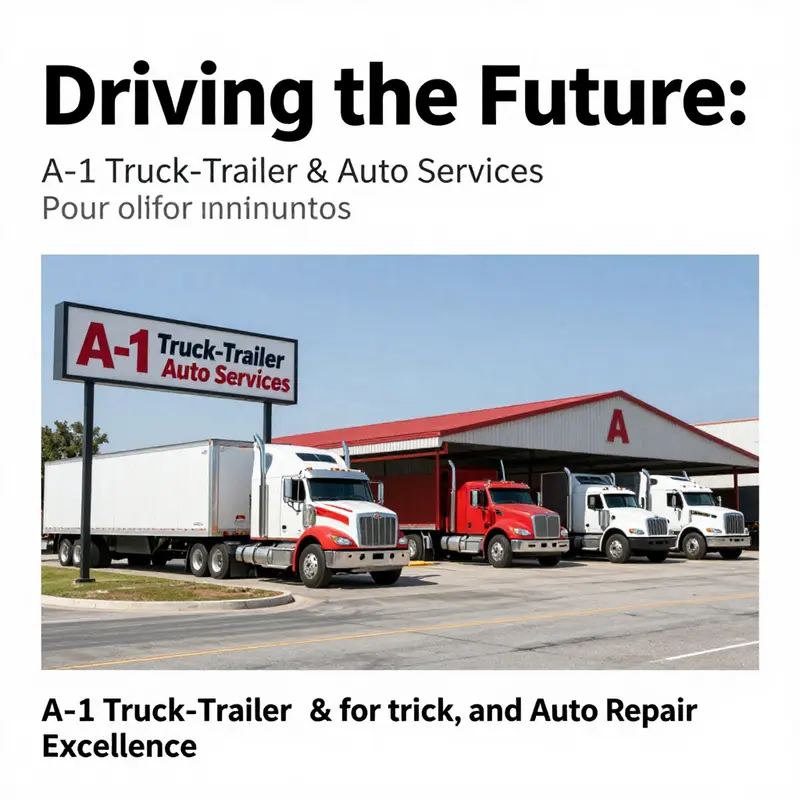
In the vibrant heart of Paris, Texas, A-1 Truck-Trailer & Auto Service has established itself as a cornerstone for truck drivers, trucking company owners, and fleet managers alike. Specializing in a comprehensive suite of repair services, A-1 not only ensures that vehicles are roadworthy but also sets a high standard for reliability in emergency and scheduled maintenance. Through this article, we will explore the invaluable services offered by A-1, how it bolsters the local economy, and the cutting-edge innovations that are shaping the future of vehicle repair. Join us as we delve into the intricacies of this essential business and see how it can elevate operations for long-haul drivers and fleet managers.
Keeping the Fleet in Motion: The Steady Craft of Servicing Heavy Trucks, Trailers, and Emergency Equipment at A-1 Truck-Trailer & Auto Services
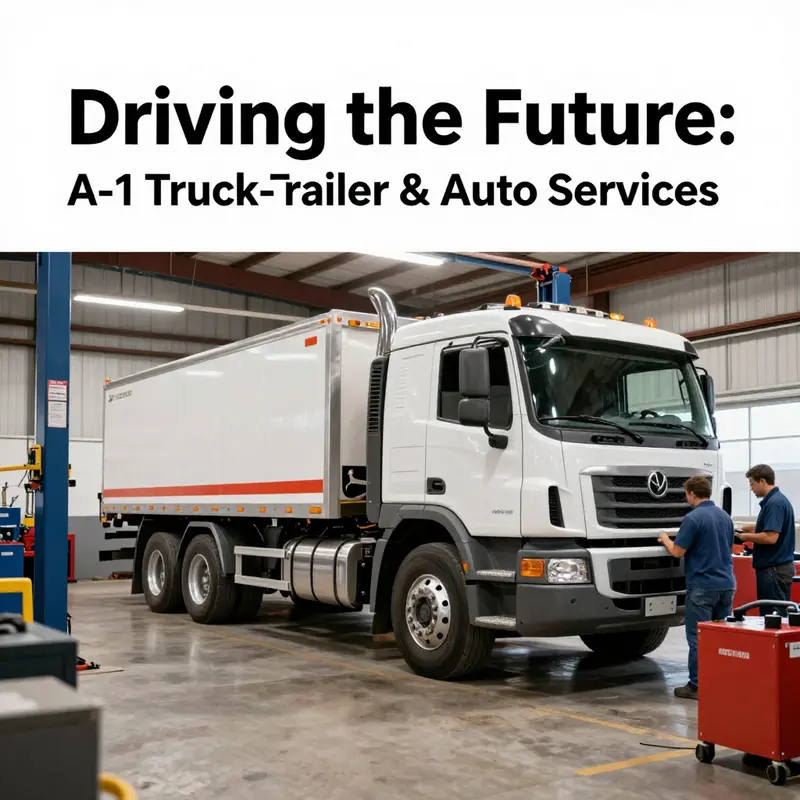
In the quiet rhythm of a town like Paris, Texas, a service bay can feel like a lifeline for the region’s moving parts. At 2408 S Church St, A-1 Truck-Trailer & Auto Services sits not merely as a repair shop but as a frontline partner for fleets that keep commerce, emergency response, and daily life going. The chapter that follows threads together the practical realities and the seasoned judgment that define the shop’s approach to heavy trucks, trailers, and the specialized vehicles that demand immediate attention. This is not a narrative of quick fixes; it is a description of the discipline required to keep roadworthy machines in service, minimize downtime, and uphold safety standards that protect drivers and communities alike. What begins as a straightforward inspection often unfolds into a careful orchestration of diagnostics, repairs, and preventive care that respects the complexities of the work these vehicles perform. In this chapter we explore how a single facility can orchestrate quality, speed, and reliability across a spectrum of needs—from collision and corrosion repair to proactive maintenance for heavy equipment, RVs, and emergency apparatus.
The breadth of A-1’s services mirrors the varied demands of the modern transportation landscape. Heavy trucks form the backbone of regional and national supply chains, and when they break down, the costs ripple through every link in the chain. Emergency vehicles, by their nature, require a different cadence: they must be ready at a moment’s notice, with guaranteed operational status that translates into public safety and swift response times. RVs and heavy machinery, meanwhile, ride on the line between utility and downtime, where even small delays can snowball into scheduling conflicts or lost productivity. The shop’s capacity to handle this range begins with a fundamental commitment: every vehicle that enters the bay is treated as if it were the fleet’s most critical asset. It is a relationship built on trust, because fleets rely on predictable turnarounds, transparent communication, and the confidence that repairs are thorough and lasting.
To understand the work deeply is to appreciate the two pillars that anchor the shop’s philosophy: meticulous diagnostic rigor and targeted, high-quality repairs. The diagnostic process is not simply about locating a fault; it is a disciplined interrogation of the vehicle’s systems, performance history, and current operating context. Modern heavy trucks and emergency vehicles carry layered complexity—engine management, transmission control, braking hierarchies, electrical networks, and chassis dynamics all intersect with the realities of heavy loads, varied climates, and long operating hours. A-1 approaches diagnostics as a holistic activity. Technicians begin with a careful intake and history check, listening for patterns that a short test might not reveal. They then deploy advanced diagnostic tools calibrated to the specifics of heavy-duty platforms. The goal is to map symptoms to root causes with clarity, so that repairs address the actual problem rather than the most obvious but incomplete signal.
When it comes to repairs, no category is treated as too challenging. The shop’s work on collision and corrosion repair for heavy trucks and emergency vehicles reflects a core priority: restore structural integrity, ensure functional systems, and return the vehicle to service with safety as the nonnegotiable baseline. Collision repair goes beyond cosmetics. It requires restoring frame alignment, repairing or replacing damaged body components, and validating the performance of safety-critical elements such as airbags, crumple zones, and running gear. Corrosion repair, equally important in heavy operations, demands a strategic blend of material science and practical fabrication. Rust can undermine structural components, compromise fasteners, and impair protective coatings that shield metal from the elements. The technicians at A-1 treat corrosion not as an isolated defect but as a signal of potential structural vulnerability, then plan repairs that reestablish strength and longevity. For emergency vehicles, where uptime is a public safety matter, the emphasis shifts toward robust, repeatable repairs that withstand demanding daily cycles and rapid re-deployments.
The maintenance backbone is another hallmark. Proactive maintenance is not a luxury; it is a strategic discipline that extends asset life and reduces the likelihood of breakdowns in the field. Regular inspections, lubrication schedules, belt and hose checks, seal integrity tests, tire condition monitoring, and brake system evaluations all form part of a comprehensive preventive program. In a fleet environment, preventive maintenance creates a predictable cadence that helps fleet managers manage budgets, plan downtime, and schedule replacements with confidence. For A-1, maintenance also serves as a diagnostic filter: worn components caught early can illuminate evolving issues in other subsystems, enabling preemptive interventions that avert cascading failures. The shop’s approach to maintenance is rooted in data-informed practice: service histories, mileage-based maintenance plans, and operator feedback converge to inform the next service cycle. This is maintenance with a purpose, designed to maximize uptime and safety while preserving the asset’s value.
General services at A-1 complement the more specialized work by ensuring that every vehicle leaving the shop meets safety and performance standards. The language of general service is simple in its aim: keep vehicles roadworthy and reliable, with a clear emphasis on quality workmanship and rapid turnaround. Yet behind that straightforward aim lies a complex production system. The shop coordinates parts availability, scheduling, and workflow in a way that respects the unique demands of each customer. A heavy truck may require a different sequence of operations than an RV or a trailer combination; yet the underlying process—diagnose, plan, repair, test, verify—remains consistent. The value lies in execution: having skilled technicians who can switch between platforms, apply the appropriate fabrication methods, and validate the repair through functional testing. The result is a service experience in which conversations with customers are grounded in practical realities: what failed, what it will take to fix, how long it will take, and what will be done to prevent recurrence.
In a fleet-centric environment, the speed of service is not a luxury but a business necessity. Fast turnaround times require a well-tuned operation: efficient intake channels, precise work scoping, ready-to-go parts, and a workforce that can adapt to both planned maintenance and urgent repair requests. A-1 embodies this through a combination of skilled technicians, flexible shop floor management, and a culture that prizes reliability as much as speed. The result is a cycle that minimizes downtime while delivering work that stands up to the demands of heavy use. For fleets, this translates into practical benefits: less time off the road for critical equipment, fewer surprises in cost, and a trusted partner who can translate complex problems into clear, actionable plans.
The human element is central to this narrative. Behind every repair order is a team that communicates effectively with the fleet operator, the driver, and the vehicle’s technical ecosystem. The shop’s ability to address emergency needs hinges on experienced technicians who can read the signs of failing components, predict how issues will evolve under field conditions, and execute repairs with an eye toward long-term resilience. The workforce is supported by continuous learning—whether through formal training, hands-on mentoring, or the steady accumulation of vehicle-specific knowledge. In this context, a service center like A-1 becomes not just a place to fix things but a place to learn, adapt, and improve how vehicles perform under heavy-duty workloads. It is a culture that values safety, compliance, and the practical wisdom that comes from years of serving diverse fleets across trucks, trailers, and specialized equipment.
The stories that emerge from this work are not merely about engines and gears. They are about the relationships that form when a fleet discovers a partner capable of delivering consistent, predictable service. The customer who calls in a moment of breakdown discovers within hours that their vehicle is in the hands of professionals who understand the urgency and the stakes. The manager who plans a routine maintenance window gains a sense of relief knowing the shop’s diagnostic toolkit will uncover hidden issues before they escalate. For the technicians, the satisfaction comes from turning a problem into a solution and watching a vehicle roll back into service with the confidence that it will perform as designed. This reciprocity of trust underpins the reputation that A-1 has built in its community and beyond, offering more than repairs and maintenance; it offers a pathway to uptime, safety, and operational continuity.
In practice, the path from intake to road approval follows a disciplined sequence that blends technical prowess with practical foresight. The intake phase captures the client’s goals and the vehicle’s history, while the diagnostic phase builds a precise map of faults and contributing factors. The repair phase translates that map into concrete actions—replacing components, repairing structural elements, or reconditioning surfaces—followed by calibration, alignment, and functional testing. The verification phase ensures that all safety-critical systems are within specification and that the vehicle satisfies regulatory and operator requirements. The final stage often involves a conversation with the fleet manager about maintenance planning and risk mitigation, reinforcing the sense that the work done is not a one-off correction but a contribution to longer-term reliability.
Within this narrative, communication is the invisible thread that holds everything together. Fleet operators, drivers, and shop staff must stay aligned on expectations: what is being fixed, why it is necessary, how long it will take, and what preventative steps will be taken to prevent recurrence. Clarity in communication reduces downtime, narrows the margin for error, and fosters a collaborative spirit that makes complex repairs feel manageable rather than overwhelming. The shop’s commitment to transparency is not a performance flag; it is a practical tool that helps fleets optimize their operating plans and budgets. When a vehicle returns to service, the operator understands not only that the job was completed but also how the work aligns with longer-term maintenance goals and compliance requirements.
The role of A-1 in the broader transportation ecosystem is not limited to service bays and repair orders. It extends into community safety, economic vitality, and the reliability of regional supply chains. Heavy trucks and emergency vehicles, when kept in peak condition, contribute to predictable delivery schedules and timely responses to emergencies. The shop’s capabilities, then, act as a constant in an environment where variables—weather, traffic, workloads, and regulatory changes—are always in play. By maintaining a steady capability to diagnose accurately, repair robustly, and maintain proactively, A-1 reinforces the idea that uptime is not merely a metric but a value proposition for its customers. The facility’s location, at the intersection of necessity and expertise, becomes a hub where complex mechanical systems meet disciplined workmanship and human accountability.
For fleets exploring the boundaries of in-house capabilities, the availability of targeted training can be a catalyst for resilience. Training programs that translate the shop’s expertise into transferable skills can empower in-house teams to perform routine maintenance with greater confidence, uplift their diagnostic acumen, and reduce reliance on external service windows. Some fleets pursue structured curricula that cover diagnostic thinking, safety protocols, and maintenance planning. There is a practical route to this learning: the opportunity to engage with specialized training resources that distill years of field experience into actionable modules. For those who want to explore such pathways, it is worth noting a resource that discusses focused training initiatives like fire-truck maintenance service training, which emphasizes critical readiness, equipment care, and lifecycle management in high-stakes environments. The idea is not to replicate every capability but to lift the baseline of fleet competence, ensuring that when a vehicle arrives at the bay, the operator and technician are speaking a common language about what matters most: safety, uptime, and durable performance. In this sense, the shop acts as a bridge between hands-on repair work and strategic fleet management.
As A-1 continues to serve a diverse client base—from local haulers to operators with urgent repair needs—the emphasis remains on quality and reliability. The work is never merely about restoring function; it is about certifying that the vehicle can withstand the rigors of heavy-duty operation and return to service with the confidence that it will perform as expected under demanding conditions. The facility’s reputation for reliability arises not from a single signature capability but from a consistent pattern of applying rigorous diagnostic practices, executing robust repairs, and upholding transparent, customer-centered communication. In the end, what trucks, trailers, and emergency equipment require most is not a flashy fix but a durable, dependable solution that respects the vehicle’s life cycle, the operator’s schedule, and the public’s safety. A-1 Truck-Trailer & Auto Services embodies that philosophy through a relentless focus on uptime, a disciplined approach to repair quality, and a practical understanding of what it takes to keep essential transportation assets in motion day after day.
External resource for further context on vehicle maintenance standards can be found here: https://www.nhtsa.gov/road-safety/vehicle-maintenance
Steering Local Prosperity: The Economic Ripple of A-1 Truck-Trailer & Auto Services
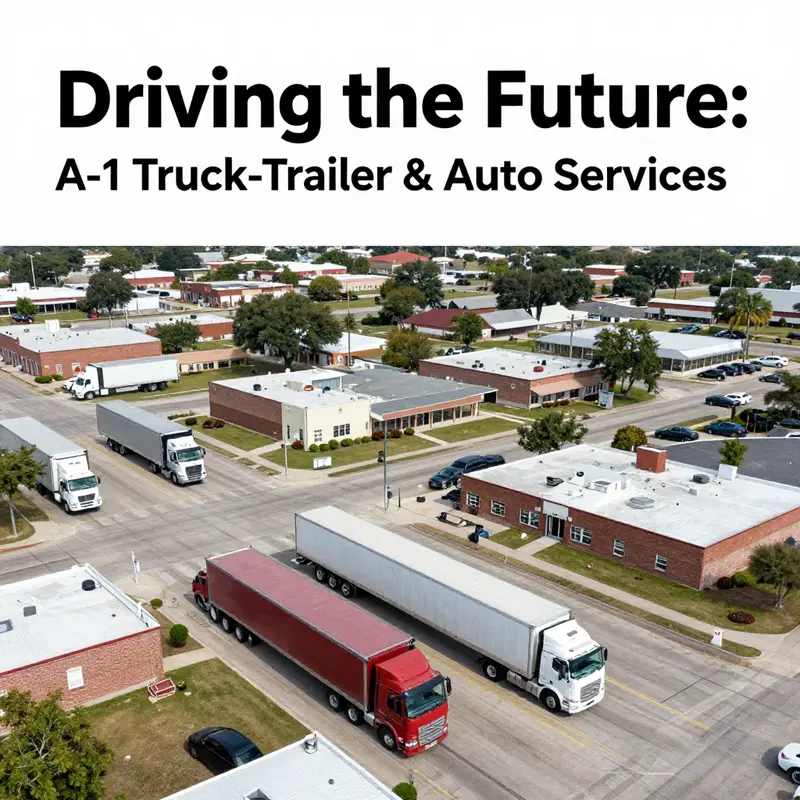
Tucked along a busy corridor in Paris, Texas, the site at 2408 S Church St houses more than a repair shop. It sits at the crossroads of reliability and opportunity, a small but powerful node in a regional economy that depends on steady movement. A-1 Truck-Trailer & Auto Services operates as a lifeline for fleets and families alike, offering maintenance and repair for trucks, trailers, and autos that keep everyday life humming and businesses operating on predictable schedules. The value of such a facility extends far beyond the mechanics of a single repair. It is the quiet engine that powers the daily flow of goods, the confidence that a delivery window will be met, and the assurance that a city can respond to demand with resilience rather than disruption. When a fleet rolls into the bays with a problem that threatens a schedule, the outcome is not solely a fix in motion but a ripple through the local economy that touches suppliers, drivers, retailers, and customers across a spectrum of needs and services. The economic story here is not about a single transaction; it is about the continuity of enterprise that depends on dependable, accessible maintenance services to stay ahead of wear, fatigue, and unexpected failures.
The maintenance and repair of commercial vehicles is, at its core, an investment in uptime. In a landscape where downtime translates into lost productivity, every hour saved on the road matters. A well-timed repair outside of a fleet’s own garage can prevent cascading delays that would otherwise ripple through a supply chain. For freight haulers and delivery services, time is a tangible cost: idle equipment, rescheduled routes, and increased labor expenses accumulate quickly. When a service center like A-1 keeps a critical asset operational, that asset returns to service sooner, and the entire operation gains a measure of steadiness. The value proposition, then, is not merely technical expertise but operational certainty. Local businesses know that a trustworthy maintenance partner exists just down the street, one that understands the rhythms of regional commerce, the fatigue points of heavy vehicles, and the complex safety regulations that govern roadworthiness. In such a context, a single repair can be imagined as a small but meaningful investment in the efficiency and predictability that local economies rely upon.
The impact on transportation and logistics is perhaps the most visible thread in this economic tapestry. Parcel services, regional distributors, and cold-chain operators require fleets that can perform in all kinds of weather and on varying terrain. When a truck or trailer is sidelined, the consequences extend beyond the immediate loss of a single shipment. There are opportunity costs: missed delivery windows, strained customer relationships, and the risk of inventory misalignment. A center that offers responsive maintenance and timely repairs reduces these costs by shortening the duration of downtime. In a region where many businesses depend on timely arrival of goods—from farm-to-market cycles to retail restocking—the reliability of maintenance services becomes a strategic input. It shapes how companies project schedules, allocate capital for expansion, and negotiate with partners who must anticipate a consistent flow of freight. In this sense, the local service provider becomes a partner in the efficiency of the entire supply chain, not merely a technician in a grease-stained apron.
Another dimension of the local economic influence emerges through job creation and the surrounding labor ecosystem. A-1 Truck-Trailer & Auto Services employs skilled mechanics, technicians, and support staff whose daily work fuels household incomes and, by extension, consumer demand in nearby neighborhoods. The direct employment created by this kind of business includes roles with steady wages, benefits, and opportunities for career progression in technical fields. But the effects do not stop at the door of the shop. When local workers earn wages, they sustain homes, schools, and community services. They shop for groceries, eat at nearby eateries, and participate in community programs. That amplification effect is a fundamental characteristic of localized economies. Each new job adds a multiplier impact because salaries circulate through the economy, creating additional demand for goods and services and sustaining more employment opportunities in retail, hospitality, and professional services. Even in a relatively small city, these rounds of spending forge a broader base of economic activity that sustains public institutions and civic life.
Tax revenue forms another essential piece of the local fiscal landscape. The presence of a steady, compliant business activity contributes to the tax base through sales, property, and payroll taxes. Those revenues support essential services that keep the community functioning—education, public safety, transportation infrastructure, and municipal services. In many communities, that tax base is the bedrock of future investment, enabling improvements in roads, schools, and evacuation or emergency response systems. The generosity of a service-centered business model thus extends beyond individual transactions. It helps sustain a public infrastructure that, in turn, reinforces the region’s attractiveness to new investment. The cyclical nature of this relationship means that reliability and consistency in a single service facility can indirectly support long-term growth by reducing operating risk for other local enterprises. When businesses feel confident that their environment is stable and well-supported, they are more likely to expand, hire, and reinvest, further enlarging the economic footprint of the community.
This dynamic is particularly meaningful for small and medium-sized enterprises that rely on a dependable local service provider for their fleets. SMEs in logistics, construction, agriculture, and service industries benefit from a spare capacity that translates into reduced operational risk. The ability to perform timely maintenance reduces the likelihood of unplanned repair events, which, in turn, supports more predictable budgeting and capital planning. For these firms, access to a nearby, trusted maintenance partner translates into a practical means of protecting cash flow and ensuring service level commitments to customers. In a broader sense, this reliability lowers barriers to growth for smaller firms, encouraging them to expand fleets, hire more workers, and explore new service offerings. When entrepreneurs in adjacent sectors observe that their transport links are solid and well-supported, they gain the confidence to pursue expansion strategies that ripple outward through warehousing, distribution, and manufacturing pipelines.
Beyond the shop floor and the balance sheets, a local maintenance hub like A-1 also contributes to resilience within the regional economy. The ability to service and maintain diverse fleets, including trucks that haul essential goods, emergency vehicles, and various specialty platforms, supports a community’s readiness to respond to emergencies and adapt to changing demands. During peak seasons, weather events, or supply shocks, the swift reactivation of a fleet can be the difference between a community meeting a critical need and facing shortages. The capacity to compress downtime and return assets to service is not just a technical achievement; it is a social good that strengthens the fabric of the local economy. In this sense, the service center becomes part of the community’s adaptive capacity, a bridge between the practical requirements of daily commerce and the strategic needs of resilience planning.
In thinking about the broader ecosystem, it is clear that a single maintenance facility interacts with a web of suppliers, vendors, and training providers that collectively form the region’s technical backbone. Local suppliers of parts, lubricants, and tools rely on the consistent demand generated by steady maintenance activity. Equipment dealers and rental fleets depend on the same network to keep inventories moving and to ensure that replacement assets can be deployed with minimal delay. The presence of a ready, capable service center can attract skilled workers who value proximity to their jobs and a community that supports technical careers. This attraction, in turn, can feed into a pipeline of apprenticeships and on-the-job training that elevates the skill level within the labor pool. When a city becomes known for a healthy, diversified service sector, it gains a reputational advantage that can attract inbound investment and encourage existing firms to grow. The cumulative effect is a more productive, adaptable local economy where the cost of doing business can be lowered through shared infrastructure, common standards, and mutual reliance on a dependable network of specialists.
It is also important to recognize the role of such a facility in the broader narrative of regional competitiveness. In this cross-border, interdependent system, the reliability of the transportation network underpins the ability of employers to meet customer expectations, manage inventories, and coordinate cross-district supply chains. The data that undergird these observations are rooted in the lived experience of entrepreneurs who operate fleets and the workers who keep them running. While national trends and macroeconomic indicators provide a backdrop, the real engine in a place like Paris emerges through the day-to-day decisions of shop owners, technicians, and fleet managers who plan around maintenance windows, service schedules, and safety compliance. When that engine runs smoothly, local retailers can stock shelves more consistently, manufacturers can deploy capacity more effectively, and service-oriented businesses can scale with less disruptive risk. The result is a more resilient local economy that can absorb shocks, adapt to shifting demand, and sustain a higher standard of living for residents who rely on a robust transportation network.
To tie these threads together, consider how an accessible, well-regarded maintenance facility shapes the longer arc of community prosperity. The presence of a dependable service partner encourages fleet owners to optimize routes, invest in newer or better-maintained equipment, and pursue more ambitious growth plans. This, in turn, expands the footprint of activity in related sectors: warehousing capacity expands to accommodate more goods moving through the region; logistics and distribution firms hire more staff to manage increased throughput; and financial institutions respond with credit products calibrated to a more dynamic fleet management environment. The cumulative effect is a virtuous cycle of investment, employment, and increased tax receipts—a cycle strengthened each time a fleet is kept in motion rather than sidelined by preventable breakdowns. In this way, a single service center becomes a catalyst for a larger community project: building a more prosperous, capable, and interconnected regional economy that serves not only businesses but residents who count on reliable goods and dependable public services.
For readers seeking broader context on the workforce and industry trends that frame these dynamics, industry insights are regularly discussed in the broader trucking and maintenance community. Exploring a general industry blog can offer perspectives on maintenance best practices, fleet management strategies, and the evolving needs of service providers. You can learn more from the 5startruckin blog, which covers a wide range of topics relevant to operators, technicians, and fleet managers alike. This resource helps connect the local experience with nationwide conversations about reliability, uptime, and workforce development. 5startruckin blog
No single narrative can capture all the ways a maintenance shop interacts with a community, but the throughline is clear: dependable, accessible vehicle care strengthens the local economy by supporting steady employment, enabling efficient supply chains, and contributing to the fiscal health that funds public goods. The synergy between a shop like A-1 and the broader economy is not merely about keeping engines running; it is about sustaining a climate in which businesses can grow, workers can advance, and residents can rely on a transportation system that moves goods and people with confidence. As local fleets remain central to everyday commerce, the role of a trusted service partner remains indispensable. The path forward for such centers lies in balancing technical excellence with community engagement, investing in training and succession planning for skilled labor, and continuing to integrate with the networks that connect manufacturers, distributors, and service providers across the region. In doing so, they help ensure that the wheels of commerce keep turning smoothly, turning maintenance into a foundation for durable prosperity rather than a temporary fix.
External context helps illuminate this local dynamic as well. For a broader picture of how transportation and automotive services contribute to employment trends and regional economies, the U.S. Bureau of Labor Statistics offers a wealth of data and analysis. This external reference complements the lived experience of local practitioners by situating their work within national patterns and long-run shifts in the industry. See the external resource for a wider frame of reference: https://www.bls.gov/.
Wheels in the Digital Era: Technology-Driven Transformation at A-1 Truck-Trailer & Auto Services
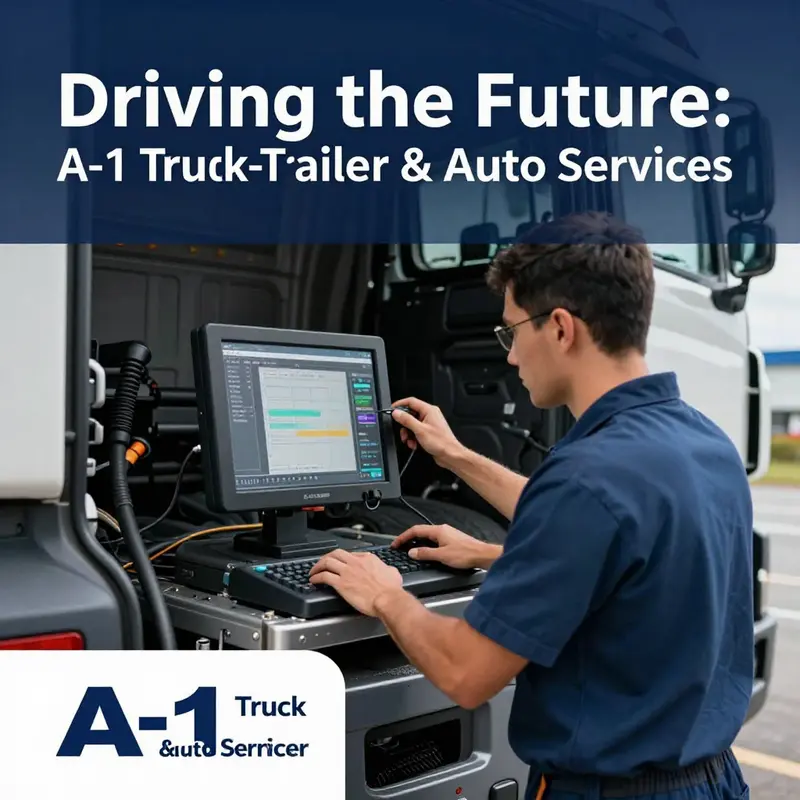
A-1 Truck-Trailer & Auto Services sits at the crossroads where traditional roadside repair meets a rapidly evolving digital ecosystem. In a region known for practical reliability, the shop has long prided itself on getting heavy trucks, trailers, and assorted support vehicles back on the road quickly and safely. Paris, Texas, with its mix of regional freight flows and local fleets, presents a steady demand for a service facility that can adapt to both routine maintenance and urgent, mission-critical repairs. The current shift, however, goes well beyond routine tune-ups. It ushers in a broader transformation in how fleets are managed, how repairs are diagnosed, and how technicians approach complex systems that blend mechanical, electrical, and software-driven components. In this landscape, the ability to translate sensor data, predictive insights, and connected maintenance into actionable repairs becomes a form of competitive advantage. A-1’s continued relevance hinges less on traditional know-how alone and more on integrating a culture of continuous learning with a disciplined approach to data-driven service delivery. The goal is roadworthiness that is both dependable and forward-looking, capable of meeting today’s safety standards while staying ready for the technologies of tomorrow.
At the heart of this transformation lies a set of technologies that are reshaping every layer of the trucking and trailer services industry. Autonomous concepts, AI-enabled decision making, and advanced driver-assistance systems are not fantasies confined to trials in distant laboratories. They are progressively becoming part of real-world operations. Sensor fusion, the process of combining information from cameras, radar, lidar, and other sensors, provides a more accurate picture of the vehicle’s surroundings than any single sensor could offer. This enhancement of environmental perception is what makes autonomous guidance more reliable and safer, even in the complex traffic patterns that a regional service center like A-1 encounters. It is also what enables fleets to design smarter maintenance schedules, because perception feeds the data that informs prognosis. If a sensor indicates that a critical subsystem is operating at reduced reliability, the maintenance team can anticipate a failure before it happens, reducing downtime and preventing costly disruptions for customers who depend on timely deliveries and on-mchedule service.
The implications of this technological shift extend far beyond the shop floor. AI-enabled self-driving technology, in its most mature forms, promises to optimize cargo transport, reduce human-error-related accidents, and tighten the cadence of logistics. While full autonomy remains a staged journey—requiring resolution of technical, regulatory, and ethical questions—the gradual introduction of AI-assisted planning, dynamic routing, and automated fault detection is already changing how fleets think about maintenance and uptime. For a service operation like A-1, this translates into a need for a dual competency: deep mechanical expertise and a proficient literacy in software-driven diagnostics. The technicians who can navigate both traditional engines and the software interfaces that monitor powertrains, braking systems, and drive-by-wire controls will become the linchpin of a modern repair facility. The shop’s staff needs to understand not only how a vehicle runs but also how data streams reveal its current health, how predictive signals map to service actions, and how interventions ripple through a truck’s performance over weeks or months.
Digital communication systems and real-time data analytics are the invisible gears turning this transition. Real-time connectivity allows a fleet operator to push diagnostic data from the roadside or the yard to the repair center, enabling remote triage and faster on-site decisions. When a vehicle reports a rising temperature in a bearing assembly or a slight drift in a steering sensor, the data can be interpreted in the context of historic patterns from similar equipment. That historical context becomes a powerful predictor, guiding maintenance teams toward the most cost-effective interventions and helping avoid unnecessary parts replacement. In effect, uptime becomes a shared metric across the entire value chain—the driver’s time saved by fewer roadside stops, the dispatcher’s ability to maintain tight delivery windows, and the shop’s capacity to align its workflow with a dynamic service schedule. This shared rhythm of data and action demands discipline in data governance, cybersecurity, and workflow integration, but it also opens the door to new levels of efficiency that were difficult to imagine a decade ago.
A-1’s capacity to meet urgent needs without sacrificing quality highlights a broader industry trend: the need for facilities that can handle the full spectrum of modern vehicle complexity. These are machines that blend traditional drivetrain components with high-voltage systems, integrated electronics, and software-defined controls. The repair approach thus broadens beyond the engine bay. It requires a nuanced understanding of how power electronics respond under load, how battery systems age in commercial environments, and how software updates can influence both performance and safety. For a shop serving heavy trucks, emergency vehicles, RVs, and heavy machinery, the stakes are notably high. A robust diagnostic environment, capable technicians, and access to a properly coordinated supply chain reduce downtime and improve reliability for fleets that cannot afford extended interruptions. The business becomes less about a single fix and more about preserving a vehicle’s life cycle, balancing immediate repairs with long-term resilience.
To execute this, the shop must cultivate a culture of continuous improvement that is in step with the pace of technology. The workflow begins with a careful intake that captures not only mechanical symptoms but also digital signals—the last software update, the frequency of error codes, the patterns of sensor fault alerts, and the environmental conditions in which a vehicle operates. The diagnostic process then blends hands-on inspection with data-driven analysis. A technician might notice a subtle change in a vehicle’s response time when applying the brakes, and the data might point to a correlation with a recently observed sensor anomaly. The synthesis of observation and analytics leads to a repair plan that optimizes component life, minimizes recurring issues, and preserves performance across miles of service. In this environment, even a routine maintenance visit can become a diagnostic journey, where the objective is to prevent minor faults from escalating into unscheduled downtime.
The role of education cannot be overstated. As the technologies on trucks and trailers become more sophisticated, technicians need access to targeted training that translates the language of software signals into actionable service steps. The shop’s best practices expand to include preventive maintenance programs driven by data analytics, routine calibration procedures for sensors and ADAS components, and standardized responses to common fault codes. These practices are not merely reactive; they are proactive systems that anticipate wear and tear before it affects safety or reliability. The result is a service experience that feels both anticipatory and trustworthy to customers who depend on uninterrupted operation. When a fleet manager calls with an urgent repair need, they expect not only the quickest path back to service but also a clear assurance that the vehicle will remain compliant with safety and regulatory requirements after the repair. That assurance comes from the integration of skilled labor, rigorous processes, and a transparent data narrative that explains what happened, why it happened, and how it will be prevented in the future.
The digital shift also reshapes how a service center communicates with its clients. Beyond the traditional conversations about diagnosis and cost, there is now a shared language around data, metrics, and predictive planning. A client can receive a dashboard-style update showing the health of multiple assets, forecasted maintenance windows, and recommended service actions aligned with the fleet’s operational priorities. This transparency, in turn, strengthens trust and positions the shop as a strategic partner rather than a last-resort fix-it shop. The value proposition extends to the shop’s capacity to help clients optimize routes, reduce fuel consumption, and extend the life of critical components by aligning maintenance with actual usage patterns rather than calendar calendars alone. In short, technology is not just enabling better repairs; it is enabling better fleet health management as a service.
Embedded within this broader transformation is a practical awareness of local realities. A-1 serves fleets that routinely encounter the kind of diverse operating conditions common in Texas and its neighboring regions. Heat, dust, and variable road quality can magnify wear and complicate diagnostics, especially for electrical and electronic subsystems. The shop therefore emphasizes robust environmental controls, clean test benches, and meticulous calibration protocols as part of its standard practice. A well-designed diagnostic environment makes a measurable difference when dealing with modern powertrains that rely on precise sensor input and carefully tuned software logic. In this sense, the physical plant—the tools, the test equipment, and the workspace layout—becomes as important as the human skills. A clean, well-organized shop reduces misdiagnosis and accelerates repair cycles, while a culture of standardized procedures ensures that a complex repair follows a consistent pathway every time. These organizational characteristics are not glamorous, but they are foundational to delivering the reliability that customers expect in the most demanding operating contexts.
Within the broader industry trajectory, electrification and alternative propulsion are expected to grow, bringing new maintenance demands and opportunities. For heavy fleets, the shift toward electrified powertrains necessitates dedicated expertise in battery systems, thermal management, and charging infrastructure. The safety implications are significant, given the high-energy components involved and the need for robust thermal protection and proper electrical isolation. The maintenance paradigm shifts from replacing worn mechanical parts to managing battery health, ensuring safe handling procedures for high-voltage systems, and coordinating with infrastructure providers to guarantee charging readiness during scheduled maintenance windows. This evolution does not eliminate traditional skills; it amplifies them, adding a layer of electrical and software competency that complements mechanical know-how. In practice, it means technicians who learn to interpret battery state-of-health indicators and to perform software-driven calibrations alongside hydraulic and grease fittings. The future repair facility will view high-voltage readiness as part of the standard service envelope, not as a separate specialty silo.
All of these changes reinforce a central truth: the value of a high-quality service center in today’s trucking economy is not merely the ability to fix what is broken. It is the ability to prevent disruption, to anticipate failure, and to partner with clients in a disciplined, data-informed way. This alignment is especially vital for emergency vehicles and heavy-duty machines, where downtime can carry outsized consequences. A-1’s undeniable strength lies in its capacity to integrate this proactive, tech-enabled approach with the practical realities of a regional service ecosystem. Through this synthesis, the shop earns a reputation for reliability that is earned mile by mile, repair by repair, and data-driven decision by data-driven decision. The result is not a single service outcome but a continuous cycle of improvement that keeps fleets safe, compliant, and economically efficient over the long haul.
For readers seeking a digest of how sensor fusion and environmental perception are advancing autonomous trucking in a research context, the discussion points above align with peer-reviewed work that emphasizes safety and operational efficiency as core outcomes. If you want to explore the technical foundations of how integrated sensor data can improve perception in real-world trucking scenarios, a detailed study is available via an external resource linked in the reference section. In the meantime, for industry practitioners and learners, ongoing engagement with accessible industry content—such as the central hub of practical insights found on the 5StarTruckin blog—can offer approachable perspectives on how these concepts translate into day-to-day work in shops like A-1. 5StarTruckin blog.
The future of A-1 Truck-Trailer & Auto Services rests on this balance: maintaining the traditional craft of mechanical repair while embracing the diagnostic visibility that modern software brings. The path forward is not a single leap but a continuum of improvements—improving the diagnostic plant, expanding the skill set of technicians, strengthening data governance, and aligning service workflows with the needs of a more connected and more complex vehicle population. In the end, the promise is clear: vehicles that are safer, more reliable, and more efficient, with uptime that supports the steady cadence of commerce and the safety of the public on the road. The shop’s ability to interweave hands-on practice with digital insight will determine how quickly it can translate new technology into tangible benefits for fleets across the region and beyond.
External resource for deeper technical context: https://doi.org/10.1109/netapps63333.2024.10823624
Final thoughts
A-1 Truck-Trailer & Auto Services stands out as a vital contributor to the trucking community, offering top-notch services that enhance the efficiency and safety of road operations. Through its commitment to quality repair and innovation, A-1 not only supports drivers and fleet operators but also stimulates local economic growth. As trucking continues to evolve, partnering with businesses like A-1 ensures that industry professionals can focus on what they do best—keeping goods moving on the highways. Remember, maintaining your vehicles in optimal condition is not just about compliance; it’s about ensuring a safer and more profitable journey ahead.