
In the world of long-haul trucking, reliability and efficiency are paramount. A Auto-Truck Service Inc stands out as a beacon of quality, catering to the diverse needs of long-haul truck drivers, trucking company owners, fleet managers, and aspiring truck drivers. Understanding the landscape of A Auto-Truck Service Inc involves exploring its corporate identity, operational dynamics, financial performance, and adherence to regulatory standards. Each chapter unfolds crucial details about the company that highlight its commitment to the trucking industry, ensuring that clients receive unparalleled service and support.
Naming the Road: Crafting Local Identity and Trust for A Auto-Truck Service Inc. in a Landscape of Shared Names
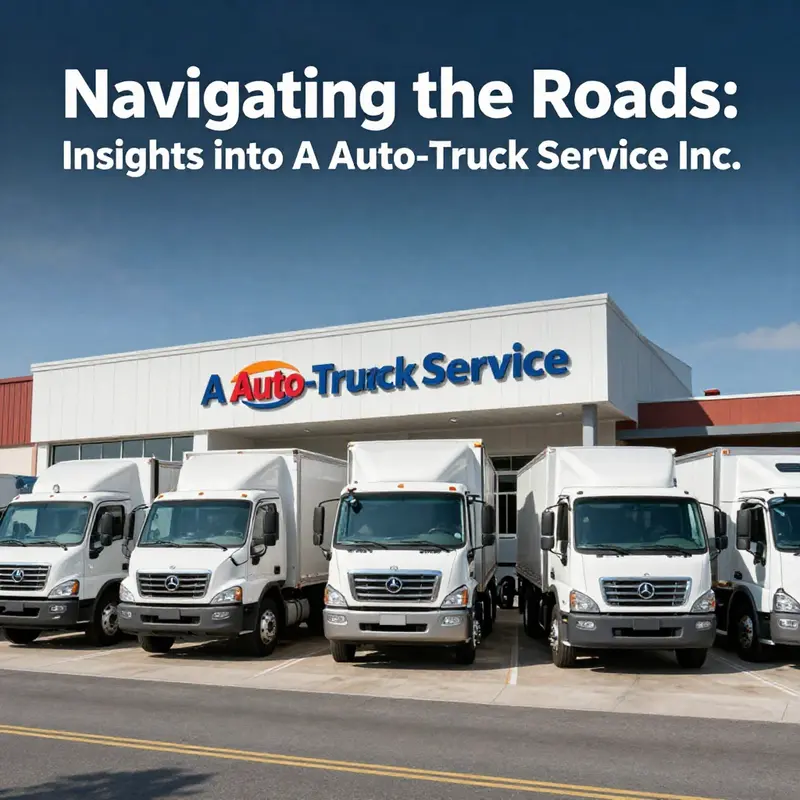
In the study of corporate identity within the fast-moving world of vehicle maintenance, one name stands out for its clarity and locality: A Auto-Truck Service Inc. The case offers a lens into how a service brand earns trust not through a single flashy feature but through a coherent constellation of signals that radiate from a precise place, a defined service scope, and a verifiable operational status. The materials gathered about this entity place it squarely in Palos Hills, Illinois, with a dedicated footprint in the greater Chicago area. That geographic anchor matters more than it might first appear. For fleets and independent operators who depend on dependable uptime, proximity translates into rapid response, preventive maintenance intervals, and a familiar, predictable point of contact when a rough road or a missed delivery threatens the schedule. The address—7727 W 112th Pl, Ste W, Palos Hills, IL 60465—reads less like a postal stamp and more like a promise: there is a response center nearby that understands the rhythms of local commerce and the demands of regional freight lanes.
Yet the name itself—A Auto-Truck Service Inc.—is a deliberate signal. It is a double commitment: the firm speaks to autos and trucks, two categories that share a fleet manager’s concerns about reliability, efficient repair turnaround, and honest diagnostics. In this sense, the corporate identity is not a branded logo alone but a bundle of expectations. Customers arrive armed with the assumption that the shop can handle both light and heavy-duty needs when a century-old fleet routine collides with a modern diagnostic challenge. The phrasing of the name avoids ambiguity and offers instant recognition for someone seeking maintenance or repair for commercial vehicles. The “Inc.” suffix further signals a formal business structure, which, in the world of fleet management, carries weight when establishing service level agreements and ensuring consistent accountability.
Beyond the name and address, the chapter of identity is completed by the operational status and the scope of services. The available data describe A Auto-Truck Service Inc. as an active business entity focused on maintenance and repair services for trucks and commercial vehicles. The ongoing operation in the Chicago metropolitan ecosystem matters, because urban and suburban fleets often require a service partner who can align with the cadence of high-utilization schedules. Local uptime is not just an abstract metric; it translates into fewer unscheduled downtime days, lower indirect costs for logistics providers, and a smoother relationship with customers who count on punctual deliveries and predictable maintenance windows. In this light, the company’s identity merges geographic reach with a specialized capability set, anchored by proximity and a reputation for dependable support when time is of the essence.
The landscape in which A Auto-Truck Service Inc. exists is not pristine purity but a crowded field of similarly named entities that span multiple states. The materials identify a cluster of “Auto & Truck Service, Inc.”-style entities across Florida, Ohio, Alabama, Michigan, and beyond. Some of these entities are listed as inactive; others remain active. The contrast between an active, locally anchored Illinois operation and an inactive or ambiguous-status peers underscores a critical truth about corporate identity: in a service industry, status is a trust signal that can alter procurement decisions. Fleet managers running urgent repair cycles must entrust noncritical downtime to a shop that is not only technically capable but also legally and operationally stable. In this context, A Auto-Truck Service Inc.’s current activity status reinforces its credibility and positions it as a reliable partner for the long haul, rather than a transient storefront entry in a directory.
Identity, in this sense, is a choreography of signals. The address signals physical presence and the possibility of easy access for on-site or drive-in work. The service scope signals specialization and competency in an area that blends routine preventive maintenance with more complex diagnostics and repairs for commercial vehicles. The status signals legitimacy and continuity. Collectively, these signals form a narrative that customers can rely on—and that can be reinforced by formal channels such as state registries and professional associations. The Illinois registration system, with its public records about business validity and location, becomes an external anchor that supports the internal story. When a prospective client looks up the firm, the name, address, and operating status should align with what they experience in the shop: a consistent point of contact, a predictable workflow, and a trackable history of service activity.
The identity story is also enriched by how the shop presents itself in daily operations. In a region as dense with traffic as Chicago and its suburbs, a shop like A Auto-Truck Service Inc. cannot thrive by relying on a single marketing line or a lone showroom. Instead, the strength of its corporate identity emerges from steady, practical competencies: trained technicians, standard operating procedures for routine maintenance, and a capability set that matches the needs of mixed fleets—local delivery vans, regional haulers, and construction-related trucks that navigate industrial corridors and highway interchanges. The emphasis on maintenance and repair for trucks and commercial vehicles suggests a business model oriented toward uptime, predictable service windows, and transparent diagnostics. The practical implication for customers is a sense of minimal friction in scheduling, a clear understanding of what is covered under maintenance, and a belief that the shop will stand behind its work.
Identity is not merely a static snapshot; it evolves with relationships and the information environment. Local shops succeed when they embed themselves in the daily routines of fleet operators: the morning coordination of preventive maintenance, the midweek check-ins on fleet health, and the post-incident triage that prevents a minor issue from becoming a costly breakdown. The Palos Hills location implicitly supports this operational rhythm by promising a near-term response and a familiar face in the community of trucking and logistics professionals who move through the Chicago metro region. The social dimension of corporate identity—trust built through repeated, positive interactions—complements the more formal signals of address, status, and service scope. In the end, a fleet operator’s decision to partner with A Auto-Truck Service Inc. rests on a synthesis of these factors: proximity, reliability, clarity of capability, and a history of getting vehicles back on the road.
The broader research materials also remind us that the identity of any single shop is best understood against the patchwork of similarly named entities. The existence of other Auto & Truck Service, Inc. entries in different states highlights the risk of confusion when a client moves across regional lines or when a national procurement office assembles a roster of preferred providers. In those contexts, robust corporate identity and formal verification become essential. Clients want to know that the shop they rely on in Illinois has not only the technical skills but also a defined legal existence and a stable operating plan. That certainty is what allows a maintenance partner to move from a purely transactional relationship to a trusted advisement role—one that helps a fleet manager optimize maintenance intervals, plan for contingencies, and even contribute to preventive strategies that reduce the likelihood of unplanned downtime.
An additional layer of identity emerges through the channels that connect the shop to the broader industry ecosystem. The use of a legal business name, the presence of a street address, and the visibility of a working telephone line—these are not mere administrative footnotes. They are the practical signs of a business that can be counted on in moments of emergency, not just during normal operations. The Illinois-based identity thus integrates local familiarity with a disciplined, rule-bound corporate structure. This combination is more attractive to fleet operators who manage risk, compliance, and contract terms alongside the daily demands of vehicle maintenance.
To appreciate how identity translates into decision making, consider how fleet managers approach inspections and vendor selection. The first screen is usually convenience—can the shop receive my vehicles and schedule the work without excessive lead time? The second screen is competence—does the shop demonstrate the capacity to handle mixed fleets, with experienced technicians and a reliable workflow? The third screen is credibility—do the business records, like those provided by state registries, confirm ongoing operation and a solid legal framework? In this layered approach, A Auto-Truck Service Inc. can position itself as a stable, local choice that offers the necessary depth of service while keeping the door open for a broader conversation about fleet optimization and preventive strategies. The narrative of identity is reinforced whenever a client experiences reliable consultation, transparent pricing, and proactive maintenance planning—elements that are in harmony with the shop’s stated focus on maintenance and repair for trucks and commercial vehicles.
The internal storytelling of the chapter can be enriched by a view of how industry media and professional communities assess and reflect on service reliability and practitioner readiness. A qualitative takeaway is that identity in this field is not a single trait but a constellation of operational clarity, accessible geography, and a history of responsive service. When these traits align, a shop becomes more than a place for repair; it becomes a dependable node in a client’s logistics network. In the end, the identity of A Auto-Truck Service Inc. is not merely a label on a storefront or a line in a directory. It is the cumulative impression built through consistent presence in the local market, a defined service specialism, and the credibility that comes from maintaining an active, compliant business entity in good standing. Readers who seek to understand the underpinnings of reliable truck service will find that this identity framework—anchored in place, practice, and public record—offers a practical model for evaluating similar providers in other regions.
For practitioners and researchers who want to explore further the nuances of corporate branding and regional service capability, a quick exploration of industry literature is helpful. A grounded approach is to visit industry blogs and practitioner forums that discuss maintenance strategies, fleet uptime, and the logistics of service delivery in urban and suburban contexts. The following resource provides a broad lens on how modern truck service providers think about maintenance, uptime, and customer relationship management. 5StarTruckin blog offers perspectives on keeping fleets productive through thoughtful service design and steady operational discipline, which complements the identity narrative of a shop like A Auto-Truck Service Inc. This blend of local specificity and industry-wide thinking helps illuminate how a single shop can maintain a distinctive identity while remaining robust amid competition and regulatory scrutiny. In this way, the chapter becomes less about a name on a door and more about a living, adaptable system that sustains reliability in a demanding sector.
As the chapter closes, the reader is left with a coherent portrait: A Auto-Truck Service Inc. is a locally anchored, actively operating shop whose identity rests on clear signals—name, place, capacity, and credibility. The local focus is not a limitation but a strategic strength, enabling precise communication with fleet managers and quicker, more predictable maintenance cycles. The broader landscape of similarly named entities across states serves as a cautionary backdrop, reminding readers that in this field, clarity and verification matter as much as technical prowess. The Illinois records, accessible publicly, function as an external testament to the firm’s ongoing presence and legal footing, reinforcing the trust embedded in the shop’s everyday interactions. The story of this single enterprise, then, echoes a larger truth about service branding: in the complex ecosystem of auto and truck care, identity is earned through consistent presence, dependable performance, and transparent alignment with the needs of the customers who keep commerce moving. For those who want to trace the formal steps behind such an identity, public registries offer a reliable map to corroborate the narrative of everyday competence and regional relevance. The road to trust is paved with both concrete details and the steady, unglamorous work of keeping vehicles on the move, and A Auto-Truck Service Inc. embodies that quiet, durable form of professional identity.
External reference: For authoritative corporate filings and status, consult the Illinois Secretary of State database at https://www.ilabs.sos.state.il.us.
Operational Dynamics of A Auto-Truck Service Inc: Navigating a Fragmented Landscape of Fleet Maintenance
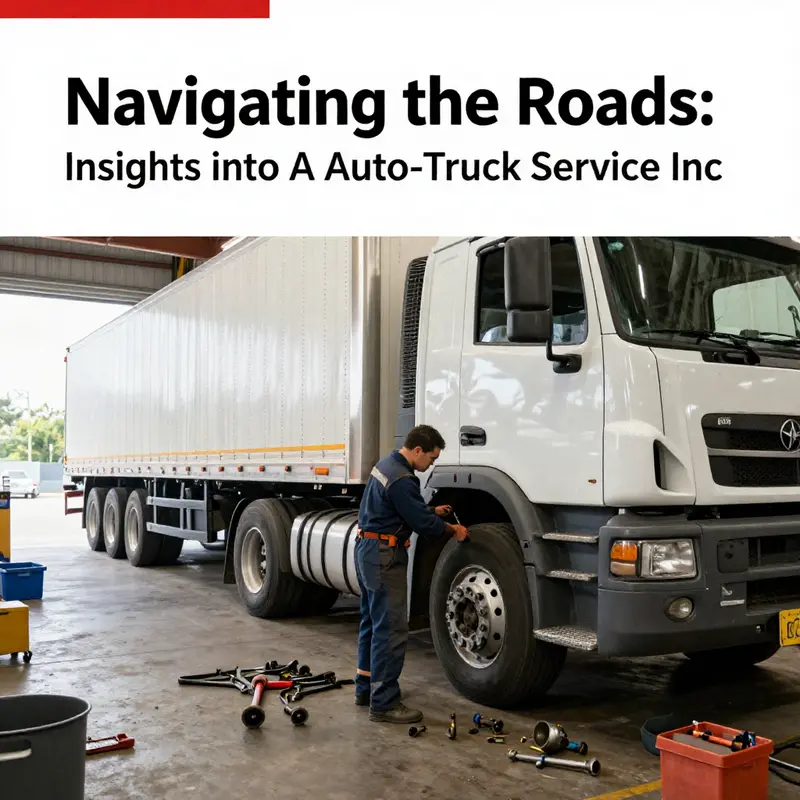
In the realm of auto and truck service, a single firm name can mask a dozen distinct realities. Across states, registrations drift in and out of existence, while the day-to-day work of maintaining engines, suspensions, brakes, and electrical systems remains stubbornly constant. When we look at entities registered under names like Auto & Truck Service, Inc., the story becomes a study in operational dynamics rather than a simple directory of businesses. The scattered records—some firms active, others dissolved, each operating under a similar banner—offer a lens into how independent service providers survive, compete, and adapt in a market shaped by demand cycles, regulatory constraints, and the relentless pressure to keep fleets on the road. This chapter threads those threads together, treating “A Auto-Truck Service Inc.” not as a single monolith but as a hive of practices, capacities, and workflows that illuminate the broader landscape of routine repair, preventive maintenance, and bespoke fleet support.
At first glance, the registry landscape reads like a patchwork quilt. One firm, A Better Auto & Truck Service, Inc., registered in Florida in 1978, later shows as INACTIVE. Another, DEMENT’S Auto & Truck Service, Inc., established in 1990 in Alabama, remains EXISTENT and active, with a clear focus on repair and service for automobiles. Tecumseh Auto & Truck Service, Inc., registered in Michigan in 1993, carries an all-purpose operational scope. Yet Elyria Auto & Truck Service, Inc., in Ohio, has its status less clearly documented in a public registry. These snapshots reveal a common psychology: independent service shops often carve out niches that align with local demand, access to skilled labor, and proximity to vehicle fleets. They also reflect the practical realities of corporate life—how a business is registered, how it maintains insurance and licenses, and how it communicates its existence to customers who depend on it for critical uptime.
Operational dynamics in this context hinge on a few core forces. The first is scope. A shop may present itself as a general auto repair facility, or it may specialize in heavy trucks, fleet maintenance, or a particular subsystem such as brakes or transmissions. Even when the advertised scope is broad, the day-to-day work tends to concentrate around a core competency that translates into reliable repeat business. The second force is people. Skilled technicians, diagnostic specialists, and service advisors form the triad that keeps a shop efficient. Their availability, training cadence, and ability to read a vehicle’s fault codes quickly determine how fast a job moves from intake to sign-off. The third is tooling and facilities. A shop’s lift count, wheel-aligning equipment, brake servicing rigs, and diagnostic interfaces define what tasks can be completed in-house and what must be outsourced to suppliers or dealerships. Each element—scope, staff, equipment—maps to uptime, and uptime maps to customer satisfaction and annual revenue.
Within this framework, the names themselves carry an implicit operational philosophy. Some firms register with broad “all-purpose” clauses, signaling a willingness to tackle diverse repair challenges. Others lock in a narrower focus that enables deeper expertise and tighter quality control. In the registry data, Tecumseh Auto & Truck Service, Inc. is tied to an all-purpose clause, a flexibility that can be advantageous in smaller communities with mixed fleets. Conversely, a firm like DEMENT’S Auto & Truck Service, Inc. centers its identity on repair and service for automobiles, suggesting a specialization path that can yield faster turnarounds and higher technician proficiency in a defined domain. The reality, though, is that many such entities evolve. A shop may begin with general auto repair and later gravitate toward fleet maintenance for local businesses or municipal customers as relationships mature and demand stabilizes.
Another crucial dynamic is location and market access. Independent service providers survive by being part of a local ecosystem—the nearby collision shop, the parts distributor, the tire center, and the insurance network that directs customers to preferred repair partners. A single geographic footprint can determine whether a shop maintains a steady stream of work, especially when fleets rely on predictable maintenance schedules to minimize downtime. In states where regulatory oversight is rigorous, operations must also align with licensing standards, environmental compliance, and safety obligations. The interplay between local demand and regulatory expectations creates a balancing act: service speed must not outpace the shop’s ability to maintain quality and safety, while the need for rapid turnaround must be tempered by careful scheduling, parts availability, and manpower planning.
Branding, in this fragmented landscape, is less about flashy logos and more about trust signals that customers rely on during times of urgency. A fleet manager in a small town might need urgent brake work on a 10-year-old tractor-trailer combination. The decision to call a local shop hinges on reputation for reliability, clear communication, and the ability to provide a transparent estimate and timeline. That trust is reinforced by consistent performance: accurate diagnostics, thorough repairs, on-time delivery, and post-repair follow-up. In this sense, the operational dynamic of A Auto-Truck Service Inc. is less about a single brochure and more about the daily rhythm of keeping vehicles moving, with minimal surprises and maximum uptime.
The customer side of the equation adds another layer of complexity. Fleets and independent operators increasingly demand not just a repair but a partner-in-maintenance. Predictive maintenance programs, prompt defect recognition, and seamless administrative support—like invoicing, warranty handling, and compliance documentation—are becoming as important as the repair itself. A shop that can offer digital intake forms, clear diagnostic reporting, and a trackable work order sequence stands out in a crowded field. In practice, this means a service center must marry traditional hands-on expertise with modern workflows: instant access to parts catalogs, integrated scheduling, and the capacity to produce repeatable, audit-friendly reports that fleets can use for budgeting and compliance.
All of these dynamics play out differently in each state, which is why a simple name like A Auto-Truck Service Inc. can correspond to a spectrum of realities. The Florida record of A Better Auto & Truck Service, Inc., now inactive, hints at a lifecycle stage many small shops experience: a promising start, followed by a disruption—perhaps market pressure, capital constraints, or shifts in customer base—that ends in deregistration or dissolution. In contrast, Alabama’s DEMENT’S Auto & Truck Service, Inc. and Michigan’s Tecumseh Auto & Truck Service, Inc. illustrate how regional demand and a stable local network can sustain ongoing operations. These patterns underscore a truth about maintenance services: consistency in performance often matters more than the precise title on a business card. The customer’s memory of a smooth repair, a fair price, and a transparent explanation can outlast any formal branding campaign.
From an operations perspective, these firms also reveal the critical role of supplier relationships and inventory management. Parts availability can be the difference between a one-day repair and a multi-day delay that disrupts a fleet’s schedule. Shops that maintain a diversified supplier base, coupled with a small, reliable inventory of essential components, can flex their capacity more effectively. Conversely, shops with limited access to parts face a productivity drag that shows up in longer lead times and less predictable throughput. The operational calculus thus includes not only the mechanics of diagnosing failures but the logistics of sourcing and return-on-maintenance. The ability to forecast parts consumption, manage warranty cycles, and coordinate with tire and alignment vendors turns what might be a routine repair into a tightly orchestrated service engagement.
The broader narrative also invites consideration of risk management. Independent service providers shoulder exposure across multiple dimensions: equipment risk, liability during repairs, and the reputational risk of poor customer experiences. The risk is compounded when a shop operates under a name that resembles other firms in nearby markets. A customer misdirected by a similar name may arrive with the wrong vehicle, misinterpret the scope of work, or face confusion about estimates and completion times. Businesses mitigate these challenges through disciplined internal processes: standardized intake questionnaires, clear scope definition, written estimates, and robust communication protocols that document every step of the repair journey.
Another layer of operational nuance comes from the evolving emphasis on preventive and predictive maintenance. In markets with dense competition, a shop that positions itself as a partner for avoiding unexpected breakdowns can secure steadier workflow. This means implementing routine checklists, establishing service intervals for critical components, and leveraging diagnostic data to flag issues before they escalate. For customers, it translates into lower total cost of ownership and less downtime, both of which are decisive in fleet planning. In practice, a shop may blend traditional repair work with preventive maintenance packages, dynamic scheduling, and value-added services such as multi-point inspections, fluid analysis, and electrical system health checks. The result is a service ecosystem that feels proactive rather than reactive, a distinction that matters when the road calls for reliability rather than last-minute improvisation.
The single most important takeaway from examining these varied entities is that operational dynamics are inseparable from relationships. The best-performing shops combine technical competence with a disciplined operating framework: accurate diagnostics, efficient workflows, transparent pricing, and a customer-first communication style. They also cultivate long-term partnerships with suppliers, logistics networks, and fleet managers. In a world where a single diagnostic code can trigger a cascade of questions about warranty coverage, uptime commitments, and service level expectations, trust becomes a strategic asset. The firms that endure are the ones that treat maintenance as a service architecture—one that can scale with a customer’s needs, adapt to shifting regulatory environments, and consistently deliver predictable results.
For readers who want to explore how procurement and lifecycle decisions shape these dynamics, consider the broader conversation on fleet procurement and maintenance planning. A focused discussion on fire apparatus procurement offers concrete examples of how fleets evaluate capital investment, total cost of ownership, and ongoing maintenance support in a high-stakes environment. See here for more on that topic: fire apparatus procurement.
In closing, the operational landscape surrounding A Auto-Truck Service Inc. and its similarly named peers is less about a single business model and more about a shared code: stay reliable, stay visible to customers, and stay disciplined in processes. The names may drift across state lines, but the core practice remains: diagnose accurately, repair responsibly, and plan for uptime. The durable lesson is that, beneath the surface of registry entries and corporate statuses, a robust service operation is built on a balanced mix of technical prowess, people, process, and partnerships. As fleets grow more complex and expectations for transparency increase, the most enduring shops will be those that translate experience into dependable performance, turning every repair into evidence of a trusted maintenance alliance rather than a one-off transaction.
External context on the workforce behind these services also informs how we understand capacity and resilience in the auto-truck service sector. For a broader view of the technician roles that fuel these operations, see the overview of mechanics and service technicians here: https://www.bls.gov/ooh/repairers-and-helpers/mechanics-and-service-technicians.htm.
From Names to Numbers: Reading the Financial Footprint and Market Position of A Auto-Truck Service Inc in a Fractured Fleet-Care Economy
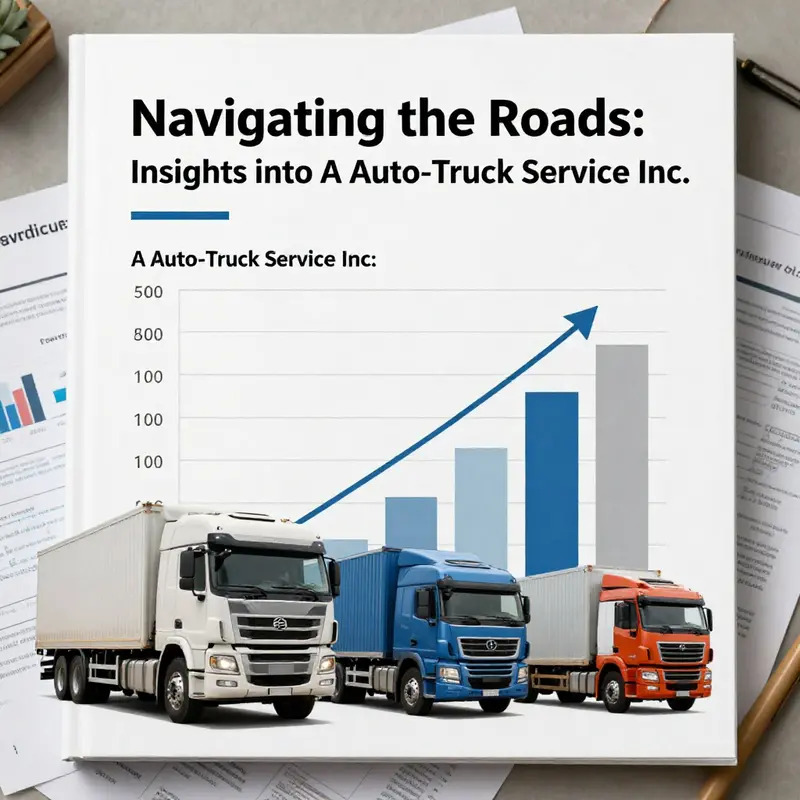
The market for auto and truck service has always lived in the margins between repair and reliability. Customers depend on predictable uptime, but the public records you find about a single company named “A Auto-Truck Service Inc” reveal a dozen different realities. Some are active, some are closed, and many exist only as fragments in state registries, business directories, or little-noticed filings. What looks like a straightforward corporate identity on a signboard or in a directory often dissolves into a web of separate legal entities with distinct financials, different owners, and divergent strategic paths. This is not merely clerical trivia. It matters for anyone trying to gauge the financial performance and market position of a service provider in a sector where trust, speed, and coverage determine the bottom line. The chapter that follows uses the threadbare information currently available about A Auto-Truck Service Inc to explain how to read market signals in a fragmented landscape, and how to translate what you cannot see—private financials, private contracts, and regional reputations—into usable insight about market strength and competitive standing.
The first and most conspicuous fact is that the name “Auto & Truck Service, Inc.” appears in multiple jurisdictions with little to no overlap in corporate identity. One entity listed as inactive in Florida—A Better Auto & Truck Service, Inc.—appears to be a shell or a business that once operated but no longer does. Nearby, in Ohio, Elyria Auto & Truck Service, Inc. shows as a registered entity, yet public records offer scant clues about its current activity, suggesting either dormancy, limited operations, or a private status not readily captured in basic registries. In Alabama, DEMENT’S Auto & Truck Service, Inc. is described as existing and active with a clear service scope: repair and service of automobiles. In Michigan, Tecumseh Auto & Truck Service, Inc. is identified with an all-purpose clause and a listed agent, indicating ongoing incorporation with broad business intent. And then there are other similarly named entities—C & C Auto & Truck Service, Inc.—for which the published scope is generic but consistent with standard in-shop repair and maintenance work. Taken together, these snapshots reveal a broader truth about the market: a network of independent, regionally focused operators that share a common branding heritage but operate as separate firms with distinct fortunes. This is not a single company’s financial story; it is a constellation of micro-enterprises that collectively shape service capacity and local market dynamics.
In such a setting, financial performance is less a single ledger than a tapestry of indicators scattered across state filings, tax records, and contract relationships. A private service shop’s revenue structure typically hinges on a mix of preventive maintenance programs, diagnostic work, repair orders, and emergency response calls. For a fleet operator, the value proposition often rests on uptime, predictable maintenance costs, and rapid access to skilled technicians and diagnostic equipment. The more a shop can reduce vehicle downtime—the time a truck is off the road—the more it can command consistent, repeat business from fleets and independent operators alike. Yet the absence of public financial statements for many small service entities makes it difficult to compare apples to apples. What we can do is triangulate indicators that collectively illuminate financial health and market presence: the degree of regulatory compliance, the breadth of service capability, the geographic coverage of the service footprint, the stability of workforce and technician training, the quality of supplier relationships, and the ability to secure and retain fleet maintenance contracts.
Consider the implications of the mixed registry statuses in different states. In Florida, a company may appear registered yet be listed as inactive, hinting at a lifecycle stage in which capital investment has slowed, ownership has shifted, or a strategic pivot away from traditional maintenance toward other revenue streams. In Alabama and Michigan, the existence of active entities with explicit service scopes points to ongoing operations, likely anchored by local demand for both general auto repair and heavier-duty truck maintenance. Ohio’s status ambiguity adds another layer: a market with potential but uncertain continuity. These statuses shape market perception in several ways. For potential customers, the certainty of ongoing service capability matters. For suppliers, lenders, or partners, the legal status of a service provider translates into risk assessments and credit terms. For researchers and journalists, it complicates the task of constructing a clean, apples-to-apples profile of a company’s market performance.
A more telling lens, then, is to place A Auto-Truck Service Inc within the broader ecosystem of fleet care. The automotive service market has undergone a quiet transformation driven by three forces: specialization, technology, and network effects. Specialization emerges as shops decide where to excel. Some focus on diesel engines and heavy-duty transmissions, others on electrical systems, brakes, or hydraulic components. The shift toward specialization often correlates with stronger bargaining power with suppliers and more efficient technician training. Technology—diagnostic software, telematics, and predictive maintenance analytics—gives shops a toolset that both reduces repair time and improves the predictability of maintenance costs for customers. Network effects arise as fleets seek consistent, nationwide or regional coverage. A shop that can coordinate with multiple clients and travel to different sites offers a compelling value proposition for mixed fleets, motor carriers, and regional distributors. In this milieu, a company’s market position is not merely a function of its own capacity but of its ability to align with broader logistics networks, vendor ecosystems, and fleet operators’ procurement cycles.
From this vantage, the challenge of judging A Auto-Truck Service Inc becomes a test of how well a potential opponent or partner can translate intangible assets—brand trust, technician competency, and reliability of service—into measurable financial outcomes. Without public financials, one must read the market through secondary signals. Are there contracts with local jurisdictions, school districts, or private fleets that imply steady revenue streams? Do customers leave testimonials or references that point to high uptime, fast response, and fair pricing? Are there indicators of inventory management efficiency, such as a robust parts-supply chain, vendor relationships, and a demonstrated ability to source and deploy parts quickly? These signals may be subtle, but they accumulate into a plausible picture of a service business that can sustain margins through repeat work and a reputation for dependable response.
One practical way to interpret market position in this context is to assess operating leverage and cost structure, even when numbers are not public. A typical privately held auto-truck service provider with modest scale bears fixed costs in the form of a shop, equipment, and a trained workforce. The margin then hinges on the volume and mix of jobs, the efficiency of diagnostic and repair workflows, and the speed at which technicians can convert a diagnosis into billable work. In the best outcomes, a shop moves beyond simple repair into a trusted partner role that includes preventive maintenance planning, fleet inspections, and the ability to absorb the occasional high-cost repair without destabilizing cash flow. In such cases, customer loyalty compounds with predictable maintenance cycles to produce a steady revenue base with relatively high asset utilization. The downside risk remains steep: a slip in demand, a shortage of skilled technicians, or a disruption in parts supply can compress margins quickly. The absence of public data makes it harder to detect which shops have successfully navigated these tensions and which are more exposed to cyclicality or supplier price shocks.
To articulate a plausible narrative of A Auto-Truck Service Inc, we can lay out a scenario in which a regional shop or a cluster of independently branded shops under a common umbrella function as a coordinated network. In this scenario, the financial edge comes not from scale alone but from a combination of local market knowledge, a diversified service portfolio, and a disciplined maintenance cadence with fleet clients. A shop that can offer both emergency roadside response and scheduled preventive maintenance, backed by trained technicians and a parts-savvy supply chain, has a defensible market position even in the face of dealer networks and larger independent chains. The key metric is uptime delivered, which translates into lower total cost of ownership for customers and, in turn, more predictable revenue for the provider. The challenge remains to quantify that value in the absence of public disclosures. Here, qualitative signals—customer testimonials, contract awards, the scope of services offered, and the geographic density of service coverage—gain importance.
In light of the material we have, a plausible conclusion about A Auto-Truck Service Inc—absent a clear, consolidated financial disclosure—is that, like many similarly named entities, its market position is best understood as a function of regional strength, service breadth, and reliability, rather than a single, auditable financial performance figure. The landscape is often more meaningful when read as a map of local capabilities rather than a ledger of corporate metrics. This does not undermine the importance of financial performance. Instead, it highlights a critical methodological point for researchers, practitioners, and policy designers: in fragmented markets with private players, the strongest market signals come from durability of client relationships, consistency of service, and the ability to scale high-value, low-variance work across multiple sites.
For readers who want a more concrete sense of how leading trucking-service operators frame their value proposition, there is value in exploring broader industry narratives about service excellence and reliability. A fuller picture emerges when we consider how top-tier service providers differentiate themselves through uptime guarantees, proactive maintenance recommendations, and transparent, data-driven pricing models. These are the kinds of differentiators that can convert a modest local shop into a trusted partner for a regional or national fleet. They also create a baseline against which smaller players can be measured and, crucially, against which a hypothetical evaluation of A Auto-Truck Service Inc could be grounded. The marketplace rewards not only technical skill but also the capacity to anticipate needs, mobilize rapidly, and sustain performance under pressure.
As readers navigate this terrain, the importance of corroborating corporate status and operations across jurisdictions becomes clear. The exercise is not a detour from understanding market dynamics; it is an essential component of due diligence in a world where a brand’s name may traverse state lines while the underlying businesses remain, in some cases, isolated. The practice of cross-checking corporate records, understanding who actually owns each entity, and distinguishing between the активные and the dormant is a critical step in forming a robust assessment of market position. This approach aligns with the broader objective of the article: to illuminate how auto-truck service providers operate within a complex, evolving ecosystem and to provide actionable insight for fleets, lenders, and policy observers who must navigate imperfect data with careful judgment.
For those seeking a practical foothold in this domain, the idea is to adopt a framework that blends market signals with strategic benchmarks. Look for shops that demonstrate breadth of capability—diagnostics, mechanical repair, electrical systems, brake and suspension work, and preventive maintenance—paired with a track record of timely response and transparent communication with customers. Look for evidence of investment in staff development, such as ongoing technician training and certifications, which correlate with higher first-time fix rates and lower downtime. Look for a steady flow of work from fleets or municipal contracts that indicate recurring revenue and long-term relationships. And finally, consider the broader ecosystem: how do independent service providers compete with dealer networks, OEM-certified shops, and national chains? The answer often lies not in a single metric but in an integrated portfolio of capabilities, operational discipline, and the ability to deliver reliable uptime for customers who depend on their trucks every day.
In this context, the intriguing question remains: what does the future hold for A Auto-Truck Service Inc as a name in a crowded field? The evidence suggests that the strength of any service provider will lie in how it translates local expertise into scalable, predictable, and trusted service across a network of clients. The record of different entities bearing a similar name underscores the value of clarity in corporate identity, traceable ownership, and transparent reporting. For researchers and stakeholders, this means adopting rigorous due diligence that goes beyond the surface label. For fleets seeking partners, it means focusing on uptime, responsiveness, and the ability to deliver consistent results, regardless of where the job is performed. And for the broader audience, it means recognizing that a single business’s fortunes cannot be read in isolation from the granular, regional reality of the auto-truck service market—a reality shaped by people, processes, and partnerships that span far beyond the page of any one registry.
For further reflection on how elite trucking service providers differentiate themselves in a competitive landscape, readers may explore broader industry narratives that illustrate the path from basic maintenance to trusted fleet partnership. Discovering the unparalleled services of 5 Star Truck Inc. offers a perspective on service excellence that can illuminate the horizon for smaller regional players as they seek to extend their reach and reliability. Discovering the unparalleled services of 5 Star Truck Inc. This lens helps ground the discussion in tangible outcomes—uptime, safety, and customer confidence—that ultimately define financial performance in a market where visibility into numbers remains partial by design.
The Regulatory Compass of A Auto-Truck Service Inc.: Navigating Law, Safety, and Trust Across the Automotive Service Landscape
A Auto-Truck Service Inc. sits at the intersection of skilled mechanical work and meticulous governance. The work of a shop that maintains, repairs, and services vehicles—whether light-duty cars, heavy trucks, or a mix of fleet assets—extends far beyond turning wrenches. It invites a constant dialogue with a shifting lattice of laws, standards, and public expectations. The varied regulatory footprints across states, the evolving demands of safety culture, and the rising importance of data privacy and environmental stewardship render compliance not as a one-off check but as a continuous discipline. In this context, the company’s position in a crowded field of similarly named entities becomes more than a matter of brand recognition. It becomes a case study in how a service operation can cultivate legitimacy, earn trust, and sustain competitive advantage by aligning technical capability with legal and ethical accountability. The landscape is not static. It has grown more complex as vehicles themselves have become smarter, more interconnected, and increasingly integrated into broader transportation ecosystems. Vehicles are no longer isolated machines governed only by mechanical limits and human judgment. They are nodes in networks that generate data, interface with infrastructure, and sometimes include autonomous or semi-autonomous features. For a shop that undertakes maintenance, calibration, diagnostics, and repairs, this evolution expands the scope of what must be understood and managed. The consequences of misalignment can range from gaps in warranty coverage and insurance risk to regulatory penalties that disrupt operations and erode customer confidence. With a string of similarly named entities across different states—some active, others inactive—the broader narrative also underscores the importance of due diligence, transparent governance, and careful designation of scope. The fact that a few entities with comparable nomenclature have either ceased to exist or operated under different legal umbrellas cautions practitioners to anchor their practices in verifiable regulatory compliance rather than reputational impression alone. The regulatory framework that governs auto and truck service providers can be framed through several essential domains: vehicle safety, environmental and emissions standards, labor and workforce protections, and data privacy in an era when service data and diagnostic information increasingly traverse digital channels. Each domain carries its own set of standards, exposures, and enforcement mechanisms, yet they are not isolated silos. They intersect in meaningful ways that shape how a shop designs its processes, trains its staff, and communicates with customers. Vehicle safety, for instance, permeates every service decision. Even routine brake work or tire maintenance can implicate safety standards because the repair must restore the vehicle to a standard that protects drivers, passengers, and pedestrians. Emissions standards extend beyond the showroom to the shop floor as well. The materials, processes, and waste handling associated with vehicle repair and maintenance fall under environmental rules designed to minimize pollution and to prevent improper disposal of hazardous materials. Labor practices add another layer of regulatory responsibility. Fair hiring, wage and hour compliance, safety training, and workplace standards jointly influence how the business attracts and retains skilled technicians. Data privacy has emerged as a critical concern as service shops accumulate diagnostic logs, telematics outputs, and sometimes customer data tied to fleets or individual owners. The seamless operation of a modern service center depends on the ability to manage and safeguard sensitive information while remaining compliant with evolving data protection frameworks. In this sense, compliance today is not only about avoiding penalties; it is about maintaining system integrity, trust with customers, and resilience in the face of regulatory change. The current regulatory environment reflects a trend toward greater stringency and specificity. Recent years have seen near-record levels of regulatory activity and notifications in the automotive sector. The combination of advanced driver-assistance and automated features, electrification of fleets, and the expansion of connected vehicle ecosystems has intensified scrutiny. The 2023 and 2024 periods, in particular, marked a shift toward more proactive regulatory engagement, with agencies signaling tighter audits, clearer expectations, and stronger reporting requirements. These dynamics are not likely to wane. Projections point to continued oversight growth through 2025 and beyond as both policymakers and industry participants seek to reconcile speed of innovation with public safety, environmental stewardship, and consumer rights. For a service provider, this means adopting a proactive posture: building internal capabilities that detect and address regulatory changes, rather than reacting after a compliance gap is discovered. To translate these broad imperatives into day-to-day practice, a cohesive set of strategies can serve as a credible blueprint. First, engage legal and regulatory expertise with a strong track record in automotive policy and public safety law. The right advisers can help interpret shifting requirements and identify how they apply to different jurisdictions where the business operates or services vehicles. This is particularly important when work spans multiple states with their own licensing regimes, warranty obligations, or environmental rules. Second, focus on emerging technologies and the specific regulatory implications they carry. ADAS, for instance, introduces questions about calibration accuracy, defect reporting, and post-service validation that extend beyond traditional mechanical work. Electric vehicle infrastructure and charging compatibility require an understanding of electrical safety, utility interconnections, and potential data privacy issues associated with charging networks or fleet management software. Telematics data management demands clear policies on data access, retention, breach notification, and customer consent. Third, implement a robust audit and training program. Regular internal audits help identify gaps in documentation, licensing, or standard operating procedures. Training should cover not only technical competencies but also regulatory literacy so technicians and front-line staff understand why certain procedures matter beyond the immediate repair task. Fourth, cultivate transparent governance and clear accountability. A documented compliance framework anchored by senior leadership signals an organizational seriousness about safety, ethics, and law. It also helps align supplier and partner relationships with the same standards, reducing the risk that external vendors or subcontractors introduce compliance gaps. Fifth, connect with authoritative information sources and build a cadence for updates. The automotive regulatory terrain shifts as new standards emerge, enforcement priorities evolve, and international considerations come into play for fleets with cross-border operations. The National Highway Traffic Safety Administration (NHTSA) stands out as a central, authoritative resource. Its guidance on federal vehicle safety regulations and compliance requirements offers essential benchmarks against which a service operation can measure its practices. Keeping a direct line to such a resource—along with periodic briefings from knowledgeable counsel—helps ensure that the shop’s policies remain timely and actionable, rather than reactive to a single incident or audit cycle. Within a multi-entity landscape, where several similarly named businesses may exist in different states, the importance of precise corporate governance cannot be overstated. A Auto-Truck Service Inc. and contemporaries must differentiate themselves through verifiable compliance histories, accurate licensing, and consistent recordkeeping. A business marked by inactive or dissolved counterparts faces a heightened risk of misperception among customers, insurers, and regulators if its own compliance posture is not transparent and robust. This reality underscores the value of naming clarity, registration diligence, and continuous verification of legal status across all jurisdictions where the enterprise operates. When consideration turns to the operational rhythm of a service center, the regulatory story begins to illuminate the practical realities of everyday work. Safety checks, calibration routines, and diagnostic workflows must be designed to meet or exceed industry standards while remaining adaptable to evolving requirements. This means documenting procedures in a way that can be audited, traced, and updated without friction. It also means ensuring that technicians have the tools and authority to implement changes as new guidance arrives. In parallel, environmental stewardship and waste management practices must align with local and federal expectations for pollution prevention, hazardous materials handling, and proper disposal. The compliance program should articulate responsibilities for waste streams, solvent use, battery management, and recycling streams, with clear records that demonstrate adherence during inspections or audits. The labor dimension cannot be treated as an afterthought. Ensuring a fair work environment, with safety training, appropriate hours, and clear performance expectations, protects workers and supports predictable service delivery. It contributes to workforce stability, which in turn fosters consistent adherence to procedural standards and regulatory obligations. In sum, regulatory compliance for A Auto-Truck Service Inc. is best understood as a holistic operating framework. It ties together the technical competence of the shop with the ethical, legal, and social responsibilities that accompany any business engaged in moving people and goods. It recognizes that compliance is not static but an industrial asset—the quiet infrastructure that underpins quality service, customer confidence, and long-term resilience. To realize this potential, the company should pursue a disciplined approach that blends expert guidance with practical systems. The recommended path emphasizes ongoing education about evolving standards, proactive risk assessment, and a governance architecture that keeps pace with change. In this sense, the organization’s success hinges on the ability to translate regulatory insights into reliable, repeatable operations on the floor, in the shop, and across every interface with customers and partners. The practical payoff is clear: fewer regulatory surprises, steadier compliance costs, and a stronger platform for growth in a sector where safety, trust, and reliability are the currency of credibility. The internal emphasis on procurement practices—where decisions about parts, services, and equipment intersect with regulatory expectations—benefits from explicit attention to compliance considerations. For teams seeking a concrete gateway to alignment, the concept of procurement as a compliance-enabled process can be a powerful focal point. The linked resource on procurement provides practical frameworks for aligning purchasing with safety, quality, and regulatory standards, ensuring that every purchase contributes to a compliant and resilient operation. See the following discussion on procurement: fire apparatus procurement. By treating procurement as a strategic lever for compliance, a service operation can better manage supplier risk, reduce non-conformance incidents, and maintain a consistent standard of service across diverse regulatory environments. As the regulatory horizon continues to shift, the path forward for A Auto-Truck Service Inc. is less about chasing every new rule and more about building a living compliance culture. This culture integrates leadership oversight, front-line accountability, and a transparent dialogue with customers about safety and rights. It is a culture that, in practice, translates regulatory awareness into everyday behavior: precise recordkeeping, auditable processes, rigorous safety checks, and responsible environmental stewardship. It also means communicating clearly with customers about what is required for vehicle care, what to expect from repairs, and how privacy and data protection are safeguarded. The result is a service organization that does not merely endure regulation but embodies it as part of its promise to the communities it serves. For those who study the regulatory currents shaping auto and truck service, the lesson remains consistent: compliance is not a burden to bear but a strategic asset to cultivate. The more consistently a shop can internalize and operationalize regulatory expectations, the more capable it becomes at delivering high-quality, safe, and trustworthy service. In the end, the regulatory compass—properly calibrated and actively used—helps a service enterprise navigate rough roads with confidence, maintain vehicle safety and environmental stewardship as non-negotiable standards, and reinforce the public’s trust that the road to repair is paved with accountability as well as expertise. External resources will continue to evolve, and agencies will adjust priorities as new technologies, new data flows, and new fleets enter service. Staying ahead means embracing a discipline of continuous learning, rigorous procedure design, and transparent stakeholder communication. The evidence and guidance above point toward a future where compliant operation is inseparable from service excellence, not a separate obligation tethered to compliance officers or auditors. It is, instead, the bedrock upon which reliable, safe, and responsible automotive care is built.
For up-to-date guidance on federal vehicle safety regulations and compliance requirements, consult the National Highway Traffic Safety Administration: https://www.nhtsa.gov
Final thoughts
As A Auto-Truck Service Inc continues to pave its path in the trucking industry, understanding its corporate identity, operational strengths, financial metrics, and commitment to regulations shapes a comprehensive view of its influence on long-haul truck drivers and trucking company operations. For anyone in the trucking business, A Auto-Truck Service Inc serves as a critical partner, ensuring that vehicles remain efficient and compliant on the road.