
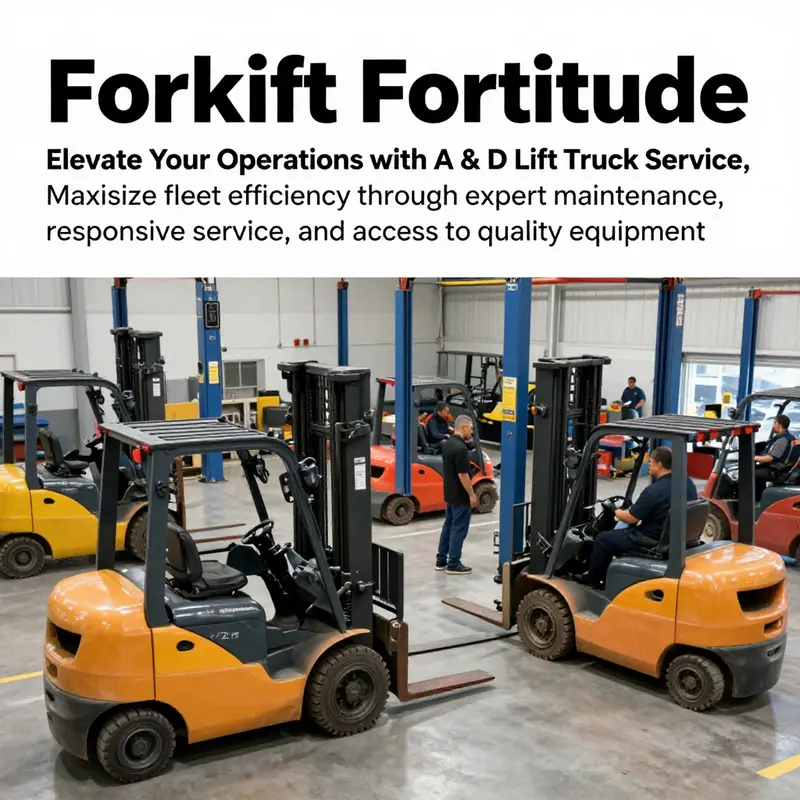
For long-haul truck drivers, trucking company owners, fleet managers, and aspiring truck drivers, maintaining equipment is crucial to operational success. A & D Lift Truck Service shines as a reliable partner in this regard, specializing in both forklift maintenance and sales. In this exploration, we will uncover how A & D Lift Truck Service not only excels in delivering quality maintenance and repair services but also prioritizes customer satisfaction with prompt response times. Furthermore, we will look into their offerings of new forklifts and specialized equipment, which enhance productivity and ensure that your fleet runs smoothly. Let’s dive into how A & D Lift Truck Service can support your heavy lifting needs.
Precision in Repair, Reliability in Maintenance: The A & D Lift Truck Service Standard for Industrial Fleet Care
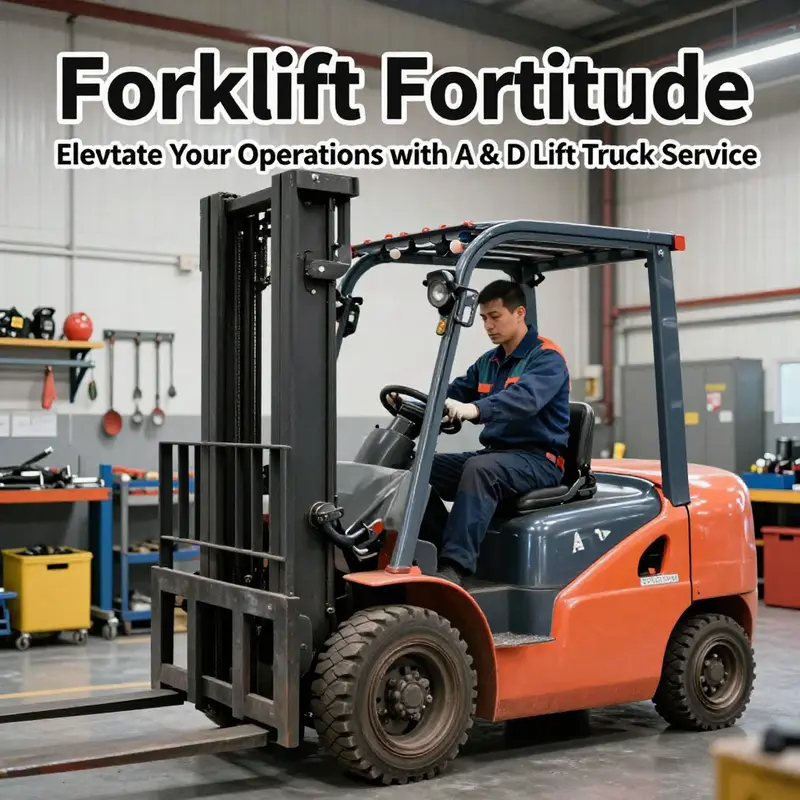
In the world of industrial operations, lift trucks are more than machines; they are the arteries of productivity. When a fleet operates in warehouses, manufacturing plants, or distribution centers, the pace of work depends on trucks that start reliably, run smoothly, and recover quickly from daily use. A & D Lift Truck Service is built around a disciplined approach to maintenance and repair that turns downtime into manageable risk. A January 2026 review highlights two core capabilities: rapid responsiveness and punctual on-site service. The reviewer notes that calls are answered promptly, and technicians arrive on time to perform repairs and preventive maintenance, delivering less downtime and clearer planning for shifts. This combination—clear communication plus dependable execution—forms the backbone of a service ethos centered on operations continuity.
Beyond quick response, the practical value lies in predictable asset performance. The service model emphasizes fast scoping, transparent scheduling, and the ability to complete repairs alongside preventive maintenance without creating a cascade of separate service events. This translates into measurable benefits such as reduced MTTR and increased MTBF, enabling operators to plan shifts with confidence and managers to benchmark fleet health.
The dual capability to repair and supply equipment expands the strategic role of the partner. When technicians know a customer’s fleet inside out, they can recommend upgrades, spare-part standardization, and operator training that enhance safety and efficiency while controlling total cost of ownership.
Documentation and safety are inseparable from reliability. Clear service records, part usage, and follow-up actions support compliance, permit trend analysis, and help prevent scope disputes. A service partner who communicates results plainly and documents work earns trust and reduces cognitive load for maintenance planners.
Finally, the human factor matters. Skilled technicians who explain issues in plain terms, respect the production environment, and balance speed with safety become an extension of the customer’s team. In such partnerships, maintenance evolves from a cost center into a strategic asset that sustains production momentum.
For readers seeking guidance, the example of A & D Lift Truck Service demonstrates how the best programs blend technical competence with dependable execution and proactive collaboration. When fleets adopt a maintenance mindset that prioritizes reliability and safety, downtime is minimized, and uptime becomes a competitive advantage. For more information about A & D Lift Truck Service, visit https://www.truckrepair.com/a-d-lift-truck-service.
Riding the Uptime Wave: How A & D Lift Truck Service Keeps Warehouses Rolling Through Rapid Response and Trusted Care
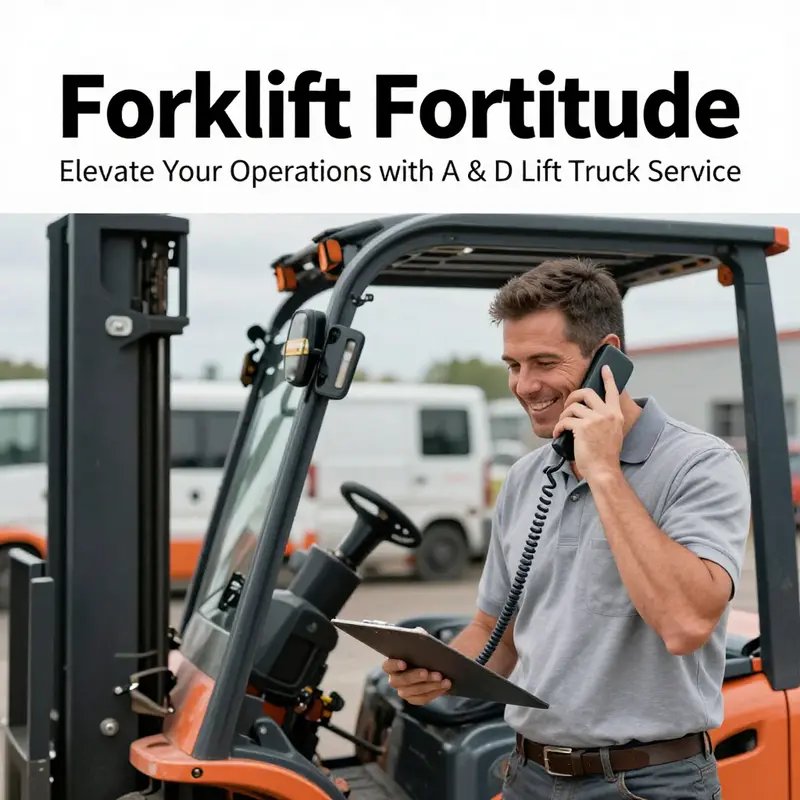
When a warehouse manager calls for help, the clock starts not with the moment of contact but with the understanding that time is a critical resource. A & D Lift Truck Service has consistently underscored that their first objective is to acknowledge the inquiry, then to establish a feasible plan of action. In practical terms, this means an immediate acknowledgment—often a direct call back or a rapid message back—that confirms receipt and sets expectations for the next steps. This may involve a quick triage to determine whether the issue is electrical, mechanical, hydraulic, or related to attachment equipment. It may involve gathering basic data about the forklift model, the age of the machine, recent usage patterns, and the environment in which the unit operates. It also involves prioritizing the client’s needs based on whether the forklift plays a critical role in order fulfillment, receiving, or pallet handling. The language is careful, professional, and solution-oriented, signaling to the client that the partnership is about reducing risk and restoring throughput rather than trading in a string of promises for a delayed reality. In a culture that prizes promptness, the first conversation is less about diagnosing every nuance and more about setting a clear path to resolution.
This emphasis on prompt communication dovetails with a broader operational philosophy: the service provider acts as an extension of the customer’s own team. The technician is not merely a fix-it person but a collaborator who helps interpret symptoms, prioritize repairs, and plan maintenance in a way that aligns with production schedules. In an era when digital tools make scheduling more transparent, A & D Lift Truck Service leverages this transparency to keep the customer informed about arrival times, expected repair durations, and any potential adjustments to the plan. The outcome is a sequence of trust-building exchanges. Each successful communication cadence reinforces the customer’s confidence that they will not be left in the dark, even when the issue is complex or occurs outside regular business hours.
The tangible benefit of rapid response becomes especially evident in the context of uptime. A forklift is an engine of throughput. A breakdown seizes a corner of the warehouse, causes lines to back up, and can ripple outward to affect inbound shipments, order processing, and loading dock efficiency. When a service provider is able to respond quickly—arriving on site with the right parts, the right diagnostic tools, and the right skilled hands—the immediate effect is a reduction in downtime risk. Even in scenarios where repairs cannot be completed in a single visit, a swift response can stabilize the situation, isolate the fault, and set the stage for a faster, more efficient follow-up. In other words, the value of prompt responsiveness is not only about getting a machine back to work; it is about preserving the integrity of the entire operation and maintaining the customer’s confidence that the supply chain will continue to flow as intended.
Central to this capability is the quality of the technicians and their approach to diagnostic work. A & D Lift Truck Service emphasizes that the best outcomes arise when technicians combine technical proficiency with a disciplined sense of prioritization. A diagnostic session that begins with clear questions and a structured assessment tends to identify the likely root causes quickly. This reduces the number of unnecessary parts substitutions and avoids the cycle of repeated come-backs that frustrate customers and drain resources. A well-executed diagnostic is not a mere inventory check; it is an evidence-based process that weighs safety implications, equipment history, and usage patterns. It asks: Is this a wear-related failure that demands preventive maintenance, or is it an emergent fault that will recur if not addressed with a more robust repair? The answers to these questions shape the subsequent steps—whether the team proceeds with a simple adjustment, replaces a component, or schedules a structured maintenance plan that prevents future interruptions. In practice, this means that the service team enters each call with a mindset aimed at long-term reliability, not just a quick fix.
The maintenance discipline at the heart of A & D Lift Truck Service extends beyond the urgent call. It encompasses a systematic approach to preventing failures and extending the useful life of equipment. Preventive maintenance is a practice that merges data-driven insight with hands-on care. Technicians conduct regular inspections, checking fluid levels, brake performance, steering responsiveness, hydraulic pressures, and safety devices. They document wear patterns, capture operational hours, and map these data points to maintenance intervals that reflect actual use rather than generic schedules. This practice is essential in environments with high throughput, where equipment is subjected to demanding cycles and variable loads. The aim is to detect wear before it becomes a fault and to replace components before failure manifests as unscheduled downtime. The discipline also includes calibration of sensors and safety interlocks, a step that ensures the forklift complies with safety standards and reduces the risk of accidental operation. A client can rely on a coherent cadence of visits and a clear plan for the maintenance window that minimizes disruption to production while maximizing the lifespan of the machines.
A critical aspect of the service philosophy is adaptability. Each facility has its own rhythms, peak periods, and constraints. Public holiday schedules, weekend shifts, and the call for off-hours service are all real-world conditions that shape how a provider structures its operations. A & D Lift Truck Service demonstrates a readiness to accommodate these realities. When a spike in demand occurs—perhaps during a seasonal peak or a major inventory event—the company can reallocate technicians, adjust travel routes, and accelerate dispatch timelines to maintain capacity. This adaptability is not simply about being able to respond quickly; it is about delivering consistent performance under pressure. It means aligning people, parts, and processes so that the customer experiences continuity rather than a sequence of isolated incidents. The practical effect is a level of reliability that becomes a competitive differentiator for the customer.
The conversation does not end with a repair. After service, the best partners close the loop with follow-up and documentation designed to empower the customer to maintain performance over time. A & D Lift Truck Service emphasizes transparent reporting that captures what was fixed, what was replaced, and why. They provide guidance on how to monitor the effectiveness of the repair and how to anticipate future maintenance needs. This aftercare is not an add-on but a core component of a sustainable maintenance program. It offers a trail of accountability, a mechanism for continuous improvement, and a basis for budgeting future maintenance with greater accuracy. For managers charged with keeping production lines humming, this level of visibility is invaluable. It becomes possible to schedule maintenance around production plans, reduce the risk of unexpected outages, and communicate with stakeholders about the status and health of the fleet with confidence.
The client experience also extends into the broader lifecycle of equipment managed by the service provider. In many cases, customers do not simply repair a unit; they replace an aging fleet with newer, safer, and more efficient machines. The decision to procure a new lift truck is rarely driven by a single failure or a momentary cost calculation. It is the result of a holistic assessment that weighs total cost of ownership, reliability, and future support needs. A trusted service partner can play a pivotal role in this decision by offering a candid view of equipment performance, lifecycle expectations, and maintenance costs. When a trusted partner is involved in the procurement conversation, buyers gain access to objective data about uptime, service response, spare parts availability, and the implications of downtime on throughput. The same partner can then support the transition by planning the installation, training operators, and calibrating new equipment with the same level of care that defined the maintenance program. The synergy between service and sales creates a seamless lifecycle for the customer, where the line between maintenance and procurement becomes a continuum rather than a set of distinct transactions.
Of course, the real-life impact of prompt response and high-quality maintenance is most visible in the day-to-day rhythms of the facility. When a manager greets a technician with a clear sense of urgency and a well-coordinated plan, the team on the floor feels supported. Operators are reassured that their tools will be ready when their shift starts, that the risk of an unplanned outage is minimized, and that the equipment will perform with predictable reliability. Supervisors gain a practical metric: uptime. They can quantify improvements in line efficiency, reductions in cycle times, and the smoothing of bottlenecks that once appeared at the most inopportune moments. This becomes a feedback loop: higher uptime leads to more satisfied customers, which in turn strengthens the business case for investing in reliable service partnerships. In this dynamic, A & D Lift Truck Service is not merely a repair shop; it is a strategic ally that helps convert operational volatility into a controllable, manageable trajectory. The company’s emphasis on speed, quality, and accountability reframes service as a lever of supply chain resilience rather than a cost center.
The narrative around a service provider is often built on testimonials and case histories, and while those stories can be compelling, the underlying dynamics are rooted in culture and process. A & D Lift Truck Service demonstrates a culture that treats every call as a commitment to the customer’s mission. This culture is underpinned by processes that ensure speed does not come at the expense of safety or quality. When a technician arrives on site, they bring not only their diagnostic acumen but also a mindset keyed to safety, process discipline, and clear communication. They take the time to explain what they are seeing, what options exist, and what the recommended next steps entail. They invite questions, encourage a shared decision-making approach, and document the agreed plan with written notes for the client. This transparency matters because it builds confidence that the service provider is aligned with the customer’s priorities and that the road to resolution is collaborative rather than transactional. In environments where speed matters as much as precision, such alignment can be the difference between minor disruption and persistent operational friction.
From a strategic perspective, the service model described here resonates with broader themes in asset management and reliability engineering. The emphasis on rapid response, rigorous diagnostics, structured maintenance, and end-to-end lifecycle support mirrors best practices in industries that depend on heavy equipment to sustain critical operations. It reflects an understanding that uptime is not a single event but a process—one that begins the moment contact is made and continues through ongoing monitoring, optimization, and renewal. In this light, A & D Lift Truck Service emerges as more than a provider of repairs. It becomes a steward of operational continuity, a partner that helps its clients protect throughput, safeguard safety, and preserve the predictability that modern logistics demands. The chapter’s exploration thus circles back to its core premise: when a company frames service as an integral, strategic capability, it transforms the relationship with its fleet from fire-fighting to ongoing optimization. The result is not merely faster repairs but a more resilient operation overall, where each lift truck is a dependable link in a chain that never stops moving.
For readers seeking more context about how service quality is articulated and demonstrated in practice, the external profile of the company’s broader service philosophy offers a useful touchstone. While this chapter centers on the lift truck landscape, the underlying principle remains universal: responsiveness, reliability, and rigorous workmanship matter most where the rubber meets the road, and downtime translates directly into cost. The careful balance between speed and quality—between rapid arrival and precise, safe repair—creates a credible model for any organization that depends on mobile equipment to deliver value. In this sense, the core message is not merely about a single service provider pulling through on a difficult call. It is about a durable capability—the ability to anticipate, react, and recover quickly when assets are essential to the mission. When warehouses rely on this capability, they gain not just a repair partner but a strategic ally whose confidence, competence, and consistency translate into lasting operational advantage.
External resource: https://www.truckrepair.com/
A & D Lift Truck Service: From Repair Shop to Fleet Partner — The Integrated Path of New Forklift Sales and Ongoing Equipment Care
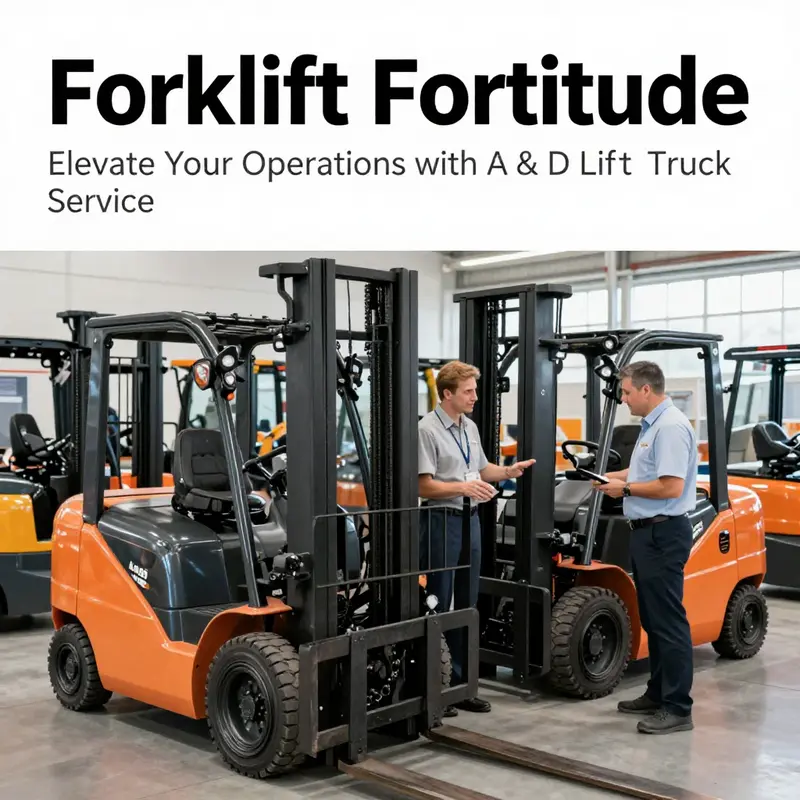
When a company builds its reputation on reliability, speed, and a keen eye for machine health, the business naturally evolves beyond a single service offering. A & D Lift Truck Service appears to be one such example—a shop that has earned high marks for repair and maintenance while also dipping into the sale of new forklifts and related equipment. The arc of their story, as depicted by client feedback and industry chatter, suggests a model in which skilled on-site service and timely response are not isolated improvisations but the backbone of a broader, more integrated value proposition. In fleets that already bear the burden of heavy daily use, the advantage of a trusted partner who can both fix the immediate problem and align lifecycle planning around new equipment becomes tangible and measurable. The chapter that follows steps through what this dual capability implies for customers, for the service culture of the provider, and for the operational calculus that governs modern warehouse and manufacturing environments.\n\nTo appreciate the potential benefits of combining repair and sales under one roof, consider the practical rhythm of a typical fleet operation. Forklifts are not mere tools; they are critical links in the production chain, bridging raw materials to finished goods with a precision that relies as much on maintenance discipline as on mechanical robustness. When a unit breaks down, the impact reverberates across production lines, scheduling, and even the safety record of the organization. In such moments, a service provider with the capacity to respond quickly, diagnose effectively, and implement fixes efficiently can save hundreds of hours and thousands of dollars in downtime. A & D Lift Truck Service, based on the available information, has cultivated a reputation for fast responses and on-time visits. Those are not trivial attributes in the high-stakes world of material handling. The emotional and operational relief a fleet manager feels when a technician arrives promptly, communicates clearly what is needed, and completes the repair or maintenance with minimal disruption can dramatically influence trust in a supplier. When the same partner also offers new equipment, those benefits compound. A fleet that grows with a consistent vendor—one that understands the unique demands of its operations and can translate them into both service plans and equipment procurement—faces fewer unknowns. The procurement process, after all, is not a one-off transaction; it is the continuation of a relationship that already guarantees service levels, parts availability, and the tacit knowledge of what has already worked (and what has not) in a given facility.\n\nYet the true value of a combined service and sales model extends beyond the immediacy of repairs and the allure of new machines. It touches the broader discipline of fleet management, where lifecycle thinking replaces reactive firefighting. When maintenance teams routinely engage with a single supplier who understands both preventive care and the negotiation dynamics of new equipment, several structural advantages emerge. First, maintenance programs can be designed with a more precise forecast of parts consumption, wear patterns, and service cycles. The technician’s insight—gained from frequent on-site activities—becomes a feedstock for procurement decisions, enabling more accurate budgeting and a reduction in unnecessary inventory. Over time, this leads to higher uptime and more predictable costs, which in turn supports lean production goals and reliable customer commitments. Second, the alignment between service and sales can drive standardization across a fleet. A vendor who sells new forklifts can steer a customer toward standardized configurations, aggregated spare parts catalogs, and consistent training protocols. Standardization reduces complexity, lowers the risk of compatibility issues, and accelerates both maintenance and onboarding for new operators. Operators trained on a consistent platform learn the same safety principles, control layouts, and error-prevention routines, which translates into fewer misuses, fewer accidents, and faster fault diagnosis when something does go wrong. Third, a coherent service-sales approach can unlock strategic procurement benefits. Fleet managers often wrestle with what to replace, when to replace, and at what price point. A provider with intimate knowledge of current fleet performance and upcoming equipment options can offer more than a sales push; they can propose a replacement strategy that aligns with production schedules, capital expenditure cycles, and even warehouse design plans. In this sense, the service partner becomes a collaborator in long-term planning rather than a transactional supplier.\n\nThe architecture of such an integrated approach is not accidental. It rests on three pillars: responsiveness, technical depth, and a shared language between service technicians and procurement logic. Responsiveness is the first pillar; it is the most immediate nerve of the operation. In environments where every minute of downtime costs money and productivity, the ability to answer inquiries quickly, dispatch skilled technicians promptly, and complete service tasks with minimal disruption differentiates a good service provider from a great one. The feedback cited by clients—immediate replies after contact and rapid on-site presence—signals a culture that prioritizes speed without sacrificing accuracy. Speed, however, exists alongside accuracy. Technical depth—the second pillar—ensures that the service team can address both common and complex issues with confidence. Lift trucks embody a suite of subsystems: propulsion, hydraulics, power supply, control systems, and safety interlocks, to name a few. A service team that sustains proficiency across this spectrum, including preventive maintenance and diagnostic analytics, can push the fleet’s uptime higher and extend the interval between major overhauls. When this depth also informs equipment sales, the buyer gains access to a feedback loop: the practical realities of field repair and maintenance influence the design and configuration of new machines offered for sale, gradually curating a catalog that better fits real-world demands.\n\nThe third pillar—a shared language between service and procurement—emerges naturally when a single provider wears both hats. The procurement process benefits from a partner who can translate field experiences into purchase specifications, warranty terms, and after-sales support plans. A technician’s notes about common wear patterns become buyer-oriented guidance about parts lifecycles, while the sales process can frame these realities into practical decision points: residual value, compatibility with safety upgrades, and the feasibility of integrated maintenance contracts. In short, the procurement conversation becomes less speculative and more anchored in observed performance data. The client industry, with its emphasis on safety, efficiency, and downtime minimization, stands to gain when the voice of maintenance shapes the voice of acquisition. This alignment is particularly valuable in fleet-heavy operations where the total cost of ownership hinges on a delicate balance of upfront price, operating efficiency, and service continuity.\n\nOf course, a credible integration of repair and sales requires careful attention to boundaries and transparency. Clients rightly expect honesty about what is being offered and how it integrates with the existing fleet. The dual role cannot become a lure that trades on the need for quick fixes while steering clients toward unnecessary replacements. Instead, it should reflect a principled approach: maintain the vehicle, optimize the use of current assets, and present replacement options only when they deliver demonstrable value—through improved efficiency, safety, or long-term cost savings. The most enduring call to action from such a model is not simply “buy new” or “fix what you have.” It is the promise of a continuous, competency-driven partnership, where the lines between service and sales blur in the best possible way for the customer. A partner who knows the fleet’s history, who can align maintenance windows with production cycles, and who can propose a measured, phased approach to modernization—this is the kind of ally that elevates a maintenance routine into a strategic initiative.\n\nThe real-world implications of this approach touch many facets of operations. Consider maintenance planning as a collaborative discipline rather than a transactional encounter. When a technician understands a client’s production plan, they can anticipate periods of peak activity and schedule preventive maintenance around those windows. This proactive rhythm minimizes the disruption caused by unscheduled downtime and helps maintain consistent throughput. It also helps the client allocate budgets with greater confidence. The predictability of maintenance costs, the clarity around downtime, and the transparency of parts usage create a more stable financial environment for the fleet. From the operator’s standpoint, a familiar service partner that also provides new equipment reduces the cognitive load of switching between suppliers, coordinating multiple vendors, and reconciling different maintenance philosophies. A single point of contact who speaks the same engineering language during a breakdown and the same procurement language during a buy decision becomes a strategic asset in a busy warehouse.\n\nThe potential downside—if not managed with integrity and discipline—lies in the tension between service dependence and sales incentives. If a provider’s sales objectives overly influence maintenance recommendations, or if service decisions become tethered to quarterly sales targets, the client’s best interests could be compromised. To guard against this, successful integrated models emphasize governance, transparency, and objective metrics. Regular audits of maintenance recommendations, clear criteria for replacement vs. repair decisions, and independent verification of performance claims help maintain trust. The best practitioners balance their dual roles by anchoring every recommendation in observed performance data, documented maintenance histories, and a clear cost-benefit analysis that weighs uptime gains against capital expenditure. In this framing, the chapter’s theme shifts from a simple attribution of capabilities to a broader understanding of how a fleet’s reliability architecture can be strengthened by an allied partner who understands both the mechanics of repair and the economics of procurement.\n\nLooking beyond the immediate customer experience, the integrated model has implications for workforce development and knowledge transfer. Technicians who regularly engage with sales teams gain exposure to broader market trends, equipment configurations, and lifecycle economics. Conversely, sales personnel who spend time on the repair floor gain a visceral comprehension of what operators encounter daily and what attributes truly matter in a machine’s long-term viability. This cross-pollination cultivates a team whose competence extends beyond a single function and into a shared stewardship of the fleet’s health and prosperity. The resulting culture tends to yield better communication with customers, more accurate scoping of service contracts, and an appreciation for the delicate balance between price, performance, and reliability. In a mature practice, this cultural synthesis becomes a competitive differentiator—one that makes the combined service-and-sales offering more than the sum of its parts and positions the provider as a trusted advisor rather than just a vendor.\n\nThe narrative of A & D Lift Truck Service, as interpreted from public signals about their operations, aligns with these themes. The company’s reputation for high-quality service, coupled with a record of prompt responsiveness, suggests a service backbone that can support an expanded role in equipment procurement and fleet modernization. Customers who have experienced timely on-site service know how crucial speed and competence are to maintaining operations. When such a provider also demonstrates competency in introducing new equipment and aligning it with ongoing maintenance, the value proposition broadens into a more comprehensive care program for the fleet. The fleet manager, who must juggle uptime, safety compliance, operator training, and asset aging, gains a partner capable of translating front-line experience into actionable decisions at the point of acquisition. This synergy is particularly valuable in environments where safety standards evolve, where operators require continuous training, and where the cost of downtime informs every capital appropriation. In such settings, a trusted provider that can deliver both service excellence and thoughtful equipment options becomes a strategic ally, enabling fleets to navigate the tension between maintaining legacy assets and refreshing the lineup with improvements that reduce risk and improve performance.\n\nThe broader lesson offered by considering such an integrated model is not merely about diversifying revenue streams. It is about cultivating a holistic perspective on asset health, one that treats maintenance, repair, procurement, and training as interdependent strands of a single fabric. When a service operation understands the equipment’s lifecycle from maintenance to retirement, it can guide customers through transitions with clarity and care. And when the same operation can present well-considered options for replacement or upgrade—backed by field experience and data-driven insights—the customer receives a credible, trustworthy pathway through the complexity of fleet modernization. The narrative presented here is a reminder that the strength of a service enterprise lies not only in the speed of its repairs but in the coherence of its ambitions for the customers it serves.\n\nAs this chapter closes, the conversation returns to the practical, day-to-day realities of fleet operations. It invites readers to reflect on how their current relationships with service providers shape their ability to manage uptime, safety, and capacity to grow. It invites fleet managers to consider what it would feel like to have a single partner who could respond to a breakdown, anticipate maintenance cycles, and present thoughtful, data-informed options for new equipment when the time is right. The potential benefits—improved uptime, streamlined procurement, standardized training, and a more predictable cost envelope—are not abstract ideals but tangible outcomes that can redefine a fleet’s performance over months and years. The integrated model, if executed with integrity and rigor, becomes a reliable compass in a complex operational landscape, guiding decisions that optimize both today’s needs and tomorrow’s opportunities. The chapter thus closes not with a final verdict but with a forward-looking invitation: to see service and sales not as competing priorities but as complementary strengths of a well-run fleet partnership that keeps machinery, people, and processes moving in harmony.\n\nFire Apparatus Procurement\n\nExternal Resource: For broader market context on equipment procurement platforms and product varieties, see Alibaba’s forklift showroom: https://www.alibaba.com/showroom/forklift-truck.html
Final thoughts
As we’ve explored, A & D Lift Truck Service stands out in the competitive market of forklift maintenance, quick response times, and sales of new equipment. Their dedication to quality service ensures that fleet managers and truck drivers can rely on them for timely repairs and high-quality forklifts. This partnership not only boosts productivity but also enhances the longevity of your machinery. Elevate your operations with A & D Lift Truck Service, where top-tier service meets reliability and efficiency.