

In the world of trucking, keeping your vehicle in peak condition is more than just a matter of convenience; it’s essential for safety, compliance, and profitability. A & E Truck Service stands at the forefront of this mission, offering a comprehensive suite of maintenance and repair services designed specifically for long-haul truck drivers, trucking company owners, fleet managers, and aspiring drivers. Throughout this article, we will delve into the various services A & E Truck Service provides, emphasizing the critical role of DOT inspections, the importance of roadside assistance, and the strategies behind effective fleet maintenance. Enabling efficient operations and minimized downtimes are at the heart of what A & E Truck Service is all about.
Reliability in Motion: A Comprehensive Service Suite from A & E Truck Service
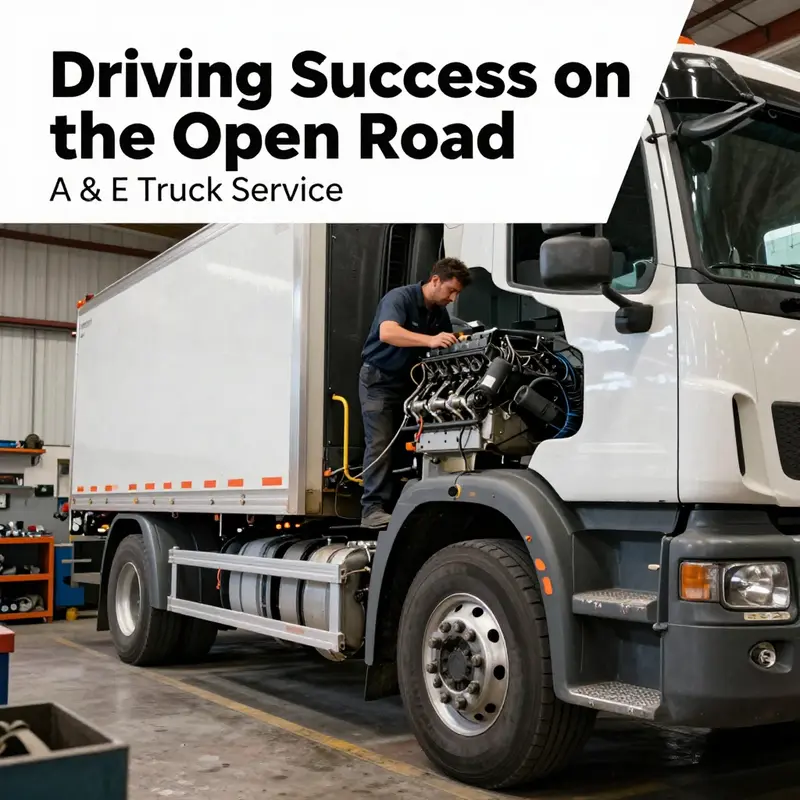
In the demanding world of commercial freight, uptime is not a luxury; it is a defining driver of profitability and reliability. A & E Truck Service positions itself as more than a repair shop or a repair script on a schedule. It is a partner that aligns technical capability with the rhythm of a fleet’s operations, ensuring each vehicle remains compliant, safe, and ready for the road. The breadth of services they offer is deliberate: routine maintenance and preventive care, brake system work, engine and cooling system repairs, suspension and steering maintenance, electrical and diagnostic services, emergency roadside assistance, and fleet management support. Together, these offerings form a cohesive ecosystem designed to minimize downtime, extend component life, and improve overall efficiency for operators who depend on steady movement across demanding routes and diverse climates. The team behind A & E Truck Service emphasizes that repairs must meet manufacturer standards and industry best practices, with certified technicians who understand the nuances of heavy-duty equipment. This emphasis on quality and compliance is not cosmetic; it translates into safer trucks, fewer breakdowns, and more predictable service windows for dispatch teams that must keep schedules intact and customers satisfied. The approach is holistic rather than reactive, treating maintenance as a planned, data-informed discipline rather than a string of isolated fixes.
Routine maintenance and preventive care anchor the service cadence and set the tone for how fleet vehicles remain dependable over months and miles. Regular servicing—oil changes, filter replacements for air and fuel, and careful fluid checks—keeps engines clean, reduces emissions, and sustains performance. Yet preventive care extends beyond the obvious oil and filter changes. It involves a structured inspection of core systems, from belts and hoses to cooling system health, to detect wear that could escalate into costly downtime. When done with discipline, preventive care becomes a dashboard for fleet managers: a predictable, auditable record of service that informs budgeting, procurement, and route planning. The technicians’ careful attention to the compatibility of parts with a variety of makes and models ensures that the preventive program remains robust, even as fleets scale up or diversify their equipment. This is where the service philosophy moves from maintenance as a cost to maintenance as a strategic asset—one that sustains performance, protects drivers, and preserves the integrity of the fleet’s operational calendar.
Brake system services deserve particular emphasis in any conversation about road readiness. Braking is the frontline safety mechanism in traffic environments that are increasingly complex. A & E Truck Service offers comprehensive brake overhauls, from meticulous inspections to precise repair or replacement of critical components such as pads, shoes, rotors, calipers, and hydraulic lines. The emphasis is not on a quick fix but on restoring braking force with even wear and reliable pedal feel. The team recognizes that brake performance is intimately tied to return-to-service times; therefore, every rebuild or replacement is performed to meet or exceed manufacturer specifications, using components that deliver consistent performance under load and temperature extremes. This careful attention to braking systems reduces the risk of brake fade on long descents, minimizes the chance of uneven wear that can lead to steering drift, and helps maintain the confidence of drivers who must operate heavy vehicles through dense urban corridors and high-traffic interchanges.
Engine and cooling system repairs lie at the heart of reliability for heavy-duty fleets. The diagnostic process is thorough, seeking root causes rather than chasing symptoms. Diagnostics leverage advanced tools to pinpoint misfires, sensor faults, or cooling anomalies that threaten engine longevity. Regular tune-ups help harmonize ignition timing, fuel delivery, and sensor calibration to preserve smooth throttle response and maintain fuel efficiency. Cooling system maintenance covers thermostats, water pumps, radiator hoses, and coolant replacement—each element crucial to preventing overheating during peak load or hot climates. This approach treats the engine and the cooling system as an integrated thermal and mechanical ecosystem. When one part falters, the whole system is at risk. By addressing wear, ensuring proper coolant flow, and confirming that temperature controls engage at correct thresholds, A & E Truck Service helps prevent overheating episodes that could otherwise trigger engine damage, radiator failures, or turbocharger stress. In practice, diagnosing these conditions often involves cross-checking live data from onboard computers with physical inspections of hoses, clamps, and fans, ensuring that nothing hides behind a dashboard warning while the truck continues to work.
Suspension and steering maintenance is equally foundational. A vehicle’s ride quality, tire life, and steering response all hinge on the health of suspension components and steering linkages. The service includes thorough inspection and servicing of shock absorbers, leaf springs, bushings, and kingpins, paired with alignment checks when needed. Worn springs or fatigued dampers can degrade handling, increase driver fatigue, and accelerate tire wear, all of which translate into higher operating costs and safety risk. Proper alignment is not merely a tire concern; it affects steering accuracy, fuel economy, and even the life of drive-line components. The technicians approach suspension and steering as a cohesive system, ensuring that each part cooperates with the others. When alignment or wear issues are detected early, the fleet benefits from smoother rides, safer highway performance, and longer intervals between major repairs.
Electrical and diagnostic services reveal the modern truck as a networked machine. The electrical system supports a growing set of sensors, controllers, and safety features. Issues can be elusive, hiding behind intermittent patterns that only reveal themselves under load. The service employs advanced diagnostic tools to troubleshoot problems related to onboard computers, sensors, wiring harnesses, and ADAS components. Technicians interpret fault codes, analyze live data streams, and validate their findings with functional tests, ensuring that fixes address root causes rather than masking symptoms. Attention to wiring integrity and corrosion resistance is critical, given the harsh environments trucks operate in and the long service life of fleets. By stabilizing electrical performance, the team helps ensure that instrumentation remains accurate, driver-assist features stay reliable, and overall vehicle operation remains predictable across the fleet.
Emergency roadside assistance anchors the service philosophy—speed, clarity, and effectiveness when breakdowns threaten a schedule. The 24/7 support framework is designed to minimize dwell times and get vehicles back in service as swiftly as possible. Towing, flat-tire changes, battery jump-starts, and fuel delivery are coordinated with dispatch to provide transparent ETA communications and realistic turnaround estimates. This reliability is especially valuable for operators who must preserve tight delivery windows or avoid penalties that come with late arrivals. Roadside response is not a stand-alone fix; it is part of a broader, anticipatory approach that keeps disruptions from cascading into expensive delays. The experience of being helped by a capable, communicative team at the side of the road can transform a potential crisis into a controlled recovery, enabling the fleet to maintain commitments to customers and partners.
Fleet management support brings a strategic dimension to road readiness. A & E Truck Service partners with fleet operators to tailor maintenance programs that reflect actual usage, duty cycles, and regulatory obligations. The core of this support is a disciplined scheduling framework: maintenance tracking that flags due services, reminders that prevent missed inspections, and a workflow that aligns parts procurement with repair windows. Inventory management ensures that critical components are available when needed, reducing wait times and accelerating repairs. Performance reporting transforms data into insight, tracking uptime and downtime, costs per mile, component life, and work order history. With this information, operators can calibrate budgets, plan vehicles for retirements, and optimize routes to exploit available uptime windows. The fleet management layer thus turns maintenance from a cost center into a proactive instrument for uptime, reliability, and compliance. It also supports multi-site or regional operations by standardizing service quality and ensuring consistent outcomes across the network.
The distinctive value of A & E Truck Service lies in how these services are integrated into a single, coherent workflow. Quality parts and certified technicians thread through every service, ensuring durability and consistency across repairs. Adherence to manufacturer standards and industry best practices protects the integrity of each repair and preserves vehicle warranties when applicable. Transparent communication with customers is another pillar, with clear explanations of what was done, why it was necessary, and what to watch for next. This clarity reduces uncertainty and builds trust, turning routine maintenance into a collaborative process that supports longer-term fleet strategy. For managers who balance tight schedules, fluctuating demand, and regulatory changes, this approach offers a predictable, scalable basis for keeping vehicles on the road and under control. The on-site and mobile services, including lubrication and minor maintenance performed where the operation runs, extend the value of this partnership by reducing the need for drivers to relocate vehicles or divert time from core duties.
When a fleet grows in size and complexity, so does the need for a robust service ecosystem. A & E Truck Service designs programs that scale with usage patterns and geographic footprints, delivering the right level of attention to each vehicle at the right time. The flexibility to tailor maintenance plans to vehicle classes, itineraries, and duty cycles ensures that every asset receives the appropriate care without unnecessary interventions. This adaptability supports multi-site deployments, regional logistics networks, and procurement strategies that rely on uniform standards across the fleet. The resulting service continuum does more than keep trucks running; it builds resilience, enabling operators to meet rising demand, manage risks associated with downtime, and sustain service reliability across the entire operation.
For operators seeking to deepen their understanding of best practices in maintenance and training, the industry literature emphasizes structured maintenance training as foundational. The practical value of training resonates across fleets of all sizes, as disciplined care translates into longer equipment life, safer operations, and more stable performance. A resource cited in industry material highlights the importance of ongoing training as a way to embed preventive habits within maintenance routines. A reference point from the domain—fire-truck-maintenance-training-importance—signals that systematic upkeep and professional development underwrite safety and reliability in high-stakes environments. This reminder aligns with the broader objective of A & E Truck Service: to make every mile safer, more predictable, and more economical for the operators who keep commerce moving. The emphasis on training is not about abstract theory; it translates into practical guidance, checklists, and confidence for crews who rely on consistent service outcomes.
External resource: https://5startruckin.com/electric-fire-truck-charging-infrastructure-overview/
Guardrails on the Highway: DOT Inspections and Fleet Reliability at A & E Truck Service
DOT inspections act as guardrails for safety and reliability in commercial fleets. At A & E Truck Service, they are not merely a regulatory checkbox but a strategic framework that protects uptime, drivers, and on-time delivery. The Level I inspection, the most comprehensive roadside check, evaluates brakes, steering, suspension, lighting, tires, emissions systems, and general vehicle operability, with the potential to place a vehicle out of service until issues are corrected. This reality shapes how fleets and service providers approach preventive maintenance rather than reactive repairs.
A & E Truck Service positions itself to help fleets stay ready by aligning maintenance with inspection cycles, maintaining auditable records, and using standardized checklists and calibrated tools. The goal is to prevent defects from becoming failures, and to ensure that every component relevant to DOT scrutiny—brakes, tires, wheel ends, lighting, exhaust, seat belts, and safety equipment—is regularly inspected and documented.
Beyond the shop floor, DOT readiness is about predictability. When fleets know their vehicles will pass inspection consistently, downtime drops, trip windows tighten, and contractual SLAs are more reliably met. A & E supports this through proactive maintenance calendars, efficient turnaround for corrective work, and transparent reporting that can be shared with drivers, fleet managers, and regulators. Digital records make the maintenance history traceable and auditable, which builds trust with carriers and customers.
In a dynamic regulatory environment, the ability to adapt to updated guidance from FMCSA and related safety priorities is essential. A & E integrates current standards into its procedures, ensuring that inspections translate into ongoing reliability rather than occasional compliance data. The result is a partnership where DOT readiness becomes a tangible driver of performance and a differentiator in a competitive market.
On the Road, In Real Time: How A & E Truck Service Delivers Roadside Assistance and Towing that Keeps Fleets Moving
When a commercial vehicle grinds to a halt on a highway shoulder or in a rural layby, the clock begins to tick not just for the driver but for every link in a fleet’s supply chain. Roadside assistance and towing services are more than quick fixes; they are operational lifelines designed to restore uptime, protect cargo, and keep routes flowing. In the landscape of commercial transport, the value of a dependable roadside partner cannot be overstated. A & E Truck Service positions itself as that partner, offering a coordinated suite of on-the-spot support options that address common failure modes while preserving the integrity of a fleet’s maintenance calendar. The aim is simple and ambitious: return vehicles to service safely, efficiently, and with as little disruption as possible. This requires more than skilled technicians and heavy-duty tow rigs. It demands a philosophy of readiness, rapid communication, and a deep understanding of how breakdowns ripple through a route, a driver’s day, and a customer promise.\n\nAcross the highway networks that fleets rely on, the moment of distress is rarely the same twice. A battery that inexplicably falters during a winter shift can be a test of winterization strategy, while a loss of power in a rig pulling a refrigerated trailer tests electrical and engine-management resilience. A & E Truck Service designs its roadside response around that variability. The core offerings—towing to nearby repair facilities when a vehicle needs more than a jump start, battery jump starts to re-energize the rig in minutes, and lockout assistance when a driver cannot access the cab—are practical tools for serious problems. Yet the true advantage emerges in how these tools are deployed. Techs are dispatched with precise location data, vehicle history, and the driver’s current status, which helps reduce diagnostic time and limits the number of times a vehicle must be moved. In many cases, a well-executed roadside service prevents a minor issue from becoming a major downtime event, protecting not just the truck but the schedule of all the pickups, deliveries, and returns that depend on it.\n\nThe towing service itself is not a blunt instrument but a carefully calibrated option. Towing to a nearby repair facility is often the quickest path back to service, reducing miles driven in a disabled condition and limiting the risk of further damage when a vehicle remains in place for too long. The choice of facility matters, too. A & E Truck Service maintains relationships with a network of trusted repair partners that understand the realities of commercial fleets—their typical load profiles, the urgency of urgent repairs, and the importance of getting the vehicle back on the road with minimal delay. When a fleet manager calls for a tow, the dispatcher considers factors such as the vehicle’s type, the severity of the issue, the location, and the nearest compatible service center. In some scenarios, the preferred location is the company’s own maintenance depot if the vehicle is due for a scheduled inspection or a minor repair that can be completed quickly. In others, the vehicle is directed to the closest capable shop that can expedite a fix without compromising safety or quality. The ability to flex between these options—the closest, the most capable, or the most cost-effective—reflects a mature approach to roadside support that is especially valuable in high-mileage fleets.\n\nFor drivers and fleet operators alike, the value proposition of roadside assistance begins with speed, but it is sustained by reliability. A & E Truck Service emphasizes rapid response coupled with dependable execution. Speed without accuracy can complicate a situation, especially when weather, traffic, or terrain introduces additional variables. A trained technician on the scene is equipped to perform a quick triage: confirm whether a dead battery needs a jump, verify that the vehicle is safe to approach and moved by a trained operator, and determine if the issue can be resolved with a on-site fix or if it will require a tow. The goal is not merely to get the vehicle to move again but to restore it to compliance with safety standards and with the integrity of the fleet’s asset management plan. In the context of regulatory compliance, on-the-ground experiences matter. Roadside incidents can trigger inspection concerns or require careful documentation for insurance and maintenance records. A & E Truck Service aligns its procedures with industry best practices so that each intervention is recorded, each action is traceable, and each outcome advances the overall health of the fleet.\n\nFor many drivers, a roadside event becomes a moment of truth about a service partner. The crew on site is not merely a technician but a representative of the fleet’s reliability. Clear communication is essential. Dispatchers provide ETA updates, and technicians relay diagnostic observations back to the driver and to the fleet manager. The flow of information helps the operator adjust schedules, reroute other vehicles if necessary, and manage customer expectations downstream. A & E Truck Service recognizes that part of good roadside service is the ability to convey information with honesty and usefulness. If a jump start is a temporary fix, the technician explains the next steps, whether that means scheduling a battery replacement at a convenient time, arranging a tow to a preferred shop, or coordinating a mobile service appointment. If the issue is more complex, the plan includes the safest, least disruptive path to repair and the least potential for additional downtime. In this way, roadside assistance becomes a collaborative process rather than a one-off rescue, integrating with the fleet’s broader maintenance strategy and reinforcing a culture of proactive prevention where possible.\n\nThe breadth of coverage is a practical reflection of the realities of trucking logistics. Roadside assistance must extend beyond city limits to reach regional and rural corridors where breakdowns can occur far from ideal facilities. A & E Truck Service communicates with drivers and fleet managers about coverage areas and service availability, which helps set realistic expectations and informs contingency planning. The company’s approach emphasizes that help should be within reach when it is most needed and that the distance to a repair facility should not become a barrier to getting trucks back on the road. This is why the service is paired with a robust network of mobile units—technicians who can perform a range of on-site tasks and, when necessary, arrange immediate towing to the most suitable repair partner. The result is a flexible, resilient service model that minimizes downtime while preserving safety and compliance.\n\nBeyond the immediate mechanics of jump starts, lockouts, and towing, the roadside offering embodies a broader commitment to customer service. The dispatch center aims to reduce the cognitive load on fleet managers by handling the details of the interruption—locating the nearest available technician, coordinating with the repair facility, and maintaining open lines of communication with the driver. In practice, this means timely updates, transparent pricing where applicable, and a clear path to resolution. The emphasis on service quality echoes what fleets seek in any partner: predictability, accountability, and a shared objective of getting the truck back on the road as soon as possible. The effect of this approach extends beyond individual incidents. It contributes to a track record of reliability that fleets can rely on when planning routes, estimating delivery windows, and negotiating service-level agreements with customers and suppliers.\n\nIn addition to the hands-on support, the roadside program reinforces preventive maintenance disciplines that keep these emergencies rare and manageable. When fleets experience fewer unexpected breakdowns, the need for emergency interventions drops, and uptime improves. Yet even the most well-planned maintenance schedule must contend with the realities of weather, wear, and the unpredictability of the road. A & E Truck Service understands this tension and offers a safety net that respects the discipline of regular upkeep while acknowledging the inevitability of the unexpected. The byproduct is a stronger, more resilient fleet profile: trucks that stay on schedule, cargo that remains on track, and operators who trust that help is ready when they need it most. This trust is not a vague promise; it is cultivated through consistent performance, trained technicians who can handle the unique demands of commercial vehicles, and a network that can translate a roadside incident into a practical, manageable step toward full recovery.\n\nFor fleet managers, the practical takeaway is straightforward. Roadside assistance and towing are not subsidiary services; they are integral elements of an ecosystem designed to protect uptime and reinforce operational discipline. They interface with maintenance plans, compliance checks, and route optimization in a way that reduces risk and enhances predictability. A & E Truck Service, with its emphasis on rapid response, on-site problem-solving, and strategic towing options, demonstrates how a well-structured roadside program can support the broader objective of fleet reliability. The driver experience benefits as well: fewer delays, calmer guidance, and a process that feels transparent and efficient even in the stress of a breakdown. When a vehicle is able to return to service quickly, it minimizes the ripple effects on customers, consignors, and the other legs of the transport chain. In short, roadside assistance and towing are not just reactions to failure—they are proactive investments in uptime, safety, and the integrity of every mile a fleet travels.\n\nAs fleets navigate the ongoing balance between maintenance investment and operational performance, the accessibility and quality of roadside services become a deciding factor in reliability ratings and overall cost of ownership. The practical, human-centered approach that A & E Truck Service brings to each roadside engagement embodies a broader industry trend: the merging of field expertise with logistical intelligence to keep fleets moving. This convergence matters because every dispatch, every tow, and every jump start contributes to a larger story about how the transportation sector stewardess uptime, safety, and accountability across complex, high-demand networks. For operators watching the clock and the calendar, that story offers clarity about what a trusted roadside partner should deliver—speed, competence, and a commitment to getting back on the road with confidence. And it is a reminder that even when a vehicle cannot complete a planned journey, it can still leave the road with a clear path forward, guided by professionals who understand that every mile matters.\n\nInternal link reference: In conversations about reliability and service quality, industry discussions often highlight the importance of consistent uptime and dependable support as key differentiators in trucking services. See how leading industry voices frame the value of reliable road-side coverage at this dedicated exploration: exploring-5-star-truck-inc-quality-service-and-reliability-on-the-road.\n\nExternal resource: For broader context on the standards and services providers like A & E Truck Service strive to meet, visit the company’s official page to review their service scope and eligibility criteria: https://www.aetruckservice.com
Fleet Maintenance Strategies at A & E Truck Service: Orchestrating Uptime Across a Commercial Fleet

When a fleet operator calls on A & E Truck Service, they are not just seeking a one-off repair or a quick roadside fix. They are seeking a disciplined, forward-looking approach to keeping a line of vehicles on the road, moving goods, and meeting tight delivery windows. The foundation of this approach is a comprehensive fleet maintenance strategy that blends proactive planning with responsive service. At the heart of this strategy is a simple, relentless goal: maximize equipment uptime while maintaining strict regulatory compliance and cost discipline. And because every fleet is different—driven by duty cycles, climate, load profiles, and haul routes—the strategy begins with customized maintenance intervals, not generic checklists. A& E Truck Service understands that the cost of downtime is often heavier than the upfront price of planned maintenance. Downtime stalls production lines, disrupts schedules, and erodes customer confidence. In this context, maintenance becomes a strategic investment, not a routine expense.
The most effective maintenance strategy starts with a deep understanding of how each lift truck or commercial vehicle is used. A& E Truck Service works with fleet managers to map out usage patterns, including daily distance, load weight, idle time, and exposure to harsh environments such as extreme temperatures, dust, or corrosive atmospheres. Those inputs inform regular maintenance intervals that align with real-world stress rather than theoretical limits. Rather than applying a blanket schedule, the team curates a maintenance calendar that anticipates wear, anticipates parts life, and anticipates the moment when a component is most vulnerable to failure. In practice, this means routine inspections are not merely box-ticking exercises; they are data-informed checkpoints that confirm component health, lubricants’ effectiveness, and systems’ readiness for a demanding shift schedule. The result is a fleet that operates with fewer surprises and longer, more predictable cycles between major repairs.
A& E Truck Service recognizes that maintenance is not a solitary activity conducted in a shop. It is a collaborative process that spans in-house technicians, certified third-party providers, and the fleet operators who rely on timely, transparent service. This collaborative stance raises two closely related questions: who should perform the work, and how should they be equipped to do it well? When a fleet has the capacity to keep maintenance entirely in-house, it gains speed, control over scheduling, and the ability to tailor work orders to precise vehicle conditions. Yet there are compelling reasons to leverage certified third-party providers as well. Specialized diagnostic tools, access to manufacturer warranty channels, or the need to service equipment spread across multiple locations can justify outsourcing some tasks. The strategic choice is not an either/or decision but a carefully designed blend. A& E Truck Service helps clients weigh the cost of in-house labor against the benefits of certified external expertise, ensuring technicians have current certifications, up-to-date tooling, and a workflow that minimizes vehicle turn-times. Training is the throughline that binds these possibilities into a coherent program. Investing in ongoing training reduces the risk of misdiagnosis, shortens repair cycles, and reinforces a culture of safety and reliability. The emphasis on training echoes a broader industry understanding that knowledge must be continually refreshed to keep pace with evolving systems and regulations. For readers curious about the role of training in maintenance reliability, see the discussion under the slug fire-truck-maintenance-training-importance. This cross-industry lens underscores that standardized, consistent instruction is a universal driver of uptime, whether the asset in question is a heavy-duty fire apparatus, a general cargo hauler, or a specialized lift truck.
Beyond who does the work, A& E Truck Service leans into technology as a critical enabler of smart maintenance. Advanced fleet management technologies, particularly telematics, give fleet managers real-time visibility into vehicle performance, health indicators, and utilization patterns. Telematics data stream into maintenance planning in near real time: vibration signatures, temperature trends, fluid pressures, and even subtle changes in fuel efficiency can illuminate hidden wear long before a visible failure occurs. This real-time intelligence makes it possible to shift from reactive repairs to predictive maintenance, a transition that not only prevents downtime but also extends the lifespan of expensive components. Predictive maintenance hinges on robust data management: consistent service records, standardized diagnostic codes, and a well-structured history of repairs. A& E Truck Service places a premium on meticulous record-keeping because it turns historical experience into actionable foresight. Service histories become more than a log of what was fixed; they become a map of which maintenance interventions produced lasting reliability and which ones did not, ultimately guiding future intervals and replacement planning.
The practical benefits of this approach are tangible. If a telematics alert indicates that an axle bearing is wearing at a rate above forecast, maintenance can be scheduled well before a failure occurs, minimizing the risk of a roadside breakdown or an on-time delivery shortfall. If a fleet operates in a region with frequent temperature swings, lubricant schedules and cooling system inspections can be adjusted to account for thermal stress. If a vehicle sees heavy payloads and long hauls, tire management and braking systems can be prioritized in the preventive maintenance plan. The goal is a maintenance program that is not only comprehensive but also flexible enough to adapt to changing conditions. This adaptability is essential in today’s logistics environment, where volatility in demand, supply chain disruptions, and evolving regulations can all demand quick shifts in maintenance priorities. A& E Truck Service meets this challenge by combining standardized procedures with dynamic scheduling, enabling fleets to maintain compliance without sacrificing efficiency.
A critical element of the strategy is how maintenance work is scheduled and documented. Regularly scheduled maintenance intervals are designed to align with manufacturer recommendations and the experiences drawn from millions of miles of operation across diverse fleets. Yet the real strength emerges when these schedules are routinely validated against actual performance data. The maintenance calendar becomes a living document—one that updates based on observed wear rates, incident history, and the operational realities of each customer’s routes. In practice, that means service records are not stored away as legacy files; they are actively consulted when planning next steps, from basic lubrication to more complex component overhauls. This disciplined approach reduces the likelihood of over-maintenance, which can unnecessarily inflate costs, and under-maintenance, which increases the risk of unplanned downtime and safety concerns.
A& E Truck Service also emphasizes regulatory compliance as a cornerstone of fleet reliability. Regular DOT inspections, preventive maintenance checks, and documentation practices are integrated into the maintenance workflow rather than treated as external requirements. Compliance knowledge informs decision-making about parts selection, service intervals, and record-keeping practices. By treating compliance as a core performance metric, the organization helps fleets avoid penalties, extend asset life, and maintain a robust safety profile. This approach aligns with the broader industry understanding that regulatory health and mechanical health are two sides of the same coin. When inspections—whether routine or surprise—are anticipated through careful maintenance planning, fleets move through checkpoints with confidence rather than anxiety.
An important thread throughout this narrative is the client-centered focus. A& E Truck Service works closely with managers to translate engineering and data insights into actionable, day-to-day decisions. The service model is designed to be transparent and collaborative: clear communication about what is being serviced, why it matters, and what comes next. Clients gain more than a repaired vehicle; they gain a reliable partner who can translate complex maintenance data into practical steps that fit operational needs. The result is a fleet that can meet tight delivery windows, operate in varied environments, and withstand the inevitable fluctuations of demand. In the end, the maintenance strategy becomes part of the fleet’s competitive advantage, enabling operators to shorten downtimes, improve uptime metrics, and sustain service levels that clients rely on.
As with any sophisticated maintenance program, there is value in looking beyond internal capabilities to the broader ecosystem of resources that support uptime. Manufacturer warranties, for instance, can be leveraged to cover certain components during the warranty period, reducing out-of-pocket costs for fleets and ensuring that repairs are performed to exacting standards. Detailed service records provide not only a historical account but also a forward-looking tool for forecasting parts needs, budgeting, and lifecycle planning. And as noted earlier, telematics and connected data systems play a central role in moving maintenance from calendar-driven to condition-driven. The practical effect is a smoother operating rhythm: fewer unscheduled interruptions, more predictable capital expenditure, and a capacity to respond to changes in business demand with agility.
The integration of training, data, and collaboration creates a virtuous loop. Training improves fault diagnosis and repair quality; data validates training outcomes and reveals new gaps to address; collaboration ensures that those insights, in turn, translate into better scheduling and faster turnarounds. This loop strengthens the fleet’s overall reliability and reduces the total cost of ownership over the asset’s life. It also reinforces safety culture by ensuring that every technician understands not only how to fix a problem but why a particular maintenance action matters for vehicle stability, brake performance, and environmental compliance. The emphasis on safety—both in the shop and on the road—remains a throughline in every maintenance decision.
In reflecting on A & E Truck Service’s fleet maintenance strategy, one can see a coherent philosophy: maintenance is a strategic asset, not a routine chore. It is built on thoughtful interval planning tailored to each asset’s usage and environment, empowered by technology-driven visibility, anchored by rigorous documentation, and sustained by a culture of training and collaboration. The result is a fleet that remains compliant, safe, and highly reliable, able to meet customer commitments even as the landscape around them shifts. The chapter’s core message is simple, yet powerful: uptime is not an accident; it is the outcome of deliberate, data-informed maintenance choices that integrate people, processes, and technology in a single, continuous workflow. For those seeking a broader framework for these ideas beyond the trucking sector, the Plant Engineering article on Fleet Maintenance Strategies offers a comprehensive view of how modern maintenance ecosystems are designed to anticipate failure, optimize maintenance costs, and sustain equipment uptime across varied industries.
Internal resource: fire-truck-maintenance-training-importance
External resource: Fleet Maintenance Strategies
Final thoughts
A & E Truck Service plays a pivotal role in ensuring that long-haul truck drivers and fleet managers can operate smoothly and safely. By providing an extensive range of maintenance and repair services, including essential DOT inspections, responsive roadside assistance, and effective fleet maintenance strategies, they help minimize downtimes and keep operations compliant and efficient. Understanding the importance of these services allows trucking professionals to make informed decisions, ensuring their vehicles are road-ready at all times and furthering their commitment to safety and productivity.