
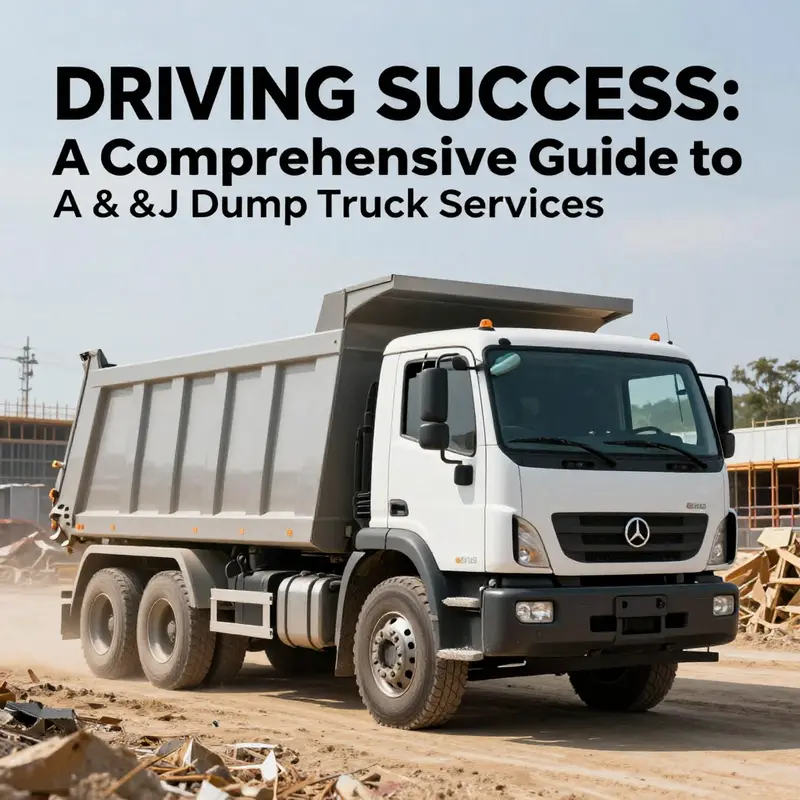
In the vast and dynamic realm of transportation, dump truck services play a crucial role. This article delves into A & J Dump Truck Services, exploring its relevance to long-haul truck drivers, trucking company owners, and those aspiring to make their mark in the industry. Each chapter will navigate the intricacies of this business, the equipment involved, market dynamics, and comparisons with other providers, culminating in a look at the future of dump truck services. Together, we’ll unveil what makes this sector essential and how A & J can elevate your haul.
Foundations of Local Haulage: How A & J Shapes Dump Truck Services in Fresno
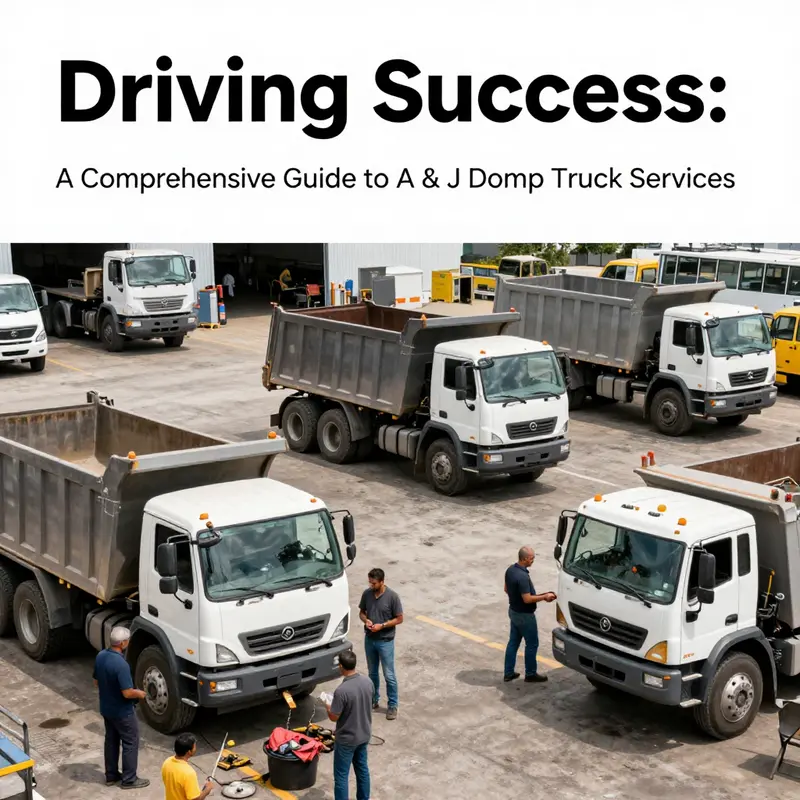
A & J Dump Truck Services operates as a linchpin in Fresno’s construction logistics, delivering reliable hauling and site support across the Central Valley. The company’s day-to-day work blends practical fleet operations with careful planning. Teams coordinate material movement for projects of varying scale, from single-site landscaping to large earthmoving efforts. Their role is both straightforward and essential: move material safely, on time, and without disrupting project flow.
Operational consistency begins with fleet readiness. Trucks are staged and scheduled to match project rhythms. Drivers receive route assignments that factor in load size, local restrictions, and traffic patterns. Routine inspections precede every dispatch. This ensures vehicles arrive in serviceable condition and that delays due to mechanical issues are minimized. Maintenance cycles are planned around expected workloads. Preventive repairs reduce downtime and protect timelines for contractors relying on timely deliveries.
Beyond mechanical upkeep, operational reliability rests on clear communication. Job-site supervisors, drivers, and dispatchers exchange concise updates. Load confirmations, arrival windows, and offloading instructions are agreed before trucks move. On busy sites, this level of coordination prevents bottlenecks and supports efficient use of labor and equipment. When schedules shift, teams reallocate resources to maintain continuity. That responsiveness underpins the reputation regional contractors place on local hauling partners.
Safety remains a constant priority. Drivers follow standardized procedures for loading, tarping, and securing material. Vehicles use appropriate signage and lighting when operating near public roads. Crews coordinate with site managers to ensure safe staging and clear ingress and egress paths. Regular training refreshers keep safety practices current and aligned with regulatory expectations. These measures lower incident risk and preserve both people and equipment.
Permitting and compliance are layered into project planning. Many jobs in urban or semi-urban areas require haul-route approvals, weight permits, and coordination with municipal works departments. Experienced hauling providers anticipate these needs. They assist contractors by obtaining necessary paperwork and adapting routes to comply with local limits. This expertise reduces administrative burdens for project managers and prevents costly delays tied to regulatory oversights.
Cost efficiency is a practical focus that shapes service design. Haul rates are structured to reflect distance, material type, and site conditions. Efficient batching of loads, combined with smart routing, lowers per-cubic-yard costs. For repeat clients, customized schedules and volume-based arrangements create predictable pricing and improved cash-flow planning. Contractors value partners who offer both competitive rates and dependable pickup windows.
Service flexibility broadens market fit. In thriving construction markets, jobs vary from tight residential sites to expansive commercial digs. A responsive haul provider adapts equipment and crew size to match job constraints. Smaller sites may require compact trucks and tight maneuvering skills. Larger projects benefit from high-capacity units and coordinated multiple-truck cycles. The ability to scale resources on short notice distinguishes providers who can support diverse client needs.
Environmental and community considerations shape operational choices. Dust control measures, covered loads, and proper material disposal practices reduce local impact. Responsible hauling minimizes street spills and prevents runoff during storm events. When scheduling late-night or early-morning moves, teams weigh neighborhood impacts and coordinate accordingly. Demonstrating respect for the communities served helps sustain long-term local partnerships.
Technology supports modern haulage. Digital dispatch tools streamline assignments and improve transparency. GPS tracking provides real-time location data, enabling accurate arrival estimates. Electronic delivery documentation reduces paperwork and clarifies load acceptance. These systems also generate useful operational data. Fleet managers review metrics such as average turnaround times and fuel consumption. Continuous improvement initiatives emerge from that analysis, enhancing future performance.
Customer relationships drive recurring business. Successful providers develop trust through consistent execution. That trust is earned by meeting windows, communicating changes promptly, and resolving issues efficiently. Project managers often rely on a small roster of trusted haulers. Being on that short list requires a demonstrated track record of punctuality and professionalism. Repeat engagements often lead to collaborative problem-solving, where hauling teams contribute logistical suggestions that improve site productivity.
Visibility matters in a local market. Accurate listing details on mapping platforms help contractors and site teams find service providers quickly. Public listings offer contact points, operational hours, and basic service descriptions. This accessibility simplifies last-minute scheduling and referral checks. For businesses that serve a regional market, maintaining up-to-date profiles supports steady inbound inquiries and builds credibility with potential clients.
Strategic partnerships strengthen service offerings. Local equipment rental firms, asphalt suppliers, and demolition contractors form a network of complementary services. Coordinated scheduling among these players boosts site efficiency. For example, synchronized deliveries of base materials and removal of debris reduce idle time for heavy equipment. These collaborative rhythms translate to lower overall project costs and faster completion.
Workforce development sustains capability. Recruiting experienced drivers and providing ongoing training ensures competence behind the wheel. Training covers safe operation, regulatory compliance, and efficient loading practices. Investing in people reduces turnover and preserves institutional knowledge. Seasoned drivers often anticipate site needs and adapt their approach, which benefits both project delivery and client satisfaction.
Market dynamics in the Central Valley influence service demand. Infrastructure projects, private development, and agricultural operations all require reliable hauling. Seasonal peaks and local permitting cycles affect workload. Effective providers monitor pipeline activity and adjust resource allocation proactively. This preparedness minimizes the need for reactive hires and helps preserve service quality through busy periods.
Reputation in the local contracting community is earned incrementally. Each on-time pickup, each carefully executed delivery, and each professional interaction adds to standing. Word-of-mouth remains a powerful referral channel. Project managers recommend haulers who consistently solve logistical challenges. That recommendation network often determines which providers are invited into competitive bids for larger projects.
For contractors seeking dependable haulage, understanding these operational realities informs selection. Evaluate consistency, safety practices, and communication processes. Review maintenance and compliance records. Confirm mapping and contact details align with on-the-ground realities. Those checks shorten the onboarding curve and reduce risk on active jobs. Public listings can provide initial verification; further due diligence clarifies fit for specific project demands. (MapQuest listing: https://www.mapquest.com/places/J-Dumptruck-Services-Fresno-CA/64285651)
To explore how a regional hauling provider frames its service excellence, consider industry perspectives on what defines a leading trucking partner. For a broader view of quality standards and customer-focused operations in similar companies, see Unveiling 5-Star Truck Inc.: a beacon of excellence in trucking services (internal resource).
Chapter 2: Moving Heavy Earth—Equipment, Specs, and the Subtle Precision of Dump Truck Services
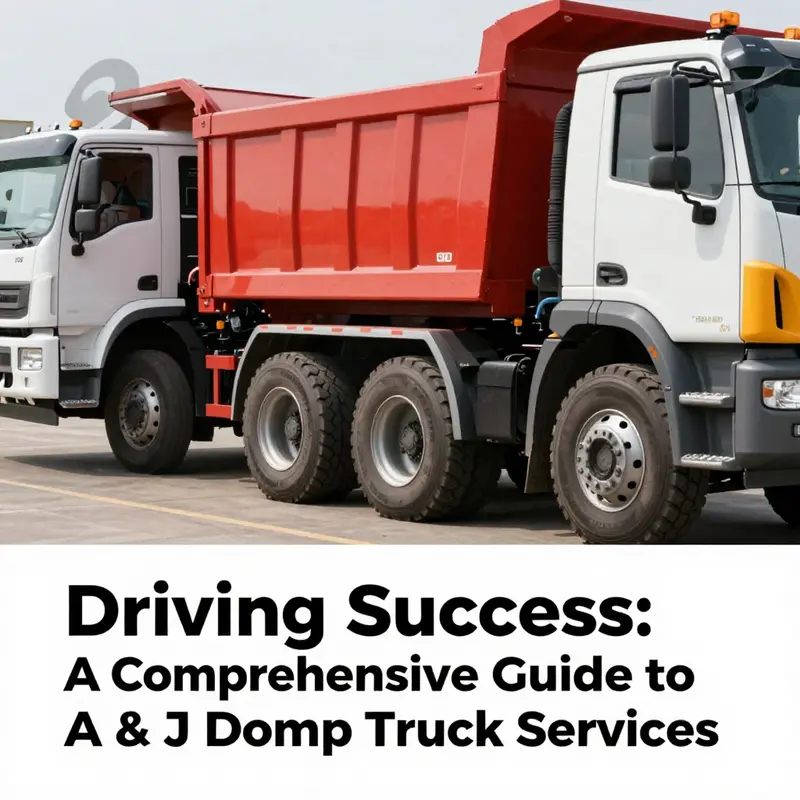
When a job calls for moving vast quantities of earth, the success of the operation hinges not on what you say you do, but on the equipment you deploy and the specifications you insist upon. In the context of dump truck services, this is where planning meets engineering, and where contractors separate themselves not by bold promises but by the thoughtful rigor that shapes every lift, every grade, and every mile of haul. The term A & J Dump Truck Services may or may not correspond to a specific company in the current market landscape, but the practical realities of dump truck operations are universal. The landscape is defined by machines designed to withstand harsh environments, materials of varying density, and schedules that leave little room for error. To navigate this terrain successfully, operators, fleet managers, and buyers must cultivate a deep understanding of what equipment does, why it matters, and how to read the specifications that govern performance, safety, and total cost of ownership over the life of a project.
Equipment choice begins with capacity and weight distribution. A fundamental decision point is the load rating. In theory, larger capacities translate into fewer trips and faster cycle times. In practice, however, the equation is more nuanced. The terrain, road conditions, and the humidity or dryness of the material all influence how much weight a truck can carry safely on a given route. Operators must balance nominal capacity with traction and stability. A high payload figure is meaningless if the truck cannot maneuver through a muddy access road, climb a ramp, or brake reliably on a slope. This means the spec sheet must be read not as a single line of numbers but as an integrated system where chassis geometry, axle loads, suspension behavior, and braking performance interact to determine real-world capability.
Beyond raw capacity, traction and drive configuration become decisive in challenging sites. Open-pit blasts, dune-like loose soils, or tight underground corridors each demand a layout tailored to grip, steering, and turning radius. The modern dump truck is engineered to behave like a precision instrument in these environments. A robust frame, carefully engineered articulation, and a braking system that can be relied upon in confined spaces contribute to a safer worksite. In underground scenarios, where space is at a premium and ventilation concerns heighten risk, the goal is not simply to move material but to do so with predictable control under all conditions. A zero-emission approach, where feasible, reflects a growing emphasis on safety and sustainability, especially in underground settings where diesel exhaust poses distinct challenges. The choice between diesel, electric, or hybrid powertrains is thus not a mere preference; it is a strategic decision tied to site constraints, regulatory expectations, and the total cost of operation over the life of the fleet.
Dump mechanisms themselves warrant careful attention. The distribution of weight during tipping, the timing of the dump cycle, and the angle reached by the bed all influence how cleanly and quickly material is discharged. Operators value mechanisms that offer smooth, reliable unloading with minimal material loss and reduced rebound. A well-designed dump system also supports operator comfort and fatigue reduction. Ergonomics matter when crews are on site for long shifts, and the interface between the cab and the bed should encourage precise control rather than forcing crude, improvised maneuvers. In this regard, the accessibility of routine maintenance becomes a decisive factor. A truck that is easier to service—filters, hydraulics, lubrication points, and fatigue-prone components located for quick inspection—translates into higher uptime, lower maintenance costs, and greater predictability of production schedules.
Powertrains must meet a mosaic of site realities. Diesel remains a workhorse for many operations, delivering robust torque and wide operating envelopes. Yet, the push toward electrification and low-emission options is reshaping procurement strategies. Electric or hybrid platforms promise lower fuel costs in some regimes, reduced thermal load on underground sites, and quieter operation that can improve crew comfort and situational awareness. The trade-offs, however, include charging infrastructure, battery weight, and potential limitations in extreme cold or long-haul cycles where charging opportunities are sparse. Buyers thus evaluate powertrains through a lifecycle lens: upfront capital, ongoing energy costs, maintenance demands, and the reliability of energy supply during peak production windows. Each project’s geography and timetable will tilt the balance toward one option or another, but the underlying principle remains constant—choose a powertrain that harmonizes with the site realities and maintenance ecosystem.
Safety and control systems form the backbone of responsible dump truck operations. The modern fleet depends on an array of safety features, from advanced braking systems to stability controls, tire pressure monitoring, and load-sensing technologies. These components are not ornamental; they are essential for preventing rollovers, minimizing material spillage, and protecting workers in dynamic environments. In regions where space is constrained, precise braking power and predictable handling are not optional luxuries but critical capabilities. A well-specified vehicle also considers operator visibility, cabin ergonomics, and intuitive control layouts. The best equipment speaks softly through its design—its safety margins are built into every facet of the machine rather than bolted on as add-ons.
Maintenance philosophy matters almost as much as the machine itself. A dump truck is a moving workshop, and uptime depends on access to parts, the availability of skilled technicians, and transparent warranty and service terms. The most robust specifications on paper are worthless if the supply chain for spare parts is unreliable or if the vendor’s service network is distant from the site. Consequently, buyers weigh the “after-sales” ecosystem as a core criterion. This extends beyond immediate repairs to include preventive maintenance programs, rapid on-site troubleshooting, and data-enabled diagnostics that forecast component wear before it becomes a failure. The consequence is a fleet that remains productive across long project horizons, with predictable maintenance windows that minimize surprises during critical production phases.
The lifecycle economics of dump truck equipment illuminate another axis of decision-making. Initial capital outlay is just the tip of the iceberg. When assessing total cost of ownership, operators factor fuel or energy consumption, maintenance expenses, downtime, and resale value. Heavier, high-capacity machines may justify their price through fewer trips and higher payload efficiency, but only if they can maintain uptime and require reasonable maintenance intervals. Conversely, smaller, simpler units can excel where terrain or load requirements are modest, provided they align with the project’s pace and geography. In practice, the choice often comes down to a well-structured procurement strategy that matches machine specifications to the work’s cadence. This strategy benefits from a clear understanding of project phases, anticipated material density, and the anticipated number of cycles per shift. The better the alignment, the more predictable the operation becomes, reducing the risk of bottlenecks that ripple through procurement, scheduling, and workforce planning.
The supplier landscape for dump truck equipment is diverse, with many manufacturers offering a spectrum of configurations and capabilities. Across this spectrum, the common thread is a rigorous approach to specification that translates site challenges into machine performance. Buyers who succeed are those who translate field experience into explicit, auditable requirements: payload ranges tailored to material types, ground clearance suitable for rough access roads, braking and steering performance calibrated for steep grades, and maintenance promises that guarantee parts availability and technician support within tight time windows. It is a discipline of translating practical, on-site needs into technical criteria and then verifying that vendors can meet those criteria with a reproducible level of reliability. In this sense, equipment selection becomes a process of disciplined trade-offs rather than instinctive buy-and-hope decisions.
Those who study the procurement landscape often encounter a wide spectrum of capabilities and configurations. Some projects demand rugged builds optimized for heavy open-pit extraction, while others require compact, maneuverable units for tight urban or underground deployments. The common denominator is a commitment to matching equipment specs with operating realities. The chapter on equipment and specifications thus becomes not a catalog of features but a framework for disciplined decision-making. It demands that buyers question every datum on the spec sheet: What is the real payload in our material at our moisture level? How does the terrain affect traction across a shift? What is the true cost of downtime caused by maintenance versus the upfront savings of a cheaper, less capable model? Only by answering these questions with honesty and rigor can a project stand the test of time.
To conclude, while market names and specific models populate vendor brochures, the essential practice remains constant. It is about translating site conditions into precise machine requirements, selecting a configuration that balances power, control, and maintainability, and aligning procurement with a maintenance and support strategy that sustains performance across the project’s lifecycle. In the end, the equipment and specifications you choose become the quiet backbone of a successful dump truck operation, enabling crews to move material efficiently, safely, and predictably, even when the job landscape is unforgiving. External factors—such as the availability of spare parts, the depth of the service network, and the quality of preventative maintenance programs—will determine whether the initial decision preserves uptime and cost efficiency over the long haul. This is the core of Chapter 2: a focus not on flashy capabilities, but on the precise engineering and disciplined planning that empower dump truck services to deliver reliable, cost-effective performance on demanding sites.
External resource: https://www.made-in-china.com/products-detail/853234621024/Robust-Mining-Transport-Dump-Truck-Equipment-for-Safe-Underground-Operations.html
Chapter 3: Navigating the Market Currents Shaping A & J Dump Truck Services
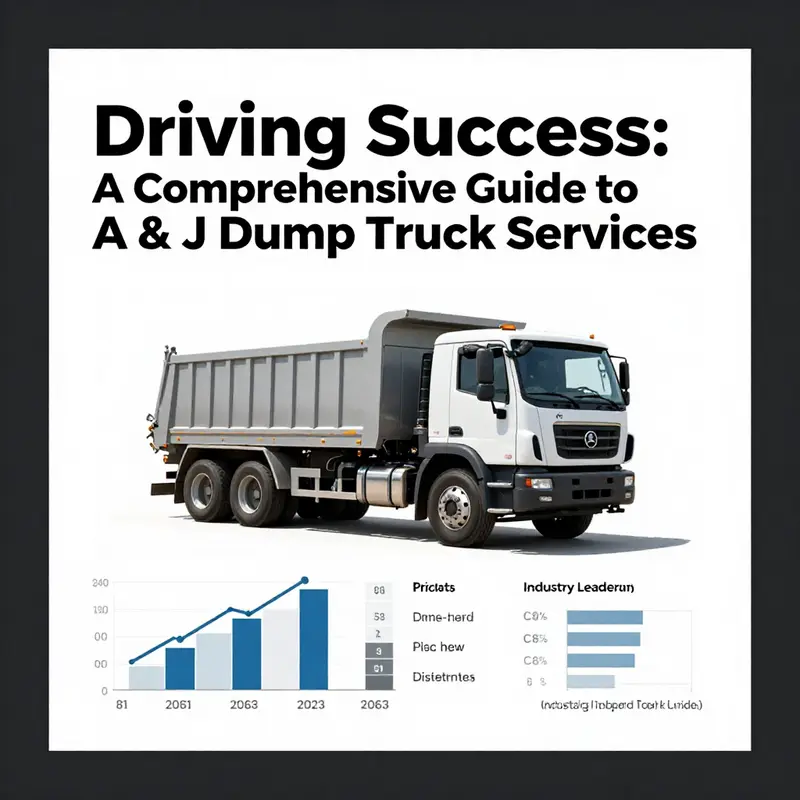
The market dynamics surrounding a hypothetical provider like A & J Dump Truck Services are not a collection of isolated forces but a single, intertwining current of demand, technology, and policy. At the heart of this chapter is the realization that articulated dump trucks, as a category, are increasingly favored not merely for their heavier payloads or their ability to climb rough terrain, but for the efficiency and adaptability they introduce to modern fleets. As infrastructure and mining investments continue to push forward in many regions, operators are scrutinizing not just the upfront cost of equipment but the total value delivered over the vehicle’s life. In this environment, the incremental benefits of an ADT—smaller turning radii on tight job sites, smoother material handling, and better load distribution—translate into tangible advantages for service reliability, customer satisfaction, and long-term profitability. A recent market outlook echoes this sentiment, underscoring how awareness of operational benefits, coupled with persistent investment in infrastructure, is expanding demand for more capable fleet configurations and intelligent fleet management, even as companies seek to reduce emissions and optimize utilization.
The macroeconomic climate matters, but it interacts with a more granular reality: the pace of fleet modernization and how quickly a company can translate capital into consistent operational performance. In many markets, the appetite for new, more efficient equipment sits alongside a broader strategy of fleet renewal. Operators recognize that aging fleets impose higher maintenance costs, increased downtime, and more variability in service levels. This recognition becomes a powerful driver for a move toward modular fleets that can be upgraded over time with smarter onboard systems and better integration with dispatch platforms. The policy landscape reinforces this trajectory. Regulatory initiatives aimed at fleet efficiency and emissions reductions are prompting operators to rethink not just what to purchase, but when to replace or augment aging assets. The incentive structure—whether through incentives, tax treatment, or regulatory requirements—can tilt investments toward more capable, cleaner technologies that reduce fuel burn and maintenance spikes. Taken together, these trends push A & J to consider a more strategic sourcing and deployment plan, one that aligns capital expenditure with measurable improvements in uptime and customer delivery cadence.
Beyond the macrodrivers, the labor market presents a pressure-and-opportunity dynamic that uniquely shapes the day-to-day viability of a service provider. The industry has long wrestled with a shortage of qualified truck drivers, and the current pace of demand only amplifies that challenge. The shortage is not uniform; it reflects a heterogeneous mix of regional supply, wage pressures, aging workers, and shifting career pathways. For a company like A & J, this means that the reliability and efficiency of its fleet become not only a matter of operating expense but a strategic lever for attracting and retaining operators. If the fleet operates with long idle times, complex maintenance cycles, or frequent breakdowns, drivers face the discouraging reality of unpredictable schedules and excessive downtime. In contrast, a well-orchestrated operation—one that minimizes idle time through smarter routing, improves on-time delivery, and reduces repetitive maintenance tasks—becomes more attractive to drivers seeking steadier work and clearer progression. The implication is clear: labor cost management is inseparable from fleet management. In a market with scarce qualified drivers, the value proposition offered by a modern, well-run fleet extends beyond wages to include predictable workloads, reduced fatigue, and better training pathways that enable drivers to operate sophisticated onboard systems safely and efficiently.
Technology is the great equalizer in this mix. The modernization of onboard systems is not a flashy afterthought but a core enabler of the broader shift toward greater efficiency and resilience. Automated dispatch and route optimization—whether through advanced telematics, real-time data analytics, or integrated scheduling software—have the potential to shrink idle time, shorten cycle times, and improve asset utilization. For a service provider, the payoff is multi-layered: lower fuel consumption through smarter routing, reduced maintenance costs via predictive diagnostics, and improved customer satisfaction through more precise delivery windows. The logic is straightforward: if drivers are scarce, the system must do more to use the assets already on the road. In practical terms, that means adopting platforms that can learn from daily patterns, flag abnormal wear before a breakdown, and dynamically adjust routes in response to weather, road conditions, or job-site access limitations. The industry literature reinforces this view, with reviews highlighting how automated dispatch systems can optimize driver utilization and asset performance in the context of heavy-duty fleets. In essence, technology becomes the bridge between a leaner labor pool and the expanding demand for reliable, timely service.
Another strategic dimension concerns where a fleet is sourced and how that choice supports long-term performance. The sourcing narrative for A & J points toward partnerships with manufacturers renowned for engineering excellence and compliance with stringent standards. In particular, Italian manufacturers are repeatedly cited as exemplars of precision engineering, capable of delivering robust, customizable platforms that can be tailored to the unique demands of heavy-material handling. Such sourcing choices are not merely about prestige; they are about aligning with suppliers who can deliver vehicles that are not only physically reliable but also compatible with the latest safety and efficiency technologies. The advantage extends to after-sales support, spare parts availability, and the ability to upgrade the vehicle’s onboard ecosystem as new standards and software updates emerge. For a service-focused operation, these attributes translate into lower lifecycle risk and more predictable maintenance planning, which again connects back to driver satisfaction and retention. Of course, the decision to pursue Italian or any other regional manufacturing partnerships must be balanced with considerations of lead times, total cost of ownership, financing mechanisms, and the ability to integrate with existing fleet management systems. Yet the strategic logic remains: a higher upfront engineering quality can yield dividends in uptime, safety, and long-term cost containment.
In practice, the convergence of macro demand, labor market dynamics, and technological innovation shapes a coherent path for A & J to navigate the market with confidence. An operator mindful of these forces would approach fleet modernization not as a one-off purchase but as a phased program that aligns with capital availability, financing terms, and the organization’s service commitments. It begins with a careful assessment of current utilization patterns and maintenance costs, followed by a staged modernization plan that prioritizes the most productivity-damaging bottlenecks. For example, the initial phase might emphasize upgrading the most frequently used assets with enhanced telematics and electric or hybrid powertrain options where available, paired with a robust preventative maintenance regime informed by real-time data streams. This approach supports not only fuel efficiency and reduced emissions but also improved reliability—an outcome that matters deeply to both drivers and customers.
Performance clarity becomes essential when the market is volatile and competition intensifies. The combination of improved dispatch accuracy, better asset utilization, and stronger driver engagement creates a virtuous cycle: higher on-time delivery rates, fewer unplanned downtimes, and a more stable wage and scheduling structure for workers. In this sense, the modern fleet is not simply a cost center but a strategic platform that underpins service quality, market credibility, and sustainable growth. It also opens doors to new business models, such as long-term maintenance partnerships, performance-based contracting, and shared-risk financing arrangements that align incentives across the value chain. As with any strategic transformation, clear governance, skilled change management, and continuous performance measurement are essential to keep the program aligned with business objectives and customer expectations.
For readers seeking a broader lens on the evolving landscape, the chapter also invites a closer look at industry discussions on fleet modernization and automation. A key takeaway is that the benefits of integration extend beyond operational savings. They foster a culture of continuous improvement, enable smarter talent development, and support responsible environmental stewardship—an alignment increasingly demanded by regulators, investors, and communities alike. To further explore these themes and to see how industry practitioners are framing the upgrade path, consider the broader conversations available in the industry blog space. 5startruckin blog
External resource: for a more technical treatment of onboard system modernization and its implications for heavy-duty fleets, see the IOP Science discussion on modernizing dump truck onboard systems. https://iopscience.iop.org/article/10.1088/1742-6596/XXXXX
null
null
Toward Proactive Uptime: The Future of A & J Dump Truck Services in a Predictive Maintenance Era

Across the wider fleet services landscape, A & J Dump Truck Services sits at a crossroads where uptime becomes the unit of value and maintenance moves from a cost center to a strategic capability. Operators who depend on dump trucks for hauling loads in mining, construction, or infrastructure projects watch for small signals—an engine note, a hydraulic hesitation, a tire that loses pressure a touch faster than the rest. Those signals, once treated as isolated incidents, are increasingly captured as data points in a growing, interconnected system. The future of the dump truck service industry is not about chasing failures; it’s about foreseeing them, scheduling around them, and delivering service with the precision that modern fleets expect. In this chapter, we explore how predictive maintenance, integrated fleet platforms, remote diagnostics, on-site service models, sustainability, and a digital‑first customer experience are converging to redefine what it means to keep a heavy-haul fleet operating at maximum uptime.
The most powerful shift is the integration of predictive maintenance and the Internet of Things. Modern dump trucks increasingly wear a network of sensors that monitor engine performance, hydraulic system health, tire pressures, brake wear, and even driver behavior in near real time. This stream of data funnels into cloud-based platforms where algorithms learn from historic patterns, flag anomalies, and forecast failures before they occur. The practical impact is cumulative: planned interventions replace unplanned breakdowns, maintenance windows become predictable, and the total cost of ownership begins to tilt in favor of reliability. Industry analyses point to striking improvements—maintenance costs can be reduced by a sizable share, and breakdown incidents can be cut dramatically when a fleet adopts a proactive stance. These gains aren’t abstract; they translate into reduced downtime, steadier production schedules, and a more stable cash flow for operators. For a service provider, the implication is clear: the core value proposition shifts from “fix when broken” to “prevent before failure,” and the ability to forecast becomes a differentiator.
Linked to predictive maintenance is the rise of comprehensive fleet management platforms. Gone are the days when service departments kept only the service history file. Today, digital ecosystems stitch together telemetry, maintenance records, parts inventories, and financial data into a single, navigable view. Fleet managers gain end‑to‑end visibility that informs not only when a machine should go to the shop, but how to optimize routes, spare‑parts procurement, and long‑term budgeting. The value operator derives is multifaceted: better allocation of skilled technicians, optimized shop capacity, and a more accurate forecast of capital expenditures. The resulting transparency reshapes the conversation with customers, turning maintenance from a tactical event into a strategic planning activity. And in this shift, the experience becomes as important as the outcome. A well‑designed digital interface can illuminate the health of an entire fleet, highlight impending risks, and guide decision making in real time. As one industry exemplar demonstrates, such platforms unify service history with live telematics to reveal patterns that were invisible before, enabling managers to methodically raise uptime and drive asset utilization higher. Within this evolving landscape, there is a clear opportunity for A & J Dump Truck Services to embrace an integrated platform approach that not only services trucks but also informs fleet strategy. For readers curious about how a leading operator balances digital dashboards with hands‑on maintenance, consider exploring the following resource: Explaining the Excellence of 5 Star Truck Inc. (internal link) to see how integrated service thinking translates into practical customer value.
The next frontier lies in remote diagnostics and over‑the‑air updates. As vehicles become more connected, technicians can diagnose issues without a truck visiting a shop. Remote capabilities accelerate troubleshooting, shorten dispatch cycles, and ensure the right parts and crews are sent with high precision. More notably, software ecosystems inside modern dump trucks enable OTA updates that improve performance, fix bugs, and fine‑tune energy management for electric or hybrid drivelines. While the physical components still require hands‑on attention, the software layer becomes a central driver of reliability and efficiency. In mining and large construction projects where downtime can cascade into costly delays, remote diagnostics turn the service equation from a reactive chore into a nimble, anticipatory service model. The emphasis shifts toward continuous improvement, with software updates delivered in the background and technicians preparing a precise, well‑timed response plan when a fault code or abnormal reading appears. This combination of remote insight and on‑demand in‑field capabilities is reshaping how maintenance work is scheduled and executed, making the dispatcher’s job more about orchestration than simple problem solving.
To minimize downtime further, the industry is expanding on‑site and mobile service models. On‑site technicians, equipped with modular, transportable toolkits, can perform inspections, routine maintenance, and even some repairs directly where the truck operates. This approach minimizes the need to move heavy equipment across congested yards or remote sites, a tangible advantage when weather, terrain, or project urgency constrain transit times. The mobile service model aligns with a broader shift toward service‑as‑a‑product, which prioritizes continuous operation and consistent reliability over a single fix. For operators, the benefit is straightforward: fewer long-term stoppages, accelerated maintenance cycles, and a smoother utilization curve for each asset. For service providers, the challenge is to balance travel time, technician specialization, and inventory with the variability of job sites. Strategic routing, standardized mobile kits, and regional partnerships with parts distributors become essential components of a successful mobile service program. The result is a service footprint that mirrors the mobility demands of today’s fleets: fast, flexible, and relentlessly focused on uptime.
Sustainability and the circular economy are no longer add‑ons; they are core business imperatives. The service ecosystem is increasingly oriented toward using remanufactured and recycled parts where feasible, reducing waste and lowering both cost and carbon footprint. Fluid recycling, proper disposal procedures, and safe handling practices are standard operating considerations in modern shops and at service sites. The rise of electric or hybrid dump trucks introduces new maintenance needs, including battery health assessment, thermal management, and battery‑system diagnostics, which require specialized training and tools. While these transitions introduce new commissioning steps, they also unlock advantages—longer component life, lower total cost of ownership, and a smaller environmental footprint. For A & J Dump Truck Services, embracing sustainable parts sourcing, validating the quality of remanufactured components, and building the capacity to service electric powertrains can position the company as a forward‑looking partner to sustainability‑minded fleets. The end result is a service ecosystem that not only protects assets but also aligns with broader regulatory expectations and stakeholder values that increasingly favor responsible stewardship of resources and energy.
At the same time, customer experience is being redesigned around digital interfaces and data transparency. Fleet managers expect seamless appointment booking, real‑time status updates, and clear, jargon‑free service reports. They want the ability to track progress, compare maintenance scenarios, and forecast future needs with confidence. This digital‑first mindset does not replace the human element; it complements it. AI‑driven chat interfaces can handle routine inquiries, triage issues, and deliver consistent information, while skilled technicians tackle the most complex diagnostics and field work. The outcome is a service relationship that feels proactive, collaborative, and trustworthy. In practice, a modern dump truck service provider will blend on‑site expertise with remote data intelligence, offering customers a view of their fleet’s health that is as accessible as their financial dashboards. The most successful operators will design service experiences that reduce the cognitive load on fleet managers, present actionable insights, and maintain a human touch where it matters most—at the decisions that affect uptime, safety, and productivity.
For A & J Dump Truck Services, the path to leadership lies in a phased yet purposeful adoption of these trends. A practical roadmap starts with instrumenting a representative subset of the fleet for predictive maintenance—introducing core sensors and a centralized data platform that collects, normalizes, and visualizes health metrics. The next phase focuses on deploying a modular fleet‑management interface that unifies service history, parts, and scheduling into a single view, enabling smarter decisions about when to repair, replace, or optimize utilization. Parallel efforts should expand remote diagnostics capabilities and establish a clear OTA update process, with governance around security and compatibility. A targeted expansion of on‑site mobile service teams, equipped with standardized tool kits and rapid‑response protocols, will further reduce downtime. Finally, the company should embed sustainability in its procurement and operations, validating remanufactured parts and embracing battery‑care specialties as electric fleets grow. Throughout this transformation, a relentless emphasis on the customer experience—clear communication, transparent pricing, and predictable service windows—will anchor trust and foster long‑term partnerships.
The convergence of data, connectivity, and agile service delivery signals a future in which maintenance ceases to be a series of isolated fixes and becomes a continuous, measurable driver of fleet performance. The dump truck service landscape is evolving into an ecosystem where uptime is engineered, not left to chance. As A & J Dump Truck Services navigates these changes, it will be well positioned to turn predictive insights into reliable operations, to convert data into dependable outcomes, and to translate digital capabilities into tangible value for clients who demand consistent, safe, and efficient performance from their heavy-haul assets. In the chapters to come, we will explore the regulatory and workforce implications of this shift, the training ecosystems needed to sustain it, and the way performance data reshapes the conversations between service providers and fleet operators. The trajectory is clear: proactive uptime is not a distant ideal but a practical, growing capability that defines the next generation of dump truck services.
External resource: The Case for Predictive Maintenance. https://www.mckinsey.com/business-functions/operations/our-insights/the-case-for-predictive-maintenance
Final thoughts
Reflecting on the journey through A & J Dump Truck Services reveals the vital role it plays in the trucking industry. By understanding the specifics of the equipment, market factors, and industry competition, drivers and fleet managers can make informed decisions that align with their operational goals. As the trucking industry continues to evolve, staying ahead requires not only awareness of trends but also adaptability in services. A & J is poised to meet these demands, ensuring both drivers and companies thrive in a competitive landscape.