
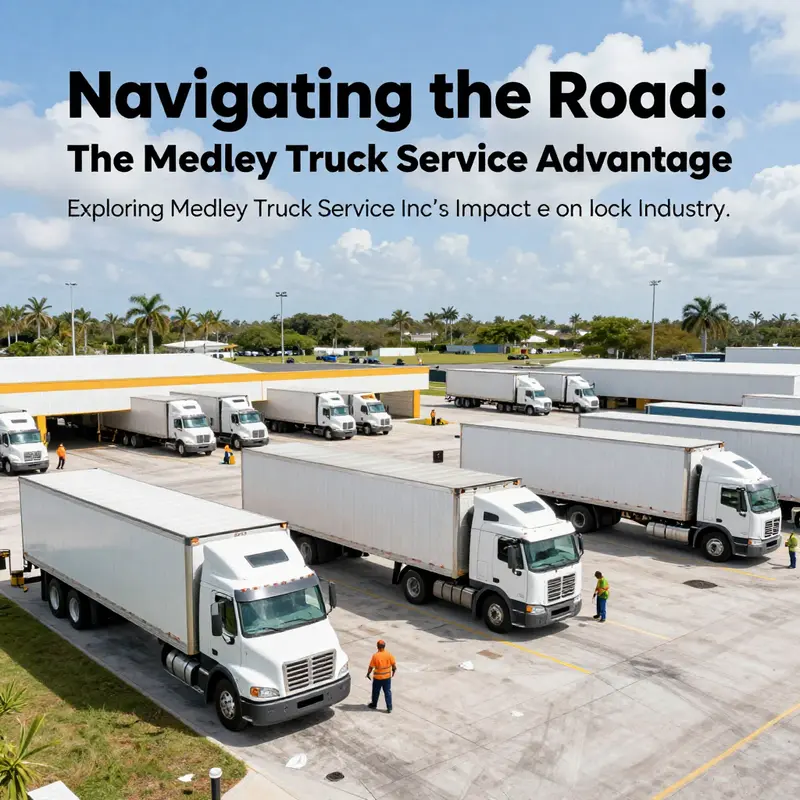
In an industry that thrives on efficiency and dependability, understanding the key players is essential. Medley Truck Service Inc emerges as a pivotal entity, offering comprehensive support for long-haul truck drivers, trucking company owners, fleet managers, and aspiring drivers alike. This article delves into the operations and benefits provided by Medley Truck Service, illustrating how it shapes the local economy and enhances the trucking experience. From an overview of its services in Chapter 1 to insights on operational efficiencies in Chapter 2, followed by an exploration of its economic impact in Chapter 3, readers will gain a well-rounded perspective of Medley Truck Service and its vital role in the trucking network.
Field by Field: Medley Truck Service Inc. and the Craft of Mobile Fleet Maintenance in South Florida
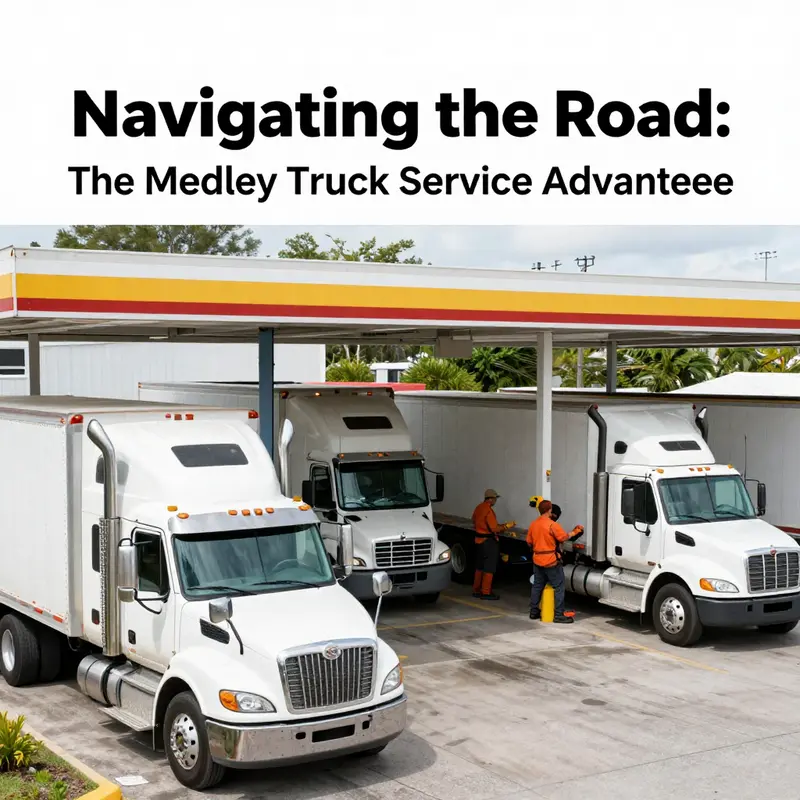
In the mosaic of South Florida’s commercial corridors, where essential goods churn through ports and long, heat-hazed highways, Medley Truck Service Inc. operates as a mobile counterpart to the fleet itself. The company embodies uptime, responsiveness, and on-site diagnostics that acknowledge the brutal calculus fleets face: time is money, and every minute a vehicle sits idle is a cost to safety, reliability, and customer promises. The truck becomes a rolling workshop, a portable service bay that travels to the problem rather than waiting for a vehicle to come to a shop, shaping maintenance as a continuous, value-driven process rather than a series of break-fix episodes.
The operational premise is simple: mobile diesel diagnostics and repair at a customer’s location, enabling rapid assessment of performance, emissions, and mechanical integrity. Fleets run from dawn to dusk across industrial parks and urban corridors. When a truck develops an engine fault or a performance sag, the time to repair can cascade into missed pickups and disrupted routes. Medley Truck Service counters this with a service posture that is preventive and responsive: urgent on-site fixes and routine maintenance to preserve the fleet’s operating window. Technicians carry tools, parts, and diagnostic interfaces to address most concerns directly on the job.
A central pillar is maintenance and repair of emission-control systems–diesel particulate filters, exhaust-fluid components, and related sensors. On-site service avoids the delays of off-site repairs and helps preserve engine efficiency, minimize fuel consumption, and maintain regulatory compliance. Technicians can diagnose faults, interpret live data, and perform cleanings, regenerations, and recalibrations so as to minimize emissions while preserving power. The nuance of field diagnostics–distinguishing temporary anomalies from persistent faults–defines the reliability fleets seek in a partner.
The mobile model also reshapes daily operations for fleets in South Florida’s varied landscape. A mobile capability reduces the risk of missed appointments and unplanned downtime. Technicians can schedule diagnostics within a fleet’s cycle, perform preventive maintenance during a routine stop, or respond quickly to a breakdown at a critical moment. This flexibility is a strategic asset that helps fleet managers smooth variability from weather, demand, and urban traffic, returning trucks to service faster and with clearer lines of communication between fleet managers and technicians.
In sum, Medley Truck Service Inc. stands as an illustration of how mobility, expertise, and uptime converge to shape modern fleet maintenance. Their field-based approach complements traditional workshops, embracing the realities of modern logistics while preserving engine performance and environmental compliance. It’s a reminder that today’s trucking is a choreography of data interpretation, schedule governance, and human skill that keeps supply chains alive and ticking. The broader point is that service isn’t a single act but a medley of responsive, knowledgeable, and humane interventions that keep the road network moving.
Rhythms on the Road: Untangling the Operational Medley of A L Service Trucking
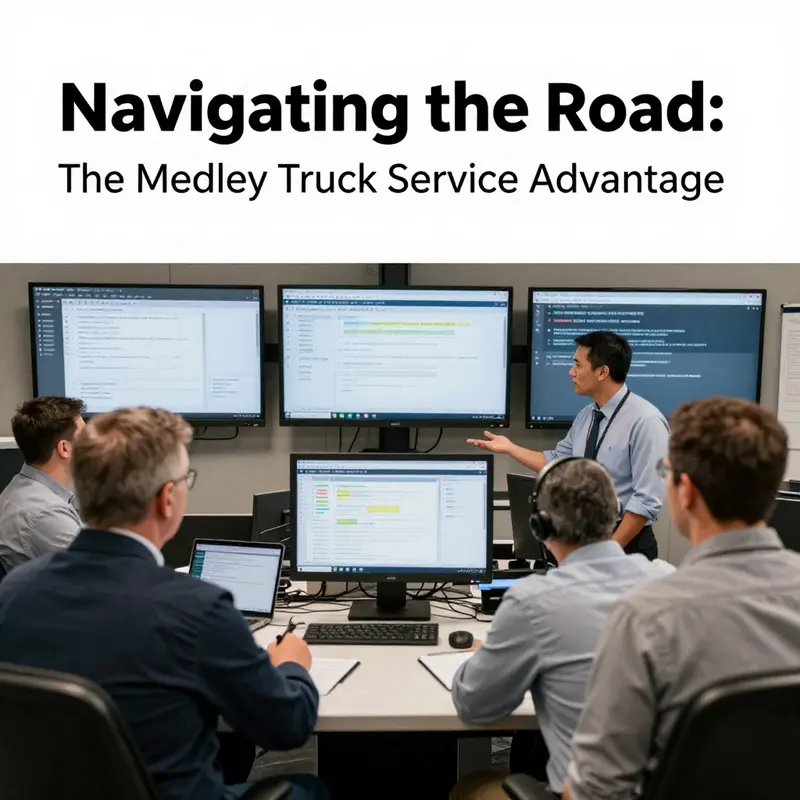
The phrase a l service trucking medley evokes more than a single business line or a lone fleet fix. It conjures a cadence that blends maintenance, dispatch, compliance, customer service, and the quiet discipline of drivers who move goods through complex corridors of commerce. In Medley, Florida, a town that sits near key transportation arteries and the ever-busy ports, the everyday orchestration of trucking services becomes a study in how small, locally rooted players intersect with larger logistical currents. The clues about what an enterprise like A L Service Trucking Medley may be, and what it might teach us about operational capability, are not always explicit. What emerges, when we listen closely to the patterns—through the work of nearby service shops, the rhythms of yards, and the temper of local labor markets—is a robust picture of an industry whose strength rests on the speed and reliability of its operational medley rather than on the brilliance of a single move.
If we sift the available signals, the most plausible reference that aligns with the phrasing is a company named Medley Truck Service Inc, located in Medley, Florida. Its existence frames a practical lens through which to view the day-to-day lived realities of trucking service. The other local entrant, H & L Trucking Services Inc, appears in corporate records as inactive, a reminder that the road to steady service is as much about sustaining capability as it is about discovering it. Beyond these specific firms, the broader ecosystem shows a familiar tension: the push-pull between maintenance rigor and market pressure, between the lure of automation and the tactile, sometimes stubborn, craft of keeping a fleet rolling. In this sense, the Medley medley is less a single performance and more a continuous concert of routines that, when played well, translate into uptime, safety, and predictable service for customers who rely on trucks to keep their operations moving.
To understand the operational core, one begins with maintenance as the quiet backbone. In a world where a single breakdown can ripple into late deliveries, scheduling becomes an act of strategic choreography. It is not enough to fix a problem; the challenge lies in foreseeing it. Fleet managers and shop technicians—whether they work in a modest repair facility or a larger service complex—build a pattern of checks and signals that anticipate wear, gauge stress, and balance competing pressures: the cost of downtime against the cost of maintenance, the urgency of deliveries against the need for thorough inspection, and the safety of drivers against the imperatives of the timetable. In Medley, with its mix of small operators and mid-size fleets, the maintenance medley often hinges on a personal, hands-on approach. Close-knit relationships between shop technicians and fleet operators foster trust and speed. A technician who understands the daily realities of a local driver can schedule routine care in a way that minimizes disruption, while a fleet manager who knows the shop’s constraints can plan maintenance windows with precision.
Telematics and data-driven maintenance have become increasingly common across the industry. The same data streams that guide long-haul capital projects also illuminate the daily rhythms of smaller fleets. Predictive maintenance, trailblazing in some segments, translates to reduced unscheduled downtime, better tire wear management, and more efficient use of brake systems and drive-line components. The cost calculus changes when you move from reactive repairs to preventive steps that preempt failures during a run. Yet the real payoff of this shift is not just asset uptime; it is the ability to align maintenance with dispatch, route planning, and customer commitments. A well-timed service window may appear as a small concession in a day’s schedule, but it can create a larger cushion in the fleet’s ability to meet delivery windows, avoid late fees, and preserve the health of long-haul relationships that hinge on reliability.
Within this operational frame, the workforce emerges as the most critical variable. Drivers, in particular, are the front-line ambassadors of an organization’s reliability. Their experiences of management, training, safety culture, and workplace environment shape not only their own performance but the entire system’s resilience. The research feed around Medley suggests a spectrum of management styles that can influence morale and retention. In some cases, work environments praised for clear communication, predictable routines, and supportive supervision tend to translate into steadier on-time performance and lower turnover. In other contexts, tension between field expectations and corporate constraints can manifest as delays in decision-making or friction in scheduling, which in turn reverberates through maintenance cycles and customer handoffs. In this sense, the operational medley is as much about people and culture as it is about gears and routes.
The Medley ecosystem seems to reflect a broader trend in trucking: the increasing centrality of uptime as a competitive differentiator. When you move from a mindset of simply getting a load from point A to point B to a mindset of keeping that movement continuous, a new set of practices comes into view. Maintenance programs become integrated with route planning, driver training with safety analytics, procurement with lifecycle management of equipment, and service with data-literate decision-making. This is not a purely technical puzzle; it is a social and logistical one. The integration requires a shared language among shop staff, dispatchers, and drivers—how they talk about wear, what they measure, and how they respond when a signal indicates a potential fault. The more fluent that shared language, the more effectively the medley plays in harmony rather than producing jarring stops.
To imagine operational insights in this context, consider the dynamic tension between fleet flexibility and standardization. Flexibility is the ability to re-route, re-prioritize, or re-task a vehicle in response to weather, port congestion, or a sudden customer demand. Standardization, conversely, yields reliability through repeatable processes. The most resilient operations strike a balance: they standardize what matters most—such as safety checks, pre-trip routines, and fault-reporting formats—while preserving the capacity to adapt to shifting conditions. In Medley’s setting, the balancing act may revolve around pre-planned maintenance windows that do not derail daily dispatch, and repair workflows that can accommodate urgent loads without compromising long-term asset life. When the shop and the dispatcher collaborate as a single system, the medley becomes a performance where routine tasks yield non-routine gains—shorter repair times, faster back-to-work cycles, and better adherence to service promises.
There is a curious undercurrent in the empirical landscape: larger players in the region have long histories of integrating maintenance with procurement, training, and safety programs. Reports and employee perspectives from a nearby major carrier in Medley hint at how management styles inland on the road can shape a company’s operational tempo. Those perspectives remind us that the operational medley is not simply a matter of mechanical efficiency; it is also a barometer of leadership, workforce development, and the capacity to translate strategic aims into on-the-ground action. The interplay between managers and frontline crews—drivers, technicians, and inspectors—forms a feedback loop whereby improvements in one area reinforce gains in another. A driver who experiences well-planned downtime, transparent communication, and dependable maintenance is more likely to stay engaged, perform consistently, and contribute to safer road behavior. Meanwhile, a technician who sees his or her maintenance plan aligned with dispatch realities tends to respond with proactive care rather than reactive blitzes.
This sense of alignment brings to mind a broader, cross-industry lesson: maintenance training and ongoing skill development can be a decisive factor in uptime and safety. The literature and practice notes from related fields emphasize that well-structured training reduces the friction that can emerge when new procedures or updated safety standards are introduced. In a trucking context, ongoing training translates into more confident drivers, better use of diagnostic tools, and safer handling of equipment under real-world conditions. Such training is not a one-off event; it is a rhythm—an ongoing performance that mirrors the cadence of daily operations. The medley thus relies on both the durability of machines and the durability of people: skilled technicians who understand the nuances of the fleet and drivers who carry a safety-conscious mindset into every mile.
As the medley unfolds, the role of data in shaping decisions becomes increasingly central. Yet data without context can mislead as easily as it can guide. The most effective operators embed data in narrative: the story of a route that repeatedly taxed a particular component, the recurring pattern of delays tied to a specific time of day, or the correlation between preventive maintenance and higher uptime. When teams cultivate this storytelling habit, operations stop feeling like a series of stalled moments and become a continuous arc of improvement. In Medley, those arcs are lived daily in yards and roadways, where small acts—handing off a load with precise documentation, readying a truck in a predictable sequence, or signaling a potential issue in a manner that invites quick action—accumulate into a robust operational profile. The medley thus transforms from a vague concept into a set of observable practices that define performance, trust, and the capacity to meet customer expectations with reliability.
In this landscape, the question of visibility—how much a company can learn about its own operations—takes on practical meaning. Small and medium fleets rarely possess the luxury of separate, extensive analytics departments. Instead, they build practical dashboards from the data that already exists: maintenance logs, fuel usage, engine hours, and downtime incidents. The act of converting those signals into usable insights requires discipline and taste: knowing which indicators deserve priority, how to quantify the impact of a single repair on a future delivery window, and how to translate those insights into clear, actionable plans for both drivers and shop crews. The medley thrives when the timetable is respected and when lessons learned in one week inform next week’s plan. This forward-looking discipline is a form of operational artistry—a craft that keeps the tempo steady while allowing for improvisation when the road throws a curveball.
To look beyond the local frame, it helps to recognize that medleys like these are echoed in broader industry currents—trends toward smarter fleets, better maintenance governance, and more humane working conditions for drivers. While the data about a specific entity named A L Service Trucking Medley may be sparse, the pattern is clear: performance emerges from the synthesis of stable routines and adaptive decisions. The maintenance shop, the dispatch desk, the driver’s cab, and the customer’s office are not isolated silos; they are linked in a continuous cycle that governs reliability. The more seamlessly those links function, the more resilient the operation becomes. And in Medley, where a small cluster of service providers shares a common regional geography and a shared sense of purpose, the medley has the added dimension of community: a network effect where the success of one enterprise reinforces the strength of the whole.
As this chapter moves toward a close, consider the practical consequences for readers who may be charting their own path through a medley of trucking services. First, recognize that uptime begins long before a truck leaves the yard. It begins with the maintenance plan that anticipates wear, a route schedule that respects drivers’ limits, and a dispatch culture that communicates with clarity and immediacy. Second, appreciate that people drive the operation as much as machines do. The best-performing fleets in Medley demonstrate that the value of training, safety culture, and supportive leadership cannot be overstated. Third, remember that automation and data play supportive roles; they empower human decision-makers rather than replace them. The most durable medleys are those in which people interpret data with judgment, embed learning into daily routines, and keep a watchful eye on the balance between standardization and flexibility.
In closing, the operational medley of A L Service Trucking, viewed through the lens of Medley’s local ecosystem, offers a compact lesson about how small and mid-sized trucking operations can remain competitive in an era of evolving technology and growing complexity. It is a reminder that reliability is a practice of daily habits, that maintenance is not merely a service activity but a strategic discipline, and that the road’s cadence frames how a fleet meets the demands of customers while safeguarding the well-being of its drivers. For readers aiming to deepen their own understanding of operating trucking services with discipline and care, the road is not just a route but a teacher—and those who listen closely will discover that the medley’s true tempo lies in the steady, human-centered routines that keep goods moving, mile after mile, in a world that never stops needing reliable freight movement. To explore a related facet of maintenance training and its role in uptime, you can consult resources that address dedicated maintenance education within the broader context of fleet operations, such as the linked topic fire-truck-maintenance-training-importance, which offers transferable insights across emergency and commercial fleets. https://5startruckin.com/fire-truck-maintenance-training-importance/. This cross-pollination underscores a simple truth: the better you train, the fewer surprises the road will throw your way, and the longer you can keep the tempo of the medley steady for customers who depend on dependable, on-time service. For readers who wish to situate these reflections within a wider industry narrative, a broader external resource related to transportation statistics and trends provides useful context about how trucking fits into the national movement of goods, demand cycles, and fleet utilization. External resource: https://www.bts.gov.
An Engine of Local Prosperity: The Geographical Ripple of a Medley-Based Trucking Operation
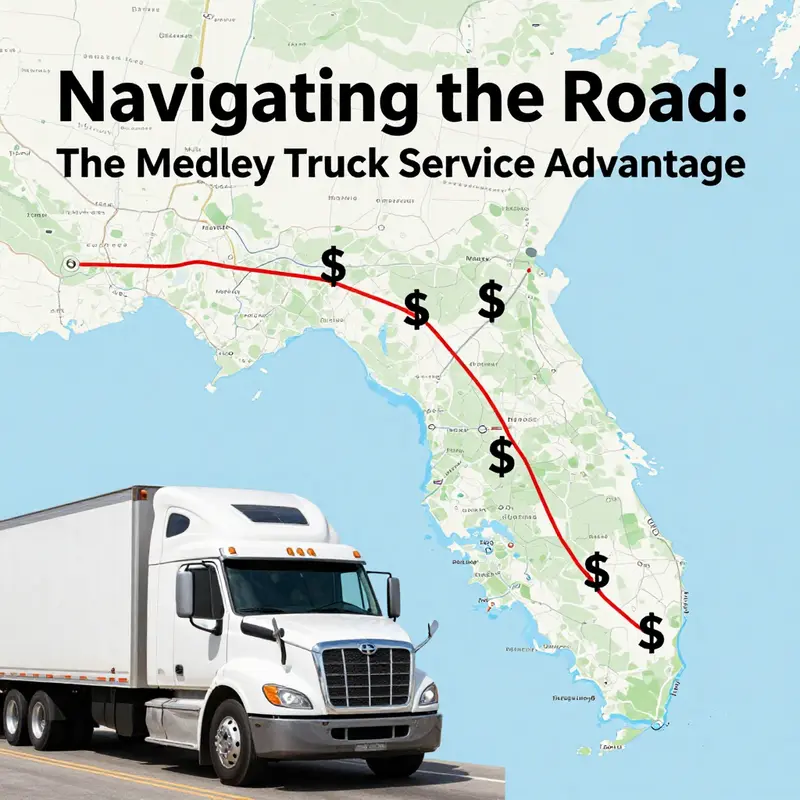
A Medley-based trucking operation sits at the heart of a regional network where highways thread through neighborhoods, warehouses, and neighborhoods again, like veins feeding a living organism. When a single logistics enterprise moves from dawn to dusk, it does more than haul cargo from point A to point B. It orchestrates a subtle, ongoing exchange among people, places, and budgets that shapes the texture of daily life across the town and its surrounding countryside. This chapter moves through the geography of that influence, not as a dry ledger of numbers but as a narrative of place, people, and policy. It asks what it means for a local economy when a trucking firm becomes a consistent, if modest, presence on the landscape rather than a fleeting visit of trucks passing through. The answer lies not in high walls of data alone but in the way real dollars circulate in the places where workers live, buy groceries, attend school, and repair their own vehicles after a long shift behind the wheel.
In the simplest terms, a Medley-based trucking operation contributes to the local economy through direct, indirect, and induced effects. Direct effects are obvious: jobs for drivers, dispatchers, mechanics, and administrative staff; wages paid to these workers; and the firm’s purchase of local services for maintenance, insurance, and office needs. Yet the most revealing part of the story unfolds when we turn to the indirect and induced channels. Indirect effects emerge as the trucking firm spends with local suppliers—fuel and lubricants from neighborhood stations, tires and parts from nearby shops, maintenance services from local garages, and even the legal and financial services that support day-to-day operations. Each dollar remitted to a supplier reverberates through the supplier’s own network: the shop owner who hires an apprentice, the fuel station that refills its inventory, the wholesaler who orders more inventory because of increased demand. Those ripples reach even farther, into the lives of families who rely on the supplier’s cash flow to pay tuition and healthcare bills, to fix leaky faucets, or to take a child to a community event after a long week of work. The induced effects—spending by employees earned through these activities—round out the triangle. When workers trade their paychecks at local grocery stores, restaurants, and service providers, the impact becomes visible in storefronts, in the hours of neighborhood staff, and in the incremental growth of street life and civic participation.
The geography of this impact is not uniform. It concentrates along corridors where fuel stops, repair shops, and maintenance houses cluster, creating a local rhythm of activity that can be felt in small business revenue, school enrollment, and even property values. When the workforce of a trucking operation is stable, the residents around it see a more predictable pattern of income and spending. The money circulates not only within the firm’s walls but through the surrounding ecosystem of service providers and retail outlets. A local café near the maintenance yard may find its morning business steady as drivers come in for coffee before shifts, while a nearby hardware store might experience a modest uptick in demand for replacement tools after a fleet-wide preventive maintenance cycle. Even the public sector benefits, as steady payrolls translate into regular tax receipts and a more predictable property tax base, which, in turn, supports schools, parks, and basic municipal services.
But the geographical story also carries caveats. Freight transport, by its very nature, imposes external costs that can dampen net benefits if not managed carefully. The environmental footprint—emissions, fuel consumption, noise—touches communities beyond the immediate yard. Road wear, congestion, and the need for better infrastructure to handle heavy vehicles require deliberate planning and investment. In a town like Medley, the balance between local gains and external costs hinges on policies that encourage efficiency, reduce unnecessary idling, and promote cleaner practices. Sustainable logistics—such as optimizing routes to avoid bottlenecks, investing in well-maintained fleets, and coordinating with public agencies to time deliveries during off-peak hours—can enhance the positive geography of the operation. These measures do not merely reduce harm; they actively widen the circle of local benefits by supporting a healthier environment, smoother traffic patterns, and a stronger appetite for investment in the area.
The methodology that helps illuminate this geography borrows from well-established approaches used to evaluate the economic footprint of other large local institutions. A key idea is to distinguish local spending from non-local spending and to trace how each category feeds back into the community. In the trucking context, this means mapping expenditures for fuel, maintenance, and parts that circulate through neighboring shops and service providers, then tracking how wages are spent within the region. Measuring these dynamics requires careful data collection that respects the distinction between what happens inside the town’s boundaries and what occurs elsewhere. It is not enough to tally payrolls; one must also account for the hours drivers spend at the terminal after completing routes, the calibrations of maintenance crews who rely on local supply chains, and the subtler forms of economic influence, such as the way a truck’s schedule affects the availability of parking in a diner lot or a repair bay after a late shift. In this sense, the geography of the trucking firm’s influence is as much about time and space as about dollars and cents.
The framework that helps us translate these observations into meaningful insight also points to a broader understanding of the industry’s place in a regional economy. The literature on the economic contributions of local institutions—such as a college or university to a nonlocal economy—offers transferable methods for teasing apart local versus nonlocal expenditures and their multipliers. When adapted to trucking, these methods illuminate how a local operation shapes demand in a tightly bounded economy while also drawing in benefits from outside markets. The key takeaway is that the most powerful positive effects come from anchor-like behaviors: purchases made locally with regular cadence, long-term employment relationships, and a culture of reliability that encourages nearby businesses to invest in their own capabilities. In short, a Medley-based trucking operation can become a dependable economic partner for the region by aligning its procurement, workforce development, and community engagement with local needs and opportunities.
The multiplier concept—often described in economics as the idea that one dollar of spending can generate more than one dollar of economic activity—serves as a helpful lens here. Each dollar spent by the trucking operation on fuel, maintenance, and payroll is not a solitary transaction; it becomes several, as those dollars cycle through the local economy. A mechanic who earns wages will spend part of that income in the same neighborhood, supporting a string of micro-decisions that sustain multiple small businesses. A fuel station that sees a regular influx of local customers expands its service offerings, potentially creating hours and jobs that did not exist before. A parts supplier may hire additional personnel to meet demand, extending the reach of the initial expenditure far beyond the immediate transaction. When multiplied, these effects can accumulate into a visible uplift in business confidence, allowing neighboring firms to expand, invest in training, and adopt practices that further improve efficiency and reliability. The net effect, though not always dramatic in relative terms, is a steady, cumulative improvement in the local economic fabric that is inseparable from the operation’s ongoing activity.
Yet this geography is not a one-way street. The local economy also shapes the trucking operation’s capacity to perform. A city’s transport network—its roads, bridges, interchanges, and access points to major corridors—sets the stage for efficiency. When a community commits to infrastructure upgrades, it reduces the time trucks spend idling in traffic, shortens the duration of deliveries, and minimizes maintenance costs caused by rough surfaces and weight exposure. Proximity to merchants who supply parts and fuel in a timely fashion matters as well. A stable pool of skilled labor is another form of macro-asset. If the town cultivates workforce development—through vocational training, apprenticeships, and partnerships with local educational institutions—the operation gains access to capable technicians who understand the specific needs of heavy vehicles and the wear patterns they encounter on regional routes. The result is a virtuous cycle: improved infrastructure and a skilled, available workforce amplify the operation’s reliability, which in turn makes the locality more attractive for other firms and for potential investment.
These dynamics are not merely theoretical. They manifest in the lived experience of residents who see the town’s rhythm shaped by the repetitive, predictable cadence of the Medley-based trucking operation. A morning hum comes from the yard as engines wake and papers shuffle in dispatch rooms; a lunch break becomes a moment of peripheral commerce as drivers dimly illuminate the map of their routes and discuss weather and road conditions with shop owners down the block; an evening wind carries the scent of diesel and distant tires, a reminder that the town’s population is in many ways anchored to the facility’s outputs. In such moments, local leaders can observe how the operation’s choices—whether to invest in a newer fuel-efficient fleet, to schedule deliveries to avoid peak congestion windows, or to collaborate on a regional training program—translate into tangible benefits for the community. The same leaders must also acknowledge the responsibilities that come with this presence. The external costs demand policy attention, not as a punitive narrative but as a path to a smoother, more sustainable equilibrium between economic vitality and resident quality of life. This means embracing cleaner practices, investing in shared infrastructure, and fostering a culture of transparent dialogue between the firm, its employees, and the neighborhoods that host it.
The policy implications extend beyond the yard and the highway. Local governance can play a pivotal role by creating spaces for ongoing conversation about logistics impacts and by offering incentives for practices that reduce negative externalities. Programs that encourage route optimization, better maintenance schedules, and fuel-efficient operations can deliver double dividends: environmental improvement and more stable, predictable spending patterns that benefit multiple sectors of the economy. In addition, public-private partnerships can support workforce development tailored to the region’s needs, ensuring that training pipelines feed into sustainable employment opportunities that align with the operations’ long-term plans. When communities invest in the human and physical capital that underpin trucking activity, they do not merely react to transportation demands but shape them in ways that are compatible with local growth trajectories. In this sense, the geography of economic impact becomes a joint project, shaped by the firm’s strategic decisions and the community’s policy choices.
One of the subtle but essential elements in this geography is resilience. A Medley-based operation that anchors itself within the local economy—through steady payrolls, predictable supplier relationships, and a commitment to local procurement—builds a form of economic resilience that can dampen external shocks. In periods of national downturn or localized stresses, the firm’s ability to sustain employment and to maintain a consistent level of spend on local suppliers can make the difference between a fragile economy and one that holds together under strain. Similarly, a flexible, well-connected network of suppliers and service providers can adapt to shifts in demand, such as changes in freight patterns or the emergence of new logistical technologies. When the operation and the community share knowledge, adopt best practices for maintenance, and pursue continuous improvement, the combined effect is to strengthen the region’s capacity to absorb shocks and to pursue opportunities with greater confidence.
The broader regional impact is also worth considering. A trucking operation that thrives locally can attract ancillary services and investment. Small repair shops may broaden their capabilities, expanding hours or bringing in new equipment to service heavier fleets. Local training centers might collaborate on programs that prepare workers for high-skilled, higher-wage roles in maintenance, compliance, and dispatch operations. The presence of a stable employer in the transport sector can stimulate entrepreneurship in logistics-adjacent businesses—warehousing optimization startups, last-mile solutions, or data-enabled routing services—that, in turn, diversify the economic base of the town. The cumulative effect is a landscape where roadways, employment, and commerce are interconnected, each reinforcing the other in a cycle that is as much about community stewardship as it is about profits. In this light, the Medley-based trucking operation becomes not a mere mechanism of movement but a driver of place-making: a catalyst for community identity, skill development, and shared prosperity.
To ground these observations in a practical frame, consider the value of governance that supports accountable, transparent operations. Public dashboards that track traffic impact, environmental performance, and local supplier engagement can help the community and the firm align on shared objectives. Stakeholders can work together to standardize procurement with local vendors, establish clear expectations for maintenance schedules, and create recourse channels that address complaints about noise, congestion, or safety concerns. The aim is not to suppress the activity but to harmonize it with the rhythms of the town—the early morning deliveries, the midday maintenance breaks, the evening departures—as part of a daily economy that residents participate in with pride. In doing so, the Medley-based operation can be seen as a steady, evolving presence that contributes to the local economy in a way that is accountable, measurable, and constructive. It is not a single act of commerce but a pattern of behavior that, when guided by thoughtful policy and community engagement, yields steady, sustainable gains for the region.
For readers seeking practical perspectives on industry standards and reliability—perspective that complements the narrative above—consider the ongoing conversations in the broader trucking community. 5StarTruckIn blog provides accessible reflections on industry trends, maintenance practices, and reliability benchmarks that can illuminate how a local operation might improve its own performance while staying aligned with community expectations. You can explore these insights at the following resource: 5StarTruckIn blog. 5StarTruckIn blog.
This chapter does not pretend to offer a closed accounting of every dollar or a final tally of benefits. Instead, it presents a grounded, place-based view of how a Medley-based trucking operation interacts with its surroundings in ways that matter to everyday life. It shows how direct employment creates a platform for broader economic activity, how local procurement binds the firm to the community, and how disciplined, evidence-based policy can amplify positive effects while mitigating negative ones. It is a reminder that the geography of economic impact is inseparable from the geography of relationships—the ties between a business, its workers, the suppliers who keep the wheels turning, and the residents who rely on predictable services and a stable tax base. In that sense, the operation is as much a partner in local development as a participant in the region’s commerce. The outcome hinges on shared responsibility, continuous learning, and an ongoing dialogue that treats trucking not as a temporary logistical necessity but as a durable feature of the regional landscape.
External resource for further methodology and context: https://www.sciencedirect.com/science/article/pii/S096585642300175X
Final thoughts
Medley Truck Service Inc stands as a cornerstone of the trucking industry in Florida, providing essential services that enhance operational efficiency and support local economic growth. With its dedicated staff and strategic location, it addresses the diverse needs of long-haul truck drivers and fleet operators. Understanding the intricate link between transport services and economic vitality emphasizes the importance of such entities in sustaining the broader logistics landscape. As we continue to navigate the ever-evolving landscape of trucking, Medley Truck Service will undoubtedly remain a vital player in steering the future of transport.