
The realm of commercial trucking is not just about transporting goods—it’s heavily contingent on optimizing maintenance and service, especially for tires that support these massive vehicles. A&M Truck Tire Service Inc. has come under scrutiny for verification challenges that have sparked inquiry among long-haul truck drivers, trucking company owners, and fleet managers. This article seeks to clarify the status of A&M Truck Tire Service Inc., compare it with relevant competitors like A-1 Truck Tire Service, delve into the historical context of tire services, and explore operational practices widely adopted in the industry today. Moreover, we will project future trends, equipping stakeholders with insights critical for navigating the road ahead.
Beyond the Signage: Navigating Verification in the Truck Tire Service Landscape
When a fleet manager asks for tire service that can keep a week on the road, the instinct is to pick a name and hope for the best. In truck tire service, the reliability of online identifiers can be as critical as the service itself. The case around a similarly named provider illustrates a broader truth: uptime, on time response, and precise tire maintenance depend on credible public records as much as the maintenance plan. A mismatch or variation in company naming can create a gap between interest and confidence, a gap that verification can narrow.
A verified business profile typically signals current hours, service areas, licensing status, and contact points that align across channels. It reduces cognitive load for dispatchers who must decide whom to call when a tire urgently needs replacement on a highway with limited options. Conversely, unverified listings introduce friction: an old address, outdated hours, or a phone number that rings to voicemail can waste minutes that matter when a fleet is under pressure. In trucking, time is currency, and every minute saved translates into more reliable service and shorter downtimes.
From a risk management perspective, verification is a practical safeguard. It creates trust by showing that the business is active, accountable, and capable of meeting a fleet’s tire needs. A cross channel data strategy that unifies name, address, and phone across a shop and its mobile service footprint reduces misrouting and disputes about legitimacy. It also signals to customers that the company takes data seriously and values accuracy as a core operating principle.
To translate these insights into action, tire service operators should embed verification in daily practice. First, claim key profiles on major platforms and ensure data is consistent. Second, publish a clear service description that reflects the company’s scope, including mobile tire service capabilities if applicable. Third, monitor and respond to reviews to demonstrate accountability. Fourth, verify licensing and align it with the physical location and service zones. Fifth, maintain a cross channel data map so a fleet manager sees a unified footprint across platforms. The outcome is a credible, frictionless discovery experience that reduces lead time and boosts dispatch confidence.
Ultimately, verification is not a marketing veneer but a quality signal that supports dependable tire care at scale. For fleet operators, it answers a fundamental question: can I rely on this partner to deliver the right service at the right time, in the right place? For service providers, it is a disciplined practice that protects revenue, enhances transparency, and strengthens long term partnerships with carriers and logistics providers who demand reliability as much as price.
Roadside Reliability: Untangling the A&M Truck Tire Service Narrative Through a Close Look at Mobile Tire Support
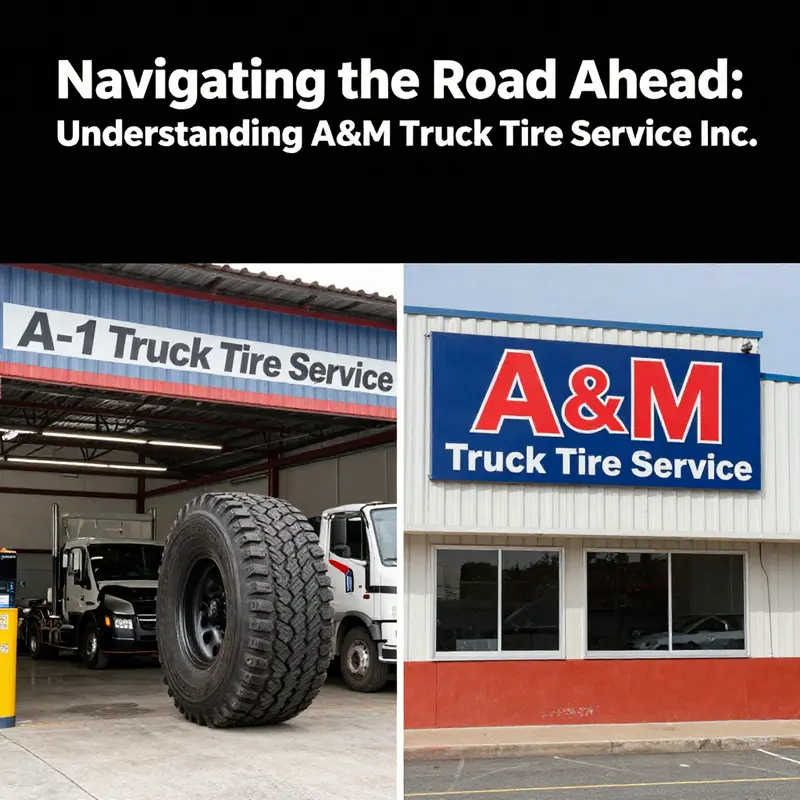
When names drift or confuse, so too can perceptions of a market. In the trucking tire service landscape, a misremembered company name does more than spark a search. It invites a deeper inspection of how on-the-road tire service has evolved, what operators value most in urgent moments, and how a fleet manager weighs the costs of downtime against the price of service. The closest real-world reference to the elusive A&M Truck Tire Service Inc. lies not in a spotless corporate record but in a nearby firm that embodies the same core requirement: when a tire fails, time matters. That nearby firm, a mobile-first operation with a fleet-centric mindset, reveals the practical anatomy of what customers now expect from tire service providers. It becomes a lens through which the broader market’s mechanics—mobility, uptime, and trusted on-site support—can be understood without getting lost in a name.
From the outset, the mobile tire service model centers on speed, accessibility, and the ability to bring the workshop to the truck rather than the truck to the workshop. The most telling feature of the exemplar company is its on-the-ground logistics: a handful of service trucks stationed for rapid deployment, equipped with the tools, spare tires, and diagnostic means necessary to handle most roadside tire events. The operational logic is straightforward, but its execution requires discipline. Each service vehicle must be stocked not only with tires in a range of standard sizes but also with the specialized tools that permit on-site repair, patching, and, when necessary, rapid wheel changes. The emphasis on rapid deployment translates directly into reduced downtime, a metric fleet owners watch as keenly as fuel economy or driver hours. A provider that can respond within minutes rather than hours becomes a de facto partner in fleet reliability, a role that cannot be automated away by price alone.
What makes the mobile service approach compelling is not merely the ability to replace a failed tire but the broader value proposition around uptime. For long-haul operators and regional fleets, a roadside incident often triggers cascading consequences: a late delivery window, rescheduled dispatches, and increased labor costs associated with detours and rescheduling. A provider that offers 24/7 roadside assistance and on-site tire service positions itself as a risk mitigation tool rather than a simple parts supplier. In the market narrative, this distinction matters. A full-service repair shop does excellent work, but if it cannot attend the scene promptly, the downtime still accumulates. The mobile model speaks to the preference of fleets for predictable containment of downtime. It is a narrative of service as a critical utility—like power or fuel—rather than a discretionary line item.
Operatively, the firm under study demonstrates a blend of scale and specialization. Five service trucks, as reported in industry summaries, imply a deliberate balance: enough capacity to cover a large regional area while maintaining the nimbleness and redundancy needed to handle multiple emergencies simultaneously. The 24/7 availability is not a marketing line but a real operational constraint that structures driver schedules, parts logistics, and the etiquette of escalation. In the eyes of a fleet manager, the immediacy of response becomes a factor in choosing a tire service partner, alongside the accuracy of tire identification, the professionalism of the on-site crew, and the transparency of pricing. In practice, customers expect not only to be back on the road quickly but to have confidence that the on-site technician understands the fleet’s typical routes, load demands, and the risk tolerance that keeps a truck moving.
Another facet of the mobile service model is customer engagement and after-sales support. The provider’s value add extends beyond a single incident. On-site maintenance capabilities, preventive checks, and post-service follow-ups translate into higher customer satisfaction, which, in the sector, is closely tied to reliability, predictability, and clear communication. A strong on-site service readies a fleet for the next dispatch, not just the next tire change. This approach aligns with broader market dynamics where maintenance providers increasingly serve as fleet partners, offering consultation on tire health, rotation schedules, and part-life forecasting. Such a partnership reduces the risk that a single failure becomes a fleet-wide disruption. In a feedback-driven industry, the customer sentiment reflected in service ratings—high marks such as near-perfect satisfaction—speaks to the intangible benefits of trust, responsiveness, and a service ethos built around reducing drivers’ stress and dispatchers’ uncertainty.
In the monetary dimension, the competitive edge of a mobile tire service operator often centers on cost efficiency as much as speed. The broader market for premium tires remains robust, driven by freight volumes and aging vehicle fleets. With demand for high-quality tires continuing, buyers weigh the total cost of ownership alongside the immediate price tag of a tire change or repair. The traditional model of ordering tires through a wholesale channel and trucking through a central facility can be slower and more disruptive compared with mobile service. The mobile operator’s economics hinge on efficient parts logistics, effective routing, and high first-time fix rates. When a technician can determine, on site, whether a tire can be repaired, patched, or must be replaced, the fleet avoids unnecessary tire substitutions. In practice, the decision hinges on an assessment that balances safety, roadworthiness, and the probability of repeat incidents within the next miles of travel. In this calculus, the ability to offer flexible payment options—ranging from traditional methods to more contemporary arrangements—matters as well, with providers sometimes accommodating letters of credit or electronic transfers to align with fleet procurement cycles.
From a market perspective, the narrative is not simply about tires but about the logistics ecosystem they inhabit. Replacing a tire is not the same as replacing a part that can be swapped in a central shop. Tires are a critical interface with the road, and the failure of a tire can threaten safety, asset integrity, and service quality. The mobile service model acknowledges this by prioritizing on-site expertise, a culture of speed, and the deployment of a lean, capable workforce that can adapt to changing weather, road conditions, and traffic realities. This dynamic is particularly relevant for fleets that operate across varied geographies, where on-site capabilities become a differentiator between uptime and extended downtime. In such markets, the value is not only in the tires themselves but in the service architecture that can deliver lifesaving reliability when a truck is most exposed to risk—on the highway, under heavy load, with deadlines looming.
To put these ideas into a broader frame, readers can consider the industry as a spectrum where on-site tire capability sits between a reactive tire shop and a fully integrated maintenance network. The mobile model belongs to the reactive end but with a twist: it blends on-demand service with preventive value through routine on-road checks. Readers who study fleet maintenance programs will recognize this as a practical strategy for reducing downtime without compromising on safety. The market remains unforgiving of slow response times; while tire technology and manufacturing progress steadily, the real differentiator in service remains how quickly a provider can physically reach a truck, diagnose the issue, and implement a solution that keeps the wheels turning.
For those looking to ground these reflections in real-world sourcing, the tire supply chain remains global and diverse. Premium truck tires are traded across multiple markets, with pricing influenced by raw material costs, exchange rates, and regional demand. An external resource that reflects the breadth of tire offerings and procurement options is the Alibaba listing for Chinese premium truck and bus tires. While the day-to-day procurement for a mobile tire service is built around regional distributors and efficient logistics, this example underscores the scale at which the tire market operates and the types of products service providers may source to meet on-site demand. External readers can consult the following resource for broader context on tire quality and supply: https://www.alibaba.com/product-detail/Chinese-Premium-Quality-Truck-Tire-Bus-Tire_1600528193279.html.
Within this landscape, the internal conversation about a hypothetical A&M Truck Tire Service Inc. takes on a more grounded texture. The misalignment in the name points to a common industry puzzle: how many firms might operate under similar market definitions yet differ in branding, corporate status, and regional focus. The closest analog—another mobile tire service operator with a regional footprint and a clear emphasis on rapid response—offers a compact case study in how such firms mobilize, communicate with fleets, and differentiate themselves through reliability rather than sheer size. It is instructive to compare this model with a broader fleet management approach that emphasizes one-stop fleet maintenance or fully integrated service networks. In the on-site tire world, the choice often comes down to a fleet’s tolerance for downtime, its relationships with preferred suppliers, and its readiness to embrace a service-provider approach that treats tires as a critical, continuous operating requirement rather than a discrete maintenance event.
The story, then, is less about a single corporate identity and more about a set of strategic decisions that shape the market. Mobility, urgency, and customer-centric service become the pillars of modern tire support. The implications for any prospective A&M Truck Tire Service Inc.—should it exist as a formal entity—are clear: to compete, it must demonstrate consistency in rapid response, clarity in pricing, and a dependable on-site capability that reduces downtime for fleets. It must also cultivate a reputation for technical proficiency and after-sales engagement, turning tire events into opportunities to reinforce trust rather than moments of transactional cost. In a market where customers increasingly treat tire events as an operational risk to be managed, the provider that can deliver speed, skill, and reliability will be the one fleets repeatedly choose when the rubber meets the road.
For readers seeking a practical take-away, the synthesis is straightforward. First, mobility is not a convenience; it is a business imperative for fleet uptime. Second, the value proposition of a mobile tire service hinges on the combination of rapid deployment, on-site expertise, and transparent, reliable after-sales engagement. Third, ongoing dialogue with fleets—through post-service follow-ups, routine checks, and advisory support—transforms tire services from isolated incidents into ongoing partnerships. Taken together, these threads illuminate why a misnamed enterprise becomes a catalyst for a deeper understanding of industry dynamics: mobility, uptime, and the trust built in the moment a tire service technician lifts a vehicle back onto the road. The chapter surrounding A&M Truck Tire Service Inc., through the lens of a nearby, real-world competitor, thus becomes a meditation on what it takes to keep wheels turning in a world that cannot afford slow responses or uncertain outcomes.
Internal link for broader context: 5startruckin.com/blog/
External resource for further reading: https://www.alibaba.com/product-detail/Chinese-Premium-Quality-Truck-Tire-Bus-Tire_1600528193279.html
Tread Through Time: The Evolution of Tire Service in the Trucking Industry
The history of tire service in the trucking world is a quiet chronicle of reliability, resilience, and constant adaptation. It moves in step with how goods travel, how fleets stretch across continents, and how maintenance teams turn potential downtime into productive uptime. In this narrative, the modern tire service system does more than patch a flat or replace a worn tread; it preserves the rhythm of commerce itself. As researchers trace misnamed records and incomplete ledgers, the broader arc emerges with even greater clarity: tire service grew from makeshift fixes to a disciplined discipline that blends field skill, material science, and data-driven upkeep. In this context, a name as a singular anchor—such as a company one might search for—becomes less a static identity and more a thread in a larger fabric of industry practice. For those who study fleet history, the challenge of tracing a single firm underscores a larger truth: the value of tire service rests not in isolated brands but in a system that keeps wheels turning, routes open, and cargoes arriving on schedule. The trajectory begins in the early decades of the century, when trucks began to shoulder freight with an earnestness that demanded tires capable of resisting the fatigue and heat born of long hauls and rough surfaces. Early service, in many cases, was improvisational. A roadside repair might involve patching punctures, swapping out a spare, or applying a quick fix with materials that were readily at hand. The aim was practical: a truck could resume its journey with minimal delay, because delay itself could cascade into missed connections, tightened schedules, and dissatisfied customers. Yet even in those improvisational days, forward-thinking operators understood a second principle that would soon evolve into a core practice: the life cycle of a tire mattered as much as the tire itself. This insight laid the groundwork for a posture toward maintenance that would eventually become preventive by design rather than by accident. As roads modernized and traffic intensified, fleets grew more dependent on routine tire care. The expansion of highway networks in the mid-century era transformed tire service from episodic roadside repairs into a networked ecosystem. Along major corridors, mobile units and service centers sprouted to support long-haul operations. The idea shifted from simply fixing a problem to managing a tire’s entire life. Maintenance teams began tracking tread depth, monitoring casing integrity, and scheduling retreading as a standard practice rather than an exception. In this era, the conversation around tire service widened to include not only repairs but also strategic decisions about tire life cycles, retreading processes, and the allocation of capital toward preventive measures that could extend the usable life of each tire. The shift toward a more formalized practice paralleled another industrial development: the willingness of fleets to invest in data and routine inspection as a way to cut costs and reduce risk. The deployment of standardized inspection intervals, the introduction of tread-depth gauges, and the adoption of documentation practices transformed tire care from anecdotal wisdom into procedural competence. These steps were not merely technical adjustments; they reflected a broader recognition that tires, like any critical fleet component, warrant a disciplined approach to management. The turning point that most shaped modern tire service arrived with the arrival of radial tires in the 1960s. Radial construction offered clearer advantages: better tread life, enhanced fuel efficiency, and more stable handling under demanding load conditions. The performance gains encouraged fleet operators to rethink maintenance strategies. With radial tires, wear patterns changed, heat management became more predictable, and the value of preventative maintenance grew more apparent. The industry responded with more sophisticated maintenance programs. Documentation of tire usage, rotation patterns, and pressure management became routine in corporate fleets. These programs did not simply aim to reduce tire costs; they sought to optimize uptime, a metric that had a direct and tangible impact on delivery reliability and customer satisfaction. In the years that followed, tire service matured into a core operational function within fleet management. Maintenance teams moved beyond reactive fixes and embraced proactive measures. They adopted preventive maintenance schedules, standardized retread processes, and established performance targets for tread life and puncture resistance. The workforce expanded to include specialists who understood the science of compounds, cord fabric, and tread design, even as the practical skills of tire repair and inflation management remained fundamental. The modern era further integrated tire service into the broader discipline of fleet health. Tire management became a data-enabled discipline, leveraging information about vehicle age, route profiles, climate and weather exposure, and load factors to anticipate wear and plan interventions before a failure occurred. Diagnostics grew more nuanced with sensor-enabled systems that monitor inflation pressure, tread depth, and even the structural integrity of the tire carcass. In this context, tire service is less a series of isolated repairs and more a continuous program of care, optimization, and risk management. Yet even as sophisticated monitoring tools arrived, the interpersonal and on-site dimensions of tire service retained central importance. The roadside technician still relies on judgment honed by years of experience: how to select the most appropriate string of repairs, how to assess whether a tire near the end of its life can be retreaded, and how to communicate with drivers about tire safety and maintenance routines. A reader might wonder how today’s tire service ecosystem connects to the historical arc described above. The answer lies in a blend of continuity and change. Continuity is found in the goal that has persisted through decades: keeping fleets moving with minimal downtime and maximum safety. Change manifests in the methods and tools used to achieve that goal. Modern tire service is not merely about replacing a worn tread; it is about applying a lifecycle perspective that aligns with fleet strategy, including fuel efficiency, route optimization, and capital planning. Across the industry, service models have shifted toward preventative maintenance programs that treat tires as critical assets rather than expendable parts. This reframing echoes a broader shift in fleet management: a move from short-term fixes to long-term asset stewardship. The practical implications of this shift are significant. Technicians train to perform precise retreading after a tire has worn down, recognizing that a retried tire can offer many miles of service if the casing remains sound. Maintenance teams implement rotation schedules to promote even wear and extend overall life. They standardize inflation practices to prevent heat buildup and tread irregularities that could compromise handling in wet or winter conditions. The evolution also reflects a changing economic calculus. The cost of tires, their retreadability, and the price of downtime all factor into decisions at the corporate office and the roadside. In this context, the tire service professional becomes a crucial partner in procurement and operations, contributing to driver safety, route reliability, and cost control. It is worth noting how archival research can illuminate these shifts in surprising ways. In some historical inquiries, a particular commercial record might appear to point to a company with a similar name to a contemporary operator, only to reveal that the entity no longer conducts business. This kind of discrepancy—an almost-but-not-quite match in a company name—highlights the difficulty of tracing lineage in a field where many firms have risen, merged, or closed over the decades. Such a scenario also underscores a practical lesson for modern systems: data integrity matters. Fleet managers, researchers, and historians benefit from cross-referencing official registries, business status, and contemporaneous reporting to build a coherent timeline. The broader lesson is that tire service has always been about more than a single firm. It has been shaped by a community of practitioners—drivers, on-site mechanics, retreaders, and fleet managers—who together forged the standards and practices that keep heavy vehicles rolling. For readers who want a sense of how contemporary trucking services view reliability and quality beyond the mechanics of a patch or a retread, consider the ongoing emphasis on consistency and trust in service providers. The idea of reliability on the road—an anchor for fleet performance—echoes in the way modern operators select partners, schedule preventive maintenance, and pursue uptime targets. In that spirit, the chapter invites readers to reflect on the broader ecosystem of tire service as a critical support system for efficient freight movement. The historical arc, from roadside improvisation to data-informed lifecycle management, reveals continuity in purpose and bold strides in technique. This progression helps explain not only how tires are cared for but why tire service has become a cornerstone of fleet excellence. It also illuminates how current discussions about fleet strategy—whether in the context of long-haul trucking or regional delivery—center on the same central objective: maximize uptime, minimize risk, and extend the value of every tire through careful stewardship. If you wish to explore how the wider industry frames service quality and reliability on the road, see this exploration of truck service standards that reflects similar priorities across carriers and maintenance teams: Exploring 5-Star Truck Inc. quality service and reliability on the road. For readers seeking further context on the ongoing development of tire service, a detailed industry account offers additional perspectives on how service practices have evolved alongside fleet technology and road infrastructure. This external resource provides a broader lens on tire service advancements within trucking, enriching the historical thread with modern insights: https://www.trucknews.com/industry/tire-service-advancements-in-the-trucking-industry-273584
From Tires to Timelines: How Tire Service Practices Shape Fleet Operational Excellence
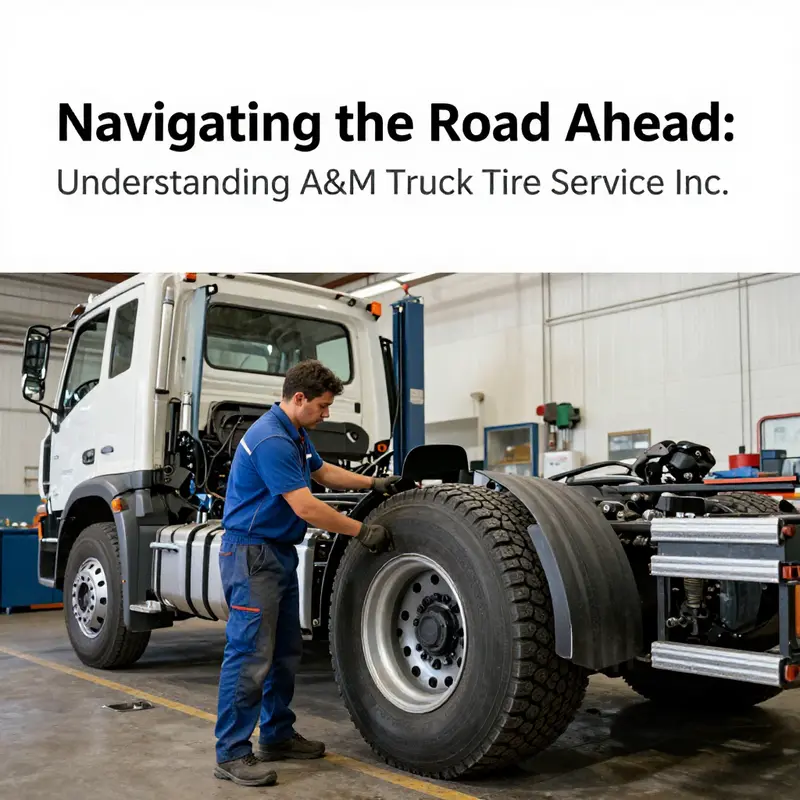
When researchers set out to map the landscape of tire service providers, they often encounter gaps that are as telling as the data they seek. A search for a company named “A&M Truck Tire Service Inc.” yields little in the way of formal records, reminding us that the trucking and tire service ecosystem is built not only on named entities but on a web of smaller operators, regional shops, and mobile units whose daily operations rarely leave a corporate footprint. This scarcity of a singular, well-documented entry point matters because it directs attention to a broader truth: operational excellence in tire service rests less on branding than on the disciplined execution of a set of practices that keep fleets safe, compliant, and on the road. In that sense, the chapter you are reading is less about identifying a single company and more about translating a chapter of industry knowledge into a cohesive approach that any shop—whether part of a large network or a modest independent—could adopt to improve uptime, reduce maintenance surprise, and extend tire life across a fleet. Operational insights in tire service, at their core, derive from stitching together disciplined service practices with careful data capture, inventory discipline, and a workforce trained to apply both science and judgment in equal measure. These ideas matter to the overall article on this topic because they illuminate how a tire service operation informs the broader economics of trucking—vehicle availability, driver productivity, fuel efficiency, and total cost of ownership. In the absence of a single definitive corporate case, we can turn to the common threads that run through successful tire service operations and show how they translate into practical, repeatable gains that any service provider can pursue.\n\nThis chapter abstracts those threads and presents them as a coherent thread of practice rather than a checklist. At the center is the recognition that tire service is not a one-off mechanical act but a workflow—an ecosystem of sensing, decisioning, and acting that must align with a fleet’s daily demands. The first rhythm in that ecosystem is a relentless cadence of inspection and monitoring. Pre-trip checks emerge as the frontline defense: drivers and technicians alike look for bulges, cuts, foreign objects, and abnormal wear, but the deeper value comes from integrating those checks with data that tell a story over time. A tire’s appearance can flag a trend only when history is preserved. Tire pressure, once a static number, becomes a dynamic signal when tracked across routes, loads, and temperatures. In practical terms, that means a shop or fleet partner should treat inflation as a lifecycle variable rather than a one-time service event. Correct inflation pressures, informed by load ratings and axle positions, support predictable handling, better tread wear, and lower heat buildup—a triad that pays back in reduced fuel consumption and fewer roadside interruptions. And because modern fleets accumulate miles with varying duty cycles, the tire service practice must account for those patterns by maintaining a flexible rotation and alignment strategy rather than a rigid, one-size-fits-all schedule.\n\nThe mechanics of rotation, balancing, and alignment form another critical strand. Regular tire rotation—timely, well-documented, and aligned with both manufacturer guidelines and real-world wear patterns—helps equalize tread depth across a set and minimize vibration that can mask underlying suspension or alignment issues. Balancing, when performed with the right equipment and procedures, reduces the road-noise and uneven wear that often masquerade as separate problems. Alignment, in turn, safeguards steering geometry and tire contact with the road surface, preserving steering response and prolonging tire life. Taken together, rotation, balancing, and alignment do more than keep tires from wearing prematurely; they steady a vehicle’s performance envelope, which in turn makes the fleet more predictable, safer, and easier to dispatch. For fleet operators, these practices translate into fewer emergency repairs, shorter downtime, and a smoother service history that can be referenced in future maintenance planning. A well-run tire program also requires disciplined decision making about repair versus replacement. Small cuts or punctures in a tire’s sidewall may be repairable in some instances, yet the decision to repair or retire must be guided by policy, mileage, and the tire’s age. This is not simply about protecting a single tire but about preserving the integrity of the wheel assembly and the vehicle’s overall safety envelope. In practice, a robust policy on repairs and retirements reduces the likelihood of unexpected failures on the highway and lowers risk for drivers and the fleet alike.\n\nThe operational heartbeat of tire service extends beyond the shop floor into inventory and procurement. A fleet-centric perspective treats tires as a capital asset whose value is maximized through careful lifecycle management. The right mix of tire sizes, tread patterns, and ply ratings for a given fleet’s routes is a delicate balance of availability, cost, and performance. A shop that maintains a lean but effective inventory—stocking the most commonly needed sizes, having a fast-replenish pathway for less common items, and integrating procurement data with service histories—can shift from reactive to proactive maintenance. This is where the value of digital records becomes most evident. When service events, tire serials, and inventory movements are recorded in a system that can reveal wear trends and predict parts need, the operation gains a strategic advantage: the ability to anticipate demand, reduce stockouts, and avoid overstocking. The data story becomes even richer when external factors such as seasonal demand, road conditions, and regional climate are layered in. A tire that performs reliably in hot southern climates may wear differently in northern winters; a tire shown to resist cuts on urban routes might be less durable on rough rural highways. The operational math then suggests a tiered approach to procurement and maintenance scheduling, balancing cost control with the imperative of uptime.\n\nTraining and standardization anchor the entire system. A workforce that understands the why and the how behind each practice—why a specific inflation level matters for a given load, or why a wheel torque sequence is critical after a tire change—translates policy into reliable performance. Technician training should emphasize not just mechanical competence but also diagnostic judgment. The best tire service teams cultivate a mindset of continuous improvement: they monitor outcomes, welcome feedback from drivers in the field, and adjust procedures in light of real-world results. Such training is most effective when it is ongoing, practical, and visible in daily work: standardized checklists, marked jobs, and transparent performance metrics. In essence, training is the bridge between the theory of optimal tire care and the reality of day-to-day operations on the road. It links to the broader objective of fleet reliability by ensuring that every service event contributes to a more accurate maintenance history, which in turn informs future decisions about preventive maintenance intervals and capital planning. For those who want to explore practical dimensions of this training in related contexts, there is value in resources that emphasize maintenance training as a component of overall safety and reliability—an emphasis that aligns with the discipline often highlighted in specialized maintenance discussions and professional safety guidelines. For readers interested in how training translates into maintenance outcomes, see the focused discussions linked here: fire-truck maintenance training importance. fire-truck maintenance training importance. This internal reference serves as a reminder that the principles of disciplined training in high-stakes vehicle maintenance extend beyond a single vehicle class and into any fleet-driven operation requiring high uptime and safety margins. The overarching lesson is that standardization, disciplined training, and data-informed decisions collectively drive resilience. When a tire service operation achieves that triad, the inevitable byproducts are improved dispatch reliability, steadier maintenance costs, and a safer roadway performance profile for every vehicle that enters its bays.\n\nBeyond the shop’s doors, the operational insights of tire service ripple outward into the fleet’s planning and financial strategy. The lifecycle view of tires invites a more integrated perspective on maintenance budgets, capital expenditure, and risk management. If a tire program can reliably forecast wear and plan replacements before a roadside failure, fleets can budget more accurately and avoid the emergency expense spikes that disrupt operations. The same logic applies to driver scheduling and route planning. Tires influence rolling resistance, handling characteristics, and the reliability of a given route under varying weather conditions. When tire service teams coordinate with fleet planners to align maintenance windows with driver shifts and planned routes, fleets can minimize downtime and maximize utilization of assets. In practice, this means building a maintenance calendar that respects the vehicle’s duty cycle, the seasons, and the historical wear patterns observed in the fleet. It means treating tire life as a variable that can be optimized through proactive care rather than a fixed expense that only becomes visible after a failure. And it means recognizing that the strength of a tire program rests on the coherence of its parts—careful inspection, precise maintenance, thoughtful inventory management, well-designed training, and disciplined data analysis. Taken together, these elements create a durable framework for operational excellence that would be equally relevant to a hypothetical A&M Truck Tire Service Inc. or any other tire service provider that aspires to deliver consistent uptime and safe, cost-effective service across diverse fleets.\n\nIn the final view, the story of operational insights and common tire service practices is a story about alignment—alignment between what drivers experience on the road, what technicians do in the shop, and what leaders expect in terms of safety, reliability, and cost. When these alignments are in place, the tires do more than roll; they become a measurable component of an organization’s performance. The road ahead for tire service remains as dynamic as it is essential, inviting shops to translate empirical wear patterns, maintenance histories, and fuel-saving potential into a disciplined program of care. In this sense, the chapter’s core message is simple yet powerful: excellence in tire service arises not from isolated expertise but from an integrated system where inspection, maintenance, inventory, training, and data work in concert to keep fleets on mission and on time. The practical takeaway for readers is clear. Invest in a consistent inspection regime, embrace rotation and alignment as ongoing practices, standardize repairs and retirements based on data and policy, curate inventory with an eye toward reliability, elevate technician training to sustain quality, and harness the predictive power of data to forecast needs before they become emergencies. When those steps cohere, fleet operators experience fewer unplanned outages, drivers spend more of their miles on the road rather than the shoulder, and tires—and the people who depend on them—perform with confidence through every mile of the journey.
Rising Treads and Turning Points: Navigating the Next Era of Truck Tire Services
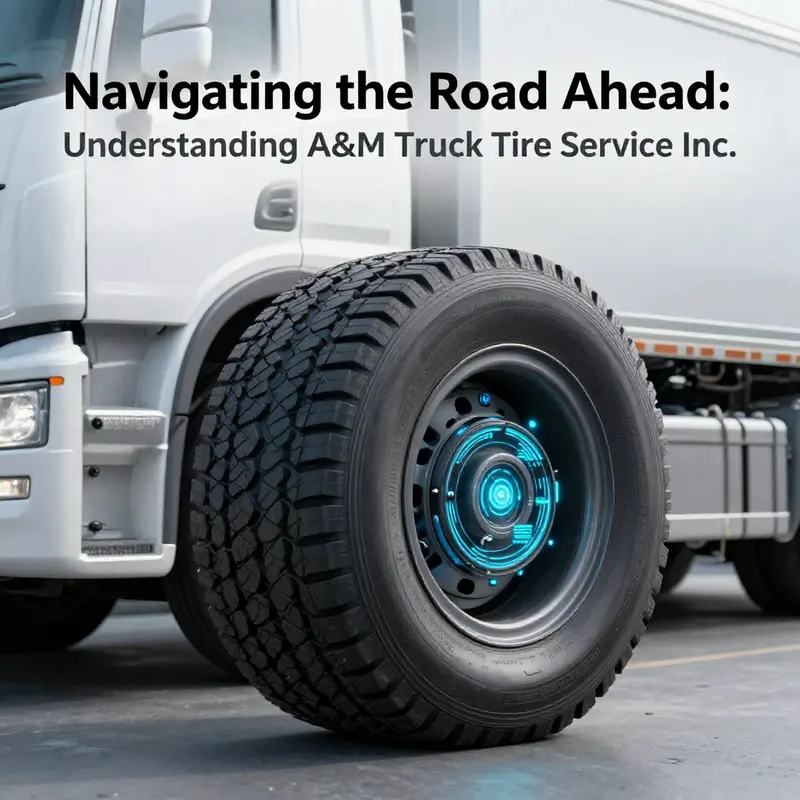
Industry observers describe a shift in truck tire services from a reactive, roadside support model to an integrated, data-driven ecosystem. Sensors in tires and wheels feed real-time health metrics into fleet management platforms, enabling predictive maintenance, optimized routing, and faster on-site response. The result is lower downtime, safer operation, and more stable fuel efficiency as inflation, wear, and temperature are continually managed.
Beyond technology, sustainability and standardization are becoming core drivers. Retreading, recycled materials, and circular supply chains reduce waste and total cost of ownership while meeting evolving environmental regulations. Service networks must translate telemetry into action through mobile repair units, dynamic scheduling, and transparent dashboards that reassure fleets and regulators alike.
New service models emphasize cross-functional collaboration: product engineers, data scientists, and field technicians work together to validate system-level performance rather than focusing on individual tire specifications.
Final thoughts
The complexities surrounding A&M Truck Tire Service Inc. are reflective of broader challenges within the trucking and tire service sectors. Verification challenges can significantly impact drivers and fleet managers. Meanwhile, understanding competitive landscapes and historical contexts of tire services offers valuable insights into essential practices and future innovations. As the industry shifts towards more advanced, efficiency-driven practices, staying informed about these developments will empower stakeholders to make better choices regarding tire service providers. The road ahead holds promise, and by addressing these intricacies, all players in the trucking industry can thrive.