
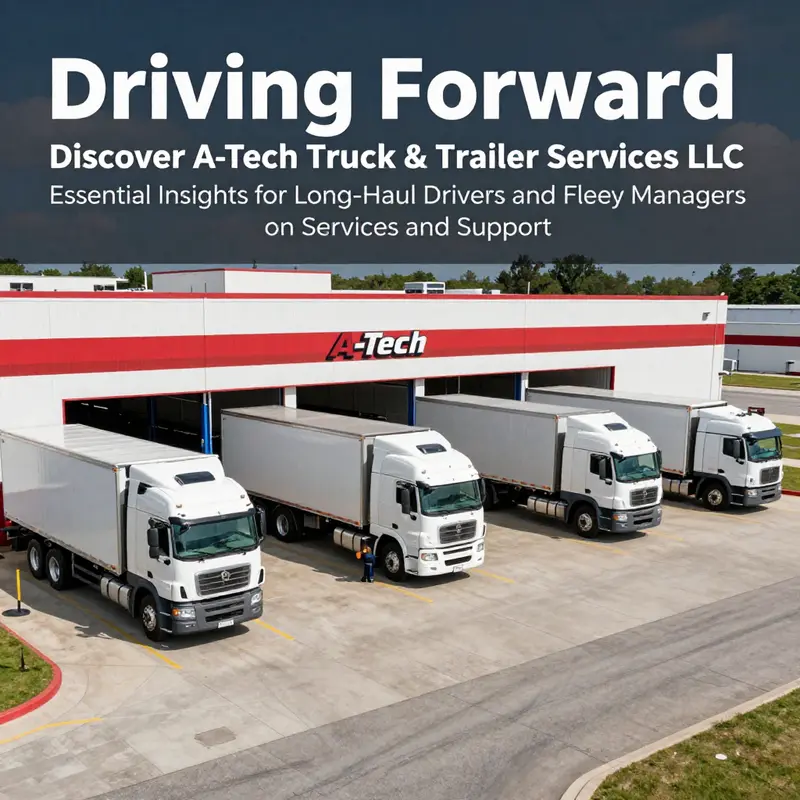
For professionals in the trucking industry, maintaining optimal efficiency and reliability is paramount. A-Tech Truck & Trailer Services LLC, based in Piedmont, SC, stands as a cornerstone for long-haul truck drivers, trucking company owners, fleet managers, and aspiring drivers. This article unveils the company’s extensive service offerings, operational practices, and geographical advantages that cement its reputation as a trusted service provider. Each chapter illustrates how these elements combine to support the needs of the trucking community, providing insights that ensure your road ahead is smooth and successful.
A-Tech’s Service Spectrum: Keeping Heavy-Duty Fleets Moving in Piedmont and Beyond
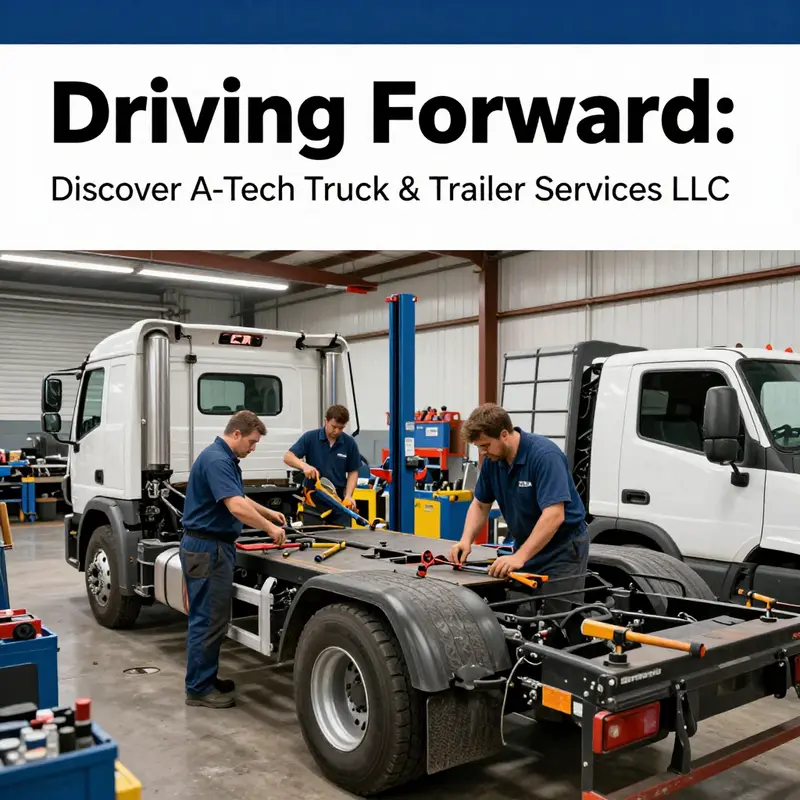
Nestled in the transportation corridor surrounding Piedmont, South Carolina, A-Tech Truck & Trailer Services LLC operates from a substantial facility at 30 Old Grove Rd. The location is more than a marker on a map; it signals a practical commitment to uptime in a region where fleets are the lifeblood of commerce and commerce, in turn, keeps moving through a mix of regional distribution centers, manufacturing hubs, and rural and urban service routes. The business hours, from early morning into the late afternoon, reflect a pragmatic approach: the goal is to be available when a fleet operator needs attention, whether that need is preventive maintenance, urgent repairs, or a planned service window that minimizes downtime during peak operating cycles. In this environment, the service portfolio grows out of a core belief that heavy-duty trucking is a discipline built on reliability, predictability, and careful attention to detail. The facility itself, with its visible scale and organization, communicates capability and readiness. Yet what truly differentiates A-Tech is not only the breadth of work they can perform, but the way they integrate these services into a coherent, fleet-focused offering that keeps vehicles and drivers on the road rather than stranded beside it.
At the heart of A-Tech’s offerings lies heavy-duty truck repair. This is the backbone of their operation, the service through which a fleet maintains its most critical asset: the vehicle that carries payloads, passengers, and the rhythm of daily business. The repair work extends beyond urgent fixes to encompass preventive maintenance regimes designed to forestall breakdowns and extend vehicle life. Technicians bring seasoned judgment to diagnostic steps, interpret wear patterns, and plan interventions that minimize recurring issues. In practice, this means a proactive stance toward maintenance: regular inspections, torque checks, brake system assessments, and system-wide performance evaluations that align with the fleet’s operating profile. The underlying philosophy is simple—keep the fleet running safely, efficiently, and with minimal unplanned downtime—and the results show up in steadier schedules, longer intervals between major repairs, and a reduced total cost of ownership for customers who rely on predictable service cycles.
Beyond the core repair work, A-Tech extends its capabilities to RV repair, recognizing that the lines between commercial trucking and ancillary mobile operations can blur in the hands of fleet managers who juggle multiple vehicle types. RVs represent a different kind of wear profile and usage pattern, but they share the same imperative: dependable operation. The same technicians who troubleshoot heavy-duty drivetrains bring a nuanced understanding of suspension, electrical systems, and chassis integrity to recreational vehicles. The value proposition for clients who operate mixed fleets is clear. They gain a single, trusted partner for a broad spectrum of asset maintenance, reducing transaction overhead and gaining consistency in how repairs are scheduled, tracked, and documented. The approach also supports smaller operators who might own both work trucks and personal or auxiliary vehicles within the same fleet ecosystem, allowing for a unified service experience that reduces bottlenecks and accelerates turnaround times when problems arise.
Mobile welding stands out as another keystone of A-Tech’s service spectrum. The ability to bring fabrication and repair capabilities to the vehicle’s location offers tangible benefits in terms of speed, safety, and project feasibility. On-site welding enables the crew to address structural tweaks, patch reinforced connections, or modify components without the delays inherent in transporting a vehicle to a shop. This capability is particularly valuable for fleets that operate in remote locations, encounter field repair scenarios, or require quick customizations to meet evolving operation demands. The on-site aspect also dovetails with preventative maintenance strategies, allowing welds and fabrications to be inspected and re-evaluated within the context of the vehicle’s broader system health. In practice, on-site welding reduces the length of downtime and expands the types of repairs a fleet can execute without interrupting service contracts or daily routes. The result is a more resilient fleet that can recover from minor incidents rapidly while maintaining the integrity of heavy-duty structures and systems that sustain demanding workloads.
A-Tech’s DOT inspections further anchor their service model in the standards that govern safe, compliant operation. Department of Transportation inspections are not merely a regulatory hoop; they are a structured process that validates equipment readiness, safety of operation, and adherence to federal guidelines. For fleet operators, a timely and thorough inspection translates into fewer surprise failures, improved safety records, and a more accurate view of a vehicle’s compliance status. The technicians at A-Tech bring methodical attention to every inspection check—from brake performance and lighting to trailer coupling, tire condition, and axle integrity. By systematically documenting findings and communicating actionable recommendations, the team helps operators plan maintenance windows around regulatory requirements rather than reacting to violations and penalties. The result is a smoother compliance trajectory that supports longer contract lifespans and more stable relationships with drivers, customers, and regulators alike.
Roadside assistance completes the cycle of service that keeps fleets resilient in the moment of need. When a breakdown interrupts a route or a scheduled delivery window, the ability to mobilize skilled technicians to a site can transform a potential crisis into a controlled, recoverable incident. Roadside services at A-Tech are designed to minimize downtime, whether the issue is mechanical, electrical, or related to trailer integrity. The emphasis here is speed, transparency, and practical problem-solving—an approach that aligns with the realities of fleet operations where every mile of uptime matters. The combination of rapid response, diagnostic acumen, and the capability to perform in-field repairs makes A-Tech a credible one-stop shop for operators who require dependable, multifaceted support without bouncing between multiple vendors.
Taken together, these offerings create a cohesive value proposition: a single partner capable of handling the full lifecycle of heavy-duty trucking and related mobile operations. By emphasizing core repair expertise alongside targeted services like RV maintenance, mobile welding, DOT inspections, and reliable roadside assistance, A-Tech positions itself not merely as a shop, but as a partner in fleet health. This integrated approach translates into operational advantages for fleet managers who juggle schedules, maintenance windows, and driver availability. When a truck exits the facility after a repair, the operator understands what was done, why it was needed, and how it contributes to the vehicle’s expected uptime. When a trailer returns from a service visit, the operator has a clear view of its role in the broader asset pool and how the service history supports ongoing reliability.
For readers who want to see how these concepts translate into practical outcomes, the core idea remains straightforward: a robust service spectrum reduces downtime, enhances safety, and preserves the value of a fleet over time. The facility’s scale suggests not only the capacity to handle demand but also the capacity to adapt. Technicians with a fleet-minded focus evaluate each job through the lens of overall operations—how a repair affects route planning, maintenance budgets, driver schedules, and customer commitments. This is more than mechanic work; it is an example of how a maintenance ecosystem supports business continuity. In a region where transportation infrastructure underpins dozens of supply chains, the ability to keep vehicles on the move is a tangible competitive edge. A-Tech’s offerings—heavy-duty truck repair as the anchor, complemented by RV repair, mobile welding, DOT inspections, and roadside assistance—create a comprehensive service that matches the complexity of modern fleet management.
The practical reality is that fleet operators need predictable, transparent, and responsive service. Scheduling is facilitated through the company’s official channels, with a clear pathway for customers to discuss their needs, book service windows, and arrange on-site or in-shop work. The value lies not only in the breadth of services but in the way these services reinforce each other: a thorough inspection identifies potential issues before they escalate; a mobile weld can fix a critical structural concern on site; a DOT inspection helps frame preventive maintenance priorities; and roadside assistance provides a rapid, prioritized response when a route disruption occurs. This interconnected approach reinforces the idea that maintenance is not a series of isolated tasks but a continuous, value-driven process aimed at sustaining fleet performance. As a locally anchored provider with regional reach, A-Tech is well positioned to translate this philosophy into concrete outcomes for diverse operators—from long-haul haulers to regional fleets and beyond. The chapter that follows will examine how this service spectrum aligns with industry standards, client expectations, and the evolving needs of today’s heavy-duty transportation landscape.
For those seeking a direct sense of where information about A-Tech exists within broader industry discourse, their official site offers a gateway to service summaries, scheduling options, and contact details that enable operators to begin the dialogue about keeping their fleets in optimal condition. You can learn more about the company and its full service scope at their official site: https://www.atechtruck.com. Additionally, a related resource that echoes the emphasis on hands-on maintenance and practical training is available through industry-focused materials such as fire-truck maintenance service training, which captures the ethos of proactive, field-ready repair practices that underpin successful fleet upkeep.
In sum, A-Tech’s service spectrum embodies a proactive, fleet-first mindset. By combining core heavy-duty repair with on-site welding, RV maintenance, DOT compliance, and dependable roadside support, they deliver not just repairs but a framework for steady, predictable operation. This integrated model reduces downtime, sharpens maintenance planning, and supports fleet operators as they navigate the complexities of today’s transportation environment.
Clockwork Access: How A-Tech Truck & Trailer Services Keeps Piedmont’s Fleets Moving Through Strategic Hours and Customer Care
A-Tech Truck & Trailer Services LLC sits at 30 Old Grove Rd in Piedmont, South Carolina, quietly anchoring a busy stretch of the region where logistics and highway corridors intersect. The facility’s presence is visible in the photos circulating online, giving a sense of a substantial operation built to handle a steady stream of vehicles and the needs that come with keeping a fleet on the road. The scene is not just about space but about a disciplined rhythm that aligns with the demands of the trucking world. In this part of the country, where freight moves through a tight mesh of regional and interstate routes, a shop like A-Tech operates as more than a repair bay. It becomes a reliable touchpoint for drivers and fleet managers who rely on predictable access to skilled hands, thorough checks, and clear communication about what needs to be done and when. The combination of a well-located facility and a straightforward approach to service underpins the daily trust this shop has earned among those who live and work on the road. \n\nThe daily cadence of A-Tech is grounded in a simple but powerful structure: hours that fit the schedule of real-world operations, and a contact system that invites straightforward conversations about what a vehicle or trailer requires. The doors open early and stay open for a full business day, five days a week, with the same welcoming stance extended to every customer who arrives or calls in. Specifically, the operation runs from Monday through Friday, from 6:00 in the morning until 5:00 in the afternoon. This cadence respects the early starts typical of dispatch offices and the midweek push to complete maintenance tasks before the weekend schedule breaks down. Weekend hours are not offered, which mirrors the practical reality of many regional shops that balance capacity with the need for proper downtime to maintain quality work. The calendar is simple, predictable, and reassuring for fleet operators who plan around service windows to minimize downtime and keep cycles efficient. \n\nFrom the outside, the layout suggests a busy, capable service environment, but the real story unfolds in how the team interacts with customers. The primary channel for inquiries is straightforward and accessible: a local contact number that serves as a direct line to a live person during business hours. The phone number provided officially is the primary conduit for appointments, estimates, and quick answers to questions about what a visit might entail. The public-facing website also offers a path to learn more about the shop’s capabilities and to begin a conversation digitally. Together, these touchpoints create a simple user journey: reach out, describe the vehicle or trailer in need of attention, and schedule a time that minimizes disruption to the operational day. In a world where logistics can hinge on minutes and truck availability, this clear line of communication matters as much as the actual service work performed. \n\nThe care model at A-Tech is built on a respectful recognition of the realities faced by drivers and fleet managers. The hours are not just a timetable; they are a signal of predictability and reliability. When a dispatcher or owner-operator needs to squeeze maintenance into a packed schedule, knowing that a shop is open during standard business hours—and closed when the weekend arrives—helps them coordinate routes, plan rest breaks, and project downtime with fewer unknowns. In this sense, the operational hours become a practical tool for uptime management, not merely a schedule constraint. Likewise, customers learn quickly that they will encounter staff who appreciate the urgency that can accompany engine work, braking system checks, or electrical diagnostics, without sacrificing thoroughness. The human element—clear explanations, honest assessments, and realistic timelines—creates confidence that extends beyond the moment of service. \n\nWhat makes a visit meaningful extends beyond the door and into the broader ecosystem of regional logistics. Piedmont sits amid a dense network of distribution centers, highway arteries, and maintenance lanes that keep freight moving efficiently. A-Tech’s location therefore serves a practical purpose: it shortens the distance between a fleet’s daily operation and the essential maintenance that keeps it moving. The local presence means fewer miles wasted in detours to faraway shops, shorter turnaround times, and a smoother experience for drivers who value consistency. The relationship between a shop and the fleets it serves often hinges on these small, consistent choices—prompt responses, transparent scheduling, and the ability to handle a broad range of upkeep tasks without forcing a long wait. In this way, A-Tech’s operational model aligns closely with the practical needs of the region’s logistics players, reinforcing a reputation for reliability that’s earned day after day in the workshop and on the road. \n\nThe interplay of accessible hours and straightforward customer interaction is also a reflection of a larger principle that governs sound trucking operations. When a shop offers predictable access, it creates room for proactive maintenance rather than reactive fixes. Fleet managers who know that a facility can accommodate early morning or late-morning drop-offs—and who understand that a clear, direct line of communication will yield timely updates—tend to extend that reliability to the broader maintenance plan for their equipment. In this sense, A-Tech’s approach becomes a model for how service providers in the trucking ecosystem can support uptime in tangible, measurable ways. It isn’t enough to fix a problem; the goal is to help customers anticipate issues, plan around them, and minimize the cost of downtime. That mindset often translates into better scheduling, fewer last-minute surprises, and a smoother workflow for the entire operation. \n\nIndustry conversations around service excellence emphasize not only technical competence but also the quality of interaction between shop and customer. A-Tech’s setup provides a practical illustration of this blend. The business hours enable consistent, reliable access to skilled technicians who can diagnose and address concerns with a level of thoroughness that earns trust. The contact channels—phone and digital—offer flexible paths for coordination, enabling drivers to seek advice, confirm appointment windows, and receive updates about progress. This is the type of courtesy and clarity that fleets count on when they need to keep their own schedules intact. In a sense, the hours and the staff’s responsiveness become part of the service offering itself, as essential as any diagnostic tool or repair procedure. As part of a broader conversation about excellence in trucking services, this approach is echoed in industry thought leadership that highlights consistent service, reliable uptime, and strong customer relationships as cornerstones of long-term success. unveiling-5-star-truck-inc-a-beacon-of-excellence-in-trucking-services \n\nFor customers stepping into A-Tech, the experience is oriented toward clarity and efficiency. The intake process is streamlined so that a vehicle or trailer can be assessed without unnecessary delays. The staff listen for the driver’s or manager’s priorities, outline a practical plan, and align expectations with the shop’s available hours. The goal is not to overpromise but to establish a reliable path forward—one that respects the value of a driver’s time and the fleet’s schedule. The visible commitment to a clean, well-organized workspace reinforces this message. It signals to customers that the people working there pay attention to details, protect safety, and value quality workmanship. In this environment, a simple business day becomes a structured sequence of steps: receive, diagnose, communicate, and execute, with the customer kept informed at each milestone. \n\nThis chapter would be incomplete without recognizing how a shop’s operational philosophy connects to the broader practice of maintenance and uptime across the industry. The open doors and the clear channels of communication that define A-Tech’s daily routine are not just local habits; they reflect a broader demand from fleets for dependable service partners who balance technical capability with accessible service windows. The result is a facility that not only fixes problems but also supports smoother planning, reduced downtime, and a more predictable maintenance experience. In a landscape where the next mile can hinge on a reliable machine, these attributes matter as much as the repairs themselves. As the narrative of A-Tech unfolds, the next chapters will continue to explore how such service models integrate with training, preventative maintenance strategies, and the ongoing effort to maximize uptime for vehicles and trailers alike. \n\nExternal resource for further reading: https://5startruckin.com/exploring-the-excellence-of-5-star-truck-inc-your-premier-trucking-solution/
Geography as a Catalyst: How Piedmont’s Position Shapes A-Tech Truck & Trailer Services LLC’s Regional Fleet Care
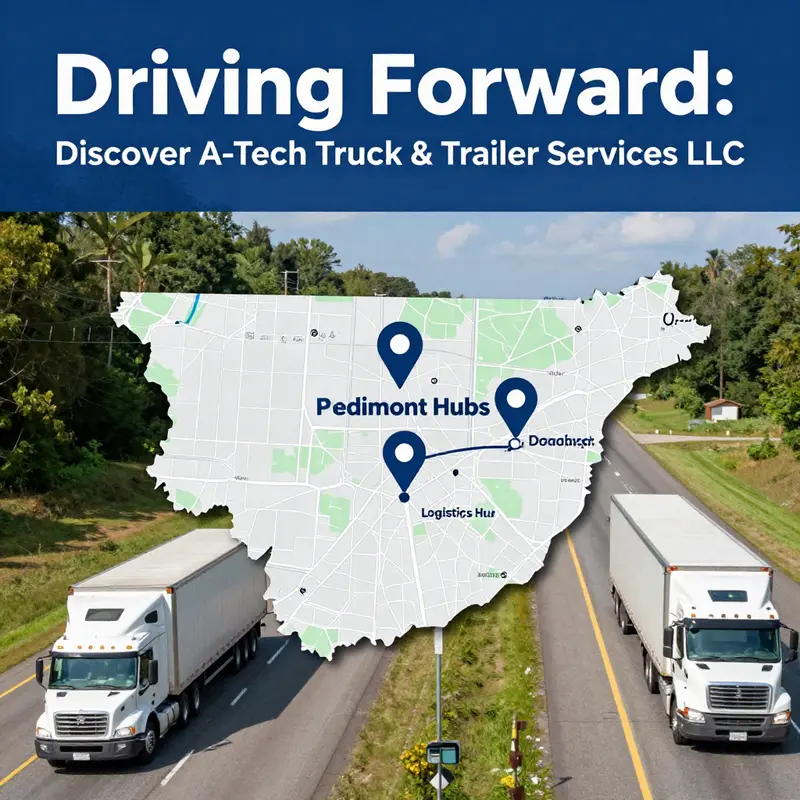
From its address on 30 Old Grove Road to the broader map of the Southeast, A-Tech Truck & Trailer Services LLC sits at a geographic sweet spot that many fleet operators rarely articulate but deeply value. Piedmont, South Carolina, is not merely a town on a street corner; it is a node in a web of highways and warehouses that keeps goods moving and fleets moving with minimal downtime. The central location within upstate South Carolina places A-Tech at a crossroads of freight activity that threads through the Carolinas and into Georgia and Tennessee. What looks like a quiet corridor from a street view becomes, when examined against the regional logistics network, an anchor point for rapid response, scheduled maintenance, and urgent repairs that fleets cannot afford to delay. The geographic conditions surrounding the operation create conditions ripe for a service provider that must balance speed, reliability, and depth of capability across a broad range of tire-changing, brake inspection, electrical diagnostics, and preventative maintenance tasks.
The proximity to major interstate corridors is not merely a matter of convenience; it is a strategic asset that translates into measurable service velocity. The town’s accessibility to I-185 and I-385 offers direct lines to Charlotte, Atlanta, and Columbia, with those markets forming a backbone for long-haul itineraries and regional distribution networks alike. For A-Tech, this translates into shorter mobilization times for on-site repairs and quicker transit of repaired units back to customers. It is one thing to assure a fleet operator that a repair will be done; it is another to demonstrate that the repair will be completed within a window that aligns with daily dispatch and delivery schedules. In this respect, Piedmont’s geographic position functions much like a control tower—minimizing the latency between diagnostic findings and corrective action across a multi-state service zone.
Beyond the highway grid, Piedmont sits within a growing industrial corridor whose expansion in warehousing, distribution, and light manufacturing creates enduring demand for dependable maintenance and inspection. The rise of e-commerce and the continuous push for shorter delivery cycles have amplified the need for fleet uptime. For A-Tech, this means calibrating services to the cadence of regional fleets that must stay operational through peak seasons and unexpected surges in demand. The company’s ability to respond not just to routine maintenance but to urgent, on-the-spot repair scenarios is reinforced by the surrounding business climate—an ecosystem where each fleet downtime translates into direct cost and customer dissatisfaction. In this sense, geography is not just a map; it is a working rhythm that shapes how a service provider schedules, staffs, and deploys resources across the week.
Location also intersects with labor dynamics in a meaningful way. The Piedmont area offers a balance of skilled tradespeople and cost-effective labor leverage when contrasted with larger metropolitan centers. This balance is critical for a shop that must maintain high-quality workmanship while keeping prices competitive for regional fleet operators. It allows A-Tech to invest in the breadth of capabilities required by modern fleets—pre-trip inspections, brake and suspension work, tire services, electrical system diagnostics, and engine performance assessments—without sacrificing speed or accuracy. The labor ecosystem, when combined with a well-equipped facility, supports a model where technicians could efficiently move between in-shop tasks and mobile supports, expanding the company’s reach to customers who depend on timely, transparent communication about a vehicle’s condition and repair timeline.
Another thread in this geographic tapestry is the network effect created by Piedmont’s economic activity. As warehouses and distribution centers multiply, so too does the density of fleet activity in and around the region. A-Tech’s regional presence becomes a listening post for the needs of different operators—local delivery fleets, regional carriers, and even construction-related transportation providers that require reliable maintenance partners. This multi-fleet exposure encourages a service approach that blends preventive maintenance with flexible, urgent-response capabilities. It also incentivizes a practical, cost-conscious mindset: uptime saves money, and whenever possible, work is scheduled to minimize downtime by aligning with preferred maintenance windows and route itineraries. For customers, the value proposition is not only about immediate fixes, but about a durable relationship built on predictable service patterns and transparent communication about what is necessary to keep fleets moving in a high-demand corridor.
The central question in a geography-driven service model is how to translate spatial advantages into tangible outcomes. In A-Tech’s case, the answer rests on a combination of scalable capacity and a diversified service portfolio. A substantial facility—evident from the site photos available online—provides the space to accommodate complex diagnostics, routine servicing, and the staging of mobile units for on-site work. A larger footprint reduces bottlenecks during busy periods and allows technicians to complete multiple tasks in a single visit, which translates into shorter overall repair cycles for customers. The ability to house calibration gear, diagnostic tools, and standard repair components makes it practical to perform comprehensive checks that can prevent recurring problems. In a region where fleets justify preventative maintenance to avoid costly downtime, this capability becomes a compelling differentiator. The geography, then, informs not just where A-Tech is located, but how it builds a service cadence that aligns with the operational tempo of regional trucking and trailer use.
Intertwined with the physical footprint is the imperative to maintain dependable, scalable service capacity. In an environment that demands rapid mobilization, a robust operational backbone is essential. The central location supports a flexible scheduling approach that accommodates both routine maintenance and unscheduled repairs with minimal delays. Technicians can be dispatched efficiently to client sites, or core work can be done within the facility and then trucks can return to the road with a clearly defined turnaround window. This capability aligns with the expectations of fleet operators whose business models hinge on predictable maintenance cycles, timely turnarounds, and the ability to plan around maintenance windows rather than isolated emergencies. The regional geography, in effect, provides a natural testing ground for a service approach that values reliability as much as speed, and that balance is at the heart of A-Tech’s reputation in the market.
As a regional hub, A-Tech also benefits from the kind of cross-pollination that comes from a diverse client base. Long-haul operators, last-mile carriers, and construction logistics all require a common thread: trust that the service partner understands the criticality of uptime. In Piedmont’s corridor, a service provider grows by listening to the cadence of different fleets and by translating those insights into practical service protocols. This means scheduling preventive checks during off-peak movement periods, prioritizing urgent calls in a way that respects both the client’s dispatch priorities and the technician’s workload, and maintaining a transparent, traceable record of every inspection and repair. The geographic concentration makes it feasible to develop standardized processes across a wide array of equipment, while still allowing room for bespoke, site-specific needs that a mobile unit can address without forcing customers to disrupt their routes.
The strategic implications extend beyond the road network. A-Tech’s geographic advantages feed into a broader narrative about regional resilience in transportation—a narrative that values proximity, capacity, and knowledge exchange. Proximity means faster responses and shorter awaiting periods; capacity means the shop can handle routine work and more complex repairs without compromising quality; knowledge exchange arises from the interplay between in-shop specialists and field technicians who frequent the same local and regional markets. All of these elements reinforce a service model that seeks to optimize uptime and minimize the life-cycle cost of fleet ownership. In a region undergoing steady growth in logistics and manufacturing, that optimization is not merely a selling point; it is a strategic requirement for staying competitive over the long term.
To link this geographic understanding to actionable practice, consider how customers experience the service in the day-to-day flow of fleet maintenance. Scheduling becomes a cooperative exercise between A-Tech and the fleet operator, one that respects the constraints of driver hours, distribution timelines, and maintenance windows. The company’s central position enables a synchronized plan where diagnostics, parts sourcing, and technician availability align with the most critical times in the fleet’s operating cycle. In practice, this means fewer out-of-service gaps, more predictable maintenance costs, and better adherence to safety and compliance standards—outcomes that matter profoundly to operators who rely on consistent vehicle readiness to meet customer commitments. In this sense, geography serves as a strategic amplifier, turning a well-equipped shop into a reliable regional partner that keeps traffic moving, deliveries on schedule, and assets protected against the wear and tear that high-mileage operations inevitably incur. The practical implication is clear: the Piedmont location does more than place A-Tech on a map; it shapes how the company, and its clients, experience value over the long road ahead.
For readers who want to see the footprint of A-Tech’s regional presence in a broader industry conversation, the emphasis on dependable service and consistent uptime resonates with the wider standards of quality in trucking and maintenance. The idea is not to claim novelty in maintenance techniques but to highlight how geography enables a service model that delivers on those techniques with speed and reliability. The result is a partnership dynamic in which the operator’s schedule and the shop’s capabilities converge around uptime and efficiency, a contrast to the old model of reactive, sporadic maintenance. In Piedmont, the geographic logic is clearer than ever: proximity, capacity, and a connected industrial ecosystem combine to create a service hub that understands that every mile in a fleet’s itinerary is a mile that counts.
To explore a broader perspective on industry reliability and how service quality translates to road performance, consider the industry discussion on durability, uptime, and continuous improvement as a collective pursuit. For additional context on how trusted service practices sustain reliability on the road, see the reference to quality service and reliability on the road. quality service and reliability on the road.
External reference: https://www.google.com/maps/place/A-Tech+Truck+%26+Trailer+Services+LLC/@34.559767,-82.299979,15z/data=!3m1!1e3!4m6!3m5!1s0x885b2f18d4a9c735:0x3a46524a37c88d2a!2sA-Tech+Truck+%26+Trailer+Services+LLC!3m2!1d34.559767!2d-82.299979!4m2!1d0!2d0?entry=ttu
null
null
Shaping the Road: Industry Currents Driving A-Tech Truck & Trailer Services LLC
The address and compass of A-Tech Truck & Trailer Services LLC place it squarely in a logistics-forward landscape. Located at 30 Old Grove Rd in Piedmont, SC, the shop sits inside a regional network of carriers, warehouses, and distribution nodes that keep freight moving along major corridors. The operation runs with a steady rhythm from 6:00 am to 5:00 pm on Mondays and Tuesdays, a schedule tuned to the peaks of fleet activity and the practical needs of maintenance planning. Yet those concrete details—location, hours, and a sizable facility—are the surface of a much larger story. What matters, in the long view, is how a midsize service provider fits into a globalizing market that prizes uptime, safety, and adaptability. In Piedmont and the surrounding Upstate region, a growing density of fleets, drivers, and logistical services creates both demand and opportunity. A-Tech’s positioning within this ecosystem is more than geographic; it reflects a strategic alignment with an industry that is undergoing rapid change while still requiring the dependable, hands-on craft that keeps trucks and trailers on the road. Industry dynamics today are characterized by multiple forces that converge in a single outcome: fleets increasingly demand specialized configurations and quick, reliable service that can be scaled to match shifting workloads. The demand for specialized vehicles has moved from niche assignments to a core capability for many fleets. Flatbed trailers support a broad range of logistics needs, while tipper trailers serve mining and construction sectors with payloads that require precise loading, unloading, and endurance under harsh operating conditions. Semi-trailers continue to be the backbone for heavier cargo, yet even within that mainstream category, operators seek variants and options that optimize weight distribution, braking performance, and fuel efficiency. It is no longer enough to stock a standard set of parts; the industry requires technicians who understand how a fleet’s unique mix of payloads, routes, and seasonal demands translates into maintenance cycles. This has pushed service providers to embrace a more consultative role, one that begins with listening to a fleet manager’s schedule and ending with a plan that minimizes downtime and extends asset life. The practical implication for A-Tech is a service repertoire that spans preventive maintenance, diagnostics, and on-site adjustments, all delivered with the speed modern fleets expect. A parallel thread in the industry narrative is the acceleration of manufacturing technologies and the corresponding shift in service models. The expansion of after-sales support, parts customization, and on-site training reflects a broader trend: the shop is increasingly seen as a hub in a distributed, technology-enabled supply chain. When a customer purchases a specialized trailer or a custom chassis, the value of that asset is tied not only to the quality of its components but to the speed and accuracy with which those components can be maintained, adapted, or upgraded. This means more than simply replacing worn parts. It means integrating knowledge of axle assemblies, suspension systems, and chassis components with data from telematics, diagnostics, and real-time feedback from the road. In practice, technicians may work with customized axles or suspension packages tailored to specific payloads and road conditions, while also applying advanced diagnostic tools to anticipate failures before they occur. The inclusion of such capabilities—alongside on-site technical training and cross-functional service teams—turns a repair shop into a proactive partner in fleet health, rather than a downstream fix-it shop. The emphasis on customization and end-to-end service echoes across the industry, underscoring why a strong local shop with hands-on expertise can become a strategic asset for regional operators who must balance capital investment with reliable, predictable performance. The industry’s broader strategic orientation toward smarter, more sustainable infrastructure amplifies the relevance of A-Tech’s evolving service model. There is a clear push toward integrated service centers that support intelligent equipment and high-end manufacturing, a trend that is not confined to distant markets or large metropolitan hubs. Regions and fleets alike are embracing smart maintenance ecosystems that combine predictive analytics, remote diagnostics, and rapid-response field service. This shift is not mere theoretical rhetoric; it translates into concrete expectations for speed, safety, and environmental stewardship. For A-Tech, embracing these strategic initiatives means more than adopting new tools; it means rethinking workflows, safety practices, and compliance frameworks. High-voltage safety, battery diagnostics for electric drivetrain components, and the ability to service hybrid systems are increasingly part of regular skill sets. The junction of mechanical expertise with electrical engineering and data analytics becomes a practical necessity on the shop floor. In this sense, A-Tech’s Piedmont facility is well positioned to serve as a local nod in a broader network of capability, where technicians are cross-trained to handle both traditional mechanical work and modern digital diagnostics. The advantage is not simply in performing repairs faster, but in enabling fleets to plan maintenance around actual operating conditions, thereby reducing unplanned downtime and extending asset lifecycles. Policy and planning considerations further shape the environment in which A-Tech operates. The industry benefits from policy frameworks that promote smart and sustainable infrastructure, encouraging collaborations among manufacturers, service networks, and regional authorities. While many readers will associate these trends with larger economies or national visions, the practical impact filters down to a local level through standards, incentives, and shared best practices. The link between policy signals and on-the-ground service is indirect but powerful: the policies favor safer, cleaner, and more efficient equipment, and service providers respond by cultivating multi-disciplinary competencies, stronger supplier relationships, and robust training programs. In this way, a regional operation like A-Tech can transform regulatory expectations into actionable improvements—improvements that support fleet uptime, reduce emissions, and help customers meet evolving safety requirements. This is not a speculative future; it is a present reality that shapes how A-Tech plans, invests, and delivers value. The facility’s scale enables a wide range of activities—from wheel-end work and brake systems to electrical harness diagnostics and suspension tuning—so that fleets can minimize downtime by consolidating services under one roof. The local advantages translate into broader capabilities: the knowledge gained from regional operating conditions, the experience of working with a varied customer base, and the ability to tailor service offerings to the specific needs of the Southeast logistics corridor. The synergy between a well-equipped shop and a responsive field team means maintenance plans can be designed with an eye toward uptime windows, rather than repair shop schedules alone. In such a system, customer experience is enhanced by predictable service intervals, transparent diagnostic reporting, and flexible engagement models that align with a fleet’s seasonal demands and operational cycles. The industry’s currents also imply a continuous learning loop for a company like A-Tech. As the market leans toward more specialized configurations and smarter maintenance, the shop must cultivate a culture of ongoing education, rapid knowledge transfer, and adaptive problem solving. The value proposition expands from fixing what’s broken to preventing breakdowns, optimizing performance, and extending the life of assets through precise, informed interventions. This requires not only skilled technicians but a ecosystem mindset—where suppliers, training providers, and customers collaborate around common goals of reliability and efficiency. The domestic and global signals converge in practice: service excellence is earned by combining hands-on craft with strategic foresight, data-informed decision making, and a commitment to safety and environmental responsibility. For readers seeking a broader perspective on how service networks contribute to the reliability of trucking operations, the dialogue is well illustrated in industry resources that discuss the paths to uptime and readiness. See Exploring the excellence of 5 Star Truck Inc. for a comprehensive look at how service networks underpin uptime and reliability in trucking. Exploring the excellence of 5 Star Truck Inc. In sum, A-Tech’s industry context is not a theoretical backdrop. It is a practical, evolving setting that informs strategic decisions—from how the shop allocates its skilled labor and parts inventory to how it engages with customers on maintenance planning and performance optimization. The Piedmont footprint is a strategic advantage that anchors the company in a region with strong logistical demand and a workforce attuned to the nuances of heavy-duty equipment. The convergence of specialized vehicle trends, manufacturing advances, policy-driven infrastructure initiatives, and customer expectations creates a powerful imperative: continually expand service capabilities while preserving the reliability that fleets depend on every day. This is how A-Tech translates industry currents into a durable, customer-centric practice that keeps trucks and trailers—and the loads they carry—moving efficiently along the road ahead. For policy context and structural forces shaping this sector, consider the guidance issued by major authorities that emphasize intelligent equipment and high-end manufacturing within national development strategies: https://www.ndrc.gov.cn/.
Final thoughts
A-Tech Truck & Trailer Services LLC is not just a service provider; it’s a vital ally for those in the trucking industry. By offering comprehensive services tailored to the unique needs of long-haul drivers, fleet managers, and future trucking professionals, A-Tech exemplifies excellence in customer service and operational support. As this article has demonstrated, their pivotal position in Piedmont, SC, combined with their proactive approach to vehicle maintenance, creates a robust framework for success on the open road. Investing time with A-Tech means investing in the reliability and efficiency of your operations.