
Understanding A & W Truck Service is crucial for long-haul truck drivers, trucking company owners, and maintenance specialists alike. This article explores the company’s services, legal history, industry reputation, and geographic influence to provide a comprehensive overview of its role in the trucking ecosystem. Each chapter delves deeper into facets of A & W Truck Service, enhancing your awareness as a stakeholder in the trucking world.
Care, Clarity, and Commitment: Distinguishing A & W Truck Service in a Fleet-Driven Market
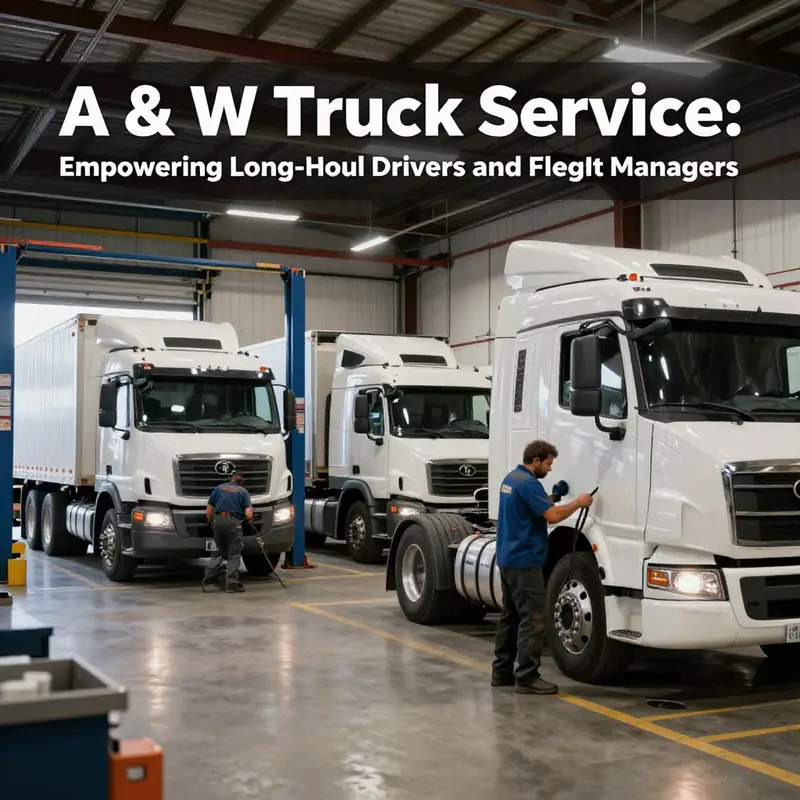
When a fleet manager types a keyword into a search bar and hits enter, the results often stretch beyond the simple name of a single shop. In the case of A & W Truck Service, the landscape is a reminder that names can travel across state lines, jurisdictions, and business profiles, sometimes carrying as much confusion as capability. The two entities that surface in early research—A & W Truck Service, Inc. in Oklahoma, listed with a suspended status, and A R & W Truck & Trailer Repair in Houston, Texas—reiterate a basic truth in the trucking maintenance world: similarity of name does not equal similarity of service, oversight, or reliability. One company may carry a history of operations that has paused for regulatory or financial reasons; another may be a standing, reputable shop specializing in the routine care that keeps a fleet rolling. The task, for a fleet or independent owner, is less about chasing a brand and more about confirming readiness, accountability, and a track record of uptime.
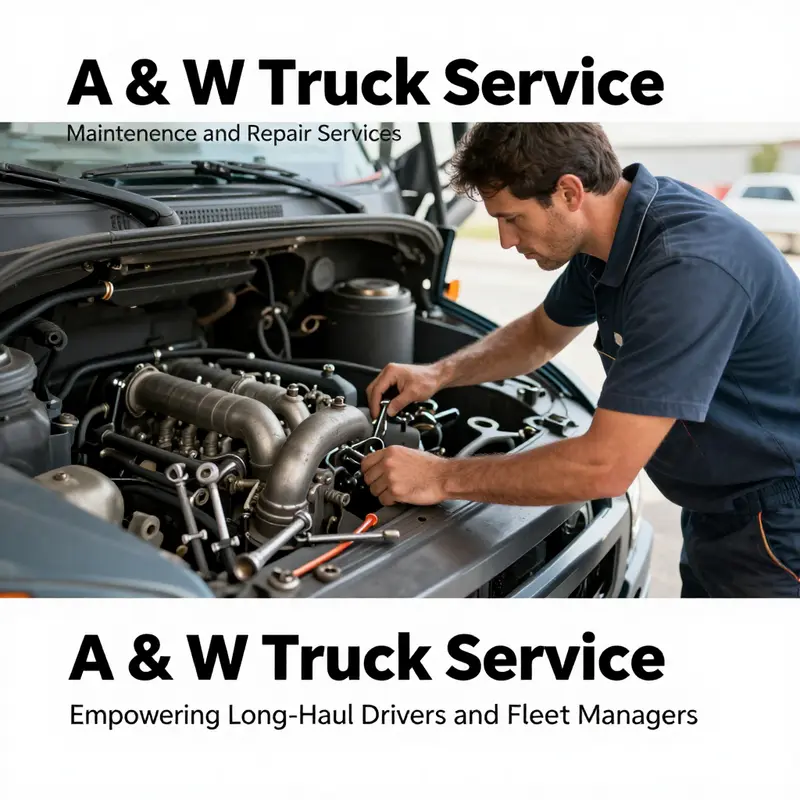
What defines a dependable truck service partner goes beyond the visible storefront or the glow of a website banner. Core services, when described in broad terms, reveal what fleets require most often: engine repairs to restore power and efficiency, brake system maintenance to ensure stopping distance and safety, tire services to sustain traction and fuel economy, diagnostic testing to uncover hidden faults, and preventative upkeep that reduces the odds of costly breakdowns on the road. In practice, these offerings translate into a practical rhythm of maintenance activities. Regular engine diagnostics catch misfires or sensor faults before they escalate into fuel inefficiency or emissions concerns. Brake inspections become a quarterly discipline, not a yearly surprise when a pedal goes soft. Tire management—rotation, balancing, and tread checks—keeps a fleet compliant with highway safety standards while maximizing miles per tire. And behind all of this lies a diagnostic toolkit capable of peering into live data streams from the engine, transmission, and braking electronics, translating faults into actionable steps for technicians.
For fleets, the value of such maintenance extends far beyond the repair bill. Downtime is costly in a sector where every hour off the road means lost productivity and revenue. Preventative upkeep embodies a disciplined approach to maintenance that treats reliability as a measurable asset rather than a hopeful outcome. A shop that emphasizes preventative upkeep helps a fleet avoid the kind of cascading failures that can strain budgets and erode customer trust. The right partner does not merely fix what breaks; they provide a framework for staying ahead of wear and fatigue, documenting service history, and aligning maintenance cycles with the type of work the fleet does most often.
In this context, the distinction between the two similarly named entities becomes meaningful. A & W Truck Service, Inc. in Oklahoma, identified as suspended in public records, raises questions about continuity, licensing, and operational risk. A fleet that depends on a shop in the event of a breakdown must consider the stability of its service provider. A suspended status signals that the business may not be actively servicing vehicles, or that regulatory or financial issues have interrupted operations. While a paused company can sometimes re-emerge, a fleet cannot afford to gamble with uptime by relying on an entity whose status is uncertain. Meanwhile, the Houston-based A R & W Truck & Trailer Repair represents a different trajectory. An independent operation focused on trucks and trailers, it stands as a separate entity with its own local footprint, customer base, and maintenance culture. Yet even here, the critical questions remain the same: Is the shop licensed and insured? Do technicians have current certifications? Can they provide routine maintenance, emergency repairs, and transparent pricing with a clear warranty framework?
These considerations point to a broader principle that underpins sound fleet maintenance: clarity. Clarity about who is authorized to work on your equipment, where and when they operate, and how they document what was done. Clarity also extends to the methods and tools a shop uses. In the modern maintenance ecosystem, diagnostic testing is not a luxury but a baseline. The ability to read engine codes, monitor live data during road tests, and verify repaired systems with post-service verification contributes to a maintenance history that a fleet can audit over time. A service partner that embraces such transparency creates trust. It also simplifies compliance with safety regulations and industry standards, which are not mere formalities but practical guardrails that protect both drivers and cargo.
From the fleet perspective, choosing a shop is a decision that blends reliability with accessibility. The best-fit partner is located within reasonable proximity to the fleet’s operation center or epicenter of activity, has a track record of timely and accurate work, and communicates clearly about what is required, what the work will cost, and what the timeline looks like. A reliable shop will allocate space on the schedule for preventive maintenance visits, not just after-thought repairs. They will provide a readable service history, showing what was inspected, what was replaced, and why the intervention was or was not necessary. In practice, this means aligning maintenance intervals with the specific operating profile of the fleet—the type of routes, the typical load, the climate, and the terrain faced by the vehicles. A truck that spends most days on long hauls across varying elevations may demand a different maintenance rhythm than a vehicle operating near urban centers with frequent stops.
The human element remains crucial. Skilled technicians bring a blend of technical proficiency and practical decision-making. They understand when a so-called minor issue is signaling impending failure, and they communicate that assessment in plain language. They also recognize the importance of documentation, not just for internal record-keeping but for drivers who rely on clear explanations about what was found, what was done, and what to monitor next. In a world where digital records and telematics are increasingly integrated, the shop of choice should be comfortable with both hands-on work and digital workflow—scanning a part for warranty eligibility, uploading a detailed invoice, and tagging services to the vehicle’s service profile so that maintenance history travels with the fleet wherever it goes.
For readers who are navigating the minefield of identical or similar names, the message is practical and straightforward: verify, verify, verify. Look beyond the brand impression to confirm regulatory compliance, actual active operation, and the alignment of the shop’s capabilities with your specific needs. If a source mentions a status like suspended, treat it as a red flag rather than a nuance. If another source presents a local operations footprint, examine whether their capacity and equipment align with your fleet’s requirements. This is not merely about being able to fix a problem today; it is about ensuring you can rely on a partner tomorrow, next month, and through the lifecycle of your vehicles.
The chapter’s exploration of these nuances feeds into a broader conversation about how fleets maintain their competitive edge. Maintenance is a strategic function, not a back-office afterthought. It supports safety, reduces downtime, and sustains the reliability that customers count on. When a fleet commits to preventative upkeep, it cultivates a culture of accountability—from the shop floor to the driver’s seat. Drivers experience fewer disruptions, managers gain more predictable maintenance costs, and the organization as a whole benefits from a steadier cadence of operations. In such a system, the identity of the service partner matters less than their demonstrated performance: the speed of turnaround, the quality of workmanship, the clarity of communication, and the integrity of the records that document every mile of service.
As readers move forward, they will encounter how technology and training reinforce this culture. The industry increasingly emphasizes targeted training that keeps technicians up to date with evolving engine architectures, advanced braking systems, and the shift toward smarter predictive maintenance. For practitioners seeking to deepen their understanding of maintenance practices, there are industry resources that focus on the discipline of maintenance training and the role of hands-on service in improving uptime. For example, one relevant resource touches on the value of structured maintenance training for emergency and fleet operations, offering insights into how specialized programs can elevate standard upkeep to a higher level of readiness. This kind of knowledge helps fleets translate the abstract concepts of reliability into concrete daily routines that drivers and managers can implement with confidence.
Ultimately, the landscape around A & W Truck Service and similarly named entities reminds us that clarity, credibility, and consistency are the bedrock of effective fleet maintenance. Whether a shop proudly carries a long-standing corporate banner or a smaller, independent banner, the decisive factors remain the same: active operation, qualified technicians, transparent records, and a proactive approach to upkeep. A fleet that embraces these principles will not merely survive the road; it will thrive because its maintenance program is a strategic asset, aligned with operational goals and built on trust with the people who service the vehicles every day.
Internal resources can support this journey. For readers seeking practical training pathways that reinforce maintenance discipline, a resource focused on industry-wide maintenance service training offers structured perspectives and real-world guidance that complement daily shop work. See the internal link here: fire-truck-maintenance-service-training.
External resource for broader context on fleet maintenance practices and service readiness can be found at the following reference to the broader service landscape: https://www.awtruckservice.com
Tracing the Legal Footprint of A & W Truck Service: History, Status, and the Roadmap of Compliance in American Trucking
In a field where every mile traveled depends on a chain of legal and regulatory signals, the legal status of a trucking outfit is more than a bureaucratic footnote. It is the spine of trust that customers rely on when moving critical goods across state lines and through time-sensitive schedules. A&W Truck Service, a name that recurs in industry briefings and registry records, offers a case study in how history, structure, and compliance intertwine to shape a carrier’s practical reality. The company’s story begins in the mid-1960s, a period when trucking firms were expanding beyond local routes and into distributed networks of freight lanes. As time passed, A&W built a reputation for handling temperature-controlled shipments alongside more routine dry-van hauling. Those capabilities, by themselves, are not a guarantee of uninterrupted operation; they sit atop a legal and regulatory scaffolding that must be maintained with care. The surface record most readers encounter—private ownership, a long-standing presence in the freight sector, a focus on reliability—belies a more complex backdrop. The public data point that often raises questions is a suspended status in one jurisdiction. It is a reminder that legal life for a carrier is not merely about past achievements or current fleet size. It hinges on ongoing filings, timely renewals, and the ability to satisfy state authorities that the entity remains in good standing to transact business. When a registry marks a company as suspended, it signals that something in the ongoing compliance chain has not been kept current. It may reflect late filings, missing reports, unpaid fees, or other administrative lapses that, if not addressed, can halt operations until the issue is resolved. In the case of A&W, the Oklahoma registry entry that identifies A&W Truck Service, Inc. as having a suspended status underscores a critical truth: being a recognized carrier in the past does not automatically confer continued standing in the present. The situation is nuanced, though, because the company’s broader footprint—its operating authority and insurance—belongs to a regulated ecosystem that extends beyond a single state. The FMCSA, which governs interstate motor carrier operations, maintains a framework of authority that allows carriers to haul across state lines and through commercial corridors. Within that framework, operating authority is the key credential that enables lawful transport across borders, while insurance and safety compliance provide the risk management shield that customers expect. The interplay between state registry status and federal operating authority can create moments of ambiguity for observers. A company may be active in one state while facing administrative limitations in another. And because different registries serve different purposes—state registries track corporate existence and status, while federal authorities track safety and operating readiness—an informed reader must consult multiple sources to obtain a precise, up-to-date picture. This reality reinforces why the chapter’s focus remains both historical and procedural: a carrier’s story is truly told not only by its service record but by the health of its legal and regulatory life. The research results indicate that A&W Truck Service has its roots in a sizable, established carrier framework. The company is described as privately held, with an identity connected to temperature-controlled and dry-van hauling—an emphasis that places it squarely in the freight segment that interfaces with perishable goods and time-sensitive deliveries. Yet, the record also points to the jurisdictional complexity of a company that may operate with a footprint that spans more than one state. The notional duality—an older, respected carrier on one hand and a suspended status in a separate registry on the other—highlights a pattern common in a sprawling industry: a legacy brand can survive in the memory and in commercial expectations even as administrative flags signal the need for remedy. For customers and partners, the practical consequence is a reminder to verify the current standing before engaging with a carrier. Verification goes beyond asking for a certificate of insurance or a copy of the operating authority. It requires a disciplined check of the official registries where a company is incorporated or registered to do business—systems that are designed to reflect the entity’s ongoing legal life. The Texas Secretary of State’s registry, in particular, often becomes a focal point for entities with a Texas nexus or headquarters. The official registry pages provide the most accurate data on entity type, filings, and current status. In this sense, prospective shippers, brokers, and maintenance partners should treat status verification as a fundamental step in the onboarding process. The broader narrative around A&W’s status also invites reflection on the importance of due diligence in the supplier ecosystem. A&R & W Truck & Trailer Repair, a Houston-based entity with a closely related though distinct name, illustrates another facet of the landscape: proximity in branding can coincide with very different operating models. While AWR&T&R focuses on repair and maintenance services for trucks and trailers, its Houston location signifies the density of trucking infrastructure in a major market. This distinction matters because it clarifies who performs the maintenance, who holds the fleet’s wheel in good repair, and where the regulatory responsibilities lie for the work performed. The existence of a reputable local repair partner does not by itself guarantee regulatory compliance for the fleet it serves, just as a well-regarded maintenance history does not repair a suspended corporate status in another state. The practical takeaway for executives and logisticians is plain: do your due diligence with the same rigor you apply to route optimization and fuel procurement. The supplier landscape is as regulated as it is competitive, and the costs of noncompliance can be steep. To that end, the chapter advances a holistic approach to due diligence that starts with the corporate registry and extends to the FMCSA safety and compliance data. In the same breath, it acknowledges that the public record is not a crystal ball. It is a mosaic that requires careful interpretation. For instance, a suspended status may be a temporary hurdle, perhaps tied to a renewal cycle or a missed filing that can be corrected with prompt action. The path to reinstatement, while procedural, is not merely bureaucratic; it is a reaffirmation of the carrier’s commitment to lawful operation. A nuanced reader will look for evidence of corrective actions, updated insurance, and demonstrable compliance across safety audits and regulatory filings. In this sense, history is not a verdict but a guidepost that signals where attention is needed. The broader industry context reinforces that a carrier’s legal status is never isolated from its operational performance. The ability to sustain service, fulfill commitments on tight delivery windows, and maintain a reputation for reliability depends on the alignment of business structure, regulatory authority, and continuous compliance. The chapter thus treats A&W Truck Service not as a singular, fixed entity but as a moving figure within an ecosystem of state registries, federal oversight, and market expectations. It invites readers to consider how closely the legal footprints of carriers track with the actual performance on the road. The unglamorous but essential discipline of confirming corporate status—alongside the deeper checks of operating authority and insurance—becomes a bedrock for a disciplined procurement or supplier-management program. The inclusion of a maintenance- and training-oriented reference within this context serves as a reminder that compliance is not simply a legal formality; it is a practical enabler of uptime and vehicle readiness. For readers seeking parallels in the maintenance and operations realm, a related discussion on maintenance training and its impact on reliability provides a complementary perspective. See the piece fire-truck-maintenance-training-importance for a deeper look at how structured training supports fleet uptime and safety. (Internal link: fire-truck-maintenance-training-importance) While the logistics of registry status are sober, they do not preclude a future in which A&W or any similarly named entity reestablishes full standing and resumes uninterrupted service. The ultimate verdict rests with the official records—records that continue to be maintained by each state’s secretary of state and, in the broader sense, by the FMCSA’s national safety and authority framework. For those who wish to verify current standings themselves, the Texas Secretary of State’s business registry remains a primary resource for entities connected to Texas through registration or domicile. The official portal can be consulted at https://www.sos.texas.gov/businesses/. The road to compliance is ongoing, and the road to trust runs parallel: both require up-to-date evidence, clear accountability, and a history that demonstrates more than a name but a demonstrated capability to move freight responsibly and lawfully across America’s busy highway network.
null
null
Reputation in Motion: How A&W Truck Service Reflects Trust, Turbulence, and Turnover in North American Trucking
Reputation in the trucking world travels differently from freight itself. It travels through stories told by drivers over coffee in rest stops, through the quiet nods of dispatchers who know which carrier keeps equipment up and rolling, and through the long arc of relationships between owners, operators, and the workers who keep cargo moving. In this sense, reputation is not a single metric but a dynamic asset that sits at the nexus of safety, reliability, pay, and stability. When we examine the case of A&W Truck Service—a name that crops up in multiple market signals and administrative records—we see how a seemingly straightforward label can mask a complex set of realities that shape industry perception far beyond a single fleet’s mile count. The available data points suggest a mid-sized player whose footprint spans cross-border routes and regional hauls, and whose identity is complicated by similarly named entities in different states. The Oklahoma registration, paired with Arkansas jurisdictional nuances, points to a network reality rather than a solitary shopfront. At the same time, another similarly named entity in Texas underscores how easy it is for freight customers, insurers, and prospective employees to conflate brands, especially when market pressures intensify and the competitive landscape narrows. The reality is that reputation in trucking hinges on credibility built over years, and on clarity about who is who when a name travels through the logistics ecosystem.
To understand what stakeholders hear when A&W Truck Service is mentioned, it helps to listen to the voices that illuminate the human side of trucking. Employee feedback, for instance, offers a window into the internal health of a carrier. In interviews and worker testimonials, phrases such as “Great company to work for” and “owners were great and pay wasn’t too bad overall” surface as tangible signals of management approach, wage competitiveness, and a certain steadiness in day-to-day operations. These remarks do not exist in a vacuum. They arise alongside the reality that even well-regarded firms may experience downsizing or restructuring during market downturns or strategic recalibrations. The line between a company that genuinely invests in its people and one that merely maintains appearances can be thin, and the strength of that line is tested when market conditions demand adjustments. When a carrier announces layoffs or a pause in expansion, the first question on the minds of current and prospective employees is whether leadership still values the workforce as a core asset, not merely as a line item on a balance sheet.
This tension between care and constraint sits at the heart of industry reputation. In freight markets, where margins are often lean and capacity can swing with the cycle, smaller or regional operators may face more pressure than their larger, more diversified peers. The resonance of a positive worker experience can help sustain morale and reduce turnover during lean periods, while a pragmatic approach to compensation and workload can sustain service continuity when demand contracts. In the broader market narrative, A&W Truck Service’s reputation thus hinges not only on what customers see on invoices or on-time delivery rates, but also on how the company communicates, how it treats its drivers, and how it navigates the inevitable trade-offs between growth and stability. Industry observers frequently remind stakeholders that perception is shaped by both outcomes and the processes behind those outcomes—the safety culture, the transparency of scheduling, the consistency of maintenance, and the fairness with which disputes are resolved.
To place A&W Truck Service within the broader competitive landscape, one must acknowledge the limits of public reputation signals. Industry reputation is a composite formed from regulatory compliance, safety records, maintenance practices, and the lived experiences of drivers who may encounter the fleet in various conditions—from dry inland stretches to the pressure-filled corridors of urban corridors and cross-border corridors alike. The data we have—fragmentary as it is—suggests a company that has been stable enough to attract and retain some workforce loyalty, even while it has faced the kind of market turbulence that can force consolidation or downsizing in a mid-size fleet. Market considerations argue that the reputation of such firms is increasingly judged not only by heartland reliability but also by the ability to adapt to a baying job market where qualified drivers have options and where maintenance costs are a constant line item on the P&L. In this context, a positive reputation for employee welfare becomes a crucial differentiator, one that can translate into lower turnover costs, more experienced drivers, and steadier service levels for customers who rely on predictable delivery windows and careful handling of sensitive cargo.
One important caveat in evaluating reputation is the risk of confusion among similarly named entities. The research landscape reveals at least two distinct business names that sound alike but are not the same organization. The first, A & W Truck Service, Inc., is a registered entity in Oklahoma with a suspension status. Its regulatory footprint suggests that the business activity may be paused or temporarily halted, a fact that inevitably colors how customers, lenders, and potential employees perceive continuity and reliability. The jurisdictional link to Arkansas introduces another layer: who, precisely, is operating under the A&W umbrella in a given region, and how are customers assured of consistent service when corporate forms shift? The second entity, A R & W Truck & Trailer Repair, based in Houston, Texas, specializes in maintenance and repair services. Its public biography as a trusted local shop highlights how service quality in the maintenance niche contributes to overall reputation. For businesses that depend on the uptime of a large fleet, the ability to rapidly connect with a reputable repair partner is as important as the ability to secure prudent driver wages or to secure dependable dispatch operations. The juxtaposition of these two entities underlines a key industry truth: name recognition does not equal brand integrity in a fragmented market. Buyers and regulators alike must perform due diligence to ensure they are engaging with the right organization, and to understand where that organization sits on the continuum of reliability, safety, and financial stability.
Within this reality, reputation emerges as a function of both past performance and present behavior. The evidence of worker satisfaction, even in conversations that acknowledge the possibility of downsizing, signals a culture that may prioritize people as a long-term asset rather than a short-term cost. This orientation matters for customers who require consistent service levels; it matters for insurers who assess risk through a human lens as much as a mechanical one; and it matters for regulators who track safety records and compliance across a fleet’s life cycle. The broader industry literature supports the idea that credible reputations are built through transparent communication, fair labor practices, and demonstrable operational resilience in the face of shocks—whether macroeconomic downturns or unexpected maintenance demands. While public-facing metrics—such as on-time performance or maintenance cycles—are essential, the tacit signals conveyed through employee testimonials and the perceived willingness of leadership to engage with workers earn the trust of the market in enduring ways.
In seeking a more authoritative understanding of reputation, industry observers often turn to established benchmarks and independent rating platforms. The Bureau of Labor Statistics and professional rating portals offer data points that contextualize a company’s reported performance within the wider labor market and safety landscape. While these sources may not capture the granular day-to-day experiences of every driver, they provide a scaffold for assessing the stability and legitimacy of a carrier’s claims about compensation, benefits, and career development. For readers tracking A&W Truck Service’s reputation over time, these signals counsel caution against drawing sweeping conclusions from a single testimonial or regulatory status alone. Reputation should be read as a living scorecard—one that evolves with the business’s financial health, its response to market pressures, and its commitment to maintaining a workforce that feels valued and protected.
For readers and practitioners who navigate shipper-carrier relationships, the nuanced picture of A&W Truck Service invites a broader reflection on how reputation interacts with procurement, risk management, and operational strategy. Shippers increasingly rely on reputational signals as a risk assessment tool when choosing partners for cross-border lanes and time-sensitive freight. A carrier with a history of stable pay and positive employee sentiment may be perceived as more predictable, reducing the perceived risk of driver turnover and service disruption. Conversely, a company grappling with regulatory or structural uncertainties may face elevated due diligence, higher insurance quoting, and longer onboarding times. Yet even in such scenarios, a reputation anchored in transparent communication and an explicit plan for workforce stability can restore confidence and unlock opportunities for steady collaborations. This dynamic underscores a central tension in the trucking ecosystem: reputation is both a predictor of future performance and a reflection of the relationship between leadership, labor, and market reality.
Embedded in this discussion is a reminder that the industry’s reputation machinery relies on more than isolated anecdotes. It depends on credible, ongoing narratives about how firms treat their people, how they invest in maintenance and safety, and how they navigate change without compromising reliability. The dialog around A&W Truck Service thus becomes a case study in reputational stewardship. It shows how a carrier can project a message of steadiness and fairness even as it navigates the churn inherent to freight markets. For readers who want to ground their understanding in a broader context, there is value in exploring related stories of trucking providers that emphasize consistent service, transparent labor practices, and proactive safety cultures. In the end, reputation is a quiet, cumulative construct—earned through every mile driven, every employee retained, and every careful maintenance decision made along the route.
As industry watchers, practitioners, and potential partners assess A&W Truck Service and its peers, a practical takeaway emerges. Reputation is not merely about what can be seen on a contract or an invoice; it is the sum of lived experiences, backed by action and accountability. The carrier that treats its people well, communicates clearly during volatility, and sustains a maintenance routine that keeps trucks ready for the road earns a durable place in the marketplace. That is the core of trust in trucking: not a single milestone, but a pattern of commitments kept over time. For readers seeking to connect the dots between reputation, labor practice, and operational resilience, the journey through A&W’s public signals—the suspensions, the regional scope, the feedback from drivers—offers a reminder that the road to credibility is long, careful, and earned one mile at a time. And in a market where names can blur and headlines can shift, the truth about a carrier’s character is found in the steady rhythm of its people, its maintenance, and its willingness to grow responsibly.
Internal link note: Industry perspectives on trucking excellence and credible service can be explored through broader content that discusses the nuances of service quality and reliability. For a related discussion on the broader landscape of premier trucking solutions, see the article: Discovering the Unparalleled Services of 5 Star Truck Inc.
External resource: For a broader, outside-the-organization view of how employee sentiment intersects with workforce stability and industry risk, see industry reviews and labor-market commentary at Glassdoor, which provides a snapshots-based perspective on employer credibility in the trucking sector: https://www.glassdoor.com/employers/a-w-trucking-company-reviews-E1234567.htm
Global Roads, Local Impact: Tracing A & W Truck Service’s Worldwide Footprint and Its Freight Ecosystem
The name A & W Truck Service evokes the image of a neighborhood repair bay, a place where long days end with a fixed chain of screws and a trusted diagnosis. Yet beneath that familiar, close-to-home façade lies a far-reaching machine: A & W Transportation Services, Inc. a network that spans continents, cultures, and countless miles of open road. In the research materials, this entity is described not as a single shop tucked in a city street, but as a global operator whose footprint stretches across more than 30 countries through some 375 offices. That combination—scale and reach—does more than move freight; it shapes how businesses conceive risk, reliability, and responsiveness in an age when supply chains are as much about information flow as they are about steel and rubber. The geographic depth of this network transforms routine maintenance into a strategic advantage, allowing the company to respond to disruptions with a level of flexibility that smaller outfits struggle to match.
To understand the implications, it helps to map the regional spread. In Europe, the footprint includes Austria, France, Germany, Italy, and Ireland, a cluster that positions the company at the crossroads of regulatory regimes, labor markets, and infrastructure that are the backbone of continental trade. Across Asia, the presence in China, Indonesia, and Malaysia anchors the network in some of the world’s fastest-growing economies and busiest corridors, where demand for efficiency and uptime is unyielding. In North America, Canada represents the northern reaches of the continent’s freight lanes, adding time zones, customs layers, and cross-border coordination to the operational mix. In the Middle East, Egypt represents a strategic gateway linking Africa, Europe, and Asia, with routes that demand high levels of logistical precision amid shifting energy markets and evolving trade flows. Taken together, the geographic tapestry is not just a map of offices; it is a transmission medium through which best practices, spare parts, and skilled labor circulate, reducing lead times and smoothing the friction that often comes with cross-border work.
The practical upshot of this expansive presence is a higher level of service consistency for customers who operate across borders. Uptime is no longer a localized metric; it becomes a regional and even global expectation. When a breakdown or wear issue arises in one country, technicians and parts supply can be coordinated into a single, coherent response plan that leverages the shared standards and procedures developed from operating across multiple regulatory environments. This is not merely about speed; it is about reliability in a system where a single delay can cascade into a production line halt, inventory misalignment, or missed delivery windows. A broad network also enables a more resilient maintenance ecosystem. Facilities co-located near major corridors can act as hubs for preventative maintenance, routine inspections, and calibration events that keep fleets within tolerance. The presence in multiple regions ensures that technicians who understand regional towing, road conditions, and climate-related wear patterns can be mobilized quickly, reducing downtime and extending the useful life of critical assets.
Moreover, scale brings a form of cultural and linguistic literacy that matters in an industry built on trust and clear communication. The diverse regional footprint implies teams that can converse in multiple languages, interpret local regulations, and navigate customs documentation with confidence. In freight transport, documentation is as important as the chassis and tires. The ability to guide a shipment through customs with accurate paperwork and compliant routing reduces the risk of delays, penalties, and rerouting that can swell costs and erode margins. The enterprise-wide emphasis on standardized procedures—across maintenance checklists, safety protocols, and customer communications—helps ensure that a truck serviced in one country can meet the expectations of a customer whose operations span several jurisdictions. In practice, this translates into predictable service experiences, whether a fleet is perched near the Atlantic or the Indian Ocean corridor, whether the work involves a cross-border run between Canada and the United States, or a regional delivery in a fast-moving manufacturing belt in Europe.
Of course, the scale story invites a needed caution about brand differentiation and corporate identity. The research notes a similarly named, smaller operation in Oklahoma that is listed as suspended, and another Houston-based firm focused on truck and trailer repair. This juxtaposition is a useful reminder of how the trucking world can be easy to confuse at a glance. Brand names may echo across regions, yet the operational realities—financial health, governance, and service scale—can be worlds apart. The global network described here represents a different tier of capability and capacity, one built to support multinational clients with cross-border needs and the corresponding complexity that such needs entail. For customers who search for a reliable partner in heavy freight movements, the contrast between a suspended, locally scoped entity and a robust, geographically dispersed platform matters as much as the price of a repair or the speed of a bypass around a roadblock. In this sense, the global footprint is not merely a measure of offices; it is a signal about the organizational maturity required to sustain uptime in a world where freight moves over many borders and under many regulatory laWs.
The implications extend beyond the mechanics of repair and dispatch. A network of hundreds of offices creates opportunities for workforce development and knowledge transfer on a scale that benefits local communities as well. Training programs, standardized safety culture, and professional development pipelines emerge more readily when expertise can flow between regions with relatively unified expectations. The transfer of tacit knowledge—how to handle a stubborn axle, how to interpret a road-conditions forecast, how to optimize a maintenance window for a high-utilization fleet—becomes less a series of one-off acts and more a continuous, global learning cycle. The result is not only improved machine availability but also a shared language of reliability that clients can rely on across continents.
For readers who want a comparative lens on service reliability in trucking, the broader field offers useful analogies. The chapter in focus highlights how a well-connected network can translate into tangible performance outcomes for fleets operating across multiple jurisdictions. It underscores the way a global backbone, when paired with regional know-how, becomes a bridge between complex regulatory environments and the practical needs of day-to-day operations. It also hints at how information systems and cross-border governance come together in modern freight logistics to reduce uncertainty, a factor increasingly valued in a world where demand surges and capacity constraints frequently reshape timelines.
The geographic spread also raises questions about regional strategy. How does a network design itself to maximize coverage while maintaining cost discipline? Where are the true choke points, and how are they mitigated through partnerships, inventory positioning, or local talent pools? How does the company balance standardization with the need for regional adaptation? These questions hint at the ongoing work behind any successful global service platform: aligning processes so they travel well, even when the weather, currencies, or regulatory frameworks change. They also remind us that a global footprint is not a static asset but a living system that must continuously evolve as markets shift and new corridors open or close.
To connect this broader narrative to practical payoffs, consider how customers experience this scale in daily operations. When a truck requires urgent attention in North America and a similar issue occurs on a return leg in Europe, a truly integrated network can coordinate responses that minimize downtime and protect service-level commitments. This is where the promise of a 375-office footprint becomes less about the number of sites and more about the velocity of problem-solving across time zones and geographies. It is a reminder that the most consequential advantages in trucking today arise from the orchestration of people, parts, and processes as a single, synchronized system rather than from any single shop or location alone. In that orchestration lies the real value of scale—the ability to keep goods moving, even when the road ahead grows uncertain.
As a side note for readers exploring industry perspectives beyond this chapter, the following piece offers a related lens on service quality and reliability in trucking: exploring-5-star-truck-inc-quality-service-and-reliability-on-the-road.
External resource: https://www.awtransport.com/global-offices/
Final thoughts
In conclusion, A & W Truck Service plays a vital role in supporting the trucking community through its maintenance and repair services, robust legal standing, and positive industry reputation. By understanding and engaging with the services offered by A & W Truck Service, long-haul drivers, fleet managers, and maintenance specialists can enhance their operations and ensure the longevity and reliability of their vehicles.