
In the world of trucking, reliability and quick services are paramount for keeping operations seamless. A & Z Truck Repair and Services stands out as a cornerstone for long-haul truck drivers, trucking company owners, fleet managers, and even those aspiring to enter the industry. With a specialty in mobile diesel services and emergency repairs, A & Z ensures that help is never far away. The following chapters delve into their comprehensive repair solutions, emergency road services, the significance of mobile repairs, regular maintenance practices, and how tailored solutions bolster fleet efficiency.
Always Rolling: How A & Z Truck Repair and Services Keeps Fleets Moving with Mobile Repair and Rapid Response
A & Z Truck Repair and Services operates as more than a repair vendor. It functions as an extension of a fleet’s operational team, bringing diagnostic capability, parts access, and hands-on skills directly to the roadside. Their model centers on minimizing downtime for semi-trucks and trailers through mobile response and comprehensive preventive work. The result is a single partner that handles emergency calls, scheduled maintenance, and supply needs. That combination reduces friction for fleet managers and drivers, and helps commercial vehicles return to the road faster.
Mobile repair changes the way downtime is managed. Instead of towing a disabled unit to a shop, skilled technicians come to the vehicle. This saves time and lowers expense from detentions and lost revenue. A & Z deploys mobile units equipped for diesel systems and trailer repairs. Technicians arrive with diagnostic tools and common replacement parts. They can perform repairs on engines, electrical systems, braking components, and trailer fittings. When a roadside fix is not feasible, the team stabilizes the vehicle and coordinates the next steps, prioritizing safety and returning the unit to service as soon as possible.
Emergency road assistance is central to operational resilience. Breakdowns that occur on highways, at loading docks, or during transit threaten schedules and budgets. Fast, competent response contains those risks. A & Z emphasizes quick dispatch, clear communication, and skilled troubleshooting. Technicians use structured diagnostic routines and on-site decision-making to determine whether a repair can be completed immediately or whether towing is necessary. Their approach balances urgency with a commitment to durable repairs that prevent repeat failures.
Maintenance work complements emergency response. Regular service keeps vehicles reliable and reduces the frequency of roadside failures. A & Z offers maintenance plans tuned to heavy-duty diesel engines and trailer systems. Scheduled inspections focus on wear items and failure points that commonly lead to downtime. These include braking systems, suspension, lighting and electrical circuits, and preventive engine care. By blending scheduled maintenance with historical repair data, the company helps fleets prioritize interventions that deliver the highest uptime impact.
Integration with parts and technical resources strengthens repair quality. A & Z leverages partnerships with aftermarket suppliers and technical portals to access current repair information and parts availability. This improves diagnostic accuracy and shortens repair times. When technicians can confirm parts, torque specs, and system diagrams on the fly, they reduce guesswork and rework. The effect is fewer repeat calls and a better overall maintenance yield for fleets relying on their services.
Tire management is another way A & Z simplifies fleet upkeep. Acting as a commercial tire wholesaler, the company supplies tires appropriate for long-haul and regional operations. That dual role—repairer and supplier—lets fleet managers consolidate ordering and service. Tires are a leading cause of roadside incidents, so integrating tire procurement with mobile repair mitigates that exposure. When technicians respond to a tire-related roadside event, they can both repair and replace tires as needed, or schedule timely follow-ups to prevent recurrences.
Accessibility and financing are practical enablers of timely repair. A & Z emphasizes competitive pricing and offers financing arrangements that can make urgent repairs feasible without credit barriers. This opens options for owner-operators and smaller fleets that might otherwise face long delays while arranging funds. Having a predictable, accessible payment route reduces the temptation to delay critical repairs and supports safer, more reliable operations.
Data handling and customer experience are part of a modern service offering. The company collects customer data through its website and service interactions to understand recurring issues and optimize scheduling. Privacy and consent are managed so customers can control how their data is used. The information collected supports targeted maintenance plans and informs crews about vehicle histories before arrival. This context often shortens the diagnostic process and leads to first-visit fixes.
Operational reliability depends on people as much as on systems. Technicians must combine mechanical skill with diagnostic thinking and good customer communication. A & Z invests in training and standards so crews apply consistent checklists and service routines. That consistency matters when multiple technicians work across a fleet. Standard procedures reduce variability and make service outcomes predictable. They also help crews identify when a small fault may be a symptom of a larger issue, preventing future roadside calls.
Customer workflows are smoother when services are bundled. Fleets that purchase tires, schedule preventive maintenance, and rely on a single emergency contact see fewer administrative delays. Centralizing service relationships reduces the time spent finding vendors and tracking invoices. A & Z’s blended model aims to remove those extra steps and to give dispatchers and fleet managers a single point of contact for both urgent and routine needs.
Partnerships with component suppliers and access to technical resources accelerate repair cycles. When crews can verify parts and access repair instructions quickly, they reduce on-site guesswork. This capability matters most during complex electrical or engine faults, where accurate wiring diagrams and torque specs avoid missteps. Firms that rely on up-to-date technical documentation reduce repeat visits and extend component lifespan through correct installation.
Safety underpins every activity. Roadside environments are unpredictable, so the company places safety at the center of operations. Crews follow protocols to secure the scene and protect personnel, drivers, and other road users. They bring the appropriate tools for safe lifting, stabilizing, and working around heavy equipment. This methodical approach keeps repairs efficient and prevents secondary incidents during roadside interventions.
For fleets evaluating partners, responsiveness and track record matter more than marketing claims. A & Z’s strength lies in integrated services and field competence. Their capacity to respond quickly, supply tires, and complete planned maintenance helps fleets streamline operations. Combining mobile capability with a wholesale supply of tires reduces the number of suppliers fleets must manage. That consolidation simplifies purchasing and shortens repair lead times.
Training and preparedness support sustainability of operations. Developing internal best practices and sharing knowledge with client teams raises the effectiveness of every intervention. For specialized municipal and emergency vehicles, training resources tailored to heavy apparatus are particularly valuable. Those resources emphasize preventive checks that maintain readiness and uptime. A related exploration of maintenance training highlights the clear operational benefits when crews and managers share a common maintenance language: https://5startruckin.com/fire-truck-maintenance-training-importance/.
Every fleet faces trade-offs between cost, downtime, and repair quality. Choosing a partner who offers mobile capability, parts access, and sensible financing can tip that balance toward uptime and safety. A & Z’s model is designed to meet those needs by delivering technicians to the point of failure, supplying tires and parts, and providing maintenance programs that keep vehicles on the road. For direct inquiries or the latest information about services and availability, visit the company website: https://www.atztruckrepair.com
On the Road, Back in Service: How Emergency On-Site Services Keep Semi-Trucks Moving
When fleets face a breakdown on a highway or an interchange, every minute counts. A & Z Truck Repair and Services positions itself as a patient, methodical partner in those high-stakes moments, delivering emergency road services that bring semi-trucks and trailers back to the road with minimal downtime. Their approach centers on the reality that time spent stranded on the shoulder translates directly into delayed deliveries, disrupted schedules, and elevated costs for carriers that must keep urban centers supplied and regional corridors open. By taking the repair shop to the vehicle, they turn an unplanned standstill into a solvable problem, a shift that reshapes how fleet managers think about reliability and uptime in the field.
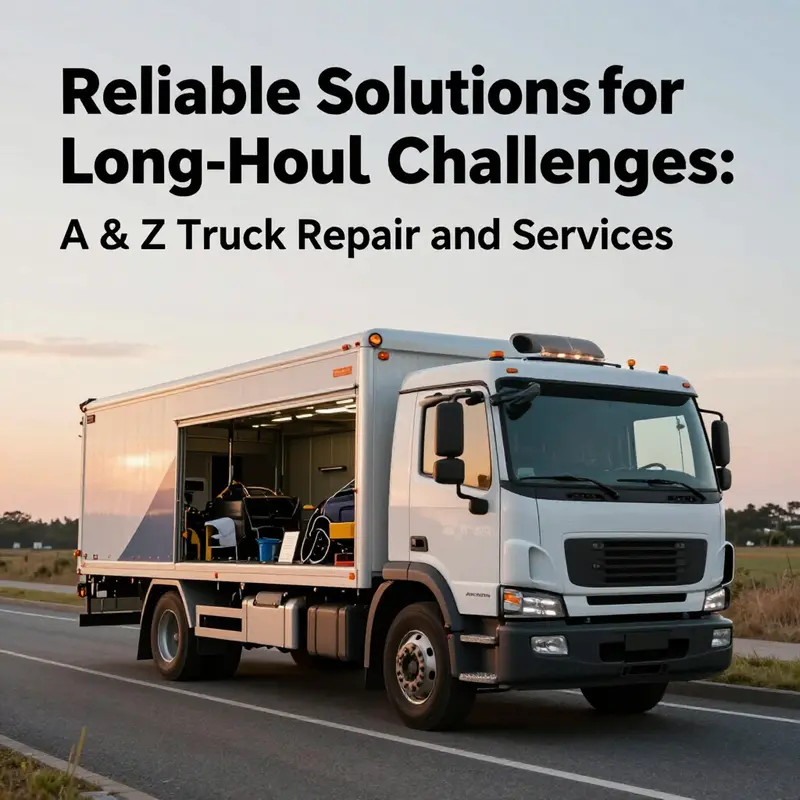
The core advantage of their model lies in mobility. Mobile diesel truck and trailer repair teams arrive with a stocked set of tools, diagnostic devices, and replacement components necessary to triage and address a wide spectrum of issues on site. This is not a simple roadside wrench job; it is a targeted, professional service designed to restore operation as quickly as possible. The technicians are trained to interpret the vehicle’s data, listen to the driver’s account of symptoms, and perform decisive repairs that can clear a relay of fault codes, repair a compromised fuel system, stabilize electrical faults, or replace essential components without forcing the truck into a tow or a distant repair facility.
To fleet operators, the promise of on-site capability is twofold: speed and predictability. Speed comes from the ability to diagnose and repair on the spot, reducing the chain of events that begins with a breakdown, escalates to a tow, and ends with a lengthy wait in a shop queue. Predictability follows from a service model that treats breakdowns as solvable incidents rather than inevitable crises. When a technician is dispatched, there is a clear plan of action, a defined scope of work, and a commitment to minimize downtime while maintaining safety and compliance. This combination matters because fleets increasingly rely on tight schedules, just-in-time deliveries, and a network of drivers who must stay productive regardless of the road conditions.
The scope of on-site work reflects the realities of modern commercial transportation. Mobile repair teams are equipped to handle routine maintenance tasks in the field, such as fluid top-offs, belt and hose inspections, brake checks, and tire assessments, as well as more complex diagnostics that require specialized equipment. They can address minor faults that would otherwise reduce efficiency or safety—electrical glitches that illuminate warning indicators, sensor irregularities that affect performance, or cooling and fuel-system concerns that, if left unchecked, could cascade into more serious failures. In some instances, a rapid fix may be as simple as resealing a gasket, replacing a sensor, or tightening a connection. In others, it may involve swapping a component that is readily available on the mobile unit or arranging a route to a nearby parts depot for a same-day replacement. The overarching objective remains the same: restore safe operation and minimize the driver’s downtime so the vehicle can resume its route with confidence.
A crucial element of the emergency service model is communication. Dispatch centers coordinate quickly with drivers, capturing essential details about location, symptom description, and available resources. On arrival, technicians perform a structured triage, quickly determining whether a roadside repair is feasible within the constraints of safety and equipment. If a minor, on-site fix suffices, the unit returns to service immediately. If not, the team moves to a decision point—whether to tow to the closest authorized shop, arrange mobile repair at a nearby facility, or implement a staged repair plan that allows the vehicle to continue to a service point during a later leg of its itinerary. In all cases, the dispatch is designed to salvage as much uptime as possible while ensuring that the repair plan aligns with safety standards and regulatory requirements. This clarity of process is what fleet operators value, because it reduces uncertainty and sets realistic expectations for drivers, maintenance personnel, and operations managers.
The value proposition extends beyond the immediate fix. Emergency road services like these are part of a broader maintenance ecosystem that supports preventive care and reliability. While the mobile unit excels at rapid-response repairs, it also serves as a diagnostic outpost that informs broader maintenance decisions. A pattern may emerge—perhaps a recurring fault that suggests a pending wear issue or a component with a shorter operating life under certain routes or loads. Recognizing these trends allows fleet managers to schedule preventive maintenance more effectively, pre-position parts that are statistically likely to fail, and allocate resources to reduce the risk of future disruptions. In this way, on-site emergency service is not just a cure for today’s problem; it is a forward-looking tool that shapes maintenance planning and fleet policy over time.
The human element behind these services is essential. Technicians working in the field must balance technical proficiency with the adaptability required by diverse environments. They operate in varied weather, on different road surfaces, and around unpredictable traffic patterns. Their ability to communicate with drivers—explaining what is being done, why a particular repair is necessary, and what the next steps will be—helps reduce driver stress and maintain trust between the fleet and its roadside partners. This trust is the quiet backbone of efficient road service: when drivers know a capable team will be there, they feel safer, are more likely to comply with safety procedures, and are better able to manage the pace of the day under pressure.
From a safety standpoint, on-site repair reduces exposure to the hazards of towing and off-site work. While towing can be necessary for serious malfunctions, every option that keeps a vehicle mobile for as long as is safely possible is preferable. The mobile approach emphasizes controlled, well-communicated steps, with technicians following strict safety protocols to secure loads, shield workers from traffic, and ensure that any repair performed does not introduce new risks. This is particularly important for semi-trucks and trailers carrying hazardous materials or oversize loads, where the margin for error in roadside conditions is slim. In these situations, the ability to stabilize the vehicle, perform a quick assessment, and initiate a plan without leaving the scene is a meaningful improvement for everyone involved.
The geographic reach of emergency road services is also a practical consideration for fleets. While the specifics of coverage vary, the concept rests on the idea that drivers should not be forced to journey far from their routes to obtain help. By deploying mobile units that can respond across broad service areas, the provider helps ensure that even long-haul operations can rely on a consistent standard of care. The fleet manager’s calculation—time spent waiting versus time spent in transit—leans decisively toward the on-site solution when the situation allows. This calculus is particularly compelling for operations that run tight schedules, such as regional distribution networks or just-in-time manufacturing pipelines, where every delay ripples through the chain of downstream activities.
For drivers, the experience of emergency road service also translates into performance and morale benefits. Knowing that a trained professional will arrive promptly, with tools and expertise calibrated to semi-trucks and trailers, reduces the anxiety that accompanies a breakdown. The driver can focus on remaining safe, communicating clearly with the dispatcher, and preparing for the next leg of the trip. The result is a more resilient workflow, where unexpected events are managed with competence rather than becoming immobilizing bottlenecks. In a broader sense, this kind of service reinforces the industry’s commitment to uptime, driver welfare, and the reliability that modern commerce increasingly depends upon.
As we consider the broader landscape of truck maintenance and emergency response, it’s clear that on-site emergency road services are not a standalone remedy. They are a crucial component of an integrated strategy that blends rapid reaction with proactive maintenance. When fleets invest in mobile repair capabilities, they gain access to a flexible, intelligent support system that can bridge the gap between the problem and the plan. It is a model that recognizes the realities of road operations—the unpredictability of weight, weather, and timetable—and offers a practical pathway to keep fleets on course. In this light, A & Z Truck Repair and Services embodies a vision of trucking support that respects the urgency of a breakdown while upholding the standards of safety, quality, and reliability that define professional road service.
On the Road with A & Z: Why Mobile Diesel Repair Powers Fleet Resilience
Mobile Repair in Practice: How A & Z Keeps Fleets Moving
Mobile diesel repair is more than a convenience for fleets; it is a strategic asset. For A & Z Truck Repair and Services, a mobile-first approach transforms how fleets manage risk, cost, and uptime. Technicians arrive at the vehicle, not the other way around. This simple inversion removes the transit step that so often multiplies downtime and expense. When a semi or trailer goes out of service miles from a shop, the cost of delay grows in predictable ways. Drivers idle, deliveries slip, schedules cascade. The on-site technician contains those costs by repairing or stabilizing the vehicle immediately.
The operational value of mobile repair becomes clear when viewed through a few practical lenses: time, money, safety, and continuity. Time matters because every minute a truck sits inoperable translates directly into missed revenue. A & Z reduces that idle time by responding quickly and performing many repairs in the field. Money matters because towing and secondary transport add expense and complexity. On-site service eliminates or reduces these line items. Safety matters because stranded vehicles can create hazardous roadside conditions, especially on busy corridors or uneven terrain. A mobile unit brings tools, lighting, and trained personnel to manage the scene safely. Continuity matters because supply chains and construction sites rely on predictable vehicle availability. The ability to get a rig back into service within hours, instead of days, preserves client relationships and avoids contract penalties.
A successful mobile repair program rests on three integrated components: skilled technicians, properly equipped vehicles, and streamlined logistics. First, technicians must combine deep diesel knowledge with diagnostic fluency. Modern diesel systems blend mechanical, electronic, and software elements. A & Z technicians are trained to interpret fault codes, trace electrical issues, and perform mechanical repairs under time pressure. They balance the need for speed with the requirement for durable fixes. Second, mobile units must carry a prioritized inventory and the right diagnostic tools. A fully equipped mobile truck includes hand tools, hydraulics, diagnostic scanners, lighting, and common spare parts. Inventory is curated using historical failure data so technicians carry parts that matter. Third, logistics and communication software route calls, track technician availability, and push repair histories to a centralized database. That data loop improves first-time fix rates and helps manage parts replenishment.
Mobile repair also shifts the maintenance paradigm from reaction to prevention. A & Z uses mobile service not only for breakdowns but for scheduled, on-site inspections. These visits catch wear before failure. Routine checks of brakes, cooling systems, and fuel components reduce the likelihood of roadside failures. Proactive mobile maintenance extends component life and smooths service demand, which lowers fleet operating costs. When preventive work is done where trucks already operate, fleets avoid the disruptions of shop scheduling and vehicle repositioning.
The economics of mobile diesel repair favor operators who run large or geographically dispersed fleets. Eliminating tow fees and shop drop-off times reduces direct costs. Indirect savings accrue from avoided delivery delays and more predictable asset utilization. For A & Z, competitive pricing stems from this efficiency. Mobile units can often fix an issue at a lower total cost than a full shop intervention. That financial advantage becomes a marketing differentiator. Customers prefer service partners who reduce downtime and provide transparent cost estimates.
Beyond cost, mobile repair enhances service experience. Drivers appreciate quick, courteous assistance. Clear communication—estimated arrival times, diagnostic findings, and repair choices—builds trust. A & Z’s technicians act as mobile ambassadors. Their professionalism and technical competence often convert emergency service calls into planned maintenance contracts. This rapport also supports fleet managers who need reliable status updates and documented repair records. The centralized repair histories that come from mobile visits feed into maintenance planning and budgeting.
Technology amplifies the mobile repair advantage. Telematics and remote diagnostics allow fault identification before a technician arrives. When engine fault codes, temperature spikes, or pressure anomalies are visible in real time, the technician can approach the call with parts and a plan. This reduces wasted trips and improves first-visit success. Diagnostic laptops and portable analyzers replicate shop capability at the roadside. For complex failures, mobile units can perform triage and temporarily stabilize the vehicle. Then, if needed, the unit coordinates a tow to a workshop with the necessary facilities. This hybrid strategy optimizes both mobile and fixed-site resources.
Safety and regulatory compliance are non-negotiable in mobile operations. Mobile technicians must follow federal and state regulations related to emissions, hazardous materials, and vehicle safety. Proper handling and disposal of fluids, secure stowage of parts, and adherence to roadside safety protocols protect employees and customers. A & Z invests in training and safety gear to meet these demands. That investment reduces risk and insulates customers from potential compliance penalties.
Inventory strategy is equally important. Mobile units cannot carry everything. A data-driven approach determines which parts travel and which remain at a central depot. Fast-moving consumables and frequently failing components are stocked on trucks. Less common items remain in a parts hub. Efficient parts management shortens repair cycles and controls capital tied up in inventory. A & Z balances mobile stocking with rapid parts fulfillment to maintain service speed without overburdening its fleet of vans and trucks.
Scaling mobile services requires operational discipline. Dispatch must prioritize calls by severity, location, and resource fit. A & Z routes technicians to maximize geographic coverage while minimizing drive time. As call volume grows, the company tunes its routing algorithms and adds mobile units strategically. Each added unit increases coverage but also demands trained personnel and parts planning. Scaling therefore becomes a careful mix of analytics and human judgment.
Mobile repair also supports specialized needs. Construction and heavy-haul clients often operate in remote or temporary sites. A mobile team can set up a makeshift shop on site and perform multi-day maintenance. Trailer fleets, refrigerated units, and specialized tankers each have unique service profiles. A & Z adapts its mobile capabilities to meet these requirements by training technicians and stocking specific parts.
Finally, mobile repair creates measurable business value. Key performance indicators like mean time to repair (MTTR), first-time fix rate, and fleet uptime provide clear metrics of success. A & Z monitors these indicators to improve processes. Over time, reduced MTTR and higher first-time fix rates translate into lower total cost of ownership for fleet customers. That outcome reinforces long-term partnerships.
A strategic mobile repair program becomes a competitive differentiator. It reduces downtime, lowers costs, and delivers superior customer experiences. For A & Z Truck Repair and Services, mobile diesel repair is not an afterthought. It is a core capability that supports modern fleet operations. The combination of skilled technicians, well-equipped units, data-driven logistics, and safety focus creates a resilient service model. As fleets demand faster turnarounds and predictable uptime, mobile repair emerges as the essential service that keeps commerce moving.
For an example of how mobile units can be designed for complex road repair and field diagnostics, see the multifunctional mobile maintenance service truck resource: https://www.made-in-china.com/products/203518674-152919612/Multifunctional-Mobile-Maintenance-Service-Truck-for-Road-Repair.html
For further reading on industry service models and reliability approaches, explore this perspective on service and reliability in trucking: Exploring 5-Star Truck Inc. Quality Service and Reliability on the Road.
From Downtime to Uptime: How Maintenance and Diagnostics Power a-Z Truck Repair and Services for Real-World Fleets
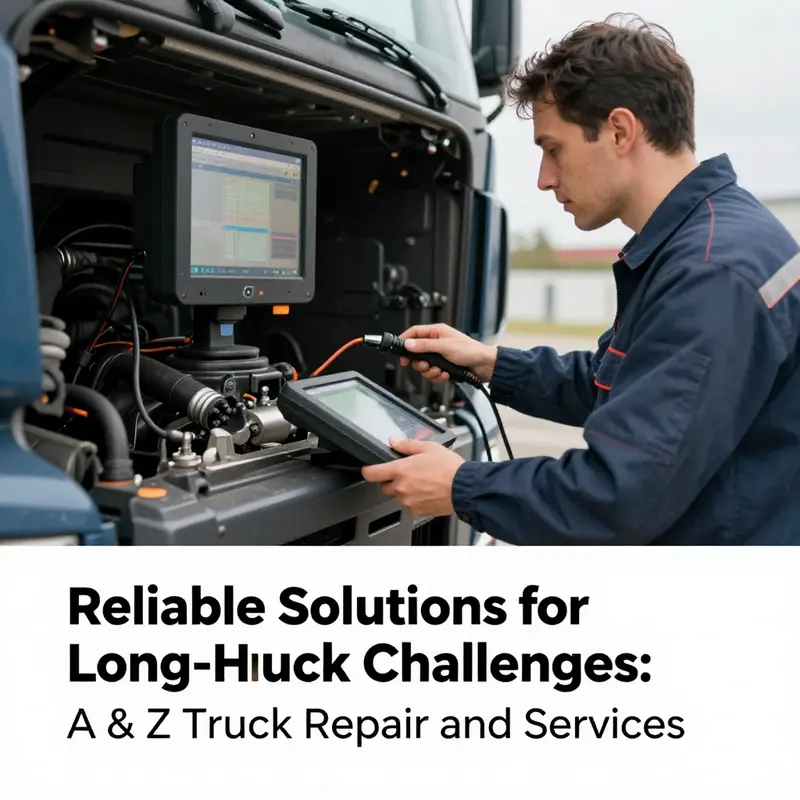
Reliability in trucking is earned, not assumed. When a fleet moves goods across long hauls or tight delivery windows, every minute spent waiting for a repair compounds costs, disrupts schedules, and risks safety. A & Z Truck Repair and Services frames this reality as a practical mission: bring maintenance and diagnostics to the vehicle, not the other way around. Their model centers on being mobile and responsive, a capability that transforms what could be a disruptive incident into a managed maintenance event. Instead of transporting a truck to a shop and losing hours of productive time, fleets can count on on-site expertise, diagnostic clarity, and service that aligns with the day-to-day pressures of commercial transport. In this context, maintenance is not a checkbox but a living process that protects uptime, safety, and the bottom line. The backbone of this approach is a disciplined blend of routine inspections, preventative maintenance scheduling, and diagnostic precision, all delivered with the same level of care and professionalism whether the vehicle roams the interstate or sits in a yard near the depot.
The significance of regular checks cannot be overstated. Routine inspections are not mere paperwork; they are a field-safe, duty-bound health check for the vehicle and its systems. A comprehensive inspection surveys critical components—from brakes and tires to electrical connections and fluid levels—while verifying compliance with safety standards and regulatory requirements. In practice, these inspections identify wear patterns, minor leaks, or loose fittings before they become large problems. The value is twofold: early detection reduces the risk of sudden breakdowns, and it builds a data trail that guides future maintenance decisions. For fleet managers, this data is more than a record. It becomes a predictive tool that informs scheduling, budgeting, and spare parts planning, turning maintenance from reactive firefighting into proactive governance. As drivers report unusual noises, vibrations, or performance changes, technicians can corroborate these signals with a hands-on assessment and live diagnostic data, then chart a path forward that minimizes downtime.
At the core of this approach is preventative maintenance scheduling. Proactive service appointments are not about chasing a clock but about optimizing engine life, fuel efficiency, and tire wear. By aligning service windows with operating cycles—the miles driven, the duty cycles, and the known wear rates for specific routes—A & Z Truck Repair and Services helps fleets reduce unplanned outages. Scheduled PM routines cover essential systems: lubrication, cooling, filters, belts, and drive-line components. They address the nuance of each fleet’s operations, whether miles accrue on busy interchanges or rural back roads, and they accommodate the realities of varying climates and load profiles. A well-tuned maintenance plan translates into consistent performance, steadier fuel economy, and more predictable maintenance costs. The technicians collaborate with fleet operators to adjust the schedule based on vehicle age, duty cycle, and past performance, ensuring that the plan remains a living document rather than a fixed calendar.
Diagnostics sit at the heart of rapid repair decisions. Modern semi-trucks and trailers rely on advanced electronic control units, sensors, and communication networks that continuously stream data. When a fault arises, the diagnostic process becomes a focused inquiry: What codes exist? What live measurements are deviating from the norm? Which subsystems interact to create the symptom observed on the dashboard or in the cab? A & Z Truck Repair and Services deploys sophisticated diagnostic tools and trained technicians who can interpret data with clarity. Engine diagnostics, for example, go beyond identifying a fault code. They involve evaluating fuel trim, ignition timing, sensor readings, and misfires to determine whether the cause is a worn part, an electrical fault, or a miscalibrated parameter. This level of analysis prevents guesswork, shortens repair cycles, and preserves engine longevity. In practice, a diagnostic session often yields a prioritized repair plan: address the root cause first, verify system integrity, and re-test driving conditions to confirm the fix before resuming service.
The scope of diagnostics extends into the transmission and drivetrain. Transmission servicing is not merely changing fluids; it is a comprehensive health check of hydraulic circuits, gear wear, clutch operation, and control electronics. When transmission concerns appear—slippage, harsh shifting, or unexpected gear hunting—on-site technicians perform a careful assessment, measure fluid quality, and inspect relevant sensors. Because transmission systems operate continuously under heavy load, even small inefficiencies can escalate into drivability problems if left unaddressed. By diagnosing and addressing issues early, fleets avoid costly replacements and extend the life of heavy-duty transmissions, reducing downtime and maintaining dependable performance on every mile.
Brakes remain a critical safety frontier in every fleet operation. Brake system evaluations blend tactile inspection with data-driven checks. Worn pads, contaminated rotors, and compromised hydraulic systems can compromise stopping power and response time, jeopardizing driver safety and cargo protection. On-site brake evaluations allow technicians to test braking performance under load, verify ABS function, and assess rotor runout, pad wear, and rotor temperatures. Addressing even minor discrepancies before they become urgent can prevent emergency repairs that would take a truck out of service during peak periods. This safety-first mindset permeates every maintenance interaction, reinforcing the responsibility operators bear for their drivers and the roads they share.
Electrical system troubleshooting has become a defining skill in modern trucking. The electrical network in a heavy vehicle links battery systems, charging circuits, lighting, sensors, infotainment, and critical safety subsystems. Electrical faults can be elusive, presenting as intermittent drivability issues or sudden equipment failures. On-site diagnostics bring order to complexity. Technicians diagnose wiring harness problems, bad connections, corroded terminals, and faulty sensors with precision, using load testing and electrical measurement tools to trace fault paths. The goal is a reliable electrical ecosystem that delivers consistent starting power, stable charging, and predictable sensor performance. When electrical issues are resolved promptly, drivers experience fewer in-cab distractions and fleets gain a steadier, safer operation that supports tight delivery windows.
Alignment checks complete the circle of vehicle health by ensuring tires meet the road with proper geometry. Wheel alignment affects steering stability, tire wear, and fuel economy. Misalignment can quietly erode performance until a cascade of inefficiencies demands attention. On the road, alignment manifests as steering pull, uneven tire wear, or a subtle vibration. Technicians conducting on-site alignment checks employ precise measurements against vehicle specifications and adjust suspension mounting and steering geometry accordingly. The payoff is tangible: balanced steering response, longer tire life, and improved fuel efficiency, all of which protect the bottom line for fleets carrying dense loads and long hauls across varying terrains.
What makes this integrated approach so compelling is not just the sum of its parts, but the way it orchestrates them in support of uptime. A & Z Truck Repair and Services emphasizes mobile presence, rapid diagnostic cycles, and transparent communication throughout the repair process. The team’s method begins with listening to the driver and reviewing the vehicle’s historical maintenance logs. The next step is an on-site diagnostic tour, where the technician performs a quick yet thorough inspection of fluids, wear parts, and electronic signals. When a root cause is identified, the technician collaborates with fleet managers to map out a comprehensive fix, order components if needed, and set a realistic repair window. The objective is not merely to fix the immediate fault but to restore and then sustain the vehicle’s reliability. In many cases, this means implementing a maintenance action that aligns with the vehicle’s duty cycle and the operator’s schedule, minimizing disruption while maximizing long-term performance.
The practical benefit for fleet operators is clear. Maintenance and diagnostics are no longer isolated tasks but a continuous loop that preserves vehicle uptime and operational readiness. Routine inspections inform preventative maintenance, which reduces the likelihood of emergency repairs. When faults arise, a precise diagnosis guides efficient repairs, preventing unnecessary parts replacements and ensuring the right fix the first time. The on-site capability further accelerates this cycle, because the technician’s presence reduces tow time, eliminates the need to transport a vehicle to a shop, and speeds up the return-to-work process. In the language of fleet management, this translates to shorter mean time to repair, higher asset utilization, and more predictable maintenance costs. The result is a fleet that remains responsive to demand, even as routes evolve, loads change, and regulatory requirements shift.
For operators looking to deepen their own maintenance maturity, there is value in blending professional services with ongoing learning. Training and hands-on practice help drivers and maintenance staff recognize symptoms early and participate actively in the diagnostic conversation. A practical door-to-door approach, like the one that guides A & Z, combines skilled technician work with the operator’s insight and data. As part of this collaborative model, customers increasingly reference resources focused on maintenance training and best practices to reinforce what is learned on the road and in the shop. One useful resource highlights the importance of ongoing maintenance training for fire and heavy-duty vehicles alike, illustrating how a structured program supports uptime and safety across complex systems. For teams seeking to expand their knowledge, a link to a dedicated program on maintenance service training provides a concrete pathway to elevate in-house capabilities while preserving the strengths of external expertise. You can explore that training resource here: fire-truck maintenance service training.
Beyond the immediate repairs, the philosophy at A & Z Truck Repair and Services emphasizes data-driven maintenance tracking. Each service event contributes to a longitudinal health profile for every asset. When fleets adopt this practice, they move closer to true predictive maintenance, where analytics anticipate wear and failure before it interrupts service. This progression requires disciplined record-keeping, clear communication, and a commitment to continuous improvement. The outcome is a more resilient fleet—one that can adapt to shifting demand, endure tougher routes, and meet the stringent safety expectations that govern commercial trucking. In practice, the combination of consistent inspections, carefully timed preventive maintenance, precise diagnostics, and on-site execution represents a robust framework for sustaining vehicle uptime in the demanding world of freight transport. The chapter thus presents not just a service offering, but a philosophy anchored in reliability, safety, and operational excellence.
Bespoke Repair on the Go: How A & Z Crafts Custom Solutions to Keep Fleets Rolling
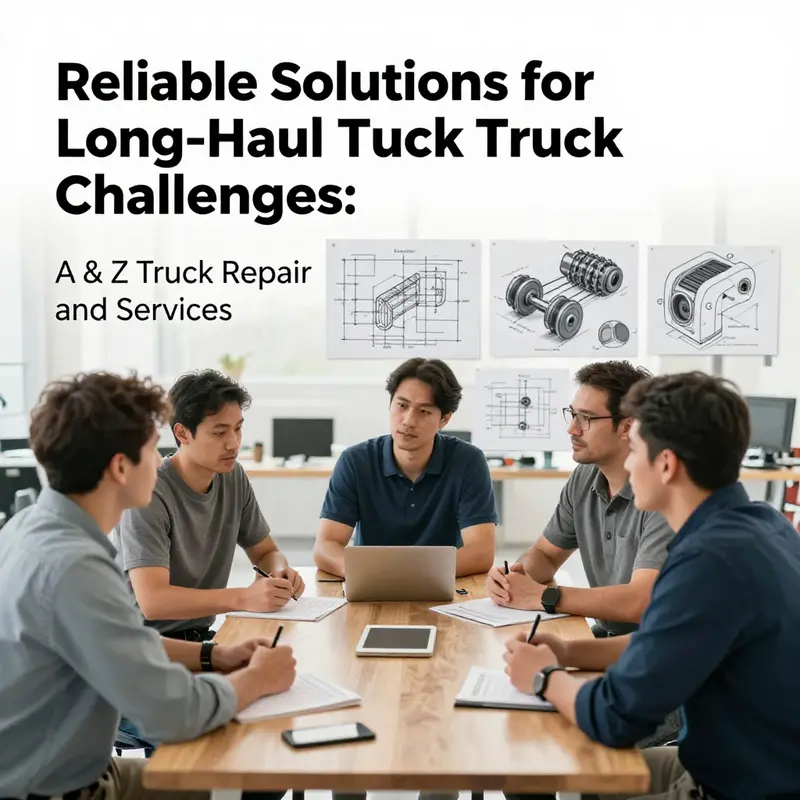
When fleets must keep moving, the value of a repair partner that can tailor solutions to the road ahead becomes not just a convenience but a competitive edge. A & Z Truck Repair and Services understands this in a fundamental way. Customization here is not a marketing slogan but a core operating discipline. It starts with the premise that no two fleets are alike. Variations in routes, load profiles, seasonal demand, and maintenance history create a mosaic of needs that standardized, one-size-fits-all service cannot fully satisfy. The company leans into this reality by offering emergency road service and comprehensive on-site repair abilities that can be shaped to the client’s particular operating footprint. The emphasis is on preserving uptime—hour by hour, mile by mile—by aligning repair capacity with the actual rhythm of the customer’s business. In practice, customization manifests as a continuum rather than a single service toggle. It means a fleet manager can request a specific mix of diagnostics, preventive maintenance, and repair options, all delivered through a mobile platform that feels almost like a portable, on-site workshop.
The backbone of this approach is the mobile diesel truck and trailer repair capability. The technicians arrive with a fully equipped mobile unit that functions as a compact, highly capable workshop at the client’s location. This is not merely a tool bag on wheels; it is a strategically designed workspace that enables professional maintenance and repair to occur wherever the vehicle sits—on the highway shoulder, at a loading dock, or within a remote worksite. The emphasis on on-site service minimizes downtime by eliminating the need for hauling assets to a fixed shop, which in turn reduces the risk of cascading delays that can ripple through a fleet’s schedule. It also reduces the complexity of operations for the customer: by bringing diagnostic capability, welding, metal fabrication, and standard repair workflows directly to the asset, A & Z turns a potentially disruptive event into a contained maintenance episode with a clearly defined scope and a predictable turnaround.
The range of services that can be customized is broad, reflecting the company’s ability to operate as a full-spectrum repair partner. Emergency road service remains a cornerstone of the proposition, but it sits within a broader framework that includes comprehensive repairs for semi-trucks and trailers, heavy equipment repair, and fleet maintenance programs. This spectrum matters because the realities of modern trucking demand flexibility. A fleet might experience a sudden brake system issue one week and graphene-level battery health concerns the next. The same mobile unit that can handle a brake adjustment can also perform a diagnostic of the electrical system, test fuel injectors, or perform a welding repair after a metal impact. The company’s technicians are trained to interpret the interdependencies of systems common to commercial vehicles, so a problem in one subsystem does not trigger a cascade of unanticipated failures in others. This systemic mindset supports the design of maintenance plans that are not only reactive but proactive, blending immediate field repairs with longer-term care strategies.
One of the most compelling aspects of customization is the ability to tailor on-site operations to the client’s workflow. A & Z offers flexible on-site support paired with adaptable workshop setups. In practice, this means engineers and technicians can configure a temporary, client-facing workshop at a job site or establish a more permanent, semi-permanent facility within the client’s premises. The objective is to create a safe, efficient space where routine maintenance—and more complex field repairs—can proceed with minimal disruption. Elements such as power supply planning, dust control, waste management, and safety compliance are integrated into the planning phase so that the on-site workshop functions as a seamless extension of the client’s own operations. The value of this approach becomes particularly evident for fleets with high asset density, tight delivery windows, or remote operations where transporting vehicles to a centralized shop would introduce unacceptable downtime.
The customization framework also accommodates the full spectrum of vehicle types a modern fleet might encounter. While the core competency centers on heavy-duty semi-trucks and trailers, the company’s flexible service model readily expands to meet specialized needs. This can include equipment that has unique duty cycles, specialized trailers, or heavy equipment that is critical to the client’s supply chain. The on-site professionals are prepared to shift gears from routine maintenance to more intricate field repairs, such as metal erection or welding repairs, when site conditions demand it. The intent is to deliver a complete, end-to-end repair experience so that each client receives a solution uniquely suited to their operational demands, without sacrificing quality or safety. The on-site capability also supports rapid diagnostics and repair planning, with technicians able to perform tests, interpret telemetry or diagnostic data, and coordinate with the client to confirm the scope of work before any part is replaced or any process is initiated.
The customization journey does not end with the physical repair work. A & Z emphasizes an integrated lifecycle approach to maintenance that blends on-site execution with strategic oversight. Fleet managers benefit from a cohesive service ecosystem that includes preventive maintenance planning, scheduled inspections, and data-driven recommendations. Rather than simply reacting to an imminent failure, the service model promotes proactive care, leveraging the information gathered during field service to shape the next maintenance window. This ensures the fleet remains compliant with regulations and industry best practices while also extending the vehicle’s useful life. The service team is trained to document work thoroughly, capture digital records of diagnostics and repairs, and translate those records into actionable maintenance plans for the future. The end result is a transparent, auditable chain of care that stakeholders can rely on when budgeting, forecasting, or negotiating service level agreements.
In an environment where uptime is the primary currency, even the smallest strategic choices can have outsized effects. A & Z recognizes that customization is as much about process as it is about parts. Where a client might traditionally rotate through standard service intervals, the company works with the fleet manager to tailor the cadence of maintenance to actual operating conditions. If a route involves frequent stop-and-go traffic in urban corridors, the maintenance plan adjusts to emphasize braking systems, clutch performance, and drive-train integrity. If another route features long-haul legs with heavier payloads, the plan pivots toward cooling system performance, fuel economy optimization, and engine health monitoring. The result is a maintenance program that is not just a schedule on paper but a living strategy that adapts to the fleet’s day-to-day realities. And because the company provides flexible, on-site support, that strategy can be reconfigured quickly as business priorities shift—whether due to seasonal demand, new contracts, or changes in regulatory requirements.
The human element within this customized model deserves emphasis. The technicians operating these mobile units bring a blend of field experience and diagnostic acumen. They are taught to listen to the client’s problems, ask targeted questions, and triangulate the root cause with a disciplined, methodical approach. The emphasis on listening ensures that the initial assessment captures not only what is technically broken but how that issue affects the customer’s operations and uptime targets. This practice fosters trust and enables faster, more accurate work scoping. It also supports a collaborative relationship in which the client remains an active participant in the repair process, understanding what is being addressed and why certain decisions—such as parts selection or repair sequencing—are being made. When the on-site team and the fleet manager speak the same operational language, downtime becomes a shared concern rather than a point of contention, and the path to resolution becomes predictable and efficient.
The chapter of customization does not insist on a single blueprint. Instead, it offers a range of practical configurations that align with the realities of trucking life. The company’s ability to deliver on-site services across a spectrum of needs—emergency road service, comprehensive repairs, welding and metal work, and flexible workshop setups—translates into tangible advantages for the client. There is a palpable reduction in the total cost of ownership when downtime is minimized and asset availability is maximized. The client benefits not only from immediate repair outcomes but also from enhanced maintenance planning, better utilization of technicians’ time, and improved coordination with vendors and suppliers. In this sense, customization becomes a strategic capability rather than a mere logistical option. It is a way to fuse technical excellence with operational insight, producing outcomes that help fleets stay reliable, compliant, and competitive.
For readers seeking to explore the broader implications of design and maintenance excellence in emergency and heavy-duty service environments, a relevant exploration of design efficiency in emergency services offers additional context that complements this chapter. Design Efficiency in Emergency Services. This resource provides additional perspective on how thoughtful design choices in service delivery—whether mobile, on-site, or centralized—can elevate uptime, safety, and overall performance. In the same spirit of continuous improvement, A & Z’s customized repair approach invites fleet operators to imagine maintenance not as a series of fixes but as an ongoing capability that grows in sophistication as needs evolve. The result is a durable, adaptable partnership built around the real-world dynamics of road and worksite life.
External resource: https://5startruckin.com/how-modern-pumper-fire-truck-design-can-save-lives-essential-features-explained/
Final thoughts
A & Z Truck Repair and Services offers a robust solution for long-haul trucking needs, ensuring that vehicles are maintained and repaired efficiently. Their emphasis on mobile services, emergency support, and tailored solutions make them an invaluable partner for anyone in the trucking industry. By understanding their offerings, truck drivers, fleet managers, and aspiring enthusiasts can ensure they are prepared for anything the road throws their way.