
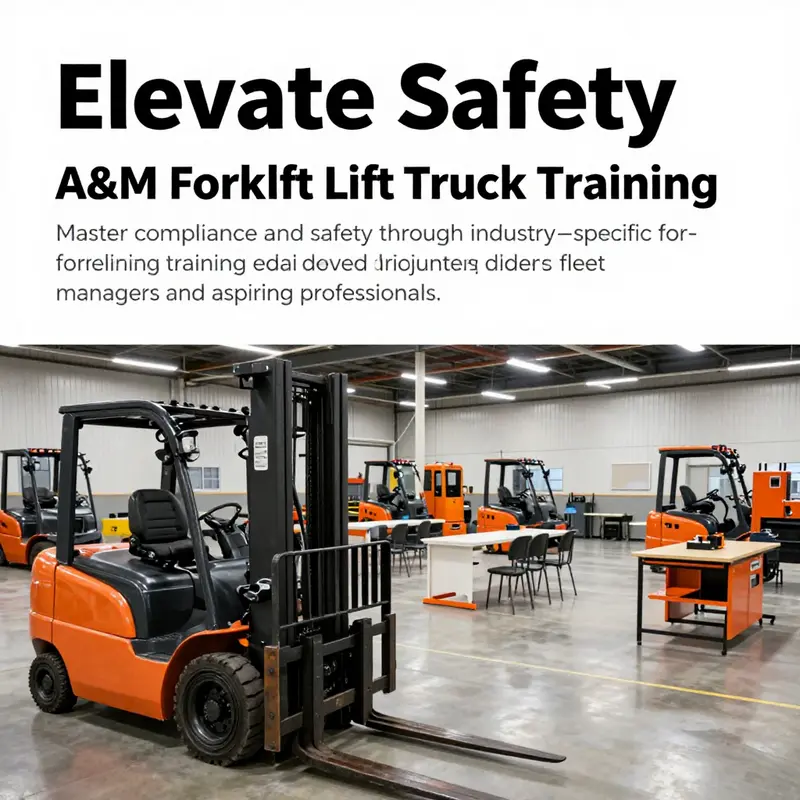
In an ever-evolving logistics landscape, compliance and safety are paramount for operations involving forklifts and lift trucks. A&M Training Services stands at the forefront, offering specialized forklift training that adheres to essential standards set by OSHA. This training not only empowers long-haul truck drivers but also equips fleet managers, trucking company owners, and maintenance specialists with the knowledge they need to ensure operational excellence. Each chapter in this article delves deeper into A&M’s commitment to safety standards, the detailed curriculum of their training programs, and the positive impacts on overall industry safety. Together, we’ll uncover how this training can transform your forklift operations while ensuring compliance.
Safe Lift, Strong Compliance: How A&M Forklift Training Elevates Workplace Safety Across Industries
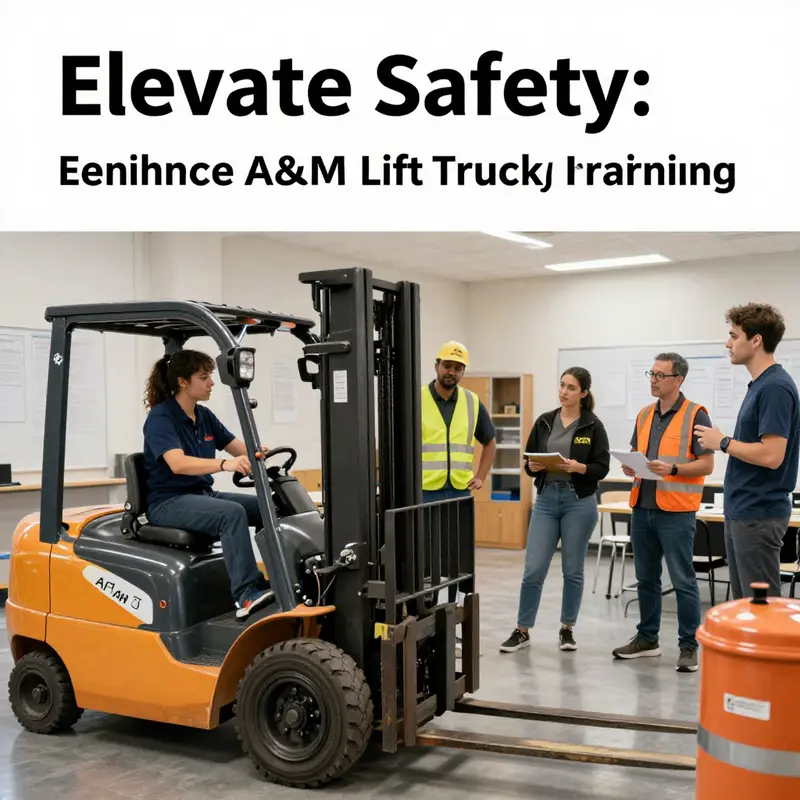
A single, well-taught maneuver can mean the difference between a smooth shift in material flow and a costly disruption or injury. In the world of industrial operations, forklift lift trucks are the engines of productivity, yet they are also the source of significant risk if not operated with discipline and systematic care. A&M Forklift Lift Truck Training Services rises at this intersection of opportunity and hazard, offering more than a certificate. Their approach to training treats compliance as a living, operational discipline and safety as a continuous, measurable outcome. The chapter that follows weaves together the regulatory landscape, the core components of operator competence, and the cultural shift that makes safety a daily habit rather than an episodic checkbox. It is a narrative of how training becomes a strategic asset—reducing risk, enhancing efficiency, and aligning everyday actions with the standards that govern workplaces across industries.
Regulatory frameworks around forklift operation are not empty typography on a wall chart. They embody expectations for behavior, decision making, and the physical realities of moving heavy loads. In the United States, OSHA enforces a rule that forklift operators must be trained and re-certified every three years, with immediate retraining required after an incident, near miss, or when there is evidence of unsafe operation. The international landscape adds further nuance. In the UK and other regions, provisions such as LOLER and related regulations shape how organizations structure training, conduct inspections, and sustain a culture of safety over the long term. A&M’s training services respond to this global mosaic by designing programs that translate regulatory requirements into actionable skills on the warehouse floor. They do not treat compliance as an annual formality but as a daily practice that informs task selection, load planning, and supervisory oversight. This orientation matters because laws alone cannot guarantee safe outcomes; they can only set boundaries within which competent individuals can operate with confidence.
At the heart of A&M’s offering lies the operator certification process. The curriculum is explicitly constructed to build the knowledge that supports safe operation in real-world contexts. It begins with the fundamentals of proper maneuvering: how to control speed, how to steer, and how to stop with predictable precision in congested spaces. It then extends into pre-use inspections, a critical habit that prevents many failures that escalate into incidents. A thorough daily check is not a ritual; it is a practical constraint that ensures performance is consistent and that warning signs—such as worn tires, damaged forks, or hydraulics that respond sluggishly—are addressed before they become hazards. The curriculum emphasizes stability principles, a topic that blends physics with situational judgment. Operators learn to assess load center, center of gravity, and the effects of uneven terrain or floor imperfections. They study how weight distribution changes as forks tilt, how elevation affects stability, and how to anticipate reactions when turning or stopping under load. By grounding these concepts in concrete procedures and checklists, training becomes a predictive tool rather than a reactive one.
Beyond technique, the training program foregrounds emergency procedures. Operators are prepared not only to perform tasks safely but also to respond decisively when something goes wrong. This includes steps for controlled shutdowns, communication protocols with spotters and supervisors, and understanding the implications of a near-miss or equipment fault. In a well-structured program, drills simulate typical crisis scenarios, allowing operators to rehearse the sequence of actions that protect people and property. Rehearsal under controlled conditions helps to de-stigmatize mistakes and reinforces learning in a way that chalk-and-talk alone cannot. It is here that the value of a formal retraining cadence becomes visible. If a worker deviates from safe practice, or if conditions on the worksite change—new layouts, different loads, or unfamiliar materials—the training framework supports rapid refreshers to bring performance back in line with expectations. The three-year cycle is not a rigid calendar; it is a practical tempo that aligns with changes in operation, workforce turnover, and the evolving safety culture of the organization.
Customized programs are central to A&M’s approach because no two work environments are identical. A warehouse packed with narrow aisles, palletized goods, and high shelving presents different challenges from a manufacturing floor with heavy fabrication lines or a construction site where terrain and temporary access routes shift. A&M tailors content to reflect these realities, ensuring that operators learn what they will actually encounter on their shifts. This customization extends to equipment variety and load profiles. While the fundamentals remain constant—inspection, load handling, stability, and emergency procedures—the emphasis shifts with context. In a high-volume distribution center, for example, the emphasis may be on lane navigation, pedestrian integration, and rapid yet controlled lifting in tight spaces. In a manufacturing setting, the focus may lean toward load coordination with conveyors, staging areas, and multi-team handoffs. For construction sites, the training may incorporate uneven ground, weather-related considerations, and temporary ramping or surface protections. The result is not a generalist certification but a credential that signals readiness to operate safely within the specific operational boundaries of a given site.
The connection between training and safety culture is not incidental but foundational. Safety culture is the shared commitment of an organization to protect people, assets, and reputation through consistent practice. Training underpins this culture by providing the vocabulary, the mental models, and the behavioral norms that turn safety from a preferred policy into everyday behavior. When operators understand why a pre-use inspection matters and see how proper load handling reduces return-to-work injuries, the reflection becomes internalized: safe choices are the path of least resistance. Supervisors and safety managers play a crucial role in translating training into practice. They bridge the theoretical knowledge gained in a classroom or a simulator with the operational realities on the floor. They time audits, reinforce positive behaviors, and address gaps with targeted coaching. A&M’s program recognizes this leadership dimension and integrates supervisory training as a complementary layer to operator certification. The most effective safety programs do not rely on one-off training events; they embed learning into the daily rhythm of work, so that near misses are reported promptly, observations are shared openly, and corrective actions are tracked over time.
Measuring the impact of forklift training requires a pragmatic lens. Businesses evaluate safety outcomes by tracking incident and injury rates, but they also look at near misses, maintenance intervals, and the reliability of lift trucks under typical workloads. A well-designed training program yields tangible improvements: fewer forklift collisions, less chassis and fork damage, longer equipment life, and smoother material flow. Equally important are the qualitative gains: a workforce that trusts the safety system, a supervisor team confident in coaching conversations, and a culture where workers feel empowered to stop operations when risks are detected. The path from certification to culture is iterative. Programs must adapt to feedback from operators who live with the daily realities of the job. They must evolve with changes in facility layout, new process flows, and updates in regulatory interpretations. In this sense, training is not a one-time event but a continuous capability development effort. Investment in training pays dividends through improved uptime, reduced rework, and a more predictable schedule that keeps production on track without compromising safety.
A&M’s emphasis on comprehensiveness also recognizes the diversity of roles within the forklift ecosystem. Operators are the front line, yet supervisors, safety managers, and maintenance personnel share a role in sustaining safe practice. Supervisors ensure that training translates into observable behavior, that performance metrics are tracked, and that drills align with evolving risk profiles on the floor. Safety managers coordinate audits, incident investigations, and policy updates, ensuring that the organization remains compliant with current standards and ready for changes in regulation. Maintenance teams contribute by communicating equipment faults that affect safe operation, reinforcing the need for timely repairs and adjustments. The integrated approach—operator training, supervisory oversight, and maintenance feedback—creates a feedback loop that strengthens safety outcomes. In practice, this means training materials that speak to all stakeholders, scenarios that reflect real job tasks, and performance dashboards that make safety visible and measurable. The result is a safety system that is coherent, repeatable, and accountable, not a loose collection of good intentions.
The practical relevance of the training extends beyond compliance and risk reduction. The operational efficiency gained from skilled operators manifests as smoother lift-and-move cycles, better space utilization, and faster throughput without compromising safety. In warehouses with dense inventory turns, even small improvements in pallet handling can translate into meaningful productivity gains. Operators who can anticipate the center of gravity shifts and adjust their approach to lighting, floor conditions, and pedestrian traffic can navigate crowded aisles with confidence. When teams adopt standardized procedures for pre-use checks and load calculations, the organization reduces the likelihood of stoppages caused by equipment faults or improper practices. In this way, training supports not just safety but the broader objective of reliable, predictable operations. The mindset shift—from “get the job done” to “get the job done safely and consistently”—becomes the operating principle that underpins day-to-day decision making.
For organizations exploring broader safety resources, cross-training opportunities can enrich forklift programs. Intersections with maintenance and general safety training help ensure that forklift operations are not siloed from other risk controls. A practical avenue for this cross-pollination is to consult related training materials that address multi-trade safety competencies, equipment upkeep, and incident prevention. For readers seeking additional perspectives on proactive maintenance and safety culture, resources such as fire-truck maintenance training importance offer transferable lessons about sustaining complex, safety-critical operations under demanding conditions. This cross-domain awareness helps teams appreciate that the discipline of safety applies across high-stakes contexts and that the principles learned in one domain can illuminate practices in another.
The story of A&M’s forklift training program is not merely about content delivered in a classroom or on a practice yard. It is about shaping a holistic approach to safety that permeates planning, execution, and review. A well-structured program connects regulations to routines, aligns operator skills with supervisory expectations, and integrates maintenance considerations into everyday practice. In this way, training becomes a foundation for a mature safety culture that can adapt to evolving threats and opportunities. It is a living framework that grows with the organization, rather than a static checklist that sits on a shelf. The value proposition is clear: when people are competent, confident, and supported by a robust safety system, workplaces become safer, more efficient, and better aligned with the legal and ethical responsibilities that govern modern industry.
The larger implication for industry leaders and safety professionals is to view forklift training as a strategic capital investment rather than a compliance obligation. The upfront effort of designing customized programs, conducting effective assessments, and implementing ongoing reinforcement pays dividends in the form of safer workplaces, higher productivity, and greater organizational resilience. As regulations evolve, the need for adaptable training becomes more pronounced. Organizations that adopt a proactive training posture—anticipating changes, incorporating feedback, and maintaining a strong safety culture—are better positioned to navigate new compliance landscapes without sacrificing performance. A&M’s approach embodies this mindset by balancing rigorous regulatory alignment with practical, context-specific instruction. The result is a program that not only meets today’s requirements but also anticipates tomorrow’s challenges, enabling organizations to lift with confidence, clarity, and control.
For those seeking a clear path to align safety goals with business objectives, the case for comprehensive forklift training is compelling. The dual reward of reduced risk and enhanced operational efficiency resonates across departments, from operations and facilities to human resources and executive leadership. When training is designed with the realities of the workplace in mind and delivered through a framework that supports ongoing improvement, it becomes a durable asset. It informs hiring and onboarding, shapes performance expectations, and anchors accountability for safety outcomes. It also reinforces a sense of shared responsibility—every operator, supervisor, and manager contributing to a safer, more reliable operation. In this sense, A&M’s forklift training program is more than a set of competencies. It is a catalyst for a broader safety transformation that can ripple through the organization, elevating standards and inspiring a culture of care that translates into tangible results.
In closing, the journey through compliant, safety-focused forklift training reveals a simple truth. When knowledge is paired with practice, and when practices are reinforced by leadership and maintenance collaboration, safety becomes a steady, measurable capability rather than a distant ideal. A&M’s training model demonstrates how to translate statutory requirements into on-the-ground proficiency, how to tailor instruction to diverse environments, and how to cultivate a safety culture that endures. The forklift, a symbol of mobility and efficiency, becomes a platform for responsible, trusted operation when supported by disciplined training. For teams seeking to align safety with performance, the path is clear: invest in comprehensive, customer-centered training; empower operators with the confidence that comes from mastery; and foster a culture where safety is the shared responsibility that drives every lift. This is not just a path to compliance; it is a disciplined approach to operational excellence that safeguards people, protects assets, and sustains productivity over time. External resources can further illuminate best practices and contextualize how these principles translate in different regulatory environments, while internal resources echo the shared emphasis on applied safety culture across disciplines.
External resource: https://www.amforklifttraining.com
Beyond the Controls: How A&M Structures Forklift Training for Safety, Skill, and Compliance
Course structure and curriculum
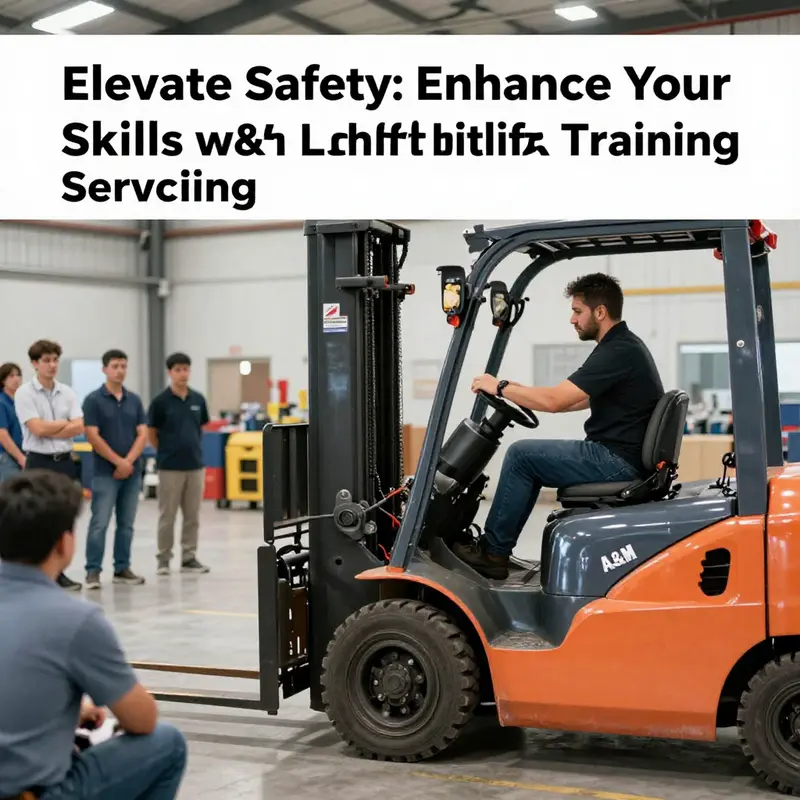
A&M designs its forklift training to move trainees from basic awareness to confident, compliant operation. The curriculum blends classroom learning with hands-on practice. It focuses on the principles that reduce risk and on the real skills operators use every shift. This single, continuous narrative explains how the theoretical and practical components fit together, why each element matters, and how the program ensures both legal compliance and measurable improvement in workplace safety.
The theoretical portion introduces essential rules and principles. Trainees study applicable safety regulations and legal responsibilities. Instruction covers federal standards and state-specific requirements so operators understand the regulatory baseline. Emphasis on legal obligations clarifies employer duties and operator responsibilities, making the consequences of non-compliance clear. This framework helps trainees see training not as a checklist, but as part of a safer work culture.
Within those regulations, the course explores hazard recognition. Trainers use real-world examples and photos to show common risks. Topics include pedestrian traffic, blind corners, unstable loads, and surface conditions. Trainees learn to scan the environment and to anticipate hazards before they become incidents. This part of the curriculum trains the mind to prioritize safety first.
Load handling and stability receive focused attention. Trainees learn about load center, rated capacity, and the way forks, carriage, and mast geometry affect balance. Clear, simple diagrams demonstrate how shifting a load or lifting it too high changes the stability triangle. Exercises in the classroom use calculators and worksheets so trainees practice load-capacity calculations. These activities reinforce the habit of verifying load information before movement.
Inspection routines and equipment checks form another cornerstone. Trainees study pre-operational inspection procedures for various lift trucks, including counterbalance, reach, and pallet jack types. Checklists are modeled after industry standards and tailored to equipment commonly used on site. The course shows how fluid leaks, tire wear, fork damage, and malfunctioning controls can escalate into dangerous failures. Trainees learn to document inspections and to take defective equipment out of service promptly.
The curriculum covers workplace safety systems and personal protective equipment. Trainees review seat belt use, speed limits, designated travel paths, and the role of signage. The importance of maintaining a tidy work area is reinforced. Small behaviors, like securing loads and keeping pavement free of debris, are framed as high-impact controls. The course connects these routines to reduced incident rates and improved productivity.
Legal responsibilities and employer duties are addressed in a straightforward manner. Trainees discuss what documentation employers must keep. They learn when retraining is required, such as after an accident or near miss, or when an operator demonstrates unsafe behavior. The course highlights the three-year retraining interval and immediate retraining triggers. This clarity helps supervisors know when to schedule evaluations and refreshers.
Instructional methods in the classroom are interactive. Trainers use short lectures, videos, and scenario exercises. Group discussions encourage participants to share experiences and identify common pitfalls. Adult-learning principles guide pacing and content depth. This approach helps trainees retain critical information and apply it during the hands-on phase.
The practical component places trainees behind the controls under direct supervision. Exercises begin with basic vehicle familiarization and progress to complex maneuvers. Instructors guide pre-operational checks, engine start-up drills, and control familiarization. Trainees practice steering, lifting, and load placement. Each session builds confidence through repetition and corrective coaching.
Maneuvering in confined spaces is a key practical skill. Trainees practice navigating narrow aisles and performing controlled turns. Simulated warehouse layouts and temporary obstacles recreate the clutter and constraints operators face. Instructors monitor posture, steering precision, and speed control. Real-time feedback corrects unsafe habits immediately.
Load handling drills focus on safe pick-up, transport, and set-down. Trainees practice centering loads, setting proper fork spacing, and controlling the mast when lifting. They handle different types of loads, from stacked pallets to awkward single items. Exercises include load stacking at varying heights and placing loads on racking. These tasks teach fine control and emphasize the consequences of overreaching or lifting with poor visibility.
Emergency response and recovery training teach operators how to mitigate incidents. Trainees learn procedures for handling tip-over scenarios, load drops, and mechanical failures. Instruction explains when to evacuate an area and how to secure equipment. These rehearsals reduce panic and improve outcomes when something goes wrong.
Performance assessment is continuous and structured. Instructors use standardized evaluation forms that map directly to the skills and knowledge taught. Trainees receive both qualitative feedback and quantitative scores. Assessments include written quizzes, practical skill tests, and observation of safe work behaviors during simulated shifts. This multi-layered evaluation ensures trainees meet the program benchmarks before certification.
Documentation and certification processes are integral to the course. A&M provides training records that employers can file to document compliance. Certificates show the date of training, the name of the instructor, and the type of equipment covered. Records also note the topics addressed and the trainee’s demonstrated competencies. Clear documentation supports regulatory inspections and internal audits.
Refresher and retraining policies are built into the curriculum. The program explains the standard three-year retraining schedule and addresses immediate retraining triggers. Trainees and supervisors learn how incidents, observed unsafe operation, or assignments to operate different equipment require targeted refreshers. The program offers short, focused refreshers for skill drift and full retraining when competency gaps are significant.
Customization is a distinguishing feature. A&M adapts lessons to the client’s site, equipment fleet, and industry needs. Before training begins, instructors assess workplace layouts, inventory types, and common operational tasks. This reconnaissance informs scenario design and ensures that practical exercises replicate on-site conditions. Custom modules cover specialized equipment, narrow-aisle trucks, and unique load types. Tailored content increases relevance and improves transfer of training to the job.
Special attention is given to small-business compliance challenges. Many small employers struggle to keep training current. The program includes practical strategies for scheduling, record keeping, and incorporating training into routine operations. Trainers share low-cost solutions for ongoing supervision and peer coaching, helping small teams maintain compliance without disrupting productivity.
Instructor qualifications and teaching standards are explicit. A&M selects trainers with field experience and teaching skills. Trainers maintain up-to-date knowledge of safety standards and adult education techniques. The program includes instructor calibration sessions so trainers assess consistently. Standardized lesson plans and evaluation forms maintain quality across sessions.
Equipment selection in training mirrors workplace fleets. Trainees rotate through different lift truck types to broaden their competence. Tasks are scaled to each machine’s capabilities. This exposure decreases the risk that an operator will be unprepared for unfamiliar equipment at work. When a client’s site uses a particular make or configuration, training incorporates that model to improve relevance.
Simulation and technology play a supporting role. When available, simulators let trainees practice risky maneuvers in a safe environment. Simulators accelerate skill acquisition and allow deliberate practice of emergency sequences. Video review tools capture trainee performance for later analysis. These technologies supplement hands-on time without replacing it.
Behavioral safety and culture are woven into every lesson. Trainers emphasize habits that sustain safety: checking the work area, communicating with coworkers, and reporting hazards. The curriculum encourages operators to speak up when they see unsafe conditions. Practical exercises include role-playing for assertive communication and cooperative load handling. These activities reinforce teamwork and reduce hazards caused by poor coordination.
Maintenance awareness is included to strengthen operator responsibility. Trainees learn basic maintenance checks and the importance of timely repairs. Early identification of fluid leaks, worn forks, and tire damage prevents escalation. The course clarifies which issues an operator must report and which require immediate equipment removal. This shared responsibility reduces downtime and prolongs equipment life.
Assessment data supports continuous improvement. A&M aggregates training results to identify common weaknesses. Analysis of quiz results, skill test outcomes, and on-site observations highlights training topics that need reinforcement. This feedback loop refines lesson plans and helps clients target high-risk behaviors more effectively.
Beyond certification, the curriculum aims to change behavior. Trainees leave with a clear mental model of safe operation. They understand how vehicle dynamics affect stability and how workplace practices reduce risk. The course builds habits that persist on the job: inspect before use, verify loads, travel with care, and remain alert to pedestrians.
For employers, the benefits are measurable. Proper training reduces injury rates and equipment damage. It supports insurance and compliance needs. It also improves productivity, because confident operators handle loads more quickly and with less rework. The training creates a documentation trail that simplifies regulatory inspections and supports risk management.
Finally, the program balances rigor with practicality. It meets regulatory expectations while remaining feasible for busy operations. Training schedules are flexible and can be delivered on-site, off-site, or in a blended format. Employers select from full certification courses, targeted refreshers, and supervisor-focused sessions. This flexibility helps organizations integrate training into routine workflows.
For more information about course specifics, schedules, and certification details, visit the official training website: https://www.amforklifttraining.com.
Additional reading on training importance in related maintenance fields can help departments align practices across fleets and equipment. See this article on fire-truck maintenance training importance for a perspective on how tailored training supports long-term reliability: https://5startruckin.com/fire-truck-maintenance-training-importance/.
The curriculum described here forms the backbone of A&M’s approach. It links regulation to practice, knowledge to action, and individual skills to organizational safety. The result is a training program that prepares operators to work safely, to comply with regulatory requirements, and to contribute positively to a safer workplace.
null
null
Final thoughts
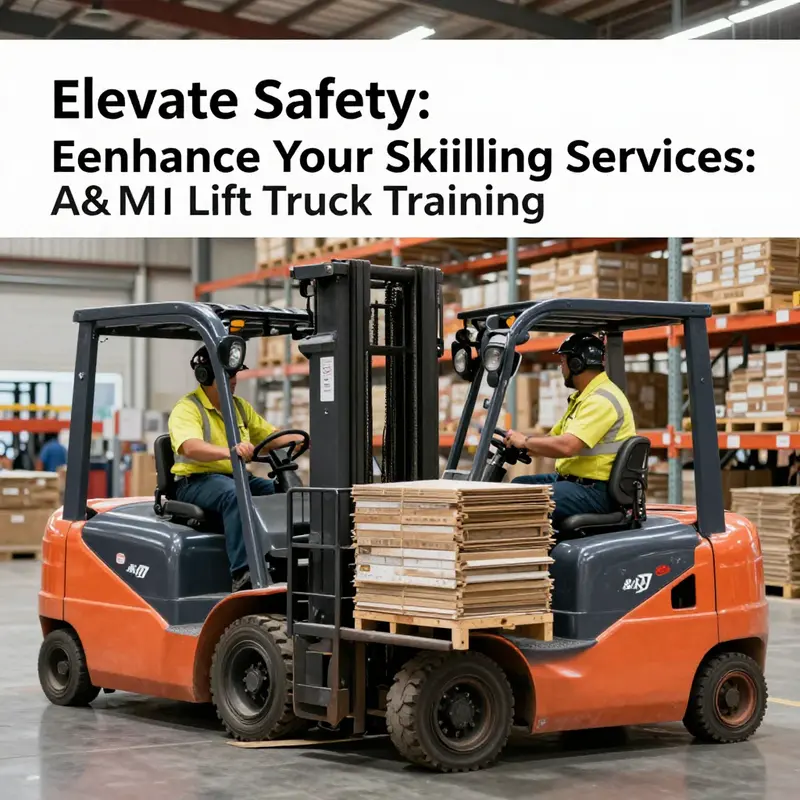
In summary, A&M Forklift Lift Truck Training Services is a significant investment for anyone involved in trucking and logistics. The comprehensive focus on compliance and safety standards ensures that organizations not only meet legal requirements but also foster a culture of safety that can lead to reduced accident rates and enhanced operational efficiency. Equipping drivers and fleet managers with essential skills through structured training promotes safer working environments and ultimately benefits the entire industry. Let’s champion safety together, setting a standard of excellence with every lift truck operation.