
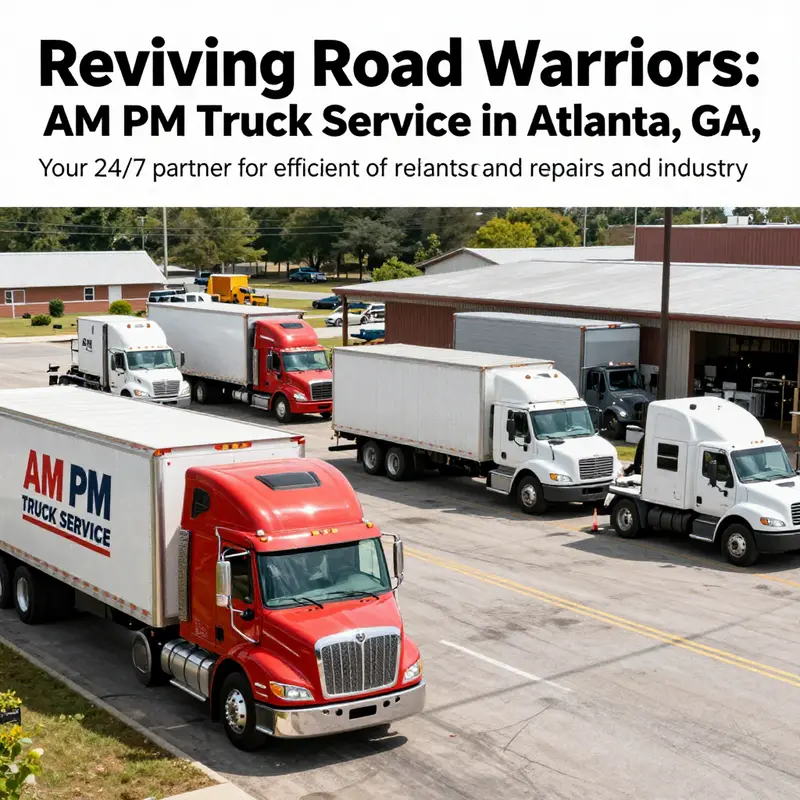
For long-haul truck drivers, trucking company owners, and fleet managers, reliability on the road is paramount. Emergencies can strike at any moment, often when you least expect it. AM PM Truck Service in Atlanta, GA, is a 24/7 mobile repair shop dedicated to rapid turnaround and minimal downtime. This article delves into the essential services they provide, including emergency solutions, their economic impact on the trucking industry, and how technological advancements enhance their offering. Let’s explore how AM PM Truck Service plays a vital role in keeping trucks rolling and logistics flowing smoothly.
Around-the-Clock Resolve: How AM PM Truck Service Keeps Atlanta’s Fleets Rolling
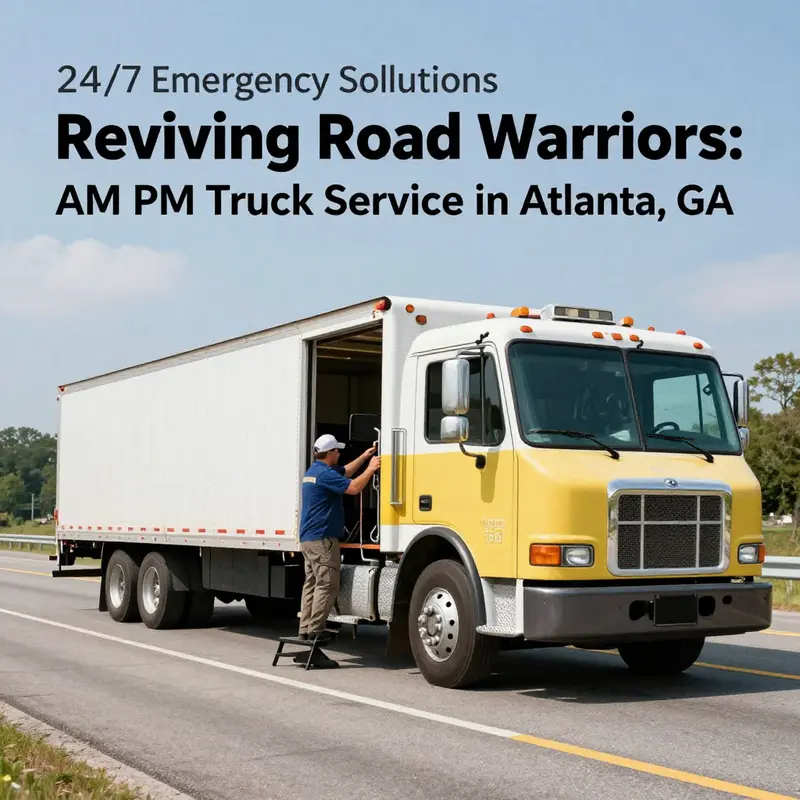
The rhythm of a city that never stops is written in the cadence of trucks and trailers threading through Atlanta’s arteries. Warehouses hum with outbound freight, distribution centers pulse with inbound goods, and every mile between departure and delivery is a potential bottleneck—unless a trusted partner is there to steady the pace. This is the promise and the practice of AM PM Truck Service, a 24/7 mobile repair shop rooted in the Atlanta area. What begins as a roadside crisis often ends as a story of rapid problem solving, precise diagnostics, and the quiet confidence that comes from knowing a repair team can meet the moment wherever a vehicle is parked. For fleet operators facing a tight timetable, the capacity to deploy skilled technicians to a breakdown site, diagnose the fault, and implement a fix on site translates into hours saved, dollars preserved, and routes kept on track. In a domain where time is money and every detour carries cascading costs, on-site emergency repair becomes not just a convenience but a critical lifeline for the logistics chain.
The essence of AM PM Truck Service hinges on immediacy coupled with reliability. A vehicle breakdown can unfold in many ways—from electrical gremlins that erase the dash’s compass to brakes that awaken caution on a major corridor. The company’s 24/7 availability is not merely about after-hours service; it is about a mindset that treats downtime as an urgent, solvable problem rather than an inevitable setback. The technicians arrive with a full set of diagnostic tools, a portable inventory of common wear items, and a readiness to improvise the repair plan based on the vehicle’s unique configuration and the operational requirements of the fleet. The goal is to restore movement with the least disruption possible, and to do so in a way that keeps the driver safe, the cargo secure, and the operation lean. This approach aligns with a broader truth in modern trucking: when a fleet is operational, every message on the dispatch board signals progress; when a fleet is stalled, every minute lost echoes through the supply chain.
The address at 3800 Oakcliff Rd in Atlanta anchors AM PM Truck Service as a local hub with a national mindset. The service’s on-site capability multiplies the reach of a single fleet, because a driver in distress is no longer constrained by the proximity to a traditional repair shop. Instead, a mobile team can appear wherever the vehicle has found itself—a deserted highway shoulder, a busy loading dock, or a remote yard on the edge of the metro area. The mobility of the service is not merely about proximity; it is about turning a potentially expensive tow into a closed loop of repair. Towing is expensive before it happens and even more so after it’s completed, with downtime extending across the next shift or the next day of work. By curtailing the need for towing, the mobile model preserves fuel and time, protects delicate logistics windows, and reduces the administrative overhead associated with downed equipment. A truck that can be fixed on-site often returns to work within the same day, resuming deliveries and maintaining the reliability that customers have come to expect in a crowded urban environment and its surrounding markets.
The technician’s toolkit is a blend of science and practical artistry. Diagnostic software pairs with seasoned tactile skills to interpret an alert code, listen for unusual engine rhythms, and locate a fault that may have migrated into a more complex electrical or hydraulic system. In this setting, the fastest solution is not always the most obvious one. A dash warning light may illuminate a symptom, but the underlying cause might involve a fragile connection, a dying sensor, or a hose with a prehistoric crack. The ability to read signals quickly, confirm a hypothesis with targeted tests, and validate the repair with a road test is what differentiates a roadside reboot from a durable fix. The on-site model assumes that some parts can be replaced quickly, while others require precise adjustment or calibration. The aim is to minimize back-and-forth, to eliminate repeat calls for the same issue, and to leave the vehicle with confident performance and a clear maintenance plan for the future.
Time is also saved by how the service engages with fleet operations. When a dispatcher calls for emergency repair, the response is calibrated not only to the vehicle’s fault but also to the fleet’s schedule. A technician arrives prepared with a quick-check protocol that prioritizes high-risk systems—air braking, electronic control modules, and critical safety features—while maintaining a careful balance with the driver’s immediate safety and the cargo’s integrity. Communication between the technician, the fleet manager, and the driver becomes a loop that shortens the diagnosis-to-repair timeline. ETA updates become a standard rhythm, and the technician’s notes feed into the fleet’s maintenance logs so that patterns can be identified and addressed before a breakdown becomes a recurring disruption. In practice, that means less time waiting for a tow and less time waiting for a repower. It means more predictable service windows for customers and fewer missed appointments for the end recipients of freight.
Service coverage is as essential as the service itself. While the core operation is anchored in Atlanta, AM PM Truck Service expands its reach to nearby regions, ensuring that the value of on-site repairs extends beyond city limits. The ability to travel with ready-to-deploy parts, a portable diagnostic suite, and a wheel of tools that can accommodate many makes and models translates into tangible uptime for fleets crossing urban corridors and regional highways. In a transportation system that increasingly depends on tight routing and just-in-time delivery, this extended reach matters. It reduces the need for costly detours and creates resilience in the supply chain because vehicles are no longer stranded for long periods away from their scheduled runs. The fleet manager who can lean on a dependable emergency partner gains leverage in driver retention, route optimization, and customer reliability. The drivers themselves experience less stress because they know that a capable hands-on team can reach them quickly, fix the problem with competence, and send them back on the road with confidence.
EMERGENCY WORK, QUIETLY, IS A PROCESS OF RISK ASSESSMENT AND EXECUTION. The mobile unit’s real strength lies not just in speed but in the disciplined approach to repairs that minimizes risk and maximizes future reliability. A high-stakes fix demands a careful assessment of safety, including whether the vehicle can be returned to service without compromising the roadworthiness of the truck or endangering the driver. The technicians are trained to recognize when a repair should be temporary, when it should be a direct replacement, and when it is prudent to arrange a shuttle or a tow to a full-service shop. This decision-making process honors the driver’s safety and the fleet’s long-term health. It also recognizes that emergencies are not isolated events but nodes in a network of maintenance tasks. A fixed fault today may expose a related vulnerability tomorrow if the fleet’s preventive rhythm is incomplete. For this reason, an AM PM Truck Service call often carries with it a moment of, and a plan for, follow-up. The technician may advise a scheduled maintenance visit to replace a component with a known lifespan, perform a fluid analysis, or recalibrate a control system to prevent future errors. The goal is not only to mend the current problem but to enrich the fleet’s readiness for the road ahead.
In the practical terms of operations, it is helpful to imagine a typical emergency scenario and how the service translates theory into action. A driver experiences a sudden loss of power and a warning that suggests a serious electrical issue. The call goes out, and a technician responds with a compact trailer of diagnostic gear and a field-service toolkit. On arrival, the technician quickly confirms the fault, pinpoints whether it is a sensor misread, a harness fault, or a failing battery that is no longer delivering the necessary amperage. If the problem is a sensor or sensor wiring, the repair may be as simple as reseating a connector or replacing a reusable harness. If the problem is battery health or charging circuit integrity, the solution may involve a targeted replacement and a test of the alternator load under real-world conditions. If the fault is a more complex hydraulic or brake issue, the approach might be to isolate and repair enough to get the vehicle moving to a shop, or to complete a repair on-site if feasible. In all of these cases, the mobile unit has the capacity to perform a test drive and a post-repair verification run to ensure that the vehicle is stable at typical highway speeds and under typical load conditions. That final check matters because a return to service without a post-diagnosis confirmation can create a false sense of security and invite a second breakdown in short order. The driver, who has already faced the stress of a breakdown, receives a transparent report on what was repaired, what remains on the preventative agenda, and how soon a follow-up maintenance window should be scheduled.
This blend of speed, safety, and smart maintenance is why fleet operators keep one eye on the clock and the other on the road ahead. The urgency of an emergency repair does not eclipse the need for quality workmanship, accurate diagnosis, and durable fixes. If anything, emergency work elevates the standard because the consequences of a hurried job are magnified when a vehicle is back in motion, carrying valuable freight and potentially operating in adverse conditions. The best emergency service treats the moment as an opportunity to demonstrate expertise and to reduce risk for the entire operation. It is this combination of responsive service and responsible repair that lends confidence to dispatchers who must balance multiple loads, drivers who confront unpredictable road conditions, and customers who rely on punctual delivery.
There is a broader value to this model beyond individual breakdowns. The on-site repair approach contributes to a more efficient, safer, and more predictable freight ecosystem. When trucks stay on the road, warehousing costs decrease, dwell times shrink at docks, and shippers can maintain tighter inventory controls. Each successful on-site repair reduces the probability of a longer outage later in the life of a vehicle, preserving both the asset and the operator’s ability to meet service-level agreements. In a market where margins are often tight and competition is intense, the promise of continuous movement becomes a competitive differentiator. The fleet executive who partners with a mobile emergency service gains not only a practical ally in moments of crisis but a cooperative partner in building a maintenance schedule that aligns with usage patterns, regional traffic flows, and seasonal demand. The narrative of daily operations becomes one of resilience rather than contingency.
For readers who want to explore how this ethos translates into broader industry practice, there is a body of knowledge that supports on-site maintenance as a standard of care for emergency response and fleet uptime. The spirit behind AM PM Truck Service mirrors ideas you will find in industry discussions and best-practice resources that emphasize rapid problem resolution, proactive maintenance planning, and the importance of accessible, reliable field support. This alignment is not about replacing traditional workshops but about complementing them with a mobile capability that can bridge gaps and bridge time gaps where they hurt most. The essence is trust—the trust that, when a truck breaks down, a capable team arrives with a clear plan, the right tools, and the experience to navigate the unexpected with calm efficiency. And when the job is done, the driver can refocus on the road ahead with the reassurance that the route is once again in good hands, and the vehicle is prepared to deliver the promise of timely service for customers who depend on it.
To reinforce the continuity of this narrative, consider how the service references and implements a broader maintenance philosophy. The objective is not simply to fix what is broken but to reduce the likelihood of future failures through thoughtful diagnostics, targeted replacements, and documentation that informs ongoing maintenance. The on-site model encourages a disciplined approach to repair assessment, ensuring that decisions about temporary fixes versus permanent parts replacement are grounded in an understanding of the vehicle’s duty cycle, the loads it bears, and the conditions it routinely encounters. In other words, on-site emergency work becomes a catalyst for long-term reliability rather than a one-off solution to a single fault.
As the city and its surroundings continue to grow, the demand for capable, responsive emergency repair follows suit. A 24/7 mobile service that can respond to the urgent needs of a fleet in Atlanta and nearby communities embodies a practical, modern approach to maintenance. It is a model that recognizes the reality that fleets are essential to commerce and that downtime is more than an inconvenience; it is a measurable cost. The value of on-site emergency repairs is measured in hours saved, in the ability to maintain schedule integrity, and in the confidence earned by drivers who know that help can arrive quickly and with expertise. In the end, it is a story about partnership between fleets and service teams—a partnership built on reliability, communication, and a shared commitment to keeping goods moving through a city that never stops.
For those following the evolving conversation about fleet maintenance, this chapter offers a lens into how emergency services operate in practice. It is not a glossy sales pitch but a portrait of how a practical, well-equipped mobile repair service integrates into the daily operations of trucking and logistics. The on-site repair model proves its worth not just in the drama of a breakdown but in the quiet, consistent performance that turns a potentially disruptive event into a manageable incident. The result is a fleet that remains adaptable, a dispatcher who maintains control of the schedule, and a driver who returns to the road with a renewed sense of certainty. This is the core value delivered by 24/7 emergency solutions with AM PM Truck Service in Atlanta: a commitment to movement, a respect for uptime, and a proven mechanism to translate urgency into reliability.
If you are curious about the broader ecosystem and how field service practices align with industry standards, this narrative aligns with practices described in industry content focused on equipment uptime, maintenance training, and service design for emergency operations. The takeaway is simple: in transportation, reliability is a system, not a single act. The 24/7 emergency model is a cornerstone of that system, bridging the gap between breakdown and back-to-work with efficiency, precision, and care. The result is not just a repaired truck but a reinforced promise that the fleet can meet its commitments, day after day, mile after mile. To experience the practical spirit of this approach and see how it ties into broader industry insights, you can explore related perspectives in industry literature and practitioner blogs.
External resource note: For a concrete reference on AM PM Truck Service’s local presence and service footprint, see the following listing. https://www.mapquest.com/business/ampm-3800-oakcliff-rd-atlanta-ga-30340
Riding the Clock: How 24/7 On-Site Truck Repair Keeps Atlanta’s Freight Moving
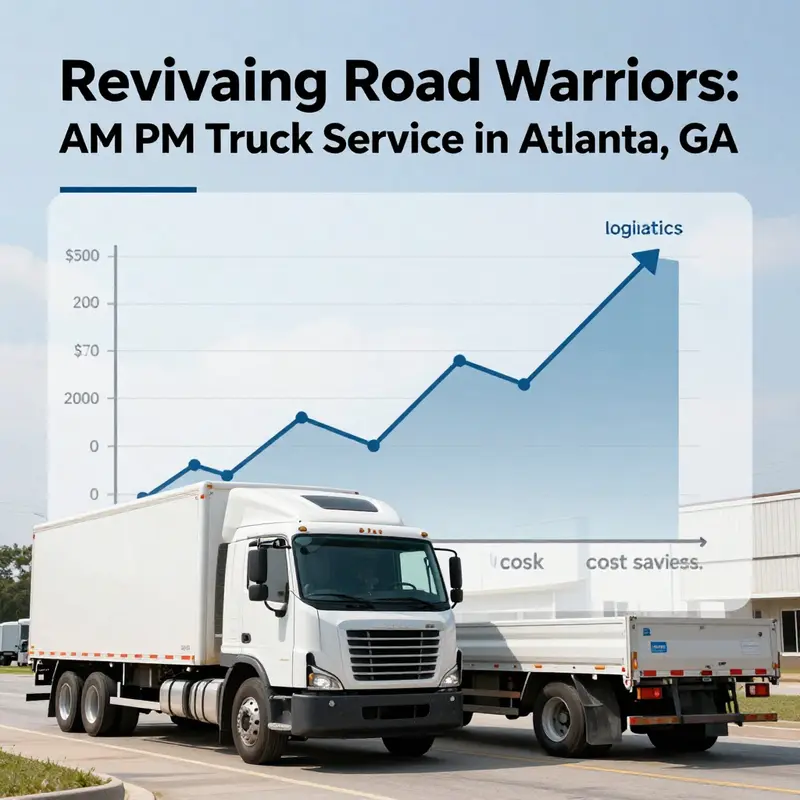
Atlanta sits at a crossroads of regional and national commerce. Its beltlines of interstates, trucking corridors, and sprawling logistics warehouses make it a natural hub for the movement of goods in the Southeast and beyond. In this ecosystem, every hour a truck sits idle is not just a delayed shipment; it is a ripple of costs that touches fuel, labor, and customer satisfaction. Against this backdrop, AM PM Road Service operates with a very specific purpose: to minimize downtime by delivering rapid, mobile repair capabilities wherever a van or rig breaks down. The service, grounded at 3800 Oakcliff Rd in a city that never seems to sleep, has made itself indispensable to fleets that depend on reliability as much as they depend on miles of asphalt. What might be perceived as a simple roadside repair service is, in truth, a finely tuned economic mechanism. It aligns asset utilization with the demands of a time-sensitive logistics network, turning on-site expertise into quantifiable improvements in throughput and service levels for countless fleet operators across Atlanta and the surrounding region.
The core proposition of a 24/7 mobile repair shop is straightforward, yet its economic implications are nuanced. Rather than directing trucks to expensive tow yards or to distant service centers, fleets can summon skilled technicians who arrive with a carefully curated set of tools and parts to address the most common and costly failures in-the-field. The benefit is twofold: speed and specificity. Speed reduces the duration of vehicle downtime, and specificity reduces the likelihood that a repair will require a second visit. When a truck axle seals itself with a stubborn leak at 2 a.m., or when a dead battery blocks a morning start for a refrigerated trailer, the on-site response becomes a form of strategic inventory management. The fleet’s spare parts and potential delays are mitigated by immediate access to essential components, often drawn from a regional network of suppliers that understands the peculiarities of Atlanta’s freight flows.
To understand the economic footprint of AM PM Road Service, it helps to view the service as a critical node in a broader network of operational continuity. A single breakdown, if not resolved quickly, can cascade into missed delivery windows, overtime labor costs, and the necessity of temporary storage or alternative transportation arrangements. Each of these consequences carries a price tag that grows with the scale of the fleet and the length of the delay. In contrast, a rapid on-site repair reduces these exposure points. The technician’s arrival acts as a cap on the duration of asset downtime, and the ability to perform diagnostics and repairs in a single encounter limits the need for multiple dispatches. The result is a measurable uplift in fleet reliability, a more predictable maintenance budget, and, crucially, a more stable march of goods through Atlanta’s supply chain.
This practical efficiency translates into savings that extend beyond the immediate repair bill. When a commercial vehicle remains on the road, fuel efficiency remains higher than it would be if the vehicle sat idle or idled for longer periods while awaiting a tow or a repair facility. The on-site capability also helps sustain the overall health of the fleet. Regular, targeted maintenance performed in the field prevents minor issues from escalating into major failures that require more invasive work or replacement of expensive components. In effect, the 24/7 mobile repair model acts as a proactive maintenance partner, nudging fleets toward better asset longevity and more predictable depreciation profiles. These benefits accumulate across dozens or hundreds of trucks, compounding into a measurable uplift in the region’s logistics productivity.
The economic impact of such a service becomes even more pronounced when viewed against Atlanta’s status as a logistics anchor for the Southeast. The city’s geographic advantage—its proximity to major ocean ports, its dense highway network, and its concentration of distribution centers—creates a perpetual demand for speed and reliability. When roadside repairs are deliverable on-site, the region’s freight network gains resilience. A breakdown that might otherwise stall a cross-dock operation or an intercity run is transformed into a momentary setback that the fleet can recover from within hours rather than days. This resilience matters because logistics operations increasingly rely on just-in-time delivery models. The entire supply chain becomes less volatile when the tools exist to minimize disruption and the willingness to deploy those tools at scale. In turn, manufacturers, distributors, and retailers supporting Atlanta’s logistics ecosystem can rely on a more predictable inbound and outbound cadence, which helps keep production lines synchronized with demand, and keeps shelves stocked with fewer shortages and late shipments.
Beyond the direct savings for fleet operators, the presence of a robust on-site repair service supports a broader economic environment. Local maintenance and repair jobs are reinforced, not only through the immediate work performed in the field but also by the ecosystem that surrounds it. Parts suppliers, diagnostic equipment providers, and logistics coordinators anchor a network that thrives on rapid response and dependable uptime. This creates a cycle of investment: fleets are more likely to expand operations, distribution centers are more confident in their throughput, and service specialists are drawn to a city where downtime is a known cost and a rapid repair is valued as a strategic capability. The outcome is not merely improved efficiency in the present but a more competitive, attraction-driven climate for warehousing and distribution activity, with a direct line of influence on job creation and regional wage growth in maintenance trades and related roles.
To see how such dynamics ripple outward, consider the broader costs associated with breakdowns in heavy transport. Freight costs are not just a function of distance traveled; they are a function of the total cost of ownership tied to asset uptime. When a fleet operates in an urban corridor with congested highways and high demand for on-time deliveries, the penalties for delays can be severe. Contract penalties, loss of business, and increased insurance premiums can all accumulate in response to unreliable service. The value proposition of a 24/7 mobile repair service becomes clear: it mitigates risk by reducing the probability that downtime will stretch into a costly outage. In this sense, AM PM Road Service does not merely fix vehicles; it stabilizes the operational environment that sustains Atlanta’s freight economy. The ability to respond quickly to a myriad of mechanical failures—from brake systems to electrical faults, from drivetrain issues to tire and wheel problems—means fleets can maintain continuous operations in a city whose economic vitality depends on timely, predictable movement of goods.
An often underappreciated dimension of this value is the psychological assurance it provides to fleet operators. Knowing that a capable technician can be dispatched at any hour to an on-site location offers crews a degree of operational certainty that is hard to quantify but easy to feel. Dispatchers can plan with greater confidence when the odds of a long, uncertain repair process are diminished. Maintenance managers can schedule routes and allocate downtime with an understanding that most breakdowns will be contained within a single service window. In turn, drivers experience less stress and more consistent routes, which translates into improved morale and safety outcomes. In a sector where hours can decide margins, this intangible form of reliability translates into tangible benefits: lower turnover among drivers, steadier utilization of equipment, and a stronger culture of proactive maintenance rather than reactive, stopgap fixes.
The location and scale of operations matter as well. Atlanta’s strategic transit corridors—arterial routes that connect regional markets and national corridors—generate a continuous, diverse demand for mobile repairs. The technician who can reach a remote fleet base at the edge of the metro area as easily as a downtown yard becomes a crucial asset. This capability reduces the logistical burden on large fleets that operate across multiple counties or states, where the cost of pulling a vehicle back to a fixed facility would be prohibitive. In practical terms, a mobile repair fleet converts the city’s geographic advantage into a reliability advantage for the operators who rely on the system day in and day out. The tolerance for downtime in such an environment is low, and the ability to recover quickly from a breakdown is a competitive differentiator that can shape a carrier’s reputation and market share.
Another layer to consider is how on-site repairs influence the investment decisions of logistics stakeholders. When fleets know that a reliable, responsive repair option is available in the region, they are more willing to expand their operations, add routes, or increase asset counts. The security provided by this capability reduces risk exposure and can improve access to capital. Lenders and insurers increasingly weigh a fleet’s uptime record and maintenance strategy as a predictor of risk. A robust on-site repair network can thus indirectly reduce the total cost of capital for operators by lowering variance in maintenance outcomes and improving predictability. In this environment, AM PM Road Service becomes more than a service provider; it becomes a strategic partner in the calculation of asset value, risk, and growth trajectory for fleets that power Atlanta’s logistics infrastructure.
From an industry perspective, the emergence of mobile repair networks also nudges the maintenance ecosystem toward more standardized, repeatable processes. Technicians working in the field must be adept at rapid diagnostics, safe operations in variable environments, and the prudent use of alternative repair strategies when parts are scarce. This pushes training pipelines toward more integrated approaches that blend hands-on expertise with remote diagnostics and data-driven decision-making. The result is a more capable workforce that can adapt to the evolving demands of heavy-duty transport, including new vehicle technologies and increasingly complex electrical systems. In Atlanta, where fleets operate across a mosaic of municipalities, port facilities, and distribution centers, such capabilities are not just advantageous—they are essential to maintaining continuity of service across a wide geographic footprint.
A close look at the economics also reveals how the mobile repair model interacts with parts availability and supply chain efficiency. Mobile technicians carry a curated set of commonly required components and tools, balanced against the need to remain portable and timely. This balance is essential: carrying too many parts would slow response times and increase maintenance costs, but carrying too few could force additional trips and delays. In practice, this balance is achieved by a regional procurement network that understands the patterns of recurring issues and the parts most frequently needed to resolve them. When a breakdown is detected, the technician can often diagnose and replace the problematic component in a single visit, thereby curtailing the downtime to a few hours instead of days. This efficiency is particularly meaningful for refrigerated trailers or other temperature-controlled assets, where downtime translates into spoiled cargo and higher risk for perishable goods. The economic impact, thus, becomes a function of both speed and accuracy, a synergy that sustains the integrity of the supply chain in a climate where product quality and delivery windows are non-negotiable.
The broader narrative here is not simply about a single service operating in isolation. It is about how a mesh of mobile repair capabilities contributes to the regional logistics spine. When fleets can rely on immediate repair, the region’s manufacturing and retail ecosystems benefit from steadier inbound and outbound flows. Retailers gain smoother inventory turnover, manufacturers experience fewer line stoppages, and third-party logistics providers can optimize their service-level agreements with less risk of breach. This creates a virtuous cycle: stronger performance attracts more business into the region, which in turn stimulates more investment in maintenance, training, and mobile service fleets. The economic benefits multiply as more companies view Atlanta not only as a transportation hub but as a reliable ecosystem that can support scaled operations with a minimal fear of disruption. In this sense, the presence of 24/7 on-site repair services acts as a stabilizing force that underpins the city’s competitive advantages in a crowded national marketplace.
In weaving together these strands—downtime reduction, cost containment, reliability management, supply chain resilience, and investment incentives—the story of AM PM Road Service becomes a microcosm of how specialized, responsive maintenance can shape regional economics. The service demonstrates how the strategic allocation of field repair resources creates value that extends beyond the immediate repair event. Each on-site intervention preserves asset health, sustains the momentum of freight flows, and reinforces trust among operators who depend on predictable, timely performance. The result is a more efficient, more resilient logistics network that positions Atlanta to meet the growing demands of a dynamic economy. And while the metrics may seem granular—minutes saved, miles preserved, dollars avoided—the aggregated impact is substantial: a city that can keep more trucks rolling, more shipments on schedule, and more businesses confident that their supply chains are supported by capable, readily available engineering talent when they need it most.
The practical takeaway for stakeholders—fleet managers, dispatch professionals, suppliers, and policymakers—is clear. Accessibility to on-site repair transforms how fleets plan for maintenance, how they budget for risk, and how they approach growth. It reframes downtime not as an inevitability but as a controllable variable that can be managed with foresight and scale. In a region where the rhythm of commerce is defined by the speed at which goods can move from point A to point B, the ability to intervene quickly and correctly at the roadside becomes a strategic asset. The economics of that asset do not rest solely on the cost of a repair. They rest on a larger calculus of uptime, reliability, and the steadiness of a city’s freight heartbeat. And in Atlanta, that heartbeat finds a reliable partner in a mobile repair network that treats every breakdown as an opportunity to keep business moving, protect margins, and sustain the momentum that climate, demand, and competition demand day after day.
For readers who want a practical entry point into the larger conversation about how trucking services and maintenance strategies intersect, a broader industry blog offers a useful perspective on everyday challenges and emerging solutions. 5StarTruckIn blog provides broader context on maintenance strategies, procurement best practices, and the design considerations that keep fleets durable under pressure. While the focus there may span multiple service domains, the underlying principles of uptime optimization, proactive maintenance, and dependable support align closely with the experience of a city that relies on mobile repair to keep its freight moving.
As Atlanta continues to grow as a logistics powerhouse, the importance of on-site, around-the-clock repair services will only become more evident. The road network will always be crowded, the weather will occasionally complicate operations, and the demand for timely deliveries will remain high. In this environment, the value of a mobile repair capability—fast response, deep diagnostics, and practical, field-ready repairs—will be measured not in abstract terms, but in the proportional reduction of downtime, in the steadiness of the delivery schedule, and in the confidence it gives to every actor in the supply chain. The story of AM PM Road Service is thus more than a local anecdote; it is a case study in how strategic maintenance infrastructure supports a functioning economy. It reminds us that behind every successful shipment there is a human team, a network of suppliers, and a set of optimized practices that together translate downtime into revenue protection, customer satisfaction, and long-term competitive advantage for a region that refuses to surrender to the clock.
External resource: https://www.mapquest.com/business/am-pm-road-service-atlanta-ga
Real-Time Diagnostics on Atlanta Roads: How AM PM Truck Service Redefines On-Site Repairs
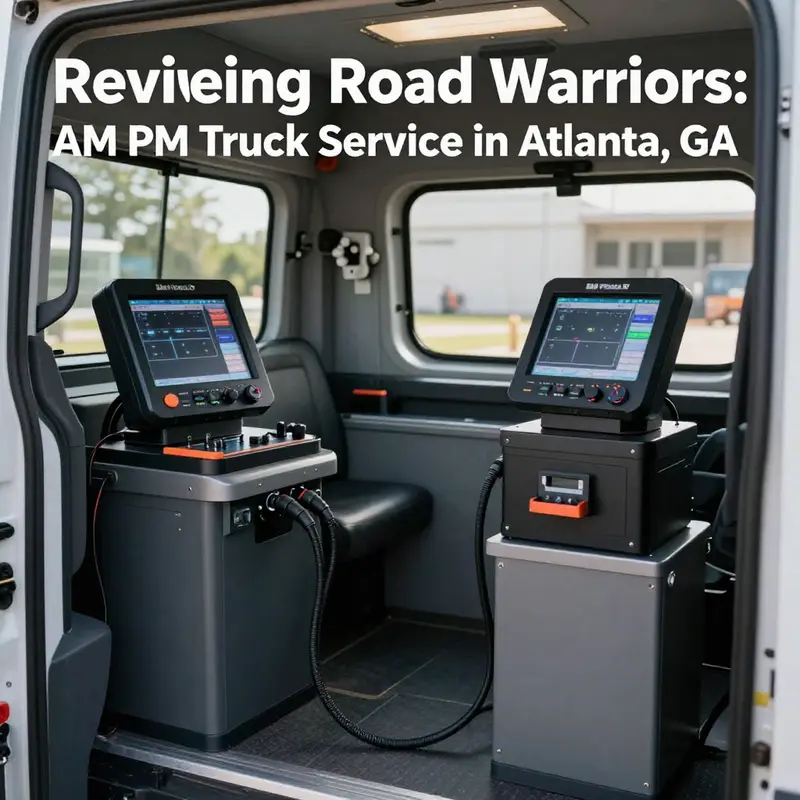
Atlanta’s freight corridors demand relentless uptime. AM PM Road Service delivers on-site, 24/7 repairs that bring the shop to the vehicle. Real-time diagnostics let technicians read fault codes, monitor live data, and verify fixes without a tow. The portable toolbox and digital work orders enable immediate scoping, parts selection, and live status updates for dispatch. By reducing towing and queue time, fleets see faster returns to service and more predictable deliveries. The model blends mechanical skill with electrical diagnostics, data-driven workflows, and customer collaboration to create a resilient uptime strategy for urban logistics. Looking forward, telematics integration and expanded on-site capabilities for EV and hybrid powertrains will further extend the reach of this mobile repair paradigm. For fleet managers, the takeaway is clear: speed, transparency, and reliable repairs where the vehicle is, when it is needed.
Final thoughts
Maintaining a fleet or adhering to tight deadlines in the trucking industry requires reliable support. AM PM Truck Service in Atlanta, GA, not only alleviates the stress associated with unexpected breakdowns through its 24/7 emergency solutions but also plays a pivotal role in enhancing the economic viability of trucking operations through minimized downtime. The integration of advanced technology further positions this service as a leader in the mobile repair market. For everyone in the trucking industry, having a dependable repair partner like AM PM can turn what could be disastrous delays into manageable obstacles, allowing the freight to keep moving smoothly.